TERMINALLY CHALLENGED: Addressing the Infrastructure Funding Shortfall of America's Airports - Airports Council ...
←
→
Page content transcription
If your browser does not render page correctly, please read the page content below
2 01 9 -20 2 3   T E R M I N A L LY    CHA LLE N GED :
                 Addressing the Infrastructure Funding Shortfall of America’s Airports
Table of Contents
                    Executive Summary .  .  .  .  .  .  .  .  .  .  .  .  .  .  .  .  .  .  .  .  .  .  .  .  .  .  .  .  .  .  .  .  .  .  .  .  .  .  .  .  .  .  .  .  .  .  .  .  .  .  .  .  .  .  .  .  .  .  .  . 5

                    ACI-NA Estimate of Airport Infrastructure Needs  .  .  .  .  .  .  .  .  .  .  .  .  .  .  .  .  .  .  .  .  .  .  .  .  .  .  .  .  .  .  . 17

                    Project Development Costs by Location and Type  .  .  .  .  .  .  .  .  .  .  .  .  .  .  .  .  .  .  .  .  .  .  .  .  .  .  .  .  . 25

                    Comparison of ACI-NA and FAA Estimates .  .  .  .  .  .  .  .  .  .  .  .  .  .  .  .  .  .  .  .  .  .  .  .  .  .  .  .  .  .  .  .  .  .  .  .  . 33

                    Conclusion .  .  .  .  .  .  .  .  .  .  .  .  .  .  .  .  .  .  .  .  .  .  .  .  .  .  .  .  .  .  .  .  .  .  .  .  .  .  .  .  .  .  .  .  .  .  .  .  .  .  .  .  .  .  .  .  .  .  .  .  .  .  .  .  .  .  .  . 35

                    Appendix 1: Scope and Methodology .  .  .  .  .  .  .  .  .  .  .  .  .  .  .  .  .  .  .  .  .  .  .  .  .  .  .  .  .  .  .  .  .  .  .  .  .  .  .  .  .  . 37

                    Appendix 2: Background .  .  .  .  .  .  .  .  .  .  .  .  .  .  .  .  .  .  .  .  .  .  .  .  .  .  .  .  .  .  .  .  .  .  .  .  .  .  .  .  .  .  .  .  .  .  .  .  .  .  .  .  .  . 38

                    Appendix 3: How ACI-NA Calculated Infrastructure Development Costs .  .  .  .  .  .  . 39

                    Appendix 4: FAA Definitions of Airport Categories  .  .  .  .  .  .  .  .  .  .  .  .  .  .  .  .  .  .  .  .  .  .  .  .  .  .  .  . 43

                    Appendix 5: About This Report .  .  .  .  .  .  .  .  .  .  .  .  .  .  .  .  .  .  .  .  .  .  .  .  .  .  .  .  .  .  .  .  .  .  .  .  .  .  .  .  .  .  .  .  .  .  .  . 46
Tables
          Table 1: Airport Infrastructure Cost Estimates by Year and Airport Category  .  .  .  .  .  . 17

          Table 2: Average Annual Cost Estimate from

                           Published ACI-NA Infrastructure Needs Reports . . . . . . . . . . . . . . . . . . . . . . . . 18

          Table 3: Development Costs by Project Location  .  .  .  .  .  .  .  .  .  .  .  .  .  .  .  .  .  .  .  .  .  .  .  .  .  .  .  .  .  .  .  .  . 25

          Table 4: Development Costs by Project Type  .  .  .  .  .  .  .  .  .  .  .  .  .  .  .  .  .  .  .  .  .  .  .  .  .  .  .  .  .  .  .  .  .  .  .  .  . 27

          Table 5: ACI-NA Sample Compared to Industry Total  .  .  .  .  .  .  .  .  .  .  .  .  .  .  .  .  .  .  .  .  .  .  .  .  .  .  .  .  . 39

          Table 6: ACI-NA Sample Infrastructure Development Costs Per Enplanement .  .  . 40

          Table 7: Total Infrastructure Development Costs Estimate

                           for Large, Medium, and Small Hub Airports .  .  .  .  .  .  .  .  .  .  .  .  .  .  .  .  .  .  .  .  .  .  .  .  .  .  .  .  . 40

          Table 8: Total Infrastructure Development Costs Estimate . . . . . . . . . . . . . . . . . . . . . . . 41

          Table 9: ACI-NA Total Costs by Project Type  .  .  .  .  .  .  .  .  .  .  .  .  .  .  .  .  .  .  .  .  .  .  .  .  .  .  .  .  .  .  .  .  .  .  .  .  . 42

Figures
          Figure 1: 5-Year Development Estimates from Published

                             ACI-NA Infrastructure Needs Reports  .  .  .  .  .  .  .  .  .  .  .  .  .  .  .  .  .  .  .  .  .  .  .  .  .  .  .  .  .  .  .  .  .  . 18

          Figure 2: Consumer Price Index (CPI) Indicates Continued Inflation  .  .  .  .  .  .  .  .  .  .  .  .  . 20

          Figure 3: CCI Exceeds CPI Over the Next Five Years .  .  .  .  .  .  .  .  .  .  .  .  .  .  .  .  .  .  .  .  .  .  .  .  .  .  .  .  .  .  . 21

          Figure 4: FAA Projects Continued Strong Growth in Passengers .  .  .  .  .  .  .  .  .  .  .  .  .  .  .  .  .  . 22

          Figure 5: FAA Projects Continued Growth in Air Cargo . . . . . . . . . . . . . . . . . . . . . . . . . . . 23

          Figure 6: Airport Infrastructure Needs by Type of Development .  .  .  .  .  .  .  .  .  .  .  .  .  .  .  .  .  . 26

          Figure 7: Change In Development Cost from 2016/2017 ACI-NA Report .  .  .  .  .  .  .  .  .  . 28
$128,131,000,000
 Infrastructure needs across America’s airport system through 2023.
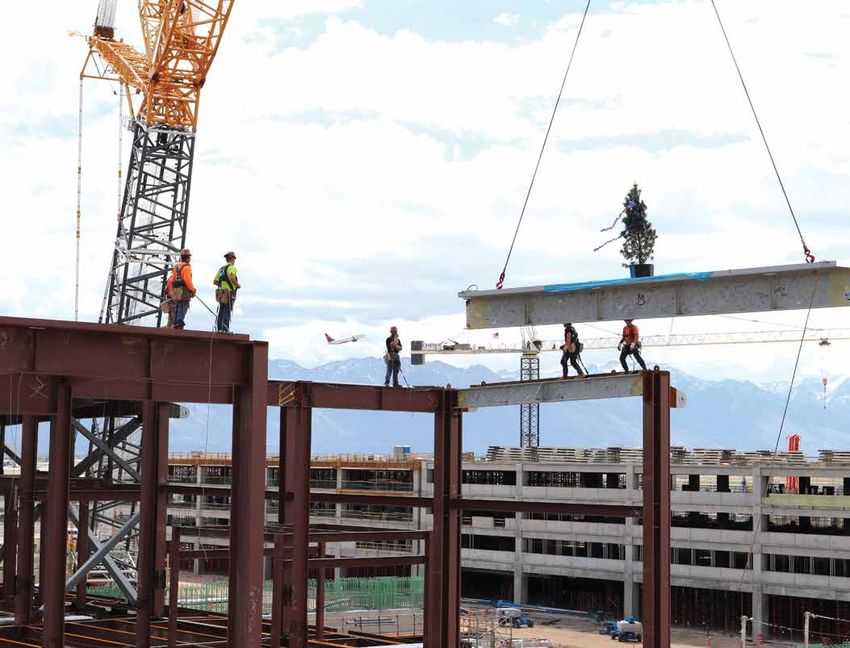
Executive Summary
Airports are Terminally Challenged                                          While passenger and cargo traffic through airport facilities continues
                                                                            to grow at a record pace, our outdated aviation infrastructure is not
America’s airports are a fundamental component of our nation’s              keeping up with demand. As a result, far too many airports around
transportation infrastructure. In 2017, 1.7 billion passengers and          the country are overcrowded and cramped. This survey shows that
31.7 million metric tons of cargo traveled through U.S. airports. With      America’s airports require more than $128 billion in infrastructure
a national economic impact of $1.4 trillion, airports contribute more       upgrades by 2023, with more than 56 percent of the needs inside
than seven percent to the U.S. gross domestic product and support           our aging terminals.
over 11.5 million jobs around the country. To meet the capacity
demands of the future with safe, efficient, and modern facilities           Inadequate airport infrastructure that fails to meet the growing
that passengers and cargo shippers expect, airports need to make            needs of local businesses and tourists puts in jeopardy the
new investments to maintain and modernize our nation’s airport              continued economic growth of American cities, states, and regions.
infrastructure.                                                             From established metropolitan areas to burgeoning growth regions
                                                                            to small communities, sustained economic growth depends on the
                                                                            expansion of, and investment in, local airports. As the U.S. economy
                                                                            recovered from the significant economic downturn experienced
                                                                            during the Great Recession, the national unemployment rate has
            1.7 billion passengers                                          decreased and personal discretionary spending has increased.
                                                                            As such, enplanements nationwide have dramatically improved,
                                                                            growing at a compound annual growth rate of 3.8 percent between
                                                                            2013 and 2017, putting further pressure on our already overloaded
            31.7 million metric tons of cargo                               airport facilities.

                                                                            Airport investment also promotes much-needed competition in
                                                                            the airline industry. New investments in airports can be valuable
   $        $1.4 trillion economic impact
                                                                            tools in helping local communities attract new air carriers, which
                                                                            increases competition and leads to lower airfares for passengers.
                                                                            Airports need additional resources to build the terminals, gates, and
            11.5 million jobs                                               ramps necessary to attract new air carriers and allow existing ones

                                                                         Terminally Challenged: Addressing the Infrastructure Funding Shortfall of America’s Airports   |   5
to expand service. The traveling public gets more choices and lower                                    Addressing the Infrastructure Funding Shortfall
airfares when airports can build the facilities that provide more airline
options and more service alternatives.                                                                 With America’s airports facing more than $128 billion in new
                                                                                                       infrastructure needs across the system and a debt burden of $91.6
In addition to the impact on local economies, deferred airport                                         billion from past projects, it is time to find the means to rebuild our
investment over the past two decades has challenged the ability of                                     nation’s aviation infrastructure and improve the passenger experience
airports to deal with the evolving threats posed to aviation security.                                 for millions of travelers.
We live in vastly different times than when most U.S. airports were
built, and the airports we have today simply were not designed and                                     It is a common misconception that airports are funded with taxpayer
outfitted for a post-9/11 world that requires us to maximize both                                      dollars or a general tax on all citizens. In reality infrastructure projects
efficiency and security.                                                                               at U.S. airports are funded primarily with federal grants through the
                                                                                                       FAA’s Airport Improvement Program (AIP), a local user-fee called
Airports call on Congress to modernize the outdated federal cap on                                     the Passenger Facility Charge (PFC), and airport-generated revenue
the Passenger Facility Charge (PFC) in order to give airports more                                     from tenant rents and fees. Airports often turn to capital markets to
flexibility to self-finance and leverage private investment without the                                debt-finance projects, using both PFC-revenue and airport-generated
need for additional taxpayer dollars. Air travelers and shippers would                                 revenue to repay the bonds. Traditionally AIP grants – which prioritize
greatly benefit from airports having the ability to generate more                                      safety improvements – have been used on airfield projects, while
local revenue for terminals, gates, runways, and taxiways that would                                   PFC user fees – with greater funding flexibility – have gone towards
increase capacity, stimulate competition, enhance safety and security,                                 terminal, ground-access, and major-runway projects. In the case of
and improve the overall passenger experience.                                                          PFCs, airports often have committed this revenue-stream for years or
                                                                                                       decades into the future to repay past projects, meaning they have no
                                                                                                       new money coming into the system to fund future projects.

6   |   Terminally Challenged: Addressing the Infrastructure Funding Shortfall of America’s Airports
Thus, under the industry’s current financing-funding model airports
lack stable, predictable funding sources that keep pace with travel
growth, rising construction costs, and inflation for these intensive
capital projects. The PFC cap – last adjusted in 2000 – has seen its
purchasing power eroded by 50 percent in the past two decades. And
federal airport grants through the AIP have been stagnant for nearly
a decade, and will remain so for another five years under the recently
enacted FAA reauthorization legislation. Moreover, many airports         With America’s airports facing more than $128 billion
– even those with sterling credit ratings – have reached their debt
capacity and either cannot finance new projects or have had to phase     in new infrastructure needs across the system and
in their projects over a longer timeframe, increasing the costs and
                                                                         a debt burden of $91.6 billion from past projects,
delaying the benefits for passengers.
                                                                         it is time to find the means to rebuild our nation’s
Fortunately, we can rebuild America’s airports without raising taxes
or adding to deficit spending by modernizing the federal cap on the      transportation infrastructure and improve the
PFC. Modestly adjusting the federal cap on local PFCs would allow
                                                                         passenger experience for millions of travelers.
airports to take control of their own investment decisions and become
more financially self-sufficient. Airports could build the appropriate
facilities – terminals, gates, baggage systems, security checkpoints,
roadways, and runways – to meet the travel demands and customer
expectations of their community.

                                                                                                                                |   7
It is important to note that PFCs are not taxes – they are local
user fees determined locally and used locally to help pay the
costs of building airport infrastructure that benefits customers
by improving the passenger experience and spurring airline                                             Inadequate airport infrastructure
competition. PFCs are imposed by states or units of local
government that own or operate airports; so they are not collected                                     that fails to meet the growing needs of local
by the federal government, not spent by the federal government,
                                                                                                       businesses and tourists puts in jeapordy the
and not deposited into the U.S. Treasury. Instead, PFCs go directly
to fund local airport projects approved by the FAA with input from                                     continued economic growth of American
airlines and local communities.
                                                                                                       cities, states and regions.
At a time of mounting pressure to reduce federal spending,
modernizing the federal government’s PFC cap is the simplest and
most free-market option for providing airports with the locally
controlled self-help they need to finance vital infrastructure
projects. It would allow airports of all sizes to reduce costs and
start building essential infrastructure projects more quickly to meet
the travel demands of today and challenges of tomorrow.

8   |   Terminally Challenged: Addressing the Infrastructure Funding Shortfall of America’s Airports
Terminally Challenged: Addressing the Infrastructure Funding Shortfall of America’s Airports | 9
Top 10 Projects in 2019-2023
                                                                                                                PROJECT COSTS IN
AIRPORT CODE   HUB SIZE   PROJECT NAME                                                                       BILLIONS IN 2018 DOLLARS

LAX               L       Automated People Mover                                                                        $ 2.60
                          A 2.25 mile elevated guideway with 6 stations to solve the traffic congestion
                          around the airport, part of LAX’s Landside Access Modernization Program (LAMP)

LAX               L       North Terminal Program                                                                        $ 1.81
                          Renovations to Terminal 2, and the demolition and reconstruction of Terminal 3
                          after Delta Air Lines relocated to Terminal 2-3 from Terminal 5-6.

MCO               L       South Terminal Complex - Phase 1 Terminal C                                                   $ 1.72
                          Phase 1 of the new terminal project, adding 19 gates capable of accommodating
                          24 more aircraft

EWR               L       Terminal A Redevelopment - Terminal                                                           $ 1.70
                          Building a 33-gate terminal to replace the existing Terminal A to accommodate an
                          anticipated 13.6M annual passengers by 2027

LAX               L       Midfield Satellite Concourse                                                                  $ 1.55
                           A new 1.6-billion concourse addition to the Tom Bradley International Terminal
                          (TBIT) featuring 12 aircraft gates as well as a Baggage Optimization Project
PROJECT COSTS IN
AIRPORT CODE HUB SIZE PROJECT NAME BILLIONS IN 2018 DOLLARS
EWR L Rehabilitation of Taxiway W $ 1.47
And Portions Of Taxiways A and B
Renewing and maintaining the Taxiways in a state of good repair and ensuring
efficient, safe and secure operations
LGA L Construction of Air Train $ 1.40
A 1.5-mile-long people mover system and elevated railway to connect LGA with
the NYC’s subway and Long Island Rail Road (LIRR)
SFO L Terminal 1 Program $ 1.36
The redevelopment of the 50-year-old Harvey B. Milk Terminal (Terminal 1) to
meet the needs of modern travelers and revolutionize the guest experience
SLC L SLC Terminal Redevelopment Program North Concourse $ 1.36
Adding 30 gates to replace the aging facility and accommodate the traffic that is
more than double its design capacity
LAX L LAMP-Consolidated Rent-A-Car (ConRAC) $1.30
A P3 project to relocate over 20 existing rental car locations scattered around the
airport area to a 5.3-million-sqaure-feet facility, part of the LAMP
Terminally Challenged: Addressing the Infrastructure Funding Shortfall of America’s Airports | 11RESULTS IN BRIEF
The ACI-NA total estimate of airports’ infrastructure needs for 2019 the healthy U.S. economy and increasing traffic demand, and airline
through 2023, adjusted for inflation1, is $128.1 billion or $25.6 billion consolidation and concentration on hub operations.
annualized.2 About 65.9 percent of the development is intended
to accommodate growth in passenger and cargo activity, and 27.8 The ACI-NA total estimate includes all airport improvements that
percent is intended to rehabilitate existing infrastructure, maintain are planned within the next five years including those not eligible
a state of good repair, and keep airports up to standards for the for AIP grants. Commercial-service airports4, which accounted
aircraft that use them. for 99.8 percent of passenger enplanements in 2017, account for
$113.7 billion (88.7 percent) of the total $128.1 billion for planned
This estimate is a 28.3 percent increase over the 2017 estimate investments, while non-commercial-service airports with 0.2 percent
of $99.9 billion or $20 billion annualized for 2017 through 2021. of the 2017 enplanements account for $14.5 billion (11.3 percent) of
The estimate for large, medium and small hubs only3 is a 34.0 the total $128.1 billion. Within the commercial-service airports:
percent increase over the last estimate. For non-hub, non-primary
commercial service, reliever and general aviation airports, ACI-NA
relied on the FAA National Plan of Integrated Airport System (NPIAS)
Q large hub airports
2017 estimate for development costs, which are expected to increase 72.0% of all enplanements, $81.1 billion of all total needs
by 4.3 percent from the last report completed in 2016.
The $25.6 billion in average annual funding needs for U.S. airports
Q medium hub airports
is significantly higher than the funding available through annual 16.2% of all enplanements, $17.5 billion of all total needs
AIP grants, PFC collection, and airport generated net income. It
is clear that the existing funding system cannot meet U.S. airport
infrastructure needs for modernizing and expanding airport capacity
Q small hub airports
which is critical for a safe, efficient and globally competitive aviation 8.3% of all enplanements, $9.4 billion of all total needs
system.
ACI-NA attributes the increase in airport infrastructure needs to
Q non-hub airports
several factors, including the need to upgrade aging infrastructure, 3.4% of all enplanements, $5.7 billion of all total needs
12 | Terminally Challenged: Addressing the Infrastructure Funding Shortfall of America’s AirportsCommercial service airports reported a significant increase in Most small hubs reported moderate increases in infrastructure needs.
infrastructure needs, with an overall increase of 34.0 percent while Major developments at Albany, Huntsville, Reno, Madison, Fresno,
non-commercial service airports had a 4.9 percent increase. All Sarasota, Palm Springs and Savannah resulted in an increase of over
airport categories showed growth from the previous estimate. 50 percent in their infrastructure improvement programs.
Medium hubs reported the most significant increase at 49.5 percent
followed by large hubs with a 34.3 percent increase. The overall increase shows that, as a result of the healthy economy
and increasing traffic demand, coupled with airline consolidation and
Medium hubs reported an increase of 49.5 percent, from their strategic shift to focus on hub operations, large and medium
$11.7 billion to $17.5 billion, and increased their share of total hub airports have a particular need to invest in major infrastructure
development by 2 percent from the 2016/17 survey. Significant improvement projects. Despite a decrease in flights at many small
development was identified at Burbank, Pittsburgh, San Jose, Austin, airports, additional funding is still needed at these airports for
Indianapolis, Omaha, Southwest Florida, Jacksonville, Milwaukee upgrading aging infrastructure, meeting federal mandates, and
and Dallas Love Field, with more than a 50 percent increase as these improving the passenger experience.
airports undertake major infrastructure improvement programs.
Large hubs reported an increase of 34.4 percent, from $60.4 billion
to $81.1 billion, and increased their share of total development 1 ACI-NA used a 1.5 percent inflation adjustment.
needs by close to 3 percent. Significant development was identified 2 The ACI-NA total estimate of airports’ infrastructure development needs for the
at New York John F. Kennedy, Newark Liberty and LaGuardia, Denver, period 2019 through 2023, in 2018 constant dollars, not adjusted for inflation, is
Washington Dulles, Tampa, Las Vegas, Baltimore/Washington, $122.5 billion or $24.5 billion annualized.
Orlando, and Charlotte with more than a 50 percent increase
3 Development costs for large, medium and small hubs are based on ACI-NA
as these airports undertake major infrastructure improvement Survey data. Development costs for non-hub, non-primary commercial service,
programs. In addition, Los Angeles International Airport alone reliever and general aviation airports are based on FAA 2019-2023 NPIAS
reported over $13 billion in infrastructure needs between 2019 report.
and 2023, primarily for terminal and concourse redevelopment
4 ACI-NA used the FAA definitions for categories of airports. See Appendix 4.
and renovation, landside access modernization, and intermodal
transportation and consolidated rental car facilities.
Terminally Challenged: Addressing the Infrastructure Funding Shortfall of America’s Airports | 13Top 5 Terminal Projects in 2019 - 2023
PROJECT COSTS IN
AIRPORT CODE HUB SIZE PROJECT NAME BILLIONS IN 2018 DOLLARS
LAX L North Terminal Program $ 1.81
Renovations to Terminal 2, and the demolition and reconstruction of Terminal 3
after Delta Air Lines relocated to Terminal 2-3 from Terminal 5-6.
MCO L South Terminal Complex - Phase 1 Terminal C $ 1.72
Phase 1 of the new terminal project, adding 19 gates capable of accommodating
24 more aircraft
EWR L Terminal A Redevelopment $ 1.70
Building a 33-gate terminal to replace the existing Terminal A to accommodate an
anticipated 13.6 million annual passengers by 2027
LAX L Midfield Satellite Concourse $ 1.55
A new 1.6-billion concourse addition to the Tom Bradley International Terminal
(TBIT) featuring 12 aircraft gates as well as a Baggage Optimization Project
SFO L Terminal 1 Program $1.36
The redevelopment of the 50-year-old Harvey B. Milk Terminal (Terminal 1) to
meet the needs of modern travelers and revolutionize the guest experience
14 | Terminally Challenged: Addressing the Infrastructure Funding Shortfall of America’s AirportsTop 5 Airside Projects in 2019 - 2023
PROJECT COSTS IN
AIRPORT CODE HUB SIZE PROJECT NAME MILLIONS IN 2018 DOLLARS
EWR L Rehabilitation of Taxiway W (From Rm To U) And Portions $ 1,473
Of Taxiways A and B
Renewing and maintaining the Taxiways in a state of good repair and ensuring
efficient, safe and secure operations
BWI L Airfield Reconstruction $ 524
Airfield improvements on runways and taxiways, aircraft maintenance and
support facilities to meet FAA standards, enhance airfield safety and efficiency,
and accommodate existing and anticipated demand
ORD L Taxiway G Relocation $ 478
Part of the massive runway relocation project to increase the airside capacity
CLT L Fourth Parallel Runway $ 357
Part of the master plan to enhance the airfield capacity, including two end around
taxiways and the relocation of portions of West Boulevard and Old Dowd Road
EWR L Terminal A Redevelopment – Airside $ 277
Demolition and redevelopment of the existing Terminal A satellites, adjacent
airfield system and all associated infrastructure
Terminally Challenged: Addressing the Infrastructure Funding Shortfall of America’s Airports | 15Top 5 Access To Terminal Projects
in 2019 - 2023
PROJECT COSTS IN
AIRPORT CODE HUB SIZE PROJECT NAME BILLIONS IN 2018 DOLLARS
LAX L Automated People Mover: $ 2.56
A 2.25 mile elevated guideway with 6 stations to solve the traffic congestion
around the airport, part of LAX’s Landside Access Modernization Program (LAMP)
LGA L Construction of Air Train: $ 1.40
A proposed 1.5-mile-long people mover system and elevated railway to connect
LGA with the NYC’s subway and Long Island Rail Road (LIRR)
LAX L LAMP-Consolidated Rent-A-Car (ConRAC): $ 1.30
A P3 project to relocate over 20 existing rental car locations scattered around the
airport area to a 5.3 million-sqaure-feet facility, part of the LAMP
JFK L JFK Redevelopment: $ 0.75
Infrastructural improvements to enhance the roadways on and off the airport
SAN L Airport Development Plan – Landside: $ 0.57
A duel-level roadway and curbfront separating the departing and arriving traffic
and a new on-airport entry roadway to divert traffic from the east
16 | Terminally Challenged: Addressing the Infrastructure Funding Shortfall of America’s AirportsTerminally Challenged: Addressing the Infrastructure Funding Shortfall of America’s Airports | 17
ACI-NA ESTIMATE OF AIRPORT
INFRASTRUCTURE NEEDS

Table 1: Airport Infrastructure Cost Estimates by Year and Airport Category

Millions of Current Year Dollars

Airport Category                         2019                       2020                      2021                 2022                   2023             2019-2023               Percent

Large hub                             $20,129                    $16,776                   $16,549              $13,982                 $13,630                81,066                63.3%

Medium hub                             $3,142                     $2,705                     $3,313              $3,441                 $4,935                  17,537               13.7%

Small hub                              $2,385                      $1,999                    $1,651              $2,043                   $1,319                9,398                 7.3%

Non-hub                                $1,099                       $1,115                   $1,132               $1,149                 $1,166                 5,660                4.4%

Other*                                $2,809                       $2,851                   $2,893               $2,937                  $2,981                 14,471               11.3%

Total                                $29,563                     $25,446                   $25,539               $23,551               $24,032                 128,131              100.0%

Source: ACI-NA Survey and FAA NPIAS Report.
*Note: “Other” includes non-commercial service airports and 7 proposed airports based on FAA NPIAS report (2019-2023).

                                                                                                        As shown in Table 1, total infrastructure needs for each year from
                                                                                                        2019 through 2023 range from $23.6 billion in 2022 to $29.6 billion in
                                                                                                        20195, with average annual needs of $25.6 billion as shown in Table 2.

                                                                                                        5   See appendix 3 for an explanation of how ACI-NA calculated airports’
                                                                                                            infrastructure development costs.

18   |   Terminally Challenged: Addressing the Infrastructure Funding Shortfall of America’s Airports
Figure 1: 5-Year Total Airport Industry Infrastructure Needs
Estimates from Published ACI-NA Infrastructure Needs Reports
Billions of Current Year Dollars
Table 2: Average Annual Cost Estimate from Published
150
ACI-NA Infrastructure Needs Reports
Millions of Current Year Dollars
120
Estimate Average Annual Percent Change
Period Infrastructure Needs from Previous
Report
90
2019-23 $25,626 28.3%
2017-21 $19,974 31.9%
2015-19 $15,148 6.3%
60
2013-17 $14,254 -11.0%
2011-15 $16,015 -15.1%
2013 - 2017
2015 - 2019
2017 - 2021
2019 - 2023
Source: ACI-NA Survey. 30
Table 2. Large hub airports account for the majority of these costs 0
with 63.3 percent of the total followed by medium hub airports and Source: ACI-NA Survey.
non-commercial service/new airports.
Figure 1 shows a significant increase in airport infrastructure needs
estimated for 2019-2023 in 2018, in response to the increasing travel
demand and the need to upgrade aging infrastructure.
Terminally Challenged: Addressing the Infrastructure Funding Shortfall of America’s Airports | 19Figure 2: Consumer Price Index (CPI) Indicates Continued Inflation
300 Base Year is 1982 - 1984 = 100 Year Average Growth
2006-2011 1.8%
2012-2017 1.7%
Consumer Price Index
FAA Forecast
250
2017-2018 1.9%
2019-2023 2.2%
2018-2028 2.4%
2018-2038 2.4%
200
Source: Actual Consumer Price Index from the
US Dept. of Labor, Bureau of Labor Statistics (All
Actual Forecast
items in U.S. city average, all urban consumers,
not seasonally adjusted). Forecast from the FAA
150
2008
2009
2010
2011
2012
2013
2014
2015
2016
2017
2018
2019
2020
2021
2022
2023
2018 Forecast Report, Table 2, based on IHS
Global Insight 30-Year Forecast.
ACI-NA adjusted its infrastructure development cost estimate by 1.5 Compounding the general inflationary trend is the inflation rate
percent to account at least partially for inflation. As shown in Figure 2, for construction materials and components. As shown in Figure
inflation is projected to continue in the 2019 through 2023 development 3, the “ENR Construction Cost Index (CCI)”6 data shows significant
cost estimate period. construction cost escalation in recent years reaching above 4%
in 2018. For the period 2019-2023, the predicted growth rate
according to IHS Global Insight averages 2.0 percent.7
20 | Terminally Challenged: Addressing the Infrastructure Funding Shortfall of America’s AirportsFigure 3: Construction Cost Experienced Significant Increase in Recent Years Year % Change
2008 4.3
1.6
2009 3.1
Base Year 2007 = 1
2010 2.7
1.5 2011 3.1
2012 2.6
2013 2.6
1.4
2014 2.7
Construction Cost Index
2015 2.3
1.3 2016 3.0
2017 3.9
1.2
Forecast
2018 4.1
1.1
Actual Forecast 2019 2.8
2020 2.3
1.0 2021 1.8
2008
2009
2010
2011
2012
2013
2014
2015
2016
2017
2018
2019
2020
2021
2022
2023
2022 1.2
2023 1.8
Source: Engineering News-Record/IHS Global Insight.
As FAA points out in the 2019-2023 NPIAS report, airport
infrastructure development needs are driven by current and
6 ENR Construction Cost Index, U.S. 20 City Average, Engineering
forecasted traffic; use and age of facilities; and changing aircraft News Record.
technology that requires airports to update or replace equipment
and infrastructure.8 7 IHS Global Insight Non-residential Construction Cost Index
forecast as of March 2018.
8 Executive Summary, FAA 2019-2023 NPIAS report.
Terminally Challenged: Addressing the Infrastructure Funding Shortfall of America’s Airports | 21Figure 4: FAA Forecasts Continued Strong Growth in Passengers Year Enplanements
in Millions
2010 712.1
1000
Scheduled Passenger Enplanements in Millions
2011 731.1
900 2012 736.7
800 2013 739.5
2014 757.0
700
2015 786.5
600 2016 819.6
500 2017E 840.4
400
FAA Forecast
300 2018 879.9
200 2019 908.7
Actual Forecast 2020 923.2
100
2021 934.1
0 2022 947.8
2008
2009
2010
2011
2012
2013
2014
2015
2016
2017
2018
2019
2020
2021
2022
2023
2023 963.5
2026 1,013.7
Source: FAA FY 2018-2038 Aerospace Forecasts, Table 5. 2038 1,283.7
The demand for passenger and cargo service will continue to grow,
resulting in a corresponding increase in airport infrastructure development
costs. The FAA’s Aerospace Forecast Fiscal Years 2018-2038 predicts that
U.S. airlines will reach the one billion passengers-per-year mark by 2026.
The industry is expected to grow from 840.4 million passengers in 2017 to
1.3 billion in 2038, as shown in Figure 4; and more than double the cargo
traffic as measured by revenue ton miles, as shown in Figure 5.
22 | Terminally Challenged: Addressing the Infrastructure Funding Shortfall of America’s AirportsFigure 5: FAA Forecasts Continued Growth in Air Cargo Year Revenue Ton Miles
in Millions
2010 35,888
$60,000
2011 37,277
Air Cargo Revenue Ton Miiles in Millions
2012 36,557
$50,000 2013 34,818
2014 35,169
$40,000 2015 35,801
2016 35,483
$30,000 2017E 39,172
FAA Forecast
$20,000
2018 42,580
2019 44,722
$10,000
Actual Forecast 2020 46,658
2021 48,768
0 2022 50,783
2008
2009
2010
2011
2012
2013
2014
2015
2016
2017
2018
2019
2020
2021
2022
2023
2023 52,774
2028 62,551
Source: FAA FY 2018-2038 Aerospace Forecasts, Table 19. 2033 75,065
2038 89,629
Terminally Challenged: Addressing the Infrastructure Funding Shortfall of America’s Airports | 2324 | Terminally Challenged: Addressing the Infrastructure Funding Shortfall of America’s Airports
PROJECT DEVELOPMENT COSTS BY
LOCATION AND TYPE
To help provide a broad perspective on the various infrastructure                           Development Costs by Location9
development projects that airports are considering for 2019 through
2023, ACI-NA asked respondents to provide information on project                            As shown in Table 3, for 2019 through 2023, terminal projects
costs by location and type. Project location indicates whether                              represent 55.9 percent of the total infrastructure development costs
projects are for the airside, terminal, or ground access areas of                           for responding airports10, followed by airside projects that represent
the airport. Project type indicates whether projects are for access                         22.2 percent of total costs and ground access projects that represent
to terminal, airfield capacity, airfield standards, terminal building                       22.0 percent of total costs. Compared to the 2016/17 estimates,
development, environmental projects, airfield reconstruction, safety,                       terminal projects continue to represent over half of airports’
security, or construction of a new airport.                                                 infrastructure needs.

Table 3: Development Costs by Project Location

Project location                    Percentage for all                   Percentage for large             Percentage for medium                          Percentage for small
                                    hub respondents                       hub respondents                    hub respondents                              hub respondents

Terminal                                   55.9%                              58.2%                                  48.3%                                        44.9%

Airside                                    22.2%                              20.2%                                  26.7%                                         38.6%

Ground Access                             22.0%                                21.6%                                  25.1%                                        16.5%

Total*                                     100%                               78.7%                                   16.3%                                         5.0%

Source: ACI-NA Survey.
*Note: Summary excludes projects without a specified location code.

9		Includes all projects in this location. For example, projects located in terminal   10 See Appendix 5 for a full list of airport respondents.
   include all those in the terminal building including security projects.

                                                                                        Terminally Challenged: Addressing the Infrastructure Funding Shortfall of America’s Airports   |   25
Development Costs by Project Type Figure 6: Airport Infrastructure Needs by Type of
Development
Figure 6 shows that terminal building projects account for
37.1 percent of the total development needs of all airports for
2019 through 2023. Such projects are needed to accommodate
more passengers and larger aircraft, implement new security Access to Terminal Terminal Building
requirements, facilitate increased competition among airlines, and
enhance the passenger experience. Surface projects to improve
access options and relieve ground access congestion make up ■
15.6 percent of all projected airport developments.
■
■
n Terminal Building 37.1% ■
Reconstruction
n Access to Terminal 15.6% ■
n Reconstruction 13.5% ■
n Airfield Capacity 9.2%
■
n Standards 8.7%
■
n Other 6.4%
Airfield Capacity ■
n New Airports 4.0%
■
n Safety 2.8%
n Environment 1.6%
Standards
n Security 1.2%
Source: ACI-NA Survey.
26 | Terminally Challenged: Addressing the Infrastructure Funding Shortfall of America’s AirportsAs shown in Table 4, for 2019 through 2023 for large hub For medium hub airport respondents, terminal building projects
airports, terminal building projects are the dominant project are also the dominant project type, representing 33.1 percent of all
type representing 46.1 percent of all projects, followed by access projects followed by reconstruction projects at 16.7 percent. New
to terminal projects at 21.0 percent and capacity projects at 9.4 Orleans and Burbank reported having a long-term infrastructure
percent. Additionally, Salt Lake City reported having a terminal development plan that includes airport redevelopment categorized
redevelopment program categorized as “new airport” to replace as “new airport”. Small hub airport respondents reported that their
existing terminal facilities that were constructed 30 to 50 years ago dominant project type is terminal building projects at 36.3 percent,
and have reached the end of their useful life. followed by capacity projects at 16.9 percent.
Table 4: Development Costs by Project Type
Airport Safety Security Reconstruction Standards Environment Capacity Terminal Access to New Other Total
Category Building Terminal Airports
Large hub 1.9% 1.3% 6.6% 1.9% 1.3% 9.4% 46.1% 21.0% 4.4% 6.1% 100%
Medium hub 6.0% 0.8% 16.7% 2.0% 0.9% 9.5% 33.1% 10.1% 7.1% 13.7% 100%
Small hub 3.7% 3.2% 14.8% 3.2% 6.0% 16.9% 36.3% 8.1% 0.0% 7.7% 100%
Non-hub 6.1% 0.4% 34.7% 38.2% 2.2% 3.2% 11.7% 2.7% 0.0% 0.8% 100%
Other 2.3% 0.2% 38.8% 47.0% 0.8% 5.0% 1.5% 1.5% 2.1% 0.8% 100%
Total 2.8% 1.2% 13.5% 8.7% 1.6% 9.2% 37.1% 15.6% 4.0% 6.4% 100%
Sources: Large, Medium and Small- ACI-NA Survey and Non-hub and Others-FAA NPIAS.
Terminally Challenged: Addressing the Infrastructure Funding Shortfall of America’s Airports | 27Figure 7: Change in Development Cost Billions of Dollars
from 2016/2017 ACI-NA Report
$10
$20
$30
$40
$50
0
Figure 7 shows that all projects except
Terrminal Building
security have increased. Additionally, the
FAA 2019-2023 NPIAS report identifies seven
proposed airports that are anticipated to Access to Terminal
be developed over the five-year period,
including two new primary airports and five
Reconstruction
non-primary airports.
Capacity
n 2017 -2021
n 2019 - 2023
Standards
Other
New Airport
Safety
Environment
Security
28 | Terminally Challenged: Addressing the Infrastructure Funding Shortfall of America’s AirportsProject Spotlight:
SA N FR A NC I S C O I NT E R NATION AL AIR POR T
Passenger Growth
IATA Code: SFO
2017 Enplanements: 55,822,129 60
Hub Size: Large
50
Millions of Passengers
40
San Francisco International Airport (California)
San Francisco International Airport is redeveloping Terminal 1, The
30
Harvey B. Milk Terminal, one of its oldest terminals, to expand capacity
to meet the needs of modern travelers and revolutionize the guest
experience. Terminal 1 was built in the early 1960s and over time
20
has become less able to accommodate the millions of passengers
that it handles each year. The $2.4 billion project includes design and
construction of the pre-security concourse; post-security concourse 10
improvements with better passenger circulation and integrated
2010
2011
2012
2013
2014
2015
2016
2017
technology to facilitate the passenger journey; new boarding areas
and passenger loading bridges; new concessions; new mezzanine with 0
connections to the AirTrain, public transit, and the Central Parking
Garage; and new post-security corridors connecting to other terminals
at the airport.
Terminally Challenged: Addressing the Infrastructure Funding Shortfall of America’s Airports | 29Project Spotlight:
J OH N GL E NN C O L UM B US IN TE R N ATION AL AIR POR T
Passenger Growth
IATA Code: CMH
2017 Enplanements: 7,576,592 8
Hub Size: Medium
7
6
Millions of Passengers
John Glenn Columbus International Airport (Ohio) 5
The John Glenn Columbus International Airport has developed
4
a multibillion dollar redevelopment program – dubbed the “One
International Gateway” project – that includes a new terminal, a new
3
rental car facility, and increased airport parking. These key elements will
greatly improve the overall traveler experience. The project also marks
a bold new chapter in the region’s future as it will fuel new economic 2
growth and solidify the region’s position as a key global gateway for
Ohio. A year ago airport officials said they hoped a new terminal could 1
2010
2011
2012
2013
2014
2015
2016
2017
be built in 15 to 18 years, but the current lack of available funding has
pushed that date further back. The current terminal turned 60 earlier 0
this year.
30 | Terminally Challenged: Addressing the Infrastructure Funding Shortfall of America’s AirportsProject Spotlight:
DES M O I NE S I NT E R NA T I ON AL AIR POR T
Passenger Growth
IATA Code: DSM
2017 Enplanements: 2,578,308
3.0
Hub Size: Small
2.5
Millions of Passengers
2.0
Des Moines International Airport (Iowa)
The Des Moines International Airport has prepared a Terminal Area
1.5
Concept Plan in support of needed improvements to its aging and
overcrowded airport-terminal complex. The existing terminal building
was first built in 1948, and although it has been subject to upgrades and
1.0
improvements over the years to keep up with demand, it has reached
the end of its useful economic life. The overall program calls for a new
terminal with expanded ticketing, security checkpoints, and gates, as 0.5
well as improvements to the airfield and ground-access to the airport.
2010
2011
2012
2013
2014
2015
2016
2017
The airside improvements include runway and taxiway modifications,
relocation of general aviation facilities, and expanding cargo and 0.0
aircraft-maintenance facilities. The landside improvements include a
complete overhaul of the roadway loop, modifications to existing parking
and rental car facilities, and a new parking structure to better connect
the new terminal to the remaining parking area.
Terminally Challenged: Addressing the Infrastructure Funding Shortfall of America’s Airports | 3132 | Terminally Challenged: Addressing the Infrastructure Funding Shortfall of America’s Airports
COMPARISON OF ACI-NA AND FAA ESTIMATES
The ACI-NA Infrastructure Needs Survey is far more comprehensive                         • Airport-funded air traffic control facilities and airport or
than the FAA NPIAS survey, which is also issued every two years. It                        TSA-funded security projects such as the in-line checked
is critical to understand the differences between the ACI-NA and FAA                       baggage screening system;
estimates because of the importance of the data in both surveys in
developing federal policy for funding airport development.                      n Second, the FAA estimate includes only those projects that do
                                                                                     not yet have an identified funding source, whereas the ACI-NA
The ACI-NA estimate of $128.1 billion is greater than the FAA NPIAS                  estimate includes all projects, whether or not they have an
estimate of $35.1 billion for several reasons:11                                     identified funding source. This results in current projects with
                                                                                     approved PFC collections not being included in the NPIAS
n First, the ACI-NA estimate includes all future projects, while the                 report;12
   FAA estimate includes only future AIP-eligible projects. Thus,
   the ACI-NA estimate captures projects not included in the NPIAS              n Third, the ACI-NA estimate uses more recent data than that
   report, such as:                                                                  used by the FAA;

      • Development eligible under the PFC program but ineligible               n Fourth, the ACI-NA estimate is adjusted for inflation, while the
        under the AIP grant program, such as terminal areas                          FAA estimate is not; 13 and
        related to the movement of passengers and their baggage,
        but leased by airlines (holdrooms, baggage claim, baggage               n Fifth, the ACI-NA estimate includes contingency costs (the
        makeup, etc.);                                                               common practice of provisioning for increases in costs based
                                                                                     on changes in design or construction uncertainty) while the
      • AIP-ineligible projects, including parking facilities, hangars,              FAA estimate does not.14
        cargo buildings, the revenue producing portions of
        passenger terminals, and certain improvements to highway                For example, the cost for projects at large hub airports in the
        and transit airport access systems;                                     NPIAS totals $8.3 billion while the ACI-NA estimate totals $81.1
                                                                                billion. Within this category, the NPIAS totals $1.4 billion for
      • AIP-eligible projects that airports did not report to the FAA           terminal building type projects while the ACI-NA estimate totals
        because the airport believes there is a low probability of              $37.4 billion. The difference in this case is because the NPIAS
        obtaining additional AIP discretionary grants; and                      generally does not include gates and related areas, or the

                                                                          Terminally Challenged: Addressing the Infrastructure Funding Shortfall of America’s Airports   |   33
revenue generating portions of terminals such as development of facilities for non-aeronautical revenue. Additionally, even though FAA estimates that about 50 to 60 percent of the overall costs of terminal projects are eligible for AIP grants, airports do not typically report terminal projects to FAA due to the low probability of getting federal grants for such projects. The ACI-NA and FAA estimates are the two main sources for Congress and other stakeholders to review in considering the funding necessary for airport infrastructure development going forward. As in the past, decisions on funding reach well beyond the actual authorization period and impact the infrastructure improvements that can be achieved to address aviation demand. Additionally, these decisions have a direct and long-term bearing on the ability of communities to generate jobs and commerce as well as ensure our nation’s competitive position in the global economy. 11 Both the ACI-NA and the FAA estimates are for 2019 through 2023. The ACI-NA survey was completed in 2018 and stated in current year dollars and the FAA estimate is based on airport master and state system planning documents available through FY2017 in 2017 constant dollars. 12 See page iv of the FAA NPIAS Report 2019-2023 and page vii of the FAA NPIAS Report 2015-2019. 13 See page iv of the FAA NPIAS Report 2019-2023. 14 See page iv of the FAA NPIAS Report 2019-2023. 34 | Terminally Challenged: Addressing the Infrastructure Funding Shortfall of America’s Airports
CONCLUSION
The infrastructure development cost estimate for 2019-2023 shows
an increase of 34.0 percent from the estimate for 2017-2021 for
large, medium, and small hub airports combined, and a 4.3 percent
increase for non-hubs and non-commercial service airports. The
improving economic environment, increasing passenger travel, and
aging infrastructure have caused airports to plan or begin additional
infrastructure projects that were previously postponed or canceled.

Airport infrastructure development needs are driven by current
and forecasted aviation activity; use and age of airport facilities and
the need to modernize aging infrastructure; and changing aircraft
technology that requires airports to update or replace equipment and
infrastructure. Airport infrastructure needs are not only correlated with
passenger and cargo activity levels, but are also affected by how airlines
                                                                                                 The existing funding
use airport infrastructure. Airport operators have a responsibility to
make needed investments in modernizing aging airport facilities so that                          system fails to meet
they can ensure efficient, safe and secure operations for aeronautical
users and the traveling public as well as facilitate airline competition.                        U.S. airport infrastructure
Failure to make adequate investments in infrastructure will diminish
the ability of airports to fully serve as growth engines for the public and
communities across the United States.                                                            needs for modernizing
It is important to understand that the existing funding system fails to                          and expanding airport
meet U.S. airport infrastructure needs for modernizing and expanding
airport capacity. Failure to meet the future infrastructure needs
of airports will impair the ability of the U.S. economy to grow and
                                                                                                 capacity.
compete globally.

                                                                              Terminally Challenged: Addressing the Infrastructure Funding Shortfall of America’s Airports   |   35
Infrastructure Needs 2019 - 2023
Top 5 Large Hubs by Infrastructure Needs
Airport Code Total Need 2019-2023
In Billions
LAX . . . . . . . . . . . . . . . . . . . . . . . . . $ 13.02
EWR. . . . . . . . . . . . . . . . . . . . . . . . . $ 5.46
JFK. . . . . . . . . . . . . . . . . . . . . . . . . . $ 5.34
Top 10 Airports by Infrastructure Needs SFO. . . . . . . . . . . . . . . . . . . . . . . . . $ 4.68
MCO. . . . . . . . . . . . . . . . . . . . . . . . $ 3.66
Airport Code Total Need 2019-2023
In Billions
Top 5 Medium Hubs by Infrastructure Needs
LAX . . . . . . . . . . . . . . . . . . . . . . . . . $ 13.02
EWR. . . . . . . . . . . . . . . . . . . . . . . . . $ 5.46
Airport Code Total Need 2019-2023
JFK. . . . . . . . . . . . . . . . . . . . . . . . . . $ 5.34
In Billions
SFO. . . . . . . . . . . . . . . . . . . . . . . . . $ 4.68
AUS. . . . . . . . . . . . . . . . . . . . . . . . . $ 2.10
MCO. . . . . . . . . . . . . . . . . . . . . . . . $ 3.66
SJC. . . . . . . . . . . . . . . . . . . . . . . . . . $ 2.09
LGA. . . . . . . . . . . . . . . . . . . . . . . . . $ 3.50
BNA. . . . . . . . . . . . . . . . . . . . . . . . . $ 1.61
ORD . . . . . . . . . . . . . . . . . . . . . . . . $ 3.32
PIT. . . . . . . . . . . . . . . . . . . . . . . . . . $ 1.39
SLC . . . . . . . . . . . . . . . . . . . . . . . . . $ 3.05
BUR. . . . . . . . . . . . . . . . . . . . . . . . . $ 1.21
ATL . . . . . . . . . . . . . . . . . . . . . . . . . $ 2.67
BWI. . . . . . . . . . . . . . . . . . . . . . . . . $ 2.57
Top 5 Small Hubs by Infrastructure Needs
Airport Code Total Need 2019-2023
In Millions
MEM. . . . . . . . . . . . . . . . . . . . . . . . $ 584
DSM . . . . . . . . . . . . . . . . . . . . . . . . $ 428
RNO . . . . . . . . . . . . . . . . . . . . . . . . $ 380
CHS. . . . . . . . . . . . . . . . . . . . . . . . . $ 366
GEG. . . . . . . . . . . . . . . . . . . . . . . . . $ 272
36 | Terminally Challenged: Addressing the Infrastructure Funding Shortfall of America’s AirportsAPPENDIX 1: SCOPE AND METHODOLOGY
The 2018 ACI-NA Survey was based on the 2016/17 survey Committed projects included those projects for which financing was
instrument that was developed with input from the FAA and the secured or was expected to be secured, and environmental and
GAO. This included the various definitions in the survey, such as other required approvals had been obtained or were expected to be
project type codes. obtained. These are projects that airlines supported or will not block
through such actions as Majority in Interest (MII) veto/disapproval.
ACI-NA surveyed all of its airport members in the United States.
Eighty-six (86) airports responded. ACI-NA staff followed up with Uncommitted projects included projects in airport master, layout, or
respondents as necessary to answer questions about the survey capital plans that are essential to meet current or future air traffic
and ensure the accuracy of respondents’ answers. growth and facility demand, but that could not proceed due to
inadequate funding. Respondents were specifically asked to include
Respondents were asked to identify all infrastructure only projects they expected the airlines would support or would not
development projects and associated costs for calendar block through such actions as MII disapproval, and for which they
years 2019 through 2023, and to report these costs in 2018 expected to obtain all environmental and other approvals.
constant year dollars. Costs included interest, construction and
management costs, architectural and engineering costs, and For both committed and uncommitted projects, respondents were
contingency costs. Costs for multi-year projects were listed in the asked to identify projects by location and type. Location codes
year when the money was expected to be spent. included whether a project was airside, terminal, or ground access.
Type codes included whether a project was access to terminal,
Information on costs for infrastructure development projects airfield capacity, airfield standards, environment, new airport,
were divided into two sections: committed and uncommitted. airfield reconstruction, safety, terminal, or security. To ensure the
For each section, airports were requested to list the ten largest ACI-NA data was fully comparable with the FAA, ACI-NA used the
projects in terms of costs and list the rest of the project costs as same definitions for project type as the FAA uses in its NPIAS. In
“all other projects.” cases where multiple codes applied for either project location or
type, respondents were asked to provide the cost percentage for
each code.
Terminally Challenged: Addressing the Infrastructure Funding Shortfall of America’s Airports | 37APPENDIX 2: BACKGROUND Airports Council International-North America (ACI-NA) regularly updates its estimate of infrastructure development needs for the airports that comprise the national airport system of the United States, as defined by the Federal Aviation Administration (FAA). The national airport system is composed of 3,328 airports, ranging from the largest commercial service airports to small general aviation airports. Development projects at these airports generally fall within five categories: (1) expanding an airport’s capacity beyond its current design to meet growth in demand for aviation services; (2) upgrading infrastructure to accommodate the introduction of different aircraft types; (3) reconstructing aging airport infrastructure; (4) bringing an airport up to FAA-mandated design standards to achieve full productivity of aircraft using the airport; and (5) addressing safety, security, and environmental concerns. ACI-NA conducts its assessment using the FAA’s airport classifications. Definitions of the FAA’s airport classifications used in this report are included in Appendix 4. 38 | Terminally Challenged: Addressing the Infrastructure Funding Shortfall of America’s Airports
APPENDIX 3: HOW ACI-NA CALCULATED
INFRASTRUCTURE DEVELOPMENT COSTS
ACI-NA calculated airports’ infrastructure development needs                   The total infrastructure development costs for large, medium, and
using the ACI-NA survey and the FAA NPIAS. Specifically, ACI-NA                small hub airports were based on responses from 30 large hub, 26
used its survey data to calculate costs for large, medium, and                 medium hub, and 30 small hub airports. As shown in Table 5, this
small hub airports and used the FAA NPIAS data to calculate costs              represents 100 percent of all passengers enplaned at large hubs,
for non-hub, commercial service, reliever, and general aviation                87.3 percent of all passengers enplaned at medium hubs, and 51
airports. ACI-NA also used FAA 2017 enplanement data, which is                 percent of all passengers enplaned at small hubs in 2017.
the latest available information, to make calculations.

Table 5: ACI-NA Sample Compared to Industry

Airrport  Number of                   Total Number of            Respondents                       Respondents Percentage                             Respondents
Category Respondents                   Airports in the          Percentage of all                 of Total 2017 Enplanements                       Percentage of Total
		                                        Category          Airports in the Category                    in the Category                            2017 Enplanements

Large hub                   30              30                       100%                                        100%                                       72.0%

Medium hub                  26               31                      83.8%                                      87.3%                                       14.1%

Small hub                   30              72                       41.6%                                      50.5%                                       4.2%

Non-Hub                         2           247                        -                                           -                                           -

Other                           -          2,941                       -                                           -                                           -

Total                       86             3,321*                      -                                           -                                         90.3

*Note: From FAA NPIAS Report.

                                                                           Terminally Challenged: Addressing the Infrastructure Funding Shortfall of America’s Airports   |   39
Table 6: ACI-NA Sample Infrastructure Development Costs Per Enplanement As shown in Table 6, ACI-NA
then calculated the total
Airrport Total Costs for 2019-2023 Total 2017 Cost per infrastructure development
Category in Millions of 2018 Enplanement Enplanement in 2018 costs per 2017 enplanement for
Constant Dollars by Category Constant Dollars the respondent large, medium,
and small hub airports.
Large hub 77,767 617,598,283 125.9
Medium hub 14,596 121,346,294 120.3
Small hub 4,556 35,852,306 127.1
Source: ACI-NA Survey.
Table 7: Total Infrastructure Development Costs Estimate for Large, Medium, and Small Hub Airports
Airrport Total Number of Airports Total 2019 - 2023 Infrastructre Percentge As shown in Table 7, this cost
Category by Category in National Development Costs in Millions of Total per enplanement in 2018
Airport System of 2018 Constant Dollars
constant dollars was then used
Large hub 30 77,767 63.5%
as the unit cost to estimate the
infrastructure development costs
Medium hub 31 16,713 13.6%
for all medium and small hub
Small hub 72 9,019 7.4% airports. No estimate was needed
Non-hub 247 5,332* 4.4% for large hubs with 100 percent
response rate.
Other 2941 13,631* 11.1%
Total 3,321 122,462 100.0%
Source: ACI-NA Survey.
40 | Terminally Challenged: Addressing the Infrastructure Funding Shortfall of America’s AirportsTable 8: Total Infrastructure Development Costs Estimate (In 2018 Constant Dollars) Table 8 shows the total
infrastructure development costs
Airrport Total Number of Airports by Total 2019-2023 Infrastructure Percentage for all airports in the national airport
Category Category in National Development Costs in Millions of Total system in 2018 constant dollars
Airport System of 2018 Constant Dollars using the ACI-NA estimate for large,
medium, and small hub airports and
Large hub 30 77,767 63.5%
the FAA NPIAS data for non-hub,
Medium hub 31 16,713 13.6% commercial service, reliever, and
Small hub 72 9,019 7.4% general aviation airports. ACI-NA
used the NPIAS data due to the small
Non-hub 247 5,332* 4.4%
number of non-hub, commercial
Other 2941 13,631* 11.1% service, reliever, and general aviation
Total 3,321 122,462 100.0% airports in the ACI-NA survey sample.
*Note: From FAA NPIAS Report
Taking the escalation of construction costs into consideration, Besides calculating the total developments costs, ACI-NA also
ACI-NA made a 1.5 percent inflation adjustment to the total calculated development costs by project type. To do this ACI-NA
estimate in 2018 constant dollars to reflect total infrastructure first determined the percentage distribution by project type using
needs in current year dollars. As shown in Table 1, total industry ACI-NA survey results for large, medium, and small hub airports
infrastructure needs are estimated to be $128.1 billion in current and using the NPIAS data for non-hub and all other airports. As
year dollars. Average annual infrastructure needs for the years shown in Table 9, the project type percentage distribution was
2019 through 2023 as shown in Table 2 are 28.3 percent higher then multiplied by the total industry estimate for each category of
than for the years 2017-2021 estimated in the ACI-NA survey done airport to determine the total costs by project type.
almost two years ago.
Terminally Challenged: Addressing the Infrastructure Funding Shortfall of America’s Airports | 41Table 9: ACI-NA Total Costs by Project Type Airport Safety Security Reconstruction Standards Environment Capacity Terminal Access New Other Total Percent Category Building Airports Large Hub 1,549 1,075 5,359 1,523 1,045 7,601 37,377 17,040 3,541 4,956 81,066 63.3% Med. Hub 1,037 130 2,940 334 148 1,669 5,852 1,778 1,241 2,408 17,537 13.7% Small Hub 349 303 1,387 304 567 1,588 3,413 758 2 727 9,398 7.3% Non-hub 346 20 1,962 2,164 122 183 663 155 - 46 5,660 4.4% Other 335 24 5,612 6,805 117 718 224 218 299 119 14,471 11.3% Total 3,615 1,552 17,260 11,130 1,999 11,758 47,530 19,948 5,083 8,256 128,131 100.0% Percent 2.8% 1.2% 13.5% 8.7% 1.6% 9.2% 37.1% 15.6% 4.0% 6.4% 100.0% Millions of Current Year Dollars Source: ACI-NA Survey and FAA NPIAS Report. 42 | Terminally Challenged: Addressing the Infrastructure Funding Shortfall of America’s Airports
APPENDIX 4: FAA DEFINITIONS
OF AIRPORT CATEGORIES
FAA defines airports by categories of airport activities, including commercial service, primary, reliever, and general aviation airports:

Airport Classifications                                                     Hub Type: Percentage of                                         Common Name
                                                                            Annual Passenger Boardings

Commercial Service:                    Primary:                             Large: 1% or more                                               Large Hub

Publicly owned airports that           Have more than 10,000

have at least 2,500 passenger          passenger boardings                  Medium: At least 0.25%,                                         Medium Hub

boardings each calendar                each year                            but less than 1%

year and receive scheduled             §47102(11)

passenger service                                                           Small: At least 0.05%,                                          Small Hub

§47102(7)                                                                   but less than 0.25%

                                                                            Non-hub: More than 10,000,                                      Non-hub Primary

                                                                            but less than 0.05%

                                       Nonprimary                           Non-hub: At least 2,500                                         Nonprimary

                                                                            and no more than 10,000                                         Commercial Service

Nonprimary                                                                  Not Applicable                                                  Reliever §47102(18)

(Except Commercial Service)

                                                                             Terminally Challenged: Addressing the Infrastructure Funding Shortfall of America’s Airports   |   43
Definition of Airport Categories calendar year 2001 data are used for fiscal year 2003
since the fiscal year began 9 months after the end of that
calendar year. The table below depicts the formulae used
1 Commercial Service Airports for the definition of airport categories based on statutory
provisions cited within the table, including Hub Type
Commercial Service Airports are publicly owned airports described in 49 USC 47102.
that have at least 2,500 passenger boardings each calendar
year and receive scheduled passenger service. Passenger 2 Reliever Airports
boardings refer to revenue passenger boardings on an
aircraft in service in air commerce whether or not in Reliever Airports are airports designated by the FAA to relieve
scheduled service. The definition also includes passengers congestion at Commercial Service Airports and to provide
who continue on an aircraft in international flight that improved general aviation access to the overall community.
stops at an airport in any of the 50 States for a non-traffic These may be publicly or privately-owned.
purpose, such as refueling or aircraft maintenance rather
than passenger activity. Passenger boardings at airports
that receive scheduled passenger service are also referred 3 General Aviation Airports
to as Enplanements.
General Aviation Airports are the largest single group of
1. Nonprimary Commercial Service Airports are airports in the U.S. system. The category also includes
Commercial Service Airports that have at least 2,500 and privately owned, public use airports that enplane 2500
no more than 10,000 passenger boardings each year. or more passengers annually and receive scheduled
airline service.
2. Primary Airports are Commercial Service Airports
that have more than 10,000 passenger boardings each Please note that in this report, ACI-NA defines airport category based
year. Hub categories for Primary Airports are defined on FAA calendar year 2017 enplanements, while the latest FAA NPIAS
as a percentage of total passenger boardings within the report for 2019-2023 categorized airports based on FAA Calendar
United States in the most current calendar year ending Year 2016 enplanements.
before the start of the current fiscal year. For example,
44 | Terminally Challenged: Addressing the Infrastructure Funding Shortfall of America’s AirportsYou can also read


