Adherence to Telemonitoring Therapy for Medicaid Patients With Hypertension: Case Study - XSL FO
←
→
Page content transcription
If your browser does not render page correctly, please read the page content below
JOURNAL OF MEDICAL INTERNET RESEARCH                                                                                                           Park et al

     Original Paper

     Adherence to Telemonitoring Therapy for Medicaid Patients With
     Hypertension: Case Study

     Sulki Park1,2, MS; Hye-Chung Kum1,2,3, MS, MSW, PhD; Michael A Morrisey3, PhD; Qi Zheng4, PhD; Mark A
     Lawley1,2,4, MS, PhD
     1
      Population Informatics Lab, Texas A&M University, College Station, TX, United States
     2
      Department of Industrial and Systems Engineering, Texas A&M University, College Station, TX, United States
     3
      Department of Health Policy and Management, Texas A&M University, College Station, TX, United States
     4
      Department of Epidemiology and Biostatistics, Texas A&M University, College Station, TX, United States

     Corresponding Author:
     Hye-Chung Kum, MS, MSW, PhD
     Department of Health Policy and Management
     Texas A&M University
     212 Adriance Lab Rd
     College Station, TX, 77843
     United States
     Phone: 1 979 436 9439
     Email: kum@tamu.edu

     Abstract
     Background: Almost 50% of the adults in the United States have hypertension. Although clinical trials indicate that home
     blood pressure monitoring can be effective in managing hypertension, the reported results might not materialize in practice because
     of patient adherence problems.
     Objective: The aims of this study are to characterize the adherence of Medicaid patients with hypertension to daily telemonitoring,
     identify the impacts of adherence reminder calls, and investigate associations with blood pressure control.
     Methods: This study targeted Medicaid patients with hypertension from the state of Texas. A total of 180 days of blood pressure
     and pulse data in 2016-2018 from a telemonitoring company were analyzed for mean transmission rate and mean blood pressure
     change. The first 30 days of data were excluded because of startup effects. The protocols required the patients to transmit readings
     by a specified time daily. Patients not transmitting their readings received an adherence reminder call to troubleshoot problems
     and encourage transmission. The patients were classified into adherent and nonadherent cohorts; adherent patients were those
     who transmitted data on at least 80% of the days.
     Results: The mean patient age was 73.2 (SD 11.7) years. Of the 823 patients, 536 (65.1%) were women, and 660 (80.2%) were
     urban residents. The adherent cohort (475/823, 57.7%) had mean transmission rates of 74.9% before the adherence reminder call
     and 91.3% after the call, whereas the nonadherent cohort (348/823, 42.3%) had mean transmission rates of 39% and 58% before
     and after the call, respectively. From month 1 to month 5, the transmission rates dropped by 1.9% and 10.2% for the adherent
     and nonadherent cohorts, respectively. The systolic and diastolic blood pressure values improved by an average of 2.2 and 0.7
     mm Hg (P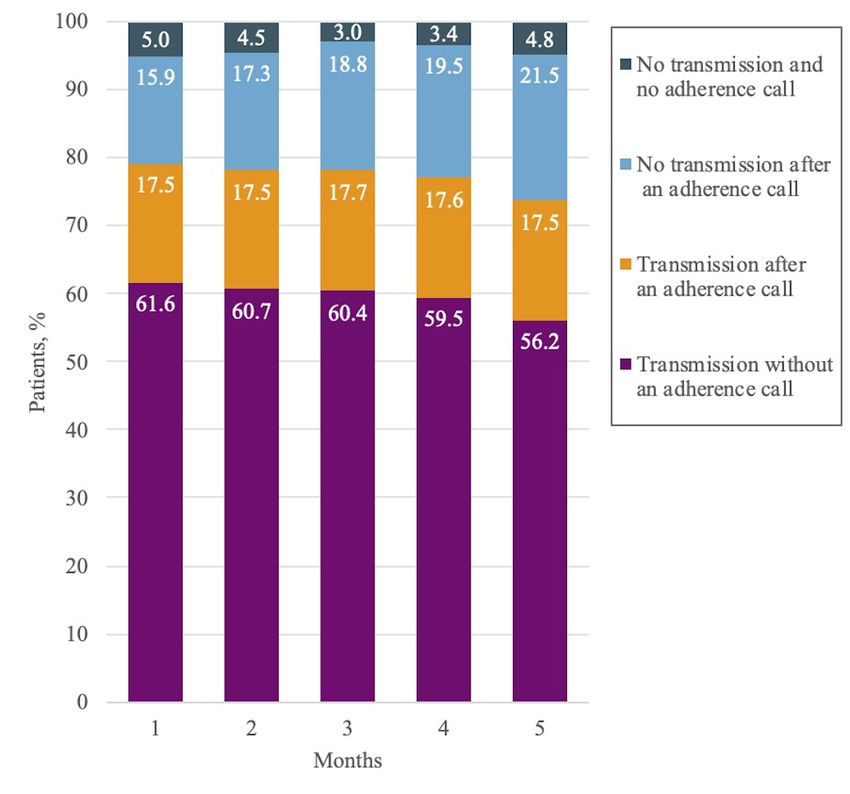
JOURNAL OF MEDICAL INTERNET RESEARCH                                                                                                       Park et al

                                                                            physician request [12,13]. More generally, reimbursement rates
     Introduction                                                           for home monitoring services vary significantly among states
     Background                                                             and insurers and have an uncertain future [5]. Although the
                                                                            temporary support for telehealth services by the Centers for
     Hypertension affects nearly half of the adults in the United           Medicare & Medicaid Services and private insurers as a result
     States, costs approximately US $131 billion annually, and is a         of the coronavirus pandemic may lead to permanent changes in
     major risk factor for cardiovascular disease and stroke [1-3].         the delivery of routine care [14,15], the future of home
     Researchers have estimated the hazard ratios of cardiovascular         telemonitoring coverage is unclear. In this uncertain
     events, stroke, and all-cause mortality to be 1.11-1.42, 1.28-1.40,    environment, the analysis of real-world telemonitoring
     and 1.02-1.13, respectively, for every 10 mm Hg increase in            implementations is of great importance.
     the ambulatory systolic blood pressure value [4]. Nonetheless,
     approximately only 1 in 4 adults with hypertension have their          Methods
     blood pressure under control [1].
     Home blood pressure monitoring is an emerging strategy to              Monitoring Protocol
     help control hypertension, with many medical organizations             In this study, a telemonitoring company provided historical
     recommending its use in diagnosis, distinguishing between              telemonitoring data (from January 2016 to December 2018) for
     blood pressure phenotypes, and ongoing hypertension                    Medicaid clients with hypertension in the state of Texas. The
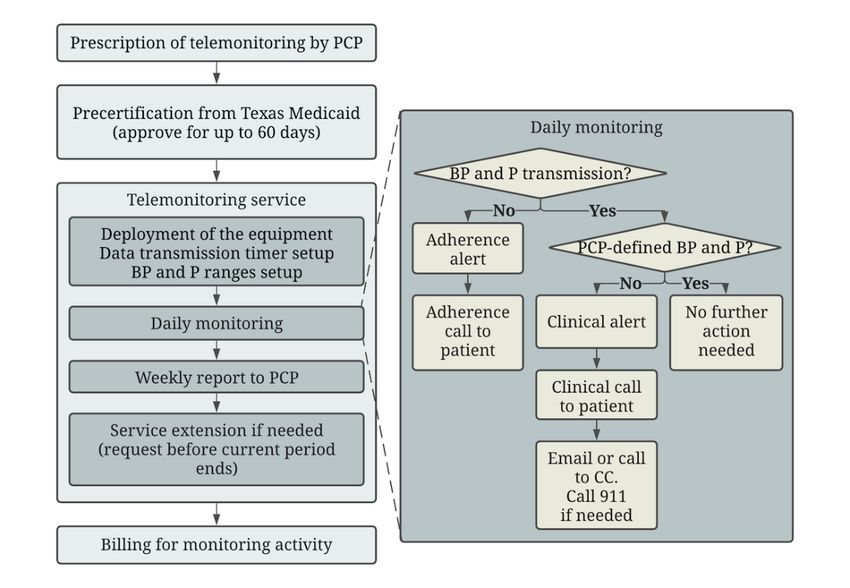
     management [5]. Several meta-analyses of published clinical            monitoring protocol (Figure 1) required patients to be referred
     trials have found evidence that home blood pressure monitoring         by their physician. After Medicaid approval, a company
     can lead to clinically significant reductions in blood pressure        technology deployer visited the patient’s home to set up the
     values when accompanied by additional support services such            equipment and provide training. The equipment—Food and
     as medication titration, education, and lifestyle counseling [6-9].    Drug Administration–approved devices—consisted of a
                                                                            monitoring device with Bluetooth technology and a signal
     Although clinical trials are the gold standard, the reported results
                                                                            transmission unit that transferred the monitoring results to the
     may not materialize in practice. Physicians have concerns about
                                                                            company’s cloud storage. No internet connection or smartphone
     instrumentation quality, patient skills in taking readings, regular
                                                                            was required. The training protocols and materials were
     recording and transmission of results, and adherence to a
                                                                            developed based on American Medical Association guidelines
     regimen of routine measurement [7]. The 2010 and 2014 surveys
                                                                            [16]. The patients received education on how to use the
     of Canadian patients at a hypertension clinic where patients
                                                                            equipment to take proper readings and were informed about the
     were encouraged to conduct home blood pressure monitoring
                                                                            company’s protocols for responding to the patients’ technical
     found that only 39.2% and 40.6%, respectively, reported blood
                                                                            or clinical needs. The patients were asked to select a daily time
     pressure more than 80% of the time [10]. Thus, poor patient
                                                                            by which they would check and transmit their readings. If
     adherence to daily monitoring and reporting could significantly
                                                                            transmission did not occur by that time, an automated alert
     undermine the positive effects observed in clinical trials.
                                                                            prompted a company staff member to make an adherence
     Objectives                                                             reminder call to the patient to troubleshoot any technical issues
     The aims of this study are to (1) investigate how well Texas           and to ask the patient to check and transmit the readings. Once
     Medicaid patients adhere to daily blood pressure and pulse rate        the patient’s data were received, if the blood pressure reading
     monitoring when supported by a daily telemonitoring services           or pulse rate fell outside the physician-defined acceptable ranges,
     company, (2) determine whether an adherence reminder call              an automated clinical alert was transmitted to a company nurse.
     intervention improves the daily transmission rate, and (3)             The nurse placed a clinical phone call to the patient, categorized
     investigate any association between daily adherence and blood          the extent of concern, and contacted the provider by email for
     pressure control.                                                      the lowest level of concern and by both email and phone call
                                                                            for more severe concerns. The company provided weekly
     We note that insurance coverage is a requisite for daily               summary reports to each provider for the enrolled patients.
     telemonitoring. Medicare began paying for home monitoring              Under Texas Medicaid rules, a request for reauthorization of
     in November 2018 [11], and Texas Medicaid reimburses                   the telemonitoring therapy was made every 60 days when the
     physician-prescribed home telemonitoring for hypertension for          physician prescribed additional monitoring. Texas Medicaid
     60 days, with reauthorization for additional monitoring at             paid as much as US $1074.60 for 60 days of monitoring [12,13].

     https://www.jmir.org/2021/9/e29018                                                              J Med Internet Res 2021 | vol. 23 | iss. 9 | e29018 | p. 2
                                                                                                                   (page number not for citation purposes)
XSL• FO
RenderX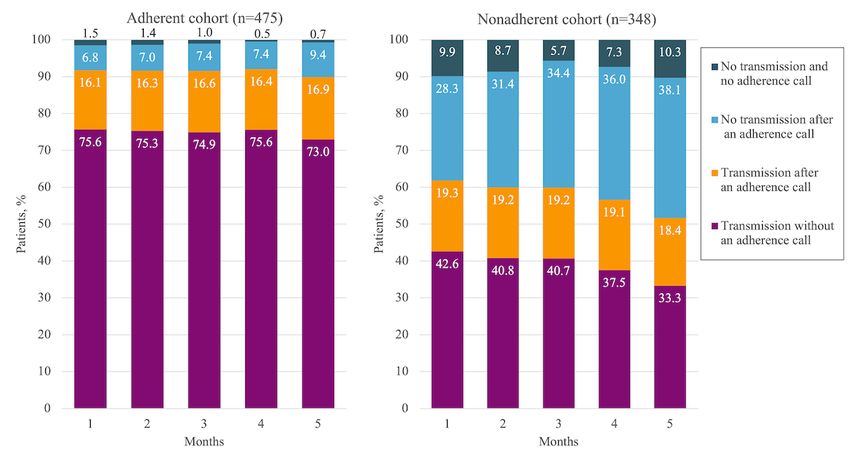
JOURNAL OF MEDICAL INTERNET RESEARCH                                                                                                              Park et al

     Figure 1. Workflow processes for telemonitoring service. BP: blood pressure; CC: clinical contact; P: pulse; PCP: primary care physician.

                                                                                This study was approved by the institutional review board of
     Data and Design                                                            Texas A&M University.
     The telemonitoring company provided historical telemonitoring
     data for Texas Medicaid clients using their service. Only clients          Statistical Analysis
     with 180 days or more of home telemonitoring were included                 To determine whether the patient baseline characteristics
     in this study. The first 30 days were regarded as a startup period         differed by population subgroups, we used chi-square tests for
     during which the patients learned to use the equipment to                  categorical variables and two-tailed t tests for continuous
     measure their vital signs. Data from the first 30 days were                variables. In addition, z tests for the equity of the two
     excluded from this study; thus, the study period was 150 days              proportions were performed to examine whether the rates of
     (months 1-5).                                                              transmission differed by population subgroups. Paired t tests
                                                                                were performed to analyze the changes in blood pressure values
     The number of transmissions before and after the adherence
                                                                                at month 5 by comparing them with those at month 1 for each
     reminder calls was recorded each day, as was the number of
                                                                                subgroup. Independent t tests were used to compare the changes
     adherence reminder calls made. We included all attempted
                                                                                in blood pressure values between the population subgroups.
     adherence reminder calls, even those that the patients did not
                                                                                Analyses were conducted using SAS version 9.4 (SAS Institute).
     answer, because, in these cases, voice mail was left whenever
     possible. Daily systolic and diastolic blood pressure values were
     also collected to investigate improvements in blood pressure
                                                                                Results
     values during the study period. The mean systolic and diastolic            Patient Characteristics
     blood pressure values at month 5 for each patient were
     calculated and compared with those at month 1. If the blood                The data of 2093 clients enrolled in hypertension telemonitoring
     pressure values of the patient were missing for the entire month,          were provided. Of the 2093 patients, 1325 (63.31%) transmitted
     that patient was excluded from this analysis.                              data at least once, and 823 (39.32%) transmitted data throughout
                                                                                a continuous 180-day period. Table 1 summarizes their
     The patients were separated into adherent and nonadherent                  characteristics. The mean age of the participants was 73.2 (SD
     cohorts; adherent patients were those who transmitted blood                11.7) years, and 65.1% (536/823) were women. All patients
     pressure and pulse values on at least 120 of the 150 days (at              included in this study were diagnosed with hypertension and
     least 80% of the days, the same threshold used in the study by             were on pharmaceutical therapy.
     Milot et al [10]).

     https://www.jmir.org/2021/9/e29018                                                                     J Med Internet Res 2021 | vol. 23 | iss. 9 | e29018 | p. 3
                                                                                                                          (page number not for citation purposes)
XSL• FO
RenderX
JOURNAL OF MEDICAL INTERNET RESEARCH Park et al
Table 1. Demographics and nonalert ranges for overall, adherent, and nonadherent cohorts (N=823).
Characteristics Patients
Overall (N=823) Adherent (n=475) Nonadherent (n=348)
Age (years), mean (SD) 73.2 (11.7) 73.8 (10.9) 72.3 (12.6)
Women, n (%) 536 (65.1) 301 (63.4) 235 (67.5)
Area of residencea , n (%)
Dallas 34 (4.1) 13 (2.7) 21 (6)
Houston 26 (3.2) 11 (2.3) 15 (4.3)
McAllen 648 (78.7) 368 (77.5) 280 (80.5)
San Antonio 115 (14) 83 (17.5) 32 (9.2)
Urban-rural classificationa , n (%)
Urban 660 (80.2) 360 (75.8) 300 (86.2)
Suburban or rural 163 (19.8) 115 (24.2) 48 (13.8)
Assigned nonalert range for systolic blood pressure, n (%)
Default (90-160 mm Hg) 731 (88.8) 424 (89.3) 307 (88.2)
Personalized 92 (11.2) 51 (10.7) 41 (11.8)
Assigned nonalert range for diastolic blood pressure, n (%)
Default (60-90 mmHg) 725 (88.1) 422 (88.8) 303 (87.1)
Personalized 98 (11.9) 53 (11.2) 45 (12.9)
Assigned nonalert range for pulse, n (%)
Default (60-120 bpm) 724 (88) 421 (88.6) 303 (87.1)
Personalized 99 (12) 54 (11.4) 45 (12.9)
a
PJOURNAL OF MEDICAL INTERNET RESEARCH Park et al
Figure 2. Monthly transmission rates for all patients over 150 days of telemonitoring. Mean transmission rate before (after) adherence call: 59.7%
(77.2%).
https://www.jmir.org/2021/9/e29018 J Med Internet Res 2021 | vol. 23 | iss. 9 | e29018 | p. 5
(page number not for citation purposes)
XSL• FO
RenderXJOURNAL OF MEDICAL INTERNET RESEARCH Park et al
Figure 3. Monthly transmission rates for the adherent and nonadherent cohorts over 150 days of telemonitoring. Mean transmission rate before (after)
adherence call: adherent cohort, 74.9% (91.3%); nonadherent cohort, 39% (58%).
The mean transmission rates for the first month were 75.6% for the adherent cohort and from 28.3% in the first month to
before the adherence reminder call and 91.7% after the call for 38.1% in the fifth month for the nonadherent cohort (PJOURNAL OF MEDICAL INTERNET RESEARCH Park et al
Table 3. Weekday adherence by month for the nonadherent cohort (N=348).
Adherence (%)
Sunday Monday Tuesday Wednesday Thursday Friday Saturday
Month
Month 1 49.6 66.9 67.1 68.6 65.6 63 52.8
Month 2 47.9 64.9 64.2 64.9 64.9 61.8 51.7
Month 3 46.7 64.4 64.1 65.2 63.8 62.1 52.1
Month 4 45.7 60.2 61 61.6 59.9 57.7 50.1
Month 5 41.8 55 55.5 56 55.6 54.2 44
Value, mean (SD) 46.3 (2.6) 62.3 (4.2) 62.4 (3.9) 63.3 (4.2) 62 (3.7) 59.7 (3.3) 50.1 (3.2)
Along with adherence to the daily protocol, the data also 62.3% in month 5 for the adherent cohort and 49.8% in month
indicated whether the transmissions received were in or out of 1 to 56.7% in month 5 for the nonadherent cohort.
the physician-specified range. The average percentage of
Finally, the data indicated that the transmission results for 2
transmissions in range (calculated using the following formula:
consecutive days were related. Note that for any given day,
average percentage of transmissions in range = 100 × [number
there were three possible outcomes: the patient did not transmit,
of transmissions in range / total number of transmissions]) was
the patient transmitted an out-of-range reading (blood pressure
found to be 60.9% (SD 26%) for the adherent cohort and 53.9%
values, pulse rate, or both) or the patient transmitted an in-range
(SD 24.9%) for the nonadherent cohort. The percentage in range
reading. We refer to these as transmission events. Frequency
increased for both cohorts over the 5-month period, indicating
analysis indicated an association between the transmission
that telemonitoring was effective, from 59.2% in month 1 to
events observed on consecutive days. This is explored in the
following sections. The percentages are listed in Table 4.
Table 4. Next day transition (N=823).
From To (%)
Adherent cohort (n=475) Nonadherent cohort (n=348)
NTa ORTb IRTc NT ORT IRT
NT 32.9 29.3 37.8 61.7 18.5 19.8
ORT 5.6 41.6 52.7 28.9 34.8 36.3
IRT 6.3 32 61.7 29.6 28 42.5
a
NT: no transmission.
b
ORT: out-of-range transmission.
c
IRT: in-range transmission.
For the adherent cohort, out-of-range transmissions were
Trends in Transmission Events Between 2 Consecutive followed by 41.6% of out-of-range transmissions, 52.7% of
Days in-range transmissions, and only 5.6% of no transmissions the
Adherence on the day after a missed transmission was far below next day. For the nonadherent cohort, out-of-range transmissions
the overall average for both adherent (67.1% vs an average of were followed by 34.8% of out-of-range transmissions, 36.3%
91.3%) and nonadherent (38.3% vs an average of 58%) cohorts. of in-range transmissions, and 28.9% of no transmissions the
Furthermore, the transmissions that were received the day after next day. Thus, adherence after an out-of-range day was greater
a missed transmission were less likely to be in range than the than the overall average (94.6% vs an average of 91.3% for the
average for both cohorts. For the adherent cohort, 37.8% of the adherent cohort and 71.1% vs an average of 58% for the
missed transmissions were followed by in-range transmissions, nonadherent cohort). Furthermore, the transmissions that were
indicating that 56.3% (100 × [37.8 / 67.1]) of the transmissions received after an out-of-range transmission were less likely to
received the day after a missed transmission were in range, be in range than the overall average (55.7%—100 × [52.7 /
whereas for the nonadherent cohort, 19.8% of the missed 94.6]—vs an average of 60.9% for the adherent cohort and
transmissions were followed by in-range transmissions, 51%—100 × [36.3 / 71.1]—vs an average of 53.8% for the
indicating that 51.6% (100 × [19.8 / 38.3]) of the transmissions nonadherent cohort). It is worth noting that when an adherent
received the day after a missed transmission were in range. patient transmitted an out-of-range reading, the next in-range
transmission occurred within 2-3 days on average, that is, it
Adherence and in-range transmission after out-of-range
took 2-3 days to resolve whatever problem was causing the
transmission also showed similar patterns across the 2 cohorts.
out-of-range reading and for the patient to regain blood pressure
https://www.jmir.org/2021/9/e29018 J Med Internet Res 2021 | vol. 23 | iss. 9 | e29018 | p. 7
(page number not for citation purposes)
XSL• FO
RenderXJOURNAL OF MEDICAL INTERNET RESEARCH Park et al
and pulse rate control. However, when a nonadherent patient adherent cohort and 70.5% vs an average of 58% for the
transmitted an out-of-range reading, the next in-range nonadherent cohort). Furthermore, the transmissions that were
transmission did not occur for 5-6 days on average, indicating received after an in-range transmission were more likely to be
that nonadherent patients were likely to experience elevated in-range again the next day than the overall average
levels of blood pressure or pulse rate over a longer period. (65.8%—100 × [61.7 / 93.7]—vs an average of 60.9% for the
adherent cohort and 60.3%—100 × [42.5 / 70.5]—vs an average
Finally, adherence and in-range transmission after an in-range
of 53.8% for the nonadherent cohort).
transmission also had similar patterns across the 2 cohorts, with
better adherence and more in-range transmissions on the Relationship Between Daily Adherence and Blood
following day. For the adherent cohort, in-range transmissions Pressure Control
were followed by 61.7% of in-range transmissions, 32% of
Overall, we found that the systolic blood pressure values of the
out-of-range transmissions, and only 6.3% of no transmissions
adherent cohort improved by an average of 2.2 mm Hg (PJOURNAL OF MEDICAL INTERNET RESEARCH Park et al
Table 6. Diastolic blood pressure changes between month 1 and month 5 (n=781).
Month Adherent cohort (n=475; mm Hg) Nonadherent cohort (n=306a; mm Hg) P valueb
Month 1
Value, mean (SD) 71.5 (7.9) 74.0 (10.0) N/Ac
Month 5
Value, mean (SD) 70.7 (7.9) 73.6 (9.8) N/A
Comparison between month 1 and month 5
Value, mean (SD) 0.7 (5.6) 0.4 (7.9) .09
P valued .004 .39 N/A
a
A total of 42 patients were excluded because of missing data.
b
A two-tailed independent t test was performed to compare the diastolic blood pressure changes between the adherent and nonadherent cohorts.
c
N/A: not applicable.
d
A two-tailed paired t test was performed to analyze the differences in diastolic blood pressure between month 1 and month 5 for each cohort.
Of the 21 patients with an average systolic and diastolic blood behaviors will likely be necessary (but perhaps not sufficient)
pressure reading of more than 140 and 90 mm Hg for the first to bring adherence levels up to 80% and beyond. The data
month, we found that the diastolic blood pressure of adherent suggest that such interventions should be targeted to weekends
patients (7/21, 33%) improved by an average of 11.0 mm Hg and to days after missed transmissions when the likelihood of
(P=.02) over 5 months, whereas that of the nonadherent patients poor adherence is higher.
(14/21, 67%) improved over 5 months by an average of 9.7 mm
Just as additional support for better adherence to daily
Hg (P=.03).
monitoring is necessary, follow-up on an abnormal clinical
condition is also important. A potential benefit of daily
Discussion monitoring is that health care providers may recognize and
Principal Findings address emerging problems before they become urgent. When
readings are not transmitted, this opportunity may be lost. If we
This study suggests that telemonitoring for hypertension can assume that the percentage of out-of-range transmissions can
achieve more than 70% adherence among Medicaid clients. be applied to the days when data were not transmitted, we can
Thus, most patients should be able to check and transmit their estimate the number of missed transmissions that would have
blood pressure values and pulse rate after the initial training. been out of range. Over 150 days of monitoring, this estimate
Furthermore, much higher levels of adherence (up to 90%) are turned out to be 5.1 days ([1 – 0.913] × [0.391] × 150) per
possible for most patients (475/823, 57.7% of the patients in patient for the adherent cohort and 29.0 days ([1 – 0.580] ×
this study had 80% or more days of transmission) when [0.461] × 150) per patient for the nonadherent cohort. This
telemonitoring is accompanied by adherence reminder calls. represents a total of 12,528 days (29.04 × 348 + [5.10 × 475])
For these patients, adherence levels seemed to decline slightly of unmet needs for 823 patients over 150 days of monitoring
over the 5-month period. (approximately 15 days per patient). In other words, 10.2%
Furthermore, many Medicaid patients are likely to have trouble (12,528 / [150 × 823]) of the required follow-up was missed
with daily adherence (348/823, 42.3% of the patients in this because of lack of adherence (for the nonadherent cohort, this
study). For these patients, adherence reminder calls can be was approximately 20%).
helpful, but many daily transmissions will still be missed On a positive note, it is encouraging that 58.9% (280/475) of
(approximately 13 days per patient per month in this study). the adherent patients and 54.9% (168/306) of the nonadherent
Such patients can likely be identified within the first month of patients experienced an improvement in systolic blood pressure
monitoring (not including the startup period), when their values, and 52.2% (248/475) of the adherent patients and 51.6%
adherence rates without the adherence reminder call fall well (158/306) of the nonadherent patients experienced an
below 50% (42.6% in this study). Indeed, 75% (260/348) of the improvement in diastolic blood pressure values. The mean
patients in the nonadherent cohort in this study were not systolic blood pressure values of both cohorts improved
adherent in the first month of monitoring. For these patients, significantly during the study period, and these improvements
adherence rates can be expected to degrade significantly over were significantly higher in the adherent cohort (P=.049). The
time (by approximately 16% over 5 months in this study). Of mean diastolic blood pressure value of the adherent cohort
the 823 patients, the 475 (57.7%) adherent patients and the 348 declined significantly during the study period, but the decline
(42.3%) nonadherent patients together generated the need for was not significant for the nonadherent patients. These results
approximately 350 adherence reminder calls per day, a are consistent with those of clinical trials in the literature. In 18
significant workload. Regardless of the case, patients with clinical trials of home telemonitoring, the average improvement
adherence problems clearly need more than an adherence in systolic and diastolic blood pressure values was 12.1 and 6.3
reminder call. Indeed, interventions that delve into health mm Hg within 6 months [17-34]. Of these 18 clinical trials,
https://www.jmir.org/2021/9/e29018 J Med Internet Res 2021 | vol. 23 | iss. 9 | e29018 | p. 9
(page number not for citation purposes)
XSL• FO
RenderXJOURNAL OF MEDICAL INTERNET RESEARCH Park et al
eight were restricted to patients with systolic and diastolic blood This study included some limitations. It only examined Texas
pressure values of more than 140 and 90 mm Hg at baseline, Medicaid clients. It is not clear whether these findings are
and the other ten trials were restricted to those with blood generalizable to Medicare, privately insured, or uninsured
pressure readings above or below these values. In our study patients with hypertension. It is also unclear whether these
with patients with systolic and diastolic blood pressure values findings are generalizable to people with other chronic
of more than 140 and 90 mm Hg in the first month, the systolic conditions who would benefit from ongoing monitoring. This
and diastolic blood pressure values of the adherent patients study was limited to patients who were referred to the
improved by an average of 14.8 and 11.0 mm Hg, which is monitoring program. The analysis would be strengthened if
higher than the average improvement observed in the 18 clinical there were a control group to more rigorously examine
trials. However, for nonadherent patients with systolic and adherence and the impact of the intervention. Finally, the
diastolic blood pressure values of more than 140 and 90 mm monitoring protocol required the data to be transmitted on a
Hg in the first month, only the diastolic blood pressure value daily basis, which was more frequent than the general home
significantly improved by an average of 9.7 mm Hg. blood pressure monitoring guidelines [5]. Excessive and frequent
transmission requirements may negatively affect adherence and
Finally, it is important to appreciate that achieving improved
persistence. In contrast, daily monitoring could help with
adherence requires considerable effort. Patients must be trained
medication adherence and help avert emergency situations and
in the correct procedures to monitor their blood pressure and
hospitalizations.
pulse; staff members must monitor daily transmissions and
contact patients to encourage participation and to resolve Conclusions
technical issues; and, as noted, additional interventions will be Adherence reminder calls helped most patients with
needed for many patients. Texas Medicaid payment levels may hypertension to achieve higher levels of adherence to blood
have been adequate for this level of intervention, but it is not pressure and pulse monitoring. Telemonitoring improved blood
clear whether Medicare or private insurers will reimburse this pressure control, similar to the improvement observed in clinical
level of effort in the future. Clearly, the case for reimbursement trials. Furthermore, more adherent patients achieved higher
would be compelling if hypertension telemonitoring could be levels of blood pressure control. However, the study suggests
shown to help avoid even a small number of hospitalizations that additional adherence interventions and support are needed
for stroke and heart disease, which can be extremely expensive. for many patients to achieve high levels of adherence.
Acknowledgments
This study was supported in part by Industrial Seed Fund project from the Industry Board Fees of the NSF PATHS-UP ERC
(#1648451), Population Informatics Lab, and the Texas Virtual Data Library at Texas A&M University.
Authors' Contributions
SP, HCK, and MAL were involved in the study concept and design and were responsible for data acquisition, governance, and
analysis. SP, HCK, MAM, QZ, and MAL were responsible for interpreting the data and drafting the manuscript.
Conflicts of Interest
None declared.
References
1. Centers for Disease Control and Prevention (CDC). Hypertension Cascade: Hypertension Prevalence, Treatment and Control
Estimates Among US Adults Aged 18 Years and Older Applying the Criteria From the American College of Cardiology
and American Heart Association’s 2017 Hypertension Guideline—NHANES 2015–2018. Atlanta, GA: US Department of
Health and Human Services; 2021. URL: https://millionhearts.hhs.gov/data-reports/hypertension-prevalence.html [accessed
2021-05-19]
2. Kirkland EB, Heincelman M, Bishu KG, Schumann SO, Schreiner A, Axon RN, et al. Trends in healthcare expenditures
among US adults with hypertension: National Estimates, 2003-2014. J Am Heart Assoc 2018 May 30;7(11):e008731 [FREE
Full text] [doi: 10.1161/JAHA.118.008731] [Medline: 29848493]
3. Centers for Disease Control and Prevention. Underlying Cause of Death, 1999–2018. CDC WONDER Online Database.
Atlanta, GA: Centers for Disease Control and Prevention; 2018. URL: http://wonder.cdc.gov/ucd-icd10.html [accessed
2020-03-09]
4. Siu AL. Screening for high blood pressure in adults: U.S. Preventive Services Task Force recommendation statement. Ann
Intern Med 2015 Oct 13;163(10):778. [doi: 10.7326/m15-2223]
5. Shimbo D, Artinian NT, Basile JN, Krakoff LR, Margolis KL, Rakotz MK, American Heart Associationthe American
Medical Association. Self-measured blood pressure monitoring at home: a joint policy statement from the American Heart
Association and American Medical Association. Circulation 2020 Jul 28;142(4):42-63. [doi: 10.1161/CIR.0000000000000803]
[Medline: 32567342]
https://www.jmir.org/2021/9/e29018 J Med Internet Res 2021 | vol. 23 | iss. 9 | e29018 | p. 10
(page number not for citation purposes)
XSL• FO
RenderXJOURNAL OF MEDICAL INTERNET RESEARCH Park et al
6. Duan Y, Xie Z, Dong F, Wu Z, Lin Z, Sun N, et al. Effectiveness of home blood pressure telemonitoring: a systematic
review and meta-analysis of randomised controlled studies. J Hum Hypertens 2017 Jul;31(7):427-437. [doi:
10.1038/jhh.2016.99] [Medline: 28332506]
7. Liyanage-Don N, Fung D, Phillips E, Kronish IM. Implementing home blood pressure monitoring into clinical practice.
Curr Hypertens Rep 2019 Feb 12;21(2):14. [doi: 10.1007/s11906-019-0916-0] [Medline: 30747350]
8. Omboni S, Gazzola T, Carabelli G, Parati G. Clinical usefulness and cost effectiveness of home blood pressure telemonitoring:
meta-analysis of randomized controlled studies. J Hypertens 2013 Mar;31(3):455-467. [doi: 10.1097/HJH.0b013e32835ca8dd]
[Medline: 23299557]
9. Tucker KL, Sheppard JP, Stevens R, Bosworth HB, Bove A, Bray EP, et al. Self-monitoring of blood pressure in hypertension:
A systematic review and individual patient data meta-analysis. PLoS Med 2017 Sep;14(9):e1002389 [FREE Full text] [doi:
10.1371/journal.pmed.1002389] [Medline: 28926573]
10. Milot J, Birnbaum L, Larochelle P, Wistaff R, Laskine M, Van Nguyen P, et al. Unreliability of home blood pressure
measurement and the effect of a patient-oriented intervention. Can J Cardiol 2015 May;31(5):658-663. [doi:
10.1016/j.cjca.2015.03.006] [Medline: 25936491]
11. Holland TM. The new rules for remote patient monitoring reimbursement. Samsung Insights. 2020 Sep 02. URL: https:/
/insights.samsung.com/2020/09/02/the-new-rules-for-remote-patient-monitoring-reimbursement-2/ [accessed 2020-11-18]
12. Texas Medicaid provider procedures manual vol 2. Telecommunication services handbook. Texas Medicaid & Healthcare
Partnership (TMHP). 2020 Aug. URL: https://www.tmhp.com/sites/default/files/file-library/resources/provider-manuals/
tmppm/pdf-chapters/2020/august/2_Telecommunication_Srvs.pdf [accessed 2020-11-17]
13. Rate changes. Texas Medicaid & Healthcare Partnership (TMHP). 2020. URL: https://www.tmhp.com/resources/
rate-and-code-updates/rate-changes [accessed 2020-11-20]
14. Bloem BR, Dorsey ER, Okun MS. The Coronavirus Disease 2019 crisis as catalyst for telemedicine for chronic neurological
disorders. JAMA Neurol 2020 Aug 01;77(8):927-928. [doi: 10.1001/jamaneurol.2020.1452] [Medline: 32329796]
15. Duffy EY, Cainzos-Achirica M, Michos ED. Primary and secondary prevention of cardiovascular disease in the era of the
coronavirus pandemic. Circulation 2020 Jun 16;141(24):1943-1945. [doi: 10.1161/circulationaha.120.047194]
16. Remote patient monitoring implementation playbook. American Medical Association (AMA). 2018. URL: https://www.
ama-assn.org/practice-management/digital/remote-patient-monitoring-implementation-playbook-overview [accessed
2021-05-20]
17. Artinian NT, Flack JM, Nordstrom CK, Hockman EM, Washington OG, Jen KC, et al. Effects of nurse-managed
telemonitoring on blood pressure at 12-month follow-up among urban African Americans. Nurs Res 2007;56(5):312-322.
[doi: 10.1097/01.NNR.0000289501.45284.6e] [Medline: 17846552]
18. Bosworth HB, Powers BJ, Olsen MK, McCant F, Grubber J, Smith V, et al. Home blood pressure management and improved
blood pressure control: results from a randomized controlled trial. Arch Intern Med 2011 Jul 11;171(13):1173-1180. [doi:
10.1001/archinternmed.2011.276] [Medline: 21747013]
19. Bove AA, Homko CJ, Santamore WP, Kashem M, Kerper M, Elliott DJ. Managing hypertension in urban underserved
subjects using telemedicine--a clinical trial. Am Heart J 2013 Apr;165(4):615-621. [doi: 10.1016/j.ahj.2013.01.004] [Medline:
23537980]
20. Carrasco MP, Salvador CH, Sagredo PG, Márquez-Montes J, de Mingo MA, Fragua JA, et al. Impact of patient-general
practitioner short-messages-based interaction on the control of hypertension in a follow-up service for low-to-medium risk
hypertensive patients: a randomized controlled trial. IEEE Trans Inf Technol Biomed 2008 Nov;12(6):780-791. [doi:
10.1109/TITB.2008.926429] [Medline: 19000959]
21. Earle KA, Istepanian RS, Zitouni K, Sungoor A, Tang B. Mobile telemonitoring for achieving tighter targets of blood
pressure control in patients with complicated diabetes: a pilot study. Diabetes Technol Ther 2010 Jul;12(7):575-579. [doi:
10.1089/dia.2009.0090] [Medline: 20597833]
22. Friedman RH, Kazis L, Jette A, Smith MB, Stollerman J, Torgerson J, et al. A telecommunications system for monitoring
and counseling patients with hypertension. Impact on medication adherence and blood pressure control. Am J Hypertens
1996 Apr;9(4 Pt 1):285-292. [doi: 10.1016/0895-7061(95)00353-3] [Medline: 8722429]
23. Green BB, Anderson ML, Cook AJ, Catz S, Fishman PA, McClure JB, et al. e-Care for heart wellness: a feasibility trial to
decrease blood pressure and cardiovascular risk. Am J Prev Med 2014 Apr;46(4):368-377 [FREE Full text] [doi:
10.1016/j.amepre.2013.11.009] [Medline: 24650839]
24. Kim Y, Shin DG, Park S, Lee CH. Randomized clinical trial to assess the effectiveness of remote patient monitoring and
physician care in reducing office blood pressure. Hypertens Res 2015 Jul;38(7):491-497. [doi: 10.1038/hr.2015.32] [Medline:
25787041]
25. Madsen LB, Kirkegaard P, Pedersen EB. Blood pressure control during telemonitoring of home blood pressure. A randomized
controlled trial during 6 months. Blood Press 2008;17(2):78-86. [doi: 10.1080/08037050801915468] [Medline: 18568696]
26. Magid DJ, Ho P, Olson K, Brand DW, Welch LK, Snow KE, et al. A multimodal blood pressure control intervention in 3
healthcare systems. Am J Manag Care 2011 Apr;17(4):96-103. [Medline: 21774100]
https://www.jmir.org/2021/9/e29018 J Med Internet Res 2021 | vol. 23 | iss. 9 | e29018 | p. 11
(page number not for citation purposes)
XSL• FO
RenderXJOURNAL OF MEDICAL INTERNET RESEARCH Park et al
27. Magid DJ, Olson KL, Billups SJ, Wagner NM, Lyons EE, Kroner BA. A pharmacist-led, American Heart Association
Heart360 web-enabled home blood pressure monitoring program. Circ: Cardiovas Qual Outcomes 2013 Mar;6(2):157-163.
[doi: 10.1161/circoutcomes.112.968172]
28. Margolis KL, Asche SE, Bergdall AR, Dehmer SP, Groen SE, Kadrmas HM, et al. Effect of home blood pressure
telemonitoring and pharmacist management on blood pressure control: a cluster randomized clinical trial. J Am Med Assoc
2013 Jul 03;310(1):46-56 [FREE Full text] [doi: 10.1001/jama.2013.6549] [Medline: 23821088]
29. McKinstry B, Hanley J, Wild S, Pagliari C, Paterson M, Lewis S, et al. Telemonitoring based service redesign for the
management of uncontrolled hypertension: multicentre randomised controlled trial. Br Med J 2013 May 24;346:f3030
[FREE Full text] [doi: 10.1136/bmj.f3030] [Medline: 23709583]
30. McManus RJ, Mant J, Bray EP, Holder R, Jones MI, Greenfield S, et al. Telemonitoring and self-management in the control
of hypertension (TASMINH2): a randomised controlled trial. Lancet 2010 Jul;376(9736):163-172. [doi:
10.1016/s0140-6736(10)60964-6]
31. McManus RJ, Mant J, Haque MS, Bray EP, Bryan S, Greenfield SM, et al. Effect of self-monitoring and medication
self-titration on systolic blood pressure in hypertensive patients at high risk of cardiovascular disease: the TASMIN-SR
randomized clinical trial. J Am Med Assoc 2014 Aug 27;312(8):799-808. [doi: 10.1001/jama.2014.10057] [Medline:
25157723]
32. Parati G, Omboni S, Albini F, Piantoni L, Giuliano A, Revera M, TeleBPCare Study Group. Home blood pressure
telemonitoring improves hypertension control in general practice. The TeleBPCare study. J Hypertens 2009 Jan;27(1):198-203.
[doi: 10.1097/hjh.0b013e3283163caf] [Medline: 19145785]
33. Rifkin DE, Abdelmalek J, Miracle C, Low C, Barsotti R, Rios P, et al. Linking clinic and home: A randomized, controlled
clinical effectiveness trial of real-time, wireless blood pressure monitoring for older patients with kidney disease and
hypertension. Blood Press Monit 2013 Feb;18(1):8-15 [FREE Full text] [doi: 10.1097/MBP.0b013e32835d126c] [Medline:
23275313]
34. Wakefield BJ, Holman JE, Ray A, Scherubel M, Adams MR, Hillis SL, et al. Effectiveness of home telehealth in comorbid
diabetes and hypertension: a randomized, controlled trial. Telemed J E Health 2011 May;17(4):254-261. [doi:
10.1089/tmj.2010.0176] [Medline: 21476945]
Edited by R Kukafka; submitted 22.03.21; peer-reviewed by J Pagan, S Omboni; comments to author 30.03.21; revised version received
31.05.21; accepted 05.07.21; published 06.09.21
Please cite as:
Park S, Kum HC, Morrisey MA, Zheng Q, Lawley MA
Adherence to Telemonitoring Therapy for Medicaid Patients With Hypertension: Case Study
J Med Internet Res 2021;23(9):e29018
URL: https://www.jmir.org/2021/9/e29018
doi: 10.2196/29018
PMID:
©Sulki Park, Hye-Chung Kum, Michael A Morrisey, Qi Zheng, Mark A Lawley. Originally published in the Journal of Medical
Internet Research (https://www.jmir.org), 06.09.2021. This is an open-access article distributed under the terms of the Creative
Commons Attribution License (https://creativecommons.org/licenses/by/4.0/), which permits unrestricted use, distribution, and
reproduction in any medium, provided the original work, first published in the Journal of Medical Internet Research, is properly
cited. The complete bibliographic information, a link to the original publication on https://www.jmir.org/, as well as this copyright
and license information must be included.
https://www.jmir.org/2021/9/e29018 J Med Internet Res 2021 | vol. 23 | iss. 9 | e29018 | p. 12
(page number not for citation purposes)
XSL• FO
RenderXYou can also read


