Clinical Significance of Variants in the TTN Gene in a Large Cohort of Patients With Sporadic Dilated Cardiomyopathy - Frontiers
←
→
Page content transcription
If your browser does not render page correctly, please read the page content below
ORIGINAL RESEARCH
                                                                                                                                                published: 30 April 2021
                                                                                                                                        doi: 10.3389/fcvm.2021.657689

                                             Clinical Significance of Variants in
                                             the TTN Gene in a Large Cohort of
                                             Patients With Sporadic Dilated
                                             Cardiomyopathy
                                             Lei Xiao 1,2 , Chenze Li 1,2 , Yang Sun 1,2 , Yanghui Chen 1,2 , Haoran Wei 1,2 , Dong Hu 1,2 ,
                                             Ting Yu 1,2 , Xianqing Li 1,2 , Li Jin 3 , Leming Shi 3 , Ali J. Marian 4* and Dao Wen Wang 1,2,3*
                                             1
                                              Division of Cardiology, Department of Internal Medicine, Tongji Hospital, Tongji Medical College, Huazhong University of
                                             Science and Technology, Wuhan, China, 2 Hubei Key Laboratory of Genetics and Molecular Mechanism of Cardiologic
                                             Disorders, Huazhong University of Science and Technology, Wuhan, China, 3 Collaborative Innovation Center for Genetics
                           Edited by:        and Development, School of Life Sciences, Fudan University, Shanghai, China, 4 Center for Cardiovascular Genetics,
                        Brenda Gerull,       Houston, TX, United States
                    University Hospital
                   Würzburg, Germany
                                             Background: Mutations in the TTN gene are the most common causes of dilated
                         Reviewed by:
                   Douglas A. Marchuk,       cardiomyopathy (DCM). The clinical significance of TTN gene variants remains
        Duke University, United States       inadequately understood.
                          Zofia Bilinska,
National Institute of Cardiology, Poland     Methods: Whole-exome sequencing and phenotypic characterisation were performed,
                   *Correspondence:          and patients were followed up for a median of 44 months.
                        Dao Wen Wang
             dwwang@tjh.tjmu.edu.cn          Results: We analyzed the association of the TTN variants with the clinical outcomes
                           Ali J. Marian     in a prospective study of 1,041 patients with sporadic DCM. TTN truncating variants
             Ali.J.Marian@uth.tmc.edu
                                             (tTTN) were detected in 120 (11.5%) patients as compared with 2.4/10,000 East Asian
                   Specialty section:        populations in the Genome Aggregation Database (GnomAD; p < 0.0001). Pathogenic
         This article was submitted to       TTN missense variants were also enriched in DCM as compared with the GnomAD
Cardiovascular Genetics and Systems
                                             populations (27.6 vs. 5.9%, p < 0.0001). DCM patients with tTTN had a lower left
                             Medicine,
               a section of the journal      ventricular ejection fraction (28.89 ± 8.72 vs. 31.81 ± 9.97, p = 0.002) and a lower
 Frontiers in Cardiovascular Medicine        frequency of the left bundle branch block (3.3 vs. 11.3%, p = 0.011) than those without or
          Received: 23 January 2021          with mutations in other known causal genes (OCG). However, tTTN were not associated
           Accepted: 05 March 2021
            Published: 30 April 2021
                                             with the composite primary endpoint of cardiac death and heart transplantation during
                                Citation:
                                             the follow-up period [adjusted hazard ratio (HR): 0.912; 95% confidence interval: 0.464–
   Xiao L, Li C, Sun Y, Chen Y, Wei H,       1.793; p = 0.790]. There was also no sex-dependent effect. Concomitant tTTN and
           Hu D, Yu T, Li X, Jin L, Shi L,
                                             pathogenic variants in OCG were present in only eight DCM patients and did not affect
      Marian AJ and Wang DW (2021)
 Clinical Significance of Variants in the    the outcome.
        TTN Gene in a Large Cohort of
        Patients With Sporadic Dilated
                                             Conclusion: The phenotype of DCM caused by tTTN, major causes of sporadic DCM,
                       Cardiomyopathy.       is not distinctly different from those caused by other causal genes for DCM.
  Front. Cardiovasc. Med. 8:657689.
      doi: 10.3389/fcvm.2021.657689          Keywords: DCM, TTN, genetics, phenotype, prognosis

Frontiers in Cardiovascular Medicine | www.frontiersin.org                          1                                              April 2021 | Volume 8 | Article 657689
Xiao et al. TTN in Sporadic DCM
INTRODUCTION age and body surface area in the absence of significant coronary
artery disease, primary valvular disease, or myocarditis (21).
Dilated cardiomyopathy (DCM) is a primary disease of the All participants signed the informed consent prior to
myocardium characterized by an increased left ventricular end- inclusion. The study was approved by the ethics committee
diastolic diameter (LVEDD) and a reduced left ventricular of Tongji Hospital Affiliated Tongji Medical College of
ejection fraction (LVEF) in the absence of external causes, such as Huazhong University of Science and Technology and conducted
coronary artery disease (1, 2). DCM is a major cause of chronic in accordance with the Declaration of Helsinki and the
heart failure (CHF) and the most common indication for heart International Conference on Harmonization Guidelines for
transplantation (HTx) (3–5). The estimated prevalence of DCM Good Clinical Practice.
ranges from ∼1:2,700 to 1:250 individuals (6, 7). Patients with
DCM exhibit a variable phenotypic expression, including age of
onset, severity of the disease, and prognosis.
Clinical Data and Follow-Up
Baseline demographic and clinical data were collected by
Primary DCM is typically a genetic disease, familial in about
interviewing patients and reviewing the clinical records of
1/3 of the cases and sporadic in the remainder. Mutations in over
all participants. Comprehensive clinical evaluation included
60 genes are associated with DCM (3, 8, 9). Mutations in genes
electrocardiography, echocardiography, coronary artery
encoding sarcomere and cytoskeletal proteins are major causes of
angiography, and blood biochemistry. Cardiac arrhythmias and
familial and sporadic DCM, although the causality of mutations
conduction defects, namely, left bundle branch block (LBBB),
is best established in the familial cases (3).
atrial fibrillation (AF), and ventricular tachycardia (VT), were
The TTN gene is composed of 363 exons (ENST00000589042),
also recorded. All patients were followed up annually through
multiple mRNA isoforms, and codes for the largest known
telephone interviews and a home visit, whenever telephone
protein with 34,350 amino acids. TTN protein spans half of the
follow-up was not feasible.
sarcomere length from the Z disk to M line. Titin is implicated
The primary endpoint was a composite of death due to cardiac
in conferring elasticity to sarcomere, sarcomere assembly, and
causes and HTx. Death due to cardiac causes was defined as death
mechanosensing (10–12).
as a result of cardiac pump failure, an ischemic event, or sudden
Because of its enormous size, variants in the TTN gene,
cardiac death, the latter defined as death occurring in the absence
including truncating variants (tTTN), are relatively common in
of precipitating cardiovascular symptoms, as judged by clinical
the general population. tTTN and missense variants are present
physicians. The secondary endpoints were all-cause mortality
in ∼2 and 5.7% of the general population (without overt DCM),
and recurrence of CHF. All-cause mortality was considered as
respectively (10, 13–15). tTTN are the most common causes
death from any cause, whereas recurrence of CHF was defined
of DCM, occurring in 10–20% of cases (11, 16). The role of
as new or worsening symptoms of CHF, such as dyspnea on
TTN missense variants in DCM is less clear but is implicated
exertion, orthopnea, and edema.
as a modifier of the phenotype (17). Given the presence of
the TTN variants in the general population, large datasets are
necessary to determine the associations of TTN variants with the High-Throughput Sequencing
clinical outcomes. The results of previous genotype–phenotype Genomic DNA (gDNA) was extracted from peripheral blood
correlation studies are compounded by the small sample size, lymphocytes (Qiagen, Germany) and sequenced on an Illumina
cross-sectional design, and differences in the characteristics of sequencing platform (Supplementary Method).
the study populations (11, 16–20). To determine the clinical
significance of TTN variants, we performed a prospective Bioinformatics Processing
study of 1,041 patients with DCM who underwent phenotypic Principle Component Analysis (PCA) was performed using
characterization and whole-exome sequencing. We determined PLINK to detect ancestry and relatedness and exclude related
the frequency of tTTN and missense variants in DCM cases subjects (22). Variants were annotated using ANNOVAR (version
and investigated the association of the genotypes, including 2018, April 16). The population allele frequency of each variant
topography of the variants with the clinical outcomes during a was based on data from the Genome Aggregation Database
median follow-up period of 44 months. (GnomAD). TTN variants were annotated to the titin meta-
transcript (ENST000005859042) using LRG_391_t1. Only the
variants in constitutively expressed cardiac exons [percentage
MATERIALS AND METHODS spliced in (PSI) >90%] were analyzed for pathogenicity (11).
Rare variants were defined as variants with a minor allele
Study Population frequency (MAF)Xiao et al. TTN in Sporadic DCM
Statistical Analysis ≥0.9, which were considered pathogenic variants according to
The characteristics of the study patients were presented as mean the 2015 ACMG guidelines. The pathogenic tTTN variants
± SD for normally distributed continuous data; otherwise, as comprised 50 (45.5%) stop-gain, 45 (40.9%) frameshift, and
median [interquartile range (IQR)] for categorical data. For 15 (13.6%) essential splice site variants. The majority of the
skewed data, numbers (percentages) were provided. Continuous pathogenic tTTN were novel (81/110, 73.6%), which are listed in
variables were compared using Student’s t-test between the two Supplementary Table 2, and all were heterozygous. Pathogenic
groups and the Kruskal–Wallis test, the latter when the data variants were detected in 11.5% (120/1,041) of the DCM patients.
did not conform to normal distribution. Survival rates between Compared with the ethnically matched GnomAD population
the groups were compared by the Kaplan–Meier method using (2.4/10,000), tTTN were enriched in the DCM cohort (p <
Cox proportional hazards regression. The association between 0.0001). Seven tTTN were identified in more than one DCM
tTTN with primary and secondary endpoints was evaluated by patient. These variants were enriched in the DCM patients as
univariate and multivariate analyses. All statistical analyses were compared with the East Asian population in the GnomAD
performed in R statistical package, version 3.5.0. A p < 0.05 was (Supplementary Table 3).
considered to be significant. All comparisons were two-sided.
TTN Missense Variants
To ascertain the pathogenicity of the missense variants identified
RESULTS in the TTN gene, the ClinVar database was used to identify the
Clinical Characteristics deleterious variants that were recorded as “pathogenic” or “likely
Baseline characteristics of the study population are shown in pathogenic.” In addition, rare missense variants that had a CADD
Table 1. The mean age at diagnosis and onset in patients score of ≥20 were defined as potential pathogenic variants. A
with DCM were 55.32 ± 13.90 and 52.29 ± 13.65 years total of 247 variants were identified in 27.6% cases (287/1,041),
old, respectively. Upon enrollment, 69.4% of the patients had which suggested enrichment of the pathogenic missense variants
symptoms consistent with New York Heart Association (NYHA) (PMVs) in the sporadic DCM population, compared with the
functional classes III or IV. The mean LVEF and LVEDD, the ethnically matched GnomAD population (5.9 vs. 27.6%, p <
latter indexed to body surface area (BSA), were 31.48 ± 9.87% 0.0001). The clinical characteristic of the patients at the baseline
and 38.10 ± 6.30 mm/m2 , respectively. Baseline characteristics stratified by PMV status was shown in Supplementary Table 4.
of the DCM population stratified by patient’s sex are also shown The mean age at onset of symptoms in patients with PMVs was
in Table 1. The majority of DCM patients were male (N = 765, older than that in patients without. Apart from the higher use of
73.5%). The age at onset of clinical symptoms in male patients diuretics, there were no significant differences in medication use
was younger than that in female patients (51.47 ± 13.65 vs. 54.59 between those with and without PMVs.
± 13.41, p = 0.001). Moreover, female patients had a larger
LVEDD indexed to BSA than male patients (41.63 ± 5.95 vs. tTTN and the Clinical Phenotype at the
36.90 ± 5.97, p < 0.001). Except for a higher percentage of Baseline
the male patients being treated with digoxin (p = 0.008) and Table 2 shows a comparison of the clinical data between DCM
angiotensin-converting enzyme inhibitor (p = 0.018) than female patients who carried tTTN (n = 120) vs. those who did not (n =
patients, pharmacological, and device-based therapy for DCM 921). DCM patients with the tTTN had a lower LVEF (28.89 ±
were similar between sexes. 8.72) than those without (31.81 ± 9.97, p = 0.002). In addition,
the prevalence of conduction defects, namely, LBBB, was lower
Burden of Variants in those with tTTN variants than in those without (4/120 vs.
WES was performed in 1,041 DCM patients, all of which were of 104/921, p = 0.011). There was no association with a specific
Han ethnicity. No significant population stratification effect was type of tTTN, namely, non-sense, frameshift, and essential splice
detected per PCA (Supplementary Figure 1). Likewise, genetic site variants, and the presence of LBBB, AF, or VT between
relatedness analysis did not detect related subjects in the study the three groups (Supplementary Table 5). Furthermore, there
cohort, likely reflective of the approach in selecting sporadic were no significant differences in the use of cardiovascular
cases based on family history analysis (Supplementary Figure 2). drugs or cardioverter defibrillator between DCM patients with
The average sequence read number was 117-fold, and 49.5% and without tTTN, except for the implantation of pacemaker,
of bases were covered at 100× (Supplementary Table 1). which was more common in those without tTTN (Table 2).
Extensive quality control was performed as outlined in The clinical data of DCM patients with tTTN stratified by
Supplementary Figure 3. tTTN and TTN missense variants that patient’s sex are shown in Supplementary Table 6. Apart from
passed the quality control assessment were further analyzed for the echocardiographic phenotypes of LVM index (LVMi), and
being pathogenic, based on MAF in the GnomAD ofXiao et al. TTN in Sporadic DCM
TABLE 1 | Baseline characteristics of DCM patients.
Overall Female Male p
(n = 1,041) (n = 276) (n = 765)
Age at onset (years) 52.29 ± 13.65 54.59 ± 13.41 51.47 ± 13.65 0.001
NYHA functional class III/IV, n (%) 722 (69.4%) 181 (65.6%) 541 (70.7%) 0.131
Medical history
Hypertension, n (%) 536 (51.5%) 136 (49.3%) 400 (52.3%) 0.431
Diabetes, n (%) 176 (16.9%) 44 (15.9%) 132 (17.3%) 0.685
Stroke, n (%) 46 (4.4%) 13 (4.7%) 33 (4.3%) 0.92
Dyslipidemia n (%) 100 (9.6%) 26 (9.4%) 74 (9.7%) 0.998
Conduction defect/Arrhythmia
Left bundle branch block, n (%) 108 (10.4%) 43 (15.6%) 65 (8.5%) 0.001
Atrial fibrillation, n (%) 233 (22.4%) 64 (23.2%) 169 (22.1%) 0.771
Non-sustained ventricular tachycardia, n (%) 129 (12.4%) 32 (11.6%) 97 (12.7%) 0.717
Sustained ventricular tachycardia, n (%) 10 (1.0%) 5 (1.8%) 5 (0.7%) 0.183
Echocardiographic phenotype
LVEDD (mm) 6.66 ± 0.82 6.40 ± 0.75 6.76 ± 0.83Xiao et al. TTN in Sporadic DCM
FIGURE 1 | Flowchart depicting approach to identification of the pathogenic variants in the TTN gene.
Regarding the second endpoint, 61 (50.8%) patients with tTTN only. In addition, DCM patients in the tTTN+/OCG–
tTTN and 444 (48.2%) without tTTN experienced the second group had a lower LVEF than those in the tTTN–/OCG+
endpoint composited of all-cause mortality and recurrence group. Moreover, the rate of pacemaker implantation was
of CHF (HR: 1.120; 95% confidence interval: 0.860–1.470; p higher in the tTTN–/OCG+ group. The Kaplan–Meier survival
= 0.392). After multivariate adjustment, there were still no analysis showed no difference in the survival rates between
significant differences in the second endpoint (adjusted HR: tTTN+/OCG– and tTTN–/OCG+ for the primary endpoint
0.910; 95% confidence interval: 0.520–1.620; p = 0.755). (p = 0.480).
Survival analysis was repeated after the exclusion of 79
Effect of TTN on Prognosis Independent of patients who had pathogenic variants in the OCG, to assess the
independent effect of tTTN on prognosis. The difference between
Other DCM Genes the unadjusted and adjusted HRs for the primary endpoint in
The presence of pathogenic variants was also analyzed
those with and without tTTN was not significant (unadjusted HR:
in 36 other known causal genes (OCG) for DCM (9).
1.170; p = 0.300 and adjusted HR: 0.993; p = 0.985). These results
According to the ACMG criterion, 60 pathogenic variants
further suggested that tTTN were not a significant prognostic
(Supplementary Table 8) were identified in 79 patients. Eight
indicator in sporadic DCM cases.
patients had concomitant tTTN and a pathogenic variant in
OCG. Supplementary Table 9 shows the comparison of the
clinical characteristics between DCM patients carrying tTTN DISCUSSION
according to the presence or absence of a second pathogenic
variant in the OCG (tTTN+/OCG+ vs. tTTN+/OCG–). This is the first genetic screening of a large cohort of sporadic
The Kaplan–Meier survival analysis showed that there was no DCM patients in the Han Chinese population and likely the
statistical difference between tTTN+/OCG+ and tTTN+/OCG– largest longitudinal dataset analyzing the clinical significance
(p = 0.650). of the TTN variants in patients with DCM. Whole-exome
To determine whether DCM associated with tTTN variants sequencing of 1,041 DCM patients led to the identification of
had different phenotypic characteristics than DCM associated tTTN in 11.5% and PMVs in 27.6% of the DCM patients,
with pathogenic variants in OCG, the clinical characteristics of indicating a significant enrichment as compared with the
DCM patients with tTTN without pathogenic variants in the ethnically matched GnomAD population. The majority (73.6%)
OCG (TTTN+/OCG–) and patients with pathogenic variants in of the tTTN identified in this population were novel, likely
OCG but no tTTN were compared (Supplementary Table 10). reflective of the ethnic background of the study population.
Arrhythmia, namely, LBBB, was more common in DCM patients Overall, the phenotypic characteristics of DCM patients carrying
with pathogenic variants in the OCG only than in patients with the tTTN were not different from DCM caused by other causes,
Frontiers in Cardiovascular Medicine | www.frontiersin.org 5 April 2021 | Volume 8 | Article 657689Xiao et al. TTN in Sporadic DCM
TABLE 2 | Clinical feature of DCM stratified by tTTN status.
tTTN-absent tTTN-present P
(n = 921) (n = 120)
Male, n (%) 667 (72.4%) 98 (81.7%) 0.041
Age at onset (years) 52.53 ± 13.75 50.45 ± 12.75 0.116
NYHA functional class III/IV, n (%) 628 (68.2%) 94 (78.3%) 0.031
Medical history
Hypertension, n (%) 504 (54.7%) 32 (26.7%)Xiao et al. TTN in Sporadic DCM
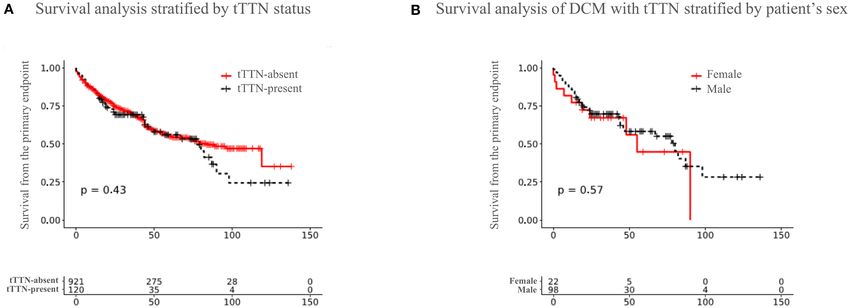
FIGURE 2 | Outcome of DCM patients in our cohort. (A) Survival curves showing freedom from the primary endpoint in the tTTN-present DCM and tTTN-absent DCM
patients. Red color represents the tTTN-absent, and black color represents the tTTN-present DCM patients. (B) Survival curves comparing freedom from the primary
endpoint between male and female DCM patients carrying tTTN. Red color represents female, and black color represents male.
Project (ESP), and ExAC] (26). In the present study, pathogenic that other modifiers may have effects on the development of
tTTN, based on PSI >0.9, were detected in 11.5% of the sporadic phenotypes and outcomes in DCM patients with tTTN.
DCM population.
Determining the pathogenicity of the TTN missense variants Clinical Significance of tTTN in DCM
is more challenging, because of the abundance of such variants Patients
in the general population. The high prevalence of missense The clinical impact of tTTN has remained unsettled and varies
variants in TTN has been observed in DCM populations, and among studies. A previous study showed an association between
such variants are considered as potential modifiers of the clinical tTTN and the clinical outcome, specifically, patients with tTTN
phenotypes (20, 27). In accord with the findings of the present had less severe heart failure at presentation and more were
study, no significant differences in the clinical phenotypes in amenable to standard therapy than those with DCM associated
DCM patients carrying bioinformatically “severe” TTN missense with the LMNA mutations or those with idiopathic DCM (19).
variants as compared with the non-carriers have been noted (27). In addition, tTTN have been shown to be an independent
In the present study, modest differences were noted, including determinant of left ventricular reverse remodeling (25). Others
the older age of onset of symptoms in DCM patients with have reported no significant clinical outcome differences between
PMVs as compared with those without. Otherwise, there were DCM patients with tTTN and without tTTN (18, 28). In the
no significant differences in other clinical phenotypes between present study, which is the largest thus far, we did not detect
the two groups, which suggest that the effect sizes of the TTN an increased risk for adverse clinical outcomes in DCM patients
missense variants are relatively modest, if any. with tTTN as compared with those without. The presence of
concomitant pathogenic variants is typically associated with a
worse phenotype. Likewise, patients with TTN missense and
tTTN and Sex LMNA variants have been shown to have a more severe early-
Although, there is a common theme that male DCM patients onset phenotype (17). In the present study, the concomitant
carrying tTTN would have worse prognosis than female DCM presence of pathogenic variants in OCG for DCM was detected
patients. The association between tTTN and sex becomes in eight patients. However, the phenotype and outcome did
complicated in previous studies (11, 16, 18, 19, 28, 29). Akhtar not show a significant difference between tTTN+/OCG+ and
et al. reported a large cohort of 537 DCM with tTTN, in which the tTTN+/OCG–. Finally, the topography of the tTTN on titin
male patients had worse outcomes than the female patients (29). protein has been implicated in the pathogenicity and severity of
In the present study, we have shown that there is no significant the DCM phenotype (30, 31). In the present study, there were no
difference between male patients and female patients for clinical notable differences in the clinical phenotypes in DCM patients
phenotypes and outcomes, which is consistent with the results with tTTN in the A-band and those with tTTN outside the
reported by Tayal et al. (28). In our cohort, only 18.3 patients with A-band. Previous studies have reported conflicting associations
tTTN were female, and fewer events would limit the statistical between arrhythmia with tTTN (28, 32). The largest cohort of
power. In addition, DCM, as an autosomal dominant disease, 537 DCM patients with tTTN to date reported by Akhtar et al.
should have a male-to-female ratio of 1:1, which is inconsistent confirmed that tTTN are characterized by high prevalence of
with the actual male-to-female ratio. The inconsistency implies atrial and ventricular arrhythmia (29). In this study, we did not
Frontiers in Cardiovascular Medicine | www.frontiersin.org 7 April 2021 | Volume 8 | Article 657689Xiao et al. TTN in Sporadic DCM
find an increased risk of atrial or ventricular arrhythmia in tTTN AUTHOR CONTRIBUTIONS
carriers compared with those without tTTN. The low arrhythmia
rate in our study may account for the result; thus, a larger cohort LX developed the study concept and design, interpreted the data,
is needed to focus on arrhythmia in DCM with tTTN. and drafted the manuscript. CL, YS, YC, HW, DH, TY, and XL
Although this is a large cohort with 1,041 patients to performed the experiments and analyzed the data. LJ, LS, AM,
assess the effect of TTN variants on long-term prognosis, and DW supervised the design of the study and revised the
it has several limitations. First, this is a single-center study, manuscript. All authors contributed to the article and approved
which would introduce inclusion bias. Second, there is a the submitted version.
gap between the clinical management of study patients and
the optimal treatment, which may have an effect on long- FUNDING
term prognosis. Third, the findings in this study require
replication in an independent cohort, and it is necessary to This work was supported by the National Key R&D Program
perform a deeper phenotypic characterization (i.e., arrhythmia, of China (Nos. SQ2017YFSF090157 and 2017YFC0909401), the
cardiac endophenotypes). Natural Science Foundation of China (nos. 91439203, 81630010,
and 91839302), the Fundamental Research Funds for the Central
DATA AVAILABILITY STATEMENT Universities (HUST: Nos. 2015 ZDTD044 and 2016JCTD117),
and the Tongji Hospital Clinical Research Flagship Program
The data presented in the study are deposited in the gsa-human 2019CR207 and 2019 YBKY019.
repository, accession number https://bigd.big.ac.cn/gsa-human/
browse/HRA000431. ACKNOWLEDGMENTS
ETHICS STATEMENT We gratefully acknowledge all the participants in this study and
staff members of the follow-up team.
The studies involving human participants were reviewed
and approved by the ethics committee of Tongji Hospital SUPPLEMENTARY MATERIAL
Affiliated Tongji Medical College of Huazhong University
of Science and Technology. The patients/participants The Supplementary Material for this article can be found
provided their written informed consent to participate in online at: https://www.frontiersin.org/articles/10.3389/fcvm.
this study. 2021.657689/full#supplementary-material
REFERENCES 8. Pugh TJ, Kelly MA, Gowrisankar S, Hynes E, Seidman MA, Baxter
SM, et al. The landscape of genetic variation in dilated cardiomyopathy
1. Yancy CW, Jessup M, Bozkurt B, Butler J, Casey DE Jr, Drazner MH, as surveyed by clinical DNA sequencing. Genet Med. (2014) 16: 601–
et al. 2013 ACCF/AHA guideline for the management of heart failure: 8. doi: 10.1038/gim.2013.204
executive summary: a report of the American College of Cardiology 9. Haas J, Frese KS, Peil B, Kloos W, Keller A, Nietsch R, et al. Atlas of
Foundation/American Heart Association Task Force on practice guidelines. the clinical genetics of human dilated cardiomyopathy. Eur Heart J. (2015)
Circulation. (2013) 128:1810–52. doi: 10.1161/CIR.0b013e31829e8807 36:1123–35a. doi: 10.1093/eurheartj/ehu301
2. Pinto YM, Elliott PM, Arbustini E, Adler Y, Anastasakis A, Bohm M, et al. 10. Chauveau C, Rowell J, Ferreiro A. A rising titan: TTN review and mutation
Proposal for a revised definition of dilated cardiomyopathy, hypokinetic update. Hum Mutat. (2014) 35:1046–59. doi: 10.1002/humu.22611
non-dilated cardiomyopathy, and its implications for clinical practice: 11. Roberts AM, Ware JS, Herman DS, Schafer S, Baksi J, Bick AG, et al.
a position statement of the ESC working group on myocardial and Integrated allelic, transcriptional, and phenomic dissection of the cardiac
pericardial diseases. Eur Heart J. (2016) 37:1850–8. doi: 10.1093/eurheartj/e effects of titin truncations in health and disease. Sci Transl Med. (2015)
hv727 7:270ra6. doi: 10.1126/scitranslmed.3010134
3. McNally EM, Mestroni L. Dilated cardiomyopathy: genetic 12. LeWinter MM, Granzier HL. Titin is a major human disease gene. Circulation.
determinants and mechanisms. Circ Res. (2017) 121:731– (2013) 127:938–44. doi: 10.1161/CIRCULATIONAHA.112.139717
48. doi: 10.1161/CIRCRESAHA.116.309396 13. Akinrinade O, Koskenvuo JW, Alastalo TP. Prevalence of titin
4. Metra M, Ponikowski P, Dickstein K, McMurray JJ, Gavazzi A, Bergh truncating variants in general population. PLoS ONE. (2015)
CH, et al. Advanced chronic heart failure: a position statement from the 10:e0145284. doi: 10.1371/journal.pone.0145284
Study Group on Advanced Heart Failure of the Heart Failure Association 14. Akinrinade O, Alastalo TP, Koskenvuo JW. Relevance of truncating
of the European Society of Cardiology. Eur J Heart Fail. (2007) 9: 684– titin mutations in dilated cardiomyopathy. Clin Genet. (2016) 90:49–
94. doi: 10.1016/j.ejheart.2007.04.003 54. doi: 10.1111/cge.12741
5. Alraies MC, Eckman P. Adult heart transplant: indications and outcomes. J 15. Akinrinade O, Helio T, Lekanne Deprez RH, Jongbloed JDH,
Thorac Dis. (2014) 6: 1120–8. doi: 10.3978/j.issn.2072-1439.2014.06.44 Boven LG, et al. Relevance of titin missense and non-frameshifting
6. Codd MB, Sugrue DD, Gersh BJ, Melton LJ III. Epidemiology of insertions/deletions variants in dilated cardiomyopathy. Sci Rep. (2019)
idiopathic dilated and hypertrophic cardiomyopathy. A population-based 9:4093. doi: 10.1038/s41598-019-39911-x
study in Olmsted County, Minnesota, 1975–1984. Circulation. (1989) 80:564– 16. Herman DS, Lam L, Taylor MR, Wang L, Teekakirikul P, Christodoulou D,
72. doi: 10.1161/01.CIR.80.3.564 et al. Truncations of titin causing dilated cardiomyopathy. N Engl J Med.
7. Hershberger RE, Hedges DJ, Morales A. Dilated cardiomyopathy: the (2012) 366:619–28. doi: 10.1056/NEJMoa1110186
complexity of a diverse genetic architecture. Nat Rev Cardiol. (2013) 10:531– 17. Roncarati R, Viviani Anselmi C, Krawitz P, Lattanzi G, von Kodolitsch Y,
47. doi: 10.1038/nrcardio.2013.105 Perrot A, et al. Doubly heterozygous LMNA and TTN mutations revealed by
Frontiers in Cardiovascular Medicine | www.frontiersin.org 8 April 2021 | Volume 8 | Article 657689Xiao et al. TTN in Sporadic DCM
exome sequencing in a severe form of dilated cardiomyopathy. Eur J Hum 27. Begay RL, Graw S, Sinagra G, Merlo M, Slavov D, Gowan K, Jones KL, et al.
Genet. (2013) 21:1105–11. doi: 10.1038/ejhg.2013.16 Role of titin missense variants in dilated cardiomyopathy. J Am Heart Assoc.
18. Franaszczyk M, Chmielewski P, Truszkowska G, Stawinski P, Michalak E, (2015) 4:e002645. doi: 10.1161/JAHA.115.002645
Rydzanicz M, et al. Titin truncating variants in dilated cardiomyopathy 28. Tayal U, Newsome S, Buchan R, Whiffin N, Halliday B, Lota A, et al. Phenotype
- prevalence and genotype-phenotype correlations. PLoS ONE. (2017) and clinical outcomes of titin cardiomyopathy. J Am Coll Cardiol. (2017)
12:e0169007. doi: 10.1371/journal.pone.0169007 70:2264–74. doi: 10.1016/j.jacc.2017.08.063
19. Jansweijer JA, Nieuwhof K, Russo F, Hoorntje ET, Jongbloed JD, Lekanne 29. Akhtar MM, Lorenzini M, Cicerchia M, Ochoa JP, Hey TM, Sabater
Deprez RH, et al. Truncating titin mutations are associated with a mild Molina M, et al. Clinical phenotypes and prognosis of dilated
and treatable form of dilated cardiomyopathy. Eur J Heart Fail. (2017) 19: cardiomyopathy caused by truncating variants in the TTN gene. Circ
512–21. doi: 10.1002/ejhf.673 Heart Fail. (2020) 13:e006832. doi: 10.1161/CIRCHEARTFAILURE.119.0
20. Golbus JR, Puckelwartz MJ, Fahrenbach JP, Dellefave-Castillo LM, Wolfgeher 06832
D, McNally EM. Population-based variation in cardiomyopathy genes. Circ 30. Zou J, Tran D, Baalbaki M, Tang LF, Poon A, Pelonero A, et al. An
Cardiovasc Genet. (2012) 5:391–9. doi: 10.1161/CIRCGENETICS.112.962928 internal promoter underlies the difference in disease severity between N-
21. Elliott P, Andersson B, Arbustini E, Bilinska Z, Cecchi F, Charron and C-terminal truncation mutations of Titin in zebrafish. Elife. (2015)
P, et al. Classification of the cardiomyopathies: a position 4:e09406. doi: 10.7554/eLife.09406
statement from the European Society Of Cardiology Working 31. Radke MH, Polack C, Methawasin M, Fink C, Granzier HL,
Group on myocardial and pericardial diseases. Eur Heart J. (2008) Gotthardt M. Deleting full length titin versus the Titin M-band
29:270–6. doi: 10.1093/eurheartj/ehm342 region leads to differential mechanosignaling and cardiac phenotypes.
22. Purcell S, Neale B, Todd-Brown K, Thomas L, Ferreira MA, Bender D, et al. Circulation. (2019) 139:1813–27. doi: 10.1161/CIRCULATIONAHA.118.0
PLINK: a tool set for whole-genome association and population-based linkage 37588
analyses. Am J Hum Genet. (2007) 81:559–75. doi: 10.1086/519795 32. Tayal U, Newsome S, Buchan R, Whiffin N, Walsh R, Barton PJ, et al.
23. Kircher M, Witten DM, Jain P, O’Roak BJ, Cooper GM, Shendure J. A Truncating variants in titin independently predict early arrhythmias in
general framework for estimating the relative pathogenicity of human genetic patients with dilated cardiomyopathy. J Am Coll Cardiol. (2017) 69: 2466–
variants. Nat Genet. (2014) 46:310–5. doi: 10.1038/ng.2892 8. doi: 10.1016/j.jacc.2017.03.530
24. Akinrinade O, Ollila L, Vattulainen S, Tallila J, Gentile M,
Salmenpera P, et al. Genetics and genotype-phenotype correlations Conflict of Interest: The authors declare that the research was conducted in the
in Finnish patients with dilated cardiomyopathy. Eur Heart J. (2015) absence of any commercial or financial relationships that could be construed as a
36:2327–37. doi: 10.1093/eurheartj/ehv253 potential conflict of interest.
25. Tobita T, Nomura S, Fujita T, Morita H, Asano Y, Onoue K, et al.
Genetic basis of cardiomyopathy and the genotypes involved in Copyright © 2021 Xiao, Li, Sun, Chen, Wei, Hu, Yu, Li, Jin, Shi, Marian and Wang.
prognosis and left ventricular reverse remodeling. Sci Rep. (2018) This is an open-access article distributed under the terms of the Creative Commons
8:1998. doi: 10.1038/s41598-018-20114-9 Attribution License (CC BY). The use, distribution or reproduction in other forums
26. Tabish AM, Azzimato V, Alexiadis A, Buyandelger B, Knoll is permitted, provided the original author(s) and the copyright owner(s) are credited
R. Genetic epidemiology of titin-truncating variants in the and that the original publication in this journal is cited, in accordance with accepted
etiology of dilated cardiomyopathy. Biophys Rev. (2017) 9:207– academic practice. No use, distribution or reproduction is permitted which does not
23. doi: 10.1007/s12551-017-0265-7 comply with these terms.
Frontiers in Cardiovascular Medicine | www.frontiersin.org 9 April 2021 | Volume 8 | Article 657689You can also read


