Amane currents - Amane Advisors
←
→
Page content transcription
If your browser does not render page correctly, please read the page content below

Volume 2, Issue 4 | Fall 2021

amane currents   Designing the future of water

In this issue:
Europe is going green: tighter regulations coming
Southeast Asia: accepting the challenge of climate
change and floods
Remineralisation and driving operational savings in
desalination
Investing in China’s water market

amane currents | Volume 2, Issue 4                    | Fall 2021

C ONTENTS
3    Welcome to our Fall 2021 issue
     Bill Malarkey, Partner

4    Europe is going green: tighter regulations are coming
     Lamia Moubakir, Consultant, and Dorothée Chabredier, Principal

7    Climate change and floods: accepting the challenge in Southeast Asia
     Pravi Bansal, Senior Advisor, Natalie Peña, Project Manager, and
     Cleon Lim, Intern

10 U
    .S. water quality: Lead service line replacement can and should be
   No. 1 priority
   Laura Chamberlain, Consultant, and Vinod Jose, Principal

15 R
    emineralisation: a sweet spot to drive operational savings in
   desalination
   Avinash Vijay, Project Manager

17 C
    hina: it’s time for international players to consider investment in
   China’s water market
   Karen Chen, Project Manager

20 Ask Amane: insights into our expert network
     Natalie Peña, Project Manager

22 Employee spotlight: Alexandre Lombardi, Senior Consultant

24 Meet our new colleagues

24 Amane in the news

25 Amane on the move

amane currents is published quarterly by Amane Advisors in Summer, Fall, Winter and
Spring. Amane Advisors assumes no responsibility for unsolicited manuscripts or images.

Editorial Director   William Malarkey   bmalarkey@amaneadvisors.com
Managing Editor      Ann Seamonds       seamonds@seamonds.com
Associate Editor     Natalie Peña       npena@amaneadvisors.com
Feedback             currents@amaneadvisors.com

Visit us on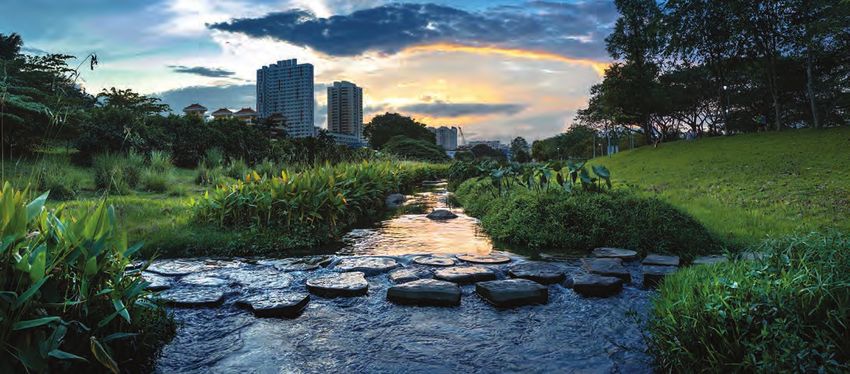
WELCOME                                                                to the
                                                                       Fall issue

of amane currents
As we assembled the contents for the Fall issue of amane currents, I was once again
struck by the diversity and depth of the water industry. In some ways, it’s like a tapestry
that weaves together many stories, characters, colors and textures into a complex yet
vibrant whole.

This issue reflects the many facets of the industry we      We also look at the abundant investment opportunities
serve, starting with a dive into new, tighter regulations   in China’s water market with a focus on understanding
related to Environmental, Social and Governance (ESG)       its special nature. Having a grasp on the regulatory,
in the European Union (EU). These regulations will          cultural and business aspects of participating in this
significantly impact all companies and funds having         market is essential for success, and our Shanghai
activities in Europe, including those headquartered         office, which contributed this piece, is ready to assist
outside Europe. By bringing to light the recent             companies considering establishing or expanding their
and upcoming changes in the European legislative            presence there.
framework regarding ESGs, we aim to help companies
                                                            In addition, we examine innovations in remineralisation
within our industry understand how these changes will
                                                            technologies as a way to drive operational savings in
impact their own activities.
                                                            desalination, which has become increasingly important
From Europe, we turn our attention to Southeast Asia        as project developers focus more on total lifecycle
with a discussion of how the region’s governments,          costs. And we also explore the issue of water quality
water agencies, development banks and the private           in the USA and why replacing the nation’s aging lead
sector can play a part in helping to mitigate the effects   service lines should be a top priority.
of increasingly frequent and destructive flooding in the
                                                            We hope you enjoy this issue of amane currents, and as
region. While this story concentrates on one region, it’s
                                                            always, we welcome your input into topics that you’d
also a look at the steps that we may all soon be faced
                                                            like us to explore.
with to address the impact of climate change no matter
where we live.                                              All the best,

                                                            Bill Malarkey

amane currents         | Fall 2021                                                                            3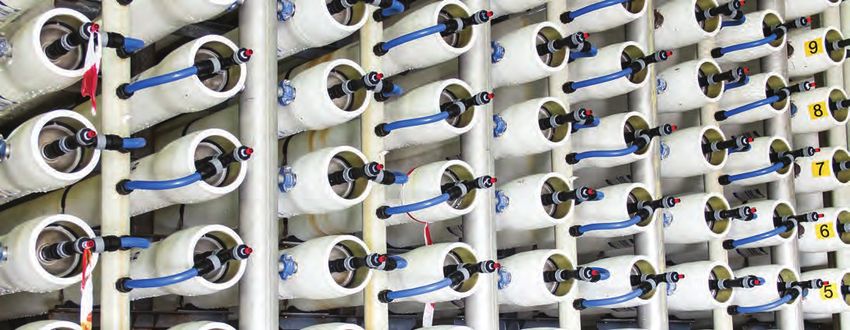
E U R OP E IS GOIN G GREEN :
Tighter regulations
are coming
By Lamia Moubakir, Consultant, and Dorothée Chabredier, Principal

From 2021, new tighter regulations related                   This article aims at bringing light to recent and
                                                             upcoming changes in the European legislative
to Environmental, Social and Governance
                                                             framework regarding ESG aspects and at helping
(ESG) in the European Union (EU) will                        companies in the water sector understand the impact
significantly impact all companies and                       on their activities.

funds having activities in Europe, including
companies headquartered outside Europe.                      New non-financial reporting standards for
                                                             companies active in Europe
The objective is to transform the EU into
a sustainable economy with zero net                          The Non-Financial Reporting Directive will be revised
                                                             and amended shortly by the Corporate Sustainability
emissions of greenhouse gases. Water                         Reporting Directive (CSRD), aiming at simplifying and
companies have an important role to play                     homogenizing companies’ reporting practices in the EU.
and need to accelerate their transformation                  This directive is expected to be transposed to national
                                                             laws in December 2022, and applicable by 2023.
to comply with these changes.
                                                             Originally applied to European companies with more
                                                             than 500 employees (~12,000 companies impacted),
                                                             the CSRD will extend Non-Financial Reporting to
                                                             companies or parent companies that meet at least two
                                                             of the three following criteria. The first is a balance

amane currents        | Fall 2021                                                                                4
Helping investors shift to finance more
                                                             sustainable economic activities

                                                             In addition, the EU taxonomy, to be updated in
                                                             2022, would help investors identify environmentally
                                                             sustainable economic activities using common
                                                             definitions, hence creating increased transparency for
                                                             financial assets comparison.

                                                             The EU taxonomy, published in 2020, was followed
                                                             in 2021 by a first delegated act on sustainable
                                                             activities for climate change adaptation and
                                                             mitigation objectives. The second delegated act
                                                             will be published in 2022. This classification system
                                                             will also have to be considered by the companies
                                                             subjected to the Non-Financial Reporting Directive
sheet > €20 million; second, revenues > €40 million; or      (CSRD) to prove how their activities fall under the so
third, employment of more than 250 people (~50,000           called “environmentally sustainable activities.” Typical
companies impacted). It also applies to all listed           standards that need to be met include sustainable
companies, with the exception of micro-businesses            use and protection of water and marine resources,
with
Recent rules have been adopted in 2020 and

              “
                                 introduced a number of minimum criteria to
                                 be labelled as EU Climate Transition and EU
                                 Paris-aligned.”

EU Green Bond Standard: supporting the                        cement, aluminum, iron, steel, and fertilizers. Once the
green transition                                              producer can show that he has already paid for the
                                                              carbon produced, the cost can be deducted for the EU
To make sure that green bonds are mobilized for
                                                              importer.
projects with positive environmental impact, the EU
has adopted in September 2021 the NextGenerationEU            The EU Emissions Trading System enforces installations
green bond framework. Issuers will have to be                 emitting greenhouse gases (GHG) to surrender enough
subjected to four main practices: use of proceeds (nine       allowances to cover them. These allowances can be
categories of projects), expenditure evaluation and           traded with other installations as much as needed. The
selection, management of proceeds (the commission             sectors affected by this proposition are the biggest
will track the relevant spending), and reporting              emitters of GHG such as the power sector, airlines, or
(allocation and impact). This framework has been              some manufacturing industries.
aligned with the EU Green Bond Standard and the EU
                                                              It is, however, the Commission’s goal to later
Taxonomy.
                                                              expand the list to other sectors. In Europe, urban
Two of the green expenditure categories are related to        water management accounts for ~6% of electricity
the water sector: (i) water & waste management, and (ii)      consumption, which makes it a high contributor (where
nature protection, rehabilitation, and biodiversity. The      consumption is very fragmented between the different
European Commission has decided in September 2021             sectors).
to issue up to €250 billion in green bonds for the period
2021-2026, which would make the EU the largest green
bond issuer in the world. Water companies may find it         Conclusion
interesting to use green bonds to invest in projects with     Since the launch of the European Green Deal in 2019,
positive environmental impact.                                the EU has been building, step by step, a tighter
                                                              regulatory framework on ESG topics, with potential
                                                              impacts on water companies. All entities based in a
Will the water sector soon be included in
                                                              Member State of the European Union can be impacted
carbon border taxes and emission trading
                                                              by these regulations, even if part of a larger group
system?
                                                              headquartered outside of the EU. For instance, financial
In July 2021, the European Commission proposed the            regulation can affect an American fund that owns a
plan “Fit for 55” that introduced several propositions        portfolio of companies active in the EU or wishes to
including a carbon border adjustment mechanism                offer a financial asset in the EU market.
regulation and the revision of the EU Emissions Trading
                                                              Companies in the water sector will need to factor
System.
                                                              Environmental, Social and Governance criteria into their
The carbon border adjustment mechanism was                    activities, and be supported in their transformation both
proposed to avoid carbon leakage and require                  to comply with EU regulations and attract investors
EU importers to buy carbon certificates for goods             looking for sustainable investments over the next two
produced outside the EU, initially applying to electricity,   years.

amane currents         | Fall 2021                                                                             6
C L I MATE CHAN GE AN D
FL O OD S: A c cep t ing t he c ha llenge
i n S outh e a s t A sia
By Pravi Bansal, Senior Advisor, Natalie Peña, Project Manager, and Cleon Lim, Intern

                                                                       Governments, water agencies,
                                                                       development banks and the private
                                                                       sector can play a part to mitigate the
                                                                       effects of increasingly frequent and
                                                                       destructive flooding in the region.

An urgent need

Ever since 1750, the emission of greenhouse gases             by damaging the places they live in and destroying
has increased due to human activities, and since 1850,        livelihoods and communities.
the estimated range of human-caused global surface
                                                              In Southeast Asia, we have seen increased frequency
temperature increase is 0.8 to 1.3 degrees Celsius.
                                                              in above-average rainfall – otherwise known as extreme
While the numbers may seem small, this increase
                                                              precipitation – leading to more flash floods and urban
has led to drastic changes in Earth’s overall climate
                                                              flooding events. Based on the International Panel on
system, causing rapid changes to the atmosphere,
                                                              Climate Change (IPCC) Annual Report 6, there is robust
land, and oceans. Weather and climate extremes across
                                                              evidence that extreme precipitation has increased since
the globe have become a frequent headline, more
                                                              the 1950s and become increasingly unpredictable.
importantly causing direct harm to animals and humans

amane currents         | Fall 2021                                                                            7
Extreme precipitation is expected to persist and            Singapore’s flood mitigation strategy
increase, even if we manage to keep global warming
                                                            In contrast, Singapore can be seen as a model for a
levels at 2 degrees Celsius and below.
                                                            successful flood mitigation approach in the region.
Climate change also causes the melting of ice caps.         The island nation experiences extreme precipitation,
This has led to rising sea levels, which are expected to    with annual rainfall increasing at a rate of 67 mm per
rise in the order of 0.3 to 0.9 mm per year. As such, the   decade. With almost 100% of its population being
risk of coastal flooding has also increased.                urbanised, the associated costs with flooding would be
                                                            very high.
This is a pervasive issue in Southeast Asia, where
almost all countries have more than 25% of their            Singapore has designed its waterways and
population living in low-lying coastal areas. Coastal       infrastructure to ensure efficient drainage and
flooding also poses a risk to coastal aquifers, as there    stormwater management through the use of water
can be saltwater intrusion into these coastal aquifers      monitoring systems, underground detention basins,
due to flooding.                                            diversion canals and the like. The nation has also
                                                            taken steps to mitigate coastal flooding, with walls and
Southeast Asia has also experienced a decade of
                                                            stone embankments currently covering 70-80% of its
economic boom, which has led to mass migrations
                                                            coastline. Leveraging technology, there are now also
to urban city centres from rural areas. This means
                                                            software-based modelling tools that consider rainfall
that more people and the necessary infrastructure to
                                                            patterns, groundwater, and seawater levels to measure
support those growing populations are now at risk,
                                                            the effects of flooding when designing urban flood
making flooding events a lot more costly. Pollution,
                                                            mitigation infrastructure. This can aid in future-proofing
indiscriminate dumping of garbage into drains/
                                                            flood mitigation strategies in these urban areas.
waterways and lack of proper urban planning are also
key issues increasing flooding events.                      The Public Utilities Board (PUB), which manages
                                                            the country’s water supply and drainage, has also
For example, Indonesia has experienced rapid changes
                                                            developed a long-term initiative to transform water
in climate, facing severe drought in 2015 followed by
                                                            bodies beyond their functions of drainage and water
extreme precipitation the following year. Based on a
                                                            supply, into vibrant spaces for recreation and leisure.
World Bank report, such events prevented local water
                                                            One key project in Bishan-Ang Mo Kio Park involved
utilities from performing maintenance and conducting
                                                            transforming a 2.7 km long concrete drainage channel
operations to lay transmission pipes.
                                                            to become a 3 km long meandering natural river which
Such flooding could also cause leakages in                  functions as flood plains as well.
transmission infrastructure, leading to higher levels of
non-revenue water. Some water treatment facilities are
also unable to operate efficiently or at all during these
floods. The issues ultimately will lead to disruption of
water supply services to the affected areas.

amane currents         | Fall 2021                                                                              8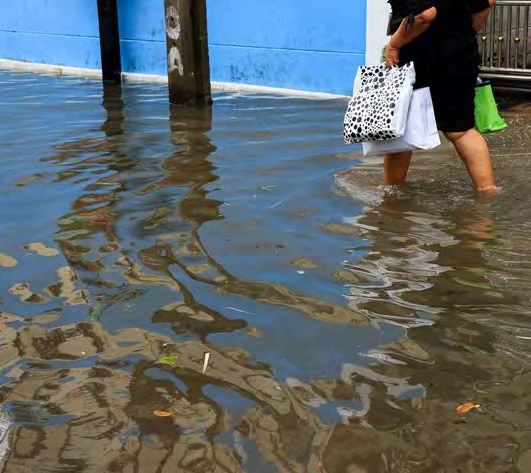
A call for a holistic approach                             The Asian Infrastructure Investment Bank (AIIB) has
                                                           also made climate financing a priority, with US$66
Most of the water management problems in Southeast
                                                           billion allocated in support for global climate action
Asia, particularly for coastal cities, are the result
                                                           investments in 2020, of which 58 percent (or US$38
of a fragmented approach to development. Like
                                                           billion) is committed to low and middle-income
Singapore, there is a need to move towards a more
                                                           economies.
integrated management approach whereby the
different tasks associated with water management           Such financing should work as an enabler in tandem
(water supply, wastewater management, drainage)            with government projects, the regulators and relevant
and ecosystem rehabilitation are managed together in       water agencies, as well as the private sector to
close coordination with land use planning, coastal zone    develop long-term solutions. As the irreversible effects
management and water resource management, and              of climate change and attention on flood mitigation
pollution control at the river basin level.                increase, this is a wakeup call for governments in
                                                           the region to include mitigation infrastructure as
To reduce pollution in the Southeast Asian coastal
                                                           part of public planning policies and adapt policy
waters and sustain ecosystems, all the key parties need
                                                           frameworks, and for local and national regulatory
to develop a holistic approach to water management
                                                           authorities to create economic incentive through
in river basins and coastal zones, reduce land-based
                                                           public-private partnerships (PPPs) for the private sector
pollution sources particularly in urban areas, and
                                                           to participate and align in creating sustainable and
undertake institutional and financial management
                                                           secure water infrastructure, which will see an increase
reforms to facilitate sustainable environment
                                                           in flood mitigation strategies being considered and
management.
                                                           implemented.
Historically, most Southeast Asian countries have relied
on Official Development Assistance (ODA) financing
to fund projects related to flood mitigation. The Asian
Development Bank (ADB), in particular, has made
notable contributions, spearheading projects such as
the Greater Mekong Subregion Flood and Drought
Risk Management and Mitigation Project in Vietnam as
well as the Metro Manila Flood Management Project
in the Philippines. The projects supported by ADB
have focused on both structural and non-structural
measures, including knowledge base management,
water infrastructure management and other measures
to mitigate the flooding risks.

amane currents          | Fall 2021                                                                           9
U.S. WATER QUALITY:
Lead service line
replacement
can and should be
No. 1 priority
By Laura Chamberlain, Consultant, and Vinod Jose, Principal

In the United States, water service lines                     Yet common challenges around finding and replacing
                                                              LSLs have stymied local efforts. Municipalities
made of lead and galvanized pipe are
                                                              may have inadequate or unsystematic records and
putting millions at risk of lead exposure.                    techniques to locate and identify buried LSLs with
Lead-laden pipes can corrode and leach                        high certainty. This makes it all the more difficult for
                                                              water utilities to build an inventory of service lines that
the contaminant into tap water, especially
                                                              can be used as a basis for replacement programs.
when water has high acidity or low                            Another issue is inadequate funding. These challenges
mineral content. The U.S. Environmental                       may be complicated further considering that most
                                                              replacements are likely located within the portion of
Protection Agency (EPA) estimates today
                                                              LSLs on private property. Replacing private LSLs may
there are at least 6 to over 10 million lead                  raise tough questions around financial responsibility
service lines (LSLs). Supporting local water                  between a property owner and a utility, appropriate

utilities to identify and replace these LSLs                  funding sources, and right-to-entry.

with lead-free pipe is the most certain way                   A utility’s wholesale lead service line replacement
                                                              (LSLR) program may take several years to complete.
to reduce the risk of lead exposure.
                                                              Common steps may entail: early engagement with
                                                              stakeholders such as homeowners and schools,

 amane currents        | Fall 2021                                                                               10
service line inventory, pitcher filter delivery, full LSL The reality of the issue
replacement, and follow-up testing. A successful
Replacing the estimated 6 to 10 million LSLs comes
program has ongoing procedures and activities:
with a huge price tag. A 2016 study conducted by the
annual compliance report submissions to a regulator,
American Water Works Association estimates average
sample site monitoring at schools and homes, and risk
full LSL replacement costs at $6,106 per LSL. This
communication with the public about LSLs. Funding
means fully replacing the nation’s LSLs could cost over
buoys an LSLR program, and a utility is generally
$61 billion.
responsible for securing those funds from state and
federal government. The scale of lead presently in tap water also
underscores the urgency to address the issue. In 2021,
The Flint, Michigan, crisis in 2014 heightened public
the advocacy group Natural Resources Defense Council
concern about the possibility and consequences of
(NRDC) evaluated violations of the Lead and Copper
lead in tap water and has increased pressure on utilities
Rule between January 2018 and December 2020. The
and governments nationwide to take long-overdue
study used data from the EPA’s Safe Drinking Water
action. Yet the persisting regulatory and economic
Information System to determine that nearly 2,000
barriers need to be addressed to accelerate action. The
drinking water systems serving over a combined 7.1
good news is that both public and private sectors have
million people reported 90th percentile lead samples
stepped up by offering solutions and tools to support
above 15 ppb – the EPA action level. The NRDC
LSLR programs.
confirms nearly 5,000 public water systems serving
over a total of 61.3 million people, or over 18% of the
Federal regulations for lead in drinking water U.S. population (source: US Census, on December 31,
2020), had 90th percentile lead samples above 5 ppb.
Today there is a “lead ban” on pipes per the U.S. Safe
Drinking Water Act Amendments of 1986. Furthermore, It is likely that the EPA data do not cover the full extent
the national Lead and Copper Rule was introduced in of lead in drinking water, nor do the data mean that all
1991 to regulate and mitigate lead in drinking water. members of an affected water system are exposed to
Regulating lead levels is based on using a treatment the contaminant in drinking water. Nonetheless, the
technique to control water corrosivity. This could be data clearly indicates the pervasiveness of the issue
done by adding orthophosphate to coat pipes in the with exceedances found in urban and rural areas.
water distribution system. Lead mitigation is based
The staggering figures also underscore the risk of lead
on the EPA’s action level at 15 parts per billion (ppb)
exposure, especially in the most vulnerable populations.
using a 90th percentile calculation. This calculation
These most at-risk groups are pregnant women, infants,
means that if more than 10% of tap water samples
and children under the age of 6, according to the U.S.
measure lead at or above 15 ppb, a utility exceeds the
CDC. The CDC states there is no safe level of lead for
action level and is subject to taking certain actions to
young children. Even low levels of lead exposure to
mitigate lead in the water system. Actions a water utility
young children can result in serious long-term health
can take include water quality parameter monitoring,
effects including lower IQ and learning and behavioral
corrosion control treatment, source water monitoring/
problems from impaired brain development and
treatment, public notification and education, and LSLR.
nervous systems. In adults, prolonged lead exposure
can lead to stillbirths, kidney damage, and elevated
blood pressure.
amane currents | Fall 2021 11Regulatory landscape
The need to get the lead out continues to be unmet but at or below 15 ppb may require utilities to perform
despite historical efforts around regulating lead in public outreach and kickstart LSLR. A goal for the
water, and updating national regulation has been long annual LSLR rate will be determined in agreement with
overdue. On January 15, 2021 – 30 years after the the utility’s state. Based on the NRDC study, thousands
original Lead and Copper Rule was introduced – the of water utilities exceed the trigger level and thus will
EPA announced several new provisions and changes have to deliver mandatory LSLR. Also, partial LSLR
under the Lead and Copper Rule Revisions. These will no longer be an acceptable practice under the new
Revisions will go into effect on December 16, 2021, to Revisions, meaning both the public and private side of
strengthen the original Lead and Copper Rule. an LSL will need to be replaced.
The Revisions can be broken down into six October 2024 is the expected compliance deadline
components (see image). Each component introduces for water suppliers to complete two major activities:
key specific changes that utilities must be aware of to conducting an initial service line inventory and
meet compliance. For instance, under new sampling developing a LSLR plan. Utilities will be required to
and analysis procedures is a new requirement to collect deliver publicly available inventories for systems with
a 5th-liter water sample to test for lead instead of just a lead or galvanized service lines, and/or “unknowns,”
1st liter sample from homes with known LSLs. meaning service lines made of undefined material.
A LSLR plan will account for funding strategies,
The Revisions maintain the 15-ppb action level but also
replacement procedures on both the public and private
define a trigger level at 10 ppb. The trigger level means
side of LSLs, and strategies handling “unknowns.”
that water samples with lead levels at or above 10 ppb
1 4
New sampling & analysis Strengthened corrosion
procedures control treatment
requirements
2 5
Require service line Improved risk
inventory and publicly communication
available LSL inventory procedures
3 6
Required Lead Service Mandatory water sampling
Line Replacement (LSLR) at schools and child care
plan & actions centers
The six improvement areas addressed under the national Lead and Copper Rule Revisions are made to improve
weaknesses and close loopholes under the 1991 Lead and Copper Rule. (Source: US EPA)
amane currents | Fall 2021 12The American Jobs Plan will put plumbers and pipefitters
“ to work, replacing 100 percent of the nation’s lead pipes
and service lines so every American, every child can turn
on a faucet or a fountain and drink clean water.”
– President Joe Biden
These are costly and time-sensitive deadlines for 1. Lead and Copper Rule Revisions (LCRR) Master
many water utilities responsible for generating funds to Plan: Above all, water utilities must first delineate
support water infrastructure programs like LSLR. The the steps and time needed to meet the 2024
good news is that there is a major federal infrastructure deadlines for an LSLR plan and service line inventory.
bill under consideration promising to infuse more Having a publicly available Lead and Copper Rule
money into the Drinking Water State Revolving Fund Revision or LCRR Master Plan encompassing all
for LSLR. As of September 2021, the Infrastructure lead management programs is critical to serve as a
Investment and Jobs Act or INVEST in America Act (H. bedrock for transparency and consensus building.
R. 3684) would introduce $15 billion toward LSLR, with Moreover, a utility can use the LCRR Master Plan to
priority assistance given to disadvantaged communities identify and prioritize programs needing the most
and low-income homeowners. The bill also outlines time and funding to complete. Specifically, the LCRR
a $10 million Lead Inventorying Utilization Grant Pilot Master Plan should include a broad vision, as well as
Program to support municipalities with at least 30% priorities, procedures, and metrics tracking results
services lines known or suspected to contain lead. of all six components of the Lead and Copper Rule
Future government spending is a crucially needed and Revisions.
welcomed step to help close funding gaps for utilities Along with formulating the Master Plan, utilities
tasked with overseeing these LSLR programs. This should begin to collect and digitize relevant records
proposed funding, however, would likely only apply to pinpointing pipe location and indicating material
LSLR and not fund service line inventory, and leaves a type. This serves as a necessary preliminary step
$46 million funding gap for full LSLR. to build a service line inventory. Gleaning existing
information such as tax records, water service/
tap cards, local plumbing codes, and construction
Pushing the status quo records may indicate regions where there is a higher
likelihood of existing lead pipes.
Public officials and utilities will have to juggle several
procedures and activities to meet the ambitious 2. More dedicated funding: Local authorities and
deadlines under the new Lead and Copper Rule public water utilities overseeing the delivery of water
Revisions. It is possible that certain utilities must infrastructure improvements are often cash-strapped
follow more stringent state or local laws as well. To yet are responsible for funding lead management
achieve the deadlines and the many expectations projects. The Master Plan is a stepping stone for
set by the EPA and state agencies, there needs to be municipalities to budget all lead management
more guidance and solutions to support utilities in activities and consider funding sources to meet the
accelerating LSLR. budget demands. Sources of funding traditionally
come from water tariffs and local, state, and federal
A number of actions could promise more opportunity
government.
for utilities to achieve equitable, successful LSLR
programs.
amane currents | Fall 2021 13Options Include: 4. On solving inventory: More software solutions have
come to the market to support a utility’s service line
• Lobbying local, state, or federal government and
inventory as a critical step before initiating a full-blown
environmental bodies to increase financial availability
LSLR program. Significant uncertainties around LSLs,
is one possibility for municipalities to receive reliable
including location and material type of the pipe, are
funding streams.
commonplace. Utilities can gain more confidence
• Exploring the INVEST in America Act, which may with their inventories by using machine learning from
offer more promise and hope to connect federal software companies. Software using digitized records
dollars to local lead management programs. During a mentioned under Step 1 can improve certainty in
speech in Pittsburgh, Pennsylvania, President Biden inventory and save money for a utility.
acknowledged that investments “too often … have
5. Solutions beyond inventory: Water utilities can also
failed to meet the needs of marginalized communities
use software solutions to meet regulatory compliance
left behind.” The bill should prioritize funding to reach
handling sampling sites, from delivering kits and water
the most in-need communities, including communities
pitchers to data management. Collecting both 1st and
of color and Tribal communities.
5th liter water samples to test for lead is important
3. Being equitable and inclusive: According to the but also more resource demanding for utilities. Private
Lead and Copper Rule Revisions, all lead piping must companies have developed at-home water quality
be fully excavated from service lines, including on the testing kits for residents to test for lead at the tap and
private side. Per local regulations, many municipalities support utility and facility water sampling programs.
can replace private LSLs but are prohibited from using Especially for utilities dealing with having to sample
public funds to pay for it, leaving the property owner large populations, some private sector players offer
financially liable. The LSLR Collaborative states that digital platforms to help utilities manage sampling kits
offering financial assistance and loan programs to between the resident and labs. Private companies are
private owners may be one option to relieve financial available to support utilities sending and delivering
burden. This is especially important to achieve an pitcher filters to homeowners with lead exceedance
equitable LSLR program benefiting all residents. levels and wherever LSLR occurs. A single digital
Water utilities can establish partnerships with local platform can serve as a utility’s clearinghouse to collect
foundations, NGOs, and key elected officials to further and share information and data internally, with the
engage the community and homeowners about full community and regulators.
LSLR, how it impacts them, and funding resources.
Pushing forward
Removing lead from water infrastructure is a huge feat that will require heavy lifting from utilities to
engage stakeholders, replace LSLRs, and manage data. To achieve the tasks required to stay in
compliance with the forthcoming LCRR, utilities need more funding streams available to eliminate LSLs
on both the private and public sides. Utilities can also seek software solutions to streamline the complex
data management and multiple workstreams to achieve a more cost-effective and equitable replacement
program. It is promising to have the federal government pledge to fund LSLR, but using these funds to
take the necessary, tangible steps is what truly matters to protect public health.
amane currents | Fall 2021 14RE M INE R A LIS ATION :
A s w e e t s po t t o d rive
op e r ati on a l s a v ing s in
de s a l i n a t i on
By Avinash Vijay, Project Manager
Remineralisation for desalination plants has long been pushed aside as a lesser
priority to derive savings from and innovate around it. This has been mainly
because remineralisation at a process treatment plant often represent 2% to 5% of
the total desalination plant (CAPEX).
Historically, and even now in many parts of the world, upfront for a superior or better technology – as a result,
decisions – especially in the municipal sector – are reducing their overall lifecycle costs.
driven by the objective to reduce the capital cost
Speaking specifically about remineralisation
of the project with little consideration of how much
technologies, our industry has seen almost no
the operating costs of these technologies or any
innovation in the past few decades. However, a few
technologies in general will be over the plant’s lifetime.
players in the market have gone back to the drawing
boards to see how they could change and add
With operators now focusing on operating costs
value to this process. And this innovation mindset
and with privatisation increasing, there is a shift in
comes from the unlikeliest of places, such as niche
trend among project developers to focus more on
players — including large suppliers of remineralisation
total lifecycle costs (i.e., both CAPEX and OPEX).
consumables or smaller companies – not the likes of
Developers are leaning towards having lower operating
billion-dollar water companies we are familiar with.
costs even if they must put in higher capital costs
amane currents | Fall 2021 15Traditionally, the remineralisation process in desalination Other players like US-based Burnett’s highly reactive
plants has been limited to basic technologies like lime/ milk of lime (CAL-FLO) promises a lower capital cost
chemical dosing, calcite contactors, and blending of compared to traditional systems. Drintec is another
seawater with desalinated water. These processes company based in Europe that does efficient designs
come with their own pain points. for calcite contactors. However, the innovation and
traction are not where they should be, especially when
Amane Advisors has spoken with multiple desalination
remineralisation is also a process for the reuse water-
plant operators in the Middle East over the years.
aquifer recharge market in the United States where
These plants are continually plagued by operational
dosing of chemical solutions is seen as the only viable
issues, including clogging of pipes and build-up in
method to meet stringent Silt Density Index / Modified
lime saturators, turbidity spikes, as well as the issue
Fouling Index limits. These systems, which operate
of disposing of the insoluble waste that is generated.
with high consumable costs, can serve as good retrofit
The disposal issues are especially a problem for lime
models for the newly developed processes, offering
dosing systems, which are used by more than 80% of
attractive savings to plant owners and operators.
plants. On the other hand, traditional calcite contactors
are hindered by slow reactivity and long reaction times, With the right business model (service-based, volume-
and therefore, these solutions demand a large physical based, rental), these innovators have the capability to
footprint and capital investment. bring these solutions more to the spotlight. And the
companies mentioned above have already seen good
Speaking of innovators, one such player is the
traction and commercial references.
industrial mineral giant Omya, which supplies calcium
carbonate that exists in almost all the products we
see around us. Omya has developed the “Omya
Advanced Remineralisation Process” (OARP), which
uses proprietary micronized calcium carbonate
combined with a patented membrane-based reactor.
This technology promises significant waste reduction,
smaller footprint, and safer handling of consumables.
Developers are leaning towards having lower operating
“
costs even if they must put in higher capital costs
upfront for a superior or better technology – as a result,
reducing their overall lifecycle costs.”
amane currents | Fall 2021 16R E GION AL INSIG HTS
C HINA
IT’S TIME FOR INTERNATIONAL
PLAYERS TO CONSIDER
INVESTMENT IN CHINA’S
WATER MARKET
By Karen Chen, Project Manager
China’s water market will see its strong Though a huge opportunity, it is also the market with
the most competition, especially in the last five years.
growth continue in the coming years.
Pushed by the market opportunity and growth, the
According to GWI, China’s water market local water companies’ capabilities and technologies
now constitutes approximately 20% of the are developing fast. China’s government identified
environmental business as one of the country’s top
global market. It is a dynamic market, with
business strategy directions 10 years ago, and local
newly issued regulations and discharge companies have matured and grown since 2016. Local
standards every year, such as the new companies can span almost all water technologies, with
giant local companies popping up over the past five
14th Five Years Plan with carbon emission
years.
control, water reuse rate increases and
As a source of competition, international companies
other newer policies that are driving the
in China’s market are losing share. Local companies
market growth. have product/service development that better fits
local clients’ needs in terms of technology and price,
amane currents | Fall 2021 17REGIONAL INSIGHTS — CHINA (CONTINUED)
and they have formed deeper relationships with local The type of local equity partners depends on
clients. An example is one of the less competitive international companies’ needs and the development
technologies, reverse osmosis (RO). More than 10 direction they wish to pursue in the market. For
local companies in the market have developed the example, international companies can seek local
ability to make RO membrane sheets in the past five technology/product companies as partners and form
years. These local companies are quickly acquiring this alliance by acquisition or investment, with the
a large share of China’s RO market, over which the international company becoming a shareholder of
international companies previously held almost a the local company. One example is to partner with
monopoly. SOE groups or large private water groups as a joint
venture by investing in a subsidiary of the international
China’s market is relatively independent compared
company registered in China.
to other international countries. In addition, the
trend of state-owned enterprises (SOEs) acquiring
environmental business companies in the past three An improving foreign investment
years will push the market into a “relationship circle” environment and IPO opportunity will
development: If a business is not in the platform bring opportunity to international financial
together with local players, it will be a challenge investors or new entries.
for international companies hoping to develop their
China is an attractive market for foreign investment; it
presence in the Chinese market only by virtue of their
continues to grow and has proven to be stable. China
ownership.
was the largest recipient of Foreign Direct Investment
(FDI) in 2020; as China gained control of COVID, the
International companies existing in China’s economy picked up speed in the 4th quarter 2020.
water market need local equity partnerships China’s GDP was up 2.3% in 2020. Notably, China
for their continual development in the highly was the only major economy in the world to avoid
competitive and challenging Chinese market. an economic contraction. From China’s Ministry of
Commerce, China’s FDI saw 25.5% YoY growth to
Simply stated, a business partnership can’t contribute
$103.69 billion over the first seven months of 2021.
much on the company strategy level. Finding a local
partner and creating an equity partnership is the China’s government is keeping up its effort to
most important and maybe the wisest option for encourage more foreign-funded enterprises to develop
existing international companies with a goal of future in the market. The new Foreign Investment Law
development. took effect in January 2020. In 2021, new Measures
for the Security Review of Foreign Investment took
An international company that also has an equity
effect, creating a more market-oriented, legalized,
partnership with a local company can make decisions
and international investment environment for foreign
more suitable to fit China and is able to adjust
investors and enterprises, reducing the barriers into
according to China’s market dynamics. The partner
the China market. As an example, in China’s water
can help international companies to maintain the right
market, foreign-funded enterprises’ limitation on design
direction in developing its business in China, obtaining
and construction were abolished in 2018 and 2020,
local capital support, developing local sales channels,
and while previously foreign enterprises couldn’t apply
bringing more local relationships as a resource,
for local design and construction certificates, barriers
optimizing products on price and quality according to
to participation in local bidding on water/wastewater
local client needs, or broadening the product/service
treatment plant projects are changing.
portfolios.
amane currents | Fall 2021 18REGIONAL INSIGHTS — CHINA (CONTINUED)
According to GWI, China’s water market now constitutes
“
approximately 20% of the global market. It is a dynamic
market, with newly issued regulations and discharge
standards every year.
China’s IPO mechanism change, and the trend towards Investors must establish local or third party
water industry enterprises undertaking an IPO, can team support as China’s market is relatively
bring investors more opportunity. This trend can be independent and water is a niche
seen among China’s Environmental companies. As
In order to realize the opportunities presented by
an example, since 2017 there have been about 14
China’s water market, investors need to understand
environmental-related companies listed each year.
its unique nature and the challenges that presents. It
Each subsequent year, the number of water company
is a relatively independent market in terms of culture,
IPOs has grown, boosted by the new Science and
industry applications, client needs, legal processes
Technology Innovation Board (STAR Market) in 2019. A
and the commercial environment. International entities
registration-based IPO mechanism was implemented
must prepare well, from local strategy planning to target
in 2020. There are 26 environmental companies newly
screening and due diligence. They need to participate
listed this year as of August 2021. On September 2,
with their own or third-party local team to support them
2021, President Xi announced that China will launch
on the investment journey, as they have a sense of the
a Beijing Stock Exchange to promising small- and
local landscape and the intelligence that can identify
medium-sized enterprises (SMEs). This will benefit and
and evaluate potential partners/targets and risks more
create more opportunity for most water technology
correctly. On-the-ground post management is important
companies, as no longer will only giants be listed.
as it can empower the local teams after the investment
International investors or new entries can invest to respond successfully to the highly dynamic market
in enterprises or projects in China’s market. As an environment with the right strategy together with the
example, Amane Advisors successfully helped a UK right local partner.
fund invest in China. The fund undertook a joint venture
with one local engineering company for an industrial
wastewater treatment plant. The UK fund invested in
the project company SPV and realized an annual return
of at least 10%. The local company built the plant and
is in charge of the plant operation and maintenance.
Both entities benefited from the partnership.
amane currents | Fall 2021 19ASK
AMANE:
Who is in Amane Advisors’
Expert Network?
By Natalie Peña, Project Manager
Over 400 water industry professionals are members of Amane Advisors’ Expert Network,
providing first-hand expertise on topics shaping the water industry.
The Amane Advisors Expert Network is one of the most
The members of Amane’s Expert Network possess
unique assets we offer to our clients today. Originally a
exceptional experience and expertise. As an example,
simple database of the Amane partners’ contacts, such Anthony Wachinski, one of our experts since 2016, has
as former colleagues and friends in the industry, it has held a wide variety of positions in the industry from
since grown into an official and invaluable resource for Process Engineer to Project Manager to Senior Vice
obtaining the latest and greatest water industry insights. President and various roles in the private sector and
It now stands at over 400 members strong. government including Research & Development and
Product Development.
Our experts are able to provide insights across all
continents in some 120 different areas of expertise, Highlights include:
ranging from utility operations and public-private • 50 years of experience in the water industry, on
partnerships to zero liquid discharge and digital water water and wastewater treatment for municipal and
analytics, just to name a few. industrial applications
The idea behind the network was to bring together • Expertise
in process treatment and recycle of
hydraulic fracturing produced water, industrial
the greatest minds in water. Our experts are mostly
and municipal water, wastewater treatment, and
independent or self-employed industry insiders who
membrane seawater desalination pretreatment
have spent many years of their careers in water, working
for some of the largest water corporations, utilities • Author
of five books and more than 50 professional
papers on water & wastewater treatment
or technology providers around. Others are current
employees, immersed in the industry with a deep • Has led more than 100 seminars on low pressure
understanding of the latest trends, while a significant membranes
number work with water industry associations,
• In addition to previously overseeing all technology
regulatory agencies, universities or research centres as transfer at Thames Water, he also served as technical
well, contributing to sector knowledge and literature. director for water programs at Pall Corporation, and is
also a CH2M Hill technology fellow.
amane currents | Fall 2021 20ASK AMANE (CONTINUED)
Amane works with experts in different ways, most At the same time, Amane is committed to maintaining
commonly through expert interviews in a Q&A style, the highest professional standards to protect our
but we also frequently have experts join forces with clients’ confidential information, which is an integral
our core consultant teams to support us in delivering part of our firm culture. We therefore have protocols in
deeper analysis and more thoughtful problem-solving. place to ensure that our experts also protect our clients’
Experts have also participated in client workshops identity and confidential information (as well as any
and technical site visits alongside our Amane team, confidential information from their previous employers),
complementing our own skill set. and to avoid any conflicts of interest.
Today, the Expert Network has truly become part of the Looking forward, Amane continues to grow our Expert
fabric of Amane. Speaking with a range of experts is Network so we can continually access the best
now a must-have on almost every project. Here’s what available insights in every region and segment to remain
some members of our team have to say: at the forefront of industry trends and bring greater
• “Talking with experts helps us get great insights value to clients. In addition, we continue to expand the
scope of the network. For example, we have recently
based on their first-hand, on-the-ground expertise. It
always helps to speak to someone who knows where added a significant number of new experts in areas
the industry has been and has a good sense of where such as Residential & Commercial water treatment, and
it’s going.” in new sectors such as solid waste.
• “The Expert Network really sets Amane apart as Let us know if you’d like more information about
specific areas of expertise or if you are interested in
a consulting firm. There is no larger talent pool in
such a specialist sector that can be accessed so becoming part of our advisory work for the global
conveniently.” water industry.
• “We’ve used the Expert Network to field-test ideas
and potential strategies so that our clients can act
with confidence. I find that they can broaden our
thinking and give new perspectives that help us
deliver the best for our clients.”
In keeping with our goal of making amane currents a valuable and
Submit a
?
useful tool for you, we invite you to ask a question for one of our
Question, upcoming issues and submit your suggestions about topics or issues
Suggest that you would like us to cover. We welcome your feedback; please let
a Topic us know what is on your mind, so that we can make amane currents as
relevant as possible.
amane currents | Fall 2021 21Employee
Spotlight:
ALEXANDRE LOMBARDI
Position: Senior Consultant
Office: Paris, France
Joined Amane
Advisors: 2019
Nationality: Franco-Italian
Languages Spoken: F
rench, English, a bit of Italian, and I have a few
memories of my Mandarin lessons – but admittedly,
I lost most of that since I came back to Europe due
to the lack of regular practice.
Tell us about yourself: What do like best about your job (or find
most rewarding) and why?
I am a 26-year-old Franco-Italian. I joined Amane in
September 2019 following a stint at Danone and having What I like best about working at Amane is the
done my studies in the UK. For the latter, I completed unmatched exposure we get to the leaders of the water
a BSc in Business Management from King’s College sector. We are often advising on the most prominent
London, followed by a MSc in Climate Change, deals in the water industry, whether it be the recent
Management & Finance from Imperial College London. merger between Veolia and Suez, the two giants of
our industry, or support of innovative start-ups that are
I had the opportunity to grow up in Asia – more
bound to change the game.
precisely in Singapore, where I spent eight years (from
ages 10 to 18). I also lived in Beijing, China, as I was
doing a gap year between my bachelor’s and master’s What has been the biggest surprise about
degree in order to learn Mandarin and immerse myself working at Amane Advisors?
in a culture that I find fascinating.
The biggest surprise would be the unique balance
between a start-up environment and a leading advisory
Describe a typical day at Amane Advisors: firm, challenging the MBBs of Consulting thanks to
our unrivaled knowledge of and network in the water
A typical day at the Paris office will start with either
sector. Amane offers a flexible and humane working
a croissant or a pain au chocolat from Mamiche (an
environment, combined with a flat organizational
amazing boulangerie close to both our old and new
structure resulting in the ability, even in a junior role,
Paris office; that was clearly a decisive criterion to
to interact not only with our partners, principals and
choose our new office). The bulk of our work as a
managers on a “when you want” basis but also with
consultant is done on client projects, which combines a
our clients, who are typically C-suite executives from
mixture of internal team meetings and problem-solving
leading funds, international organisations, MNCs, start-
sessions, desktop research and slide building, as well
ups, etc.
as client meetings where we get the chance to present
our work.
amane currents | Fall 2021 22What three words would your colleagues use What is your favorite book?
to describe you?
A book I would highly recommend is Himmler’s Cook
I’d say, positive, strong-minded and outgoing. by Franz-Olivier Giesbert. It’s described as “a gloriously
rich and blackly funny French bestseller about Rose,
a 105-year-old chef who has experienced life at its
Name something about you that most people fullest.”
would find surprising.
Despite my strong French accent, I have only really
What is the best advice you have ever
lived in France for the past three years. This is due to
received, and who gave it to you?
the chance I had to grow-up in Singapore and study in
the UK. It’s a weird feeling to feel like a stranger in one’s I used to lack confidence as a child and struggled to
hometown at first, but thanks to family and a tight-knit speak in public, which I found overwhelming. My mum
group of friends, moving back to France has been an once told me: “Just imagine your crowd on the toilet; it
amazing experience. will remove your stress!”
What are your favorite activities outside
work?
I unfortunately do not have a secret hobby or exciting
side project at the moment. I usually use my free time
to catch-up with my friends and travel. COVID has put a
halt to the latter, but it’s slowly picking up, meaning that
I have the next few weekends lined up with cool travel
plans!
amane currents | Fall 2021 23MEET OUR N EWES T
COLL EAGUES
Amane Advisors is pleased to introduce the newest members
of our growing, world-class team.
Lucy Chen
• Joined Amane’s Oxford office as a Consultant in June
• Previously worked on Technology & Internal Strategy at Stirling
Infrastructure Partners, a boutique investment bank, focusing on
renewables, smart cities and 5G
• Earned her MSc in Water Science Policy and Management at the
University of Oxford and a BSc in Environmental Science from Queen’s
University (with one year at Sorbonne Université, France)
Julian Sebag
• Joined Amane’s Paris office as a Senior Consultant in August
• Has previously worked in both M&A and Project Finance in the
investment banking sector, with Crédit Agricole CIB in its Power & Utilities
Structured Finance team covering the EMEA region, and most recently
in Colombia as a coverage associate for infrastructure projects in the
country
• Earned a MSc in Corporate Finance at TBS (studying in France & Spain)
and a MSc in Accounting and Taxation System at AM University and
Linkoping University (studying in France & Sweden)
Amane Advisors: In the news
40 EA WATER FORUM
DISCUSSION WITH WHO’S WHO OF WATER INDUSTRY ON ROAD MAP
21ST ANNIVERSARY ISSUE: WATER INDUSTRY IN THE NEW DECADE
FOR WATER INDUSTRY IN POST COVID ERA Amane is being featured in a number of articles. In addition to coverage in
Interview with
Pravi Bansal
Partner, Amane Advisors
H2O Global News, and upcoming features in the October issues of Water
Finance & Management and Water Conditioning & Purification magazines,
Amane was also spotlighted in EverythingAboutWater. The leading water
trade magazine in India, EverythingAboutWater interviewed Pravi Bansal for
its 21st Anniversary Issue: Water Industry in the New Decade. This article
ran in June as part of the EA Water Forum – a “discussion of who’s who of
the water industry on road map for water industry in post-COVID era.”
EverythingAboutWater | JUNE 2021 www.eawater.com/eMagazine
amane currents | Fall 2021 24AMANE ADVISORS: On the move Amane’s new office in Paris. As we continue to grow, Amane is “on the move” in more ways than one. We are pleased to announce that our Paris office has moved to a new location at 44 rue Lucien Sampaix, near the Gare de l’Est railway station. Like all our offices, it is designed to not only accommodate business requirements but also provide a safe, socially distanced workspace that still fosters a congenial, collaborative environment for all members of our team. We have also relocated our office in Bahrain to Platinum Tower, Building 190, Road 2803, Block 428, in Seef, and have completed our move to new and more spacious offices at 85 Old Eagle School Road in Strafford, Pennsylvania, in Philadelphia’s “Main Line” suburbs. We invite you to visit us when travel and COVID restrictions permit. Amane’s new office in Bahrain. Amane’s new US office near Philadelphia. amane currents | Fall 2021 25
You can also read


