Amazon - Impact on Australia 2017 - GRA Supply Chain Consultants
←
→
Page content transcription
If your browser does not render page correctly, please read the page content below
Amazon – Impact on Australia
2017

Thought Leadership                                                  Authors

Partner - Sydney                Partner – Melbourne                 Senior Manager – Sydney            Senior Consultant – Melbourne     Consultant – Sydney
James Allt-Graham               Carter McNabb                       Shanaka Jayasinghe                 Phillip Diao                      Len Lertsumitkul

    Who we are.                                                                                                       Subscribe to GRA news at
                                                                                                                       www.gra.net.au/subscribe
    GRA was founded in 1997 and is Australia’s premier specialist supply
                                                                                                                      (w) www.gra.net.au
    chain consulting firm. Our team has extensive commercial &
    government supply chain and logistics experience across a broad                                                   (p) +61 (03) 9421 4611
    range of industries and at all levels of the process, both strategic and                                          (e) webinfo@gra.net.au
    operational.
    At GRA we understand the complex challenges retail organisations are facing. We can help you
    with not only designing an optimal retail supply chain, but also ensuring that your inventory is
    optimised to ensure that the highest possible service levels can be achieved at the lowest
    possible cost.
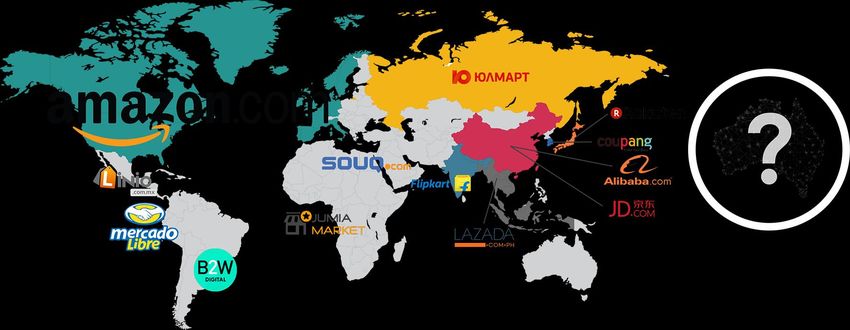
Dominant eCommerce retailers by country / region

       What Amazon’s imminent entry will mean for Australia?
       Amazon is currently present in 14 countries and tends to be most successful in ‘Western’ markets similar to
       the US such as the UK and Germany – will Australia be next?.

       Most eCommerce retailers still tend to be somewhat restricted to their country / region of dominance. Their
       desire for global expansion will increasingly push these companies into local opposition.
Why is Amazon entering Australia?

      Undeveloped and fragmented   Population concentrated   Increasing trend of online   High internet & smartphone
        local eCommerce scene        in main urban areas       shopping in Australia          penetration levels

Most other markets that Amazon currently operate in are several times larger than Australia, with Canada
probably being the most comparable market in terms of overall size and geographic vastness.

Having experienced relative success there as well as in other developed markets of Western Europe, could
Amazon be viewing Australia as another possible ‘quick-win’ where it can leverage its brand awareness and
core strengths to overcome the awaiting challenges?
Market Share by Online Retailer
      eCommerce outlook in
     Australia – comparisons                                                        2012    8%                                    74%

 with the Canada and the US                                                         2014        9%                                     65%

                                                                                    2016        9%                                     68%

                                                                                           0%         20%          40%           60%           80%           100%
                                                            AU$ 20.5 billion
Despite the lack of a local warehouse                       (7.2% of all retail)                     eBay   Woolworths   Apple    Wesfarmers    Other Retailers
     presence, Amazon is already the
  leading internet retailing platform in
Australia with an estimated 9% market
           share (~AU$2 billion in sales)

      Online Retail Market Size - Australia
                                                            CA$ 23.9 billion
                                                            (6.5% of all retail)

                                                            US$ 312.1 billion
                                                            (10.4% of all retail)

      Source: Euromonitor, Desktop Research, GRA Analysis
The Australia eCommerce market is        Since its entry into Canada in 2010,        Amazon Marketplace has been
                    projected to grow                Amazon has actually seen its            very successful and is a significant
         at 12.2% CAGR (Compound Annual           market share reduce over the years        contributor to its revenues. eBay has
         Growth Rate) over the next 4 years.          as the eCommerce market                  been struggling with reduced
          Even though all current orders are          became more fragmented.                   market share in many other
         fulfilled from overseas, Amazon has          Nonetheless, Amazon will be            markets, and is likely to lose further
              a strong brand awareness in            hoping to apply what they’ve            share in Australia once Amazon is
          Australia and is already the largest         learnt from their Canadian                  firmly established here.
               eCommerce retail platform             experience to their Australian
                     by sales revenue.                         market entry.

Despite market share seemingly fragmenting for key online retailers as newer entrants emerge, the size of the
market is certainly increasing. Thereby, in absolute terms, online is a considerable growth opportunity for retailers.
If you're competitor-
                                         focused, you have to wait
                                                                                                                     I would never say no
                                          until there is a competitor
                                                                                        Your margin                 to something the team
                                           doing something. Being
                                                                                           is my                  wanted to do, but I might
                                          customer-focused allows
                                                you to be more                          opportunity.               say yes to something the
                                                  pioneering.                                                    team didn't want to do. You
                                                                                                                   want there to be multiple
                                                                                                                 ways to get to 'yes' because
                                                                                                                 you want to encourage risk-
                                                                                                                            taking.

  What we know about the Amazon
            way of doing business:                                                            Jeff Bezos - CEO

In addition to its customer-centric view and long-term
                                                                                                                                  We've had three big ideas
 focus, Amazon is armed with its artillery of innovation,                                                                            at Amazon that we've
           market capitalisation and scaling capacity                                                                             stuck with for 18 years, and
                                                                                                                                    they're the reason we're
                                                                                                                                       successful: Put the
                                                                  Frugality drives                                                 customer first. Invent. And
                                                                innovation, just like               There are two kinds                    be patient.
                                                               other constraints do.             of companies, those that
                             Focusing on the                   One of the only ways                work to try to charge
                            customer makes a                   to get out of a tight             more and those that work
                             company more                      box is to invent your             to charge less. We will be
                                 resilient.                          way out.                          the second.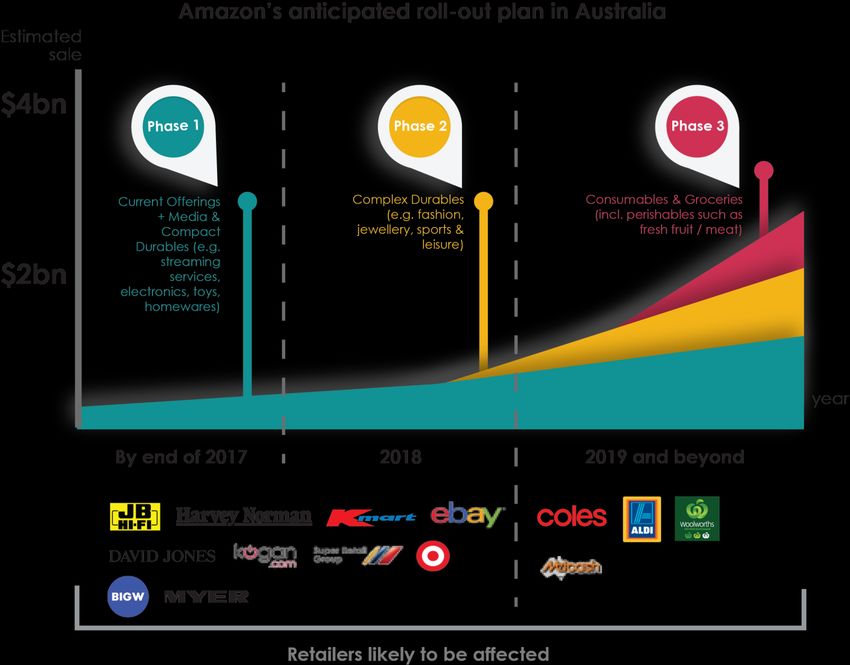
“IF YOU MAKE CUSTOMERS UNHAPPY IN THE PHYSICAL
                                                                          Amazon -
                   WORLD, THEY MIGHT EACH TELL SIX FRIENDS. IF YOU MAKE   Understanding
‘CUSTOMER FIRST’   CUSTOMERS UNHAPPY ON THE INTERNET, THEY CAN EACH
                   TELL 6,000.”
                                                                          Consumers like no
         FOCUS     “WE’RE NOT COMPETITOR OBSESSED, WE’RE CUSTOMER
                   OBSESSED. WE START WITH WHAT THE CUSTOMER NEEDS AND    other retailer:
                   WE WORK BACKWARDS.”
                                                                          Key to Amazon’s successes is its
                                                                          profound understanding of what
                   “WE SEE OUR CUSTOMERS AS                               consumers want, which allows it to
                   INVITED GUESTS TO A PARTY, AND                         correctly address their most
  CONVENIENCE      WE ARE THE HOSTS. IT’S OUR JOB
                   EVERY DAY TO MAKE EVERY
                                                                          pressing needs
                   IMPORTANT ASPECT OF THE
                   CUSTOMER EXPERIENCE A LITTLE BIT
                   BETTER. ”

                   AMAZON WAS AN EARLY ADOPTER OF USING BIG AND

PERSONALISATION    SMALL DATA FOR PERSONALISATION, USING A CUSTOMER’S
                   REAL-TIME BROWSING AND OVERALL BUYING HISTORY TO
                   RECOMMEND PRODUCTS THAT THEY MAY BE INTERESTED IN.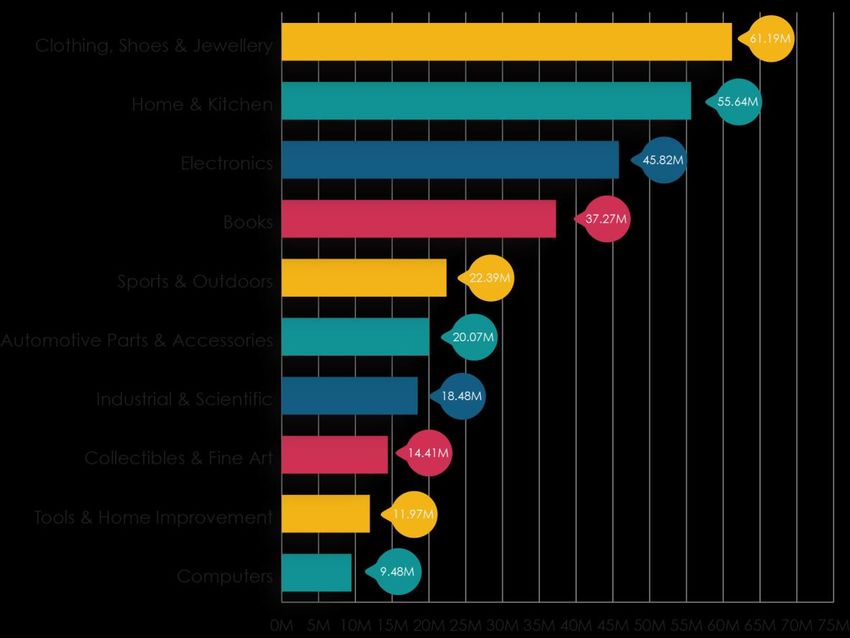
Through its use of data analytics, Amazon
                                         has an exceptional understanding of each
                                         customer's individual viewpoint and
                                         preferences.

                                         Its success can be attributed to having an
                                         overall service-offering profile (product
BARGAIN HUNTERS    FAST MOVERS           quality, price, delivery speed) that is able
• Value-driven     • Utility-driven      to satisfy the different categories of
• Cost-conscious   • Time-poor
                                         customers in all four quadrants above:
• Value seekers    • High-value items
• Opportunists     • Immediate need

                                         “Cost Savers” are primarily cost-driven and
                                         look for the cheapest options;
COST SAVERS        THRILL SEEKERS
• Cost-driven      • Experience-driven   "Bargain Hunters" are value-driven and look
• Time-rich        • Personal interest   for a good deal;
                   • Need for support
                                         "Thrill Seekers" desire the memorable
                                         purchase/product experience;

                                         "Fast Movers" value efficiency and utility.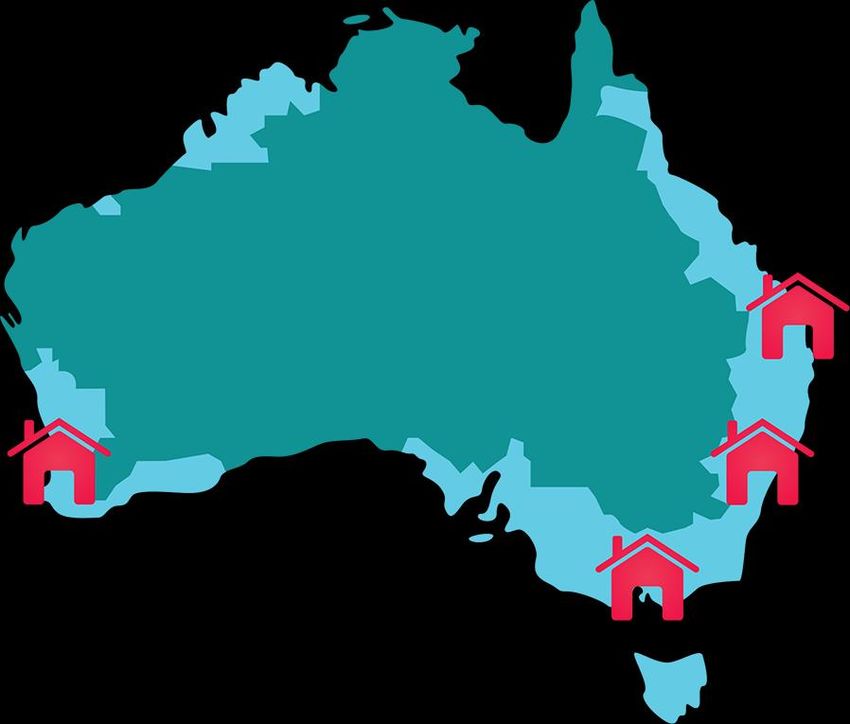
Amazon’s anticipated roll-out plan in Australia

                                                  Roll-out plan in Australia
                                                  and Impact Assessment:
                                                  Amazon’s entry is likely to be a multi-
                                                  stage roll-out with a Full Retail Offering
                                                  to eventually being available in
                                                  Australia by the end of 2019, which
                                                  means certain retailers will be
                                                  affected sooner than others.
                                                  Nonetheless, consumers are unlikely to
                                                  see drastically lower prices with
                                                  Amazon’s arrival
“Amazon’s arrival will put downward pressure on prices, but its true competitive
advantage over Australian retailers is in product proliferation and delivery options”
Despite the weakening Australian
dollar, Australian retail prices have
reduced considerably across most
categories in recent years. The price
differential between the US and
Australia has more than halved across
most product categories in the last
five years.
Amazon’s products will likely be sold
at a premium to US prices. As a result,
Amazon should find more of a
competitive advantage in product
range and delivery, rather than price.Amazon’s Product Proliferation – Impact Assessment:
In comparison to Australian retailers, Amazon operates on a completely different scale, typically carrying millions of products.
With cost pressures on Australian retailers likely to be modest, product proliferation will be a major differentiator for Amazon.
Top 10 Categories of products on sale* – Amazon US Jun 2017 Estimated product count by market* Amazon
Source: ExportX Analysis
Product Count* – US May 2017
Note: Product count figures
include items from third-party Source: ScrapeHero Analysis Source: ScrapeHero Analysis
sellers on Amazon Marketplace”.A significant
proportion of
products listed on
Amazon (>90%) are
from third-party sellers In other mature
using Amazon markets,
Marketplace, which Amazon’s product
count has been
Amazon’s Product Proliferation,
will also be available
in Australia growing on average
55% year on year from
introducing a new meaning to 2013-2015
‘choice’.
With the pricing differential between the US and
Australia having been reduced significantly over the
past few years, product proliferation will likely be a
greater competitive edge for Amazon, more
significant than price, as local consumers look set to
Amazon operates on a totally
benefit from a wide range of choice previously different scale, typically carrying
unknown to Australia.
millions of SKU’s as opposed to As of 2017, there
the tens of thousands of SKU’s are over 350
carried by Australian retailers million products
for sale on the US
Amazon website
(~15 million
products carried
directly),
compared to 26
million available
at WalmartCase Study:
Amazon’s Entry into
Canada – Impact on
Retailers: Canada’s largest Canadian venture of the Canada’s largest electronics
Iconic Canadian retailer grocery chain US retail chain that began retailer, acquired by US-chain
500 stores nationwide in 1952 but currently in the Best Buy in 2011 and eventually
Amazon’s entry had 2,000+ supermarkets
process of liquidation shutting down in 2015
widespread impact on
Canadian retailers but many
were able to adjust and co-
exist with Amazon. Those
Learnt from Walmart’s More time to react, due to Early pioneer of e-commerce in Offered same products as
retailers who were ill-equipped entry in the 90s to quickly Amazon’s lack of grocery Canada (late 90s), but never other online non-specialist
and reacted too late were react to Amazon’s arrival offerings early in its launch truly ramped up that capability retailers
ultimately the real victims
Relaunched e-commerce Struggled to distinguish itself Poor brand strategy –
Started selling online and
site in 2011 as a specialty retailer for its operated under 2 different
introduced Click & Collect
‘core’ products brands despite duplicate
in 2014
location
Invested heavily in digital
Shifted a stronger focus Modest (but very costly)
initiatives
towards ‘Fresh Foods’ improvements were Didn’t adapt to changing
“It is not the strongest of attempted, as many of their consumer behaviors
the species that survive, Early pioneer of Click & shoppers were thought to (‘showrooming’ and buying
Collect in Canada Increased buying power be averse to change elsewhere)
nor the most intelligent,
through M&A
but the one most consolidation
responsive to change.” Turnaround plans were Waited too long to invest
further hampered by high in online channel
management turnover
Charles Darwin
Australian retailers must learn to adapt quickly and be prepared to
further improve on areas that already they excel in.Amazon’s Entry into
Canada – Logistics Amazon brought its ‘robotics
Innovations: warehouse’ to Canada in 2015,
using the latest technology to
help them ‘fulfil customer
Amazon invested heavily as it orders much faster’ as well as
built its presence in Canada to Since entering Canada in 2010, saving floor space, enabling
bring the latest innovations in Amazon has opened a new warehouse them to have ‘50% more
logistics to give it a competitive location every year. inventory selection in the
edge in the market building’.
There are currently 5 fulfilment centres
in Canada, serving both the East and
West coasts of the country.
With Amazon recently patenting its ‘Sky
Warehouse’ concept, could this really the future
of warehousing and fulfillment?FREIGHT/
Amazon’s Entry into Canada
Amazon initially relied on 3PL providers (CP, UPS,
DELIVERY
FedEx etc.) to deliver their orders. However, Amazon
has been investing in building its own logistics arm and
since launching in 2016, an increasing number of
orders are being delivered by Amazon Logistics.
Amazon Prime (CA$79 per year) service offerings:
• Same day delivery available for Toronto and
Vancouver (order before noon)
• Next day delivery for Toronto, Vancouver,
Montreal, Calgary and Edmonton
• Free delivery threshold set at $35 per eligible order
• No free deliveries to ‘remote’ areas
Amazon have also started trialing its drone delivery
service (Prime Air) in Canada from late 2016.Amazon Warehouses are likely to be located in outer metro areas of cities with strong
transport links.
Amazon has signed a lease for its first Australian warehouse, located in Melbourne’s south-
What logistical eastern suburb of Dandenong and are also finalising the lease terms for its Sydney
innovations can warehouse to be located at Eastern Creek in the city’s west.
Amazon possibly bring We believe Amazon plan to
to Australia? eventually set up 3-5
warehouses in Australia by
Based on Amazon’s experience in 2020 (including 1 potentially in
Canada, we are likely to see Western Australia as volumes
similar developments in Australia become feasible there).
as Amazon slowly establishes itself
98% of the population live in the areas
and eventually ramps up painted light blue on the map Similarly to Canada, Amazon is
investments to build up its logistics also likely to bring its latest
capabilities here – could Robotic warehousing technology
warehouses and drone deliveries (including its robotics
be potentially just around the expertise) to Australian
corner for Australia? fulfilment centres.Big Data Smartphones Freight & Delivery
Personal P2P Couriers Initially Amazon will most likely rely on local 3PL
Computers providers to deliver their orders:
Demand The Internet
Sensing
Online Retail
HOW WILL THESE This will provide ample opportunities for multiple local
CONVERGE? 3PL businesses to partner with Amazon and up their
WHAT WILL THEY game to service such an important client with huge
CREATE? volumes. Amazon have begun negotiations with
Australia Post and Couriers Please, with talks supposedly
at an ‘advanced stage’.
Car drops 3D Printing Amazon will also start to invest on their distribution
Predictive network as their operations grow and when they get a
Physical Stores Analytics better feel of the logistical challenges in Australia. There
is potential for a lot of technology and Supply Chain
Click & Collect innovations to be introduced, which will revolutionise
the Logistics sector within the country.
Drone DeliveryAre you ready for Amazon?
Online to Omni-Channel Supply Chain Maturity Model
Amazon’s relentless focus on customer experience and innovation has resulted in their highly personalised and predictive
supply chain model (Stage 4). In order to survive and co-exist with Amazon, Australian retailers will need to lift their maturity
level in all supply chain areas (strategy, operations planning & execution)
CAPABILITY VISIBLE & RESPONSIVE FLEXIBLE PERSONAL & PREDICTIVE• Online channel with products
Customer available for purchase
Strategy Value • Customers can complete purchases
online
Proposition • Basic delivery options
• Defined supply chain strategy
Supply • Assess current SC capabilities and
Chain gaps to providing next level CVPs
Strategy
• No or basic level S&OP
Operations Planning
Sales & • Products delivered through basic
Operations Last Mile / postal networks, one or two shipping
Execution
Planning Logistics providers
• Minimal or Basic tracking capabilities
• Wide delivery windows (1 day)
Collaborative • No or minimal supplier collaboration,
Forecast and only transactional interactions with
Replenishment suppliers • Single warehouse or fulfilled from store
Network/ • Online and offline network not
Planning Warehousing integrated (can be co-located)
Demand and
• Min/max methodologies
Supply Planning • Minimal data inputs
& Inventory
Optimisation• Stock availability across channels shown
to customer
Customer • Purchase decision information (e.g.
Strategy Value product specs, reviews etc.)
Proposition • Multiple delivery and collection options
(e.g. same-day courier, click and
collect etc.)
• Reactive supply chain strategy
Supply • Progress capability to match market
Chain leaders
Strategy
• Operational S&OP • Detailed tracking of delivery
Operations Planning
Sales & • Narrow delivery windows (1-2hrs)
Operations Last Mile / • Partner with delivery service aggregators
Execution
Planning Logistics (e.g. Shippit, Temando)
• ‘Click and collect’ options from stores or
pickup points (e.g. Woolworths & eBay,
Woolworths & Sydney Trains)
• Provide vendor forecast and conduct
Collaborative cyclic meetings with key suppliers on
Forecast and demand and replenishment planning
• Dedicated fulfillment processes for
Replenishment • Supplier portals for basic data such as
Network / direct to customer channels
forecast & delivery plans
Planning Warehousing • Responsive network and warehouse
design (size, locations, 3PLs). Located
near customers with single pick
capabilities
Demand and
• TPRP methodologies
Supply Planning • Basic available to promise
& Inventory • Online & offline planned or
Optimisation managed separately• Easy and streamlined returns process
(e.g. reusable packaging, generate
Customer shipping labels)
• Multiple channels and methods of
Strategy Value
interaction (e.g. website, email, phone
Proposition instore)
• Consistent customer experience across
channels
• Innovative supply chain strategy
Supply • Develop new supply chain capability
Chain requirements
• Survey technological developments for
Strategy suitability
• Enterprise S&OP • Redirection of deliveries pre delivery or
Operations Planning
Sales & after failed deliveries
Operations Last Mile / • On demand delivery options (e.g.
Execution
Planning Logistics Zoom2u, UberRUSH)
• Efficient forward and reverse logistics,
channel agnostic returns (e.g. ASOS, Best
Buy)
Collaborative • Cyclic supplier collaboration meetings
with key suppliers to address inefficiencies
Forecast and and to develop improvements with
Replenishment actions and measurable outcomes • Dynamic network, capable of fulfilling
Network / from any location to any customer
Planning Warehousing • Short order to pick to dispatch times
enabling on-demand delivery options
Demand and
• Dynamic ATP/CTP based on latest
Supply Planning demand signals
& Inventory • Integrated online and offline
Optimisation planning and inventory optimisation• Tailored experience based on customer
preference/profile (e.g. pack size, brand,
Customer related products, shipping etc.)
Strategy Value • High level of customisation and
Proposition specification
• Life integrations (e.g. Amazon Dash, smart
packaging, IOT etc.)
• Supply chain strategies that incorporates
Supply blue-sky thinking
Chain • Develop and/or enable new capabilities
and technologies
Strategy
• Adaptive S&OP • Precise delivery timing
Operations Planning
Sales & • User driven delivery options (e.g. deliver to
Operations Last Mile / car, deliver to current location etc.)
Execution
Logistics • Control and quality assurance on last mile
Planning interactions (e.g. Amazon Flex)
• Value add last mile customer interactions
(e.g. Enjoy)
Collaborative • Deep supplier collaboration & integration
with sophisticated sharing of data
Forecast and • Demand signals fed back in real time to
• Fully automated warehouse and delivery
Replenishment suppliers (e.g. Walmart & P&G) Network / systems (e.g. autonomous vehicles)
Planning Warehousing • Fully integrated warehouses, stores and
channel networks. Customers can place
orders in store for immediate delivery.
Demand and • Customer level demand forecasting
Supply Planning • Predictive Analytics
• Rapid planning cycles, approaching ideal
& Inventory JIT flows
OptimisationStage 1 Stage 2 Stage 3 Stage 4
Capable Visible & Responsive Flexible Personal & Predictive
• Easy and streamlined returns process
• Stock availability across channels shown • Tailored experience based on customer
(e.g. reusable packaging, generate
• Online channel with products available to customer preference/profile (e.g. pack size,
shipping labels)
for purchase • Purchase decision information (e.g. brand, related products, shipping etc.)
• Multiple channels and methods of
Customer Value Proposition • Customers can complete purchases product specs, reviews etc.) • High level of customisation and
interaction (e.g. website, email, phone
online • Multiple delivery and collection options specification
instore)
Strategy
• Basic delivery options (e.g. same-day courier, click and collect • Life integrations (e.g. Amazon Dash,
• Consistent customer experience across
etc.) smart packaging, IOT etc.)
channels
• Innovative supply chain strategy • Supply chain strategies that incorporates
• Defined supply chain strategy
• Reactive supply chain strategy • Develop new supply chain capability blue-sky thinking
• Assess current SC capabilities and gaps
Supply Chain Strategy • Progress capability to match market requirements • Develop and/or enable new capabilities
to providing next level CVPs
leaders • Survey technological developments for and technologies
suitability
Sales & Operations Planning • No or basic level S&OP • Operational S&OP • Enterprise S&OP • Adaptive S&OP
Operations Planning
• Provide vendor forecast and conduct • Cyclic supplier collaboration meetings • Deep supplier collaboration &
• No or minimal supplier collaboration, cyclic meetings with key suppliers on with key suppliers to address integration with sophisticated sharing of
Collaborative Forecast and
only transactional interactions with demand and replenishment planning inefficiencies and to develop data
Replenishment Planning
suppliers • Supplier portals for basic data such as improvements with actions and • Demand signals fed back in real time to
forecast & delivery plans measurable outcomes suppliers (e.g. Walmart & P&G)
• TPRP methodologies • Dynamic ATP/CTP based on latest • Customer level demand forecasting
Demand and Supply Planning • Min/max methodologies • Basic available to promise demand signals • Predictive Analytics
& Inventory Optimisation • Minimal data inputs • Online & offline planned or managed • Integrated online and offline planning • Rapid planning cycles, approaching
separately and inventory optimisation ideal JIT flows
• Detailed tracking of delivery • Redirection of deliveries pre delivery or • Precise delivery timing
• Narrow delivery windows (1-2hrs) after failed deliveries • User driven delivery options (e.g. deliver
• Products delivered through basic postal
• Partner with delivery service aggregators • On demand delivery options (e.g. to car, deliver to current location etc.)
networks, one or two shipping providers
Last Mile/Logistics (e.g. Shippit, Temando) Zoom2u, UberRUSH) • Control and quality assurance on last
• Minimal or Basic tracking capabilities
• ‘Click and collect’ options from stores or • Efficient forward and reverse logistics, mile interactions (e.g. Amazon Flex)
• Wide delivery windows (1 day)
Execution
pickup points (e.g. Woolworths & eBay, channel agnostic returns (e.g. ASOS, • Value add last mile customer
Woolworths & Sydney Trains) Best Buy) interactions (e.g. Enjoy)
• Dedicated fulfillment processes for direct
• Fully automated warehouse and delivery
to customer channels • Dynamic network, capable of fulfilling
• Single warehouse or fulfilled from store systems (e.g. autonomous vehicles)
• Responsive network and warehouse from any location to any customer
Network/Warehousing • Online and offline network not • Fully integrated warehouses, stores and
design (size, locations, 3PLs). Located • Short order to pick to dispatch times
integrated (can be co-located) channel networks. Customers can place
near customers with single pick enabling on-demand delivery options
orders in store for immediate delivery.
capabilities
Are you ready for Amazon?You can also read


