Amygdala dysfunction in men with the fragile X premutation
←
→
Page content transcription
If your browser does not render page correctly, please read the page content below
doi:10.1093/brain/awl338                                                                                                                         Brain (2007), 130, 404–416

Amygdala dysfunction in men with the fragile
X premutation
David Hessl,1,2 Susan Rivera,1,5 Kami Koldewyn,1,6 Lisa Cordeiro,1 John Adams,1 Flora Tassone,1,4
Paul J. Hagerman1,4 and Randi J. Hagerman1,3
1
 Medical Investigation of Neurodevelopmental Disorders (MIND) Institute and Departments of 2Psychiatry and Behavioral
Sciences, 3Pediatrics, University of California-Davis, Medical Center, Sacramento, 4Department of Biochemistry and
Molecular Medicine, University of California-Davis, School of Medicine, 5Department of Psychology and 6Center for
Neuroscience, University of California-Davis, Davis, CA, USA

                                                                                                                                                                                              Downloaded from brain.oxfordjournals.org at University of California, Davis on October 29, 2010
Correspondence to: David Hessl, PhD, Assistant Clinical Professor, MIND Institute, University of California, Davis Medical
Center, 2825 50th Street, Sacramento, CA 95817, USA.
E-mail: david.hessl@ucdmc.ucdavis.edu

Premutation alleles (55–200 CGG repeats) of the fragile X mental retardation 1 (FMR1) gene are associated
with autism spectrum disorder in childhood, premature ovarian failure, and the neurodegenerative disorder,
fragile X-associated tremor/ataxia syndrome (FXTAS). FXTAS, and perhaps the other clinical presentations
among carriers, are thought to be due to toxic gain-of-function of elevated levels of the expanded-repeat
FMR1 mRNA. Previous structural MRI studies have implicated the amygdala as a potential site of dysfunction
underlying social deficits and/or risk for FXTAS. As a preliminary investigation of this possible association, adult
males with the premutation, and male controls matched for IQ, age and education, completed three protocols
that probe amygdala and sympathetic function: (i) a functional MRI paradigm that measures brain response
to fearful faces; (ii) a fear-potentiated startle paradigm that differentiates responses to fearful faces and
fearful non-social images and (iii) measurement of skin conductance level during a brief social encounter.
Compared with controls, men with the FMR1 premutation demonstrated diminished brain activation in
the amygdala and several brain areas that mediate social cognition while viewing fearful faces. The reduced
amygdala activation in the premutation group was significantly associated with self-report of psychological
symptoms on the Symptom Checklist-90—Revised. These men also displayed a lack of startle potentiation
while viewing fearful faces and showed reduced skin conductance response when greeting an unfamiliar experi-
menter in comparison with the control group. The current findings may be related to social cognition deficits
reported previously in children and adults with the premutation. The aetiology for this dysfunction may be
elevated FMR1 mRNA or reduced FMR1 protein that occurs in carriers with higher premutation CGG repeat
alleles.

Keywords: FMR1 gene; FXTAS; fragile X; face perception; social cognition

Abbreviations: ASD ¼ autism spectrum disorder; fMRI ¼ functional MRI; FMR1 ¼ fragile X mental retardation 1; FMRP ¼ fragile
X mental retardation protein; FXTAS ¼ fragile X-associated tremor/ataxia syndrome; FXS ¼ fragile X syndrome; GSI ¼ global
severity index; ROI ¼ region of interest; SCL-90-R ¼ Symptom Checklist-90—Revised; STS ¼ superior temporal sulcus
Received June 1, 2006. Revised September 18, 2006. Accepted November 7, 2006. Advance Access publication December 12, 2006.

Introduction
Until recently, the importance of premutation alleles                                           social, emotional and cognitive problems along the
(55–200 CGG repeats) of the fragile X mental retardation                                        FXS spectrum, including autism spectrum disorder (ASD)
1 (FMR1) gene was thought to be limited to their propensity                                     (Dorn et al., 1994; Franke et al., 1998; Tassone et al.,
for expansion to the full mutation range (>200 CGG repeats)                                     2000b; Johnston et al., 2001; Hagerman and Hagerman,
during transmission, with the consequent development                                            2002; Borghgraef et al., 2004; Moore et al., 2004a, b;
of fragile X syndrome (FXS). However, it is now clear that                                      Cornish et al., 2005; Farzin et al., 2006). In contrast to
a portion of carriers of premutation alleles have significant                                   the prevalence of FXS (1 in 3000–5000 live births), the
# The Author (2006). Published by Oxford University Press on behalf of the Guarantors of Brain. All rights reserved. For Permissions, please email: journals.permissions@oxfordjournals.org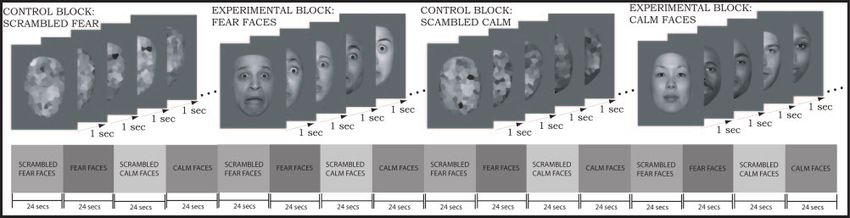
Amygdala dysfunction in FMR1 premutation                                                        Brain (2007), 130, 404–416           405

prevalence of the FMR1 premutation in the general                   and ASD (Baron-Cohen et al., 2000; Howard et al., 2000;
population is 1 per 813 males and 1 per 259 females                Sweeten et al., 2002; Amaral and Corbett, 2003; Schultz,
(Rousseau et al., 1995; Dombrowski et al., 2002).                   2005; Bachevalier and Loveland, 2006; Dziobek et al., 2006).
   In addition to the developmental problems reported in            Interestingly, Cornish and colleagues recently reported that
children, male and (occasional) female premutation carriers         men with the premutation, compared with matched family
are at significant risk for a late-onset neurodegenerative          and non-family controls, displayed largely normal basic
disorder, fragile X-associated tremor/ataxia syndrome               facial recognition ability (including recognition of fearful
(FXTAS), with principal features of intention tremor and            expressions), but significant impairment in recognizing
gait ataxia (Hagerman et al., 2001; Jacquemont et al., 2003;        more complex mental and emotional states (Reading the
Hagerman and Hagerman, 2004a). Additional clinical                  Mind in the Eyes Test; Baron-Cohen et al., 2001), obsessive-
features include brain atrophy with white matter disease            compulsive traits, and executive function problems includ-
and characteristic hyperintensity in the middle cerebellar          ing inhibitory control (Cornish et al., 2005). Based on
peduncles, autonomic dysfunction including high blood               clinical reports of ASD associated with the premutation

                                                                                                                                             Downloaded from brain.oxfordjournals.org at University of California, Davis on October 29, 2010
pressure and impotence, sensory neuropathy in a stocking            (Tassone et al., 2000b; Aziz et al., 2003; Borghgraef et al.,
distribution in the lower extremities and cognitive decline         2004; Goodlin-Jones et al., 2004; Farzin et al., 2006) and
beginning with memory deficits (Brunberg et al., 2002;              the CGG- and FMRP-dependent changes reported in the
Jacquemont et al., 2004; Bacalman et al., 2006). The                amygdalo–hippocampal complex (Jäkälä et al., 1997; Moore
late-onset neurological phenotype has never been observed           et al., 2004b), we hypothesized that dysfunction of the
or reported in FXS and has a different molecular                    limbic system contributes to the neuropsychiatric phenotype
mechanism, now believed to be a toxic gain-of-function              of the fragile X premutation.
effect resulting from elevated FMR1 mRNA (Hagerman and                 To begin to address this hypothesis, we conducted a
Hagerman, 2004b). Post-mortem studies of brain tissue               series of three experiments designed to probe amygdala
from premutation males with FXTAS show the presence of              and autonomic nervous system responses to social and
distinct intranuclear, eosinophilic inclusions in neurons and       emotional stimuli in a group of men with the premutation
astrocytes (Greco et al., 2002, 2006).                              (without FXTAS) and a comparison group of men without
   Recently, we documented that abnormal elevation of               the premutation matched on age, IQ and level of education.
FMR1 mRNA is associated with psychiatric problems, pre-             The experiments were (i) measurement of amygdala
dominantly schizoid and obsessive-compulsive symptoms,              activation during exposure to fearful facial expressions
in males with the premutation who have developed FXTAS              by functional MRI (fMRI); (ii) potentiation of the eye
as well as in younger adult males with no evidence of               blink startle reflex to fearful faces and non-social fearful
this neurodegenerative disease (Hessl et al., 2005). FMR1           stimuli, a biobehavioural response mediated by the
expression was not associated with IQ, suggesting that the          amygdala (Hitchcock and Davis, 1986; Hitchcock and
RNA gain-of-function has a greater impact on neuropsy-              Davis, 1987; Vrana et al., 1988; Bradley et al., 1996;
chiatric than on cognitive status.                                  Cuthbert et al., 1996); and (iii) measurement of skin
   Limbic brain regions, including the amygdala and hippo-          conductance activity during a brief social stressor (a greeting
campus, may be especially impacted by increased CGG                 and semi-structured interview with an unfamiliar experi-
repeat size and the consequent abnormal elevation of FMR1           menter). Given the reduction of grey matter density in the
mRNA (Abitbol et al., 1993; Jäkälä et al., 1997; Greco et al.,   amygdalo-hippocampal region in premutation males
2002; Moore et al., 2004b). In a structural brain MRI study,        reported previously, we also completed detailed measure-
Jäkälä et al. (1997) showed that, compared with controls,        ment of the amygdala to examine potential volumetric
males and females with the premutation had significantly            differences between groups that might help inform our
reduced hippocampal volumes and associated memory                   interpretation of the experimental data.
deficits. In a recent study of 20 male premutation carriers
and 20 age and IQ matched controls, Moore et al. (2004b)
demonstrated significantly reduced grey matter density in
several brain regions in the premutation group, including the       Material and methods
cerebellum, caudate, insula, amygdalo–hippocampal com-              Participants
plex, brainstem and thalamus. Within this group, increased          Participants included 12 men with the FMR1 premutation (mean
                                                                    age = 42.9 years) and a comparison group of 13 men without the
age, increased CGG repeat size and decreases in the
                                                                    premutation (mean age = 39.8 years) (Table 1); allele status was
percentage of blood lymphocytes expressing fragile X mental
                                                                    confirmed for all participants by FMR1 DNA testing. None of the
retardation protein (FMRP) were associated with decreased           participants with the premutation was mosaic for either repeat size
grey matter density in the amygdalo–hippocampal complex.            or methylation. Participant descriptive statistics and FMR1 data are
   Dysfunction of the amygdala is implicated in psy-                shown in Table 1. The two groups were matched for age (t = 1.02,
chological problems experienced by individuals with the             P = 0.32), IQ (premutation, 116.3; control, 113.3; t = 0.42, P = 0.68)
premutation because of its role in emotion (see Phelps              and level of education (premutation, 15.4 years; control, 14.8 years;
and LeDoux, 2005), social cognition (see Adolphs, 2003)             t = 0.55, P = 0.59). All participants except one control were right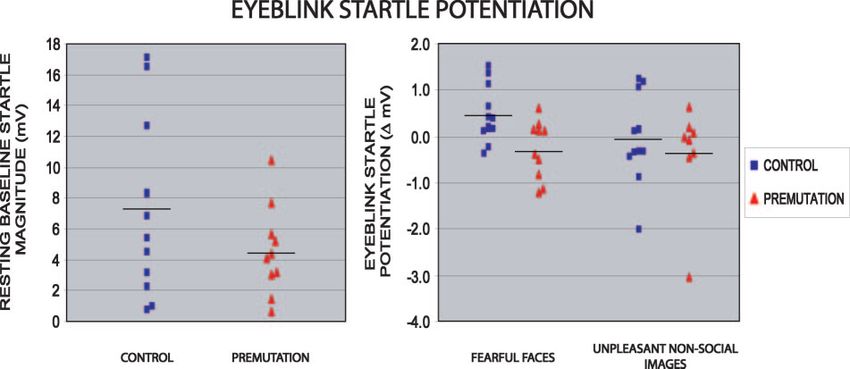
406      Brain (2007), 130, 404–416                                                                                         D. Hessl et al.

Table 1 Participant descriptive statistics and FMR1 measures
                                   Control (n = 13)                                 Premutation (n = 12)
                                   Mean            SD             Range             Mean            SD           Range              P-value
Age                                 39.8             7.7      26–55                  42.9             7.8        28–56               0.32
WAIS-III full scale IQ             113.3            16.7      84–148                116.3            19.6        83–152              0.68
Education level                     14.8             2.6      11–18                  15.4             3.3        10–20               0.59
SCL-90-R GSI                        59.4            11.5      41–81                  54.8            10.4        42–81               0.31
Handedness                          12 right, 1 left                                12 right, 0 left                                 0.33
Psychoactive medication            1 On venlafaxine and buproprion                  2 On amitriptyline                               0.49
FMR1 CGG repeat size                27.0             5.3      17–32                  94.4            37.6        57–166
Amygdala dysfunction in FMR1 premutation                                                            Brain (2007), 130, 404–416            407

Fig. 1 Images and presentation timing used in the fMRI protocol.

                                                                                                                                                  Downloaded from brain.oxfordjournals.org at University of California, Davis on October 29, 2010
Total cranial volume                                                    on images created by averaging all individuals’ normalized SPGR
To obtain a measure of total cranial volume (TCV), non-brain            images.
elements were manually removed from the image by operator-                 A standard within-subjects procedure was used to model all
guided tracing of the dura mater within the cranial vault using a       effects of interest for each participant by contrasting experimental
custom-written computer program operating on a UNIX, Solaris            and control blocks (e.g. blocks of fear faces–blocks of control faces).
platform (Quanta 6.1). The middle cranial fossa, the posterior fossa    Models for individuals were identical across participants. Group
and the cerebellum were included.                                       analyses were performed using a random-effects model incorporat-
                                                                        ing a two-stage hierarchical procedure, which estimates the error
Total brain volume                                                      variance for each condition of interest across participants rather
The TCV was automatically segmented into CSF and brain matter           than across scans (Holmes and Friston, 1998). In the first step, the
components according to previously published methods in order to        contrast images for each participant for each effect of interest were
obtain a measure of total brain volume (DeCarli et al., 1992, 1995,     generated (described above). In the second step, these contrast
1996).                                                                  images were analysed using a general linear model to determine
  Interrater reliability for these methods is good, with intraclass     voxel-wise t-statistics. One contrast image per participant, per effect
correlation coefficients of 0.99 for TCV, 0.92 for left amygdala        of interest was generated.
and 0.93 for right amygdala. A single rater performed all of the           Within-group analyses of each contrast were performed to
analyses and was blind to the participant’s experimental condition      identify voxels/brain regions showing similar response modulation
and demographic information.                                            across participants in each group for a given contrast (e.g. fear–
                                                                        control). In addition, between-group analyses were performed to
                                                                        determine how the two groups differed in their average activation
fMRI face processing task
                                                                        in response to each contrast of interest (i.e. to examine which
We followed a design similar to that used by Thomas et al. (2001)
                                                                        regions were more active in fragile X premutation participants than
to evaluate the activity of the amygdala in response to emotional
                                                                        in controls, and vice versa).
faces. In alternating 24 s blocks, we presented greyscale fearful and
                                                                           Region of interest (ROI) analyses were carried out using
calm faces (both from the NimStim Face Stimulus Set, MacArthur
                                                                        Marsbar (Brett et al., 2002), a MATLAB toolbox written to be
Foundation Research Network; Tottenham et al., 2002) as well
                                                                        implemented within SPM. Contrasts were first defined as described
as scrambled versions of each type (see Fig. 1). Hair and ears
                                                                        above. Each contrast of interest was then analysed only in voxels
were stripped from each image to remove any non-facial features.
                                                                        that fell within the MNI template of the amygdala provided within
Each picture was presented for 200 ms followed by an 800 ms
                                                                        Marsbar. A t-statistic termed ‘contrast value’ is then calculated as
interstimulus interval containing a central fixation point. The four
                                                                        the average of the contrast values of the voxels falling within the
block types were presented four times for a total of 16 blocks, or
                                                                        defined ROI. The contrast value in these analyses is comparable to
6.4 min of scan time. Each face and its scrambled counterpart were
                                                                        the Z-score reported in the whole-brain analyses tables shown
presented twice during the functional run. No overt response was
                                                                        below.
required. Participants were instructed to keep their eyes open and
to look carefully at each picture.
                                                                        Fear-potentiated startle
fMRI analysis                                                           Stimuli and experimental paradigm
Statistical analysis was performed on both individual and group         Eighteen colour pictures of human faces (6 fearful, 6 neutral and
data using the modified General Linear Model and the theory of          6 happy; Tottenham et al., 2002) and 18 colour pictures of non-
Gaussian random fields as implemented in SPM99 (Friston et al.,         social scenes (6 unpleasant/fearful, 6 neutral, 6 pleasant; Center
1995). For both within-group and between-group comparisons,             for the Study of Emotion and Attention-NIMH, 1998) were
significant voxels were defined as those that exceeded a threshold      presented to the participants seated in a comfortable chair 30–3600
value x equivalent to a one-tailed P < 0.05 (corrected for multiple     from a 1900 computer screen. IAPS images were slide numbers:
comparisons). Once thresholded, the activation was superimposed         1321, 1930, 1300, 1050, 1200 and 7380 (unpleasant/fearful); 7090,
on the normalized high-resolution SPGR and localized using atlases      7130, 7030, 7170, 7010 and 7040 (neutral); and 7330, 1710, 7410,
of the human brain and cerebellum (Duvernoy and Bourgouin,              5030, 1920 and 1750 (pleasant). The emotional pictures were
1999; Talairach and Tournoux, 1998). Group analyses were overlaid       chosen to be high on negative/positive valence and arousal
408 Brain (2007), 130, 404–416 D. Hessl et al.
Fig. 2 Examples of images and presentation timing used in the potentiated startle experiment.
according to the normative ratings. Each picture was presented for Table 2 Total brain and amygdala volumes for males with
6 s and separated by a 4 s inter-picture interval (black screen; the FMR1 premutation and matched controls
Downloaded from brain.oxfordjournals.org at University of California, Davis on October 29, 2010
Fig. 2). Pictures were presented in three different random orders, Control (n = 13) Premutation (n = 12) P-value
with random assignment of order across participants. To elicit
the startle reflex, an acoustic startle probe (95 db, 50 ms white noise Mean SD Mean SD
burst with instantaneous rise and fall) was delivered through Total 1260.58 109.66 1214.42 157.70 0.40
headphones during presentation of two-thirds of the picture brain (cc3)
presentations evenly distributed across picture category. Startle Amygdala (cc3)
probes were presented randomly between 2.5 and 5.0 s after picture Right 1.77 0.26 1.72 0.16 0.61
onset. Four baseline startle probes (also at 95 db set 15 s apart) Left 1.76 0.29 1.81 0.26 0.66
were also administered, two prior to and two following the series of Total 3.53 0.51 3.54 0.35 0.98
images. Startle probe volume was checked prior to each
participant’s assessment using a sound level meter. This procedure
has been used in multiple studies examining potentiated startle Skin conductance
and amygdala function in humans (see Buchanan et al., 2004). Biopac Ag–AgCl electrodermal electrodes (Model TSD203) filled
with Biopac GEL101 electrode paste were placed on the palmar
Eye blink response measurement and data analysis surface of the second and third fingers of the right hand. The
The eye blink response was measured by EMG activity of obicularis electrodes were connected to a Biopac GSR100C skin conductance
oculi and stored offline for later analysis (Biopac Systems, Inc., amplifier. Data were sampled at a rate of 1000 Hz, with a gain set at
Santa Barbara, CA). Biopac EL254 electrodes (Ag/AgCl) were 2 mV/V, with a low pass filter at 1 Hz. Skin conductance was
placed (i) below the lower eyelid in line with the pupil, and collected for an initial resting baseline period of 30 s prior to the
(ii) 2 cm lateral to the first electrode, centre-to-centre, following potentiated startle protocol (above). A second resting baseline of
the curvature of the muscle. Participants were grounded via the 30 s was collected after the startle protocol and prior to the social
electrodermal transducer used for the skin conductance (described challenge. Following the second baseline, an unfamiliar adult
below). Prior to analysis, the raw EMG signal was digitally filtered experimenter knocked, entered the room, greeted the participant
(90–250 Hz bandpass) and then fully rectified and integrated. The and engaged him in a brief, semistructured 2 min interview.
startle eye blink response was defined as the difference between the In order to compare the social challenge of the interview with
preblink baseline, taken as the mean EMG activity in the 50 ms the 30 s baseline periods, the analysis focused on the first 30 s of
prior to the startle probe, and the peak amplitude occurring in the the interview for consistency, and in order to examine the initial
120 ms following the startle probe. Startle responses occurring social–emotional and physiological response to meeting an
during the course of natural eye blinks, muscle or other artefacts, or unfamiliar person. The experimenter was kept blind with respect
when participants did not attend to stimuli, were removed from to participant group. The data were scored using Acknowledge
the analysis. Visual attention to the stimuli was recorded live on the software (Biopac Systems, Inc., Santa Barbara, CA). During data
physiological record using a toggle switch by a researcher with collection, a second experimenter noted any unusual events in the
direct view of the participant’s face, positioned behind a one-way session or movement-associated artefact. Any events resulting in
mirror and the computer screen. EMG startle responses were first artefactual responses were removed from the file prior to analysis.
averaged across image category. Startle potentiated by emotional
faces was calculated for each participant as the difference between
EMG startle response to fearful faces from the mean response to Results
(i) happy faces and (ii) neutral faces. Potentiation of non-social Total brain and amygdala volume
emotional stimuli were calculated as the difference between mean
Total brain and amygdala volume descriptive statistics
EMG startle response to fearful/unpleasant images from the mean
are shown in Table 2. Independent samples t-tests revealed
response to (i) unpleasant images and (ii) neutral images. Baseline
EMG startle was taken as the mean response to the four baseline
no differences in total brain volume [t (23) = 0.86, P = 0.40],
startle probes. At least three of four valid, artefact-free responses or in right [t (23) = 0.51, P = 0.61], left [t (23) = 0.45,
per slide category were required for a summary value. Non-social P = 0.66] or total amygdala [t (23) = 0.03, P = 0.98]
startle values for one participant with the premutation were missing volumes (Fig. 3). Neither CGG repeat size nor FMR1 mRNA
due to movement artefact. was significantly correlated with total brain volume inAmygdala dysfunction in FMR1 premutation Brain (2007), 130, 404–416 409
either group. In the premutation group, FMR1 mRNA premutation group, rs = 0.68, P < 0.05, but not in the
was significantly correlated with left amygdala volume control group, rs = 0.28, P = 0.38.
(r = 0.59, P < 0.05), however this effect disappeared when
using amygdala volumes normalized to total brain volume.
Also, in the premutation group, psychological symptoms Amygdala and associated brain activation
on the SCL-90-R GSI were significantly associated with Within-group analyses
reduced right amygdala volume (adjusted for total brain When viewing fearful facial expressions compared with
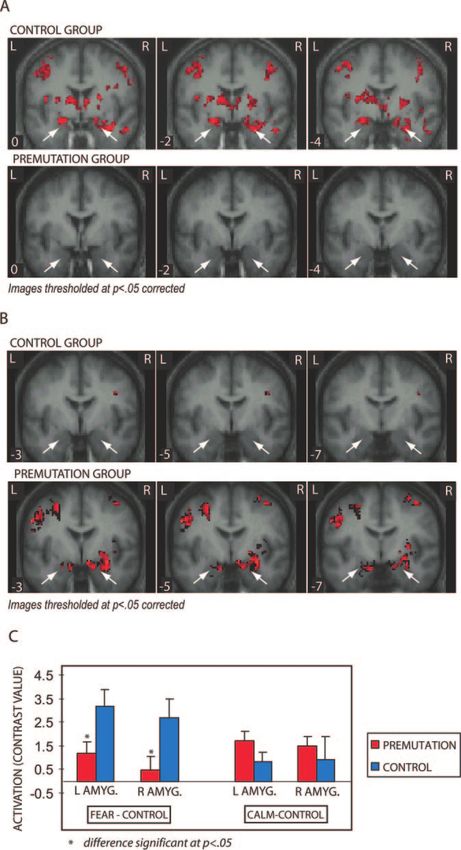
volume; Spearman’s rank rs = 0.72, P < 0.01), and the viewing scrambled faces (fear–control contrast), the pre-
analogous correlation for right amygdala volume mutation group showed both less overall activation as well
approached significance, rs = 0.50, P < 0.10. Psychological as markedly different patterns of activation compared
symptoms were not significantly associated with amygdala with controls (Table 3). Of particular interest, premutation
volumes in the control group. Finally, higher IQ was carriers failed to activate the amygdala while the control
significantly associated with larger total brain volume in the group showed robust bilateral amygdala activation
Downloaded from brain.oxfordjournals.org at University of California, Davis on October 29, 2010
(see Fig. 4A). Even in a targeted analysis where images for
the premutation group were thresholded at P < 0.05
(uncorrected), there was no evidence of significant amygdala
activation (see Fig. 4A). This difference in amygdala
activation was evident in the whole-brain analysis and
confirmed in an ROI analysis focused on the amygdala (see
Fig. 4C). In addition, the control group showed strong
activation in bilateral superior temporal sulcus (STS),
bilateral orbital gyrus, and bilateral insula. These areas,
usually associated with social cognition or emotional
processing, were not activated in the premutation group.
Most activation within the premutation group was confined
to parietal and occipital areas.
In direct contrast to the activation results from the fear-
control contrast, the premutation group showed greater
Fig. 3 Absolute left and right amygdala volume in men with overall activation than controls in response to calm facial
the fragile X premutation and matched controls. expressions when compared with viewing scrambled faces
Table 3 Stereotaxic locations and Z-scores of activation peaks in the within-group maps
Group Area No. of voxels Z max Peak coordinates
in cluster
Fear–control contrast
Control L orbital gyrus; thalamus; caudate 6230 4.54 38 32 8
R middle temporal gyrus; STS; amygdala 2039 4.49 60 34 10
L middle temporal gyrus; STS; amygdala 498 4.29 42 56 0
L occipital sulcus; cerebellum VI 1105 4.05 36 86 16
L middle and inf. frontal gyrui; insula; orbital gyrus 645 3.74 48 8 56
R middle and inf. frontal gyri; insula; orbital gyrus 437 3.73 50 8 56
Premutation R angular gyrus; temporal–parietal junction 1455 4.00 54 58 22
R&L cuneus; occipital gyrus 869 3.83 0 56 20
L middle occipital gyrus; fusiform gyrus 704 3.61 52 74 2
Calm–control contrast
Control L occipital gyrus; occipital–polar sulcus; cerebellum (VI) 977 3.94 20 102 6
R fusiform gyrus; cerebellum (VI) 581 3.71 44 48 22
R inf. frontal sulcus; sup. precentral sulcus 424 3.20 42 20 30
R amygdala** 119 3.08 14 6 18
Premutation R inf occipital sulcus; sup. temporal sulcus 1889 5.27 46 78 10
L inf. occipital sulcus and gyrus; cerebellum (VI) 538 4.48 42 86 12
L precentral and central gyri; intraparietal 792 4.19 48 18 50
sulcus (IPS); inf. parietal lobule
R inf. frontal gyrus; orbital gyrus 527 3.72 52 38 16
R amygdala; hippocampus 748 3.66 14 4 14
L precentral gyrus 433 3.65 48 14 46
L sup. frontal gyrus 787 3.35 28 4 52
All clusters significant at P < 0.05 corrected except **significant at P < 0.05, uncorrected.410 Brain (2007), 130, 404–416 D. Hessl et al.
(calm–control contrast). When viewing calm faces, pre- ROI analysis. In the premutation group but not in the
mutation carriers showed bilateral amygdala activation control group, severity of psychological symptoms as meas-
(Fig. 4B). Controls showed no amygdala activation to calm ured by the SCL-90-R GSI were negatively correlated with
faces at the P < 0.05, corrected level (see Fig. 4B). Much both left (t = 4.45, P < 0.001) and right (t = 3.84, P < 0.01)
weaker right amygdala response was seen in the control amygdala activation. FMR1 mRNA expression was nega-
group when examined at the P < 0.05 uncorrected level. tively correlated with right amygdala activation in the
These differences in amygdala activation were confirmed in premutation group (P = 0.05). These effects, however, were
the ROI analysis (Fig. 4C). Premutation carriers also showed primarily driven by the most psychologically affected
activation in the right STS and right orbital gyrus, similar to premutation carrier with highest mRNA expression (CGG
the control group in the fear–control contrast. Additional repeat size = 103). When this participant was removed from
activation was seen in the premutation group in parietal and the data set and the ROI analyses were re-run, a weaker
occipital areas as well as left prefrontal areas (Table 3). but still significant negative correlation remained between
Activation in the control group was strongest in inferior SCL-90-R GSI score and left amygdala activation only (t =
Downloaded from brain.oxfordjournals.org at University of California, Davis on October 29, 2010
temporal and occipital regions, including the fusiform gyrus. 1.95, P = 0.04).
Between-groups analysis Fear-potentiated startle
As predicted by the within-groups analyses, the control Due to violations of normality in several of the startle
group showed greater activation than the premutation group measures and the small sample sizes, groups were compared
in several brain areas (Table 4) for the fear–control contrast. using non-parametric Wilcoxon’s rank tests. In comparison
These areas included bilateral amygdala, bilateral insula and with controls, participants with the premutation did not
left STS. Other areas showing greater activation in the demonstrate the expected potentiation of the startle
control group were bilateral intraparietal sulcus and regions response to fearful faces (contrasted with happy faces,
in the left basal ganglia. The calm–control contrast, however, t = 2.57, P = 0.009; contrasted with neutral faces, t = 1.78,
garnered very different results, with the premutation group P = 0.08; see Fig. 5). The groups did not differ significantly
showing greater activation than controls in left STS and left in their baseline startle responses, t = 1.12, P = 0.28, nor in
insula, as well as bilateral cingulate gyrus and bilateral their potentiation to unpleasant non-social stimuli (con-
precuneus (Table 4). However, for calm faces, neither the trasted with pleasant images, t = 0.50, P = 0.65; contrasted
between-group whole-brain analysis nor the ROI analysis with neutral images, t = 1.28, P = 0.22). CGG repeat size and
yielded significant group differences in amygdala activation FMR1 mRNA were not significantly associated with
(Fig. 4C). potentiated startle measures in either group (Ps > 0.20).
IQ was not significantly correlated with startle measures in
Correlation between psychological symptoms and either group; however, SCL-90-R GSI was correlated with
potentiation of startle to fearful faces in the premutation
amygdala activation
group only, rs = 0.64, P < 0.05.
We previously reported a significant association between
FMR1 mRNA and psychological symptom severity in males
with the premutation (n = 54), with Pearson correlations Skin conductance
ranging from 0.24 for phobic anxiety to 0.47 for obsessive– A repeated measures analysis of variances, utilizing
compulsive symptoms and 0.50 for psychoticism (Hessl et al., the Greenhouse–Geisser correction for variance non-
2005). For the current, much smaller sample (n = 12), the homogeneity, with condition (baseline 1, baseline 2 and
correlations were similar in magnitude, ranging from 0.28 social challenge) as the repeating dependent variable and
for hostility to 0.55 (P = 0.06) for obsessive–compulsive group (premutation versus control) as the independent
symptoms. Since we expected that abnormal amygdala variable, yielded significant effects of condition, F(1.52) =
activation might be associated with FMR1 measures and/ 29.15, P < 0.001, and group, F(1) = 8.68, P < 0.01, and a
or reflected in psychological symptoms, we investigated group by condition interaction approaching significance,
amygdala activation as a function of CGG repeat size, F(1.52) = 3.18, P = 0.07. Skin conductance data presented
mRNA expression and the SCL-90-R GSI score. To conduct in Fig. 6 show that both groups demonstrated a significant
this analysis, we entered these variables as covariates of increase from baseline in skin conductance during the social
interest in analysing activation during both the fear–control greeting; however, in comparison with controls, participants
and the calm–control contrasts in all study participants. with the premutation had a diminished skin conductance
In this whole-brain covariate of interest analysis (threshold response. CGG repeat size and FMR1 mRNA were not
P < 0.05, corrected), a negative correlation between SCL-90- significantly associated with skin conductance in any
R GSI score and amygdala activation to the fear–control condition or with skin conductance change from baseline
contrast was evident in the premutation group but not in to social challenge (Ps > 0.20). There was a strong
the control group. In order to more directly quantify this, we association between skin conductance change and age in
then conducted a targeted analysis of the amygdala through the premutation group only (rs = 0.85, P < 0.001) such thatAmygdala dysfunction in FMR1 premutation Brain (2007), 130, 404–416 411
Downloaded from brain.oxfordjournals.org at University of California, Davis on October 29, 2010
Fig. 4 Regions of activation overlaid on the average normalized T1 structural images. (A) Bilateral amygdala regions were more active in
response to fearful faces when compared with scrambled faces in the control group but not in the premutation group. (B) Bilateral amygdala
regions were more active in response to calm faces when compared with scrambled faces in the premutation group, only. (C) Results of the
ROI analysis focused on the amygdala for both the fear–control and the calm–control contrasts. The control group showed significantly
more bilateral amygdala activation than the premutation group in response to fearful faces. There were no significant differences in amygdala
activation between groups in response to calm faces. (Error bars show 1 SEM.)412 Brain (2007), 130, 404–416 D. Hessl et al.
older men demonstrated a stronger skin conductance associated with decreased adjusted amygdala volume and
response to the challenge. Neither IQ nor SCL-90-R GSI reduced amygdala activation to fearful faces in men with
was associated with skin conductance in the premutation or the premutation. These patterns were not observed in the
control groups. control group despite similar variation in symptom severity
and brain measures. We reported previously that abnormal
elevation of FMR1 mRNA is associated with psychological
Discussion symptom severity on the same measure (SCL-90-R) in a
This study utilized different physiological methods to similar group of men with the premutation who do not have
provide convergent evidence that adult males with the FXTAS (Hessl et al., 2005). We have hypothesized that
fragile X premutation have diminished amygdala and chronic elevation of FMR1 mRNA leads to functional and
autonomic responsivity to social–emotional stimuli. Relative perhaps structural brain changes in limbic regions that
to IQ-, age- and education level-matched controls, males contribute to psychological difficulties in males with the
with the premutation showed reduced amygdala responses premutation. In this preliminary study, we found partial
Downloaded from brain.oxfordjournals.org at University of California, Davis on October 29, 2010
to fearful faces as measured directly by fMRI, and indirectly support of this hypothesis; larger and more detailed
as shown by a lack of eye blink potentiation to fearful neurogenetic studies are needed to test this model, to
faces in the psychophysiology laboratory. In the fMRI examine the potential impact of reduced FMRP, and to
experiment, reduced amygdala activity in response to fearful identify the specific phenotype of the premutation.
faces was also accompanied by a lack of activation in ‘social The decreased reactivity of the amygdala observed in
cognition’ areas (orbital-frontal cortex and STS), which premutation carriers cannot simply be reflective of amygdala
was robust in the control group. Furthermore, during a less damage that prevents any recruitment of this brain region.
structured, naturalistic social greeting and interaction with Indeed, when viewing calm faces, premutation carriers were
an unfamiliar experimenter, men with the premutation shown to activate the amygdala as much, if not more, than
demonstrated reduced sympathetic activation as measured the control group. In addition, the activation of social
by skin conductance level. The reduced skin conductance cognition areas (STS, orbito-frontal areas) to the calm but
may in fact be due to reduced sympathetic outflow that is not the fearful faces in the premutation group suggests that
normally mediated by the amygdala. Interestingly, in the the dysfunction is more complex in nature, perhaps reflective
fMRI experiment probing responses to fearful faces, this of mild deficits in social cognition, or a more specific deficit
group also had reduced responses in the insula, a region in the processing of emotional or fearful stimuli. Perhaps
known to regulate the autonomic nervous system and to be our participants with the premutation perceived the neutral
involved in conveying a cortical representation of fear to the faces as more ambiguous or threatening than controls, as has
amygdala (Phelps et al., 2001; Wright et al., 2003). been suggested by previous studies of the amygdala response
Males with the premutation did not differ from controls to viewing novel versus familiar faces in normal adults
in detailed measurements of left or right amygdala volume. (Schwartz et al., 2003). Interestingly, males with the
The lack of significant group differences shows that the premutation do have difficulty recognizing neutral facial
diminished BOLD activation found in this region during expressions (Cornish et al., 2005).
the face processing task in participants with the premutation Although more definitive studies are needed, there is
was not simply due to differences in volume. In addition, an indication from several reports that boys with the
these results are in contrast to the study by Moore et al. premutation are at increased risk for developing ASD
(2004b) demonstrating reduced grey matter density in the (Aziz et al., 2003; Borghgraef et al., 2004; Goodlin-Jones
combined amygdalo–hippocampus complex, and negative et al., 2004; Farzin et al., 2006). These studies suggest that
correlations between grey matter density in this region and the abnormalities reported here could be developmental in
both CGG repeat size and FMRP in males with the origin and represent the broader phenotype of ASD. ASD in
premutation. We did find a marginally significant effect those with the premutation may be due to the abnormal
of elevated FMR1 mRNA on left amygdala volume; however, elevation of FMR1 mRNA, or it may be due to reduction
this did not survive adjustment for total brain volume. Thus, of FMRP, which is the cause of FXS and is known to
the diminished amygdala and autonomic responses to occur in some male premutation carriers, especially those
social–emotional stimuli in individuals with the premuta- with high CGG repeat alleles (Tassone et al., 2000b). In
tion may be due to morphological differences within the these experiments, we may have detected subclinical, or
amygdala rather than due to gross volume reductions. Also, endophenotypic traits that may not be evident by
the findings by Moore and colleagues in the amygdalo– routine exam.
hippocampal region also may have been driven prominently Especially relevant to our line of reasoning regarding
by structural changes in the hippocampus, a morphological amygdala dysfunction is research conducted on amygdala
abnormality that has been reported previously in premuta- function in individuals with ASD. Baron-Cohen et al. (2000)
tion carriers (Jäkälä et al., 1997). have shown that patients with ASD do not activate the
However, despite a lack of structural group differences amygdala while judging from the expressions of another
in the amygdala, psychological symptom severity was person’s eyes what that other person might be thinking orAmygdala dysfunction in FMR1 premutation Brain (2007), 130, 404–416 413
Table 4 Stereotaxic locations and Z-scores of activation peaks in the between-group maps
Comparison Area No. of voxels in cluster Z max Peak coordinates
Fear-control contrast
Control > premutation L IPS; supramarginal gyrus 299 4.35 30 48 40
R cingulate sulcus; insula; amygdala 2441 4.20 16 30 30
L insula; putamen; caudate 1996 3.98 46 4 2
R orbital gyrus 262 3.78 26 38 8
R IPS 357 3.53 38 56 42
L sup. temporal gyrus and sulcus; amygdala 259 3.36 48 24 4
Premutation > control R & L transverse parietal sulci 820 4.18 6 54 30
R angular gyrus 226 3.81 54 58 24
Calm-control contrast
Control > premutation L cerebellum VI; occipital gyrus 587 3.62 36 60 28
descendens; lingual gyrus
Downloaded from brain.oxfordjournals.org at University of California, Davis on October 29, 2010
Premutation > control L insula; sup. frontal sulcus and gyrus 996 4.69 38 12 8
L sup. temporal sulcus; precuneus; cingulate gyrus 1296 4.39 44 52 4
L thalamus; central sulcus; postcentral gyrus 8319 4.28 32 26 0
R cingulate gyrus; precuneus 472 3.47 10 48 16
R occipital sulcus; calcarine sulcus; 498 3.38 50 74 12
medial occipital gyrus
All clusters significant at P < 0.05 corrected.
Fig. 5 Eye blink startle potentiation to fearful social and non-social images in men with the fragile X premutation and matched controls. (Left
panel) The premutation and control groups did not differ significantly in resting baseline startle responses (P = 0.28). (Right panel) In
comparison with controls, males with the premutation did not demonstrate potentiation of the startle reflex to fearful faces (P = 0.009),
whereas they showed no significant differences from controls in their startle modulation to unpleasant/fearful non-social images (P = 0.65).
feeling. Consistent with this finding is a study by Howard especially social emotions (e.g. arrogant, guilty, admiring
et al. (2000), which found that people with high-functioning and flirting states). The authors concluded that the amygdala
autism show neuropsychological profiles characteristic of is necessary for processing recognition of complex mental
the effects of amygdala damage, in particular selective states, and argue that deficits in complex social behaviour
impairment in the recognition of facial expressions of fear, exhibited by people with ASD may be attributable, in part,
perception of eye-gaze direction and recognition memory to dysfunction in circuits involving the amygdala.
for faces. Interestingly, Adolphs et al. (2002) demonstrated In this study, none of the 12 men with the premutation
that patients with amygdala damage are not impaired in demonstrated social deficits consistent with ASD. However,
recognizing basic emotions such as happiness and anger but several of the participants reported a preference for social
perform more poorly than brain-damaged controls and isolation, and the individual with the highest FMR1 mRNA
normal controls in recognizing complex mental states, (five times above normal) and most abnormal reduction414 Brain (2007), 130, 404–416 D. Hessl et al.
The present set of experiments had several important
limitations. In the fMRI and startle experiments, the tasks
involved passively viewing images and no behavioural data
were obtained. It is possible that the two groups of men
differed in their visual attention to fearful social stimuli,
leading to differential brain activation and startle responses.
Indeed, Dalton et al. (2005) demonstrated that activation
in the fusiform gyrus and amygdala was positively correla-
ted with the time spent fixating the eyes, in a group of
individuals with autism. The lack of amygdala and social
cognition area activation in response to fearful faces could
be reflective of eye/gaze avoidance, a prominent behavioural
abnormality in individuals with FXS. In addition, it is
Downloaded from brain.oxfordjournals.org at University of California, Davis on October 29, 2010
possible that deficits in social cognition in the premutation
group could affect their ability to understand the more
ambiguous calm faces, potentially causing them to misinter-
pret them as threatening. Future studies utilizing eye
tracking technology would help to confirm that decreased
activation of the amygdala in premutation carriers reflects
a true diminished response rather than a reduced visual
Fig. 6 Mean skin conductance level (+/- 1 SEM) during two resting attention to social–emotional stimuli in general or the
baseline conditions and a brief social challenge with an unfamiliar eye region of faces specifically. It is important to emphasize
experimenter in men with the fragile X premutation and that the measures of CGG repeat size and FMR1 mRNA were
matched controls. Men with the premutation demonstrated a
diminished skin conductance response to the challenge as ascertained from blood samples and may not necessarily
compared with controls. The groups did not differ in their baseline reflect what would be found in brain tissue, a possible
skin conductance levels. explanation for the lack of significant correlation between
genetic and amygdala function measures. Post-mortem
studies performed on male and female carriers, reported
in amygdala response to fearful faces reported chronic so far, have demonstrated inter-tissue somatic stability with
social isolation and the highest self-report of psychological regard to CGG repeat length (Tassone et al., 2004); however,
problems. This is consistent with our previous study it is known that FMR1 mRNA expression varies across
demonstrating that abnormal elevation of FMR1 mRNA is tissue type and between different brain regions (Tassone
associated with psychological symptoms including schizoid/ et al., 2004). Finally, the small sample sizes and missing data
avoidant behaviour in adult males with the premutation in this study limit the conclusions that can be drawn and
(Hessl et al., 2005). It is reasonable to hypothesize that more generalized to the larger population of males with the
substantial dysfunction of the amygdala and other social premutation, and as such the results should be considered
cognition brain areas would be present in males with the preliminary and await replication.
premutation who meet full diagnostic criteria for ASD. More This study demonstrates amygdala dysfunction associa-
detailed clinical psychiatric investigations, in conjunction ted with psychological problems that have been reported
with the brain and physiological measures, are needed to previously in fragile X premutation carriers, particularly
fully address this hypothesis. In addition, studies of children males (Dorn et al., 1994; Moore et al., 2004a; Cornish et al.,
with the premutation and longitudinal studies of adults with 2005; Hessl et al., 2005; Farzin et al., 2006). The psychological
the premutation in transition from late adulthood to old difficulties, particularly obsessive–compulsive traits, autism
age are clearly needed. spectrum symptoms and executive function deficits may
Alternatively, or in addition to a developmental effect, represent a mild form of RNA toxicity that in some may
our findings could represent early presymptomatic brain progress to a more severe form of neurological disease,
changes associated with FXTAS. In post-mortem brain FXTAS, in later life.
studies of men with FXTAS, Greco et al. (2006) reported the
presence of intranuclear neuronal and astrocytic inclusions, Acknowledgements
with the highest rate of inclusions found in the hippocam- We are grateful to the research participants and their
pus. However, more recent examinations of these brains families; Louise Gane for her assistance with recruitment;
demonstrate that inclusions also are present in the amygdala Kylee Cook for her help with data entry and management
(C. M. Greco, personal communication). The post-mortem and Dr David Amaral for sharing his amygdala tracing
studies involved much older individuals than those reported protocol. Funding from the National Institutes of Health
here; it is not clear whether RNA toxicity impacts the limbic Grants HD36071 and HD02274 (R.J.H.), and MH77554
system before onset of FXTAS. (D.H.) supported this work.Amygdala dysfunction in FMR1 premutation Brain (2007), 130, 404–416 415
References general population: loss of an AGG interruption is a late event in the
Abitbol M, Menini C, Delezoide A, Rhyner T, Vekemans M, Mallet J. Nucleus generation of fragile X syndrome alleles. Hum Mol Genet 2002; 11: 371–8.
basalis magnocellularis and hippocampus are the major sites of FMR-1 Dorn MB, Mazzocco MM, Hagerman RJ. Behavioral and psychiatric
expression in the human fetal brain. Nat Genet 1993; 4: 147–53. disorders in adult male carriers of fragile X. J Am Acad Child Adolesc
Adolphs R. Cognitive neuroscience of human social behaviour. Nat Rev Psychiatry 1994; 33: 256–64.
Neurosci 2003; 4: 165–78. Duvernoy HM, Bourgouin P. The human brain: surface, three-dimensional
Adolphs R, Baron-Cohen S, Tranel D. Impaired recognition of social sectional anatomy with MRI, blood supply. New York: Springer; 1999.
emotions following amygdala damage. J Cogn Neurosci 2002; 14: Dziobek I, Fleck S, Rogers K, Wolf OT, Convit A. The ‘amygdala theory of
1264–74. autism’ revisited: linking structure to behavior. Neuropsychologia 2006;
Amaral DG, Corbett BA. The amygdala, autism and anxiety. Novartis Found 44: 1891–9.
Symp 2003; 251: 177–87, discussion 187–97; 281–97. Farzin F, Perry H, Hessl D, Loesch D, Cohen J, Bacalman S, et al.
Aziz M, Stathopulu E, Callias M, Taylor C, Turk J, Oostra B, et al. Clinical Autism spectrum disorders and attention-deficit/hyperactivity disorder
features of boys with fragile X premutations and intermediate alleles. in boys with the fragile X premutation. J Dev Behav Pediatr 2006;
Am J Med Genet 2003; 121: 119–27. 27: S137–44.
Bacalman S, Farzin F, Bourgeois JA, Cogswell J, Goodlin-Jones BL, Gane LW, Franke P, Leboyer M, Gansicke M, Weiffenbach O, Biancalana V,
Cornillet-Lefebre P, et al. Genotype-phenotype relationship in female
Downloaded from brain.oxfordjournals.org at University of California, Davis on October 29, 2010
et al. Psychiatric phenotype of the fragile X-associated tremor/ataxia
syndrome (FXTAS) in males: newly described fronto-subcortical dementia. carriers of the premutation and full mutation of FMR-1. Psychiatry Res
J Clin Psychiatry 2006; 67: 87–94. 1998; 80: 113–27.
Bachevalier J, Loveland KA. The orbitofrontal-amygdala circuit and self- Friston KJ, Holmes AP, Worsley J-P, Poline CD, Frith CD, Frackowiak RSJ.
regulation of social-emotional behavior in autism. Neurosci Biobehav Rev Statistical parametric maps in functional imaging: a general linear
2006; 30: 97–117. approach. Hum Brain Mapp 1995; 2: 189–210.
Baron-Cohen S, Ring HA, Bullmore ET, Wheelwright S, Ashwin C, Fu YH, Kuhl DP, Pizzuti A, Pieretti M, Sutcliffe JS, Richards S, et al. Variation
Williams SC. The amygdala theory of autism. Neurosci Biobehav Rev of the CGG repeat at the fragile X site results in genetic instability:
2000; 24: 355–64. resolution of the Sherman paradox. Cell 1991; 67: 1047–58.
Baron-Cohen S, Wheelwright S, Hill J, Raste Y, Plumb I. The ‘Reading the Goodlin-Jones BL, Tassone F, Gane LW, Hagerman RJ. Autistic spectrum
Mind in the Eyes’ Test revised version: a study with normal adults, adults disorder and the fragile X premutation. J Dev Behav Pediatr 2004; 25:
with Asperger syndrome or high-functioning autism. J Child Psychol 392–8.
Psychiatry 2001; 42: 241–51. Greco CM, Hagerman RJ, Tassone F, Chudley AE, Del Bigio MR,
Borghgraef M, Steyaert J, Deroo S, Maes B, Fryns JP. Preliminary findings in Jacquemont S, et al. Neuronal intranuclear inclusions in a new
boys with fragile X premutation: is there a distinct behavioral phenotype? cerebellar tremor/ataxia syndrome among fragile X carriers. Brain 2002;
In: International Fragile X Conference, Washington, D.C. 2004. 125: 1760–71.
Bradley MM, Cuthbert BN, Lang PJ. Picture media, emotion: effects of a Greco CM, Berman RF, Martin RM, Tassone F, Schwartz PH, Chang A, et al.
sustained affective context. Psychophysiology 1996; 33: 662–70. Neuropathology of fragile X-associated tremor/ataxia syndrome (FXTAS).
Brett M, Anton JL, Valabregue R, Pauline JB. Region of interest analysis using Brain 2006; 129: 243–55.
an spm toolbox. Neuroimage 2002; 16: S497. Hagerman RJ, Hagerman PJ. The fragile X premutation: into the phenotypic
Brunberg JA, Jacquemont S, Hagerman RJ, Berry-Kravis EM, Grigsby J, fold. Curr Opin Genet Dev 2002; 12: 278–83.
Leehey MA, et al. Fragile X premutation carriers: characteristic MR imaging Hagerman PJ, Hagerman RJ. Fragile X-associated tremor/ataxia syndrome
findings of adult male patients with progressive cerebellar and cognitive (FXTAS). Ment Retard Dev Disabil Res Rev 2004a; 10: 25–30.
dysfunction. AJNR Am J Neuroradiol 2002; 23: 1757–66. Hagerman PJ, Hagerman RJ. The fragile-X premutation: a maturing
Buchanan TW, Tranel D, Adolphs R. Anteromedial temporal lobe damage perspective. Am J Hum Genet 2004b; 74: 805–16.
blocks startle modulation by fear and disgust. Behav Neurosci 2004; Hagerman RJ, Leehey M, Heinrichs W, Tassone F, Wilson R, Hills J, et al.
118: 429–37. Intention tremor, parkinsonism, and generalized brain atrophy in male
Cornish K, Kogan C, Turk J, Manly T, James N, Mills A, et al. The emerging carriers of fragile X. Neurology 2001; 57: 127–30.
fragile X premutation phenotype: evidence from the domain of social Hessl D, Tassone F, Loesch DZ, Berry-Kravis E, Leehey MA, Gane LW, et al.
cognition. Brain Cogn 2005; 57: 53–60. Abnormal elevation of FMR1 mRNA is associated with psychological
Center for the study of Emotion and Attention (1998). The International symptoms in individuals with the fragile X premutation. Am J Med Genet B
Affective Picture System. University of Florida: Gainsville, FL. Neuropsychiatr Genet 2005; 139: 115–21.
Cuthbert BN, Bradley MM, Lang PJ. Probing picture perception: activation Hitchcock J, Davis M. Lesions of the amygdala, but not of the cerebellum or
and emotion. Psychophysiology 1996; 33: 103–11. red nucleus, block conditioned fear as measured with the potentiated startle
Dalton KM, Nacewicz BM, Johnstone T, Schaefer HS, Gernsbacher MA, paradigm. Behav Neurosci 1986; 100: 11–22.
Goldsmith HH, et al. Gaze fixation and the neural circuitry of face Hitchcock JM, Davis M. Fear-potentiated startle using an auditory
processing in autism. Nat Neurosci 2005; 8: 519–26. conditioned stimulus: effect of lesions of the amygdala. Physiol Behav
DeCarli C, Maisog J, Murphy DG, Teichberg D, Rapoport SI, Horwitz B. 1987; 39: 403–8.
Method for quantification of brain, ventricular and subarachnoid CSF Holmes AP, Friston KJ. Generalisability, random effects and population
volumes from MR images. J Comput Assist Tomogr 1992; 16: 274–84. inference. Hum Brain Mapp 1998; 7: S754.
DeCarli C, Murphy DG, Tranh M, Grady CL, Haxby JV, Gillette JA, et al. The Howard MA, Cowell PE, Boucher J, Broks P, Mayes A, Farrant A, et al.
effect of white matter hyperintensity volume on brain structure, cognitive Convergent neuroanatomical and behavioural evidence of an amygdala
performance, and cerebral metabolism of glucose in 51 healthy adults. hypothesis of autism. Neuroreport 2000; 11: 2931–5.
Neurology 1995; 45: 2077–84. Jacquemont S, Hagerman RJ, Leehey M, Grigsby J, Zhang L, Brunberg JA, et al.
DeCarli C, Murphy DG, Teichberg D, Campbell G, Sobering GS. Local Fragile X premutation tremor/ataxia syndrome: molecular, clinical, and
histogram correction of MRI spatially dependent image pixel intensity neuroimaging correlates. Am J Hum Genet 2003; 72: 869–78.
nonuniformity. J Magn Reson Imaging 1996; 6: 519–28. Jacquemont S, Hagerman RJ, Leehey MA, Hall DA, Levine RA, Brunberg JA,
Derogatis LR. Symptom Checklist-90-R: administration, scoring and et al. Penetrance of the fragile X-associated tremor/ataxia syndrome in a
procedures manual, 3rd edn. Minneapolis: National Computer Systems, premutation carrier population. JAMA 2004; 291: 460–9.
Inc.; 1994. Jäkälä P, Hanninen T, Ryynanen M, Laakso M, Partanen K, Mannermaa A,
Dombrowski C, Levesque S, Morel ML, Rouillard P, Morgan K, Rousseau F. et al. Fragile-X: neuropsychological test performance, CGG triplet
Premutation and intermediate-size FMR1 alleles in 10572 males from the repeat lengths, and hippocampal volumes. J Clin Invest 1997; 100: 331–8.416 Brain (2007), 130, 404–416 D. Hessl et al.
Johnston C, Eliez S, Dyer-Friedman J, Hessl D, Glaser B, Blasey C, et al. Sweeten TL, Posey DJ, Shekhar A, McDougle CJ. The amygdala and related
Neurobehavioral phenotype in carriers of the fragile X premutation. structures in the pathophysiology of autism. Pharmacol Biochem Behav
Am J Med Genet 2001; 103: 314–9. 2002; 71: 449–55.
Moore CJ, Daly EM, Schmitz N, Tassone F, Tysoe C, Hagerman RJ, et al. Talairach J, Tournoux P. Co-planar stereotaxic atlas of the human brain: a
A neuropsychological investigation of male premutation carriers of fragile X 3-dimensional proportional system, an approach to cerebral imaing. New
syndrome. Neuropsychologia 2004a; 42: 1934–47. York: Thieme Medical Publishers; 1998.
Moore CJ, Daly EM, Tassone F, Tysoe C, Schmitz N, Ng V, et al. The effect Tassone F, Hagerman RJ, Taylor AK, Gane LW, Godfrey TE, Hagerman PJ.
of pre-mutation of X chromosome CGG trinucleotide repeats on brain Elevated levels of FMR1 mRNA in carrier males: a new mechanism
anatomy. Brain 2004b; 127: 2672–81. of involvement in the fragile-X syndrome. Am J Hum Genet 2000a;
Phelps EA, LeDoux JE. Contributions of the amygdala to emotion processing: 66: 6–15.
from animal models to human behavior. Neuron 2005; 48: 175–87. Tassone F, Hagerman RJ, Taylor AK, Mills JB, Harris SW, Gane LW, et al.
Phelps EA, O’Connor KJ, Gatenby JC, Gore JC, Grillon C, Davis M. Activation Clinical involvement and protein expression in individuals with the FMR1
of the left amygdala to a cognitive representation of fear. Nat Neurosci premutation. Am J Med Genet 2000b; 91: 144–52.
2001; 4: 437–41. Tassone F, Iwahashi C, Hagerman PJ. FMR1 RNA within the intranuclear
Rousseau F, Rouillard P, Morel ML, Khandjian EW, Morgan K. Prevalence inclusions of fragile X-associated tremor/ataxia syndrome (FXTAS). RNA
of carriers of premutation-size alleles of the FMRI gene—and implications Biol 2004; 1: 103–5.
Downloaded from brain.oxfordjournals.org at University of California, Davis on October 29, 2010
for the population genetics of the fragile X syndrome. Am J Hum Genet Thomas KM, Drevets WC, Dahl RE, Ryan ND, Birmaher B, Eccard CH, et al.
1995; 57: 1006–18. Amygdala response to fearful faces in anxious and depressed children. Arch
Schultz RT. Developmental deficits in social perception in autism: the role Gen Psychiatry 2001; 58: 1057–63.
of the amygdala and fusiform face area. Int J Dev Neurosci 2005; Tottenham N, Borscheid A, Ellersten K, Marcus DJ, Nelson CA. Catego-
23: 125–41. rization of facial expressions in children and adults: establishing a larger
Schwartz CE, Wright CI, Shin LM, Kagan J, Whalen PJ, McMullin KG, et al. stimulus set. Cogn Neurosci Soc, 2002.
Differential amygdalar response to novel versus newly familiar neutral Vrana S, Spence E, Lang PJ. The startle response: a new measure of emotion?
faces: a functional MRI probe developed for studying inhibited J Abnorm Psychol 1988; 97: 487–91.
temperament. Biol Psychiatry 2003; 53: 854–62. Wechsler D. Wechsler Adult Intelligence Scale, 3rd edn. Manual. San Antonio:
Schumann CM, Hamstra J, Goodlin-Jones BL, Lotspeich LJ, Kwon H, Psychological Corporation; 1997.
Buonocore MH, et al. The amygdala is enlarged in children but not Wright CI, Martis B, McMullin K, Shin LM, Rauch SL. Amygdala and insular
adolescents with autism; the hippocampus is enlarged at all ages. J Neurosci responses to emotionally valenced human faces in small animal specific
2004; 24: 6392–401. phobia. Biol Psychiatry 2003; 54: 1067–76.You can also read


