An Innovative Wearable Device For Monitoring Continuous Body Surface Temperature (HEARThermo): Instrument Validation Study - JMIR mHealth and uHealth
←
→
Page content transcription
If your browser does not render page correctly, please read the page content below
JMIR MHEALTH AND UHEALTH                                                                                                                     Yeh et al

     Original Paper

     An Innovative Wearable Device For Monitoring Continuous Body
     Surface Temperature (HEARThermo): Instrument Validation Study

     Chun-Yin Yeh1,2, PhD; Yi-Ting Chung2, MSN; Kun-Ta Chuang1, PhD; Yu-Chen Shu3, PhD; Hung-Yu Kao1, PhD;
     Po-Lin Chen4,5,6, MD, PhD; Wen-Chien Ko4,6, MD; Nai-Ying Ko2,7, PhD
     1
      Department of Computer Science and Information Engineering, National Cheng Kung University, Tainan, Taiwan
     2
      Department of Nursing, National Cheng Kung University, Tainan, Taiwan
     3
      Department of Mathematics, National Cheng Kung University, Tainan, Taiwan
     4
      Department of Medicine, National Cheng Kung University, Tainan, Taiwan
     5
      Department of Microbiology and Immunology, National Cheng Kung University, Tainan, Taiwan
     6
      Department of Internal Medicine, National Cheng Kung University Hospital, Tainan, Taiwan
     7
      Department of Public Health, National Cheng Kung University, Tainan, Taiwan

     Corresponding Author:
     Nai-Ying Ko, PhD
     Department of Nursing
     National Cheng Kung University
     No 1, University Road
     Tainan, 701
     Taiwan
     Phone: 886 6 2353535 ext 5838
     Email: nyko@mail.ncku.edu.tw

     Abstract
     Background: Variations in body temperature are highly informative during an illness. To date, there are not many adequate
     studies that have investigated the feasibility of a wearable wrist device for the continuous monitoring of body surface temperatures
     in humans.
     Objective: The objective of this study was to validate the performance of HEARThermo, an innovative wearable device, which
     was developed to continuously monitor the body surface temperature in humans.
     Methods: We implemented a multi-method research design in this study, which included 2 validation studies—one in the
     laboratory and one with human subjects. In validation study I, we evaluated the test-retest reliability of HEARThermo in the
     laboratory to measure the temperature and to correct the values recorded by each HEARThermo by using linear regression models.
     We conducted validation study II on human subjects who wore HEARThermo for the measurement of their body surface
     temperatures. Additionally, we compared the HEARThermo temperature recordings with those recorded by the infrared skin
     thermometer simultaneously. We used intraclass correlation coefficients (ICCs) and Bland-Altman plots to analyze the criterion
     validity and agreement between the 2 measurement tools.
     Results: A total of 66 participants (age range, 10-77 years) were recruited, and 152,881 completed data were analyzed in this
     study. The 2 validation studies in the laboratory and on human skin indicated that HEARThermo showed a good test-retest
     reliability (ICC 0.96-0.98) and adequate criterion validity with the infrared skin thermometer at room temperatures of 20°C-27.9°C
     (ICC 0.72, P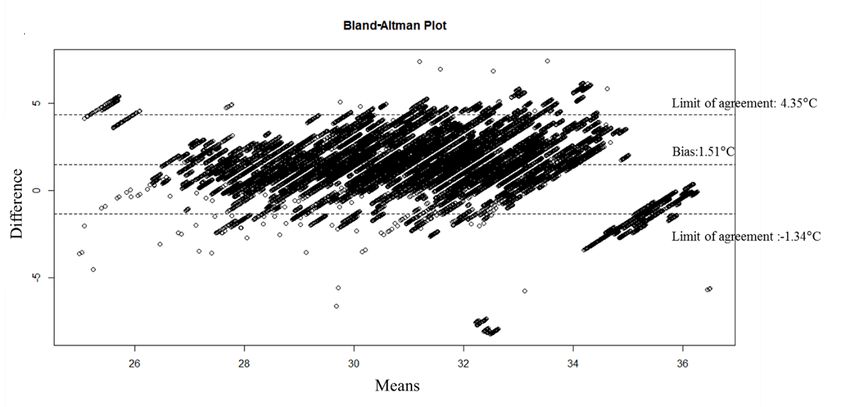
JMIR MHEALTH AND UHEALTH                                                                                                                   Yeh et al

     KEYWORDS
     body surface temperature; wearable device; validation; continuous monitoring

                                                                           validation study by using a water bath with different
     Introduction                                                          temperatures and a reference thermometer. This study further
     Background                                                            underscored the generalizability of laboratory findings to clinical
                                                                           settings [24]. Most studies were conducted to assess the
     Abnormalities in body temperature are the key indicators for          feasibility of the wrist skin temperature measured by iButtons
     the prognosis of various illnesses [1-4] and the most common          in terms of the human circadian system [25-27]. Two studies
     symptoms of defensive immune responses [4]. Abnormal body             conducted on approximately 100 university students in Spain
     temperature patterns are informative and specific to poor             proved that the wrist temperature rhythm is a valuable index
     progress during an illness, regardless of whether people meet         for assessing the circadian rhythm [25,26]. Another study
     the criteria for fever or not [5-10]. Large body temperature          conducted on 121 shift workers in Korea provided evidence
     variations before the development of a fever indicate the             that lower wrist temperature amplitudes appeared more in the
     evolution of sepsis syndrome [9]. A retrospective study found         nightshift workers than in the dayshift workers [27]. In addition,
     that afebrile critically ill patients with abnormal temperature       several studies were conducted to assess the effects of
     patterns in any 24-hour period had a 4.43-fold risk for               continuously monitoring body temperature by using wearable
     subsequent diagnosis of sepsis as compared to patients without        devices for the detection of worsening conditions in patients
     such patterns, and the sensitivity and specificity of the abnormal    [6,10,23,28,29]. A prospective observational study consisting
     temperature curves to predict sepsis were 0.69 and 0.76,              of 56 patients was carried out to explore the effects of a Holter
     respectively [8]. At the individual level, an unexplained variation   device with both central and peripheral infrared temperatures
     in 1 SD increase in body temperature among outpatients is a           being recorded and stored every minute for 24 hours. It was
     significant predictor linked to 8.4% higher rate of 1-year            found that 0.7 peaks of fever per patient could be detected by
     mortality [11]. Therefore, body temperature is one of the most        continuous monitoring but this was unobserved during
     important vital signs for evaluating human health, and                conventional care, and 16% of the patients considered afebrile
     continuous monitoring should be done for the early identification     by conventional care had at least one fever peak detected during
     of patients who are at a risk for poor prognosis [12,13].             continuous monitoring [29]. Another pilot study of pediatric
     Thermometers such as glass mercury thermometers, electronic           patients indicated that 2 fever events could not be detected by
     thermometers, infrared ear thermometers, and infrared forehead        routine temperature monitoring but they could be detected 12
     thermometers are used to measure the human body temperature.          hours earlier by a continuous temperature monitoring patch
     They are usually used at predetermined intervals or when a            [23]. However, the limitations of these devices included a long
     patient’s condition changes [7,14]. Considering the equivalents       response time due to their relatively large sizes, and the
     of intravascular or direct brain thermometry, the measurement         maximum sampling rate was 1 per minute [24]. Moreover, these
     tools for continuous body temperature monitoring in clinical          studies did not show the reliability and validity of the wearable
     practice are invasive and include urinary catheters or esophageal     devices in terms of monitoring body surface temperature
     temperature probes [15]. However, such invasive continuous            [25-27]. Therefore, the objective of this study was to validate
     body temperature measurement tools might not be applicable            the performance of HEARThermo, an innovative wearable
     to the general population.                                            device, which was developed to continuously monitor the body
                                                                           temperature in humans.
     To date, wearable devices with the advantage of minimizing
     discomfort and interference with normal human activities have         Methods
     garnered increased attention in the field of continuous
     monitoring of body temperatures [13,16,17]. Different wearable        Study Design
     devices, including skin-like arrays of precision temperature
                                                                           We used a multi-method research design in this study, which
     sensors or wearable adhesive devices such as watches, vest,
                                                                           included 2 validation studies—one in the laboratory and one
     patches, and earphones, have been developed to continuously
                                                                           with human subjects. We conducted these studies to determine
     examine the body temperature [18-21]. Among the human body
                                                                           the reliability of HEARThermo in the laboratory setting and
     parts, the wrist is the most responsive body part for wearable
                                                                           the agreement and validity of HEARThermo for application on
     devices that measure thermal sensation [19,22]. However, the
                                                                           human skin. The Institutional Review Board at the National
     applications of wearable devices in the continuous monitoring
                                                                           Cheng Kung University Hospital (no. B-BR-106-044) approved
     of body temperature are still limited in terms of pilot studies
                                                                           this study’s protocol.
     [18,20,23]. In addition, the validity of wrist skin temperature
     monitoring using novel wearable devices in both laboratory            Study Participants
     settings and on human subjects has not been sufficiently              Snowball sampling was conducted to recruit people who were
     investigated.                                                         able to communicate in Taiwanese or Mandarin, who lived in
     Prior Work and Objective of This Study                                the Tainan community, and who were willing to participate in
                                                                           this study. The exclusion criteria included people (1) with fever
     An early study conducted in 2006 was the first study to use
                                                                           or if they experienced physical discomfort 3 days before
     iButton, which has a mean accuracy of 0.05°C through a
                                                                           participation in this study; (2) with severe brain injury,

     http://mhealth.jmir.org/2021/2/e19210/                                                       JMIR Mhealth Uhealth 2021 | vol. 9 | iss. 2 | e19210 | p. 2
                                                                                                                (page number not for citation purposes)
XSL• FO
RenderX
JMIR MHEALTH AND UHEALTH Yeh et al
neurological disease, severe cardiovascular disease, ear structure intermittent determination of patient temperatures” [30].
problem, peripheral artery disease, or musculoskeletal disease According to the instructions for wearable devices, they were
in the limbs; (3) with mental disorders or cognitive disability; stabilized for 1 hour before the validation tests. We tested
and (4) under medication with effects on the vital markers such HEARThermo in a water bath at 16°C and 40°C thrice and
as corticosteroids, nonsteroidal anti-inflammatory drugs, or recorded the measurement error range. We verified the
anti-fever medications 4 hours before the commencement of temperature of the water bath with the reference mercury
this study. thermometer.
We recruited 66 participants in this study and all of them Validation Study II
completed the experimental study. The power analysis was We conducted a validation study II to determine the correlation
calculated using “ICC.Sample.Size” packages by R Version between the body surface temperature obtained by
3.4.1 (R Statistics Software). The post hoc power analysis HEARThermo and that obtained by the infrared skin
indicated a sample size of 66 participants to detect a high-power thermometer. We used HEARThermo to continuously monitor
level (power=0.99). the participants’ body surface temperatures until the end of the
Data Collection study. The time to participate in the study was between 9 AM
and 11 AM, and the rooms for the study were fixed to avoid
Validation Study I any potential bias from the environment. Since the emissivity
The methods of validating HEARThermo in the laboratory of infrared thermometers might be affected by environmental
setting used in this study were conducted in accordance with temperature [31], the different room temperatures, humidity,
Section 4.5.1 “Operating Environment Tests” cited in the and activity levels were taken into consideration as confounders
“National Standards of the Republic of China (CNS) 15043 in the validation study. Figure 1 shows the details of the
Standard specification for electronic thermometer for validation study II protocol.
http://mhealth.jmir.org/2021/2/e19210/ JMIR Mhealth Uhealth 2021 | vol. 9 | iss. 2 | e19210 | p. 3
(page number not for citation purposes)
XSL• FO
RenderXJMIR MHEALTH AND UHEALTH Yeh et al
Figure 1. The protocol for validation study II.
Body Surface Temperature
Variable Measurements
We used an infrared skin thermometer (BEURER, FT50) to
Demographic Characteristics measure the body surface temperature in the experimental study.
The individual demographic data collected for this study The researcher first cleaned specific places on the monitored
included age, gender, height, weight, BMI, body fat percentage, hands, and after the skin was dry, an infrared skin thermometer
and hand circumference. was placed on the skin surface of the hands. The measured
temperature appeared on the display along with a face symbol
after the SCAN button was released. According to the
instructions for the infrared skin thermometer used in this study,
http://mhealth.jmir.org/2021/2/e19210/ JMIR Mhealth Uhealth 2021 | vol. 9 | iss. 2 | e19210 | p. 4
(page number not for citation purposes)
XSL• FO
RenderXJMIR MHEALTH AND UHEALTH Yeh et al
the measurement error range is ±0.3°C at temperatures from used to continuously measure the body surface temperature in
10°C to 50°C and ±0.1°C at temperatures from 37°C to 39°C the validation study II (Figure 2). In contrast to the previously
[32]. The sampling frequency of the infrared skin thermometer developed devices with thermistors and integrated circuits
is 512 scanning sequences per second [32]. The accuracy test sensors [23,24,29,33,34], this wearable device comprises the
of the infrared skin thermometer used in this study was TEMPUS Digital Far Infrared Thermopile Sensor to measure
conducted in accordance with Section 5.1.5 “Operating the far infrared energy emitted from the body surface and
Environment Tests” cited in the “CNS 15042 Standard presents the temperatures immediately. The signal measurement
specification for infrared thermometer for intermittent rate of HEARThermo is >500 Hz. Besides, the sensors of
determination of patient temperatures” [31]. First, the infrared HEARThermo also include g-sensor, gyroscope, heart rate, and
skin thermometer was stabilized for 30 minutes before the 3D accelerometer. In this study, the researcher first cleaned
accuracy tests. The infrared skin thermometer was then tested specific places on the monitored hands, and after the skin was
6 times in a water bath at 23°C, 30°C, and 38°C, and the dry, HEARThermo was lightly placed on the skin surface of
measurement error range was recorded. The results revealed the wrist. When HEARThermo was turned on, the measured
that the infrared skin thermometer meets the acceptance criteria parameters, including temperature and heart rate, appeared on
of the CNS standards, for which the maximum measurement the display every second. These physiological biomarkers were
error is required to be ±0.3°C. uploaded through the Bluetooth Low Energy gateway to the
National Cheng Kung University cloud.
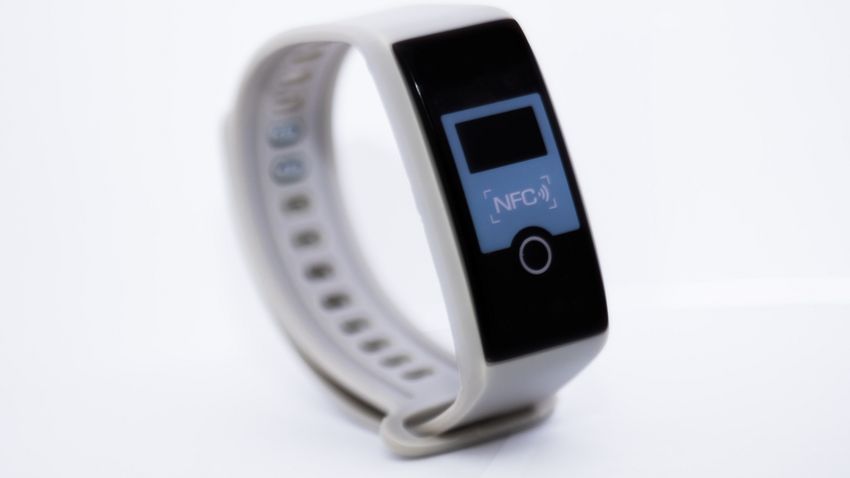
HEARThermo, which was developed in cooperation with the
technology manufacturer (AMobile Intelligent Corp Ltd), was
Figure 2. HEARThermo device.
temperatures of HEARThermo and that of the water bath.
Room Temperature and Humidity Moreover, we calculated the linear regressions between the
We used a room temperature data logger (Elitech, RC-4) to temperatures of the water bath and each HEARThermo to
measure the room temperature in this study. According to the determine the relationship between the values of the wearable
manufacturer’s instructions, the temperature accuracy was devices and those of the water bath. We applied the linear
±0.5°C at temperatures from –20°C to 40°C [35]. A room regression model for each HEARThermo to an independent
humidity data logger (N Dr.AV, GM-108) was used to measure data set to correct the values of each wearable device and tested
the room humidity. According to the manufacturer’s instructions, the improvements in the values with a two-tailed paired t test
the humidity accuracy is ±10% for humidity ranging from by using the biases of the absolute values. To determine the
20%-90% [36]. test-retest reliability of the individual wearable device, we
analyzed the intraclass correlation coefficient (ICC) of each
Data Analysis
HEARThermo. We analyzed the agreement between
We examined the differences between the groups by using HEARThermo and the infrared skin thermometer by using
analysis of variance and chi-square test for the categorical Bland-Altman plots. Additionally, we calculated the means,
variables. Then, we calculated the measurement bias of each namely bias, and SD, namely precision, of the differences, and
HEARThermo as the mean (SD) of the differences between the 95% limits of agreement. Furthermore, we analyzed the criterion
http://mhealth.jmir.org/2021/2/e19210/ JMIR Mhealth Uhealth 2021 | vol. 9 | iss. 2 | e19210 | p. 5
(page number not for citation purposes)
XSL• FO
RenderXJMIR MHEALTH AND UHEALTH Yeh et al
validity of the HEARThermo by using ICC two-way random mean (SD) body fat percentage was 26.61 (6.98)%, and the
effect model with 95% CIs. We conducted all the statistical mean (SD) hand circumference was 15.38 (1.61) cm. The mean
analyses by using R Version 3.4.1. (SD) stabilized time after walking was 357.06 (192.24) seconds,
and the mean (SD) stabilized time after running was 790.67
Results (259.69) seconds.
Study Population Validation Study I: Reliability of HEARThermo in the
Laboratory Setting
We included 66 participants in Tainan City, Taiwan for this
experimental study (Multimedia Appendix 1). A total of 325,022 We tested 39 wearable devices thrice in a water bath at 16°C
data were observed, and 152,881 completed data were analyzed. and 40°C. The mean (SD) measurement bias at 16°C amounted
The age of the participants ranged from 10 years to 77 years, to −1.16 (1.84)°C (range –4.91°C to 2.18°C). The mean (SD)
with a mean (SD) age of 39.47 (19.02) years, and 39 out of the measurement bias at 40°C amounted to 1.21 (2.01)°C (range
66 participants (59%) were female. The mean (SD) height of –2.39°C to 5.63°C). The ICC for the water bath at 16°C was
these participants was 161.4 (10.85) cm, the mean (SD) weight 0.96, whereas the ICC for the water bath at 40°C was 0.98
was 60.82 (14.83) kg, the mean (SD) BMI was 23 (3.41), the (Table 1).
Table 1. Distributions of the temperatures of the 39 HEARThermo devices in the water bath.
Temperature of the water bath Tests (n) Minimum (°C) Median (Q1-Q3) Maximum (°C) Mean (SD) CVa ICCb
16°C 117 11.09 14.94 (13.3-16.49) 18.18 14.84 (1.84) 12.38 0.96
40°C 117 37.61 41.04 (39.72-42.8) 45.63 41.21 (2.01) 4.876 0.98
a
CV: coefficient of variance.
b
ICC: intraclass correlation coefficient.
We conducted linear regressions to calibrate each wearable (95% CI –1.35 to –1.32) to 4.35°C (95% CI 4.34-4.36). Table
device. The intercept calibration coefficients ranged from –3.20 2 shows the ICC values between the wearable devices and the
to 7.07°C and the slope calibration coefficients ranged from infrared skin thermometer at different room temperatures, which
0.77 to 1.11°C. The corrected measurement bias averaged –0.02 included ≤19.9°C, 20°C-27.9°C, and ≥28°C. The ICC was high
(SD 0.28)°C (range –1.79°C to 0.81°C). The values of each with an estimate of 0.72 for the room temperatures of
HEARThermo improved by the regression models were not 20°C-27.9°C. At room temperatures of 20°C-27.9°C, the mean
significantly different from the temperatures of the water bath (SD) temperature of HEARThermo was 32.44 (1.67)°C (range
(P=.19). 25.45°C-37.53°C) compared with 30.86 (1.85)°C (range
25.7°C-36.6°C) for the infrared skin thermometer. The ICC
Validation Study II: Agreement and Validity of values declined rapidly with variations in room temperature
HEARThermo for Application on Humans with low ICC values of 0.45 and 0.49. At room temperature
Figure 3 shows the level of agreement of body surface ≤19.9°C, the mean (SD) temperature of HEARThermo was
temperatures between HEARThermo and the infrared skin 28.41 (0.92)°C (range 24.07°C-29.81°C) compared with 26.72
thermometer. The mean (SD) temperature of HEARThermo (2.05)°C (range 23.0°C-29.4°C) for the infrared skin
was 31.94 (2.04)°C as compared with 30.43 (2.02)°C for the thermometer. At room temperatures ≥28°C, the temperature
infrared skin thermometer. Bland-Altman analyses indicated variation of HEARThermo was 34.17 (1.22)°C (range
that the bias of HEARThermo was 1.51°C (95% CI 1.50-1.51) 26.93°C-36.49°C) compared with 33.42 (1.78)°C (range
with a precision of 1.45. The limit of agreement was –1.34°C 30.2°C-36.6°C) for the infrared skin thermometer.
http://mhealth.jmir.org/2021/2/e19210/ JMIR Mhealth Uhealth 2021 | vol. 9 | iss. 2 | e19210 | p. 6
(page number not for citation purposes)
XSL• FO
RenderXJMIR MHEALTH AND UHEALTH Yeh et al
Figure 3. Bland-Altman plots of level of agreement between HEARThermo and the infrared skin thermometers.
Table 2. Intraclass correlation coefficients between HEARThermo and infrared skin thermometer.
Room temperature (°C) Intraclass correlation coefficient 95% CI F value (df) P value
≤19.9 0.45 0.40-0.49 2.62 (1354)JMIR MHEALTH AND UHEALTH Yeh et al
monitor body temperature with features of tight contact have recruited because of the snowball sampling method. However,
been developed and approved by the US Food and Drug as compared to the previous studies with small sample sizes
Administration [23]. However, the ability to compare the and only males, this study tried to recruit both females and males
agreement among different measurement tools for body surface and involved a larger sample size and wider age range to
temperatures might be limited due to the lack of a universal improve the generalizability of the findings. Fourth, the results
gold standard method for measuring body surface temperatures of this study would be more applicable in Asian countries as
[38]. Further studies are needed to calibrate and validate the only Asian people were recruited in this study. We recommend
agreement between HEARThermo and different forms of that further studies be conducted in different countries and races
medical thermometers in clinical settings. to validate wearable devices with infrared sensors in
consideration of the emissivity of different human skin tones.
Limitations
This study has the following limitations. First, the sensors of Conclusion
HEARThermo could not be calibrated using a high-precision HEARThermo showed good test-retest reliability in the
blackbody while controlling the source of thermal radiation in laboratory setting, with the highest correlation with the infrared
this study. Second, a gold standard for measuring body surface skin thermometer at room temperatures of 20°C-27.9°C.
temperatures is lacking, which might cause validation results Moreover, HEARThermo showed no visualized systematic bias
to vary from one criterion measurement tool to another. and had a bias of 1.51°C with the criterion for infrared skin
Therefore, our study only highlights the relationship between thermometers. This study validated an innovative wearable
HEARThermo and the infrared skin thermometer used in this device for continuous monitoring of body surface temperatures.
study. Third, the generalizability of the study findings was Further studies are needed to calibrate and validate the
limited to people aged ≥10 years since there was no appropriate agreement between HEARThermo and different forms of
size of bracelet for children aged 0-9 years. In addition, medical thermometers in clinical practice.
relatively healthy people with greater willingness might be
Acknowledgments
This work was supported by the Ministry of Science and Technology, Taiwan (grant number: MOST 108-2634-F-006-00; MOST
109-2327-B-006-005-) and the National Health Research Institutes (grant number: NHRI-109A1-MRCO-02202014). We
acknowledge the consultations from Professor Wen-Shiang Chen from National Taiwan University and Associate Research
Fellow Ta-Chien Chan from Taiwan Academia Sinica. We sincerely thank the subjects who participated in this research.
Conflicts of Interest
None declared.
Multimedia Appendix 1
Characteristics of the 66 study participants.
[DOCX File , 16 KB-Multimedia Appendix 1]
References
1. Kushimoto S, Gando S, Saitoh D, Mayumi T, Ogura H, Fujishima S, JAAM Sepsis Registry Study Group. The impact of
body temperature abnormalities on the disease severity and outcome in patients with severe sepsis: an analysis from a
multicenter, prospective survey of severe sepsis. Crit Care 2013 Nov 13;17(6):R271 [FREE Full text] [doi: 10.1186/cc13106]
[Medline: 24220071]
2. Giuliano KK. Physiological monitoring for critically ill patients: testing a predictive model for the early detection of sepsis.
Am J Crit Care 2007 Mar;16(2):122-30; quiz 131. [Medline: 17322011]
3. Evertsen J, Baumgardner DJ, Regnery A, Banerjee I. Diagnosis and management of pneumonia and bronchitis in outpatient
primary care practices. Prim Care Respir J 2010 Sep;19(3):237-241 [FREE Full text] [doi: 10.4104/pcrj.2010.00024]
[Medline: 20490437]
4. Kushimoto S, Yamanouchi S, Endo T, Sato T, Nomura R, Fujita M, et al. Body temperature abnormalities in non-neurological
critically ill patients: a review of the literature. J Intensive Care 2014;2(1):14 [FREE Full text] [doi: 10.1186/2052-0492-2-14]
[Medline: 25520830]
5. Buchan CA, Bravi A, Seely AJE. Variability analysis and the diagnosis, management, and treatment of sepsis. Curr Infect
Dis Rep 2012 Oct;14(5):512-521. [doi: 10.1007/s11908-012-0282-4] [Medline: 22864954]
6. Cuesta D, Varela M, Miró P, Galdós P, Abásolo D, Hornero R, et al. Predicting survival in critical patients by use of body
temperature regularity measurement based on approximate entropy. Med Biol Eng Comput 2007 Jul;45(7):671-678. [doi:
10.1007/s11517-007-0200-3] [Medline: 17549533]
http://mhealth.jmir.org/2021/2/e19210/ JMIR Mhealth Uhealth 2021 | vol. 9 | iss. 2 | e19210 | p. 8
(page number not for citation purposes)
XSL• FO
RenderXJMIR MHEALTH AND UHEALTH Yeh et al
7. Downey CL, Chapman S, Randell R, Brown JM, Jayne DG. The impact of continuous versus intermittent vital signs
monitoring in hospitals: A systematic review and narrative synthesis. Int J Nurs Stud 2018 Aug;84:19-27. [doi:
10.1016/j.ijnurstu.2018.04.013] [Medline: 29729558]
8. Drewry AM, Fuller BM, Bailey TC, Hotchkiss RS. Body temperature patterns as a predictor of hospital-acquired sepsis in
afebrile adult intensive care unit patients: a case-control study. Crit Care 2013 Sep 12;17(5):R200 [FREE Full text] [doi:
10.1186/cc12894] [Medline: 24028682]
9. Mohr NM, Hotchkiss RS, Micek ST, Durrani S, Fuller BM. Change in temperature profile may precede fever and be an
early indicator of sepsis: a case report. Shock 2011;36(3):318-320. [doi: 10.1097/shk.0b013e318224f5ee]
10. Varela M, Churruca J, Gonzalez A, Martin A, Ode J, Galdos P. Temperature curve complexity predicts survival in critically
ill patients. Am J Respir Crit Care Med 2006 Aug 01;174(3):290-298. [doi: 10.1164/rccm.200601-058OC] [Medline:
16690981]
11. Obermeyer Z, Samra JK, Mullainathan S. Individual differences in normal body temperature: longitudinal big data analysis
of patient records. BMJ 2017 Dec 13;359:j5468 [FREE Full text] [doi: 10.1136/bmj.j5468] [Medline: 29237616]
12. Banaee H, Ahmed MU, Loutfi A. Data mining for wearable sensors in health monitoring systems: a review of recent trends
and challenges. Sensors (Basel) 2013 Dec 17;13(12):17472-17500 [FREE Full text] [doi: 10.3390/s131217472] [Medline:
24351646]
13. Dias D, Paulo Silva Cunha J. Wearable Health Devices-Vital Sign Monitoring, Systems and Technologies. Sensors (Basel)
2018 Jul 25;18(8):2414 [FREE Full text] [doi: 10.3390/s18082414] [Medline: 30044415]
14. Ryan-Wenger N, Sims M, Patton R, Williamson J. Selection of the most accurate thermometer devices for clinical practice:
part 1: Meta-analysis of the accuracy of non-core thermometer devices compared to core body temperature. Pediatr. Nurs
2018;44(3):116-133.
15. Rolls K, Wrightson D, Schacht S, Keating L, Irwin S. Temperature Measurement for Critically Ill Adults: A Clinical Practice
Guideline. Chatswood, Austalia: Agency for Clinical Innovation (N.S.W.); 2014:1.
16. Ajami S, Teimouri F. Features and application of wearable biosensors in medical care. J Res Med Sci 2015
Dec;20(12):1208-1215 [FREE Full text] [doi: 10.4103/1735-1995.172991] [Medline: 26958058]
17. Goodale BM, Shilaih M, Falco L, Dammeier F, Hamvas G, Leeners B. Wearable Sensors Reveal Menses-Driven Changes
in Physiology and Enable Prediction of the Fertile Window: Observational Study. J Med Internet Res 2019 Apr
18;21(4):e13404 [FREE Full text] [doi: 10.2196/13404] [Medline: 30998226]
18. Popovic Z, Momenroodaki P, Scheeler R. Toward wearable wireless thermometers for internal body temperature
measurements. IEEE Commun. Mag 2014 Oct;52(10):118-125. [doi: 10.1109/mcom.2014.6917412]
19. Sim SY, Koh MJ, Joo KM, Noh S, Park S, Kim YH, et al. Estimation of Thermal Sensation Based on Wrist Skin
Temperatures. Sensors (Basel) 2016 Mar 23;16(4):420 [FREE Full text] [doi: 10.3390/s16040420] [Medline: 27023538]
20. Pandian PS, Mohanavelu K, Safeer KP, Kotresh TM, Shakunthala DT, Gopal P, et al. Smart Vest: wearable multi-parameter
remote physiological monitoring system. Med Eng Phys 2008 May;30(4):466-477. [doi: 10.1016/j.medengphy.2007.05.014]
[Medline: 17869159]
21. Khan Y, Ostfeld AE, Lochner CM, Pierre A, Arias AC. Monitoring of Vital Signs with Flexible and Wearable Medical
Devices. Adv Mater 2016 Jun;28(22):4373-4395. [doi: 10.1002/adma.201504366] [Medline: 26867696]
22. Choi J, Loftness V. Investigation of human body skin temperatures as a bio-signal to indicate overall thermal sensations.
Building and Environment 2012 Dec;58:258-269. [doi: 10.1016/j.buildenv.2012.07.003]
23. Sampson M, Hickey V, Huber J, Alonso PB, Davies SM, Dandoy CE. Feasibility of continuous temperature monitoring
in pediatric immunocompromised patients: A pilot study. Pediatr Blood Cancer 2019 Jun;66(6):e27723. [doi:
10.1002/pbc.27723] [Medline: 30884117]
24. van Marken Lichtenbelt WD, Daanen HAM, Wouters L, Fronczek R, Raymann RJEM, Severens NMW, et al. Evaluation
of wireless determination of skin temperature using iButtons. Physiol Behav 2006 Jul 30;88(4-5):489-497. [doi:
10.1016/j.physbeh.2006.04.026] [Medline: 16797616]
25. Sarabia JA, Rol MA, Mendiola P, Madrid JA. Circadian rhythm of wrist temperature in normal-living subjects A candidate
of new index of the circadian system. Physiol Behav 2008 Nov 28;95(4):570-580. [doi: 10.1016/j.physbeh.2008.08.005]
[Medline: 18761026]
26. Martinez-Nicolas A, Ortiz-Tudela E, Rol MA, Madrid JA. Uncovering different masking factors on wrist skin temperature
rhythm in free-living subjects. PLoS One 2013;8(4):e61142 [FREE Full text] [doi: 10.1371/journal.pone.0061142] [Medline:
23577201]
27. Jang TW, Kim H, Kang SH, Choo SH, Lee IS, Choi KH. Circadian Rhythm of Wrist Temperature among Shift Workers
in South Korea: A Prospective Observational Study. Int J Environ Res Public Health 2017 Sep 24;14(10) [FREE Full text]
[doi: 10.3390/ijerph14101109] [Medline: 28946653]
28. Varela M, Calvo M, Chana M, Gomez-Mestre I, Asensio R, Galdos P. Clinical implications of temperature curve complexity
in critically ill patients. Crit Care Med 2005 Dec;33(12):2764-2771. [doi: 10.1097/01.ccm.0000190157.64486.03] [Medline:
16352958]
http://mhealth.jmir.org/2021/2/e19210/ JMIR Mhealth Uhealth 2021 | vol. 9 | iss. 2 | e19210 | p. 9
(page number not for citation purposes)
XSL• FO
RenderXJMIR MHEALTH AND UHEALTH Yeh et al
29. Varela M, Ruiz-Esteban R, Martinez-Nicolas A, Cuervo-Arango JA, Barros C, Delgado EG. 'Catching the spike and tracking
the flow': Holter-temperature monitoring in patients admitted in a general internal medicine ward. Int J Clin Pract 2011
Dec;65(12):1283-1288. [doi: 10.1111/j.1742-1241.2011.02794.x] [Medline: 22093535]
30. CNS 15043 Standard specification for electronic thermometer for intermittent determination of patient temperatures. 2007.
URL: https://www.cnsonline.com.tw/?node=result&typeof=common&locale=zh_TW [accessed 2018-05-05]
31. CNS 15042 Standard specification for infrared thermometer for intermittent determination of patient temperatures. 2007.
URL: https://www.cnsonline.com.tw/?node=result&typeof=common&locale=zh_TW [accessed 2018-05-05]
32. Beurer infrared forehead thermometer FT 50. Beurer. 2014. URL: https://www.manualslib.com/manual/900308/Beurer-Ft-50.
html [accessed 2018-08-07]
33. Varela M, Cuesta D, Madrid JA, Churruca J, Miro P, Ruiz R, et al. Holter monitoring of central and peripheral temperature:
possible uses and feasibility study in outpatient settings. J Clin Monit Comput 2009 Aug;23(4):209-216. [doi:
10.1007/s10877-009-9184-x] [Medline: 19609688]
34. Tamura T, Huang M, Togawa T. Current Developments in Wearable Thermometers. ABE 2018;7:88-99. [doi:
10.14326/abe.7.88]
35. Rc-4-instructions. Elitech. 2016. URL: http://www.elitechlog.com/wp-content/manuals/RC-4-RC-4HA-RC-4HC-instructions.
pdf [accessed 2018-08-07]
36. GM-108. Dr.AV. 2017. URL: http://www.drav.com.tw/mod/product/index.
php?REQUEST_ID=cfe02c2cd7fef06f3e683f043be0bdeaa9e896488a2ef852ca9cddc75a18390c [accessed 2018-08-07]
37. Burnham RS, McKinley RS, Vincent DD. Three types of skin-surface thermometers: A comparison of reliability, validity,
and responsiveness. Am J Phys Med Rehabil 2006 Jul;85(7):553-558. [doi: 10.1097/01.phm.0000223232.32653.7f] [Medline:
16788385]
38. MacRae BA, Annaheim S, Spengler CM, Rossi RM. Skin temperature measurement using contact thermometry: A systematic
review of setup variables and their effects on measured values. Front Physiol 2018;9:29 [FREE Full text] [doi:
10.3389/fphys.2018.00029] [Medline: 29441024]
39. Smith ADH, Crabtree DR, Bilzon JLJ, Walsh NP. The validity of wireless iButtons and thermistors for human skin
temperature measurement. Physiol Meas 2010 Jan;31(1):95-114. [doi: 10.1088/0967-3334/31/1/007] [Medline: 19940348]
40. Reyzelman AM, Koelewyn K, Murphy M, Shen X, Yu E, Pillai R, et al. Continuous temperature-monitoring socks for
home use in patients with diabetes: Observational study. J Med Internet Res 2018 Dec 17;20(12):e12460 [FREE Full text]
[doi: 10.2196/12460] [Medline: 30559091]
41. Barnason S, Williams J, Proehl J, Brim C, Crowley M, Leviner S, et al. Emergency nursing resource: Non-invasive
temperature measurement in the emergency department. J Emerg Nurs 2012 Nov;38(6):523-530. [doi:
10.1016/j.jen.2012.05.012] [Medline: 23040166]
42. Bernard V, Staffa E, Mornstein V, Bourek A. Infrared camera assessment of skin surface temperature--effect of emissivity.
Phys Med 2013 Nov;29(6):583-591. [doi: 10.1016/j.ejmp.2012.09.003] [Medline: 23084004]
Abbreviations
CNS: National Standards of the Republic of China
ICC: intraclass correlation coefficient
Edited by G Eysenbach; submitted 08.04.20; peer-reviewed by K Ng, MJ Toledo, JH Moon, K Ho, J Vranken; comments to author
29.06.20; revised version received 31.10.20; accepted 13.01.21; published 10.02.21
Please cite as:
Yeh CY, Chung YT, Chuang KT, Shu YC, Kao HY, Chen PL, Ko WC, Ko NY
An Innovative Wearable Device For Monitoring Continuous Body Surface Temperature (HEARThermo): Instrument Validation Study
JMIR Mhealth Uhealth 2021;9(2):e19210
URL: http://mhealth.jmir.org/2021/2/e19210/
doi: 10.2196/19210
PMID: 33565990
©Chun-Yin Yeh, Yi-Ting Chung, Kun-Ta Chuang, Yu-Chen Shu, Hung-Yu Kao, Po-Lin Chen, Wen-Chien Ko, Nai-Ying Ko.
Originally published in JMIR mHealth and uHealth (http://mhealth.jmir.org), 10.02.2021. This is an open-access article distributed
under the terms of the Creative Commons Attribution License (https://creativecommons.org/licenses/by/4.0/), which permits
unrestricted use, distribution, and reproduction in any medium, provided the original work, first published in JMIR mHealth and
uHealth, is properly cited. The complete bibliographic information, a link to the original publication on http://mhealth.jmir.org/,
as well as this copyright and license information must be included.
http://mhealth.jmir.org/2021/2/e19210/ JMIR Mhealth Uhealth 2021 | vol. 9 | iss. 2 | e19210 | p. 10
(page number not for citation purposes)
XSL• FO
RenderXYou can also read


