Appendix A Memo H362686-00000-260-030-0001 Valentine Gold Project Power System Studies
←
→
Page content transcription
If your browser does not render page correctly, please read the page content below

Newfoundland and Labrador Hydro                                                                                               Engineering Report
Valentine Gold Project                                                                                                  Engineering Management
H362686                                                                                                                     System Impact Study

                     Appendix A
           Memo H362686-00000-260-030-0001
      Valentine Gold Project Power System Studies
                         Review

                                                                                                               H362686-00000-200-066-0002, Rev. 1,

                                                                                                                                           Ver: 04.03
© Hatch 2020 All rights reserved, including all rights relating to the use of this document or its contents.
                                                                                                                                                 30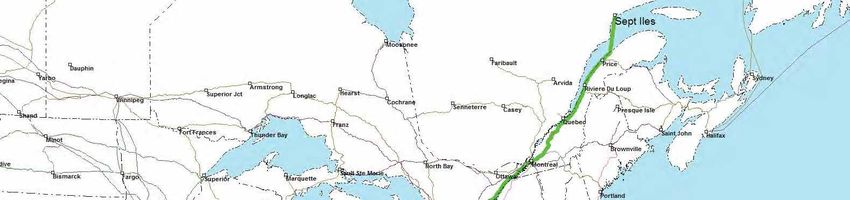
Project Memo
                                                                                                                                 H362686

                                                                                                                              May 4, 2020

   To:               John Flynn                                                                      From:     Sam Maleki

   cc:               Ovidio Ascencio,
                     Vajira Pathirana, Dan Kell

 Nalcor Energy
 Valentine Gold Project Power System Studies Review

 1.                    Introduction
                       As part of the Valentine Gold 69 kV transmission line project, Hatch reviewed the available
                       power system studies for the steady state analysis and motor starting. The summary of this
                       review and the associated recommendations are found below.

 2.                    Steady State Analysis
                       Hatch reviewed the steady-state power system study for the project and a summary of the
                       report is presented here.

 2.1                   Summary of Steady State Power System Studies
                       The steady-state power system study was performed in PSSE software and considered the
                       following:

                       1) The 66 kV transmission line conductor to be 559.5 kcmil, 19, AAAC Darien with H-Frame
                          Wood pole 14 ft phase spacing.

                       2) Load factor is assumed to be 0.9.

                       3) Two parallel On Load Tap Changer (OLTC) transformers (20/26.7 MVA 66/6.9 kV, H.V.
                          OLTC-33 steps, +5/-15%-X/R ratio of 21.5, Z0 to be 90% of Zpos, 159.3 ohm neutral
                          grounding resistors on L.V. side).

                       The following scenarios are considered for this study:

                       1) 2018/19 P90 peak load case and 2018/19 light load case

                             x       Normal system operation

                             x       N-1 contingency operation with Star Lake Generating Station out of service

                             x       N-1 contingency operation with Valentine Lake transformer T2 out of service

                       2) 2021/22 P90 peak load case and 2021/22 light load case

                             x       Normal system operation

                                                            If you disagree with any information contained herein, please advise immediately.
                                                                                                       H362686-00000-260-030-0001, Rev. A
                                                                                                                                     Page 1

© Hatch 2020 All rights reserved, including all rights relating to the use of this document or its contents.                             31
x      N-1 contingency operation with Star Lake Generating Station out of service

                            x      N-1 contingency operation with Valentine Lake transformer T2 out of service.

2.2                  Conclusion and Recommendations from the Available Information
                     The studies determined that;

                     1) In order to meet the steady-state voltage criteria for pre-contingency limits, the maximum
                        load that can be supplied at the Valentine Lake Terminal Station is 18 MW, which is less
                        than the desired maximum loading of 22 MW.

                     2) It was determined that to meet steady-state voltage criteria for post contingency limits,
                        the maximum load that can be supplied at the Valentine Lake Terminal Station is 15 MW
                        which is again less than the 22 MW desired demand.

                     3) To improve the voltage profile along the 66 kV transmission system and ensure voltage
                        levels at the Valentine Lake Terminal Station are within acceptable limits, Hydro
                        proposes the addition of 66 kV switch shunt capacitor banks at a location to be based on
                        the studies.

                     4) The prospective minimum short circuit level at the 66 kV bus at Valentine Lake is
                        approximately 88 MVA. Given a 2.5% voltage change, the individual capacitor bank size
                        should not exceed an estimated 2.2 MVAR.

2.2.1                Recommendations
                     1) Before final design and installation, the customer will be required to provide a capacitor
                        bank switching study for the cap bank design demonstrating the appropriate size for the
                        current inrush limiting reactors and surge arresters.
                     2) Configuration of protection controls for the capacitor banks to permit staged tripping to
                        alleviate overvoltage conditions in an acceptable timeframe.

3.                   Preliminary Motor Starting
                     Hatch reviewed the motor starting study for the project and a summary of the report is
                     presented here.

3.1                  Summary of Motor Starting Results
                     The motor starting scenario considered the starting of the 6.9 kV Sag Mill motor rated at
                     9000 HP and a rated speed of 1200 RPM. It was found that a soft starting means are used to
                     reduce the motor starting current to 150-200% of the rated current. The power system studies
                     are conducted in PSSE software.

                     The study was conducted to ensure compatibility with TP-S-007 - NLSO Standard –
                     Transmission Planning Criteria.

                     To ensure that protection systems will not be triggered, it must be ensured that power
                     frequency voltage variations are within the envelope defined in Table 10 of TP-S-005 - NLSO
                     Standard – Technical Requirements for Connection to the NL Transmission System as shown
                     in Table 3-1.

                                                                                                               H362686-00000-260-030-0001, Rev. A
                                                                                                                                          Page 2

© Hatch 2020 All rights reserved, including all rights relating to the use of this document or its contents.                                   32
Table 3-1: Power Frequency Voltage Variations During Transient Conditions – Island of
Newfoundland
Voltage (pu) Duration
V = 0.00 0.15 seconds
9 1 second
9
300 seconds
9 Steady State
9 3 seconds
9 0.5 seconds
9 0.1 seconds
The Valentine Lake Project is modeled as being connected to the Star Lake Terminal
Station’s 66 kV network via a 30 km transmission line with a Darien 559.5 kcmil conductor,
while the 66 kV transmission line TL280 is 45 km in length connecting Star Lake to the
Buchans 230/66 kV Terminal Station. The Valentine Lake Terminal Station consists of two
66/6.9 kV, 20/26 MVA transformers with assumed impedance of 8%, each transformer
supplying one half of the station load with the 6.9 kV bus separated by a normally open circuit
breaker.
Motor starting analysis was performed for both peak load flow case (with Star Lake
Generation In-Service) to provide maximum fault level and light load flow case (with Star
Lake Generation Out-of-Service) to provide a minimum fault level at the 9000 HP motor
terminals.
The 9000 HP motor was modeled using PSSE’s Induction Motor Load Model CIM5BL using
the typical information provided by Marathon Gold and adjusted to provide a 200% starting
current.
Table 3-2 shows the expected voltage drop on the system for the Light Load simulation.
Table 3-2: Voltage Drop on Motor Starting for Light Load Flow Case
Location Voltage Drop on Motor Starting (%)
Buchans 230kV 1.4
Buchans 66kV 4.8
Star Lake 66kV 12.4
Valentine Lake 66kV 17.1
Valentine Lake 6.9kV (T1) 23.8
3.2 Conclusion from the Available Information
1) The voltage drop at Star Lake is in excess of acceptable limits during a motor start.
2) The voltage at the terminals of the generating unit at Star Lake would drop below 0.80 pu
for a duration in excess of one second. This is not acceptable as it is outside of specified
protection envelopes, as presented above.
H362686-00000-260-030-0001, Rev. A
Page 3
© Hatch 2020 All rights reserved, including all rights relating to the use of this document or its contents. 33
3) Voltages at the location of the 9000 HP motor are also shown to be outside of specified
                        protection envelopes, as presented above. Such voltages are not acceptable.

4.                   Hatch Comments
                     Hatch reviewed the available information on power system studies. The list of comments and
                     recommendations are as follows:

                     1) The effect of various conductor sizes on the system voltage profile can be done to ensure
                        the proper conductor size for the project. Further adjustment can be done to determine
                        the most viable and optimize solution for the conductor size and the MVAR reactive
                        power compensation requirements.

                     2) Hatch recommends performing the system voltage and angular stability to ensure the
                        system voltage stability is requirements are met for pre-contingency scenario and the
                        voltage angles to remain below 45°. Since the PSSE model is available, running a
                        Power-Voltage (PV) study is recommended.

                     3) Although the motor starting current is limited to 2 times the rated current, the voltage drop
                        during the motor start-up violates the system requirements. Hatch recommends a
                        Variable Frequency Drive (VFD) to limit the starting current. It is also recommended to
                        run the power system studies with VFD in service to ensure the power system study
                        results. PSSE does not have the VFD models and Hatch recommends the study to be
                        done in ETAP software.

                     4) The use of VFD will result in addition of harmonics to the system (different harmonic
                        depending on the number of pulses). Hatch recommends performing a frequency scan
                        study to determine the system resonance frequencies and to ensure the proper type of
                        VFD and to determine any additional means to shift the system frequencies.

                            Hatch has access to ETRAN software and can convert the PSSE model to PSCAD (no
                            additional system development is required) and perform the study in a timely manner.

                                                                                               Sam Maleki
SM:smb

                                                                                                               H362686-00000-260-030-0001, Rev. A
                                                                                                                                          Page 4

© Hatch 2020 All rights reserved, including all rights relating to the use of this document or its contents.                                   34
Newfoundland and Labrador Hydro                                                                                               Engineering Report
Valentine Gold Project                                                                                                  Engineering Management
H362686                                                                                                                     System Impact Study

                                                 Appendix B
                                            Sketches Stations Layout

                                                                                                               H362686-00000-200-066-0002, Rev. 1,

                                                                                                                                           Ver: 04.03
© Hatch 2020 All rights reserved, including all rights relating to the use of this document or its contents.
                                                                                                                                                 35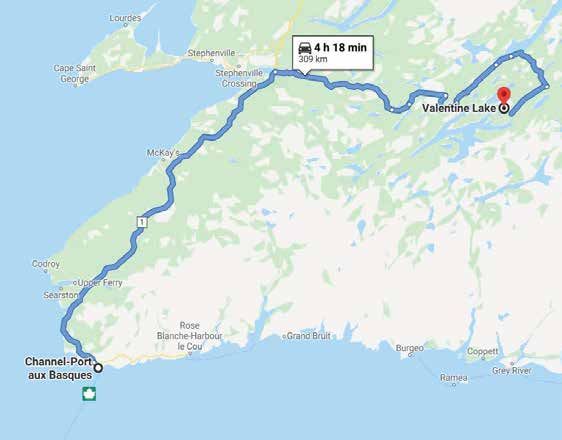
36

37

Newfoundland and Labrador Hydro                                                                                               Engineering Report
Valentine Gold Project                                                                                                  Engineering Management
H362686                                                                                                                     System Impact Study

                                               Appendix C
                                          Estimate Project Schedule

                                                                                                               H362686-00000-200-066-0002, Rev. 1,

                                                                                                                                           Ver: 04.03
© Hatch 2020 All rights reserved, including all rights relating to the use of this document or its contents.
                                                                                                                                                 38
ESTIMATE SCHEDULE FOR VALENTINE GOLD PROJECT                                                                                                                                DATE: JULY-2020
                                                                                                                                                                            REV: 03
               Scheduled                                                                          2020                    2021                    2022                    2023
               In progress                               OUTAGE                          Q1    Q2      Q3  Q4    Q1    Q2      Q3  Q4    Q1    Q2      Q3  Q4    Q1    Q2      Q3      Q4
ST             Completed     ACTIVITIES                              REMARK            J F M A M J J A S O N D J F M A M J J A S O N D J F M A M J J A S O N D J F M A M J J A S O N D

 O             SYSTEM STUDIES COMPLETED

 O             CONCEPTUAL ENGINEERING FOR TENDERING

 O             UTILITY REGULATORY APPROVAL

 O             RFP

 O             BID EVALUATION

 O             CONTRACT AWARD

 O   1001SLK-1EEXTENSION OF STAR EXPANSION STATION                  17 MONTHS

               ENGINEERING

               PROCUREMENT
                                                                    TO CONNECT THE
               CONSTRUCTION AND COMMISSIONING             YES          EXTENSION

 O   1002 TL271 TRANSMISSION LINE 66KV SLK-1E TO VLK-1              20 MONTHS

               ENGINEERING

               PROCUREMENT

               ENVIROMENTAL ASSESSMENT (BY CLIENT)

               CONSTRUCTION AND COMMISSIONING

 O   1003 VLK-1 NEW VALENTINE LAKE TERMINAL STATION                 24 MONTHS

               ENGINEERING

               PROCUREMENT

               CONSTRUCTION AND COMMISSIONING
                                                                  TO CONNECT THE NEW
 O             ENERGIZATION                               YES          FACILITIES

                                                                                                        7/20/2020                                                                  39     1/1
Newfoundland and Labrador Hydro Engineering Report
Valentine Gold Project Engineering Management
H362686 System Impact Study
Appendix D
Estimate Transport Plan
H362686-00000-200-066-0002, Rev. 1,
Ver: 04.03
© Hatch 2020 All rights reserved, including all rights relating to the use of this document or its contents.
40Estimate Transport Plan
Valentine Gold Project
+
May, 2020
Copyright © Hatch 2016. All Rights Reserved.
41Transport – Rail or Road
‒ TRRA-CN or Road – Sept
Iles
‒ Factory or Supplier’ warehouse served by
road or rail TRRA
‒ The TRRA will interchange to CN in
Granite City, IL
‒ 8 miles approx.
‒ CN will travel to Matane where the rail car
will cross the St-Lawrence river on the rail
car ferry link from Matane to Sept Iles
Copyright © Hatch 2016. All Rights Reserved.
42Dimensional Shipment
Basics
‒ Dimensional loads require
railroad clearance before they can
be moved.
‒ In order to receive pre-clearance a
scale drawing of the load on a rail
car must be submitted to the
originating railroad.
‒ Design of loads for optimum
clearance.
Copyright © Hatch 2016. All Rights Reserved.
43Rail Car Ferry Link Matane – Sept Iles
Copyright © Hatch 2016. All Rights Reserved.
44Rail - CN
Copyright © Hatch 2016. All Rights Reserved.
45Route - Barge
Port of Sept Iles
Valentine Lake
Project
Port of Port aux
Basques
Copyright © Hatch 2016. All Rights Reserved.
46Hauling for Power
Transformer
‒ Mobilize a suitable crew to the Port aux Basques port.
‒ Assemble the equipment (Proposed to use a 12 line
hydraulic trailer).
‒ Transfer the transformers from the rail car onto the
transporters using standard jack and slide techniques.
‒ Transport each transformer, one at a time from the rail
siding to the Valentine Lake Project site.
‒ Offload each transformer from the hydraulic transporters
and rough set onto the pad using standard jack and slide
methods.
‒ This option would provide economies to the overall
project in that it would reduce the large mobilization /
demobilization fees.
Copyright © Hatch 2016. All Rights Reserved.
47Copyright © Hatch 2016. All Rights Reserved.
4880 Hebron Way, Suite 100
St. John's, Newfoundland, Canada A1A 0L9
Tel: +1 (709) 754 6933
4980 Hebron Way, Suite 100
St. John's, Newfoundland, Canada A1A 0L9
Tel: +1 (709) 754 6933
5051
52
53
54
Newfoundland and Labrador Hydro

                             55
56
57
58
59
60
61
62
63
64
65
66
67
68
69
70
71
72
You can also read


