Application and Analysis of Random Forest Algorithm for Estimating Lawn Grass Lengths in Robotic Lawn Mower
←
→
Page content transcription
If your browser does not render page correctly, please read the page content below

International Journal of Mechanical Engineering and Applications
2021; 9(1): 6-14
http://www.sciencepublishinggroup.com/j/ijmea
doi: 10.11648/j.ijmea.20210901.12
ISSN: 2330-023X (Print); ISSN: 2330-0248 (Online)

Application and Analysis of Random Forest Algorithm for
Estimating Lawn Grass Lengths in Robotic Lawn Mower
Kazuki Zushida1, Zhang Haohao1, Hideaki Shimamura2, Kazuhiro Motegi1, Yoichi Shiraishi1, *
1
    Department of Mechanical Science and Technology, Graduate School of Science and Technology, Gunma University, Ohta, Gunma, Japan
2
    Life Creation Center, Honda R&D Co., ltd., Asaka, Saitama, Japan

Email address:
*
    Corresponding author

To cite this article:
Kazuki Zushida, Zhang Haohao, Hideaki Shimamura, Kazuhiro Motegi, Yoichi Shiraishi. Application and Analysis of Random Forest
Algorithm for Estimating Lawn Grass Lengths in Robotic Lawn Mower. International Journal of Mechanical Engineering and Applications.
Vol. 9, No. 1, 2021, pp. 6-14. doi: 10.11648/j.ijmea.20210901.12

Received: January 14, 2021; Accepted: January 21, 2021; Published: February 23, 202

Abstract: This paper states an estimation method for lawn grass lengths or ground conditions based on random forest
algorithm from the observation data obtained by fusion of sensors. This estimation relates to Digital Twin and Virtual Twin of
Hybrid Twin approach for the autonomous driving of robotic lawn mowers. The robotic lawn mowers are becoming popular with
the advent of efficient sensors and embedded systems and we are now developing a practical autonomous driving and its group
control algorithm for large lawn grass areas. However, one of the important functions of robotic lawn mower, that is, the length
of lawn grasses or such ground conditions as dirt, gravel, or concrete, etc., are not recognized precisely with the current robotic
lawn mower. As a result, the motor for cutting lawn grasses is running with constant rotation speed from the beginning to the end
of operation of robotic lawn mower. This leads to the waste of battery and gives a large drawback for the control of robotic lawn
mower. In order to precisely control the rotation speed of motor and save the battery, the lawn grass lengths and ground
conditions are estimated by using the effective sensor data. The application of random forest algorithm to the fusion of sensors on
a commercial robotic lawn mower attained more than 90% correct estimation ratio in several experiments on actual lawn grass
areas. Now, the suggested algorithm and the fusion of sensors are evaluated against wide range of lawn and grounds.
Keywords: Random Forest, Robotic Lawn Mower, Lawn Grass Length Estimation, Machine Learning, Hybrid Twin,
                  Sensor Fusion

                                                                      method is useful for controlling the operation of motor for
1. Introduction                                                       lawn grass cutter. When the robot is running on the area
   Recently, the robotic lawn mowers (robo-mowers) are                with long lawn grasses, the motor should be running with
becoming popular with the advent of efficient sensors and             the specified maximum rotation speed. On the other hand,
embedded systems. However, the length of lawn grasses or              the rotation speed should be reduced or stopped when the
such ground conditions as dirt, gravel, or concrete, etc., are        robo-mower is running on the area with short lawn grasses
not recognized. As a result, the motor for cutting lawn               or on the area without any lawn grasses, respectively. Then,
grasses is running with constant rotation speed from the              the battery consumption will be reduced. Moreover, such a
beginning to the end of operation of robo-mower. In order             control of travelling speed as to reduce or to increase
to precisely control the rotation speed of motor, the lawn            according to the length of lawn grasses is realized, the
grass lengths and ground conditions are estimated by using            working time will be greatly reduced. Furthermore, a wire
the effective sensor data. The authors are now promoting              must be used for defining the working area because a
the research and development on autonomous driving and                robo-mower cannot recognize the ground conditions.
group control for work vehicles [1-3].                                Therefore, If the ground without lawn grasses is properly
   The Hybrid TwinTM approach [4] is efficient for                    recognized, this wire installing is not necessary and, as a
controlling the object in real time. The suggested estimation         result, the needed maintenance will be reduced.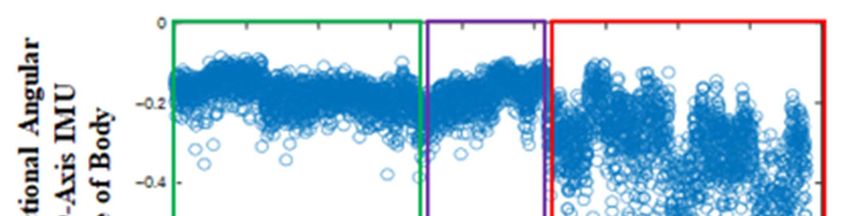
International Journal of Mechanical Engineering and Applications 2021; 9(1): 6-14                            7

   These requirements are efficiently implemented with the          used for their analysis. The accuracy of fault estimation was
Hybrid Twin approach. The Hybrid Twin is an extension of            evaluated; however, its real-time processing requirement
Digital Twin [5] and it consists of Digital Twin and Virtual        was not mentioned. Therefore, this approach can’t be
Twin as shown in Figure 1. The Virtual Twin has a fast 1-D          applied to the problem dealt with in this paper.
simulator modelling the real system physically, and the
Digital Twin is a numerical model of real system. The
Hybrid Twin is a kind of feedback controlling system
between real and virtual spaces.
   In the application of Hybrid Twin, firstly, the set of
numerical data s t obtained by sensors modelling the real
space at time t is an input to Digital Twin. Secondly, the set
of parameters obtained by Digital Twin is given to Virtual
Twin and here, the set of parameters determining the
behaviors in the next time t ∆t is given to the real
system. By repeating this loop, the dynamic behaviors of the
target real system can be precisely controlled. The Hybrid
Twin approach are used in such mission critical controls as
aerospace and nuclear power industrial fields, etc.
                                                                             Figure 1. Suggested estimation system as a Hybrid Twin.
   In the control of robo-mower, several sensors attached to
its body can obtain a set of data and the suggested algorithm
estimates the lengths of lawn grasses and ground conditions
in Virtual Twin as a 1-D simulator. Then, the parameter
controlling rotation speed of motor cutting lawn grasses is
given the motor of robo-mower. This paper describes the
necessary sensor data which should be used as a numerical
model of robo-mower and the algorithm estimating the
lengths of lawn grasses and ground conditions. Therefore,
the novelty of this paper is that the random forest algorithm
is applied to the estimation system mentioned above and a
sensor fusion, that is, a combination of necessary sensor
data is suggested. Moreover, the research is based on the
implementation of Hybrid Twin for autonomous driving of
robo-mower as well as same type of work vehicles.
   The sensor fusion and the utilization of obtained big data
have attracted many researchers’ concern. Recently, there
are detailed surveys on the combination of sensor fusion
and big data analysis [6, 7]. Some applications to actual
problems are also reported [8-10]. The popular approach for
the big data analysis is the utilization of machine learning.
G. Takami et al. [8] take the problem of observation of plant
status. They used three kinds of sensors and a deep learning
algorithm for the big data analysis. The details of deep
learning algorithm are not described, and the processing
time of observation system is not known. However, it may
be useful that they suggested the expectation of
deterioration analysis of sensors by their combination. S.
Alonso et al. [9] also adopted the same approach for
observing a screw compressor in a chiller. They used five
kinds of sensor data and 1D convolutional neural network
(CNN) for their analysis. The adoption of 1D CNN makes
                                                                                  Figure 2. Robo-mower used for experiments.
the monitoring fast and the real-time processing is realized.
Their approach is likely to be suitable for the data without
                                                                       In the followings, the robo-mower used in this paper is
any estimated features, however, in our case, it is known
                                                                    described in chapter 2 and of course, the discussions are not
that some features may be efficient for the estimation in
                                                                    limited to this robo-mower. Chapter 3 is the description on
advance. C. Li et al. [10] deals with the diagnosis of
                                                                    the suggested algorithm based on random forest which is
rotating machinery. They used the vibration sensor signals
                                                                    used as a 1-D simulator in Virtual Twin. In chapter 4, the
and the Gaussian-Bernoulli deep Boltzmann Machine was
                                                                    experimental results based on the big data obtained by the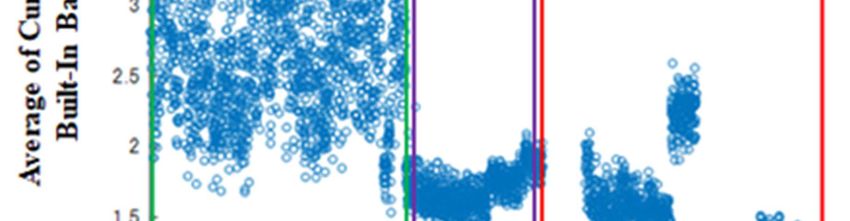
8                  Kazuki Zushida et al.:   Application and Analysis of Random Forest Algorithm for Estimating Lawn
                                                 Grass Lengths in Robotic Lawn Mower

fusion of sensors and a set of features for classifying the
obtained sensor data. Moreover, the set of necessary sensors
and the performance evaluations of suggested algorithm are
stated. Finally, in chapter 5, the obtained results are
summarized.

2. Robotic Lawn Mower
   An example of commercial robo-mower [11] is shown in
Figure 2. This robot is used for the experiments by attaching
some sensors, single-board computer, personal computer and
some peripheral devices. All these devices are under the
management of ROS (Robot Operating System) running on
the personal computer. The robo-mower can be autonomously
driven; however, it is controlled by a Bluetooth controlling
device in the following experiments for increasing the
accuracy of experiment. A camera can be a candidate as a
sensor but its cost including image processing software and
hardware is inadequate for a commercial product. In the
experiments, it is shown that no camera is needed for the
required estimation.

3. Machine Learning Algorithm as 1-D
   Simulator
   As a 1-D simulator included in Virtual Twin to estimate
lawn grass lengths or ground conditions, a machine learning
algorithm is adopted. The random forest algorithm is used
because of its high performance and short processing speed.
3.1. Random Forest Algorithm

   The random forest algorithm, which is one of machine
learning algorithms, originates from Breiman [12], and
recently, its deep version is also suggested [13]. This
algorithm is used for classification, regression or clustering,
etc., and is a kind of ensemble algorithm using a set of
decision trees as weak learners in order to avoid the
over-fitting and to keep the generalization. This is fast and
attains comparatively high performances. According to the
paper [13], the deep random forest algorithm attains better
results in some applications, however, the performances are
                                                                                       Figure 3. Random forest algorithm.
almost the same in other applications. In the followings, an
original random forest algorithm is adopted.                         3.2. Configuration of Binary Decision Tree
   The random forest algorithm consists of given number of
binary decision trees. The training and the inference phases            An example of binary decision tree is shown in Figure 4. In
are shown in Figures 3 (a) and (b), respectively. In the             the root node, the input data is divided into two subsets by
configuration of binary decision trees, a set of training data       using the conditions,            and          . If the data satisfy
sampled from the input data is given to each of the binary           the condition         , the data is classified to the class      as
decision trees. Then, the binary decision tree is constructed in     shown in this figure. When all data are classified to the
the way shown in Figure 4. The data consist of the                   corresponding class (that is, a leaf), the binary decision tree is
followings:                                                          completed. Here, for example, CART (Classification And
                1,2, ,     : input data for classification,          Regression Tree) algorithm is used and the objective function
                                                                     may be Gini’s diversity index [13]. All parameters in binary
regression or clustering, etc.,
                                                                     decision trees are utilized in the consecutive classification
              1,2, , : features for classifying input data
                                                                     phase.
     .
International Journal of Mechanical Engineering and Applications 2021; 9(1): 6-14                         9

                                                                               The objective of experiments is to determine what
                                                                            combination of sensors would be effective for obtaining the
                                                                            relationship between sensors attached to the robo-mower and
                                                                            the estimation of the lawn grass lengths or ground conditions.
                                                                            4.2. Measurement Data

                                                                               The data measured by sensors are obtained by actually
                                                                            driving the robo-mower on the field with long lawn grasses,
                                                                            with short lawn grasses and without lawn grasses. The actual
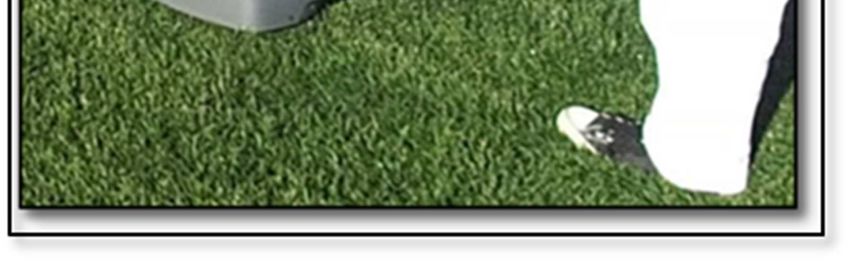
                                                                            remote-controlled driving of robo-mower is shown in Figure
                                                                            5. The remote-controlling function by a Bluetooth
                                                                            communication is incorporated to robo-mower by mounting a
                 Figure 4. Construction of binary decision tree.
                                                                            mini-PC and by executing ROS on it. The mini-PC can also
                                                                            handle the collected sensor data.
3.3. Classification of Data

   In the classification of data, for example, the Bagging
method in the ensemble algorithm is applied. Here, the data
which should be classified are given to all binary decision
trees and then, the decision by each binary decision tree is
obtained. The final decision, that is, the class the data
belongs to, is determined based on the rule of majority. This
process is fast if the binary decision trees are executed in
parallel and the quality of decision would be better than by
using just one binary decision tree. The processing time for
categorizing the field is very much important as a 1-D
simulator in the Virtual Twin.

4. Experimental Results
   This section describes the experimental results when the
random forest algorithm is applied to the actual lawn grass
length estimation.                                                                     Figure 5. Remote-controlled driving of robo-mower.

4.1. Sensors                                                                   The collected data are manually categorized into the data
                                                                            set for long or for short lawn grasses according the specified
  The sensors attached to the robo-mower shown in Figure 2
                                                                            height of grass cutter. If the length of lawn grasses is higher
are listed in Table 1.
                                                                            than that of grass cutter, the lawn grasses set to be long and
                 Table 1. Sensors used in measuring parameters.             otherwise, the lawn grasses are set to be short. When the
                                                                            heights of lawn grasses and the grass cutter are equal, a
Sensors              Mounting Positions            Measurements
                                                   Acceleration
                                                                            human operator determines the lawn grass is long or short
9-axis Inertia       Inside of Body                                         according the operation sound of grass cutter. The
                                                   Angular Acceleration
Measurement                                                                 measurement data are collected so as to the total time be 2.3
                                                   Acceleration
Unit                 Surface of Body
                                                   Angular Acceleration     hours. All data are collected on flat lands on sunny days.
                                                   Voltage
                     Battery                       Current                  4.3. Features for Classifying Data
                                                   Power
Built-In                                                                       Such statistical features of input data,
                     Rotation of Grass Cutting Motor
                     Rotation of Travelling Motor                           1,2, ,      for classification as (i) maximum value, (ii)
                     Horizontal / Vertical Acceleration                     minimum value, (iii) average value, (iv) median value, (v)
                                                                            standard deviation value, (vi) kurtosis value and (vii)
   The robo-mower has been equipped with the built-in                       skewness value are calculated. Here, the values of seven
sensors. The 9-axis Inertia Measurement Units (IMU),                        types of features are normalized into the interval [-1,1].
MPU-9250 [14], are attached to the inside and to the surface                These features are used in configuring binary decision trees.
of body for measuring the acceleration and angular                          These features are calculated for a time frame obtained
acceleration. Six built-in sensors are available for measuring              approximately every 3.2 seconds over 2.3-hour measurement
the corresponding parameters as shown in Table 1. Here, the                 data. The details of collected data are shown in Table 2.
noise of sensor is negligibly small and outliers are excluded.              Actually, the total length of data is less than 2.3 hours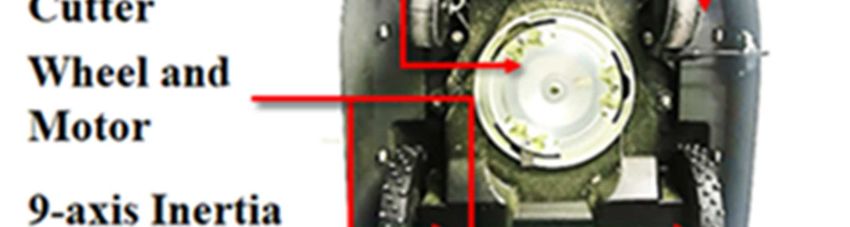
10                    Kazuki Zushida et al.:       Application and Analysis of Random Forest Algorithm for Estimating Lawn
                                                        Grass Lengths in Robotic Lawn Mower

because of some issues with measurement devices, the
                                                                                                         2∗    #$ $ % ∗ &#
obtained data are used.                                                                " − (# $      #
  In the experiments, a subset of time frames obtained from                                                   # $ % + &#
each field data is used for configuring the binary decision trees             Here, TP, TN, FP and FN mean the numbers of “True
and the completed forest is applied to the remaining test data.             Positive”, “True Negative”, “False Positive” and “False
Then, the performances of classification are evaluated.                     Negative”, respectively.
                     Table 2. Details of collected data.                    4.5. Evaluation Results
Groups                             Number of Time Frames
Long Lawn Grasses                  2,356
                                                                               Seven combinations of selected sensor data are shown in
Short Lawn Grasses                 1,575                                    Table 5. These combinations cover all actual cases. By using
Not Lawn Grasses                   3,374                                    the data from Cases 1 to 7, the best combination of sensor data
Total                              7,305                                    is determined based on the above-mentioned evaluation
                                                                            criteria.
   Among these data, the number of time frames are                             The procedure of experiment is as follows.
randomly selected as configuring the binary decision trees                     Select the sensor data corresponding to the cases shown in
(training) in each group. The remaining time frames are used                Table 5 collected in three ground conditions, that is, “Long
as test data for random forest’s performances (testing). These              Lawn Grasses”, “Short Lawn Grasses”, and “Not Lawn
are shown in Table 3.                                                       Grasses”.
         Table 3. Number of frames used for training and testing.              Determine the subset of sensor data (1) and partition it for
                                                                            configuring the binary decision trees and for testing the
                            Number of Time Frames                           random forest according to the number of time frames shown
Groups
                            for Training        for Testing
                                                                            in Table 3.
Long Lawn Grasses           1,686                670
Short Lawn Grasses           904                 671                           Configure the binary decision trees.
Not Lawn Grasses            2705                 669                           Evaluate the performances of random forest based on the
Total                       5,295               2,010                       evaluation criteria.
                                                                               The number of binary decision trees, that is, the size of
4.4. Evaluation Criteria                                                    forest is set to 1,000. Each binary decision tree is configured
   Each of the time frame data has its own label, that is, long             by using the seven features mentioned in section 4.3 until each
lawn grasses, short lawn grasses and not lawn grasses, and                  leaf coincides to one of three ground conditions. An example
the prediction can be verified. The prediction process                      of binary decision tree is shown in Figure 6. Here, the feature,
consists of two stages. The first stage is used to estimate                 median value, obtained from built-in vertical angle sensor data
whether the area is with lawn grasses or not. In the second                 with its threshold, 370.75, is used for classifying the input data
stage, the area is further estimated whether it is with long                on the root node. The class “TreeBagger” in Statics and
lawn grasses or short lawn grasses when the area is estimated               Machine Learning Toolbox in MATLAB [16] is used as an
to have lawn grasses. In the testing, four kinds of evaluation              implementation of random forest algorithm. The processing
criteria are used. These are defined below [15].                            time for configuring 1,000 binary decision trees is less than
                                                                            ten minutes on a PC with the standard performances. The
              Table 4. Measurement of prediction performance.               completed forest is applied to the testing data whose size is
                                    Actuals                                 around 700 in each of three ground conditions shown in Table
                                    Positive                   Negative     3. The processing time needed for prediction is almost
                     Positive       TP                         FP           negligibly small and this is no issue in actual Hybrid Twin
Predictions
                     Negative       FN                         TN           approach. The performances are shown in Table 6. Seven
(1) Accuracy                                                                cases are evaluated with respect to the measurement criteria in
                                                                            each ground condition. The most important performance is the
                                                 !                          accuracy and it becomes high when the built-in sensor data are
                                         "      "!         !                used. Particularly, Cases 6 and 7 without using built-in
                                                                            horizontal or vertical angle sensor have higher accuracy. It
(2) Precision                                                               seems reasonable that the battery status and motor rotation
                                                                            conditions contribute to higher performances because the
                           # $%                                             rotation of motor would be high when it encounters the long
                                                 "
                                                                            lawn grasses. On the other hand, the load to both of grass
(3) Recall                                                                  cutting motor and travelling motor would be reduced when the
                                                                            robo-mower is travelling on the ground without lawn grasses.
                         &#                                                 From the evaluation results, Case 6 would be desirable among
                                               "!
                                                                            seven cases. The reason is that
(4) F-measure                                                                  the accuracy is very high, the difference is only 0.1 points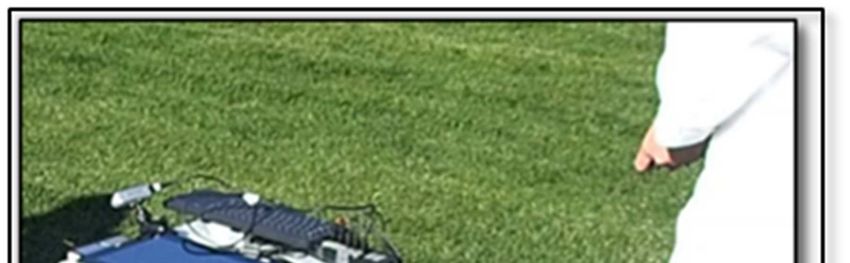
International Journal of Mechanical Engineering and Applications 2021; 9(1): 6-14                                         11

from the maximum 92.28%,                                                      robo-mower will not travel the area and will not cut lawn
   the recall ratio of “Short Lawn Grasses”, 87.08%, is                       grasses when the short lawn grass area is recognized as the
highest.                                                                      ground without lawn grasses. Therefore, it would be
   Especially, the low recall ratio of “Short Lawn Grasses”                   concluded that Case 6 is the best in this evaluation results. In
means that the probability of incorrectly recognizing the short               Case 6, such sensor data as the acceleration and the angular
lawn grasses as long lawn grasses or the ground other than                    acceleration values obtained by 9-axis IMU attached inside of
lawn grasses becomes high. Then, the travelling speed of                      body, the voltage, current and power of battery, and the
robo-mower is reduced and the rotation of grass cutting motor                 rotations of grass cutting motor and of travelling motor
is increased. This would increase the working time and waste                  obtained by built-in sensors are utilized.
the electric power. Moreover, this is much more serious, the

                                    Table 5. Combination of selected sensor data obtained in three ground conditions.
 Sensors             Mounting Positions           Measurements             Case 1      Case 2      Case 3     Case 4        Case 5     Case 6    Case 7
                                                  Acceleration             √           √                      √             √          √         √
 9-axis Inertia      Inside of Body
                                                  Angular Acceleration     √           √                      √             √          √         √
 Measurement
 Unit                                             Acceleration                         √                                    √                    √
                     Surface of Body
                                                  Angular Acceleration                 √                                    √                    √
                                                  Voltage                                          √          √             √          √         √
                     Battery                      Current                                          √          √             √          √         √
                                                  Power                                            √          √             √          √         √
 Built-In
                     Rotation of Grass Cutting Motor                                               √          √             √          √         √
                     Rotation of Travelling Motor                                                  √          √             √          √         √
                     Horizontal / Vertical Angles                                                  √          √             √

                                           Figure 6. Example of binary decision tree in random forest algorithm.

                                    Table 6. Combination of selected sensor data obtained in three ground conditions.

 Combinations of Sensor Data                                    Case 1       Case 2       Case 3       Case 4           Case 5       Case 6     Case 7
 Accuracy                                                       75,84        77.52        86.32        90.92            91.58        92.18      92.28
                                  Precision                     77.06        70.70        92.68        92.60            91.46        92.66      91.04
 Long Lawn Grasses                Recall                        73.02        67.70        93.46        93.60            93.64        93.44      93.56
                                  F-measure                     74.99        69.17        93.07        93.10            92.54        93.05      92.28
                                  Precision                     72.66        73.84        87.30        90.48            92.12        89.40      92.04
 Short Lawn Grasses               Recall                        60.88        68.28        70.06        82.00            83.26        87.08      85.58
                                  F-measure                     66.25        70.95        77.73        86.03            87.47        88.22      88.69
                                  Precision                     77.06        86.34        80.24        89.70            91.34        94.40      93.72
 Not Lawn Grasses                 Recall                        93.60        96.60        95.46        97.20            97.90        96.08      97.70
                                  F-measure                     84.53        91.18        87.19        93.30            94.51        95.23      95.67
 Average of Precisions, Recalls, and F-measures                 75,56        77.20        86.35        90.89            91.58        92.17      92.25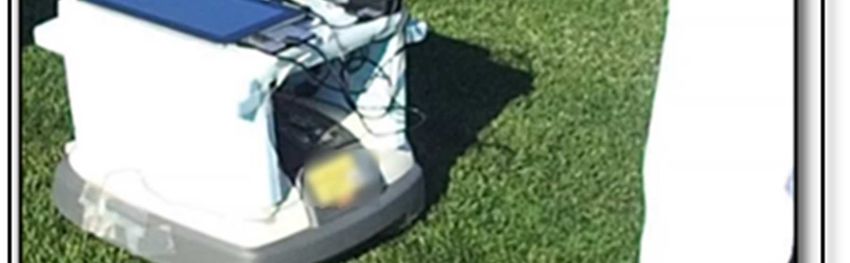
12                    Kazuki Zushida et al.:       Application and Analysis of Random Forest Algorithm for Estimating Lawn
                                                        Grass Lengths in Robotic Lawn Mower

4.6. Feature Importance
   In section 4.5, the efficient combination of sensor data
is discussed and determined. As another discussion, it
should be evaluated how much each feature contributes to
classify the sensor data. This analysis is called the “feature
importance” in the decision tree. When there are some
features, not all features but only such features with large
importance may be used to classify the dataset. As a result,
the processing time and the memory usage can be reduced,
and a random forest algorithm can be implemented on, for
example, a single-board microcomputer.

     Table 7. Importance of features in first estimation stage in Case 6.

Features                                                       Importance
Kurtosis of y-Directional Angular Acceleration of 9-Axis
                                                               1.079
IMU attached Inside of Body
Minimum of y-Directional Angular Acceleration of 9-Axis                     Figure 7. Kurtosis of y-directional angular acceleration of 9-axis IMU
                                                               1.060        attached Inside of Body vs. area conditions.
IMU attached on Surface of Body
Mean of Currents of Built-in Battery                           0.935
Maximum of y-Directional Angular Acceleration of
                                                               0.928
9-Axis IMU attached on Surface of Body
Standard Deviation of y-Directional Angular Acceleration
                                                               0.907
of 9-Axis IMU attached on Surface of Body
Maximum of x-Directional Angular Acceleration of
                                                               0.870
9-Axis IMU attached on Surface of Body
Median of Currents of Built-in Battery                         0.850
Standard Deviation of x-Directional Angular Acceleration
                                                               0.845
of 9-Axis IMU attached Inside of Body
Kurtosis of z-Directional Angular Acceleration of 9-Axis
                                                               0.773
IMU attached Inside of Body
Standard Deviation of z-Directional Angular Acceleration
                                                               0.764
of 9-Axis IMU attached Inside of body

   The importance of features is obtained and shown in
Table 7 in the first estimation stage in Case 6. This stage
estimates whether the area is with lawn grasses or not. In                  Figure 8. Minimum of y-directional angular acceleration of 9-axis IMU
Case 6, seven kinds of sensor data are used as shown in                     attached Inside of Body vs. area conditions.
Table 5. Also, as shown in section 4.3, there are seven
                                                                                Table 8. Importance of features in second estimation stage in Case 6.
features and, currently, 49 features obtained from seven
data set are used in the classification. By applying the                     Features                                                     Importance
standard algorithm [16] for calculating the feature                          Mean of Currents of Built-in Battery                         1.080
                                                                             Maximum of Rotations of Right Travelling Motor               0.874
importance, the result is shown in Table 7. Here, such                       Median of Currents of Built-in Battery                       0.807
features as “Kurtosis of y-Directional Angular                               Mean of Powers of Built-in Battery                           0.789
Acceleration of 9-Axis IMU attached Inside of Body” and                      Maximum of Currents of Built-in Battery                      0.702
“Minimum of y-Directional Angular Acceleration of                            Maximum of Rotations of Left Travelling Motor                0.674
9-Axis IMU attached on Surface of Body” have                                 Minimum of Powers of Built-in Battery                        0.662
                                                                             Median of Powers of Built-in Battery                         0.645
importance values more than 1. In Figure 7, the                              Maximum of Currents of Built-in Battery                      0.582
relationship between “Kurtosis of y-Directional Angular                      Standard Deviation of Rotations of Grass Cutting Motor       0.570
Acceleration of 9-Axis IMU attached Inside of Body”
versus the area with or without lawn grasses is shown.                         The second feature, “Minimum of y-Directional Angular
Actually, the values of the kurtoses between the area with                  Acceleration of 9-Axis IMU attached on Surface of Body,”
lawn grasses and the area without lawn grasses are almost                   gives the same kind of relationship shown in Figure 8. From
different. However, the difference is not large enough to                   these figures, it can be shown that the higher accuracy of
separate the areas with or without lawn grasses and it is                   estimating the area is not attained by only using these two
necessary to use the features with second or third                          features. Moreover, the importance of features in the second
importance in Table 7.                                                      estimation is shown in Table 8. This stage estimates whether
                                                                            the area is with long lawn grasses or with short lawn grasses.
International Journal of Mechanical Engineering and Applications 2021; 9(1): 6-14                           13

Here, the feature, “Mean of Currents of Built-in Battery” has               between robo-mower and a central controller for realizing the
the largest importance. Therefore, it is likely that the larger             Hybrid Twin system.
amount of current is needed when a long lawn grasses should
be cut. The corresponding relationship is shown in Figure 9.
The values of feature are largely different between the areas               References
with long and short lawn grasses.
                                                                            [1]   Kazuki Zushida, Zhang Haohao, Hideaki Shimamura,
                                                                                  Kazuhiro Motegi and Yoichi Shiraishi, “Estimation of Lawn
                                                                                  Grass Lengths based on Random Forest Algorithm for Robotic
                                                                                  Lawn Mower,” Proceedings of the SICE Annual Conference
                                                                                  2020, pp. 1628-1633. September 2020.

                                                                            [2]   Masaki Kojima, Hideaki Shimamura, Kazuhiro Motegi and
                                                                                  Yoichi Shiraishi, “Comparison of Shallow Neural Network
                                                                                  with Random Forest Algorithm in Estimating Lawn Grass
                                                                                  Lengths for Robotic Lawn Mowers,” Proceedings of the SICE
                                                                                  Annual Conference 2020, pp. 1634-1639. September 2020.

                                                                            [3]   Kazuki Ootake, Hideaki Shimamura, Kazuhiro Motegi and
                                                                                  Yoichi Shiraishi, “A Travelling Simulator for Robotic Lawn
                                                                                  Mowers based on Particle Filter Approach,” Proceedings of the
                                                                                  SICE Annual Conference 2020, pp. 1640-1645. September
                                                                                  2020.
                                                                            [4]   Francisco     Chinesta,    Elias   Cueto,      Emmanuelle
                                                                                  Abisset-Chavanne and J. L. D. Virtual, “Digital and Hybrid
   Figure 9. Average of currents of Built-In Battery vs. area conditions.
                                                                                  Twins: A New Paradigm in Data-Based Engineering and
                                                                                  Engineered Data,” Archives of Computational Methods in
   In this paper, high accuracy of classification is necessary                    Engineering, DOI: 10.1007/s11831-018-9301-4, 2018.
and 49 features are used, but by calculating the importance
for each feature, such features, less than 49 features, as                  [5]   Abdulmotaleb El Saddik. “Digital Twins: The Convergence of
                                                                                  Multimedia Technologies,” IEEE Multimedia, vol. 25, no. 2,
necessary and sufficient may be obtained according to the                         pp. 87-92, 2018.
required accuracy.
                                                                            [6]   Bahador Khaleghi, Alaa Khamis, Fakhreddine O. Karrya, and
                                                                                  Saiedeh N. Razavi, "Multisensor data fusion: A review of the
5. Conclusions                                                                    state-of-the-art," Information Fusion, 14 pp. 28-44, 2013.
   The issue to recognize the ground conditions, that is, with              [7]   Furqan Alam, Rashid Mehmood, Iyad Katib, Nasser N.
long lawn grasses, short lawn grasses, or without lawn grasses                    Albogam, and Aiiad Alebeshr, "Data Fusion and IoT for Smart
by analyzing the data obtained from sensors attached to the                       Ubiquitous Environments: A Survey," Special Section on
                                                                                  Trends and Advances for Ambient Intelligence with Internet of
robo-mower is dealt with. Ten kinds of sensor data are                            Things (IoT) Systems, Vol. 5, pp. 9533-9554, 2017.
obtained, and they are analyzed by applying a large-scale
random forest algorithm with 1,000 binary decision trees and                [8]   Go Takami, Moe Tokuoka, Hirotsugu Goto and Yuuichi
seven kinds of features. In the experiments by actually driving                   Nozaka, "Machine Learning Applied to Sensor Data Analysis,"
                                                                                  Yokogawa Technical Report English Edition, Vol. 59, No. 1, pp.
a robo-mower, the combination of such sensor data as                              27-30, 2016.
acceleration and angular acceleration data from 9-axis inertia
measurement unit attached inside of body, the voltage, current              [9]   Serafin Alonso, Daniel Perez, Antonio Moran, Juna Jose
and power of battery, rotation of grass cutting motor and                         Fuertes, Ignacio Diaz and Manuel Domingues, "A Deep
                                                                                  Learning Approach for Fusing Sensor Data from Scre
rotation of travelling motor obtained from built-in sensors                       Compressors,"       Sensors   2019,     19    (13), 2868;
attains the best performance from the practical point of view.                    https://doi.org/10.3390/s19132868 - 28 Jun 2019.
Actually, in testing, the accuracy against 2,010 sensor data is
92.18% and the processing times are five to ten minutes in                  [10] Chuan Li, Rene-Vinicio Sanchez, Grover Zurita, Mariela
                                                                                 Corrada and Diego Cabrera, "Fault Diagnosis for Rotating
training (configuration of 1,000 binary decision trees) and                      Machinery Uring Vibration Measurement Deep Statistical
negligibly small in testing, respectively. This shows the                        Feature Learning," Sensors 2016, 16, 895; doi:
feasibility of suggested approach. Finally, the feature                          10.3390/s16060895.
importance in the decision tree is discussed for evaluating the
                                                                            [11] Toshiaki Kawakami, Hiroshi Kobayashi, Makoto Yamamura,
contribution of each feature. This analysis is useful for                        Shuhei Maruyama: “Development of Robotic Lawnmower
obtaining the necessary and sufficient features. As future work,                 Miimo,” Honda R&D Technical Review, Vol. 25, No. 2, pp.
the variation of ground conditions, that is, the kind of lawn                    54-59,                  September                   2013,
grasses and grounds without lawn grasses should be increased                     https://www.hondarandd.jp/point.php?pid=968&lang=en.
in experiments. Moreover, the implementation of suggested                   [12] Leo Breiman, “Random Forests,” Machine Learning 45, pp. 5–
system should be discussed by using single-board                                 32, 2001.
microprocessors and efficient communication methods
14                 Kazuki Zushida et al.:   Application and Analysis of Random Forest Algorithm for Estimating Lawn
                                                 Grass Lengths in Robotic Lawn Mower

[13] Zhi-Hua Zhou and Ji Feng, “Deep Forest: Towards An              [15] Ian H. Witten, Eibe Frank and Mark A. Hall, “Data Mining:
     Alternative to Deep Neural Networks,” Proceedings of the             Practical Machine Learning Tools and Techniques,” Morgan
     Twenty-Sixth International Joint Conference on Artificial            Kaufmann 2011.
     Intelligence,     pp.     3553–3559,      2017,      doi:
     10.24963/ijcai.2017/497.                                        [16] TreeBagger,        MathWorks,       https://jp.mathworks.com/
                                                                          help/stats/treebagger.html?lang=en.
[14] MPU-9250,
     https://www.invensense.com/products/motion-tracking/9-axis/
     mpu-9250/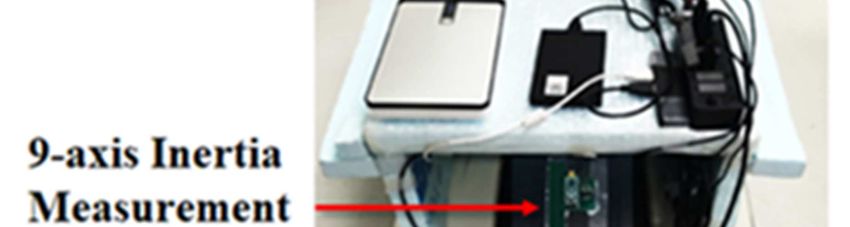
You can also read


