ASERT Threat Intelligence Brief 2014-07
←
→
Page content transcription
If your browser does not render page correctly, please read the page content below
Arbor Threat Intelligence Brief 2014-07

ASERT Threat Intelligence Brief 2014-07
Illuminating the Etumbot APT Backdoor
ASERT Threat Intelligence, June 2014

Etumbot is a backdoor used in targeted attacks since at least March 2011. Although
previous research has covered a related family, IXESHE, little has been discussed
regarding Etumbot’s capabilities. ASERT has observed several Etumbot samples using
decoy documents involving Taiwanese and Japanese topics of interest, indicating the
malware is used in ongoing, targeted campaigns. This report will provide information on
the capabilities of Etumbot and associated campaign activity.

Etumbot Capabilities and Techniques
Etumbot is a backdoor malware that has been associated with a Chinese threat actor group alternatively
known as “Numbered Panda”, APT12, DYNCALC/CALC Team, and IXESHE. Targeted campaigns
attributed to this group include attacks on media, technology companies, and governments.
IXESHE/Numbered Panda is known for using screen saver files (.scr), a technique repeated with the
Etumbot malware. [1] A previous campaign using IXESHE malware was highlighted in 2012; the group
used targeted emails with malicious PDF attachments to compromise East Asian governments,
Taiwanese electronics manufacturers, and a telecommunications company. The group has reportedly
been active since at least July 2009. [2] Etumbot has also been referred to as Exploz [3] and Specfix.

The variety of names for this malware could lead to some confusion about the actual threat. ASERT has
associated Etumbot with IXESHE, and therefore Numbered Panda, based on similar system and network
artifacts that are common between the malware families. For example, both malware families have been
seen using the same ka4281x3.log and kb71271.log files, both families have been observed calling back
to the same Command & Control servers and have been used to target similar victim populations with
similar attack methodologies.

Etumbot has two primary components. The first is a dropper which contains the backdoor binary (the
second component) and the distraction file. Stage one is likely delivered via spear phish using an archive
file extension such as .7z to deliver executable content. Stage one has been seen to leverage the
Unicode Right to Left Override trick combined with convincing icons for various types of PDFs or
Microsoft Office documents to convince the user to click and therefore execute the malware, which then

© Copyright 2014 Arbor Networks, Inc. All rights reserved.
Arbor Security Report: ASERT Threat Intelligence Brief 2014-07

runs the backdoor and displays the distraction file. As with the IXESHE malware, Etumbot has been
observed dropping documents of interest to a Taiwanese and Japanese target population.

Stage 1: Installer/Dropper
To profile the techniques and capabilities of Etumbot, we will analyze an Etumbot dropper with MD5
ff5a7a610746ab5492cc6ab284138852 and a compile date of March 4, 2014.

When executed, the dropper loads up a resource named "BINARY" from the resource section then
creates the directory C:\Documents and Settings\User\Application Data\JAVA, then creates a temporary
file C:\DOCUME~1\User\LOCALS~1\Temp\ka4281x3.log then creates C:\Documents and
Settings\User\Application Data\JAVA\JavaSvc.exe from the aforementioned BINARY resource. This file,
JavaSvc.exe, is the backdoor component (MD5 82d4850a02375a7447d2d0381b642a72). JavaSvc.exe is
executed with CreateProcessInternalW. The backdoor component of the malware (named here as
JavaSvc.exe) is now running. It is interesting to note that versions of the IXESHE malware also used
JavaSvc.exe as a filename.

Most Etumbot samples observed by ASERT drop decoy documents (PDFs, Word Documents, and Excel
Spreadsheets) written in Traditional Chinese and usually pertaining to Cross-Strait or Taiwanese
Government interests. Several decoy files contain details on upcoming conferences in Taiwan.

Spear Phishing
Etumbot appears to be sent to targets via spear phishing emails as an archive; ASERT has observed .7z
and .rar formats being used to presumably deliver the Etumbot installer. The archive filename will have a
topic most likely of interest to the victim.

At least one identified malware sample (75193fc10145931ec0788d7c88fc8832, compiled in March 2014)
uses a password-protected .7z to deliver the Etumbot installer. It is most likely that the spear phish email
contained the password.

With the correct password, the victim has access to the dropper inside the archive. This archive most
likely included the installer d444be30d2773b23de38ead1f2c6d117, as the filenames match (1030522 新

2                                                                Proprietary and Confidential Information of Arbor Networks, Inc.
Arbor Security Report: ASERT Threat Intelligence Brief 2014-07
機關籌備小組清單.7z and 1030522 新機關籌備小組清單 rcs.DOC). 1030522 is a date (May 22, 2014)
from the Minguo calendar, which is unique to Taiwan. The calendar is based on the establishment of the
rd
Republic of China in 1911. 2014 is therefore the “103 ” year of the ROC. The installer is a .scr binary
posing as a Word Document. This dropper drops a decoy document and the backdoor, named
sysupdate.exe in this instance.
Right-to-Left Override
After the files are extracted from the archive, the filenames of Etumbot installers make use
of the right-to-left override (RTLO) trick in an attempt to trick users into clicking on the
installer. The RTLO technique is a simple way for malware writers to disguise names of
malicious files. A hidden Unicode character in the filename will reverse the order of the
characters that follow it, so that a .scr binary file appears to be a .xls document, for
example. Threat actors using this trick have been well documented since at least 2009. [4-
5] One way to avoid this trick in Windows is to set the “Change your view” level to “Content”.
[6]
Below are some of the names of Etumbot installers using RTLO successfully:
File
name
Md5
招標規範 Finarcs.doc
b3830791b0a397bea2ad943d151f856b
1030522 新機關籌備小組清單 rcs.DOC
d444be30d2773b23de38ead1f2c6d117
報價單 Finarcs.xls
5340fcfb3d2fa263c280e9659d13ba93
10342 委會-‐審 金融法規修正草案報告 rcs.xls
beb16ac99642f5c9382686fd8ee73e00
國發會 1030324 第 1 次委員會重要議題通報 finalrcs.xls
4c703a8cfeded7f889872a86fb7c70cf
APO
EPIF
邀請函 rcs.xls
1ce47f76fca26b94b0b1d74610a734a4
Stage 2: Persistence, Distraction, HTTP Beacon and Crypto Functionality
As the backdoor executes from our previous example, C:\DOCUME~1\User\LOCALS~1\Temp\
kb71271.log is created and contains the following registry file to make the malware persistent:
[HKEY_CURRENT_USER\Software\Microsoft\Windows\CurrentVersion\Run] "JavaSvc"="C:\\Documents
and Settings\\User\\Application Data\\JAVA\\JavaSvc.exe"
The dropper then calls regedit with kb71271.log as a parameter to modify the registry. kb71271.log is
then deleted. These temp files appear to be static and used across multiple samples of Etumbot and
IXESHE. Various other samples were found using this same naming scheme.
Next, C:\DOCUME~1\User\LOCALS~1\Temp\ka4281x3.log is created, filled with contents of the
bait/distraction file, and then copied to C:\DOCUME~1\User\LOCALS~1\Temp\~t3fcj1.doc, which is then
opened. If Word isn't installed, then notepad will open the file instead. The ka4281x3.log file is then
deleted.
Returning to the first sample, once the dropper (ff5a7a610746ab5492cc6ab284138852) installs the
Etumbot backdoor (82d4850a02375a7447d2d0381b642a72), an initial HTTP beacon is sent to the
Command & Control server that requests an RC4 encryption key. The beacon takes the form of a GET
request to /home/index.asp?typeid=N where N is a randomly selected odd number between 1 and 13. If
the C&C is online, the decoded response payload will contain the RC4 key that is used to encrypt
subsequent communication.
If the C&C does not send a valid response, the bot will re-send the initial request every 45 seconds.
© Copyright 2013 Arbor Networks, Inc. All rights reserved. 3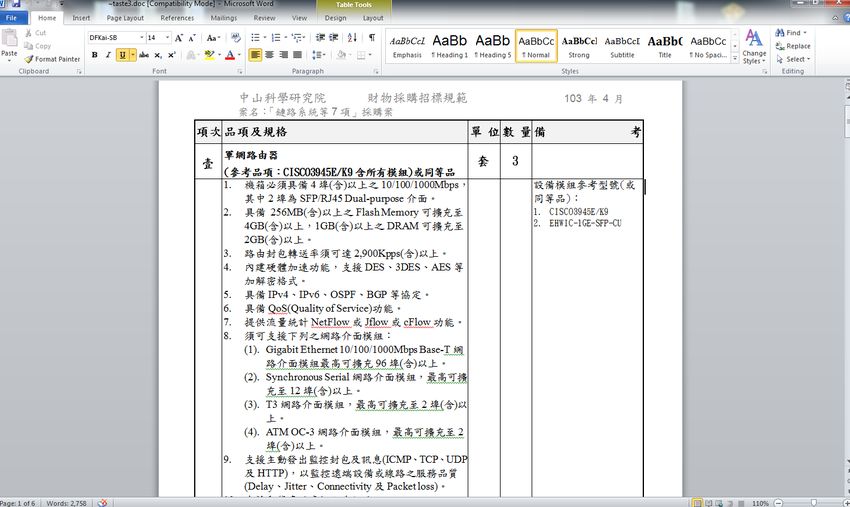
Arbor Security Report: ASERT Threat Intelligence Brief 2014-07

While the user-agent may appear to be legitimate, it only occurred 39 times in a corpus of over 61 million
HTTP requests. Due to the possibility of this User-Agent appearing in legitimate traffic, other indicators –
such as the additional fake Referer value of http://www.google.com should be present before compromise
is assumed. All of the headers in the HTTP request are hard-coded in both order and value, so they may
be used to provide additional indicators of compromise.

If the C&C is online and responds to the beacon, then the RC4 key is delivered to the bot in a string of
base64 encoded characters. Etumbot uses a url-safe base64 alphabet, i.e., any characters that would
require URL-encoding are replaced. Usage of base64 is a technique consistent with previous analysis
done on IXESHE malware. [2,7] In the case of Base64, the “/” and “=” characters are replaced with “_”
and “-“ respectively. The payload from the C&C contains an 8-byte command code in little-endian format,
followed by a null-terminated string argument if the command requires it. In the case of the initial beacon
response, the RC4 key is located after the command code and has been observed to be e65wb24n5 for
all live C&C’s that ASERT has analyzed.

An example of this initial beacon and delivery of RC4 key is as follows.

4                                                                Proprietary and Confidential Information of Arbor Networks, Inc.
Arbor Security Report: ASERT Threat Intelligence Brief 2014-07

The RC4 key can be obtained from the C&C response with the following python:
          import base64
          c2_response="""AQAAAAAAAABlNjV3YjI0bjUAAAAAAAAAAAAAAG5FAVBvIz8hYk08ITI4BA0lMTBvBRx0NB18
          BndMcFMKQhR5PxxkQ3VnFEALeXA6C3RPBmJLHBBccHQINEl9I3kMUk0lOT4wCFgqD3khTjl5IEAqGzU_DmtU
          eEJBYSQHEiwRADteMEFjTw5oXgtjGkUxL14JPlwyYQQXPkVaQiAyUBEaJWlkOQEmZRoXZ10EN3RndH0kbEEre
          w0NUklhFRlpNDJofS1hPQMCeWUvHSQPA2ZAPHEcCRkLPURbCC8bdTgIXXcIBhBbVlhjdB8iL2Y_TCNldTNjZkE
          vB0M5BWtaOkBALj4KIA5UBjhVPxhhSk1fAwdKKi8zdhl6TkthRUZAOQdICRgFEgY0dwpQNjtlQgR8DzM9N3NQ
          BhteHgdwaVtycDZvS1Q3CTYhARI1GBMrWh1FQxcdQhV7MSx+NQxqFHgVKHRAdBIBIzNFP14gLHErBAYeWH
          1jGCMAdlx5MWAuFk5TW3M+UxFMclIsclEAbzgzB2NSOX0iYBBucmthDyYaZR8tBBMbJjMoCXleMkM+YjdfCHc
          xIUBHbic+RiEeNwAvWD40W2p0diUyCTJHFEU+KRc+ZFVJTA0zHgxwAiJva306KXkIL3ZnRwAIKCh4M3sgFgZ
          ZGU9lFXg4ancZFSAlNl1RaRQ8b3drCWofbWB+fkIyKEJ8AnJlaUAxEglWZSM+TWFEAE4aCnFpe1JpB1xTBSgfE
          UwVUh1UDE5UVC1qanIcXXlfcmRzdWkPK2doDlBhVmx4dm8zUkFgMWJHdRhzRSdrKwk_KWAadyAqMEg2MlE
          YNVl9Wl84bQtVcRYpFHAXGg8kQiI6E1xiBApHV3ZDLBY+G2sADmJXUC9OCixmBEYUNGBXATh0QVxUNTwyQ
          nhbXRxNTHlCEAlYBXhyTWdyQRcNBxskBRlRBn42HlhNbEtnJCk4QkIoDzRbEChGLi10ERpgZTpNNCJjKEUNOhh
          lcRR1Dkw+ITMAYAleCDQdTVpTHGQbXwktTmROQiooaEtLLHcILTo4an08I1p9H2IPeBseLiUScQp3Xg--
          """.replace('_','/').replace('-','=')
          c2_response=base64.b64decode(c2_response)
          rc4_key = c2_response[8:8+c2_response[8:].find('\x00')]
          print rc4_key
          e65wb24n5

While a payload of 1080 bytes is sent back, the majority appears to be random padding.

Once the bot has received the encryption key, the bot sends a registration callback to the C&C
/image/.jpg containing the encrypted values of system information to include the
NetBIOS name of the system, user name, IP address, if the system is using a proxy (Yes/No), and a
numeric value which may be some type of campaign code. IXESHE malware has also been observed
using a unique campaign code that is delivered back to the C&C. [7]

© Copyright 2013 Arbor Networks, Inc. All rights reserved.                                                               5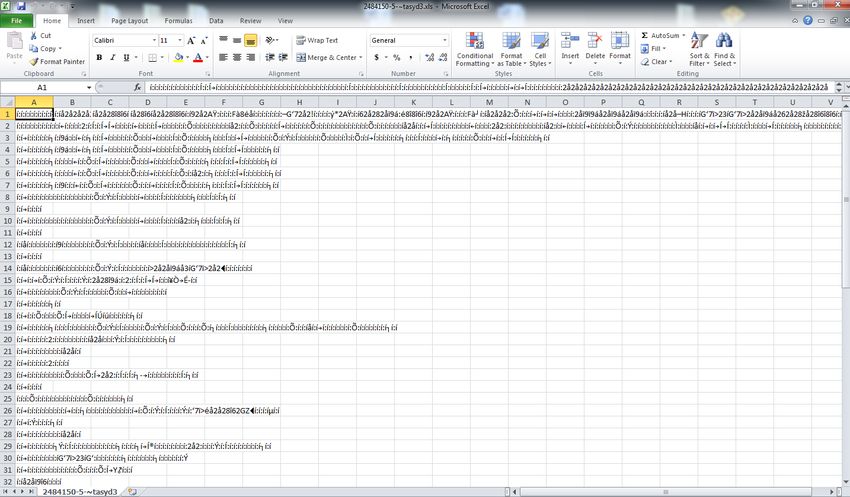
Arbor Security Report: ASERT Threat Intelligence Brief 2014-07

Etumbot discovers the proxy settings of the local machine. If a proxy is defined, communications to the
C&C bypass the proxy and go directly to the Internet. Environments with system-defined proxies won’t get
this activity in proxy logs, however transparent proxies may see this activity.

A contrived example of this registration string generated by the Etumbot backdoor prior to encryption is as
follows:

         WINXPBOX|johnsmith|10.0.1.15|No Proxy|05147|

A bot registration call to /image

Once the bot has registered with the C&C, it will send periodic pings to ask for new commands to
execute. The URI for the ping requests is /history/.asp, where encrypted
NetBIOS name is the url-safe base64 encoding of the rc4-encrypted NetBIOS name.

6                                                                Proprietary and Confidential Information of Arbor Networks, Inc.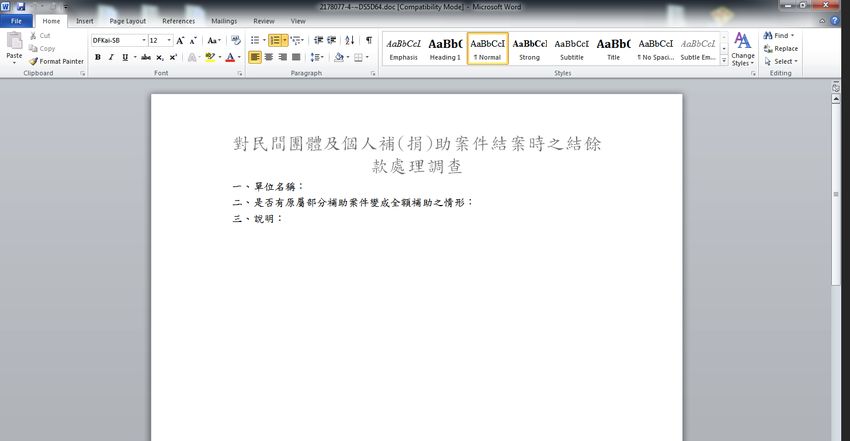
Arbor Security Report: ASERT Threat Intelligence Brief 2014-07

Etumbot Command Structure
The first eight bytes of C&C responses to the bot include the command, and the second eight bytes
contain an ASCII string that is parsed. In the event of a file download, file upload, or command execution,
the second eight bytes contain the filename or command to be executed. The parsing function inside the
binary reveals at least five commands:

                     Etumbot
  function
                            Command
  name
               Internal
  code

                     Execute
  arbitrary
  command

            ETUM_CMD_EXEC
                 3

                     Download
  file
  from
  C&C

            ETUM_CMD_PUTFILE
              4

                     Upload
  file
  from
  bot
  to
  C&C
     ETUM_CMD_READFILE
             5

                     Pause
  execution
                             ETUM_CMD_SLEEP
                7

                     Delete
  backdoor
  binary
  and
            ETUM_CMD_UNINSTALL
            8

                     terminate
  program

                     Ping
  the
  C&C
                             ETUM_CMD_PING
                 9


ETUM_CMD_EXEC provides the capability for the attacker to run any command on the compromised
hosts. Both stdout and stderr from the command are redirected to a pipe and are then relayed back to the
C&C using a separate thread that spawned during initialization. In the event of a process creation or hang
error, an HTTP transaction to /tech/s.asp/m= is sent to the C&C, where  contains

© Copyright 2013 Arbor Networks, Inc. All rights reserved.                                                                                 7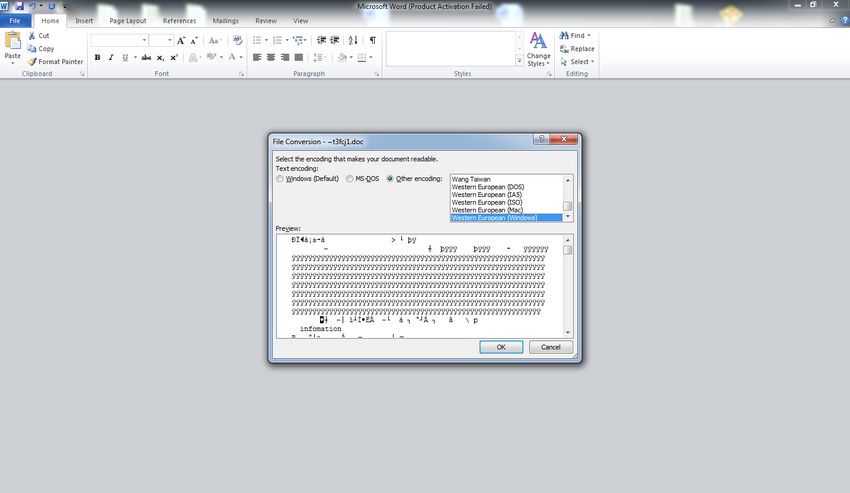
Arbor Security Report: ASERT Threat Intelligence Brief 2014-07

a create process error statement “CreateProcess Error: %d” or a message that states “Process Do not
exit in 10 second, so i Kill it!”. Some samples of droppers have been observed using the string “Process
Do not cunzai in 10 second, so i Kill it!”. The word "cunzai” is likely the pinyin (romanization) for the
Mandarin word 'exist'.

ETUM_CMD_PUTFILE provides the capability for files to be placed on local system from the C&C. The
file upload is accomplished by sending a request to /docs/name= and the C&C is expected to
respond with the full contents of the file as the response payload.

A success or failure status message is relayed via a call to /tech/s.asp?m=
with various reasons for failure potentially being relayed.

ETUM_CMD_READFILE allows any file from the compromised system to be uploaded to the C&C. When
a READFILE command is received from the C&C, the bot makes an initial call to
/manage/asp/item.asp?id=&&mux= and checks for
the presence of “I’m Ready” in the response from the C&C. Data from the file is read in 2000 byte chunks,
RC4 encrypted and then url-safe base64 encoded. The data is sent back to the C&C via the URI
/article/30441/Review.asp?id=&&date=. The bot expects a
message of “OK” from the C&C after each response is sent and will terminate the upload and send an
error message to the C&C in the case it is not seen. A success or failure message is sent via the
/tech/s.asp?m= to complete or terminate the upload.

ETUM_CMD_SLEEP puts the bot into a dormant state for a period of time. When a bot receives the sleep
command, it will relay the message, “I will sleep %d minutes!” via a call to /tech/s.asp?m=.

ETUM_CMD_UNINSTALL deletes the binary and terminates the process with no additional
communication to the C&C.

Use of Byte Strings Technique (aka “String Stacking”)
Etumbot uses a technique to load strings into memory that has been called “byte strings” and also “string
stacking” whereby character values are loaded into a specific memory location one byte at a time.
Assuming the string values do not change frequently, these byte strings can make for meaningful
detection capabilities, such as discovering an unusual combination of characters (to include typos, unique
or odd syntax) being loaded into memory that creates a unique fingerprint for the malware activity that
can be used as part of a yara rule or other detection mechanism. The byte string technique has been
observed in various Chinese APT malware, including Gh0st RAT, IXESHE malware, Etumbot and others.

ASERT has provided an IDApython script that will provide for cleaner analysis of such strings as well as a
corresponding blog entry that describes the obfuscation technique and code. [8-9]

The output of running find_byte_strings.py on an Etumbot backdoor shows the string “I’m Ready” which is
involved in file transfer routines. The first screenshot shows the default hex byte values that are MOVed
into offsets from EBP, and the second screenshot shows those same characters after translation to string
values.

8                                                                Proprietary and Confidential Information of Arbor Networks, Inc.
Arbor Security Report: ASERT Threat Intelligence Brief 2014-07

© Copyright 2013 Arbor Networks, Inc. All rights reserved.                                                               9
Arbor Security Report: ASERT Threat Intelligence Brief 2014-07

Two additional screenshots provide insight into all of the strings discovered.

The byte string technique has also been observed in other malware, so its presence alone does not
specifically indicate the activities of Chinese threat actors.

An interesting artifact occasionally observed during analysis is the presence of a numeric value just after
an IP address used as a C&C. The placement of this number after a colon suggests the use of a port
value, however such a port value is too high to be valid. An example of this taken from an Etumbot
sample performing an initial beacon is as follows:

10                                                               Proprietary and Confidential Information of Arbor Networks, Inc.
Arbor Security Report: ASERT Threat Intelligence Brief 2014-07

Etumbot Backdoor Related File System Artifacts of Interest

Filename
             Purpose
                                               Notes

ka4281x3.log
         Temporary
  file
  for
  data
  exchange
          Observed
  in
  various
  IXESHE
  malware
  variants
  as
  well
  as


                     from
  C&C
                                           Etumbot.
  File
  is
  stored
  in
  C:\Windows\system32\,

                                                                               \Documents
  and
  Settings\
  or
  elsewhere

ka4a8213.log
         Temporary
  file
  for
  data
  exchange
          Similar
  in
  format
  to
  the
  prior
  filename,
  this
  has
  only


                     from
  C&C
                                           been
  observed
  in
  Etumbot
  samples.

kb71271.log
          Temporary
  file
  for
  data
  exchange
          Observed
  in
  various
  IXESHE
  malware
  variants
  as
  well
  as

                       from
  C&C,
  to
  include
  registry
  file
     Etumbot

~DA5E74.doc
          Distraction
  documents
                              Contains
  a
  variety
  of
  document
  content,
  often
  obtained

~DS5D64.doc
                                                                  from
  other
  sources
  that
  will
  be
  of
  interest
  to
  the
  target

~t3fcjl.doc

~g4h710.doc

~gh4710.pdf

~trfai3.doc

~tresd2.xls

~taste3.doc

~tasyd3.xls

~tkfad1.xls

ntprint.exe
          Backdoor
  binary
                                    The
  Etumbot
  backdoor
  binary
  itself
  which
  is
  added
  to

conime.exe
                                                                   the
  registry
  for
  persistent
  execution

JavaSvc.exe

serverupdate.exe

wscnsvr.exe

spoolvs.exe

winlogdate.exe

tst1.tmp

                                                      Observed
  in
  IXESHE
  malware
  and
  Etumbot
  samples
  as

tst2.tmp
                                                                     well
  as
  in
  other
  malware.
  The
  file
  tst3.tmp
  is
  more

tst3.tmp
                                                                     popular
  than
  the
  other
  two
  file
  names
  and
  is
  used
  in
  a

                                                                               wider
  variety
  of
  malware

Locations
            Directory
  created
                                  Created
  in
  \Documents
  and

JAVA
                                                                         Settings\\Application
  Data\
  and
  also
  in
  root

                                                                               of
  C:\
  directory


© Copyright 2013 Arbor Networks, Inc. All rights reserved.                                                                                                                   11
Arbor Security Report: ASERT Threat Intelligence Brief 2014-07
Etumbot Command and Control Indicators
Most instances of Etumbot that were analyzed connect directly to an IP address with the IP address
hardcoded in the binary. These C&C’s were obtained from analyzing malware samples compiled over a
period of several years.
IP
Address
Domain
Name
Country
A number of these C&C IP addresses are also used by
200.27.173.58
CL
IXESHE-related malware, which seems to indicate that
Etumbot is often used in tandem with IXESHE. The
200.42.69.140
AR
domain finance[.]yesplusno[.]com and IP address
92.54.232.142
GE
211[.]53.164.152 was also used by a variety of
133.87.242.63
1
JP
IXESHE samples, for instance. The registrant for the
domain yesplusno[.]com is listed as “alice yoker” with
98.188.111.244
intro.sunnyschool.com.tw
US
the email address “chuni_fan@sina.com”. Other
2
143.89.145.156
HK
domains registered in this name have also been used
198.209.212.82
3
US
as C&C for IXESHE:
2
143.89.47.132
HK
securezone[.]yesplusno[.]com [10]
4
196.1.99.15
wwap.publiclol.com
SN
prishmobile[.]googlesale[.]net
59.0.249.11
KR
yahoopush[.]googlesale[.]net
190.16.246.129
The IP address 98.188.111.244 has also been used as
AR
211.53.164.152
finance.yesplusno.com
KR
a C&C for multiple IXESHE samples, beginning in at
least March 2013 and observed as recently as March
2014 with an Etumbot sample. This is the IP address for what appears to be a legitimate website for a
school in Taiwan: intro.sunnyschool.com.tw. Note that if HTran or other connection bouncer is used, the
C&C may be a legitimate site that was simply compromised and used to direct traffic elsewhere.
Miscellaneous Network Artifacts: Use of Htran Connection Bouncer
Indicators suggest that HTran, a connection bouncer, is being used in some cases such as on the C&C
contacted by malware sample MD5: 1ce47f76fca26b94b0b1d74610a734a4 (compilation date March 12,
2014). The presence of HTran is based on the following response string
[SERVER]connection to ss:dd error
1
IP address allocated to Hokkaido University
2
2 IPs
IPs allocated
allocated to
to Hong
Hong Kong
Kong University
University of
of Science
Science and
and Technology
Technology
3
IP allocated to the University of Missouri
4
IP allocated to the University Saint-Louis of Senegal
12 Proprietary and Confidential Information of Arbor Networks, Inc.Arbor Security Report: ASERT Threat Intelligence Brief 2014-07
HTran is also called "HUC Packet Transmit Tool", developed by a member of the Honker Union of China,
a hacker group; the source code for the program is available online. [11] HTran is designed to redirect
TCP traffic intended for one host to another, and has been used by IXESHE malware previously. [2]
Researchers at SecureWorks determined some years back that HTran would deliver the IP address of
the final destination server if the final server were down or unreachable. The code in use here has been
modified to not reveal such information. Organizations properly positioned with netflow or other traffic
analysis capabilities may be able to locate upstream servers from HTran nodes that operate as the initial
tier of C&C.
Htran activity can be detected with the following signature:
ET CURRENT_EVENTS HTran/SensLiceld.A response to infected host
The import hash for the sample observed connecting to an Htran bouncer is
a9059c354e5025dfe4f1c0b8b57e4f62 which links to other Etumbot samples compiled with Microsoft
Visual C++ 5.0 in a similar March 2014 timeframe:
• 4c703a8cfeded7f889872a86fb7c70cf 2014-03-24
• ff5a7a610746ab5492cc6ab284138852 2014-03-04
Etumbot Campaign Timeline
The following samples have been identified by ASERT as Etumbot malware. The first identified sample
has a compilation date of March 2011, while the most recent was compiled in May 2014. Many
droppers/installers contain Etumbot or, alternatively, IXESHE-related backdoors.
Most of the documents dropped with Etumbot are written in traditional Chinese. Traditional Chinese
(versus simplified Chinese used in mainland China) is most widely used in Taiwan. While other areas do
make use of traditional Chinese (Hong Kong, Macau), the topics of the decoy documents strongly
suggest that Taiwanese entities are the targets for many Etumbot samples.
A recent increase in Etumbot samples with configuration dates of 2014 seems to indicate that the
Numbered Panda/IXESHE group has increased activity lately or has begun using Etumbot more widely in
targeted campaigns.
2011
ac22aa007081caeb8970aefba7eddfcf
Compilation Date: 2011-03-09 14:10:34
C&C: N/A
Filename: Help statement from western U.S ?cod.scr
Archive: HelpXstatementXfromXwesternXU.SX.rar (c2d667b8072aa2eaa670d4459dd7c90d)
Dropped Files: ~$workp.doc (7ec4ece7358f9f67a4d583777dc1fb59), ka4281x3.log, kb71271.log, WINCHAT.EXE
(70424b91dc905e4ca5e4aeb1c62ed91f)
© Copyright 2013 Arbor Networks, Inc. All rights reserved. 13Arbor Security Report: ASERT Threat Intelligence Brief 2014-07
~$workp.doc: News article on recent Chilean earthquake (English)
cd33c5467d425f662f57672531701d89
Compilation Date: 2011-03-14 02:49:22
C&C: N/A
Filename: N/A
Dropped Files: ~$workp.doc (731f288ebd8ff05b3a32377d9d7f4751), WINCHAT.exe
(e62453f41af9d87b4f6d4e8223926024)
~$workp.doc: Notice from TEPCO (Tokyo Electric Power Company) dated March 14 about
emergency shortage and blackouts. (Japanese)
04908c6853cb5c9d7dccaf15fb5fd3bb
Compilation Date: 2011-03-24 03:24:42
C&C: 32.114.251.129 (US), 217.119.240.118 (RS), 202.106.195.30 (CN) larry[.]yumiya[.]com
14 Proprietary and Confidential Information of Arbor Networks, Inc.Arbor Security Report: ASERT Threat Intelligence Brief 2014-07
Filename: N/A
Dropped Files: ~$workp.doc (4d47f52c675db16ab1e1df5ac050d3b8), ka4281x3.log, kb71271.log, WINCHAT.exe
(47ee9a497a12272b50bb5e197935f13f)
~$workp.doc: “Investigation Results” of several cases/laws involving the Ministry of National
Defence (Traditional Chinese)
2012
232b659e28c5e06ad5466c01aec35cb6
Compilation Date: 2012-09-19 08:53:14
C&C: 200.27.173.58 (CL)
Filename: N/A
Dropped Files: ka3157j.log, W3svc.exe (1e838fd06bcc64c54e75c527df164d91)
7a698acebcf19b55170f05388a2f7fe0
Compilation Date: 2012-10-12 01:21:11
C&C: N/A
Filename: N/A
Dropped Files: ka3158jl.log, iexplore.exe (ac7f77cc55c964e400b8926f21bed7d2)
1e8fba674761371cb9e88962dcb851c0
Compilation Date: 2012-11-20 00:11:02
C&C: 211.53.164.152 (KR), finance[.]yesplusno[.]com
Filename: N/A
Dropped Files: ~PG7953.doc (adc0ffd684d9a986d65cb4efba39c3fe), ka3157jl.log, kb71271.log, iexplore.exe
(37648553f4ee6c5cb712cca446340a9a)
© Copyright 2013 Arbor Networks, Inc. All rights reserved. 15Arbor Security Report: ASERT Threat Intelligence Brief 2014-07
~PG7953.doc: “qqqqqq”
88653dde22f723934ea9806e76a1f546
Compilation Date: 2012-12-05 01:30:07
C&C: 190.193.44.138 (AR), cht[.]strangled[.]net
Filename: N/A
Dropped Files: N/A (this sample is a dropped backdoor)
2b3a8734a57604e98e6c996f94776086
Compilation Date: 2012-12-05 02:13:27
C&C: 92.54.232.142 (GE)
Filename: 補捐助案件結餘款處理調查表.doc .exe
Dropped Files: ~DS5D64.doc (2454c4af0b839eb993dd1cbb92b2c10d), ka4281x3.log, conime.exe
(3214bf22eb28e494b8e23d8ffc5ac4a9)
~DS5D64.doc: Form pertaining to unspecified investigation/case (Traditional Chinese)
16 Proprietary and Confidential Information of Arbor Networks, Inc.Arbor Security Report: ASERT Threat Intelligence Brief 2014-07
1498c9761fc819d496171c71604c2128
Compilation Date: 2012-12-11 02:26:18
C&C: N/A
Filename: 部會文宣聯繫名單 cod.scr
Dropped Files: ~DS5D64.doc (e8b92d20a9c4718b4f90d27cd8cba4b3), conime.exe
(0bfb9f2080aeee22d3b4ca6fbfd25980)
~DS5D64.doc: Application to apply as a member of the “Taiwan National Alliance” (Traditional Chinese)
063b6076c69ce3ba4f116d1ad51da2b5
Compilation Date: 2012-12-12 01:26:54
C&C: N/A
Filename: N/A
Dropped Files: ~PG7953.doc (c4af36f64d515569816263ca48f61899), ka3157jl.log, iexplore.exe
(5b15664fb744c3f3cf7ec7b5515d2be5)
~PG7953.doc: Foreign Ministry: Security Operation Center Plan (Traditional Chinese)
© Copyright 2013 Arbor Networks, Inc. All rights reserved. 17Arbor Security Report: ASERT Threat Intelligence Brief 2014-07
2013
ca838b98ca0f516858a8a523dcd1338d
Compilation Date: 2013-07-25 07:48:29
C&C: 143.89.145.156 (HK)
Filename: N/A
Dropped Files: ~g4h710.doc (729353afd095ca07940490dbb786ee33), ka4281x3.log, kb71271.log, JavaSvc.exe
(36b42162c818cf6c2fb22937012af290)
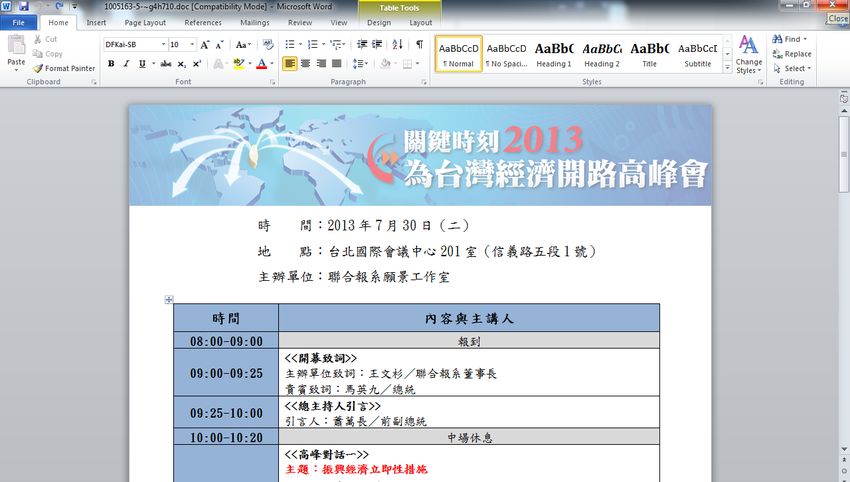
~g4h710.doc: “The 2013 Turning Point: Blazing a Trail for Taiwan's Economy” Conference at the Taipei
International Convention Center 2013-07-30 (Traditional Chinese)
986937eb4052562cdd3960dd8fffc481
Compilation Date: 2013-07-30 08:22:06
C&C: 200.42.69.140 (AR)
Filename: N/A
Dropped Files: ~g4h710.pdf (7cd7db8ff8071d590567c68ea0219f23), ka4281x3.log, kb71271.log, JavaSvc.exe
(ee8ba3bef6a607af79405e75fb0f0d6f)
18 Proprietary and Confidential Information of Arbor Networks, Inc.Arbor Security Report: ASERT Threat Intelligence Brief 2014-07
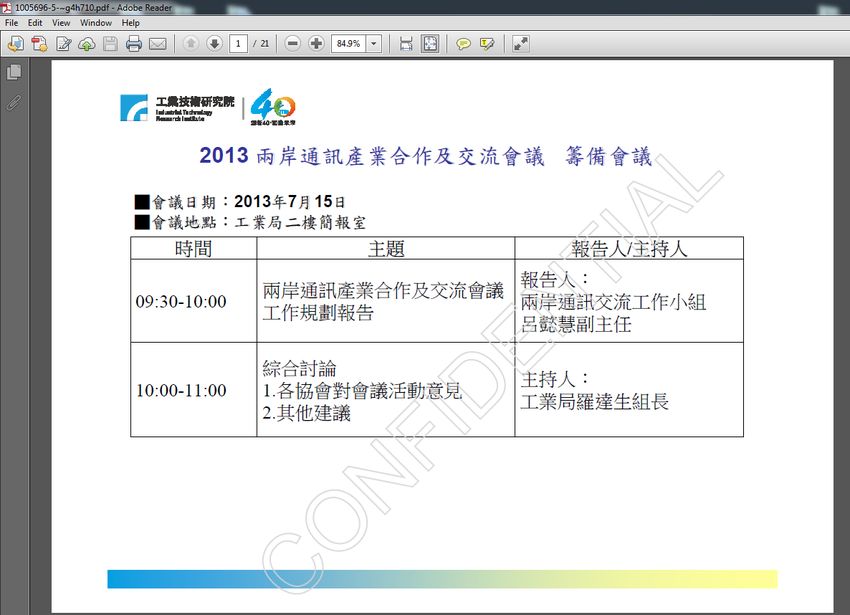
~g4h710.pdf: the Industrial Technology Research Institute (Taiwan), 2013 Cross Strait Communication
Industry Cooperation and Exchange Meeting (2013-07-15) (Traditional Chinese)
5ef508d0ca7759ecf602192521fff287
Compilation Date: 2013-08-01 00:47:08
C&C: 200.42.69.140 (AR)
Filename: N/A
Dropped Files: ~t4hhk0.pdf (6b7cbcabd963ee4823dd2cd9daa5fcc7), ka4281x3.log, kb71271.log, JavaSvc.exe
(ee8ba3bef6a607af79405e75fb0f0d6f)
~t4hhk0.pdf: Cross Straits Strategic Emerging Industry Cooperation and Development Forum (2013-08-14)
(Traditional Chinese)
© Copyright 2013 Arbor Networks, Inc. All rights reserved. 19Arbor Security Report: ASERT Threat Intelligence Brief 2014-07
2014
ff5a7a610746ab5492cc6ab284138852
Compilation Date: 2014-03-04 00:19:59
C&C: 98.188.111.244 (US)
ͧ
Filename: WTO^XPiii20140303 _slx.scr
Dropped Files: ~t3fcj1.doc (361a6752766c154c6e31a4d9cc3a3fdc), kb71271.log, ka4281x3.log, JavaSvc.exe
(82d4850a02375a7447d2d0381b642a72)
~t3fcj1.doc
1ce47f76fca26b94b0b1d74610a734a4
Compilation Date: 2014-03-12 01:38:44
C&C: 133.87.242.63 (JP)
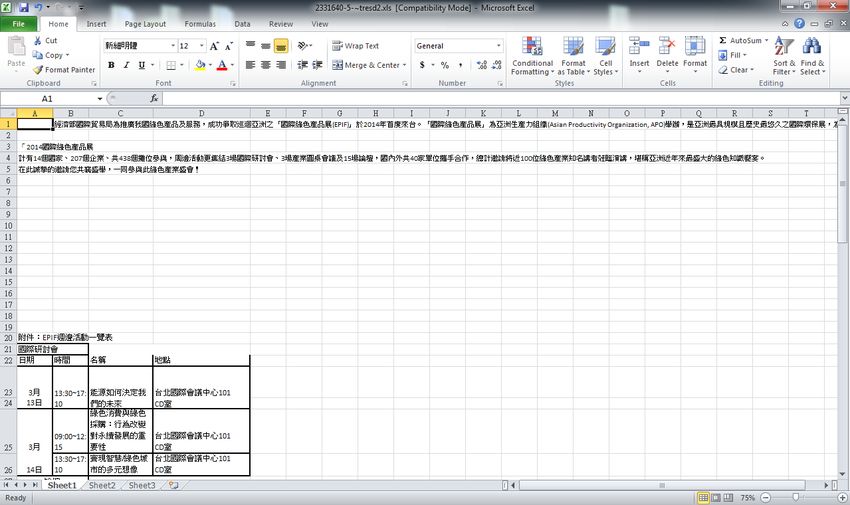
Filename: APO EPIF 邀請函 rcs.xls
Dropped Files: ~tresd2.xls (2e073d35934bb3920fe9907ccb7bc5f8), ka4281x3.log, kb71271.log, wscnsvr.exe
(deeec10be746ecf9bf46a30bf58bc784)
20 Proprietary and Confidential Information of Arbor Networks, Inc.Arbor Security Report: ASERT Threat Intelligence Brief 2014-07
~tresd2.xls: International Green Fair (EPIF), held in Taiwan March 13-16, 2014 (Traditional Chinese)
4c703a8cfeded7f889872a86fb7c70cf
Compilation Date: 2014-03-24 00:53:57
C&C: 133.87.242.63 (JP)
Filename: 國發會 1030324 第 1 次委員會重要議題通報 finalrcs.xls
Archive: .rar (9b42968e9a7646feb7db318713271718)
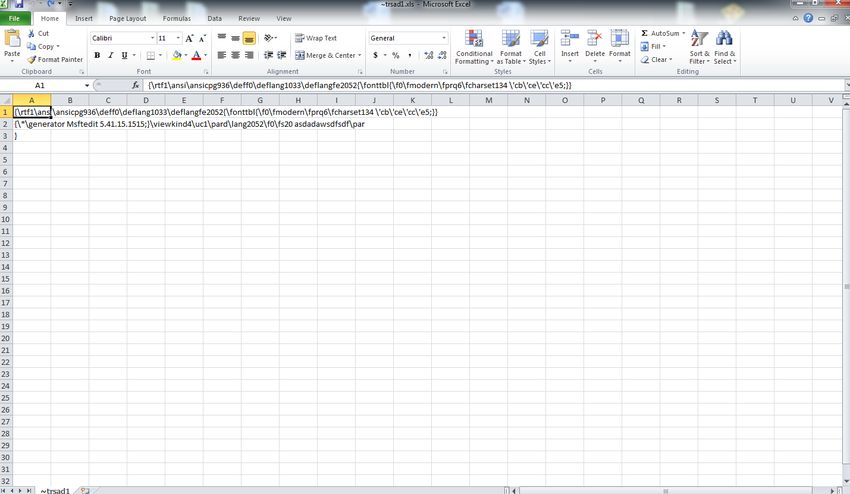
Dropped Files: ~t3fcj1.xls (18dc518810892d89430a1efe2c71797e), ka4a8213.log, kb71271.log, serverupdate.exe
(fed7ce0d20e78b5814475d8f9d062c80)
~t3fcj1.xls: Filename (Traditional Chinese) pertains to a Taiwan National Development Council meeting,
document is unreadable
© Copyright 2013 Arbor Networks, Inc. All rights reserved. 21Arbor Security Report: ASERT Threat Intelligence Brief 2014-07
beb16ac99642f5c9382686fd8ee73e00
Compilation Date: 2014-03-31 07:34:00
C&C: 143.89.47.132 (HK)
Filename: 10342 委會-審查金融法規修正草案報告 rcs.xls
Dropped Files: ~tkfad1.xls (eef5f9b46676b31a791216b42360c8bb), ka4a8213.log, kb71271.log, Googleupdate.exe
(e7d960060d602deb53c7d49d2002c4a4)
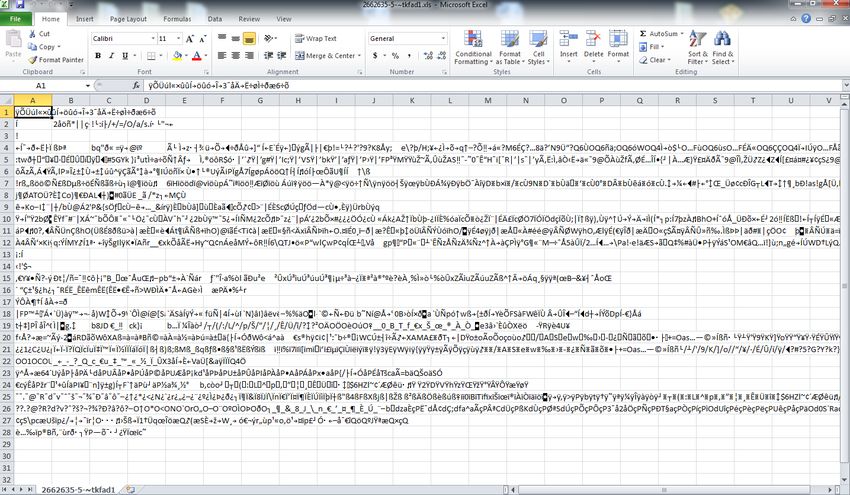
~tkfad1.xls: Filename (Traditional Chinese) pertains to April 2 meeting of unnamed Commission about
financial regulation amendments. Document format is unreadable
5340fcfb3d2fa263c280e9659d13ba93
Compilation Date: 2014-04-23 01:23:41
C&C: 196.1.99.15 (SN), wwap[.]publiclol[.]com
Filename: 報價單 Finarcs.xls
Dropped Files: ~tasyd3.xls (c5118ba47b7aa12d6524f648f1623cc1), ka4a8213.log, kb71271.log, winlogdate.exe
(ba4f88fe44d02a299dbeab18c37f74f3)
~tasyd3.xls: Filename “price list” (Traditional Chinese). Document format is unreadable.
22 Proprietary and Confidential Information of Arbor Networks, Inc.Arbor Security Report: ASERT Threat Intelligence Brief 2014-07
a6b4b679a51627ce279d5107c20dd078
Compilation Date: 2014-04-29 03:44:19
C&C: 59.0.249.11 (KR)
Filename: spoolv.exe
Dropped Files: N/A (this sample is a dropped backdoor)
d444be30d2773b23de38ead1f2c6d117
Compilation Date: 2014-05-14 13:34:46
C&C: 198.209.212.82 (US)
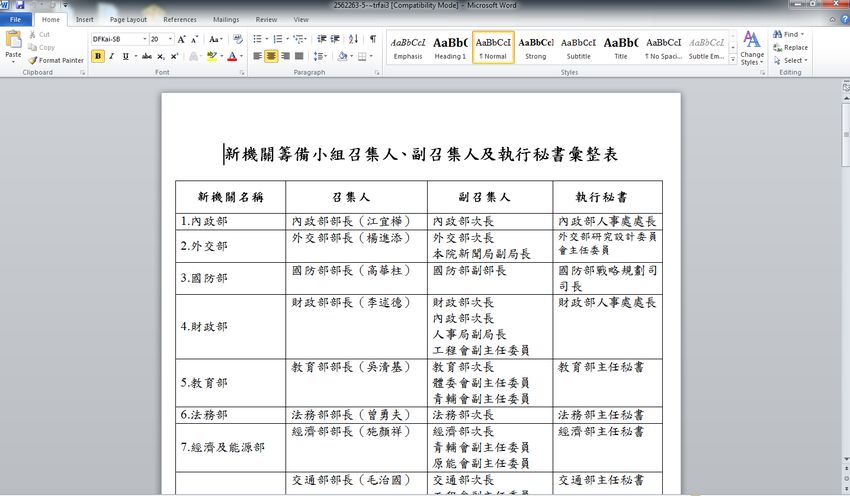
Filename: 1030522 新機關籌備小組清單 rcs.DOC
Archive: 1030522 新機關籌備小組清單.7z (75193fc10145931ec0788d7c88fc8832)
Dropped Files: ~trfai3.doc (196ae8d6a5d19737ae6975d047ab1d59), ka4a8213.log, kb71271.log, sysupdate.exe
(86ef188537f5e4637df24336c9b21cb0)
~trfai3.doc: List of Convener, Deputy Convener, and Executive Secretary names for various government
departments (Traditional Chinese)
b3830791b0a397bea2ad943d151f856b
Compilation Date: 2014-05-14 08:16:41
C&C: 198.209.212.82 (US)
Filename: 招標規範 Finarcs.doc
Archive: 招標規範.rar (8629b95f9e0898793e0881a8f79ee0cf)
Dropped Files: ~taste3.doc (aeaf1e78c2082644b122bf32803acb1f), ka4a8213.log, kb71271.log, spoolvs.exe
(5eba8ced8656da865f91d5fc87e8dc74)
© Copyright 2013 Arbor Networks, Inc. All rights reserved. 23Arbor Security Report: ASERT Threat Intelligence Brief 2014-07
~taste3.doc: Sun Yat-Sen University (Taiwan) purchase list, items include Cisco3045E/K9 or equivalent
(Traditional Chinese)
List of Identified Etumbot MD5s
ca838b98ca0f516858a8a523dcd1338d ac22aa007081caeb8970aefba7eddfcf
986937eb4052562cdd3960dd8fffc481 1498c9761fc819d496171c71604c2128
5ef508d0ca7759ecf602192521fff287 2b3a8734a57604e98e6c996f94776086
d08c54ed480c9cd8b35eab2f278e7a28 9b42968e9a7646feb7db318713271718
82d4850a02375a7447d2d0381b642a72 04908c6853cb5c9d7dccaf15fb5fd3bb
4c703a8cfeded7f889872a86fb7c70cf d444be30d2773b23de38ead1f2c6d117
063b6076c69ce3ba4f116d1ad51da2b5 86ef188537f5e4637df24336c9b21cb0
232b659e28c5e06ad5466c01aec35cb6 e7d960060d602deb53c7d49d2002c4a4
1e8fba674761371cb9e88962dcb851c0 5340fcfb3d2fa263c280e9659d13ba93
7a698acebcf19b55170f05388a2f7fe0 a6b4b679a51627ce279d5107c20dd078
ff5a7a610746ab5492cc6ab284138852 88653dde22f723934ea9806e76a1f546
cd33c5467d425f662f57672531701d89 b3830791b0a397bea2ad943d151f856b
1ce47f76fca26b94b0b1d74610a734a4 beb16ac99642f5c9382686fd8ee73e00
24 Proprietary and Confidential Information of Arbor Networks, Inc.Arbor Security Report: ASERT Threat Intelligence Brief 2014-07 References [1] http://www.crowdstrike.com/blog/whois-numbered-panda/ [2] http://www.trendmicro.com/cloud-content/us/pdfs/security-intelligence/white-papers/wp_ixeshe.pdf [3] http://www.symantec.com/security_response/writeup.jsp?docid=2013-080921-5219-99&tabid=2 [4] https://blog.commtouch.com/cafe/malware/exe-read-backwards-spells-malware/ [5] http://threatpost.com/sirefef-malware-found-using-unicode-right-to-left-override-technique/102033 [6] http://blog.malwarebytes.org/online-security/2014/01/the-rtlo-method/ [7] http://www.fireeye.com/blog/technical/2013/08/survival-of-the-fittest-new-york-times-attackers-evolve- quickly.html [8] https://github.com/arbor/reversing/blob/master/find_byte_strings.py [9] http://www.arbornetworks.com/asert/2013/07/asert-mindshare-finding-byte-strings-using-idapython/ [10] https://www.symantec.com/security_response/writeup.jsp?docid=2014-011500-2419-99&tabid=2 [11] http://read.pudn.com/downloads199/sourcecode/windows/935255/htran.cpp__.htm About ASERT The Arbor Security Engineering & Response Team (ASERT) at Arbor Networks delivers world-class network security research and analysis for the benefit of today's enterprise and network operators. ASERT engineers and researchers are part of an elite group of institutions that are referred to as “super remediators,” and represent the best in information security. This is a reflection of having both visibility and remediation capabilities at a majority of service provider networks globally. ASERT shares operationally viable intelligence with hundreds of international Computer Emergency Response Teams (CERTs) and with thousands of network operators via intelligence briefs and security content feeds. ASERT also operates the world¹s largest distributed honeynet, actively monitoring Internet threats around the clock and around the globe via ATLAS®, Arbor's global network of sensors: http://atlas.arbor.net. This mission and the associated resources that Arbor Networks brings to bear to the problem of global Internet security is an impetus for innovation and research. To view the latest research, news, and trends from Arbor, ASERT and the information security community at large, visit our Threat Portal at http://www.arbornetworks.com/threats/. © Copyright 2013 Arbor Networks, Inc. All rights reserved. 25
You can also read


