ASH REPLACEMENTS FOR URBAN AND WOODLAND PLANTINGS - Bulletin 924 - Emerald Ash Borer
←
→
Page content transcription
If your browser does not render page correctly, please read the page content below
Bulletin 924

ASH REPLACEMENTS
   FOR URBAN AND
 WOODLAND PLANTINGS

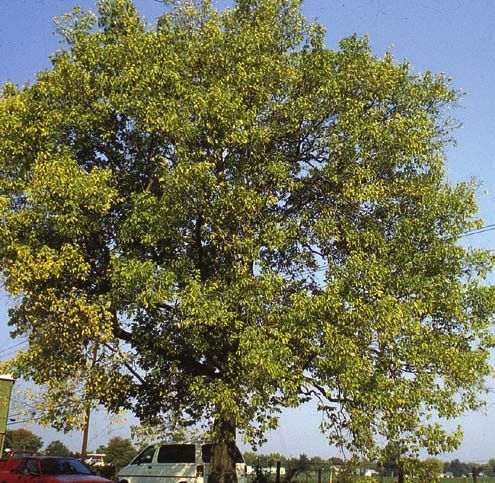
White Ash Tree

White Ash Leaf   White Ash Bark
ASH REPLACEMENTS
                                  FOR URBAN AND
                               WOODLAND PLANTINGS
    Authors
    T. Davis Sydnor
    Professor, Urban Forestry
    School of Natural Resources
    The Ohio State University
    2021 Coffey Road
    Columbus, OH 43210

    Kathy Smith
    Extension Associate
    School of Natural Resources
    The Ohio State University
    2021 Coffey Road
    Columbus, OH 43210

    Randall Heiligmann
    Ohio State University Extension State Forestry Specialist
    School of Natural Resources
    The Ohio State University
    2021 Coffey Road
    Columbus, OH 43210

           For-sale publication

    All photos property of The Ohio State University except where noted: VPI-Virginia
    Polytechnical Institute Department of Forestry, Paul Wray, Iowa State University,
    www.forestryimages.org, Sally S. Weeks and George R. Parker, Trees of Indiana, CD,
    Purdue University. Appreciation is expressed to the United States Department of Agriculture
    Forest Service and the Renewable Resources Extension Act for assistance provided.

    Additional copies of this handbook can be purchased from Media Distribution,
    Communications and Technology, The Ohio State University, 385 Kottman Hall, 2021 Coffey
    Road, Columbus, OH 43210-1044. Phone: 614-292-1607. Fax: 614-292-1248.
    E-mail: pubs@ag.osu.edu. Visa and MasterCard accepted.
    Copyright © 2005, Ohio State University Extension

    OSU Extension embraces human diversity and is committed to ensuring that all educational programs
    conducted by Ohio State University Extension are available to clientele on a nondiscriminatory basis
    without regard to race, color, age, gender identity or expression, disability, religion, sexual orientation,
    national origin, or veteran status.

    Keith L. Smith, Associate Vice President for Agricultural Administration and Director, Ohio State
    University Extension
    TDD No. 800-589-8292 (Ohio only) or 614-292-1868

    7/05—3.5M—215625

2
The Emerald Ash Borer Threat
Emerald Ash Borer (EAB) is a non-native insect that is currently
attacking ash trees in Michigan, Ohio, and Indiana. First identified in
southeastern Michigan in 2002, emerald ash borer has already killed
more than 10 million ash trees in the cities and forests of that state.
It has now spread into northwestern Ohio and northeastern Indiana.
Unless some means is found to eradicate it, emerald ash borer has the
potential to kill literally all of the ash in this part of the country.

Emerald ash borer is a selective pest; it attacks only ash trees, members
of the genus Fraxinus. However, it attacks all of our native ashes —
black, blue, green, pumpkin, and white.1 To learn more about emerald
ash borer (including how to identify the insect and its damage), to
learn to identify ash trees, or to obtain a diagnostic check list to help
determine if your trees or woodland are infested with emerald ash
borer, go to Ohio State University Extension’s Emerald Ash Borer web
site at: http://ashalert.osu.edu.

Ashes are important tree species in the natural forests of Ohio and
have been planted extensively throughout the state for reforestation.
Over the state as a whole, ash species occupy about 12 percent of the
total forest land,2 with stands varying from those containing no ash
to stands composed entirely of ash. More than three million ash trees,
both native and exotic species, also make up a significant portion of
Ohio’s urban forests, including street and landscape plantings.

Because of the potentially devastating impact emerald ash borer may
have, rural and urban Ohio landowners are becoming increasingly
concerned about the risk it poses to their ash trees and woodlands,
and what they can do to address that risk. This publication identifies
tree species that can be used to replace existing ash, when appropriate,
or used in future plantings if ash species are not available or are
inappropriate for planting. Recommendations for developing
management strategies for existing woodlands or reforestation

                                                                            3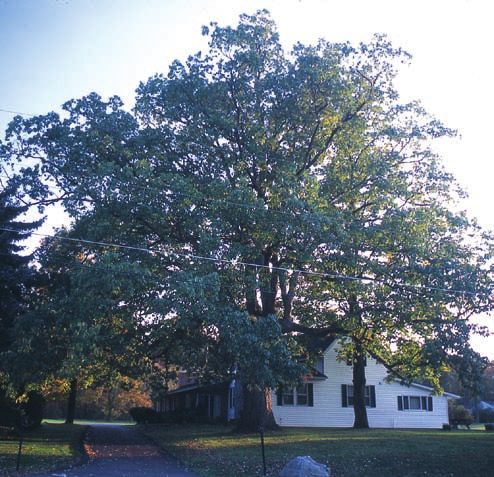
plantings are found in another publication.3
                     Selecting the Tree Species to Plant

                     The first key to a successful tree planting is to select a species that
                     will achieve the objectives of the planting and that will grow well
                     on the site. The first question that needs to be answered is: What is
                     the purpose of this planting? Trees are obviously planted for a wide
                     variety of purposes including reforestation, erosion control, land
                     reclamation, wildlife habitat enhancement, aesthetics (including
                     shape, fall color, bark features, fruit characteristics, and more), shade,
                     visual or sound barriers, and other reasons. Because tree species vary
                     in characteristics, such as size, shape, leaf character, growth rate, and
                     wood value, some tree species are better suited for specific purposes
                     than others.

                     The second question that must be answered is: Of the tree species
                     that will achieve the purposes of the planting, which will grow well
                     on the planting site? Planting site characteristics that can affect tree
                     growth vary widely in Ohio. These characteristics include soil pH,
                     soil drainage, soil texture (sandy to clayey), soil compaction, available
                     sunlight, and more. Tree species differ markedly in their abilities to
                     grow in these varying site conditions. When selecting the species
                     to plant, it is imperative that species tolerate the characteristics and
                     conditions of the planting site.

                     In developing this guide for selecting tree species to use to replace
                     ash, it was assumed that, if not for emerald ash borer, one or more
                     of the ash species would be suitable for the planting. Tree species
                     included in this guide, therefore, are generally of the same size as
                     ash and grow well on sites suitable for one or more of the native ash
                     species. You will not, for example, find tree species in this guide that
                     grow to a maximum height of 25 feet and which would be suitable
                     for planting under utility power lines, as ash would not be an
                     appropriate tree for such a planting.

                     Characteristics of Ohio’s Native Ashes

                     The native habitats and site tolerances of Ohio’s native ash species
                     are not identical, and an understanding of those characteristics can
                     be very helpful in selecting replacement species. Four ash species are
                     fairly common in Ohio; one is rare. White ash (Fraxinus americana) and
                     green ash (F. pennsylvanica) are found throughout Ohio, blue ash
                     (F. quadrangulata) primarily in western Ohio, and black ash
                     (F. nigra) throughout much of northern and western Ohio, but
                     rare in the southeastern counties. The fifth species, pumpkin ash
    Weeks & Parker
                     (F. profunda), is rare in Ohio, with a number of trees having been
                     found in western Ohio.4
4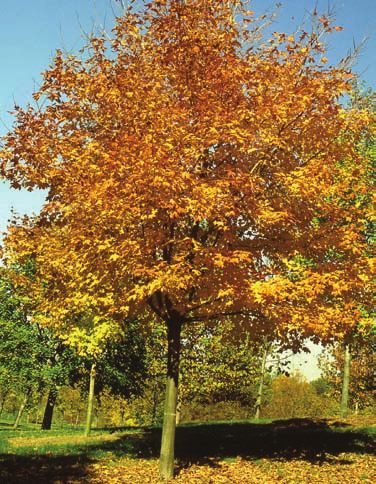
White ash is the most site-demanding ash species native to Ohio.
It requires moist, well-drained soils (mesic environments) to
thrive, and is the most drought sensitive of the native ashes. It is
a common pioneer invader of old fields but will establish under a
forest canopy, although it does not thrive in shaded conditions as
it matures. For this reason it is classified as intermediate in shade
tolerance when young, but moderately intolerant when older. In
a woodland interior, it is commonly displaced over time by more
shade-tolerant species (such as sugar maple).

White ash’s growth rate is rapid when young but slows with age,
with mature trees commonly reaching 70 to 80 feet in height. It is
the tallest of the native ashes. Growth habit is an upright oval when
small, becoming broader spreading with age, and retaining a more
regular outline than green or black ash. White ash fruit (samaras)
and foliage have some value as wildlife food. Although the wood-
using industry doesn’t normally differentiate among the ashes,
white ash, along with blue ash, commonly produce logs with the
highest timber value.

Two naturally occurring varieties of white ash are often recognized,
white ash and Biltmore ash. A number of named cultivars are
produced by the nursery industry and are generally budded on
green ash seedlings. Named cultivars are generally selected for
appearance and/or fall color. White ash’s value as a street tree,
however, has been limited by its sensitivity to drought.

Green ash is found most commonly along streams, at the edge
of swamps, and in woodlands growing on poorly drained soils.
However, green ash tolerates a wide variety of site conditions, and
for that reason it has been widely planted in both urban and rural
environments. Its tolerances of acid and alkaline soils have also
allowed it to be used extensively in stripmine reclamation. In Ohio,
on a comparable site, green ash would be somewhat less tolerant of
shade than white ash.

Green ash’s growth rate is rapid when young and slows with age,
resulting in a tree 60- to 80-feet tall with a broad, irregular outline.
Growth habit is an upright oval as a young plant, becoming
broader than tall at maturity. Female trees can produce large
amounts of fruit (samaras). This fruit along with the foliage has
some wildlife value. Green ash commonly produces logs of lower
quality than white or blue ash.

                                                                           5
Two naturally occurring varieties of green ash are recognized by
                     some taxonomists, green ash and red ash. A number of green ash
                     cultivars are available in the nursery industry and were generally
                     selected for appearance as young plants and lack of fruiting.

                     The rarely seen pumpkin ash is very similar to green ash in
                     appearance and habitat. It is distinguished from green ash by having
                     much larger fruit and dense hair on the twigs and lower leaf surface.
                     Some taxonomists argue that pumpkin ash is not a separate species,
                     but a variant of green ash. However, it is so uncommon in Ohio that it
                     is only of very limited local interest.

                     Black ash is most commonly found growing on wetter sites (hydric
                     environments), along streams, in woodlands on poorly drained soils,
                     in bogs, and in areas that are seasonally flooded. Black ash does not
                     establish and grow well in the shade and is considered less shade
                     tolerant than green ash.

                     Growth is slower than other ashes primarily due to the poor soil
                     drainage conditions that characterize its most common natural sites.
                     It commonly achieves a height of no more than 40 to 70 feet. Growth
                     habit is often irregular, making it less useful for timber and aesthetics.

                     Though it commonly has low-quality wood for timber purposes,
                     its wood is often split, beaten, and separated along annual rings for
                     use in making baskets. The fruit (samaras) and foliage have some
                     wildlife value. Only one cultivar of black ash has been selected by the
    Weeks & Parker
                     nursery industry, and it is rarely seen in commerce. Black ash does
                     not commonly thrive in most urban environments, particularly those
                     that are hot and dry.

                     Blue ash is more adapted to drier sites (more xeric) than other native
                     Ohio ash, often being found on upland ridges, and is particularly
                     well adapted to alkaline or chalky soils. On a comparable site, blue
                     ash would exhibit shade tolerance similar to white ash.

                     Blue ash exhibits a rapid growth rate when young that slows with
                     age, resulting in a tree similar in height to white ash (70 to 80 feet).
                     Growth habit is upright oval becoming rounded with age.

                     Blue ash does not fruit as readily as green ash but its fruit (samaras)
                     and foliage have some wildlife value. Among the ashes, blue ash,
                     along with white ash, commonly produce logs with the highest
                     timber value.

6
Although more drought resistant than white ash, blue ash has not
been popular in the nursery industry as it has poorer fall color than
either green or white ash. One cultivar has been selected for use in
the Great Plains because of its enhanced drought tolerance but is
rarely seen in the industry today.

Planting Situations

As the previous discussion suggests, ash trees play a vital role in
our rural and urban forests, and their loss will have a profound
impact. In many situations, planting alternative species is one
method to mitigate that impact. The remainder of this bulletin
contains recommendations for tree species that can be used
to replace ash species in urban and woodland plantings. The
recommendations include information on the site requirements
and tolerances of the species, ornamental features, wildlife
and woodland value, flood tolerance, tolerance to wounding,
commercial availability, and the situations where the species
would be an appropriate replacement for ash. Four situations are
recognized:

   • Riparian or Buffer Plantings — Areas adjacent to streams
     and other bodies of water where tolerance of wet soil
     conditions for at least part of the year and/or flooding are
     important. Green and black ash would be the ash commonly
     found on these sites. Species selected for planting on
     these sites should be tolerant of wet soils and/or periodic
     flooding. Riparian areas are commonly natural areas in
     Ohio. It is, therefore, recommended that species selected for
     planting in these areas be species native to Ohio. Tree species
     that provide wildlife values are desirable in these areas.

   • Woodland Reforestation — Depending on the site, white
     and green ash have been the ash species commonly used for
     reforestation plantings. Green ash, in particular, has been
     used extensively because of its tolerance of a wide range
     of site conditions. Replacements for ash in these plantings
     should generally be large trees, at least 50 feet at maturity,
     be native species, have wildlife value, and be well suited to
     existing site conditions. Reforestation plantings are typically
     relatively large plantings, often several acres, so planting
     stock of the desired species needs to be available in bare-root
     stock in order for the planting to be economically feasible.

                                                                        7
• Yard Environment — Both green and white ash have been
         used extensively in residential landscape plantings. To fulfill
         the same function as these ash species, replacements should
         be relatively large trees. The desirability of the tree providing
         wildlife value may depend on where in the yard the tree is to
         be planted, and the specific characteristic. Tree species that
         produce numerous large seeds, such as black walnut, may be
         inappropriate for certain plantings.

       • Tree Lawn (or Sidewalk Cut) — Green ash has commonly
         been planted in tree lawns, the area located between the
         street and the sidewalk. Trees selected to replace ash in this
         situation should be adapted to growing in relatively severe
         environmental conditions often characterized by limited soil
         moisture, disturbed and/or compacted soils, high levels of air
         pollution from automobiles, salt (winter street applications),
         and limited or restricted overhead room due to the presence of
         utility lines.

    Commonly, more than one species will satisfy the requirements for a
    specific planting. To identify the specific species or group of species
    that should be selected, landowners must carefully evaluate the
    individual tree characteristics (size, shape, leaf character, fruit or seed
    type, fall color, flower character, and more) and determine which
    species or group of species best matches the objectives of the planting.
    Table 1 provides a quick reference for identifying species suitable for
    each of the four planting situations, and serves as a quick reference
    for locating species by scientific name. Table 1 is followed by detailed
    information on the 35 species, arranged alphabetically by common
    name.

8
Table 1. Appropriateness of Recommended Ash Replacement Species for Plantings Along
Stream Edges (Riparian Zones), in Woodlands, as an Ornamental in an Open Lawn Area, or
in a Tree Lawn (Sidewalk Cut). The page numbers in the last column indicate the location
of information for that species.
Scientific Name                  Common Name                Stream   Wood-   Open   Tree    Page
                                                            Edge    land    Lawn   Lawn   Number
Acer nigrum                     Black Maple                  X        X      X             24-25
Acer rubrum                     Red Maple                    X        X      X             50-51
Acer saccharinum                Silver Maple                 X        X      X      X      62-63
Acer saccharum                  Sugar Maple                           X      X             64-65
Acer x freemanii                Freeman Maple                X        X      X      X      40-41
Aesculus octandra               Yellow Buckeye                        X      X             80-81
Betula nigra                    River Birch                  X        X      X             54-55
Carya cordiformis               Bitternut Hickory            X        X      X             20-21
Carya ovata                     Shagbark Hickory                      X      X             58-59
Catalpa speciosa                Northern Catalpa                      X      X      X      44-45
Celtis occidentalis             Common Hackberry             X        X      X      X      34-35
Fagus grandifolia               American Beech                        X      X              12-13
Gleditsia triacanthos inermis   Thornless Honeylocust        X        X      X      X      72-73
Gymnocladus dioica              Kentucky Coffeetree                   X      X      X      42-43
Juglans nigra                   Black Walnut                          X      X             26-27
Liquidambar styraciflua          Sweetgum                     X        X      X      X      68-69
Liriodendron tulipifera         Tuliptree or Yellow-                  X      X             74-75
                                Poplar
Maclura pomifera                Osage-Orange                 X        X      X      X      46-47
Magnolia acuminata              Cucumbertree or                       X      X             36-37
                                Cucumber Magnolia
Nyssa sylvatica                 Blackgum or Black Tupelo              X      X             28-29
Platanus occidentalis           Sycamore                     X        X      X      X      70-71
Populus deltoides               Eastern Cottonwood           X        X      X      X      38-39
Prunus serotina                 Wild Black Cherry                     X      X             78-79
Quercus alba                    White Oak                             X      X             76-77
Quercus bicolor                 Swamp White Oak              X        X      X      X      66-67
Quercus coccinea                Scarlet Oak                           X      X             56-57
Quercus macrocarpa              Bur Oak                               X      X      X      30-31
Quercus muehlenbergii           Chinkapin Oak                         X      X      X      32-33
Quercus palustris               Pin Oak                      X        X      X      X      48-49
Quercus rubra                   Red Oak                               X      X      X      52-53
Quercus shumardii               Shumard Oak                           X      X      X      60-61
Robinia pseudoacacia            Black Locust                          X      X             22-23
Taxodium distichum              Bald Cypress                 X        X      X      X      16-17
Tilia americana                 Basswood or American         X        X      X             18-19
                                Linden
Ulmus americana                 American Elm                 X        X      X      X      14-15

                                                                                                    9
Characteristics of Tree Species
        to Consider for Ash Replacement in Ohio                 5

               Plants Listed Alphabetically By Common Name

     Definitions of Terms Used in the Following Tables

     A. Flood Tolerance — Tolerance to flooding is a critical
     characteristic for many of these species. The terms and
     definitions listed here are used to express relative flood
     tolerance.

       1. Very flood tolerant — Able to survive deep,
          prolonged flooding for more than one year.

       2. Flood tolerant — Able to survive deep flooding
          for one growing season, with significant mortality
          occurring if flooding is repeated the following year.

       3. Intermediately flood tolerant — Able to survive
          flooding or saturated soils for 30 consecutive days
          during the growing season.

       4. Flood intolerant — Unable to survive more than
          a few days of flooding during the growing season
          without significant mortality.

10
B. Shade Tolerance — The shade tolerance of trees relates
to their ability to establish and grow in the shade of over-
topping vegetation. The terms and definitions listed here
are used to express relative shade tolerance.
1. Very shade tolerant — Trees in this category will
survive with 1 to 3% of full sunlight and can survive
under a closed canopy of densely foliaged trees.
2. Shade tolerant — These trees can survive with 3
to 10% of full light or under a closed canopy with
some gaps. Many forest understory trees are in this
category.
3. Intermediate shade tolerance — Trees in this
category require 10 to 30% of full sun. Woodland
edge trees are often in this category.
4. Shade intolerant — These trees require 30 to 60% of
full sun to develop properly. Pioneer invader trees
are often in this category.
5. Very shade intolerant — Very shade intolerant trees
require at least 60% of full sun to survive and grow.
11American Beech (Fagus grandifolia)
Site Selection • Grows well in soil textures from sandy to clay loam.
and • Tolerant of acid to neutral soil pH.
General Comments • Less tolerant of droughty conditions than many other species
such as white oak.
• Very shade tolerant.
• Excess soil deposited on top of root system is poorly tolerated.
• Growth rate is generally slower than the ashes under
comparable conditions.
Ornamental Features • Dark green foliage is medium textured. Fall color ranges from
sepia to yellow.
• European beech is preferred for ornamental use.
• Rarely used in urban plantings due to purported sensitivity to
urban stress.
• Bark is a smooth dove grey and more attractive than European
beech.
Wildlife Value • Major den or nesting site for wildlife.
• Fruit (beech nuts) is a major source of food for many mammals
and birds.
• Foliage is excellent browse for mammals.
Woodland Value • In woodlands is likely to have defects, making the timber value
low.
• High-quality beech wood is used for furniture and specialty
products such as cutting blocks and can be more valuable than
ash when markets exist.
Flood Tolerance • Will grow on poorly drained soils not subject to prolonged
flooding.
Wound Tolerance • Likely to develop cavities in response to wounding.
Where It Replaces • Woodlands and, to a lesser extent, as a rural landscape
Ash ornamental.
Commercial • Availability is limited. European beech is normally used in
Availability landscape settings.
• Bare-rooted seedlings are not commonly available for
reforestation planting.
12American Beech 13
American Elm (Ulmus americana)
     Site Selection            • Grows well on medium to heavy textured soils (loams to
     and                         clays); somewhat poorer on droughty, coarse-textured
     General Comments            soils.
                               • Tolerant of soil pHs from low 5s to close to 8.0.
                               • Can survive on very infertile soils.
                               • Intermediate in shade tolerance.
                               • Height and diameter growth rate faster than the ashes in
                                 open site.
                               • Quite sensitive to Dutch elm disease.
                               • Disease-resistant clones are available.
                               • Disease-resistant selections must be asexually propagated,
                                 making them expensive for natural reforestation or buffer
                                 plantings.
                               • Few trees are as tolerant of the urban environment as
                                 American elm.
     Ornamental Features       • Medium textured foliage is dark green. Fall color ranges
                                 from sepia to yellow.
                               • Four cultivars have been selected for disease resistance.
                               • Growth habit is distinctly vase shaped.
                               • This tree species has much historical significance in this
                                 country.
     Wildlife Value            • Foliage is good browse for mammals.
     Woodland Value            • Wood valuable where markets exist.
     Flood Tolerance           • Intermediate.
     Wound Tolerance           • Tolerant of wounding. This characteristic was one reason
                                 for its popularity before Dutch elm disease became a
                                 problem.
     Where It Replaces Ash     • Useful in yard areas, tree lawns, riparian zones, and
                                 woodlands.
     Commercial Availability   • Four disease-resistant cultivars — Valley Forge, Princeton,
                                 New Harmony, and Jefferson — are increasingly available
                                 in the nursery trade for landscape-sized trees.
                               • Disease-sensitive seedlings are rarely used for
                                 reforestation.

14
American Elm 15
Bald Cypress (Taxodium distichum)
     Site Selection            •   Will grow in soil textures from coarse sand to heavy clay.
     and                       •   Tolerates acid (4.5) to moderately alkaline (7.5) soil pH.
     General Comments          •   Tolerates excessively wet soils.
                               •   Drought tolerant once established.
                               •   Intolerant of deicing salt.
                               •   Intermediate to intolerant of shade.
                               •   Deciduous conifer.
                               •   May produce “knees” in excessively wet sites.
                               •   Fruit is a one inch in diameter globose cone.
     Ornamental Features       •   Very fine textured, medium green foliage is unusual except
                                   for deciduous conifers.
                               •   Reddish brown to ash gray, thin, fibrous bark, viewed by
                                   many as attractive.
                               •   Conical overall shape.
                               •   Russet fall color.
                               •   Drops all of its needles in the fall.
     Wildlife Value            •   Relatively low, but seeds are eaten by a variety of wildlife.
                               •   May provide nesting sites for birds.
     Woodland Value            •   Specialized market.
     Flood Tolerance           •   Very flood tolerant.
     Wound Tolerance           •   Good.
     Where It Replaces Ash     •   Useful in yard areas, tree lawns, and riparian zones.
     Commercial Availability   •   Available in ornamental nursery trade for landscape-sized
                                   trees.
                               •   Bare-rooted seedlings available for riparian planting.

16
Wray Bald Cypress 17
Basswood or American Linden (Tilia americana)
     Site Selection            • Tolerates soil textures from sandy to clay.
     and                       • Tolerant of strongly acid (~4.5) to somewhat alkaline (7.5+)
     General Comments            soils.
                               • Shade tolerant.
                               • Excess soil deposited on top of the root system is poorly
                                 tolerated.
                               • Adapts better to environmental change than more
                                 commonly planted exotic lindens.
                               • Growth rate is generally equal to or faster than the ashes.
                               • Insect problems are numerous but generally cosmetic.
     Ornamental Features       • Bold textured foliage is commonly lighter green on the
                                 underside. Fall color is poor (yellow to chartreuse).
                               • The European lindens are more commonly planted for
                                 ornamental use but are actually less adaptable.
     Wildlife Value            • A major den or nesting site for wildlife.
                               • Fruit is a major source of food for many mammals and
                                 birds and is more consistently borne than the oaks.
                               • Foliage is excellent browse for many animals.
     Woodland Value            • The flowers may be used in honey production.
                               • High-quality basswood wood is used for specialty products
                                 and can be valuable where markets exist.
                               • Wood has very low density and is highly desired by wood
                                 carvers.
     Flood Tolerance           • Intolerant.
     Wound Tolerance           • This tree is less tolerant of wounding than ashes and is
                                 likely to develop cavities in response to wounding.
     Where It Replaces Ash     • Useful in yard areas and woodlands.
     Commercial Availability   • One cultivar, Redmond, is commonly grown in the nursery
                                 trade and was selected for habit and adaptability.
                               • Seedlings are available for reforestation.

18
Basswood or American Linden 19
Bitternut Hickory (Carya cordiformis)

     Site Selection            • Grows on soil textures from sandy to clay loam.
     and                       • Commonly found in soils with pH from slightly acid (6.3) to
     General Comments            slightly alkaline (7.5).
                               • Often moderately tolerant of shade when young, becoming
                                 intolerant with age.
                               • Grows well on wet or dry sites; tolerant of poor drainage;
                                 more tolerant of drought than ash.
                               • Grows well on relatively infertile sites.
                               • High tolerance for environmental change and often
                                 remains when new homes are built in woodlands.
                               • Fastest-growing hickory native to Ohio.
                               • Growth rate of young trees slower than ashes and most
                                 other hardwoods but similar to beech and sugar maple.
                               • Insect and disease problems are relatively minor.
     Ornamental Features       • Pinnately compound leaves are medium textured and
                                 medium green in color. Fall color ranges from yellow to
                                 gold and is consistently showy.
                               • Growth habit is upright oval when young, becoming
                                 rounded with age when growing in the open.
                               • Fruit can be a litter concern during mast years (every 3 to 5
                                 years).
     Wildlife Value            • Fruit is bitter as the name suggests and thus is not a major
                                 food source for mammals or birds.
                               • Foliage is uncommon browse for mammals such as deer.
                               • Good seed crops occur at 3- to 5-year intervals.
     Woodland Value            • Wood is sold as “hickory” and is used for a variety of
                                 products including handles, trim, cabinets, and flooring.
                               • Hickory is the premier, high heat content, slow-burning
                                 firewood.
     Flood Tolerance           • Intolerant.
     Wound Tolerance           • Tolerant of wounding.
     Where It Replaces Ash     • Useful in yard areas and woodlands.
     Commercial Availability   • Uncommonly found in the nursery trade for landscape-
                                 sized trees.
                               • Seedlings are hard to find for reforestation.

20
Bitternut Hickory 21
Black Locust (Robinia pseudoacacia)
     Site Selection            • Grows reasonably well in all soil textures as long as
     and                         adequate soil moisture is available.
     General Comments          • Tolerates pH range from very acid (~4.5) to very alkaline
                                 (~8.2).
                               • Does not tolerate excessive drought.
                               • Will grow on sites with low fertility.
                               • Very intolerant of shade.
                               • Very tolerant of rapid environmental changes such as
                                 deforestation.
                               • Growth rate somewhat slower than ash on good quality
                                 site, better than ash on wet or infertile sites.
                               • Often found as a pioneer invader and is shaded out as
                                 woodlands mature.
                               • Susceptible to black locust borer (potential problem) and
                                 black locust leaf miner (cosmetic concern).
     Ornamental Features       • Pinnately compound leaves are dark green and fine
                                 textured. Fall color is chartreuse and not showy.
                               • Nursery selections are available in Europe.
                               • Flowers are white and quite showy and fragrant.
                               • Growth habit is upright oval becoming irregular with age.
     Wildlife Value            • Excellent for cavity-nesting birds such as downy
                                 woodpecker and common flicker.
                               • Foliage is excellent browse for wildlife.
                               • Flowers are a source of nectar for some birds and many
                                 insects.
     Woodland Value            • Flowers may be used in honey production.
                               • One of the most decay resistant of North American
                                 hardwoods and thus excellent for fence posts and railroad
                                 ties.
                               • Highly favored for land reclamation, because of its high
                                 tolerance for extreme soil pH, its ability to grow on
                                 infertile soils, and its ability to fix nitrogen.
     Flood Tolerance           • Intolerant.
     Wound Tolerance           • Very tolerant of wounding.
                               • Wood is quite resistant to decay.
     Where It Replaces Ash     • Useful in yard areas and woodlands.
     Commercial Availability   • Named cultivars are available in the nursery trade for
                                 unusual habits and foliage color.
                               • Seedlings are readily available for site restoration and
                                 reforestation.
22
Wray Black Locust 23
Black Maple (Acer nigrum)
     Site Selection              • Grows on variety of soil textures from sandy to clayey, as
     and                           long as soil is not excessively wet.
     General Comments            • Acid soils are preferred but the tree will tolerate neutral
                                   soils as well. Not recommended for alkaline soils.
                                 • More tolerant of drought than sugar maple, but will not
                                   thrive in droughty conditions.
                                 • Excess soil on top of the root system is poorly tolerated.
                                 • Very shade tolerant.
                                 • Considered by some to be a variety or ecotype of sugar
                                   maple.
                                 • Adapted as a climax forest tree, but seems to adapt to
                                   more stressful conditions than sugar maple.
                                 • Grows slowly when young and faster later; slower growing
                                   than the ashes.
     Ornamental Features         • Deep green foliage often appears wilted and is bold
                                   textured. Fall color is yellow.
                                 • Growth habit is upright oval, spreading with age.
                                 • Named cultivars are available in the nursery trade and
                                   have been selected for habit, environmental tolerance, and
                                   faster growth rate.
     Wildlife Value              • Foliage is excellent browse for mammals.
                                 • Samaras are valued for food.
     Woodland Value              • Excellent source of sap for maple syrup.
                                 • The wood is sold as hard maple and valued for furniture
                                   and cabinets; thus it is more valuable than ash.
     Flood Tolerance             • Intolerant.
     Wound Tolerance             • More tolerant of wounding than red or silver maple.
     Where It Replaces Ash       • Useful in yard areas and woodlands and better adapted to
                                   urban sites than sugar maple.
     Commercial Availability     • Several named cultivars are available in the nursery trade
                                   for landscape-sized trees.
                                 • Seedlings are commonly available for reforestation.

24
VPI VPI Black Maple 25
Black Walnut (Juglans nigra)
     Site Selection            • Thrives in deep, moist, medium-textured (loamy), fertile
     and                         soils with good drainage. Will grow well on coarser-
     General Comments            textured soils with adequate moisture or finer-textured
                                 soils with adequate drainage.
                               • Tolerates soil pH from low 5s to high 7s.
                               • Does not tolerate poor soil drainage.
                               • This tree is intolerant of shade.
                               • On suitable site growth rate is much faster than the ashes.
                               • In the northern limits of its natural range, including Ohio,
                                 Nectria canker can be a serious problem (especially in
                                 plantations). Only northern seed sources should be planted,
                                 and plantings should be monitored and infected trees
                                 destroyed immediately.
                               • Produces a compound, juglone, which acts to inhibit or kill
                                 some but not all competing vegetation.
     Ornamental Features       • Pinnately compound leaves are yellow-green and fine
                                 textured. Fall color is commonly a bland yellow, and trees
                                 are often defoliated early by a variety of leaf spot diseases.
                               • Growth habit is upright oval becoming rounded with age.
                               • Fruit is a litter concern in urban areas.
                               • Typically walnut is the last tree to leaf out in the spring
                                 and the first to lose its leaves in the fall.
     Wildlife Value            • Fruit is excellent food source for mammals.
                               • Good seed crops produced twice in 5 years.
     Woodland Value            • One of the most valuable timber species.
                               • Wood is commonly used for veneer, furniture, cabinetry,
                                 and wood trim.
                               • Cultivars have been selected for wood quality and growth
                                 rate but have not been shown to be superior to good seed
                                 sources in Ohio.
                               • Produces a nut which is edible to humans.
     Flood Tolerance           • Intolerant.
     Wound Tolerance           • Tolerant of wounding.
                               • Cold sensitive seedlings are susceptible to Nectria canker.
     Where It Replaces Ash     • Useful in yard areas and woodlands.
     Commercial Availability   • Named cultivars selected for wood quality or growth rate
                                 have limited availability.
                               • Seedlings are readily available for reforestation.

26
Wray Black Walnut 27
Blackgum or Black Tupelo (Nyssa sylvatica)
     Site Selection             • Grows well in soils ranging from sandy to loamy textures.
     and                        • Requires acid soils for best development; grows well in soils
     General Comments             with pH between 4.5 and 6.0.
                                • Requires moderate fertility.
                                • Adapted to periodic flooding.
                                • Classified as shade tolerant.
                                • Growth rate is much slower than the ashes under open
                                  conditions, but tupelo is more tolerant of shaded forest
                                  conditions.
     Ornamental Features        • Shiny deep green foliage is attractive and dark green. Fall
                                  color ranges from scarlet to yellow and is consistently
                                  outstanding.
                                • Bark is a smooth dove grey for many years, becoming
                                  plated with age.
     Wildlife Value             • Fruit is a major source of food for many mammals and
                                  birds.
                                • Foliage and twigs are excellent browse for mammals.
                                • Ranks as one of the more dependable den tree species.
     Woodland Value             • Wood has generally been of low value with limited
                                  markets.
     Flood Tolerance            • Intermediate flood tolerance.
     Wound Tolerance            • Somewhat tolerant of wounding.
     Where It Replaces Ash      • Useful in yard areas and woodland edges in acid soil
                                  regions.
     Commercial Availability    • Seedlings are grown in containers and increasingly
                                  available in the nursery trade for landscape-sized trees.
                                • Availability of seedlings for reforestation has been limited.

28
Blackgum or Black Tupelo 29
Bur Oak (Quercus macrocarpa)
     Site Selection              • Grows on soils with textures from sandy to clayey.
     and                         • Tolerates soil pH from acid (low 4s) to alkaline (high 7s to
     General Comments              low 8s).
                                 • Tolerates periodic flooding of short duration. Will not
                                   tolerate permanent flooded conditions.
                                 • Intermediate in shade tolerance.
                                 • Growth rate of bur oak is similar or superior to ash species
                                   on comparable sites.
                                 • This tree is well adapted to the urban environment.
     Ornamental Features         • Unique leaf shape is bold textured. Foliage is deep green in
                                   color.
                                 • Fall color ranges from orangey to russet.
                                 • Growth habit is generally upright oval when young,
                                   becoming broad spreading with age.
                                 • This oak has the largest fruit (nearly the size of a golf ball)
                                   and can be a litter problem in yard situations.
     Wildlife Value              • Trees fruit every several years and are then major sources
                                   of food for wildlife.
                                 • Major den and nesting sites.
                                 • Trees bear seed up to an age of 400 years.
                                 • Good seed crops every 2 to 3 years.
     Woodland Value              • Bur oak is one of the more valuable timber species in Ohio
                                   and is sold as white oak.
     Flood Tolerance             • Intermediately flood tolerant.
     Wound Tolerance             • More tolerant of wounding than ashes.
     Where It Replaces Ash       • Useful in yard areas, tree lawns, riparian zones, and
                                   woodlands.
     Commercial Availability     • Cultivars are not available, but seedlings are available in
                                   the nursery trade for landscape-sized trees.
                                 • Seedlings are available for reforestation.

30
Wray
Wray
Bur Oak 31Chinkapin Oak (Quercus muehlenbergii)
Site Selection • Best suited to medium-textured soils.
and • An alkaline soil indicator; grows best in soils with pH from
General Comments 6.5 to 8.0.
• Highly tolerant of drought.
• Shade intolerant.
• Growth rate of young trees relatively much slower than
the ashes in open situations.
• More tolerant of environmental change than red oak and
often remains when new homes are built in woodlands.
• Insect and disease problems are relatively minor except
when gypsy moth defoliation is combined with other
problems such as drought.
Ornamental Features • Foliage is finer textured than most oaks and is deep
green in color. Fall color ranges from sepia to russet, not
consistently showy.
• Growth habit is upright oval when young, becoming
rounded with age.
• Produces a small acorn which is less of a litter concern
than most other oak species.
Wildlife Value • Fruit is heavily utilized by wildlife.
Woodland Value • Wood is sold as white oak.
Flood Tolerance • Intolerant.
Wound Tolerance • Tolerant of wounding.
Where It Replaces Ash • Useful in yard areas, tree lawns, and woodlands.
Commercial Availability • Seedlings are available in the nursery trade for landscape-
sized trees, depending on seed availability.
• Seedlings are rarely available for reforestation.
32Chinkapin Oak 33
Common Hackberry (Celtis occidentalis)
     Site Selection            •   Adapted to soil textures from sandy to clayey.
     and                       •   Tolerates moderately acid (6.0) to alkaline (7.8) soils.
     General Comments          •   Drought tolerance is very high, better than the ashes.
                               •   Shade tolerance intermediate to tolerant.
                               •   Highly tolerant of urban environment.
                               •   Grows as fast as ash species on comparable sites.
                               •   Insect and disease problems are generally cosmetic.
                               •   A common, well-adaptable urban tree, not because it is
                                   heavily planted but because it survives and reproduces in
                                   the urban environment.
     Ornamental Features       •   Medium green foliage is elm like and medium textured.
                               •   Fall color ranges from yellow to green; not very showy.
                               •   Growth habit is generally upright oval and irregular.
                               •   Some cultivars have been selected for growth habit but are
                                   not common in the nursery trade.
     Wildlife Value            •   Fruit is quite attractive to birds and some mammals.
                               •   Fruit tends to be borne annually and may be available later
                                   in the year.
     Woodland Value            •   Wood is less valuable than ash but can be used for
                                   furniture and millwork.
     Flood Tolerance           •   Intermediate to tolerant.
     Wound Tolerance           •   Quite tolerant of wounding.
                               •   Its wounding tolerance allows this plant to reproduce in
                                   urban situations.
     Where It Replaces Ash     •   Useful in yard areas, tree lawns, riparian zones, and
                                   woodlands.
     Commercial Availability   •   Named cultivars and seedlings are available but not
                                   common in the nursery trade for landscape-sized trees.
                               •   Seedlings sometimes available for reforestation.

34
Common Hackberry 35
Cucumbertree or Cucumber Magnolia (Magnolia acuminata)
     Site Selection            • Grows on soil textures ranging from sandy to silty clay
     and                         loam.
     General Comments          • Tolerant of acid (5.0) to neutral (7.0) soil pH.
                               • Prefers rich soils of bottomland and north to east slopes
                                 that are well drained, moist, and deep.
                               • Intermediate shade tolerance.
                               • Growth rate generally slower than the ash on comparable
                                 sites.
                               • Diseases and insect pests are generally cosmetic.
     Ornamental Features       • Foliage is medium green and bold textured. Yellow fall
                                 foliage color.
                               • Flowers are conspicuous but may not be showy as they are
                                 green or yellow.
                               • The tree outline is pyramidal to upright oval.
     Wildlife Value            • Seeds are of limited value.
                               • Leaves and twigs may serve as browse.
                               • Good seed crops occur every 4 to 5 years.
     Woodland Value            • Wood very similar to yellow-poplar, often sold with yellow
                                 poplar.
                               • Wood is used for pallets, crates, furniture, plywood, and
                                 special products.
                               • This tree was harvested almost to extinction in Ohio and is
                                 still only infrequently seen in natural woodlots.
     Flood Tolerance           • Intolerant.
     Wound Tolerance           • This tree is intolerant of wounding.
                               • Cavities are common.
     Where It Replaces Ash     • Useful in yard areas, tree lawns, riparian zones, and
                                 woodlands.
     Commercial Availability   • Nursery-grown cultivars have showy yellow flowers in
                                 June and are increasingly available in the nursery trade for
                                 landscape-sized trees.
                               • Seedlings are rarely available for reforestation.

36
Cucumbertree or Cucumber Magnolia 37
Eastern Cottonwood (Populus deltoides)
     Site Selection            •   Tolerates all soil textures.
     and                       •   Tolerates pH from moderately acid (5.2) to alkaline (7.5).
     General Comments          •   Moderately tolerant of drought.
                               •   Tolerates poorly drained soils.
                               •   Tolerates infertile soil conditions.
                               •   Very shade intolerant.
                               •   Very fast growth rate.
                               •   Commonly used in pollution remediation efforts.
     Ornamental Features       •   Foliage is deep green and medium textured. Fall color
                                   commonly yellow-green to yellow, not showy.
                               •   Growth habit generally pyramidal when young, becoming
                                   upright oval with age.
                               •   Male selections can be propagated by hardwood cuttings
                                   to eliminate fruiting.
     Wildlife Value            •   Heavy fruiting on female trees is of limited value to
                                   wildlife but a litter concern in urban areas.
                               •   Good den trees for some mammals.
                               •   Young plants are heavily browsed by mammals.
     Woodland Value            •   Relatively low-value timber species, used for pallets, chips,
                                   and pulping.
     Flood Tolerance           •   Tolerant.
     Wound Tolerance           •   Intolerant of wounding.
     Where It Replaces Ash     •   Useful in yard areas, tree lawns, riparian zones, and
                                   woodlands.
     Commercial Availability   •   Numerous named cultivars are available but uncommon in
                                   landscape-sized trees.
                               •   Seedlings or cuttings are available for reforestation.

38
Eastern Cottonwood 39
Freeman Maple (Acer x freemanii)

 Site Selection            •   Tolerates soil textures from sandy to clayey.
 and                       •   Tolerates acid (5.2) to alkaline (7.5) soils.
 General Comments          •   Tolerates urban environment well.
                           •   Shade tolerant on good sites to somewhat shade intolerant
                               on poor sites.
                           •   Growth rate faster than the ashes.
                           •   Open grown trees may develop poor structure.
                           •   Insect and disease problems are generally cosmetic.
                           •   Freeman maple is a naturally occurring cross between red
                               and silver maple that has recently become a commonly
                               planted, well adapted, urban tree.
 Ornamental Features       •   Foliage is medium green with lighter undersides. Texture is
                               medium due to lobing.
                           •   Fall color ranges from yellow to scarlet and varies by
                               cultivar.
                           •   Growth habit is upright to upright oval and varies by
                               cultivar.
                           •   Commercial cultivars have been selected for fall color and/
                               or habit of growth.
 Wildlife Value            •   Foliage and samaras have wildlife value.
 Woodland Value            •   Relatively low-value timber species with wood being sold as
                               soft maple.
 Flood Tolerance           •   Intermediate flood tolerance.
 Wound Tolerance           •   Moderately tolerant of wounding, more so than red maple.
 Where It Replaces Ash     •   Useful in yard areas, tree lawns, and could be used in
                               riparian zones and woodlands.
 Commercial Availability   •   Numerous named cultivars are readily available in the
                               nursery trade for landscape-sized trees.
                           •   Cuttings, not seedlings, could be used for reforestation but
                               at increased cost.

40
Freeman Maple 41
Kentucky Coffeetree (Gymnocladus dioica)
     Site Selection             • Tolerated soil textures range from fine sands to silty clay
     and                          loams.
     General Comments           • Grows well in pH range from 6.5 to 7.5.
                                • Tolerates drought.
                                • Shade intolerant.
                                • Growth rate is moderate and similar to ashes under urban
                                  situations.
                                • Adapts readily to urban situations, including deicing salt.
     Ornamental Features        • Foliage is pinnately compound, dark green, and fine
                                  textured. Fall color ranges from green to yellow, not showy.
                                • Increasingly used in urban plantings.
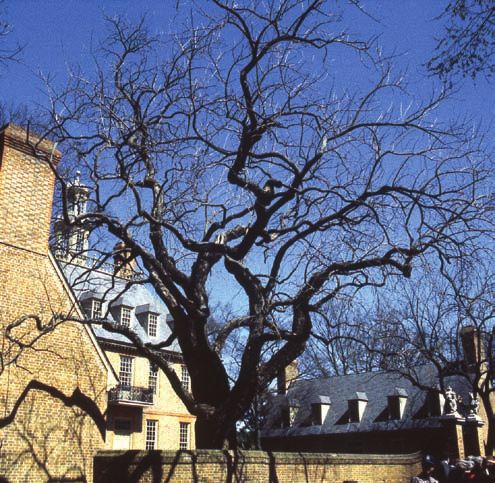
                                • Branch structure is quite gaunt and interesting during the
                                  winter months.
                                • Very young trees are not very attractive while older trees
                                  are quite handsome.
     Wildlife Value             • Fruit and foliage are excellent for mammals.
                                • Fruit is a litter concern in urban areas.
     Woodland Value             • Kentucky coffeetree is so uncommon in its native range,
                                  including Ohio, that a market for the wood has not been
                                  developed.
                                • During the U.S. colonial period, the seeds were roasted and
                                  used as a coffee substitute.
     Flood Tolerance            • Intolerant.
     Wound Tolerance            • Resistant to and tolerant to wounding.
     Where It Replaces Ash      • Useful in yard areas, tree lawns, and woodlands.
     Commercial Availability    • Seedlings are used in the nursery trade for landscape-sized
                                  trees.
                                • Seedlings are uncommon for reforestation.

42
Kentucky Coffeetree 43
Northern Catalpa (Catalpa speciosa)
 Site Selection            •   Grows on fine sandy to silty clay loam textured soils.
 and                       •   Tolerates soil pH from low 6s to high 7s.
 General Comments          •   Growth rate similar to ash.
                           •   Shade intolerant.
                           •   Drought tolerance is very high.
                           •   Insect and disease problems are generally cosmetic.
                           •   A well-adapted urban tree often found in inner-city
                               locations, having survived with minimal care for long
                               periods of time.
                           •   Catalpa worms (catalpa sphinx moth larva) cause cosmetic
                               damage and make excellent fish bait.
 Ornamental Features       •   White flowers have spotted throats, are quite showy, and
                               are borne in foot-high panicles in late May or early June.
                           •   Bold textured foliage is medium green and somewhat
                               tropical looking.
                           •   Fall color ranges from yellow to green, not showy.
                           •   Growth habit is generally upright oval.
 Wildlife Value            •   Wildlife value is limited.
 Woodland Value            •   Wood is durable and decay resistant, making it desirable
                               for fence posts in contact with the soil.
                           •   The value of lumber is generally less than ash.
 Flood Tolerance           •   Intermediate flood tolerance.
 Wound Tolerance           •   Very tolerant of wounding.
 Where It Replaces Ash     •   Useful in yard areas, tree lawns, and woodland edges.
 Commercial Availability   •   Named cultivars and seedlings are available in the nursery
                               trade for landscape-sized trees.
                           •   Seedlings are sometimes available for reforestation.

44
Northern Catalpa 45
Osage-Orange (Maclura pomifera)
 Site Selection            •   Grows on sandy to silty clay loam soils or finer.
 and                       •   Tolerates acid (low 5s) to alkaline (high 7s or low 8s) soils.
 General Comments          •   Extremely drought tolerant.
                           •   Shade intolerant.
                           •   Open-grown trees may develop irregular growth patterns.
                           •   A well-adaptable urban tree that is infrequently planted
                               today.
                           •   Insect and disease problems are generally cosmetic.
                           •   This tree is credited with allowing the settlement of the
                               prairie as the tree was used as a living hedge or fence.
                           •   The thorns are said to have led to the development of
                               barbed wire fences to retain livestock.
 Ornamental Features       •   Medium textured foliage is dark green, glossy, and showy.
                           •   Fall color ranges from yellow to gold and is quite showy.
                           •   Growth habit is generally rounded to spreading and may
                               be irregular.
                           •   Some cultivars have been selected for lack of fruit and
                               thorns and should be considered for urban situations.
 Wildlife Value            •   Fruit is large and looks somewhat like a green orange but
                               has limited wildlife value and is borne only on female trees.
                               Fruit is eaten by deer and squirrels.
                           •   Thorny branches produce excellent nesting and cover sites
                               for birds and other animals.
                           •   Foliage is good forage when quite young.
 Woodland Value            •   Produces the most decay resistant wood (heartwood) of
                               any plant native to the United States and thus is used for
                               posts.
                           •   Osage-orange wood is preferred for bows and billy-clubs
                               because it is dense, quite strong, and rarely breaks.
                           •   Thorns are assets and liabilities.
 Flood Tolerance           •   Intermediately flood tolerant.
 Wound Tolerance           •   Exceptional wound tolerance and decay resistance would
                               be useful in urban and rural situations.
 Where It Replaces Ash     •   Useful in yard areas, tree lawns, riparian zones, and
                               woodland edges.
 Commercial Availability   •   Wichita and White Shield are thornless male cultivars and
                               are now commercially available.
                           •   Seedlings or cuttings can be used for windbreaks.

46
Osage-Orange 47
Pin Oak (Quercus palustris)
     Site Selection              • Grows well in moderately coarse (sandy loam) to fine
     and                           textured (clay) soils.
     General Comments            • Native seed sources of pin oak tolerate a range of soil pHs
                                   from acid (4.5 to 5.0) to somewhat alkaline (7.5), especially in
                                   soils with 3 to 4% organic matter. Non-native seed sources
                                   will not generally tolerate soil pH higher than 6.5.
                                 • Shade intolerant.
                                 • Growth rate is slower than the ashes when young but is
                                   faster as it reaches maturity.
                                 • This tree is urban adapted in Ohio when selected from
                                   local seed sources.
                                 • Insect and disease problems are generally cosmetic except
                                   for gypsy moth and oak wilt but should not limit the
                                   plant’s use at present.
     Ornamental Features         • The bold textured foliage is deep green. Fall color ranges
                                   from russet to scarlet and is often showy.
                                 • Growth habit is generally pyramidal when young,
                                   becoming rounded with age.
                                 • Some young trees retain the dead foliage during the
                                   winter.
                                 • Lower branches sweep downward, making this a good tree
                                   for screening but requiring extra pruning along roadways
                                   and walks.
     Wildlife Value              • This has some of the smallest fruits of the oaks (1/2-inch
                                   diameter).
                                 • Like other oaks, this tree is a major source of food, dens,
                                   and nesting, especially during mast (heavy fruiting) years.
                                 • Important food for mallards and wood ducks as well as
                                   turkeys, woodpeckers, and blue jays.
     Woodland Value              • Pin oak tends to have many defects (knots) in the wood,
                                   but still has some timber value.
     Flood Tolerance             • Tolerant.
     Wound Tolerance             • Pin oak is quite tolerant of wounding.
                                 • Oak frequency can be increased in natural areas by
                                   controlled use of fire.
     Where It Replaces Ash       • This adaptable tree is useful in yard areas, tree lawns,
                                   riparian zones, and woodlands.
     Commercial Availability     • Easily transplanted, seedlings are readily available in the
                                   nursery trade for landscape-sized trees.
                                 • Seedlings are also readily available for reforestation.
                                 • Local seed sources are needed both for urban and natural
48
                                   plantings.
Pin Oak 49
Red Maple (Acer rubrum)
     Site Selection             •   Tolerates soil textures from sandy to clayey.
     and                        •   Performs best on acid soils (pH < 7.0).
     General Comments           •   Poor choice for droughty site.
                                •   Tolerates wet sites well.
                                •   Generally considered shade tolerant.
                                •   Rapid early growth rate slows with age.
                                •   Open-grown trees may develop poor branch structure.
                                •   Insect and disease problems are generally cosmetic.
                                •   Urban trees are often subject to micronutrient deficiencies
                                    due to high soil pH.
     Ornamental Features        •   Medium-textured foliage is dark green above and lighter
                                    on the underside. Fall color ranges from yellow to scarlet.
                                •   Many cultivars have been selected for fall color.
                                •   Habit is generally upright oval with some upright cultivars.
                                •   Adaptable to lawn conditions where wounding is limited;
                                    does not tolerate wounding well.
     Wildlife Value             •   Foliage and samaras have wildlife food value for mammals
                                    but limited value for birds.
     Woodland Value             •   Wood is sold as soft maple.
                                •   Suitable for syrup production with a shorter tapping
                                    season than sugar and black maple.
     Flood Tolerance            •   Tolerant.
     Wound Tolerance            •   Very intolerant of wounding.
                                •   Often removed from natural areas by controlled use of fire.
     Where It Replaces Ash      •   In yard areas, riparian zones, and woodlands.
     Commercial Availability    •   Numerous named cultivars are available in the nursery
                                    trade for landscape-sized trees.
                                •   Seedlings are also readily available for reforestation.

50
VPI Red Maple 51
Red Oak (Quercus rubra)
     Site Selection             • Grows well on loamy to silty clay loam soils, but will grow
     and                          on loamy sands with adequate soil moisture.
     General Comments           • Grows well in soils with strongly acid pH (low 4s) to neutral
                                  (7+).
                                • More drought sensitive than other oaks.
                                • Intermediate shade tolerance.
                                • Less tolerant of environmental change than most oaks, yet
                                  often remains when new homes are built in woodlands.
                                • Insect and disease problems are relatively minor except
                                  when gypsy moth defoliation is combined with other
                                  problems such as drought.
                                • Oak wilt is a concern in Ohio for red oaks.
     Ornamental Features        • Deep green foliage is bold textured and glossy. Fall color
                                  ranges from sepia to red.
                                • Growth habit is upright oval when young, becoming
                                  rounded with age.
                                • Fruit can be a litter concern since this is the largest-seeded
                                  red oak in Ohio.
     Wildlife Value             • Fruit is a major food source for wildlife in mast years but
                                  oak does not fruit consistently.
                                • Acorns are bitter and not as desirable to wildlife as white
                                  oak acorns.
                                • Foliage is excellent browse for mammals.
                                • Seed takes 2 years to mature.
     Woodland Value             • Wood is sold as red oak and is quite valuable.
                                • Used for a variety of uses including furniture, trim, and
                                  flooring.
     Flood Tolerance            • Intolerant.
     Wound Tolerance            • Tolerant of wounding.
                                • Prescribed burning favors oak regeneration in natural
                                  areas.
     Where It Replaces Ash      • Useful in yard areas, tree lawns, and woodlands.
     Commercial Availability    • Seedlings are readily available in the nursery trade for
                                  landscape-sized trees.
                                • Seedlings are also available for reforestation.

52
Wray
Wray
Red Oak 53River Birch (Betula nigra)
Site Selection • Grows well on a wide range of soil textures from sandy to
and clayey, as long as there is adequate soil moisture.
General Comments • Grows best on acid soils with pH between 4.0 and 6.5.
• Extremely drought sensitive.
• Shade intolerant.
• Excess soil on the root system is tolerated.
• Iron and manganese chlorosis is a concern under urban
conditions (a function of high pH).
• Growth rate is much faster than the ashes under open
conditions.
Ornamental Features • Medium to fine textured foliage is deep green above. Fall
color ranges from green to yellow; not showy.
• The intermediate bark is shed in papery sheets and is a
major ornamental feature. Intermediate bark color ranges
from light grey to cinnamon brown.
• Mature bark is dark, oak-like, and quite different than
younger bark.
• This tree is commonly used in urban plantings and often
grown with multiple stems.
Wildlife Value • Valuable as mast source.
• Foliage is browsed by deer.
Woodland Value • Timber may be sold for local specialty products such as
cutting blocks but is more likely to be used for chips or
pulp.
Flood Tolerance • Intermediate flood tolerance.
Wound Tolerance • This tree has a good wound response and rapidly closes
wounds when growing well.
Where It Replaces Ash • Useful in yard areas and riparian zones.
Commercial Availability • Named cultivars are readily available in the nursery trade
for landscape-sized trees.
• Smaller seedlings are often available for reforestation.
54River Birch 55
Scarlet Oak (Quercus coccinea)
     Site Selection              •   Grows well in sandy loam to clay loam.
     and                         •   Grows well on soils with acid (5.0) to neutral (7.0) pH.
     General Comments            •   Relatively drought tolerant.
                                 •   Shade intolerant.
                                 •   Scarlet oak is less tolerant of environmental change than
                                     white oak yet often remains when new homes are built in
                                     woodlands.
                                 •   This tree is tolerant of wounding.
                                 •   Insect and disease problems are relatively minor except
                                     when gypsy moth defoliation is combined with other
                                     problems such as drought.
                                 •   Oak wilt is a concern in Ohio.
     Ornamental Features         •   Dark green foliage is deeply lobed yielding medium texture.
                                     Fall color ranges from sepia to red and is more consistently
                                     showy than most other Ohio red oaks.
                                 •   Growth habit is upright oval when young, becoming
                                     rounded with age.
                                 •   Foliage is deeply cut and finer textured than most other
                                     oaks.
                                 •   Purported to be more difficult to transplant in landscape
                                     sizes than other red oaks.
                                 •   Acorns can be a litter concern but are smaller than many
                                     other oaks.
     Wildlife Value              •   Fruit is a major food source in mast years, but oak does not
                                     fruit consistently.
                                 •   Foliage is excellent browse for mammals.
                                 •   Acorn takes 2 years to mature.
     Woodland Value              •   Wood is sold as red oak and used for a variety of uses
                                     including furniture, trim, and flooring.
     Flood Tolerance             •   Intermediately flood tolerant.
     Wound Tolerance             •   More tolerant of wounding than maples.
                                 •   Often favored in natural areas by use of controlled fire.
     Where It Replaces Ash       •   Useful in yard areas, tree lawns, riparian zones, and
                                     woodlands.
     Commercial Availability     •   Seedlings are available in the nursery trade for landscape-
                                     sized trees.
                                 •   Seedlings are somewhat available for reforestation.

56
You can also read


