Assessment of relevant International Standards on Hydrocarbon use in large systems
←
→
Page content transcription
If your browser does not render page correctly, please read the page content below
Co-funded by the European Union

               Assessment of relevant
               International Standards on
               Hydrocarbon use in large systems

               Implemented by:
Assessment of relevant international standards
                          on hydrocarbon use in large systems

                                                 Prepared by:
                                           Ignacio Vázquez Ramírez

                                             Project coordinator:
                        SPODS Project coordination, UNIDO: Ester C. Monroy González

                                                  April 2020

This publication was produced with the financial support of the European Union (EU) and the German Federal
Ministry for Economic Cooperation and Development (BMZ). Its contents are the sole responsibility of Ignacio
Vázquez Ramírez and do not necessarily reflect the views of the European Union and the Federal Ministry for
Economic Cooperation and Development.
The project Sustainable and climate-friendly Phase out of Ozone Depleting Substances (SPODS) assists selected
Latin American and Caribbean countries with their transformation processes in fulfilling their obligations un-
der the Montreal Protocol related to the phase-out of ozone depleting substances and current HFC mitigation.
Photos provided by the project, if not stated otherwise.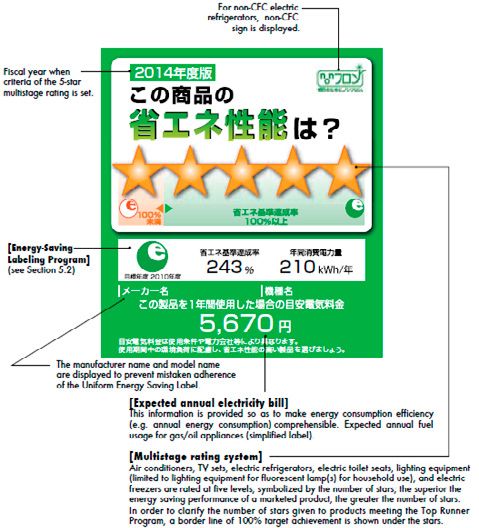
Acronyms
AC       Air Conditioner                             MEPS     Minimum energy performance
ANFAD    National Association of Manufacturers                standards
         of Domestic Appliances                      MPU      Montreal Protocol Unit
ASHRAE   American Society of Heating,                MtCO2e   Million metric tons of carbon dioxide
         Refrigerating and Air-Conditioning                   equivalent
         Engineers                                   NMX      Mexican Standards (Voluntary)
BAT      Best available technology                   NOM      Official Mexican Standard (Mandatory)
BTU      British thermal unit                        ODS      Ozone Depleting Substances
CEER     Combined Energy Efficiency Ratio            OECD     Organization of Economic Coordination
CONUEE   National Commission for Efficient Use                and Development
         of Energy                                   OEM      Original Equipment Manufacturer
COP      Coefficient of Performance                  PTAC     Packaged Terminal Air Conditioner
DOE      Department of Energy                        PTHP     Packaged Terminal Heat Pump
eCFR     Electric Code of Federal Regulations        RAC      Refrigeration and Air Conditioning
EEI      Energy Efficiency Index                     RT       Refrigeration Ton
EER      Energy Efficiency Ratio                     SAT      System of Tributary Administration
EU       European Union                              SCOP     Seasonal Coefficient of Performance
FIDE     Electric Power Savings Trust Fund           SCT      Ministry of Communication and
GHGs     Greenhouse Gases                                     Transportation
GWP      Global Warming Potential                    SEER     Seasonal Energy Efficiency Ratio
HCs      Hydrocarbons                                SEMARNAT Ministry of Environment and Natural
HCFCs    Hydrochlorofluorocarbons                             Resources
HFCs     Hydrofluorocarbons                          SENER    Ministry of Energy
HFOs     Hydrofluorolefins                           SEPR     Seasonal Energy Performance Ratio
HP       Heat Pump                                   STPS     Ministry of Work and Social Welfare
HVAC     Heating, Ventilation and Air                USA      United States of America
         Conditioning                                RAC      Refrigeration and Air Conditioning
IEER     Integrated Energy Efficiency Ratio          VRF      Variable refrigerant flow
KA       Kigali Amendment                            W        Watts
kW       Kilowatts                                   We       Electrical Watts
kWh      Kilowatt hour                               Wth      Thermal Watts

                                                 3
Table of Contents
Executive summary.............................................................................................................. 6
1. Analysis of existing national and international standards
  for large systems in the RAC sector.................................................................................. 7
    1.1 Energy efficiency RAC standards in the U. S.
          1.1.1 eCFR................................................................................................................. 7
          1.1.2 EnergyStar...................................................................................................... 12
          1.1.3 ASHRAE 90.1.................................................................................................. 14
     1.2 Energy efficiency RAC standards in the EU............................................................. 14
          1.2.1 Ecodesign....................................................................................................... 14
          1.2.2 Energy labeling............................................................................................... 16
     1.3 Energy efficiency RAC standards in Japan.............................................................. 17
     1.4 International safety standards regarding HCs........................................................ 21
     1.5 Standards for RAC in Mexico.................................................................................. 23
          1.5.1 Official Mexican standards (NOMs)................................................................ 23
          1.5.2 FIDE labeling................................................................................................... 23
          1.5.3 Energy efficiency standards for AC in Mexico................................................ 24
          1.5.4 Mexican safety standards for RAC equipment manufacturing....................... 30
     1.6 Mexican official standards regulating HCs as refrigerants...................................... 32

                                                                     4
2. Large state-of-the-art systems in the global market (conventional refrigerants)........ 32
    2.1 Expected AC demand growth................................................................................. 32
    2.2 Market drivers........................................................................................................ 37
          2.2.1 Growing population and urbanization........................................................... 37
          2.2.2 Technical improvements due to government regulations and legislations.... 37
          2.2.3 Decreasing component prices........................................................................ 37
     2.3 State-of-the-art technologies................................................................................. 37
          2.3.1 Self-contained air conditioners...................................................................... 37
          2.3.2 Split residential air conditioners..................................................................... 39
          2.3.3 Split commercial air conditioners................................................................... 42
          2.3.4 Ducted split residential air conditioners........................................................ 42
          2.3.5 Commercial ducted splits............................................................................... 43
          2.3.6 Rooftop ducted.............................................................................................. 44
          2.3.7 Multi-splits..................................................................................................... 46
          2.3.8 AC chillers....................................................................................................... 48
          2.3.9 Heat pumps.................................................................................................... 49
3. Technologies with natural refrigerants in the global market (HC)................................ 53
    3.1 Global warming contribution................................................................................. 53
    3.2 Development of low-GWP AC systems................................................................... 54
          3.2.1 Low-GWP AC systems..................................................................................... 54
          3.2.2 Energy efficiency and cooling capacity in alternative AC systems.................. 56
     3.3 Available AC technologies with HCs....................................................................... 60
          3.3.1 Mini-splits....................................................................................................... 60
          3.3.2 AC chillers....................................................................................................... 61
          3.3.3 Barriers identified........................................................................................... 62
4. Final remarks................................................................................................................. 63
References.......................................................................................................................... 65

                                                                      5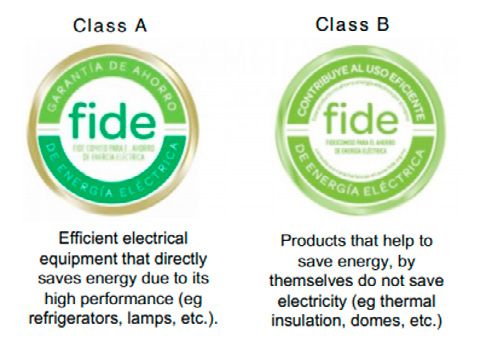
Executive summary
Regulations are one of the main drivers to increase           Section 1 of the report outlines the relevant stan-
energy efficiency in different countries. Mexico is not       dards in Mexico. It includes the current regulations
the exception.                                                published by the Government of Mexico. The study
                                                              also reviews the United States, European Union, and
One of the main factors that regulate the use of
                                                              Japan regulations, since these are the main commer-
refrigeration and air conditioning (RAC) equipment
                                                              cial partners, and they are leading regions in ener-
are the Official Mexican Standards (NOMs). All the
                                                              gy-efficient RAC equipment.
equipment marketed in the country is required to
comply with the NOMs. Manufacturers, distributors,            Section 2 presents the typical AC equipment charac-
and suppliers are all involved, so that end users can         teristics, efficiency levels, configuration, and instal-
only buy regulated equipment.                                 lation together with other details associated with
                                                              the direct expansion systems using HFC refrigerants
Mexican regulations seem to be highly influenced
                                                              and other systems using refrigerants with high-GWP.
by the regulations of its main trading partners. This
                                                              Section 2 also specifies the most relevant features of
trend contributes to a dynamic regulation in respon-
                                                              refrigeration and freezing equipment.
se to these markets’ demand. However, the Mexican
market has its own characteristics and needs that             Section 3 overviews efficient technologies for each
must also be considered.                                      category and highlights equipment with inverter
                                                              compressors, intelligent control systems, and
Energy-efficient air conditioning (AC) systems reduce
                                                              high-performance heat exchangers as props for im-
power consumption, which reduces indirect emissi-
                                                              proving energy efficiency, including saving potential
ons and mitigates global warming. This is in line with
                                                              for each new technology or improvement compared
the intentions of the recently ratified Kigali Amend-
                                                              to conventional systems. The analysis of future tech-
ment, whose objectives are to reduce the impact
                                                              nologies that in the medium and long-term will have
of refrigerants on global warming. Energy efficiency
                                                              greater development and gradually displace direct
represents a significant opportunity area since about
                                                              expansion systems was given particular attention.
75 % of the emissions associated with AC equipment
are due to the electricity to power the devices.

                                                          6
1. Analysis of existing national and international
standards for large systems in the RAC sector
Standards are developed at international, regional, the greatest impact and influence on the Mexican
national, and other levels by a variety of organiza- market. Given that the report is aimed at promoting
tions. The organizations are independent of govern- new AC technologies with refrigerant grade hydro
ments, industry, associations, and the private sector. carbons (HCs), the analysis will focus on this sector.
Equipment with cooling capacities greater than
For this analysis, a review of the main international
65,000 BTU / h will be considered large equipment
and national standards related to large RAC equip-
according to Mexican standards. Most of the existing
ment has been carried out. At the international level,
standards are related to energy efficiency; however,
the cases of the U. S., the EU, and Japan have been
the report also presents a specific section focused on
considered, as they are the countries or regions with
HCs.
1.1 Energy efficiency RAC standards in the U. S.
The report identified three groups of standards in source (e.g., electric or gas), and which have the
the U. S. that have an important influence on the same or comparable compressors, same or compa-
Mexican market: rable heat exchangers, and same or comparable air
1. The Minimum Energy Performance Standards moving systems that have a cooling capacity within
(MEPS) for refrigerators and air conditioners, 300 BTU / h of one another.
which specify the minimum energy performance Small, large, and very large air-cooled commercial
level that appliances, lighting, and electrical packaged AC and heating equipment means all units
equipment (products) must meet or exceed befo- manufactured by one manufacturer within a single
re they can be offered for sale or for commercial equipment class, having the same or comparably
purposes. These are established in the Electronic performing compressor(s), heat exchangers, and air
Code of Federal Regulations (eCFR). moving system(s) that have a common “nominal”
2. EnergyStar, the compliance label for superior cooling capacity.
energy efficiency.
3. American Society of Heating, Refrigerating, and Single packaged vertical units mean all units manu-
Air-Conditioning Engineers (ASHRAE) 90.1, which factured by one manufacturer within a single equip-
includes standards for efficient buildings and ment class, having the same primary energy source
typically is the reference used by developers and (e.g., electric or gas), and which have the same or
designers to integrate energy-efficient features comparably performing compressor(s), heat exch-
into commercial buildings in Mexico. angers, and air moving system(s) that have a rated
cooling capacity within 1500 BTU / h of one another.
The main standards analyzed are presented through
the next sections: Variable refrigerant flow (VRF) systems mean all
units manufactured by one manufacturer within a
single equipment class, having the same primary
1.1.1 eCFR
energy source (e.g., electric or gas), and which have
Subpart F-Commercial Air Conditioners and Heat the same or comparably performing compressor(s)
Pumps (U. S. Government, 2020) specifies test that have a common “nominal” cooling capacity and
procedures and energy conservation standards for the same heat rejection medium (e.g., air or water)
commercial air conditioners and heat pumps. The fol- (includes VRF water source heat pumps).
lowing definitions apply for the equipment included
Commercial packaged AC and heating equipment
in the analysis of subpart F:
means air-cooled, water-cooled, evaporatively-
Packaged terminal air conditioner (PTAC) or pack- cooled, or water source (not including groundwater
aged terminal heat pump (PTHP) means all units source) electrically operated, unitary central air con-
manufactured by one manufacturer within a single ditioners, and central AC heat pumps for commercial
equipment class, having the same primary energy application.
7
Double-duct air conditioner or heat pump means c) If it is a horizontal unit, a complete unit has a
air-cooled commercial packaged AC and heating maximum height of 35 inches; (ii) If it is a vertical
equipment that: unit, a complete unit has a maximum depth of 35
a) It Is either a horizontal single packaged or split inches; and
system unit, or a vertical unit that consists of two d) Has a rated cooling capacity greater than or equal
components that may be shipped or installed to 65,000 BTU / h and up to 300,000 BTU / h.
either connected or split; Energy efficiency ratio (EER) means the ratio of the
b) It is intended for indoor installation with ducting produced cooling effect of an air conditioner or heat
of outdoor air from the building exterior to and pump to its network input, expressed in BTU / watt-
from the unit, as evidenced by the unit and / or hour.
all of its components being no-weatherized,
including the absence of any marking (or listing) Integrated energy efficiency ratio (IEER) means a
indicating compliance with UL 1995, “Heating and weighted average calculation of mechanical cooling
Cooling Equipment” (UL 1995, 2015), or any other EERs determined for four load levels and correspon-
equivalent requirements for outdoor use; ding rating conditions; it is expressed in BTU / watt-
hour.
TABLE 1: Efficiencies for large commercial AC equipment – eCFR
Compliance
date:
EQUIPMENT Cooling Sub Efficiency
Heating type Equipment
TYPE capacity category level manufactured
starting on:
Electric Resistan-
IEER = 12.9 January 1, 20181
ce Heating or
IEER = 14.8 January 1, 2023
No Heating
AC
Small Commercial All Other Types IEER = 12.7 January 1, 20181
≥ 65,000
Packaged Air Condi- of Heating IEER = 14.6 January 1, 2023
BTU / h and
tioning and Heating
< 135,000
Equipment (Air-Coo- Electric Resistan-
BTU / h IEER = 12.2 January 1, 20181
led) ce Heating or
IEER = 14.1 January 1, 2023
No Heating
HP
All Other Types IEER = 12.0 January 1, 20181
of Heating IEER = 13.9 January 1, 2023
Electric Resistan-
IEER = 12.4 January 1, 20181
ce Heating or
IEER = 14.2 January 1, 2023
No Heating
AC
Large Commercial All Other Types IEER = 12.2 January 1, 20181
≥ 135,000
Packaged Air Condi- of Heating IEER = 14.0 January 1, 2023
BTU / h and
tioning and Heating
< 240,000
Equipment (Air-Coo- Electric Resistan-
BTU / h IEER = 11.6 January 1, 20181
led) ce Heating or
IEER = 13.5 January 1, 2023
No Heating
HP
All Other Types IEER = 11.4 January 1, 20181
of Heating IEER = 13.3 January 1, 2023
8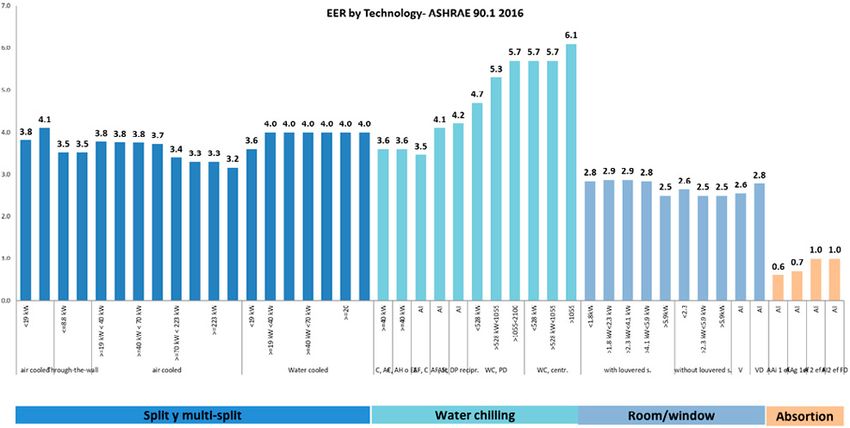
Compliance
date:
EQUIPMENT Cooling Sub Efficiency
Heating type Equipment
TYPE capacity category level manufactured
starting on:
Electric Resistan-
IEER = 11.6 January 1, 20181
ce Heating or
IEER = 13.2 January 1, 2023
No Heating
AC
Very Large Commer- All Other Types IEER = 11.4 January 1, 20181
≥ 240,000
cial Packaged Air of Heating IEER = 13.0 January 1, 2023
BTU / h and
Conditioning and
< 760,000
Heating Equipment Electric Resistan-
BTU / h IEER = 10.6 January 1, 20181
(Air-Cooled) ce Heating or
IEER = 12.5 January 1, 2023
No Heating
HP
All Other Types IEER = 10.4 January 1, 20181
of Heating IEER = 12.3 January 1, 2023
Electric Resistan-
ce Heating or EER = 11.2 January 1, 2010
No Heating
AC
Small Double-Duct All Other Types
≥ 65,000 EER = 11.0 January 1, 2010
Commercial Packa- of Heating
BTU / h and
ged Air Conditioning
< 135,000
and Heating Equip- Electric Resistan-
BTU / h
ment (Air-Cooled) ce Heating or EER = 11.0 January 1, 2010
No Heating
HP
All Other Types
EER = 10.8 January 1, 2010
of Heating
Electric Re-
sistance Heating EER = 11.0 January 1, 2010
or No Heating
AC
Large Commercial All Other Types
≥ 135,000 EER = 10.8 January 1, 2010
Double-Duct Packa- of Heating
BTU / h and
ged Air Conditioning
< 240,000
and Heating Equip- Electric Re-
BTU / h
ment (Air-Cooled) sistance Heating EER = 10.6 January 1, 2010
or No Heating
HP
All Other Types
EER = 10.4 January 1, 2010
of Heating
1 And manufactured before January 1, 2023.
9
Compliance
date:
EQUIPMENT Cooling Sub Efficiency
Heating type Equipment
TYPE capacity category level manufactured
starting on:
Electric Re-
sistance Heating EER = 10.0 January 1, 2010
or No Heating
AC
Very Large Doub-
All Other Types
le-Duct Commer- ≥ 240,000 EER = 9.8 January 1, 2010
of Heating
cial Packaged Air BTU / h and
Conditioning and < 300,000
Electric Re-
Heating Equipment BTU / h
sistance Heating EER = 9.5 January 1, 2010
(Air-Cooled)
or No Heating
HP
All Other Types
EER = 9.3 January 1, 2010
of Heating
Packaged Terminal
> 15,000
Air Conditioners AC All EER = 9.5 October 7, 2017
BTU / h
and Heat Pumps
≥ 65,000
BTU / h and
AC & HP All EER = 10.0 October 9, 2015
Single Package < 135,000
Vertical Air Condi- Btu / h
tioners and Single
Package Vertical ≥ 135,000
Heat Pumps BTU / h and
AC & HP All EER = 10.0 October 9, 2016
< 240,000
Btu / h
No Heating or
≥ 65,000 Electric Re- EER = 11.2 January 1, 2010
BTU / h and sistance Heating
AC
< 135,000
BTU / h All Other Types
EER = 11.0 January 1, 2010
of Heating
No Heating or
Variable Refrigerant ≥ 135,000 Electric Re- EER = 11.0 January 1, 2010
Flow Multi-split BTU / h and sistance Heating
AC
Air Conditioners < 240,000
(Air-cooled) BTU / h All Other Types
EER = 10.8 January 1, 2010
of Heating
No Heating or
≥ 240,000 Electric Re- EER = 10.0 January 1, 2010
BTU / h and sistance Heating
AC
< 760,000
BTU / h All Other Types
EER = 9.8 January 1, 2010
of Heating
10Compliance
date:
EQUIPMENT Cooling Sub Efficiency
Heating type Equipment
TYPE capacity category level manufactured
starting on:
No Heating or
≥ 65,000 Electric Re- EER = 11.0 January 1, 2010
BTU / h and sistance Heating
HP
< 135,000
BTU / h All Other Types
EER = 10.8 January 1, 2010
of Heating
No Heating or
Variable Refrigerant ≥ 135,000 Electric Re- EER = 10.6 January 1, 2010
Flow Multi-split BTU / h and sistance Heating
HP
Heat Pumps < 240,000
(Air-cooled) BTU / h All Other Types
EER = 10.4 January 1, 2010
of Heating
No Heating or
≥ 240,000 Electric Re- EER = 9.5 January 1, 2010
BTU / h and sistance Heating
HP
< 760,000
BTU / h All Other Types
EER = 9.3 January 1, 2010
of Heating
Source: based on eCFR.
As for the commercial air conditioners above, the It is important to notice that the minimum IEER in
eCFR includes many groups to set the minimum air-cooled commercial packaged AC and heating
performance energy standards. equipment will be enhanced starting in 2023, and it
will be set over 14.
111.1.2 EnergyStar
EnergyStar (EnergyStar, 2020) is the government specific technologies. In small air-cooled central air
compliance label for the best energy efficiency conditioners, the IEER is over 4 Wth / We (in the table
performance in the U. S.. There is an extensive list of 13.8 BTU / Wh), while large air-cooled central air
domestic and commercial appliances and includes conditioners require an IEER higher than 3.8 Wth / We.
electrical equipment and combustion equipment. Small AC systems have higher efficiency require-
ments than large systems. A similar situation occurs
The specification for commercial heating, ventilati-
with heat pumps; heat pumps with a lower cooling
on, and air conditioning (HVAC) in EnergyStar is an
capacity require a higher minimum efficiency.
important reference for superior performance in
TABLE 2: Energy requirements for commercial HVAC systems in EnergyStar
EQUIPMENT Cooling Heating Minimum Energy
TYPE capacity Section Type Efficiency Criteria
Electric Resistance
≥ 65,000 BTU / h 12.2 EER; 14.0 IEER
Small Air-Cooled Central (or None)
Air Conditioner
< 135,000 BTU / h All other 12.0 EER; 13.8 IEER
Electric Resistance
12.2 EER; 13.2 IEER
Large Air-Cooled Central ≥ 135,000 BTU / h – (or None)
Air Conditioner < 240,000 BTU/h
All other 12.0 EER; 13.0 IEER
11.8 EER; 12.8 IEER;
Electric Resistance
(or None) 3.4 COP2 at 47°F;
2.4 COP at 17°F
≥ 65,000 BTU / h –
Small Air-Cooled Heat Pump
< 135,000 BTU/h
11.6 EER; 12.6 IEER;
All other
3.4 COP at 47°F;
2.4 COP at 17°F
10.9 EER; 12.0 IEER;
Electric Resistance
(or None) 3.3 COP at 47°F;
2.1 COP at 17°F
≥ 135,000 BTU / h –
Large Air-Cooled Heat Pump
< 240,000 BTU/h
10.7 EER; 11.8 IEER;
All other
3.3 COP at 47°F;
2.1 COP at 17°F
2 COP, means the ratio of the produced cooling effect of an air conditioner or heat pump (or its produced heating effect,
depending on the mode of operation) to its net work input, when both the cooling (or heating) effect
12EQUIPMENT Cooling Heating Minimum Energy
TYPE capacity Section Type Efficiency Criteria
≥ 65,000 BTU / h –
VRF Air-Cooled Air Conditioner All 12.0 EER; 17.4 IEER
< 135,000 BTU / h
≥ 135,000 BTU / h –
VRF Air-Cooled Air Conditioner All 12.0 EER; 16.4 IEER
< 240,000 Btu/h
Without Heat 11.8 EER; 17.4 IEER;
≥ 65,000 BTU / h
Recovery 3.4 COP at 47°F
VRF Air-Cooled Heat Pump
With Heat 11.6 EER; 17.2 IEER;
< 135,000 BTU / h
Recovery 3.4 COP at 47°F
Without Heat 10.9 EER; 16.4 IEER;
≥ 135,000 BTU / h –
Recovery 3.3 COP at 47°F
VRF Air-Cooled Heat Pump
With Heat 10.7 EER; 16.2 IEER;
< 240,000 BTU / h
Recovery 3.3 COP at 47°F
Source: based on EnergyStar.
Note the energy efficiency required for variable ref- The specification for heat pumps in EnergyStar
rigerant air conditioners. The biggest IEER is required requires a minimum SEER3 of 15 (BTU / Wh), equiva-
for air conditioners with a capacity < 135,000 BTU. lent to 4.4 Wth / We. The same value is required for
VRF air-cooled air conditioners and VRF air-cooled central air conditioners, either split system or single
heat pumps require 17.4 BTU / Wh as IEER (equiva- packaged. If we refer to the efficiency in EER, the
lent to 5.1 Wth / We). value tends to be lower than the SEER. EnergyStar
establishes at least 10 % more energy efficiency
for room-type air conditioners than the minimum
federal government standards (eCFR).
TABLE 3: Energy requirements for central air conditioners in EnergyStar
EQUIPMENT Specification (BTU / Wh)
≥ 8.5 HSPF / ≥ 15 SEER / ≥ 12.5
Split Systems
EER
Air Source HP
Single package ≥ 8.2 HSPF / ≥ 15 SEER / ≥ 12 EER
Split Systems ≥ 15 SEER / ≥ 12.5 EER
Central AC
Single package ≥ 15 SEER / ≥ 12 EER
3 SEER means the total cooling output of a central air conditioner or central air-conditioning heat pump, expressed in BTUs, during its
normal annual usage period for cooling and divided by the total electric power input, expressed in watt-hours, during the same period.
131.1.3 ASHRAE 90.1
ASHRAE 90.1 is one of the best references for energy The minimum performance in the ASHRAE code
performance in RAC for commercial buildings. The reflects the systems’ typical performance. The graph
most recent version is ASHRAE 90.1 2019 (ASHRAE, shows that for the split technology, the efficiency
2019). The standard contains a complete classificati- decreases when the cooling capacity increases. This
on of air conditioners, including all types of techno- means that it is better to install small capacities to
logy and cooling / heating capacity. The main tables get the best energy performance.
referred to AC systems are shown below:
In contrast, for central systems, the efficiency increa-
• electronically operated unitary air conditioners ses with more capacity, particularly for water chillers.
and condensing units As for central air conditioners, it could be preferable
• electrically operated unitary and applied heat to install equipment with higher capacity, but it
pumps depends on the building’s cooling demand. As for
• water chilling packages Figure 1: Minimum EER room air conditioners, we observe the same trend as
by AC technology (without inverter equipment) in split air conditioners, higher cooling capacity and
• electrically operated packaged terminal air con- lower energy efficiency.
ditioners, packaged terminal heat pumps, single
packaged vertical air conditioners, single packa-
ged vertical heat pumps, room air conditioners,
and room air conditioner heat pumps
FIGURE 1: Minimum EER by AC technology (without inverter equipment)
Source (AHRAE, 2019) The cooling capacity increases from left to right in each technology
1.2 Energy efficiency RAC standards in the EU
There are two main instruments in the European Uni- 1.2.1 Ecodesign
on to reduce energy consumption through minimum
The EU legislation on Ecodesign (European Commis-
energy efficiency requirements in equipment, energy
sion, 2017) is an effective tool for improving energy
labeling (comparative label) and Ecodesign (MEPS).
efficiency. It eliminates the least performing products
14from the market, significantly contributing to the yearly energy consumption of the home refrigerator
EU’s 2020 energy efficiency objective (European multiplied by 100.
Commission, 2014).
Requirements of minimum energy efficiency for air
The European Commission requires a maximum conditioners are related to technology, cooling capa-
energy efficiency index (EEI) for refrigerators, which city, and the refrigerant’s global warming power. The
results from the ratio between the home refrigera- main requirements in performance are established
tor’s annual energy consumption and the standard for systems with higher GWP.
TABLE 4: Requirements for minimum energy efficiency – Ecodesign
AIR CONDITIONERS,
EXCEPT DOUBLE AND DOUBLE DUCT SINGLE DUCT
SINGLE DUCT AIR AIR CONDITIONERS AIR CONDITIONERS
CONDITIONERS
SCOP
(heating
SEER season:
EERrated COPrated EERrated COPrated
Average)
If GWP of refrigerant
4.60 3.80 2.60 2.60 2.60 2.04
> 150 for < 6 kW
If GWP of refrigerant
4.14 3.42 2.34 2.34 2,34 1.84
≤ 150 for < 6 kW
If GWP of refrigerant
4.30 3.80 2.60 2.60 2.60 2.04
> 150 for 6-12 kW
If GWP of refrigerant
3.87 3.42 2.34 2.34 2.34 1.84
≤ 150 for 6-12 kW
Source: European Commission, 2017
Large AC capacities are regulated by the Commission Regulation (EU) 2016 / 2281 (European Commission,
2016), which establishes minimum seasonal energy performance ratio (the ratio between the annual refrigera-
tion demand and the annual electricity consumption). Higher requirements are set to water-cooled equipment
with the highest capacities.
TABLE 5: (2018-2021) seasonal energy performance ratio of high temperature process chillers
HEAT TRANSFER MEDIUM AT THE MINIMUM
RATED REFRIGERATION CAPACITY
CONDENSING SIDE SEPR VALUE
PA < 400 kW 4,5
Air
PA ≥ 400 kW 5.0
PA < 400 kW 6.5
Water 400 kW ≤ PA < 1 500 kW 7.5
PA ≥ 1 500 kW 8.0
Source: European Commission, 2016
15Many energy efficiencies for central cooling systems cannot be compared with the Mexican standards because
the EU uses minimum seasonal space cooling efficiency to express the equipment efficiency.
TABLE 6: Minimum seasonal space cooling energy efficiency of cooling products, expressed in %
ηs,c 4
Air-to-water chillers with rated cooling capacity < 400 kW when driven by an electric motor 149
Air-to-water chillers with rated cooling capacity ≥ 400 kW when driven by an electric motor 161
Water / brine to-water chillers with rated cooling capacity < 400 kW when driven
196
by an electric motor
Water / brine to-water chillers with ≥ 400 kW rated cooling capacity < 1 500 kW when driven
227
by an electric motor
Water / brine to-water chillers with rated cooling capacity ≥ 1 500 kW when driven by an
245
electric motor
Air-to-water comfort chillers, when driven by an internal combustion engine 144
Air-to-air air conditioners, driven by an electric motor, except rooftop air conditioners 181
Rooftop air conditioners 117
Air-to-air air conditioners, driven by an internal combustion engine 157
Source: European Commission, 2016
1.2.2 Energy labeling
EU energy labels help consumers choose energy-ef- FIGURE 2:
ficient products. Products are currently labeled on Energy labeling example.
a scale of A+++ (most efficient) to G (least efficient). Cooling-only air conditioners
However, due to the development of more and more classified in energy efficiency
energy-efficient products, products will be gradually classes A to G
relabeled with the more straightforward A to G scale
(European Commission, 2020). The label content
depends on the product, typically includes the type
of product, class energy, power, energy efficiency,
Source: European Commission, 2000
energy consumption, and other info as the noise
level.
4 Seasonal space cooling energy efficiency’ (ηs,c ) means the ratio between the reference annual
cooling demand pertaining to the cooling season covered by a cooling product, and the annual energy
consumption for cooling, corrected by contributions accounting for temperature control and the
electricity consumption of ground water pump(s), where applicable, expressed in %
16Like Ecodesign standard, Energy Label establishes The SEER for the best energy performance in air
minimum energy efficiency indexes for every refrige- conditioners (without ducts) is ≥ 8.5 (table 8).
rator class in the comparative label. It can be noticed
that there is a considerable difference between the
most efficient equipment and the least efficient
refrigerator.
TABLE 7: Energy efficiency classes and EEI, TABLE 8: Energy efficiency classes for air conditioners,
Energy label-EU except double ducts and single ducts, Energy Label, EU
ENERGY ENERGY ENERGY
SEER SCOP
EFFICIENCY EFFICIENCY EFFICIENCY
CLASS (Wth / We) (Wth / We)
CLASS INDEX
A+++ (most efficient) EEI < 22 A+++ SEER ≥ 8,50 SCOP ≥ 5,10
A++ 22 ≤ EEI < 33 A++ 6,10 ≤ SEER < 8,50 4,60 ≤ SCOP < 5,10
A+ 33 ≤ EEI < 42 A+ 5,60 ≤ SEER < 6,10 4,00 ≤ SCOP < 4,60
A 42 ≤ EEI < 55 A 5,10 ≤ SEER < 5,60 3,40 ≤ SCOP < 4,00
B 55 ≤ EEI < 75 B 4,60 ≤ SEER < 5,10 3,10 ≤ SCOP < 3,40
C 75 ≤ EEI < 95 C 4,10 ≤ SEER < 4,60 2,80 ≤ SCOP < 3,10
D 95 ≤ EEI < 110 D 3,60 ≤ SEER < 4,10 2,50 ≤ SCOP < 2,80
E 110 ≤ EEI < 125 E 3,10 ≤ SEER < 3,60 2,20 ≤ SCOP < 2,50
F 125 ≤ EEI < 150 F 2,60 ≤ SEER < 3,10 1,90 ≤ SCOP < 2,20
G (least efficient) EEI ≥ 150 G SEER < 2,60 SCOP < 1,90
Source: European Commission, 2020 Source: European Commission, 2016
1.3 Energy efficiency RAC standards in Japan
Japan decided to introduce the Top Runner method standards; display items; and energy efficiency
for determining energy consumption efficiency measurement methods. Items needed for judgment
standards in machinery, equipment, and other items. standards include target categories, target fiscal year,
It consists of a maximum standard value system (Top target values, and achievement evaluation methods.
Runner program). The approach sets targets based
There are two labels associated with The Top Runner
on the value of the most energy-efficient equipment
program: Energy Saving Label for manufacturers and
on the market when the requirements were establis-
Uniform Energy Saving Label for retailers.
hed. The program was introduced in 1998.
In 2000 the Energy Saving Label was introduced to
The Top Runner program (METI, 2015) establishes
promote the popularization of highly efficient machi-
requirements by considering potential technological
nery, equipment, and other items that have achieved
improvements added as efficiency improvements.
Top Runner requirements through manufacturers’
It comprises targeted machinery, equipment, and
efforts.
other item ranges; items necessary for judgment
17FIGURE 3: Energy Saving Label in Japan FIGURE 4: Uniform Energy Saving Label in Japan
Source: Meti, 2015
The Energy Saving Label presents a logo with an e
(energy saving symbol) inscribed in a green circle
when the equipment meets the requirements and
in an orange circle when it does not reach the requi-
rements. Also, the label includes an energy saving
standard achievement rate (as %), the target fiscal
year, and the energy consumption as an index, e. g.,
annual energy consumption.
Source: Meti, 2015
Retailers have to provide energy information about
the products they sell in their shops with the Uni- The Uniform Energy Saving Label for air conditioners
form Energy Saving Label, which contains a multis- and electric refrigerators includes the expected an-
tage rating with stars (five stars to set the energy nual electricity bill, and the multistage rating system.
savings, more savings more colored stars), expected
annual electricity bill (which helps the customer to For most of the equipment within the Top Runner
compare a piece of equipment with other similar program scope, the overall results have far exceeded
devices and allows to estimate the payback period in the initial expectations. However, this is not the case
substitution case), manufacturer name and model, for AC equipment.
fiscal year and additional information, e.g., type of Top Runner standards establish a singular parameter
refrigerant in refrigerators. to set the residential AC units energy efficiency:
TABLE 9: Top Runner program results by AC product category
Energy Efficiency
PRODUCT Energy Efficiency
improvement
CATEGORY improvement result
(initial expectation)
Non-ducted wall mounted AC units,
16.3 % (FY 2005 – FY 2010) 22.4 %
4 kW or less
Non-ducted / wall mounted AC units,
AC 15.6 % (FY 2005 – FY 2010) 17.8 %
over 4 kW
Other than non-ducted / wall moun-
15.9 % (FY 2005 – FY 2010) 13.6 %
ted AC units
Source: Meti, 2015
18the annual performance factor (APF). The APF is a non-ducted wall-hung type and other non-ducted
numerical value calculated by the JIS C9612 method type perform similarly. Therefore, the most ener-
(Japanese Standards Association, 2005). The APF is gy-efficient home air conditioners are AC split units
the ratio of thermal energy supplied by the AC unit smaller than 4 kW for non-ducted wall-hung type
to the electricity required to operate the unit for and smaller than 3.2 kW for equipment other than
one year. The APF could be the equivalent of the non-ducted. In the multi-split systems, the APF does
SEER. The best performance is in the smaller units, not change regardless of the cooling capacity.
TABLE 10: Top Runner program results by AC system category
CATEGORY Standard
energy
consumpti
on efficiency
Category
UNIT FORM Cooling capacity (APF)
name
Over 4.0 kW up to 5.0 kW E 5.5
Non-ducted wall-hung type (except
multi-type controlling operation of Over 5.0 kW up to 6.3 kW F 5.0
indoor units individually)
Over 6.3 kW up to 28.0 kW G 4.5
Up to 3.2 kW H 5.2
Other non-ducted type (except
multi-type controlling operation of Over 3.2 kW up to 4.0 kW I 4.8
indoor units individually)
Over 4.0 kW up to 28.0 kW J 4.3
Up to 4.0 kW K 5.4
Multi-type controlling operation of
Over 4.0 kW up to 7.1 kW L 5.4
indoor units individually
Over 7.1 kW up to 28.0 kW M 5.4
Source: Meti, 2015
Since 2015, commercial AC equipment has to comply are more efficient. Note that the standard includes
with energy consumption efficiency E or equivalent equipment with cooling capacities up to 28 kW
according to the calculation formula. E looks like the (95,540 BTU / h, 8 refrigeration tons) so that the Top
APF for residential AC; it refers to the yearly energy Runner program does not cover bigger AC equipment
consumption efficiency. The cooling capacity also has for the commercial sector.
an impact on energy efficiency: smaller capacities
19TABLE 11: Top Runner program results by AC product category
CATEGORY STANDARD
ENERGY CONSUMP
TION EFFICIENCY
Indoor Category OR CALCULATION
UNIT FORM Cooling capacity FORMULA THEREOF
unit type name
Less than 3.6 kW aa E = 6.0
Not less than 3.6 kW
ab E = 6.0 – 0.083 × (A – 3.6)
but less than 10.0 kW
4-directional
cassette type Not less than 10.0 kW
ac E = 6.0 – 0.12 × (A – 10)
but less than 20.0 kW
Combination of Not less than 20.0 kW
ad E = 5.1 – 0.060 × (A – 20)
plural types or and up to 28.0 kW
any type other
than following Less than 3.6 kW ae E = 5.1
Not less than 3.6 kW
af E = 5.1 – 0.083 × (A – 3.6)
but less than 10.0 kW
Other than
4-directional
Not less than 10.0 kW
cassette type ag E = 5.1 – 0.10 × (A – 10)
but less than 20.0 kW
Not less than 20.0 kW
ah E = 4.3 – 0.050 × (A – 20)
and up to 28.0 kW
Less than 10.0 kW ai E = 5.7
Not less than 10.0 kW
aj E = 5.7 – 0.11 × (A – 10)
Multi-type cont- but less than 20.0 kW
rolling o
peration
of indoor units Not less than 20.0 kW
ak E = 5.7 – 0.065 × (A – 20)
individually but less than 40.0 kW
Not less than 40.0 kW
al E = 4.8 – 0.040 × (A – 40)
and up to 50.4 kW
Less than 20.0 kW am E = 4.9
Non-ducted
Ducted type whose type Not less than 20.0 kW
an E = 4.9
indoor unit is set and up to 28.0 kW
on floor or any
Less than 20.0 kW ao E = 4.7
like type
Ducted type
Not less than 20.0 kW
ap E = 4.7
and up to 28.0 kW
Source: Meti, 2015
Remarks:
1. “Ducted type” indicates systems connected to ducts at the outlet.
2. “Multi-type” indicates a type that has two or more indoor units connected to an outdoor unit.
3. E and A represent the following values, respectively. E: Standard energy consumption efficiency
(unit: yearly energy consumption energy efficiency); A: Cooling capacity (unit: kilowatts)
201.4 International safety standards regarding HCs
RAC safety standards address a wide range of ha- by RAC safety standards that are affected by the
zards associated with this kind of systems. Table 12 refrigerant choice.
provides a summary of the important topics handled
TABLE 12: General technical obligations under safety standards for RAC systems
CATEGORY IEC 60335-2-24 IEC 60335-2-89 IEC 60335-2-40 ISO 5149-1, -2, -3, -4
EN 60335-2-24 EN 60335-2-89 EN 60335-2-40 EN 378-1, -2, -3, -4
Plug-in commercial Factory-made whole
All commercial and
Domestic refrigera- appliances and air conditioners,
industrial refrigeration,
Scope tors, freezers and cabinets with a heat pumps, dehu-
air conditioning and heat
ice makers condensing unit and midifiers and partial
pump systems
single units
Approx. 1 kg of HC
in a direct system 1 kg, 1.5 kg, 5 kg, 10 kg,
Limits on
150 g flammable 150 g flammable inside (depending 25 kg of HC and no limit,
refrigerant charge
refrigerant refrigerant upon room size) depending upon type of
amount
and 5 kg outside or system and / or room size
special enclosure
Marking Requires flammability or high pressure warning symbols, as appropriate
Strength p
ressure Specifies pressure tests for systems and components (where applicable)
Electrical Refers to appropriate
Specifies design, construction and test requirements
equipment standards
Sources of Describes what to consider and how to avoid a potential source of ignition, including a test
ignition method option (applies to all these standards except ISO 5149)
Information & Details concerning the installation, use, service, maintenance, and disposal of the equipment
instructions so that users, operators and technicians are aware of how to handle flammability hazards
Systems generally have to be constructed as “sealed” or “hermetically sealed” systems if they
System tightness are to use flammable refrigerants indoors (e.g., no or limited number of reusable mechanical
connections or fittings)
Pressure limiting / The need for additional devices to limit or relieve excess pressure may apply to smaller systems
relief devices if flammable refrigerants are used
Additional components for secondary or indirect circuits (such as those using water or brine)
Secondary /
are required to vent a leak that has occurred from the evaporator into the secondary circuit if
indirect systems
the primary refrigerant circuit exceeds a certain charge size
Gas sensors may be mandated to initiate mitigation measures such as ventilation, alarms, ter-
Gas sensors minating electrical supplies, etc. These may be applicable to systems using flammable refrige-
rants in machinery rooms or even for systems in occupied spaces
Construction of
Machinery rooms or special enclosures may have certain requirements if flammable refrige-
machinery rooms
rants are used, such as number and opening of doors, fire resistance of walls, tightness and
or ventilated
minimum airflow rates, etc.
enclosure
Source: GIZ, 2018
21Table 12 shows that the refrigerant type can affect is ultimately the most relevant determinant within
several design and construction aspects. Accordingly, safety standards for the viability of natural refrige-
the requirements might have an impact on the rant applications. This is particularly the case for HCs.
systems’ costs, and they are relevant for manufactu- Table 13 summarizes the charge size limits for HCs
rers and installers. The refrigerant charge size limit across current safety standards.
TABLE 13: Refrigerant charge size limits for HCs according to safety standards for HVAC systems Equipment /
application Vertical (60335-2-24, -40, -89) Horizontal (ISO 5149-1, EN 378-1)
EQUIPMENT / VERTICAL HORIZONTAL
APPLICATION (60335-2-24, -40, -89) (ISO 5149-1, EN 378-1)
Maximum charge Allowable charge Maximum charge Allowable charge
Domestic refrigeration 0.15 kg 0.15 kg
Commercial refrigeration
Stand alone 0.15 kg 0.15 kg 1.5 kg 0.008 × Vrm
Condensing units 0.15 kg 0.15 kg 1.5 kg 0.008 × Vrm
Centralized systems 1.5 kg 0.008 × Vrm
Transport refrigeration 1.5 kg; 2.5 kg 1.5 kg; 2.5 kg
Large size 2.5, 10, 25 kg,
0.008 × Vrm
refrigeration no limit
Air conditioner & heat pumps
Small
0.3 kg 0.01 × Vrm 0.3 kg 0.01 × Vrm
self-contained
Mini-split 1 kg 1.5 kg
Multi-split 1 kg 1.5 kg
Ducted split 1 kg 1.5 kg
Ducted commercial 1 kg 1.5 kg
Hot water heating 1.5 kg, 5 kg, 10
1 kg, 5 kg 0.04 × h × Arm
heat pumps kg, 25 kg, no limit
Space heating 1.5 kg, 5 kg, 10
1 kg, 5 kg 0.04 × h × Arm
heat pumps kg, 25 kg, no limit
Chillers
1.5 kg, 5 kg, 10
Positive displacement 1 kg, 5 kg 1 kg, 5 kg
kg, 25 kg, no limit
1.5 kg, 5 kg, 10
Centrifugal
kg, 25 kg, no limit
Source: GIZ, 2018
where: Vrm = room volume (in m3); Arm= room area (in m2) and = unit installation height (in m)
221.5 Standards for RAC in Mexico
Mexico has compliance and comparative labels in two FIGURE 6: Simplified FIDE structure
types of standards: MEPS and High Energy Perfor-
mance Standards.
The main instruments are governmental standards:
The Official Mexican Standards (NOMs in Mexico)
and Voluntary Standards (NMXs in Mexico). Additi-
onally, there is an important compliance label, the
Electric Power Savings Trust Fund (FIDE) label, which
requires a higher energy efficiency than the NOMs in
many products.
1.5.1 Official Mexican standards (NOMs)
The NOMs include comparative labels that show FIDE is a private trust fund. The trustors are several
the minimum energy efficiency required, the equip- chambers of commerce. The trustees are the Federal
ment’s energy efficiency, and the percentage of Electricity Commission (CFE) and the final energy
energy savings. The label also includes the type of savings beneficiaries. Other partners are the NAFIN
equipment, capacity, model, and brand. and a technical committee.
FIGURE 5: Example of energy efficiency labeling The FIDE labeling is a badge awarded to companies
that manufacture energy saving products or help
save energy; in the same way, it benefits diverse
sectors such as industries, domestic users, services,
and other businesses.
There are two types of FIDE labeling, FIDE class A for
equipment that directly saves electrical energy due
to its high-efficiency and FIDE class B for equipment
that helps save energy even though they do not save
energy on their own, such as thermal insulation or
efficient building materials.
FIGURE 7: Energy classes in the FIDE labeling
Source: NOM-023-ENER 2018
1.5.2 FIDE labeling
FIDE is a private organization with mixed participati-
on that seeks to develop and implement actions to
promote renewable energy generation and the effi-
cient use of electrical power. FIDE’s main objective is
to contribute to economic and social development
and environment preservation.
231.5.3 Energy efficiency standards for AC in conditioner. All these AC standards have mandatory
Mexico and voluntary requirements.
AC energy efficiency standards in Mexico include The standards focus on the equipment operative
NOMs, NMXs, and FIDE labeling. AC standards in system (compressor, evaporative / chiller system, and
Mexico cover several technologies: split / multi-split, condensers). Table 14 displays the standards.
central (packaged or split), room, and inverter air
TABLE 14: Main mandatory and voluntary AC standards in Mexico
EQUIPMENT Mandatory Standard Voluntary Standard
Split / multi split air conditioner NOM-023-ENER-2018 FIDE 4121 Specification
Central air conditioner NOM-011-ENER-2006 FIDE 4116 Specification
Room air conditioner NOM-021-ENERSCFI-2017 FIDE 4113 Specification
Split-inverter air conditioner NOM-026-ENER-2015 FIDE 4174 Specification
There are four mandatory standards for AC equip- Table 15 shows the minimum EER for room air condi-
ment. Each of them has a FIDE equivalent complian- tioners according to the NOM-021-ENER / SCFI-2017.
ce label with higher standards.
FIDE labeling. 4113 Specification. Room-type air
NOM-021-ENER / SCFI-2017, Energy efficiency and conditioners
user safety requirements in room-type air conditio- This specification is applicable to room air conditi-
ners. Boundaries, testing, and labeling methods oner models, without reverse cycle (only cooling)
The standard establishes specifications and test me- or with reverse cycle (heating), with and without
thods for the combined energy efficiency ratio (CEER) louvered sides, with an air-cooled condenser and ref-
and the standby mode, as well as the safety require- rigerant R-22 or an alternative (usually R-410A), with
ments and an evaluation method. It also establishes cooling capacity up to 10,600 Watts (36,000 BTU / h).
the type of information for the energy efficiency
This compliance label was published in 2012, so the
label. The standard includes new room-type air con-
minimum efficiency values have been a bit outdated.
ditioners, with or without heating, with an air-cooled
The table shows that NOM-021 ENER / SCFI-2017
condenser, and cooling capacities up to 10,600 Wth
efficiency requirements are higher. As a result, the
sold in Mexico (local production and imported units).
labeling role could become obsolete.
As for the air conditioners with heating and cooling
in the same device (reverse cycle), the CEER require-
ment applies only to the cooling mode.
24TABLE 15: Minimum CEER for room air conditioners in Mexico
TYPE Clase Cooling Capacity Wth CEER Wth / We
1 ≤ 1 758 3.22
2 > 1 758 and ≤ 2 344 3.22
3 > 2 344 and ≤ 4 103 3.19
without reverse cycle
and with louvered sides
4 > 4 103 and ≤ 5 806 3.14
5a > 5 861 and ≤ 8 205 2.75
5b > 8205 2.64
6 ≤ 1 758 2.93
7 > 1 758 and ≤ 2 344 2.93
8a > 2 344 and ≤ 3 223 2.81
without reverse cycle and
without louvered sides
8b > 3 223 and ≤ 4 103 2.78
9 > 4 103 and ≤ 5 861 2.73
10 > 5 861 2.75
11 ≤ 5 861 2.87
With reverse cycle and
louvered sides
13 > 5 861 2.73
12 ≤ 4 103 2.73
With reverse cycle and
without louvered sides
14 > 4 103 2.55
Casement only 15 2.78
> 10 600
Casement slider 16 3.05
Source: NOM-021-ENER / SCFI-2017
25TABLE 16: Minimum energy efficiency for room air conditioners according to FIDE 4113 specification
REEC % Over
TYPE CLASS Cooling Capacity Wth
Wth/We NOM-021
1 ≤ 1,758 3 7%
2 > 1,758 and ≤ 2,344 3.07 5%
3 > 2,344 and ≤ 4,103 3 6%
without reverse cycle
and with louvered sides
4 > 4,103 and ≤ 5,806 3 4%
5a > 5,861 and ≤ 8,205 2.72 1%
5b > 8,205 2.72 -3 %
6 ≤ 1,758 2.78 5%
7 > 1,758 and ≤ 2,344 2.72 7%
without reverse cycle 8a > 2,344 and ≤ 3,223 2.72 3%
and without louvered
sides 8b > 3,223 and ≤ 4,103 2.72 2%
9 > 4,103 and ≤ 5,861 2.72 0%
10 > 5,861 2.72 1%
11 ≤ 5,861 2.78 3%
With reverse cycle and
louvered sides
13 > 5,861 2.63 4%
12 ≤ 4,103 2.63 4%
With reverse cycle and
without louvered sides
14 > 4,103 2.49 2%
Source: FIDE 4113 Specification
NOM-011-ENER-2006, Energy efficiency in central The standard applies to packaged or split equipment
air conditioners, packaged or split. Boundaries, and air-cooled or water-cooled appliances. There is
testing, and labeling methods only one SEER in the standard for all type of equip-
The standard establishes the minimum level of SEER ment:
required for central-type air conditioners. Further, it
specifies the methods of proof that they must use to
verify such compliance and defines the requirements
that should be included in the information label.
26TABLE 17: SEER for central air conditioners in Mexico FIDE 4116 Specification. Central-type packaged or
split air conditioners
SEER This specification, published in June 2012, applies
COOLING CAPACITY (W)
(Wth/We) to central-type air conditioners, packaged or split,
without reverse cycle (only cooling) or with reverse
8,800 to 19,050 3.81 cycle (heating), with an air-cooled condenser, with a
cooling capacity of 10,540 Watts (36,000 BTU / h) up
Source: NOM-011-ENER-2006 to 17,580 Watts (60,000 BTU / h)
TABLE 18: Minimum energy performance in central air conditioners for obtaining the FIDE labeling in Mexico
% Over
Heating mode NOM-011
Cooling capacity SEER
TYPE performance
(Wth) (Wth/We) (cooling
factor (Wth/We)
mode)
Without inverse cycle 10,540 to 17,850 ≥ 4.10 7.6 %
With inverse cycle 10,540 to 17,850 ≥ 4.10 ≥ 2.22 7.6 %
Source: FIDE 4116 Specification
The 4116 specification requires a higher SEER for NOM-023-ENER-2018, Energy efficiency in split air
central air conditioners than the mandatory standard conditioners, free discharge, and without air ducts.
(7.6 % more than NOM-011-ENER-2006). Neverthe- Limits, testing method, and labeling
less, the last standard update was in 2007; thus, it This standard establishes the minimum EER required
should be reviewed again. for split air conditioners, free discharge and without
air ducts (mini-split and multi-split), simple cycle
TABLE 19: Minimum EER for split air conditioners in (cold only), or with reversible cycle (heat pump), with
Mexico air-cooled condensers.
The standard excludes inverter air conditioners,
COOLING CAPACITY EER Wth/We
water-based heat pumps, and portable units.
WATTS (BTU/H) (BTU/Wh)
≤ 4 101 (13 993)
It is important to note that Mexico cannot regulate
3.37 (11.5)
> 4 101 (13 993) and equipment pre-charged with ozone-depleting sub-
≤ 5 859 (19 991.49) stances such as R-22. However, energy efficiency
standards such as NOM-023 will reduce the import
> 5 859 (19 991,493) and and use of most R-22 mini-splits because it is not
3.31 (11.3)
≤ 10 600 (36 168.26) easy to reach the efficiency required by the standard
with R-22.
> 10 600 (36 168,26) and
3.28 (11.2)
≤ 19 050 (65 000.5)
Source: NOM-023_ENER-2018
27FIDE 4121 Specification. Split air conditioners
The voluntary compliance label was published in
January 2012 and includes a much broader classifica-
tion than NOM-023.
TABLE 20: Minimum energy performance for split air conditioners without inverse cycle
CLASS COOLING CAPACITY EER (BTU/Wh)
< 3.517 kW < 12,000 BTU/h ≥ 3.02 (10.3)
≥ 3.517 kW and ≥ 12,000 BTU/h and
≥ 3.00 (10.25)
≤ 5.274 kW < 18,000 BTU/h
≥ 5.275 kW y ≥ 18,000 BTU/h and
≥ 3.08 (10.50)
< 19.050 kW < 65,000 BTU/h
≥ 7.032 kW (2
≥ 24,000 BTU/h ≥ 3.02 (10.3)
evaporators)
≥ 7.032 kW (3
≥ 24,000 BTU/h ≥ 3.02 (10.3)
evaporators)
Wthout inverse cycle
(only cooling) ≥ 7.9 kW (3 evapo-
≥ 27,000 BTU/h ≥ 3.02 (10.3)
rators)
≥ 10.548 kW (2
≥ 36,000 BTU/h ≥ 3.00 (10.25)
evaporators)
≥ 10.548 kW (3
≥ 36,000 BTU/h ≥ 3.02 (10.3)
evaporators)
≥ 14.067 kW
(2x12,000 BTU/h
≥ 48,000 BTU/h ≥ 3.05 (10.40)
and 1x24,000
BTU/h evaporators
Source: FIDE 4121 specification
28TABLE 21: Minimum energy performance for split air conditioners with inverse cycle
Performance
coefficient
EER Wth/We (heating)
CLASS COOLING CAPACITY
(BTU/h)
Wth/We
(BTU/Wh)
< 3.517 kW < 12,000 BTU/h ≥ 3.02 (10.3)
≥ 12,000 BTU/h
≥ 3.517 kW and
and < 18,000 ≥ 3.00 (10.25)
≤ 5.274 kW
BTU/h
≥ 18,000 BTU/h
≥ 5.275 kW y
and < 65,000 ≥ 3.08 (10.50)
< 19.050 kW
BTU/h
≥ 7.032 kW
≥ 24,000 BTU/h ≥ 3.02 (10.3)
(2 evaporators)
With inverse cycle ≥ 7.032 kW (3
≥ 24,000 BTU/h ≥ 3.02 (10.3)
(cooling and heating evaporators) 2.72
with heat pump)
≥ 7.9 kW
≥ 27,000 BTU/h ≥ 3.02 (10.3)
(3 evaporators)
≥ 10.548 kW
≥ 36,000 BTU/h ≥ 3.00 (10.25)
(2 evaporators)
≥ 10.548 kW
≥ 36,000 BTU/h ≥ 3.02 (10.3)
(3 evaporators)
≥ 14.067 kW
(2 × 12,000 BTU/h
≥ 48,000 BTU/h ≥ 3.05 (10.40)
and 1 × 24,000
BTU/h evaporators
Source: FIDE 4121 specification
The minimum energy efficiencies required in the This NOM applies to split air conditioners with
FIDE labeling have been exceeded by the recent inverter technology, operated with electric power, in
NOM-023-ENER-2018 update. Now it is neces- nominal cooling capacities of 1 Wth up to 19,050 Wth
sary also to update FIDE labeling for splits air that work by mechanical compression and include an
conditioners. air-cooled evaporator coil, a frequency compressor
NOM-026-ENER-2015 Energy efficiency in split air and / or VRF, and an air-cooled condenser coil.
conditioners with VRF (inverter), free discharge, The standard excludes water-based heat pumps,
and without air ducts. Boundaries, testing, and portable units, multi-split appliances, among others,
labeling methods and establishes four inverter classes according to the
cooling capacity.
29TABLE 22: Minimum energy performance for inverter air conditioners according to FNOM-026-ENER-2015 and
FIDE 4174 specification
NOM-026- %
FIDE 4174
COOLING CAPACITY ENER-2015 Over
EER (BTU/Wh) NOM
EER (BTU/Wh)
< 4 101 W < 13 993 BTU/h 4.68 (16) 4.83 (16.5) 3%
> 4 101 W and ≥ 13 993 BTU/h and
4.68 (16) 4.92 (16.80) 5%
≤ 5 859 W ≤ 19 991 BTU/h
≥ 5 859 W and ≥ 19 991 BTU/h and
4.39 (15) 4.83 (16.5) 10 %
≤ 10 600 W ≤ 36 168 BTU/h
> 10 600 W and ≥ 36 168 BTU/h and
4.10 (14) 4.30 (14.70) 5%
≤ 19 050 W ≤ 65 005 BTU/h
Based on FIDE and NOM-026-ENER-2015
FIDE labeling. 4174 specification. Split air 2. Protection against possible hazards due to exter-
conditioners with VRF (inverter) nal influences on the electrical product
This labeling specification, from March 2017, inclu- 3. Safe operation
des the same categories as the NOM-026. By compa- 4. Usage information and conservation of electrical
rison, we observe increments from 3 % in the small products, marking, and labeling
capacity to 10 % in the medium capacity inverters. It is applicable to electrical products that consume
The specification and the NOM-026 will play an electricity and other energy sources such as bat-
essential role in the medium term since it is expected teries, accumulators, and auto-generation, in both
that in the next few years, the inverter equipment alternating and continuous current with nominal
will increase its presence in the Mexican market so tension of up to 1000 V for alternating current and
that it will be necessary to monitor its quality and up to 1500 V for continuous current.
energy efficiency closely. NMX-J-521 / 1-ANCE-2012, Household appliances
and similar devices – Safety-Part 1: general requi-
1.5.4 Mexican safety standards for RAC equip- rements
ment manufacturing This standard specifies the safety features for house-
This section presents some safety standards for RAC hold electrical appliances and similar devices, with
manufacturing. assigned tension of up to 250 V for single phase
appliances and up to 480 V for other devices.
NOM-003-SCFI-2014, Electrical products - safety
specifications Appliances that are not meant for residential use and
might be a hazard for individuals, such as appliances
This standard establishes safety features and specifi-
designed for unspecialized users in shops, light indus-
cations required for electrical products either sold in
try, and farms, are included in this standard.
Mexico or imported into Mexico. The standard aims
to prevent dangerous situations for consumers and NMX-J-521 / 1-ANCE-2014, Safety in household ap-
their belongings, avoiding unacceptable risks depen- pliances and similar devices – Part 2-40: particular
ding on the product properties when its installation, requirements for heat pumps, air conditioners and
conservation, and use match the intended purpose dehumidifiers
of the product, according to the following principles: This standard establishes the safety requirements for
1. Protection against possible hazards coming from heat pumps, including those with sanitary type hot
the electrical product itself water source; air conditioners; and dehumidifiers
30You can also read


