Banded Ground-Cuckoo Neomorphus radiolosus - EDGE of ...
←
→
Page content transcription
If your browser does not render page correctly, please read the page content below
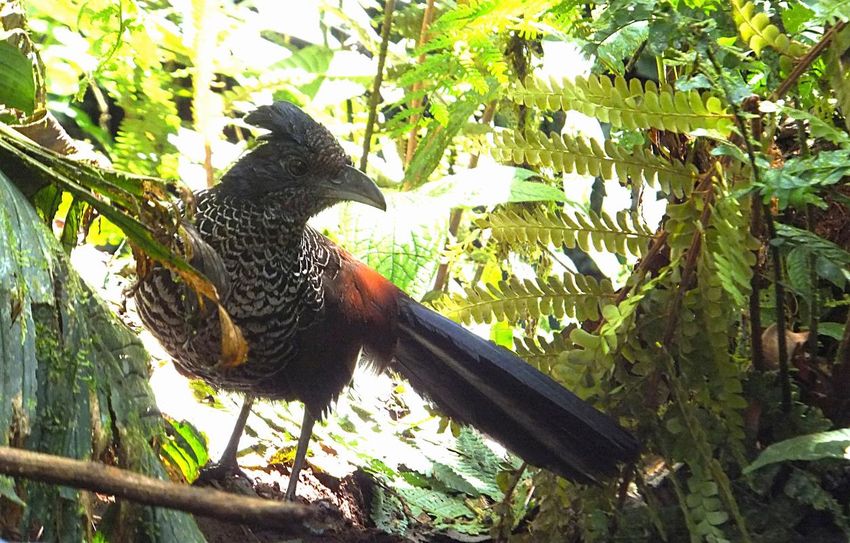
Banded Ground-Cuckoo
                     Neomorphus radiolosus

                                                          © Manuel Sánchez-Nivicela

Compiler: Eliana Montenegro-Pazmiño

Contributors: Davi Teles, Gabriel Muñoz (Map distribution design), Michaël
Moens

Suggested citation: Montenegro-Pazmiño, Eliana. (2020). Survival Blueprint:
Banded Ground-Cuckoo, Neomorphus radiolosus. EDGE, ZSL, Segre Foundation,
Fundación Jocotoco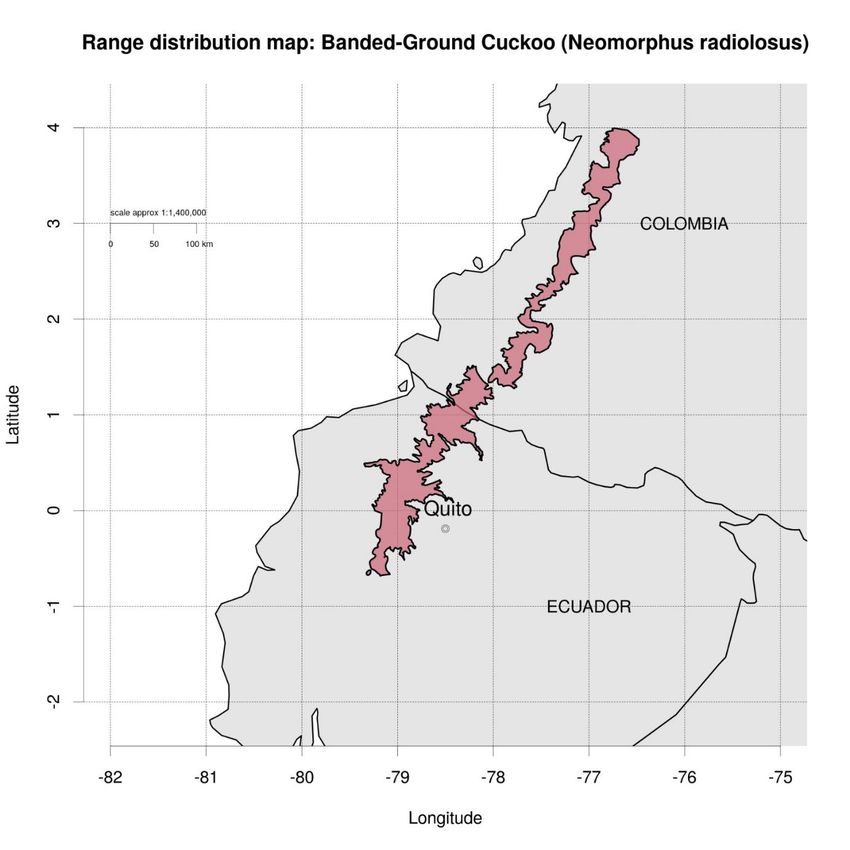
1. STATUS REVIEW

1.1 Taxonomy:

Kingdom: Animalia
Class: Aves
Order: Cuculiformes
Family: Cuculidae
Subfamily: Neomorphinae
Genus: Neomorphus
Species: Neomorphus radiolosus
Common name: Banded Ground-Cuckoo

The genus Neomorphus includes South American Ground-Cuckoos in the
Cuculidae family and the subfamily Neomorphinae (Myers et al. 2020).
Neomorphinae are Ground Cuckoos with long legs, long tail and short wings
which inhabit the New World (Payne and Sorensen 2005). Neomorphus species are
insectivorous birds often associated while foraging, with ant swarms, mixed flocks
and groups of mammals, such as peccaries (Hornbuckle 1997; López-Lanús et al.
1999). This genus varies in morphology. According to Payne and Sorensen (2005),
the ancestors of N. radiolosus and N. geoffroyi separated from the ancestors of
N. pucheranii and N. rufipennis by a speciation event, and after these, the groups
speciated once more.

Neomorphus radiolosus seems to be isolated from N. geoffroyi, and other ground-
cuckoos by the northern Andean Mountains (Payne and Sorensen 2005). The
species is terrestrial and looks like a forest roadrunner-like cuckoo. There is no
sexual dimorphism; its plumage is mostly black with a glossy black crest, it has a
large bare blue ocular area and a blackish glossed green long tail (Birdlife
International 2020b; Payne and Sorensen 2005). The species differentiates
from N. geoffroyi in the bill and colour patterns, while N. radiolosus has a heavy
dusky colour above its bill with yellow below it; N. geoffroyi has a yellow bill and
the latter is bronzy-brown above until the tail, the wings are glossed green and
have a black chest band (Payne and Sorensen 2005).
1.2 Distribution and population status:

The Banded Ground-Cuckoo (Neomorphus radiolosus) inhabits the foothills and
lower slopes of the Choco Ecoregion (500-1200 masl) in southwestern Colombia
and northwestern Ecuador (Payne and Sorensen 2005; Birdlife International
2020b) (see Figure 1: Map). It depends mostly on continuous primary forest, but
there are some records in secondary forest areas (BirdLife International 2020). Its
home range is estimated from 42 to 50 hectares (Karubian and Carrasco 2008).

Figure 1. Banded Ground-Cuckoo Distribution Map (Source: Birdlife International 2020b)
1.2.1 Global distribution:

Country     Population                Distribution            Population Notes
            estimate                                          trend
            (plus references)                                 (plus
                                                              references)
Global      1000-2499                 Pacific slope of the    Decreasing      Declining populations
            individuals, 600-1700     West Andes in           (Birdlife       are caused mainly by
            (mature individuals),     southwest Colombia      International   habitat loss, but it is
            according to known        and                     2020b)          presumed hunting and
            records, descriptions     northwest Ecuador.                      low reproduction rates
            of abundance and                                                  over three-generation
            range size (Birdlife                                              are also relevant factors
            2020)                                                             (Birdlife International
                                                                              2020).
Ecuador     Unknown                   Northwest Ecuador       Unknown         There is no precise
                                      (Carchi, Esmeraldas,    (Birdlife       information about the
                                      Imbabura and            International   population trend in
                                      Pichincha provinces).   2020b)          Ecuador.
Colombia    Unknown                   Southwest Colombia      Unknown         There is no precise
                                      (Risaralda, Valle,      (Birdlife       information about the
                                      Cauca, Nariño).         International   population trend in
                                                              2020b)          Colombia.

            1.2.2 Local distribution:

Country    Region /     Site            Level of       Population Reference(s)        Notes
           province                     Protection     size
Ecuador    Imbabura     Bosque          Private        Unknown       (Birdlife
                        Protector Los   protected                    International
                        Cedros          area                         2020b)
Ecuador    Imbabura     Cayapas-        Some           Unknown       (Birdlife
                        Santiago-       protected                    International
                        Wimbí           areas with                   2020b)
                                        community
                                        lands
Ecuador    Esmeraldas   Corredor        Biological     Unknown       (Birdlife
                        Awacachi        corridor                     International
                                        managed by                   2020b)
                                        Fundación
                                        Awacachi
Ecuador    Esmeraldas   Mache           Public and     Bilsa ~40     (Karubian and
                        Chindul         Private        pairs         Carrasco 2008)
                        Ecological      protected
                        Reserve and     areas,
                        surrounding     including:
areas - Mache
(Reserva Chindul
Ecológica Ecological
Mache- Reserve
Chindul IBA) Bilsa
Biological
Station
Ecuador Pichincha Mashpi- Protected Unknown (Birdlife “Un Poco del
Pachijal area International Choco” is a private
2020b) reserve located in
the IBA area who
has records of the
species. It has
conducted
research activities
with the species,
mainly with
banding
techniques. Also
there are several
records in Mashpi
area and
surroundings.
Ecuador Esmeraldas Reserva Protected Unknown (Birdlife
- Ecológica Area International
Imbabura Cotacachi- 2020b)
Cayapas
Ecuador Esmeraldas Territorio Protected Unknown (Birdlife
Étnico Awá y Area International
alrededores 2020b)
Ecuador Esmeraldas Verde- Community Unknown (Birdlife Fundación
Ónzole- lands, International Jocotoco protects
Cayapas- protected 2020b; EDGE approximately 5
Canandé areas, of Existence hectares of
agricultural 2018; primary and
and forestry Fundación secondary forests
Jocotoco 2020) in this area. The
EDGE of Existence
(ZSL) funded
Project:
“Community-
based research to
conserve the
Banded Ground-
Cuckoo in
northern Ecuador”
was developed in
this area, inside
Canande andTesoro Escondido
Reserves.
Colombia Cauca Munchique Protected Unknown (Birdlife
Natural area International
National Park 2020b)
and southern
extension
Colombia Nariño Reserva Protected Unknown (Birdlife
Natural El area International
Pangán 2020b)
Colombia Nariño Reserva Protected Unknown (Birdlife
Natural Río area International
Ñambí 2020b)
1.3 Protection status:
The Banded Ground-Cuckoo is classified according to its global risk of extinction
as Endangered according to C2a(i) IUCN Red List Criteria. Its population size is
smaller than 2500 individuals, consisting of declining, fragmented and isolated
subpopulations (Birdlife International 2020b). The species is endemic of the Choco
ecoregion, one of the world’s richest lowland biotas, it has a magnificent richness
and endemism of plants, reptiles, amphibians, insects and birds (Birdlife
International 2020a). According to Gómez et al. (2014) Choco ecoregion holds an
extension of 17 million hectares. Very few of this extension is inside protected
areas, just 18,7%, 5,1 % in Panama, 8,6 % in Colombia and 5% in Ecuador.
The major threats for the species are habitat loss and degradation that are
increasing rapidly (Birdlife International 2020b). According to Birdlife International
(2020a) the major threat for the Chocó ecoregion, where the species is endemic,
are the massive logging concessions. Over 40% of the forests have been
deforested and degraded since 1960, and the deforestation rates are increasing.
By 1996, in western Ecuador, there was only 18% of evergreen lowland forests
and 40% of premontane forests remaining (Sierra 1996). Esmeraldas province in
Ecuador has the highest national rates of deforestation; as highlighted in the local
distribution table, there are two important IBA sites in this province for the species
(Sierra 2013).
1.4 Ecology, behaviour and habitat requirements:
The Banded Ground-Cuckoo is one of the most threatened cuckoos of the New
World (Payne and Sorensen 2005; Del Hoyo et al. 1992). This endemic Chocó
species inhabits the foothills and lower slopes, mainly from 500-1200 meters insouthwestern Colombia and northwestern Ecuador (Payne and Sorensen 2005). It depends mostly on continuous primary forest, but there are some records of it occurring in secondary forests (Birdlife International 2020b). It is a large terrestrial cuckoo that follows ant swarms and eats the insects that are escaping from them. The species is also associated with mixed-species flocks of other ant-following birds such as, Ocellated Antbird, Plain-brown Woodpecker, Immaculate Antbird, among others (Payne and Sorensen 2005). Furthermore, Neomorphus species are associated with Collared Peccaries, according to Amaral et al. (2017), with the species not only feeding on the invertebrates that the peccaries turn up from the floor, but also sounding like them. The bill clacking of the ground-cuckoos is similar to the clacking of peccaries, deceiving predators. Ground-cuckoos and peccaries benefit mutually to alert each other of predators, apparently with the ground-cuckoos acting as sentinels in this mutualistic relation, while peccaries provide protection. According to Payne and Sorensen (2005), Neomorphus radiolosus perches on fallen trunks or on the ground to examine leaves, stems and trunk bases, it moves quickly on the ground following the ant swarms. The authors described its behavior as “sprint in bursts and stops abruptly, runs forward to capture food, and when it catches prey items, it runs in a zig-zag pattern” (p. 201). Ground cuckoos can also fly to survey the area from high perches and “stay within a hop and flap of the ground” (p. 6). There is little information about the breeding of this species, but it is known that it is a nest-building species. According to Karubian and Carrasco (2007), it breeds from March to June. The authors found two large nests, made by leaves and placed five meters above the ground in a Melastomataceae tree in Ecuador. Both adults contribute to the incubation of eggs, brooding and provisioning of food to the chick. The nestling fledged 20 days after hatching. The chick had white down except on its head; at fledging the plumage was similar to the adults
1.5 Threat analysis:

Threat                Description of how this threat impacts the species        Intensity of threat
                                                                                (low, medium, high,
                                                                                critical or unknown)
Habitat loss          Timber extraction, mining and oil palm plantations are    Critical
caused by             causing several social-environmental conflicts. Not
extractive            only biodiversity is affected, but vulnerable people are
activities such as    also facing dispossession of their territories,
timber extraction,    environmental contamination and racism (Moreno
oil-palm              Parra 2019). These types of activities are responsible
plantations and       for the disappearance of more than 40% of primary
gold-mining           forests in the region (Birdlife International 2020a). The
                      Banded Ground-Cuckoo is a primary forest-dependent
                      species, this threat is certainly the most important for
                      this and other forest-dependant species.
Habitat loss          Agriculture and cattle farming negatively affect          Critical
caused by small       biodiversity by changing habitats and increasing
and large-scale       contamination through the use of pollutants, an
agriculture, and      increase of food waste, and contribution to the climate
cattle farming        crisis (Dudley and Alexander 2017). As described in the
                      previous threat, these types of activities degrade the
                      habitat the Banded Ground-Cuckoo needs to survive.
Habitat loss          This threat is caused by the expansion of the two         Critical
caused by the         previously mentioned threats: extractive activities,
expansion of the      agriculture and cattle farming. Better access to the
road network          focal areas is needed to develop these activities. Also,
                      with road expansion, more unprotected forest patches
                      become vulnerable to degradation and promote the
                      intensification of anthropogenic activities that
                      deteriorate important habitats of the Banded Ground-
                      Cuckoo and other endangered species.
Habitat               Habitat fragmentation reduces dispersion rates            High
fragmentation         between subpopulations (McCallum and Dobson
caused by             2002). It reduces genetic diversity that leads to a
extractive            decline in the population fitness, high risk of diseases
activities,           and local extinctions (McCallum and Dobson 2002;
agriculture, cattle   Dixo et al. 2009). Also it creates and intensifies edge
farming and           effects, changing the environmental conditions of the
expansion of the      patches.
road network
Hunting               According to Birdlife (2020b), there is a presumed        Unknown
                      hunting pressure over the species. However there is
no accurate data about how this threat affects the
species in Colombia or Ecuador.
Lack of The species is not recognized in some areas of its High
information distribution range in Ecuador. In some localities, it is
known as the 'Choco roadrunner', but it is often
confused with other terrestrial birds. This scarcity in
knowledge of the species results in a poor
understanding of how the threats are affecting the
species, and impedes the development of effective
long-term conservation plans.
1.6 Stakeholder analysis:
Country Stakeholder Stakeholder’s Current activities Impact Intensity of
interest in the (positive, impact
species’ negative or (low, medium,
conservation both) high or
critical)
Ecuador Conservation High interest, The activities depend Positive. They High
NGOs they can be part on the kind of could support
of a conservation organization. conservation
network for the Fundación Altropico, initiatives and
BGC and the for example, is a local expand them
ecoregion NGO in Ecuador which to other
works with indigenous regions where
communities in the the BGC
Cayapas River, one of inhabits. Also,
the most important they could
sites of the BGC. establish
Other important connections
NGOs are Fundación with other
Jocotoco Washu, national and
FCAT, Ecominga, international
Fundación Futuro who NGOs.
own private reserves
to protect primary
forest patches in
Esmeraldas and
Province.
Ecuador Environmental High interest, The Environmental Positive and Critical
authorities they are always Ministry is in charge Negative. They
seeking alliances of controlling the give
with private NGOs natural resources, permissions
for conservation public protected for timber
purposes areas, its use and extractions
conservation. They and control it
give permissions for in the region.extractive activities Positively, they
and control them. could support
Also, they are involved conservation
in several projects for
conservation plans for their
whole ecosystems in expansion,
alliance with private they can
NGOs. create
alliances and
laws for the
long-term
conservation
of the species.
Ecuador Local Park High interest in Local park guards are Positive. They High
Guards conservation, involved in activities could develop
they are used to related to fieldwork
the fieldwork conservation in public activities for
demands and and private reserves conservation
have experience projects
in conservation
activities and
species
monitoring
Ecuador Residents High interest, Residents are Positive. High
involved in some people are organized in They could
conservation already involved associations. They are become local
and ecotourism in conservation implementing researchers
activities and ecotourism ecotourism initiatives (e.g. citizen
initiatives, they such as tourist trails science) and
are seeking and promoting support
alliances with attractions such as conservation
local waterfall visits and projects.
governments and viewing local
NGOs to improve biodiversity
their initiatives
Ecuador Local farmers The interest of Most of the local Farmers who High
this group people own lands are aware of
depends on their inside the forest ecosystem
awareness of where they have destruction,
environmental farms and work. the impact
degradation. they can have
Some farmers are is positive.
very aware of They could
forest give support
degradation and to
show a high conservation
interest, but initiatives and
people who are get involved in
not aware do not monitoring
show interest for activities.conservation People who
activities are not aware
of ecosystems
degradation
could be
against the
expansion of
protected
lands. Some of
them think
that protected
areas are
going to
prohibit
access to their
lands or, in
the case of
NGOs, try to
force them to
sell their lands
at a low cost.
This generates
bad
perceptions of
conservation.
Ecuador Residents not Low interest, They work for Negative High
involved in these people companies involved
conservation depend on with extractivism,
actions such as extractive mainly as daily
workers in activities for their workers.
logging livelihoods
companies or
other type of
extractive
activities
Ecuador Private land Unknown Some private The potential Medium
owners landowners are not impact is likely
registered with local to be negative,
authorities this may if they are not
include a lack of legal interested in
documentation for conservation
ownership of their efforts.
lands.
Ecuador Indigenous Unknown Indigenous The potential High
communities communities are impact is likely
vulnerable in the to be positive,
Choco Ecosystem, if they are
some NGOs such as already
Altropico work with working in
them in sustainabledevelopment conservation
activities, and activities.
education to
empower them to
support conservation
and their livelihoods.
Ecuador Forestry and Low interest, they They are the major Negative Critical
extractive have been responsible party for
companies deforesting the the deforestation in
Choco Ecoregion the region and the
for almost one habitat loss of the
century; BGC and other
conservation species
initiatives affect
their business.
Also they open
roads to get
access to extract
natural resources.
Ecuador Universities and High interest. Some local, national Positive. High
researchers Universities are and international They could
seeking alliances universities have generate
for ecological projects for knowledge
research of undergraduate and about the
endangered postgraduate species to
species. students in the region. inform
conservation
action.1.7 Context and background information that will affect the success of any conservation action for this species:
Description Barriers to conservation Opportunities for conservation
Socio-cultural effects Social and cultural attitudes vary throughout Some communities have basic Some communities are opened to
and cultural attitudes the Ecuadorian Choco ecoregion. There are needs that require urgent attention. conservation initiatives, they are
three provinces where the Banded Ground- Without basic services for people, accessible and want to support
Cuckoo persists: Esmeraldas, Pichincha and conservation is not possible. Local project’s related to biodiversity
Imbabura. In Esmeraldas there are indigenous governments should pay more conservation. Environmental
and settler communities, most of them attention to neglected socio- education is essential in some
dependant on extractivism: logging, hunting economic regions, especially in places, and it could start with local
and large-scale agriculture (Quininde 2011). Esmeraldas province, where there government and people's support.
Local governments often neglect indigenous are testimonies of a low quality of
communities; some of them live in precarious life, poverty, labour exploitation and Some NGOs who are working in the
conditions with no access to basic services appropriation of lands. ecoregion could establish alliances
(Moreno Parra 2019). In some places, NGOs are with local communities to work in
not accepted because locals think that they are NGOs non-acceptance is also a the different localities where the
invading territories and closing access to their barrier. There is a need to change species is present.
lands, especially NGOs who are buying land for people’s perception of conservation
conservation. In Pichincha province, there are NGOs. In addition to this, some
several local conservation initiatives that NGOs do need to change the way
include ecotourism activities and community- they are working inside these areas.
based conservation. In some cases, people are right in
their perception that some local
NGOs just work for their interests
and forget the communities andtheir importance for successful
conservation actions.
Economic implications Ecuador depends highly on the primary Ecuador has high rates of poverty
industry sector, and the exportation of raw and inequality,with 25% of the There is still opportunity for
materials. Agriculture and extractive activities population living in poverty. Rural conservation and improving local
(especially oil) are the main source of income areas have rates of poverty of more community livelihoods. The tourism
for the country (Banco Central del Ecuador than 40% (INEC 2020). For this sector is one of the most important
2020). reason, low economic activity is a sections for Ecuador. The creation of
significant barrier to conservation. alternative economic opportunities
In Esmeraldas, one of the most important for growth is the best option to
places for the Banded Ground-Cuckoo, As with much of the country, most achieve conservation impact. There
agricultural-related activities (including palm-oil of the region’s population depend are some opportunities for agro-
plantations, other plantations and cattle on the extraction of natural ecological practices, community-
farming) cover 40% of the territory, this is the resources, either as farmers or as based conservation and ecotourism
main economic activity for the population, with workers in the primary industry. initiatives.
almost 40% of the economically active Most of the time, the conditions
population involved in agricultural-related underlying the extraction of natural
activities, mainly as day-labourers (Quininde resources are not sustainable in the
2011). This economic dependence on long-term.
agriculture is similar in other provinces where
the Banded Ground-Cuckoo inhabits.
Existing conservation According to Birdlife International (2020b), the All conservation stakeholders who There are several opportunities for
measures Banded Ground-Cuckoo is protected inside are working in the region must be conservation of the species, but first,
public, private, indigenous community reserves identified. Not all of them are aware all of the conservation stakeholders
and protected forests in Colombia and Ecuador. of the conservation status of this must be identified who can support
In Ecuador, three public protected areas protect and other endangered bird species. conservation actions. There is the
habitat for the species: Cotacachi-Cayapas and Public environmental authorities are possibility to establish alliancesMache-Chindul Ecological Reserves and El not engaged at all. Currently, there between NGOs, researchers, and Pambilar Wildlife Refuge. The private reserves has only been initial contact with environmental authorities to "Los Cedros", "Bilsa" Biological Station, "Un them, however, persistent develop a long-term conservation Poco del Choco", Jevon Forest, Canande and engagement is needed to plan for the species, similar to other Tesoro Escondido have several records of strengthen public relations with successful plans for other Banded Ground-Cuckoo. Canande and Tesoro authorities and local governments to endangered conservation flagship Escondido reserves, owned by Fundación create awareness about the species such as the Andean Condor Jocotoco, protect 7,000 hectares of critical importance of the species and the and the Brown-headed Spider habitat for the species. Jocotoco is working to Choco ecoregion. Monkey. create a biosphere corridor of remnant Chocó rainforest through land purchases to connect the reserve with the 240,000 hectare Cotacachi- Cayapas National Park. The EDGE of Existence (ZSL) funded Project: “Community-based research to conserve the Banded Ground-Cuckoo in northern Ecuador” (EDGE of Existence 2018) built on the first attempt of community engagement and social outreach actions focused on this species and the Chocó rainforest. It engaged local communities of Esmeraldas for the long-term conservation of the Banded Ground-Cuckoo. This project supported initiatives of ecotourism and community-based conservation and trained local people and forest guards to monitor the species.
Administrative/political   Local communities in the region are hard-to-          As explained previously, local         There are authorities with high
set-up                     reach and distributed remotely. It can be             governments often forgot local         interest in conservation projects.
                           unclear how these communities are organised           communities, especially those that     Some of them could support
                           politically. In Esmeraldas, for example, locals are   are remote. Authorities often do not   conservation initiatives and
                           organized into "cooperatives", which contain          clearly understand the practical       establish alliances with other
                           groups of people with similar economic                realities and relationship between     important stakeholders, even those
                           activities, such as farmers.                          communities and biodiversity.          who are not interested in
                                                                                                                        biodiversity conservation.
                           Local governments are in charge of the
                           administrative matters of every province and
                           the local communities. Furthermore, there is an
                           environmental authority department in each
                           province who control and give permission for
                           environmental activities .
Local expertise and        Research about the Banded Ground-Cuckoo               Resources are limited to encourage     The current local expertise provides
interest                   home range, habitat preferences and breeding          a greater number of local people to    several opportunities for
                           ecology have been conducted at Bilsa,                 engage in conservation.                conservation. There is opportunity
                           Esmeraldas (Karubian and Carrasco 2007,               Unfortunately, much of the local       to promote local people as future
                           2008). "Un Poco del Choco", a private reserve,        population are not currently           conservation leaders. This is very
                           has a banding programme for bird-species; at          interested in conservation-related     important to establish and support
                           least two Banded Ground-Cuckoos have been             activities.                            long-term conservation measures.
                           banded since 2018. The EDGE of Existence (ZSL)                                               Community involvement is crucial
                           funded Project: “Community-based research to                                                 for conservation initiatives, this
                           conserve the Banded Ground-Cuckoo in                                                         involvement could develop in the
                           northern Ecuador” tried to estimate the                                                      future with a higher number of
                           occupancy of the species with playback                                                       people interested in conservation
                           monitoring, however, this attempt did not                                                    activities.
gather sufficient data. Nevertheless, the species presence was confirmed, with the species being recorded several times in camera traps located in Canande and Tesoro Escondido private reserves. It seems camera trapping is the appropriate methodology to study ground- dwelling birds such as the BGC (O’Brien and Kinnaird 2008). Camera traps can document the presence of the species and other ecological aspects, such as occupancy, density, behaviour, and interactions with other species (O’Brien and Kinnaird 2008; Suwanrat et al. 2015). Camera traps will be installed in both private reserves to increase the knowledge of the species with the support of the Rufford Foundation. The medium term plan (XX years) is to expand the project to the entire region, especially in the Esmeraldas province. Furthermore, biodiversity research of the Ecuadorian Choco has been conducted inside private reserves where local forest guards, local people and parabiologists are involved. In Ecuador, the three provinces where the species is present have local people interested in conservation and with experience in biodiversity monitoring. Forest guards of public
reserves are also very important actors; they
            are part of local communities and are already
            engaged in conservation initiatives and
            environmental awareness raising.
Resources   Public resources for conservation initiatives are   Limited resources is a significant   There is expertise to develop
            limited in Ecuador. In 2019, the budget for         barrier to conservation. All the     competitive proposals to seek
            environmental protection decreased by more          conservation initiatives depend      resources for conservation
            than 30% (Diario El Comercio 2019). The             highly on fudning from local and     initiatives in the region.
            negative economic environment in most Latin         international NGOs.                  Furthermore, there are
            American countries is critical and is expected to                                        opportunities to establish alliances
            get worst due to the impact of COVID-19.                                                 between NGOs, local authorities and
                                                                                                     universities to obtain other non-
            Private NGOs support several conservation                                                monetary resources, such as
            initiatives across the entire region. Local NGOs                                         personal resources and capacity
            are generally supported by international NGOs                                            building of local people.
            from developed countries. Among the most
            important local NGOs who are working in the
            Choco Ecoregion are Fundación Altropico,
            Fundación Jocotoco, Fundación de Conservación
            de los Andes Tropicales, Aves y Conservation.
            They are supported by international NGOs such
            as the Rainforest Trust, American Bird
            Conservancy, WWF, IUCN, Birdlife International,
            and Critical Ecosystem Partnership Fund,
            among others.
            For the Banded Ground-Cuckoo conservation,
            there are currently three active projects: the
EDGE of Existence and Segre Foundation funded project “Community-based research to conserve the Banded Ground-Cuckoo in northern Ecuador” developed by Fundación Jocotoco, the expansion of the same project with the support of the Rufford Foundation, and lastly a project funded by National Geographic in the Bilsa Biological Station. These three projects are located in Esmeraldas province. Another important source of funding are the local, national and international universities. Some of these are involved in research activities in the region with undergraduate and graduate students. This kind of people-resource is very important to develop research of the species and the ecoregion.
2. ACTION PROGRAMME

Vision (30-50 years)
Banded-Ground Cuckoo population viable and effectively conserved throughout its entire distribution range.
Goal(s) (5-10 years)
The long-term conservation of the Banded-Ground Cuckoo secured in Ecuador and supported by active community involvement.
Objectives                                                                                                              Prioritisation
                                                                                                                        (low, medium,
                                                                                                                        high or critical)
Establish a monitoring programme of the Banded Ground-Cuckoo                                                            Critical
Increase knowledge of the Banded Ground-Cuckoo essential for raising awareness and its conservation                     Critical
Establish protected areas for the protection of the species through laws, private reserves or corridor creation         High
Quantify the threats for the species across its distribution                                                            High
Raise awareness about the Banded Ground-Cuckoo in local communities living alongside critical populations of the Banded Medium
Ground-Cuckoo
Increase local community participation in conservation science                                                          Medium
Generate alternative sources of income to support local community livelihoods                                           Low
Develop a regional conservation network of key stakeholders to conserve and monitor the species                         High
Activities Country / Priority Associated Time Responsible Indicators Risks Activity
region (low, costs scale stakeholders type
medium, (currency)
high or
critical)
Objective 1: Establish a monitoring programme of the Banded Ground-Cuckoo
100.000 GBP -At least 100-200 Field and
-Malfunction of the
Activity 1.1 (camera traps) camera traps installed research
NGOs, equipment
Implement across the BGC activities
Environmental -Theft of camera traps
monitoring 2.000 GBP distribution area in
Ecuador - 5-10 authorities, -Access not granted to
programme of the Critical (batteries) Ecuador
Colombia years Universities, some areas
species with camera -Publications about
local -Not enough detections
traps across the 30.000 GBP occupancy, behaviour
communities of the species to enable
species’ distribution (Staff costs) and habitat preference
robust data analysis
of the species
10.000 GBP Registration lists of -Local people might not
Activity 1.2 NGOs,
(Staff training) local people trained have an interest to
Train local people, Environmental Training and
from key communities participate in research,
forest guards and Ecuador - authorities, capacity
Critical 1 year involved in monitoring or they may leave the
parabiologists in Colombia Universities, building
-Methodology for long- project before its
camera trap local activities
term community completion
methodology communities
participation
Activity 1.3 1,000 GBP for Registration list of all
Ecuador- NGOs, Not enough data to Engaging with
Socialize monitoring High the design of 1 year the people who receive
Colombia Environmental present or socialize stakeholders
results with other infographs, the informationstakeholders borchures, digital authorities,
interested in presentations. It Universities,
conservation such will depend if the local
as NGOs, local socializing is face communities
communities and to face or online
local authorities
Objective 2: Increase knowledge of the Banded Ground-Cuckoo essential for raising awareness and its conservation
Activity 2.1 Approx. 50.000 – -Not enough interest in
100.000 GBP (it the species from
Increase ecological depends on the Student project stakeholders such as,
NGOs,
knowledge of the kind of research) proposals for the universities.
Ecuador- Environmental
species in habitat High 3 years species, research -Not enough interested Research
Colombia authorities,
preferences, species project reports, papers students to work with
Universities
interactions, published the species
breeding ecology -Not enough resources
and spatial ecology for analysis
Approx. 50.000 -Not enough interest in
Activity 2.2 GBP the species from
Student project stakeholders such as
NGOs,
Increase knowledge proposals for the universities.
Ecuador- Environmental
about the genetic High 2 years species, research -Not enough interested Research
Colombia authorities,
diversity of the project reports, papers students to work with
Universities
species in different published the species
subpopulations -Not enough resources
for genetic analysis
Activity 2.3 Ecuador- Approx. 50.000 – NGOs, Student projects for -Not enough interest in
High 3 years Research
Colombia 100.000 GBP Environmental the species, research the species fromIncrease knowledge authorities, proposals, scientific stakeholders such as
about the behaviour Universities publications universities.
of the species -Not interested students
to work with the species
Not enough resources
for data analysis
Activity 2.4 1,000 GBP for
the design of
Socialize infographs, NGOs,
information of the borchures, digital Environmental
Registration list of all
Banded Ground- Ecuador- presentations. It authorities, Not enough data to Engaging with
HIgh 1 year the people who receive
Cuckoo with local Colombia will depend if the Universities, present or socialize stakeholders
the information
communities and socializing is face local
environmental to face or online communities
authorities
Objective 3: Establish protected areas for the protection of the species through laws, private reserves or corridor creation
Activity 3.1 Approx. 1000
GBP. These
At least one map
Map the occupancy analysis will be
identifying key habitat
of the species from achieved
Ecuador- NGOs, and occupancy for Not enough data to run
camera-trap data to High through the data 2-3 years Research
Colombia universities Banded Ground- the occupancy model
make identify collected in
Cuckoo in Ecuador
important habitat of activities in
the Banded Objective 1
Ground-CuckooActivity 3.2 Approx. 1000
GBP to cover
NGOs,
Meetings with local travel expenses
universities,
authorities to raise -Local authorities not
local Meetings arranged
awareness about interested in these
authorities, with at least all the Communicati
the importance of Ecuador- conservation initiatives
High 2 years Residents local governments of on and
the identified key Colombia -Hard to arrange
involved in the provinces in engagement
habitats in the meetings with local
conservation Ecuador
ecoregion for the authorities
and ecotourism
conservation of the
activities
species
These costs may -Not enough resources
vary across to create a protected
Activity 3.3
territories. And area
NGOs, local
they would cover Corridors established -Interest conflicts with
Create public authorities,
basic costs for between protected extractive activities such Protected
protected areas and residents
Ecuador - protected areas, 10 – 30 areas (public, private as logging and mining areas
establish biological High involved in
Colombia hire of forest years and community lands) -Residents not creation and
corridors with conservation
guards, among New protected areas interested in the engaging
community and and ecotourism
other expenses created creation of protected
private reserves activities
areas
support
-Disagreements between
stakeholders involved
These costs may NGOs, Private reserves Lack of funding sources
Activity 3.4 Ecuador - 10 – 30 Protected
High vary across residents established across the interested in the
Colombia years areas
territories, for involved in region conservation of the BGCRaise funds for the example, in conservation creation and
creation of private Esmeraldas, a and ecotourism engaging
reserves cost per hectare activities
is between 1000-
2000 pounds
Objective 4: Quantify the threats for the species across its distribution
Activity 4.1 Approx. 500 GBP,
Residents
depending on
involved in
Identify local the territory and
conservation A list of people
researchers working if travel to the
and ecotourism interested in the Difficult to access all of Engaging,
across the species Ecuador - places are 3–8
High activities, local conservation of the the areas and to get all identification
distribution range Colombia needed years
researches, species in Ecuador and the people interested of threats
who support the
universities, Colombia
identification of
NGOs, local
threats in their
authorities
research area
Approx. 2.000 Residents
Activity 4.2 GBP in meetings involved in
(face-to-face and conservation
A list of all the threats
Evaluate the online) and ecotourism The threats are not all
for the species and an
potential threats for activities, local identified because of Engaging,
Ecuador – 3–8 analysis of each threat
the species in the High researches, territories that are identification
Colombia years categorizing them from
different areas and universities, difficult to access and of threats
the most serious to the
analyse them for NGOs, local conduct research
least serious.
future conservation authorities
actions.Objective 5: Raise awareness about the Banded Ground-Cuckoo in local communities living alongside critical populations of the Banded Ground-Cuckoo
Activity 5.1 Approx. 300 GBP,
it will increase 6 months
- A list of local
Identify the local with field visits, it will - Little communities not
communities living Identification
communities living Ecuador- some depend NGOs, identified just with the
High alongside populations of
alongside Colombia communities are on universities use of maps
of the Banded Ground- stakeholders
populations of the small, isolated or research
Cuckoo
Banded Ground- difficult-access activities
Cuckoo
Create material
with threat map,
priority areas for
-Merchandise materials
Activity 5.2 Create conservation, NGOs,
Merchandise material are not of good quality
promotional Ecuador- brochures, Environmental Awareness-
Medium 1-2 years printed for distribution -Materials are not
material for the Colombia infographics. authorities raising
to target audience printed at time
species
Approx. 3.000
GBP for
designing costs
12000 GBP (1,20 At least 10,000
GBP per colouring books -Areas to conduct
Activity 5.3 Conduct
colouring book) NGOs, delivered to all of the activites are difficult to
environmental
Ecuador- Environmental schools in the access Awareness-
awareness raising Medium 1-5 years
Colombia 5.000 GBP authorities distribution area, -Insufficient interest of raising
activities among
(Staff costs) number of local the communities or local
children 5-12 years
teachers trained and authorities
talks givenActivity 5.4 Conduct Approx. 7.000
NGOs,
environmental GBP Talks in at least one of -Communities are not
Ecuador- Environmental Awareness-
awareness raising Medium 1-5 years the schools in each engaged in the activities
Colombia authorities raising
activities among community
teenagers
Activity 5.5 Conduct Approx. 7.000
NGOs, At least one talk in
environmental GBP -Communities do not
Ecuador- Environmental each community in Awareness-
awareness raising Medium 1-5 years engage in the activities
Colombia authorities social meetings and raising
activities among
school parent meetings
adults
Approx. 7.000 NGOs,
At least 200 local -Communities are not
Activity 5.6 Train Ecuador- GBP Environmental Awareness-
Medium 1-5 years teachers trained across engaged in the activities
local teachers Colombia authorities raising
the distribution area
Objective 6: Increase local community participation in conservation science
Activity 6.1 Develop Approx. 20,000
workshops in GPB to cover all -Communities not
NGOs,
communities about the distribution engaged
Environmental Awareness
biodiversity range of the BGC Workshops about -Low attendance of
authorities, and
conservation, Ecuador- 3-10 ecological monitoring, people at the workshops
Medium universities, community-
ecosystem services Colombia years camera trap use, -Low participation and
private based
and umbrella science communication interests in the
reserves research
species such as the workshops
Banded Ground-
CuckooActivity 6.2 Involve Approx. 10,000 NGOs,
-Local people are not
local participants in GBP for per Environmental Awareness
interested in the type of
research activities diems and authorities, Number of local people and
3-10 work proposed, or leave
as local researchers, Ecuador Medium salaries for local universities, involved in research community-
years the project before its
forest guards or people involved private activities based
completion
local conservation reserves research
leaders
Objective 7: Generate alternative sources of income to support local community livelihoods
Activity 7.1 Develop Approx. 7,000
-Community has no
plans of GBP NGOs,
interest in the activity
community-based Environmental Plans or programs to Community-
3- 10 -Activity generates
tourism in Ecuador Medium authorities, develop community- based
years conflict between
communities that local based ecotourism conservation
communities
already have similar communities
initiatives
Activity 7.2 Develop Approx. 7,000
workshops to train GBP
local people in
sustainable
activities that can -Local people are not
Workshops about Community-
generate alternate 3-10 NGOs, local interested in the
Ecuador Medium alternative economic based
income (chocolate, years communities activities
activities conservation
soap production,
agroecological
techniques)Objective 8: Develop a regional conservation network of key stakeholders to conserve and monitor the species
Activity 8.1 Hold Approx. 3000
meetings with GBP to organise
conservation meetings in
Meetings with
stakeholders such strategic places -Disagreements between
stakeholders in
as NGOs, to support NGOs, stakeholders Communicati
Ecuador, relevant conferences
environmental High attendance and 1-3 years Environmental -Bad relations between on and
Colombia such as ornithological
authorities, conservation authorities stakeholders disrupt engagement
or conservation
residents involved action teamwork in the future
meetings
in conservation
actions, researchers
and universities.
Activity 8.2 Create a Meetings with all the
-Disagreements between
research group to stakeholders at
NGOs, stakeholders Communicati
study the Banded Ecuador, relevant events such
High 1-3 years Environmental -Bad relations between on and
Ground-Cuckoo Colombia as, conferences,
authorities stakeholders disrupt engagement
across its ornithological or
teamwork in the future
distribution range conservation meetings3. LITERATURE CITED
Amaral, Fabio Raposo do, Gabriel Macedo, Marcos Maldonado‐Coelho, Vitor Q
de Piacentini, Alexine Keuroghlian, and Cibele Biondo. 2017. ‘Bluffing in the
Forest: Neotropical Neomorphus Ground‐cuckoos and Peccaries in a
Possible Case of Acoustic Mimicry’. Journal of Avian Biology 48 (11): 1471–74.
Banco Central del Ecuador. 2020. ‘Cifras Económicas Del Ecuador, Diciembre
2019’. 2020.
Birdlife International. 2020a. ‘Endemic Bird Areas Factsheet: Chocó’. 2020.
——. 2020b. ‘Species Factsheet: Neomorphus Radiolosus’. 2020.
http://www.birdlife.org.
Diario El Comercio. 2019. ‘El Presupuesto Para La Protección Ambiental Cayó
34%’, 1 February 2019.
https://www.elcomercio.com/tendencias/presupuesto-proteccion-
ambiental-reduccion-porcentaje.html.
Dixo, Marianna, Jean Paul Metzger, João S Morgante, and Kelly R Zamudio. 2009.
‘Habitat Fragmentation Reduces Genetic Diversity and Connectivity among
Toad Populations in the Brazilian Atlantic Coastal Forest’. Biological
Conservation 142 (8): 1560–69.
Dudley, Nigel, and Sasha Alexander. 2017. ‘Agriculture and Biodiversity: A
Review’. Biodiversity 18 (2–3): 45–49.
https://doi.org/https://doi.org/10.1080/14888386.2017.1351892.
EDGE of Existence. 2018. ‘Eliana Montenegro’. 2018.
https://www.edgeofexistence.org/fellow/eliana-montenegro/.
Fundación Jocotoco. 2020. ‘Conservation: Banded Ground-Cuckoo’. 2020.
https://www.jocotoco.org/wb#/EN/Conservacion.
Gómez, L, C Suárez, A Trujillo, A M Bravo, V Rojas, N Hernandez, and M C Vargas.
2014. ‘Landscape Management in Chocó-Darién Priority Watersheds’. WWF-
Colombia: Bogotá, Colombia.
Hornbuckle, J. 1997. ‘Two Sightings of Banded Ground-Cuckoo Neomorphus
Radiolosus in Ecuador’. Cotinga 8: 90.
Hoyo, Josep Del, Josep Del Hoyo, Andrew Elliott, and Jordi Sargatal. 1992.
Handbook of the Birds of the World. Vol. 1. Lynx edicions Barcelona.
INEC. 2020. ‘Reporte de Pobreza y Desigualdad – Diciembre 2019’. 2020.
Karubian, Jordan, and Luis Carrasco. 2008. ‘Home Range and Habitat
Preferences of the Banded Ground-Cuckoo (Neomorphus Radiolosus)’. The
Wilson Journal of Ornithology. BioOne. 2008.
Karubian, Jordan, Luis Carrasco, Domingo Cabrera, Andrew Cook, and Jorge
Olivo. 2007. ‘Nesting Biology of the Banded Ground-Cuckoo (Neomorphus
Radiolosus)’. The Wilson Journal of Ornithology 119 (2): 221–27.López-Lanús, Bernabé, K Berg, Ralf Strewe, and Paul G W Salaman. 1999. ‘The
Ecology and Vocalisations of Banded Ground-Cuckoo Neomorphus
Radiolosus’. Cotinga 11: 42–45.
McCallum, Hamish, and Andy Dobson. 2002. ‘Disease, Habitat Fragmentation
and Conservation’. Proceedings of the Royal Society of London. Series B:
Biological Sciences 269 (1504): 2041–49.
Moreno Parra, María. 2019. ‘Racismo Ambiental: Muerte Lenta y Despojo de
Territorio Ancestral Afroecuatoriano En Esmeraldas’. Íconos. Revista de
Ciencias Sociales, no. 64: 89–109.
Myers, P., R. Espinosa, C. S. Parr, T. Jones, G. S. Hammond, and T. A. Dewey.
2020. ‘The Animal Diversity Web (Online)’. 2020. https://animaldiversity.org.
O’Brien, Timothy G, and Margaret F Kinnaird. 2008. ‘A Picture Is Worth a
Thousand Words: The Application of Camera Trapping to the Study of Birds’.
Bird Conservation International 18 (S1): S144–62.
Payne, Robert B, and Michael D Sorensen. 2005. The Cuckoos. Vol. 15. Oxford
University Press.
Quininde, GAD Municipal del Cantón. 2011. ‘Plan de Desarrollo y Ordenamiento
Territorial Del Cantón Quininde de La Provincia de Esmeraldas 2012-2021’.
Sierra, Roberto. 1996. ‘Vegetación Remanente Del Ecuador Continental’. Circa 1:
0–1.
Sierra, Rodrigo. 2013. ‘Patrones y Factores de Deforestación En El Ecuador
Continental, 1990-2010’. Quito: Conservación Internacional and Forest
Trends.
Suwanrat, Saranphat, Dusit Ngoprasert, Christopher Sutherland, Pongthep
Suwanwaree, and Tommaso Savini. 2015. ‘Estimating Density of Secretive
Terrestrial Birds (Siamese Fireback) in Pristine and Degraded Forest Using
Camera Traps and Distance Sampling’. Global Ecology and Conservation 3:
596–606.You can also read


