Model-Contrastive Federated Learning
←
→
Page content transcription
If your browser does not render page correctly, please read the page content below
Model-Contrastive Federated Learning

                                                     Qinbin Li                                    Bingsheng He                               Dawn Song
                                          National University of Singapore               National University of Singapore                    UC Berkeley
                                               qinbin@comp.nus.edu.sg                           hebs@comp.nus.edu.sg                  dawnsong@berkeley.edu
arXiv:2103.16257v1 [cs.LG] 30 Mar 2021

                                                                 Abstract                                   A key challenge in federated learning is the hetero-
                                                                                                         geneity of data distribution on different parties [20]. The
                                             Federated learning enables multiple parties to collab-      data can be non-identically distributed among the parties in
                                         oratively train a machine learning model without commu-         many real-world applications, which can degrade the per-
                                         nicating their local data. A key challenge in federated         formance of federated learning [22, 29, 24]. When each
                                         learning is to handle the heterogeneity of local data dis-      party updates its local model, its local objective may be
                                         tribution across parties. Although many studies have been       far from the global objective. Thus, the averaged global
                                         proposed to address this challenge, we find that they fail      model is away from the global optima. There have been
                                         to achieve high performance in image datasets with deep         some studies trying to address the non-IID issue in the lo-
                                         learning models. In this paper, we propose MOON: model-         cal training phase [28, 22]. FedProx [28] directly limits
                                         contrastive federated learning. MOON is a simple and            the local updates by `2 -norm distance, while SCAFFOLD
                                         effective federated learning framework. The key idea of         [22] corrects the local updates via variance reduction [19].
                                         MOON is to utilize the similarity between model represen-       However, as we show in the experiments (see Section 4),
                                         tations to correct the local training of individual parties,    these approaches fail to achieve good performance on im-
                                         i.e., conducting contrastive learning in model-level. Our       age datasets with deep learning models, which can be as
                                         extensive experiments show that MOON significantly out-         bad as FedAvg.
                                         performs the other state-of-the-art federated learning algo-        In this work, we address the non-IID issue from a novel
                                         rithms on various image classification tasks.                   perspective based on an intuitive observation: the global
                                                                                                         model trained on a whole dataset is able to learn a bet-
                                                                                                         ter representation than the local model trained on a skewed
                                         1. Introduction                                                 subset. Specifically, we propose model-contrastive learn-
                                             Deep learning is data hungry. Model training can benefit    ing (MOON), which corrects the local updates by max-
                                         a lot from a large and representative dataset (e.g., ImageNet   imizing the agreement of representation learned by the
                                         [6] and COCO [31]). However, data are usually dispersed         current local model and the representation learned by the
                                         among different parties in practice (e.g., mobile devices and   global model. Unlike the traditional contrastive learning
                                         companies). Due to the increasing privacy concerns and          approaches [3, 4, 12, 35], which achieve state-of-the-art re-
                                         data protection regulations [40], parties cannot send their     sults on learning visual representations by comparing the
                                         private data to a centralized server to train a model.          representations of different images, MOON conducts con-
                                             To address the above challenge, federated learning [20,     trastive learning in model-level by comparing the represen-
                                         44, 27, 26] enables multiple parties to jointly learn a ma-     tations learned by different models. Overall, MOON is
                                         chine learning model without exchanging their local data.       a simple and effective federated learning framework, and
                                         A popular federated learning algorithm is FedAvg [34]. In       addresses the non-IID data issue with the novel design of
                                         each round of FedAvg, the updated local models of the par-      model-based contrastive learning.
                                         ties are transferred to the server, which further aggregates       We conduct extensive experiments to evaluate the ef-
                                         the local models to update the global model. The raw data is    fectiveness of MOON. MOON significantly outperforms
                                         not exchanged during the learning process. Federated learn-     the other state-of-the-art federated learning algorithms [34,
                                         ing has emerged as an important machine learning area and       28, 22] on various image classification datasets including
                                         attracted many research interests [34, 28, 22, 25, 41, 5, 16,   CIFAR-10, CIFAR-100, and Tiny-Imagenet. With only
                                         2, 11]. Moreover, it has been applied in many applications      lightweight modifications to FedAvg, MOON outperforms
                                         such as medical imaging [21, 23], object detection [32], and    existing approaches by at least 2% accuracy in most cases.
                                         landmark classification [15].                                   Moreover, the improvement of MOON is very significant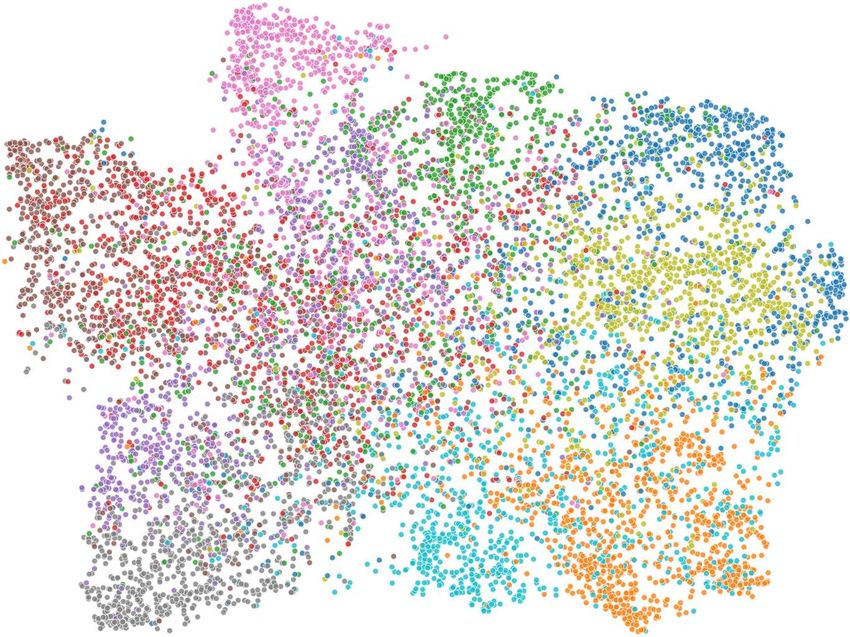
SCAFFOLD only shows experiments on EMNIST with lo-
                                                                 gistic regression and 2-layer fully connected layer. The ef-
                                                                 fectiveness of FedProx and SCAFFOLD on image datasets
                                                                 with deep learning models has not been well explored. As
                                                                 shown in our experiments, those studies have little or even
                                                                 no advantage over FedAvg, which motivates this study for
                                                                 a new approach of handling non-IID image datasets with
                                                                 deep learning models. We also notice that there are other
                                                                 related contemporary work [1, 30, 43] when preparing this
                                                                 paper. We leave the comparison between MOON and these
                                                                 contemporary work as future studies.
                                                                     As for studies on improving the aggregation phase,
                                                                 FedMA [41] utilizes Bayesian non-parametric methods to
                                                                 match and average weights in a layer-wise manner. Fe-
                                                                 dAvgM [14] applies momentum when updating the global
                                                                 model on the server. Another recent study, FedNova [42],
                                                                 normalizes the local updates before averaging. Our study
Figure 1. The FedAvg framework. In this paper, we focus on the   is orthogonal to them and potentially can be combined with
second step, i.e., the local training phase.                     these techniques as we work on the local training phase.
                                                                     Another research direction is personalized federated
                                                                 learning [8, 7, 10, 47, 17], which tries to learn personal-
on some settings. For example, on CIFAR-100 dataset with
                                                                 ized local models for each party. In this paper, we study
100 parties, MOON achieves 61.8% top-1 accuracy, while
                                                                 the typical federated learning, which tries to learn a single
the best top-1 accuracy of existing studies is 55%.
                                                                 global model for all parties.
2. Background and Related Work                                   2.2. Contrastive Learning
2.1. Federated Learning                                             Self-supervised learning [18, 9, 3, 4, 12, 35] is a recent
                                                                 hot research direction, which tries to learn good data repre-
    FedAvg [34] has been a de facto approach for federated
                                                                 sentations from unlabeled data. Among those studies, con-
learning. The framework of FedAvg is shown in Figure 1.
                                                                 trastive learning approaches [3, 4, 12, 35] achieve state-of-
There are four steps in each round of FedAvg. First, the
                                                                 the-art results on learning visual representations. The key
server sends a global model to the parties. Second, the par-
                                                                 idea of contrastive learning is to reduce the distance be-
ties perform stochastic gradient descent (SGD) to update
                                                                 tween the representations of different augmented views of
their models locally. Third, the local models are sent to a
                                                                 the same image (i.e., positive pairs), and increase the dis-
central server. Last, the server averages the model weights
                                                                 tance between the representations of augmented views of
to produce a global model for the training of the next round.
                                                                 different images (i.e., negative pairs).
    There have been quite some studies trying to improve
                                                                    A typical contrastive learning framework is SimCLR [3].
FedAvg on non-IID data. Those studies can be divided into
                                                                 Given an image x, SimCLR first creates two correlated
two categories: improvement on local training (i.e., step 2
                                                                 views of this image using different data augmentation op-
of Figure 1) and on aggregation (i.e., step 4 of Figure 1).
                                                                 erators, denoted xi and xj . A base encoder f (·) and a pro-
This study belongs to the first category.
                                                                 jection head g(·) are trained to extract the representation
    As for studies on improving local training, FedProx [28]
                                                                 vectors and map the representations to a latent space, re-
introduces a proximal term into the objective during local
                                                                 spectively. Then, a contrastive loss (i.e., NT-Xent [38]) is
training. The proximal term is computed based on the `2 -
                                                                 applied on the projected vector g(f (·)), which tries to max-
norm distance between the current global model and the
                                                                 imize agreement between differently augmented views of
local model. Thus, the local model update is limited by
                                                                 the same image. Specifically, given 2N augmented views
the proximal term during the local training. SCAFFOLD
                                                                 and a pair of view xi and xj of same image, the contrastive
[22] corrects the local updates by introducing control vari-
                                                                 loss for this pair is defined as
ates. Like the training model, the control variates are also
updated by each party during local training. The differ-
ence between the local control variate and the global con-                                 exp(sim(xi , xj )/τ )
                                                                       li,j = − log P2N                                      (1)
trol variate is used to correct the gradients in local train-                                        exp(sim(xi , xk )/τ )
                                                                                       k=1 I[k6=i]
ing. However, FedProx shows experiments on MNIST and
EMNIST only with multinomial logistic regression, while             where sim(·, ·) is a cosine similarity function and τ de-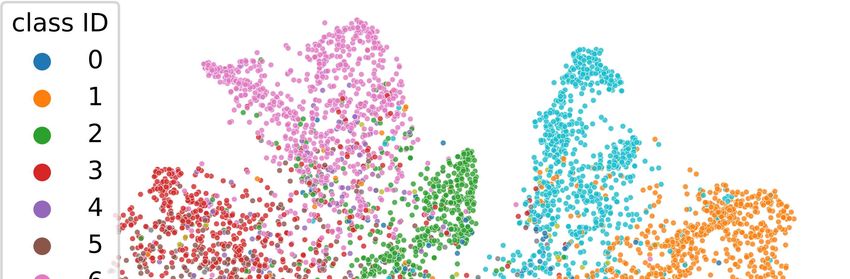
notes a temperature parameter. The final loss is computed
by summing the contrastive loss of all pairs of the same im-
age in a mini-batch.
   Besides SimCLR, there are also other contrastive learn-
ing frameworks such as CPC [36], CMC [39] and MoCo
[12]. We choose SimCLR for its simplicity and effective-
ness in many computer vision tasks. Still, the basic idea of
contrastive learning is similar among these studies: the rep-
resentations obtained from different images should be far               (a) global model                (b) local model
from each other and the representations obtained from the
same image should be related to each other. The idea is
intuitive and has been shown to be effective.
   There is one recent study [46] that combines federated
learning with contrastive learning. They focus on the un-
supervised learning setting. Like SimCLR, they use con-
trastive loss to compare the representations of different im-
ages. In this paper, we focus on the supervised learning
setting and propose model-contrastive learning to compare
representations learned by different models.                         (c) FedAvg global model         (d) FedAvg local model
                                                                Figure 2. T-SNE visualizations of hidden vectors on CIFAR-10.
3. Model-Contrastive Federated Learning
                                                                cannot be distinguished. Then, we run FedAvg algorithm
3.1. Problem Statement                                          on 10 subsets and show the representation learned by the
   Suppose there are N parties, denoted P1 , ..., PN . Party    global model in Figure 2c and the representation learned by
Pi has a local dataset Di . Our goal is to learn
                                            S a machine
                                                                a selected local model (trained based on the global model)
learning model w over the dataset D , i∈[N ] Di with            in Figure 2d. We can observe that the points with the same
the help of a central server, while the raw data are not ex-    class are more divergent in Figure 2d compared with Figure
changed. The objective is to solve                              2c (e.g., see class 9). The local training phase even leads
                                                                the model to learn a worse representation due to the skewed
                               N
                               X |Di |                          local data distribution. This further verifies that the global
             arg min L(w) =                Li (w),       (2)    model should be able to learn a better feature representation
                 w
                               i=1
                                     |D|
                                                                than the local model, and there is a drift in the local up-
where Li (w) = E(x,y)∼Di [`i (w; (x, y))] is the empirical      dates. Therefore, under non-IID data scenarios, we should
loss of Pi .                                                    control the drift and bridge the gap between the representa-
                                                                tions learned by the local model and the global model.
3.2. Motivation
                                                                3.3. Method
   MOON is based on an intuitive idea: the model trained
on the whole dataset is able to extract a better feature rep-      Based on the above intuition, we propose MOON.
resentation than the model trained on a skewed subset. For      MOON is designed as a simple and effective approach
example, given a model trained on dog and cat images, we        based on FedAvg, only introducing lightweight but novel
cannot expect the features learned by the model to distin-      modifications in the local training phase. Since there is al-
guish birds and frogs which never exist during training.        ways drift in local training and the global model learns a
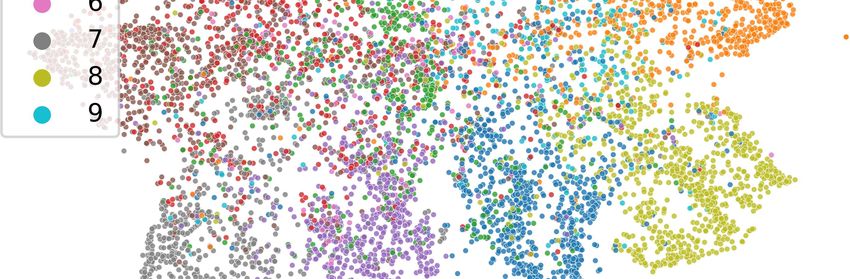
   To further verify this intuition, we conduct a simple ex-    better representation than the local model, MOON aims to
periment on CIFAR-10. Specifically, we first train a CNN        decrease the distance between the representation learned by
model (see Section 4.1 for the detailed structure) on CIFAR-    the local model and the representation learned by the global
10. We use t-SNE [33] to visualize the hidden vectors of        model, and increase the distance between the representation
images from the test dataset as shown in Figure 2a. Then,       learned by the local model and the representation learned by
we partition the dataset into 10 subsets in an unbalanced       the previous local model. We achieve this from the inspira-
way (see Section 4.1 for the partition strategy) and train a    tion of contrastive learning, which is now mainly used to
CNN model on each subset. Figure 2b shows the t-SNE             learn visual representations. In the following, we present
visualization of a randomly selected model. Apparently,         the network architecture, the local learning objective and
the model trained on the subset learns poor features. The       the learning procedure. At last, we discuss the relation to
feature representations of most classes are even mixed and      contrastive learning.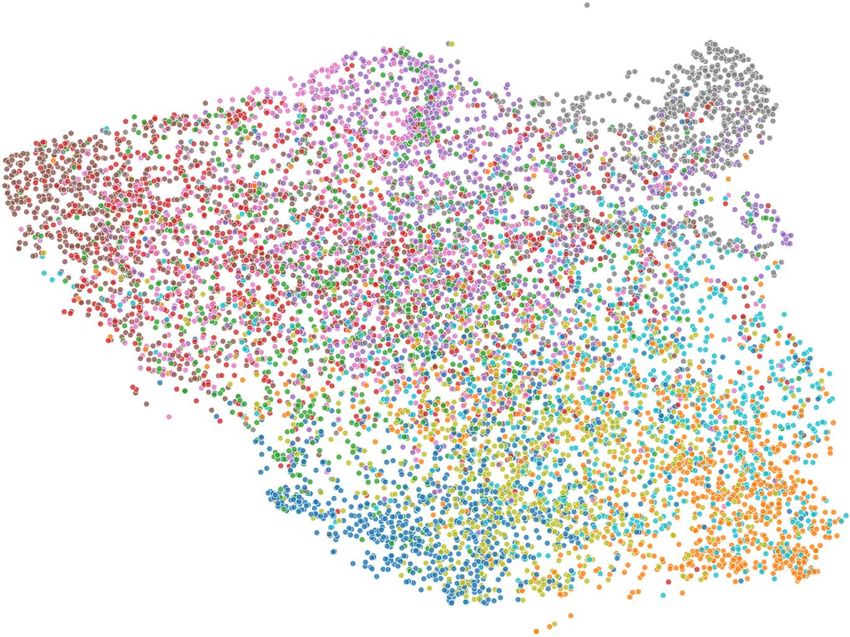
3.3.1    Network Architecture
The network has three components: a base encoder, a pro-
jection head, and an output layer. The base encoder is used
to extract representation vectors from inputs. Like [3], an
additional projection head is introduced to map the repre-
sentation to a space with a fixed dimension. Last, as we
study on the supervised setting, the output layer is used to
produce predicted values for each class. For ease of pre-
sentation, with model weight w, we use Fw (·) to denote the
whole network and Rw (·) to denote the network before the
output layer (i.e., Rw (x) is the mapped representation vec-
tor of input x).

3.3.2    Local Objective
As shown in Figure 3, our local loss consists two parts. The                             Figure 3. The local loss in MOON.
first part is a typical loss term (e.g., cross-entropy loss) in
supervised learning denoted as `sup . The second part is our             Algorithm 1: The MOON framework
proposed model-contrastive loss term denoted as `con .                    Input: number of communication rounds T ,
    Suppose party Pi is conducting the local training. It re-                    number of parties N , number of local
ceives the global model wt from the server and updates the                       epochs E, temperature τ , learning rate η,
model to wit in the local training phase. For every input x,                     hyper-parameter µ
we extract the representation of x from the global model wt               Output: The final model wT
(i.e., zglob = Rwt (x)), the representation of x from the lo-
cal model of last round wit−1 (i.e., zprev = Rwt−1 (x)), and             1   Server executes:
                                                   i
the representation of x from the local model being updated               2   initialize w0
wit (i.e., z = Rwit (x)). Since the global model should be               3   for t = 0, 1, ..., T − 1 do
able to extract better representations, our goal is to decrease          4        for i = 1, 2, ..., N in parallel do
the distance between z and zglob , and increase the distance             5            send the global model wt to Pi
between z and zprev . Similar to NT-Xent loss [38], we de-               6            wit ← PartyLocalTraining(i, wt )
                                                                                                       i
                                                                                  wt+1 ← k=1 |D          | t
                                                                                           PN
fine model-contrastive loss as                                           7                           |D| wk

                                                                         8   return wT
                           exp(sim(z, zglob )/τ )
`con = − log                                                             9   PartyLocalTraining(i, wt ):
               exp(sim(z, zglob )/τ ) + exp(sim(z, zprev )/τ )          10   wit ← wt
                                                          (3)
                                                                        11   for epoch i = 1, 2, ..., E do
   where τ denotes a temperature parameter. The loss of an
                                                                        12       for each batch b = {x, y} of Di do
input (x, y) is computed by
                                                                        13           `sup ← CrossEntropyLoss(Fwit (x), y)
                                                                        14           z ← Rwit (x)
        ` = `sup (wit ; (x, y)) + µ`con (wit ; wit−1 ; wt ; x),   (4)   15           zglob ← Rwt (x)
                                                                        16           zprev ← Rwt−1 (x)
  where µ is a hyper-parameter to control the weight of                                           i
                                                                        17           `con ←
model-contrastive loss. The local objective is to minimize                                             exp(sim(z,zglob )/τ )
                                                                                      − log exp(sim(z,zglob )/τ )+exp(sim(z,z prev )/τ )
min
 t
    E(x,y)∼Di [`sup (wit ; (x, y)) + µ`con (wit ; wit−1 ; wt ; x)].     18           ` ← `sup + µ`con
 wi
                                                            (5)         19           wit ← wit − η∇`
    The overall federated learning algorithm is shown in Al-
                                                                        20   return wit to server
gorithm 1. In each round, the server sends the global model
to the parties, receives the local model from the parties, and
updates the global model using weighted averaging. In local
training, each party uses stochastic gradient descent to up-               For simplicity, we describe MOON without applying
date the global model with its local data, while the objective          sampling technique in Algorithm 1. MOON is still applica-
is defined in Eq. (5).                                                  ble when only a sample set of parties participate in federated
and Tiny-Imagenet1 (100,000 images with 200 classes).
                                                                    Moreover, we try two different network architectures. For
                                                                    CIFAR-10, we use a CNN network as the base encoder,
                                                                    which has two 5x5 convolution layers followed by 2x2 max
                                                                    pooling (the first with 6 channels and the second with 16
                                                                    channels) and two fully connected layers with ReLU activa-
                                                                    tion (the first with 120 units and the second with 84 units).
                                                                    For CIFAR-100 and Tiny-Imagenet, we use ResNet-50 [13]
                                                                    as the base encoder. For all datasets, like [3], we use a 2-
                                                                    layer MLP as the projection head. The output dimension
Figure 4. The comparison between SimCLR and MOON. Here x            of the projection head is set to 256 by default. Note that
denotes an image, w denotes a model, and R denotes the function     all baselines use the same network architecture as MOON
to compute representation. SimCLR maximizes the agreement be-       (including the projection head) for fair comparison.
tween representations of different views of the same image, while       We use PyTorch [37] to implement MOON and the other
MOON maximizes the agreement between representations of the         baselines. The code is publicly available2 . We use the SGD
local model and the global model on the mini-batches.               optimizer with a learning rate 0.01 for all approaches. The
                                                                    SGD weight decay is set to 0.00001 and the SGD momen-
                                                                    tum is set to 0.9. The batch size is set to 64. The num-
learning each round. Like FedAvg, each party maintains its
                                                                    ber of local epochs is set to 300 for SOLO. The number
local model, which will be replaced by the global model and
                                                                    of local epochs is set to 10 for all federated learning ap-
updated only if the party is selected to participate in a round.
                                                                    proaches unless explicitly specified. The number of com-
MOON only needs the latest local model that the party has,
                                                                    munication rounds is set to 100 for CIFAR-10/100 and 20
even though it may not be updated in round (t − 1) (e.g.,
                                                                    for Tiny-ImageNet, where all federated learning approaches
wit−1 = wit−2 ).
                                                                    have little or no accuracy gain with more communications.
    An notable thing is that considering an ideal case where
                                                                    For MOON, we set the temperature parameter to 0.5 by de-
the local model is good enough and learns (almost) the same
                                                                    fault like [3].
representation as the global model (i.e., zglob = zprev ),
                                                                        Like previous studies [45, 41], we use Dirichlet distri-
the model-contrastive loss will be a constant (i.e., − log 12 ).
                                                                    bution to generate the non-IID data partition among par-
Thus, MOON will produce the same result as FedAvg, since
                                                                    ties. Specifically, we sample pk ∼ DirN (β) and allocate a
there is no heterogeneity issue. In this sense, our approach
                                                                    pk,j proportion of the instances of class k to party j, where
is robust regardless of different amount of drifts.
                                                                    Dir(β) is the Dirichlet distribution with a concentration
3.4. Comparisons with Contrastive Learning                          parameter β (0.5 by default). With the above partitioning
                                                                    strategy, each party can have relatively few (even no) data
    A comparison between MOON and SimCLR is shown
                                                                    samples in some classes. We set the number of parties to
in Figure 4. The model-contrastive loss compares represen-
                                                                    10 by default. The data distributions among parties in de-
tations learned by different models, while the contrastive
                                                                    fault settings are shown in Figure 5. For more experimental
loss compares representations of different images. We also
                                                                    results, please refer to Appendix.
highlight the key difference between MOON and traditional
contrastive learning: MOON is currently for supervised              4.2. Accuracy Comparison
learning in a federated setting while contrastive learning is
for unsupervised learning in a centralized setting. Draw-              For MOON, we tune µ from {0.1, 1, 5, 10} and report the
ing the inspirations from contrastive learning, MOON is a           best result. The best µ of MOON for CIFAR-10, CIFAR-
new learning methodology in handling non-IID data distri-           100, and Tiny-Imagenet are 5, 1, and 1, respectively. Note
butions among parties in federated learning.                        that FedProx also has a hyper-parameter µ to control the
                                                                    weight of its proximal term (i.e., LF edP rox = `F edAvg +
4. Experiments                                                      µ`prox ). For FedProx, we tune µ from {0.001, 0.01, 0.1, 1}
                                                                    (the range is also used in the previous paper [28]) and re-
4.1. Experimental Setup                                             port the best result. The best µ of FedProx for CIFAR-10,
   We compare MOON with three state-of-the-art ap-                  CIFAR-100, and Tiny-Imagenet are 0.01, 0.001, and 0.001,
proaches including (1) FedAvg [34], (2) FedProx [28], and           respectively. Unless explicitly specified, we use these µ set-
(3) SCAFFOLD [22]. We also compare a baseline approach              tings for all the remaining experiments.
named SOLO, where each party trains a model with its lo-               Table 1 shows the top-1 test accuracy of all approaches
cal data without federated learning. We conduct experi-               1 https://www.kaggle.com/c/tiny-imagenet

ments on three datasets including CIFAR-10, CIFAR-100,                2 https://github.com/QinbinLi/MOON
0                                    400                0
                                                 3500               6                                                      11                                     400
     9 8 7 6 5 4 3 2 1 0

                                                                   12                                    350               22
                                                 3000              18                                                      33                                     350
                                                                   24                                                      44
                                                                   30                                    300               55                                     300
                                                 2500              36                                                      66
                                                                   42                                    250               77                                     250

                                                        Class ID
                                                                                                                           88
Class ID

                                                 2000

                                                                                                               Class ID
                                                                   48                                    200               99
                                                                   54                                                     110                                     200
                                                 1500              60                                                     121
                                                                   66                                    150              132                                     150
                                                 1000              72                                    100              143
                                                                   78                                                     154                                     100
                                                 500               84                                                     165
                                                                   90                                    50               176                                     50
                                                                   96                                                     187
                                                 0                                                       0                198                                     0
                           0 1 2 3 4 5 6 7 8 9                          0 1 2 3 4 5 6 7 8 9                                     0 1 2 3 4 5 6 7 8 9
                                  Party ID                                     Party ID                                                  Party ID
                                 (a) CIFAR-10                                (b) CIFAR-100                                           (c) Tiny-Imagenet
  Figure 5. The data distribution of each party using non-IID data partition. The color bar denotes the number of data samples. Each rectangle
  represents the number of data samples of a specific class in a party.

  Table 1. The top-1 accuracy of MOON and the other baselines on                          Table 2. The number of rounds of different approaches to achieve
  test datasets. For MOON, FedAvg, FedProx, and SCAFFOLD,                                 the same accuracy as running FedAvg for 100 rounds (CIFAR-
  we run three trials and report the mean and standard derivation.                        10/100) or 20 rounds (Tiny-Imagenet). The speedup of an ap-
  For SOLO, we report the mean and standard derivation among all                          proach is computed against FedAvg.
  parties.                                                                                                 CIFAR-10                  CIFAR-100        Tiny-Imagenet
                                                                                             Method
                                                                                                       #rounds speedup           #rounds speedup    #rounds speedup
      Method         CIFAR-10       CIFAR-100     Tiny-Imagenet
                                                                                             FedAvg      100      1×               100       1×        20       1×
       MOON        69.1%±0.4% 67.5%±0.4% 25.1%±0.1%                                         FedProx       52     1.9×               75      1.3×       17      1.2×
      FedAvg       66.3%±0.5% 64.5% ±0.4% 23.0%±0.1%                                       SCAFFOLD       80     1.3×
70 70 25
60 60
top-1 accuracy (%)
top-1 accuracy (%)
top-1 accuracy (%)
50 20
50
40 15
40
30
30 10
20
20 MOON FedProx ( = 1) 10 MOON FedProx ( = 1) 5 MOON FedProx ( = 1)
FedAvg SCAFFOLD FedAvg SCAFFOLD FedAvg SCAFFOLD
10 FedProx (best )
0 FedProx (best )
0 FedProx (best )
0 20 40 60 80 100 0 20 40 60 80 100 5 10 15 20
#Communication rounds #Communication rounds #Communication rounds
(a) CIFAR-10 (b) CIFAR-100 (c) Tiny-Imagenet
Figure 6. The top-1 test accuracy in different number of communication rounds. For FedProx, we report both the accuracy with best µ and
the accuracy with µ = 1.
70 70 30
68 65 25
top-1 accuracy (%)
test accuracy (%)
test accuracy (%)
66 60 20
64 55 15
MOON MOON MOON
62 FedAvg 50 FedAvg 10 FedAvg
FedProx FedProx FedProx
SCAFFOLD SCAFFOLD SCAFFOLD
60 1 5 10 20 40
45 1 5 10 20 40
5 1 5 10 20 40
#local epochs #local epochs #local epochs
(a) CIFAR-10 (b) CIFAR-100 (c) Tiny-Imagenet
Figure 7. The top-1 test accuracy with different number of local epochs. For MOON and FedProx, µ is set to the best µ from Section 4.2
for all numbers of local epochs. The accuracy of SCAFFOLD is quite bad when number of local epochs is set to 1 (45.3% on CIFAR10,
20.4% on CIFAR-100, 2.6% on Tiny-Imagenet). The accuracy of FedProx on Tiny-Imagenet with one local epoch is 1.2%.
of the drift by too many local updates. Table 3. The accuracy with 50 parties and 100 parties (sample frac-
tion=0.2) on CIFAR-100.
#parties=50 #parties=100
Method
100 rounds 200 rounds 250 rounds 500 rounds
4.5. Scalability MOON (µ=1) 54.7% 58.8% 54.5% 58.2%
MOON (µ=10) 58.2% 63.2% 56.9% 61.8%
To show the scalability of MOON, we try a larger num- FedAvg 51.9% 56.4% 51.0% 55.0%
ber of parties on CIFAR-100. Specifically, we try two set- FedProx 52.7% 56.6% 51.3% 54.6%
tings: (1) We partition the dataset into 50 parties and all par- SCAFFOLD 35.8% 44.9% 37.4% 44.5%
SOLO 10%±0.9% 7.3%±0.6%
ties participate in federated learning in each round. (2) We
partition the dataset into 100 parties and randomly sample
20 parties to participate in federated learning in each round 4.6. Heterogeneity
(client sampling technique introduced in FedAvg [34]). The
results are shown in Table 3 and Figure 8. For MOON, We study the effect of data heterogeneity by varying
we show the results with µ = 1 (best µ from Section 4.2) the concentration parameter β of Dirichlet distribution on
and µ = 10. For MOON (µ = 1), it outperforms the Fe- CIFAR-100. For a smaller β, the partition will be more un-
dAvg and FedProx over 2% accuracy at 200 rounds with balanced. The results are shown in Table 4. MOON always
50 parties and 3% accuracy at 500 rounds with 100 par- achieves the best accuracy among three unbalanced levels.
ties. Moreover, for MOON (µ = 10), although the large When the unbalanced level decreases (i.e., β = 5), Fed-
model-contrastive loss slows down the training at the begin- Prox is worse than FedAvg, while MOON still outperforms
ning as shown in Figure 8, MOON can outperform the other FedAvg with more than 2% accuracy. The experiments
approaches a lot with more communication rounds. Com- demonstrate the effectiveness and robustness of MOON.
pared with FedAvg and FedProx, MOON achieves about
4.7. Loss Function
about 7% higher accuracy at 200 rounds with 50 parties and
at 500 rounds with 100 parties. SCAFFOLD has a low ac- To maximize the agreement between the representation
curacy with a relatively large number of parties. learned by the global model and the representation learned
60                                                                                   60
   top-1 accuracy (%)

                                                                                        top-1 accuracy (%)
                        50                                                                                   50
                        40                                                                                   40
                        30                                                                                   30
                        20                                                                                   20
                        10                       MOON ( = 1)
                                                 MOON ( = 10)
                                                                      FedProx
                                                                      SCAFFOLD
                                                                                                             10                      MOON ( = 1)
                                                                                                                                     MOON ( = 10)
                                                                                                                                                            FedProx
                                                                                                                                                            SCAFFOLD
                                                 FedAvg                                                                              FedAvg
                         0                                                                                    0
                             0   25    50   75     100   125    150   175   200                                   0      100      200       300       400        500
                                      #Communication rounds                                                               #Communication rounds
                                            (a) 50 parties                                                            (b) 100 parties (sample fraction=0.2)
                                                  Figure 8. The top-1 test accuracy on CIFAR-100 with 50/100 parties.

     Table 4. The test accuracy with β from {0.1, 0.5, 5}.                                   Table 5. The top-1 accuracy with different kinds of loss for the
   Method          β = 0.1         β = 0.5          β=5                                      second term of local objective. We tune µ from {0.001, 0.01 , 0.1,
   MOON             64.0%           67.5%           68.0%                                    1, 5, 10} for the `2 norm approach and report the best accuracy.
   FedAvg           62.5%           64.5%           65.7%                                        second term       CIFAR-10 CIFAR-100 Tiny-Imagenet
  FedProx           62.9%           64.6%           64.9%                                       none (FedAvg)        66.3%        64.5%           23.0%
 SCAFFOLD           47.3%           52.5%           55.0%                                           `2 norm          65.8%        66.9%           24.0%
   SOLO         15.9%±1.5% 22.3%±1% 26.6%±1.4%                                                      MOON            69.1%        67.5%            25.1%

by the local model, our model-contrastive loss `con is pro-
                                                                                             medical imaging, object detection, and landmark classifi-
posed inspired by NT-Xent loss [3]. Another intuitive op-
                                                                                             cation. Non-IID is a key challenge for the effectiveness of
tion is to use `2 regularization, and the local loss is
                                                                                             federated learning. To improve the performance of feder-
                                 ` = `sup + µ kz − zglob k2                       (6)        ated deep learning models on non-IID datasets, we propose
                                                                                             model-contrastive learning (MOON), a simple and effective
    Here we compare the approaches using different kinds                                     approach for federated learning. MOON introduces a new
of loss functions to limit the representation: no additional                                 learning concept, i.e., contrastive learning in model-level.
term (i.e., FedAvg: L = `sup ), `2 norm, and our model-                                      Our extensive experiments show that MOON achieves sig-
contrastive loss. The results are shown in Table 5. We can                                   nificant improvement over state-of-the-art approaches on
observe that simply using `2 norm even cannot improve the                                    various image classification tasks. As MOON does not re-
accuracy compared with FedAvg on CIFAR-10. While us-                                         quire the inputs to be images, it potentially can be applied
ing `2 norm can improve the accuracy on CIFAR-100 and                                        to non-vision problems.
Tiny-Imagenet, the accuracy is still lower than MOON. Our
model-contrastive loss is an effective way to constrain the
representations.                                                                             Acknowledgements
    Our model-contrastive loss influences the local model
from two aspects. Firstly, the local model learns a close rep-                                  This research is supported by the National Research
resentation to the global model. Secondly, the local model                                   Foundation, Singapore under its AI Singapore Programme
also learns a better representation than the previous one un-                                (AISG Award No: AISG2-RP-2020-018). Any opinions,
til the local model is good enough (i.e., z = zglob and `con                                 findings and conclusions or recommendations expressed in
becomes a constant).                                                                         this material are those of the authors and do not reflect the
                                                                                             views of National Research Foundation, Singapore. The au-
5. Conclusion                                                                                thors thank Jianxin Wu, Chaoyang He, Shixuan Sun, Yaqi
                                                                                             Xie and Yuhang Chen for their feedback. The authors also
   Federated learning has become a promising approach                                        thank Yuzhi Zhao, Wei Wang, and Mo Sha for their supports
to resolve the pain of data silos in many domains such as                                    of computing resources.
References                                                                 ings of the IEEE conference on computer vision and pattern
                                                                           recognition, pages 770–778, 2016.
 [1] Durmus Alp Emre Acar, Yue Zhao, Ramon Matas, Matthew           [14]   Tzu-Ming Harry Hsu, Hang Qi, and Matthew Brown. Mea-
     Mattina, Paul Whatmough, and Venkatesh Saligrama. Fed-                suring the effects of non-identical data distribution for feder-
     erated learning based on dynamic regularization. In Interna-          ated visual classification. arXiv preprint arXiv:1909.06335,
     tional Conference on Learning Representations, 2021.                  2019.
 [2] Sebastian Caldas, Sai Meher Karthik Duddu, Peter Wu, Tian      [15]   Tzu-Ming Harry Hsu, Hang Qi, and Matthew Brown. Fed-
     Li, Jakub Konečnỳ, H Brendan McMahan, Virginia Smith,               erated visual classification with real-world data distribution.
     and Ameet Talwalkar. Leaf: A benchmark for federated set-             arXiv preprint arXiv:2003.08082, 2020.
     tings. arXiv preprint arXiv:1812.01097, 2018.                  [16]   Sixu Hu, Yuan Li, Xu Liu, Qinbin Li, Zhaomin Wu, and
 [3] Ting Chen, Simon Kornblith, Mohammad Norouzi, and Ge-                 Bingsheng He. The oarf benchmark suite: Characteriza-
     offrey Hinton. A simple framework for contrastive learning            tion and implications for federated learning systems. arXiv
     of visual representations. arXiv preprint arXiv:2002.05709,           preprint arXiv:2006.07856, 2020.
     2020.                                                          [17]   Yutao Huang, Lingyang Chu, Zirui Zhou, Lanjun Wang,
 [4] Ting Chen, Simon Kornblith, Kevin Swersky, Mohammad                   Jiangchuan Liu, Jian Pei, and Yong Zhang. Personalized
     Norouzi, and Geoffrey Hinton. Big self-supervised mod-                cross-silo federated learning on non-iid data. In Proceedings
     els are strong semi-supervised learners. arXiv preprint               of the AAAI Conference on Artificial Intelligence, 2021.
     arXiv:2006.10029, 2020.                                        [18]   Longlong Jing and Yingli Tian. Self-supervised visual fea-
 [5] Zhongxiang Dai, Bryan Kian Hsiang Low, and Patrick Jail-              ture learning with deep neural networks: A survey. IEEE
     let. Federated bayesian optimization via thompson sam-                Transactions on Pattern Analysis and Machine Intelligence,
     pling. Advances in Neural Information Processing Systems,             2020.
     33, 2020.                                                      [19]   Rie Johnson and Tong Zhang. Accelerating stochastic gradi-
 [6] Jia Deng, Wei Dong, Richard Socher, Li-Jia Li, Kai Li,                ent descent using predictive variance reduction. In Advances
     and Li Fei-Fei. Imagenet: A large-scale hierarchical image            in neural information processing systems, pages 315–323,
     database. In 2009 IEEE conference on computer vision and              2013.
     pattern recognition, pages 248–255. Ieee, 2009.                [20]   Peter Kairouz, H Brendan McMahan, Brendan Avent,
 [7] Canh T Dinh, Nguyen H Tran, and Tuan Dung Nguyen. Per-                Aurélien Bellet, Mehdi Bennis, Arjun Nitin Bhagoji, Keith
     sonalized federated learning with moreau envelopes. arXiv             Bonawitz, Zachary Charles, Graham Cormode, Rachel Cum-
     preprint arXiv:2006.08848, 2020.                                      mings, et al. Advances and open problems in federated learn-
                                                                           ing. arXiv preprint arXiv:1912.04977, 2019.
 [8] Alireza Fallah, Aryan Mokhtari, and Asuman Ozdaglar. Per-
                                                                    [21]   Georgios A Kaissis, Marcus R Makowski, Daniel Rückert,
     sonalized federated learning with theoretical guarantees: A
                                                                           and Rickmer F Braren. Secure, privacy-preserving and feder-
     model-agnostic meta-learning approach. Advances in Neural
                                                                           ated machine learning in medical imaging. Nature Machine
     Information Processing Systems, 33, 2020.
                                                                           Intelligence, pages 1–7, 2020.
 [9] Jean-Bastien Grill, Florian Strub, Florent Altché, Corentin
                                                                    [22]   Sai Praneeth Karimireddy, Satyen Kale, Mehryar Mohri,
     Tallec, Pierre H Richemond, Elena Buchatskaya, Carl Do-
                                                                           Sashank J Reddi, Sebastian U Stich, and Ananda Theertha
     ersch, Bernardo Avila Pires, Zhaohan Daniel Guo, Moham-
                                                                           Suresh. Scaffold: Stochastic controlled averaging for on-
     mad Gheshlaghi Azar, et al. Bootstrap your own latent: A
                                                                           device federated learning. In Proceedings of the 37th Inter-
     new approach to self-supervised learning. arXiv preprint
                                                                           national Conference on Machine Learning. PMLR, 2020.
     arXiv:2006.07733, 2020.
                                                                    [23]   Rajesh Kumar, Abdullah Aman Khan, Sinmin Zhang, WenY-
[10] Filip Hanzely, Slavomı́r Hanzely, Samuel Horváth, and Peter          ong Wang, Yousif Abuidris, Waqas Amin, and Jay Ku-
     Richtárik. Lower bounds and optimal algorithms for person-           mar. Blockchain-federated-learning and deep learning mod-
     alized federated learning. arXiv preprint arXiv:2010.02372,           els for covid-19 detection using ct imaging. arXiv preprint
     2020.                                                                 arXiv:2007.06537, 2020.
[11] Chaoyang He, Songze Li, Jinhyun So, Mi Zhang, Hongyi           [24]   Qinbin Li, Yiqun Diao, Quan Chen, and Bingsheng He. Fed-
     Wang, Xiaoyang Wang, Praneeth Vepakomma, Abhishek                     erated learning on non-iid data silos: An experimental study.
     Singh, Hang Qiu, Li Shen, Peilin Zhao, Yan Kang, Yang                 arXiv preprint arXiv:2102.02079, 2021.
     Liu, Ramesh Raskar, Qiang Yang, Murali Annavaram,              [25]   Qinbin Li, Zeyi Wen, and Bingsheng He. Practical fed-
     and Salman Avestimehr. Fedml: A research library and                  erated gradient boosting decision trees. In Proceedings of
     benchmark for federated machine learning. arXiv preprint              the AAAI Conference on Artificial Intelligence, pages 4642–
     arXiv:2007.13518, 2020.                                               4649, 2020.
[12] Kaiming He, Haoqi Fan, Yuxin Wu, Saining Xie, and Ross         [26]   Qinbin Li, Zeyi Wen, Zhaomin Wu, Sixu Hu, Naibo Wang,
     Girshick. Momentum contrast for unsupervised visual rep-              and Bingsheng He. A survey on federated learning sys-
     resentation learning. In Proceedings of the IEEE/CVF Con-             tems: Vision, hype and reality for data privacy and protec-
     ference on Computer Vision and Pattern Recognition, pages             tion. arXiv preprint arXiv:1907.09693, 2019.
     9729–9738, 2020.                                               [27]   Tian Li, Anit Kumar Sahu, Ameet Talwalkar, and Virginia
[13] Kaiming He, Xiangyu Zhang, Shaoqing Ren, and Jian Sun.                Smith. Federated learning: Challenges, methods, and future
     Deep residual learning for image recognition. In Proceed-             directions. arXiv preprint arXiv:1908.07873, 2019.
[28] Tian Li, Anit Kumar Sahu, Manzil Zaheer, Maziar Sanjabi,         [42] Jianyu Wang, Qinghua Liu, Hao Liang, Gauri Joshi, and
     Ameet Talwalkar, and Virginia Smith. Federated optimiza-              H Vincent Poor. Tackling the objective inconsistency prob-
     tion in heterogeneous networks. In Third Conference on Ma-            lem in heterogeneous federated optimization. Advances in
     chine Learning and Systems (MLSys), 2020.                             Neural Information Processing Systems, 33, 2020.
[29] Xiang Li, Kaixuan Huang, Wenhao Yang, Shusen Wang, and           [43] Lixu Wang, Shichao Xu, Xiao Wang, and Qi Zhu. Address-
     Zhihua Zhang. On the convergence of fedavg on non-iid                 ing class imbalance in federated learning. In Proceedings of
     data. In International Conference on Learning Representa-             the AAAI Conference on Artificial Intelligence, 2021.
     tions, 2020.                                                     [44] Qiang Yang, Yang Liu, Tianjian Chen, and Yongxin Tong.
[30] Xiaoxiao Li, Meirui JIANG, Xiaofei Zhang, Michael Kamp,               Federated machine learning: Concept and applications. ACM
     and Qi Dou. Fed{bn}: Federated learning on non-{iid} fea-             Transactions on Intelligent Systems and Technology (TIST),
     tures via local batch normalization. In International Confer-         10(2):1–19, 2019.
     ence on Learning Representations, 2021.
                                                                      [45] Mikhail Yurochkin, Mayank Agarwal, Soumya Ghosh,
[31] Tsung-Yi Lin, Michael Maire, Serge Belongie, James Hays,              Kristjan Greenewald, Nghia Hoang, and Yasaman Khaza-
     Pietro Perona, Deva Ramanan, Piotr Dollár, and C Lawrence            eni. Bayesian nonparametric federated learning of neural
     Zitnick. Microsoft coco: Common objects in context. In                networks. In Proceedings of the 36th International Confer-
     European conference on computer vision, pages 740–755.                ence on Machine Learning. PMLR, 2019.
     Springer, 2014.
                                                                      [46] Fengda Zhang, Kun Kuang, Zhaoyang You, Tao Shen, Jun
[32] Yang Liu, Anbu Huang, Yun Luo, He Huang, Youzhi Liu,
                                                                           Xiao, Yin Zhang, Chao Wu, Yueting Zhuang, and Xiaolin
     Yuanyuan Chen, Lican Feng, Tianjian Chen, Han Yu, and
                                                                           Li. Federated unsupervised representation learning. arXiv
     Qiang Yang. Fedvision: An online visual object detection
                                                                           preprint arXiv:2010.08982, 2020.
     platform powered by federated learning. In Proceedings of
     the AAAI Conference on Artificial Intelligence, pages 13172–     [47] Michael Zhang, Karan Sapra, Sanja Fidler, Serena Yeung,
     13179, 2020.                                                          and Jose M. Alvarez. Personalized federated learning with
                                                                           first order model optimization. In International Conference
[33] Laurens van der Maaten and Geoffrey Hinton. Visualiz-
                                                                           on Learning Representations, 2021.
     ing data using t-sne. Journal of machine learning research,
     9(Nov):2579–2605, 2008.
[34] H Brendan McMahan, Eider Moore, Daniel Ramage, Seth              A. More Details of the Datasets
     Hampson, et al.        Communication-efficient learning of
     deep networks from decentralized data. arXiv preprint               The statistics of each dataset are shown in Table 6 when
     arXiv:1602.05629, 2016.                                          setting β = 0.5. All datasets provide a training dataset and
[35] Ishan Misra and Laurens van der Maaten. Self-supervised          test dataset. All the reported accuracies are computed on
     learning of pretext-invariant representations. In Proceedings    the test dataset.
     of the IEEE/CVF Conference on Computer Vision and Pat-
     tern Recognition, pages 6707–6717, 2020.                                        Table 6. The statistics of datasets.
[36] Aaron van den Oord, Yazhe Li, and Oriol Vinyals. Repre-                              #training samples/party
                                                                           dataset                                      #test samples
     sentation learning with contrastive predictive coding. arXiv                          mean          std
     preprint arXiv:1807.03748, 2018.                                    CIFAR10           5,000       1,165                10,000
[37] Adam Paszke, Sam Gross, Francisco Massa, Adam Lerer,                CIFAR100          5,000        181                 10,000
     James Bradbury, Gregory Chanan, Trevor Killeen, Zeming            Tiny-Imagenet      10,000         99                 10,000
     Lin, Natalia Gimelshein, Luca Antiga, et al. Pytorch: An
     imperative style, high-performance deep learning library. In
     Advances in neural information processing systems, pages            Figure 9 and Figure 10 show the data distribution of β =
     8026–8037, 2019.                                                 0.1 and β = 5 (used in Section 4.6 of the main paper),
[38] Kihyuk Sohn. Improved deep metric learning with multi-           respectively.
     class n-pair loss objective. In Advances in neural information
     processing systems, pages 1857–1865, 2016.
[39] Yonglong Tian, Dilip Krishnan, and Phillip Isola. Con-           B. Projection Head
     trastive multiview coding. arXiv preprint arXiv:1906.05849,
     2019.                                                               We use a projection head to map the representation like
[40] Paul Voigt and Axel Von dem Bussche. The eu general data         [3]. Here we study the effect of the projection head. We
     protection regulation (gdpr). A Practical Guide, 1st Ed.,        remove the projection head and conduct experiments on
     Cham: Springer International Publishing, 2017.                   CIFAR-10 and CIFAR-100 (Note that the network archi-
[41] Hongyi Wang, Mikhail Yurochkin, Yuekai Sun, Dimitris Pa-         tecture changes for all approaches). The results are shown
     pailiopoulos, and Yasaman Khazaeni. Federated learning           in Table 7. We can observe that MOON can benefit a lot
     with matched averaging. In International Conference on           from the projection head. The accuracy of MOON can be
     Learning Representations, 2020.                                  improved by about 2% on average with a projection head.
0 0 500
6 11
9 8 7 6 5 4 3 2 1 0
4000 12 22
18 400 33 400
24 44
30 55
3000 36 66
42 300 77 300
88
Class ID
Class ID
Class ID
48 99
2000 54 110
60 200 121 200
66 132
72 143
1000 78 100 154 100
84 165
90 176
96 187
0 0 198 0
0 1 2 3 4 5 6 7 8 9 0 1 2 3 4 5 6 7 8 9 0 1 2 3 4 5 6 7 8 9
Party ID Party ID Party ID
(a) CIFAR-10 (b) CIFAR-100 (c) Tiny-Imagenet
Figure 9. The data distribution of each party using non-IID data partition with β = 0.1.
1000 0 0
6 120 11
9 8 7 6 5 4 3 2 1 0
12 22 140
18 33
800 24 100 44 120
30 55
36 66 100
600 80 77
42 88
Class ID
Class ID
Class ID
48 99 80
54 60 110
400 60 121 60
66 40 132
72 143 40
200 78 154
84 20 165
90 176 20
96 187
0 0 198 0
0 1 2 3 4 5 6 7 8 9 0 1 2 3 4 5 6 7 8 9 0 1 2 3 4 5 6 7 8 9
Party ID Party ID Party ID
(a) CIFAR-10 (b) CIFAR-100 (c) Tiny-Imagenet
Figure 10. The data distribution of each party using non-IID data partition with β = 5.
Table 7. The top1-accuracy with/without projection head. Table 8. The top-1 accuracy of MOON and FedAvg with IID data
Method CIFAR-10 CIFAR-100 partition on CIFAR-10.
MOON 66.8% 66.1% Method Top-1 accuracy
without FedAvg 66.7% 65.0% µ = 0.1 73.6%
projection FedProx 67.5% 65.4% µ=1 73.6%
head SCAFFOLD 67.1% 49.5% MOON
µ=5 73.0%
SOLO 39.8%±3.9% 22.5%±1.1% µ = 10 72.8%
MOON 69.1% 67.5%
FedAvg (µ = 0) 73.4%
with FedAvg 66.3% 64.5%
projection FedProx 66.9% 64.6%
head SCAFFOLD 66.6% 52.5%
SOLO 46.3%±5.1% 22.3%±1.0% D. Hyper-Parameters Study
D.1. Effect of µ
We show the accuracy of MOON with different µ in Ta-
ble 9. The best µ for CIFAR-10, CIFAR-100, and Tiny-
C. IID Partition Imagenet are 5, 1, and 1, respectively. When µ is set to a
small value (i.e., µ = 0.1), the accuracy of MOON is very
To further show the effect of our model-contrastive loss, close to FedAvg (i.e., µ = 0) since the impact of model-
we compare MOON and FedAvg when there is no hetero- contrastive loss is small. As long as we set µ ≥ 1, MOON
geneity among local datasets. The dataset is randomly and can benefit a lot from the model-contrastive loss. Overall,
equally partitioned into the parties. The results are shown in we find that µ = 1 is a reasonable good choice if they do
Table 8. We can observe that the model-contrastive loss has not want to tune the parameter, where MOON achieves at
little influence on the training when the local datasets are least 2% higher accuracy than FedAvg.
IID. The accuracy of MOON is still very close to FedAvg
D.2. Effect of temperature and output dimension
even though with a large µ. MOON is still applicable when
there is no heterogeneity issue in data distributions across We tune τ from {0.1, 0.5, 1.0} and tune the output di-
parties. mension of projection head from {64, 128, 256}. TheTable 9. The test accuracy of MOON with µ from {0, 0.1, 1, 5, Table 11. The average training time per round.
10}. Note that MOON is actually FedAvg when µ = 0. Method CIFAR-10 CIFAR-100 Tiny-Imagenet
µ CIFAR-10 CIFAR-100 Tiny-Imagenet FedAvg 330s 20min 103min
0 66.3% 64.5% 23.0% FedProx 340s 24min 135min
0.1 66.5% 65.1% 23.4% SCAFFOLD 332s 20min 112min
1 68.4% 67.5% 25.1% MOON 337s 31min 197min
5 69.1% 67.1% 24.4%
10 68.3% 67.3% 25.0% training time per round with a NVIDIA Tesla V100 GPU
and four Intel Xeon E5-2684 20-core CPUs are shown in
Table 10. The combining of MOON and FedAvgM. Table 11. Compared with FedAvg, the computation over-
Datasets FedAvg MOON FedAvgM MOON+FedAvgM head of MOON is acceptable especially on CIFAR-10 and
CIFAR-10 66.3% 69.1% 67.1% 69.6% CIFAR-100.
CIFAR-100 64.5% 67.5% 65.1% 67.8%
Tiny-Imagenet 23.0% 25.1% 23.4% 25.5%
G. Number of Negative Pairs
In typical contrastive learning, the performance usually
results are shown in Figure 11. The best τ for CIFAR- can be improved by increasing the number of negative pairs
10, CIFAR-100, and Tiny-Imagenet are 0.5, 1.0, and 0.5, (i.e., views of different images). In MOON, the negative
respectively. The best output dimension for CIFAR-10, pair is the local model being updated and the local model
CIFAR-100, and Tiny-Imagenet are 128, 256, and 128, re- from the previous round. We consider using a single nega-
spectively. Generally, MOON is stable regarding the change tive pair during training in the main paper. It is possible to
of temperature and output dimension. As we have shown in consider multiple negative pairs if we include multiple lo-
the main paper, MOON already improves FedAvg a lot with cal models from the previous rounds. Suppose the current
a default setting of temperature (i.e., 0.5) and output dimen- round is t. Let k denotes the maximum number of negative
sion (i.e., 256). Users may tune these two hyper-parameters i
pairs. Let zprev i
= Rwt−i (x) (i.e., zprev is the representa-
i
to achieve even better accuracy. tion learned by the local model from (t − i) round). Then,
our local objective is
70 =0.1 70 output dimension
=0.5 64 exp(sim(z, zglob )/τ )
60 =1 60 128 `con = − log
Top-1 Accuracy (%)
Top-1 Accuracy (%)
256
exp(sim(z, zglob )/τ ) + ki=1 exp(sim(z, zprev
P i
50 50 )/τ )
40 40 (7)
30 30
20 20
10 10
If k = 1, then the objective is the same as MOON pre-
0 CIFAR-10 CIFAR-100 Tiny-Imagenet
0 CIFAR-10 CIFAR-100 Tiny-Imagenet
sented in the main paper. If k > t, since there are at most
t local models from previous rounds, we only consider the
(a) The effect of τ (b) The effect of output dimension
Figure 11. The top-1 accuracy of MOON trained with different
previous t local models (i.e., only t negative pairs). There
temperatures and output dimensions. is no model-contrastive loss if t = 0 (i.e., the first round).
Here we study the effect of the maximum number of nega-
tive pairs on CIFAR-10. The results are shown in Table 12.
E. Combining with FedAvgM Unlike typical contrastive learning, the accuracy of MOON
As we have mentioned in the fourth paragraph of Section cannot be increased by increasing the number of negative
2.1, MOON can be combined with the approaches work- pairs. MOON can achieve the best accuracy when k = 1,
ing on improving the aggregation phase. Here we combine which is presented in our main paper.
MOON and FedAvgM [14]. We tune the server momentum
Table 12. The effect of maximum number of negative pairs. We
β ∈ {0.1, 0.7, 0.9}. With the default experimental setting tune µ from {0.1, 1, 5, 10} for all approaches and report the best
in Section 4.1, the results are shown in Table 10. While Fe- accuracy.
dAvgM is better than FedAvg, MOON can further improve maximum number of negative pairs top-1 accuracy
FedAvgM by 2-3%.
k=1 69.1%
k=2 67.2%
F. Computation Cost k=5 67.7%
Since MOON introduces an additional loss term in the k = 100 63.5%
local training phase, the training of MOON will be slower
than FedAvg. For the experiments in Table 1, the averageYou can also read


