BASEBALL 2020 - ArbiterSports.com
←
→
Page content transcription
If your browser does not render page correctly, please read the page content below

BASEBALL 2020
                                                      A supplement to the NCAA Baseball Rules • Prepared by the editors of Referee

              Ready … And … Action!
              Rule Change Puts 20-Second Action Clock Into Effect
                                                                                                                I  n their ongoing quest to improve
                                                                                                                   pace of play, the NCAA Baseball
                                                                                                                Rules Committee and the Playing
                                                                                                                Rules Oversight Panel (PROP) have
                                                                                                                approved the expanded use of a
                                                                                                                20-second action clock in all NCAA
                                                                                                                divisions starting with the upcoming
                                                                                                                2020 season.
                                                                                                                    Not to be confused with a pitch
                                                                                                                clock, the action clock mandates that,
                                                                                                                once the home-plate umpire signals
                                                                                                                play, or the pitcher has possession
                                                                                                                of the ball in the circle surrounding
                                                                                                                the pitcher’s rubber, the catcher is
                                                                                                                in the catcher’s box and the batter is
                                                                                                                in the batter’s box, the pitcher shall
                                                                                                                be allowed 20 seconds to begin the
                                                                                                                activity preceding each pitch. The
                                                                                                                pitcher does not necessarily have to
                                                                                                                release the ball within 20 seconds;
                                                                                                                however, the pitcher must begin his
                                                                                                                windup motion or otherwise begin
                                                                                                                the motion to come set in order to
                                                                                                                comply with the rule.
                                                                                                                    Upon a first violation, the pitcher
                                                                                                                shall be warned by the umpire. There
                                                                                                                is one warning per pitcher. Each
                                                                                                                subsequent violation shall result
                                                                                                                in the award of a ball to the batter
                                                                                                                without the pitcher having to deliver
                                                                                                                the pitch. The ball is dead and no
                                                                                                                runners may advance, unless the ball
                                                                                                                awarded by the umpire is the batter’s
                                                                                                                fourth and the batter is entitled to
                                                                                                                advance to first.
                                                                                                                    Conversely, batters shall enter
                                                                                                                and remain in in the batter’s box
                                                                                                                in accordance with rule 7-1-d and
                                                                                                                not delay entry to gain an undue
BOB MESSINA

              If there is no visible play clock on the field, NCAA umpires will need to use a stopwatch to       advantage. If the batter does not
              adjudicate the 20-second action clock during the 2020 season. Travis Reininger, Brighton, Colo.                      See “Action Clock” p. 3

                                                                                                                                      Published by Referee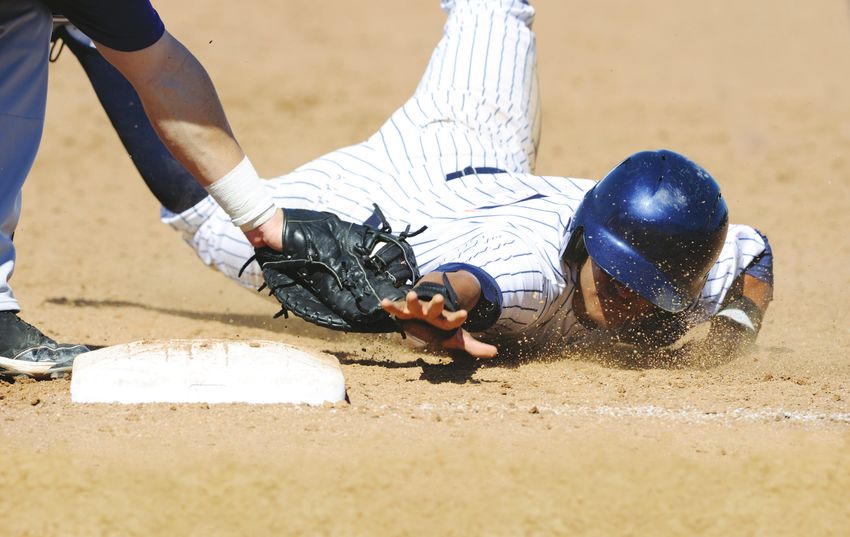
Welcome to the 2020 College Baseball Season
  A      n important aspect and
         responsibility of the NCAA
   Baseball Umpire Program is the
                                                 most impactful seasons in the recent
                                                 history of NCAA Baseball.
                                                     • You don’t have to be ridiculously
                                                                                            ejection/suspension reports (858 in
                                                                                            2018; 708 in 2017; 692 in 2016; and 658
                                                                                            in 2015). These included 361 Division
   training and education of officials to        gifted. You just have to be ridiculously   I reports (337 in 2018; 302 in 2017; 264
                       increase knowledge,       committed.                                 in 2016). Of this list, 178 were head
                       consistency                   Rule interpretations (charged          coaches, 64 were assistant coaches
                       and standard              conferences, hit by pitch, between         and 119 were student-athletes.
                       interpretations across    innings timing protocols, expanded             A brief categorizing of the causes
                       the country.              video review, pitching position,           for the Division I ejections included
                           The information       runner’s lane interference and             ball/strike: 156 of 361; safe/out: 71
                       in this 2020 NCAA         the suspension penalties) will             of 361. All ejections are technically
                       Preseason Baseball        continue to be issued by Randy             unsportsmanlike, with profanity
                       Guide is designed         Bruns, NCAA secretary-rules editor,        reported at 90 percent within the
                       to provide not only       as needed to clarify and educate           incident/ejection/suspension reports.
                       information, but          all to the provisions. For the first       The total number of suspended
 George Drouches
                       clarifications leading    time, centralized video review             games in 2019 was 339 (368 in 2018;
        NCAA National into the season.           was implemented within the 2019            287 in 2017; and 212 in 2016). All
Coordinator of Umpires Umpires, always keep      NCAA Division I Baseball Regionals.        NCAA Division I incident/ejection/
                       this preseason guide      Centralized video review officials had     suspension reports were forwarded
   with your development materials               187 reviews in the 138 games played        (with rule reference, pursuant to
   for use in your study and pregame             during the regionals, super regionals      suspension penalty) to the conference
   discussions. Coaches, please keep             and College World Series. Throughout       office baseball administrator/liaison
   this pregame guide with your game             the 2019 NCAA Division I Baseball          as well as the conference coordinator
   day materials as a quick reference. In        Championship, there were 101 games         and Baseball Umpire Program staff.
   addition, coaches, I strongly urge you        with at least one review. The average      Coaches and officials: be a contributor,
   to join in our collaborative efforts to       reviews per game were 1.5, and the         not a distraction.
   improve our great game by registering         average length of each review was 1            Looking ahead to 2020, the goal of
   with www.ncaabaseball.arbitersports.          minute, 15 seconds.                        the national coordinator of umpires
   com to access the NCAA’s Home Plate               • If you think for too long about a    has always been to continue to grow
   page.                                         missed opportunity, chances are you        the Baseball Umpire Program and to
       • Leadership is not about                 will miss the next one, too.               manage and lead the many facets of
   production, it’s about reproduction.              The 20-second action pitch clock,      the program. An excellent, dedicated
       The standards of the NCAA                 whether visible or not, should have        and passionate staff assists this effort
   Baseball Umpire Program is for all            dramatic pace-of-play momentum in          greatly. Perception and professionalism
   stakeholders affiliated with NCAA             2020. This momentum doesn’t require        continue to be emphasized. Teaching
   Baseball to align to the training,            something monumental — approach            and mentoring the “NCAA Way” is job
   education and testing benchmarks, as          pace-of-play’s changes with passion        number one: inclusive of consistency,
   this will all but eliminate the possibility   and we will be fine.                       accuracy and poise in our dealings
   that the integrity of our great game can          • Integrity means that what you        on the field – as it is very important
   be compromised.                               thought, what you said, and what you       for the integrity of our game to select
       This past summer, I mentioned             did are all the same.                      officials for the championship who are
   to the NCAA Division I conference                 For the seventh year,                  adhering to the NCAA rules, points
   baseball administrators, conference           comprehensive incident/ejection/           of emphasis and the NCAA Baseball
   coordinators, the NCAA Division I             suspension reports were submitted          Umpire Program’s protocols. We have
   Baseball Committee and the NCAA               online by all NCAA divisions. This         high expectations of our officials.
   Baseball Rules Committee that I was           is a tremendous benefit for all and            The NCAA Division I Baseball
   extremely proud of how the coaching           has led to some very unsettling            Committee and the Baseball Umpire
   and umpiring communities addressed            behavioral trends for several years        Program are committed to improving
   the rules changes and game-changing           now regarding the culture of baseball      umpiring during the regular season,
   challenges presented this past season,        and possible resolutions. In 2019,         as well as the NCAA baseball
   and that this successful collaborative        the national coordinator of umpires        championship. The continued
   effort was required in one of the             received 862 NCAA incident/                                         See “Welcome” p. 3

   2 2020 NCAA Baseball Guide
BASEBALL 2020

Action Clock                                       approved the rule change in July              limits are required. These are not
Continued from p. 1                                2018, with a second component                 guidelines. These are things that
enter the box and become alert to the              that called for a visible time clock.         need to be administered.
pitcher with five or more seconds                  However, PROP did not pass the                    “Is it going to be perfect in every
remaining on the action clock, the                 two rules in conjunction, citing              situation, if your attention is drawn
batter will be in violation and the                cost implications, particularly               to some other part of a play? No. But
umpire shall award a strike without                for Division II and Division III              it’s going to be much more consistent
the pitcher having to deliver the                  programs. Instead, a visible time             if we make sure that all the umpires
pitch. Again, the ball is dead and no              clock is recommended, but not                 are focused on it, and so are the
runners may advance.                               mandated. In ballparks where there            coaches. The coaches and players are
    Prior to this season, the rule –               is no visible clock, a member of the          going to adjust, it’s just a matter of
found in Appendix F of the NCAA                    umpiring crew must use an on-field            they’ve never had to before.
rulebook – was applicable whenever                 stopwatch to maintain compliance.                 “It’s probably going to lead more
the bases were unoccupied. It now                      “Of course the concern is, how            people to use some level of a visible
includes situations when there are                 am I going to do that with a runner           clock. Again, sometimes you have to
baserunners, with the idea of not                  on base and still watch for other             walk before you run. We have to get
allowing the game to bog down and                  important things?” Bruns said. “It’s          some experience with this before we
become an actionless contest once                  not going to be perfect. But it will be       realize how that is exactly going to
there are runners on base.                         certainly better than it was before.          take place.”
    “That’s a continuous concern                   I think it will have a real positive
in baseball in general, not just at                impact once people get used to it.”           Bat colors/testing
our level. It’s not even so much the                   As with last season, when a rule              Two additional significant
time of the game, but that there is                targeting the time between innings            changes in NCAA baseball for the
continuous action in the game,” said               took center stage, NCAA baseball              2020 season involve bats.
Randy Bruns, the NCAA’s secretary-                 officials want the action clock rule              The first change involves the
rules editor for baseball. “(The action            enforced, visible clock or not. Bruns         color of the bat barrel. It must now
clock) should not only reduce overall              used the example of an expired play           be of a predominantly contrasting
game times, but just as important,                 clock in football or shot clock in            color to the color of the baseball
keep the game going. The whole idea                basketball to emphasize                       between the 18-inch mark and the
is at least there’s some activity that is              “This is not a guideline,” said           end cap (1-12-b.7). The rationale is to
going on.”                                         Bruns, echoing the same language              help alleviate safety concerns created
    The rules committee actually                   he used last offseason. “These time           for fielders having trouble picking
                                                                                                 up the ball off the bat. There is a list
                                                                                                 available at ncaa.org/playingrules of
                                                                                                 bats no longer approved by color.
Welcome
                                                  umpire clinics, and as a contributor               The second change involves bat
Continued from p. 2
                                                  to our dedicated Home Plate wellness           barrel compression testing. Prior to
growth of college baseball makes it               section.                                       each regular-season series or single
imperative that we strive to assign                   • Depth determines reach.                  date of competition, all bats used in
well-trained and qualified umpires to             I need to formally thank Randy Bruns,          competition must pass the barrel ring
every game throughout the season.                 Mark Ditsworth, Bobbi Edmunds, Tom             test and barrel compression testing.
The NCAA Baseball Umpire Policies                 Hiler, Jim Jackson, Bob LaBelle, Bill          PROP approved the rule in 2017 but
in 2020 will serve as surety and will             McCallum Jr., Scott Taylor and Don             delayed its implementation due to
safeguard these directives. Finally,              Umland, as they all know that success          cost concerns related to purchasing
our commitment to the well-being of               has two inconvenient demands: getting          the necessary equipment. The rule
the umpire was reinforced with the                started and finishing well. Wishing all        will go into effect at the Division I
NCAA’s Chair of the Committee on                  the stakeholders of our great game of          level for 2020, and at the Division II
Competitive Safeguards and Medical                NCAA college baseball the very best in         and Division III levels in 2021. *
Aspects of Sports speaking at our                 2020. *

 Acknowledgments
 Written by Scott Tittrington, Referee associate editor; Graphics and    in whole or in part is prohibited without prior written consent
 layout by Matt Bowen, Referee graphic designer.                         from Referee Enterprises, Inc., and the NCAA. PlayPic® and
    Major portions of this newsletter are protected by copyrights of     MechaniGram® are registered trademarks of Referee Enterprises, Inc.
 Referee Enterprises, Inc., and are used by permission. Copying

                                                                                                             2020 NCAA Baseball Guide 3
Flashback: 2019 Rules Review
T   he NCAA Baseball Rules
    Committee and the Playing Rules
Oversight Panel (PROP) approved
                                            either case, these time limits must be
                                            administered consistently at all levels
                                            of NCAA play,” the new rules state.
                                                                                         A

changes for the 2019 and 2020 seasons           Umpires who manage the
that range from an expansion of             between-inning timing on a stopwatch
video review and adding coaches’            should put up their arm with 30
challenges to updating the hit by           seconds remaining and visually cue
pitch rules so intentionally making a       the plate umpire. The plate umpire
movement to get hit results in a strike     should then relay, “30 seconds left,” to
regardless of pitch location.               the pitcher and catcher, and summon
    There are also significant changes      the lead-off batter to the plate. At 15
that aim to improve pace of play,           seconds, the base umpire should hold
which remains squarely in the               an arm off to the side. At expiration,
crosshairs for college baseball.            the base umpire should point to the
                                            plate umpire.
Time Between Innings/Between Pitches            If the catcher is the third out or on
– Appendix F                                base when the third out was made,
    Consistent enforcement of both          and the 120-second time limit has           No-Pitch Intentional Walk – 2-7
time limits between innings and             expired, he will still be allowed to            The defensive team’s head coach
between pitches are important to a          throw the ball down following the last      will be able to signal to the umpire
game’s pace of play.                        warmup pitch.                               that the coach intends to intentionally
    The time between innings                                                            walk the batter without throwing
shall increase from 90 seconds for          Defensive Conferences – 6-5-f               four pitches. This change aligns the
untelevised games and 108 seconds               A team will be allowed six              NCAA with professional rules, which
for televised games to 120 seconds          defensive conferences during a              adopted a no-pitch intentional walk
for all games. The 120-second clock         regulation game. A maximum of three         for the 2017 season.
shall begin when all defensive players      of these defensive conferences may
have started to leave their position        include a coach.                            Feint to Third from Pitching Plate – 9-3-a
after the last out is made. The clock           If the game goes into extra                 Pitchers will no longer be able
stops when the umpire calls “play”          innings, the team will receive one          to step directly to third from the
for the first pitch of the first batter     extra defensive conference and              pitching plate and feint the throw.
of the next half-inning. A team may         one extra offensive conference,             That effectively ends the move of
use one of its charged conferences to       plus any unused conferences from            feinting to third and spinning around
avoid a penalty. If the offensive team      the first nine innings. If there is a       and throwing to first – the so-called
is not ready within the 120-second          pitching change, there is no charged        “third-to-first move.” Third base will
limit, the umpire shall call a strike. If   conference.                                 be treated like first base: a pitcher who
the defensive team is not ready, the                                                    steps there on a pickoff throw cannot
umpire will award a ball to the first       Offensive Conferences – 6-5-f-4             feint to the base; a throw must be made
batter.                                         There’s no such thing as a free         or a balk will be called. This change
    Further, the 2019 and 2020 rules        lunch — or a free offensive conference      aligns the NCAA with professional
recommend use of a visible clock to         during a defensive-charged                  rules, which adopted the change in
make this easier for coaches, players       conference. An offensive conference         2013.
and umpires. The rules committee            will be charged if any batter or
recommended a rule change that              runner leaves their position during a       Video Review Expanded;
would have made use of a play clock         defensive-charged conference.               Challenges Added
mandatory, but PROP rejected that               However, a pitching change is not           The NCAA approved expansion
recommendation, citing the cost             a charged conference and the next           of video review to include additional
implications, particularly for Division     batter and any runners are allowed          plays and added coaches’ challenges.
II and Division III programs. Where         to leave their positions to meet with           The changes are reflected in
no visible clock is used, conferences       a coach, but should return before the       Appendix E, Section 2: “Getting
may choose to instruct on-field             last warmup pitch so the game can be        the Call Right with the use of video
umpires to use a stopwatch. “In             started promptly.                           review.”

4 2020 NCAA Baseball Guide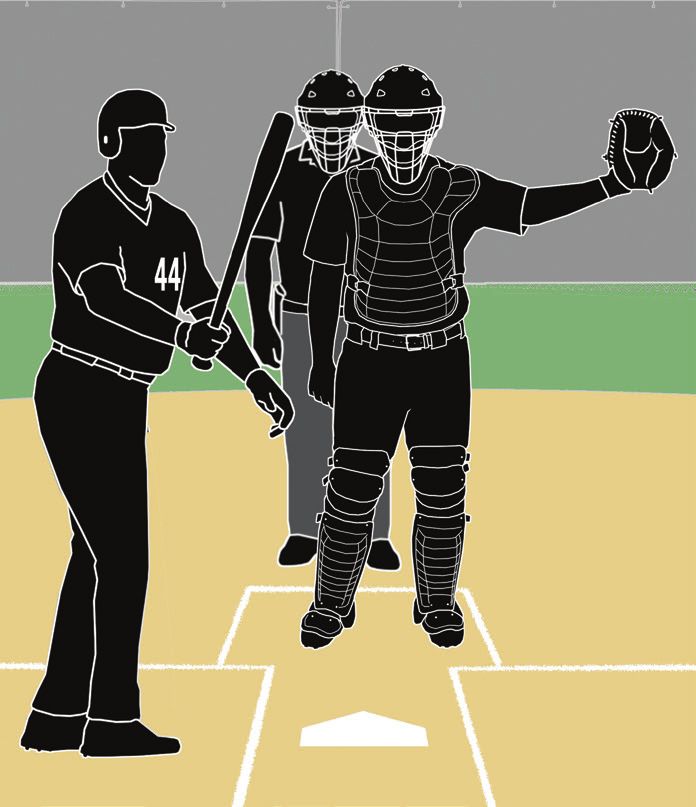
BASEBALL 2020

    Under the new rules, each team’s         l. Deciding if interference occurred on     Pitching Position Rule Change
head coach will be permitted two                 a runner’s attempt to break up a            Two rule changes about pitching
challenges per game. The head coach              double play.                            positions aim to clarify when a pitcher
should notify an umpire immediately               The crew chief, at his discretion      is in the windup position and when a
— within approximately 10 seconds —          at any time during the game, may            pitcher is in the set position.
at the end of a play if he intends to use    also initiate a video review on items
a challenge on the previous play. If on a    a-through-f. The crew chief may
game-ending play, the coach must call        initiate a review of plays g-through-l        A
for a review before all umpires leave        only during the last two innings of
the field of play.                           regulation and any extra innings.
    Those challenges can be used on               When centralized video review is
any of the 12 plays identified as eligible   used, the off-field video review official
for the use of video review — the first      will be considered an extension of
six unchanged from the 2017-18 rules;        the umpiring crew and will have the
the last six new for 2019-20.                ability to notify the umpires on the
                                             field that a review should be initiated.
The original six reviewable plays are:       The off-field video review official will
a. Deciding if a batted ball is fair or      follow the same review protocols as
   foul. The ball must first touch the       the crew chief, including initiating
   ground or a fielder beyond the initial    review on items a-through-f at any
   position of the first or third baseman.   time; and items g-through-l during
b. Deciding if a batted ball is either a     the final two innings or during extra
   ground-rule double or a home run.         innings.
c. Any catch or no-catch ruling in the
   outfield or foul territory.               Intentionally Move to Get HBP = Strike –
d. A no-catch ruling in the infield in       7-4-i and 8-2-d
   some instances. With runners on               A batter is not permitted to make        B
   base, a no catch within the infield       an intentional movement to be hit by a
   can be changed to a catch only if         pitch, regardless of where the pitch is
   it results in a third out. With no        located. If, in the umpire’s judgment, a
   runners on base, a no catch within        batter makes an intentional movement
   the infield can be changed to a catch     to be hit by a pitch, the batter will not
   at any time.                              be awarded first base and, instead, will
e. Spectator interference.                   be charged with a strike. The pitch is          To be considered in a windup
f. Deciding scoring plays at home plate      ruled a strike regardless of the pitch’s    position (9-1-a), a pitcher must stand
   inclusive of collisions (illegal and/or   actual location.                            with his chest and shoulders generally
   malicious slides) or time plays.              The rule change provides guidance       facing the batter, with the pivot foot
                                             in enforcing the hit-by-pitch rule and      on or in front of and touching the
Added to the list of reviewable plays:       to deter batters from attempting to be      pitcher’s plate. The pitcher’s free foot
g. Force and tag play calls at any base.     hit by the pitch. A batter who “freezes”    must be touching or be behind the
h. Calls involving whether a base            inside the batter’s box and gets hit by     plane of the front edge of the pitching
    runner passes a preceding runner;        a pitch shall be awarded first base.        plate.
    determining whether a base runner        “Freezing” by the batter within the             This clarifies the windup pitching
    scored ahead of a third out; and         batter’s box is not considered making       position for umpires to properly
    upon an appropriate appeal by            an intentional movement.                    apply the applicable pitching rules
    the defensive team, determining              At the same time, freezing and          and further distinguish the windup
    whether a base runner touched a          getting hit outside the batter’s box        position from the set position.
    base.                                    doesn’t protect the batter.                     For a pitcher to be in a set
i. Plays involving a hit by pitch.               Because judging whether a batter        position (9-1-b), the pitcher must
j. Deciding if a runner failed to retouch    intentionally makes a movement to           stand with his chest and shoulders
    a base after a fair or foul ball is      be hit by a pitch involves a ball/strike    generally facing the respective foul
    legally caught.                          decision, coaches may not argue the         line. The pitcher’s pivot foot must be
k. Non-home run boundary calls               call, but they can use one of their two     in contact parallel with the pitching
    including the placement of runners       video review challenges.                    plate, and his free foot must be in
    following a boundary call.                                                                                    See “Intent” p. 6

                                                                                                    2020 NCAA Baseball Guide 5
Intent                                     obstruction, the ball shall be dead        Intentionally Disrupting Pitcher’s Delivery
Continued from p. 5
                                           immediately and the runner involved        – 5-15-a-2
                                           shall be awarded one base beyond                A batter may not use tactics with
front of the pitcher’s plate. It is        the last base the runner had attained      the obvious purpose of disrupting the
permissible for the pitcher to turn his    before the obstruction.                    pitcher’s delivery. If a balk or illegal
shoulders and face the batter while           Previously, the language in 8-3-e-1     pitch occurs, or if the pitch is called
getting the sign and before bringing       Note only applied to pickoff plays,        a ball, the call shall be nullified. The
his hands together in the set position.    and now it applies to all plays.           batter is ejected for unsporting conduct.
                                                                                           If something happens
                                                                                      unintentionally, call time and let
  C                                         E                                         everybody reset. But if intentional,
                                                                                      it’s an unsporting act and the penalty
                                                                                      should be invoked. If the pitcher stops
                                                                                      his motion or throws ball four, that
                                                                                      should be nullified and the batter
                                                                                      should be ejected. If the pitcher throws
                                                                                      a strike, the batter is still ejected, but
                                                                                      the count now includes that strike.

                                                                                      Bat/Ball Persons – 1-15-a
                                                                                         All non-roster, designated bat/ball
                                                                                      persons — i.e., team personnel other
                                                                                      than players or coaches — must wear
                                                                                      a double-ear flap protective helmet
                                                                                      while performing their duties. This
                                                                                      change is aimed at enhancing the
                                                                                      safety of support personnel.

                                           Backswing Interference – 6-2-d             Dugout Extension Area – 1-16-b
  D                                            During a batter’s backswing (his           Uniformed team personnel,
                                           follow-through after swinging and          coaches and extra on-deck hitters are
                                           missing a pitch), if the batter hits the   prohibited from standing or sitting in
                                           catcher or the ball, the pitch shall be    the dugout extension area or dead-
                                           called a strike, the ball will be dead     ball area on the home-plate side of
                                           and no runner shall advance on the         the dugout during play. This is aimed
                                           play.                                      at enhancing the safety of bat/ball
                                               This clarifies that any bat contact    persons who are supposed to be in
                                           with the catcher during the backswing      this area by restricting coaches and
                                           — including when the ball is not           other team personnel from entering
                                           caught by the catcher — will be            those areas to observe the game.
                                           considered backswing interference.
                                           Previously, the rule language stated       Runner Touched by Ball – 8-5-k
                                           “as the pitch is caught.”                      Rule 8-5-k was modified to clarify
                                               The exception in 6-2-d-2 remains.      the status of the pitcher for purposes
                                           If a catcher is in the act of throwing     of a fair batted ball striking a runner.
                                           when the contact occurs, time is called    The change in language codifies
                                           and the runner returns, unless the         existing practices. A runner will be
Possessing Ball Key in Obstruction Rule    catcher’s initial throw directly and       out if hit while in fair territory by a
    In a change to Rule 8-3-e-1 Note,      immediately retires the runner.            fair batted ball before it has touched a
a defensive player may not block any           Remember: Backswing                    fielder, including the pitcher, or before
part of the base with any part of his      interference — a swing that                it has passed all infielders who have
body unless he has clear possession of     unintentionally interferes with the        a chance to make a play on the ball,
the ball. If the defensive player blocks   catcher — is treated differently from      other than the pitcher. *
a base before having clear possession      batter’s interference, and the penalties
of the ball, the umpire shall call         for those actions are very different.

6 2020 NCAA Baseball Guide
BASEBALL 2020
2018
NCAA Misconduct Penalties
Type of Offense Offender Consequence for First Offense Consequence for Second Offense Consequence for Third Offense Rule Ref.
Unsportsmanlike conduct or Assistant coach, Ejection from present contest plus a
Ejection from present contest plus
language directed toward an player or team three game suspension by the same Same as second offense 2-26-f
a one game suspension
umpire or an opponent personnel individual in the same season
Unsportsmanlike conduct or
Ejection from present contest - no
language directed toward an Head coach Same as first offense Same as first offense 2-26-f
suspension
umpire or an opponent
Unsportsmanlike conduct or Player whose last
Ejection from present contest plus
language directed toward an listed position is Same as first offense Same as first offense 2-26-e
a four-game suspension
umpire or an opponent that of a pitcher
Game Misconduct—
removing Ejection from the present contest
Head coach Same as first offense Same as first offense 5-15-b
team from the field; refusing plus a two-game (2) suspension
to continue
Prolonged or continued
arguing, offensive language
Two-game suspension added to
or excessive expressions 2-26-h;
Any participant the present accumulative total for Same as first offense Same as first offense
directed at an umpire 5-15-a (4)
applicable suspension penalties
or game official after an
ejection
Ejection plus a suspension
Ejection plus a four-game Ejection plus a suspension from the for the remainder of the
Fighting Any participant 5-16-a
suspension team’s next five contests season, including postseason
competition
Ejection plus a suspension
Any participant
Physical abuse of Ejection plus a four-game Ejection plus a suspension from the for the remainder of the
includes head 5-16-b
participants or umpires suspension team’s next five contests season, including postseason
coach
competition
5-16-c,
Leaving position to Four-game suspension after the Suspended for the remainder of the
Any participant N/A Penalty
participate in a fight ejection season
(1), (5)
Ejection plus a suspension
Ejection plus a four-game Ejection plus an eight-game for the remainder of the
suspension. The head coach is not suspension. The head coach is season, including postseason.
Intentionally throwing at a Pitcher, or pitcher ejected if no warning is given. If a not ejected if no warning has been If no warning is given, the 5-16-d, (1),
batter and head coach warning has been given, the head given. If a warning has been given, head coach is not ejected. (2), (3)
coach is ejected from that game the head coach is ejected and If a warning is issued, the
and suspended for one game suspended for one game head coach is ejected and
suspended for one game
Any participant or When verbal abuse/bench jockeying
After a warning, offender is ejected
Verbal abuse/bench game personnel continues, head coach is ejected
for that game plus a one game Same as second offense 5-17
jockeying other than head (no suspension). All others ejection
suspension
coach plus one game suspension
Failure to leave sight and
sound of the playing field Three-game suspension added to 3-6-d, Note
Any participant Same as first offense Same as first offense
and grandstands after an any penalties already accumulated 2 and 3
ejection
Ejection from the present contest.
Collision rule Player Same as first offense Same as first offense 8-7
One game suspension
Player or team Ejected from present contest plus
Ejection for tobacco use personnel and one game suspension for everyone Same as first offense Same as first offense 3-11
head coach other than the head coach
Ejection from next scheduled
Ejection from next contest plus
Assistant coach, contest plus a three game
a one game suspension. These
Post-participation ejection player (other than suspension for a total of four games. 2-26-c;
two games will be added to any Same as second offense
for unsportsmanlike conduct a pitcher) or team These four games will be added to Appendix D
other applicable penalties for other
personnel any other applicable penalties for
offenses
other offenses
Ejected from team’s next game-No 2-26-c;
Post-participation ejection Head coach Same as first offense Same as first offense
Suspension Appendix D
Player whose last
Post-participation ejection
listed position is A total suspension of four games Same as first offense Same as first offense 2-26-e
for a pitcher
that of a pitcher
Note 1: It is the responsibility of the institution’s Head Coach and Director of Athletics to administer and enforce any suspension penalties.
Note 2: Suspension penalties, regardless of the number, shall be served during the offending team’s next scheduled contest(s). Post-participation ejections and any applicable suspension
penalties shall also be served during the offending team’s next scheduled contest(s). Conferences and institutions may choose to implement additional penalties for misconduct.
Note 3: A listing of ejection and suspension procedures is contained in Appendix D.
Note 4: Several of the rule references listed have been updated from those on pages 26-28 of the current NCAA Baseball - 2017 and 2018 Rules book. The penalties remain unchanged.
2018
2020 NCAA
NCAA Baseball
Baseball Guide
Guide 77
Test Yourself
 In each of the following, decide which
 answer(s) is/are correct using the 2020
 NCAA rules.

 1. In the first inning, a coach has a
 conference with F1 at the mound. The
 coach starts to return to the dugout
 and makes it to approximately halfway
 between the mound and the foul line.
 The coach then begins to return to the
 mound.
 a. Legal, F1 may remain in the game as the
    pitcher.
 b. Legal, but F1 must leave the mound and
    may not return to pitch (he may remain
    in the game).
 c. Legal, but F1 must leave the game.
 d. Not allowed; the umpire should stop the      When exactly does a conference end? Ben Gray, Highland Park, Ill., must know
    coach.                                       how to handle the situation if a coach starts to return to the dugout and then
                                                 begins to return to the mound. Question 1 deals with such a scenario.
 2. In the top of the sixth, the visitors take
 a 7-5 lead. In the bottom of the sixth, the
 home team ties the score with one out.
 The bases are loaded when rain washes           had advanced to and touched the next             c. If R1 touches second while proceeding on
 out further play.                               base, but B1 had not yet touched first.             the award, an appeal on the missed base
 a. A tie game must be declared, with play       a. One run scores.                                  cannot be upheld.
    to resume at a later date at the point of    b. Two runs score.                               d. R1 will be called out on proper appeal
    interruption.                                c. Three runs score.                                whether or not he touches second while
 b. A tie game must be declared and count        d. B1 is awarded first.                             advancing on the award.
    as 1/2 win and 1/2 loss.                     e. B1 is awarded second.
 c. If the NCAA halted game rule was             f. B1 is awarded third.                          7. With R2 on second and one out, B1
    agreed upon, a suspended game could                                                           singles as R2 attempts to score. F2 misses
    be declared and replayed in its entirety     5. B1 bunts down the first-base line.            the tag on R2 as R2 slides and misses the
    at a later date.                             The ball rolls to foul territory and, as         plate. B1 tries for second and is thrown
 d. If the NCAA halted game rule was             he’s running toward first, B1, in disgust,       out as F2 forgets about R2.
    agreed upon, the game would resume at        intentionally kicks the ball toward the          a. R2’s run counts unless it is appealed.
    a later date at the point of interruption.   dugout. The umpire is certain the ball has       b. R2’s missed base cannot be appealed
                                                 no chance to roll fair.                             after the subsequent play on B1.
 3. Green enters the game to pitch with          a. B1 is warned that he could be called out      c. R2 may not return and touch home after
 the bases loaded and one out. Before               for such actions.                                the subsequent play on B1.
 throwing a pitch, he picks off R2.              b. B1 is ejected for unsportsmanlike behavior.   d. R2 may return and touch home after he
 Excluding an injury, Green:                     c. B1 is called out.                                enters the dugout.
 a. May be replaced immediately.                 d. The play stands; foul ball.
 b. Must remain in the game until another                                                         8. Which of the following runners are out
    out is made.                                 6. With R1 on first, the hit-and-run is on.      when hit by a batted ball?
 c. Must pitch to the next batter until that     B1 hits a fly ball to the centerfield fence      a. A runner who is on his base and is hit by
    at-bat is completed.                         that is caught. R1 touches second on his            a fair line drive.
 d. Must pitch until the inning is over.         way to third, but misses it on his return to     b. A runner who is on his base and is hit by
 e. None of the above.                           first. F8’s throw to F3 goes into dead-ball         an infield fly.
                                                 territory. The base umpire properly awards       c. A runner who is hit by a ball that
 4. With the bases loaded, B1’s fly ball         third to R1.                                        previously hit another runner.
 drops in short left field. F6 picks up the      a. Since R1 touched second at least once, it     d. A runner who is hit in foul territory by a
 ball and throws wildly toward the plate            is not considered a missed base.                 deflected fair ball.
 and the ball goes into dead-ball territory.     b. The award negates any appeal on the           e. None of the above.
 When F6 released the throw, all runners            missed base.

8 2020 NCAA Baseball Guide
BASEBALL 2020

9. With a runner on first, one out and a            the meantime, R3 scores prior to R1 being        bat, which is in fair territory. B1 is safe at
3-2 count, B1 checks his swing. The plate           tagged. R3 scores without retouching             first.
umpire calls, “Ball four.” F2 asks for an           third after F4‘s catch. Which of the             a. The umpire must judge whether the ball
appeal and fires to F4, who tags R1, who            following is true?                                  would have been fair or foul had it not
was trotting to second. The base umpire             a. This is a force play.                            contacted the bat.
says, “He went,” and the plate umpire               b. R3’s run counts unless it is properly         b. The umpire must judge whether the bat
calls B1 out.                                          appealed.                                        was intentionally placed with the intent to
a. R1 is out.                                       c. An appeal must be made before all                interfere.
b. R1 is awarded second because a walk                 fielders leave fair territory.                c. The play stands.
   was initially declared.                                                                           d. B1 is out for interference.
c. R1 is returned to first because of the           14. With a runner on first, F1 delivers
   reversed call.                                   and R1 breaks on the pitch. The umpire           19. With no runners on base, B1 takes a
                                                    interferes with F2 and the throw goes into       called third strike. B1 heads for his dugout
10. Using a 10-player lineup, the home              center field. R1 tries for third and is thrown   not realizing F2 dropped the pitch. F2
team has Larry as the DH. In the top of             out by F8.                                       then throws the ball wildly toward first. B1
the fifth, Scott is moved from F4 to F1 and         a. R1 is called out.                             heads for first and makes the base safely.
Ken comes off the bench to play second.             b. R1 is returned to first.                      a. B1 is out only if he reached the dugout
In the bottom of the fifth, Larry leads off         c. R1 is returned to second.                        before breaking for first.
and singles. After the first pitch to the next      d. The play stands.                              b. B1 is out only if he left the dirt circle of the
batter, the opposing coach appeals to the                                                               plate area before breaking for first.
plate umpire.                                       15. With R3 on third in the bottom of ninth,     c. B1 is out regardless of where he was
a. Since a pitch has been delivered to a            the visiting team is leading 2-1. F1 balks          before breaking for first.
   subsequent batter, it is too late to appeal      and immediately delivers the pitch to B1.        d. The play stands.
   Larry for batting.                               B1 hits the ball over the fence. A balk is
b. Larry is declared out.                           called.                                          20. B1 hits a foul pop up. As F2 positions
c. Nothing improper has occurred.                   a. The ball is dead, R3 scores, no pitch.        himself to make the catch, B1 screams
                                                    b. R3 scores and a ball is called on the         very loudly in F2’s ear. F2 drops the ball.
11. With the bases empty, B1 has a 2-2                 batter.                                       a. No problem, legal play.
count when he swings and misses a pitch             c. The ball remains live and the game is         b. The play stands, but B1 is warned.
in the dirt. The ball rebounds off F2 and              over with the home team winning 3-2.          c. B1 is out for interference.
hits B1’s foot as he attempts to advance to                                                          d. B1 is out for interference only if the
first base.                                         16. Which of the following are true if the          umpire determines B1 affected the play.*
a. B1 is out for interference.                      DH is batting for the pitcher?
b. B1 is only out if he intentionally interferes.   a. The pitcher may pinch run, but only for
c. Once F2 deflects the ball, interference             the DH.
   cannot be called.                                b. The DH is never allowed to play defense.      ANSWERS
d. Interference is called if B1 clearly hinders     c. The pitcher may pinch hit for another         1. d — 9-4-c, 9-4-d
   F2 in his attempt to field the ball.                defensive player.                             2. d — 5-9, 5-10
                                                    d. If the DH plays defense, the pitcher must     3. e — 5-5-b
12. With a runner on first base, B1 hits a             leave the game.                               4. b and e — 8-3-o-3 Note 1
foul fly ball deep down the left-field line.                                                         5. d — 7-7-d, 7-11-o
F7 makes the catch and in an attempt to             17. With R2 on second and no outs, B1            6. c — 2-52
throw the ball back to the infield, the ball        stands as if to bunt, but swings away.           7. a — 8-6
goes out of play. R1 was beyond second              F5 creeps in and the ball deflects off his       8. a — 6-2-e, 8-5-k Notes 1 & 2
base when the fielder fell into the stands.         glove. It remains in the air, and floats         9. a — 3-6-f, Appendix E
a. R1 can return to first and tag up because        toward third, where F6 is coming to cover        10. b — 5-5-j-1, 7-2-d-7-a
   he did not touch third base.                     the bag. The ball hits R2 and drops to           11. b — 7-11-o
b. R1 can return to first as long as he is          the ground. Both runners are safe. The           12. b — 8-6-a Note 3
   trying to return when the ball goes dead.        umpire judges that R2 did not deliberately       13. b — 8-6-b-8
c. R1 cannot legally return and should be           interfere with the batted ball.                  14. b — 6-3-a
   called out when the ball becomes dead.           a. B1 only is called out.                        15. c — 9-3 Penalty 1
d. R1 cannot legally return but can only be         b. R2 only is called out.                        16. a — 7-2
   called out if an appeal is made.                 c. Both B1 and R2 are called out.                17. d — 6-2-e, 8-5-k
                                                    d. The play stands.                              18. c — 7-11-m
13. With R1 on first, R3 on third and one                                                            19. b — 7-11-u
out, the hit-and-run is on. B1 hits a line          18. B1 hits a ball that lands in front of the    20. c — 2-51, 7-11-f Exception 4
drive to F4, who chases R1 back to first            mound. The backspin on the ball brings
and tags him before he returns to first. In         it back toward the plate, where it hits the

                                                                                                                    2020 NCAA Baseball Guide 9
Q&A: Division II and Division III Coordinators

                         Scott Taylor                                                    Don Umland
     Division II Umpire Coordinator                                                      Division III Umpire Coordinator

What did you see in 2019 that umpires        thought process. This is especially         from 65 to 77 umpires working at
were doing really well?                      critical in today’s world of technology     the regional level. Then, you factor
                                             as almost any game can be viewed via        in 32 additional opportunities to
Taylor: More Division II conferences         some form of media outlet. With that        work super regionals followed by the
are using three-person crews in              being said, umpires can be critiqued        national championship with eight
season, which means more umpires             and rewarded for their efforts when         umpires. I was also able to bring in a
went to instructional camps, reviewed        the zone is enforced as written             nice balance of first-time vs. returning
the CCA Mechanics Manual and                 throughout the course of a game,            umpires into the postseason. The
worked to get better. Our umpires are        which is one of the qualities I am          competition for these spots is intense.
starting to realize they must put in         looking for in a postseason umpire.         At the same time, having a pool
such work if they want to move up to                                                     of umpires who can “work” at the
Division I baseball conferences.             Last season saw an expanded                 postseason level challenges those
                                             postseason at the Division II and           individuals to get better as there are
Umland: I thought there was a                Division III levels. How did that benefit   no guarantees in working beyond the
significant improvement as it relates        umpires, and how do you feel your           regular season.
to the use of three- and four-person         umpires responded and performed?                The expanded format also
mechanics in the postseason. Almost                                                      included the use of video review and
all of Division III baseball is officiated   Taylor: The expansion gives more            challenges at the Division III National
using two-person mechanics during            umpires a chance to work at the             Championship for the first time.
the regular season. However, I               NCAA Regional levels. Adding Super          We had 20 reviews in Cedar Rapids
believe more and more umpires                Regionals gives me, as a national           (Iowa) with 18 of the calls on the field
are finding ways to improve their            coordinator, a better assessment            being upheld! There were selected
skills through camps, clinics and            of an umpire’s competency. I can            umpires with Division I experience
fall baseball opportunities. It’s not        evaluate how an umpire handles the          that had worked with video review,
easy to be at your best when your            additional pressure of performing in        which was quite beneficial. I was able
brain is having to “think” about             higher stress situations and whether        to bring in some quality people to
where to go when using mechanics             they are ready to go to the NCAA            handle the video review. Therefore,
that are unfamiliar. Repetition and          Division II National Championship           the process was pretty seamless with
reinforcement accentuate the process,        and perform at the highest level of         the challenge and replays lasting no
thus providing a better product on           play we offer.                              more than 1:30 on average!
the field during the postseason.
    I also believe that the enforcement      Umland: I couldn’t be happier! First        What’s one area you want umpires
of the strike zone as written in the         and foremost, the expanded format           to focus on improving for the 2020
rulebook has been improved through           created a significantly greater number      season?
similar methods. Coordinators at all         of opportunities for umpires to work
levels have been encouraging this            in the postseason. Division III went        Taylor: Better consistency on balls and

10 2020 NCAA Baseball Guide
BASEBALL 2020
strikes. I watch a lot of video on our penalty chart was put in place with in 2019 over 2018. That’s because
umpires at the Division II level. The coaches and players recognizing younger assistants haven’t figured
one thing I notice more than anything where their “limits” would be. out they won’t get away with things
else is the lack of consistency on balls However, the use of inappropriate their head coaches can. Bottom line
and strikes. Numbers don’t lie. This language and confrontational for me is that assistant coaches need
problem translates into the number of attitudes have remained steady to figure out it’s not in their job
ejections we have at our level. Of 281 despite the increase in penalties. descriptions to question umpires
total ejections in Division II baseball A coordinated effort by coaches — especially in a manner that is
in 2019, over half of them were and umpires is integral to the confrontational. That privilege is
related to balls and strikes. reduction of these numbers. Umpires given only to a head coach and, even
Be clear. I am not saying every must use the tools and language then, only to a certain extent. Think
ejection over balls and strikes was that the rulebook, clinics and video of that privilege as a race. All coaches
wrong. We all know student-athletes bulletins continue to reiterate. get to run the race. The head coach
will react emotionally over what they Coaches must lead by example and just gets to run a little bit longer
perceive as inconsistency. But in a set a tone within their program to before he hits the finish line with an
lot of cases, umpires have expanded respect the game and those who work umpire.
the strike zone. What is a ball one hard to maintain its integrity. The
inning might become a strike two best umpires recognize when these Umland: That is a really good question.
innings later. We need to understand situations are festering and insert I’m not sure if the umpires at the
that video has changed the way we themselves accordingly to defuse Division III level are appreciated as
officiate games — in all sports at all situations. Additionally, there is a much as they are at a higher level.
levels. It has become more important time and place when an ejection is Take nothing away from those who
than ever for umpires to understand necessary. That’s when it is important make it to the Division I level; they
they can call 300 pitches in a game that all members of the crew perform earned it and put in an enormous
and get 299 right, but if they call to their best and use the skills and amount of time and effort to get there.
one pitch down around the ankles a proper language that I (and the For those umpires at the Division III
strike, that pitch will be the one pitch NCAA) expect. level, it is a lot of weekends spent
players and coaches remember. There working multiple games throughout
are lots of borderline pitches in every What differences/challenges do the week for far less compensation.
single game we work. You know, the umpires face at the Division II and I came up through Division III
50/50 pitches. The one that could Division III levels that they do not have myself and understand the time
have been called either way. We really to face at other levels? and commitment that the majority
need to work on not calling strikes of umpires give for the good of the
for the obvious pitches that are out of Taylor: I think the challenges, for game. A little gratitude (and perhaps
the zone. Eliminate those misses and the most part, are the same. If I a sandwich between games) goes a
fewer problems occur. This is part of had to pick one thing that stands long way. It doesn’t seem like much,
the process of becoming a Division I out for me, it would be the respect but it matters.
umpire. Those who make adjustments level. At the Division I level, I think Additionally, I am very grateful to
make it to the next level. Those who coaches — especially head coaches — my fellow national coordinators as we
don’t adjust don’t advance. It’s that understand and respect the job that truly strive to make the information
simple. umpires have. But when you drop at meetings and video bulletins to
The goal in the NCAA Baseball down into Division II and Division be relative to all levels of college
Umpire Program is to give everyone III, the mentality is different in some baseball. Occasionally, I get feedback
the tools to umpire at the highest cases. Coaches go out there with chips that selected rules are difficult to
level possible. The evaluation of plate on their shoulders because they think apply. Division II and III will face one
work is a large part of that process. the umpire has wronged them in the example of this starting in 2021 when
past or that the umpire is looking for bat testing begins prior to games. This
Umland: For me, it’s game the opportunity to use authority to creates new challenges as it relates to
management. Ejections have been wrong them. travel time (earlier arrival to test) as
between 200-250 in each of the five This phenomenon has especially well as who is going to perform such
seasons I have been in the position manifested itself with younger testing. I am certain it will all work
of national coordinator. I thought we assistant coaches. The number of out in the end. However, change (no
might see a steady decline once the assistant coach ejections doubled matter how small) is not easy! *
2020 NCAA Baseball Guide 11Keeping Your Head in The Game:
Umpires and Concussion
B eing an umpire
in baseball,
like other athletic
traumatic brain injury induced by
biomechanical forces. It is largely
a functional disturbance and those
symptoms do not occur at any stage.
The old advice of sitting in a darkened
room for extended periods of time
endeavors, carries abnormalities are frequently referred has changed and active rehabilitation
with it some to as post-concussive syndromes. after concussion now seems to hasten
occupational risks. Concussion may be caused by a recovery. The medical field is just
One of these risks direct blow to the head or other beginning to understand the variety
is concussion given impulsive force transmitted to the of presentations of concussion and
the proximity to hard head. Usually signs and symptoms the management of these different
Dr. Douglas J. objects such as bats evolve over minutes to hours, but symptoms.
Ramos and balls, and players sometimes symptoms may not As with any injury there is a mental
Chair of the often moving at high present until the following day or component to recovery success and
NCAA Committee rates of speed. later. Also, sometimes you may have coping with injury. Concussion is
on Competitive The narrative a concussion in which symptoms no different. Keep in mind that with
Safeguards and
on concussion has are present but barely detectable the hectic schedules the problems
Medical Aspects of
Sports not been completely without a thorough examination. Not with obtaining good quality sleep are
resolved, though all symptoms of concussions present likely to compound any concussion
many in medicine, the media and the same way. In some it may be problems. Just because you have a
special interest groups would lead headaches, in others it may be balance concussion does not mean you will
you to believe that all outcomes problems, in others it may not be have long-term sequalae, but failure to
are bad. Most notable, and in the thinking clearly, in some it may be properly manage concussion is likely
spotlight most of the time, is football- visual problems and in others it may to hinder your recovery and may
related injuries and concussion. The be changes in emotional status. All of create some long-term issues. If you
link between concussion and CTE these different symptoms generally are at a collegiate or professional field,
(chronic traumatic encephalopathy) need to be managed differently and and sometimes at high schools, there
has not been completely resolved, medical science is just coming to are frequently trained professionals
the link between concussion and understand this. who can perform an assessment,
other cognitive problems later in A few simple general facts as one of which is called the SCAT 5, to
life as well as other mental health we know it today do need to be evaluate you for concussion. Request
problems including suicide has not mentioned however. First, a good this if possible and request a copy if
been completely resolved, and much clinical exam needs to be performed you can so that you can present it to
science is yet to be done to connect if a concussion is suspected, and if your health care provider wherever
the dots as it relates to concussion concussed you should be removed or you are traveling to or at home. At no
and other illnesses. The media and remove yourself from all activity for point should you return to the field
other special interest groups, and the day, including immediate removal without being cleared by a health care
some scientists and physicians, have from the competition at hand. We professional after you have recovered,
been biased in their reporting of the also know that sustaining a second hopefully in five to seven days.
facts to the public and some of us concussion while recovering from Currently there is a Department
medical providers. Many of these the first is particularly bad. Second, of Defense/NCAA study to evaluate
reports of famous athletes has been once a concussion is established you athletes and concussion. We are
sensationalized and many facts have should not immediately return to already adapting our management
been left out about family histories of pre-concussion activity. As a general of concussion based on some of the
mental illness, financial ruin, history rule, approximately one week should early findings. It is and will be the
of depression or other contributing elapse before returning to the pre- most complete and definitive study
factors to actions such as suicide that concussion activity and longer if of concussion anywhere in the world
some of these people have taken. That symptoms progress. All athletes and will continue to evolve over
being said, concussion is real and care follow a concussion protocol in which the next decade or more. So please
needs to be taken in the management there is a short period of rest of 24-48 be smart and keep your head in the
of concussion. hours and then graduated exercises game, and when necessary get your
Concussion by definition is a progressing each day provided head out of the game. *
12 2020 NCAA Baseball GuideBASEBALL 2020
Ejections Up in 2019 2019 NCAA
Incident/Ejection/Suspension
Reports
R educing the number of ejections
and suspensions in college
baseball remains a priority, especially
some distressing trends out there in
behavior. Ejections are up every year.
“We work with formal warnings,
Division I
Player 119
as 2019 saw an increased number of we have videos, we have protocol to
Assistant Coach 64
ejections at the NCAA Division I and manage the game — but the biggest
Division II levels. concern is the language used that Head Coach 178
There were 361 ejections at the brings about the ejection.” Total: 361 41.8%
Division I level last season, a 7 The NCAA Baseball Rules Division II
percent increase over the 2018 season Committee, in conjunction with Player 124
(337). There were 281 ejections at the American Baseball Coaches Assistant Coach 42
the Division II level last season, an Association, in October sent out an Head Coach 115
8 percent increase compared over “intermediary penalty survey” in an
Total: 281 32.6%
the 2018 season (260). Only Division effort to craft a potential penalty that
III saw a decrease in 2019, with 221 falls short of an ejection to address Division III
ejections, down 16 percent from the the issue of coaches coming onto the Player 102
2018 season (262). playing field to dispute umpires’ Assistant Coach 22
At the Division I level, the rulings. Head Coach 97
majority of ejections involve arguing “If the number of ejections and Total: 221 25.6%
judgment calls such as balls and suspensions in the sport do not Grand Total: 863 100%
strikes (156 ejections) and safe/out decrease in the upcoming season,
rulings (71). the NCAA baseball rules committee
“That is very disconcerting to may consider some rule changes
me,” said George Drouches, NCAA in the future to address this issue,” NCAA Umpiring
national coordinator of baseball Drouches said. * Coordinators
umpires. “The data indicates there’s
Division I
George Drouches
P.O. Box 27641
2019 NCAA Championship Umpires Golden Valley, MN 55427
georgedrouches@gmail.com
(612) 432-5351 (C)
Division I Division II Division III
Division II
Greg Charles Mike Cheek Pablo Bustamante
San Bruno, CA Macon, GA Loma Linda, CA Scott Taylor
1901 N. Emerson Ave.,
Scott Cline Stuart Hall Jon Fye Indianapolis, IN 46218
Nolensville, TN Ypsilanti Township, MI Omaha, NE d2umpires@gmail.com
317-507-6233 (C)
Perry Costello Scott Hart Trent Haldiman
DeWitt, MI Reading, PA Waterloo, WI Division III
Adam Dowdy Brian Hertzog Matt Kane Don Umland
Chandler, AZ Everett, WA Bethel, CT 2951 Katie Lane
Bettendorf, IA 52722
Billy Haze Mark Lima David Kernan donumland@yahoo.com
Rancho Murietta, CA Succasunna, NJ Pittsburgh, PA (563) 340-3825 (C)
Jeff Henrichs Josh Nolen Michael Lum Director of Umpire Training
Sacramento, CA Lee’s Summit, MO Fairport, NY
Tom Hiler
David Savage Brandon Schultz Mike Mackey P.O. Box 777
Lawrenceville, GA Cullman, AL Henrico, VA Mountain Home, ID 83647
TomasHiler@gmail.com
Grady Smith Randy Upton Dan Miller (208) 598-5558 (C)
Fishers, IN Heber City, UT Mahwah, NJ
2020 NCAA Baseball Guide 132020 Mechanics Changes
T he Collegiate Commissioners
Association (CCA) has made
several mechanics changes for the 2020
A
season. Here is an abridged version of
those changes for the season ahead.
(See the 2020 CCA Baseball Umpires
Manual for the complete mechanics
changes.)
R1 R1
Three Umpires
U3
• U1 and U3 should be well
positioned to see line drives hit at the
THROW
feet of the first or third baseman in their
normal positions (with a step or two
forward) and to make that call.
• Proper positioning for U1 for
pickoff plays at first base; umpire shall
start with their inside foot next to the
foul line and not straddling the line.
• Umpires are not allowed to start
in the infield and then run to a position
out in the dirt looking straight down BR
the baseline during a steal play at
second base. All steal plays must be
taken between the B and C starting
positions.
RF
Four Umpires B CATCH
• U1 and U3 should be well THROW
positioned to see line drives hit at the
feet of the first or third baseman in their U1
normal positions (with a step or two
forward) and to make that call. When
positioned in the outfield, U2 should
always work over the inside shoulder
(closest to second base) of the middle
infielder to be in the best possible
R1
position to run on line drives in his R1
coverage area.
• Umpires will not automatically U2
BR
go out on all fly balls with or without
runners on base. Umpires are expected
to read fly balls and only go out on a U3
trouble ball. The philosophy adopted
by the CCA mechanics committee is “if
in doubt, go out.”
• When a home run is hit with no
runners on base, it is not necessary to
have the entire crew fully rotate. U3 can BR
go out down the line and then come
back to third base for touches at that
base. If U2 goes out, U3 can easily take
14 2020 NCAA Baseball GuideYou can also read


