Bathurst Region Economic Development Strategy | 2018-2022 - Bathurst Business ...
←
→
Page content transcription
If your browser does not render page correctly, please read the page content below

Bathurst Region Economic Development Strategy | 2018-2022
Contents
The Bathurst Region .......................................................................................................................... Page 3
Mayor’s Message................................................................................................................................ Page 4
Executive Summary............................................................................................................................ Page 5
Vision................................................................................................................................................... Page 6
The Strategy........................................................................................................................................ Page 7
Delivery And Reporting......................................................................................................................Page 10
Methodology and Engagement..........................................................................................................Page 11
Community Engagement Themes.....................................................................................................Page 13
SWOT Analysis...................................................................................................................................Page 14
Key Community Themes ...................................................................................................................Page 16
Strategic Linkages Matrix.................................................................................................................Page 19
Situational Analysis...........................................................................................................................Page 22
Economic Snapshot...........................................................................................................................Page 23
Demographic Overview - 2016 Census .............................................................................................Page 24
Industry Composition.........................................................................................................................Page 27
Council’s Economic Assets...............................................................................................................Page 30
Foundational Economic Features.....................................................................................................Page 33
Key Observations...............................................................................................................................Page 36
Action Plan.........................................................................................................................................Page 37
Economic Enabler: Infrastructure....................................................................................................Page 38
Economic Enabler: Planning.............................................................................................................Page 39
Economic Enabler: Regional Branding, Marketing & Tourism........................................................Page 40
Economic Enabler: Networks & Partnerships..................................................................................Page 41
Economic Enabler: Local Employment.............................................................................................Page 42
Economic Enabler: Smart City Development....................................................................................Page 43
Appendix............................................................................................................................................Page 44

                                                                            Page 2
The Bathurst Region
The Bathurst Region is located in Central NSW and covers an area of 3,818km2. Bathurst represents the best of
both worlds with easy access to Sydney (2.5 hour drive) and an idyllic regional lifestyle, supported by the continual
development of city infrastructure. For this reason, Bathurst experiences strong population and economic growth,
presenting exciting new business and investment opportunities. Bathurst is the largest LGA in the region and
represents one-fifth (20%) of the total Central West economy.

Bathurst’s location provides unrivaled logistical opportunities. Bathurst is situated on the Great Western Highway
which leads directly to Sydney, and is the starting point of both the Mitchell and Mid-Western Highways. Additionally,
the Main Western rail line runs through Bathurst with a daily commuter train service to Sydney. Bathurst aerodrome
also provides daily services to Sydney.

As a demographically young city with a median age of 37, Bathurst is recognised as the education hub of the Central
West with over 60 institutions employing over 2,000 residents. These institutions not only provide excellent education,
but also many students reinvest their skills into the local economy, providing the city with some of the best skills on
offer. Industrial land and commercial office space is readily available, including the strategically located Bathurst
Services and Trade Centre and the Kelso Industrial Estate. A strong and diverse economy underpins the Bathurst
community with Education, Food Manufacturing, Health Care and Construction being the main industries in terms
of employment and economic contribution. Bathurst has 3,324 GST registered businesses (source: ABS 2016).

Key food manufacturing companies located in the Bathurst region include Devro, Mars and Simplot. Bathurst also
has a strong public administration presence being home to many state and regional Government offices. Bathurst
has a thriving retail sector servicing a catchment area of approximately 146,000 people (2016). With approximately
163,000 square metres gross leasable area (GLA) of retail, bulky goods and office floorspace, an additional 50,000
square metres GLA will be required to service a future population of 55,250 by the year 2036 (Profile ID, 2017).

                             MUDGEE

       DUBBO                           1 HOUR FROM BATHURST

    ORANGE                       LITHGOW

                 BATHURST                     SYDNEY
                                                                                    BATHURST

      COWRA                                                                                   SYDNEY

                                         2.5 HOURS FROM BATHURST

                            CANBERRA

                                                          Page 3
Mayor’s Message
It is with great pleasure that I present the Bathurst Region Economic Development Strategy 2018 - 2022. The
Strategy represents a new focussed direction for Council, community and the private sector to drive growth in the
Region.

The Strategy recognises that economic development cannot succeed in
isolation, and requires partnerships between all levels of government,
industry, not-for-profit associations and the broader community.
Therefore, the Economic Development Strategy is the result of broad
consultation with these groups. The strategy is responsible for driving
continued local business growth, innovation, investment, jobs growth,
residential relocation and attracting businesses to the region.
The Bathurst Region is vibrant with an exciting future. It is a community
that is progressive, innovative, and strong. Bathurst has a diverse
business base of more than 3,300 businesses and is recognised as a
leader in education with more than 60 institutions including the head
campus of Charles Sturt University. The Bathurst Region is now firmly
centre stage in the continued development and growth of the Central
West, with the fastest population growth, highest socioeconomic ranking
and a contribution of almost 20% to the region’s Gross Regional Product.

Through the provision of successful economic development programs
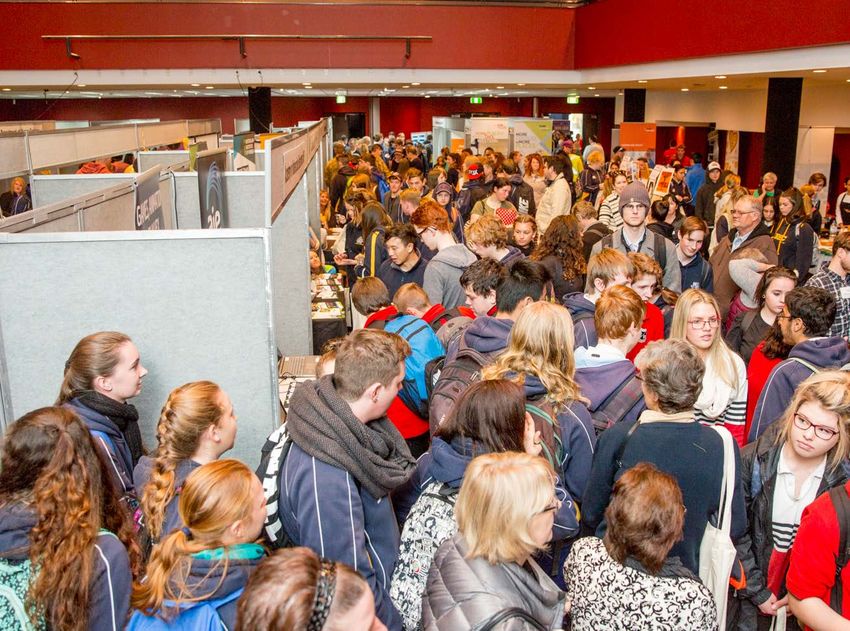
including business workshops, the Bathurst Jobs Expo, business
attraction and business growth initiatives and resources, Bathurst Regional Council is now recognised as a
national leader in economic development. The Regional Australia Institute (RAI) has ranked Bathurst 15th
nationally out of 563 LGAs for ‘Local Economic Development Support’ and 4th in New South Wales from 152 LGAs.

A key component in Council’s economic development participation is the development of the Second Circuit
at Mount Panorama and the focus on motorsport. The Second Circuit will be accompanied by a motorsport
technology park, which creates its own opportunities to encourage business associated with the motor industry or
other commercial and industrial operations to relocate to Bathurst.

The Second Circuit at Mount Panorama is one facet of our plans for future economic growth and development in
this city and our Economic Development Strategy for 2018-2022 will guide all our endeavours in this field as we
continue to build on Bathurst’s prosperity.

With the support of local partners in the state and federal governments and the private sector, Council is planning
for a prosperous future. Built on solid leadership and a committed Council, the strong economic growth of the
Bathurst Region is set to continue.

Cr Graeme Hanger OAM
Mayor of Bathurst

                                                      Page 4
Executive Summary
The Economic Development Strategy 2018 – 2022 has been developed with extensive business community
consultation undertaken by the Western Research Institute and rigorous economic analysis carried out by Balmoral
Group Australia, incorporating the latest census data from 2016 which was fully released in December 2017.

The Economic Development Strategy 2018-2022 provides a guiding framework for Bathurst Regional Council and
the community, to drive economic growth. The purpose of the Strategy is to drive vigorous and sustainable economic
development and recognises the need for collaborative effort across all levels of government, the community, and
not-for-profit groups to achieve the objectives of the Strategy.

Through the process of preparing this strategy an economic vision for the region was developed:

“A pioneering, adaptable economic hub that celebrates the region’s rich diversity, culture, skills and
history, yet nourishes innovative, nimble industries and professionals of the future.”

The objectives of the Strategy (and therefore how the Strategy will be actioned by Council and its partners) will be
to:

•   Set a clear direction for the region for the next four years to support the Bathurst community in achieving its
    priorities in terms of economic growth;
•   Drive Council’s activities and programs in the economic development space;
•   .Properly interpret, represent and transform the feedback gathered from the community consultation process
     into an actionable economic framework for the Bathurst Region;
•    Work in synergy with other Council strategies and regional plans produced by its key partners, rather than
     replicate or counteract their objectives; and
•    Set achievable targets in the Economic Activation Plan

There is a range of Economic Enablers that Council can action to encourage and support economic development in
the Bathurst Region. Areas in which Council is able to lead and influence in the development of a dynamic business
environment include:

       1. Infrastructure
       2. Planning
       3. Regional Branding, Marketing and Tourism
       4. Networks and Partnerships
       5. Local Employment
       6. Smart City Development

The Economic Development Strategy has a number of interdependent factors, many of these are foundational,
which requires a ‘whole of organisation’ approach to be embraced by Council in order to effectively implement
the Strategy. Council’s Economic Development section plays a key role in facilitating cross-functional and
cross-organisational relationships to enable successful economic development across foundational economic
factors. While the Economic Development Strategy is recognised as a ‘whole of organisation’ approach, the activities
of the Economic Development section are guided by the Strategy.

                                                      Page 5
Vision for 2022
A pioneering, adaptable economic hub that celebrates the region’s rich
diversity, culture, skills and history, yet nourishes innovative, nimble
industries and professionals of the future.

             47,105 Population1
             A 5.8% increase from 2018 to 2022,
             or 2,584 new residents

             $2.3 Billion Gross Regional Product2
             An increase of $116M on 2018

              20,492 Local Jobs3
              A 5.3% increase or 1,032 new jobs
              compared to 2018

                         Source: NSW Planning and Environment 2016 New South Wales State and Local Government
                         1

                         Area Population and Household Projections, and Implied Dwelling Requirements

                         2
                             Profile ID: Calculated using 10 year averages
                         3
                             Profile ID: Calculated using 10 year averages

                                                 Page 6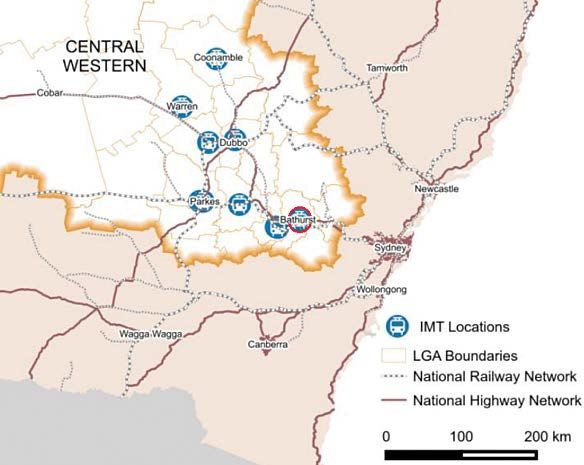
The Strategy
Why is an Economic Development Strategy needed?              becoming “A pioneering, adaptable economic hub that
The NSW Government’s Economic Development for                celebrates the region’s rich diversity, culture, skills and
Regional NSW 2015 report defines regional economic           history, yet nourishes innovative, nimble industries and
development as “growing the regional economy                 professionals of the future.”
through industry output or revenue, growing jobs and         While economic development is typically measured
businesses and growing productivity.”                        in terms of employment and GRP (Gross Regional
                                                             Product), it also includes improvements in education,
The Economic Development Strategy 2018-2022 is               socioeconomic standards, culture, health, and
needed to provide a guiding framework for Bathurst           environmental sustainability. Therefore, the vision
Regional Council and the community to drive economic         recognises the interplay between economic,
growth. The purpose of the Strategy is to drive              environmental, social and cultural facets.
vigorous and sustainable economic development and
to recognise the need for a collaborative effort across      ‘The purpose of the Strategy is to drive vigorous and
all levels of government, the community, and not-for-        sustainable economic growth and to recognise the need
profit groups to achieve economic prosperity.                for a collaborative effort across all levels of government,
                                                             the community, and not-for-profit groups to achieve
The objectives of the Strategy (and therefore how the        economic prosperity.’
Strategy will be actioned by Council and its partners)
will be to:                                                  The Strategy also recognises that:
• Set a clear direction for the region for the next          • There is a need for the ongoing development and
     four years to support the Bathurst community in             renewal of infrastructure to support new investment,
     achieving its priorities in terms of economic growth;       reduce production costs, improve quality of life and
• Drive Council’s activities and programs in the                 enable the long term sustainability of the Bathurst
     economic development space;                                 Region;
• Properly interpret, represent and transform                • The education sector is a key cornerstone of the
     the feedback gathered from the community                    regions competitiveness and future. Preparing
     consultation process into an actionable economic            young people for a global economy and upskilling the
     framework for the Bathurst Region;                          professional workforce will enable our workforce
• Work in synergy with other Council strategies and              and companies to respond to complex problems,
     regional plans produced by its key partners, rather         be more specialised, productive and innovative.
     than replicate or counteract their objectives; and          It is essential that this industry is supported and
• Set achievable targets in the Economic Activation              enhanced.
     Plan                                                    • Food manufacturing and agriculture have
                                                                 traditionally underpinned the success of the
The Strategy is not only linked to other plans developed         Bathurst economy. The global economy continues
by Council, it is also tied to relevant State and Federal        to place pressure on these sectors and change
plans, and also strategies developed by community                is needed through collaboration, supply chain
partners. This approach demonstrates that successful             development and innovation.
economic development cannot occur in isolation, a view       • The retail sector plays an important role in the
that is shared by the World Bank:                                region’s economy by preventing the leakage of
                                                                 money out of the area, attracts visitation and
“Local economic development (LED) offers local                   enhances the image of the Region.
government, the private and not-for-profit sectors, and      • The economic growth of the Bathurst Region will
local communities the opportunity to work together to            result in benefits not only to the Bathurst LGA, but
improve the local economy. It also incorporates many             the Central West, NSW and Australia.
local government and private sector functions including      • By enhancing the quality of living by including
environmental     planning,    business   development,           active recreation spaces and ensuring provision of
infrastructure provision, real estate development and            an array of services and facilities, the region will
finance.”                                                        attract talented and creative people.
                                                             • The Bathurst Region should enhance its investment
The Strategy sets a clear direction and purpose of how           and business relocation potential as the closest
Council and the community will achieve its vision of             ‘Smart City’ to Sydney. This will require the

                                                        Page 7
provision of technological infrastructure, upskilling       This view is shared by the Australian Local Government
    of the workforce and the growth of the technology           Association;
    sector.
•   Strategic partnerships and collaboration underpin           “Local Government plays a critical role in the Australian
    the success of the Strategy.                                economy. It is uniquely positioned to meet the needs of
•   The recognition and importance of heritage and the          Australians and to enhance national productivity and
    role it plays as an economic asset.                         economic growth.” (Local Government’s Plan for an
•   The provisioning of support for the new Destination         Innovative and Prosperous Australia, 2016).
    Brand.
•   The Bathurst Region’s ability to assist in relieving the    The Strategy recognises that the success of any
    population pressures, and therefore, infrastructure         economic development program depends entirely
    and service pressures faced by metropolitan areas           on the willingness of all stakeholders (community,
    such as Sydney, Newcastle and Wollongong.                   industry and government) to work together towards
                                                                achieving the shared vision and objectives outlined in
‘The Regional Australia Institute has ranked Bathurst           the Strategy. However, the Strategy also recognises
15th nationally out of 563 LGAs for ‘Local Economic             that Council is effectively resourced and positioned to
Development Support’ and 4th in New South Wales                 lead the process.
from 152 LGAs.’
                                                                Economic Enablers
Council’s Role In Achieving the Vision                          There is a range of Economic Enablers that Council can
The approaches taken to facilitate and promote local            action to encourage and support economic development
economic development differ between Councils                    in the Bathurst Region.
according to local circumstances. Bathurst Regional
Council recognises that it is ideally placed to act as          Areas in which Council is able to lead and influence in
a community leader and coordinator of economic                  the development of a dynamic business environment
development, embracing the role as an advocate,                 include:
facilitator, coordinator and service provider to lead and       • Infrastructure: Infrastructure underpins economic
enable continued economic prosperity, infrastructure,               activity and is fundamental to an effective and
innovation, investment, job generation, business                    efficient economy. Council in its role as coordinator
relocation and new enterprise development.                          has a key responsibility to ensure that hard and
                                                                    soft infrastructure requirements are addressed
Local government plays an integral role in the economic             and maintained. Additionally, Council is able to
growth and prosperity of their communities. In 2013,                undertake strategic infrastructure development
the South Australian Centre for Economic Studies                    and expansion of key business parks and precincts;
completed a report into the role of councils in economic        • Planning: Development of an efficient and
stimulus and economic development. The report had                   streamlined local development approvals process
the following conclusions:                                          and regulatory environment. Council can also
                                                                    facilitate local strategic planning and development
“It is important that local governments promote local               investigations (eg land use strategies) and
economic development because it is integral to the                  protection of local heritage as an economic asset;
achievement of the core purpose and objective of                • Regional branding, marketing & tourism: Strategic
local governments – to build and enhance community                  marketing, promotion and events to attract,
development. They have the power to make their localities           encourage investment, relocation and visitation
attractive places to invest in as well as live and work in,         in partnership with government agencies, peak
they can use their land use planning strategically to attract       bodies and private providers. Tourism potential
new business investment and can use a wide variety                  can be further enhanced through the creation of a
of other measures to stimulate additional investment                consistently applied Destination Brand;
by existing businesses and new business start-ups. By           • Networks           and      partnerships:      Nurture
planning strategically, local governments can substantially         entrepreneurship,       partnerships     and     skill
enhance local economic performance and local economic               development through business programs and
prosperity.” (“Promoting Local Economic Development:                workshops.
A role for metropolitan Local Councils”, 2013)                  • Local employment: Development of programs that
                                                                    reduce local unemployment and create new jobs;

                                                           Page 8
•   Smart City development: Lead the development of an urban development vision to integrate Information and
    Communication Technology (ICT) and the Internet of Things (IOT) technology in a secure fashion to manage
    Bathurst’s assets. Develop a Smart Cities Plan to guide Bathurst to become a more productive, accessible,
    liveable city that attracts talent, encourages innovation, creates jobs and is well positioned to integrate emerging
    technologies into everyday life.

Through the implementation of the Economic Enablers and the Economic Development Strategy, the following
outcomes can be achieved:

     •   Enhanced local business skills
     •   Jobs growth
     •   Clear articulation of the Region's strengths
     •   New infrastructure to enable economic growth
     •   Clearly identified regional priorities
     •   Improved business-to-business networks
     •   Enhanced quality of life
     •   New business relocations and industry investment
     •   Local consumer confidence

                                                             GENERATES

                                                             •   Population growth
                                                             •   GDP growth
                                                             •   Reduced unemployment
                                                             •   Improved median incomes
                                                             •   Improved awareness and visitation
                                                             •   Stable local business
                                                             •   Business diversity
                                                             •   ECONOMIC STRENGTH

                                                        Page 9
Delivery and Reporting
It is important to track the progress and effectiveness of strategies in moving towards an established vision. The
Economic Development Strategy 2018-2022 identifies measures for determining whether objectives are being
achieved in the Activation Plan. The Activation Plan supports the ongoing requirement for an ‘End-of-Year Report’
to be submitted to Council to track the rollout of the Strategy. The Economic Development Strategy has also been
developed as part of an ongoing process of community engagement in planning for the ongoing economic prosperity
of the Bathurst Region.

                                       ECONOMIC DEVELOPMENT
                                         STRATEGY 2018 - 2022

                                                                                               Community
    Resourcing                          4 YEAR ACTIVATION PLAN                                Engagement &
                                                                                                 Review

                                           END OF YEAR REPORT

Resourcing the Strategy
The Economic Development Strategy has a number of interdependent factors, many of these foundational, which
requires a ‘whole of organisation’ approach to be embraced by Council in order to effectively implement the Strategy.
While Council portfolios are organised along lines of managerial accountability, the economic development of
the Bathurst Region is dependent on a range of foundational factors, including planning, infrastructure, property
development, tourism, regional marketing, business attraction and development, and other factors that fall across
the various organisational portfolios of Council. An effective Economic Development Strategy will need to take
these factors into consideration and be implemented by the whole of the organisation.

Council’s Economic Development section plays a key role in facilitating cross-functional and cross-organisational
relationships to enable successful economic development across foundational economic factors. Examples include
the proper communication and support for state and federal funding opportunities to the appropriate sections

                                                      Page 10
of Council, capacity-building for Council-owned assets (public Wi-Fi access, aerodrome development, Mount
Panorama, leasing of Council property to new businesses) and bridging new business enquiries with town planners.
While the Economic Development Strategy is recognised as a ‘whole of organisation’ approach, the activities of
the Economic Development section are guided by the Strategy. They are responsible for activating local business
development, actively attracting new businesses to the Region, and furthering the development of economic
infrastructure. The Economic Development section is also primarily tasked with overseeing the implementation
of the Activation Plan, to generate the required relationships to enable the Strategy and to report rollout progress
back to Council.
The below matrix demonstrates how economic development is managed at Bathurst Regional Council. It correlates
the Economic Enablers listed on page 8 of this document with the various departments of Council and demonstrates
the shared responsibility for Economic Development across Council.
COUNCIL DEPARTMENTS
COUNCIL ECONOMIC Environmental, Engineering Cultural & Corporate
ENABLERS Planning & Building Community Services &
Finance
Infrastructure
Planning
Regional branding,
marketing & tourism
Networks & partnerships
Local employment
Smart City development
Methodology & Engagement
Bathurst, one of the fastest growing inland regions in provided Council with a strong understanding of the
NSW is located only 2.5 hours from the state capital, current strategic documentation impacting economic
Sydney. development in the region, a thorough understanding
The Bathurst Region is home to over 42,389 (ABS 2016) of community feedback on the priorities and actions
residents and growing at a rate of 1.4% over the past needed to develop the local economy, and a number of
five years. Population forecasts predict the region to proposed actions that can be utilised in the Economic
grow by 24% to 52,500 by the year 2031 (Department of Development Strategy 2018 – 2022 including:
Planning & Environment 2016). • A socioeconomic profile of the Bathurst Region.
• A review of strategic documentation developed by
The Economic Development Strategy 2018-2022 Council and other stakeholder organisations that
presents a tool by which the Council, in partnership with have a bearing on the future economic development
industry and the community, can take a coordinated of the region.
approach to retaining and growing the existing • Four community engagement forums.
economic base of the Region, as well as attracting new • A short survey, developed to gather feedback from
investment. the Bathurst business community and the wider
community.
The Western Research Institute (WRI) was engaged • An analysis of the information gathered from
to undertake a range of community engagement community engagement with input from relevant
and research activities to assist Council’s strategy strategic documentation.
development. The outputs of these activities have
Page 11Socioeconomic Profile of the Bathurst Local Survey
Government Area A short survey was developed to gather feedback
A socioeconomic profile of the Bathurst Local from the Bathurst business community and the wider
Government Area (LGA) was developed in order to community, to ensure that all interested persons were
provide a fact base to discussions on the local economy able to provide feedback to inform the development
throughout the engagement process. The profile of the Economic Development Strategy. The survey
considered a range of economic and social factors, contained a range of questions designed to elicit
including: information on the strengths and weaknesses of the
• Gross Regional Product and key sectors including Bathurst economy and to understand views on how
sectoral employment Council could assist future economic growth. Questions
• Count of businesses were also included that asked respondents to rank the
• Tourism importance of the seven economic development goals
• Average income by occupation highlighted in the 2036 Community Strategic Plan and
• Unemployment also to rank Council’s performance in achieving these
• Educational characteristics of the community goals.
• Age profile and age dependency ratios
• Population projections The survey was promoted widely, through paid and
• Median personal and household incomes unpaid Facebook advertisements and updates, articles
• Housing affordability in the local paper and through direct emails to forum
attendees and the wider Council business contact list.
Review of Strategic Documentation Surveys were completed by 44 individuals. Whilst this
Over recent years, Council has generated a range of number does not provide a statistically significant
strategic documentation regarding different aspects of response to the survey questions, it does add to the
its operations. The principal strategic document is the feedback gathered through engagement forums and
Bathurst 2036 Community Strategic Plan. Community provided an opportunity for interested community
Strategic Plans (CSPs) represent the highest level of members to add their ideas to the development of the
strategic planning undertaken by a local council. The Strategy.
Office of Local Government advise that all other plans
developed by councils as part of the Integrated Planning Thematic Analysis
and Reporting Framework must reflect and support the A thematic analysis was undertaken of engagement
implementation of the CSP. feedback to understand the main themes provided
by the community. A good deal of high level feedback
Council’s other relevant strategic documentation, and was provided across community forums and the
strategy’s developed by key community stakeholders, survey, including a range of interesting, achievable
were analysed to understand the necessary inputs for and sometimes aspirational ideas. These themes
Council’s Economic Development Strategy. Strategic were condensed and filtered to remove the obviously
documentation was summarised and a matrix was unrealistic, less popular ideas and issues well out of
developed highlighting how these documents align the scope of the Economic Development Strategy.
with the economic development priorities set out in the
Bathurst 2036 Community Strategic Plan.
Community Engagement Forums
Four community forums were held to gather community
feedback on the Economic Development Strategy. Two
of these forums were aimed at the general business
population, one smaller forum was held to gather
feedback from a range of Not-for-Profit and government
stakeholders and another forum was held for a group
of select business leaders, to incorporate a more high
level and strategic viewpoint from leading business
people in the community.
The community forums were successful in delivering
some interesting and informative feedback.
Approximately 100 people attended these forums.
Page 12Methodology Process
Inception & Research
Meetings with key Council stakeholders, EOI process
and engagement of a consultant.
Community Consultation
Business, Government & not-for-profit forums,
socioeconomic analysis, business surveys,
literature reviews, thematic analysis.
Draft Economic Development Strategy
Final consultant report (community consultation)
submitted & approved, draft strategy reviewed by
senior Council staff.
Public Exhibition &
Final Strategy Adoption
Strategy placed on exhibition for community
feedback, submissions received and feedback
considered, adoption of Strategy by Council.
Community Engagement Themes
Engagement activities included four community engagement forums, including one session for select
business leaders. A public survey was also undertaken. Approximately 100 people attended the
community forums and 44 surveys were completed. The main themes from this engagement have been
summarised in the following sections.
Page 13SWOT Analysis
STRENGTHS OPPORTUNITIES
• Education sector • Heritage
• Health services • Tourism
• Lifestyle • IT & communications
• Geographical position • Infrastructure
• Infrastructure & facilities • Regional branding
• Heritage background • Sectors - mining, professional services,
• Affordability IT, education, care services, agriculture,
• Population profile manufacturing
• Robust economy • Affordable land
• Streamline planning
• Attracting businesses
• Attracting/retaining people & skills
WEAKNESS THREATS
• Specialist health services • Managing growth vs lifestyle & environment
• Business culture • Transport
• IT & communications • Car parking
• Sectors - professional services • Energy cost
• Retail rental cost • Competition for investment dollars with other
• Outside perceptions of local regions
liveability & lifestyle • Skills shortage
• Skills - IT, engineering, professional • Regulation & red tape
services, care • Major local businesses shrinking
• Planning
• Transport
• Economic diversification
• Social issues
Page 14Key Strengths: Key Opportunities:
• Infrastructure and facilities – Bathurst has a • Mining is a potential opportunity sector – according
diverse range of cultural, economic and sporting to the New South Wales Government Resources and
infrastructure. The provision of national (and Energy Department, the region is poorly explored
international) standard facilities is a priority for for copper and gold and there is an opportunity for
Bathurst Regional Council, as is the drive for much more excavation4.
maximised use. • Agriculture as a potential opportunity sector –
• Population profile – the largest portion of the While Bathurst may have a competitive advantage
population in Bathurst LGA is 20-24 year olds and in agriculture due to location, it is a decreasing
the second largest is 15-19 year olds. Compared to industry in terms of production and employment,
NSW, 25-34 year olds make up a smaller percentage and will continue to diminish in size (even if not as
of the population. However, the other age groups are fast as surrounding areas).
comparable to NSW.
• Affordability – The Bathurst housing market is viewed Key Threats:
as an affordable alternative to metro city living, an • Reduction in the number of operating small
advantage that Bathurst is able to capitalise on for businesses – threats posed to traditional small
continued population growth. business models due to online shopping, skill
shortages and operational cost increases.
Key Weaknesses:
• Bathurst LGA identified a weakness in IT,
engineering, professional services and care services
skills. This may be overcome due to the presence
of extensive educational infrastructure. Vocational
programs can be developed to fill this gap.
4
http://www.resourcesandenergy.nsw.gov.au/miners-and-explorers/geoscience-information/nsw-
geology-overview/commodities
Page 15Key Community Themes
Engagement Feedback Strategic Alignment
Re-Investing in Council Activities 2036 Community Strategic Plan
Feedback highlighted support for a number of • To attract employment, generate investment,
business growth and development activities currently strengthen and attract new economic
being undertaken by Council. Feedback suggests development opportunities
that Council should continue the following activities • To facilitate and foster partnerships,
or invest further in them. networks and infrastructure to support and
• Invest in Council’s series of business related attract knowledge, innovation and research
events and training. These events received
significant support and provided information and Digital Economy Strategy 2013
training to local businesses, allowing them to • Expanding the technology sector
network and share ideas. • Economic diversification
• Provide active support to business start-ups and
creative spaces that allow ideas/businesses to Bathurst Manufacturing Study 2015
develop. • Council to become a business network and
information hub
Business Development
Skills Partnerships Bathurst Manufacturing Study 2015
Council currently engages with many local Investing in skills
institutions and plays an important role as a
facilitator and connector. It has been suggested Central West and Orana Regional Plan 2017
that Council become more involved in developing • Direction 6: Expand education and training
the local skill base by connecting people and opportunities
organisations. • Direction 10: Promote business and
• CSU could be utilised to greater local benefit. industrial activities in employment lands
Increased engagement between CSU and local
businesses could result in reducing skill gaps Digital Economy Strategy
within particular industries and drive innovation. • Expanding the technology sector
The business community has also recognised • Economic diversification
other educational providers in Bathurst (such as
TAFE) as potential education partners. Economic Development Strategy for Regional
• Council to act as a facilitator to allow industry NSW
to engage with CSU and other educational • Goal 2 - Drive regional employment and
organisations to provide a vital link between regional business growth
students/graduates and businesses who may
be looking to take on interns, work experience
students or recent graduates.
• Gunther’s Lane experiential technology hub has
massive potential to bring together individuals,
skills, technology and organisations for the
benefit of the local economy. If Council were to
bring other organisations, including CSU, into
the discussion of how to best utilise this and
other local resources (such as CSU’s first class
engineering school) there is huge potential to
solve/alleviate local skills issues and build new
and exciting businesses.
Page 16Engagement Feedback Strategic Alignment
Regional Branding and Marketing 2036 Community Strategic Plan
Branding and marketing the region’s assets • To attract employment, generate investment,
and opportunities is viewed as a key element to strengthen and attract new economic
developing the local economy. development opportunities.
• Support and recognition of the Bathurst Region • To market Bathurst as a great place to live,
Business Attraction & Population Growth
Destination Management Plan. work, study, invest and play.
• Development of a Bathurst Business Destination • To facilitate and foster partnerships,
Management Plan. A document that clearly networks and infrastructure to support and
understands and articulates the needs of new attract knowledge, innovation and research.
businesses and develops a plan to market the • To support infrastructure development
region to these businesses necessary to enhance Bathurst’s lifestyle
• Community engagement highlighted that there and industry development
are many individuals and businesses developing
interesting new products and utilising cutting Destination Management Plan 2015
edge technologies. By telling and marketing • Improved brand awareness, preference and
these stories, the region could be positioned as intention in key target markets
an industry hub, with the aim of attracting like • Increased number of sustainable tourism
businesses to the region. jobs
• Increased investment in tourism product and
Business Packages infrastructure in the region
Explore the potential for developing business
attraction packages. Business attraction packages
were raised as an attractive way for Council to bring
new businesses to the region.
NBN 2036 Community Strategic Plan
A strong area of agreement amongst forum • To support infrastructure development
attendees related to the need for better internet necessary to enhance Bathurst’s lifestyle
connectivity through the NBN. Previous research and industry development
undertaken on this issue has found that ‘the lack of,
or insufficient, internet connection was the number Economic Development Strategy for Regional NSW
Economic Infrastructure
one barrier preventing businesses expanding their • Invest in economic infrastructure &
online presence and maximising their leverage of the connectivity
digital economy’ (Digital Economy Strategy 2013)
• Council could investigate further investment into Regional Development Australia Central West
NBN infrastructure available for businesses. - Telecommunications Infrastructure Support
Guide
Second Circuit at Mount Panorama Digital Economy Strategy 2013
Council is in the process of developing its plans for • Expanding the technology sector
the Second Circuit Project. This project received • Teleworking/home based digital business
support from the community as a means of attracting promotion
businesses and people to the region. The Second
Circuit will invest and build on the assets already Central West and Orana Regional Plan 2017
in place on Mount Panorama and works toward a • 10.5 Monitor the supply and demand of
key tourism strength for Bathurst – motorsport. All industrial land in strategic centres to inform
support should be provided for this project to assist the planning and coordination of utility
economic development and business attraction. infrastructure to support new development
• Direction 21: Coordinate utility infrastructure
investment
• 21.3 Monitor development and ensure that
infrastructure is responsive to investment
opportunities.
Page 17Key Opportunity Sectors Arising from Community Figure 10: Survey Participants
Engagement
• Agriculture (value adding): This sector is recognised
as an area of interest and importance for the Central
West region, with the potential to develop on local
produce and skills to drive value adding processes.
• Advanced manufacturing: Building on the strong
local manufacturing sector, developing advanced
manufacturing will require fewer low-skilled 40%
positions and more specialised and higher skilled
roles. 60%
• Disability and aged care: Feedback suggests that
the human services sector will be one of, if not the,
largest growing sectors in the Australian economy.
Developing this sector in the regional economy will
likely deliver significant economic development
results for the local economy.
BUSINESS
• Education: Developing Bathurst’s education
assets holds promise as a means of maintaining RESIDENT
a diversified economy and addressing local skills
shortages, at the same time as developing the skills Figure 11 shows the breakdown of survey participants
needed to drive innovation. by employment. Over 20% of respondents were
• Information technology: The information technology employed in ‘other services’ not listed as an option.
sector and the digital economy have risen to form a Around 11% of respondents were employed by the
major part of modern economies. finance and insurance services sector and professional
• Tourism: The tourism sector is increasingly being scientific and technical services, education and
recognised as a powerful job creator and a significant training, construction and accommodation and food
part of regional economies. Council is addressing services each made up 9% of the employment of
this sector under its Bathurst Region Destination survey participants.
Management Plan, to continue the development of
this industry. Figure 11: Employment of Survey Participants
Source: Bathurst Regional Council Survey
• Professional services: The professional, scientific
and technical services sector (including legal,
accounting, architecture, engineering and SECTOR EMPLOYED
associated services) has significant opportunity to Rental, Hiring & Real Estate Services
expand in the region. Opportunities exist to replace Professional, Scientific & Technical Services
imported professional services and to make better Other Services
Manufacturing
utilisation of technology. Information Media & Telecommunications
Heath Care & Social Assistance
Financial & Insurance Services
Survey Findings Electricity, Gas, Water & Waste Services
Education & Training
The targeted participants of the survey were residents Construction
and businesses within the Bathurst LGA. Figure 10 Arts & Recreation Services
Agriculture, Arts & Recreation Services
shows the breakdown of survey participants. The Administrative & SupportServices
majority of respondents were businesses. Accommodatoion & Food Services
0% 5% 10% 15% 20% 25%
Of the top barriers to entry in Bathurst, survey
respondents indicated infrastructure such as internet
and transportation as a key issue. Another concern
voiced was high rental costs.
Page 18The Bathurst 2036 Community Strategic Plan sets out At the inception of this community engagement project,
seven economic development goals for the Bathurst an agreed aim of the project was to undertake an
region, the survey asked respondents to rate how well analysis of the strategic documentation and highlight its
Bathurst is doing to achieve these goals on a scale of 1 alignment against the existing economic development
to 10, with 1 being very poor and 10 very well. priorities set out in the Bathurst 2036 Community
Strategic Plan.
Respondents felt that Goal 1 (See Appendix, Figure 1), The Bathurst 2036 Community Strategic Plan contains
to attract employment, generate investment, strengthen four priorities being economic prosperity, liveable
and attract new economic development opportunities, communities, environmental sustainability and
is on average doing very well with 71% of respondents sound leadership. Council’s Economic Development
indicating a ranking above 6. Matrix on the following page (page 20) highlights the
contribution of each strategic document to the economic
Goal 2, (Appendix Figure 2) to encourage, promote development objectives set out in the Bathurst 2036
and protect the region’s primary resources, was not Community Strategic Plan. The CSP identifies 7
perceived by respondents as being achieved with 42% economic development objectives:
of respondents indicating a ranking equal to or below 5.
1. To attract employment, generate investment,
strengthen and attract new economic development
Goal 3, (Appendix Figure 3) to protect a vibrant CBD
opportunities
and support and grow retail diversity, was perceived as
doing well with nearly 70% of respondents indicating a 2. To encourage, promote and protect the region’s
ranking of 6 or higher and 25% indicating 8 or higher. primary resources
3. To protect a vibrant CBD and support and grow
Goal 4 , (Appendix Figure 4) to market Bathurst as a retail diversity
great place to live, work, study, invest and play, had a 4. To market Bathurst as a great place to live, work,
very positive response with 80% ranking 5 or above. study, invest and play
5. To facilitate and foster partnerships, networks and
Goal 5 (Appendix Figure 5) to facilitate and foster infrastructure to support and attract knowledge,
partnerships, networks and infrastructure to support innovation and research
and attract knowledge, innovation and research was
also perceived very well with 71% of respondents 6. To support infrastructure development necessary
indicating a ranking above 6. to enhance Bathurst’s lifestyle and industry
development
Goal 6 (Appendix Figure 6) to support infrastructure 7. To support integrated transport infrastructure
development, necessary to enhance Bathurst’s lifestyle development
and industry development received a positive response
with 62% of respondents selecting 6 or above. While the Economic Development Strategy 2018 –
2022 recognises and supports the achievement of the
Goal 7 (Appendix Figure 7) to support integrated above objectives as they currently exist, the Economic
transport infrastructure development was perceived Development Strategy has developed an updated set of
as being the lowest achieved goal with 48% indicating a objectives (formed around the Economic Enablers) that
ranking of 5 or below. will inform the development of the next iteration of the
Community Strategic Plan.
Strategic Linkages Matrix Where each listed strategic document assists the
achievement of the existing CSP objectives, a tick has
been placed against the goal in the matrix.
The development of the Economic Development Strategy
2018 – 2022 has been informed by relevant, existing
strategic documentation to ensure that it will take into
account previous strategic work undertaken by Council
and other relevant stakeholder organisations.
Analysis of the various strategies has revealed that
Council has a proliferation of goals and visions that are
not fully aligned. These strategies and plans have areas
of consensus and overlap. The Economic Development
Strategy 2018-2022 aims to build on previous work.
Page 19Strategic Linkages Matrix
1 BATHURST REGIONAL COUNCIL STRATEGIC DOCUMENTS
To attract To encourage, To protect a To market To facilitate To support To support
employment, promote & protect vibrant CBD & Bathurst as a & foster infrastructure integrated
BATHURST generate the region’s support & grow great place to live, partnerships, development transport
2036 investment, primary resources retail diversity work, study, invest networks & necessary infrastructure
COMMUNITY strengthen & & play infrastructure to to enhance development
STRATEGIC attract new support & attract Bathurst’s lifestyle
economic knowledge, & Industry
PLAN development innovation & development
opportunities research
Bathurst
Region
Destination
Management
Plan
Bathurst
Manufacturing
Study
Bathurst Digital
Economic
Strategy
Urban Strategy
Rural Strategy
Village Plans
Bathurst CBD
& Bulky Goods
Business
Development
Strategy
Cultural Vision
Heritage
Strategy
Page 202 STAKEHOLDER STRATEGIC DOCUMENTS
To attract To encourage, To protect a To market To facilitate To support To support
employment, promote & protect vibrant CBD & Bathurst as a & foster infrastructure integrated
generate the region’s support & grow great place to partnerships, development transport
BATHURST 2036 investment, primary resources retail diversity live, work, study, networks & necessary infrastructure
COMMUNITY strengthen & invest & play infrastructure to to enhance development
STRATEGIC PLAN attract new support & attract Bathurst’s
economic knowledge, lifestyle &
development innovation & Industry
opportunities research development
Central West &
Orana Regional Plan
Economic
Development
Strategy for
Regional NSW
Regional
Development
Australia Central
West - Investment
Opportunities 2013
Regional
Development
Australia Central
West - NSW Central
West Export / Import
Contribution Study
Regional
Development
Australia Central
West - NSW Central
West Freight Study
Regional
Development
Australia
Central West -
Telecommunications
Infrastructure
Support Guide
Regional
Development
Australia Central
West - Value Adding
to Agriculture
Containerised
Cargo Demand
Assessment Central
West NSW
Page 21Situational Analysis
Economic Indicators Tourism
A strong and diverse economy underpins the Bathurst In 2016, 920,000 tourists visited the Bathurst Region
community. Rather than having a concentration in (overnight and domestic day trips) with a total spend
one or two major industries, the region’s economy is of $227.1M generated in the local economy (Tourism
well structured and is spread across multiple industry Research Australia 2016).
sectors. This non-reliance on any specific sector ensures
the community is buffered against major fluctuations in Employment
industry and reduces the impact of economic shocks. There are 20,772 employed residents in the Bathurst
LGA, and 18,964 local jobs. Average annual jobs growth
Population Growth over a 10 year period is approximately 1.3%. More than
As of June 2016, the Estimated Residential Population 50,000 people work in the wider region, providing a
(ERP) of the Bathurst Region is 42,389 (ABS). The diverse employment pool. The largest industries in
Bathurst Region is ranked as the 4th fastest growing the Bathurst LGA by employment include Education &
regional centre in NSW, with an average annual growth Training (2,180), Manufacturing (1,498), Health Care
of 1.4% (Department of Planning & Environment 2016). & Social Assistance (2,443), Retail (1,914) and Public
Administration (1,589). (ID Consultants 2017)
Economic Production
The Bathurst Region’s Gross Regional Product Unemployment
(GRP) was $2.14 billion as of June 2016. From 2014 As of September 2017, the unemployment rate of the
to 2016, the region experienced the strongest three Bathurst Region was 3.95%, well below the regional
consecutive years of growth that have ever been NSW average of 5.42% and the NSW average of 4.7%
recorded by local economists. On average, GDP has (ABS 2017).
grown by approximately 2.2% each year since 2010 (ID
Consultants 2016). Real Estate
The median house price in the Bathurst LGA is $387,000
Count of Businesses and $284,000 for units/townhouses as of June 2017.
There are 3,324 registered businesses in the Bathurst This is significantly below the NSW median house
Region LGA with Construction (636), Agriculture (629), price of $650,000, and drastically below the Sydney
Rental, Hiring & Real Estate (310), Professional, metropolitan median house price of $1.02M (Housing
Scientific & Technical Services (282) and Transport, NSW 2017).
Postal & Warehousing (195) as the largest industries by
business count (ABR 2016). Skills and Education
Bathurst is supported by a strong education sector with
Major Industries over 60 institutions, employing over 2,000 residents.
The largest industries by value added contribution in According to the 2016 Census, 48% of persons 15
the Bathurst LGA include Manufacturing ($254.3M), years and over in Bathurst had attained some form
Education & Training ($208M), Public Administration of qualification with 16.1% of the population holding a
& Safety ($182.2M), Health Care & Social Assistance Bachelor degree or higher.
($172.7M) and Construction ($146.1M) (ID Consultants
2016).
Page 22Economic Snapshot
$2.14 Billion Residential Development
Gross Regional Product
NIER 2016 $107.8
42,389
Population $55.5
ERP 2016
$183.7 Commercial Development
DEVELOPMENT
18,964 local jobs APPROVED
2016 2016/17
$387,000
Median house price 2017 $20.4
“Other” Development
3,324
Registered Businesses
ABS 2016
Development 2016/17 Financial
3.95% Year
2500
Unemployment Rate
ABS 2017
2000
1500
GRP $million
1000
2012
2013
2014
2015
2016
500
300m
GROSS REGIONAL PRODUCT
250m
254.3
200m
208.3
$ million
182.2
150m
172.7
Administration &
146.1
Manufacturing
Health Care &
Construction
100m
Education &
Assistance
Training
Safety
Public
Social
50m
LARGEST INDUSTRIES
Page 23You can also read


