BERLIN THIS CITY'S ON A ROLL! - comfort.de
←
→
Page content transcription
If your browser does not render page correctly, please read the page content below
BERLIN
THIS CITY’S ON A ROLL!

       APRIL 2017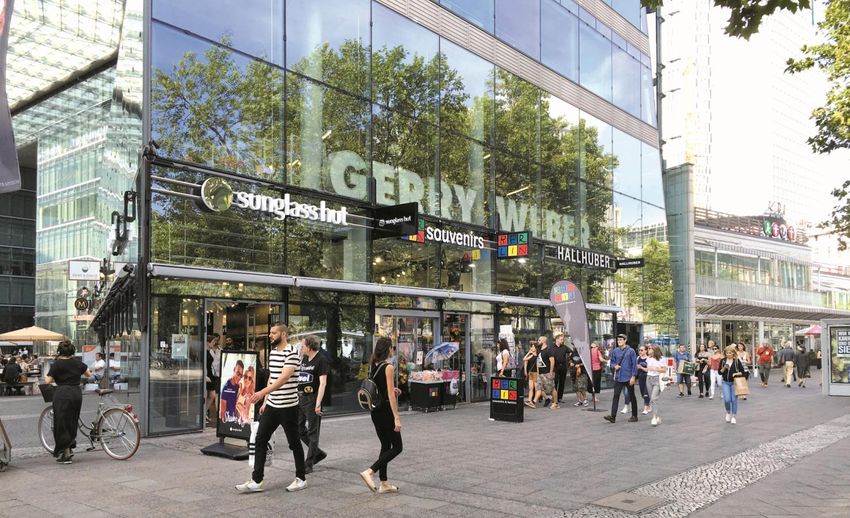
IN FIGURES                                                                    With a population of more than 3.5 million, Germany’s
                                                                                capital Berlin is the country’s largest city by far. Berlin is
  Federal state:                                                  Berlin
                                                                                the only genuinely global German city, not just because of
  Inhabitants:                                              3,520,031           its size but also because of its diverse and vibrant cultural
                                                                                scene and its reputation as a trend-setting hub. This city
  Population development:                                     + 1.4 %           has almost magnetic appeal and is experiencing substan-
                                                                                tial population growth. Between 2012 and 2016 alone, a
  Employees:                                                1,311,079
                                                                                total of 194,000 new residents moved to Berlin – enough
  Unemployment rate:                                              9.4 %         people to populate a medium-sized city.

  Purchasing power:                                                96.7         Berlin is an exceptionally large city with a very polycentric
                                                                                structure. Economic disadvantages resulting from the pre-
  Centrality parameters:                                          106.1
                                                                                reunification division of the city into a western part and an
  Relevant shopping centres::                                                   eastern part, which meant a centrally planned economy for
  Boulevard Berlin (C), Alexa (C), Potsdamer Platz                              the eastern part of the city and an “enclave” status for the
  Arkaden (C), Europa-Center (C), Wilmersdorfer
  Arcaden (C), Bikini Berlin (C), Das Schloss (C), Forum                        western part, have now been largely eliminated. This is
  Steglitz (C), Mall of Berlin (C), Hallen am Borsigtum                         clearly evident in the positive development of employment
  (S), Gropius Passagen (S) etc.
                                                                                figures. The number of employees paying social security
  C=City    S=District P=Outskirts
                                                                                contributions has risen by around 214,000 or 19% in recent
Source: state statistical offices, GfK GeoMarketing GmbH, Federal
Employment Agency                                                               years, an increase that none of the other top 7 German
                                                                                cities have been able to match. Double-digit unemploy-
PRIME RETAIL RENTS                                                              ment figures are now a thing of the past in Berlin.
from 2006 - 2016 in EUR/m²
                                                                                This dynamic city is a European tourist hotspot with over
            80-120m²          300-500m²
                                                                                31 million overnight stays and almost 13 million guests
 400
                                                                                (around 46% foreign) every year. This is additionally en-
 350                                                                            hancing Berlin’s reputation as a tourist destination and
 300                                                                            driving the development of its tourism industry (see chart
 250                                                                            on page 7). The number of overnight stays has almost
                                                                                doubled over the last decade.
 200

 150

 100
                                                                                THE CITY’S SIGNIFICANCE AS A
  50                                                                            RETAIL LOCATION
   0
       06     07       08   09        10    11   12    13    14     15     16   Berlin is also a shopping metropolis with many excellent
                                                                                inner city retail locations catering to the city’s fast-
                                                                                expanding population, tourists and the approximately 1.8
 CITY CENTRE AREA                                                               million residents of the surrounding region. Berlin’s classic
  Berlin     Ø > 1 Mio. Inhabitants
                                                                                catchment area has 5.3 million people in it!

                                                                                The Berlin retail landscape is both diverse and appealing in
Proportion
of sales in                                                                     terms of store formats, retailers and locations. In fact, it
    %                                                                           caters to practically all consumer preferences and can
                                                                                compete with other international shopping destinations.
Proportion
  of retail
space in %

                0           5              10         15       20          25

Source: COMFORT Research & Consulting

COMFORT City Report Berlin 2017                                                                                                        2 von 12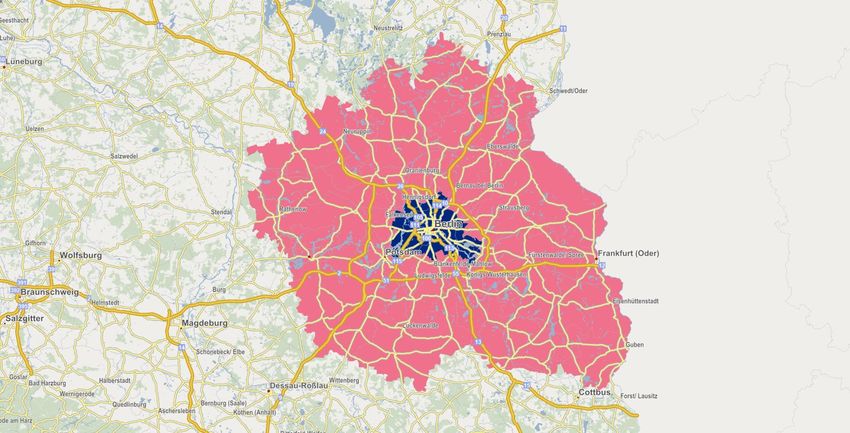
PURCHASING POWER AND                                                    There are many good reasons why international labels
CENTRALITY PARAMETERS                                                   such as Uniqlo, Forever 21, Pull & Bear, Bershka and &
                                                                        Other Stories chose the capital city as the location for their
     Centrality parameters        Purchasing power
                                                                        first stores in Germany. Various other brands, including
            Berlin                                                      Under Armour and Miniso, are also waiting to make their
                                                                        move as soon as they find a suitable location. Department
       Düsseldorf
                                                                        stores such as KaDeWe, Galeries Lafayette and Duss-
Frankfurt am Main                                                       mann das Kulturkaufhaus are unique in Germany, putting
         Hamburg
                                                                        Berlin on a par with London and Paris in the European
                                                                        context. Berlin is today a leading fashion city that hosts top
         Cologne
                                                                        industry events such as the Berlin Fashion Week. Many
           Munich                                                       smaller concept stores also open their first outlets in Ber-
         Stuttgart
                                                                        lin.

                     0       25     50      75       100    125   150
                                                                        The Berlin retail scene is almost 5 million m² in size – cor-
Source: GfK GeoMarketing GmbH                                           responding to around 1.4 m² of retail space per person –
                                                                        and generates total revenue in the region of EUR
 FASHION CENTRALITY                                                     18 billion. Berlin effectively performs a trans-central supply
                                                                        function for the city and the surrounding region of Bran-
           Berlin
                                                                        denburg, and it is a representative capital city for Ger-
       Düsseldorf
                                                                        many. This is inadequately expressed by the 2016 GfK
Frankfurt am Main                                                       centrality index ranking for Berlin of 106.1 compared with
        Hamburg                                                         other German cities and in its specific fashion centrality
         Cologne                                                        index ranking of approximately 153. Although Hamburg,
          Munich
                                                                        Munich and Cologne are far higher ranked, it’s important to
         Stuttgart
                                                                        remember that Berlin’s ranking is statistically depressed by
                                                                        its extraordinarily large population.
                     0       50       100        150       200    250

Quelle: COMFORT – Research & Consulting

CATCHMENT AREA

  Source: COMFORT – Research & Consulting, base map RegioGraph

COMFORT City Report Berlin 2017                                                                                                3 von 12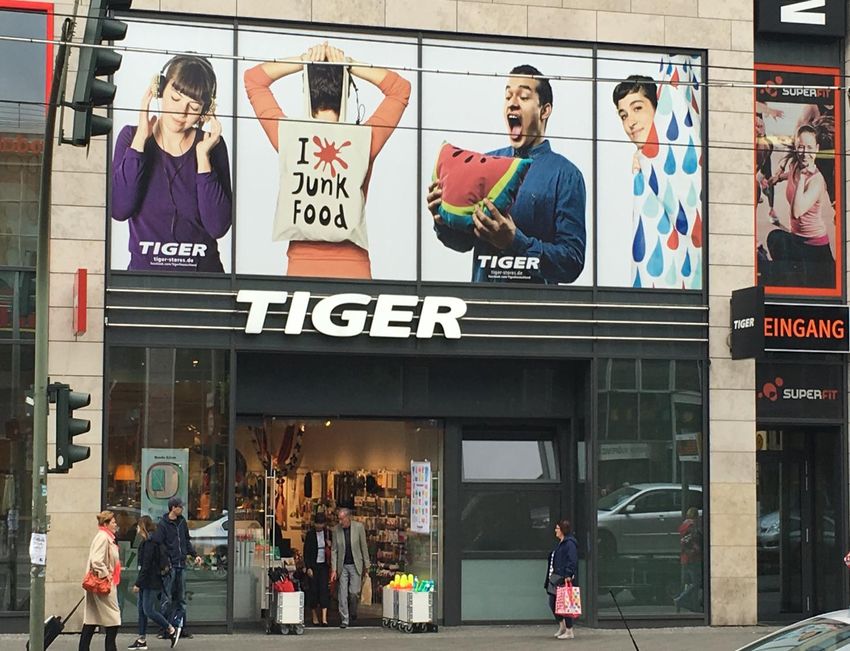
With a population exceeding 3.5 million, compared with around 1.8 million in Germany’s second largest city, Ham-
burg, Berlin’s sheer size puts it in a league of its own. Retailers in Berlin operate in an equally unique environment
in terms of this city’s size, polycentrality, cosmopolitanism and international visitor public. To effectively assess the
retail situation and outlook in Berlin, it is necessary to take a differentiated approach to the various retail locations
and districts. These include all the central locations, the special locations of Potsdamer Platz and Leipziger Platz
as well as the non-central locations of Schlossstrasse in Steglitz and the Wilmersdorfer Strasse pedestrian zone,
which are very different with respect to size.

CITY RETAIL DATA

  Strukturdaten                                                       München                     Köln
                                                          Berlin                     Hamburg                 Frankfurt   Stuttgart   Düsseldorf
  Structual data                                                       Munich                    Cologne

  Einzelhandelskaufkraft 2016
  Retail purchasing power 2016                               96,7           129,2       109,9       108,8       113,8       112,3        117,6
  (Deutschland/Germany = 100,0)

  Einzelhandelsverkaufsfläche 2016
  Retail sales area 2016                                4.800.000     1.809.000      2.690.000   1.595.000   1.150.000    994.400      996.300
  in m² / sqm

    Anteil der Innenstadt in m²
                                                          643.000         490.400     346.000     316.000     271.900     358.500      346.350
    Share of the city centre im sqm

    Anteil der Innenstadt
                                                           13,4%            27,1%       12,9%       19,8%       23,6%      36,1%        34,8%
    Share of the city centre

  Einzelhandelsverkaufsfläche pro Einwohner
                                                               1,4             1,2         1,5         1,5         1,6         1,6         1,6
  Retail sales area per inhabitant

  Flächenproduktivität in € pro m²
                                                            3.800           5.900       4.100       4.400       3.700       4.200        4.200
  Space productivity in € per sqm

  Flächenproduktivität Innenstadt in € pro m²
                                                            3.800           6.500       5.500       5.100       5.100       4.500        4.600
  Space productivity of the city centre in € per sqm

  Einzelhandelsumsatz 2016 in Mio. €
                                                         18.033,0         10.662,1    11.016,5     7.026,5     4.235,5    4.165,6      4.183,3
  Retail turnover 2016 in € million

    Anteil der Innenstadt in Mio. €
                                                          2.475,0          3.210,0     1.910,0     1.605,0     1.400,0    1.625,0      1.580,0
    Share of the city centre in € million

    Anteil der Innenstadt
                                                           13,7%            30,1%       17,3%       22,8%       33,1%      39,0%        37,8%
    Share of the city centre

  Einzelhandelszentralität 2016
  Retail centrality 2016                                    106,1           114,0       112,2       121,9       102,4       119,6        116,2
  (Deutschland/Germany = 100,0)

  Modezentralität 2016
  Fashion centrality 2016                                   153,3           219,1       169,1       197,8       198,4       202,3        222,7
  (Deutschland/Germany = 100,0)

  Einzugsgebiet / Catchment area
                                                               5,3             3,1         3,4         2,4         2,3         2,5         2,0
  Einwohner in Mio. / Inhabitants in mill.

Quelle / Source: COMFORT - Research & Consulting, GfK GeoMarketing GmbH

COMFORT City Report Berlin 2017                                                                                                         4 von 12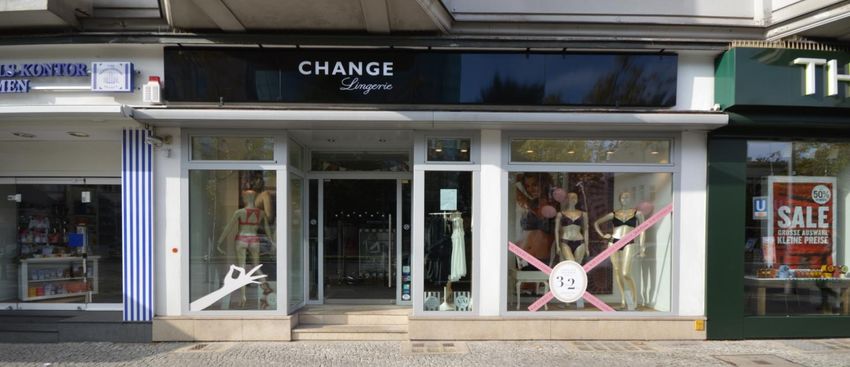
PRIME RETAIL RENTS
1A-LAGE in EUR/m²
KURFÜRSTENDAMM / TAUENTZIENSTRASSE 80-120 m²
Most important and famous shopping boulevard in Berlin
Best section between KaDeWe (Kaufhaus des Westens) and Olivaer Platz 350
Diverse cross-section of retailers from the concentration of department stores 300-500 m²
on Tauentzienstrasse to the luxury retailers near Olivaer Platz
180
Highest footfall between Tauentzienstrasse and Kurfürstendamm, corner of
Uhlandstrasse
New tenants: Reserved, Diptyque, Superdry, Lush, planet sports, Asics
Rents Kurfürstendamm: approx. EUR 290/m² (small), approx. EUR 150/m²
(medium-sized)
Rents Tauentzienstrasse: approx. EUR 350/m² (small), approx. EUR 180/m²
(medium-sized)
ALEXANDERPLATZ 80-120 m²
Central shopping location catering to the eastern part of the city and
consumer counterpart to City West 250
Extremely well-connected by road and public transport: 300,000 people pass 300-500 m²
through every day
This location’s strength is mainly thanks to department stores such as Galeria 130
Kaufhof and major chain stores such as C&A, Primark, Saturn and TK Maxx
Rents are likely to increase because of high demand for retail space
New tenant: flying tiger
Rents: approx. EUR 250/m² (small), approx. EUR 130/m² (medium-sized)
FRIEDRICHSTRASSE 80-120 m²
The second-most important shopping location in the east of the city with a
wide variety of highstreet and luxury retailers 220
Most important retailers: Galeries Lafayette, Zara, H&M, Kulturkaufhaus 300-500 m²
Dussmann
Development potential on the southern section near Checkpoint Charlie 110
New tenants: ecco, Läderach Confiserie
Rents: approx. EUR 220/m² (small), approx. EUR 110/m² (medium-sized)
WILMERSDORFER STRASSE
The only real pedestrian zone in central Berlin
80-120 m²
Most shoppers here live in the core catchment area
Good amenity value as a result of several established cafés and restaurants 90
New tenants: REWE, CCC-Schuhe, Jim Block, Cross Jeans
300-500 m²
Rents: approx. EUR 90/m² (small), approx. EUR 45/m² (medium-sized)
45
COMFORT City Report Berlin 2017 5 von 12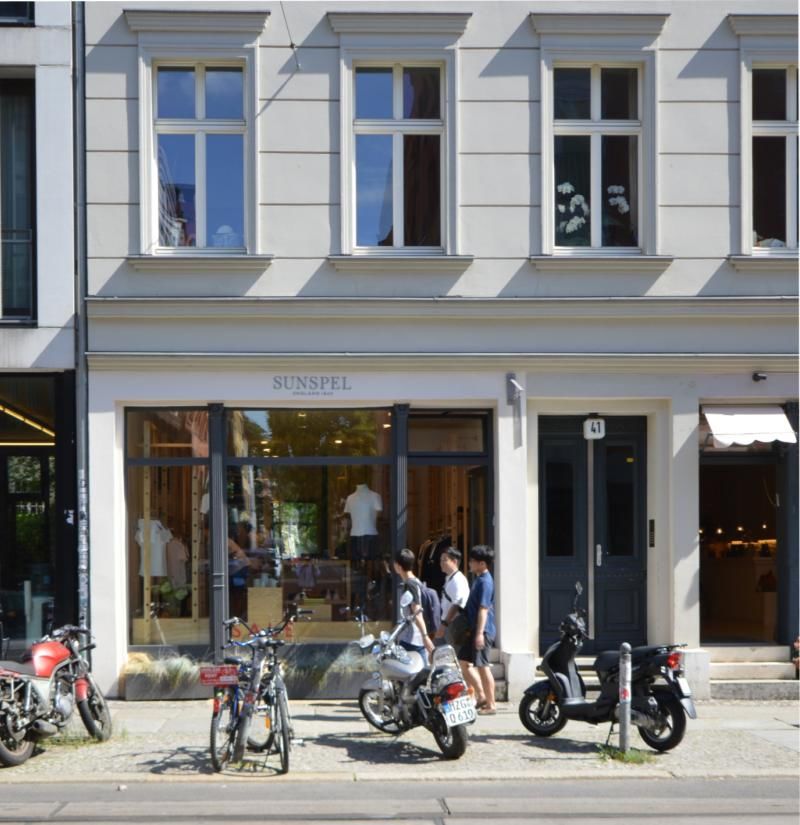
SCHLOSSSTRASSE 80-120 m²
The most important highstreet in the affluent south-western part of Berlin
Four big shopping centres on the west side 110
Resulting surplus of available retail space, which impacts rental income 300-500 m²
Plans to redesign the retail space on the elevated basement level of the 55
Steglitzer Kreisel high-rise as part of the development project there
New tenants: UNIQLO, Change of Scandinavia, Mister Spex
Rents: approx. EUR 110/m² (small), approx. EUR 55/m² (medium-sized)
HACKESCHER MARKT 80-120 m²
Hip and trendy area for young German and international retailers
150
This lively district is the first choice location for new brands
New tenants: Ba&sh, Love Stories, Suit Supply 300-500 m²
Rents: approx. EUR 150/m² (small), approx. EUR 70/m² (medium-sized) 70
The German capital city is a trend-setting hub with major global appeal. There is still high demand for retail space
at top locations in the western part of the city, particularly Kurfürstendamm and Tauentzienstrasse, as well as Al-
exanderplatz in the east, mainly from international chain store operators. Demand from premium retailers is high-
est for modern and high quality retail space.
Kurfürstendamm 19-24, Sunglass Hut, brokered by COMFORT
The completion of the Upper West, Neue Gloria and Kudamm-Karree shopping centre development projects be-
tween 2017 and 2020 will make City West an even stronger retail location. The first centre to open will be ZOOM,
a Hines project, at Bahnhof Zoo. Tenants include Irish chain store operator Primark.
COMFORT City Report Berlin 2017 6 von 12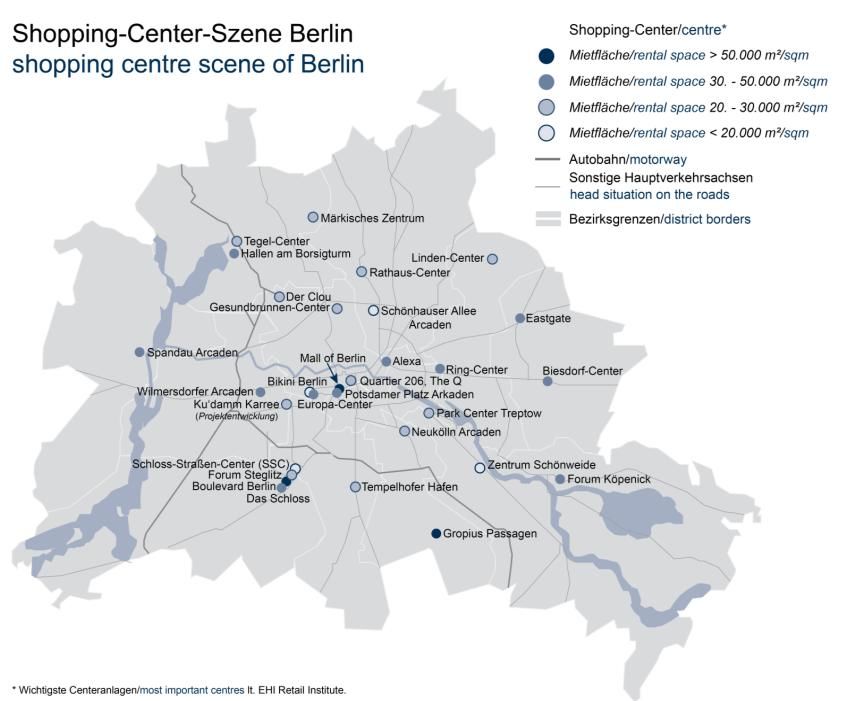
– DATA
 Tourism – Data
TOURISM                BERLIN
                Berlin 2016       2016 VS. 2006
                            vs. 2006

               Guests   Overnight stays
                                                                These developments will give Breitscheidplatz, Kurfür-
          35                                                    stendamm and Joachimsthaler Strasse a new look, influ-
                                                     + 95,3 %   enced among other things by the new Superdry flagship
          30                                                    store and hip café The Barn, which is moving into the
                                                                historic premises of Cafés Kranzler. The biggest Motel
          25                                                    One, with more than 500 rooms in the Upper West high-
                                                                rise, the revitalisation of the Zoologischer Garten train
in Mio.

          20                                                    station with a big new McDonald’s restaurant and Bikini
                                                                Berlin, which has already opened, are also contributing to
          15
                                          + 79,9 %              the area’s changing face. City West is already Berlin’s
                                                                heart and soul and will be even more so in future.
          10

                                                        The area surrounding Hackescher Markt is developing
          5
                                                        very dynamically. It boasts a successful mix of retail, din-
    0
                                                        ing and entertainment that makes it absolutely unique in
                        2006           2016             Berlin and sustains demand for retail space at a high and
Source: state statistical offices                       stable level. Friedrichstrasse is very much in demand,
especially the section between the station and Unter den Linden, and demand for the area to the south of Unter
den Linden has also stabilised. Although the Mall of Berlin shopping centre recently opened nearby, no synergies
have been evident up to now.

Bahnhofstraße 23-25, Tiger, brokered by COMFORT

COMFORT City Report Berlin 2017                                                                                    7 von 12
Alexanderplatz has a high footfall (300,000 people a day) and continues to be the most important established
shopping location in the eastern part of the city. The Alexanderhaus project, a modern new development of the
entire retail area (completion in 2018) will make this location even more attractive in future.

SHOPPING CENTRES
Berlin has the most shopping centres in Germany. According to the EHI Retail Institute, the city has 40 shopping
centres with total rental space of EUR 1.44 million m². No other German city has anywhere near this number of
shopping centres. The majority (32 or four-fifths) of Berlin’s shopping centres are located in non-central districts
and neighbourhoods. Schlossstrasse Steglitz is the shopping centre stronghold, with four shopping centres provid-
ing total retail space of more than 130,000 m² within a one kilometre section of the road.

                                                                    On the other side of the coin, the established
                                                                    central Berlin districts have relatively few
                                                                    shopping centres. One exception is the tradi-
                                                                    tional city centre location of Potsdamer Platz /
                                                                    Leipziger Platz, which has both the Potsdamer
                                                                    Platz Arkaden and the Mall of Berlin, the city’s
                                                                    biggest shopping centre of all. Mall of Berlin
                                                                    has around 270 shops and 76,000 m2 of retail
                                                                    space to rent. It attracts many visitors and tour-
                                                                    ists but has not yet won over local consumers.

                                                                 Although all the largest shopping centre devel-
                                                                 opments are now long completed, there are
                                                                 still a few projects in the pipeline. As well as
                                                                 individual new developments such as the
                                                                 planned East Side Mall (a Freo development
                                                                 project, already sold to RFR) opposite the
                                                                 Mercedes-Benz Arena in Friedrichshain, or the
HGHI development on the Schultheiss site in Berlin-Moabit, or the private investor project at the old slaughter-
houses on Landsberger Allee, upcoming projects mainly relate to the refurbishment of old shopping centres such
as Kudamm Karree and Tegel-Center.

Schloßstraße 25, Change, brokered by COMFORT

COMFORT City Report Berlin 2017                                                                                8 von 12
INVESTMENT
As an investment location, Berlin is equal in every respect to other PURCHASE PRICE FACTOR
major European cities such as London or Paris. It is an absolute must
29,0 - 31,0
for German investors and also attracts international capital from both
institutional and private investors. The market as a whole is very mul-
tifaceted, with many different products and property sizes at diverse
locations. There has been so much hype in some areas over recent
months that purchasing prices have rocketed sky high and rents ha-
0 10 20 30 40
ven’t been able to keep pace for some time now.
Overall, surplus demand is still driving the dynamic trend in the Berlin
investment market. Prices are continuing to rise strongly with buyers paying more than 30 times the annual rent in
some cases. There has been no let-up in demand for projects on Kurfürstendamm or Tauentzienstrasse, Hacke-
scher Markt, Schlossstrasse or Friedrichstrasse. Friedrichstrasse is particularly interesting to institutional investors
due to the size of the properties there. Alexanderplatz, on the other hand, offers very few investment products as a
result of its structure. Transactions involving properties of various sizes and quality categories have taken place in
virtually all areas of Berlin in recent months. Examples include the sale of Kurfürstendamm 26a, Friedrichstrasse
79/80 and Wilmersdorfer Strasse 50–52.
In summary, demand for properties in all areas of
Berlin has not let up at all. Private and institutional
investors are making a wide range of investments,
although private investors tend to prefer the
slightly smaller properties around Hackescher
Markt, Schlossstrasse and Wilmersdorfer Strasse.
Institutional investors have no volume limits when
it comes to properties in prime locations, shopping
centres or portfolios.
The excellent rating of Berlin’s property sector,
even by European standards, is also expressed in
pwc and ULI’s renowned survey of almost 800
property experts throughout Europe, “Emerging
Trends in Real Estate Europe 2017”, which was
published at the beginning of the year. In terms of
overall performance, Berlin is the clear leader. It
leaves other major European cities such as Paris
(15th) and London (27th) trailing far behind.
Alte Schönhauser Straße 41, Sunspel, brokered by COMFORT
COMFORT City Report Berlin 2017 9 von 12
COMFORT CITY-RANKING 2017

 Demography / (socio-)economy

 Retail trade

 Location and real estate

The COMFORT City Ranking assesses the economic basis, power of attraction, and performance of the retail trade and retail properties in city centres. The index serves
as a factually substantiated basis for negotiating rental and purchase prices of city-centre retail properties in Germany. Technically, it is a weighted index of relevant key
data and parameters relating to demography and (socio-)economics, the retail trade, location and retail properties. For the most important 60 cities, which are represented
in this HIGH STREETS report with individual city reports, a total of 35 parameters determined topically and in the same manner for each individual city are entered. Using a
scoring model, the parameters cover three major areas, within which individual sub-indicators are also analysed. In detail these are as follows:
• Demography/(socio-)economic index (Parameters for population/development, GDP, employment, unemployment, tourism, retail purchasing power)
• Retail trade index (Parameters for the catchment area: population size and level of demand, retail centrality, fashion centrality, as well as city centre sales, sales areas
   and sales-area productivity)
• Location and real-estate index (Parameters for the rents of small/medium-sized spaces, location / retail space structure of the city centre, industry/operator mix in the city
   centre, rental demand, intensity of demand[Overall rental space demand in m2 in relation to the available retail spaces in the city centre])

As a result of the extremely positive developments in the Berlin retail scene, particularly retail property invest-
ments and, to a slightly lesser extent, retail property rentals, Berlin has climbed up the COMFORT City Ranking to
second position behind Munich.

METROPOLITAN COMPARATIVE SCORING (IN %)

        Munich

       Stuttgart

      Hamburg

          Berlin

      Frankfurt

    Düsseldorf

       Cologne

                   83             84             85             86             87             88              89             90             91             92             93

SUMMARY AND OUTLOOK
The above brief analysis of Berlin’s top retail and commercial property locations indicates a very positive outlook in
the foreseeable future.

Favourable and strongly improving demographic and economic frameworks support this prognosis. Official figures
clearly document Berlin’s impressive growth over the past three years: over 100,000 additional residents, 80,000
more employees paying social insurance contributions and some 4 million more overnight stays in hotels.

On the other hand, “soft” image factors are also contributing to these positive developments. Berlin is still THE
trend-setting German city with its mix of attitude and lifestyle, urbanity and locality, all of which give it genuine
global appeal.

COMFORT City Report Berlin 2017                                                                                                                                     10 von 12
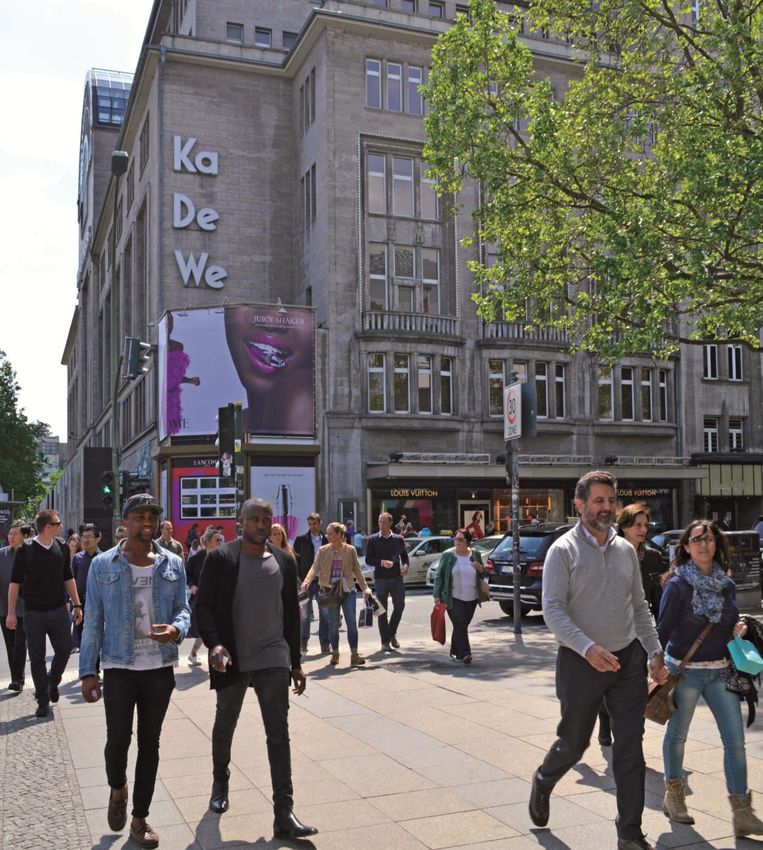
Berlin has made good progress over recent years in attracting retail companies – especially international ones – and both German and foreign investors. Few retailers who aim to be successful in the German market can afford to ignore Berlin. One good example is the internationally famous UNIQLO brand, which now has stores in various key Berlin locations and is now starting to expand to the rest of Germany from the capital. Berlin also has global- standard retail property investment opportunities, which are attracting investor capital to the city. There are very few properties available in prime locations and access to them is very restricted. This has a big impact on demand and is driving up prices in Berlin’s districts and neighbourhoods. Tauentzienstraße, KaDeWe COMFORT City Report Berlin 2017 11 von 12
CONTACT:

                                  LEASING
                                  RONALD STEINHAGEN

                                  COMFORT Berlin-Leipzig
                                  Fon: +49 30 780961-15
                                  Mobil: +49 175 7217707
                                  E-Mail: steinhagen@comfort.de

                                 INVESTMENT
                                 BJÖRN GOTTSCHLING

                                 COMFORT Berlin-Leipzig
                                 Fon: +49 30 780961-16
                                 Mobil: +49 151 52744032
                                 E-Mail: gottschling@comfort.de

                                  RESEARCH & CONSULTING
                                  OLAF PETERSEN

                                  COMFORT Research & Consulting
                                  Fon: +49 40 300858-22
                                  Mobil: +49 175 7217720
                                  E-Mail: petersen@comfort.de

  Editor:
  COMFORT Holding GmbH
  Kaistraße 8A, 40221 Düsseldorf

  About the COMFORT Group
  The COMFORT Group has specialised in the sale and letting of commercial properties and retail units in prime city centre locations since it was
  established in 1979. As a proven retail property expert, COMFORT makes its know-how available via a consultancy services portfolio which
  includes expertises, second opinion appraisals and third party due diligence reports. The portfolio also includes shopping centre consultancy
  and management services. The COMFORT Group is headquartered in Düsseldorf and has offices in Berlin, Düsseldorf, Hamburg, Leipzig,
  Munich, Vienna and Zurich.
  www.comfort.de

  COMFORT Group media contact
  Frank Hinz, Corporate Communications
  Kaistraße 8A, 40221 Düsseldorf / Phone: +49 211 9550-144 / E-Mail: hinz@comfort.de

DEFINITIONEN
Rents in prime locations
All statements pertaining to rents are to be read with the following in mind: New rent contracts drawn up in absolutely prime business locations for fictive,
purely ground floor sales areas; ideal shop space has ground-level, step-free access, is fitted out to a high standard and, as far as possible, its layout is at a
right angle to a shop window with a minimum length of 6 m (for a size of 80–120 m²) or 10 m (for 300–500 m²); peak rents in EUR per m², per month, plus statu-
tory VAT and service charges
Purchase price factors
The purchase price factors, shown in their full range, serve as a general orientation for the currently achievable purchase price for commercial buildings (rental
income from retail > 60%, current rent at around market level) with a typical sales volume in the prime location of the respective city. Technically, the purchase
price factor represents the multiplier for calculating the purchase price of a commercial building without a maintenance backlog, when multiplied with the respec-
tive annual net rent.
Purchasing power, Centrality parameters
The purchasing power index complements the information on population size for a given location with qualitative criteria. The average value has been stan-
dardised nationwide at 100. A value above 100 signals that a location has above average purchasing power potential. However, the purchasing power index
does not provide any information as to whether the available capital is in fact spent in the location in question or not.
The centrality indicator shows whether, on balance, purchasing power is flowing into or away from a particular location. A value over 100 indicates that the
inflow of purchasing power from the surrounding area is higher than the outflow from the city. The centrality indicator thereby sheds a special light on the attrac-
tiveness of a location for the retail trade.
Fashion centrality
Analogous to the industry-wide centrality parameters (= retail centrality), the fashion centrality indicator sheds light on the situation in an important sub-sector –
the key city-centre segment fashion, which in turn comprises the two product segments clothing/textiles and shoes/leather products.
Catchment Area
Cartographic representation of geographic areas in terms of the city’s importance to their resident population as a shopping destination. Blue represents the
core city area (zone 1) and red represents the immediate and extended catchment area (zone II).

COMFORT City Report Berlin 2017                                                                                                                            12 von 12
You can also read


