Betting on Startups to Reinvent Retailing - Mastercard ...
←
→
Page content transcription
If your browser does not render page correctly, please read the page content below

Betting on Startups
    to Reinvent Retailing
    CB Insights in partnership
    with Mastercard Start Path

As traditional retailers face headwinds,
the stalwarts of the high street are facing
change. Since January, in North America
major retailers like Gymboree and Payless
ShoeSource have announced plans to close
nearly 3,000 stores.

Nevertheless, the recent news is not a
sign of a “retail apocalypse,” but rather a
“transformation” — one where retailers must
fundamentally change how they interact with
consumers to survive, largely via new technology
and operational strategies.

To help brick-and-mortar retailers bridge
this gap, dozens of startups around the world
have developed services including in-store
augmented and virtual reality technology,
new experiential store formats, shelf-scanning
robotics, cashier-less checkout technology
and more.

In 2018, in-store retail tech startups witnessed
a record level of global dollar funding from
investors, totaling close to $2 billion.
The pace of early 2019 funding to the space
suggests the total may reach close to
$3 billion by year-end.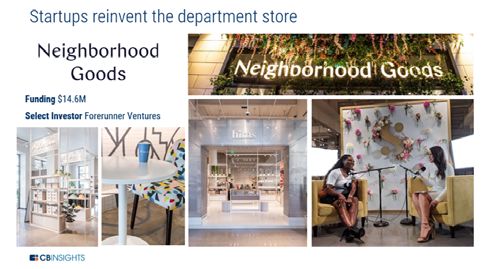
Analyzing deals involving in-store retail tech
startups by investment stage, we see that seed
and angel deal share is declining, down to only
20 percent of deals in early 2019. This reduction
points to a maturing in-store retail tech startup
ecosystem.

Series A, B, and C deals, on the other hand, have
seen a significant rise in deal share. One of the
largest Series C deals of 2019 to-date was
an $82 million investment in Paris-based startup
Wynd, which helps retailers digitize their
point-of-sale systems.
                                                      Beyond in-store retail, e-commerce is also
                                                      evolving. Startups are offering services that are
                                                      reimagining the online consumer experience —
                                                      including new forms of social commerce,
                                                      autonomous last-mile delivery and beyond.

                                                      As we look toward the future of retail, we will
                                                      examine four trends, largely driven by startups,
                                                      that are reshaping the consumer experience
                                                      both online and offline.

                                                      TREND 1: THE RISE OF SOCIAL COMMERCE
                                                      In the U.S., technology giants and retailers have
                                                      not entirely been able to crack the code on social
                                                      commerce.
The most active venture capital investors in the
space to unique in-store retail tech startups         American consumers have traditionally treated
since 2014 by number of investments are Plug          e-commerce and social media as distinct activities.
and Play Ventures, Commerce Ventures, Intel           Someone might go on Facebook to chat with a
Capital, SV Angel, MaRS Investment Accelerator        friend and then go on Amazon to buy shoes, but
Fund and Salesforce Ventures.                         she wouldn’t buy shoes on Facebook or chat with
                                                      friends on Amazon.
Some of these investors have focused on retail
tech startups around the globe. Salesforce            Historical attempts at social commerce by
Ventures’ portfolio, for example, includes startups   companies like Twitter with its “buy button,”
from France, Japan, Switzerland, Canada and           have flopped. However, we are seeing a resurgence
more.                                                 in social commerce activity, particularly among
                                                      non-U.S. startups.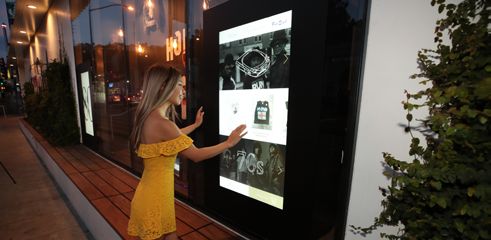
2015, took only two years to reach over 100
    U.S.-based Goodworld is the only            billion RMB in annual revenue. Moreover, in
    social fundraising platform with            June 2018 the company reached 195 million
     hashtag-to-donate technology,              monthly active users. In July 2018, the
   transforming #donate from a static           company raised $1.6 billion through a U.S. IPO.
    phrase to a tool for making easy,
    frictionless charitable payments.

     As part of its mission to bring
   payments infrastructure to Africa,
    U.S.-headquartered Flutterwave
     launched Rave Social in 2018.
   This feature helps merchants who             Source: GGV Capital

      run their businesses through              Pinduoduo’s fast rise in the world of Chinese
   Instagram track inventory, orders            e-commerce is bolstered by its unique
    and payments seamlessly on the              approach to social commerce. Through its
                                                e-commerce platform, users can invite friends
             social channel.
                                                and contacts to join “shopping teams” to
             START PATH SNAPSHOT                win discounts of up to 90 percent on certain
                                                items. Pinduoduo also integrates with social
                                                network WeChat, which has over 1 billion
                                                monthly active users.

                                                Meesho’s success is indicative of greater
                                                social commerce traction in Asia.

                                                        Singapore-based Visenze is
                                                       using AI and the demand for a
                                                     visual online shopping experience
                                                    to enhance online engagement and
Some of these startups are gaining investor           conversion rates for merchants.
traction. For example, Bangalore-based               Harnessing its image-recognition
startup Meesho raised a $50 million Series          technology, Visenze simplifies online
C round of funding in November 2018 from             retail platforms with features like
DST Global, Sequoia Capital India and Y
                                                     search-by-image and suggestions
Combinator, among others.
                                                        for visually similar products.
Another company benefitting from this
traction is China-based Pinduoduo. The social                     START PATH SNAPSHOT

commerce company, which launched in just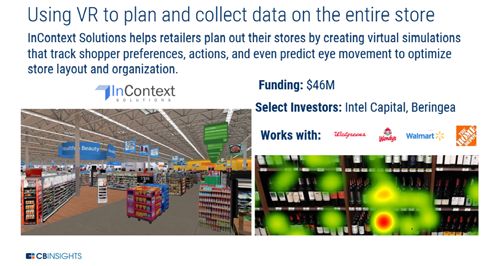
The dynamic and interactive nature of             have developed vehicles that are specifically
Pinduoduo stands in contrast to attempts at       designed for last-mile delivery.
social commerce in the U.S. While there is no
                                                  Robotics startup Nuro made recent headlines
widely-used equivalent of WeChat in the U.S.,
                                                  for raising a $940 million investment from
it begs the question: could a similar model be
                                                  Japan-based Softbank Group in February 2019.
successful among American consumers?

That remains to be seen as U.S.-based social
media giants continue to push to capitalize       While still in its infancy, retailers and other
on social commerce.                               brick-and-mortar businesses are leveraging
                                                  autonomous last-mile delivery startups to
Most recently, Facebook acquired startup
                                                  reduce costs and improve efficiency.
Grokstyle in February 2019. Grokstyle offers
a visual search platform for e-commerce
and could be used to enhance social selling
capabilities on platforms like Instagram
going forward.

In 2018, Facebook partnered with Mastercard       While still in its infancy, retailers and other
to provide a QR payment bot via Facebook          brick-and-mortar businesses are leveraging
Messenger to facilitate digital transactions      autonomous last-mile delivery startups to
for small businesses in Africa and Asia,          reduce costs and improve efficiency.
starting in Nigeria. Facebook Messenger’s
growth to over 1.3 billion users in 2018 may
act as continued motivation for businesses
to sell on the social networking platform.

TREND 2: AUTONOMOUS LAST-MILE
E-COMMERCE DELIVERY
Last-mile delivery cost businesses more
than $86 billion globally in 2017 according
to McKinsey, and can make up 28 percent of
a good’s total transportation cost. The high
costs associated with last-mile logistics have
                                                  For example, in June 2018 Kroger, one of the
an outsized impact on thin-margin businesses
                                                  largest brick-and-mortar grocers in the U.S.,
like grocery retail, among others. As a result,
                                                  partnered with Nuro with plans to leverage
the opportunity for disruption is substantial.
                                                  the startup’s fully-electric autonomous
Over the past year, a slew of startups focused    delivery vehicle, the R1, to transport groceries
on the intersection of autonomous vehicles        to consumers.
and last-mile delivery has gained investor
                                                  More recently, Alibaba employed startup
attention. These startups, such as Nuro,
                                                  Savioke’s indoor delivery robot, Relay, at its
Starship Technologies, Savioke and Udelv,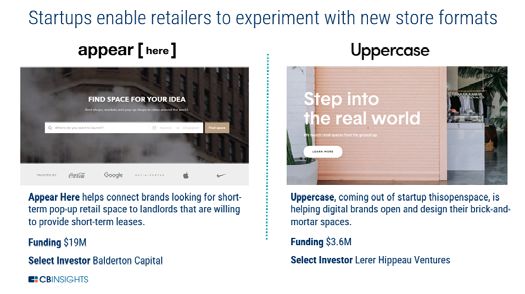
new unmanned hotel, Flyzoo, in Hangzhou,         reducing or eliminating the cost of human
China. The Relay robots help deliver room        delivery people.
service orders to customers’ hotel rooms,
                                                 While experimentation is increasing,
sans human employees.
                                                 autonomous ground delivery vehicles still
                                                 face regulatory hurdles. Many of these
    Nigeria-based MAX is offering                vehicles and robots, for example, are confined
   on-demand, last-mile delivery for             to designated areas on specific roads within
   Nigerian businesses and retailers.            cities.
   With the option to integrate with
                                                 Nevertheless, autonomous ground delivery is
  a merchant’s website or app, MAX               catching the attention of certain corporates.
  connects businesses with “Delivery             In January 2019, Amazon unveiled an
   Champions” that allow for quick               autonomous delivery robot named Scout.
  moto-taxi delivery and a smoother              The following month, FedEx unveiled its own
  delivery process for local businesses.         ground delivery robot. Both robots move at a
                                                 walking pace and are intended for travel on
       NetPlusDotCom partnered                   sidewalks.
     with Mastercard to encourage                While autonomous ground delivery is still
   Nigerians to go cashless and take             in early stages, successful trials could lead
     their retail experiences online.            to direct investments or acquisitions of
    This partnership blends no-risk              autonomous ground delivery startups by
   purchases with last-mile delivery:            retailers going forward.
   only when consumers are satisfied
                                                 TREND 3: EXPERIENTIAL AND
      with delivered products are
                                                 DESTINATION RETAIL
      pre-authorized transactions                Retailers are quickly learning that in-store
      approved and completed; if                 experiences need to be about much more
     a consumer is dissatisfied, the             than just “purchasing” – something that
     preauthorization is voided and              customers can easily do online.
         immediately in effect.                  Clicks-to-bricks startups like Casper and
                                                 Harry’s have been arbiters of this trend,
             START PATH SNAPSHOT
                                                 opening physicals stores that essentially act
                                                 as marketing tools for their online brands.
Currently, retailers are constrained by the
                                                 Walk into a Casper store and you can feel its
cost of paying humans to deliver goods, which
                                                 sheets, touch the material inside its pillows
often causes the price of delivery (especially
                                                 and even take a nap on a mattress inside a
for groceries) to become prohibitively
                                                 “bedroom.” The company plans to expand to
expensive for many consumers. Autonomous
                                                 200 locations in 2019.
ground delivery vehicles can encourage
greater consumer adoption by ultimately          The rise of startups like Casper in physical
retail has prompted a frenzy of interest in         expand to other locations in the next two
experiential stores.                                years, including New York City.

In its wake, a new class of startups enabling
other retailers to explore experiential
shopping has gained traction among industry
players and investors.

Some startups, such as U.K.-based Appear
Here and Canada-based Uppercase enable
digital brands to move into physical retail.

                                                    Some startups, like Spacious and Re:Store,
    Mercaux’s retail mobile platform
                                                    are bringing coworking to physical retail,
    enables digital in-store shopping
                                                    giving stores new life as alternative work
   experiences so they are integrated               spaces. Another startup – WeWork – has
   – and unified – across all channels.             partnered with Mastercard to enable
                                                    contactless payments for everyday items like
              START PATH SNAPSHOT
                                                    snacks and beverages in office spaces, an
                                                    initiative that may help further drive adoption
                                                    of contactless technology.

Other startups, like Texas-based Neighborhood       While some retail incumbents like Apple
Goods, attempt to infuse experiential retail        have pioneered the idea of experiential
into the department store. The company,             retail for decades via community
which opened its first 14,000-square-foot           center-styled stores, product showrooms
location in Texas late last year, offers shoppers   and in-store classes, others are now
a rotating lineup of products from various          leveraging startups to compete in this area.
online brands. In addition, the store attempts
to build a community around shopping by             Specifically, as mall vacancy rates have
providing a restaurant and bar, events, social      reached 9.1 percent in the U.S. (a seven-year
spaces and more.                                    high), mall owners are focusing on non-retail
                                                    experiences and activities (i.e. fitness centers
Neighborhood Goods, which raised additional         and movie theaters) to turn their shopping
seed funding in February 2019, is looking to        centers into multipurpose destinations.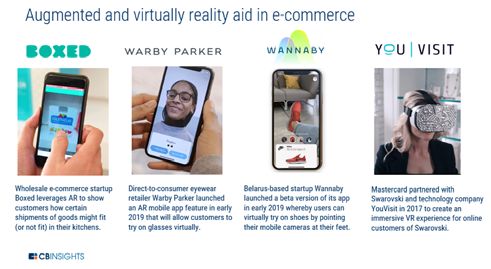
Their newest strategy? Partnering with                 TREND 4: AUGMENTED AND
coworking startups at the mall.                        VIRTUAL REALITY IN RETAIL
                                                       Augmented reality (AR) and virtual reality
                                                       (VR) are finding some acceptance across
                                                       retail as they provide tools in such areas as
                                                       online ordering, customer satisfaction and
                                                       store planning.

                                                       In the e-commerce arena, startups and retail-
                                                       ers are using AR and VR to enhance the online
                                                       shopping experience – giving consumers a
                                                       better understanding of the types of prod-
For example, Macerich partnered with
                                                       ucts they may want to buy before making an
Industrious in August 2018 to add flexible
                                                       actual purchase.
office space in its malls. The first space
occupies 32,000 square feet of Scottsdale
Fashion Square in Arizona and is set to open
in early 2019.

Beyond transforming physical stores,
experiential retail is also moving online.

Mastercard partnered with Next Retail
Concepts and luxury brand Fred Segal to
design an immersive e-commerce experience
                                                       Most recently, AR startup Wannaby
for online customers in late 2018. Through the
                                                       launched a beta version of its app that allows
partnership, online customers can virtually
                                                       customers to virtually try on new pairs of
navigate a three-dimensional store, where
                                                       shoes. Customers who download the app can
they can interact with brands and content.
                                                       choose from a variety of 3D-rendered shoes,
                                                       dubbed “Wanna Kicks,” whereby they point
                                                       their cameras at their feet to instantly gauge
                                                       how the new shoes will look on them.

                                                       Backed by Bulba Ventures and Haxus, the
                                                       startup intends to market its technology to
                                                       retailers and brands.

                                                       Beyond e-commerce, AR and VR are finding
Going forward, retailers and brands will have
                                                       uses in brick-and-mortar retail. Several
to reimagine ways to draw in customers.
                                                       retailers have partnered with AR and VR
Experiential retail concepts will help differentiate
                                                       startups to improve the in-store experience.
competitors, while also acting as tools
for marketing and branding.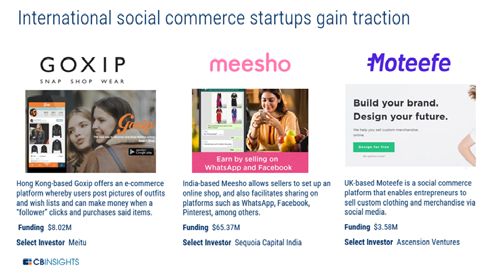
On the corporate side, large incumbents have
                                                  also developed similar technology for retail.

                                                  Alibaba partnered with Starbucks to
                                                  construct a 30,000-square-foot mega-store in
                                                  Shanghai, China, which opened in December
                                                  2017. The store integrates AR technology into
                                                  the coffee-buying process, educating customers
                                                  about coffee-making and available products
                                                  through an Alibaba-powered AR app.
For example, Macy’s has partnered with VR
startup Marxent Labs to reduce return rates       Smart mirrors have also become a popular
in in its furniture department.                   AR-based tool to enhance the in-store
                                                  shopping experience.
Marxent’s in-store VR showroom service
and platform help retailers market their          For example, Mastercard has rolled out smart
products through in-store VR headsets that        dressing room mirrors in the U.K. that provide
let customers visualize what furniture            an interactive experience for retail shoppers.
would look like in their homes. As part of        The mirrors, which leverage RFID technology,
the expanded partnership, Marxent will            can identify which items are brought into the
operate at Macy’s in 70 stores nationwide,        dressing room. The mirror also gives product
with plans to spread to 20 more locations in      recommendations and controls lighting,
early 2019. After pilot tests at three stores,    among other features. At the end of this
Macy’s claimed returns decreased to under         experience, customers can purchase their items
2 percent for VR-influenced furniture sales.      through the screen to save time on checkout.

AR and VR go beyond enhancing customer            AND WHAT ABOUT PAYMENTS?
satisfaction. Startup InContext Solutions         Traditional lending products are becoming
helps retailers plan out their stores by          less popular among younger consumers.
creating virtual simulations that track shopper
                                                  In response, startups are reinventing lending
preferences and actions; they even predict
                                                  at the point-of-sale. POS lenders are part-
eye movement to optimize store layout and
                                                  nering with merchants to provide shoppers —
organization. The startup has worked with
                                                  both in-store and online — access to capital.
retailers including Walgreens, Walmart and
Home Depot.                                       For consumers, POS lending offers transparent,
                                                  fixed-payment loans as a simpler alternative
                                                  to credit cards. For merchants, offering
                                                  POS financing can help boost sales, increase
                                                  conversion rates and streamline cash flows.

                                                  While POS installments is not a new business,
                                                  the combination of consumers’ aversion to
                                                  traditional lending products and more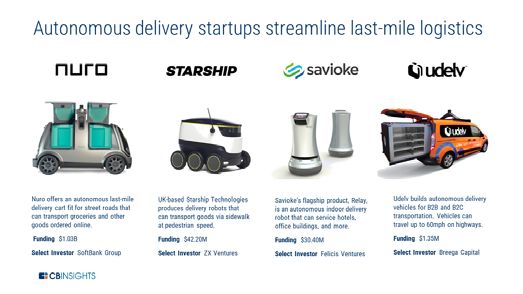
effective underwriting algorithms have          If POS lending startups are able to effectively
created fresh momentum in the market.           measure their subprime risk, these startups
                                                will continue to thrive.
Two major startups distrupting this space are
Affirm and Klarna.                              CONCLUDING THOUGHTS:
In 2017, U.S.-based Affirm raised a $200        Retail isn’t dead. But it is rapidly transforming.
million Series E at a $1.8 billion valuation    The retail landscape as we have known it
from investors including GIC, Founders Fund,    is under massive pressure from e-commerce,
Lightspeed Venture Partners and Ribbit          macro-economic changes and shifts in
Capital. In 2019, Affirm partnered with         consumer trends. To survive, traditional retailers
Walmart to provide its services at over         will have to continue to integrate disruptive
4,000 Walmart supercenters in the U.S.          technology into their brick-and-mortar
Sweden-based Klarna works with 100,000          operations, ultimately creating a seamless
merchants to power payments for 60 million      blend between digital and physical commerce
customers across 14 countries. In late 2018,    for consumers.
fashion retailer H&M invested a $20 million     Startups innovating in the areas of social
stake in Klarna, setting the foundation         commerce, autonomous delivery, experiential
for a partnership in which Klarna will          retail and consumer-focused AR and VR will
integrate its payments technology into H&M’s    have important roles to play in bridging the
brick-and-mortar and online businesses.         online-offline gap for retailers.
It is rumored that Klarna has plans to go       While many of these trends have experienced
public in 2019.                                 various levels of adoption across Asia, Europe
                                                and North America, we will continue to see
                                                investments in startups across these spaces
    Banks are expanding into POS
                                                from retailers, technology giants, institutional
      lending by building their own
                                                investors and beyond - and the results will
     solutions and partnering with              play a major role in determining retailer
   white label startup partners like            winners – and losers – in the coming years.
         Divido. Divido is building
   the world’s largest platform for
  point-of-sale finance, working with
      1,000 merchants, banks and
    partners to allow them to offer
       instant customer financing.

             START PATH SNAPSHOT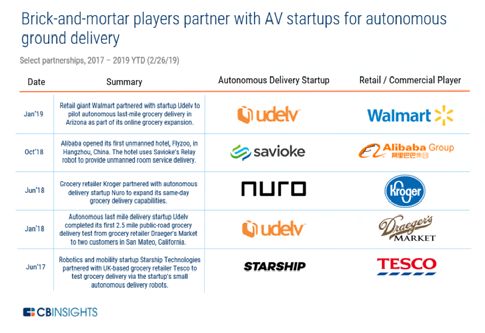
You can also read


