Bill C- 49 Transportation Modernization Act - Senate of Canada
←
→
Page content transcription
If your browser does not render page correctly, please read the page content below
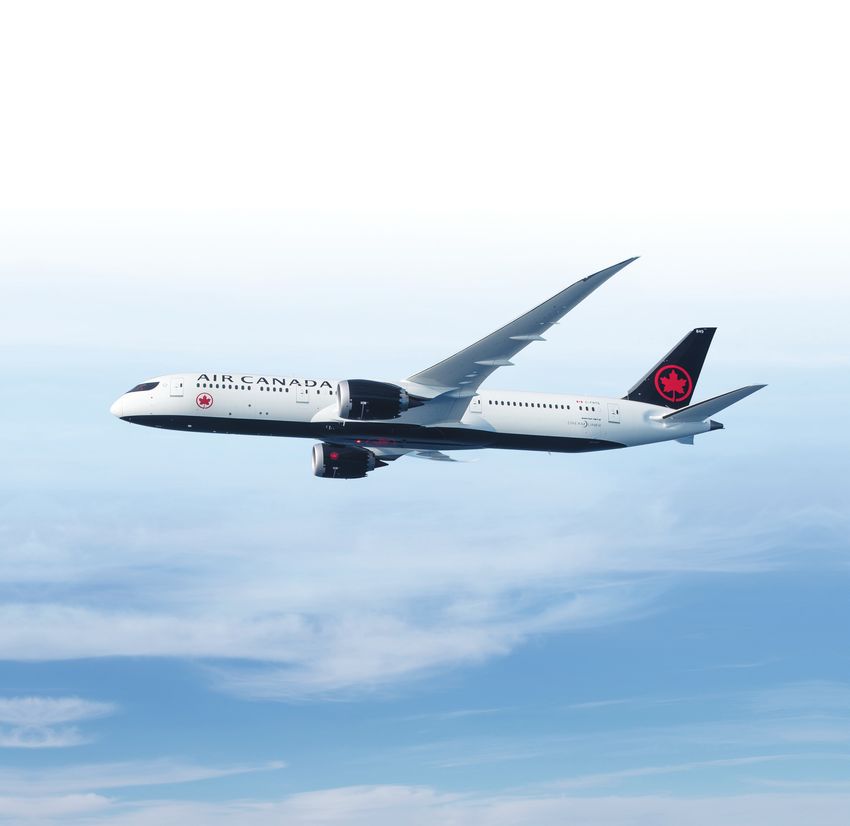
Air Canada Submission to the House of Commons Standing
Committee on Transport, Infrastructure and Communities

Bill C- 49
Transportation Modernization Act
An Act to amend the Canada Transportation Act and other Acts
respecting transportation and to make related and consequential
amendments to other Acts

September, 2017
C49 – TRANSPORTATION MODERNIZATION ACT

Table of Contents

Introduction ..................................................................................... 2
  1.   Joint Ventures ............................................................................. 3
  2.   Foreign Ownership ....................................................................... 5
  3.   Passengers Rights Regime............................................................. 8
  4.   The Canadian Air Transport Security Agency and Cost Recovery ....... 12
Conclusion ...................................................................................... 13

                                              Page | 1
C49 – TRANSPORTATION MODERNIZATION ACT
Introduction
About Air Canada
Air Canada is Canada’s largest airline and the largest provider of scheduled passenger
services in the Canadian market, the Canada-U.S. trans-border market and in the
international market to and from Canada. In 2016, Air Canada, together with its Air Canada
Express regional partners, carried close to 45 million passengers, offering direct passenger
service to more than 200 destinations on six continents and being amongst the 20 largest
airlines in the world. 2017 is also another year of growth with new routes being added and
record numbers of passengers flying.
To support our operations, Air Canada currently employs 30,000 people. Due to the
significant growth over the last several years, 3,000 of these employees were hired in the
last three years alone. Headquartered in Montreal, Air Canada operates four hubs: Toronto
Pearson as the primary global hub, Vancouver as the premier gateway to Asia-Pacific,
Montreal as a gateway to French and key international markets, and Calgary. This provides
travelers on Air Canada unparalleled access to tourism and business around the world.
Air Canada’s Growth
Air Canada circles the world and continues to grow with the announcement of new
destinations launching in 2017 and 2018:
§ Toronto to Mumbai, Berlin, Reykjavik, San Antonio, Memphis, Savannah.
§ Montreal to Algiers, Marseille, Shanghai, Reykjavik, Tel Aviv, Tokyo.
§ Vancouver to Taipei, Nagoya, London-Gatwick, Frankfurt and Melbourne, our third
Australian city. Belize and Saint-Vincent & the Grenadines are launching in December.
In 2016, Air Canada launched 28 new routes, including 15 new international routes:
§ Toronto to Seoul, London-Gatwick, Prague, Budapest, Glasgow, Warsaw, Port of Spain.
§ Vancouver to Brisbane, Dublin, Delhi.
§ Montreal to Lyon, Casablanca, San Jose (Costa Rica), Puerto Rico, Puerto Vallarta.
Air Canada’s extensive global network provides scheduled passenger service directly to 64
airports in Canada, 57 in the United States and 91 in Europe, Africa, the Middle East, Asia,
Australia, the Caribbean, Mexico, Central America and South America. Air Canada, Air
Canada Rouge and its Air Canada Express regional partners operate on
average 1,580 scheduled flights each day. Together with its Star Alliance™ partner airlines,
Air Canada offers services to 1,300 airports in 190 countries and provides reciprocal top tier
frequent flyer benefits.
Air Canada’s Objectives
As part of Air Canada’s new objectives, we have placed a large focus on customer service,
and we are proud of the manner in which our employees have responded and of the
recognition from industry and our passengers. We are the only international network carrier
in North America to receive a Four-Star ranking, according to independent U.K. research
firm Skytrax and have been once more voted “Best Airline in North America” by readers of
Page | 2C49 – TRANSPORTATION MODERNIZATION ACT
Global Traveler magazine. Outside of North America, readers of Premier Traveler have voted
Air Canada “Best North American Airline for International Travel.” We have also been
recognized for “Best Flight Attendants in North America,” “Best North American Airline for
Business-Class Service,” and “Best Airline Website,” proving to us that our focus on
customer service has been well-placed.
In this submission, we focus on key aspects of Bill C-49 aimed at our industry from both a
commercial and passenger rights perspective. While Air Canada is generally supportive of
the bill, we have identified some concerns that can be addressed easily and have included
proposed language that would address them. In the area of passenger rights, the bill does
not address certain important details, mandating the Canadian Transportation Agency (CTA)
to develop these in the regulatory phase. Therefore, in this area, we simply describe some
of the concerns and pitfalls that the government and the CTA should avoid in order to
protect the integrity of the sector and improve the overall experience of the traveler.
1. Joint Ventures
Joint ventures (JVs) between global carriers, with antitrust immunity, have become
increasingly common over the last two decades with the increasing liberalization of the air
industry. These “immunized” ventures provide numerous benefits for consumers by allowing
more collaboration between carriers to provide passengers with more seamless travel
benefits, in a way closer to what a merger of two companies would(since transnational
mergers among international airlines are prevented as a result of foreign ownership
restrictions around the word). As a result, airline cooperation through JVs have become
increasingly common globally. They are an efficient vehicle for integration and the unlocking
of synergies between carriers that lead to enhanced travel options and passenger
convenience, optimized schedules and reduced costs.
The importance and benefits of these JVs cannot be overstated: they allow airlines to
achieve economies of scale on international routes , thereby reducing costs. In turn, they
provide consumers increased access to flights and a greater inventory of seats, more
destinations, more routings, better connections, enhanced service and more competitive
price options. The integration of planning, pricing and sales of airline JV partners enhances
the carriers’ ability to compete effectively with other carriers and alliances, benefiting, in
turn, the customers.
According to L.E.K. Consulting, a global consulting firm with aviation expertise, JVs were
responsible for “30% of all global long-haul traffic in 2013, up from 9% a decade ago”, and
“by 2023, 45% of all global long-haul traffic will be part of a JV.1 With Transatlantic markets
largely mature, this substantial growth is likely to come from increased collaboration
between developed and developing markets.”
In light of this growing trend, the ability of Canadian airlines to compete globally and serve
the Canadian market efficiently will depend on their ability to enter into international joint
ventures. For a global network carrier, organic growth is not itself sufficient. Despite Air
Canada’s absolute growth (45% growth in Available Seat Miles (ASMs) between 2000
1
Reaching New Heights Together: How Airlines Can Maximize the Value of Joint Ventures”,
L.E.K. Consulting, Insights@Work (2014)
Page | 3C49 – TRANSPORTATION MODERNIZATION ACT
and 2016), its relative size has diminished in the last 20 years, having gone from the 10th
largest carrier in the world in the late 1990s (based on ASMs) to among the 20 largest
carriers today. The Canadian market is small in a global context, and future growth for
Canadian airlines and their ability to serve the Canadian market effectively will increasingly
depend on their ability to compete on international routes and tap additional sources of
traffic in large foreign markets such as the US, China, the EU, etc. International joint
ventures provide an essential means to tap additional sources of traffic needed to support
the growth of new, efficient, and convenient international routes. Unless Canadian carriers
are in a position to participate in the growth enabled by international joint ventures, Canada
risks losing ground in the convenience of its international air transportation route
infrastructure, as carriers from other countries favour and build connections and routes
focused on hubs in other markets.
International JVs between airlines require significant resources and financial commitment to
their implementation. Given airlines’ historically slim profit margins and high capital
expenditure requirements, extreme caution and a prudent level of certainty is required
before making such large investments.
There is currently no legislative regime for reviewing joint ventures that takes into account
the broader public interest and policy objectives associated with the benefits of a well-
developed international air transportation infrastructure when compared with the more
general objective of antitrust legislation. Canadian airlines are currently missing key growth
opportunities to grow through JVs worldwide, in the same way as other foreign airlines are
doing, as a result of the state of the current legislative regime for JV reviews. Having a
regime that promotes the public interest and the transportation policy adopted by the
Canadian government will offer a broader range of advantages for the travelling public and
airlines alike, while providing a regulatory framework that is more aligned with the
government’s policy objectives for growth and Canada’s role in the international sector.
Airlines provide gateways, international aviation “super-highways”, that are catalysts for
opportunities to grow trade, immigration and tourism and improve innovation, all part of
Canada’s international competitiveness.
In light of the above, Air Canada supports the amendments to the Canada Transportation
Act, that would establish a process for the review of arrangements involving two or more air
carriers taking into account broader considerations respecting public interest.
Although the proposed regime is a significant step in the right direction, we submit that
changes should be made to maximize its impact and fully realize its potential benefits.
The Review of the Arrangement (Section 53.77)
We agree with the need for a mechanism to review the authorization granted with respect
to an arrangement between carriers. However, JVs are often complex agreements that take
time to mature and be fully implemented. They often require a massive commitment of
time, money and technology. Investment can run in the tens of millions of dollars, if not
hundreds. As such, depending of scope and considering the seasonality of our industry,
several years can be necessary to fully realise and appreciate their effect, and assess their
contribution to the growth of the transportation infrastructure. In other jurisdictions, the
anti-trust immunity granted for these agreements is typically for periods of 5 to 10 years,
Page | 4C49 – TRANSPORTATION MODERNIZATION ACT
which provide a sufficient level of certainty to encourage at the outset airlines partners to
enter into these agreements2.
Moreover, JVs cannot be implemented overnight, following authorization. Authorization is
what allows parties to start exchanging vital information to setup a JV as an initial step to
creating its structure and organization. It may take several months following authorization
before the Parties are able to implement the JV.
We therefore submit, based on experience, that a longer period, of at least three years (vs
two), is needed and that this time period must be calculated from the JV’s implementation
(vs authorization).
A Sufficient Delay Needed to Address Concerns (Section 53.79(2))
In order to offer the level of certainty that encourages investment, once a notification is
received from the Minister to the effect that the JV raises concerns with respect to the public
interest and competition, a sufficient delay should be provided for the Parties to address
those concern(s) and review the terms of the authorization. Indeed, if an agreement cannot
be reached, the winding down of a JV relationship is a complex process that require
redeployment of valuable assets, at the global level. A period of at least one year would be
appropriate.
Reasonable Sanction Regime (Section 53.83)
Under the proposed wording, imprisonment could be a consequence for even an inadvertent
breach of terms and conditions. Such a strong penal consequence could be a significant
impediment to the use of the regime (dissuading especially foreign carriers from partnering
with Canadian carriers) and render virtually impossible the achievement on any JV.
Imprisonment is neither a consequence in any other jurisdictions for a similar offence
regarding such good faith businesses arrangements between airlines, nor a common
consequence for a civil matter. It would seem more appropriate if the risk of imprisonment
be restricted to 53.72 where a decision to not to complete an arrangement without the
Minister’s approval is sufficiently clear for the parties to fully understand the potential risk
and may not be in good faith. We are also proposing to add a notice requirement prior to
enforcement action.
2. Foreign Ownership
Air Canada supports an increase to foreign ownership limits to 49 per cent for all Canadian
airlines. It would provide improved access to international investors and global capital
markets. It would also give Canadian investors greater liquidity in their Canadian air carrier
investments. It would have been preferable that this was accompanied by reciprocity so
Canadians would like acquire 49% of carriers in other countries such as the United States.
2
For example, the European Union and the United States.
Page | 5C49 – TRANSPORTATION MODERNIZATION ACT
However, we submit that changes would be required to the definition of “Canadian” in
Bill C-49 to ensure that the policy objectives underlying the new foreign ownership rules are
met by:
(i) Ensuring that non-Canadians are not inadvertently provided with undue influence;
(ii) Clarifying terms to ensure that non-Canadians cannot circuitously acquire greater
control; and
(iii) Ensuring that Canadian airlines may readily and effectively implement the changes to
the foreign ownership rules.;
(i) Imposing Ownership Cap to Prevent Undue Influence by Non-Canadians
Bill C-49 contemplates (in addition to increasing the percentage of voting interests
which may be held by non-Canadians from 25% to 49%) two additional categories of
non-Canadians (referred to here as “single non-Canadians” and “one or more non-
Canadian airlines”) who are each restricted to no more than 25% of the voting
interests.
To comply with the current definition of “Canadian” in the CTA, all publicly-traded
Canadian airlines adopted a dual capital structure with voting shares held by
Canadians, and variable voting shares held by non-Canadians. Voting interests
attached to shares held by non-Canadians are currently automatically prorated down
to 25%, or such higher percentage as may be approved by regulation of the Governor
in Council (as contemplated in the current CTA definition of “Canadian”).
The two classes of shares adopted by Canadian airlines results from corporate law
concepts that the shares of a single class should carry equal rights. Therefore, without
specific legislative authority providing otherwise, proration of the voting interests of
non-Canadians may not be achieved in compliance with corporate law if they are
within the same class as Canadians.
The creation of two additional, separate classes contemplated by Bill C-49 could result
in instances where the shares held in these two additional categories would be
afforded a right to vote as a class, and therefore have veto rights in certain
circumstances undermining the purpose of the restriction, providing undue influence
on the limited number of holders of shares of those classes of non-Canadians, to
impact important matters. There would also be significant complexity in administering
a capital structure (with now four classes) and the challenges of having it understood
by investors, with the potential risk of making Canadian airlines less attractive to
investors, rather than more.
To address this concern, we propose adding an ownership cap to clarify that airlines
may restrict the number of issued and outstanding shares which can be held by a
“single non-Canadian” or “one or more non-Canadian airlines” to 25% (in addition to
the voting cap currently contemplated by Bill C-49).This would avoid the creation of
two additional classes of shares (which would be required to vary the pro-ration of
Page | 6C49 – TRANSPORTATION MODERNIZATION ACT
voting interests among what would be three types of non-Canadian shareholders since
all shares of a single class must carry equal rights), and thereby avoid giving a non-
Canadian a veto right over significant changes (which would be contrary to the policy
objective sought to be achieved by the restrictions).
This proposed additional ownership restriction would allow for “constraints” (as defined in
the Canada Business Corporations Act (“CBCA”)) to the variable voting shares under Section
174 of the CBCA which would then (i) require shareholders to disclose whether they are
“single non-Canadians” or “non-Canadian airlines”, individually or in affiliation, (ii) prevent
any “single non-Canadian”, or “one or more non-Canadian airlines” from owning more than
25% of the issued and outstanding shares (which would never represent more than 25% of
the voting interests since no share carries more than one vote), and (iii) allow the airline to
force the sale of, and prohibit the exercise of the voting rights attached to, shares held in
contravention of such requirements. This would also further policy objective sought to be
achieved by Bill C-49.
(ii) Clarifying “Affiliation” and Direct/Indirect Holdings
The terms “individually or in affiliation with another person” contained in the Bill C-49
definition of Canadian does not clearly refer to a recognized legal concept and could
create interpretation issues as to whether it only refers to controlled affiliates or also
encompasses other entities or arrangements. If it is not interpreted as not
encompassing other entities or arrangements, non-Canadians may structure their
means of ownership to acquire a greater control of a Canadian airline than would
otherwise be permitted.
As well, the limit imposed on a non-Canadian airline under Bill C-49 does not refer to
voting interests being held “directly or indirectly”. This may permit non-Canadian
airlines to adopt indirect methods of ownership which could circumvent the restriction.
In addition to adding the terms “directly or indirectly” in the Bill C-49 limit imposed on
a non-Canadian airline, we also propose replacing “in affiliation” with “affiliate” and
supplementing it with the concept of “joint actors”, a recognized legal concept under
the securities laws of the Canadian provinces, i.e. “either individually or acting jointly
or in concert with another person”, which would be broad enough to include controlled
affiliates but would also encompass other arrangements where parties are acting in
concert without any formal corporate affiliation. These changes would therefore help
ensure that non-Canadians cannot circuitously acquire greater control of a Canadian
airline than would otherwise be permitted.
(iii) Amending Corporate Articles and Related Dissent Rights
As mentioned above, all publicly traded Canadian airlines adopted language in their
articles to allow for increases to the maximum voting interest which can be held by
non-Canadians provided such increases are made by regulation (as the CTA currently
contemplates). The amendment of the articles of publicly-traded airlines to reflect the
new definition of “Canadian” provided for in a statute (as opposed to a regulation), and
to incorporate “legal constraints” referred to above on the categories of “single non-
Canadians” and “one or more non-Canadian airlines”, would require a special
Page | 7C49 – TRANSPORTATION MODERNIZATION ACT
resolution passed by 66 2/3% of the votes cast by all of the shareholders. It could
arguably require a special resolution passed by 66 2/3% of the votes cast by the
holders of the class of variable voting shares, voting as a separate class (pursuant to
Section 176 of the CBCA).
Since the articles adopted by publicly traded Canadian airlines already contemplate
increases to foreign ownership (by regulation) (and this had been approved by
shareholders previously), it would be appropriate for Bill C-49 to confirm that publicly-
traded airlines who have already adopted a dual-class voting structure in order to
comply with the definition of “Canadians” should be permitted to amend such articles
without shareholder approval. Taking into account the expectation of shareholders that
increases to the permitted non-Canadian ownership level would be automatically
implemented through the wording of the articles without any further shareholder
approval or dissent rights, the subsequent use of more elaborate amendments of the
definition of “Canadian” should not allow non-Canadian shareholders to exercise
dissent rights requiring the company to repurchase their variable voting shares at fair
value. Nor should they be allowed to use the threat of an exercise of such rights to
gain bargaining leverage over Canadian airlines.
3. Passengers Rights Regime
Given our focus on customer service improvement, Air Canada welcomes the government’s
intention to establish an air passenger rights regime that is clear, consistent, transparent
and fair for passengers and air carriers industry-wide. For too long Canadians and
passengers flying in Canada have been compensated differently depending on the airline on
which they flew. The current framework that assesses carriers on a narrow complaint-based
approach results in a situation in which different airlines have different rules, which
ultimately leads to confusion for passengers. Air Canada has been pleased to participate in
consultations with Transport Canada and the Canadian Transportation Agency to begin
simplifying the current environment in order to improve the overall travel experience for
consumers.
Air Canada’s Focus on Customer Service
Air Canada is proud to have always been among the industry’s leading airlines when it
comes to passenger compensation when unfortunate situations arise as they sometimes do
as a result of the complex operational environment in which we operate. In fact, in 2009 Air
Canada was among a group of Canadian airlines that helped develop Flight Rights Canada, a
voluntary code for airlines to follow with respect to customer service. Not only were we
among those who helped develop the program, we were also one of the first to hold
ourselves to its standards. More recently, we have redesigned and simplified our own
Customer Service Plan and made it available to our passenger on our website in a clear
manner so that passenger can easily identify a remedy in the event of an unplanned
circumstance. Air Canada has also modernized different aspects of our Customer Service
Plan to ensure that we treat our passengers correctly during those times when things don’t
always go as planned.
Page | 8C49 – TRANSPORTATION MODERNIZATION ACT
In addition to our redesigned Customer Service Plan, our current $10 billion fleet renewal
program has provided us with an opportunity to improve many other aspects of the
customer service experience; taking it to a realm far above avoidance of negative
experiences.
Fleet Improvements
§ With respect to aircraft, our new fleet will be largely comprised of Boeing 777s and
state-of-the-art Boeing 787 Dreamliners, with new Boeing 737MAX aircraft arriving in
2017 and Bombardier C-Series jets entering the fleet in 2019. These aircraft will feature
a host of customer-friendly features such as:
• Refitted cabin interiors across its wide-body fleet, including the introduction of the
first lie-flat business seat fleetwide in North America and the first dedicated Premium
Economy cabin in North America;
• In-flight Wi-Fi connectivity fleet-wide in North America to complement Air Canada's
personal seatback In-Flight Entertainment System offering hundreds of hours of free
digital audio-visual content including original anglophone and francophone Canadian
content.
Improved Customer Service Interactions
We are also investing in new customer service training for employees across the company:
§ New programs have been introduced to our customer-facing inflight, airport, baggage
and call center employees.
§ We have expanded language programs. Today, there are an estimated 80 languages
spoken by Air Canada employees and in addition to English and French service at our
call-centers, we also offer service in Spanish, Mandarin, Cantonese, Korean and
Japanese. Outside of North America, we have facilities that offer service in Portuguese,
Spanish, German, Italian, Hebrew, Mandarin, Cantonese and Japanese.
In addition, we are improving all aspects of customer interaction at the technological level:
§ New technological innovations to facilitate customer interactions, including a new
website compatible with all types of devices for a consistent experience, ongoing
refinements of mobile technology, and increased investments in artificial intelligence are
all being developed to further improve our customer-focused capabilities and information
management.
Customer-Friendly Policies
Responding to situations that have arisen and listening to our customers, we have also
taken a proactive approach to other areas of customer service that have been well-received
by our passengers such as:
§ Complimentary proximity seating arrangements for families and processes to ensure
that families are seated together;
§ Innovative policies for musicians travelling with instruments including a 50% discount
for a second-seat for instruments too valuable to travel in our cargo holds and priority
boarding for musicians and their instruments so that they can safely stow their
Page | 9C49 – TRANSPORTATION MODERNIZATION ACT
instruments in overhead baggage bins. In fact, this policy has garnered Air Canada
recognition from the International Federation of Musicians (FIM), which represents
professional musicians and their trade unions in more than 60 countries, that awarded
the newly created FIM Airline of Choice award to Air Canada.
Recommended Improvements to Bill C-49
While Air Canada supports the government’s initiative for improving the travel experience
for those traveling in Canada through Bill C-49, we also urge caution. Unintended
consequences have been realized in other countries where similar regimes have been
legislated. Examples of such unintended consequences are increased costs and decreased
savings for travelers due to decreasing flexibility on the part of carriers, high punitive costs
to carriers for events out of their control, and distorted competitive playing fields between
carriers operating under different regimes in neighboring countries or within the same
country.
To that end, Air Canada submits that the government should consider certain minor but
important amendments to the draft legislation that would maintain Canadian
competitiveness on the international market given our proximity to carriers in the US and
along the Canada-US border, satisfy passenger expectations of a modern air industry, and
create a level playing field for all carriers.
(i) Double compensation (Section 67.4 (2))
As drafted, Bill C-49 allows for passengers to claim compensation for the same event
in both their origin country and their destination country. This scenario could arise
because of the application of the Canadian Passenger Rights regime to flight to
Canada, and because of regime is not restricted to operating carriers. As drafted, the
current bill could lead to scenarios of so-called double compensation.
Air Canada proposes the regime apply only to flights “from Canada” and not to flights
“to” Canada, for any carrier. This would address the extra-territorial application of
Canadian law and potential foreign conflict of law issues or duplicative recourses since
the vast majority of foreign passenger rights regime apply at country of departure
only.
Restrictions currently included in the bill should also be clarified, and proposed draft
amendments are submitted for this purpose. As written, interpreting the term, “a
same event,” in the complex airline industry could create ambiguity and confusion and
lead to cases of double compensation.
For example, it is not clear whether a delay at departure resulting in a delay at arrival
is one event, or two separate events that can be compensated under two different
regimes. For example, EU law rightly calls for compensation at arrival at final
destination, which is the only moment at which compensation for damages could be
warranted. Indeed, delay at departure can be minimized through shorter flight times
or alterative routings.
Page | 10C49 – TRANSPORTATION MODERNIZATION ACT
As well, it should be clarified that the regime applies only to the operating carrier (in
case of code share or another arrangement) to be consistent with other regimes
around the world.
It is important to align Canada with best-practices found around the world and benefit
from their experience including those found in the US and EU. Missing this opportunity
to align Canada with other regimes around the world would put Canadian airlines at a
disadvantage versus international airlines, without additional protection for
passengers. In fact, a misalignment here would likely result in more confusion for
passengers and fail to achieve the benefits of clarity and certainty that a well-designed
passenger rights regime can provide.
(ii) Baggage liability (Section 86.11 (1) (c))
Air Canada staff handle millions of pieces of luggage every day, and despite significant
investments in staff training and technology designed to facilitate the process,
baggage is occasionally delayed or damaged during transportation. When such events
occur, Air Canada believes airlines should be held responsible and passengers entitled
to equivalent compensation, regardless of the airline they choose.
On domestic flights, Air Canada believes the government should set a minimum limit
of liability for lost, delayed or damaged baggage and provides recommended
amendments to the bill.
Internationally, passengers are already protected in the same way. The Montreal and
Warsaw Convention systems, incorporated in Canada by the Carriage by Air Act,
already provides this compensation framework for international carriage.
Canada would be off-side of its international obligations under these conventions if it
departs from the maximum limits set in these conventions, with respect to
international travel. Air Canada recommends that prescribed limits are needed for
domestic carriage only (as the US has done in 14 CFR Part 254.4).
(iii) Clarifying the scope (Section 67.3) + (67.4(1))
When damages are owed to passengers, it is important that only passengers – persons
directly affected by the event – be eligible for compensation. The Bill should therefore
be specific to avoid any misinterpretation that would not be consistent with the
legislators’ intention.
In addition, the decision to extend compensation to other passengers of the same
flight should not be arbitrary and take into account each passenger’s individual
circumstances. Not all passengers affected by the same event are impacted in the
same manner. For example, passengers making their scheduled connection to a
subsequent flight might not be impacted at all.
Page | 11C49 – TRANSPORTATION MODERNIZATION ACT
(iv) Future amendments (Section 86.11 (2))
As air travel and passengers’ requirements continue to evolve, so should the laws
regulating the industry. Air Canada believes in the need to revisit and adapt the
passenger’s bill of rights as appropriate when that process includes all relevant
stakeholders and agrees with the principle of developing future regulatory
amendments.
Air Canada is concerned however that powers granted to the Agency, in the bill’s
current form, could develop new rules without having to go through a due consultative
process which often elucidates matters (such as complex operational ones) that benefit
the integrity of the objective being sought.
We therefore recommend that this paragraph be removed or include further
clarification on stakeholder consultations in the regulatory process moving forward.
4. The Canadian Air Transport Security Agency and Cost Recovery
Canada Must Support the Growth of the Aviation Industry
An important part of growth opportunities for Canadian carriers depends on the ability to
attract passengers from foreign countries (predominantly those flying from or to the United
States) to connect through a Canadian hub airport and use a Canadian carrier to reach their
final destination. It is therefore important that the relevant policy and processes be
implemented to make sure that Canadian hubs are globally competitive. Indeed, total flight
time and the ease of connectivity are key factors in passengers’ selection of their flight
routing and choice of airlines.
In this respect, government agencies must support Canadian airline growth - with the
appropriate level of resources - to contribute to their success. Unfortunately, the current
model in which CATSA operates does not account for this necessity.
Cost Recovery Approach Could Hinder Growth
Despite the unprecedented growth in passenger traffic (and associated increase of Air
Travelers Security Charges (ATSC) collected), the CATSA budget has remained relatively flat
over the last five years. As a direct result, wait times are longer, particularly at major hub
airports, and are not competitive when compared to foreign airlines hubs located outside of
Canada. This risks stunting the growth of Canadian airlines and reducing the efficiency of
international routes through and from Canada.
Bill C-49 and its amendment proposing additional CATSA services on a cost-recovery basis
could set the stage for a user-pay ‘plus’ model where passengers pay the ATSC and then
airports have to pay for an additional fee for increased service, which will be passed to
carriers and ultimately to passengers. This can only increase the cost of air fare to
passengers traveling through Canadian airports and further impact the competitiveness of
the Canadian industry, again stunting the growth of international services from and through
Page | 12C49 – TRANSPORTATION MODERNIZATION ACT
Canada to the detriment of consumers, and Canada’s international growth objectives which
are impacted by the efficiency of its international route infrastructure.
The most concerning aspect of this amendment however, is the precedent that it sets for
increasing services at an extra cost to passengers that already pay a fee for security
screening in Canada. It stands to reason that in a user-pay model in which Canadian
airports, carriers and passengers find themselves in, fees collected for security screening
through the Air Traveler Security Charge (ATSC) should be returned to the system to ensure
that service levels remain reasonable even as passenger volumes increase. Over the years
however, this has not been the case. CATSA has been subject to funding cuts in the same
way as other federal departments. Despite the significant increase in the amount of fees
collected through the ATSC, CATSA remains chronically underfunded and unable to deal
efficiently with increasing passenger volumes at Canadian airports.
While there may not currently be a better solution to address long wait-times at security
screening points, the government, opposition and committee members need to be aware
that there is a risk that this becomes a structural increase in cost to travelers in a system
that was initially designed to pay for itself as it grew.
Conclusion
Air Canada supports the amendments to the Canada Transportation Act, that would
establish a process for the review of arrangements involving two or more air carriers taking
into account broader public interest considerations and has proposed minor but important
amendments which would help the proposed regime secure the objectives sought.
Air Canada supports an increase to foreign ownership limits to 49 per cent for all Canadian
airlines. It would provide improved access to international investors and global capital
markets. It would also give Canadian investors greater liquidity in their Canadian air carrier
investments.
However, we submit that changes would be required to the definition of “Canadian” in
Bill C-49 to ensure that the policy objectives underlying the new foreign ownership rules are
met.
Air Canada also supports the government’s initiative to improve passenger rights in Canada.
Unfortunately, and for far too long, passengers have been treated differently and entitled to
varying compensation depending on the airline they flew. As one of the Canadian airlines
that contributed to the creation of Flight Rights Canada, we know first-hand the value in
creating a uniform set of standards and consistency in passenger compensation that will
eliminate confusion for passengers and airlines alike.
Passengers expect fast and easy service when flying in Canada and we always aim to deliver
on those expectations. In 2016, Air Canada flew close to 45 million passengers and despite
massive investments in infrastructure, information technology, staff training and the overall
passenger experience, mishaps occasionally arise. Air Canada, therefore urges caution and
asks the government to strike a balance with the implementation of Bill C-49 so as not to
put Canada or Canadian airlines at a competitive disadvantage.
Page | 13C49 – TRANSPORTATION MODERNIZATION ACT
A 2013 Senate report, and more recently the Emerson report, Pathways: Connecting
Canada’s Transportation System to the World, identified Canada’s aviation industry, an
important part of the overall transportation sector, as an economic enabler that the
government must support in an effort to help the economy grow.
We believe that with the minor but important amendments outlined in this submission,
Bill C-49 will achieve its intended results while limiting the unintended consequences many
other jurisdictions have experienced with similar legislative initiatives.
We thank the government for the opportunity to share our views on Bill C-49, The
Transportation Modernization Act, and we look forward to working collaboratively on the
drafting of regulations.
Page | 14C49 – TRANSPORTATION MODERNIZATION ACT
Below are extracts of the provisions of Bill C-49 relevant to Air Canada with changes proposed for your
consideration, incorporated into the text and highlighted, as well as accompanying marginal notes
explaining the basis for the changes sought.
BILL C-49 PROJET DE LOI C-49
An Act to amend the Canadian Loi apportant des modifications à la Loi sur
Transportation Act and other Acts les transports au Canada et à d’autres lois
respecting transportation and to make concernant les transports ainsi que des
related and consequential amendments to modifications connexes et corrélatives à
other Acts d’autres lois
FIRST READING, MAY 16, 2017 PREMIĖRE LECTURE LE 16 MAI 2017
MINISTER OF TRANSPORT MINISTRE DES TRANSPORTS
Page | 15C49 – TRANSPORTATION MODERNIZATION ACT
HOUSE OF COMMONS OF CANADA CHAMBRE DES COMMUNES DU CANADA
BILL C-49 PROJET DE LOI C-49
An Act to amend the Canadian Loi apportant des modifications à la Loi sur
Transportation Act and other Acts les transports au Canada et à d’autres lois
respecting transportation and to make concernant les transports ainsi que des
related and consequential amendments to modifications connexes et corrélatives à
other Acts d’autres lois
Her Majesty, by and with the advice and Sa Majesté, sur l’avis et avec le
consent of the Senate and House of consentement du Sénat et de la Chambre
Commons of Canada, enacts as follows : des communes du Canada, édicte:
Short Title Titre abrégé
Short Title Titre abrégé
1 This Act may be cited as the 1 Loi sur la modernisation des transports
Transportation Modernization Act
1996, c.10 1996, c.10
Canada Transportation Act Loi sur les transports au Canada
(…) (…)
14 The Act is amended by adding the 14 La même Loi est modifiée par
following after section 53.6: adjonction, après l'article 53.6, de ce qui
suit:
Review of Arrangements Involving Two
or More Transportation Undertaking Examen des ententes entre au moins
Providing Air Services deux entreprises de transport offrant
des services aériens
(…) (…)
Prohibition Interdiction
53.72 If a notice has been given under 53.72 Lorsqu’un avis a été donné au titre du
subsection 53.71(1), the proposed paragraphe 53.71(1), il est interdit de
arrangement shall not be completed without conclure l’entente visée sans avoir obtenu
the Minister’s authorization under subsection l’autorisation du ministre du titre du
53.73(8). paragraphe 53.73(8).
Review process Processus d’examen
53.73(1) The Minister, or a person 53.73 (1) Le ministre ou une personne
designated by the Minister, shall examine the désignée par lui examine toute entente
proposed arrangement, if it is subject to the soumise au processus d’examen.
review process.
(…) (…)
Final decision Décision définitive relative à son autorisation
(8) The Minister shall, within 30 days after the (8) Dans les trente jours suivant la date de
day on which he or she receives a response réception de la réponse prévue au
from the parties un- der subsection (7), render paragraphe (7), le ministre rend une décision
a final decision. The Minister may, if satisfied définitive. Il peut, s'il est convaincu que
that the proposed arrangement is in the public l'entente servirait l'intérêt public, autoriser
interest, authorize it and specify any terms celle-ci selon les conditions, portant sur les
and conditions relating to the public interest questions d’intérêt public et de concurrence,
and competition that the Minister considers qu'il estime indiquées.
appropriate. (…)
(…)
Varying or rescinding terms and conditions Modification ou annulation des conditions
Page | 16C49 – TRANSPORTATION MODERNIZATION ACT
53.75 On application by any party who is 53.75 Le ministre peut, après avoir
subject to terms and conditions of an consulté le commissaire de la
authorization, the Minister may, after concurrence, modifier ou annuler les Comment [AC1]: This is a significant impediment to realizing
consulting with the Commissioner of conditions de l'autorisation, à la the benefits of the proposed regime:
Competition, vary or rescind the terms and demande de toute partie tenue de s'y
conditions. conformer. -First: Without sufficient certainty at the outset and time
(…) to establish the JV and its benefits, parties may be unlikely
(…)
to avail themselves of the proposed regime and it might
Concerns regarding authorized arrangement Préoccupations relatives à une entente
not be successful in encouraging and generating the
53.77(1) The Minister may, at any time autorisée
investment required to build Canada’s international
after the [third anniversary of the day on 53.77(1) Le ministre peut, en tout temps
transportation infrastructure, precluding realizing the
which an arrangement is implemented, après le [troisième anniversaire] de la date
benefits sought by the new regime.
notify the parties of any concerns raised ou l'entente a été mise en œuvre, aviser
by the arrangement with respect is to the les parties des préoccupations d'intérêt
Based on international practice and our experience in
public interest and competition. public et de concurrence qu'elle soulève.
implementing JVs in many foreign jurisdictions, we
suggest a longer period of three years from
implementation as an appropriate review period, that
Measures to address concerns Prise de mesures par les parties
would meet the objective of the proposed regime.
53.77(2) The parties shall, within 45 days 53.77(2) Les parties disposent d’un délai de
after the day on which they receive the quarante-cinq jours suivant la date de
-Second: full JV benefits take time before fully
notice under subsection (1), provide a réception de l’avis prévu au paragraphe (1)
materializing and therefore insufficient time will have
response in writing to the Minister, pour répondre par écrit au ministre et
passed before any meaningful assessment could be made.
specifying, among other things, any préciser notamment les mesures qu’elles
measures they are prepared to undertake sont disposées à prendre pour répondre à
-Third: There is always a lengthy time period between the
to address those concerns. The parties ces préoccupations. Elles peuvent proposer
approval of a JV and its implementation or entry into
may propose amendments to the des modifications à l’entente.
force.
arrangement.
Continuing the authorization Maintien de l’autorisation
53.77(3) If, after consulting with the 53.77(3) Si, après avoir consulté le •Once a JV is approved, parties may only then
Commissioner, the Minister determines commissaire de la concurrence, le ministre begin exchanging competitive information in order
that the arrangement is still in the public décide que l’entente sert toujours l’intérêt to finalize their commercial arrangement and plan
interest, the authorization is continued public, l’autorisation est maintenue sous its implementation (e.g. agreeing on an effective
subject to any new or amended terms and réserve des conditions ou des modifications date to start revenue-sharing, finalizing the
conditions specified by the Minister to aux conditions existantes qu’il peut préciser contract and revenue-sharing model, filing of any
address the concerns referred to in pour répondre aux préoccupations visées au changes to pricing options, etc…).
subsection (1) and accepted by the paragraphe (1) et que les parties auront
parties. acceptées. •It usually take several months or even longer
depending of the complexity of the arrangement,
Obligation to comply with terms and Obligation de se conformer aux its scope, any terms of conditions imposed, any
conditions conditions foreign equivalent approval process, etc… for these
53.78 Every person who is subject to 53.78 Toute personne assujettie aux final steps to be discussed, agreed to, and only
terms and conditions under subsection conditions visées au paragraphe then implemented. These steps cannot be
53.78(8), à l’article 53.75, à l’alinéa completed until the JV is approved, as parties must
53.73(8), section 53.75, paragraph
53.76(a) ou au paragraphe 53.77(3) continue to act as competitors and cannot
53.76(a) or subsection 53.77(3) shall
est tenue de s’y conformer. exchange sensitive competitive information, or
comply with them.
discuss or align on items that they would normally
Revoking authorization - false or Révocation de l'autorisation - compete on outside the scope of a JV.
misleading information renseignements faux ou trompeurs
53.79(1) The Minister may revoke an 53.79(1) Si l'autorisation du ministre a -Fourth: JV clearance in other major jurisdictions are
authorization at any time if it was granted été donnée à la lumière de obtained for longer time periods (e.g. EU – 10 years; more
on the basis of information that is false or renseignements qui sont faux ou recently, DOT clearance for ATI awards were granted for
misleading in a material respect or if the trompeurs sur un point important ou indefinite periods. More recently, DOT approved a 5-year
parties fail to comply with any of the si les parties omettent de se immunity for DL/AM)
conformer aux conditions de https://www.transportation.gov/briefing-room/dot-
authorization's terms or conditions.
l'autorisation, celle-ci peut être grants-antitrust-immunity-delta-aeromexico
révoquée par le ministre en tout
temps. Comment [AC2]: This is intended to contemplate two
scenarios – one (this one) where the parties agree to
changes, and the other, (s. 53.78(2)), which may lead to a
revocation.
Page | 17C49 – TRANSPORTATION MODERNIZATION ACT
Revoking authorization - other grounds Révocation de l'autorisation - autres
motifs
(2) The Minister may also revoke the (2) Le ministre peut aussi révoquer
authorization of an arrangement if l'autorisation donnée à l’égard d'une
entente dans l'un ou l'autre des cas
suivants:
(a) that arrangement is significantly (a) l'entente est modifiée de façon
amended without prior authorization; or importante sans autorisation préalable;
(b) At any time after the first (b) À n’importe quel moment
anniversary of the day on which the suivant le premier anniversaire de
Minister notifies the parties under the l’avis du ministre donné suivant
subsection 53.77(1), the Minister, after l’article 53.77(1), le ministre n'est Comment [AC3]: This time period provides an opportunity to
considering any response of the parties to plus convaincu, compte tenu de la demonstrate whether the concerns identified have been in
the concerns raised under subsection réponse des parties aux préoccupations fact adequately addressed. In our experience, depending on
53.77(1), is no longer satisfied that the visées au paragraphe 53.77(1), que the nature and extent of the concerns raised, a sufficient
arrangement is in the public interest. l'entente sert l'intérêt public. period of time is needed to address and discuss them.
Order Ordonnance If an agreement cannot be reached, the JV parties need
53.82 If a person contravenes sections 53.82 En cas de contravention aux articles sufficient time to plan next steps such as unwinding their JV
53.72 or 53.78, a superior court may, on 53.72 ou 53.78, toute cour supérieure integration.
application by the Minister, order the person peut, à la demande du ministre, enjoindre
to cease the contravention or do anything au contrevenant de mettre fin à la
that is required to be done, and may make contravention ou d'y remédier et rendre
any other order that it considers toute autre ordonnance qu'elle estime
appropriate, including an order requiring the indiquée, notamment pour obliger une
divestiture of assets. The Minister shall notify personne à se départir d'éléments d'actif. Le
mi- the Commissioner of Competition before ministre avise le commissaire de la
making an application. concurrence avant de présenter la demande.
Offence - section 53.72 or 53.78 Infractions - article 53.72 ou 53.78
53.83(1) Every person who contravenes 53.83(1) Quiconque contrevient à l’article
section 53.72 is guilty of an indictable 53.72 commet un acte criminel passible Comment [AC4]: -Imprisonment is not a consequence in
offence and is liable to imprisonment for a d'un emprisonnement maximal de cinq ans any other jurisdictions for a similar offence regarding JVs.
term of not more than five years or to fine et d'une amende maximale de 10 000 000
of not more than $10,000,000, or to both. $, ou de l'une de ces peines. -Although imprisonment is not a common consequence
(2) Every person who contravenes for a civil matter such as this in any respect, it would seem
section 53.78 is guilty of an indictable (2) Quiconque contrevient à l’article more appropriate if at least restricted to 53.72 alone since
offence and is liable to a fine of not 53.78 commet un acte criminel a decision to not to complete an arrangement without the
more than $10,000,000. passible d’une amende maximale de Minister’s approval is sufficiently clear (as opposed to
10 000000$ abiding by terms and conditions which can sometimes be
(3) If the Minister believes that a (3) Si le Ministre considère qu’une unclear in all respects).
person has, contrary to this Act, failed personne a, contrairement à la présente
to comply with section 53.72 or 53.78, loi, omis de se conformer aux articles -For a potentially inadvertent breach of terms,
the Minister shall first send a demand to 53.72 et 53.78, le ministre doit imprisonment seems to be too draconian a measure and
the person requiring that they premièrement envoyer une mise en potentially too significant a risk which could be a
immediately, or within any period that
demeure exigeant de la personne que, significant impediment for the use of the regime
may be specified in the demand, cease
sans délai ou dans le délai imparti, elle (dissuading especially foreign partners).
the contravention, remedy the default
or show cause why there is no mette fin à la contravention, elle se
contravention of the Act. conforme à la présente loi ou elle -The goal should be compliance and ensuring that the JV
démontre que celle-ci n’a pas été violée delivers public benefits, not imprisonment of good faith
Continuing Offence Infractions continues employees.
(4) If an offence under subsection (1) for (4) Il est compté une infraction distincte
the contravention of section 53.78 is pour chacun des jours au cours desquels se
committed or continued on more than one commet où se continue l'infraction visée
day, the person who commits it is liable to Comment [AC5]: - A prior notice is in line with similar
au paragraphe (1) pour une contravention
be convicted for a separate offence for legislation (e.g. Investment Canada Act))
à l’article 53.78.
each day on which it is committed or
continued.
Officers, etc., of corporations Administrateurs, dirigeants et mandataires
Page | 18C49 – TRANSPORTATION MODERNIZATION ACT
(5) If a corporation commits an offence (5) En cas de perpétration par une
under subsection any officer, director or personne morale d'une infraction visée au
agent or mandatary of the corporation who paragraphe (1), ceux de ses
directed, authorized, assented to, administrateurs, dirigeants ou mandataires
acquiesced in or participated in the qui l'ont ordonnée ou autorisée, ou qui y
commission of the offence is a party to and
ont consenti ou participe, sont considérés
guilty of the offence and is liable on
conviction to the punishment provided for comme coauteurs de l'infraction et sont
the offence whether or not the corporation passibles, sur déclaration de culpabilité, de
has been prosecuted or convicted. la peine prévue pour l'infraction en cause,
(…) que la personne morale ait été ou non
poursuivie ou déclarée coupable.
(…)
15 The definition Canadian in subsection 15 La définition de Canadien, au
55(1) of the Act is replaced by the following: paragraphe 55(1) de la même loi, est
remplacée par ce qui suit:
Canadian means Canadien
(a) Canadian citizen or a permanent (a) Citoyen canadien ou résident
resident as defined in subsection 2(1) of the permanent au sens du paragraphe 2(1) de
Immigration and Refugee Protection Act, la Loi sur l'immigration et la protection des
réfugiés;
(b) a government in Canada or an agent or (b) toute administration publique du
mandatary of such a government, or Canada ou ses mandataires;
(c) a corporation or entity that is (c) personne morale ou entité, constituée ou
incorporated or formed under the formée au Canada sous le régime de lois
laws of Canada or a province, that is fédérales ou provinciales et contrôlée de fait
controlled in fact by Canadians and of par des Canadiens et dont au moins
which at least 51% of the voting cinquante et un pour cent des droits de
interests are owned and controlled by vote sont détenus et contrôles par des Comment [AC12]: We propose to replace the concept of
Canadians and where: Canadiens, étant toutefois entendu: “intérêts avec droit de vote” in the French translation with
“droits de vote” which is a more accurate translation of the
(i) no more than (A) 25% of the (i) qu'au plus (A) vingt-cinq pour English concept of “voting interest”.
issued and outstanding shares cent des actions ou autres
or other equity securities, titres de participation émis et Comment [AC13]: See comments provided in the English
which in any event shall not en circulation, représentant version for an explanation of the changes proposed below.
represent more than 25% of au plus vingt-cinq pourcent
the voting interests, or (B) 25% des droits de vote, ou (B)
of the voting interests, are vingt-cinq pourcent des Comment [AC6]: Required to avoid creating additional
owned directly or indirectly by droits de vote, peuvent être classes of shares and thereby giving a non-Canadians a
any single non-Canadian, either détenus directement ou corporate veto right over significant changes (which would
individually, or together with indirectement par un non- be contrary to the policy objective sought to be achieved by
an affiliate or acting jointly or Canadien, individuellement, the restrictions).
in concert with another person, avec une personne du même
and groupe ou avec toute Comment [AC7]: "Affiliation" is not a clear or established
personne agissant de legal concept and it may not capture all affiliate
(ii) no more than (A) 25% of the concert. relationships; proposed change would better achieve the
intended purpose of the foreign ownership limits.
issued and outstanding shares (ii) qu’au plus (A) vingt-cinq pour
or other equity securities, cent des actions ou autres
which in any event shall not titres de participation émis et
represent more than 25% of en circulation représentant
Comment [AC8]: See above comment.
the voting interests, or (B) 25% au plus vingt-cinq pourcent
of the voting interests, are des droits de vote, ou (B) Comment [AC9]: Insertion serves to clarify that direct and
indirect holdings will be included in determining the 25% cap.
owned directly or indirectly by vingt-cinq pour cent des This is required to prevent indirect holdings from exceeding
one or more non-Canadians droits de vote, peuvent être prescribed limits and to ensure that control actually remains
authorized to provide an air détenus directement ou with Canadians.
Page | 19You can also read


