Birds of Conservation Concern 2021 - Migratory Bird Program U.S. Fish & Wildlife Service
←
→
Page content transcription
If your browser does not render page correctly, please read the page content below
U.S. Fish & Wildlife Service

Birds of Conservation
Concern 2021
Migratory Bird Program
Table Of Contents

Executive Summary                                                                                        4

Acknowledgments                                                                                          5

Introduction                                                                                             6

Methods                                                                                                  7

     Geographic Scope                                                                                    7

     Birds Considered                                                                                    7

     Assessing Conservation Status                                                                       7

     Identifying Birds of Conservation Concern                                                          10

Results and Discussion                                                                                  11

Literature Cited                                                                                        13

Figures                                                                                                 15

     Figure 1. Map of terrestrial Bird Conservation Regions (BCRs) Marine Bird Conservation
     Regions (MBCRs) of North America (Bird Studies Canada and NABCI 2014). See Table 2 for
     BCR and MBCR names.                                                                                15

Tables                                                                                                  16

     Table 1. Island states, commonwealths, territories and other affiliations of the United States
     (USA), including the USA territorial sea, contiguous zone and exclusive economic zone considered
     in the development of the Birds of Conservation Concern 2021.                                      16

     Table 2. Terrestrial Bird Conservation Regions (BCR) and Marine Bird Conservation Regions
     (MBCR) either wholly or partially within the jurisdiction of the Continental USA, including
     Alaska, used in the Birds of Conservation Concern 2021.                                            17

     Table 3. Birds of Conservation Concern 2021 in the Continental USA (CON), continental Bird
     Conservation Regions (BCR), Puerto Rico and Virgin Islands (PRVI), and Hawaii and Pacific
     Islands (HAPI). Refer to Appendix 1 for scientific names of species, subspecies and populations
     Breeding (X) and nonbreeding (nb) status are indicated for each geography. Parenthesized names
     indicate conservation concern only exists for a specific subspecies or population.                 18

     Table 4. Numbers of taxa of Birds of Conservation Concern 2021 represented on the Continental
     USA (CON), continental Bird Conservation Region (BCR), Puerto Rico and VirginIslands (PRVI),
     Hawaii and Pacific Islands (HAPI) lists by general taxonomic groups. Also presented are the
     unique taxa represented on all lists.                                                              24

     Table 5. Birds of Conservation Concern 2021 designated within BCRs 1, 2, 3, 4 and MBCRs 13, 14,
     15. See Table 2 for descriptions of BCRs and MBCRs, Scientific names of species, subspecies and
     populations are provided in Appendix 1. Breeding (X) and nonbreeding (nb) status are indicated
     for each BCR or MBCR; breeding BCRs may also support passage or wintering birds.                   25

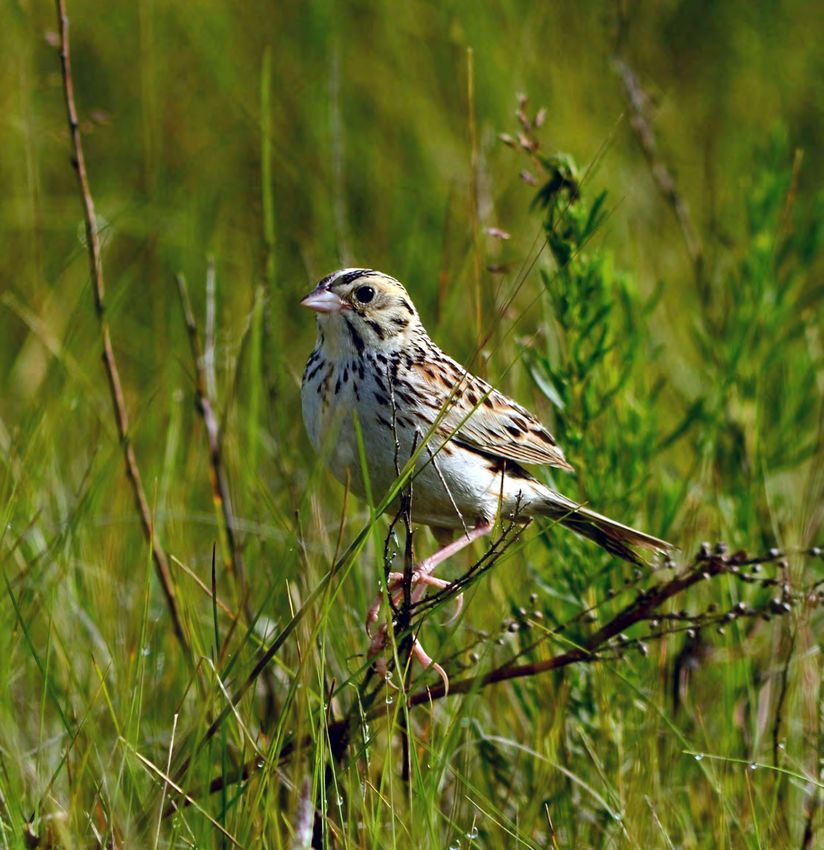
Cover: Baird’s Sparrow, Rick Bohn/USFWS
Table 6. Birds of Conservation Concern 2021 designated within BCRs 5, 10, 15, 32 and MBCR 17.
   See Table 2 for descriptions of BCRs and MBCRs. Scientific names of species, subspecies and
   populations are provided in Appendix 1. Breeding (X) and nonbreeding (nb) status are indicated
   for each BCR or MBCR; breeding BCRs may also support passage or wintering birds.                       26

   Table 7. Birds of Conservation Concern 2021 designated within BCRs 9, 16, 33, 34, 35 and 36. See
   Table 2 for descriptions of BCRs. Scientific names of species, subspecies and populations are
   provided in Appendix 1. Breeding (X) and nonbreeding (nb) status are indicated for each BCR;
   breeding BCRs may also support passage or wintering birds.                                             28

   Table 8. Birds of Conservation Concern 2021 designated within BCRs 11, 17, 18, 19, 20, 21, 37 and
   MBCR 20. See Table 2 for descriptions of BCRs and MBCRs. Scientific names of species,
   subspecies and populations are provided in Appendix 1. Breeding (X) and nonbreeding (nb) status
   are indicated for each BCR/MBCR; breeding BCRs may also support passage or wintering birds.            30

   Table 9. Birds of Conservation Concern 2021 designated within BCRs 12, 13, 22, 23, 24, 25, 26, 28
   and 29. See Table 2 for descriptions of BCRs. Scientific names of species, subspecies and
   populations are provided in Appendix 1. Breeding (X) and nonbreeding (nb) status are indicated
   for each BCR; breeding BCRs may also support passage or wintering birds.                               32

   Table 10. Birds of Conservation Concern 2021 designated within BCRs 14, 27, 30, 31 and MBCR
   18, 19. See Table 2 for descriptions of BCRs and MBCRs. Scientific names of species, subspecies
   and populations are provided in Appendix 1. Breeding (X) and nonbreeding (nb) status are
   indicated for each BCR/MBCR; breeding BCRs may also support passage or wintering birds.                34

Appendices                                                                                                36

   Appendix 1. Common and scientific names of species, subspecies, and populations designated as
   Birds of Conservation Concern 2021, listed as threatened or endangered under the USA
   Endangered Species Act, considered as extinct in the wild, or included as non-migratory birds on
   the Watch Lists of the State of the Birds (Rosenberg et al. 2014) or in the Avian Conservation
   Assessment Database (Partners in Flight 2019). Taxonomic sequence and nomenclature follow the
   American Ornithologists’ Union Check-list of North American Birds, 7th Edition (1983), through
   the 61th supplement (Chesser et al. 2020). Subspecies and population nomenclature follow Andres
   et al. (2012) and Clements et al. (2019); nomenclature for Pacific island species follows Clements
   et al. (2019).                                                                                         36

   Appendix 2. Numbers of Birds of Conservation Concern 2021, non-migratory birds on the Watch
   Lists in the 2014 State of the Birds (Rosenberg et al. 2014) or Avian Conservation Assessment
   Database (Partners in Flight 2019), species or populations listed as threatened or endangered
   under the ESA, and extinct species or populations for the Continental USA, Puerto Rico and the
   Virgin Islands, and Hawaii and the Pacific Islands. Shared taxa assigned to breeding area list or by
   greatest abundance.                                                                                    47

                                                                                                          Allen’s Hummingbird, Brima Battle/USFWS
Executive Summary

    The 1988 amendment to the Fish and Wildlife               identified through these other efforts, noting that
    Conservation Act mandates the U.S. Fish and               appropriate differences do occur due to the unique
    Wildlife Service (USFWS) to identify species,             scope and mandate of the Birds of Conservation
    subspecies and populations (hereafter taxa) of all        Concern. The BCC 2021 also represents the first
    migratory nongame birds that without additional           time we tried to unify the assessment system among
    conservation action are likely to become candidates       waterbirds, shorebirds and landbirds.
    for listing under the Endangered Species Act (ESA)
    of 1973. The Birds of Conservation Concern 2021           The BCC 2021 identifies 269 individual bird taxa
    (BCC 2021) is the most recent effort to carry out this    of conservation concern. Of these, 135 taxa are of
    mandate. The overall goal of this report is to identify   conservation concern at the Continental scale, 88
    those bird taxa (beyond those already designated as       taxa at the BCR scale, 29 taxa on Puerto Rico and
    federally threatened or endangered) that represent        the Virgin Islands, and 35 taxa on Hawaii and the
    the highest conservation priorities of the USFWS.         Pacific Islands; 18 taxa identified on the Continental/
    The BCC 2021 is intended to stimulate coordinated,        BCR lists are shared with either Puerto Rico and
    collaborative and proactive conservation actions          the Virgin Islands or Hawaii and the Pacific Islands.
    among international, federal, state, tribal and           The number of taxa on the Hawaii/Pacific Island list
    private partners.                                         appears deceptively low, because a high number of
                                                              birds there are already listed under the ESA. The
    The geographic scope of this endeavor is the United       number of taxa listed within a BCR, which includes
    States of America (USA) in its entirety, including        those identified as conservation concern at the
    island states, commonwealths and territories in the       Continental or BCR scales, ranges from 12 taxa in
    Pacific Ocean and Caribbean Sea and the marine            the Arctic Plains and Mountains to 49 taxa in Coastal
    areas delineated as territorial sea, contiguous           California, with an average of 25.4 taxa per BCR.
    zone and exclusive economic zone. The BCC 2021            Among MBCRs, the number of taxa ranged from
    encompasses four distinct geographic scales: 1) the       two taxa in the Chuckchi and Beaufort Seas to 13
    Continental USA, including Alaska; 2) Pacific Ocean       taxa in the California Current, with an average of 7.4
    islands, including Hawaii; 3) Puerto Rico, the U.S.       taxa per MBCR.
    Virgin Islands and Navassa; and 4) continental Bird
    Conservation Regions (BCRs) and Marine Bird               Although the bird taxa included in the BCC 2021
    Conservation Regions (MBCRs), as defined by Bird          are priorities for conservation action, this list
    Studies Canada and NABCI (2014). New to the BCC           makes no finding with regard to whether they
    2021 is the explicit inclusion of MBCRs.                  warrant consideration for ESA listing. Our goal
                                                              is to eliminate the need for additional ESA bird
    Bird taxa considered for the BCC 2021 lists include       listings by implementing proactive management and
    nongame birds, gamebirds without hunting seasons          conservation actions that sustain populations well
    or where harvest is minimal, and subsistence-             above thresholds of endangerment. We recommend
    hunted nongame birds in Alaska. Excluded from             that these lists be consulted in accordance with
    consideration for the BCC 2021 are bird species           Executive Order 13186, Responsibilities of Federal
    not protected under the Migratory Bird Treaties           Agencies to Protect Migratory Birds. Many of
    (Federal Register 2020a), taxa already listed as          the taxa identified herein are targets of ongoing
    threatened or endangered under the ESA, or taxa           conservation attention by national and international
    that only occur irregularly or peripherally in the        initiatives (e.g., Partners in Flight, U.S. Shorebird
    USA. Our conservation assessment was based on             Conservation Partnership), Migratory Bird Joint
    several factors, including population abundance           Ventures, state and federal natural resource
    and trends, threats on breeding and nonbreeding           agencies, non-governmental organizations, and other
    grounds, and size of breeding and nonbreeding             partnerships.
    ranges. The factor scores and associated thresholds
    used for identifying birds of conservation
    concern in the 2014 State of the Birds Watch List
    (Rosenberg et al. 2014) and the Avian Conservation
    Assessment Database (Partners in Flight 2019,
    Punjabi et al. 2019) served as the foundation on
    which we developed the BCC 2021 lists. Thus, we
    sought consistency of the BCC 2021 with priorities

4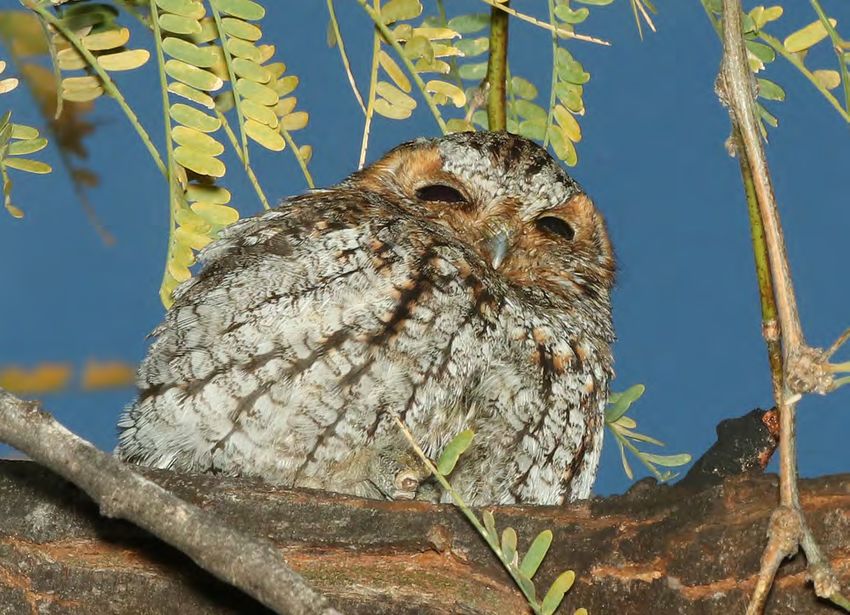
Acknowledgments

      This document was the result of collaboration among    Contributors to the assessments for landbirds
      past and present staff in all regions of the USFWS’s   and shorebirds beyond the USFWS Migratory
      Migratory Bird Program. The primary collaborators      Bird Program included Jim Giocomo, Casey Lott,
      were Brad Andres, Roxanne Bogart, Bob Ford,            Rebecca Keller, Anne Mini, Mike Parr, David
      Eric Kershner, Terry Rich, and Jennifer Wheeler        Pashley (deceased), George Wallace, and David
      (Headquarters); Mike Green, Vanessa Loverti, and       Wiedenfeld (American Bird Conservancy); Arvind
      Roberta Swift (Pacific Region); Carol Beardmore,       Panjabi and Allison Shaw (Bird Conservancy of
      Bill Howe, Dave Krueper and Bill Vermillion            the Rockies); Andrew Couturier (Bird Studies
      (Southwest Region); Steve Lewis, Bob Russell           Canada); Ken Rosenberg (Cornell Laboratory of
      (deceased) and Tom Will (Midwest Region); Dean         Ornithology); Peter Blancher, Alaine Camfield,
      Demarest and Troy Wilson (Southeast Region);           Wendy Easton, and Judith Kennedy (Environment
      Randy Dettmers, Debra Reynolds and Caleb Spiegel       and Climate Change Canada); Nancy Douglass
      (Northeast Region); Scott Somershoe (Mountain-         (Florida Fish & Wildlife Conservation Commission);
      Prairie Region); Jim Johnson, Rick Lanctot and         John Alexander (Klamath Bird Observatory);
      Steve Matsuoka (Alaska Region); and Rob Doster         Lower Mississippi Valley Joint Venture Science
      and Thomas Leeman (Pacific Southwest Region).          Committee; Lindsay Tudor (Maine Department
                                                             of Inland Fisheries and Wildlife); Stephen Brown,
                                                             Rob Clay, and Brad Winn (Manomet); Sara
                                                             Schweitzer (North Carolina Wildlife Resources
                                                             Commission); Catherine Hickey (Point Blue
                                                             Conservation Sciences); Felicia Sanders (South
                                                             Carolina Department of Natural Resources); David
                                                             Mehlman (The Nature Conservancy); Greg Butcher
                                                             (USDA Forest Service); Chuck Hunter (USFWS
                                                             National Wildlife Refuge System); Janet Ruth and
                                                             Jessica Stanton (U.S. Geological Survey [USGS]);
                                                             David Krementz (USGS Arkansas Cooperative Fish
                                                             and Wildlife Research Unit); and Henning Stabins
                                                             (Weyerhaeuser Company). Linda Wires (Consultant
                                                             Biologist) and numerous other individuals
                                                             contributed to the waterbird assessment.

                                                             This edition of the BCC 2021 is dedicated to the
                                                             original USFWS “Nongame 7” who retired since the
                                                             previous publication of the Birds of Conservation
                                                             Concern: Tara Zimmerman (Pacific Region), Bill
                                                             Howe (Southwest Region), Steve Lewis (Midwest
                                                             Region), Stephanie Jones (Mountain-Prairie
                                                             Region), and Kent Wohl (Alaska Region). They
                                                             all contributed significantly to past versions of
                                                             the Birds of Conservation Concern and thereby
                                                             supported the development of this report.
Reddish Egret, Keenan Adams/USFWS

                                                             Suggested Citation: U.S. Fish and Wildlife Service.
                                                             2021. Birds of Conservation Concern 2021. United
                                                             States Department of the Interior, U.S. Fish and
                                                             Wildlife Service, Migratory Birds, Falls Church,
                                                             Virginia. http://www.fws.gov/birds/management/
                                                             managed-species/birds-of-conservation-concern.php

                                                                                                                   5
Introduction

    A Congressional amendment to the Fish and                 recovery efforts required once a bird is listed under
    Wildlife Conservation Act (16 U.S.C. 2901–2912)           the ESA (e.g., Drechsler et al. 2011).
    in 1988 directed the Secretary of Interior, through
    the U.S. Fish and Wildlife Service (USFWS), to            Because it is mandated by law and produced by the
    “identify species, subspecies, and populations of all     USFWS, federal agencies, international NGOs and
    migratory nongame birds that, without additional          foreign governments view the BCC list as the official
    conservation actions, are likely to become candidates     USA Government position on migratory nongame
    for listing under the Endangered Species Act (ESA)        birds of conservation concern. The BCC list is also
    of 1973, as amended (16 U.S.C. 1531-1543)”. The           used to identify priority wetland birds for evaluating
    intent of the legislation was to stimulate coordinated    North American Wetlands Conservation Act
    and proactive conservation actions among federal,         proposals, used in scoring of Neotropical Migratory
    state and tribal governments, non-governmental            Bird Conservation Act proposals, and referenced in
    organizations (NGOs), and private partners in the         Executive Order 13186, Responsibilities of Federal
    United States (USA) before birds require protection       Agencies to Protect Migratory Birds. To promote
    under the ESA. Even prior to the passage of this          more consistency among organizations developing
    amendment, the USFWS was providing periodic               various lists of birds of conservation concern, the
    assessments of migratory birds that might become          BCC 2021 closely followed the methods used to
    candidates for listing under the ESA, generating the      generate the Watch List for the 2014 State of the
    first list of migratory nongame birds of management       Birds (Rosenberg et al. 2014), 2016 Partners in
    concern in 1982 (U.S. Fish and Wildlife Service           Flight Landbird Conservation Plan (Rosenberg
    1982). Since that time, five additional lists have been   et al. 2016) and Avian Conservation Assessment
    published (U.S. Department of the Interior 1990;          Database (Partners in Flight 2019). However, the
    U.S. Fish and Wildlife Service 1987, 1995, 2002,          BCC 2021 differs somewhat from these lists because
    2008).                                                    of its unique scope and mandate.

    The Birds of Conservation Concern 2021 (BCC
    2021) presented here is the most recent effort by
    the USFWS to carry out the Fish and Wildlife
    Conservation Act’s proactive conservation mandate
    and updates the Birds of Conservation Concern
    (BCC) 2008 (U.S. Fish and Wildlife Service
    2008). Development of the BCC 2021 aligns with
    the USFWS mission of “working with others to
    conserve, protect, and enhance fish, wildlife, plants
    and their habitats for the continuing benefit of the
    American people” and meets the current USFWS
    objective to “guide the conservation, development,
    and management of the Nation’s fish and wildlife
    resources”. The overall goal of the BCC 2021 is to
    identify, by geography, those nongame migratory
    birds (beyond those already federally listed as
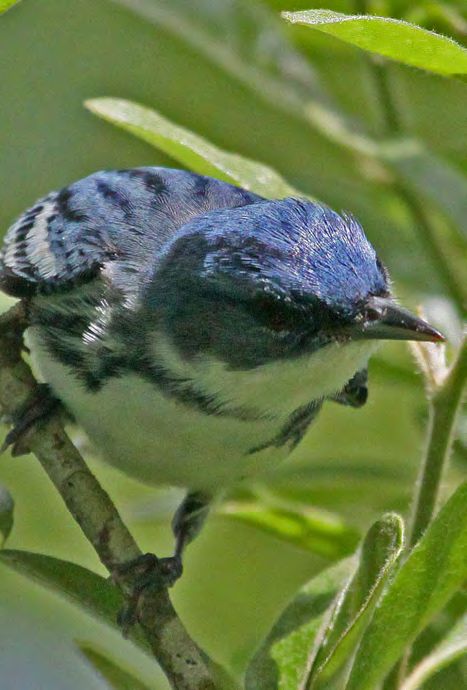
                                                                                                                  Cerulean Warbler, Jerry Oldenettel CC BY 2.0

    threatened or endangered) in greatest need of
    conservation attention.

    The philosophy underlying the BCC reports is that
    proactive bird conservation is critical at a time
    when continued human impacts will be intensified
    by effects of a changing climate. By investing in
    actions for designated BCC taxa, we can prevent
    further degradation to environments that we all
    share, improve the odds for successful long-term
    conservation, and avoid the complexities associated
    with federal ESA listing. Proactive conservation
    is recognized as being more cost-effective than the

6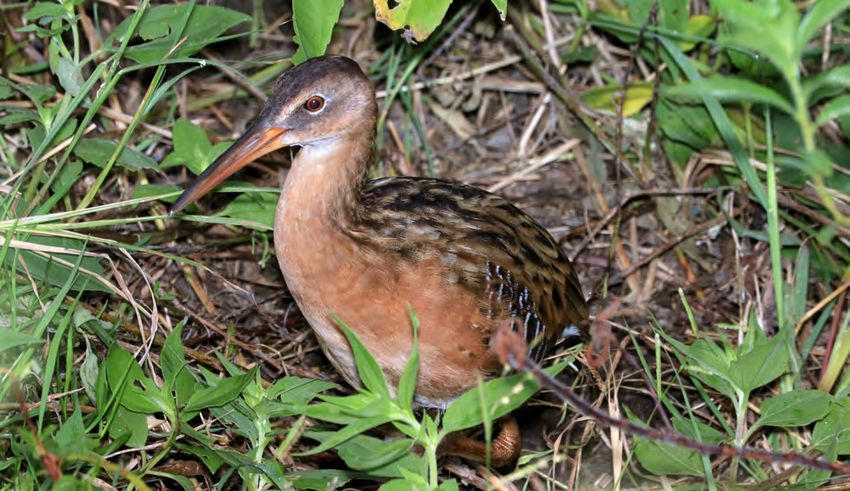
Methods

Geographic Scope                                         (i.e., occurs irregularly or in such low abundance
The geographic scope of the BCC 2021 consists of         that conservation actions taken for the bird would
the entirety of the lands and waters of the USA,         have little effect on the status of the species), or that
including states, commonwealths, territories and         was introduced into the USA by humans (Federal
other affiliations in the Caribbean Sea and Pacific      Register 2005). We use the term “taxon” or “taxa”
Ocean. Also included in the geographic scope are         to refer to species, subspecies and delineated
marine boundaries defined as the territorial sea,        populations of birds considered for the BCC 2021.
contiguous zone and exclusive economic zone (see
https://www.nauticalcharts.noaa.gov/csdl/mbound.         To present a more comprehensive perspective on the
htm). To facilitate use and interpretation of the BCC    conservation status of birds within the jurisdictions
2021, we organized the presentation into four geo-       of the USA, we provide additional information in
political and ecoregional groupings: 1) Continental      Appendix 1 on taxa that do not fall within the scope
USA, including Alaska; 2) Puerto Rico and the U.S.       of the BCC 2021 but were identified on the Watch
Virgin Islands, 3) Hawaii and the Pacific Islands,       Lists of the State of the Birds (Rosenberg et al.
and 4) continental Bird Conservation Regions             2014) or in the Avian Conservation Assessment
(BCRs) and Marine Bird Conservation Regions              Database (Partners in Flight 2019); were listed as
(MBCRs). Offshore jurisdictional waters associated       endangered or threatened under the ESA as of
with Hawaii and the Pacific Islands and Puerto           January 15, 2021; or are believed to be extinct. To
Rico and the U.S. Virgin Islands are included in         our knowledge, a comprehensive presentation of all
their respective regions. We decided to treat states,    birds with an elevated conservation status within the
commonwealths, territories and other affiliations        USA was heretofore unavailable.
in the Caribbean Sea and Pacific Ocean separately
because of the high endemism and high vulnerability      In general, common and scientific names of birds
of island avifauna (Kier et al. 2009). Descriptions      are presented at the species level, except where
of states, commonwealths, territories and other          it is necessary to differentiate among taxa of
affiliations in the Caribbean Sea and Pacific Ocean      a species that may occur in the USA but differ
are provided in Table 1, and BCRs and MBCRs              in their conservation status among geographic
are described in Table 2 and illustrated in Figure 1.    scales or populations (e.g., taxa listed under the
For details on BCRs and MBCRs, please see Bird           ESA). Relevant taxa of island populations are also
Studies Canada and NABCI (2014).                         identified. Geographic and other modifiers are
                                                         used throughout the tables to aid in identifying
Birds Considered                                         such differentiation, particularly at the BCR and
The taxonomic scope for the BCC 2021 is bounded          MBCR scales. Species-level classification generally
by the Migratory Bird Treaties that the USA has          follows the American Ornithologists’ Union’s
with Canada (Migratory Bird Treaty Act of 1918),         Checklist of North American Birds, 7th Edition
Mexico (1936), Japan (1972) and Russia (1976). The       (1983), including changes and supplements through
USFWS periodically updates the list of migratory         the 61st supplement in 2020 (Chesser et al. 2020).
birds covered by these treaties, which usually results   Subspecies and population classification and species
from changes in taxonomy, status or distribution.        classification in the Pacific Islands generally follows
The most recent published list of migratory birds        Clements et al. (2019), with some exceptions for
(Federal Register 2020b) was used as the basis for       shorebirds (see Andres et al. 2012).
developing the BCC 2021. Within this list, birds
considered for inclusion in the BCC 2021 either do       Assessing Conservation Status
not have sport-hunting seasons in the USA or have        The BCC 2021 represents the first application of
sporting-hunting seasons where little harvest occurs     a unified approach to evaluate the conservation
(e.g., rails). Birds that are not sport-hunted in the    status of landbirds, shorebirds and waterbirds for
lower 48 states but are hunted for subsistence in        the BCC — an approach greatly facilitated through
Alaska are also considered. Because the intent of        the efforts to promote consistency during the
BCC is to highlight potential candidate birds where      development of the State of the Birds Watch List in
ESA listing could be averted through proactive           2014 (Rosenberg et al. 2014). Although the overall
conservation attention, the BCC 2021 further             approach to evaluate conservation status across all
excludes any species, subspecies or population of        bird groups for the BCC 2021 is now more consistent
bird already listed as threatened or endangered          than previous BCC assessments, data availability
under ESA. We also eliminated from consideration         and quality still vary widely among taxonomic
any bird that occurs only peripherally in the USA        groups.
                                                                                                                     7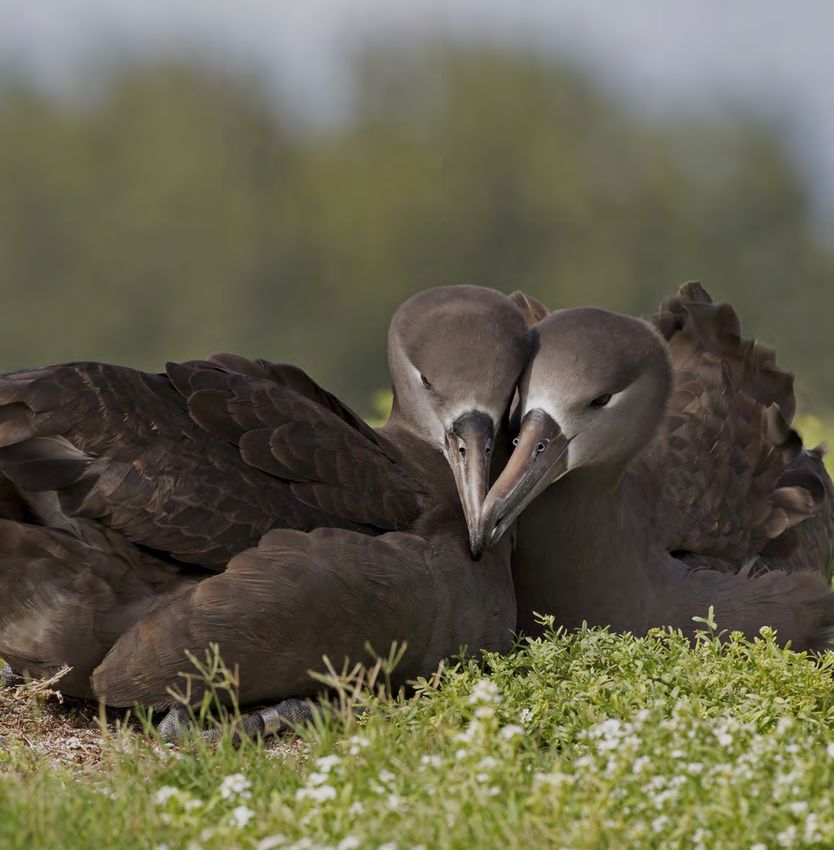
Scoring factors and criteria developed by Partners       their global status, because entire species breed
    in Flight (Rosenberg et al. 2016, Panjabi et al. 2019)   in, migrate through or winter in the USA. In
    were the primary means for evaluating conservation       contrast, waterbirds and shorebirds tend to have
    status of landbirds, shorebirds, and waterbirds. For     cosmopolitan distributions, and their conservation
    areas or taxa where it was not possible to directly      at the species level includes populations occurring
    apply this evaluation approach, we consulted             outside of the USA; therefore, we evaluated several
    State Wildlife Action Plans for American Samoa           species of shorebirds and waterbirds at the North
    (Department of Marine and Wildlife Resources 2006,       American population scale. At the BCR and MBCR
    2015), Guam (Guam Division of Aquatic and Wildlife       scales, we evaluated the conservation status of taxa
    Resources 2006), Hawaii (Hawai‘i Department of           relevant in each region, to the degree available data
    Land and Natural Resources 2015), the Northern           and current understanding allowed.
    Mariana Islands (Liske-Clark 2015), Puerto
    Rico (Puerto Rico Department of Natural and              Scores ranging from one to five were assigned to
    Environmental Resources 2015), and the U.S. Virgin       each of six assessment factors, which are presented
    Islands (Platenberg and Valiulis 2018). We also          below along with scoring criteria (see Panjabi et
    consulted the IUCN Red List of Threatened Species        al. 2019 for details). Data on these six factors were
    (2019), particularly for seabirds.                       recently updated for shorebirds (U.S. Shorebird
                                                             Conservation Partnership 2016), landbirds
    The intent of the assessment for landbirds,              (Partners in Flight 2019) and waterbirds (BirdLife
    shorebirds and waterbirds is to emphasize their          International 2015; Wetlands International 2015;
    conservation status relevant to the entire USA.          Partners in Flight 2019; L. Wires, unpublished data).
    The conservation status of many landbirds reflects

                                                                                                                 Black-footed Albatross pair, Dan Clark/USFWS

8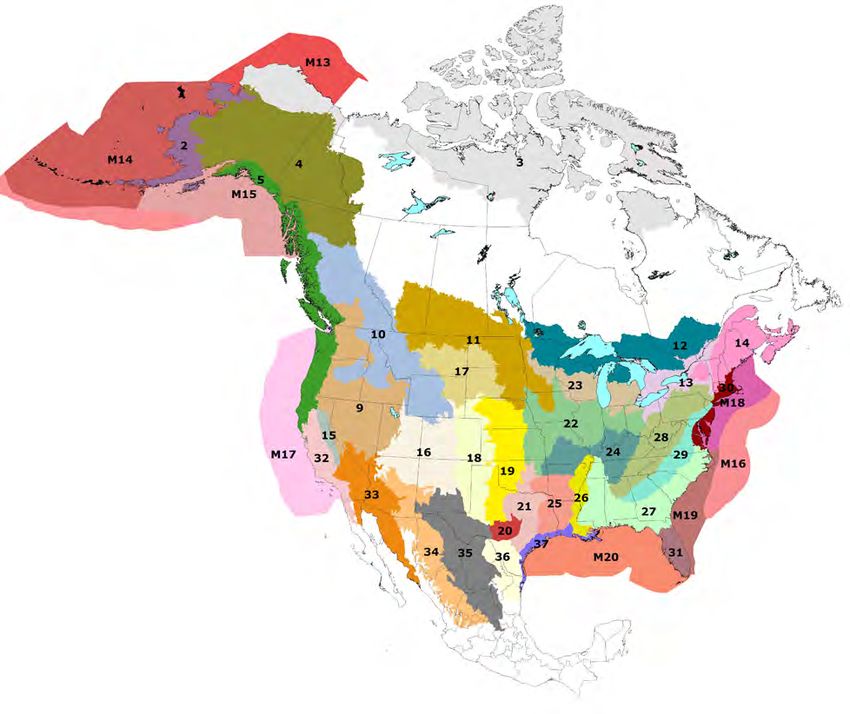
Population Size (PS).
The current estimated number of individuals of a taxon. The factor generally refers to the number of
breeding adults but varies somewhat among taxonomic groups due to differing biology and estimation
methods.
Score                          Criterion
1                              ≥50,000,000 individuals
2                              ≥5,000,000 and
Relative Density (RD).
     Relative Density is an additional factor assessed at the BCR/MBCR scale but not at the continental scale.
     RD scores reflect the mean density of a taxa within a BCR/MBCR relative to density in the single BCR/
     MBCR in which the taxa occurs in its highest density (Panjabi et al. 2019). Nonbreeding season scores and
     those for MBCRs were often generated using expert opinion).
                                   Quantitative Criterion
                                                                                       Qualitative Criterion
     Score         Relative abundance                 Relative frequency
     0                                       BCR relative frequency <         has occurred only irregularly,
                                             1.5% of the maximum relative     or strong evidence of regular
                                             frequency                        occurrence is lacking
     1       BCR relative abundance <        BCR relative frequency 1.5-      occurs regularly but in very small
             1% of the maximum relative 3.6% of maximum relative              numbers or in only a very small
             abundance                       frequency                        part of the region in question
     2       BCR relative abundance          BCR relative frequency 3.6-      occurs in low mean abundance
             1-10% of maximum relative       21.7% of maximum relative        relative to the region(s) in which
             abundance                       frequency                        the taxa occurs in maximum
                                                                              density
     3       BCR relative abundance          BCR relative frequency 21.7-     occurs in moderate mean
             10-25% of maximum relative 44.6% of maximum relative             abundance relative to the
             abundance                       frequency                        region(s) in which the taxa occurs
                                                                              in maximum density
     4       BCR relative abundance          BCR relative frequency 44.6-     occurs in moderately high
             25-50% of maximum relative 68.1% of maximum relative             mean abundance relative to the
             abundance                       frequency                        region(s) in which the taxa occurs
                                                                              in maximum density
     5       BCR relative abundance >        BCR relative frequency >         occurs in high mean abundance,
             50% of maximum relative         68.1% of maximum relative        similar to the region(s) in which
             abundance                       frequency                        the taxa occurs in maximum
                                                                              density

     Identifying Birds of Conservation Concern                 of elevated conservation concern regionally. Taxa
     The following Combined Continental Scores (CCS)           included as birds of conservation concern at the
     of factors and scoring thresholds, based primarily        BCR scale had RD ≥ 2 and met the following scoring
     on Panjabi et al. (2019), were used to identify taxa of   thresholds, based on the Partners in Flight action
     elevated conservation concern:                            codes (Panjabi et al. 2019) at the regional scale:

         CCS(max) ≥ 14 or                                          1) TB or TN = 5 (Critical Recovery); or
         CCS(max) = 13 and PT = 5, where                           2) TB or TN = 4 and PT = 5 (Immediate
                                                                   Management); or
         CCS(max) is the maximum score of either                   3) Combined Regional Breeding Score (CRBS)
         CCS(B) or CCS(N),                                         ≥17, and
         CCS(B) is Combined Continental Score                           a) TB or TN = 3 and PT ≥ 4 or
         (Breeding) = PS + BD + TB + PT, and                            (Management Attention)
         CCS(N) is Combined Continental Score                           b) TB or TN = 4 and PT < 5 (Management
         (Nonbreeding) = PS + ND + TN + PT.                             Attention).

     The above criteria are consistent with a breeding         The CRBS is equivalent to the CCS(B) + RD.
     season Watch List designation at a North American         Inclusion of nonbreeding taxa at the BCR level was
     continental scale (USA and Canada) in the recently        generally based on expert opinion, because BCR-
     published version of the Avian Conservation               scale nonbreeding scores are not yet incorporated
     Assessment Database (Panjabi et al. 2019).                into the Avian Conservation Assessment Database
                                                               (Panjabi et al. 2019).
     To be included as a Bird of Conservation Concern
     at the BCR or MBCR scale, a taxon had to meet the         These regional criteria for the BCC 2021 were
     Watch List criteria above and had to occur regularly      more stringent than the criteria used in the Avian
     within the region at a manageable level (RD ≥ 2).         Conservation Assessment Database to identify
     Taxa breeding in a BCR were generally assessed            species of regional concern (Panjabi et al. 2019) but
     using the quantitative criteria, whereas nonbreeding      better address the overall mandate of the BCC. A
     taxa were most often assessed using the qualitative       few taxa below the species level were elevated to the
     criteria.                                                 Continental list due to continued concern expressed
                                                               by partners or were subspecies unique to North
     At the BCR scale, we identified additional taxa           America (e.g., Swallow-tailed Kite, Gray-headed
     that did not meet the criteria for the BCC 2021           Chickadee).
     Continental list (Watch List) but were nonetheless
10
Results and Discussion
The BCC 2021 identifies 269 individual bird taxa of and aridlands (47%) were included in the BCC
conservation concern (Appendix 1). Of these, 135 2021, as were aerial insectivores (31%). Excluding
taxa are of conservation concern at the Continental aridland birds, the other groups experienced the
scale, 88 taxa at the BCR scale, 29 taxa on Puerto greatest losses of individuals over the last fifty years
Rico and the Virgin Islands and 35 taxa on Hawaii (Rosenberg et al. 2019).
and the Pacific Islands; 18 taxa identified on the
Continental/BCR lists are shared with either Puerto The BCR/MBCR lists incorporate the 135 taxa of
Rico and the Virgin Islands or Hawaii and the Pacific Continental concern where they are considered to
Islands (Table 3). The number of taxa on the Hawaii/ occur at manageable levels and include an additional
Pacific Island list appears deceptively low, because 88 taxa of regional concern within specific BCRs
a relatively high number of birds there are already or MBCRs. The number of taxa listed within a
listed under the ESA or are extinct (Appendix 2). BCR ranges from 12 taxa in the Arctic Plains and
A few of the taxa identified in the BCC 2021 are Mountains to 49 taxa in Coastal California, with
currently being considered for listing or de-listing an average of 25.4 taxa per BCR (see Tables 5-10).
under the ESA. Among MBCRs, the number of taxa ranged from
two taxa in the Chuckchi and Beaufort Seas to 13
All major bird groups are represented in the BCC taxa in the California Current, with an average of 7.4
2021, but shorebirds, seabirds and some landbirds taxa per MBCR (see Tables 5, 6, 8 and 10).
have particularly high representation (Table 4).
Of eligible taxa, 53% of shorebirds and 48% of The BCC 2021 is the latest update in a continuing
seabirds met criteria for inclusion in the BCC effort to assess and prioritize migratory birds for
2021. Based on habitat designations of landbirds conservation purposes (U.S. Department of the
provided in Rosenberg et al. (2019), which apply to Interior 1990; U.S. Fish and Wildlife Service 1982,
the Continental and BCR scales (Table 4), a high 1987, 1995, 2002, 2008). Overall, it is difficult to make
percentage of taxa inhabiting grasslands (54%) meaningful comparisons among the lists over the
years because of differences in the way each list
was constructed. However, the 2021 and 2008 lists
were most similar in the assessment approach, with
the exception of inclusion of some taxa in 2008 not
considered in 2021. Accounting for this difference,
the number of taxa was essentially the same on the
Continental list between years (133 versus 132 in
2008), had a small increase (8%) on Puerto Rico/
Virgin Islands list (28 versus 26 in 2008), and a
significant increase (52%) on the Hawaii/Pacific
Islands list (35 versus 23 in 2008). Between years,
nine taxa identified in the 2008 BCC were listed
under the ESA in 2021, and three species de-listed
during the period were included in BCC 2021.
The increase in Hawaii and the Pacific Islands is
attributed to a more thorough treatment of Pacific
Islands beyond Hawaii and inclusion of more seabird
taxa; additional nonbreeding seabird taxa occurring
in continental USA waters were included on the
Continental list. Similar numbers of taxa were
Wilson’s Plover, Russ/CC BY 2.0
identified at the BCR level in 2008 and 2021 (84 taxa
versus 83). Notwithstanding these differences, a
number of taxa identified in 2008 are not included
in the BCC 2021, which reflects a real change in our
understanding of current conservation status. We do
not present USFWS Region lists in 2021 as we did in
2008 and recognize the current acceptance of BCRs
and MBCRs as fundamental conservation planning
and implementation units.
11The State of the Birds produced in 2014 (North Although all of the bird taxa included in the BCC
American Bird Conservation Initiative, U.S. 2021 are priorities for conservation action, this
Committee 2014) provides more details on how list makes no finding with regard to whether they
land-use change and other environmental threats warrant consideration for ESA listing. Our goal is
affect birds in the major ecosystems in the USA, to avert the need for additional ESA bird listings
and a more recent analysis provides an overview by implementing proactive management and
of declines and losses of birds in North America conservation actions. We recommend that these
(Rosenberg et al. 2019). As with the results lists be consulted in accordance with Executive
presented in the BCC 2021, island birds, grassland Order 13186, Responsibilities of Federal Agencies to
birds, seabirds and shorebirds demonstrate the Protect Migratory Birds. The BCC 2021 is intended
greatest conservation need. Although we did not to stimulate coordinated and collaborative proactive
build specific climate change scoring into the current conservation actions among federal, state, tribal and
assessment, the 2010 State of the Birds provided private partners. Many of the taxa identified herein
an overview of climate change effects on USA birds are targets of ongoing conservation attention by
(North American Bird Conservation Initiative, U.S. national and international initiatives (e.g., Partners
Committee 2010). Future updates to the Birds of in Flight, U.S. Shorebird Conservation Partnership),
Conservation Concern might consider including Migratory Bird Joint Ventures, state and federal
measures of the potential effects of climate change. natural resource agencies, NGOs, and other
partnerships.
Eastern Whip-poor-will, Susan Young/CC1.0
12Literature Cited
American Ornithologists’ Union. 1983. Check-list of Federal Register. 2020a. List of bird species to which
North American Birds, 7th edition. American the Migratory Bird Treaty Act does not apply.
Ornithologists’ Union, Washington, D.C. Notice of availability. Federal Register 85 (74):
21262–21264.
Andres, B. A., P. A. Smith, R. I. G. Morrison, C. L.
Gratto-Trevor, S. C. Brown, and C. A. Friis. Federal Register. 2020b. General provisions: Revised
2012. Population estimates of North American list of migratory birds. Final rule. Federal
shorebirds, 2012. Wader Study Group Bulletin Register 85 (74): 21282–21305.
119: 178–194.
Guam Division of Aquatic and Wildlife Resources.
BirdLife International. 2015. Data Zone. http:// 2006. Guam Comprehensive Wildlife
datazone.birdlife.org. Accessed on 6 October Conservation Strategy. Department of
2015. Agriculture, Mangilao.
Bird Studies Canada and NABCI. 2014. Bird Hawai‘i Department of Land and Natural
Conservation Regions. http://www.birdscanada. Resources. 2015. Hawai‘i’s State Wildlife Action
org/research/gislab/index.jsp?targetpg=bcr. Plan. H. T. Harvey and Associates, Honolulu.
Chesser, R. T., S. M. Billerman, K. J. Burns, C. IUCN 2019. The IUCN Red List of Threatened
Cicero, J. L. Dunn, A. W. Kratter, I. J. Lovette, Species. Version 2019-2. http://www.iucnredlist.
N. A. Mason, P. C. Rasmussen, J. V. Remsen, org. Accessed on 20 September 2019.
Jr., D. F. Stotz, and K. Winker. 2020. Check-list
of North American Birds (online). American Kier, G., H. Kreft, T. Ming Lee, W. Jetz, P. L.
Ornithological Society. http://checklist. Ibisch, C. Nowicki, J. Mutke, and W. Barthlott.
americanornithology.org/taxa. 2009. A global assessment of endemism and
species richness across island and mainland
Clements, J. F., T. S. Schulenberg, M. J. Iliff, S. M. regions. PNAS 106 (23) 9322-9327; https://doi.
Billerman, T. A. Fredericks, B. L. Sullivan, and org/10.1073/pnas.0810306106.
C. L. Wood. 2019. The eBird/Clements checklist
of birds of the world, version 2019. http://www. Liske-Clark, J. 2015. Wildlife Action Plan for the
birds.cornell.edu/clementschecklist/download/. Commonwealth of the Northern Mariana
Islands, 2015-2025. CNMI DLNR-Division of
Department of Marine and Wildlife Resources. Fish and Wildlife, Saipan.
2006. A comprehensive strategy for wildlife
conservation in American Samoa (R. C. B. NatureServe. 2015. NatureServe Explorer:
Utzurrum, J. O. Seamon, and K. Schletz Saili. An online encyclopedia of life, version 7.1.
Pago Pago, American Samoa. http://teaming. NatureServe, Arlington, Virginia. http://
com/sites/default/files/American%20Samoa%20 explorer.natureserve.org. Accessed on 6
SWAP.pdf. October 2015.
Department of Marine and Wildlife Resources. North American Bird Conservation Initiative,
2015. American Samoa 2015 State Wildlife U.S. Committee. 2010. The State of the Birds
Action Plan Species of Greatest Conservation 2010 report on climate change, United States
Need. https://www.sciencebase.gov/catalog/ of America. U.S. Department of the Interior:
item/5c9ce047e4b0b8a7f62e0634. Washington, D.C. http://www.stateofthebirds.
org/2010.
Drechsler, M., F. V. Eppink, and F. Wätzold. 2011.
Does proactive biodiversity conservation North American Bird Conservation Initiative,
save costs? Biodiversity and Conservation 20: U.S. Committee. 2014. The State of the Birds
1045–1055. 2014 report. U.S. Department of Interior,
Washington, D.C. http://www.stateofthebirds.
Federal Register. 2005. General provisions: Final org/2014/.
list of bird species to which the Migratory Bird
Treaty Act does not apply. Federal Register 70
(49): 12710–12716.
13Panjabi, A. O., W. E. Easton, P. J. Blancher, A. E. U.S. Fish and Wildlife Service. 1982. Nongame
Shaw, B. A. Andres, C. J. Beardmore, A. F. migratory bird species with unstable or
Camfield, D. W. Demarest, R. Dettmers, R. H. decreasing population trends in the United
Keller, K. V. Rosenberg, and T. Will. 2019. Avian States. Office of Migratory Bird Management,
Conservation Assessment Database handbook, Washington, D.C.
version 2019. Partners in Flight Technical
Series No. 8. http://www.rmbo.org/pubs/ U.S. Fish and Wildlife Service. 1987. Migratory
downloads/Handbook2012.pdf. nongame birds of management concern in the
United States: the 1987 list. Office of Migratory
Partners in Flight. 2019. Avian Conservation Bird Management, Washington, D.C.
Assessment Database, version 2019. http://pif.
birdconservancy.org/ACAD. U.S. Fish and Wildlife Service. 1995. Migratory
nongame birds of management concern in
Platenberg, R. J., and J. M. Valiulis (editors). 2018. the United States: the 1995 List. Office of
United States Virgin Islands Wildlife Action Migratory Bird Management, U.S. Fish and
Plan, volume 1: Management framework. Wildlife Service, Arlington, Virginia.
Final report, USVI Department of Planning
and Natural Resources, Division of Fish and U.S. Fish and Wildlife Service. 2002. Birds of
Wildlife. University of the Virgin Islands and St. conservation concern 2002. Division of
Croix Environmental Association.. https://www. Migratory Bird Management, Arlington,
fws.gov/pacific/images/feature/2017/highlights/ Virginia.
CNMI%20SWAP%202015%20FINAL%20
secured.pdf. U.S. Fish and Wildlife Service. 2008. Birds
of Conservation Concern 2008. United
Puerto Rico Department of Natural and States Department of Interior, Fish and
Environmental Resources. 2015. Puerto Wildlife Service, Division of Migratory Bird
Rico State Wildlife Action Plan: Ten year Management, Arlington, Virginia.
review. San Juan. http://drna.pr.gov/historico/
PRSWAP2015.pdf. U.S. Shorebird Conservation Plan Partnership.
2016. U.S. Shorebirds of Conservation Concern
Rosenberg, K. V., A. M. Dokter, P. J. Blancher, J. R. 2016. http://www.shorebirdplan.org/science/
Sauer, A. C. Smith, P. A. Smith, J. C. Stanton, assessment-conservation-status-shorebirds/.
A. Panjabi, L. Helft, M. Parr, and P. P. Mara.
2019. Decline of the North American avifauna. Wetlands International. 2015. Waterbird Population
Science 10.1126/science.aaw1313. Estimates. http://www.wpe.wetlands.org.
Accessed 6 October 2015.
Rosenberg, K. V., J. A. Kennedy, R. Dettmers, R.
P. Ford, D. Reynolds, J. D. Alexander, C. J.
Beardmore, P. J. Blancher, R. E. Bogart, G. S.
Butcher, A. F. Camfield, A. Couturier, D. W.
Demarest, W. E. Easton, J. J. Giocomo, R. H.
Keller, A. E. Mini, A. O. Panjabi, D. N. Pashley,
T. D. Rich, J. M. Ruth, H. Stabins, J. Stanton,
and T. Will. 2016. Partners in Flight landbird
conservation plan: 2016 revision for Canada and
continental United States. Partners in Flight
Science Committee. http://www.partnersinflight.
org/plans/landbird-conservation-plan/.
Rosenberg, K. V., D. Pashley, B. Andres, P. J.
Blancher, G. S. Butcher, W. C. Hunter, D.
Mehlman, A. O. Panjabi, M. Parr, G. Wallace
and D. Wiedenfeld. 2014. The State of the
Mariana Fruit-dove, Laura Wolf/CC BY 2.0
Birds 2014 Watch List. North American Bird
Conservation Initiative, U.S. Committee,
Washington, D.C.
U.S. Department of the Interior. 1990. Report of the
Secretary of the Interior to the Congress of the
United States on the federal conservation of
migratory nongame birds pursuant to Section
13 of Public Law 96-366, the Fish and Wildlife
Conservation Act of 1980, as revised. U.S. Fish
and Wildlife Service, Washington, D.C.
14Figures
Figure 1.
Map of terrestrial Bird Conservation Regions (BCRs) Marine Bird Conservation Regions (MBCRs) of
North America (Bird Studies Canada and NABCI 2014). See Table 2 for BCR and MBCR names.
15Tables
Table 1.
Island states, commonwealths, territories and other affiliations of the United States (USA), including the
USA territorial sea, contiguous zone and exclusive economic zone considered in the development of the
Birds of Conservation Concern 2021.
Hawaii and Pacific Islands
State of Hawaii
American Samoa (unincorporated and unorganized territory)
Commonwealth of the Northern Marianas Islands (aligned through a covenant of “political union”)
Guam (unincorporated organized territory)
Unincorporated territories administered by the U.S. Fish and Wildlife Service (USFWS) as National
Wildlife Refuges (NWR) unless noted.
Howland Island
Jarvis Island
Johnston Atoll (joint control with the Department of Defense)
Kingman Reef
Midway Atoll
Palmyra Atoll (partially privately owned)
Wake Island (administered by the Department of the Interior)
Puerto Rico and U.S. Virgin Islands
Commonwealth of Puerto Rico (commonwealth)
U.S. Virgin Islands (unincorporated organized territory)
Navassa Island (administered by the USFWS as a NWR)
King Rail, Alan Schmierer/CC0 1.0
16Table 2.
Terrestrial Bird Conservation Regions (BCR) and Marine Bird Conservation Regions (MBCR) either
wholly or partially within the jurisdiction of the Continental USA, including Alaska, used in the Birds of
Conservation Concern 2021.
BCR/ MBCR BCR/MBCR Name
1 Aleutian/Bering Sea Islands
2 Western Alaska
3 Arctic Plains and Mountains
4 Northwestern Interior Forest
5 Northern Pacific Rainforest
9 Great Basin
10 Northern Rockies
11 Prairie Potholes
12 Boreal Hardwood Transition
13 Lower Great Lakes/St. Lawrence Plain
14 Atlantic Northern Forest
15 Sierra Nevada
16 Southern Rockies/Colorado Plateau
17 Badlands and Prairies
18 Shortgrass Prairie
19 Central Mixed-grass Prairie
20 Edwards Plateau
21 Oaks and Prairies
22 Eastern Tallgrass Prairie
23 Prairie Hardwood Transition
24 Central Hardwoods
25 West Gulf Coastal Plain/Ouachitas
26 Mississippi Alluvial Valley
27 Southeastern Coastal Plain
28 Appalachian Mountains
29 Piedmont
30 New England/Mid-Atlantic Coast
31 Peninsular Florida
32 Coastal California
33 Sonoran and Mohave Deserts
34 Sierra Madre Occidental
35 Chihuahuan Desert
36 Tamaulipan Brushlands
37 Gulf Coastal Prairie
M13 Chukchi and Beaufort Seas
M14 East Bering Sea
M15 Gulf of Alaska
M17 California Current
M18 Southeast U.S. Continental Shelf and U.S. waters (M16) beyond the shelf
M19 Northeast U.S. Continental Shelf and U.S. waters (M16) beyond the shelf
M20 Gulf of Mexico
17Table 3.
Birds of Conservation Concern 2021 in the Continental USA (CON), continental Bird Conservation
Regions (BCR), Puerto Rico and Virgin Islands (PRVI), and Hawaii and Pacific Islands (HAPI). Refer to
Appendix 1 for scientific names of species, subspecies and populations. Breeding (X) and nonbreeding (nb)
status are indicated for each geography. Parenthesized names indicate conservation concern only exists for
a specific subspecies or population.
Common Name CON BCR PRVI HAPI
West Indian Whistling-Duck X
Pacific Black Duck (Palau) X
White-cheeked Pintail (West Indies) X
Masked Duck X
Ruddy Duck (West Indies) X
Western Grebe X
Clark's Grebe X
White-crowned Pigeon X X
White-throated Ground Dove X
Bridled Quail-Dove X
Many-colored Fruit-Dove X
Mariana Fruit-Dove X
Pacific Imperial-Pigeon (Pacific) X
Yellow-billed Cuckoo (Eastern) X
Mangrove Cuckoo X
Black-billed Cuckoo X
Common Nighthawk (Lesser) X
Common Nighthawk (Henry's) X
Chuck-will's Widow X
Eastern Whip-poor-will X
Mexican Whip-poor-will X
Black Swift X X
Chimney Swift X
Vaux's Swift (Vaux's) X
Antillean Mango (Puerto Rican) X
Lucifer Hummingbird X
Costa's Hummingbird X
Calliope Hummingbird X
Rufous Hummingbird X
Allen's Hummingbird X
Broad-tailed Hummingbird X
King Rail X
American Coot (Caribbean) X
Australasian (Purple) Swamphen (Samoan) X
Spotless Crake (Tongan) X
Yellow Rail X
Yellow-breasted Crake (Henderson's) X
Limpkin (Puerto Rican/Hispaniolan) X
American Avocet X
American Oystercatcher X X
Black Oystercatcher X
18Common Name CON BCR PRVI HAPI
American Golden-Plover X
Wilson’s Plover X X
Mountain Plover X
Snowy Plover (Interior/Gulf Coast) X
Snowy Plover (Caribbean) X
Upland Sandpiper X
Bristle-thighed Curlew X nb
Whimbrel (Atlantic) X
Long-billed Curlew X
Bar-tailed Godwit X
Hudsonian Godwit X
Marbled Godwit X
Ruddy Turnstone (Atlantic) X
Black Turnstone X
Red Knot (Pacific) X
Dunlin (Northern Alaska) X
Dunlin (Hudson Bay) X
Rock Sandpiper (Pribilof) X
Purple Sandpiper X
Buff-breasted Sandpiper X
Pectoral Sandpiper X
Semipalmated Sandpiper (Eastern/Central) X nb
Short-billed Dowitcher X
Solitary Sandpiper (Western) X
Wandering Tattler X nb
Lesser Yellowlegs X nb
Willet X nb
Marbled Murrelet (Alaska) X
Kittlitz's Murrelet X
Scripps's Murrelet X
Guadalupe Murrelet nb
Craveri's Murrelet nb
Ancient Murrelet X
Cassin's Auklet X
Whiskered Auklet X
Tufted Puffin X
Red-legged Kittiwake X
Ivory Gull nb
Ross's Gull nb
Franklin's Gull X
Heermann's Gull X
Western Gull X
Yellow-footed Gull nb
California Gull X
Black Noddy (Hawaiian) X
Blue-gray Noddy (Hawaiian) X
19Common Name CON BCR PRVI HAPI
Gray-backed Tern X
Aleutian Tern X
Least Tern (Atlantic/Interior) X X
Gull-billed Tern X
Black Tern X
Common Tern X
Forster's Tern X
Sandwich Tern X
Elegant Tern X
Black Skimmer X
White-tailed Tropicbird (Atlantic) X
Red-billed Tropicbird (Caribbean) X
Red-tailed Tropicbird (Black-billed) X
Yellow-billed Loon X
Laysan Albatross nb X
Black-footed Albatross nb X
Polynesian Storm-Petrel nb
Ashy Storm-Petrel X
Band-rumped Storm-Petrel (Atlantic) nb
Black Storm-Petrel X
Tristram's Storm-Petrel X
Murphy's Petrel nb
Mottled Petrel nb nb
Black-capped Petrel nb
Bonin Petrel X
Fea's Petrel nb
Cook's Petrel nb nb
Tahiti Petrel X
Bulwer's Petrel X
Cory's Shearwater nb
Buller's Shearwater nb nb
Pink-footed Shearwater nb
Christmas Shearwater X
Manx Shearwater nb
Black-vented Shearwater nb
Audubon's Shearwater nb X
Magnificent Frigatebird X X
Great Frigatebird (Central Pacific) X
Masked Booby (Atlantic) X
Red-footed Booby (Atlantic) X
Brandt's Cormorant X
Red-faced Cormorant X
American White Pelican X
Brown Pelican (Caribbean) X
Great Blue Heron (Great White) X
Little Blue Heron X
20Common Name CON BCR PRVI HAPI
Reddish Egret X
Swallow-tailed Kite X
Northern Harrier X
Harris's Hawk X
'lo X
Ferruginous Hawk X
Flammulated Owl X
Puerto Rican Screech-Owl (Virgin Islands) X
Whiskered Screech-Owl X
Western Screech-Owl (Northern Pacific) X
Snowy Owl X
Burrowing Owl (Western) X
Burrowing Owl (Florida) X
Spotted Owl (California) X
Long-eared Owl X
Short-eared Owl X
Pueo X
Northern Saw-whet Owl X
Elegant Trogon X
Mariana Kingfisher X
Belted Kingfisher X
Lewis's Woodpecker X
Red-headed Woodpecker X
Gila Woodpecker X
Williamson's Sapsucker (Rocky Mountain) X
Nuttall's Woodpecker X
White-headed Woodpecker (California) X
Arizona Woodpecker X
Gilded Flicker X
American Kestrel (Southeast) X
Prairie Falcon X
Olive-sided Flycatcher X
Cordilleran Flycatcher X
Loggerhead Shrike (Eastern) X
Black-capped Vireo X
Puerto Rican Vireo X
Plumbeous Vireo X
Pinyon Jay X
Island Scrub-Jay X
Woodhouse's Scrub-Jay (Woodhouse's) X
Clark's Nutcracker X
Yellow-billed Magpie X
Chihuahuan Raven X
Black-capped Chickadee (Appalachian) X
Mexican Chickadee X
Chestnut-backed Chickadee (Northern) X
21Common Name CON BCR PRVI HAPI
Gray-headed Chickadee (Alaska) X
Oak Titmouse X
Verdin (Southwest) X
White-breasted Nuthatch (Slender-billed) X
Brown-headed Nuthatch X
Marsh Wren (Worthington's) X
Bewick's Wren (Eastern) X
Cactus Wren (Speckled) X
American Dipper X
Wrentit X
'Ōma'o X
Veery (Eastern) X
Bicknell's Thrush X
Wood Thrush X
Varied Thrush (Pacific) X
Curve-billed Thrasher (Brownsville) X
Curve-billed Thrasher (Palmer's) X
Bendire's Thrasher X
California Thrasher X
LeConte's Thrasher X
Sage Thrasher X
Phainopepla (Southwest) X
Sprague's Pipit X
Evening Grosbeak X
Maui 'Alauahio X
'Apapane X
Anianiau X
Hawai'i 'Amakihi X
O'ahu 'Amakihi X
Kaua'i 'Amakihi X
Black Rosy-Finch X
Brown-capped Rosy-Finch X
Cassin's Finch X
Cassia Crossbill X
Lawrence's Goldfinch X
Chestnut-collared Longspur X
Thick-billed Longspur X
McKay's Bunting X
Rufous-winged Sparrow X
Cassin's Sparrow X
Bachman's Sparrow X
Grasshopper Sparrow (Northern) X
Lark Bunting X
Black-chinned Sparrow X
Field Sparrow X
Vesper Sparrow (Oregon) X
22Common Name CON BCR PRVI HAPI
LeConte's Sparrow X
Seaside Sparrow (Atlantic/Gulf) X
Saltmarsh Sparrow X
Baird's Sparrow X
Henslow's Sparrow X
Savannah Sparrow (Belding’s) X
Song Sparrow (Alameda/Samuels) X
Song Sparrow (Channel Island) X
Rufous-crowned Sparrow (Rock) X
Yellow-breasted Chat (Eastern) X
Yellow-headed Blackbird X
Bobolink X
Eastern Meadowlark X
Puerto Rican Oriole X
Orchard Oriole X
Bullock's Oriole X
Scott's Oriole X
Tricolored Blackbird X
Rusty Blackbird X
Golden-winged Warbler X
Blue-winged Warbler X
Prothonotary Warbler X
Colima Warbler X
Virginia's Warbler X
Connecticut Warbler X
Kentucky Warbler X
Common Yellowthroat (San Francisco) X
Kirtland’s Warbler X
Cape May Warbler X
Cerulean Warbler X
Bay-breasted Warbler X
Prairie Warbler X nb
Grace's Warbler X
Black-throated Gray Warbler X
Hermit Warbler X
Black-throated Green Warbler (Wayne's) X
Canada Warbler X
Red-faced Warbler X
Scarlet Tanager X
Pyrrhuloxia X
Rose-breasted Grosbeak X
Varied Bunting X
Painted Bunting X
Dickcissel X
Totals 135 88 29 35
23Table 4.
Numbers of taxa of Birds of Conservation Concern 2021 represented on the Continental USA (CON),
continental Bird Conservation Region (BCR), Puerto Rico and Virgin Islands (PRVI), Hawaii and Pacific
Islands (HAPI) lists by general taxonomic groups and by habitats within landbirds. Also presented are the
unique taxa represented on all lists.
CON BCR PRVI HAPI Unique Taxa
Landbirds 1
71 69 8 14 159
aerial insectivores 2
5 4 1
grasslands 7 9
forests 38 33 5 12
aridlands 13 13
wetlands 3 8
other habitats 5 2 2 2
Shorebirds 3
19 10 6 2 30
Seabirds 4
36 7 7 16 58
Waterbirds 5
8 3 8 3 22
All Taxa 134 88 29 35 269
1
Doves and pigeons; cuckoos; nightjars and allies; swifts; hummingbirds; eagles and hawks; owls; trogons;
kingfishers; woodpeckers; falcons; songbirds (perching birds).
2
Nightjars and allies; swifts; some flycatchers.
3
Avocets; oystercatchers; plovers; and sandpipers and allies.
4
Auks, murres and puffins; gulls, terns and skimmers; tropicbirds; albatrosses; shearwaters and petrels;
storm-petrels; frigatebirds; and boobies.
5
Ducks; grebes; rails, gallinules and coots; limpkins; cranes; loons; storks; cormorants; pelicans; and
herons and egrets.
Flammulated Owl, Alan Schmierer/CC0 1.0
24Table 5.
Birds of Conservation Concern 2021 designated within BCRs 1, 2, 3, 4 and MBCRs 13, 14, 15. See Table
2 for descriptions of BCRs and MBCRs, Scientific names of species, subspecies and populations are
provided in Appendix 1. Breeding (X) and nonbreeding (nb) status are indicated for each BCR or MBCR;
breeding BCRs may also support passage or wintering birds.
BCR/MBCR
Taxon Common Name
1 2 3 4 M13 M14 M15
Black Oystercatcher X X
American Golden-Plover X X X
Bristle-thighed Curlew X X
Bar-tailed Godwit X X
Hudsonian Godwit X X
Marbled Godwit X
Black Turnstone X
Red Knot (Pacific) X X
Dunlin (Northern Alaska) nb X
Rock Sandpiper (Pribilof) X nb nb
Buff-breasted Sandpiper X
Pectoral Sandpiper X
Short-billed Dowitcher X X
Solitary Sandpiper (Western) X
Wandering Tattler X X X
Lesser Yellowlegs X
Marbled Murrelet (Alaska) X X X nb nb
Kittlitz's Murrelet X X X nb nb
Ancient Murrelet X nb nb
Whiskered Auklet X nb
Red-legged Kittiwake X nb nb
Ivory Gull nb nb
Ross's Gull nb
Aleutian Tern X X X
Yellow-billed Loon nb X X nb
Laysan Albatross nb
Black-footed Albatross nb nb
Murphy's Petrel nb nb
Mottled Petrel nb nb
Buller's Shearwater nb
Pink-footed Shearwater nb
Red-faced Cormorant X X
Snowy Owl X X X
Short-eared Owl X X X X
Olive-sided Flycatcher X X
Gray-headed Chickadee (Alaska) X X
McKay's Bunting X
Totals 13 20 12 13 2 9 11
25Table 6.
Birds of Conservation Concern 2021 designated within BCRs 5, 10, 15, 32 and MBCR 17. See Table 2 for
descriptions of BCRs and MBCRs. Scientific names of species, subspecies and populations are provided
in Appendix 1. Breeding (X) and nonbreeding (nb) status are indicated for each BCR or MBCR; breeding
BCRs may also support passage or wintering birds.
BCR/MBCR
Taxon Common Name
5 10 15 32 M17
Western Grebe X X X X
Clark's Grebe X X X X
Black Swift X X X X
Vaux's Swift X
Calliope Hummingbird X X
Rufous Hummingbird X X
Allen's Hummingbird X X
Broad-tailed Hummingbird X
Yellow Rail X nb
Black Oystercatcher X X
Mountain Plover X nb
Snowy Plover (Interior/Gulf Coast) X
Marbled Godwit nb nb
Red Knot (Pacific) nb nb
Rock Sandpiper (Pribilof) nb
Short-billed Dowitcher X nb
Lesser Yellowlegs nb nb
Willet nb X X nb
Marbled Murrelet (Alaska) X
Kittlitz's Murrelet X
Scripps's Murrelet X nb
Guadalupe Murrelet nb
Craveri's Murrelet nb
Ancient Murrelet X
Cassin's Auklet X
Tufted Puffin X nb
Franklin's Gull X
Heermann's Gull X
Western Gull X X
California Gull X X X X
Aleutian Tern X
Gull-billed Tern X
Black Tern X X
Elegant Tern X
Black Skimmer X
Laysan Albatross nb
Black-footed Albatross nb
Ashy Storm-Petrel X nb
Black Storm-Petrel X nb
Murphy's Petrel nb
Cook's Petrel nb
26BCR/MBCR
Taxon Common Name
5 10 15 32 M17
Buller's Shearwater nb
Pink-footed Shearwater nb
Black-vented Shearwater nb
Brandt's Cormorant X X
Red-faced Cormorant X
Northern Harrier X
Flammulated Owl X X X X
Western Screech-Owl (Northern Pacific) X X
Burrowing Owl (Western) X
Spotted Owl (California) X X
Long-eared Owl X X X
Short-eared Owl X
Lewis's Woodpecker X X
Williamson's Sapsucker (Rocky Mountain) X
Nuttall's Woodpecker X
White-headed Woodpecker (California) X
Olive-sided Flycatcher X X X X
Pinyon Jay X X X
Island Scrub-Jay X
Yellow-billed Magpie X
Chestnut-backed Chickadee (Northern) X
Oak Titmouse X X X
White-breasted Nuthatch (Slender-billed) X
American Dipper X
Wrentit X X X
Varied Thrush (Pacific) X
California Thrasher X X
LeConte’s Thrasher X
Evening Grosbeak X X X
Black Rosy-Finch X
Cassin's Finch X X X X
Lawrence's Goldfinch X X
Thick-billed Longspur X
Black-chinned Sparrow X
Vesper Sparrow (Oregon) X
Savannah Sparrow (Belding’s) X
Song Sparrow (Alameda/Samuels) X
Song Sparrow (Channel Island) X
Bobolink X
Bullock's Oriole X
Tricolored Blackbird X
Common Yellowthroat (San Francisco) X
Black-throated Gray Warbler X
Hermit Warbler X
Totals 34 24 21 49 13
27Table 7.
Birds of Conservation Concern 2021 designated within BCRs 9, 16, 33, 34, 35 and 36. See Table 2 for
descriptions of BCRs. Scientific names of species, subspecies and populations are provided in Appendix 1.
Breeding (X) and nonbreeding (nb) status are indicated for each BCR; breeding BCRs may also support
passage or wintering birds.
BCR/MBCR
Taxon Common Name
9 16 33 34 35 36
Western Grebe X X X X
Clark's Grebe X X X X
Common Nighthawk (Henry's) X
Mexican Whip-poor-will X X
Black Swift X X
Chimney Swift X
Lucifer Hummingbird X
Costa's Hummingbird X
Calliope Hummingbird X
Rufous Hummingbird X
Broad-tailed Hummingbird X X X X
King Rail X
Yellow Rail X
American Avocet X X
American Golden-Plover nb
Wilson's Plover X
Mountain Plover X nb nb nb
Snowy Plover (Interior/Gulf Coast) X X X X X
Long-billed Curlew nb nb
Marbled Godwit nb nb
Red Knot (Pacific) nb
Buff-breasted Sandpiper nb
Pectoral Sandpiper nb nb nb
Lesser Yellowlegs nb nb nb
Willet X nb
Franklin's Gull X
Yellow-footed Gull nb
California Gull X X
Gull-billed Tern X X
Black Tern X
Forster's Tern X
Black Skimmer X
American White Pelican X
Northern Harrier X
Harris's Hawk X
Ferruginous Hawk X
Flammulated Owl X X X X
Whiskered Screech-Owl X
Burrowing Owl (Western) X X
Long-eared Owl X X X X
Short-eared Owl X X
28You can also read


