Birmingham: Delivering transformation - Spotlight | 2018 - Savills
←
→
Page content transcription
If your browser does not render page correctly, please read the page content below
Savills World Research
                                                                                                                   UK Cross Sector
                                                                                                                        Birmingham
                                                                                                             savills.co.uk/research

Spotlight | 2018
Birmingham:
Delivering transformation

Summary Public and private investment combined with a growing economy is opening up
new opportunities for development in Birmingham’s city centre and beyond
■ Investment in          ■ The relocation of           ■ Residential              ■ Beyond the city         ■ Although volumes of
local and national       major employers to the        development in the         centre, there is          residential development
infrastructure,          city is driving high levels   city centre has been       competing demand          have picked up, there
particularly the Metro   of office take up. City       supported by price         for land, both for        is still a shortage of
network, is opening      centre take up reached        growth, making             residential and           delivery against housing
up new areas of the      1,005,000 sq ft during        complex regeneration       industrial development.   need. There is a
city for development.    2017, 51% above the           schemes viable. New        Well connected            particular need for
Construction activity    10-year average.              players are entering the   logistics property is     more 3 and 4 bedroom
across all sectors is                                  market, including Build    outperforming the         family housing.
at its highest level                                   to Rent providers and      national average.
since 2008.                                            housing associations.

                                                                                                               savills.co.uk/research 1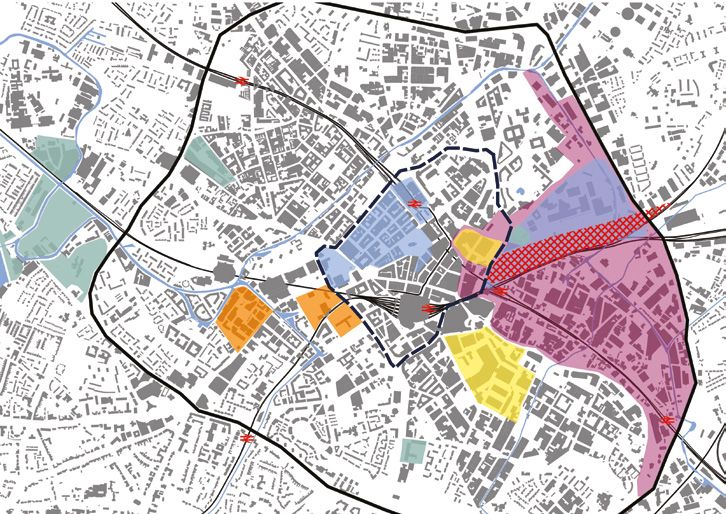
ECONOMIC OVERVIEW

On the cusp
of reinvention
A bold vision for development in the city is unfolding thanks to investment in infrastructure

B
           irmingham is on the cusp of re-inventing itself. The Big       A second devolution deal has been agreed in principle to
           City plan sets out an ambitious vision for the future. The   address local productivity barriers, including £6 million for
           HS2 trainline “presents an unprecedented opportunity         a housing task force and £250 million for intra-city transport.
           to establish the West Midlands as a world-class business       Birmingham Airport had its busiest ever year in 2017, carrying
           location”. But the transport upgrade won’t do it on its      over 13 million passengers, and has ambitions to further
own; Birmingham has to provide considerable new commercial,             consolidate its position as a major regional hub by serving up to
industrial and residential space to meet its ambitions. As              20 million passengers a year.
confidence in the city builds, growth is spilling out from the core       Investment in infrastructure is also having a transformative
into new quarters beyond the ring road.                                 effect. Shorter travel times to the capital are increasingly
                                                                        encouraging London based occupiers to consider northshoring
The city's strengths                                                    their functions to the regional cities.
A key driver for Birmingham’s transformation is the newly                 HSBC is on track to relocate over 1,000 jobs from London to
invigorated government structure. The West Midlands Combined            Birmingham partially to reduce costs, whilst Deutsche Bank
Authority (WMCA) covers 21 boroughs and three local enterprise          has expanded in Birmingham, with over 2,000 employees now
zones, providing a unique opportunity for strategic planning for        located in the city centre. Three year annual average take up in
housing, commercial space and infrastructure.                           Birmingham city centre now stands at 799,000 sq ft, 52% above
  The WMCA has the largest investment fund (£1.1bn) of any of           the level recorded five years ago.
the combined authorities, but has more limited powers in several          The average saving per employee for businesses relocating
key areas; unlike Greater Manchester and Liverpool, it has no           from Central London to the UK regions is around £10,000 in staff
strategic planning powers, and cannot form Mayoral Development          costs and £10,000 in property costs. Housing is also much more
Corporations. It will also see the benefits of new funding              affordable, with the average house price 7.2 times the average
announced in the Autumn Budget to drive the Midlands Engine.            salary, in comparison to 16.6 times in London.

2 savills.co.uk/research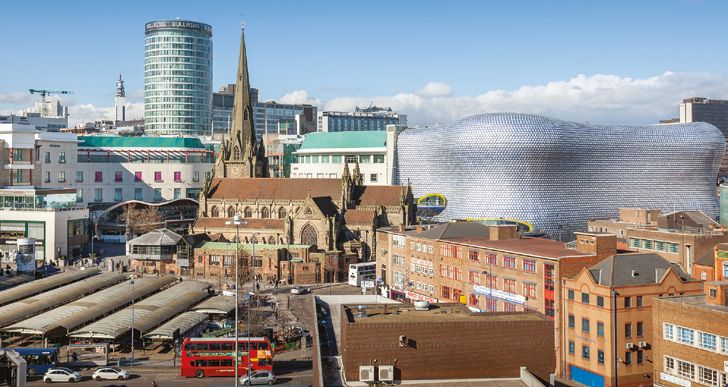
ECONOMIC OVERVIEW
FIGURE 1Birmingham New Street is now the busiest station outside London. As passenger capacity
has increased, so has demand for office space in the city
■■ Birmingham 3-year average annual take up (sq ft, RHS)
Birmingham New Street station entry and exits (LHS)
45,000,000 900,000
3- year average annual take up (sq ft)
40,000,000 800,000
Annual passenger entries/exits
35,000,000 700,000
30,000,000 600,000
25,000,000 500,000
20,000,000 400,000
15,000,000 300,000
10,000,000 200,000
5,000,000 100,000
0 -
2005
2006
2007
2008
2009
2010
2011
2012
2013
2014
2015
2016
2017
Source: Savills Research, Office of Rail and Road
FIGURE 2 Housing Affordability Ratio 2016
18
16
House price to earnings ratio
14
12
10
8
6
4
2
0
ge
th
m
on
ing
r
gh
ol
w
s
m
on
rd
ol
iff
te
tle
ld
ou
ed
ha
id
go
po
ist
pt
ha
rd
fo
es
ur
fie
ad
nd
as
br
m
Le
ing
m
Ox
Ca
Br
as
inb
er
ng
ch
ef
wc
Re
Lo
m
rts
ha
Liv
Sh
Gl
rm
tti
an
Ca
Ed
Ne
Po
ut
No
M
Bi
So
Source: Centre for Cities
Challenges ahead
The West Midlands was the hardest hit region in England during back of HS2, and other large infrastructure projects underway,
the Global Financial Crisis. Although it has been rebuilding, with the supply of labour for this sector will become even more
commercial investment in Birmingham reaching £1 billion during stretched. However, the recent let of 47,000 sq ft to WSP at The
2017, there are still significant challenges. Birmingham is the Mailbox for a new regional headquarters for 700 people suggests
youngest city in Europe, with 40% of the population under 25. The that companies are finding ways to fill the skills gap.
city currently retains 49% of its students upon graduation, the
second highest proportion outside London. However, only 28% of Delivering the transformation
the city’s workforce have a degree, marking the lowest proportion There is undeniably a huge amount of brownfield potential; notably,
among the major UK cities. Smithfield Market, the largest regeneration site in Europe. These
The city therefore needs to keep retaining graduates, and schemes are becoming increasingly viable, thanks to strong house
attract skilled workers from elsewhere. The UK Commission price growth of 31% over the past five years. There are over 6,500
for Employment and Skills’ (UKCESS) report shows that the residential units under construction, and a further 14,700 in planning.
sector with the highest skills gap is engineering and advanced The city needs to continue to identify a variety of sites, and
manufacturing at over 7%. With a number of contractors and ensure that development is supported by infrastructure to connect
associated consultants looking to expand in Birmingham off the housing to employment hubs. ■
savills.co.uk/research 3
DEVELOPMENT

Pushing the
boundaries of
the city centre                                                                 2 million sq ft
                                                                               of office space converted to
Opportunities exist outside of the traditional core

W
                                                                               alternative uses since 2013
                  ith mixed use city centre regeneration schemes including
                  Arena Central and Paradise both underway, Birmingham’s
                  traditional office core is expanding to previously fringe
                  areas. Innovation and flexibility in funding, tenure and
                  design is bringing forward complex sites, resulting in the
highest level of construction activity since the Global Financial Crisis.

Shifting focus
Strong commercial occupier requirements combined with a
shortage of developable sites in the traditional core has encouraged
developers to look beyond the former inner ring road and into previously
fringe areas. The redevelopment at New Street station has improved
access to the west of the station, supporting growth at Brindleyplace           603,000 sq ft
and Arena Central.                                                             of speculative commercial
   The first phase of 1.8 million sq ft of mixed use development is
currently underway at Paradise, of which PwC have pre-let 150,000              space under construction
sq ft of office space. Arena Central will also provide 670,000 sq ft of
office space when fully developed, of which the UK Government pre-let
240,000 sq ft at 3 Arena Central, whilst HSBC signed for 212,000 sq ft
at 1 Centenary Square. Nearer the traditional core, Ballymore's 420,000
sq ft scheme at Three Snowhill shows significant confidence in the
Birmingham market, and is expected to complete during Q1 2019.
   Growth beyond the city core is likely to continue over the coming
decade, shifting both to the east and west of the city. The Axis
redevelopment proposals are for up to 1 million sq ft adjoining Arena
Central. The Birmingham Curzon Masterplan, supported by the arrival
of HS2 anticipated the delivery of 4,000 new homes and 6.5 million sq
ft of employment space. Within the masterplan area, there are several
enterprise zone sites, particularly in Digbeth, where a tech and creative
hub is emerging. Further out, the link between the city centre and
                                                                                       1,800
Birmingham Airport will be a key corridor for growth.                              Build to Rent units
New entrants in the residential market                                             under construction
Residential development in the city centre is also diversifying. It has not
traditionally been an area of focus for the major housebuilders. But more
specialist developers are looking to Birmingham as the market slows
in London, such as Berkeley and Galliard. The result of this influx of
these developers and institutional funders to the city centre is that local
and regional developers are looking for opportunities beyond the city
centre. With many housing associations looking to begin delivering new
homes for market sale alongside affordable housing, there is potential for
further expansion.
  Developers are also looking beyond the open market sale model; there
are 12 build to rent schemes currently in the pipeline. A variety of
tenures on offer can increase absorption rates and help those struggling
                                                                                      21,200
with affordability pressures. But this means build to rent developers          residential units in planning
cannot just target the top end of the market. There is a need for good
quality, affordably priced stock suitable for young professionals and             or under construction
families. Delivering this type of stock will require funding with a focus
on longer term income returns rather short term recycling of capital. ■

4 savills.co.uk/research
DEVELOPMENT
Birmingham’s ambition At 420,000 sq ft, Three Snowhill demonstrates the depth of
confidence in the Birmingham market.
Strong commercial occupier Average residential values
demand has encouraged have grown by 31% over the
developers to look beyond last five years, improving
the traditional core. viability for complex sites.
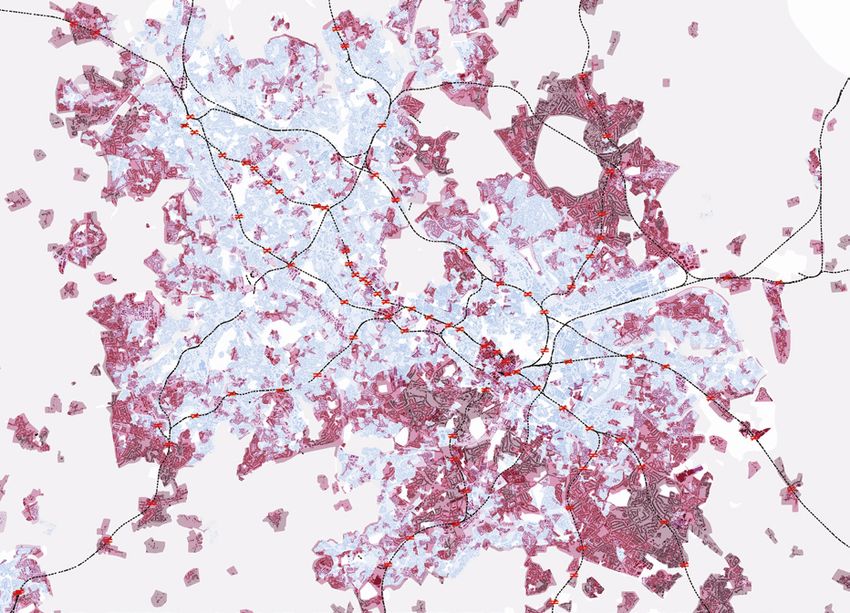
FIGURE 3 Many key development sites in Birmingham are located in new areas of the city
Jewellery Quarter
St George’s
Urban Village
Eastside
Birmingham Snow Hill
Major Transformation
Greater
Area
Icknield
Colmore Exchange
Business District Square Curzon Street Station
Martineau
Place
Paradise
Birmingham Moor Street
Arena
Central
Birmingham New Street
Brindleyplace Axis
Smithfield
Bordesley
Five Ways
New
Monaco
Key Development Sites
Ring Road Curzon Street Station outline ■ Commercial ■ Mixed-use
Former inner Ring Road ■ Residential ■ Office led mixed use ■ HS2 Regeneration area
Source: Savills Research
savills.co.uk/research 5COMPETING DEMAND COMPETING DEMAND
Demand from
competing uses
FIGURE 4 Average residential transaction values
Average transaction value (year to November 2017)
■ Below £150,000 ■ £200,000 - £300,000 ■ Over £400,000
There is strong pressure on land for both residential and commercial development in the city
■ £150,000 - £200,000 ■ £300,000 - £400,000 ■ Green Belt
The demand for homes The recent release of greenbelt land for 6,000
In line with Birmingham’s economic renaissance, homes at Langley is a positive step. But it will also
there is increasing demand for housing. be necessary for the surrounding local authorities
Birmingham’s population is projected to grow by to absorb overspill demand, particularly for family
150,000 (13.7%) by 2031. housing. To open up new sites, it will be crucial
The current Strategic Housing Market Assessment for the WMCA to continue to invest in the Metro
(SHMA) sets annual housing need at 4,057 new rail network to maximise the potential of outlying
homes per annum, although the adopted target in stations. Homes within 2km of stations in the West
the local plan is significantly lower at only 2,550 Midlands have outperformed neighbouring areas by
Wolverhampton
new homes per annum. Delivery in the year to West Midlands 12-16% over the past five years.
March 2017 was still well short of this reduced
target, at 1,750. Sutton Coldfield
West Midlands
Changing demands for land
It’s not just in the overall numbers where The pressure on demand for land is complicated
delivery falls short. According to the 2013 SHMA, further by Birmingham’s position as a hub for
38% of newly arising households need Affordable nationwide distribution, and as a centre for
Housing, with the vast majority requiring homes for advanced manufacturing. Robust occupier enquiry
Affordable Rent. Although the balance of delivery of levels show demand for industrial and logistics
affordable housing was weighted towards Affordable space in the Midlands is strong despite current
Rent, overall affordable delivery only accounted for economic uncertainty, pointing to a positive outlook
20% of all new build completions. for 2018 for the sector.
Dudley, Those holding strategic land positions and able to
What size? West Midlands
deliver well located speculative schemes or build-
It is also questionable whether the right mix of to-suit options will continue to reap the rewards as
West Bromwich
property types is being delivered. 54% of housing West Midlands overall demand outweighs supply.
Birmingham
need is for three and four bedroom homes. West Midlands The key driver of the location of logistics schemes
While we don’t have data on the breakdown of is access to the national road network. Historic
new homes by number of bedrooms, the distribution industrial land allocations that are more centrally
of new build property by floor space shows that located and linked to the canal network may no
62% of new build sales in 2016 were properties of longer be suitable.
under 700 sq ft – suggesting that most new stock is Consequently, industrial rents in well-connected
one and two bedroom flats, rather than the family Halesowen areas such as the M42 corridor are outperforming
housing that is required. West Midlands
the national growth rate of 2.5% per annum, and are
Stourbridge
This may be a consequence of the challenges of West Midlands expected to reach £7 per sq ft in 2018.
developing in the city centre, where sites require Similarly, sites developed in the 1980s and 1990s
higher densities to be viable. are not on the scale required for modern day use.
This underlines the importance of not just Big sheds remain the preferred choice of new
concentrating housing delivery in the city centre, development, and occupiers are particularly looking
but also allocating sites for housing in more for increased eaves heights and yard depths.
suburban locations. However, more small and medium sized
Solihull
stock of between 30,000 sq ft and 80,000 sq ft is
still needed closer to the city centre thanks to
Industrial rents in well connected
West Midlands
the rise of e-commerce and demand for ‘last mile’
Kidderminster
areas are outperforming the national Worcestershire delivery hubs. ■
growth rate of 2.5% per annum
Source: Savills Research
6 savills.co.uk/research savills.co.uk/research 7OUTLOOK
WEST MIDLANDS VIEW
Birmingham's prime office yields remain at 4.75%, in line with the prime regional average. In an income driven
environment, prime yields remain attractive against West End (3.25%) and City offices (4%). We expect yields
to hold firm throughout 2018 as overseas investors become increasingly open to looking outside London to the
regional cities.
In the residential market, we forecast growth will be subdued in 2018, but will pick up in line with improving
consumer confidence as the UK's future relationship with the EU becomes clearer. 5-year growth will be in line
with the UK average, outperforming London and the South East. ■
FIGURE 5 Residential forecasts
5-year
2018 2019 2020 2021 2022 compound
growth
United Kingdom 1.0% 2.5% 5.0% 2.5% 2.5% 14.2%
West Midlands 1.0% 3.0% 5.0% 2.5% 3.0% 14.8%
Source: Savills Research
Savills We provide bespoke services for landowners, developers, occupiers and investors across the lifecycle
of residential, commercial or mixed-use projects. We add value by providing our clients with research-backed
advice and consultancy through our market-leading global research team
Research
Emily Williams Michael Barnes
Residential Research Commercial Research
020 7016 3896 020 3107 5459
ewilliams@savills.com mbarnes@savills.com
Birmingham office
Paul Rouse
Simon Farrant John Griffiths Joe Shorney
Planning
Head of Birmingham Development Residential Development Sales
0121 634 8431
0121 200 4572 0121 200 4577 0121 200 4567
prouse@savills.com
simon.farrant@savills.com john.griffiths@savills.com joe.shorney@savills.com
Nick Williams Ranjit Gill Andrew Bull
Office Industrial UK Investment
0121 634 8401 0121 634 8402 0121 634 8403
nwilliams@savills.com rsgill@savills.com abull@savills.com
Savills plc: Savills is a leading global real estate service provider listed on the London Stock Exchange. The company was established in 1855 and has a rich heritage with
unrivalled growth. It is a company that leads rather than follows, and now has more than 700 offices and associates throughout the Americas, Europe, Asia Pacific, Africa and
the Middle East. This report is for general informative purposes only. It may not be published, reproduced or quoted, in part or in whole, nor may it be used as a basis for any
contract, prospectus, agreement or other document without prior consent. While every effort has been made to ensure its accuracy, Savills accepts no liability whatsoever
for any direct or consequential loss arising from its use. The content is strictly copyright and reproduction of the whole or part of it in any form is prohibited without written
permission from Savills Research.
8 savills.co.uk/researchYou can also read


