Branch Transformation: Knocking the Brick off the Mortar
←
→
Page content transcription
If your browser does not render page correctly, please read the page content below
JANUARY 2019                                                                      Tiffani Montez
                                                                                  +1.617.338.6045
                                                                                  tmontez@aitegroup.com

Branch Transformation: Knocking the Brick
off the Mortar

Report licensed for distribution by:

© 2019 Aite Group LLC. All rights reserved. Reproduction of this report by any means is strictly prohibited. Photocopying or electronic distribution of
this document or any of its contents without prior written consent of the publisher violates U.S. copyright law, and is punishable by statutory damages
of up to US$150,000 per infringement, plus attorneys’ fees (17 USC 504 et seq.). Without advance permission, illegal copying includes regular
photocopying, faxing, excerpting, forwarding electronically, and sharing of online access.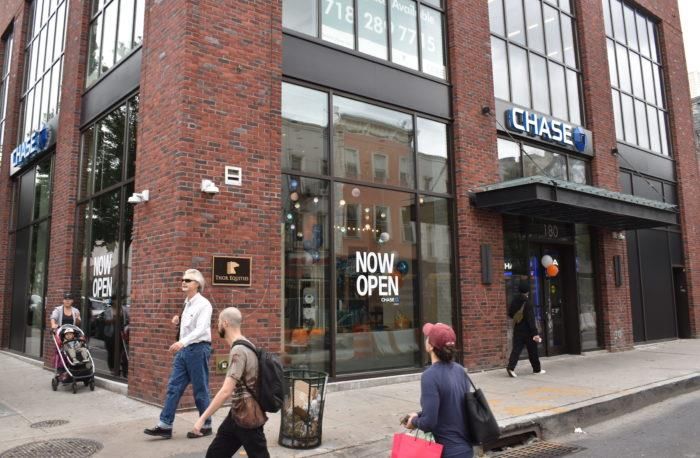
Branch Transformation: Knocking the Brick off the Mortar                                                                                    JANUARY 2019

TABLE OF CONTENTS
INTRODUCTION .............................................................................................................................................. 4
     METHODOLOGY ........................................................................................................................................ 4
THE MARKET ................................................................................................................................................... 5
BRANCH RELIANCE IS SHIFTING ...................................................................................................................... 6
     BRANCH STRATEGIES ................................................................................................................................ 6
THE RISE OF PURPOSE-DRIVEN BRANCHES .................................................................................................... 9
     NEW BRANCH FORMATS IN ACTION ....................................................................................................... 10
FROM MODERNIZATION TO TRANSFORMATION ......................................................................................... 17
     THE PATH TO BRANCH TRANSFORMATION ............................................................................................ 18

                                                                                                                                                                        Licensed for External Distribution by Pitney Bowes
KNOCKING THE BRICK OFF THE MORTAR ..................................................................................................... 20
     CONSIDERATIONS FOR A DIGITAL-FIRST APPROACH .............................................................................. 21
     BRANCH TRANSFORMATION CHECKLIST ................................................................................................ 23
     TECHNOLOGY SOLUTION PROVIDERS ..................................................................................................... 24
     NEW TECHNOLOGY CAN HELP RESHAPE THE ROLE OF THE BRANCH ..................................................... 26
CONCLUSION ................................................................................................................................................ 27
RELATED AITE GROUP RESEARCH ................................................................................................................. 28
ABOUT AITE GROUP...................................................................................................................................... 29
     CONTACT ................................................................................................................................................. 29

LIST OF FIGURES
FIGURE 1: DIFFERENCE BETWEEN DIGITAL AND BRANCH TRAFFIC ................................................................ 6
FIGURE 2: U.S. BANK BRANCH FORECAST....................................................................................................... 7
FIGURE 3: BANK OF AMERICA VIDEO TELLER MACHINE ............................................................................... 12
FIGURE 4: CAPITAL ONE CAFE ....................................................................................................................... 13
FIGURE 5: CHASE NEXT-GENERATION BRANCH ............................................................................................ 13
FIGURE 6: CHINA CONSTRUCTION BANK HUMAN FREE BRANCH ................................................................ 14
FIGURE 7: DBS CAFE AND BRANCH ............................................................................................................... 14
FIGURE 8: HALIFAX FLAGSHIP BRANCH ........................................................................................................ 15
FIGURE 9: HSBC’S PEPPER ............................................................................................................................. 15
FIGURE 10: ROYAL BANK OF CANADA VIDEO BANKING ............................................................................... 16
FIGURE 11: UMPQUA BRANCH ..................................................................................................................... 16
FIGURE 12: BRANCH TRANSFORMATION THEMES ....................................................................................... 17
FIGURE 13: THE PATH TO BRANCH TRANSFORMATION REQUIRES A DIGITAL-FIRST APPROACH ................ 18
FIGURE 14: BRANCH TRANSFORMATION MATURITY MODEL ...................................................................... 24
FIGURE 15: EMERGING BRANCH TECHNOLOGY AND FORMATS .................................................................. 26

© 2019 Aite Group LLC. All rights reserved. Reproduction of this report by any means is strictly prohibited.
                                                                                                                                                                    2
101 Arch Street, Suite 501, Boston, MA 02110 • Tel +1.617.338.6050 • Fax +1.617.338.6078 • info@aitegroup.com • www.aitegroup.com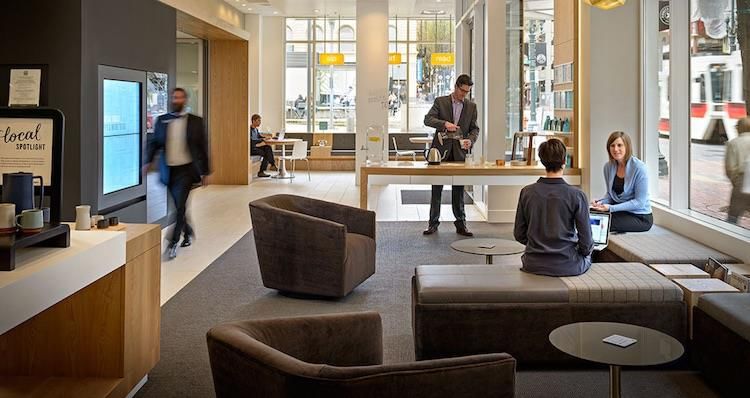
Branch Transformation: Knocking the Brick off the Mortar                                                                              JANUARY 2019

LIST OF TABLES
TABLE A: THE MARKET .................................................................................................................................... 5
TABLE B: BRANCH TRANSFORMATION STRATEGIES ....................................................................................... 7
TABLE C: DIFFERENT BRANCH FORMATS ........................................................................................................ 9
TABLE D: BRANCH INNOVATION................................................................................................................... 11
TABLE E: DIGITAL-FIRST APPROACH CONSIDERATIONS................................................................................ 21
TABLE F: BRANCH TRANSFORMATION CHECKLIST ....................................................................................... 23
TABLE G: BRANCH TECHNOLOGY SOLUTIONS .............................................................................................. 24

                                                                                                                                                                 Licensed for External Distribution by Pitney Bowes

© 2019 Aite Group LLC. All rights reserved. Reproduction of this report by any means is strictly prohibited.
                                                                                                                                                             3
101 Arch Street, Suite 501, Boston, MA 02110 • Tel +1.617.338.6050 • Fax +1.617.338.6078 • info@aitegroup.com • www.aitegroup.com
Branch Transformation: Knocking the Brick off the Mortar                                                                    JANUARY 2019

INTRODUCTION
Now that consumers increasingly turn to digital for their everyday banking channels, financial
institutions (FIs) are being forced to revisit the role the branch will play in the future. Specifically,
FIs have to create digital capabilities that provide better insight and advice than consumers get
in a branch and must determine how to complement the digital experience by focusing on the
right branch interactions that drive value.

This report will explore how FIs are approaching their branch transformation strategy, how they
are dealing with the changing demographics of their customer portfolio, the types of branch
formats that are being considered and why, and what bank executives should think about as they
shape their strategies.

                                                                                                                                               Licensed for External Distribution by Pitney Bowes
M E T H O D O LO GY
This Impact Note contains analysis from 23 in-depth Aite Group interviews with senior
executives at banks, vendors, and consulting firms from various parts of the world who are
responsible for the branch experience and who are refining their branch strategy or are
considering optimizing the branch experience within the next couple of years. Interviews for this
study were conducted from September to December 2018. Executives contributing to the
research have extensive business or IT responsibilities and titles that include chief executive
officer, chief management officer, executive vice president, vice president, senior vice president,
and director.

© 2019 Aite Group LLC. All rights reserved. Reproduction of this report by any means is strictly prohibited.
                                                                                                                                           4
101 Arch Street, Suite 501, Boston, MA 02110 • Tel +1.617.338.6050 • Fax +1.617.338.6078 • info@aitegroup.com • www.aitegroup.com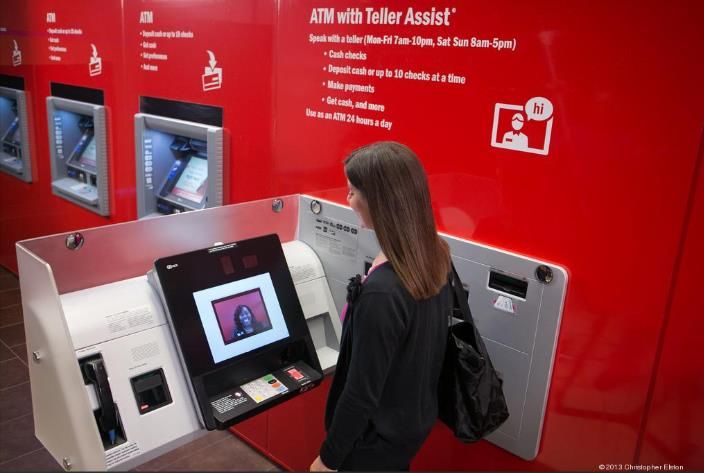
Branch Transformation: Knocking the Brick off the Mortar                                                                    JANUARY 2019

THE MARKET
The reliance on the branch as it exists today is changing. Consumers are using the branch less
frequently. The branch is transitioning from being a place where consumers conduct all their
financial transactions to a place consumers use for advice and guidance. As a result, the
activities customers perform in a branch are changing, but the types of activities supported in a
branch, the physical layout, and the technology used in many branches have not evolved at the
same pace.

Customer expectations for how they interact with FIs are being shaped by the retail sector.
Customers expect the latest technology, seamless integration between the branch and digital
channels, and multiple formats—both physical and digital—to connect with a banker. Some FIs

                                                                                                                                               Licensed for External Distribution by Pitney Bowes
are beginning to experiment with new physical formats, new technology, and new employee
roles in a branch. At the same time, a number of other market pressures and trends are shaping
how FIs are thinking about their branch strategy (Table A).

Table A: The Market
 Market trends                                                        Market implications
 Customers are using digital as their everyday                        Traffic in the branches has been slowly and steadily
 banking channel.                                                     declining, while digital banking penetration is
                                                                      increasing quickly and furiously.

 Customer expectations for advice and service                         Firms such as Apple and Microsoft are setting
 in physical distribution points are being                            expectations for how they help customers learn
 shaped outside the banking industry.                                 about products, merchandise products, and resolve
                                                                      issues in store.

 FIs recognize that product and price are not                         FIs are viewing the customer experience as one of
 sustainable competitive differentiators.                             their main sources of competitive differentiation.

 FIs have not been able to offer digital advice                       Some of the main reasons consumers indicate they
 and guidance similar to or even better than                          use a branch is for advice and guidance, and for
 the advice a customer receives in a branch.                          resolving problems that they can’t get help with in
                                                                      the digital channels.

 Banking demographics are changing.                                   The age demographics in banking are changing. The
                                                                      older generations that have a higher reliance on the
                                                                      branch are aging out and being replaced by
                                                                      younger, more technology-savvy consumers who
                                                                      will be reaching the peak of their buying power.

 The convergence of digital, big data, and                            For the branch to transform, FIs will need to find
 artificial intelligence (AI) will create new ways                    new and meaningful ways to interact with
 to engage with consumers.                                            consumers in a branch and in the digital channels.
                                                                      The convergence of technology will allow banks to
                                                                      be much more predictive and descriptive when they
                                                                      interact with consumers.

Source: Aite Group

© 2019 Aite Group LLC. All rights reserved. Reproduction of this report by any means is strictly prohibited.
                                                                                                                                           5
101 Arch Street, Suite 501, Boston, MA 02110 • Tel +1.617.338.6050 • Fax +1.617.338.6078 • info@aitegroup.com • www.aitegroup.com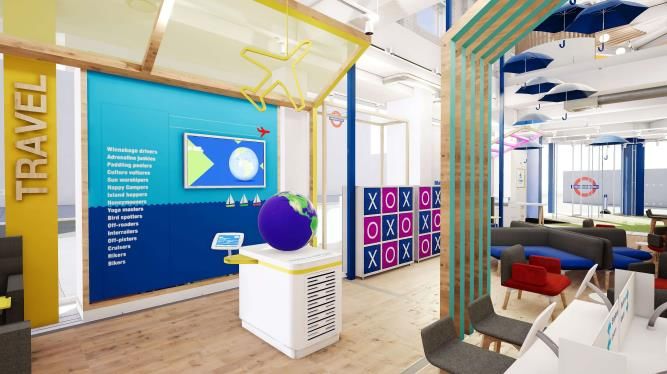
Branch Transformation: Knocking the Brick off the Mortar                                                                    JANUARY 2019

BRANCH RELIANCE IS S HIFTING
It’s common knowledge that branch traffic has been slowly and steadily declining. At the same
time, more and more consumers are using the digital channels as their everyday banking
channels (Figure 1). While the branch has lost its relevance in terms of being a place the majority
of customers turn to for their everyday banking needs—e.g., checking balances, paying bills, and
even depositing checks—customers still rely on the branch for more complex questions and
issues. According to PNC, 80% of its customers report visiting a branch no more than once a
      1
year. But PNC, along with many other FIs, believes that customers want access to a branch to
help them with questions.

Figure 1: Difference Between Digital and Branch Traffic

                                                                                                                                               Licensed for External Distribution by Pitney Bowes
                                     86% of consumers
                                      with a checking                                                          20% to 35% of
                                      account log in to                                                      consumers visit a
                                    access information                                                        branch no more
                                                                                     Branch                  than once a year
                                    online or via mobile
                                    2 or more times per
    Digital                                month
   channels

Source: Aite Group

While the role of the branch has changed in customers’ minds, most FIs still have full-service
branches that support a wide variety of transactional activities as well as advise on products and
services. Given the shift in banking activities to the digital channels and the shareholder
mandate to reduce operating expenses, FIs are under pressure to transform the branch
experience to one that can create more meaningful, value-added interactions. Many FIs are
thinking about how to recreate the branch experience to focus on providing advice and
guidance, and they are determining the right physical layout, technology, and staffing model or
staff augmentation needed to support what consumers want and use a branch for today.

B R A N C H ST R AT EG I ES
One metric that the industry has been tracking to determine if the branch is on its death bed is
the number of branches. Aite Group estimates the number of U.S. bank branches to drop from
78,284 in 2018 to 75,010 by 2022 (Figure 2). While this metric may have provided some
indication of the number of branches that closed because they were unprofitable or not needed,

1. David Henry, “RPT-PNC Bank Moves Into New Cities With 'Light' Branches, Higher Rates,” Reuters,
   October 1, 2018, accessed November 8, 2018, https://www.reuters.com/article/pnc-finl-svc-branches-
   digital/rpt-pnc-bank-moves-into-new-cities-with-light-branches-higher-rates-idUSL2N1WH0P0.

© 2019 Aite Group LLC. All rights reserved. Reproduction of this report by any means is strictly prohibited.
                                                                                                                                           6
101 Arch Street, Suite 501, Boston, MA 02110 • Tel +1.617.338.6050 • Fax +1.617.338.6078 • info@aitegroup.com • www.aitegroup.com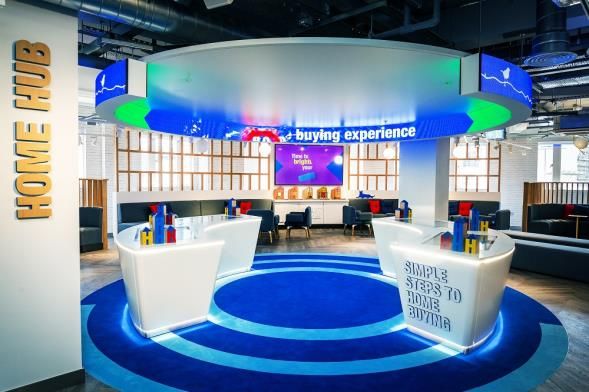
Branch Transformation: Knocking the Brick off the Mortar                                                                    JANUARY 2019

the industry is deploying a number of tactics that may deteriorate the usefulness of this metric
as a way of determining if customers are still relying on branches.

Figure 2: U.S. Bank Branch Forecast

                                 Number of Bank Branches in the United States, 2017 to e2022

                    79,163
                                       78,284
                                                         77,470

                                                                           76,688

                                                                                             75,921
                                                                                                               75,010

                                                                                                                                               Licensed for External Distribution by Pitney Bowes
                                                        -1.04%            -1.01%             -1.00%
                                      -1.11%
                    -1.16%                                                                                     -1.20%

                     2017              e2018             e2019             e2020             e2021             e2022

                                       Number of branches                             Percentage change

Source: Aite Group, Federal Deposit Insurance Corporation

Table B provides examples of the branch network strategies FIs are using and gives examples as
to why they are selecting each approach.

Table B: Branch Transformation Strategies
 Strategy                   Strategy driver            Institution type           Key considerations
 Adding more                Drive growth in            Community                  This approach requires market research to
 branches                   brick-and-                 banks, credit              find the right location to open new
                            mortar channels            unions                     branches that will drive loan and deposit
                            to focus on                                           growth. And once they have proven
                            reinforcing the                                       success in a certain location, they may
                            community feel                                        transition to a hub-and-spoke model and
                                                                                  strategically open more branches in
                                                                                  specific locations. In addition, some FIs are
                                                                                  taking advantage of testing and learning
                                                                                  with new branch concepts in certain areas
                                                                                  and are then building out and trying that
                                                                                  concept in other locations.

 Closing                    Focus on                   National banks,            Some FIs are focused on cutting costs and
 branches                   operational                regional banks,            creating more efficiency. As a result, they
                            efficiency or a            community                  are closing some branches that are not
                            digital-first              banks, credit              profitable.
                            approach                   unions

© 2019 Aite Group LLC. All rights reserved. Reproduction of this report by any means is strictly prohibited.
                                                                                                                                           7
101 Arch Street, Suite 501, Boston, MA 02110 • Tel +1.617.338.6050 • Fax +1.617.338.6078 • info@aitegroup.com • www.aitegroup.com
Branch Transformation: Knocking the Brick off the Mortar                                                                    JANUARY 2019

 Strategy                   Strategy driver            Institution type           Key considerations
 Hybrid approach            Focus on                   National banks,            In Aite Group’s interviews for this report,
                            identifying and            regional banks             we heard most often that FIs are taking a
                            closing low-                                          hybrid approach to their branch network
                            performing                                            and are closing lower-performing branches
                            branches and                                          and replacing them with new purpose-
                            reopening new                                         driven branches that perform specialized
                            branches in                                           functions and support a location and/or
                            different                                             specific customer demographic.
                            segment-based
                            formats

 Digital-only               Focus on                   Challenger                 Some FIs are also starting experiments to
 brands and/or              positioning                banks, national            learn more about customer reliance on
 mobile apps                digital as the             banks, FIs that            physical channels by creating a separate

                                                                                                                                               Licensed for External Distribution by Pitney Bowes
                            only channel               have a digital-            digital-only brand and/or mobile
                                                       only segment               application that has no branch support.
                                                       approach                   JPMorgan Chase has created its digital-only
                                                                                  account, called Finn, and PNC has created a
                                                                                  digital-only high-yield savings account. This
                                                                                  approach creates an incentive for digitally
                                                                                  savvy customers to diminish their reliance
                                                                                  on a branch to have access to better
                                                                                  products, services, and experiences.

Source: Aite Group

© 2019 Aite Group LLC. All rights reserved. Reproduction of this report by any means is strictly prohibited.
                                                                                                                                           8
101 Arch Street, Suite 501, Boston, MA 02110 • Tel +1.617.338.6050 • Fax +1.617.338.6078 • info@aitegroup.com • www.aitegroup.com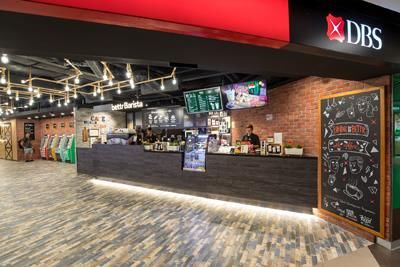
Branch Transformation: Knocking the Brick off the Mortar                                                                    JANUARY 2019

THE RISE OF PURPOSE-DRIVEN BRANCHES
If FIs are going to be able to drive profitable branch experiences, they have to be able to
understand who is still going into branches, why they are going into branches, and what unmet
need the branch is not delivering on, and then build experiences around those needs.

Some branches are busy because they are located in areas with a lot of businesses and a lot of
small-business activity; other branches have a declining transactional volume but a higher
volume of account-opening and problem-resolution inquiries. Some branches may be a mix of
both. Some of the activities that occur in a branch would be better served in a digital channel
with a branch network that supports different segments, purposes, and goals. For FIs to
understand what type of branch they should build, in what location, and for what purpose, they

                                                                                                                                               Licensed for External Distribution by Pitney Bowes
need to do some customer segmentation and then select a branch format that will allow them
to serve those customers’ needs. Firms such as Pitney Bowes offer solutions that can help FIs
determine whether to retain, relocate, or consolidate existing branch locations through tools
that allow banking executives to analyze customer data and site characteristics that impact
branch network performance.

There are many different branch formats, along with different technologies that can support
them. There are four main branch formats (Table C), but many variations of these formats could
have slightly different sizes, layouts, staffing models, technologies, and purposes.

Table C: Different Branch Formats
 Branch format                Purpose                     Staffing model               Technology                  Layout features
                                                                                       approach
 Pop-up                       Focused on                  Not staffed with             Self-service                Small space that is
                              providing access            physical bankers             capabilities                technology-driven
                              to ATM and self-            or advisors; may             through ATM                 to give customer
                              service                     have access to a                                         access to everyday
                              capabilities while          virtual teller or a                                      banking activities
                              building brand              digital human—an
                              awareness                   animated
                                                          human—through
                                                          video
                                                          conferencing

 Full-service                 Focused on                  Staffed with                 Self-service                Meeting space to
                              providing a full            bankers and                  capabilities                meet with bankers
                              spectrum of                 advisors                     through ATM                 or use as a shared
                              products and                                             and/or kiosk                space
                              services to retail
                              and small-
                              business
                              customers

© 2019 Aite Group LLC. All rights reserved. Reproduction of this report by any means is strictly prohibited.
                                                                                                                                           9
101 Arch Street, Suite 501, Boston, MA 02110 • Tel +1.617.338.6050 • Fax +1.617.338.6078 • info@aitegroup.com • www.aitegroup.com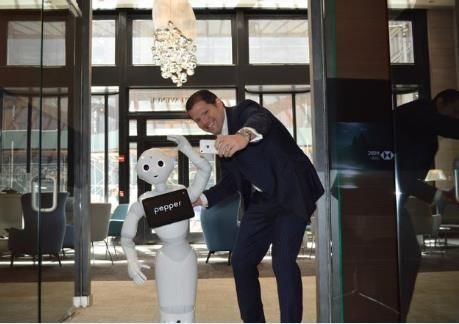
Branch Transformation: Knocking the Brick off the Mortar                                                                    JANUARY 2019

 Branch format                Purpose                     Staffing model               Technology                  Layout features
                                                                                       approach
 Segment purpose              Focused on                  Limited staff of             Self-service                Has specialized
                              providing                   specialized                  capabilities                products and
                              specialized                 bankers and                  through ATM                 services with
                              products and                advisors                     and/or kiosk                physical format or
                              services to                                                                          purpose selected
                              targeted                                                                             to appeal to the
                              demographics                                                                         segment the FI
                                                                                                                   wants to attract
                                                                                                                   (e.g., café, business
                                                                                                                   center, branch
                                                                                                                   with virtual teller
                                                                                                                   access)

                                                                                                                                                Licensed for External Distribution by Pitney Bowes
 Flagship                     Promote the FI as           Staffed with                 Technology is               Locations
                              an innovator                employees who                used to showcase            strategically
                              while also                  have more                    products and                selected to draw
                              building                    experience with              services                    attention and
                              awareness of the            emerging                                                 attract customers;
                              brand and                   technologies and                                         has specialized
                              positioning it as a         can act as brand                                         staff with a unique
                              technology leader           ambassadors                                              blend of
                              in its space                                                                         technology that
                                                                                                                   reinforces the
                                                                                                                   brand and may or
                                                                                                                   may not have a
                                                                                                                   specialized
                                                                                                                   meeting or
                                                                                                                   networking space

Source: Aite Group

N E W B R A N C H FO R MAT S IN AC T I O N
Branch placement is driven by demographics and forecasted branch traffic, and is based on what
type of activities a customer does in a branch. With formats such as pop-up locations, segment
branches, and even flagship branches, banking executives have less historical data that they can
use to determine the best placement of a branch, the right physical format, the right technology
to use, and the right staffing model. To find the right formula, FIs will have to be willing to test
and learn. The good news is some of the smaller formats are less costly, require less staff, and
use more technology that makes it easier to test, learn, and rip and replace or relocate than it
was in the past. A lot of experimentation is going on in the financial services industry. Table D
provides examples of branch formats, technology, and staffing models that are being used in the
industry.

© 2019 Aite Group LLC. All rights reserved. Reproduction of this report by any means is strictly prohibited.
                                                                                                                                           10
101 Arch Street, Suite 501, Boston, MA 02110 • Tel +1.617.338.6050 • Fax +1.617.338.6078 • info@aitegroup.com • www.aitegroup.com
Branch Transformation: Knocking the Brick off the Mortar JANUARY 2019
Table D: Branch Innovation
Bank Innovations
ATB Financial ABT Financial added Pepper, a robot, to a branch. Pepper can interact with
customers through voice and a touchscreen tablet, provide information on
products and services, improve customers’ financial literacy, and even request a
selfie, and customers can request to see Pepper’s dance moves.
Bank of America In 2015, Bank of America started rolling out video teller machines (Figure 3). And
video is also a key component of its delivery strategy for its virtual centers. Its
virtual centers have cardless-enabled ATMs and private rooms that can be
accessed with a smartphone or with a debit or credit card. The rooms have a
screen that can be used to connect with a banker, and if the banker needs to
bring in a specialist to help the customer, he or she can do so using a split screen.
During the interaction, the banker or specialist can share documents and capture
Licensed for External Distribution by Pitney Bowes
signatures—doing everything that could be done in person.
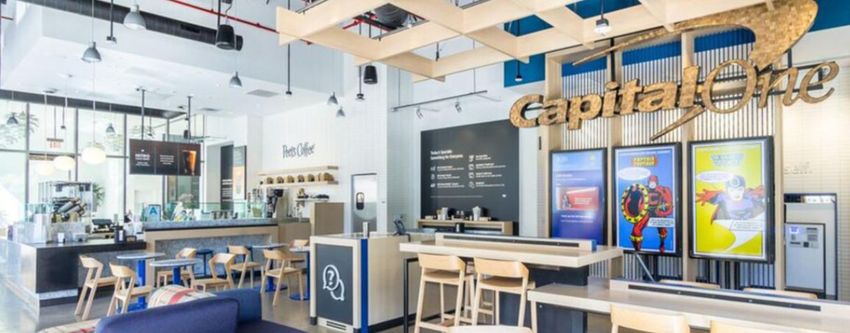
Capital One Capital One continues to open cafes that allow consumers to hang out, access
banking services, get help with financial questions, and recharge their devices
(Figure 4).
Chase Chase has launched a new-generation branch that has an “access bar,” which has
a big-screen TV and device-charging stations, and is complemented with banker
assistance. In addition, Chase is focusing on appealing to consumers who want a
digital-only bank by targeting digitally savvy consumers with its Finn application
(Figure 5).
China China Construction Bank has created a human-free branch. Xiao Long, the
Construction Bank branch’s robot, answers basic customer questions, accepts bank cards, and
checks account balances (she comes complete with a PIN pad). After customers
chat with Xiao Long, their identities are validated with their faces, and ID cards
are scanned. ATMs can help customers open accounts and transfer money. And
they have a video link, should customers want to talk to a human (Figure 6).
DBS DBS’ “cafe and branch” at Plaza Singapura features video teller machines, a
virtual reality center for retirement planning, and a humanoid robot, Pepper
(Figure 7).
Halifax Halifax is implementing smaller branches, and some branches are theme-based
and provide consumers guidance and advice on home lending, travel, saving for
kids’ education, and cafes where branches can host free events and financial
education seminars (Figure 8).
HSBC HSBC has added a robot, named Pepper, to its main branch on Fifth Avenue in
Manhattan. Pepper will perform a variety of basic tasks, such as providing
visitors with information about financial products and services, educating
customers on digital banking technology, and explaining how to get assistance or
directing customers to staff members who can help (Figure 9).
© 2019 Aite Group LLC. All rights reserved. Reproduction of this report by any means is strictly prohibited.
11
101 Arch Street, Suite 501, Boston, MA 02110 • Tel +1.617.338.6050 • Fax +1.617.338.6078 • info@aitegroup.com • www.aitegroup.comBranch Transformation: Knocking the Brick off the Mortar JANUARY 2019
Bank Innovations
PNC PNC is using a new branch strategy as it enters the Dallas and Kansas City
markets and will deploy an “ultra-light” set of “solutions centers” in each city.
The goal for the ultra-light format is to place an office within a 30-minute drive of
80% of the population in each city.
In addition, PNC has created a digital-only savings accounts with high rates to
attract customers who would be willing to trade higher rates for less branch
access.
Royal Bank of RBC allows small-business clients to access the bank or their banker directly
Canada through video banking on their computer, tablet, or mobile device (Figure 10).
Umpqua Umpqua is focused on giving banking more of a community feel. As a result, its
branches act as a community centers, where people can hang out or use the
Licensed for External Distribution by Pitney Bowes
meeting rooms for their own business tasks, or even for yoga classes (Figure 11).
Union Bank of the Union Bank of the Philippines has installed a branch where all transactions are
Philippines done through self-service machines or tablets. The branch has comfortable,
brightly colored couches, refreshments, and access to technology and gadgets
for banking transactions—terminals, tablets, touchscreen TVs, and virtual reality
goggles.
Source: Aite Group
Figure 3: Bank of America Video Teller Machine
Source: Bank of America, Christopher Elston
© 2019 Aite Group LLC. All rights reserved. Reproduction of this report by any means is strictly prohibited.
12
101 Arch Street, Suite 501, Boston, MA 02110 • Tel +1.617.338.6050 • Fax +1.617.338.6078 • info@aitegroup.com • www.aitegroup.comBranch Transformation: Knocking the Brick off the Mortar JANUARY 2019
Figure 4: Capital One Cafe
Licensed for External Distribution by Pitney Bowes
Source: Capital One
Figure 5: Chase Next-Generation Branch
Source: Chase
© 2019 Aite Group LLC. All rights reserved. Reproduction of this report by any means is strictly prohibited.
13
101 Arch Street, Suite 501, Boston, MA 02110 • Tel +1.617.338.6050 • Fax +1.617.338.6078 • info@aitegroup.com • www.aitegroup.comBranch Transformation: Knocking the Brick off the Mortar JANUARY 2019
Figure 6: China Construction Bank Human Free Branch
Licensed for External Distribution by Pitney Bowes
Source: China Construction Bank, The Guardian
Figure 7: DBS Cafe and Branch
Source: DBS
© 2019 Aite Group LLC. All rights reserved. Reproduction of this report by any means is strictly prohibited.
14
101 Arch Street, Suite 501, Boston, MA 02110 • Tel +1.617.338.6050 • Fax +1.617.338.6078 • info@aitegroup.com • www.aitegroup.comBranch Transformation: Knocking the Brick off the Mortar JANUARY 2019
Figure 8: Halifax Flagship Branch
Licensed for External Distribution by Pitney Bowes
Source: Halifax
Figure 9: HSBC’s Pepper
Source: HSBC
© 2019 Aite Group LLC. All rights reserved. Reproduction of this report by any means is strictly prohibited.
15
101 Arch Street, Suite 501, Boston, MA 02110 • Tel +1.617.338.6050 • Fax +1.617.338.6078 • info@aitegroup.com • www.aitegroup.comBranch Transformation: Knocking the Brick off the Mortar JANUARY 2019
Figure 10: Royal Bank of Canada Video Banking
Licensed for External Distribution by Pitney Bowes
Source: Royal Bank of Canada
Figure 11: Umpqua Branch
Source: Umpqua, Tearsheet
© 2019 Aite Group LLC. All rights reserved. Reproduction of this report by any means is strictly prohibited.
16
101 Arch Street, Suite 501, Boston, MA 02110 • Tel +1.617.338.6050 • Fax +1.617.338.6078 • info@aitegroup.com • www.aitegroup.comBranch Transformation: Knocking the Brick off the Mortar JANUARY 2019
FROM MODERNIZATION TO TRA NSFORMATION
Aite Group defines branch transformation as “transforming the banking experience from an
experience that relies heavily on branches to one that reinvents itself as a complement to digital
channels.” Over time, as digital channels get better at helping consumers with all of their
financial activities from transactions to advice and guidance, the reliance on the branch will
lessen.
In the interviews conducted for this report, Aite Group asked banking and technology executives
what branch transformation means to them. Figure 12 highlights the major themes of the
interviews. Although the answers Aite Group received are all a little different in flavor, below is a
list of some common themes:
Licensed for External Distribution by Pitney Bowes
• The branch is not dead, but it does need to be relevant again. People used to
believe the branch was dead. In the interviews, banking and technology executives
all agreed that the branch will always exist in some way, shape, or form.
• Branch experiences need to be designed by what the customer needs. The
transformative part of the branch is to start thinking of the branch experience from
a user perspective and not a branch perspective. That means that FIs will need to
stop thinking about how they should best serve customers and find out what
consumers want and how they want it.
• Branch transformation is not one and done. It’s an iterative process that will require
an FI to continue to look at the needs of their customers and evolve the branch
network to address those needs.
• Branch transformation will require the FIs to break down barriers between digital
and brick-and-mortar channels. That means customers should be able to interact in
a digital environment and seamlessly pick up and complete activities in any channel
they choose, whether that is through video, through a digital human, or in a branch.
Figure 12: Branch Transformation Themes
The branch is not Branch Branch Branch transformation
dead, but it experiences need transformation requires that FIs break
needs to be to be designed is not one and down the barriers
relevant again by customers’ done; it’s between digital and
needs iterative brick and mortar
Source: Aite Group
© 2019 Aite Group LLC. All rights reserved. Reproduction of this report by any means is strictly prohibited.
17
101 Arch Street, Suite 501, Boston, MA 02110 • Tel +1.617.338.6050 • Fax +1.617.338.6078 • info@aitegroup.com • www.aitegroup.comBranch Transformation: Knocking the Brick off the Mortar JANUARY 2019
T H E PAT H TO B R A N C H T R A N S FO R M AT I O N
For the role of the branch to transform, the branch must move toward focusing on activities that
drive customer value. Many FIs have given their branch management teams key metrics and
performance-based incentives to move low-value transactions, such as depositing checks, to the
2
digital channels. That means branches will need to migrate the non-value-added activities from
the branch to the digital channels. While FIs have been trying to migrate customers to digital
channels over the last few years, for some FIs the digital experience is still suboptimal, and that
has resulted in many customers still turning to the branch because the experience is better and
often less complex. And in some cases, FIs have not built digital application experiences—online
and mobile—for all of their products.
For customers to truly migrate to the digital channels, FIs must move toward a digital-first
Licensed for External Distribution by Pitney Bowes
experience (Figure 13). And that means FIs will need to balance their investment in branch
expansion with improving the digital experience. FIs need to start thinking about where the
customer will be in a few years and then build out what is needed with an understanding of how
that will support any future capabilities that need to be built.
Figure 13: The Path to Branch Transformation Requires a Digital-First Approach
Digital first
• Digital is the primary
channel customers use to
Digital migration manage their finances
• AI is used to offer
Digital optimization • Heavily investing in personalized digital advice
digital customer and guidance
Branch modernization • Low investment in experience • Customers can connect
branch expansion • High reliance on digital with a banker through a
• Moderate to high • Moderate reliance on for transactional and variety of virtual formats—
investment in branch branch for transactional service interactions video, text, call
expansion and service interactions • Purpose-driven branch • Purpose-driven branches
• Experimenting with new • Moderate investment in formats to serve with access to bankers via
branch formats and digital capabilities to specialized functions multiple touch points—
updating technology match competitor • Digital sales volume is video conference, digital
• Low digital banking offerings outpacing branch volume humans
investment • Digital is starting to drive • Integration of other • AI will predict and drive
• Branch drives acquisition a larger share of channels to support customer interactions in
Branch growth digital interactions
acquisition growth the best channel
Transformation relies on a bank’s ability to make digital the hub of customer interactions
Source: Aite Group
Each phase of branch transformation can be described as follows:
• Modernization: Most of the FI industry seems to be in the phase of modernization.
Nothing truly transformative has occurred, and most of the branch efforts are
focused on refreshing the look and feel of the branch with new physical layouts and
new technology. While a few purpose-driven branches have popped up with a
2. See Aite Group’s report Instant Issuance: Driving Card Use and Self-Service Channels, September 2016.
© 2019 Aite Group LLC. All rights reserved. Reproduction of this report by any means is strictly prohibited.
18
101 Arch Street, Suite 501, Boston, MA 02110 • Tel +1.617.338.6050 • Fax +1.617.338.6078 • info@aitegroup.com • www.aitegroup.comBranch Transformation: Knocking the Brick off the Mortar JANUARY 2019
dedicated focus on certain segments, most FIs’ branch networks are still run by a
traditional branch system.
• Digital optimization: At this phase, FIs are making an active push to optimize their
digital experience in areas in which they fall short of addressing the common low-
value activities that are still performed in a branch. This phase also means that FIs
are focused on increasing digital banking penetration, are starting to digitize their
branch processes, and are using digital to complement more complex customer
journeys, such as opening mortgage accounts.
• Digital migration: In this phase, FIs start putting clicks before bricks. They have a
large percentage of active digital banking users, are actively implementing purpose-
driven branches, have a large percentage of their budget dedicated to digital
Licensed for External Distribution by Pitney Bowes
channels, and view the branch as a complementary channel.
• Digital first: When FIs get to the digital-first phase, they will be at a point in which
the role of the branch is transformed. In this phase, digital has become the primary
channel consumers use to manage their finances. AI will play a role in predicting
consumer needs, giving real-time digital advice, and allowing them to connect with a
banker any way they want. Digital will become a facilitator of customer
communication and will merge the branch and digital experience—knocking the
bricks off the mortar.
© 2019 Aite Group LLC. All rights reserved. Reproduction of this report by any means is strictly prohibited.
19
101 Arch Street, Suite 501, Boston, MA 02110 • Tel +1.617.338.6050 • Fax +1.617.338.6078 • info@aitegroup.com • www.aitegroup.comBranch Transformation: Knocking the Brick off the Mortar JANUARY 2019
KNOCKING THE BRICK OFF THE M ORTAR
While the industry is holding on to the nostalgia that customers want face-to-face interaction
for advice and guidance, one could argue that many customers only trust this face-to-face
interaction because they have no alternative. Specifically, FIs have yet to figure out how to
provide better guidance and advice in the digital channels than in a branch. While some stand
behind the notion that customers only trust humans, once digital capabilities are able to deliver
accurate, real-time advice and guidance that help them meet their financial goals, the notion
that this has to happen with a human will lessen over time.
When Aite Group asked one bank executive about the future of the branch, he stated, “The
branches will focus on advice and guidance with the underlying focus on automation. There will
be an active focus on migrating customers to self-service with the option to interact with a
Licensed for External Distribution by Pitney Bowes
banker how they want, when they want, and where they want. It will be about giving customers
a choice.”
In the future, the digital channels will be the facilitator of the vast majority of bank interactions
with a customer. Everyday banking transactions will continue to be managed by the digital
channels, but what will be different is that digital will play a key role in helping customers meet
their financial goals and improve their overall financial wellness. The banking experience will be
much more personalized, and through the use of data, analytics, and digital channels, it will
begin predicting when customers will have a need, making them aware of the need, providing
them insight on the situation, giving them advice, and driving them to the right call to action.
The right call to action may not always be going into a branch; it could be using video
conferencing to connect with a banker or using a digital human to walk them through the
mortgage process, or it could be an experience that we have not even imagined yet. One
executive describes the branch experience in the future: “When consumers walk into a branch,
we should know who they are [and] what their problem is, and have a resolution ready for
them.”
In order for digital channels to be able to deliver real-time personalized financial advice, banks
will have to evolve the personal financial management tools they have today to be able to help
customers improve their financial wellness. One bank executive states:
There is a need for financial wellness centers. Millennials have a large amount of
debt and [are] not sure how to manage it. FIs can step in and help with financial
education through seminars or being able to go into a branch and understand how
to use products and services. There is a need to predict customer needs, provide
them with nudging suggestions, automate processes for them, and even provide
them access to an advisor to help them with more complex needs.
Many FIs, such as KeyBank, are making financial wellness part of their customer engagement
strategy.
As FIs move from a brick-and-mortar strategy to a digital-first approach, technology will continue
to evolve and customer expectations will shift. As their financial needs expand, FIs must
continue to evaluate the role of the branch. And FIs need to design the banking experience in a
way that serves customers rather than serving customers in the way the bank thinks they should
be served.
© 2019 Aite Group LLC. All rights reserved. Reproduction of this report by any means is strictly prohibited.
20
101 Arch Street, Suite 501, Boston, MA 02110 • Tel +1.617.338.6050 • Fax +1.617.338.6078 • info@aitegroup.com • www.aitegroup.comBranch Transformation: Knocking the Brick off the Mortar JANUARY 2019
C O N SID E R AT IO N S FO R A D IG ITA L - F IRST A P PR OAC H
As FIs begin to develop their branch transformation strategy, they should consider a number of
factors. While part of the exercise is figuring out who bank executives want to be to their
customers and creating a value proposition around that, Table E provides a few things that
should be considered in the strategy.
Table E: Digital-First Approach Considerations
Consideration Why it matters
Omnichannel For years, FIs have said that omnichannel is important, and they have to
deliver on allowing a customer to seamlessly move from channel to channel.
Yet little has been done to allow a customer to do so. Omnichannel will be
more important than ever if FIs want to be able to allow customers to
Licensed for External Distribution by Pitney Bowes
connect when they want, how they want, and where they want.
Common platform and For omnichannel to come to fruition, FIs need to have a common set of
common experiences platforms and experiences. Today, customers use digital channels while
bankers are still using archaic greenscreen systems that are built on
antiquated business processes. For the role of the branch to transform,
digital and branches must come together to create a common set of systems
and processes.
Customer choice The branch will not go away, and as FIs increasingly migrate to digital
channels, they will have to provide customer choices on how they’d like to
connect with bankers. Short term, that may mean more emphasis on face-
to-face physical meetings, and long term, it may mean more virtual options.
Financial wellness In 2017, three-quarters of consumers between the ages of 22 and 49 years
old indicated they were interested in using a virtual financial wellness coach
to help them improve their financial health. For FIs to be able to migrate
customers from branches to digital channels, they have to be able to provide
customers with proactive, real-time advice and guidance that helps
consumers meet their financial goals.
Understand your metrics It is always surprising to hear how many FIs do not understand what
customers are doing in their branches and why, or—more importantly—how
effective they are at allowing customers to do those same activities in a
digital environment. For a branch to create a clear path to branch
transformation, it needs to understand its performance and the relationship
between its digital effectiveness and how that impacts branch traffic.
Success metrics for new Since some of the branch formats that FIs will deploy are new, they will have
branch formats to test location, format, and technology with different goals in mind. Bank
executives must figure out what customer segment will use the format and
what they expect customers to do in the branch, measure results, and use
the results to fuel the same format or a better format.
© 2019 Aite Group LLC. All rights reserved. Reproduction of this report by any means is strictly prohibited.
21
101 Arch Street, Suite 501, Boston, MA 02110 • Tel +1.617.338.6050 • Fax +1.617.338.6078 • info@aitegroup.com • www.aitegroup.comBranch Transformation: Knocking the Brick off the Mortar JANUARY 2019
Consideration Why it matters
Looking at other Since some branch formats and technologies have not been used in the FI
industries for inspiration industry, it is important for banking executives to look outside the industry
to help shape what they should do. Firms outside the FI industry are pushing
the boundaries and are testing physical and digital experiences. FIs will need
to do the same—learn, refine, and build toward an experience the customer
expects.
Security In the past, one of the main objections that FIs have to trying something
new is security. While the debate has been whether something can or can’t
be done based on the security risk, this can no longer be a reason. Bank
executives will have to lead the discussion with the need and figure out a
way to address the security risk.
Licensed for External Distribution by Pitney Bowes
Source: Aite Group
AI WILL TRANSFORM THE ENTIRE BANKING EXPERIENCE
AI is one technology that has broad benefits. AI is a term that is used to encompass various
forms of computer science, such as natural language processing, machine learning, and robotic
process automation. In the future, Aite Group expects AI to play a key role in transforming the
branch experience by automating business processing, helping validate a customer identity using
biometrics, and predicting customer needs. Near term, AI will be focused on compiling
information about a customer to help bankers assist clients with the next-best action or product.
Bank executives believe that AI will be instrumental in bringing the right information to the
forefront at the right time so they know how to advise customers. In the long term, AI could be
used in the following ways:
• To drive financial advice: FIs can use what they know about where they spend
money, how they spend money, and their financial goals to provide real-time
proactive advice that helps consumers meet their financial goals. And, if needed,
they can prompt the customer to speak to a banker in a branch or virtually.
• To manage branch operations: One area that banking executives think AI can help
manage is the branch operation, from identifying potential technology issues and
quickly troubleshooting them to forecasting branch traffic.
• For customer identification and authentication: One major pain point in the branch
today is authenticating existing customers and validating customer identity.
Executives believe AI can play a role in reducing application fraud and account
takeover.
• Helping guide junior employees on the process and procedure: A banker bot can
help educate junior employees on the proper procedure, give them tips on how to
manage an interaction, and remind employees to follow up with a customer.
© 2019 Aite Group LLC. All rights reserved. Reproduction of this report by any means is strictly prohibited.
22
101 Arch Street, Suite 501, Boston, MA 02110 • Tel +1.617.338.6050 • Fax +1.617.338.6078 • info@aitegroup.com • www.aitegroup.comBranch Transformation: Knocking the Brick off the Mortar JANUARY 2019
B R A N C H T R A N SFO R MAT IO N C H EC K L IST
As banking executives start their branch transformation journey, they should keep the following
in mind with the understanding that branch transformation is ongoing in that they should be
prepared to revisit this list of questions to make sure they are still meeting rising customer
expectations (Table F).
Table F: Branch Transformation Checklist
Task Consideration
Strategic objective The decision of more branches, less branches, smaller branches, or more
specialized branches needs to be addressed. It is important that FIs understand
their value proposition for their branch experience. How do you want to show
up to your customers, what value do you want to add, and what level of
Licensed for External Distribution by Pitney Bowes
human support matches your brand and your value proposition?
Customer Purpose-driven branches require that banks understand their customer
demographics demographic and what needs they are trying to solve for that demographic.
From there, banks can select the right branch format for customers,
recognizing that geography and culture have a significant impact in the branch
format, technology, and staffing model (human versus digital) used.
Digital readiness For digital laggards, it will be hard to transform the role of the branch. In order
to move transactional activities from the branch to the digital channels, FIs
need to have strong digital banking penetration and investment in growing the
digital channels. Bank executives should determine where they fall on the
maturity curve and then choose a branch strategy that supports their digital
maturity (Figure 14).
Human and digital There is a time and a place for a human. FIs will need to know when to insert a
orchestration human into the process. In the beginning, there will be more human
intervention, but as digital capabilities mature, the reliance on humans should
become less and less.
Ongoing Branch transformation is not a one-and-done event. It will require that FIs
optimization continuously evaluate what customers want from a branch, understand what
other experiences are shaping a customer expectation, test, learn, and then
refine.
Small business Some branches still have high small-business activity. One of the challenges
with branch transformation is how they can transform the branch experience
without creating a negative experience for small-business customers. Some FIs
are starting to think about how they can create a self-service ability to place an
order and choose a pickup or service location.
Source: Aite Group
© 2019 Aite Group LLC. All rights reserved. Reproduction of this report by any means is strictly prohibited.
23
101 Arch Street, Suite 501, Boston, MA 02110 • Tel +1.617.338.6050 • Fax +1.617.338.6078 • info@aitegroup.com • www.aitegroup.comBranch Transformation: Knocking the Brick off the Mortar JANUARY 2019
Figure 14: Branch Transformation Maturity Model
Slow followers Fast followers Early adopters
• Low or moderate • High priority on digital • High priority on
priority on digital investment digital investment
investment • One or more branch • One or more
• No digital underway with the branches of the
transformation strategy future proof of future use case in
or emphasis on down- concept or request for production
sizing branch proposal process • Integrated
Licensed for External Distribution by Pitney Bowes
infrastructure based on • Working toward cross- omnichannel
consumer digital channel experiences experience for major
engagement • In-house resources key customer
• Primarily siloed, dedicated to journeys
channel environment implementing • Team dedicated to
• Little to no data components of their implementing branch
resources dedicated to branch transformation transformation
identifying branch strategy strategy
transformation strategy
Source: : Aite Group
T EC H N O LO GY SO LU T IO N PROVID E R S
In order to serve customers, branches use a long list of technologies. Rather than list all the
solution providers in this space, Aite Group has created a short list of technology and
professional services firms that FIs can use to consider how they will recreate the role of the
branch in the short term and long term (Table G).
Table G: Branch Technology Solutions
Category Description Example of vendors
Branch operations These solutions help support Accenture, Bonsey Design, Brighterion, COCC, CO-
one or more activities, such OP Financial Services, ChexSystems, CoreLogic,
as operation analytics, CSI, DataVisor, D+H, Delvinia, Diebold Nixdorf,
document management, Dinn, Ditroën, Equifax, Experian, Feature
branch design, signature Analytics, Featurespace, Feedzai, FICO, Finicity,
capture, image capture, FIS, Fiserv, Hyland, IBM, ID Analytics, Infosys
customer survey tools, Technologies LTD, Intellect Design Arena, iSoft,
deposit decision, application Risk Ident, Jack Henry & Associates, LaMacchia
fraud detection, safe deposit Group, LexisNexis Risk Solutions, Lexmark,
automation, front-counter MicroBilt, Misys, Nautilus Hyosung, nCino, NCR,
solutions, and back-counter Oracle, Pitney Bowes, Q2 Software, Inc., SAP, SAS,
solutions. Simility, Tata Consultancy, Temenos Group SA,
Total Tool, ThetaRay, TransUnion, VantageScore,
Wipro, Zoot Enterprises
© 2019 Aite Group LLC. All rights reserved. Reproduction of this report by any means is strictly prohibited.
24
101 Arch Street, Suite 501, Boston, MA 02110 • Tel +1.617.338.6050 • Fax +1.617.338.6078 • info@aitegroup.com • www.aitegroup.comBranch Transformation: Knocking the Brick off the Mortar JANUARY 2019
Category Description Example of vendors
Customer service This solution allows bankers Accenture, Avoka, COCC, CRMNEXT, CSI, D+H,
platforms or to see an overview of Diebold Nixdorf, FIS, Fiserv, Fujitsu, Infosys
customer customer accounts and to Technologies LTD, Intellect Design Arena, Jack
relationship update the accounts. Henry & Associates, Microsoft, Misys, Nautilus
management Hyosung, NCR, Oracle, SAP, Salesforce, Tata
systems Consultancy, Temenos Group SA, and Terafina
Instant issuance This solution allows bankers CPI Card Group, Entrust Datacard, FIS, Fiserv,
to issue new credit or debit Gemalto, and Oberthur Technologies
cards to customers to
replace lost or stolen cards
or to access to new
accounts.
Licensed for External Distribution by Pitney Bowes
Beacon Beacon technology allows Gimbal by Qualcomm, Kontakt.io, LabWerk, Onyx
customers to use their Beacon, Reply, and TruBeacon
smartphones to access
branch ATMs 24 hours per
day and to receive location-
based customized messaging
about special promotions
and events specific to their
branch if they so choose.
Digital Digital merchandising Codigo, Dinn, Image 4, InLighten, Kane Graphical,
merchandising solutions include corporate Kiosk & Display, JohnRyan, Stelmark, and Zero-In
branding or product
advertisements displayed on
large digital screens in which
content is managed across
the branch network
internally or by using third
parties so that promotions
can be synchronized across
the entire bank.
Digital humans These are animations that FaceMe and Soul Machines
visually recreate humans in a
virtual environment.
Sales application This platform allows Avoka, Backbase, BankSight, Bottomline
platforms customers and bankers to Technologies, CU Direct, Digital Onboarding, FIS,
submit applications to open Finastra, Fiserv, Gro Solutions, Jack Henry &
new products. Associates, Meridian Link, Newgen, nCino, Q2
Software Inc., Terafina, Zenmonics Inc., and Zoot
Source: Aite Group
© 2019 Aite Group LLC. All rights reserved. Reproduction of this report by any means is strictly prohibited.
25
101 Arch Street, Suite 501, Boston, MA 02110 • Tel +1.617.338.6050 • Fax +1.617.338.6078 • info@aitegroup.com • www.aitegroup.comYou can also read


