Emerging Farmers' Working Group - Legislative Report
←
→
Page content transcription
If your browser does not render page correctly, please read the page content below
This document is made available electronically by the Minnesota Legislative Reference Library
as part of an ongoing digital archiving project. http://www.leg.state.mn.us/lrl/lrl.asp

            Emerging Farmers’ Working Group
                                       Legislative Report

                    Prepared by Mr. Patrice Bailey, Assistant Commissioner
                         Ariel Kagan, Strategy & Innovation Specialist

                                         625 Robert Street North
                                          Saint Paul, MN 55155
                                          Phone: 651-201-6643

                                         www.mda.state.mn.us

                                            January 15, 2021
Table of Contents
Emerging Farmers’ Working Group ................................................................................................ 1

   Introduction ................................................................................................................................ 2

   Who is an Emerging Farmer? ...................................................................................................... 3

   Background ................................................................................................................................. 5

   Learnings from the First Year ...................................................................................................... 5

       Agency wide engagement ....................................................................................................... 5
       Nothing about us without us .................................................................................................. 6
       Summer 2020 .......................................................................................................................... 7
       Promise to the public .............................................................................................................. 8
       Investing in the work .............................................................................................................. 8
       Process .................................................................................................................................... 9
       Inaugural Emerging Farmers’ Working Group members........................................................ 9
       On the horizon ...................................................................................................................... 10

   Recommendations .................................................................................................................... 11

   Appendix A: Existing MDA advisory groups and task forces .................................................... 12

   Appendix B: IAP2 Public Participation Spectrum ...................................................................... 13

   Appendix C: Emerging Farmers Working Group Application ................................................... 14

   Appendix D: Emerging Farmers’ Working Group Members ..................................................... 15

   Appendix E: November Meeting Agenda ................................................................................. 16

   Appendix F: Donating Organizations ........................................................................................ 17

   Appendix G: Existing Resources for Emerging Farmers ............................................................ 18

The estimated cost of preparing this report (as required by MINN. STAT. 3.197) is $500.

In accordance with the Americans with Disabilities Act, this information is available in alternative forms of communication upon request by
calling 651-201-6000. TTY users can call the Minnesota Relay Service at 711. The MDA is an equal opportunity employer and provider.

                                                                                                                                            Page 1
Introduction
Agriculture has been and continues to be a foundation for Minnesota’s economy. Minnesota
ranks fifth in the nation in terms of agricultural production, and there are over 430,000
agricultural related jobs in the state. Minnesota has 68,500 farms covering 25.5 million acres.
Agriculture also plays a large role in Minnesota’s culture and heritage, and many Minnesotans
feel connected to agriculture even if they themselves have no formal role in the industry.
However, the agricultural opportunity is not equally available to all Minnesotans. The history of
land ownership in the state has been affected by the Homestead Act (1862), Bonanza Farms
(1875), and well documented racial bias in US Department of Agriculture grant and loan
programs (Keepseagle v. Vilsack, Pigford v. Glickman). These, along with many other programs
and institutions which gave preference to white, male farmers, have created the agricultural
landscape that we see today. As one indicator, the population of Minnesota is 84.1% white,
while principle operators of Minnesota farms are 99.16% white (Table 1).
Percent of Percent of
Race Minnesota Minnesota
Population Farmers
Hispanic/Latino 5.5% 0.58%
American Indian/Alaska Native 1.4% 0.16%
Asian 5.1% 0.36%
African-American/Black 6.8% 0.03%
Native Hawaiian/Pacific Islander 0.1% 0.02%
White 84.1% 99.16%
Multiracial 2.5% 0.26%
Table 1. Source: 2017 Census of Agriculture
This report reflects the urgent need in the State to address the future of farming. With the
average age of a Minnesota farmer at 56 years old, farm transition and succession planning are
critically important for the future of the sector. Within this large-scale land transfer is an
opportunity to create pathways for building wealth in historically underserved communities
within Minnesota. To understand this opportunity, the Minnesota Department of Agriculture
(MDA) held a series of listening sessions in the Fall of 2019 on the topic of Emerging Farmers.
The term ‘Emerging Farmers’ encompasses a number of historically underserved communities
including women, veterans, persons with disabilities, Native American/Alaska Native,
communities of color, young and beginning farmers, LGBTQ+ farmers and more (see Who is an
Emerging Farmer?).
There were a number of themes present in all the listening sessions. Barriers to emerging
farmers include access to land, the cost of health insurance, discrimination and racism,
educational and training opportunities, and profitability of small to mid-size operations.
Page 2Identifying solutions to overcome these barriers should be a priority, because of the significant
role that agriculture plays in Minnesota’s economy. Ensuring robust pathways to agricultural
careers, whether on farm or in service-provider roles, is crucial.
Who is an Emerging Farmer?
Previous work has been done on barriers facing young and beginning farmers, immigrant
farmers, and other specific groups within the farming population. The focus on “emerging”
farmers is relatively new. The term reflects the diversity and intersectionality of farmers, and
the way that barriers affect multiple communities at the same time. For example, a young,
African-American woman interested in farming will likely face a number of systemic barriers,
many of which may be similar, and some different, than an older, non-English speaking male
immigrant. Using the term “emerging” farmer helps to frame the conversation around the
shared experiences of many communities within the conversation.
“Emerging” refers to something that is starting to exist, or something which is just beginning to
be noticed. In this regard, Emerging Farmers encompasses both those individuals who are
entirely new to farming as well as those individuals who have been farming for generations but
were outside the scope of traditional state and Federal agricultural support programs.
Number of Farmers
Race
in Minnesota
Young 11,520
Hispanic/Latino 651
American Indian/Alaska Native 180
Asian 399
Black 39
Native Hawaiian/Pacific Islander 22
White 110,824
Multiracial 296
Total 111,760
Table 2. Source: 2017 Census of Agriculture
The Emerging Farmers Working Group was initiated by a legislative request (MINN. STAT.
17.055),“No later than February 1, 2020, the commissioner of agriculture must report
recommendations to the legislative committees and divisions with jurisdiction over agriculture
finance regarding how best to cultivate and support emerging farmers, with priority given to
emerging farmers who are women, veterans, persons with disabilities, American Indian or
Alaskan Native, and members of communities of color.”
These five priority areas (women, veterans, persons with disabilities, American Indian or
Alaskan Native, and members of communities of color) are given special attention in this
Page 3report, but the definition of Emerging farmer expanded throughout the listening sessions.
Additional thoughts about who is an emerging farmer are included in Table 3.
Identity Practices Values
• Young • Vegetables • Passionate about farming
• Unrelated to a farmer/no • Regenerative/ • Care for the land
inherited land sustainable practices • Change the system for the
• Limited capital • Moving toward another better
• Tech Savvy kind of production • Solutions based
• Urban/Suburban based • Direct marketing • Food sovereignty & food
• Queer/LGBTQ+ • Urban Agriculture justice based
• Indigenous and culturally
relevant crops
• Specialty Crops
• Indoor agriculture
Table 3. Selected answers to the question, “Who is an Emerging Farmer?” from the listening sessions.
While this work centers on the experience of emerging farmers, the recommendations and
insights will benefit all farmers in Minnesota. Established farmers have a significant role to play
in advocating for, and providing mentorship to, emerging farmers. Equity and justice in the
agricultural system improves the overall sector and can create a more robust and resilient
economy for all Minnesotans. Land ownership and agricultural professions are a key pathway to
building inter-generational wealth, both within family units and within communities. Opening
pathways for emerging farmers can also revitalize rural communities and increase economic
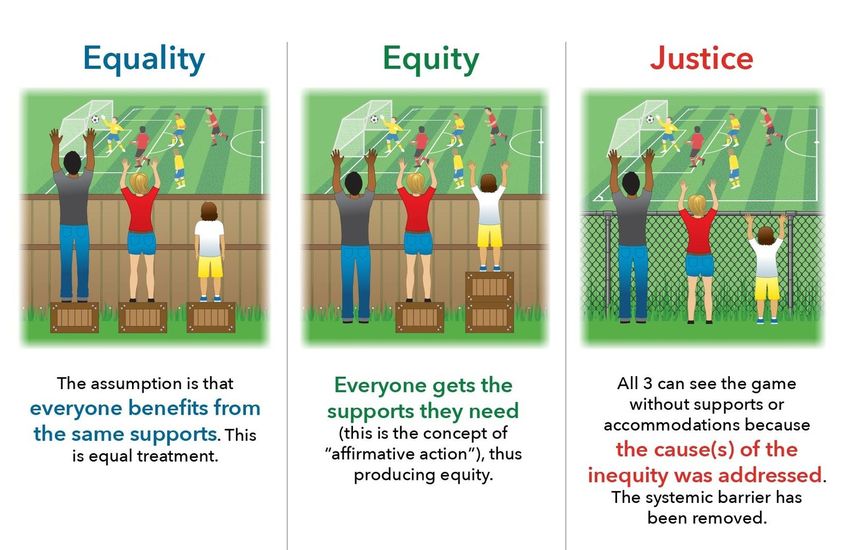
activities in Greater Minnesota. Initiatives around equality, equity, and justice are outside of the
scope of this report, but there are many resources available on these topics (see Figure 1).
Figure 1. From Young Nonprofit Professionals Network of the Twin Cities
Page 4This report includes an overview of Minnesota’s farmer demographics, a description of the
process used in the Emerging Farmers listening session, further information about specific
categories within the term ‘emerging farmers,’ a summary of the key barriers identified in the
listening sessions, and a compilation of recommendations taken from the listening sessions and
surveys.
Background
The Emerging Farmers’ Working Group (EFWG) was initiated by a legislative request in 2019
and signed into law on May 15, 2020 (Laws of Minnesota 2020, chapter 89, article 4, section 2):
“No later than February 1, 2020, the commissioner of agriculture must report
recommendations to the legislative committees and divisions with jurisdiction over
agriculture finance regarding how best to cultivate and support emerging farmers, with
priority given to emerging farmers who are women, veterans, persons with disabilities,
American Indian or Alaskan Native, and members of communities of color.”
To accomplish this, the MDA held a series of six listening sessions around the state including in
St. Paul, Marshall, Duluth, St. Cloud, Crookston and Rochester. An online feedback form was
also developed to gain insights from those unable to attend the listening sessions in person. A
detailed report on the findings of the listening sessions was prepared and is available through
the Minnesota Legislative Reference Library.
"To advise the commissioner and legislature regarding the development and
implementation of programs and initiatives that support emerging farmers in this state,
the commissioner must periodically convene a working group consisting, to the extent
possible, of persons who are, and organizations that represent, farmers or aspiring
farmers who are women, veterans, persons with disabilities, American Indian or Alaskan
Natives, members of a community of color, young, and urban, and any other emerging
farmers as determined by the commissioner. No later than January 15 each year, the
commissioner must update the chairs and ranking minority members of the legislative
committees and divisions with jurisdiction over agriculture regarding the working
group's activities and recommendations.”
The EFWG was signed into law on May 15, 2020. This report is a summary of the action taken
since then to establish the working group.
Learnings from the First Year
Agency wide engagement
The EFWG is intended to provide guidance to the commissioner of agriculture on the
development and implementation of programs and initiatives. There are currently seventeen
Page 5existing advisory groups to the MDA (listed in Appendix A). These advisory groups have varying
levels of formality, with some adopting bylaws, elections, and voting procedures and others set
up as informal groups that provide ad hoc feedback to programs. Each of these groups is
associated with one specific program area of the MDA. There is not an existing agency wide
stakeholder group with the purpose of providing feedback across all divisions of the agency; the
Emerging Farmers’ Working Group will be the first of its kind.
This fact presented challenges in the initial approach to establishing the working group. While
other advisory councils had clear directive, the EFWG’s scope is large enough that it is difficult
to assess how where to begin. Simply learning the functions and structures of each MDA
division could take a year of study, much less asking for targeted feedback on program and
policy design and implementation.
The EFWG may challenge the MDA to work more effectively across divisions internally. As is
true for many large institutions, MDA’s stakeholders, policies, practices, outreach and
engagement activities are siloed by division or even within each division by program area. This
can lead to difficulty in collaboration and communication within MDA, often causing frustration
by external stakeholders who feel they get different answers from different MDA programs, or
that they cannot get a full picture from any one department staffer.
Nothing about us without us
An internal group of MDA staff across three divisions and with a variety of professional
expertise ranging from outreach and communication to planning and policy met throughout the
summer to identify strategies for establishing the working group in a manner that would set the
group up for success. The group grounded this work the principle of “nothing about us without
us,” an idea elevated by South African disability rights activist James Charlton. 1 The guiding
principle is that people affected by policies and decision making should be involved in the
creation of that policy and those decisions.
In the context of the Emerging Farmers’ Working Group this meant thinking critically about how
to meaningfully establish a group for historically underrepresented communities within the
Agency that had historically underrepresented these groups. A lack of trust between these
communities and the MDA, and more broadly government institutions, made the development
and design of the working group vital. Agency staff felt that it was important for emerging
farmers to feel ownership over this group; that it would not be a group about emerging farmers
but rather that emerging farmers would develop the structure, practices, and policies of how
the group approaches this work. Key issues discussed were:
1
Charlton, J.I. (2020). Nothing About Us Without Us: Disability oppression and empowerment. University of
California Press.
Page 6• Scheduling of meetings to allow for non-traditional work hours that many emerging
farmers may hold. Many of the advisory boards in existence within MDA are made up of
professional staff from farm service organizations who are able to use work hours (9
a.m. – 5 p.m., Monday through Friday) to attend meetings. Emerging farmers may have
employment with non-agriculture related establishments and may be using personal
time to attend meetings. Finding a time that was available for all and allowing for
flexibility in scheduling was identified as an important item to resolve. The frequency of
the meetings was also discussed.
• The creation of bylaws, or the rules by which the group will conduct itself, are viewed as
a way to empower the members of the EFWG. Proposed bylaws were adapted from the
Department of Human Services Cultural and Ethnic Communities Leadership Council and
are open to amendments during the first months of the working group being
established. Some agency staff felt that a steering committee of emerging farmers could
have been selected to develop bylaws and other infrastructure for the working group.
The MDA Produce Safety Advisory Group had used this approach when they developed
their program and were a model for the proposal. Though this approach was not
utilized, it remains important to include in this report because it reflects the various
approaches to engagement that were considered.
• Engaging a facilitator to assist in guiding the EFWG was identified as a key need by the
internal organizing committee. Facilitation can help in many ways, including ensuring
that all voices are heard and that the priorities of the working group and the MDA as
host are balanced.
• Holding the working group meetings in English only is challenging for an initiative which
intends to extend and expand the reach of MDA engagement to include English-as-a-
learned-language or non-English speakers. While other online platforms have
simultaneous translation (for example, Zoom has built in transcription in English and
Spanish), the WebEx platform does not. Budget for simultaneous interpretation or for
the translation of documents was not included for the EFWG.
• A final concern was about how to extend the outreach for recruiting members of the
EFWG. The MDA’s existing outreach channels are mostly directed at traditional
agricultural media and news outlets. Getting beyond that core audience is necessary
and vital to bring in new voices to the MDA through the EFWG.
Summer 2020
The EFWG was signed into law on May 15, 2020. The events of the summer of 2020 impacted
the development of the EFWG. Two months earlier, the state had gone into lockdown due to
the COVID-19 pandemic. The burden of the pandemic fell acutely on the same communities
that the EFWG serves: women, veterans, persons with disabilities, American Indian/Alaskan
Native, and communities of color. These communities were impacted by unemployment, lack of
childcare, illness, and/or food insecurity, and have continued to be affected throughout the
pandemic (at the time of this writing, the pandemic is reaching its third peak).
Page 7On May 25, 2020, George Floyd was killed by a Minneapolis police officer while three other
officers stood by. The eight minute and 46 second recording of the killing was shared widely on
social media, sparking an immediate and urgent response within communities in the Twin
Cities, nationally and around the world. The uprising led many companies, organizations, and
institutions to acknowledge their own role in creating, perpetuating, and benefiting from
systemic racism. These organizations included Minnesota-based companies like General Mills,
Land O’Lakes, and Cargill, the University of Minnesota, Farm Bureau, Farmers Union, and the
National Association of State Departments of Agriculture. Many partners, both internal and
external, have cited the EFWG as an important way to address systemic racism and institutional
barriers in Minnesota agriculture.
There was lengthy discussion within the internal organizing group about the scope of the work
for the EFWG and the readiness for change within the agency in response to feedback from the
EFWG. By creating this group, there is a need to acknowledge that these voices have been
historically left out of the conversation. Why, how, and by whom these communities have been
excluded are all questions worthy of reflection.
Promise to the public
The internal organizing staff used the International Association for Public Participation (IAP2)’s
spectrum of participation as a guide to understand how internal and external partners viewed
the role of the EFWG (Appendix B). Some partners see this working group as a promise of
comprehensive rebuilding of the MDA policies and programs to address structural inequities
(IAP2 empower). Others see the group as a way to get the word out about existing programs
and services that MDA already offers (IAP2 inform). Without a clear and defined promise to the
public, there is a possibility for frustration and alienation in the future.
Investing in the work
The Emerging Farmers’ Working Group legislation did not include a budget line, and internal
funds were not initially designated specifically for the EFWG. Additionally, there were no
dedicated staff within MDA whose position included the EFWG.
In the future, funding should be dedicated for the following initiatives:
Paying for expertise: There is a growing understanding that advisory groups that rely on the
time and lived experiences of underrepresented communities should pay those participants for
their time and expertise. Like consulting fees for expert input, these payments reflect the value
of the person’s insights, and shows that the host organization sees the input from these
advisors as having value worth investing in.
Engaging a facilitator: As discussed in the previous section, an external facilitator was identified
as a need by the internal organizing committee. The facilitator helps with guiding the
discussion, identifying key themes, and bringing all voices into the conversation. The facilitator
Page 8can also assist with setting the agendas, developing a governance structure, and responding to
feedback from stakeholders.
Staffing: The EFWG does not currently exist in any MDA employee position descriptions. The
lead staff for the first year of the group was able to contribute on an ad hoc basis but going
forward there will likely be a need for a more formal staff role, or multiple staff roles. Currently
the primary responsibility for the working group sits with the Assistant Commissioner. A
dedicated program staff should be assigned for logistics, outreach and communication, and
analysis and developing a workplan based on the recommendations of the working group.
Multiple staff could be assigned responsibilities, which would also embed the EFWG throughout
the department in each division.
Process
The internal organizing committee, with direction from the Assistant Commissioner, developed
an online application form for the EFWG. The online form included general contact information
and three short answer questions for applicants to fill out (see Appendix C). The application
form was open from August 31, 2020 through October 2, 2020. Outreach efforts included a
press release from MDA, social media posts through the MDA Twitter and Facebook accounts,
external partners’ email newsletters, a video from Lt. Governor Flannagan, and many calls with
stakeholder groups from both MDA staff and leadership. The working group received 101
applications. Applications came in from every part of the state, and included a wide range of
demographics including age, race, ethnicity, farming practices, professional experience,
LGBTQ+, and gender.
The applications were reviewed by a committee which included MDA Commissioner Thom
Petersen, Deputy Commissioner Andrea Vaubel, Assistant Commissioner Patrice Bailey, Tribal
Liaison Shannon Kesner, Ariel Kagan, and Dakota County Technical College Associate Vice
President of Diversity and Inclusion Michael Birchard. The selection process was designed to
ensure geographical, racial, gender and generational diversity, along with specific targeted
populations from the legislative language.
Seventeen applicants were selected for the inaugural Emerging Farmers’ Working Group. They
are listed below (see also Appendix D).
Inaugural Emerging Farmers’ Working Group members
• Gina Aguilar, Hennepin County
• Hannah Bernhardt, Pine County
• Elizabeth Bryant, Rice County
• Naima Dhore, Ramsey County
• Jessika Greendeer, Washington County
• Janssen Hang, Dakota County
Page 9• Denise King, Anoka County
• Lucas Kruse, Blue Earth County
• Erika Legros, Carlton County
• Moses Momanyi, Isanti County
• Hindolo Pokawa, Hennepin County
• Emily Reno, Otter Tail County
• Sai Thao, Dakota County
• Miah Ulysse, Ramsey County
• Michael Walgrave, Rock County
• Kaitlyn Walsh, Carlton County
• Shelly Woods, Sibley County
The first meeting of the working group was held on November 6, 2020 from 1:00 – 3:00 p.m. on
WebEx. Michael Birchard was engaged as an external facilitator to guide the meeting. The
agenda of the first meeting is included in Appendix E. The primary purpose of the first meeting
was to introduce the members of the working group to each other and to the MDA staff and
facilitator, and to lay the groundwork for future meetings.
Internal funding was identified to compensate the working group members for their time and
expertise. Working group members who choose to receive the payment will be compensated
with $30 per meeting. These are not ongoing funds, and so future funding sources will need to
be developed. The facilitator is currently being paid out of a gift account with donations that
were made available from a number of agricultural groups in the state (see Appendix F for a list
of donating organizations).
On the horizon
The Emerging Farmers’ Working Group has been meeting monthly, with the exception of two
months per year. The working group members will identify topics to discuss and issues to work
on. MDA will provide support and technical assistance to the group. The groups’ process will be
developed with assistance from the facilitator. Topics may include AGRI grants, Overview of
MDA and budget, State Ethnic Councils, Rural Finance Authority rules and offerings,
communications, and the development of recommendations for policies and programs.
Page 10Recommendations
There are many opportunities to support and cultivate emerging farmers in the State. The
following recommendations are a starting place for these efforts to begin. Creating vibrant
communities for emerging farmers to create successful careers in agriculture will take ongoing
attention.
We recommend:
• Amend current language for Emerging Farmer Working Group for the ability to also accept
private resources. Fund the Emerging Farmers’ Working Group with appropriate levels to
ensure the groups’ success.
• Create budget for translation and bilingual services.
• Fund a dedicated position for community engagement within the MDA.
• Establish a one-stop shop for resources for emerging farmers, which includes training
resources, grants and funding opportunities, and other materials. One model is the
Starting a Food Business Roadmap, hosted by the MDA and developed in partnership with
community organizations and businesses.
• Classify agriculture more broadly for apprenticeship eligible professions.
• Address health insurance costs and student loan debt for emerging farmers.
• Support equity and inclusivity training in farming communities to strengthen connections
between current farmers and emerging farmers.
• Create specific grant opportunities for emerging farmers that assist with establishing a
farm business, rather than improving or expanding an existing farm business. Consider
higher percentages of cost-sharing, and/or longer loan terms for emerging farmer groups.
• Implement advanced payment options for grant funding for emerging farmers, based on
the USDA Natural Resources Conservation Service (NRCS) Environmental Quality
Incentives Program (EQIP). This NRCS program allows for practice payments in advance of
implementation of practices for historically underserved producers.
• Provide trainings to farm service providers that help reduce barriers for emerging farmers,
including equity and implicit bias training, and alternative models of agriculture
(regenerative, direct-marketing, perennial etc.).
• Provide funding for farm service providers to translate materials and trainings.
• Dedicate further attention to the history of land ownership and farming in Minnesota.
University research on the cultural and social history of agriculture in the state would
provide context for emerging farmers and the communities in which they live.
• Advance Farm-to-School/Institution initiatives as a market development tool for emerging
farmers.
• Articulate a vision for agriculture in Minnesota that encompasses emerging farmers and
small/midsize farming businesses.
• Work to reframe the story of farming as an opportunity for underserved communities.
Market the stories of emerging farmers to show examples of how farming can be
practiced.
Page 11Appendix A: Existing MDA advisory groups and task forces
• Agricultural Chemical Response and Reimbursement Account (ACRRA) Board
• Association of MN Emergency Managers
• Bioeconomy Coalition (external to state)
• Dairy Research, Teaching, and Consumer Education Authority
• Department of Administration Fleet Committee
• Farm Safety Working Group
• Food Safety and Defense Task Force
• Grain Advisory Group
• Industrial Hemp Advisory Group
• Minnesota Ag in The Classroom
• Minnesota Agricultural Water Quality Certification Program Advisory Committee
• MN Gypsy Moth Program Advisory Committee
• MN Noxious Weed Advisory Committee
• New Markets Advisory Committee
• Produce Safety Advisory Group
• Seed Program Advisory Group
Page 12Appendix B: IAP2 Public Participation Spectrum
Government
Role Inform Consult Involve Collaborate Empower
To provide the To obtain public To work To partner with To place final
public with feedback on directly with the public in each decision-
balanced and analysis, the public aspect of the making in the
objective alternatives throughout the decision including hands of the
Public information to and/or process to the development public.
Participation assist them in decision. ensure that of alternatives
Goal understanding public issues and the
the problems, and concerns identification of
alternatives are consistently the preferred
and/or understood and solution.
solutions. considered.
We will keep We will keep We will work We will look to We will
you informed. you informed, with you to you for direct implement
listen to and ensure that advice and what you
acknowledge your concerns innovation in decide.
concerns and and issues are formulating
provide directly solutions and
feedback on reflected in the incorporate your
Promise to
how public alternatives advice and
the Public input developed and recommendations
influenced the provide into the decisions
decision. feedback on to the maximum
how public extent possible.
input
influenced the
decision.
• Fact sheets • Public • Workshops • Citizen Advisory • Citizen juries
• Websites comment • Deliberate committees • Ballots
• Open houses • Focus groups polling • Consensus • Delegated
Example
• Surveys building Decisions
Tools
• Public • Participatory
meetings Decision-
making
Table 4. Source: International Association for Public Participation
Page 13Appendix C: Emerging Farmers Working Group Application
Please submit the following information:
• First Name:
• Last Name:
• Phone number:
• County:
• Email address:
• What is your preferred language?
• What is the best day for you to meet?
o Monday
o Tuesday
o Wednesday
o Thursday
o Friday
• What time of day is best for you to meet?
o Mornings (8 a.m. - 12:00 noon)
o Afternoons (12:00 noon - 5:00 p.m.)
o Evenings (after 5:00 p.m.)
• Did you attend any of the Emerging Farmer Listening Sessions in the Fall of 2019?
o Yes
o No
• Do you identify as any of the following (Check all that apply):
o Woman
o Veteran
o Person with a disability(ies)
o American Indian or Alaskan Native
o Member of a community of color
o Young
o Urban
o Other
• Do you consider yourself (Check all that apply):
o A farmer/producer/grower
o An aspiring farmer/producer/grower
o A member or staff person of an organization that supports emerging farmers
o Other
• Why do you want to be a part of the Emerging Farmers’ Working Group?
• What experiences and/or skills would you bring to the work of the Emerging Farmers’
Working Group?
• Is there anything else you’d like to share with us?
Page 14Appendix D: Emerging Farmers’ Working Group Members
Gina Aguilar, Hennepin County Moses Momanyi, Isanti County
Hannah Bernhardt, Pine County Hindolo Pokawa, Hennepin County
Elizabeth Bryant, Rice County Emily Reno, Otter Tail County
Naima Dhore, Ramsey County Sai Thao, Dakota County
Jessika Greendeer, Washington Miah Ulysse, Ramsey County
County
Michael Walgrave, Rock County
Janssen Hang, Dakota County
Kaitlyn Walsh, Carlton County
Denise King, Anoka County
Shelly Woods, Sibley County
Lucas Kruse, Blue Earth County
Erika Legros, Carlton County
Page 15Appendix E: November Meeting Agenda
Emerging Farmers Working Group
November 6, 2020 Meeting
1:00 p.m. to 3:00 p.m.
Webex Video Conference
Agenda
1:00 p.m. 2:00 p.m.
Call to Order Thank you and Expectations to Committee
Assistant Commissioner Patrice Bailey Michael Birchard, facilitator
1:02 p.m. 2:15 p.m.
Land acknowledgement and grounding in Discussion of Bylaws
the space, time and work of this initiative Michael Birchard, Ariel Kagan
Elder Gerry Huerth
2:30 p.m.
1:10 p.m. Upcoming Meeting Logistics Discussion
Welcome from MDA Commissioner Michael Birchard
Commissioner Thom Petersen
2:40 p.m.
1:15 p.m. Open for Member Discussion
Presentation Michael Birchard
Lt. Governor Peggy Flanagan
2:50 p.m.
1:20 p.m. Open for Public Comment
Presentation Questions/Concerns submitted through
Chief Inclusion Officer Chris Taylor WebEx chat
1:30 p.m. 3:00 p.m.
Introduction by Committee Members Meeting Adjourned
All 17 Committee Members Assistant Commissioner Bailey
Page 16Appendix F: Donating Organizations
• Sustainable Farming Association of Minnesota
• Renewing the Countryside
• Minnesota Farmers Union
• The Food Group
Page 17Appendix G: Existing Resources for Emerging Farmers
Note: These were gathered from Listening Session surveys and are not a comprehensive list of
resources.
Federal
USDA Beginning Farmers and Ranchers Loan
USDA Farm Service Agency (FSA)
USDA Local and Regional Food Sector Toolkits and Handbooks
USDA Natural Resources Conservation Service (NRCS) Environmental Quality Incentive Program
(EQIP)
USDA New Farmers Website
USDA Rural Development
USDA Urban Agriculture Tool Kit
State
Aggie Bond Beginning Farmer Loan Program
Beginning Farmer Tax Credit
Board of Water and Soil Resources
Dual-Training Pipeline (MN Department of Labor and Industry)
FarmLink
Farm to School (MN Department of Education)
Farm to School (MN Department of Health)
MDA Grants
MDA Agricultural Growth, Research, and Innovation Program
Farm Business Management Scholarships
Livestock Investment Grant
MDA New Markets Program
Sustainable Agriculture Demonstration Grant
Value-Added Grant
MDA FarmLink
Minnesota Grown
Starting a Food Business Roadmap
Workplace Safety Consultation (MN Department of Labor and Industry)
Non-Government Resources
Agua Gorda Cooperative
AURI
Big River Farms
Black Family Land Trust
Page 18Blue Zones
Carpenter Nature Center
Clean Energy Resource Teams
Compeer Financial Emerging Markets, Local Food & Non-Traditional Ag
Dairy Grazing Apprenticeship
Dream of Wild Health
Driftless Grown
Emerging Farmers Conference
Farm at the Arb
Farm Commons
Farmer Veteran Coalition
Farmers’ Legal Action Group
Farmland Access Hub
Food Animal Concerns Trust
Grow and Farmer Fund
Hmong American Farmers Association
Hmong American Partnership
Holistic Management
Iroquois Valley Farmland REIT
Lake Superior College Eco-Entrepreneurship Program
Land Access Workshops
Land Stewardship Project
Local Food Advisory Committee (MISA)
Main Street Project (Northfield)
Midwest Sustainable Ag Working Group
Minnesota Institute for Sustainable Agriculture (MISA) Sustag Newsletter
Minnesota Organic & Sustainable Education Service
Minnesota State Horticultural Society
Minnesota Dairy Initiative
Minnesota Farm Bureau
Minnesota Farmers Union
Minnesota Farmers Union-New Leader Academy
Minnesota State Agricultural Centers of Excellence
Midwest Organic & Sustainable Education Services (MOSES)
National Center for Appropriate Technology-ATTRA Sustainable Agriculture Program
National Farmers Union-Beginning Farmer Institute
National Sustainable Agriculture Coalition
Northeast Farmers of Color Land Trust
Northern Growers & Markets Conference
No-Till Growers
Page 19You can also read


