Brick Earth Stone Timber - 2020 Western Center for Historic Preservation Historic Preservation Training Center - National Park ...
←
→
Page content transcription
If your browser does not render page correctly, please read the page content below
Brick
Preservation Workshops

                         Earth
                         Stone
                         Timber

   2020
                                  Western Center for
                                  Historic Preservation

                                  Historic Preservation
                                  Training Center
Frequently Asked Questions                                                                                  Course Progression
Are the BEST Preservation Workshops part of the Vanishing Treasures Program?                                BEST Preservation Workshops build upon one another, following the natural progression of a historic
Starting in 2020, the training arm of the Vanishing Treasures Program - the Western Center for Historic     preservation project. Illustrated below, this structure identifies major categories that take a project from
Preservation (WCHP) - was moved under the Historic Preservation Training Center in order to offer           concept to reality, and from design to implementation.
workshops servicewide. WCHP’s Brick, Earth, Stone, & Timber (BEST) Preservation Workshops will
continue to use the curriculum created while under the Vanishing Treasures Program. We are indebted
to Vanishing Treasures for supporting the design and implementation of a structured series of workshops
that are considered the gold standard of historic preservation trainings in the NPS.                          I        Inquiry
                                                                                                                       Courses cover the basics of historic preservation and are strongly recommended for all
What is the BEST Preservation Workshop Series?                                                                         students before taking more advanced courses.
The BEST Preservation Workshop Series trains employees at all levels of the National Park Service in the
preservation of traditionally-built historic resources using problem-based and hands-on learning.
                                                                                                            D&I        Documentation & Investigation
Who can take a course?                                                                                                 Documentation workshops focus on researching historic resources and recording existing
Courses are open to anyone who is interested: federal, state, and local government employees; private                  conditions in the field. Investigation workshops teach problem-solving strategies for defining
sector contractors, consultants, architects, and design professionals; students; non-profit employees;                 deterioration problems and quantifying their potential impact.
and homeowners. Federal employees must have supervisory approval to register for workshops.
                                                                                                              T        Treatment
What is the cost per course?
Course costs vary. Refer to each course offering page to see associated costs.                                         Workshops cover the construction strategies, condition assessment, treatment, and
                                                                                                                       conservation science of major building materials. Treatment workshops are hands-on and
Who do I talk to about an accommodation?                                                                               split between the field and the classroom.
If you are a person with a disability and you need accommodations, please contact us at least 3 weeks
before the workshops at BESTpreservation@nps.gov or (307) 739-3571.                                          M         Maintenance
Is there still lodging at White Grass Dude Ranch?                                                                      Workshops introduce students to methods and best practices for continued stewardship
Yes, for workshops held in Grand Teton National Park, there is limited, free-of-charge, housing available              of historic resources after preservation, including how to evaluate treatments, write and
at the White Grass Dude Ranch. The ranch is a rehabilitated historic dude ranch located inside the park                follow maintenance and lifecycle plans, and bring historic resources into asset management
that serves as WCHP’s training facility. More information is available in the registration form.                       programs.

Program Sponsors and Supporters

                                                                                                             ST        Special Topics
                                                                                                                       A selection of special topics cover pressing issues in preservation each year.
Workshops and Trainings                                                                 Workshops and Trainings
 Course Title                                Location                 Dates               Course Title                                     Location              Dates

Inquiry                                                                                 Treatment
                                             Fort Vancouver                               Pre-Contact Masonry Preservation                 Wupatki National
                                                                      April 14–16                                                                                October 19–23
                                             National Historic Site                       & Repair                                         Monument
                                             Grand Teton                                                                                   Grand Teton
 Guiding Principles for Field-Based                                   June 23–25          Wood & Log Preservation & Repair                                       July 13–17
                                             National Park                                                                                 National Park
 Historic Preservation
                                             Fairbanks, AK            May 19–21         Maintenance
                                             Yellowstone                                                 No courses are being offered this year. Check back next year!
                                                                      October 6–8
                                             National Park
                                                                                        Special Topics
                                                                      online:
                                                                                          Basic Preservation Engineering &                 Pinnacles
                                             Grand Canyon             June 15–July 25                                                                            May 12–14
 Preservation & Treatment                                                                 Stabilization for Wood Structures                National Park
                                             National Park            classroom:
                                                                      July 27–31          Creating & Using Oral Histories in the           Grand Teton
                                                                                                                                                                 July 21–23
                                                                                          Preservation of Traditional Resources            National Park
Documentation and Investigation
                                                                                          Integrated Pest Management for Cultural          Grand Teton
                                             Grand Teton                                                                                                         October 6–8
 3D Photogrammetry                                                    August 17–21        Resources                                        National Park
                                             National Park
                                                                                          Preserving Cultural & Wilderness                 Hawaii Volcanoes
 Defining the Problem: Diagnosing Historic   Grand Teton                                                                                                         October 20–22
                                                                      August 10–13        Resources: Achieving Common Ground               National Park
 Building Deterioration                      National Park
                                                                                          Stone, Earth, Cement, & Coatings:
Treatment                                                                                                                                  Guadalupe Mountains
                                                                                          Preserving & Repairing Multi-Material                                June 1–5
 Beginning Historic Wood Window              Yellowstone                                                                                   National Park
                                                                      April 6–10          Masonry Systems
 Preservation                                National Park                                Thinking Through Water, Air, and Energy          Grand Teton
 Historic Masonry Preservation & Repair      Acadia National Park     June 15–19                                                                                 August 25–27
                                                                                          Issues in Historic Structures                    National Park
 Intermediate Historic Wood Window
                                             Frederick, MD            November 2–6
 Preservation & Repair

                                                                                        For the most up-to-date information and to register, visit:
                                                                                        https://mylearning.nps.gov/best-preservation-workshop-series-2020/
Guiding Principles for Field-Based
Historic Preservation
Fort Vancouver National Historic Site         April 14–16
Grand Teton National Park 		                  June 23–25
Fairbanks, Alaska 			                         May 19–21
Yellowstone National Park		                   October 6–8

Instructors

Julie McGilvray    Preservation Services Program Manager         Charlie Pepper NPS Emeritus
                   National Capitol Area
Craig Chenevert Historical Architect                             Lisa Sasser       NPS Emeritus
                Grand Canyon National Park
Grant Crosby       Historical Architect                          Blaise Davi       NPS Emeritus
                   Alaska Regional Office

These workshops, offered in partnership with the Cultural Resources Academy, will present
a working knowledge of historic preservation principles. Upon completion, participants will
have a deeper understanding of how treatment decisions are developed, how resources are
evaluated and how compliance, laws, and Secretary of the Interior’s Standards for the Treat-
ment of Historic Properties are directly connected to the work performed by trades person-
nel. This course will be split between classroom and field-based sessions, and will provide a

                                                                                                  I
practical education in the why’s and how’s of historic preservation in the NPS.

                                                                                                  D&I
Tuition
For all courses (except Fairbanks)                                   Fairbanks course
$250 General participant                                             No cost to participants.

                                                                                                  T
 $50 Student (at least half time in an accredited institution)
 $25 home park employees

                                                                                                  M
                                                                                                  ST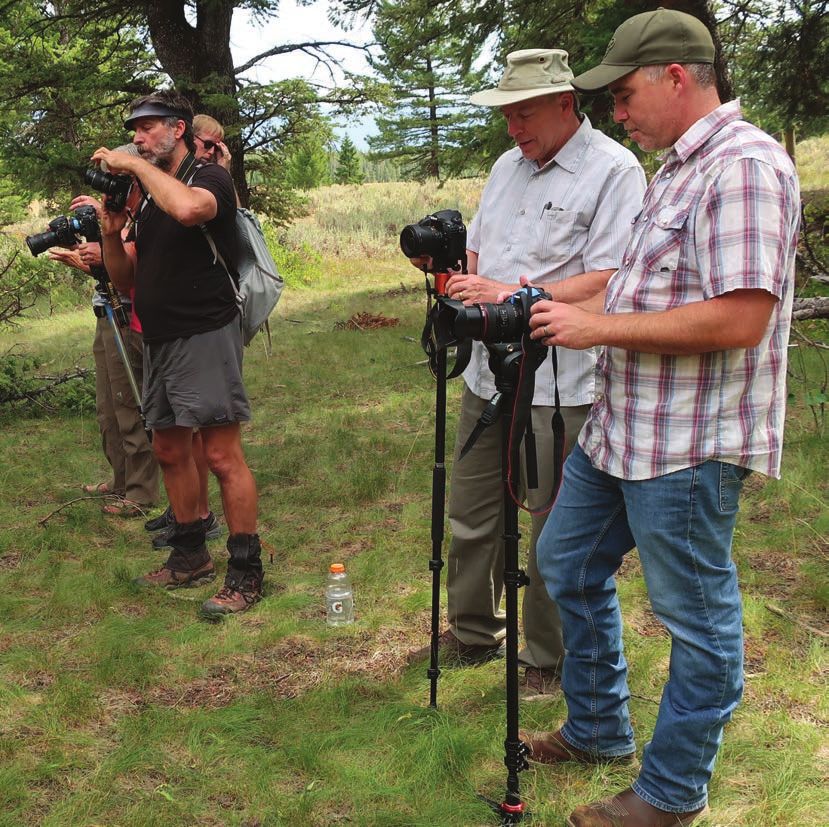
Preservation & Treatment
Cultural Resources Academy Workshop

Grand Canyon National Park         June 15–July 25 (online), July 27–31 (classroom)

Instructors
Charlie Pepper                 NPS Emertius
                               Program Manager, Olmsted Center for
                               Landscape Preservation
Todd Morgan                    Northern Rockies Park Asset Management
                               Organization Lead & Hub 2 Lead
Katherine Birmingham           Branch Chief, Cultural Resources
                               Grand Teton National Park

Gavin Gardner                  Chief, Resources
                               Salem Maritime and Saugus Iron Works
                               National Historic Sites

Created and offered by the Stephen T. Mather Training Center’s Cultural Resources Academy,
this workshop gives students an opportunity to gain valuable skills essential to directing and
overseeing the preservation, treatment, and maintenance of park cultural resources within

                                                                                                           I
a supportive environment of collaborative, interdisciplinary teamwork. The course begins
with six weeks of interactive online coursework and concludes with four days of classroom

                                                                                                           D&I
and field experience. Trainees will work in interdisciplinary teams to solve preservation and
treatment challenges in a park setting. Students must participate online and attend the
classroom session to receive credit for the class. This course is open to NPS employees only.

                                                                                                           T
Tuition
There are no tuition fees for the Preservation & Treatement course. This course is open to NPS employees

                                                                                                           M
only. Registration: https://mylearning.nps.gov/training-courses/preservation-treatment/

                                                                                                           ST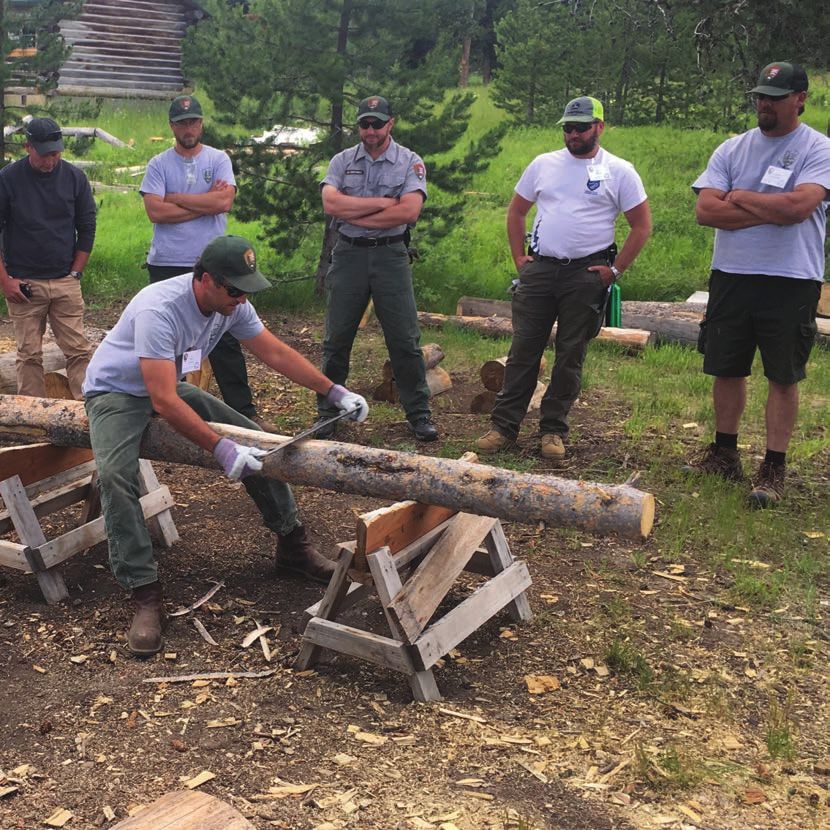
3D Photogrammetry
NCPTT Workshop

Grand Teton National Park    August 17–21

Instructors
Neffra Matthews      Geographer
                     Bureau of Land Management
Tom Noble            TN Photogrammetry LLC
                     Retired Bureau of Land Management

The National Center for Preservation Technology and Training (NCPTT) is holding their 3-D
Photogrammetry Workshop at the Western Center for Historic Preservation’s White Grass
Dude Ranch in Grand Teton National Park. The goal of this week-long workshop is to provide
practicing professionals and students with a working knowledge of photogrammetry.
Participants will receive instruction on photogrammetry, including associated equipment,
field work planning and techniques, processing, and products. Upon completion, participants
will be able to describe the advantages and disadvantages of each technique, understand
their applications, and define and articulate goals when designing a photogrammetry
documentation project.

Registration: https://mylearning.nps.gov/training-courses/3d-photogrammetry/

                                                                                              I
                                                                                              D&I
Tuition
$750 General participant with housing at White Grass Dude Ranch
$500 General participant without housing at White Grass Dude Ranch
$500 Federal employees and students with housing at White Grass Dude Ranch

                                                                                              T
                                                                                              M
                                                                                              ST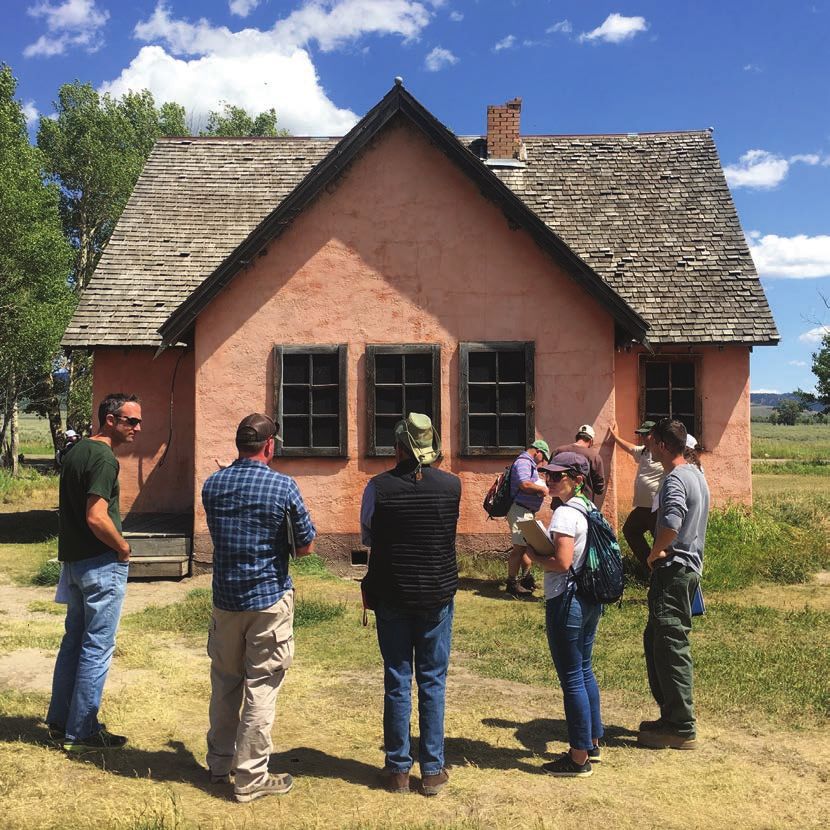
Defining the Problem:
Diagnosing Historic Building Deterioration

Grand Teton National Park       August 10-13

Instructors
Michael C. Henry, PE, AIA        Watson & Henry Associates
                                 University of Pennsylvania
Michael P. Schuller, PE          Atkinson-Nolan & Associates, Inc.

Defining the Problem: Diagnosing Historic Building Deterioration covers the field
documentation and investigation step of the preservation process. In this workshop, students
examine historic structures in the field and record conditions on a site-wide scale in an effort
to identify the root causes of building failure. Rather than give prescriptive answers to
common issues, this course encourages trainees to work through observed problems in small
groups and hypothesize what underlying issues are affecting the resource and why. Taking
this a step further, trainees also design ways to test their hypotheses, learn about different
options for non-destructive evaluation (NDE), and experiment with using NDE techniques in
the field.

Tuition
$250 General participant

                                                                                                   I
 $50 Student (at least half time in an accredited institution)
 $25 Grand Teton National Park employees

                                                                                                   D&I
                                                                                                   T
                                                                                                   M
                                                                                                   ST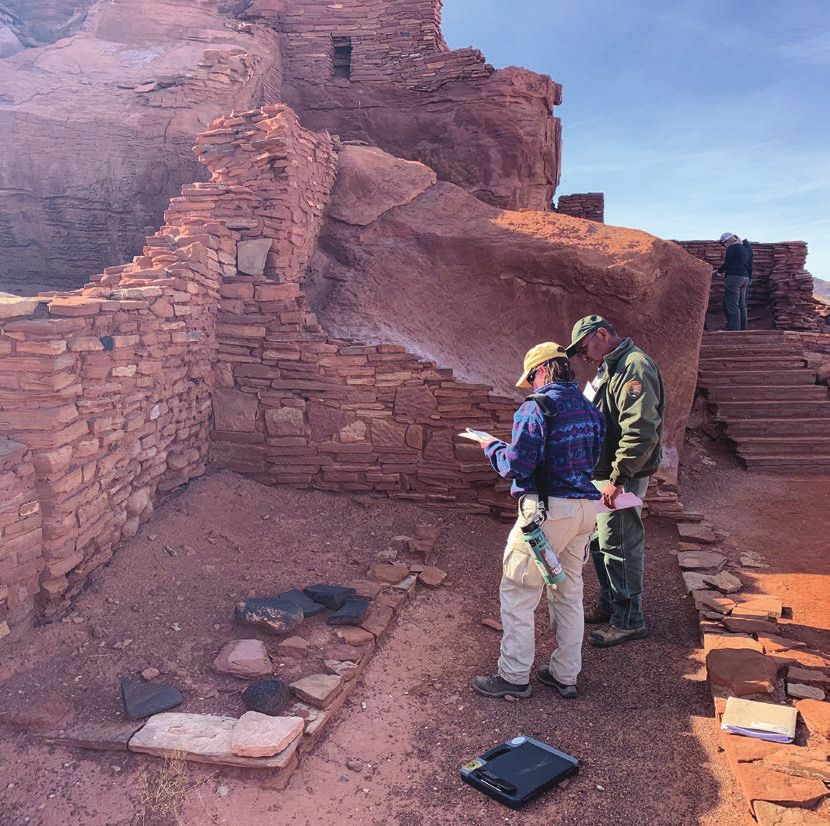
Beginning Historic Wood Windows
Preservation
Yellowstone National Park       April 6–10

Instructors
Will Grenier      Exhibit Specialist
                  Historic Preservation Training Center
Erin Gibbs        Preservation Training Manager
                  Western Center for Historic Preservation

This hands-on workshop will introduce participants to the basics of wood window preservation,
including documentation, stripping, scraping and sanding, back-bedding and glazing, and painting.
The course will also cover purified linseed oil products and their use as a comprehensive treatment
system for preserving wood windows. To compliment hands-on work, morning lectures will cover
topics such as the history of paint and windows; why we preserve historic windows; how to identify
the best window treatment alternative; and how to apply the Secretary of the Interior’s Standards for
the Treatment of Historic Properties to your window project.

Tuition
$250 General participant
 $50 Student (at least half time in an accredited institution)

                                                                                                        I
 $25 Yellowstone National Park employees

                                                                                                        D&I
                                                                                                        T
                                                                                                        M
                                                                                                        ST
Historic Masonry Preservation & Repair

Acadia National Park      June 15–19

Instructors
Frank Matero        Chair, Graduate Program in Historic Preservation
                    University of Pennsylvania
Moss Rudley         Superintendent
                    Historic Preservation Training Center

Traditional and historic masonry buildings are relatively simple construction systems but their proper
preservation, repair, and maintenance require a sound understanding of their components—stone,
brick, and mortar—and their weathering. These challenges are often exacerbated by previous
repairs and deferred maintenance, often with materials incompatible with normal performance. This
workshop will introduce students to historic masonry preservation with a focus on the properties and
weathering of masonry system components, and the use of traditional methods for repair. Participants
will discuss the importance of condition survey, diagnosis, and preservation options in the context
of NPS preservation standards. Trainees will also learn basic conservation science for stone, brick,
and mortars, and engage in hands-on work in the field performing simple masonry repairs such as
repointing mortar joints and stabilizing courses. Participants can expect to work both in the classroom
and in the field at historic gatehouses in Acadia National Park.

                                                                                                          I
Tuition

                                                                                                          D&I
$250 General participant
 $50 Student (at least half time in an accredited institution)
 $25 Acadia National Park employees

                                                                                                          T
                                                                                                          M
                                                                                                          ST
Intermediate Historic Wood Window
Preservation & Repair
Frederick, MD     November 2–6

Instructor
Brandon Gordon         Deputy Superintendent
                       Historic Preservation Training Center
Trevor Thomas          Supervisory Exhibits Specialist, Woodcrafting Division
                       Historic Preservation Training Center

Intermediate Preservation for Historic Wood Windows touches on much of the same material
introduced in the Beginner Preservation for Wood Windows workshop, but with the addition of more
intensive repair techniques and greater emphasis on hands-on and shop skills. Trainees can still expect
to learn building science foundations for preserving wood windows, documentation, reglazing, and
finish options, but will spend a greater amount of time focusing on lead safety, joinery, dutchman
repairs, and fabrication of rails, stiles, and muntins. Working on site in the Historic Preservation
Training Center’s shop in Frederick, Maryland, trainees will have the opportunity to work alongside
HPTC craftspeople and learn from their extensive expertise working on window projects throughout
the United States.

Prior experience with historic wood window preservation is a prerequisite for this workshop.

                                                                                                          I
Tuition

                                                                                                          D&I
$250 General participant
 $50 Student (at least half time in an accredited institution)
 $25 HPTC employees

                                                                                                          T
                                                                                                          M
                                                                                                          ST
Pre-Contact Masonry Preservation
& Repair
Wupatki National Monument October 19–23
Instructors
Frank Matero Chair, Graduate Program in Historic Preservation
University of Pennsylvania
Alex Neumann Archaeologist
Flagstaff Area National Monuments
Masonry structures require careful understanding of their materials, construction methods, conditions,
and environment before any intervention is performed. This workshop, offered in partnership with
the Vanishing Treasures Program, combines classroom and hands-on field work to give trainees an
effective introduction to pre-contact masonry preservation, with special emphasis on preservation at
archaeological sites. Conservation science topics covered in the classroom will include basic geology,
stone and mortar characteristics, and common deterioration patterns. Working with experienced
archaeologists, students will have opportunities to practice reading condition in the field and discuss
when it is necessary to consult professional engineers or conservators. Professional craftspeople will
lead field exercises working with masonry tools to repoint mortar joints and stabilize courses.
Tuition
I
$250 General participant
$50 Student (at least half time in an accredited institution)
D&I
$25 Flagstaff Area National Monuments employees
T
M
STWood & Log Preservation & Repair
Grand Teton National Park July 13–17
Instructors
Ron Anthony President & Wood Scientist
Anthony & Associates
Tim Green Wood & Log Craftsman
Western Center for Historic Preservation
Log structures are some of the most versatile, enduring, and widespread resources found in the United
States. The five day Wood and Log Preservation and Repair workshop covers beginning wood science
and log repair techniques to prepare trainees to effectively care for these important buildings. Using
the White Grass Dude Ranch as a laboratory, students will start the workshop studying the basics
of wood structure, deterioration, and field investigation methods before progressing to hands-on
practice in the field. Afternoons will be spent in field sessions where trainees will have the opportunity
to use traditional tools and experiment with log repair strategies under the direction of an expert
craftsperson. Trainees can expect additional lectures and group discussions that explore historic log
construction techniques, project planning considerations, and finishes.
Tuition
I
$250 General participant
$50 Student (at least half time in an accredited institution)
D&I
$25 Grand Teton National Park employees
T
M
STBasic Preservation Engineering &
Stabilization for Wood Structures
Pinnacles National Park May 12–14
Instructors
Christine Britton Project Engineer
JVA Engineering
Mark Donahue Chief of Maintenance
Pinnacles National Park
Timothy Babalis Cultural Resources Program Manager
Pinnacles National Park
This workshop introduces students to beginning preservation engineering concepts for historic wood
structures. Using the historic Bacon Barn and Bear Valley School in Pinnacles National Park as case
studies and field sites, students will have the opportunity to analyze real structural problems and design
appropriate stabilization measures with the help of a preservation engineer, expert craftsperson, and
park historian.
For the first part of the workshop, students will learn how historic wood structures function as systems,
carry and distribute load, and deteriorate over time. The second half will focus on the project planning
I
process, including how to identify and test underlying cases of building failure, collaborate with park
divisions and outside professional services, and choose sensitive stabilization measures. Students can
D&I
expect half of the workshop to be spent in the classroom, with the other half in the field.
Tuition
$250 General participant
T
$50 Student (at least half time in an accredited institution)
$25 Pinnacles National Park employees
M
STCreating & Using Oral Histories in the
Preservation of Traditional Resources
Grand Teton National Park July 21–23
Instructors
Lu Ann Jones, PhD Staff Historian
Park History Program
Brenna Lissoway, MA, DAS Archivist
Chaco Cultural National Historical Park
Bridgette Guild Museum Curator, Archives Manager, Tribal Liaison
Grand Teton National Park
In this course, participants will learn how to effectively plan and implement all phases of an oral history
project and will explore how interviews can in turn help inform preservation treatment plans. Using
case studies and classroom presentations, participants will gain the tools they need to gather reliable
historic information through the use of the spoken word. During the first two days of the workshop
students will focus on best practices for how to effectively prepare for an in-person oral interview.
Working in small groups, students will have the opportunity during the final day of the workshop to
conduct full interviews with retired and long-time NPS employees, whose interviews will be added
to the Grand Teton National Park archives. Post-interview, students will receive instruction on the
processing and archiving of oral history materials for future use, ending the workshop with packaging
I
their interviews as a final product that can be turned over to the park.
D&I
Tuition
$250 General participant
$50 Student (at least half time in an accredited institution)
T
$25 Grand Teton National Park employees
M
STIntegrated Pest Management for
Cultural Resources
Grand Teton National Park October 6–8
Instructors
John Nelson Biologist, Integrated Pest Management Coordinator
NPS Regional Office, Interior Regions 6, 7, 8
James Howard Integrated Pest Management Physical Scientist
Biological Resources Division
This workshop provides an introduction to Integrated Pest Management, with special emphasis on
pest issues in parks located in the Northern Rockies. Using resources in Grand Teton National Park
as case studies, participants will learn about the inspection and diagnostics processes best suited
for determining what pests are present and the extent of infestation. Time will be spent on properly
addressing safety concerns and implementing mitigation measures when working in historic structures
that have a proven pest problem. Trainees will become familiar with the specific considerations regarding
pests common in greater Yellowstone Ecosystem, such as mice, bats, and swallows, and options for
exclusion that remain sensitive to historic structures’ integrity and comply with the Secretary of the
Interior’s Standards for the Treatment of Historic Properties.
Tuition
I
$250 General participant
$50 Student (at least half time in an accredited institution)
D&I
$25 Grand Teton National Park employees
T
M
STPreserving Cultural & Wilderness
Resources: Achieving Common Ground
Hawai’i Volcanoes National Park October 20–22
Instructors
Laura Kirn Chief of Cultural Resources
Channel Islands National Park
Katherine Wonson Director
Western Center for Historic Preservation
Blair Davenport Regional Staff Museum Coordinator
NPS Regional Office, Interior Regions 8, 9, 10, 12
Tim Devine Branch Chief, Training & Development Wilderness Stewardship Division
Arthur Carhart National Wilderness Training Center
There is a long standing perceived conflict between cultural and wilderness laws and stewardship. To
help alleviate this perception the interagency Arthur Carhart National Wilderness Training Center has
partnered with the Western Center for Historic Preservation to develop and host Preserving Cultural &
Wilderness Resources: Achieving Common Ground.
Taught workshop-style, the course presents an overview of law and policy, illuminates the historical
I
context for the pertinent court cases, showcases traditional skills often required to execute preservation
projects in wilderness, explores archeological and ethnographic resources, and provides an opportunity
D&I
for robust discussions. The course encourages participants to challenge their views on cultural and
wilderness stewardship, identify the common ground, and work together to solve complex issues in
order to protect cultural resources and preserve wilderness character.
T
Tuition
$250 General participant
M
$50 Student (at least half time in an accredited institution)
$25 Hawai’i Volcanoes National Park employees
STStone, Earth, Cement, & Coatings:
Preserving & Repairing Multi-Material Masonry Systems
Guadalupe Mountains National Park June 1–5
Instructors
Francisco Uviña-Contreras Director, Historic Preservation & Regionalism Certificate Program
University of New Mexico
Benjamin Ibarra-Sevilla Associate Professor, Architecture Program
University of Texas at Austin
This workshop is offered in partnership with the Vanishing Treasures Program. Using the Frijole Ranch
and Pinery in Guadalupe Mountains National Park as field sites and laboratories, this workshop
will focus on preservation challenges for multi-material masonry resources that have a legacy of
incompatible treatments. Students will have an opportunity to work with a non-standard masonry
system composed of limestone, earthen mortars, and limewash that has seen Portland cement and
latex repairs. Working both in the classroom and the field, trainees will have considerable hands-on
opportunities to experiment with techniques for the careful removal of latex paints, assess options
when treating structures with Portland cement repairs, repoint with earthen mortars, and explore
when to use lime-based finishes with earthen masonry components.
Tuition
I
$250 General participant
$50 Student (at least half time in an accredited institution)
D&I
$25 Guadalupe Mountains National Park employees
T
M
STThinking Through Water, Air, and Energy
Issues in Historic Structures
Grand Teton National Park August 25–27
Instructors
William A. Turner, MS, CEO
PE, LEED AP Turner Building Science & Design LLC
Historic buildings were traditionally designed to manage the air, moisture, and energy moving through
their materials and structure. When these systems are altered through a change in use, materials,
or design, it can disrupt the relationship between these elements, causing unintended damage to
historic fabric. While this damage is usually in the form of moisture problems, it cannot be addressed
without first understanding air and energy as well. Thinking Through Water, Air, and Energy Issues
in Historic Structures teaches students the mechanics and associated concepts of moisture, air, and
energy dynamics as a starting point before examining how to effectively manage these in historic
structures. Trainees will learn how to identify the cause of deterioration as a function of air, water,
and energy movement, mitigate issues that have arisen as a result of poor interventions, and evaluate
treatment strategies, both historic and modern, through the lens of building and occupant health and
the Secretary of the Interior’s Standards for the Treatment of Historic Properties.
Participants are encouraged to bring air, water, and energy issues from their home regions for
I
discussion and group problem solving.
D&I
Tuition
$250 General participant
$50 Student (at least half time in an accredited institution)
T
$25 Grand Teton National Park employees
M
ST307-739-3571
go.nps.gov/wchp
BESTpreservation@nps.govYou can also read


