BUDGET OVERVIEW - City of Memphis
←
→
Page content transcription
If your browser does not render page correctly, please read the page content below
CITY OF MEMPHISBudget Overview
BUDGET OVERVIEW
The financial data presented in this section represent the Financial Summary and a
written Overview of the revenues and expenditures or expenses for all of City of
Memphis Funds. Some totals may be off due to rounding.
2021 Fiscal Year ADOPTED OPERATING BUDGET
13
Budget Overview Budget Overview
Budget Overview
BUDGET OVERVIEW
Across America the COVID-19 pandemic has caused governments to develop budgets with extreme uncertain-
ties. As businesses, schools, and churches have closed to protect the public's health, revenues from once bus-
tling economic activities have dropped sharply; record low unemployment has spiked to record high
unemployment, and hospital utilization, because of COVID-19, is on the rise. These conditions have established
the backdrop for the City of Memphis's Fiscal Year 2021 (FY21) budget plan and provide the context for the
numbers presented hereinafter.
The City of Memphis' FY21 general fund budget is $708.7M. This budget embraces the expected impact of
COVID-19 on our economy while yet balancing appropriations to The Mayor's priorities: Youth - which focuses
on collaboration with community partners, connecting our youth with opportunities, and increasing third
grade reading levels; Public Safety – which focuses on crime reduction, decreasing emergency medical calls for
non-emergent situations, and increasing 911 response times; Neighborhoods – which focuses on increasing
access to parks, reducing blight and improving roads; Good Government – which focuses on customer service
and fiscal stewardship; and Jobs – which focuses on growing employers, educating and training our workforce.
The general fund supports the City's operations with revenues primarily generated by the property tax rate.
The property tax rate for FY21 is $3.195986, the same as the prior year. This rate also provides funding for the
City's debt service, Pre-K needs, and Capital Pay-Go. The debt fund pays for the debt obligations of our Capital
Improvement Plan, the Pre-K fund is designated to pay for early childhood education, and the capital pay go
fund allows the City to pay for certain capital needs without bond financing.
Other funds included in this document include the Enterprise Funds which are supported by user fees; Special
Revenue Funds, supported by charges for specific services; and Internal Revenue Funds which are funded by a
combination of inter-fund billings and various types of other revenues. These funds, along with the general
fund, work together to provide services to the citizens of Memphis. The FY21 budgets, across all funds, incor-
porate a balanced approach service delivery and expense control based on expected revenues that reflect the
economic environment.
The Economic Impact on Budget zens of Memphis have negatively impacted many of
Planning the City's major revenue sources, such as local sales
taxes, charges for services, and business fees. The
There is generally a correlating response in the per-
impact of COVID-19 is projected to continue effect-
formance of our local economy with that of the
ing business performance in FY21. Therefore, the
national economy. When the national economy does
usual economic business performance expectations
well, so does Memphis. For FY21 the COVID-19 pan-
for revenue growth will not occur. The FY21 budget is
demic is the major driver of the economic impact on
presented with a revenue decline for FY21.
Memphis' FY21 budget. As such, the budget is pre-
sented with a new paradigm that considers new busi- In summary, the economic outlook for Memphis is
ness operational policies resulting from local yet dependent on the COVID-19 pandemic. Addi-
measures taken to control the pandemic situation. tional discussion pertaining to our economy, from
the University of Memphis, can be found later in this
The new paradigm has businesses operating with
section.
capacity restraints, hours of operation restrictions,
and social distancing rules to name a few of the
changes. Stay at home orders further curtail local Performance Accountability Plans
business income opportunities. The result of these The City's Mission: To improve the quality of life for
measures taken for the health and safety of the Citi- all Memphians, every day. In support of this mission,
14
ADOPTED OPERATING BUDGET CITY OF MEMPHIS
Budget Overview Budget Overview
Mayor Strickland has championed the improvement To make good use of its integrated performance
BUDGET OVERVIEW
of core city services and a commitment to transpar- data, the City has established a business process that
ency and trust as part of his "brilliant at the basics" includes regular and recurring performance reviews
philosophy for city government. By practicing our to address divisional issues, as well as issues that
values of Innovation, Accountability, Collaboration cross divisional lines.
and Service prioritization transformation to being
The City's Mayor is committed to continuous
"brilliant at the basics" will allow the growth to multi-
improvement and transparency, and has promised to
ply throughout Memphis.
measure the City's results, share those results with
The Office of Performance Management has been the public, and hold the City accountable. To that
established for some time. This office has the end, the City of Memphis maintains a public website,
responsibility to increase performance transparency data.memphistn.gov, where the public can view the
to the Citizens of Memphis by managing the City's City's performance goals and track its progress
performance review process as well as the public- against those goals. In addition, Mayor Strickland
facing and internal MEMFacts performance dash- sends a weekly email update to citizens that tackles
boards. The Office of Performance Management the city's challenges as well as celebrates its suc-
works to provide the public and City staff with easy cesses. Memphis is one of 7 cities that received the
access to the information they need and new man- What Works Cities certification for its data driven
agement accountability tools for both operational decision making process that tracks a variety of met-
and fiscal management. rics through its performance dashboard which pro-
vides statistics such as 911 response times and crime
data.
Throughout this document, with the exception of the the indicators that we use to monitor organizational
divisions of City Council, City Court Clerk, and City performance. The highest priority indicators are
Judges, we identify each general fund division's key reviewed monthly by senior management to track
performance indicators (KPI's) and goals to measure the city's progress and identify areas that need fur-
effectiveness. These KPI's represent a selection of ther attention to reach our goals.
CITY OF MEMPHIS 2021 FISCAL YEAR
15
Budget Overview General Fund Discussion
General Fund Discussion
GENERAL FUND DISCUSSION
Because of reduced revenue expectations brought about by COVID-19 the FY21 adopted budget is $2.8M
below the FY20 adopted budget. The proposed FY21 general fund budget is balanced at $708.7M. This budget
does not require a tax increase. To overcome lower revenue projections and required budget expenditure
increases significant reductions from prior spending trends were made in several areas including community
programs, professional services, and the Memphis Area Transit Authority (MATA). The FY21 budget funds
required increases in personnel including the pension Actuarially Determined Contribution (ADC), healthcare
costs and overtime for Police and Fire. Appropriations for other priorities youth (creating additional summer
jobs), and community services for Parks and Libraries is included. In some cases, service delivery will be differ-
ent for the health and safety of our citizens.
Revenues
The FY21 budgeted revenue, without the use of fund FY20 adopted budget if not for two new revenue
balance is $655.2M compared to the FY20 budget sources: state grants, $14.0M; and income from a
which was $710.3M. Revenues are down in quite a local sales tax referendum, $12.0M. The state grant
few of our reliable sources. Local sales taxes and the is the City of Memphis' apportionment from the
total of all state taxes lead the way, down by -$23.4M State of Tennessee in response to COVID-19. The
and -$15.5M respectively. sales tax funding is revenue generated from the
action, approved by the voters, to increase the local
The revenue budget was developed from manage-
sales tax to restore certain benefits to safety employ-
ment's trend experience and economic research
ees. These benefits are considered necessary for
from the University of Memphis (U of M). Focus is
recruitment and retention of safety personnel. The
given to the forecast and trends for the top ten reve-
referendum funding is included in transfers-in which
nue sources.
is yet $1.5 million below the FY20 adopted budget
To balance the FY21 budget a significant amount of largely because of the $7.0M less expected in MLGW
reserves had to be used. The FY21 general fund reve- PILOT revenues.
nue budget, without the use of fund balance, is 8%
A summary of the major revenue variances from the
below the FY20 adopted budget. The FY21 budgeted
FY20 adopted budget is shown below.
revenues would have been even further below the
REVENUES
Fund Type FY2020 Adopted FY2021 Adopted Inc./Dec.
General Fund $710,388,392 $655,250,357 ($55,138,035)
Notable FY2020 Budget Revenue Changes: -55.1M
14.0 Million State Grant COVID-19
-3.6 Million Total Charges for services
1.0 Million PILOTS
-3.5 Million Tourism Development Zone Local
0.2 Million Miscellaneous Revenue Changes
-2.5 Million Beer Sales Tax
-23.4 Million Local Sales Tax
-2.4 Million Total Other Revenues
-15.5 Million Total State Taxes
-2.3 Million Gross Rec Business Tax
-4.6 Million Total Fines and Forfeitures
-1.8 Million Investment Income
-4.0 Million Ad Valorem Tax - Current
-1.6 Million Mixed Drink Tax
-3.6 Million Ad Valorem Tax - Prior
-1.5 Million Transfers - In
16
ADOPTED OPERATING BUDGET CITY OF MEMPHIS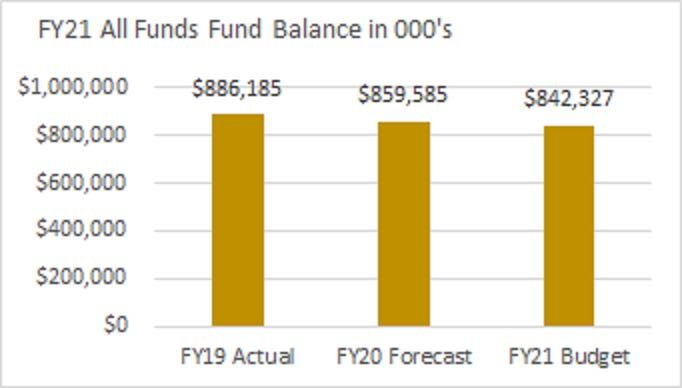
General Fund Discussion Budget Overview
Expenditures
GENERAL FUND DISCUSSION
The FY21 revenue budget supports an expenditure $5.9M; overtime, $3.7M; and computer software,
budget that maintains employment at the current $3.3M. Budget reductions included -$10.0M to pub-
levels through this pandemic. Funding above the lic transit, -$6.9M for professional services, and -
FY20 adopted budget only increased for expendi- $2.5M of funding that supported community non-
tures that are critically required to deliver quality ser- profits costs. Additional expenditure changes from
vices to the citizens of Memphis, or outside of the the FY20 adopted budget are shown below.
administration's control - for example: pension ADC,
EXPENDITURES
Fund Type FY2020 Adopted FY2021 Adopted Inc./Dec.
General Fund $711,558,126 $708,694,526 ($2,863,600)
Notable FY2020 Budget Expenditure Changes: -2.7M
20.4 Million Total Personnel
-1.0 Million Elections
3.3 Million Per Computer Software -0.5 Million Library Books
3.1 Million City Shop Charges
-0.4 Million Clothing
1.8 Million Tax Receivable Sale Vendor
-0.4 Million Expense Recovery - M & S
0.6 Million Misc. Services and Charges -0.3 Million Outside Supplies
0.5 Million Trans Out Library Retirement Fund
-0.3 Million Security
0.3 Million Trans Out Community HUB Initiative
-0.3 Million Ambassador's Fellowship Pay
0.1 Million Professional Services -0.2 Million Legal Services/Court cost
-10.0 Million MATA
-0.2 Million Travel
-6.9 Million Misc Professional Services
-0.2 Million Utilities
-4.0 Million EDGE -0.2 Million Memphis & Shelby County Film
-2.5 Million Community Initiative Grants
-0.2 Million Family Safety Centers of Memphis
-1.2 Million Demolitions
-0.2 Million Juvenile Intervention
-1.0 Million Data/Word Processing Software -0.1 Million Urban Art
-1.0 Million Federal Grant Match - M&S
-1.7 Million Miscellaneous Expense Changes
CITY OF MEMPHIS 2021 FISCAL YEAR
17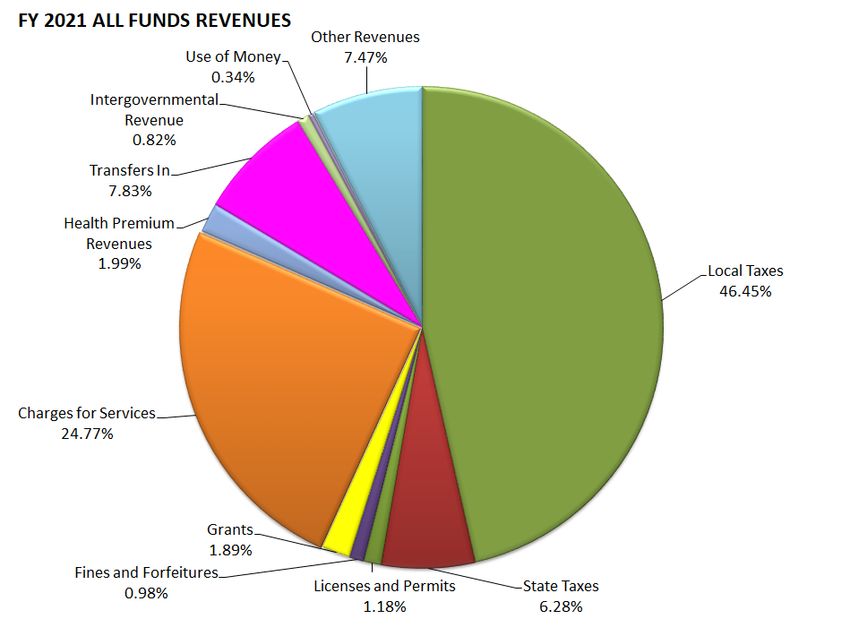
Budget Overview Other Funds Discussion
Other Funds Discussion
OTHER FUNDS DISCUSSION
Debt Service Fund
The Debt Service Fund provides for the accumulation budgeted to be slightly less than the FY20 adopted
of resources for the payment of general long-term budget largely due to lower principal and interest
debt principal, interest and related costs. This fund payments. The Debt Fund will produce a positive
uses approximately 31% of the property tax rate and contribution to its fund balance.
7% of the local sales tax rate. Expenses for FY21 are
DEBT FUND
Fund Type FY2020 Adopted FY2021 Adopted Inc./Dec.
Debt Fund Expenses $173,917,154 $170,487,500 ($3,429,654)
Enterprise Funds
Enterprise Funds account for the acquisition, opera- These are planned increases and revenues are suffi-
tion and maintenance of the City's facilities. The cient to absorb the increases.
Sewer Fund and the Storm Water Fund are the City's
The Storm Water Fund expenses are flat. The Storm
Enterprise Funds. The Sewer Fund expenses for FY21
Water Fund begin issuing its own debt, supported by
are budgeted to increase by approximately 13% over
its revenues, in FY20. The Storm Water Fund will
the FY20 budget. The expenses for chemicals and
produce a positive contribution to its fund balance
capital outlay are the main drivers for the increase.
for future initiatives.
ENTERPRISE FUNDS
Fund Type FY2020 Adopted FY2021 Adopted Inc./Dec.
Sewer Treatment Expenses $129,440,550 $146,177,071 $16,736,521
Storm Water Expenses $24,563,647 $24,560,409 ($3,238)
Total Enterprise Fund $154,004,197 $170,737,480 $16,733,283
Internal Service Funds
Internal Service Funds (ISF) are used to budget for for retired employees that remain on the city's
the costs of goods or services provided to other City health plan.
divisions. The ISF revenues are generated from divi-
sions using their services. Healthcare, Unemploy- The Fleet Fund is continually striving to become
ment and Fleet represent the internal service funds more efficient in the provision of repair services to
in the FY21 budget. other divisions, and managing gas prices with timed
purchases at lower market costs. Fleet Fund
The City's health plan serves almost 6,000 active expenses will decrease in FY21 as the fund is not
employees and 7,500 spouses and dependents. The budgeted to transfer $3.0M to the General Fund.
Healthcare Fund expenses will increase because of
The Unemployment Fund has a healthy and accumu-
health claim expenses. FY21 claims are expected to
lating fund balance. The expense decreased from the
increase by 7% or $6.0M. The Healthcare Fund is not
FY20 adopted budget because the fund will not
budgeting to transfer any of its fund balance to sup-
transfer any of its reserves to the general fund in
port the OPEB fund, which pays healthcare expenses
FY21.
for retirees, to offset the expected claims expense
18
ADOPTED OPERATING BUDGET CITY OF MEMPHIS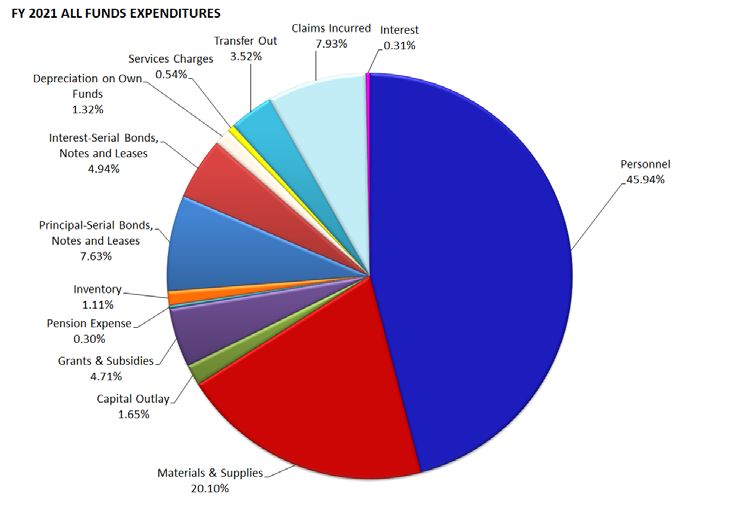
Other Funds Discussion Budget Overview
OTHER FUNDS DISCUSSION
INTERNAL SERVICE FUNDS
Fund Type FY2020 Adopted FY2021 Adopted Inc./Dec.
Health Care Fund Expenses $87,889,108 $95,136,067 $7,246,959
Fleet Mgmt. Expenses $30,106,533 $28,481,037 ($1,625,496)
Unemployment Expense $1,100,000 $200,000 ($900,000)
Total Internal Service Fund $119,095,641 $123,817,104 $4,721,463
Special Revenue Funds
Special Revenue Funds provide budgets for specific includes several partners that have invested in the
revenue sources that are restricted to expenditures cost of education for our young citizens.
for specific purposes. There are ten Special Revenue
The 2019 Sales Tax Referendum Fund reflects new
Funds with spending represented in the FY21 bud-
income from a half-cent increase in the local sales
get. The largest Special Revenue Fund is Solid Waste
tax. The additional tax was approved to provide an
(SW). This fund implemented a rate increase in FY20.
increase in pension and benefits for police and fire-
This increase will cover the FY21 budgeted expenses
fighters. This income will offset the increased cost,
which show a modest increase from the FY20
across the General Fund and/ or the OPEB Fund, for
adopted budget.
the pension and benefit additions. The expected
The Pre-K Fund receives its revenues from property budget cost for FY21 is $20.5M.
taxes collected by the City. The budgeted cost of the
Other special revenue funds and their budgeted FY21
program represents an agreed funding amount that
expense changes from the FY20 budget are identified
below.
SPECIAL REVENUE FUNDS
Fund Type FY2020 Adopted FY2021 Adopted Inc./Dec.
State Street Aid Expenses $20,303,600 $17,803,600 ($2,500,000)
Solid Waste Expenses $73,237,785 $73,428,687 $190,902
Drug Enforcement Fund Expenses $2,115,000 $1,125,000 ($990,000)
Metro Alarm Fund Expenses $2,295,216 $2,159,260 ($135,956)
Park Special Services Fund $166,752 — ($166,752)
Hotel/Motel Occupancy Tax Fund Expenses $14,683,050 $11,947,385 ($2,735,665)
New Memphis Arena Expenses $2,500,000 $2,500,000 —
Fire EMS Fund $3,437,350 $3,437,350 —
Electronic Traffic Citations $250,000 — ($250,000)
Pre-K — $4,500,000 $4,500,000
Community Catalyst Fund — — —
Affordable Housing Trust Fud — — —
HUB Community Impact Fund $250,000 $550,965 $300,965
2019 Sales Tax Referendum — $20,562,855 $20,562,855
Total Special Revenue Fund $119,238,753 $138,015,102 $18,776,349
CITY OF MEMPHIS 2021 FISCAL YEAR
19
Budget Overview Other Funds Discussion
Fiduciary Funds
OTHER FUNDS DISCUSSION
Other Post-Employment Benefits (OPEB) is the Fidu- 2019 Sales Tax Referendum Fund will offset the
ciary Fund that pays for the healthcare of the City's increased claim cost.
retirees. To reduce costs in the OPEB fund, the City
The Library Retirement System Fund represents retir-
has transitioned many retirees to the various insur-
ees that were not placed into the City's plans when
ance exchanges resulting in a significant decrease in
the library system merged with the City.
the cost of claims. Expenses have decreased signifi-
cantly since FY15. Beginning in FY20 a referendum The Pension Fund, which accounts for the activity of
was passed to provide public safety retirees addi- City retirees, is not shown below as it is not included
tional benefits which are reflected in the OPEB fund in the Operating Ordinance for the adopted budget.
cost growth of $12.1M for FY21. Revenues from the
FIDUCIARY FUNDS
Fund Type FY2020 Adopted FY2021 Adopted Inc./Dec.
OPEB Fund Expenses $15,546,665 $27,677,376 $12,130,711
Library Retirement System Fund $1,089,783 $5,586,485 $4,496,702
Total Fiduciary Fund $16,636,448 $33,263,861 $16,627,413
20
ADOPTED OPERATING BUDGET CITY OF MEMPHIS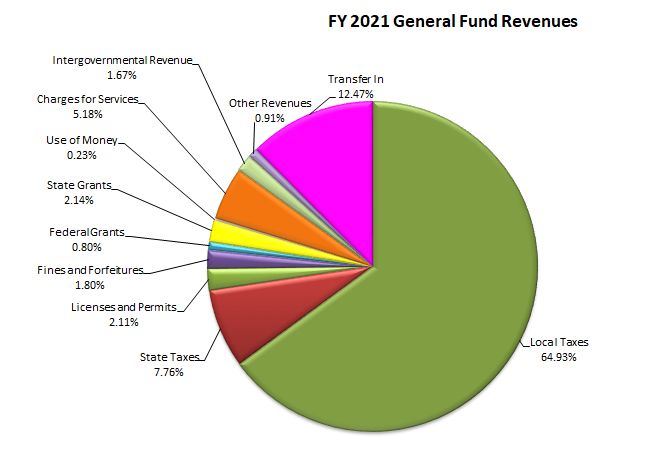
The 2019-2020 Economic Outlook Budget Overview
The 2019-2020 Economic Outlook
ECONOMIC OUTLOOK
The FY2020-FY2021 Memphis Economic Outlook
Summary. The Economic base of Memphis remains strong as the economy begins a
period of recovery from the depths of the COVID 19 pandemic in April 2020. The strength of the
pre-pandemic economy will shorten the recovery period. A decade of economic growth after the
Great Recession had created a full employment economy with rising incomes and abundant job
opportunities during 2019. During the first quarter of 2020, Memphis was continuing to enjoy an
economic boom with industrial, commercial, and residential construction occurring in many
areas of the city. The economy was on its way to a strong year with growth expected in nearly
every sector.
The data on employment trends shown below clearly indicate that the labor market was
strong leading up to the April economic collapse. A strong labor market in Memphis is the fuel
that drives the economy. Job and income opportunities go together and enable most of the
people of the city to prosper. The structural issues of poverty and underemployment remain even
in the best of times. Progress on economic inequality and social distress issues was being made
during the decade long economic expansion.
The totally unanticipated COVID-19 attack on the nation and Memphis made the decade
long economic expansion disappeared in one month. The shutdown of nonessential businesses
had a devastating impact of multiple segments of the local industrial base.
While job losses and declines in the size of the labor force were an important part of the
story, the hospitalizations and lives lost to the virus were far more important. As the cases of
COVID-19 increased and the stay at home orders were extended week after week, massive cracks
appeared in the social and economic foundation of the city. Disaster struck the local economy in
a way few expected.
New Tennessee Unemployment Insurance claims rose from 2,702 on March 14 to 116,141
on April 4 and declined to 22,784 on May 30 statewide and the pattern was mirrored locally.
Memphis labor force numbers were 646,200 in March and fell to 599,000 in April. At the same
time, the number of unemployed people in Memphis rose from 24,900 in March (a number that
was consistent with full employment) to 76,200 in April. Unemployment rates in Memphis soared
from 3.8 percent in March to 12.7 percent in April. Payroll employment numbers (a count of jobs)
fell from 654,200 in March to 588,500 in April—a decline of 65,700 jobs in one month.
While some essential businesses prospered during the economic shutdown, many
businesses did not. The strong economic base linked to transportation and logistics provided
support for the Memphis economy. Retail establishments providing essential goods and services
also supported the local economy. Government and Health related industries have also been
sources of local economic strength. However, many other nonessential businesses faced financial
ruin even with Federal assistance. Clearly the hospitality and tourism businesses including eating
CITY OF MEMPHIS 2021 FISCAL YEAR
21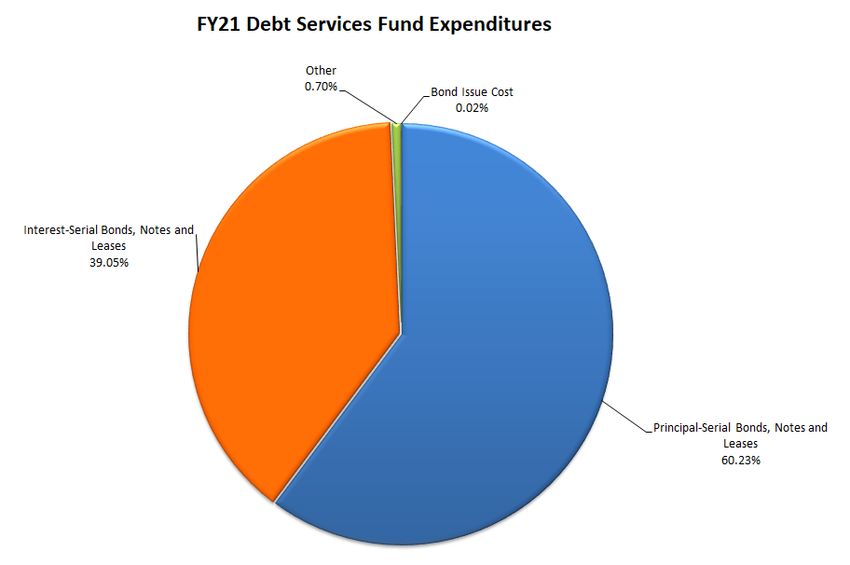
Budget Overview The 2019-2020 Economic Outlook
ECONOMIC OUTLOOK
and drinking establishments, hotels, and tourist attractions incurred devastating economic losses
and face a prolonged recovery.
As the federal and local assistance programs dwindle, the ability of businesses to reopen
and recover from the COVID-19 recession will remain challenging. Reopening the local economy
was an essential first step toward recovery. But, essential capacity restrictions, social distancing,
masks, and other COVID-19 related barriers to fully re-opening the economy will continue to
prolong the length of the post-pandemic recovery.
The 2020-2021 economic outlook is a story of two economies and two distinctly different
periods. Pre-pandemic quarter one of 2020 was strong and seemingly invincible. The dramatic
COVID-19 escalation in March and April compounded by the massive economic shutdown that
eliminated jobs, increased unemployment to record levels, caused the labor force to shrink, and
resulted in unprecedented business closures has set the stage for a long period of recovery. No
one knows the shape of the recovery but likely the monthly cycle of improvements and losses
will continue for all of 2020. Monthly data will be highly unpredictable and inaccurate predictors
of the success of the recovery. Multiple months of positive trends in 2020 and 2021 will occur as
the recovery gains strength but not every month’s data will end positive.
How fast the record federal stimulus packages can create economic growth will also
impact the length of the recovery. The commitment of the Fed to maintaining low interest rates
will be an essential factor in the success of the recovery. Memphis will not grow and prosper
unless the nation grows and prospers. Signs of a national recovery will precede the economic
rebound in Memphis. The economy will bounce back but the economic losses that resulted from
COVID-19 were devastating for Memphis.
While some economists expect a complete recovery to take years, initial improvements
seen in May should continue as the economy opens for business and restrictions disappear. The
second half of 2020 and 2021 will be a rebound period for the local Memphis economy. The
strength and sustainability of the recovery will depend on COVID-19 and the availability of a
viable vaccine in 2021. Another shutdown of the economy seems highly unlikely in either 2020
or 2021 no matter what happens with COVID-19.
22
ADOPTED OPERATING BUDGET CITY OF MEMPHISThe 2019-2020 Economic Outlook Budget Overview
ECONOMIC OUTLOOK
Local Conditions. The data in Table 1 shows the declines in employment in the Memphis
MSA that took place from April 2019 to April 2020. Nearly all those losses occurred in March and
April of 2020. The Leisure and Hospitality industry was the hardest hit with a 44.0 percent decline.
Large sectors like government; trade, transportation and utilities and education and health
services were protected from the pandemic. Other sectors were harder hit with declines in
professional and business services, manufacturing, and other services between 12 and 15
percent. Overall employment declined 9.9 percent year over year.
Table 1. Memphis MSA April 2020 Employment by Industry and Percent Change over April 2019
April 2020 Total Employment
(000) Percent Change from April 2019
Total Nonfarm 588.5 -9.9%
Mining & Construction 22.8 -5.0%
Manufacturing 39.1 -13.1%
Trade, Transportation, & Utilities 167.2 -4.6%
Information 5.4 -3.6%
Financial Activities 27.6 -6.8%
Professional & Business Services 83.5 -12.2%
Education & Health Services 97.4 0.2%
Leisure & Hospitality 38.7 -44.0%
Other Services 23.2 -14.7%
Government 83.6 -1.4%
Notes: Data are not seasonally adjusted. Data for April 2020 are preliminary.
Source: U.S. Bureau of Labor Statistics.
CITY OF MEMPHIS 2021 FISCAL YEAR
23Budget Overview The 2019-2020 Economic Outlook
ECONOMIC OUTLOOK
The long-term growth trends shown in Chart 1 reflect the post Great Recession period
and the slow recovery that occurred in Memphis. The Memphis recovery took most of a decade
and the pandemic losses will offset many of the gains for that period. From 2010, employment
grew steadily and had increased by 62,300 jobs by the end of 2019. The outlook for 2020-2021 is
a return to the growth path of the last ten years but this growth path will begin from a new low.
Chart 1. Memphis MSA Employment (000), 2009-2019
660.0
650.0
654.7
640.0 648.1
641.5
630.0 638.3
620.0 628.2
610.0 616.5
600.0 608.8
603.2 603.6
590.0 595.5
592.4
580.0
570.0
560.0
2009 2010 2011 2012 2013 2014 2015 2016 2017 2018 2019
Note: Data are establishment-based and not seasonally adjusted. Data for 2018 are preliminary.
Source: U.S. Bureau of Labor Statistics.
24
ADOPTED OPERATING BUDGET CITY OF MEMPHISThe 2019-2020 Economic Outlook Budget Overview
ECONOMIC OUTLOOK
Chart 2 data show employment growth in the construction industry and reflect national
economic conditions consistent with the pandemic-induced slowdown. Nationally, there are
concerns that housing growth has been hurt by the pandemic and some areas are overbuilt but
this is not necessarily true in the Memphis MSA, even though April 2020 employment dropped -
5.0 percent over April 2019. With year-to-date local average home sales prices having risen 10.1
percent through April 2020 (see Maar.org for local home price data) and a quickly recovering
economy expected, the incentive is in place for construction to grow even more in 2020-2021.
Far from being overbuilt, the Memphis MSA may be underbuilt as there was a very limited supply
of new and existing homes for sale as of the end of May 2020.
Chart 2. Twelve-Month Percentage Change in Construction Employment, Selected Areas, April 2020
*ST. LOUIS, MO-IL -13.5
NEW ORLEANS-METAIRIE, LA -20.6
INDIANAPOLIS-CARMEL-ANDERSON, IN -5.6
CHARLOTTE-CONCORD-GASTONIA, NC-SC 6.0
BIRMINGHAM-HOOVER, AL -3.4
*NASHVILLE-DAVIDSON-MURFREESBORO-FRANKLIN, TN -1.6
*MEMPHIS, TN-MS-AR -5.0
TENNESSEE -3.8
U.S. -11.3
-25.0 -20.0 -15.0 -10.0 -5.0 0.0 5.0 10.0
*Mining, logging, and construction are combined by BLS to avoid disclosing private data.
Source: U.S. Bureau of labor Statistics.
CITY OF MEMPHIS 2021 FISCAL YEAR
25Budget Overview The 2019-2020 Economic Outlook
ECONOMIC OUTLOOK
Chart 3 shows the trends for the unemployment rates of the U.S., Tennessee, and
Memphis. Locally and nationally, unemployment rates are far greater than those seen during the
Great Recession. It will take time to recover from these abnormal times, but as shown in the next
chart, there is reason to hope.
Chart 3. Unemployment Rates, U.S., Tennessee, and Memphis MSA, December 2008--December
2018
16.0
14.0
April 2020: Tennessee = 15.0%, Memphis MSA = 12.7%, U.S. = 14.4%
12.0
10.0
8.0
6.0
4.0
2.0 Tennessee Memphis MSA U.S.
0.0
Aug-10
Aug-11
Aug-12
Aug-13
Aug-14
Aug-15
Aug-16
Aug-17
Aug-18
Aug-19
Dec-10
Dec-11
Dec-12
Dec-13
Dec-15
Dec-16
Dec-17
Dec-18
Dec-19
Dec-14
Apr-10
Apr-11
Apr-12
Apr-13
Apr-14
Apr-15
Apr-16
Apr-17
Apr-18
Apr-19
Apr-20
Note: Data are household based and not seasonally adjusted. April 2020 data is preliminary.
Source: U.S. Bureau of Labor Statistics.
26
ADOPTED OPERATING BUDGET CITY OF MEMPHISThe 2019-2020 Economic Outlook Budget Overview
ECONOMIC OUTLOOK
Finally, Chart 4 shows a sharp decrease in employment for all employees in the private
sector in April 2020, nation-wide. This decrease was greater than that experienced during the
great recession. Unlike the great recession, this decrease took place in the stretch of a month
between late March and early April. The loss of employment in the great recession was much
more gradual. But, at the end of the data series in Chart 4 is May 2020 data that shows
employment growth of 2.5 million over April 2020. This gives hope that the Pandemic-induced
economic downturn will be short-lived.
Chart 4. Total Employment by Industry and Private Sector Employees in the U.S., Seasonally Adjusted,
May 2000-May 2020.
Note: Data are establishment based. May 2020 data is preliminary.
Source: U.S. Bureau of Labor Statistics.
The Economic Outlook Source: University of Memphis - Fogelman College of Business and Economics
CITY OF MEMPHIS 2021 FISCAL YEAR
27Budget Overview Budget Development Process
Budget Development Process
BUDGET DEVELOPMENT PROCESS
The Budget Office (the Office) is responsible for coordinating the budget preparation for all Divisions
and Funds of the City. The Office assembles financial data provided by City Divisions to develop the
City’s budget. After the compilation of all data the Budget Office coordinates the review and
approval process of the Operating and Capital Improvement Budgets.
The Operating Budget is approved annually. The planning and development process begins in
October for the following fiscal year. When financial preparation begins Divisions are asked to enter
their financial data into the budget system over a three-week period. The information is then
analyzed and divisions are consulted with respect to noticeable budgetary variances. Administrative
reviews are held with each division to further understand their budget requests and n align them
with the City’s priorities. After finalizing any necessary revisions, the Proposed Operating Budget is
submitted to the Mayor for final review and approval. The Mayor presents his administration’s
budget to the City Council (the Council) in April. The Council conducts hearings to review the
budget. With Council’s revisions and approval, the process is complete. Funding approvals are
limited to one fiscal year.
The Capital Improvement Program (CIP) is a five-year plan, which is reviewed and approved annually,
for priority, project changes, and additions. This plan identifies projects for current and future
funding. The process for Capital Planning also begins in October with an evaluation of current assets
(buildings and infrastructure) and an evaluation of new capital needs. Discussions are conducted by
an internal CIP committee which is represented by a cross section of Division leaders. CIP projects
that make the final list are analyzed by the Finance Office to compare to Capital funding capacity.
After Finance Office revisions, the CIP Budget is presented to the Mayor for review and final
approval. The Mayor submits the plan to Council. The Council then conducts its own hearings to
scrutinize the budget. The process ends in June with Council’s approval of the budget. Although the
Council approves a five-year plan, spending is allocated for one year.
28
ADOPTED OPERATING BUDGET CITY OF MEMPHISBudget Development Process Budget Overview
BUDGET DEVELOPMENT PROCESS
OPERATING BUDGET PROCESS
Economic and Operational
Forecast Prepared
Budget Guidelines Released to
Divisions
Budget Submission Due from
Divisions
Finance Reviews Division
Submissions
Division Review
Finance Approves NO
Finance Revises Yes
Mayor Reviews
NO and Approved
Yes
Budget and Five Year Forecast
Presented to City Council
Budget Schedules Division
Reviews for City Council
Public Hearing
Finance Revises
City Council NO
Approves Budget
Yes Budget Adopted
CITY OF MEMPHIS 2021 FISCAL YEAR
29Budget Overview Budget Development Process
BUDGET DEVELOPMENT PROCESS
CAPITAL PREPARATION PROCESS
Finance - CIP Submittal
Timeline Established
Finance – Preliminary CIP Enterprise Departments CIP
Budget from G.O. Bonds Budget
Council District / CIP Committee Develop Mayoral CIP
Public Submittal Proposed Five Year Request Submittal
Finance Reviews / Compiles
Division Submissions
Division Review
Finance Submits Draft CIP to
Mayor
NO
Mayor Reviews
and Approved
YES
Budget and Five Year Forecast
Presented to City Council
Budget Schedules Division
Reviews for City Council
NO
City Council
Approves Budget
Yes
Budget Adopted
30
ADOPTED OPERATING BUDGET CITY OF MEMPHISFY2021 Budget Calendar Budget Overview
FY2021 Budget Calendar
BUDGET CALENDAR
JULY – AUGUST FEBRUARY, MARCH
Preparation of final documents for the new budget Operating Budget/CIP Administrative hearings with
are completed. This includes the Adopted, Divisions.
Operating, and CIP Budget Books.
Operating Budget/CIP review with Mayor, and
Submission of Budget documents to the State COO.
Comptroller’s Office.
Final recommendations made and budget
Budget planning for the next year’s budget. documents prepared.
SEPTEMBER APRIL
Initial revenue trends and projections for the The Mayor presents the Proposed Operating
current year begin. Budget and CIP Budget request to the City Council
on the third Tuesday in April.
Budget training material developed.
Ordinances and Resolutions covering the Proposed
Budget are presented to Council.
OCTOBER
Current Year 1st Quarter Actuals reviewed and Notifications of the Proposed Budget is published
review of revenue trends with external analyst in the local newspaper.
begins.
Current year 3rd Quarter Actuals reviewed and a
NOVEMBER final full year forecast prepared for the current
year.
Finance submits 1st Quarter Operating results of
the new budget to the City Council.
MAY
Divisions submit CIP needs to the CIP Committee.
Budget hearings with the City Council Operating
Budget and CIP Committee to review the Proposed
Overview of the next year’s budget priorities given
Budget.
to Division Chiefs and Directors.
JUNE
DECEMBER, JANUARY Final Adopted Budgets are approved by the City
Revenue projections updated for current year and
Council.
next year.
Ordinances and resolutions associated with the
Budget meeting with divisions for 2nd Quarter Operating and CIP Budgets are finalized.
forecast and next year’s budget request.
Operating Budget training and initiation dates
provided to Divisions.
CIP Budget training and initiation dates provided to
Divisions.
CITY OF MEMPHIS 2021 FISCAL YEAR
31Budget Overview Budgeting And Appropriations Revision Process
Budgeting And Appropriations Revision Process
BUDGET PROCESS AND POLICY
The financial plans of the City are included in the Intra-Category Line Item Transfer (Black Line) or
annual operating and capital budgets. These bud- Inter-Category Line Item Transfer (Red Line).
gets project all receipts and disbursements, and
frames the level of governmental services that can INTRA-CATEGORY LINE ITEMS TRANSFERS
be provided at the approved funding levels. Intra-category line item transfers, called administra-
tive transfers, are used to transfer budgeted funds
within the same category. Administrative transfers
Operating Budget
are necessary when transferring small amounts of
The Administration is responsible for proposing pro- funds within a legal level (program), such as moving
grams and recommending funding levels to the $1,000 from document reproduction to City Hall
Council and for implementing service programs in printing within a service center. The Request for
accordance with established goals and objectives. Transfer of Budget Appropriation Intra-Category Line
The City Council has final responsibility for approving item Transfer must be completed in full including a
the annual Operating Budget and the Capital justification of the transfer. The explanation should
Improvement Program, and setting the tax rate and address why surplus funds are available and why
fees for services. funds are needed. This form must be signed by the
Each Division provides services through smaller units Division Director and forwarded to the Budget Office
known as “program levels.” The adopted budget for approval.
ordinance appropriates spending and provides for
INTER-CATEGORY LINE ITEM TRANSFERS
budgetary control at program levels. Program bud-
Inter-category line item transfers are used to trans-
gets cannot be exceeded without the approval of the
fer funds from one legal level (program) to another
City Council. Strict budgetary compliance is main-
or between categories.Inter-Category transfers are
tained by an automated accounting system to assure
used to transfer budgeted funds from one expendi-
effective fiscal management and accountability. All
ture to another as long as the transfer is within the
requests for purchases or payments are checked by
same legal level (program) and does not exceed
the budgetary control system to assure that funds
$50,000 between categories or a cumulative total of
are available. Purchase Orders and contracts are
$100,000 for the year. For the personnel category
encumbered prior to their release to vendors. Those
only one $50,000 inter-category transfer can be
Purchase Orders and contracts that exceed appropri-
made.
ated amounts cannot be executed until additional
appropriations are made available, either by transfer Inter-category transfers exceeding the cumulative
of existing appropriations or by a resolution granting amount of $100,000 or transfers between Divisions
additional appropriations by Council. The system must be approved by the City Council. The council
controls are maintained at the program levels and transfer form is very similar to the administrative
are basically set up within Personnel, Operations and form. Since the changes require approval of the City
Maintenance and Capital categories. Council, each transfer must be must be accompanied
by a resolution and a Council Agenda Check-Off
Changes to the Operating Budget Sheet.
The Operating budget is a guideline or plan of opera-
tion for each division. However, budget changes may
Capital Improvement Budget
be necessary during the fiscal year (for example, new
The Capital budget and Capital Improvement Pro-
grant monies can be made available or changes in a
gram (CIP) are prepared annually to present the capi-
service center’s personnel can disrupt an otherwise
tal expenditures planned for each of the next five
successful budget). When unforeseen circumstances
fiscal years. The total costs of each project and the
arise, changes can be made to the budget two ways:
sources of funding (local, state, federal and private)
32
ADOPTED OPERATING BUDGET CITY OF MEMPHISBudgeting And Appropriations Revision Process Budget Overview
required to finance each project are estimated. The 1 The Capital Improvement Budget Request for
BUDGET PROCESS AND POLICY
Capital Improvement Program is prepared after a rig- Administrative Transfer or Appropriation form
orous review and evaluation of all proposed projects (Black Line) is used to:
by the Capital Review Committee. Building Design
A Record the initial appropriation of the
and Construction reviews the scope of all requests
planning lines (A/E, land development, land
involving construction or major renovations to City
acquisition) upon the adoption of the CIP by
owned structures. Debt Management studies the fis-
the City Council.
cal feasibility of the projects submitted for future
funding needs. The single year Capital Improvement B Transfer allocations and appropriations
Plan allocates the capital expenditures to be made in within planning lines or within construction
the current budget year. The Capital Budget must be lines (contract construction, latent
in full conformity with that part of the Capital conditions, and other costs).
Improvement Program applicable to the fiscal year C Transfer allocations from “cover-line”
which it covers. project planning lines to the new project
Additional authorizations (appropriations) for each planning lines and the appropriation of the
capital project in the Capital Budget must precede lines.
the expenditures of construction funds. 2 The Capital Improvement Budget Request for
Council Transfer and Appropriation form (Red
Changes to the CIP Budget - Transferring
Lines) is used to:
Allocations & Appropriations
Once the CIP has been adopted by the City Council, A Appropriate all construction lines.
the data is loaded into the City’s Accounting System. B Transfer allocations and appropriations
During the life of the project, it may be necessary to between projects.
provide additional allocations or transfer funds to aid
C Increase/decrease allocations or
in the completion of the project. Two methods are
appropriations of a project.
used to transfer or establish allocation and/or appro-
priations. Changes to the operating budget (exceeding the pre-
scribed administrative levels), or the CIP budget must
be done through resolutions.
CITY OF MEMPHIS 2021 FISCAL YEAR
33Budget Overview Budget Resolution Review Process - Operating & CIP
Budget Resolution Review Process Operating & CIP
BUDGET PROCESS AND POLICY
Resolutions Routing and Handling of Transfers
A resolution is a document asking the City Council to 1 Administrative Transfers and Appropriations
amend the Appropriation Budget Ordinance or Capi-
tal Improvement Budget. A resolution is written in
Division Directors
two sections: the “WHEREAS” section and the
Budget Office
“RESOLVED” section. The WHEREAS section explains
Comptroller’s Office
why the change is necessary, what the money will be
2 Council Transfers and Appropriations
spent for, and why funds are available and where the
funds will come from. The RESOLVED section The budget resolution package (Council Agenda
includes the statements that actually change the Check-Off Sheet, original resolution, red line forms-
Budget Ordinance. including appropriate signatures from the division
director) should be forwarded to the Budget Office
A resolution details the action requested by Council
one week before the Council Committee meets.
and should answer one or more of the following From there the documents will be forwarded as fol-
questions:
lows:
What is the purpose of the change?
1 Chief Financial Officer (CFO).
Why is the change necessary?
2 Chief Legal Officer (CLO).
What will the funds be used for?
3 Chief Operating Officer (COO).
Why are funds available?
4 Mayor’s Office – Resolutions appropriating or
A resolution shall be written in clause format. Each
transferring CIP funds must be received by the
clause in the preamble shall begin with the word
Mayor’s Office by noon on Thursday for Council
“WHEREAS”, include a brief statement answering
Committee action on the following Tuesday.
one or more of the above questions, and continue
with “AND,” an adopting clause. “NOW THEREFORE 5 Council Committee reviews monetary transfers
BE IT RESOLVED”, shall summarize all information as and makes recommendations to the full Council.
requested regarding changes to the City Resolution.
6 The Mayor’s Office forwards the resolution to
The adopting clause may be followed by several addi-
Council Records after the Council Committee
tional clauses. recommendation (s) are made. The resolutions
After finalizing a Resolution, a Council Agenda Check- are then placed on the Council Agenda for
Off sheet must be prepared which summarizes the consideration by the full Council on the following
Resolution and includes all organizational data, Tuesday.
account numbers, and dollar amounts. Council’s approval of the resolution gives the legal
authority to amend the fiscal year’s budget.
Council Agenda Check-off Sheet
Resolutions may be returned to the originating divi-
The Council Agenda Check-Off Sheet must accom-
sion/bureau for corrections at any time during the
pany all documentation that goes before Council.
process.
The originating division/service center must com-
plete the form and have it signed by the appropriate The need for accuracy in the completion of all appro-
service center manager and division director. priate forms and recognition of time constraints is
crucial in processing transfers. The Budget Office
may be contacted for further assistance and/or infor-
mation.
34
ADOPTED OPERATING BUDGET CITY OF MEMPHISFiscal Policy Budget Overview
Fiscal Policy
BUDGET PROCESS AND POLICY
Policies for Fiscal Control financial records for preparing financial state-
Basis of Budgeting. The City budget is in accor- ments and maintaining accountability for assets.
dance with the Municipal Budget Law of the “Reasonable assurance” recognizes that (1) the
State of Tennessee. This law requires a cash cost of a control should not exceed the benefits
basis budget and the budget must be balanced. likely to be derived; and (2) the evaluation of
The budget for the respective funds in this docu- costs and benefits requires estimates and judg-
ment are presented on a cash basis. ments by management.
Balanced Budget. It is the fiscal policy of the City
Audits. The City will ensure the conduct of
to adopt a balanced budget. For State law a bal- timely, effective, and periodic audit coverage of
anced budget requires that the beginning Unas- all financial records and actions of the City, its
signed Fund Balances plus estimated revenues officials, and employees in compliance with local,
must be greater than or equal to appropriations. State, and Federal law.
If necessary, budgets can be balanced with reve- Fund Balance. The City strives to maintain a Gen-
nues from the fund balance; however, the fund eral Fund balance of 10% of expenditures as a
balance shall remain positive and the use of fund standing fiscal policy.
balance for future budgets shall not be recurring.
Financial Management. The City will manage Policies for Revenue and Program
and account for its Operating and Capital Bud- Funding
gets in accordance with principles and standards Revenue Projections. The City will estimate reve-
set forth by the Governmental Accounting Stan- nues in a conservative manner in order to mini-
dards Board (GASB) and Generally Accepted mize the adverse impact of a revenue shortfall.
Accounting Principles (GAAP).
Property Tax Rates. The City will maintain stable
Accounting Method. The City will maintain its tax rates that avoid wide annual fluctuations as
accounting records for general governmental economic and fiscal conditions change.
operations on a modified accrual basis, with rev-
enues recorded when available and measurable Intergovernmental Revenue. The City will
and expenditures recorded when services or aggressively seek a fair share of available State
goods are received and the liabilities incurred. and Federal financial support unless conditions
The City’s actual expenditures, compared to bud- attached to that assistance are contrary to the
get, are on a “modified accrual plus encum- City’s interest.
brances” basis, which treats encumbrances as Cash Management. The City will maintain
actual expenditures at the time the funds are sophisticated and aggressive cash management
encumbered. Accounting records for proprietary and investment programs in order to achieve
fund types and similar trust funds are maintained maximum financial return on available funds.
on the accrual basis, with all revenues recorded Cash will be pooled and invested on daily basis at
when earned and expenses recorded at the time best obtainable rates; investments will be gener-
liabilities are incurred, without regard to receipt ally limited to federal debt instruments, fully col-
of payment of cash. For governmental-type lateralized repurchase agreements, or highest
funds, revenues and expenditures are also moni- quality bankers’ acceptances and commercial
tored internally on a “budgetary” basis to ensure paper.
compliance with legal limitations.
Internal Accounting Controls. The City will Policies for Expenditures and Allocation
develop and manage its accounting system to of Costs
provide reasonable assurance regarding: (1) the
safeguarding of assets against loss from unautho-
Contents of Budgets. The City will include in the
rized use or disposition; and (2) the reliability of Operating Budget all programs and facilities not
CITY OF MEMPHIS 2021 FISCAL YEAR
35Budget Overview Fiscal Policy
specifically eligible for inclusion in the Capital which will maximize the likelihood of sustaining
BUDGET PROCESS AND POLICY
Improvement Program. the City’s “AA” credit rating
Expenditure Growth. The City will budget expen-
ditures for necessary and essential public pur- Policies for Governmental Management
poses only, holding expenditure growth to levels Productivity. The City will measure and seek to
consistent with realistic prospects for the com- increase the productivity of City Programs in
munity’s ability to pay, both in the upcoming fis- terms of quantity and quality of services relative
cal year and in the ensuing years as well. to resources expended, through program evalua-
tion, employee training and incentives, and other
Allocation of Costs. The City will balance the
strategies.
financial burden of programs and facilities as
fairly as possible between the general taxpayers Risk Management. The City will control its expo-
and those who benefit directly, recognizing the sure to financial loss through a combination of
common good that flows from many public commercial and self-insurance; will self-insure
expenditures, the inability of some citizens to pay against all but highest cost risks; and will aggres-
the full costs of certain benefits, and the diffi- sively control its future shares among agencies
culty of measuring the relationship between through loss history.
public costs and public or private benefits in Employee Compensation. The City will seek to
some services.
provide equitable pay among comparable jobs
Expenditure Reduction. The City will seek and City agencies and between employees in col-
expenditure reductions whenever possible lective bargaining units and those outside of such
through efficiencies and through the reduction units, and will seek to contain the growth of com-
or elimination of programs, policies, and prac- pensation costs through organizational efficien-
tices which have outlived their usefulness. cies and productivity within the workforce.
Public Investment in Infrastructure. The City Pension Funds. The City will, through judicious
will, within available funds, plan and budget for management and diversified investment, assure
those facilities and infrastructure necessary for a the security of the assets of the Employees
healthy economy and for support of public pro- Retirement System toward its solvency and regu-
grams determined to be necessary for the quality lar benefits for future as well as present retirees
of life desired by its citizens. and will continue to evaluate the accrued liability
and adjust the funding rate when necessary.
Procurement. The City will make purchases,
directly or indirectly, through a competitive pro- Surplus Property. The City will maximize the
cess except when an alternative method of pro- residual value of land parcels or buildings
curement is specifically authorized by law. declared excess to current public needs through
efforts at public reuse, lease to appropriate pri-
Policies for Debt Management vate organizations, or sale toward returning them
to the tax base of the City. Deposition of goods
Debt Management. The City will minimize debt
that have become obsolete, unusable, or surplus
service costs through the judicious use of avail-
to the needs of the City will be made through
able debt instruments, consistent with the desir-
bid, auction or other lawful method to the pur-
ability of maintaining stable current tax rates and
chaser offering the highest price except under
distributing the costs of certain long-lived facili-
circumstances as specified by law.
ties among all users, present and future.
Resource Management. The City will seek con-
Debt Incurrence. The City will limit the amount
tinued improvement in its budgetary and finan-
of new general obligation debt it will plan for and
cial management capacity in order to achieve the
issue in any six-year period to that which can be
best possible decisions on resource allocation
supported by the community under conservative
and the most effective use of budgeted
fiscal and economic projections and to that
resources.
36
ADOPTED OPERATING BUDGET CITY OF MEMPHISGovernmental Accounting Budget Overview
Governmental Accounting
BUDGET PROCESS AND POLICY
Overview Fund Accounting
Government accounting has many similarities to There are three principles that deal specifically with
commercial accounting. For example, governmental fund accounting. These principles cover 1) Definition
accounting uses the double-entry system, journals, of a fund 2) Types of funds 3) Number of funds.
ledgers, trial balances, financial statements, internal
A fund is defined by the Governmental Accounting
control, etc. Differences arise due to the objectives
Standards Board as a fiscal and accounting entity
and environment of government. The major differ-
with a self-balancing set of accounts recording cash
ences include:
and other financial resources, together with all
1) The absence of a profit motive, except for govern- related liabilities and residual equities and balances,
mental enterprises, such as utilities 2) A legal empha- and changes therein, which are segregated for the
sis which involves restrictions both in raising and purpose of carrying on specific activities or attaining
spending revenues 3) An emphasis of accountability certain objectives in accordance with special regula-
or stewardship of resources entrusted to public offi- tions, restrictions, or limitations.
cials 4) The recording of the budget in some funds 5)
The City of Memphis reports the following funds that
The use of modified accrual accounting in some
are classified into three general types.
funds.
Governmental Funds Proprietary Funds Fiduciary Funds
1 General 5 Enterprise 7 Pension Trust
2 Special Revenue 6 Internal Services 8 OPEB
3 Debt Service
4 Capital Projects
The City does not currently utilize Permanent or Pri- Budgets and Their Impact upon the
vate-purpose Trust Funds. Accounting System
In the governmental funds, the objective is to pro- The GASB, in one of its basic principles, states 1) An
vide services to the public. All of these funds are annual budget(s) should be adopted for every gov-
expendable, i.e., they are not concerned with pre- ernment unit 2) The accounting system should pro-
serving capital or measuring “net income.” Govern- vide the basis for appropriate budgetary control 3) A
mental funds are concerned with the availability of common terminology and classification should be
resources to provide services, and the emphasis is on used consistently throughout the budget, the
working capital flows. Usually, only current assets accounts, and the financial reports of each fund.
and current liabilities are accounted for in the gov-
Generally Accepted Accounting Principles (GAAP)
ernmental funds. Fixed assets and long-term liabili-
requires a budgetary comparison for the general
ties of governmental funds are reported only in the
fund and for each major individual special revenue
government-wide financial statements. The propri-
fund for which an annual (or biennial) budget is
etary funds use accounting and reporting techniques
legally adopted. The City Council annually approves
similar to a private enterprise. The fiduciary funds
a budget ordinance that includes the City of Mem-
are accounted for like proprietary funds.
phis General, Special Revenue, Debt Service and
Enterprise Funds. Internal Service Funds are also
included in the Adopted Budget. These budgetary
accounts are incorporated into the governmental
CITY OF MEMPHIS 2021 FISCAL YEAR
37You can also read


