Building Indigenous Future Zones: Four Tribal Broadband Case Studies - With support from the Internet Society
←
→
Page content transcription
If your browser does not render page correctly, please read the page content below
Building Indigenous Future Zones:
Four Tribal Broadband Case Studies
With support from the Internet Society

By H. Trostle
February 2021
About the Institute for Local Self-Reliance
                      The Institute for Local Self-Reliance (ILSR) is a 46-year-old national nonprofit research and educational
                      organization. ILSR’s mission is to provide innovative strategies, working models, and timely information to
                      support strong, community rooted, environmentally sound, and equitable local economies. To this end,
                      ILSR works with citizens, policymakers, and businesses to design systems, policies, and enterprises that
                      meet local needs; to maximize human, material, natural, and financial resources, and to ensure that the
                      benefits of these systems and resources accrue to all local citizens. More at www.ilsr.org.

                      About the Author
                      H. Trostle (They/Them) is a researcher and activist. They are currently a Project Manager for the Community
                      Broadband Networks program at the Institute for Local Self-Reliance, having previously been a Research
                      Associate prior to graduate school. H. has a Master’s degree in Urban and Environmental Planning from
                      Arizona State University. There they focused on Indigenous Planning, and they believe that planning is an
                      exercise in tribal sovereignty. Their undergraduate degree was in Political Science and Classical Languages
                      at Macalester College in Saint Paul, Minnesota. They are a member of the Cherokee Nation of Oklahoma.
                      Find more work at hrtrostle.tech.

                      Acknowledgements
                       Thank you to Allyson Mitchell from Mohawk Networks, Danae Wilson from Nez Perce Department of
                       Technology Services, Jason Hollinday from the Fond du Lac Planning Division, Matthew Rantanen
                       from the Southern California Tribal Chairmen’s Association, and Valerie Fast Horse from Red Spectrum
                       Communications.
                       They took time to discuss the details of these networks and the future of tribal broadband. I greatly
                       appreciate that they also reviewed the case studies that we wrote about their communities’ networks.
                       Thank you!

                       Thank you also to the editors of the full report: Christopher Mitchell and Sean Gonsalves at the Institute
                       for Local Self-Reliance. They took my writing to the next level.

                      Sponsored by the Internet Society
                      We know the Internet is a powerful tool for change. Connectivity has a direct impact on socioeconomic
                      benefits in Indigenous communities, including self-determination, governance, improved health outcomes,
                      economic development, and culture and language preservation. For rural and remote Indigenous
                      communities, the Internet is a lifeline to an increasing number of essential services online, and even
                      sovereignty. As Brandon Makaawaawa, Deputy Head of State of the Nation of Hawaii, said after partnering
                      with the Internet Society on the Nation’s first Internet infrastructure build, “In order for our sovereign
                      Nation to evolve independently, it is critical that we have control over our connectivity. We consider this
                      national infrastructure, and in many ways, these are our first roadways.”

                                                            Listen to Community Broadband Bits Podcast
      For weekly updates on
                                                 A weekly podcast featuring interviews with people building community
         our work, sign up
                                                                networks and shaping Internet policy.
        for the Community
       Broadband Networks
             newsletter:
      https://muninetworks.
         org/content/sign-
             newsletters                                            This report is licensed under a Creative Commons license. You are
                                                                    free to replicate and distribute it, as long as you attribute it to ILSR
                                                                                 and do not use it for commercial purposes.

Building Indigenous Future Zones:                                                      ILSR.org
Four Tribal Broadband Case Studies                                             MuniNetworks.org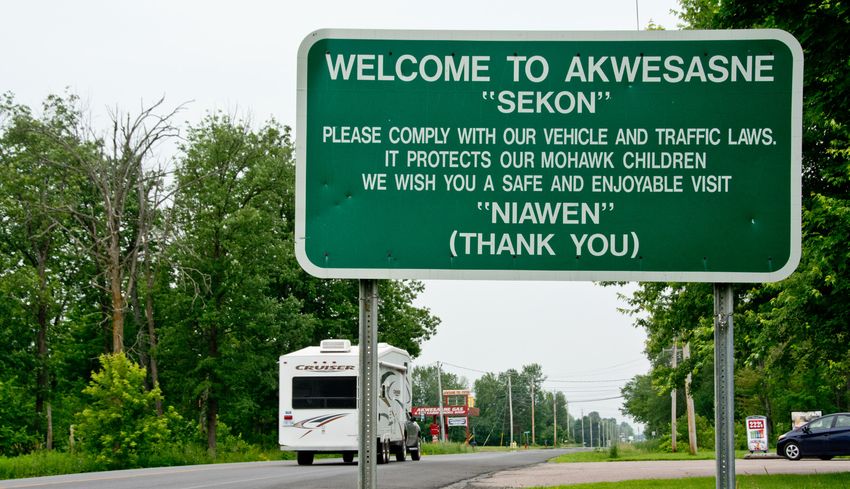
Table of Contents

           Introduction.............................................................................................................................................................1

           Welcome to Indian Country....................................................................................................................................1

           Economic Development..........................................................................................................................................2

           Internet Infrastructure............................................................................................................................................3

           Spectrum Sovereignty.............................................................................................................................................4

           Red Spectrum Communications.............................................................................................................................6

           Hoh Nation & Starlink (sidebar).............................................................................................................................8

           Nez Perce Tribe Department of Technology Services............................................................................................9

           Aaniin Fiber Services............................................................................................................................................12

           Mohawk Networks................................................................................................................................................15

           Key notes...............................................................................................................................................................17

           Conclusion.............................................................................................................................................................18

           Glossary.................................................................................................................................................................19

           Endnotes................................................................................................................................................................22

                                                                                                                                 ILSR.org
Building Indigenous Future Zones:                                                               i                        MuniNetworks.org
Four Tribal Broadband Case Studies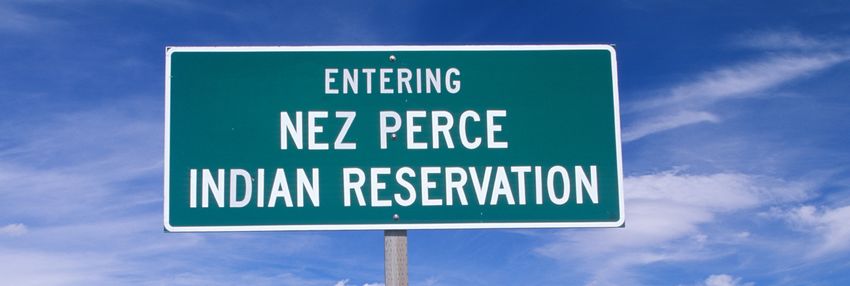
Introduction
                                     The COVID-19 pandemic has brought to the forefront the importance of infrastructure, especially
                                     in Native Nations. The most important pieces of physical infrastructure that COVID-19 responses
                                     require are running water and Internet access. Many communities still do not have adequate
                                     access to these necessities. Internet access is critical for working from home or accessing social
                                     safety net programs in this time of crisis.

                                     This paper intends to offer insight into Internet infrastructure development in the more than 574
Spectrum Sovereignty:                Native Nations across the U.S. According to our last count, there are approximately 40 tribally
This refers to the sovereign right   owned networks across the lands of 65 Native Nations, and there are another 37 Native Nations
of Native Nations to access and      working in partnerships with private providers. For readers unfamiliar with Native Nations, we
use radio frequencies. There is a    have provided an incredibly brief history of colonialism and economic development before
growing movement to recognize        laying out the inequities of Internet access. This history is necessary to understand the rise of
the spectrum that covers Indian
                                     the movement for Spectrum Sovereignty and Network Sovereignty, which are key to meeting
Country as a federal trust
responsibility (a natural resource   Internet infrastructure needs in Native Nations.
that is managed by the federal
government on behalf of Native       Public policy should learn from the errors of the past and find solutions to bridge the digital
Nations).                            divide that will help create wealth in Native Nations. There are many ways to address the digital
Network Sovereignty:                 divide, but not all of them lead to economic development or recognize the importance of
Dr. Marisa Duarte uses this term     sovereignty. Native Nations are sovereign over their data, and have the obligation to protect that
to describe how infrastructure for   information and use it for the betterment of tribal citizens. Past US federal public policy in Indian
Internet access supports Native      Country has often been rooted in paternalism and led to more problems.
Nations’ sovereignty through self-
determination.                       Select case studies in this report highlight the many different ways that Native Nations have built
                                     their own Internet Service Providers (ISPs). The goal is not just to address the digital divide, but
Learn more at MuniNetworks.org/
                                     to encourage development and enact sovereignty. Improving Internet infrastructure has the
content/indigenous-networks          opportunity to provide a new boost to local economic development initiatives. Owning and
                                     operating this infrastructure also supports Native Nations’ sovereignty by keeping power and
                                     data within the communities rather than relying on an external provider. Imagine a community
                                     with 20,000 families each with a $50/month Internet connection — that is more than $1 million
                                     each year that could be leaving the community or staying local to build wealth.

                                     Land Acknowledgement
                                     ILSR’s offices are located on land that was, and is, stewarded by Indigenous peoples. ILSR
                                     recognizes, supports, and advocates for the sovereignty of Native Nations.

                                     Minneapolis, Minn.: Bdote, the land where the two rivers meet, is part of the traditional territory
                                     of the Dakota people and has served as a gathering place for many Indigenous peoples.

                                     Washington, D.C.: The traditional territory of the Anacostan and Piscataway peoples.

                                     Portland, Maine: The traditional territory of the Wabanaki Confederacy, which is currently
                                     comprised of the Penobscot, Passamaquoddy, Maliseet, Abenaki, and Micmac nations.

                                     Welcome to Indian Country
                                     Native Nations are Indigenous communities whose relationship with this land stretches long into
                                     the past. They are self-governing, but, contrary to common belief, they do not all have reservations.
                                     There are 574 federally-recognized tribes in the U.S., and more than 60 state-recognized tribes.
                                     There are also many unrecognized tribes, which may choose to seek state or federal recognition.

                                     Colloquially, Indian Country refers generally to Native Nations in the United States. Legally, it
                                     mainly refers to allotted lands and lands within reservation boundaries. This legal term, however,
                                     excludes many communities in Hawaii and Alaska: Hawaiian homelands, tribal statistical areas and
                                     Alaska Native Villages. The term tribal Lands is used by the Federal Communications Commission
                                     (FCC) to account for all of these differences.

                                     Reservations were created through treaties with the federal government. Resources and land are
                                     often held in trust by the federal government, which means that the land is not subject to state

                                                                                           ILSR.org
Building Indigenous Future Zones:                                  1               MuniNetworks.org
Four Tribal Broadband Case Studies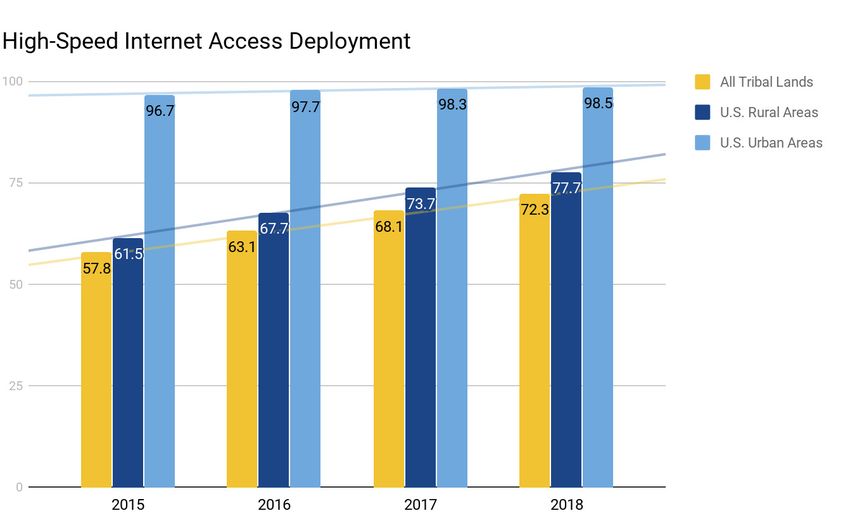
jurisdiction, though federal laws and policies do apply. Moreover, the land cannot be collateralized
                               for loans. Allotted land refers to land that was formerly part of a single community land base that
                               was then given directly to Native American families. Many of these allotted lands were then sold to
                               non-Natives, which has created a patchwork effect on many reservations. These many variations in
                               land policies are just one example of the ways in which Native Nations have been harmed by the
                               long history of U.S. settler colonialism.

                               Settler colonialism includes the death and displacement of many Native Nations, including the
                               Trail of Tears in the 1830s and the Dakota War of 1862. The Dawes Act (1887) attempted to
                               force Western lifestyles and individual land ownership onto members of Native Nations. It also
                               encompasses the period of boarding schools in the 1800s and 1900s that attempted to socially
                               assimilate Native Americans by removing access to community and culture. In 1934, the Indian
                               Reorganization Act attempted to force Native Nations to adopt Western systems of governance
                               and economic development under the control of the federal government. Settler colonialism
                               further includes the legal termination of many Native Nations, such as the Amah Mutsun, in the
                               1940s through 1960s. This is when the federal government declared that some Native Nations
                               were so assimilated and doing sufficiently well economically that treaties no longer applied. The
                               1960s also featured a push to move Native Americans into cities, away from reservations, and
                               further assimilate them into the U.S. economy.

                               It is only recently in U.S. history that the federal government has followed consistent policies
                               that attempt to support Native Nations. In 1975, the U.S. Congress adopted the Indian Self-
                               Determination and Education Assistance Act, which enabled Native Nations to have an active
                               role in economic development in the era of self-determination. The federal government created
                               the Office of Native Affairs & Policy within the FCC in 2010 to work with Native Nations on
                               developing Internet infrastructure.

                               Economic Development
                               This history of settler colonialism has created challenges for economic development initiatives
                               in Indian Country. Economic development that respects culture and promotes community is
                               effective, and every Native Nation is different. But there are three broad areas of economic
                               development policy that are helpful for Native Nations. These are 1) Natural Resources, 2)
                               Gaming, and 3) E-commerce & Microbusinesses. Understanding this background is important
                               context for getting Internet access right.

                               This should be taken as only the most basic overview of economic development in Indian
                               Country. Every Native Nation has its own unique history and culture. These broad generalizations
                               are provided to contextualize the role of Internet infrastructure in Indian Country’s economic
                               development.

                               Natural Resources
                               The federal government had little interest in economic development in Native Nations until the
                               1900s, but the focus was often then on extracting natural resources through logging, fishing,
                               and mining. For many Native Nations, this type of economic development did not necessarily
                               align with cultural values, and it created a tension between economy and tradition that did not
                               previously exist. In the early 1900s, Native Nations’ economic development policy was largely
                               controlled by the U.S. government.

                               Even democratizing projects of that era had a goal of resource extraction. The 1934 Indian
                               Reorganization Act (IRA), also called the Indian New Deal, enabled Native Nations to adopt
                               constitutions and formalize governance structures. The U.S. government provided example
                               constitutions, which were similar to governing documents used by corporations. In general,
                               these IRA constitutions made it easier for the U.S. government to form deals regarding natural
                               resource development in Native Nations. Natural resource markets, however, are not always
                               predictable, and decades of federal management created issues in terms of environmental
                               stewardship.

                               Native Nations began to take back control of their economic policy in the 1970s with the 1975
                               Indian Self-Determination and Education Assistance Act. Native Nations had the ability to

                                                                                     ILSR.org
Building Indigenous Future Zones:                           2                MuniNetworks.org
Four Tribal Broadband Case Studies
contract with and receive grants from the federal Indian bureaucracy. Instead of the funding
                                     going to a federal agency that then provided services to Native Nations, Native Nations received
                                     the funding and provided the services themselves. This meant that Native Nations could begin to
                                     set their own economic development agenda.

                                     Gaming
                                     In the mid-1970s, a U.S. Supreme Court case about state and tribal regulatory power set the
                                     legal groundwork for gaming to take off as a new avenue of economic development. Native
                                     Nations began to operate bingo halls and casinos, while state governments pushed back. In
                                     1987, the U.S. Supreme Court upheld the legality of tribal gaming.

                                     In 1988, U.S. Congress then implemented a complete system of regulation regarding these
                                     gaming operations with the Indian Gaming Regulatory Act dividing them into Class I (traditional,
                                     small prizes), Class II (bingo), and Class III (slot machines and other gambling). The law stipulates
                                     that, if a state allows commercial casinos or gaming operations, a federally recognized tribe
                                     can pursue gaming in which Native Nations and state governments negotiate State Compacts
                                     concerning the type and number of gaming operations in each state. The National Indian
                                     Gaming Commission, established by the 1988 Act, supports more than 240 federally recognized
                                     Native Nations in 29 states with their gaming operations.

                                     Native gaming is a multi-billion-dollar industry. The National Indian Gaming Commission valued
                                     the 2018 gross revenue of Indian Gaming at $33.7 billion.1 Revenue has been slowly increasing
                                     over the past decade,2 but not every gaming operation has seen the same amount of growth.
                                     Many Native Nations are far from cities, and gaming operations have to be conducted on tribal
To learn more, check out these       land.
resources:
                                     Native governments use these funds to support tribal governance and social services as well as
The National Congress of
American Indians’ video series on    reinvest in gaming operations to grow the industry. Some tribal governments also channel some
Economic Development20               of the revenue into per capita payments, or per cap. Native Nations that do have per cap may
                                     give a small sum every year or larger payments monthly — It depends on the particular economic
The Office of Native American
Affairs at the U.S. Small Business
                                     situation of each Native Nation. These funds, however, are not guaranteed. The COVID-19
Administration21                     pandemic has shown that gaming operations may need to be closed for a significant period of
                                     time and there are signs that changes to state and federal law over time may allow other entities
                                     to also build gaming operations that would likely cause a decline in revenues for Native Nations.
                                     Some have viewed the opportunity to build a broadband network as not only providing a vital
                                     service, but diversifying future revenues. However, gaming operations are only one part of the
                                     economy on Native Nations and many do not have gaming operations at all.

                                     E-Commerce & Microbusinesses
                                     Recently, there has been a rise in e-commerce and microbusinesses. Microbusinesses are very
                                     small businesses. Some examples are: local roadside stands, new graphic designers, and Etsy
                                     craft makers. These startups may rely on Internet infrastructure to sell their work.

                                     The federal government offers some support to Native American small businesses. The U.S.
                                     Small Business Administration has an Office of Native American Affairs that provides technical
                                     support to small businesses and offers entrepreneurial empowerment workshops. The Indian
                                     Arts and Crafts Act of 1990 is also very important to microbusinesses because it prevents false
                                     advertising of work as Native American made if it was not made by a federally recognized tribe.

                                     Native Nations are encouraging the growth of small businesses and microbusinesses to boost
                                     their local economies. Small businesses are an engine for economic growth in the United States:
                                     they account for 47.3 percent of all jobs and 99.9 percent of all businesses in the U.S.3 In Native
                                     Nations, there is a concern of economic leakage, where people spend their money outside of
                                     their local community because there are few small businesses.

                                     Internet Infrastructure
                                     It is within this historically charged and changing environment that infrastructure development
                                     has taken place in Native Nations. The U.S. government did not focus on ensuring infrastructure

                                                                                           ILSR.org
Building Indigenous Future Zones:                                  3               MuniNetworks.org
Four Tribal Broadband Case Studies
development in Native Nations until recently. Basic infrastructure is still lacking on many
                               reservations. In 2017, the National Congress of American Indians submitted a report to Congress
                               and the Administration stating that “only 88 percent of Native people received drinking water
                               that met all applicable health-based standards.”4 They also found that “14.2 percent of Tribal
                               households do not have access to the most basic electric services.”5

                               It is no wonder that Native Nations also face challenges getting high-speed Internet access. The
                               minimum broadband speed set by the FCC is only 25 Mbps download and 3 Mbps upload on
                               a fixed (non-satellite) connection. High-speed Internet access in Native Nations has long trailed
                               that of rural and urban areas in the U.S. (Figure 1). The rural-urban digital divide is well-known.
                               What is less well-known: tribal lands have not seen an increase in high-speed Internet access at
                               the same rate as rural areas.

                               High-Speed Internet Access Deployment

                               Figure 1: High-Speed Internet Access Deployment in Tribal Lands 2015 - 2018 (2020 FCC Broadband Deployment Report)

                               This tribal lands data also understates the problem in the lower 48 states because it accounts for
                               more highly connected areas including the Hawaiian Homelands. As of December 2018, only
                               56.9 percent of tribal lands in the lower 48 states had high-speed Internet access (Figure 2).6

                               2018 Tribal Lands Data Disaggregated

                               Figure 2: High-Speed Internet Access Deployment in Tribal Lands 2018 (2020 FCC Broadband Deployment Report)

                                                                                                   ILSR.org
Building Indigenous Future Zones:                                     4                    MuniNetworks.org
Four Tribal Broadband Case Studies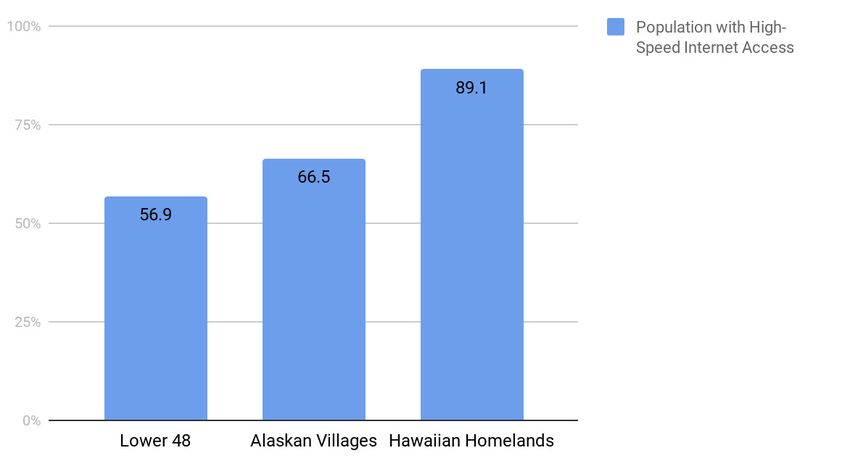
The FCC Office of Native Affairs & Policy is working to address these disparities. The FCC
Southern California Tribal Digital     created the office in 2010 to develop policies and programs to improve Internet access on
Village in California                  tribal lands. The office creates and leads outreach FCC efforts to Native Nations regarding any
Southern California Tribal Digital     policy changes that might impact their connectivity. The office also oversees the Native Nations
Village is a wireless network          Communications Task Force.
that is managed and operated
by the Southern California Tribal
Chairmen’s Association.22 The          Spectrum Sovereignty
network provides service to 19
tribes near San Diego. At least 40     One step to better Internet infrastructure is increasing the authority of Native Nations to manage
percent of the 9,000 people have
                                       the electromagnetic spectrum over their lands, called Spectrum Sovereignty.
access to the network. It uses
almost every piece of available
unlicensed or lightly licensed         This refers to the sovereign right of Native Nations to access and use spectrum. A growing
spectrum in the area to extend         movement recognizes the spectrum that covers Indian Country as a natural resource similar to
coverage. Matthew Rantanen             mineral and water rights. The federal government has a history of trying to control such natural
stated that the tower at the           resources, rather than recognizing that they fall under the purview of treaties and the federal
head-end of the network literally      trust responsibility. The trust responsibility refers to how certain resources and lands are held in
cannot support any more gear.          trust by the federal government for the benefit of Native Nations. Under current policy, Native
They have even had to get point
                                       Nations have not received funding from the auctioning and licensing of spectrum over their land
to point licenses with the FCC
to continue to push the network        that is managed by the FCC.
further. “There’s a shortfall with
the availability out there,” stated    Spectrum is all around us. It includes radio frequencies, and it is divided into different frequency
Rantanen.                              bands. But it is more than just FM radio and TV signals. It is an essential resource for wireless
The Tribal Digital Village was         Internet service. Currently, the FCC auctions licenses for spectrum to entities based on distinct
built from the ground up to            geographic units. Native Nations have little opportunity to participate in this system because
serve a particular need in the         the system tends to be optimized for large communication corporations and the geographic
communities. COVID-19, however,        units do not often align with the boundaries of Native Nations. This approach makes it difficult
has demanded more resources            for Native Nations to operate radio stations or develop wireless Internet service. There are some
from the network than ever             spectrum bands that are unlicensed or only lightly regulated, allowing anyone to use them with
before. Managing the network           pre-approved off-the-shelf equipment. Some wireless networks, such as the Southern California
is a complex task. Short-term,
                                       Tribal Digital Village, use this spectrum to provide Internet access.
low-cost solutions can turn
into larger expenses down the
road, and Rantanen is focused          Recognizing that Native Nations should have access to spectrum, the FCC created a Rural Tribal
on developing the network in a         Priority Window for the auctioning off of a specific band of spectrum in 2020. The 2.5 GHz band
sustainable way. “Spectrum is a        had been previously designated mainly for Educational Broadband Services7 but it later became
great tool to serve communities,       clear that this band could also be used for Internet access. Unfortunately, the FCC had paused
but it is not as scalable as fiber,”   licensing of the 2.5 GHz band in the early 1990s. Understanding the better use of this band, the
Rantanen explained in describing       FCC is now looking to distribute overlay licenses that do not interrupt the continued use of the
the different approaches to
                                       2.5 GHz band by current license holders. Instead, these overlay licenses enable people to use all
Internet infrastructure. Tribal
Digital Village is still expanding     of the currently unused portions of the band in their area. The FCC could have simply allocated
and exploring cost-effective ways      this spectrum to the Native Nations, but decided to continue with an auction format after
to serve the rural communities.        allowing Native Nations to claim rights to their territory if interested.

                                       Native Nations had to act by August 3, 2020 to enter the auction process, though only rural
                                       tribal areas were eligible where the FCC designated that sections of the band were unused.
                                       The 2.5GHz band must still be used for the public good, and there are requirements on how
                                       long licensees can keep the spectrum if they do not begin using it. Some advocated for Native
                                       Nations taking advantage of this auction regardless of whether there were specific plans on how
                                       to use the 2.5GHz band because the auction did not require plans to be laid out in advance.
                                       Others recommended entering the auction with types of ready-made networks that can operate
                                       in the 2.5GHz band. Adopting an approach that recognizes Spectrum Sovereignty preempts the
                                       need for such arguments, since Native Nations can manage spectrum using similar systems to
                                       what they have developed for other natural resources.

                                                                                             ILSR.org
Building Indigenous Future Zones:                                    5               MuniNetworks.org
Four Tribal Broadband Case Studies
Red Spectrum Communications
Coeur d’Alene Tribe in Idaho
Idaho
Coeur d’Alene
About the Coeur d’Alene Tribe
The Coeur d’Alene Tribe are the Schitsu’umsh, meaning “those who were found here.”8 They
have always lived in Idaho, Washington, and Montana as it is their ancestral homeland. There are
more than 2,000 tribal members, and the reservation is about 345,000 acres in northern Idaho.9
The Coeur d’Alene Tribe have built a casino and hotel that usually has $20 million in profits
each year, and they also operate the Benewah Medical Center, which serves 10,000 patients
Learn more about Spectrum (both Native and non-Native) in the area.10 The tribal school is housed in a $5 million facility, and
Sovereignty and Network the Education Department also works in collaboration with Idaho’s state college system on a
Sovereignty: language degree program.11
Spectrum Sovereignty Workshop
at Arizona State University’s
American Indian Policy, featuring Brief History of Red Spectrum Communications
MuralNet, a 501(c)(3) nonprofit
that assists with network
The network started out of an unfulfilled need in the community. In the early 2000s, the Coeur
planning.23
d’Alene reservation still relied on dial-up. In 2004, the maximum speed available via dial-up on
Network Sovereignty: Building the reservation still fell short of 56 Kbps. The dial-up depended on old copper lines that had
the Internet Across Indian Country been put into the ground almost one hundred years ago, and the signal degraded quickly on that
is a book by Marisa Duarte, a
infrastructure. Valerie Fast Horse, now the Director of Information Technology at Coeur d’Alene,
professor at Arizona State
University, that describes how
saw an opportunity to improve Internet speeds and access. As a federally recognized tribe, the
radio and Internet service are key Coeur d’Alene Tribe can access several federal programs (many through the U.S. Department of
to sovereignty.24 Agriculture (USDA)) to fund Internet infrastructure.
The Government Accountability
In 2004, the Coeur d’Alene Tribe applied for
Office released the report, “FCC
Should Undertake Efforts to a Community Connect Grant through USDA
Better Promote Tribal Access to Rural Development. They received funds
Spectrum,” in November 2018.25 to build a small wireless network providing
It recommends ways to reform the up to 1.5 Megabits per second (Mbps). By
allocation of spectrum for tribal 2010, however, it became evident that the
broadband. demand for connectivity was more than what the wireless network could handle. There was not
enough unlicensed spectrum to meet their needs, and the challenge of signal interference was
increasing. At the time, the federal government enacted the American Recovery & Reinvestment
Act (ARRA), with billions of dollars in broadband subsidies available.
In 2012, the Coeur d’Alene received ARRA funding to build a fiber network to support the
wireless network. They received about $12.2 million, half loan and half grant, through the USDA
Rural Utilities Service to build both middle-mile and Fiber-to-the-Home. The middle mile was
necessary to move the local Internet traffic off of the reservation and to the wider web. Frontier
ILSR.org
Building Indigenous Future Zones: 6 MuniNetworks.org
Four Tribal Broadband Case Studieshad wanted to charge the Coeur d’Alene Tribe $22,000 each month to access its middle mile
network, but building their own would be much more economical over the long term.
The Technology Department continues to improve upon the wireless network to support all
the users. With COVID-19, the network has experienced increased strain. Users report more
lag if there are multiple devices trying to use the network simultaneously. Staff are doing what
they can, but they are limited in the capacity of the spectrum available to them for wireless
subscribers.
Network Details
Population Served
Approximately 1,600 households are currently connected with about 90 more waiting to be
connected. The wireless and fiber service areas cover approximately 4,000 people total.
The wireless service area is much larger than the fiber service area, but Red Spectrum is
seeking to expand the fiber service area. There are only a few Fiber-to-the-Home towns on the
reservation. Red Spectrum Communications connects the tribal school with a 10Gb connection
and the tribal government center with a 5Gb connection.
PRICES & SPEEDS
TABLE 1
Speed Tier Price
Lifeline Broadband Service $49.95
10 Mbps $59.95
25 Mbps $79.95
100 Mbps (Available on Fiber) $124.95
Funding
Most of the funding for the wireless and fiber projects came from the USDA in the form of grants
and loans with the Community Connect program and the ARRA. The total cost to build the
network, including the middle mile, was a little over $12 million. The fiber network took up the
bulk of the funding (about $10.2 million). The wireless networks had a lower initial capital cost
(about $2.3 million) but the operating costs, such as changing equipment on towers, are much
higher than on the fiber.
Expansion Plans
Red Spectrum Communications has submitted a grant and loan application for a project to
expand and bring Fiber-to-the-Home to Plummer, Idaho, the largest city on the reservation. The
town is home to about 1,000 people, and the community has few options for wired Internet
access.
Managing spectrum and setting up networks
In developing the initial application for the Community Connect grant back in 2004, Information
Technology Director Fast Horse had looked to the Tribal Digital Village network in California for
an example of a successful wireless project. Red Spectrum Communications has grown from
there, and it uses both the 2.4 GHz and the 5GHz bands of unlicensed spectrum to provide
service in their wireless area. Fast Horse is keeping an eye on the new technology for the 6GHz
band, which she expects will be available by the end of this year. The 6GHz band has a lot more
capacity and can relieve network congestion.
ILSR.org
Building Indigenous Future Zones: 7 MuniNetworks.org
Four Tribal Broadband Case StudiesTakeaways for Other Native Nations
To close our interview, we asked Fast Horse what she thinks other Native Nations should know
about building Internet infrastructure. She pointed out that, at the time, no one else was building
on the reservation because no one wanted to take on the work. She also highlighted that “you
need to really make sure that tribal members are invested in it, especially tribal members with
technical skills.” Fast Horse stressed that it is best to hire locally and develop local talent.
Ultimately, she pointed out that technology is progressing rapidly, and it is not like water or
sewer infrastructure where there is no possibility of competition. Wireless towers will still be
useful as equipment changes, but providing good service is a continuing challenge as needs
and utilization also change. She noted that although the fiber in the ground is future proof, you
still have to make sure to change the electronics about every decade on the headend.
Hoh Nation & Starlink
While several Native Nations have taken on the challenge of building their own networks for Internet service, this is
not the only option for better connectivity. The Hoh Tribe in western Washington decided to try a new approach to
improve their Internet access — Starlink, a project from SpaceX.
After meeting with Starlink representatives, the Hoh Tribe decided to be a beta tester for this new service. Starlink
currently connects 18 homes in the community with speeds greater than 179 Mbps down. Speed tests from several
beta testers in Washington clock the upload capacity between 10-40 Mbps. Community members now have access
to distance learning and telehealth with this high-speed service. The Hoh Tribe itself pays for these connections for
this first year, but next year the Hoh Tribe plans to shift billing to households directly.
Satellite Internet service is usually known for its poor quality, but Starlink is different. It uses low Earth orbit satellites
to provide high-speed connections, and it can be a connectivity solution for remote areas where building a network
is not feasible. Starlink can provide service to households directly or offer backhaul for wired or wireless networks
distant from existing points of presence to interconnect to the Internet.
StarLink looks to be a high-quality solution for the present, but the Hoh Tribe are still pursuing the building of their
own network in the long term. 26
ILSR.org
Building Indigenous Future Zones: 8 MuniNetworks.org
Four Tribal Broadband Case StudiesNez Perce Tribe Department of Technology
Services
Nez Perce Tribe in Idaho
Idaho
Nez Perce
About the Nez Perce Tribe
The Nez Perce Tribe are the Nimiipuu people whose land is in Idaho, Washington, and Oregon.
They entered into a treaty with the U.S. in 1855, and this treaty set the boundaries of a 7.5
million acres of reservation. The U.S., however, discovered gold on the lands, and, after settlers
continued to trespass and steal land, the U.S. forced the Nez Perce to sign another treaty in
1863. This treaty reduced the land base to only 750,000 acres. Later, the federal government
again attempted to reduce the lands held by the Nimiipuu people through the Allotment Act,
which created the checkerboard of land rights within the reservation today.12 The Nez Perce Tribe
operates two casinos: The Clearwater River Casino & Lodge and the It’se Ye-Ye Casino.13
Brief History of the Fiber and Wireless Projects
Like many fiber and wireless projects, the wireless network came out of a feasibility study for
better connectivity between the government offices. In the 2000s the government was using
bundled T1s and homes still relied on dial-up connections. Danae Wilson, Manager of the Nez
Perce Tribe Department of Technology Services, explained how remote offices would start an
email with attachments in the morning, and it would take all day for the email to actually send.
The Nez Perce Department of Fisheries especially needed better connectivity at remote offices
to collect and transmit a significant amount of data. At one point, they were physically moving
laptops in Pelican cases to transfer data between offices because it was faster than using Internet
service.
ILSR.org
Building Indigenous Future Zones: 9 MuniNetworks.org
Four Tribal Broadband Case StudiesThe Nez Perce started to deploy fiber in Lapwai where the tribal headquarters are located in
2000. They connected 18 locations and added additional fiber over subsequent years to connect
more communities and remote facilities. As a model in building the network, the Nez Perce
looked to some municipal models.
It all started to come together in 2009 when the Nez Perce tribal law enforcement were looking
to connect their five towers, including some that were rather remote. They combined funding
from the Idaho Gem Grant Program with a USDA Community Connect grant to deploy a few
towers. Orofino to Lapwai, Idaho, was the first fixed wireless connection. Over the next three
years, the network served its purpose but still proved to be insufficient. The goal of the fiber
and wireless network was never to turn a profit, and the service is not run as a tribal enterprise.
Instead, it is set up and run entirely as a tribal utility. Tribal enterprises are for commercial
activities, whereas tribal utilities are supported by the Nation and focus on delivering needed
services. In 2010, the Nez Perce Networks began selling service to home customers, local
businesses and government/city entities. The Tribe has also leased tower space to cellular
companies to improve cellular service on the reservation.
The tribe did a lot of research when the federal government made available funding programs
for high-speed Internet service, including the Broadband Technology Opportunities Program
(BTOP) through the American Recovery & Reinvestment Act of 2009 (ARRA). They applied for
a BTOP in the first round but were not selected. They were successful in the second round,
however, and the Nez Perce wireless project finally received funding. The tribe built a wireless
ring around the reservation with 23 towers and co-located facilities on 12 additional towers.
Public-private partnerships with local governments and cell phone companies were critical to
access the towers they needed.
In 2020 the Nez Perce Tribe funded 21 miles of fiber from Spaulding, Idaho to Clarkston,
Washington. The Department of Technology Services has allowed private entities to lease this
fiber.
Network Details
Population Served
Nez Perce Networks serves between 1,500 and 2,000 customers. With a State of Idaho CARES
Act grant, Department of Technology Services is planning to expand fiber to another 300 homes
by the end of 2020. Those fiber connections will be in the Lapwai area, but planning for other
communities within the reservation is on going.
PRICES & SPEEDS
TABLE 2. WIRELESS
Speed Tier Price
Basic $25
Plus $45
Premium $65
TABLE 3. FIBER
Speed Tier Price
20 Mbps $45
50 Mbps $65
100 Mbps (Available on Fiber) $85
120 Mbps $105
ILSR.org
Building Indigenous Future Zones: 10 MuniNetworks.org
Four Tribal Broadband Case StudiesFunding and Expansion
In total, the network cost an estimated $23 million. The Native Nation had to draw on a
variety of programs to find the funding for all the projects: ARRA BTOP, USDA programs like
Community Connect, RBOG, RBEG; the Idaho Gem Grant Program and the Idaho Broadband
Grant. The Nez Perce Tribe has financially contributed to all of these projects, including fully
funding the 21-mile fiber run. The Department of Technology Services continues to watch for
funding opportunities to continue expanding the network.
Managing spectrum and setting up networks
The wireless network they have built uses both licensed and unlicensed spectrum. It depends
upon the location and the types of services they need to provide. The hybrid mesh network
uses spectrum in both the 2 and 3 GHz bands and is designed to use fiber backhaul as much
as possible. The Tribe was recently awarded the licensed spectrum they applied for under the
Tribal Priority Window for 2.5GHz spectrum. They will begin planning for build-out to meet the
requirements of the license.
Takeaways for Other Native Nations
Department of Technology Services Manager Wilson stressed that there are many different
models for providing Internet service and there is no one size fits all approach. It also does
not have to be grandiose. Building little by little is still a good approach. Wilson said that it is
important “to build from intent and purpose.”
Wilson also highlighted that federal programs can have widely varying requirements that might
not fit every community’s needs. Some programs have specific requirements about profitability
and return on investment, but Indian Country does not always fit these standard models.
Backhaul and middle mile may not be as accessible. Applying for funding through the USDA
can also be difficult because the USDA has a non-compete clause restricting the number of
funded USDA areas.
There are other challenges Wilson identified: matching funds for some of the federal
programs and negotiating partnerships. Access to Rights of Way and the services of the tribal
employment rights offices are values that are not usually calculated into the match. Private
Internet Service Providers, even when they receive federal funding, may still choose to overlook
Indian Country because they do not want to navigate the Rights of Way and meet the standards
for local training and employment through the Tribal Employment Rights Offices. It is hard to
get commercial loans because tribes cannot collateralize federal lands. Wilson said that this
means that the USDA is often the main loan source for broadband services in Indian Country.
ILSR.org
Building Indigenous Future Zones: 11 MuniNetworks.org
Four Tribal Broadband Case StudiesAaniin Fiber Services
Fond du Lac Band of Lake Superior Chippewa
Minnesota
Fond du Lac
About the Fond du Lac Band
The Fond du Lac Band is one of the six bands of Ojibwe, which together are federally recognized
as Minnesota Chippewa. The Ojibwe have lived in the Great Lakes area for more than a thousand
years. The La Pointe Treaty of 1854 established the Fond du Lac Band’s reservation in Carlton
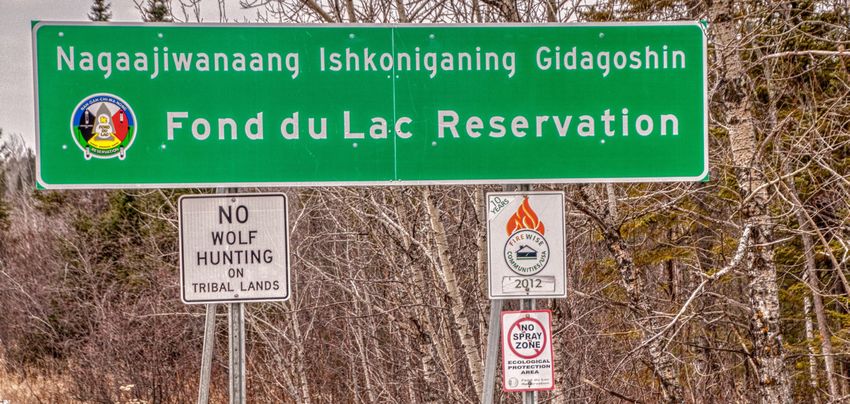
and St. Louis County, Minnesota. The reservation is known as Nagaajiwanaang, “where the water
stops.” There are more than 4,000 people in the Fond du Lac Band.14 They operate two casinos,
Black Bear Casino Resort and Fond du Luth Casino. Fond du Lac also operates FDL Gas &
Grocery, FDL Propane, and FDL Sand & Gravel as tribal enterprises.
Brief History of Aaniin Fiber Services
Aaniin was built through years of careful research and feasibility studies. Jason Hollinday, the
Director of Planning at Fond du Lac Planning Division, explained how the Fond du Lac Band
approached the problem of getting high-speed Internet service throughout their communities.
In 2006, they started to compare wireless and hardwired network types, such as cable and fiber.
The original plan called for ten wireless towers throughout the reservation to deliver Internet
service to people’s homes. There were a number of issues with this plan, however, one of which
was geography. Northern Minnesota has many hills and forests, and the wireless technology
at the time was not going to be able to penetrate to many remote areas. It was, however, fairly
inexpensive, and Fond du Lac moved forward with seeking grants for the project. They weren’t
funded and Hollinday says they were told that the project was “economically infeasible.”
ILSR.org
Building Indigenous Future Zones: 12 MuniNetworks.org
Four Tribal Broadband Case StudiesUndaunted, they changed tactics and considered alternatives, allowing them to be prepared
when the market changed drastically in 2010. The price of fiber and equipment for a Fiber-
to-the-Home network fell enough to make a network feasible on paper. They worked with the
Blandin Foundation in Minnesota and pursued grants through the USDA.
Community members, however, needed Internet service faster than the fiber network was likely
to be built. The Fond du Lac Band already had an institutional network between government
buildings. They added 13 wireless hotspots to several of these buildings in 2013. The hotspots
have a range of about ¼ mile, and still serve as a stop-gap measure for community members
without reliable Internet service at home.
In 2015, they were finally awarded a USDA Community Connect Grant. Two Minnesota Border to
Border Broadband Grants were later approved as well and one Housing & Urban Development
(HUD) Indian Community Development Block Grant. In total, it was about $9 million in grants,
and the Fond du Lac Band matched half that amount with $4.5 million in cash on hand. They had
secured all the funding needed to build out a next-generation network.
Starting out, some of the grants required them to build to areas without Internet service of at
least 10 Megabits per second (Mbps) download and 1 Mbps upload. Unserved areas were
prioritized. Later grants supported building the network to areas without 25 Mbps download
and 3 Mbps upload. This enabled the Fond du Lac band to reach the rest of the reservation. The
Blandin Foundation had assisted with community outreach about the project. In a series of public
meetings, community members talked about what they would like to do with the Internet service.
Hollinday described a little bit of doubt from some members, such as “Well we’d never get that
here, but if we did have it…,” because the project sometimes seemed too good to be true. The
network went live in Fall 2019.
The network, however, continues to expand across the reservation, connecting more people.
People are still learning all the capabilities of the Internet service. Since 2014, Fond du Lac has
offered a summer camp for teens to create smartphone and iPad apps. Each student creates
an app and is given an iPad to take home. The program also supports cultural knowledge. For
instance, some of the apps from 2014 went into detail about beading, plants, and the Ojibwe
language.15 The possibility of expanding outside of the reservation boundaries has been
considered, but the focus right now is on making sure all community members have access to a
reliable connection. Using gaming money and possibly further grants to build a fiber network in
nearby areas could create a long-term diversified revenue stream for the community.
Network Details
Population Served
Hollinday shared that there are 510 accounts for customers, which he explained as being
approximately 1500 - 2000 people. There are about a dozen businesses connected to the
network, not including home businesses.
PRICES & SPEEDS
TABLE 4.
There are three service options currently available: Essential Home, Advanced Home, and Automation Home. Essential Home provides
basic Internet Service, and the prices listed below include a $13 equipment rental fee.
Speed Tier (Download / Upload) Monthly Price
50 Mbps / 50 Mbps $67.95
100 Mbps / 100 Mbps $87.95
250 Mbps / 250 Mbps $100.95
500 Mbps / 500 Mbps $120.95
1 Gbps / 1 Gbps $140.95
ILSR.org
Building Indigenous Future Zones: 13 MuniNetworks.org
Four Tribal Broadband Case StudiesThe Advanced Home service costs an additional $8 monthly (starting at $75.95) and includes a
mobile app to manage the network and parental controls.
The Automation Home option is designed for automating the home. It starts at $86.95 a month
for 50 Megabits per second (Mbps) (an additional $19 more than the Essential Home service). It
includes an Amazon Alexa and a home automation hub.
A lower cost option called Essential Flats, starting at $60.95, will be introduced at the end of
2020 for apartments.16
Funding
The network cost about $13.5 million in total. About $9 million came in the form of grants from
a USDA Community Connect grant, two MN Border-to-Border Broadband grants, and a HUD
Indian Community Development Block Grant. The Fond du Lac Band contributed $4.5 million in
funding up front.
Expansion Plans
Hollinday said that they are still working to bring the network to the entire reservation, but they
may later consider expanding into neighboring communities.
Managing and Setting Up the Network
COVID-19 has created increasing demand for Internet service, which so far has not strained the
network. They are focusing on problem-solving issues common to any new network, such as
improving customer service and adjusting to problems on the fly. For the first year of operation,
they contracted out customer service, but if the problem is something physical, there are a
couple of crews on call that will go out to fix it.
Takeaways for Other Native Nations
Hollinday found the key to Aaniin’s success was a combination of background research and
public outreach. Before embarking on this project, the Fond du Lac Band had spent years
digging into what would make sense in their community. They had considered multiple avenues
to bring Internet service to remote areas and had weighed the full cost of building a network.
They also made sure to fully include the community in their project. Working with the Blandin
Foundation, they held public meetings to learn what the community members wanted and
designed the network to meet their expectations.
Doing background research and involving the community early in the process are all forms of
pre-planning, steps taken before officials decided to pursue a specific course of action. All of
these forms of pre-planning are useful for filling out grants. It creates a clear narrative that grant
agencies can follow to see how an Internet service project will impact the community. Hollinday
credits this pre-planning as “the difference between applying for early grants and now.”
When the Fond du Lac Band had first applied for broadband grants in the mid-2000s, the
Planning Division had not done as much pre-planning. They knew that their community needed
Internet service and that the wireless project made the best economic sense at the time. But
without pre-planning, they were not able to communicate that to grant agencies. When the
market changed in 2010, the Planning Division realized Fiber-to-the-Home was actually feasible.
They did more background research and involved the community. This showed grant agencies a
clear narrative of why the community needed Fiber-to-the-Home.
ILSR.org
Building Indigenous Future Zones: 14 MuniNetworks.org
Four Tribal Broadband Case StudiesMohawk Networks
St. Regis Mohawk Tribe
New York
St. Regis Mohawk
About the St. Regis Mohawk Tribe
The St. Regis Mohawk Tribe is a single community, known as Akwesasne, meaning “land where
the partridge drums.”17 It is crossed by the Canada-United States international border (New
York - Quebec/Ontario), but tribal members are able to freely cross this settler-colonial border
under the terms of the Jay Treaty of 1794. Both the United States federal government and the
New York State government have separate government-to-government relationships with the
St. Regis Mohawk Tribe. The community is home to about 1500 households. There are three
tribal enterprises: the Akwesasne Mohawk Casino Resort. Akwesasne TV, and Mohawk Networks.
Brief History of Mohawk Networks
Mohawk Networks started out as an idea in the mid-2000s to provide everyone in the community
reliable Internet access. It took close to a decade to determine the best project plan and to
secure funding. This was one of the first fiber networks to be built by a Native Nation using
funding from the American Recovery and Reinvestment Act (ARRA). Mohawk Networks uses both
Fiber-to-the-Home and fixed wireless to connect everyone in the community.
ILSR.org
Building Indigenous Future Zones: 15 MuniNetworks.org
Four Tribal Broadband Case StudiesAllyson Mitchell, General Manager at Mohawk Networks, described how it took a couple
years to build out the fiber network, stringing about 70 miles of fiber along poles throughout
the community. They made sure the anchor institutions, such as government buildings, were
connected first, but the network was built methodically from one side of the community to the
other. It cost approximately $15 million to build, but by 2015, the fiber network was completed
and fully operational.
At the same time that the St. Regis Mohawk Tribe was planning for the fiber network, there was
another project in the works to address the digital divide in the community. Connectivity is
only one piece of the equation; devices are also important. In 2010, a Broadband Technology
Opportunity Program grant brought 60 public computers to key places throughout Akwesasne,
including the Boys & Girls Club, the Cultural Center, and the Office of the Aging’s Senior
Center.18 With this project, everyone can access the Internet, even if they do not have a home
connection through Mohawk Networks.
Now that Mohawk Networks’ fiber network is complete, the network can be extended out to new
homes as they are built. But there is also a fixed wireless option available. Mohawk Networks’
fixed wireless network is a separate project that ensures connectivity for rural areas, and the flat
terrain makes it easy to reach everyone with high-quality Internet access.
The fixed wireless can even reach off-territory, and Mohawk Networks offers service in parts
of Franklin and Lewis Counties. Mohawk Networks is one of the few Native Nations’ networks
providing Internet access beyond the borders of its reservation. This is an opportunity for
economic development that serves both the tribe and neighboring non-tribal towns with high-
quality Internet access.
Network Details
Population Served
The network reaches 1500 households using Fiber-to-the-Home (southern portion of
community) and fixed wireless (northern portion of community and off-territory).
PRICES & SPEEDS
TABLE 5. FIBER INTERNET ONLY
Speed Tier (Download/Upload) Monthly Price
25 Mbps / 10 Mbps $59.99
50 Mbps / 20 Mbps $69.99
100 Mbps / 50 Mbps $99.99
There are also bundled options with Video and Voice service available.
TABLE 6. WIRELESS
Speed Tier (Download/Upload) Monthly Price
25 Mbps / 10 Mbps $69.98
Funding
$10 Million for the fiber project came from the American Recovery and Reinvestment Act. The
funding required matching funds of $5 million from the St. Regis Mohawk Tribe.
Expansion Plans
Mohawk Networks is expanding to homes incrementally as they are built in the community.
ILSR.org
Building Indigenous Future Zones: 16 MuniNetworks.org
Four Tribal Broadband Case StudiesManaging Spectrum and Setting Up the Network
The wireless network was a separate project from the fiber network. It provides Internet access
for rural farms, and Mohawk Networks maintains the ability to expand the reach of the fixed
wireless network off-reservation.
Takeaways for Other Native Nations
Mitchell, the General Manager, drove home the importance of financial sustainability and
choosing good partners. Since Mohawk Networks was one of the first fiber networks built by a
Native Nation, they worked with external consultants, and it is necessary to choose “partners that
understand how to work with tribes,” explained Mitchell.
She also underscored the need to have good finance and accounting teams to manage grants.
With reimbursable grants, money has to be available upfront to cover expenses, and the team
needs to understand what counts as an eligible expense for the grant. Raising the capital for a
project is not enough, operational expenses have to be taken into account. “The most important
aspect is understanding the financial requirements and having a long term plan,” said Mitchell.
Key Lessons
These case studies highlight key lessons Native Nations, lending institutions, and the federal
government can use when considering a network project. The recommendations are generalized
from the experiences relayed in these case studies. Every Native Nation is different and must
consider what works best for their particular communities. The lessons laid out below, however,
are important for lending institutions and the federal government. They should look to address
how their processes can be barriers to Native Nations’ network projects.
1. Improve Access to Capital
Native Nations do not have the same access to capital as municipalities or as private Internet
service providers. Reservation land cannot be used as collateral for a loan because the land
is held in trust by the federal government. This means that Native Nations have had to be
creative when looking for funding. Many rely on loan opportunities from the USDA, but
the USDA cannot fund both a Native Nation’s network project and a cooperative’s network
project in the same area. Some Native Nations fully fund sections of projects and build out
incrementally.
Lending institutions should address their processes for lending to Native Nations to
determine how to better support network projects. The federal government should regularly
evaluate funding opportunities for network projects by Native Nations. The Office of
Native Affairs & Policy at the FCC should work with the USDA to ensure that Native Nations’
sovereignty is being fully considered when overlapping network projects are proposed.
2. Avoid Single-Purpose Funding
The federal government has many different departments and programs. Many have funding
opportunities for network projects, but there is a problem. This funding is often limited to
a single purpose, such as connecting Indian Health Services facilities or schools & libraries.
This means that there may be multiple network projects in the same community, but no way
for residents to access Internet service at home. The Schools, Health, & Libraries Broadband
Coalition encourages a concept called “To and Through Anchors” to get past these silos.19
New technology can make this problem obsolete, but federal government programs must
adjust contract language. For example, fiber networks can have dedicated strands for specific
facilities in keeping with the initial federal program, but the excess network capacity could be
used for residential home Internet service.
ILSR.org
Building Indigenous Future Zones: 17 MuniNetworks.org
Four Tribal Broadband Case StudiesYou can also read


