CEMETERIES Plan TAIRAWHITI 2018 - Gisborne District Council
←
→
Page content transcription
If your browser does not render page correctly, please read the page content below

TAIRAWHITI

CEMETERIES
Plan
2018

ACKNOWLEDGEMENTS
The Cemeteries Plan is one of a suite of plans prepared
under the Tairawhiti Community Facilities Strategy.
The development of the Strategy was guided by a
governance group of regional stakeholders including:
  àà Eastland Community Trust
  àà Gisborne art community
  àà Gisborne District Council
  àà Hiruharama School
  àà Sport Gisborne Tairawhiti
  àà Tairawhiti Cultural Development Trust
  àà Te Runanganui o Ngati Porou
  àà Te Runanga o Turanganui a Kiwa
  àà Tolaga Bay Area School
Many other organisations and individuals have generously
contributed to the Plan through focus groups, meetings and
submissions.
Many thanks to all of these people for the time and energy
they volunteered to ensure Tairawhiti has a clear path for our
community facilities.

Contents
 Plan on a page                                                                            2

 Introduction                                                                              3

PART A: Context of CEMETERIES ACTIVITIES AND provision                                    4
 Importance of cemeteries                                                                  4

 Socio-demographic trends influencing demand for cemetery services                         4

 Other factors influencing demand for cemetery services                                    7

 Supply of cemetery services                                                               8

PART B: Issues and Opportunities	                                                       12

PART C: Objectives and Policies	                                                        16
 Network planning and provision                                                          16

 Effective management                                                                    18

PART D: Specific Challenges and Responses	                                              20
 Crematorium                                                                             20

 Cemeteries                                                                              21

 Rural cemeteries                                                                        22

PART E: Actions	                                                                        35
 Actions                                                                                 35

                                                                     CEMETERIES PLAN 2018 | 3
4 | CEMETERIES PLAN 2018
Plan on a page
The Plan on a Page summaries the key parts of the Cemeteries Plan – the key issues and opportunities, the objectives
and actions. Details are in the body of the document.

Key issues and opportunities
àà Cemetery services need to be affordable and financially sustainable
àà Council needs to respond to changing community preferences in burial options
àà Council needs to improve design of cemetery spaces and have consistent standards
àà Council needs to plan for cemetery services in the wake of large scale disasters
àà There is potential to extend cemetery services into heritage and genealogy.

Objectives
Network planning and provision
By 2030, Tairawhiti will have a network of public cemetery facilities across the region that is fit-for-purpose, affordable and
accessible:
àà meets community needs for a range of options for burial where there is a compelling demand or need
àà is provided in the most cost-effective way
àà meets the needs of the whole region regardless of socio-economic status and ability.

Effective management
Cemetery facilities in Tairawhiti will be actively managed to balance affordable and practical levels of service for
cemeteries with customer demands including:
àà encouraging high levels of use and enjoyment for the community
àà minimising operational and maintenance costs

àà meeting best practice health and safety and requirements.

 Key actions                                                          Partners      Costs (est)    Timeframe
1. Improve service experience of crematorium facilities at Taruheru   Council /     >$50,000       2018/19
   Cemetery                                                           Lessee
2. Complete design masterplan for all cemeteries                      Council       $30,000        For 2021-31 Long Term Plan
3. Review how we fund cemetery services                               Council       Nil            For 2021-31 Long Term Plan
4. Assess opportunities for eco-burials, natural burials and kahu     Council       $20,000        For 2021-31 Long Term Plan
   whakatere
5. Install ash berms in high-use rural cemeteries                     Council       >$40,000       For 2021-31 Long Term Plan
6. Install on-site water sources in rural cemeteries                  Council       >$60,000       For 2021-31 Long Term Plan
7. Complete extension of business continuity plan (disasters and      Council       $20,000        For 2021-31 Long Term Plan
   emergencies)
8. Investigate feasibility of a heritage trail between Makaraka and   HPT / Council $30,000        For 2021-31 Long Term Plan
   Taruheru Cemeteries
9. Upgrade office building at Taruheru Cemetery to facilitate         Council       $50,000        For 2021-31 Long Term Plan
   customer service
10. Develop digital services to support genealogical research         HPT / Council >$100,000      For 2021-31 Long Term Plan
11. Develop user-friendly guidance and info about cemetery services   Council       Nil            For 2021-31 Long Term Plan
    and processes

                                                                                                         CEMETERIES PLAN 2018 | 5
Introduction
Purpose                                                        Living document
The purpose of this Plan is to enable holistic and             The Plan has been developed based on current
innovative thinking around affordable and effective            information available. But communities aren’t static.
future provision of public cemeteries within the               The way we view facility provision shouldn’t be static
Tairawhiti-Gisborne region.                                    either. The Plan needs to be able to ‘bend and sway’ as
                                                               information is updated and planning evolves over time.
                                                               Regular reviews are important.
Scope
The Plan provides the strategic direction for public
cemeteries in the Tairawhiti-Gisborne region for the next
                                                               How to use this plan
20+ years. It is a tool to assist decisions on planning,       The document is organised into the following parts:
funding, managing and operating cemeteries.
                                                               PART A: Context of cemeteries activities and
For the purposes of this Plan, the term ‘cemeteries’ means     provision
Council-owned cemeteries only. It focuses on the aspects
                                                               PART B: Issues and opportunities
that Council directly manages including:
                                                               PART C: Objectives and policies
àà strategic planning and land management
                                                               PART D: Specific challenges and responses
àà cemetery infrastructure (such as plots, berms etc)
                                                               PART E: Actions
àà management of other site assets (such as fences, roads,
   vegetation etc)                                             PART F: Appendices
àà provision of Council’s cemetery services (such as
   interments and cemetery records).
There are various other cemeteries provided in Tairawhiti-
Gisborne that are not specifically provided for as a part of
this Plan. For example:
àà there are 200+ urupa that are typically managed
   privately by whanau and hapu
àà there are a range of cemeteries associated with
   churches in the region that are managed separately.
There are also a range of other services associated with
the passing of a loved one (such as funeral services and
management) that are not provided for as part of this
Plan.
These other cemeteries and services provided by external
parties are considered only to the extent that they
provide opportunities for collaboration and partnership
on the provision of cemetery services across Tairawhiti-
Gisborne.
Scattering of ashes from human remains is not dealt with
in this Plan as this typically happens outside of cemetery
areas. Policy, protocols and regulations on this matter will
be developed with mana whenua.

6 | CEMETERIES PLAN 2018
PART A: Context of CEMETERIES ACTIVITIES AND provision

Importance of cemeteries
Cemeteries are important for our Tairawhiti-Gisborne community.
àà Cemeteries do not need to only be solemn spaces. They provide a physical place where loved ones are laid to rest
   peacefully with dignity and respect – they are places of memorial. They are not only a resting place for the deceased
   but a place for whanau, friends and communities to reflect and to celebrate and remember those who have passed on.
àà Cemeteries provide a mechanism to care for our dead in a safe and healthy way. They have services and standards that
   protect public health and the environment. There is efficiency in having this so we can protect public health and make sure
   we set aside the right land in the right locations to cater for our community.
àà Cemeteries are a record of our population – about those who have gone before. They are important for heritage and
   historical research as primary sources of information. They are also important records of genealogy and help with
   ancestral research.

Socio-demographic trends
influencing demand
Population                                                         Ethnic diversity
àà The projected resident population for Gisborne was              àà Tairawhiti has a unique ethnicity profile compared
   47,800 as at 30 June 2016. This represents a 1.7%                  to the rest of New Zealand. By far the vast majority of
   increase in estimated resident population since                    the population identify as Maori or Pakeha/European.
   2013 when the last census was conducted. Statistics                Alongside this, the proportion of Maori is very high
   New Zealand population projection model predicts                   relative to the rest of New Zealand at nearly 50% of
   population growth between 2016 and 2033 of 5.23%                   the population. Based on data from the 2013 Census,
   (see Figure 1) and a decline between 2033 and 2043 of              19,683 Maori usually live in Tairawhiti-Gisborne Region.
   0.62%.                                                             However there are nearly 85,000 Maori who whakapapa
                                                                      to Tairawhiti. Many are not living here but it is likely that a
àà As per global population trends, we will see a
                                                                      significant proportion of these may choose to be returned
   significant increase in the over 65 years population
                                                                      here after they pass away. While many will be interred in
   and a significant decrease in the 0-14 years age group.
                                                                      urupa at marae, some may choose to be interred in public
   Compounded by both an increasing and ageing
                                                                      cemeteries.
   population, the demand for cemetery space and
   services to manage these activities are likely to grow up       àà Other ethnic groups are much fewer in number, yet still
   to 2033 and beyond                                                 significant, giving greater diversity for Tairawhiti as a
                                                                      population.
àà

     Age Group                 % change 2013-2043
                                                                   Rural/urban proportions
     0-14                      -16.4%                              àà Approximately 74.5% of the Tairawhiti population live in
                                                                      Gisborne urban centre with 25.6% living in rural areas.
     15-39                     -1.4%
                                                                      Projections for changes in the rural/urban split remain
     40-64                     -7.4%                                  proportional to current population. The implication of
     65+                       93.8%                                  an urbanised population include decisions by whanau,
                                                                      family and friends to not always travel a body home
                                                                      to rural areas after a death. Further to this, Gisborne
                                                                      provides options such as cremation rather than burial,
                                                                      which is not as readily available in the rural areas.

                                                                                                             CEMETERIES PLAN 2018 | 7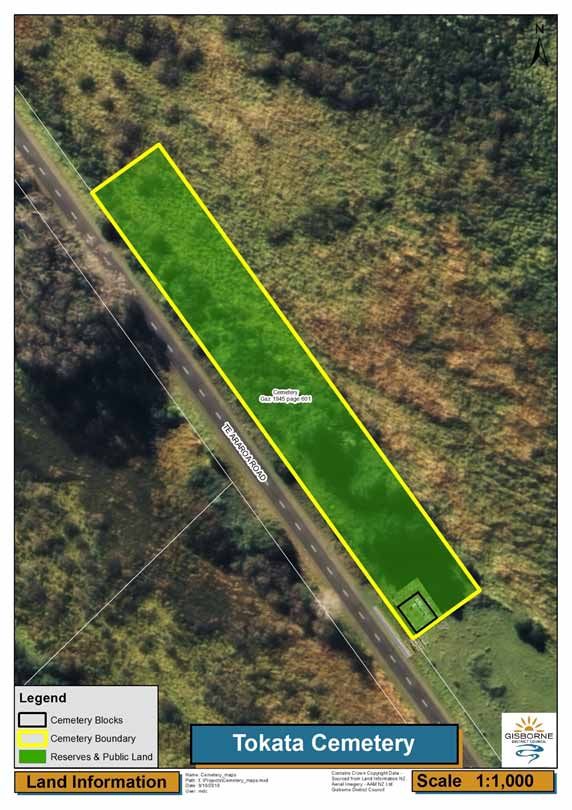
Figure 1: Projected population for the Gisborne Region        Figure 2: Projected population by broad age group

Figure 3: Population by ethnicity in Gisborne region (2013)

Figure 4: Proportion of urban vs rural people Gisborne region (2013)

8 | CEMETERIES PLAN 2018
Religious affiliation                                         Death rates in Tairawhiti
àà In Tairawhiti, nearly 67% of people affiliate with         àà Since 2010 the annual rate of death for the District
   Christian religions. However nearly 32% of people             has remained between 350 and 400. Of these figures
   identify with no religion at all. The number of people        roughly 45-50% were cremated. A few will have been
   who indicated they have no religious affiliation is           taken outside of the District and even more will be
   increasing as is the number of people who affiliate to        buried at local urupa on Maori reserve land. There was
   Hindu, Muslim and Sikh religions.                             a record low number of deaths in 2015 at 352. The
                                                                 number of deaths in the region influences how much
Table 1: Religion of Tairawhiti residents
                                                                 time will be spent by staff on burial procedures. Figures
                           Gisborne      NZ      Gisborne        are presented in Figure 5.
                              %                    total
                                                              àà Burial statistics at Council’s public cemeteries are
Christian (not including     66.8       58.0      31,930         shown in Table 2 below. Taruheru has, by far, the
Maori Christian)                                                 largest rate of use with Tolaga Bay and Tokomaru Bay
No religion                  31.9       37.1      15,248         respectively the second and third busiest sites for
                                                                 burials. See Table 3 for details.
Maori Christian              13.1        1.9       6,261
Other religions               0.8        0.7       3,824      Table 2: Burials in Council cemeteries 2014-2018
Spiritualism and new age      0.5        0.6       2,390       Cemeteries     Total burials Full burials    Ash interment
religions                                                     East Coast      36            22              14
Buddhist                      0.4        1.5       1,912      Gisborne city   771           356             415
Hindu                         0.3        1.8       1,434      West region     18            12              6
Islam/Muslim                  0.2        1.0        956       TOTAL           825           390             435
Judaism/Jewish                0.1        0.2        478

Figure 5: Deaths in Gisborne region 2010-2018

Figure 6: Ash interments versus full burials at Council cemeteries 2004 - 2014

                                                                                                     CEMETERIES PLAN 2018 | 9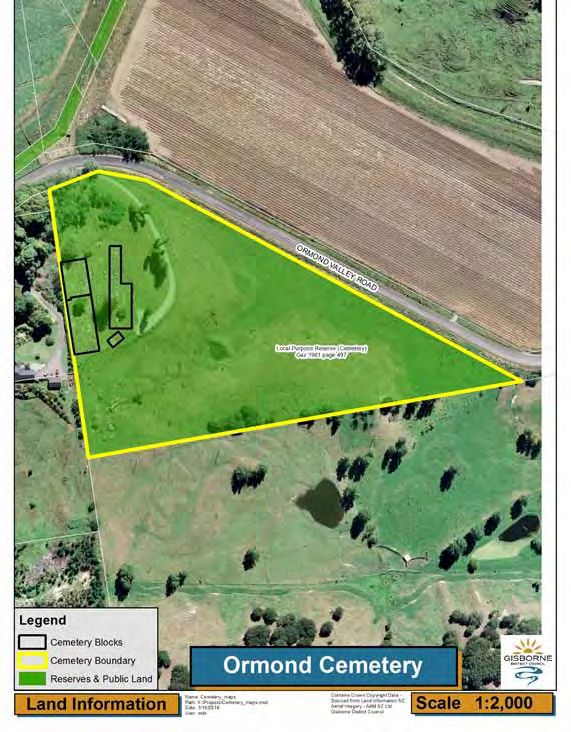
Other factors influencing
demand
Cremation                                                       Incorporating traditional practices
àà The national trend for cremation is currently at             àà More Maori families are wanting to incorporate
   70%. Council data for public cemeteries shows ash               traditional practices into modern day grieving and
   interments over the past 10 years steady at roughly             funeral processes. Kahu Whakatere or Hahunga are
   50% of total burials.                                           ancient Maori traditions being revived around the
                                                                   country. Practice may involve natural methods to
àà With the national trends in mind we expect demand
                                                                   preserve the body during the grieving process and the
   for cremation to continue to rise. There are several
                                                                   use of flax mats for wrapping the body among other
   reasons for this trend:
                                                                   things.
  • Ash plots and interments are cheaper than full
    burials.                                                    Returned service men and women
  • It is cheaper to transport ashes than a body from           àà Veterans who have returned from war or operational
    overseas for interment.                                        service are entitled to a plot in specifically reserved
                                                                   areas of our cemeteries. These are free of charge
  • Ash plots and gardens provide an attractive and
                                                                   for those who qualify under the Veteran’s Affairs
    affordable option for individuals and families.
                                                                   cemeteries and memorial services programme. There
  • Ash interment can be delayed relieving time and                are over 2,200 RSA plots in Taruheru and Tolaga Bay
    financial pressures.                                           cemeteries. Extra depth plots are available for the
                                                                   spouse of a returned service person to be interred with
DIY funerals                                                       them when the time arrives.
àà People want to have more control over the grieving           àà Maintenance of the RSA plots is funded by the Ministry
   process. This means there are more people planning              of Veteran’s affairs and carried out by a local contractor
   their own funeral to the last detail or families doing the      and are managed as part of Council’s role with an
   same for a loved one. Reasons range from cost to social         annual grant to support some costs from Veteran
   and cultural beliefs:                                           Affairs.
  • More home-based funeral services.
                                                                Gisborne’s record of cemeteries for
  • Growing interest in and uptake of alternative burial        research
    options.
                                                                àà The Gisborne branch of the NZ Society of Genealogist
  • More use of private transport means for the                    undertook a project in the 1980s to visit all public
    deceased.                                                      cemeteries; transcribe headstone inscriptions; describe
  • More informal and personalised funeral services.               each cemetery, its location and the controlling
                                                                   authority. Together with other relevant records this
  • More secular funeral services.                                 provides a valuable body of historical information.

Natural and eco burials                                         àà The Cemeteries Team Leader receives a regular number
                                                                   of ‘walk-ins’ from people looking for ancestors and
àà There is growing interest nationally in natural and eco         related information. The Taruheru office has suitable
   burial options.                                                 space for customers to carry out online cemetery
àà More people are choosing to leave the world with the            searches and obtain directions for further information
   least impact on the environment including choosing:             from the library or museum for example. Memorials
                                                                   and headstones are valued as social documents and
  • No or light embalming instead of full process.                 historical records.
  • Caskets made from untreated pine or recycled                àà This growth area (nationally) puts more expectation
    cardboard with no toxic chemicals.                             on Council to maintain cemetery records and provide
  • Minimising land use by burying up to 2-3 people in             easy access to them. Council has the information
    one plot.                                                      and technological resources to grow this service arm
                                                                   through better service integration.

10 | CEMETERIES PLAN 2018
Supply of cemetery services
àà Gisborne District Council maintains 13 gazetted public • Some rural cemeteries may be less accessible or
cemeteries across the region occupying 51 hectares. attractive to locals.
The cemeteries are either serviced, un-serviced or
• Convenience and cost of full funeral service for those
closed:
distant from Gisborne.
• The Taruheru cemetery on the outskirts of Gisborne
àà Cost of Council plots does not appear to be the main
city is home to 22,230 interments and has the
driver – at the time of drafting the Plan, the busier
highest rates of interment. This cemetery has full
cemeteries were more expensive to purchase plots at
amenities and the facilities to cater for on-site
than the outlying cemeteries.
cremation.
àà Despite rates of usage it is important to remember
• Cemeteries at Tolaga Bay and Tokomaru Bay
that public cemeteries are established in perpetuity
experience the next highest rates of burials.
and even when closed Council must continue to
• The Cemetery at Patutahi was originally planned as maintain and preserve them. While rates of interment
over-flow for the Taruheru cemetery. Along with the at rural cemeteries is low, feedback shows that people
Ormond Cemetery it currently experiences small with loved ones buried at these sites feel a sense of
rates of burials. connection and care about the future of that cemetery.
• Cemeteries at Te Araroa (2), Ruatoria, Te Puia,
Staffing
Rakauroa, and Motu have low to no burials.
àà The service includes one full-time Cemeteries Team
• The closed cemetery at Makaraka is maintained as an
Leader and a Cemeteries Officer based at Taruheru in
historic cemetery site (it still requires maintenance). It
Gisborne, to maintain cemeteries and provide burial
can still accommodate some ash burials into existing
services. The community caretakers on the East Coast
plots as these do not affect capacity.
maintain Tokomaru Bay and Tolaga Bay cemeteries and
• The cemetery at Matahiia has been partially washed are called on to provide cemeteries duties from time to
away and is completely closed – it no longer exists. time. Casual support is used for general maintenance
Those that were buried there have been reinterred and cemeteries duties at rural cemeteries if required.
at other cemeteries at Te Puia Springs, Taruheru and
àà A casual Chaplain is available to provide spiritual
some whanau urupa.
guidance and advice to staff and customers if required.
• Council is the owner of a crematorium building that
àà Council’s website offers information, online searching
is leased to a commercial entity who operates its
and a cemetery booking service for the public.
own cremator.
àà Further to this, there are 200+ urupa and other Financials
cemeteries. This includes the cemetery at Hirini Street
àà Council currently spends $250,000 per annum on
which has a wealth of historical information. However
cemetery services. The total asset value is in the order of
these are beyond the scope of the plan, but relevant
$2.9 million. Table 4 shows a cost comparison of basic fees
due to providing supply of options for burial.
and charges for cemetery services between Tairawhiti and
àà Over the past five years a total of 579 burials and 637 seven other councils in New Zealand.
ash burials have taken place across all 13 cemeteries
àà There is very little difference in operating costs
which total 1,216 altogether.
between an open and closed cemetery. The key
àà Burial data shows many of the rural cemeteries are under- difference is in the provision of burial services which is
used. Table 3 shows most activity occurs in only two of largely paid for by users. There is no significant financial
the 12 open cemeteries. Some have had no burials in five benefit to ratepayers in closing a cemetery facility.
years. The busiest and largest sites are closer to towns.
àà The cost of operating Council’s public cemeteries is
Outlying cemeteries are smaller and less frequently used
intended to be met by fees and charges 80% (user-pays)
for interments and receive fewer visitors.
and rates 20% (Uniform Annual General Charge). This
àà It is difficult to pinpoint why some cemeteries are used allocation of cost is on the basis that while the main
more than others. Some the possibilities are: beneficiaries of cemetery services are those who have
passed and their families, there remains elements of
• Most people in the region live in or close to Gisborne
public benefit in cemetery services as well. They are places
where Taruheru Cemetery is.
of commemoration and reflection for all and they are
• Many but not all Maori use whanau urupa instead of an important historical and genealogical record of our
public cemeteries. community.
CEMETERIES PLAN 2018 | 11Other costs to users Cremation
àà Council only controls some aspects of costs associated àà Cremation is increasing regionally, which is consistent
with a loved one passing: with the national trend. It is important to note that
the costs of cremation services in Gisborne are
• maintenance of the public cemetery facilities
comparatively higher than in other similar cities. Table
• cost of burial plots 3 shows the bare minimum cost of a cremation and
interment in ash plot for cremation services provided
• cost of interment services associated with Council
by a range of councils. In all cases the costs are full user
staff involvement.
pays which impacts the financial sustainability of the
àà Currently, if a family of a deceased person cannot Council when people take the option to cremate.
afford a burial plot Council may grant a burial plot and
interment service with delayed payment (as discussed Capacity
above). For those with no financial capacity or support,
àà There is sufficient overall capacity at all open
there are ‘paupers graves’ located within the rows
cemeteries for the next 200+ years based on the
amongst general cemetery areas.
current death rate.
àà There are a wide range of other, more significant costs
àà Whether a cemetery is at capacity can be greatly
associated with funerals that are controlled by the
affected by:
private sector.
• the type of burial and areas required for a full burial
versus an ash interment.
• reservation of plots for future burials effectively tying
up land into the future.
àà The trend in increase in demand for cremation means
that the current ash interment areas at Taruheru
Cemetery could be at capacity within five years.
àà There are currently 7,260 plots for full burial available
at Taruheru Cemetery sufficient for the next 65 years at
current full burial rates. However around 1,500 of these
are reserved for future use. By law, if Council allows
people to reserve a plot with some deposit, then that
plot must remain available to that person for up to
60 years. The implication is that we will have to open
the new part of the Taruheru Cemetery many years
before the existing part of the cemetery is physically
full. Opening the new part of the cemetery will create
additional maintenance costs for the new area so
represents an inefficient use of space and resources.
Resident satisfaction survey results
àà The results for the Annual Residents Surveys between
2014 and 2016 showed that most respondents who
visited cemeteries were satisfied or fairly satisfied with
the maintenance and presentation of cemeteries.
Taruheru received the most visits (78%) from
respondents with only 31% visiting the other 12 sites
across the district. Reasons for dissatisfaction included
not enough attention to gardening or too much
rubbish (Taruheru and Tolaga Bay).
12 | CEMETERIES PLAN 2018Figure 7: Cemetery locations
CEMETERIES PLAN 2018 | 13Table 3: Number of ash interments versus full burials for all council cemeteries 2014 - 2018
Cemetery Full burial Ash interment Total
Makaraka 0 3 3
Matahiia 0 0 0
Motu 0 0 0
Ormond 2 1 3
Patutahi 4 2 6
Rakauroa 6 0 6
Ruatoria 0 0 0
Tarewapia (Te Araroa) 0 0 0
Taruheru 356 415 771
Te Puia 0 0 0
Tokata (Te Araroa) 0 0 0
Tokomaru 2 0 2
Tolaga Bay 20 14 34
Total burials 390 435 825
Table 4: Cemetery services fees and charges New Zealand Councils 2018
Full burial plot Full burial Ash plot Ash interment
Council (adult) (adult) (adult) (adult)
Buller $370 $629 $64 $115.50
Christchurch $1,640 $1,100 $475 $220
Gisborne $283 - $1,021 $492 $210 - $419 $64
Napier $2,250 $575 $300 - $580 $95
New Plymouth $3,552 $1,910 $1,142 $478
Whakatane $1,995 $700 $300 $250
Whanganui $1,312 $784 $653 $261
Whangarei $2,800 $900 - $1,400 $650 $68 - $118
AVERAGE $1,988 $978 $529 $216
Table 5: Cost comparisons for cremation and interment
Cost of cremation Interment Professional
Council (adult) (cost of plot and burial) services TOTAL
Tauranga $510 - $840 $295 - $690 * $805 - $1,530
Whakatane $470 $215 * $685
Palmerston North $552 - $701 $671 - $803 * $1,223 - $1,504
Rotorua Lakes $495 $120 - $415 $615 - $910
Hamilton $605 $145 - $1,120 * $750 - $1,725
Invercargill City $765 $480 - $710 * $1,245 - $1,475
Wellington $685 $688 - $1,104
Dunedin $881 $370 - $700 * $1,251 - $1,581
Gisborne $795 $274 - $419 $950 $2,019 - $2,184
* professional services included in cost of cremation and interment
14 | CEMETERIES PLAN 2018PART B: Issues and Opportunities
There are a number of issues around cemeteries that if addressed, present an opportunity to future proof the way that
cemeteries are managed and maintained. Many of the issues are common across sites as identified below, which can
be addressed through policy and guidance provided in this plan. Each cemetery has its own set of unique features and
issues to address that will require tailored responses. Site-specific issues are discussed in Part Three – Specific Challenges
and Responses.
Affordable and the costs of providing cemetery services at different
locations particularly the level of soil compaction (in
Financially Sustainable some instances a digger may be required to achieve a
certain depth) and the geographic location and travel
Expenditure exceeds user charges revenue time and cost for staff. The fees charged currently do
not reflect the actual costs of service delivery at the
àà Figure 8 shows, expenditure on cemetery services is
different cemetery locations.
consistently double the revenue received from user
charges. This is inconsistent with Council’s funding
policy that users of the services should fund 80% of the
Ability to pay
costs of these services. àà A large proportion of the Tairawhiti population sit at
the lower end of the socio-economic scale. Our fee
Relatively low fees and charges structure and service delivery model needs to reflect
our community’s ability to pay for cemetery services.
àà Council’s current fees and charges for the cemetery
services it provides are amongst the lowest in New
Zealand. Council has already implemented several
Expansion and cost increase
findings from a 2015 service review to improve the àà There is sufficient overall capacity at all the open
efficiency of the service it provides. So it could be cemeteries for several decades. There are currently
argued that Council is under-investing in these services 7,260 plots for full burial available at Taruheru Cemetery
relative to other New Zealand Councils. sufficient for the next 65 years at current full burial
rates. However we may need to open the new part of
Fees and charges versus actual costs the cemetery in the near future at some near point in
the future. With the opening of the new part of the
àà Council has set charges for its cemetery services
cemetery will come capital expense of set-up and
with some price differentiation between urban and
additional maintenance costs for the new area which
rural cemeteries. However a range of factors affect
will need to be provided for in Council budgets.
Figure 8: Council cemetery revenue and expenditure 2013 - 2017
Table 6: Comparison of Gisborne cemetery fees and charges with other councils
Full burial plot Full burial Ash plot Ash interment
Council (adult) (adult) (adult) (adult)
Gisborne $283 - $1,021 $492 $210 - $419 $64
NZ Average $1,988 $978 $529 $216
CEMETERIES PLAN 2018 | 15Respond to Changing Increasing demand for natural and
eco-burials
Community Preferences àà A shift towards choosing a more natural, environmental
Diversification in funeral preferences burial option is becoming increasingly popular for
people nationwide, however, there has been very little
àà There has been a shift in how death is celebrated and interest regionally in recent years. Council needs to
personalised. How people celebrate death and engage remain aware of this national trend and plan for the
with the grieving process is changing and continues entirety of the concept now in anticipation for its future
to become more diverse particularly in relation to demand. The opportunity to select an appropriate
ethnic and spiritual/religious factors, as well as a trend site which cater to the type of setting and principals
to seeking more affordable funerals. For example more behind eco burials or traditional cultural methods need
Maori families are wanting to incorporate traditional to be produced through guidance from this plan.
practices, such as Kahu Whakatere or Hahunga into
modern day grieving and funeral processes.
Improve Design and
Demand for cremation Amenity
àà Overall, relatively high numbers of people in Tairawhiti
are choosing cremation with cost, convenience and Improved design
travel distances being major factors for this decision. àà Visiting any of the public cemeteries should be easy
One of the key benefits of cremation is the reduced and inviting and reflect the purpose of the spaces.
space needed for interment – this extends the There is a chance to improve the quality of all cemetery
longevity and capacity of our existing cemeteries spaces (including amenity, way-finding through these
footprint. The demand for cremation is likely to increase spaces and access for all abilities) and provide some
given national trends. This means that the current ash consistent standards around cemetery facility provision.
interment areas at Taruheru Cemetery could be at Currently, there are no consistent planning and design
capacity within five years. There is also limited provision principles for cemetery spaces so the visitor experience
for ash interment at rural cemeteries with Tolaga Bay varies across cemeteries.
the only site that offers this service.
Maintenance of amenity
Increasing demand for self-organised
funerals àà A theme coming through from service requests for
cemeteries is complaints about amenity of cemetery
àà ‘Do it yourself’ (DIY) funerals are a growing trend facilities and assets that are currently offered. The
nationally and regionally as people seek more control majority of feedback received is in relation to the
over the grieving process, the planning for social layout, garden landscaping, general appearance and
and cultural benefits and in response to the high maintenance of public cemeteries. People expect a
costs of some aspects of funerals. There is a lack of high standard of maintenance and care of gravesites
understanding amongst the public as to what the and grounds.
correct processes are once the body or ashes reach
the cemetery. There is also a lack of information and NOTE: Council has recently changed its maintenance
communication around what is expected both of contract and services for cemeteries to standardise their
the Council and the customer around the process of care in response to community concerns raised during
making arrangements. the early stages of development of this Plan.
16 | CEMETERIES PLAN 2018Disaster Planning
and Recovery
Disaster plan in emergencies
àà Council currently has very little capacity to deal with
the devastating reality of multiple deaths following
natural disasters and civil defence emergencies such as
an earthquake. The logistical measures for temporarily
holding bodies, post mortem or call out services need
to be planned for and guidance provided for a range
of scenarios, their consequences and appropriate
responses, ideally in a coordinated and collaborative
manner.
Extend Cemetery Services
into heritage and
genealogy
Cemeteries for research
àà There is growing interest in the use of cemeteries and
cemetery records for research particularly genealogy.
Technology opens up opportunities for Tairawhiti to
operate better in this space so that people can research
local ancestors and cemetery records online from
anywhere in the world. A small proportion of these
people enquire about ancestors from overseas before
making a trip to New Zealand so they can visit the
actual site while in the area. There are opportunities to
link the stories of those buried in the cemeteries to the
Council cemetery search function.
Cemeteries as part of heritage fabric
àà Cemeteries are part of the heritage fabric of Tairawhiti.
There are opportunities to make better use of the
historic and heritage values at our cemeteries. Other
cities in New Zealand such as Christchurch, offer
cemetery tours for people interested in local history.
Heritage tours of Makaraka Cemetery are already
offered by Historic Places Tairawhiti. There is an
opportunity to create a heritage trail through and
between the Makaraka and Taruheru Cemeteries
through light infrastructure and technological
development
CEMETERIES PLAN 2018 | 1718 | CEMETERIES PLAN 2018
PART C: Objectives and Policies

Network planning and
provision
Objective                                                       àà Requests for Council resources (including land)
                                                                   to develop cemetery services and assistance with
By 2030, Tairawhiti will have a network of public cemetery         maintenance will be required to follow the investment
facilities across the region that is fit-for-purpose,              process outlined in the Community Facilities Strategy.
affordable and accessible:
                                                                àà Before considering investment in redeveloping facilities
àà The network will provide for community needs for                or developing new facilities, there will be careful
   a range of options for burial and commemoration                 consideration of alternative options including:
   of loved ones who have passed where there is a
                                                                  • if changing governance or management practices
   compelling demand or need
                                                                    would address issues
àà The network will be provided in the most cost-effective
                                                                  • if changes to rules and regulations would address
   way, considering the whole-of-life costs of cemetery
                                                                    issues
   facilities and ensuring optimal use, so it is financially
   sustainable for the community and operators.                   • if better use can be encouraged through changes to
                                                                    pricing
àà The network will meet the needs of the whole region,
   be available to the community regardless of socio-             • if minor capital works can be made to the facility to
   economic status, provide healthy and safe space and              address the issues
   be suitable for all physical and intellectual abilities.
                                                                  • if multiple or shared use of the facility or another
                                                                    facility would address the issues
Policies                                                          • if the facility is actually needed at all.

Public cemetery facility network                                àà Council will adopt due diligence and consideration of
                                                                   land use planning best practice in decisions around
àà Facility network planning is based on compelling and            new cemetery locations to avoid unreasonable adverse
   robust evidence and considers, first and foremost,              amenity impacts on adjacent property owners and
   the current and potential community needs and the               users, while ensuring the reasonable needs of cemetery
   resulting appropriate level of investment.                      users can be met.
àà Provision of cemetery facilities will be based on two        àà • Decisions on the transfer of community assets
   tiers:                                                          to Council will need to be consistent with all of the
  • one regional level facility at Taruheru Cemetery               following criteria:
  • several local level facilities across the region.             • there is a clear and justifiable community need for
                                                                    the asset that cannot be filled by other facilities or
àà The nature of provision for both tiers will take into            activities
   account the community to be serviced, the needs to
   be met and costs of provision. Levels of service for the       • there is strong evidence that the asset can meet the
   two tiers of facilities will be identified in a Cemeteries       relevant level of service requirements outlined in this
   Masterplan.                                                      Plan
àà Council will monitor capacity at cemeteries to                 • the ongoing operation costs are able to be covered
   guarantee space is available. Council will consider              by user fees to the same level as outlined in Council’s
   extension of cemetery spaces well in advance of the              Revenue and Financing Policy
   need for them manifesting.                                     • the ongoing maintenance and repair costs are able
                                                                    to be covered by user fees to the same level as
Development of facilities                                           outlined in Council’s Revenue and Financing Policy
àà Decisions on redevelopment of existing facilities              • the individual or group transferring the asset agrees
   and development of new facilities will be based on               that once the asset is transferred, Council has sole
   compelling and robust evidence and projects will                 discretion over the upgrade, maintenance and
   be assessed according to the community facilities                eventual disposal of the asset with no ongoing
   investment principles and criteria. Projects will be             obligation to the previous asset owner.
   required to follow the community facilities strategy
   investment process.

                                                                                                         CEMETERIES PLAN 2018 | 19
àà So that cemetery facilities continue to meet changing Facility design
community needs we will:
àà Regardless of whether they are active or inactive, all
• design facilities to easily and cost-effectively adapt to cemeteries will be provided in a way that showcases
future potential needs, preferences and the potential thoughtful design recognising them as places of
for an expanded range of uses dignity, with associated amenity.
• monitor demand for and use of facilities annually àà When considering upgrades to existing cemetery
so we understand community needs and can take facilities or future development of new facilities, key
timely action. design considerations (alongside best practice) will be:
Collaboration and partnerships • meeting environmental regulations and standards as
per best practice
àà Council will consider partnering with others to deliver
cemetery facilities where: • the health and safety of users, operators and the
surrounding community
• there is compelling evidence of community need
• whether the location and surrounding environment
• public access is assured is appropriate for provision of cemetery services of
• health and safety standards are assured different types
• the facility is unlikely to be available to the public • the useability, comfort and accessibility of facilities
without Council support for all ages, stages and abilities
• the location of the facility supports geographic • the whole of life costs of operating and maintaining
accessibility by ensuring a spread of the network the facility
across the district • the consistency with best practice urban design
• the facility owner demonstrates the facility continues particularly around accessibility and reflecting local
to meet community needs. character and identity
àà Partnerships for facility provision across providers • the application of Crime Prevention Through
will be underpinned by strong relationships, regular Environmental Design (CPTED) principles to promote
engagement and robust formal agreements. health and safety and personal security
20 | CEMETERIES PLAN 2018• way-finding to and through the cemetery.
àà Council will offer a range of types of burial options
in response to ethnic, religious, cultural and
environmental preferences. Provision of these options
at different locations will rely on:
• there being a demonstrated significant community
need
• the ability to provide the services in a cost-effective
way that the community can afford
• there being minimal cost implications for ongoing
maintenance.
CEMETERIES PLAN 2018 | 21Effective management
Objective àà Council will consider targeted pricing strategies that
will enable all residents to access facilities with prices
Cemetery facilities in Tairawhiti will be actively managed reflecting the cost of service provision.
to balance affordable and practical levels of service for
àà Healthy and whanau-friendly use of cemetery facilities
cemeteries with customer demands including:
will be encouraged including appropriate controls
àà encouraging high levels of use and enjoyment for the on tobacco, alcohol, psychoactive substances and
community behaviour.
àà minimising operational and maintenance costs àà Council will commit to providing clear information that
is readily accessible about all of its cemetery services
àà meeting best practice health and safety and
(including DIY funerals) to make it easy for users.
requirements.
Asset management
Policies àà Decisions on asset management of cemetery
facilities consider the whole-of-life costs. This includes
Demand management identifying the appropriate timing for upgrades and
àà Fees and charges for cemetery services will reflect the redevelopment of facilities so ongoing maintenance
following: costs do not start to soar as facilities age.
• the actual costs of service delivery at different sites àà The safety, efficiency and environmental sustainability
and across the region of cemetery facilities are important. Technologies
and practices that minimise water use and waste and
• the contribution of specific cemetery services to that maximise the use of energy will be considered
meeting wider Council strategic priorities such where they prove affordable over the life of the facility.
as improving freshwater quality and biodiversity Innovation in these areas is strongly encouraged.
corridors
àà Council will maintain, and frequently review, a
• the amount of public versus private good that comprehensive asset management plan for the
specific cemetery services accrue cemeteries it administers. Council will report regularly
• the ability of the Tairawhiti community to pay for on the performance of cemeteries activity and in
cemetery services. achieving the intent outlines in this Plan.
22 | CEMETERIES PLAN 2018Leases and exclusive use àà Council supports retaining public lands for maximum
public use. Long-term exclusive use for activities such
àà Council supports public and non-exclusive use of as buildings related to cemetery services will only be
public lands. Leases of Council land for cemetery considered where:
facilities (new or renewals) will only be considered
under the following conditions: • it is legal to do so under relevant statutes
• the exclusive use of part of the area is needed to • there is a clearly demonstrated need and the
support cemetery activities activity will provide for the needs of a wide range of
community members
• the activity is complementary to the purpose and
function of the space • the activity contributes directly to enhancing use and
enjoyment of the space
• there are no other facilities or spaces that would
adequately meet needs • the new building would be multi-use and have an
element of public access
• there is a clearly demonstrated need and the activity
will provide for the cemetery needs of a wide range • there are no other facilities that would adequately
of community members meet needs
• the lessee is responsible for the maintenance of the • any buildings are consistent with Council’s design
leased area consistent with Council’s standards and standards, best practice urban design and Crime
an appropriate level of insurance as defined in the Prevention Through Environmental Design principles.
lease agreement àà Leases, licenses and permits will be subject to charges.
• the purpose of the lease would be the most Council will regularly review its charging regime.
appropriate use of that site
Health and safety
• the lease promotes equitable support and provision
for all of the community àà Best practice health and safety standards are adhered
to all times. New Zealand Standards will be met for all
• the lease is the most cost-effective way to meet facilities across Tairawhiti.
community needs for cemetery facilities
• Council’s satisfaction with the lessee’s past
performance.
CEMETERIES PLAN 2018 | 23PART D: Specific Challenges and Responses
Crematorium
Challenges Response
There is a growing demand for cremation and this Council has since investigated the efficiency and
facility needs upgrading and support services provided effectiveness of continuing with a private cremation
to cope. More hands-on funeral planning means more services supplier at Taruheru cemetery versus Council
direct contact between the public and cemetery staff directly providing these services. The factors considered
to make arrangements. This may be driven by cultural, were:
social beliefs or financial pressures. Greater flexibility
àà capital costs for purchase of cremator
and responsiveness is required by Council to meet this
expectation. àà local maintenance capacity by specialist providers
At the time of drafting of this Plan, one private operator àà staff training for operation of the cremator
had a monopoly on provision of local crematoria services
àà ongoing servicing costs.
using Council land and property. This created high
cremation prices relative to the rest of New Zealand. Council decided to retain the existing approach to service
provision and to influence provision costs and services
This was concerning given the socio-demographic profile
through contractual arrangements and relationships.
of the Tairawhiti population and their ability to pay.
Table 7: Cost comparisons for cremation and interment
Cost of cremation Interment Professional
Council (adult) (cost of plot and burial) services TOTAL
Tauranga $510 - $840 $295 - $690 * $805 - $1,530
Whakatane $470 $215 * $685
Palmerston North $552 - $701 $671 - $803 * $1,223 - $1,504
Rotorua Lakes $495 $120 - $415 $615 - $910
Hamilton $605 $145 - $1,120 * $750 - $1,725
Invercargill City $765 $480 - $710 * $1,245 - $1,475
Wellington $685 $688 - $1,104
Dunedin $881 $370 - $700 * $1,251 - $1,581
Gisborne $795 $274 - $419 $950 $2,019 - $2,184
* professional services included in cost of cremation and interment
24 | CEMETERIES PLAN 2018Cemeteries
Taruheru Cemetery
Status Open
Services • full burials • RSA plots
• ash interment • children’s plots
Issues and • prone to flooding in parts • growth in genealogical research
opportunities • winter burials affected by high water tables • overdue infrastructure and facility upgrades
• potential for heritage trail linking to Makaraka • cemetery not classified as parks and reserves land
cemetery
Recommendations • Master Plan for cemetery including: layout, service and infrastructure provision, alternative burial areas,
design specifications, landscaping, etc
• feasibility study for cemetery / genealogy heritage trail
• change policy to prevent plot reservation
• extension of ash interment areas within five years
• decide approach to addressing capacity issues within 20 years
• establish eco / natural burial area
• provide a search facility for enquiries when staff are not present
• provide family ash plots for multiple interments with full sized headstone
• establish protocols to support ground slumping and grave settlement issues
• classify cemetery as parks and reserves land
• complete upgrades including: (re-) sealing of roadways; formalising carparking areas, expanding water
availability
CEMETERIES PLAN 2018 | 25Rural cemeteries
Makaraka
Status Closed
Services • occasional ash burial in existing plots
Issues and • buried headstones
opportunities • potential for heritage trail within Makaraka Cemetery linking to Taruheru
• growth in genealogical research
Recommendations • resolve buried headstones issues
• feasibility study for cemetery / genealogy heritage trail including: reinstating the bridge between Makaraka
and Taruheru; development of digital technology; and noticeboards and pamphlets
26 | CEMETERIES PLAN 2018Matahiia
Status Closed
Services • Nil
Issues and • part washed away in 2015 due to erosion
opportunities • remains were disinterred and moved to Tuparoa
Recommendations • Nil
CEMETERIES PLAN 2018 | 27Motu
Status Open
Services • Full burial
Issues and • irregular maintenance
opportunities • prone to flooding in winter
• broken fence
Recommendations • design specification for rural cemeteries
• maintenance
• fence repair
28 | CEMETERIES PLAN 2018Ormond
Status Open
Services • Full burial
Issues and • rocky and difficult to dig –digger required
opportunities
Recommendations • design specification for rural cemeteries
• re-instate driveway and improve drainage to prevent rutting
CEMETERIES PLAN 2018 | 29Patutahi
Status Open
Services • Full burial
Issues and • irregular maintenance
opportunities • prone to flooding in winter
• broken fence
Recommendations • design specification for rural cemeteries
• provide for ash interment
• provide on-site water
• provide an ash berm
30 | CEMETERIES PLAN 2018Rakauroa
Status Open
Services • Full burial
Issues and • poor site access in winter due to track over grassland
opportunities • safety issues with access from SH35
Recommendations • design specification for rural cemeteries
• provide an ash berm
• upgrade site access from SH35
• create proper site access
• provide on-site water
CEMETERIES PLAN 2018 | 31Ruatoria
Status Open
Services • Full burial
Issues and • wet soil
opportunities • rubbish
Recommendations • design specification for rural cemeteries
• provide for ash interment
• provide on-site water
32 | CEMETERIES PLAN 2018Tarewapia (Te Araroa)
Status Open
Services • Full burial
Issues and • graves inside and outside of boundary fence
opportunities • cemetery not classified as reserve land
Recommendations • design specification for rural cemeteries
• provide for ash interment
• provide on-site water
• classify cemetery as reserve land
CEMETERIES PLAN 2018 | 33Te Puia
Status Open
Services • Full burial
Issues and • steep sloping and undulating site
opportunities • significant land movement
Recommendations • design specification for rural cemeteries
• improve accessibility
• provide on-site water
• investigate extent of land slippage and effect on used grave spaces
34 | CEMETERIES PLAN 2018Tokata (Te Araroa)
Status Open
Services • Full burial
Issues and • Nil
opportunities
Recommendations • design specification for rural cemeteries
• provide on-site water
CEMETERIES PLAN 2018 | 35Tokomaru Bay
Status Open
Services • Full burial
Issues and • fencing
opportunities • cemetery not classified as reserve land
Recommendations • design specification for rural cemeteries
• fencing
• provide on-site water
• classify cemetery as reserve land
36 | CEMETERIES PLAN 2018Tolaga Bay
Status Open
Services • full burial
• ash interment
Issues and • fencing
opportunities • land drainage
Recommendations • design specification for rural cemeteries
• fencing
• provide on-site water
CEMETERIES PLAN 2018 | 37PART E: Actions
Actions
The table below outlines the priority actions for the medium term to implement the Cemeteries Plan. Council will be
reviewing its Long Term Plan to take effect from 1 July 2021. We’re targeting this process as the key way that we will get
funding to deliver the majority of the actions in this Plan.
Table 8: Priority actions in the Cemeteries Plan
Key actions Partners Cost (est) Timeframe
Improve service experience of crematorium facilities at Taruheru Council / Lessee $50,000 (Council) 2018/19
Cemetery. Council to upgrade the crematorium building. Lessee
to consider other upgrades to provide services
Complete design masterplan for all cemeteries with key aspects Council $30,000 For 2021-31 Long
to include: Term Plan
• provision for new specific burial services eg ashplots/ashwalls;
natural burial; children’s and premature babies sanctuary;
returned services etc
• provision of furniture and amenity including: water; seating and
shade; art works; waste bins
• landscaping and planting
• efficient use of space over time
• way-finding to and through the cemetery
• accessibility for all
Review how we fund cemetery services (Revenue and Financing Council Nil For 2021-31 Long
Policy) and amend fees and charges for different cemetery Term Plan
services and locations based more equitably on user pays share
of cost
Undertake an assessment of opportunities for eco-burials, natural Council $20,000 For 2021-31 Long
burials and kahu whakatere (Maori traditional practices) in Term Plan
consultation with community
Install ash berms in high-use rural cemeteries other than Tolaga Council >$40,000 For 2021-31 Long
Bay, i.e. Patutahi, Rakauroa, Ormond, Tokomaru Bay (the remaining Term Plan
six to follow if needed)
Install on-site water sources in rural cemeteries prioritised as Council >$60,000 For 2021-31 Long
followed by current burial rates: Tolaga Bay, Tokomaru Bay, Term Plan
Patutahi, Ormond
Complete extension of business continuity plan in times of Council $20,000 For 2021-31 Long
disaster and emergency Term Plan
Investigate the feasibility of a heritage trail (including cycle and Historic Places $30,000 For 2021-31 Long
walkways and interpretation tools) between Makaraka and Tairawhiti / Council Term Plan
Taruheru Cemeteries
Develop digital services to support genealogical research Historic Places >$100,000 For 2021-31 Long
Tairawhiti / Council Term Plan
Upgrade office building at Taruheru Cemetery to facilitate Council $50,000 For 2021-31 Long
customer service Term Plan
Develop user-friendly guidance and information about cemetery Council Nil For 2021-31 Long
services and processes to support those making decisions at a Term Plan
difficult time
38 | CEMETERIES PLAN 2018You can also read


