Click Ventures Blockchain Ecosystem Report 2018 - Proudly supported by: Tech.eu
←
→
Page content transcription
If your browser does not render page correctly, please read the page content below
Click Ventures
    Blockchain Ecosystem Report 2018
        S

            Proudly supported by:

1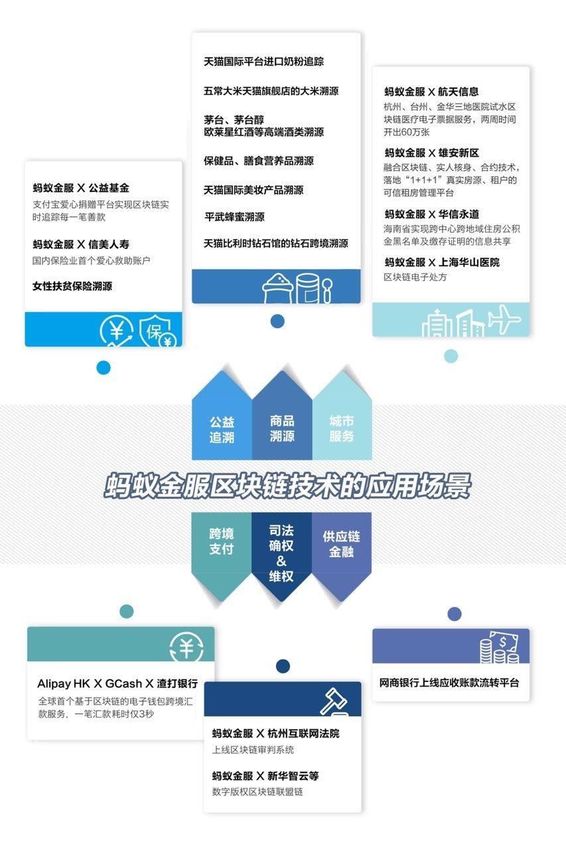
Background
In alphabetical order

                    Click Ventures
                    Click Ventures is an early stage venture capital firm investing in highly scalable technology startups across a variety of promising
                    sectors. Click Ventures's two seed funds have been named top performing funds (Vintage 2003-2015 Funds) globally by Preqin,
                    We actively support the global expansion of the portfolio companies with our 1,000+ global government and speaker level connections
                    and media network, and have created a global portfolio network and has invested across 10 countries.

                    Funderbeam
                    Funderbeam is creating a world where companies are funded and traded across borders. Funderbeam consists of 3 parts: 1) Free
                    worldclass data intelligence for investors and founders; 2) Funding: Private/crowd syndicates for equity funding; 3) Trading: All
                    investments are instantly tradable; investors choose how long to keep investment. All trades are secured by blockchain.

                    Oddup
                    Oddup is an indispensable resource for investors, investment banks, venture capitalists, accelerators, corporate innovators and
                    management consultancies seeking detailed information and greater clarity in the fragmented and foggy startup sector, the ICO
                    landscape, or the cryptocurrency investment market.

                    Tech.eu
                    Tech.eu is the premier source of European technology news, data and market intelligence, providing unprecedented insights into the
                    tech startup, investment, M&A and IPO activity across Europe (including Israel, Russia and Turkey). Founded in 2013, Tech.eu combines
                    solid editorial products with data-driven market intelligence reports across investment stages, geographies and sectors, as well as event,
                    research and consultancy services

2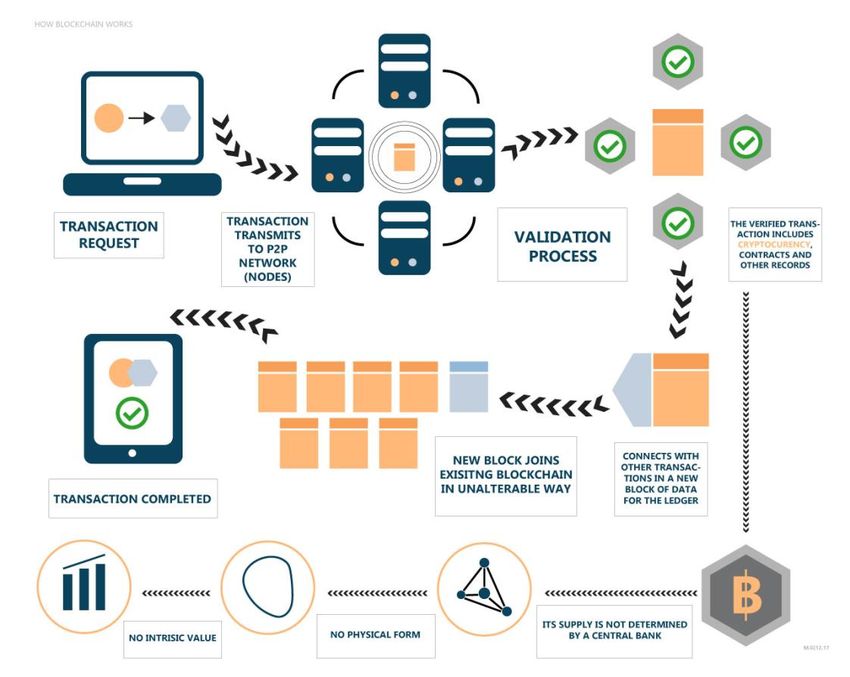
Credits
We would like to acknowledge the following for their contribution to the report

    Event Partners                                                                      Click Ventures Summer Fellow 2018
                                Community Partners                                               Blockchain Team

                                                                                                 Frederick Ng
                                                                                                 Analyst and Project Lead
                                                                                                 Click Ventures

                                                                                                 Chan Cheuk Yiu
                                                                                                 Lead Writer, Blockchain Fellow 2018
                                                                                                 London School of Economics
                                                                                                 and Political Science

                                                                                  Research Team
    Media Partner
                                                                                                 Vera Ho
                                                                                                 London School of Economics and Political Science

                                                                                                 Vaishali Jain
                                                                                                 Hong Kong University of Science and Technology

                                                                                                 Tulika Gupta
                                                                                                 Harvard Business School

3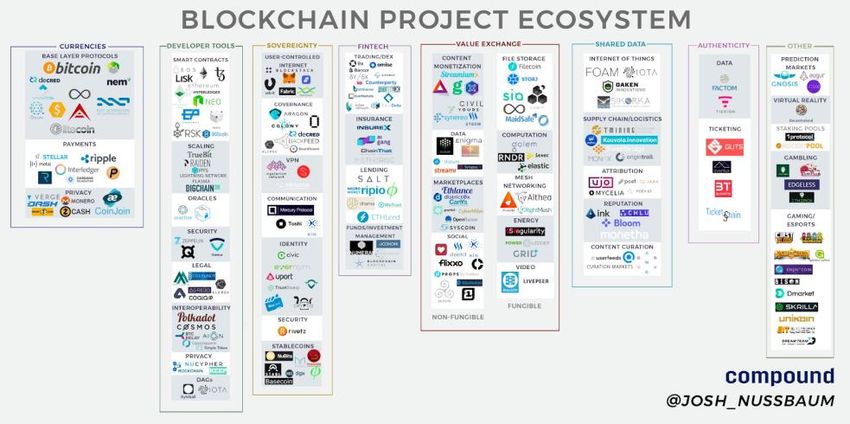
Editor’s Word
Carman Chan, Founder and Managing Partner, Click Ventures

                                     True to its form, the Blockchain ecosystem has gone through yet another eventful,
                                     somewhat crazy year in 2018. We witnessed the rise and fall of ICO and crypto prices, the
                                     emergence of security token offering and stablecoins, invention of new investment
                                     methods like the SAFT and many other new innovations that we all need to learn about-
                                     this is the reason why we have decided to produce this Blockchain Ecosystem Report to
                                     consolidate these learning,

                                     At Click, we are truly excited about the Blockchain disruption. It has the potential to render
                                     many of the current world’s inefficient processes obsolete, solve many real world problems
                                     that involve trust or the lack thereof, create new asset classes, and automate many
                                     procedures as the smart contract technology grows more sophisticated over time. As the
                                     technology and ecosystem evolve, I am sure we will discover many more use cases across
                                     industries and verticals along the way.

                                     With these in mind, it is my pleasure to present to you the inaugural Click Ventures 2018
                                     Blockchain Ecosystem Report. Our heartfelt thanks go out to our global partners at Tech,eu,
                                     Funderbeam and Oddup, without whom the report will not be completed with such a
                                     global coverage.

                                     Happy reading!

4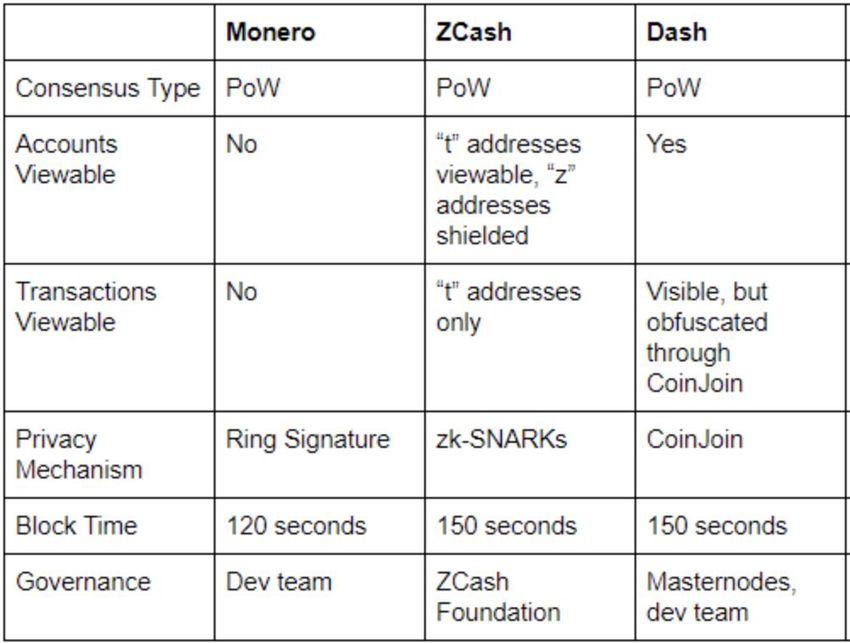
Section 1:
                                                                      Blockchain Concepts Walkthrough
                                                                            b
                                                                       Blockchain in a nutshell
                                                                       Blockchain 1.0/2.0/3.0 and Smart Contracts

                                                                       Consensus algorithms and Types of Blockchain
                                                                       Blockchain use cases- selective examples and selected corporate use cases

                                                           g           Other Interesting Use cases: conversations on the ground
                                                                       Leading consortiums/initiatives
                                                                       Current Blockchain Limitations
                                  Section 2:
                  Blockchain Fundraising 101
                 ICO vs STO vs IPO vs VC: Conceptual differences
                                                                            c
                          Current state of ICO: fundraising figures
                         What is token: Utility vs Security Tokens

                                                           h
                                            Types of Token Sales
                                        ICO ecosystem player list

                                                                      Section 3:
                                                                      Cryptocurrency Regulations Update
                                  Section 4:
Data Collection Methodology and Background
  5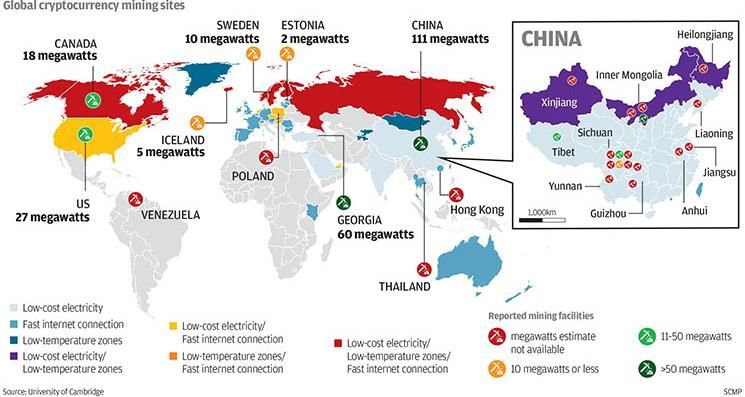
01            02            03               04
                  Blockchain    Cryptocurrency   Data
    Blockchain    Fundraising   Regulations      Collection
    Concepts      101           Update           Methodology
                                                 and
    Walkthrough                                  Background

6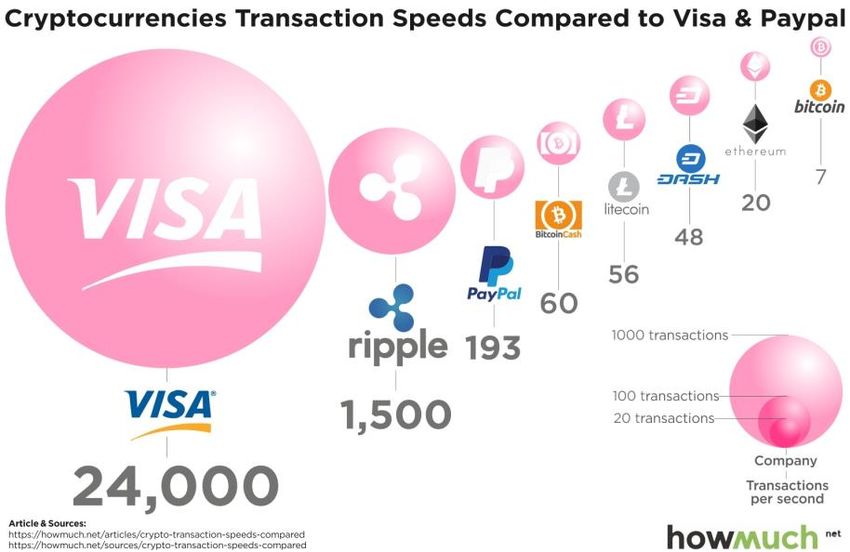
Blockchain in a Nutshell

A blockchain is a general digital ledger of transactions that are
executed on the network, e.g. using Bitcoin to buy a cup of coffee
is a transaction.

All users of the network, ‘Nodes’, have a copy of the transaction
records and can access them freely, a role previously played by
centralized institutions.

Therefore, the blockchain network is ‘decentralized’.

Transaction records within the blockchain are grouped into
‘blocks’. These blocks are time stamped when they are created
and ‘chained’ in number order of a block.

Some users of the network put up computational power or tokens
at stake (miners/validators) to validate the blocks of transactions,
and check that transactions records are not tampered with.

As an incentive, tokens (e.g. some Bitcoins) are given as reward for
their work, in transaction fees and/or block rewards. . For
example, bitcoin miners are given Bitcoins and Ethereum
validators are given Ether.

                                                                       Source: Agiboo

7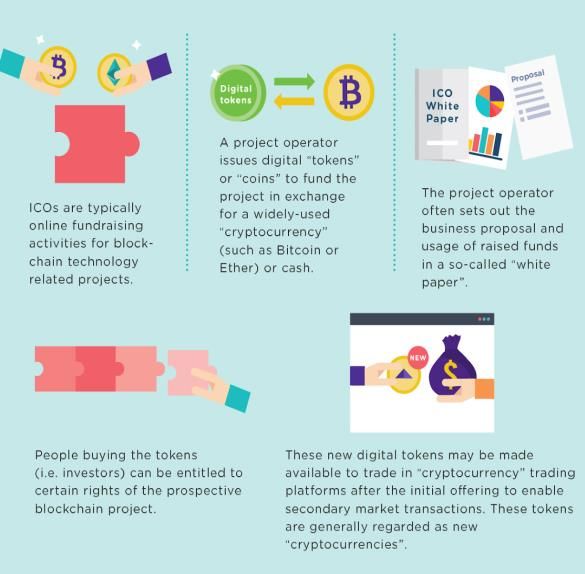
Blockchain 1.0:
Currency             Blockchain 1.0 is the creation of cryptocurrency, a virtual currency used for
                     payment purposes derived from the combination of cryptography and
                     currency. Bitcoin is an example of Blockchain 1.0.

                     ‘Cryptography’- Miners collect the transactions and compete by solving a
                     cryptographic problem. The winner can generate the ‘hash’ (turning large
                     chunks of transaction data into a line of numbers that represents the
                     transactions) to add to the blockchain using the cryptographic algorithm.

                     ‘Currency’- comes in the form of tokens, which is used to trade value
                     securely.

                     Miners collect the new transactions into a block, then attempt to hash the
                     block to form a 256-bit block hash value using trial and error. Most of the
                     time the hash proves unsuccessful, in which case the miner will make slight
                     modifications to the block and try hashing the block again, over and over
                     billions of times. If the hash starts with enough zeros, the block has been
                     successfully mined and is sent into the Bitcoin network, where consequently
                     the hash becomes the identifier for the block. Whenever some miners
                     successfully mine a block, the process begins anew.

                     The successfully mined block is almost impossible to tamper with because
                     all previous blocks need to be re-encrypted in order to change the
                     transaction records in the block. As the network is decentralized and there
                     are many copies need to be re-encrypted, the bigger the network, the more
                     computing power it takes, and so bad actors are disincentivized to cheat
                     the system.

Source: Slideshare

8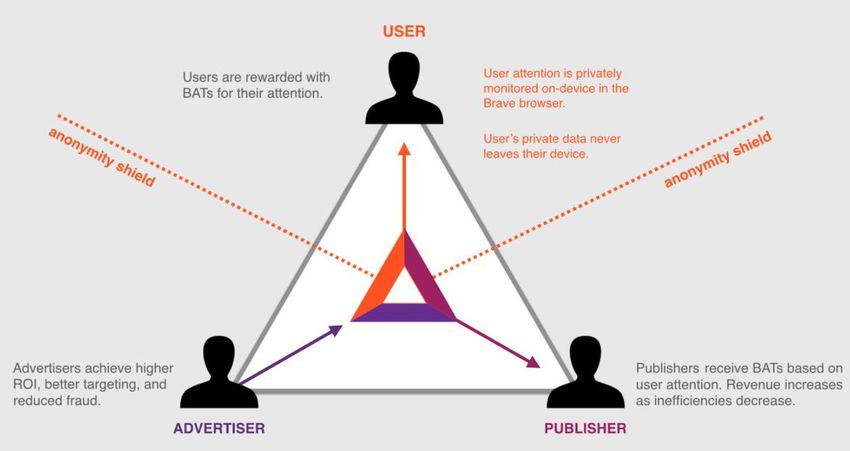
Blockchain 2.0:
Smart Contracts
Blockchain 2.0 is the introduction of smart contracts on a protocol, such as
Ethereum or NEO.

Smart contracts are sets of programmable and executable rules/logic that
are irreversibly stored on the blockchain. When both parties have met the
pre-existing criteria, the agreed terms are automatically executed.

Project build application on a decentralized peer to peer network is often
referred to as ‘dApp’, where the project’s related transactions are
decentralized across the network, so there is no single point of failure.

‘Outcomes’ on the smart contracts are stored on the blockchain. Every party
on the protocol has a copy of these ‘outcomes’. For the smart contract to
be processed and validated on the network, some operational tokens (GAS,
NEO Gas) are paid for the verification.

 Editor’s Note:

 The Ethereum network uses a concept, “gas” for transactions, and the gas fee is
 denominated in ether (also called as Gwei in the case of GAS). NEO has its own GAS
 asset which has a separate value from the main native currency.

                                                                                      Source: Blockgeeks

9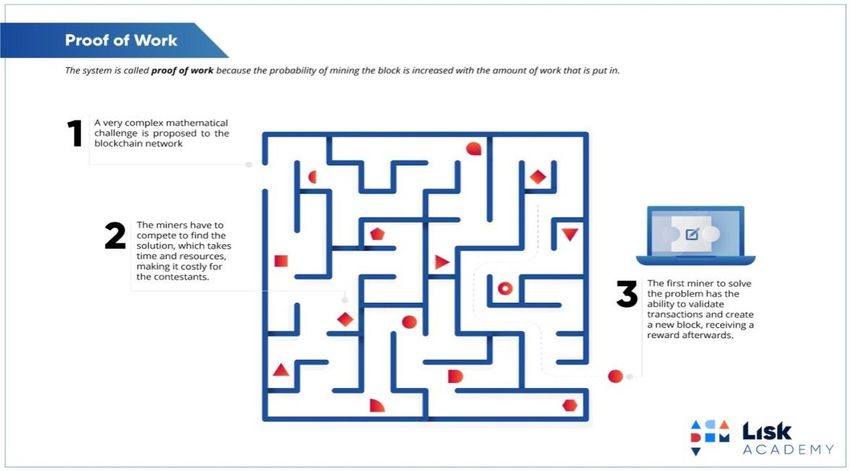
Blockchain 3.0:
Other applications of Blockchain
                                                   In general, Blockchain 3.0 refers to attempts of applying the concept of
                                                   blockchain to different sectors where the technology can be useful in
                                                   tackling hard issues, such as situations where coordination
                                                   between parties (i.e. standards organisation, industry group, multilateral
                                                   organisation, international treaty) is difficult or where lack of trust amongst
                                                   multiple parties exist.

                                                   Blockchain 3.0 also includes attempts to fine tune the protocol in order to
                                                   speed up transaction approval speeds (increase throughput), manage
                                                   token price volatility and achieve interoperability between protocols (e.g.
                                                   swapping Ether with NEO and make sure both protocols are compatible).

                                                     Editor’s Note:

                                                     Blockchain is designed as an incentive system that can operate by a set of
                                                     predefined rules and in ideal cases does not need a centralized body to manage
                                                     and govern.

                                                     All parties trust these set of rules and logics instead a centralized body, so all
                                                     parties can transact without trusting each other- hence ‘trustless’.

                                                     Following this set of predefined rules enables full automation and therefore
                                                     creates the possibilities of software that can automatically execute transactions
                                                     and tasks, pay and be paid, totally self sustained and powered by AI to improve
                                                     themselves- the vision of “autonomous business agents”.
Some of the use cases explored in Blockchain 3.0
Source: Intelligent HQ

10
Consensus Algorithms:
Proof-of-Work (PoW)
In layman terms, consensus algorithms are mechanisms created to verify
transaction records agreed by all parties in the blockchain network. They
encode the fundamental principles for resolving disputed transactions among
the parties in a blockchain network. As the design of blockchain is
decentralized, this is facilitated through the design of distributed consensus.
Proof of Work is the first generation of consensus algorithm.
Computers in the network (miners) collect transaction records into a block and
pass them through a computationally intensive hashing algorithm multiple
times to make sure it produces a line of numbers that correlates with the block,
solving a cryptographic problem. When completed, the hash becomes a
validator of the block of transaction.
After the block is validated and completed, they are then time stamped and
broadcasted so that everyone (nodes) has a copy of the record.
Many PoW protocols achieve alignment of incentives by distributing token
based rewards to miners who provide the validation service to the network. As
transaction volume and currency velocity goes up, so does the value of the
currency which attracts more miners to the network.
Editor’s Note:
The process evolves around “cryptographic problem” solved by trial and error, which consumes much computing power. Miner proves its integrity by doing the
work. This mechanism also provides the “randomness” so that theoretically no miner can predict and take control of the network.
Source: Lisk Academy
As an incentive, block reward or transaction fees, in terms of token or cryptocurrencies, are given to the first miner who solves the cryptographic puzzle.
11The 51% attack and
the Double Spend problem The 51% attack poses a theoretical risk to the integrity of the blockchain when
a group of miners take control of more than 50% of the mining capability
(hashrate) of the network.
A PoW algorithm is secured by having all miners (computers processing the
networks transactions) agree on the blockchain. Nodes look to each other to
verify what they are working on as the valid blockchain, acknowledging the
longest chain as the true version of the blockchain because more hashing
power has been committed to it, hence denoting that the majority agrees to
this version.
If the majority of miners are controlled by a single entity, they have the
potential to create the longest chain, dubbed the ‘truthful chain', forming the
basis of all balances of wallets. The corrupted group miners can purchase a
house, for instance, and broadcast the transaction to non-colluding nodes on
one version of the chain, while continuing to mine transactions from the
network forming another version of the blockchain without its order to
purchase a house, and not broadcasting this alternative chain to rest of the
network.
Once the purchase is complete, and the corrupted miners use their superior
mining power to create a longer chain by forming transaction blocks “quicker”,
they can post the longer, hence `truthful` version of the chain to the network
without its house purchasing transactions.
This will be recognized as the truthful version without the tokens spent,
allowing the wallets to be replenished and the entity to double spend its
tokens again.
Therefore, blockchain needs to be highly decentralized with a significantly big
How a 51% Attack may occur
network to avoid any entity taking 51% control.
Source: Coinmonks
Editor’s Note:
12 As miners are competing with computing power and speed of solving the cryptographic problem, theoretically, quantum computing can change the dynamics by
solving the problem much quicker than the network consistently and therefore able to undermine integrity of the whole system.Consensus Algorithms:
Proof of Stake (PoS)
Proof of Stake is a structure which does not utilise miners, but instead uses
validators.
The creator of the next block is chosen via a combination of random
selection and the amount of tokens he or she owns (wealth) or how long he
or she owned (age) (i.e. the stake).
In order to validate transactions and create blocks, the validators (the forger)
must first put some of their own coins at ‘stake’. If a person validates a
fraudulent transaction, he or she would lose the stake deposited.
In some projects, they will further punish the “cheater” by removing their
rights to participate as a validator in the future.
As an incentive, the validator takes transaction fees (in the form of tokens)
instead of block rewards.
Source: Hackernoon
13Consensus Algorithms:
Delegated Proof of Stake (DPoS)
Delegated Proof of Stake uses a limited number of nodes to propose
and validate blocks to the blockchain. This can increase the
transaction speed and thus solve the scalability problem of PoW.
Some projects that use DPoS includes EOS, Ark, Bitshares and
Steem.
The above figure illustrated one example of the DPoS. Those who
get voted in are called delegates/witnesses. Tokens are given to the
top 100 witnesses and the top 20 witnesses are paid regularly. The
users’ vote strength depends on the amount of tokens (stake) they
own.
The more they own, the more influence the person has on the
network. However as the community grows, it's going to become
increasingly hard to remain a witness due to increased competition.
With voting being ongoing and constant, the desire to remain being
a witness help to maintain a high quality of work in validating
transactions.
Editor’s Note:
PoS has a disadvantage that people with less token holding (stake) has less
chance to be a creator of the next block.
DPoS solve this problem by allowing the small holders to vote for their
representatives, namely delegates/witnesses who are the trusted entities to
Source: NK execute the block creation. On the other hand, small holders can also vote
out these previously selected entities if they cannot be trusted.
14Types of Blockchain
Public vs Private vs Federated Blockchain
There are two major types of blockchain- public chains and private chains.
Federated chain is a subset of Private chain.
High profile blockchain protocols Ethereum ,EOS, NEO are public chains.
Public chain’s main differentiation from private chain is that it is open to
anyone to participate, from downloading the blockchain data to viewing the
network’s past transactions, to validating data as miners/validators on the
network. In these public chains, participants remain anonymous.
Private blockchains are open to a limited number of participants whose
identities are all known, allowing only internal, pre-approved parties to write
on the blockchain.
There are two forms of permissioned blockchain: fully private, or federated
chain. The private blockchain operates within an organization, while the
federated chain operates between organizations.
Currently, one big difference between public and private chains is the
transaction speed. Private chains operate much quicker, because only a
handful of pre-approved nodes need to speak and verify with each other,
while public chain need to reach consensus across potentially hundreds
and thousands of nodes.
Large corporates tend to work with vendors like IBM to develop private/federated chains.
Source: Toptal
15Blockchain use cases 1
Real Estate
A lot of promises have been made regarding the blockchain technology, but
most innovations observed, up to 2018, involve using blockchain for
disintermediation, indexing and storage of data under one immutable, shared
ledger, process automation using immutable smart contracts and attempts to
build autonomous agents to trade blockchain recorded data.
Initiatives are trying to use smart contracts to help the property market become
more efficient through implanting conditional clauses to execute real estate
transactions as participated by multiple involved parties, reducing back-and-forth
time and associated overheads, while creating immutable price history for a
property.
Blockchain has the potential to record rental and purchase contracts into one
blockchain ledger visible to multiple parties, as well as eradicating the need for
third party intermediaries.
Other potential use cases include title search. All the information, including the
registration of mortgages, other liens and encumbrances, can be indexed on the
blockchain network, reducing the need of a title Insurance. This leverage the
indexing ability and traceability of blockchain.
In 2018, several blockchain projects have targeted at tokenizing property
ownership, including the highly anticipated Harbor protocol, to introduce a more
standardized and cheaper way to achieve seller financing, joint purchase (vs
partnership or setting up a corporation to buy) or fractional ownership, as well as
represent ownership and governance of common spaces and other factors.
Source: Deloitte
16Blockchain use cases 2
Gaming
Cryptokitties, an Ethereum based game, where ownerships of virtual
kitties are recorded on the Ethereum blockchain, have attracted the likes
of A16Z and Union Square Ventures, among other venture capital firms
and investors, to put US$12M in March 2018 for this blockchain based
gaming project.
Gaming has long been plagued by intellectual property theft of in-game
items including virtual character skins, in-game tools among others.
Virtual assets can be recorded on an immutable blockchain ledger to help
prevent these types of theft. A hacker will have to ensure that the right
nodes in the decentralized network are hacked with accurate timing,
decipher through hashed blocks and overwrite previous blocks in order to
complete a gaming asset theft.
Editor’s Note:
In the past, developers have tried to create markets for virtual items within their game worlds or cross-game
platforms. However, the virtual items are stored via centralized hosting and according to the modern intellectual
property rules, this makes those virtual items the property of the company instead of the player.
Therefore, blockchain enables the virtual items, price and transaction stored in a distributed ledger and thereby
facilitates a totally new asset class for these virtual items in the industries such as digital art, gaming and virtual
reality to form.
Source: Cryptokitties
17Blockchain use cases 3
Marketing and Advertising
Advertisers face the problem of gaining measurable ROIs on
advertisements due to proliferation of click bots which masked the real
engagement rates with potential users.
By verifying real users with their blockchain identities. This potentially
gives advertiser the ability to measure real interactions. Examples like the
BAT projects reward users who voluntarily opt-in to target advertising
online.
The consensual nature of the blockchain network also mean that the
control of personal data is given back to the users, and any use of data
can be traceable by the blockchain. This can potentially reduce the
misuse by a centralized institution which can hold one’s data and resell to
advertisers without the users’ acknowledgement or consent.
A blockchain enabled digital marketing ecosystem proposed by the Basic Attention Token project.
Source: BAT
18Blockchain use cases 4
E-Commerce and Retail
As an illustrative example, during the recent Double-11 sales, China based
Ant Financial collaborated with e-commerce giant Alibaba to track the
origin of up to US$150M worth of products sold during the 24-hour sales
worldwide.
In the case of e-commerce and retail, the current state of blockchain
technology is utilized to index the source of goods, from production to
delivery, immutability to offer transparency in the production and delivery
process, adding to consumer confidence. Initiatives such as IBM Food
Trust sees mega retailers including Walmart and Unilever leveraging
blockchain to add transparency to food supply chains.
Source: HK Silicon
19Blockchain use cases 5
Law
In the world of criminal law, the chain of custody can be indexed and
stored on an immutable ledger when evidence went missing or being
accidentally destroyed. Using blockchain to store and standardize all of
these evidence could cover the function of a paper trail, but become
indestructible with decentralized ownership of the records across the
nodes on the network.
Other applications within the legal field leveraging similar characteristics
of blockchain include patents, licensing and IP rights (copyrights,
trademarks).
Smart contracts, which can potentially be programmed in clauses
detailed in a physical contract, may help to eliminate litigation and turn
commercial lawyers into advisory function.
How Blockchain may be applied in the Criminal Law field.
Source: Kinesense
20Blockchain use cases 6
Healthcare
One case where blockchain finds a use case in healthcare is to address
the drug traceability problems. 10% to 30% of the drugs sold in developing
countries are counterfeit, and the counterfeit drug market is an annually
US$200B problem.
With a private blockchain with verified parties, including manufacturer,
wholesaler, pharmacist and patients acting as nodes in the blockchain
network, each new transaction added to a block is immutable and time
stamped, making it easy to track a product and make sure the information
cannot be altered.
The intrinsic properties of blockchain — such as data security and
authenticity — can help in tackling some other major problems in
healthcare, including indexing clinical trial results (immutability) to avoid
trial result forgery, collecting individual health data from wearables and
other IoT devices and storing them on a permission based distributed
ledger, and electronic medical billing supported by smart contract
executions amongst other use cases.
Source: IBM Blockchain
21Blockchain use cases 7
Trade Finance
Cross border trade finance requires exchanges for paper-based
documentation related to letters of credit which usually take between 5-
10 days. Through using blockchain ledger trusted by multiple involved
trade parties, the exchange was demonstrated to be executed in 24
hours.
The use of smart contracts also has the potential to facilitate process
automation in different stages of a cross border trades, which is to be
executed upon satisfaction of pre-conditions, such as bills of lading and
invoice financing based on blockchain certified events, with less human
supervision and quicker execution time.
Editor’s Note:
A lot of the blockchain applications are created around increasing efficiency with
automation.
In the above use case, users who has already applied trade financing are recorded
on blockchain, thereby reducing the risk of duplicated financing from two different
providers on the same trade or invoice.
Source: Deloitte
22Corporates Experimenting with Blockchain
Selected corporate blockchain use cases
Special Team
Mining Energy Remittance
Supply Chain Santander uses xCurrent,
BHP Billiton will use Ripple’s payment processing
Petmex, a Mexican state
blockchain to record the solution, to settle transactions
owned energy company,
movements of wellbore rock
explores using blockchain to
and fluid samples, and better
manage the complicated
secure real-time data
web of suppliers and
business operations
Syndicated Loans Healthcare Car Purchase
Provider Data
Using a private blockchain, Docusign and Visa built a
United Healthcare and other
BBVA was able to arrange a prototype to use smart
providers store updated data
$150M loan for Red Electrica contracts to simplify leasing
on blockchain to reduce
along with co-lenders MUFG or buying a car, allowing
lengthy payment
and BNP Paribas buyers
Bank of to complete
investment the
reconciliation process due to
transaction electronically
inaccurate data
Flight Delay Fighting Counterfeit
Insurance Drugs
AXA digitally records flight Pfizer uses federated chain to
insurance in smart contracts track drug identifiers and who
connected to global air touched what drug at what time,
traffic data feed. Policy making it difficult for counterfeit
23 holders are automatically products to enter the production
compensated in delays. chainLeading Blockchain Consortiums
Some of the leading names across sectors
Formed by 250+ corporate
members and led by the non-
Insurance Legal Risk Management
profit Linux Foundation
Selected
Supply Chain Gaming Energy
Blockchain
Consortiums
Automotive Transport Consortium includes 80+ of the
world’s largest financial institutions,
regulators, and central banks
Healthcare Trade Finance
Backed by JP Morgan, CME Group, Microsoft
24 and 380+ other membersCurrent Blockchain Limitations 1 THROUGHPUT
Throughput is essentially the speed at which transactions can be processed,
factoring block difficulty and costs.
The limiting throughput limits the ability of a blockchain to scale by handling
more transactions.
The speed of the network is only as quick as it takes for the consensus
mechanisms to verify transactions (PoW, PoS, DPoS), measured by
transactions per second.
Bitcoin can only process 7 transactions per second due to the amount of
work miners have to do (proof of integrity by proof of work) before they can
validate a block of data. Ethereum can only process 20 transactions per
second in its proof of stake algorithm.
The current transaction speed of Blockchain platforms do not measure up
with traditional transaction methods such as Paypal and Visa.
Editor’s Note:
As PoW is slow and energy consuming, new designs for the consensus systems aim at
Source: Howmuch,net increasing the transaction speed and also reducing the energy consumption so that
they are more scalable and environmentally friendly..
throughput interoperability privacy volatility storage
25Current Blockchain Limitations 2 INTEROPERABILITY
Interoperability is the ability to share information freely across
different Blockchain protocols.
One of the major limitations of the Blockchain platforms
currently is that information on different chains cannot be
shared. (the information on Bitcoin cannot be shared with the
information on Ethereum and vice versa).
The smart contracts underlying decentralised applications also
vary, depending on the Blockchain platform. As such, we are
still faced with the problem of data silo, where information is
‘centralised’ on one platform.
Just a snapshot of a small part of the blockchain ecosystem at the moment, Interoperability among all these projects is a big challenge
Source: COMPOUND
throughput interoperability privacy volatility storage
26Current Blockchain Limitations 3 PRIVACY
As all users of the public blockchain network can view the past transactions and activities
on the blockchain, privacy is an area of concern.
On the other hand, in a lot of the blockchain projects, users are only linked to a private
key instead of personal identity. Therefore, there are risk of money laundering kind of
activities.
Editor’s Note:
Blockchain is transparent in terms of transaction data and therefore it leads to
privacy issue. For example, if a user is using the same address for all related activities,
a malicious user can trace the public address and all its past transactions in attempt
to reveal information and benefit from so.
On the flipside, in the early days, users of cryptocurrencies do not go through strict
KYC (Know your Customer) process and central record-keeping mechanism (like
banks) and therefore regulators find it difficult to trace the identity of the users linked
to a public address with suspicious activities, as public blockchain users are
Examples of Privacy Coins anonymous.
Source: Steemit
throughput interoperability privacy volatility storage
27Current Blockchain Limitations 4 VOLATILITY
Volatility is the measure of the price deviation of a financial asset over a given period
of time. Four years of volatility in the stock market can be covered in a month in the
cryptocurrency markets as demonstrated in 2018.
Therefore, it is safe to say the value of cryptocurrencies are extremely volatile to this
date. This volatility makes it difficult for cryptocurrencies to be used reliably for day-
to-day transactions or holding cryptocurrency as assets.
Editor’s Note:
There are many discussion around this topic - some argue that cryptocurrencies do
not have intrinsic value, and therefore it is difficult to value its price; some also argue
the lack of regulatory oversight allows for market manipulation which introduces
volatility in crypto prices.
Examples of Bitcoin Volatility
Source: Coindesk
throughput interoperability privacy volatility storage
28Current Blockchain Limitations 5 STORAGE ISSUES
A ‘wallet is a software that stores cryptocurrencies and part of what enables a person
to send and receive cryptocurrencies.
It stores the private key (a randomised 256-bit long alphanumeric password shared
only the user to decrypt messages encrypted with a sender’s public key) which
enables access to crypto tokens.
Various forms of wallets exist, from hot wallets (accessible on internet) to cold
wallets (not accessible on internet, e.g. a USB drive or a piece of paper which one
uses to write the password) are available.
Storage of cryptocurrencies have long been a concern to the space because of the
vulnerability displayed by various hacks over the course of cryptocurrency history.
A history of cryptocurerncy thefts.
Souce: Insider Pro
throughput interoperability privacy volatility storage
29Other Interesting Use cases:
conversations on the ground
To further illustrate the most up to date activities, hot topics and use cases in the blockchain ecosystem,
Click Ventures has partnered with a few industry leading events such as Money20/20 and Token 2049
among others to interview the most exciting ecosystem players and project owners to share their innovation
and observations.
Click Ventures is launching VC on Air, a Podcast and video streaming platform to interview industry
heavyweights (top entrepreneurs, venture capitalists and leading figures in the startup ecosystem) to brings
together a knowledge sharing community in Asia. Stay tuned to our media channel for more.
Read the following session to get a preview for some interesting conversations we had in 2018!
30Conversations on the ground
Project owners
“Know-your-customer is a
painful and repetitive
process when opening
“Blockchain injects accounts at financial
trust into the dispute institutions…
resolution process” The whole KYC process is
very inefficient in the current
traditional industry.” .
Federico Ast Edmund Lowell
Co-Founder, Kleros Founder, SelfKey*
Existing centralized systems e.g. e-commerce site solving a purchase order Banks cannot quickly and easily access up-to-date identity data, validate the data, or
dispute does not have their incentives aligned to solving the dispute“. For screen it to satisfy their regulatory requirements. Different departments in the same
instance, if the online site has a very small number of customer service reps, so bank may need to do the KYC process from scratch again when their clients need to
their incentive may be to solve the dispute as soon as possible, apply for a service from another department.
but not correctly.
SelfKey tries to build a blockchain based digital identity so that a user only needs to
Kleros attempts to build a blockchain powered arbitration service provider, upload personal detail once, and sends them to the counterparty to validate via
allowing people to outsource their disputes to a jury which purchases and blockchain.
stakes tokens to resolve a dispute to get rewarded later for its input, all the
while their voting decisions all made visible on an immutable blockchain for the Due to the immuatable nature of blockchain, the owner may then make attestations
network to judge whether the jury has been fair. By doing so, it aims to inject of his/her truthful identity verified by other trusted parties on the network, instead of
trust into the dispute resolution process.” sharing the same identity proofs over and over again.
31
*Selfkey is a Click Ventures portfolio companyConversations on the ground
Blockchain Infrastructure Builders
“In order for legitimate ICO “Airdropping creates
projects to be successful, they network effect. If you
require a mechanism to can distribute them in
manage the compliance of an easy way, receivers
their tokens that addresses get more exposure to
the jurisdictional variances in the tokens”
both regulation and corporate
governance”
Matthew Unger Ron Berstein
Co-Founder, iComply* CEO, Paradex.io**
Token issuance platforms face challenges from multijurisdictional operations as Paradex believes that everything that can be tokenized and will be
they attempt to cope with the requirements from the SEC, CFTC, FINRA and tokenized. In order for the token economy to be adopted by the mass,
FinCEN (just US ones) and other different regulations across various jurisdictions. they need to be easily accessed. Facilitating an easy-to-use way for early
adopters to buy/sell tokens directly at their wallets is one path of
iComply attempts to complete the compliance layer in the blockchain achieving so.
ecosystem, allowing crypto exchanges and projects to conduct compliant
token issuance and secondary trading with coverage of 150+ jurisdictions Paradex hopes to build robust, peer-to-peer relay where users from all
globally. It also enables projects to achieve full cycle token management (think parts of the world can buy and sell ERC20 tokens on the Ethereum
cap-table management for the crypto world), and builds a global database blockchain in a decentralized fashion.
bridging the blockchain and non-blockchain world of both compliant and non-
compliant crypto transactions.
32
*iComply is a Click Ventures portfolio company ** Paradex.io was acquired by Coinbase in May 2018Conversations on the ground
Token Issuers
“Security token has the
potential to assist
“Our vision is to
seamless, global, capital
create a token
formation; instantaneous
for any asset in
settlement for unique,
the world and
unforgeable assets, and
trade with each
lowers security trading fees,
other”
among others.”
Michael Oved Thomas Borrel
Co-Founder, Airswap Chief Product Officer, Polymath
Centralized exchanges have proven themselves to be vulnerable to Security token has the potential to assist seamless, global, capital formation;
hacks as demonstrate by the many past instances. AirSwap is building a instantaneous settlement for unique, unforgeable assets, and lowers security trading
decentralized exchange powered by search. Buyers, sellers, people and fees, among others.
programs can connect and trade wallet to wallet using smart contracts.
In order to make this upgrade possible, Polymath believes there needs to be a
It plans to use smart contracts on the Ethereum blockchain to pair up standard for security tokens that utilizes these benefits while satisfying regulations,
buyers and sellers automatically, eliminating the need for a central and is thus building the ST-20 token standard. With a standard in place, security
authority to match trades. token issuers, investors, exchanges, wallets, custody providers, and regulators can
become comfortable with this technology, interoperability becomes easier, and
adoption can be widespread.
33Conversations on the ground
Investor and Consortium
“I was impressed and
inspired by the Hangzhou
Internet Court’s use of the
blockchain technology to
settle disputes”
Will Wang Pindar Wong
Head of BD and Investment (North America), Huobi ECO Chief Architect, Belt and Road Blockchain Consortium
Some institutional investors in the blockchain space is investing to build an The Belt and Road initiative covers 65 economies with expected increase in trade
ecosystem. activities amongst these countries as the initiative rolls out. As supply chains evolve
into highly automated, data-driven ecosystems, these countries will need the
For instance, Huobi Group set up the Huobi Global Ecosystem Fund, a transparency, immutability and accountability that blockchains provide to reduce
US$200M fund to support blockchain funds, incubators, wallets, miners, trade friction.
market data vendors etc.
For trade that originates or terminates along the 65 Belt and Road economies, the
They also initiated the Blockchain+ Industry Alliance for the purpose of Belt and Road Blockchain Consortium “strives to develop buy-side business
better serving the real economy and helping companies in traditional standards for “Electronic-ID Disputed Resolution Processes and standardized
industries adopt blockchain technology and the token economy. interoperable smart contract standards that increase trust and transparency in cross-
border trade.”
3401 02 03 04
Blockchain Cryptocurrency Data
Concepts
Blockchain Regulations Collection
Walkthrough Fundraising Update Methodology
and
101 Background
35ICO vs STO vs IPO vs VC: The Conceptual Differences
Initial Coin Offering
(ICO)
ICO is a fundraising method used by blockchain startups to sell new form of cryptocurrency
or token that can be used in the product/service they wish to build in the future, in
exchange for fiat currency, or common cryptocurrencies such as Bitcoin or Ether to support
their development now.
At the time of the ICO, most instances the product isn’t ready for launch yet. Also, because
of laws around securities, companies usually try to issue utility token instead of security
tokens to avoid the regulatory overhead. The ICO is thus similar to a pre-order for product or
services (i.e. utility) provided by the company. Unlike an IPO, the company does not sell its
shares or its control over the company (non-dilutive) if they are issuing utility token.
The fundraising target is to meet at least the ‘soft cap’ (minimum amount). If the ‘soft cap’
isn’t met, the funds are returned to the investors. If the soft cap is met, the company can still
allow oversubscription until the hard cap is met if such is defined at the beginning of the
fundraising project. The tokens can then be listed on cryptocurrency exchanges (similar to
an IPO) where people can trade the tokens.
Editor’s Note:
One difference of ICO and KickStarter kind of crowdfunding is that
companies usually list their coin or token in an exchange (like securities in Source: IEC
IPO) and thus provide a secondary market for the token trading as well
as potential speculation opportunities in some cases.
36ICO vs STO vs IPO vs VC: The Conceptual Differences
Security Token Offering
(STO)
In 2018, especially towards the second half of the year, STOs becomes the buzzword as the
ICO hype slowly faded away.
Security token issuance platforms such as TZero, Harbor, Polymath, Securitize have raised
funds in 2018 to chase this vision.
A security token can be digitally represent any number of real-world assets, from resorts to
loans, to shares of a company. Security tokens are subject to securities regulations related
to the issuing country of the STO and different country has different securities rules and it
represent investor rights, where in contrary many utility tokens that raised funds through
ICOs may not give the same assurance of rights as an STO.
The vision of security token offering is to turn initially illiquid real world assets could
potentially make them easier to access and trade over the internet, thereby increasing
liquidity and unlock a more global capital market.
Greater efficiency may also be achieved if smart contracts can be deployed such as to Securities Token Exchanges provide secondary trading to investors globally while most stock
exchanges mainly provides trading to local investors. Enabling multi-jurisdiction regulations and
execute dividend payouts, ensure voting rights amongst other privileges enjoyed by a automate the transactions according to regulations from different jurisdictions of the potential
shareholder, all the while reducing overhead to monitor these payouts, paperwork required buyers and sellers is a must in order to make Security Token exchanges viable.
and potentially undercut middlemen who charge premium to structure these securities.
Source: The Block
Editor’s Note:
Security Token embraces innovation in a way that the underlying security could be in different form instead of company shares alone. For example, it can be tied to the revenue
37 sharing of a certain product or project without diluting the shares of the company at all. Exchanges that provide security token trading would also be subject to the security
regulations.ICO vs IPO vs VC: The Conceptual Differences
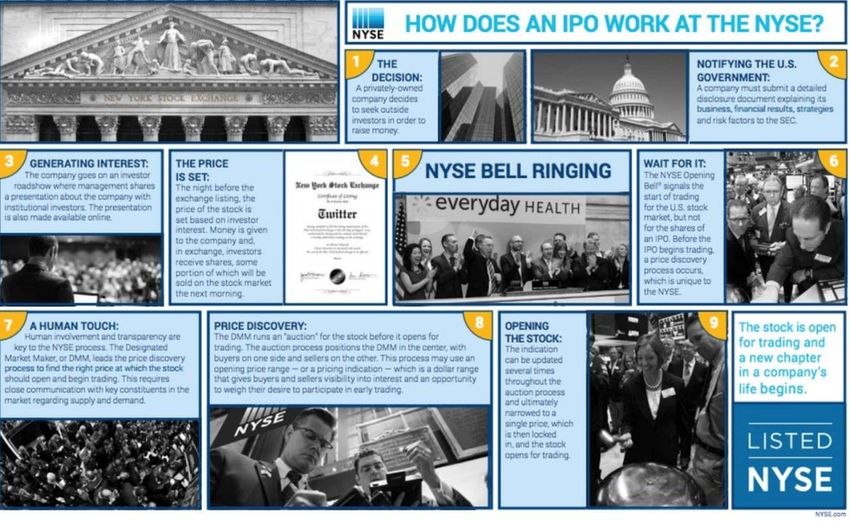
Initial Public Offering
(IPO)
Unlike ICO, the listed company is legally obliged to
answer to its shareholders and the process of listing
is dilutive as the public hold shares to the company.
A company first sell its shares or stocks on a public
exchange to expand and raise funds for its usually
already-mature business. The process of the IPO is
heavily regulated. The company must meet a
number of legal requirements before launching an
IPO.
For illustrative purposes on explaining how IPO works.
Source: NYSE
38ICO vs IPO vs VC: The Conceptual Differences
Venture Capital (VC)
Companies (including blockchain projects) reach out to Venture
Capital firms to injection of capital in an early stage. As early stage
startups normally lack access to bank loans or public capital
markets, venture capital funding is one avenue for them to expand
and fundraise.
At this point, the company may or may not have a working product.
The fundraising process from venture capital firms is dilutive as
they typically take shares in the company. In return, venture capital
firm provides monetary resources, technical and managerial
expertise.
The fundraising process helps projects raises funds from the
institutional investors (the VCs), who are usually backed by other
institutional investors and accredited investors.
Source: Harvard Business Review
39All data Insights provided by data partners Funderbeam, Tech.Eu, Oddup, tracking across 298 successfully completed
and announced ICOs in 2018, including Block.one and Telegram.
Ranking Name Founding Registered Short Description Funds raised ICO Date
Team from (US$)
Cayman
Block.one is a software company that is producing the
Top 10 Projects by
1 Block.one Hong Kong
Islands
EOSIO blockchain platform for the development of
decentralized applications (dapps)
$4.0B 1 June 2018
Fundraising Amount
2 Telegram Russia Great Britain*
Telegram is like privacy focused instant messaging
application
$1.7B 1 May 2018
of all time
As evidenced by the Top 10 list, the ICOs that raised the
TaTaTu is a video-on-demand and social platform to
Cayman reward users for watching movies, music videos, sports, most amount of funds in all time were largely restricted
3 TaTaTu N/A $575M 30 June 2018
Islands gaming and celebrity content, and get rewarded for to the 1H 2018- a telling sign of the eventual market
watching and posting content.
slowdown in 2H 2018 along with the crypto market crash.
Dragon is creating tokens that can be converted to chips
4 Dragon Macau USA at its physical casinos in Macau, and used to watch $320M 15 March 2018 Our on-the-ground observation is that many projects
movies and sports have switched to conducting private sales targeting
institutional and accredited investors as the sentiment
5 Huobi China SGP Huobi Global is a cryptocurrency exchange $300M 28 February 2018 towards ICO projects went south.
Tezos is a self-amending cryptographic protocol that
Also noteworthy but not on the all time top-10 list are
6 Tezos Israel USA supports smart contracts and offers a platform to build $232M 12 July 2017 Basis, which raised US$133M in April 2018, and tZero,
decentralized applications which raised US$134M in August 2018 respectively,
The Filecoin network hopes to allow anyone worldwide representing market interest in Security Token Offering
to participate as storage providers. It also makes storage (STOs) and Stablecoins.
7 Filecoin USA USA $205M 9 August 2017
resemble a commodity or utility by decoupling hard-
drive space from additional services.
Sirin Labs produces FINNEY, which are blockchain 24 December
8 Sirin Labs GBR GBR $158M
enabled smartphones. 2017
Bancor is a decentralized liquidity network that provides
Editor’s Note:
9 Bancor Israel CHE users with a simple, low-cost way to convert tokens $153M 10 June 2017
directly from their wallets As more blockchain related project moves toward token private
sales by selling token related interests instead of company shares
10 The DAO N/A N/A**
The DAO dubbed itself as the first 100% Decentralized
$152M N/A
like traditional VC funding round, some of the new funding
Autonomous Organization arrangements such as SAFT (Simple agreement of future token)
instead of SAFE (Simple agreement of future equity) emerged.
* British Virgin Islands
Also emerging are convertible tokens that can be converted to
** The DAO is a multi-jurisdictional attempt shares or shares that can be converted to tokens.Europe came 2nd by counts of total ICO funding raised as well as ICO fundraising instances. The ICO
fundraising amount takes into account of Telegram's US$1.7B megaround. Discounting that, US$1.8B was
raised across 69 other counted ICO fundraising instances, with BVI taking 17 of these instances including
Telegram, Switzerland (6), Gibraltar (6), Lithuania (5) and Estonia (4). ICO vs Total Funding
(Including VC) in 2018
Asia attracted significant amount of ICO fundraising interests as
Singapore positioned itself as a friendly cryptocurrency hub,
championing blockchain initiatives such as the Project Ubin on the
central bank level, and offering clear regulatory guidelines as early as
end of 2017 as to what ICO projects fall under regulation of Monetary
Authority of Singapore.
Funderbeam’s database showed the quickest ICO fundraising amount
growth in Asia with total annual recorded ICO funding growing from
US$428M in 2017 to US$2.3B in 2018.
Total funding including VC and ICO Rest of the World ranked 1st globally in terms of ICO fundraising in 2018.
This needs to be considered along the fact that the Block.one's US$4B
ICO (representing the EOS protocol) falls under this region with its
registered entity at Cayman Islands. Discounting this, around US$700M
Just ICO
has been raised across 9 fundraising instances this year.
By the count of ICO fundraising instances and associated ICO fundraising
amount, Rest of the World retained its ability to attract larger fundraising
North America ranked lowest in ICO fundraising amount on the database. From our observation, many ICO projects would projects, including Block.one and Tatatu in 2018, and Filecoin (US$257M),
restricted US domiciled investors from partaking in the ICO fundraising exercise due to regulatory requirements. As a result, Tezos (US$232M), Sirin Labs (US$158M) and Bankera (US$153M) in 2017.
the database showed that total ICO fundraising amount in North America in 2018 grew only 39% year on year, while Europe
grew 86% (discounting Telegram) and Asia grew close to 537% year on year as mentioned above.Israel, which housed Tezos, one of the most prominent ICOs in 2017, announced that it would
not ban ICO in late 2017, pushed out a clear tax code on crypto related companies in February
2018, and its Securities Authority established clear definition of whether a token constitutes as
utility token or security in March 2018.
Top 10 ICO fundraising
Lithuania announced the LBChain in early
by country of all time
2018, a regulatory sandbox initiative led by
the Bank of Lithuania scheduled to come Given all the ICO fundraising activities in 2018, how
live as early as 2019. It published a did it change the Country league table of ICO
document of ICO Guidelines that clarified on fundraising of all time?
regulation, taxation, accounting and Anti-
Money laundering requirements of Cayman Island and United Kingdom shot to the top
Lithuania based projects. of the league table in 2018, previously unseen in
2017, bolstered by the US$4B Block.one fundraising
and US$1.7B Telegram fundraising. Names that
dropped out of the league table, compared to 2017,
include Hong Kong and Finland.
US($)
These are replaced by Lithuania and Israel, both
countries pushing out regulations to promote
transparency within the field.
Editor’s Note:
Also worth mentioning is Thailand, which announced an ICO
portal for projects that took effect on July 16 setting very clear
frameworks on token categories (utility vs security), issuance Canada dropped to the 10th on the table with minimal ICO fundraising movements, only
company requirement among other requirements registering 5 recorded ICO project fundraising instances with less than US$40M announced
raise in 2018.
Detailed information on this can be found here.The grey line shows the average round-sizes of global startup funding for all types of funding across stages,
including ICO rounds. The pink line shows only the average ICO round-sizes. All data is from 2015 onward.
Average Fundraising Round
Size (Global) all time
Across 298 recorded ICO fundraising instances in
2018, including Block.one and Telegram, this brings
an average ICO fundraising attempt of early stage
blockchain projects in 2018 to on average close to
US$45M, a staggering amount for many projects are
in its early stage of development.
As a reference, this amount brought ICO projects'
total fundraising amount close to a North America
Series B after startups' average round size (US$47M).
It is however important to note that most of this
US($) fundraising activity happened in 1H 2018, during
which 243 out of 298, or 82% of successful ICO
fundraising attempts happened, raising nearly all of
the US$12.3B raised in total in 2018.
Editor’s Note:
Moving into 2H 2018, less than US$1B has been raised across our recorded ICO fundraising instances.
This is a key takeaway as it denotes a clear cooldown for the ICO fundraising market.Average ICO Round Size (by
region) all time
The graph represents the average ICO round size from 2015
to 2018. Each line is color-coded by region and divided by
stage of funding. Note that Rest of the World has been
excluded in this graph given the small sample size and
presence of the big outlier, Block.one.
As 2018 stands, US$25M seems to be the magic number for
blockchain fundraising figures.
In Europe, which is home to Telegram's fundraising attempt, saw
its average shot up to close to US$50M. Discounting Telegram, the
figure will round up to US$26M across 69 instances, the most
across these 3 tracked regions in both average fundraising amount
US($) and number of fundraising instances.
One of the reasons for this can be attributed to the larger number
of crypto-friendly jurisdictions in the region, with United Kingdom,
Switzerland, Gibraltar, Lithuania, Estonia, Russia, Israel,
Liechtenstein, Slovenia, Netherlands, Luxembourg, Belgium and
In a further breakdown by region and excluding Block.one, average ICO project raised would Malta all registering more than one successful ICO fundraising
look to be around US$25M in North America and Asia, the drop in average ICO fundraising attempts in 2018.
value from 2017 to 2018 due to higher number of successful ICO fundraising attempts in both
regions this year (North America- 54 to 74, Asia- from 16 to 53).The circles represent startups who have raised ICO funding and their association with industries. Note that a
startup can be associated with several industries.
The size of each circle corresponds to the number of startups associated with that particular industry.
Top Sectors doing ICO
Fundraising in 2018
This table shows industries with recognized ICO fundraising
success of more than 10 instances in 2018.
Financial services led the pack with 163 ICO related instances, with
some high profile ICO fundraising including Huobi and Basis
which aim to support liquidity and bring stability in the
cryptocurrency space respectively, to application focused
projects such as Self Key which strives to create blockchain
based identity systems, to Odyssey, which focuses on digital
asset trading and payment solutions. Financial services related
registered ICO fundraising attempts rose from 98 to 163 from 2017
to 2018.
Big Data and AI came 3rd with 20 instances. From our database, the most
successful related blockchain project by amount of ICO funding raised is
Neuromation, the Estonian based startup raising US$50M in early 2018 to
leverage tokenomics to create marketplace business models of reward
buy/sell of synthetic datasets on a blockchain enabled marketplace.
Other interesting use case involving blockchain in the AI space is
Cybersecurity rose through the ranks with 36 related instances, with represented by SingularityNET, which raised US$36M in January 2018 to
project such as Atonomi leveraging the blockchain ledger to store build an open-source protocol and collection of smart contracts for a
device identity, as well as enable device interoperability and decentralized market of coordinated AI services, with the vision to let
reputation in the IOT space over time. anyone add an AI/machine learning service for use by the network, and
receive network payment tokens in exchange.Utility vs Security Token
Utility Token vs Security Token became a huge debate because
there are many security laws that govern the latter, which leads to
many procedures/restrictions that a blockchain startup needs to
navigate to fundraise for their projects via the token route.
A common way used to tell one from the other is through the
‘Howey Test”, a US SEC standard. The criteria are as follow:
1. There is an investment of money
2. There is an expectation of profits
3. The investment of money is in a common enterprise
4. Any profit comes from the efforts of a promoter or third party
By US standard, when the token passes all criteria, it is a security; if
not, it is a utility token.
Please note that this is only a general guidance, each jurisdiction
may have a different interpretation as to what a security token is.
Many tools are now used for the HoweyTest.
Source: Blockspoint
46Type of Token Sales
Blockchain projects have 3 stages of token sales- the Private
Sales, only to accredited and institutional investors, the Pre-sales,
and the ICO. In 2018, many resorted to just doing private sales:
Private Sales
Private Sales refers to the sale of tokens to private investors
before the token is made available to the public. This round is
usually for institutional and accredited investors only.
The tokens are typically sold at discount compared to the price of
the 2 later stages of the sale.
Tokens sold in this stage usually come with a lock up period,
meaning that investors can only sell their tokens after a certain
period of time, e.g. 6 months, to avoid dumping of tokens.
Pre-sales
Pre-sales are token sales which happen right before the public
sales. These events are marketed normally on the ICO website. Editor’s Note:
The tokens sold at this round is sold at a discount to the price at
the ICO, and can be made available to the public in some cases. Most of the token sales during private sales have a discount ranging from 20% up to 50% in 2018. This provides
the private sales investors opportunities of making lucrative short term gain of up to 50% within a few months
Public Sales without lockup.
Public Sales is when the ICO is officially launched. After
completion of sales, the cryptocurrency may then be traded on This mechanism has attracted a lot of speculators into the market and a “pump and dump” trend among these
cryptocurrency exchanges. speculators.
47You can also read


