Coming Together Building a Hopeful Future for Children and Youth in Windsor-Essex County - netdna-ssl.com
←
→
Page content transcription
If your browser does not render page correctly, please read the page content below

Coming Together Building a Hopeful Future for Children and Youth in Windsor-Essex County


When we recognize
                                                           our purpose as being
                                                          something bigger than
                                                           all of us, we will truly
                                                        understand the importance
                                                           of service leadership
                                                            to create an impact.
                                                               – Dr. Bernice A King

Land Acknowledgement
ProsperUs would like to begin by acknowledging the land on which we gather is the traditional
territory of the Three Fires confederacy of First Nations, comprised of the Ojibway, the Odawa
and the Potawatomie.

Acknowledgement
            Primary Author      Frazier Fathers
    Contributing Research	Jessica Fazio, Alicea Fleming, Katie Pfaff,
                           David Regan, Uma Venkataramaiah
Index Development Group         Paula Castonguay, Ramsey D’Souza,
		                              Frazier Fathers, Jessica Sartori
                 Reviewers	Ramsey D’Souza, Lorraine Goddard, Jim Inglis, Janice Kaffer,
                            Erin Kelly, Judith Obatusa, Jelena Payne, Jessica Sartori,
                            Michelle Suchiu, Noah Tepperman
                     Editing    Karen Brady, Stephanie Perta

ProsperUs would like to thank all residents and partners who shared their stories
during the engagement processes, helping inform this report.
Report Summary......................................................................1

                    Message from the ProsperUs Chairs.......................................4

                    Why ProsperUs Exists ............................................................6

                    Why Cradle to Career (C2C)
                    is the right strategy for our community.................................. 10

                    Moving to Collective Action, What’s Different?...................... 13

                    What We’ve Heard ............................................................... 19
TABLE OF CONTENTS

                    The Broader Regional Picture............................................... 24

                    Cradle to Career Milestones................................................. 26

                    Neighbourhood Opportunity Index........................................ 33

                    Neighbourhood Index Rankings............................................ 41

                    What’s Next?........................................................................ 46

                    Who’s Involved?................................................................... 48

                    Glossary of Terms ................................................................ 55

                    Appendix 1: Index Category Scores .................................... 57

                    Citations............................................................................... 60
REPORT
SUMMARY
 In September 2018, a group of system leaders
 in our community stepped forward and publicly
 announced that they were going to begin working
 differently. They formed a collective called

                                                         REPORT SUMMARY
 ProsperUs, and together started a process to
 implement a Cradle to Career strategy in our
 community to ensure that every child and youth
 has an opportunity to be successful.
 ProsperUs, a collective of community partners
 from non-profit, government, health care, education,
 labour, business and inspired residents holds a
 vision to transform the conditions and capacity in
 our region to dramatically improve the outcomes
 for children and young people of Windsor-Essex
 County, from the time they are born until they
 complete post-secondary education and enter
 the workforce full-time – Cradle to Career.

                                                1 / 62
1
         Gathering Information
                                               Together we will implement this vision through a
                                               neighbourhood-based Cradle to Career strategy
                                               that wraps supports around children, youth and their
                                               families where they are needed most. Cradle to Career
                                               partners value equity. Working with an equity lens
                                               means that some kids in certain neighbourhoods

         3
                                               need more help than others in order to level the
                                               playing field. This means targeting investments and
                                               supports in communities that need it most based on
                                               and supported by data. With a focus on quality and
                                               results, these supports will ensure that children and
         Data Walks                            youth are successful at key measurable milestones.
                                               This enables the community to track progress over
                                               time to continuously improve our work and outcomes,

         2
                                               and leverage individual successes to enhance impact
                                               at scale with the goal of measurably transforming
                                               community conditions.
                                               Over the past 10 months, ProsperUs partners have
                                               been working, listening and gathering information
                                               about the challenges facing our community. An
         Sharing Data                          unprecedented process was undertaken which saw
                                               institutions sharing data on key indicators for our
                                               entire region at a neighbourhood level. Initial
                                               community engagement processes were undertaken
                                               using innovative approaches like Street Outreach

         4
                                               Teams and Data Walks. These shared experiences
                                               and data were used to construct an index for the
                                               City of Windsor and the County of Essex. The indices
                                               include 20 neighbourhood-level indicators consisting
                                               of demographic, economic, health, education and
         Street Outreach Teams                 civic and safety outcomes. Once compiled, the data
                                               was ranked and key neighbourhoods were identified
                                               based on the level of need. Three clusters of
                                               neighbourhoods emerged – Downtown Windsor,
                                               Leamington and West Windsor.

         5
         Three Key Neighbourhoods Identified

2 / 62
Let us make
                                                                           our future now, and
                                                                         let us make our dreams
                                                                            tomorrow’s reality.
                                                                              – Malala Yousafazi

These three neighbourhoods face some of the greatest    The following pages tell the ProsperUs story and
barriers to children and youth success in our region.   share the work that has been undertaken to date.
Some examples of these barriers include high rates      The report also breaks down some of the challenges
of poverty and lower concentrations of community        for our community and shares the data-driven process
wealth, poorer educational attainment and outcomes,     that was used to determine the neighbourhoods that
evidence of poorer health outcomes, concentrations of   ProsperUs will be focused on for the next stage of
potentially vulnerable demographic groups like single   our work. Only by working differently can we build
parents and higher rates of youth crime.                a more prosperous community for everyone in
This report is the launch pad for an intensive          Windsor-Essex County.
neighbourhood-based engagement process.                 This work is broadly supported by United Way/
This process will engage children and their families,   Centraide Windsor-Essex County as the backbone
and span the next year and a half to more deeply        organization for ProsperUs.
understand the challenges that they are facing.
Then, in partnership, they will co-design
custom solutions for their neighbourhood needs.

                                                                                                      3 / 62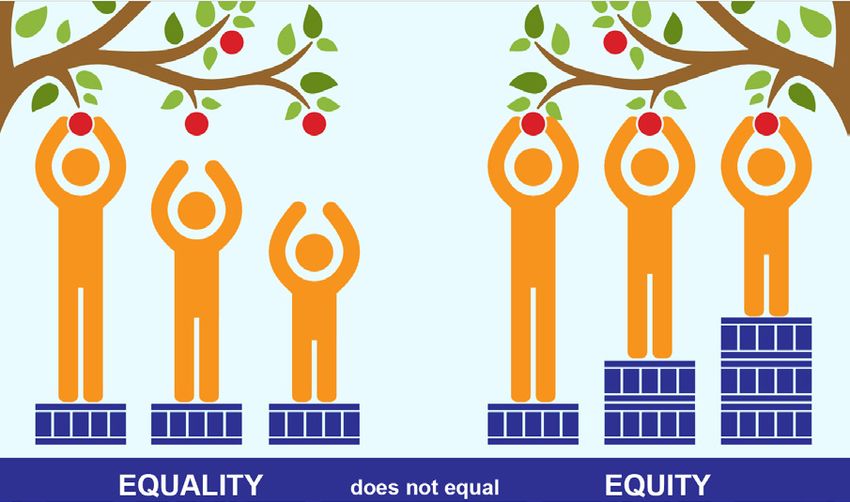
MESSAGE FROM THE PROSPERUS CHAIRS

4 / 62
                             CHAIRS
                          PROSPERUS
Jim Inglis
                  (Co-Chair) Regional Vice President, Bank of Montreal
                  I have been in the banking industry for over 20 years, which has given me the
                  privilege to serve customers and lead teams in various communities across Ontario.
                  In my current role as Regional Vice President, Bank of Montreal, I look at our region
                  in Windsor-Essex and I see an opportunity to bring together human beings from
                  various stakeholders to improve the lives of children and youth from Cradle to Career.
            		 By taking bold actions to make a difference and challenging the status quo I am inspired
             by what we can accomplish when we are united! I am committed to ProsperUs and I am
confident that its values, mission and vision will guide our decisions and actions in the spirit of doing
the right thing in our region, understanding that it will not always be easy. We all play a role in making
Windsor-Essex a vibrant destination full of pride and diversity. Please join us in this pursuit.

                  Janice Kaffer
                  (Founding Co-Chair) President & Chief Executive Officer,
                  Hôtel-Dieu Grace Healthcare
                  Over 30 years ago I became a Registered Nurse in Ontario. Over the years my
                  career took me into many places and many different jobs. My current role as the
                  CEO and President of Hôtel-Dieu Grace Healthcare is one that is the culmination
                  of my learnings and my experiences along the way.
           		 I have learned that health is much more than the care we receive from the system
            I work in. Your health and mine depends on the things we call social determinants – factors
like income, access to transportation, education, family status, language and how well a community
supports its citizens.
Here in Windsor-Essex we need to do more to ensure that all our citizens have health in the broadest
terms. That’s why I am committed to ProsperUs and why I believe in what we are doing here.

                  Noah Tepperman
                  (Founding Co-Chair now Past Chair) Secretary/Treasurer, Tepperman’s
                  In 2016 my friend Adam Vasey changed my life. He and Paul Schmitz introduced us
                  to Collective Impact, a form of collaboration which gathers a community’s different
                  sectors to solve large complex problems. Authentic communication; shared goals;
                  refocused priorities: could this, they asked, be used to transform our community’s
                  experience of poverty?
           		 The ideas that poverty couldn’t be solved in isolation, that we could gather around
            a shared vision for our future which we could create that future by committing to the
possible rather than settling for the probable, compelled us to act. We invited others to ‘throw their
hats over the wall’ and join in that transformation.
Today we’re ProsperUs, dedicated to realizing that vision where all youth have the opportunity
and support to succeed from cradle to career. Every day new voices join this conversation.
We invite you to add yours.

                                                                                                    5 / 62
WHY
                                         PROSPERUS
                                             EXISTS
                                    The Windsor-Essex region has a long history of generously supporting causes
                                    and helping those in need – with many individuals, groups, agencies, public and
                                    private-sector partners contributing their time, talent and treasure to improving
WHY PROSPERUS EXISTS

                                    people’s lives. Some challenges are too difficult to overcome in isolation and
                                    require new, more robust ways of working to solve the complex problems our
                                    neighbourhoods endure. Research around the world has shown that substantial
                                    long-term progress for communities is achieved through improved conditions
                                    for children and youth, creating economic mobility.i

                        The Opportunity Insights
                                                        2
                                                        When the study was
                                                                                         3 By providing a
                        Institute at Harvard            replicated in Canada,              foundation of supports,
                        University, which examined      similar trends were found.iii      ProsperUs is aiming to
                        30 years of tax data from                                          improve educational
                        the United States and                                              and career outcomes and
                        tracked child outcomes,                                            – over the long term –
                        clearly found a connection                                         create economic mobility
                        between where the child                                            that supports both children
                        grew up and their future                                           and their families.
                        economic opportunity.ii

                       6 / 62
ProsperUs – A New Partnership
As we move into the next stage of our work with identified neighbourhoods,
I never thought there
new opportunities to join this exciting work will emerge. We commit to
was so much poverty in
engaging youth, their families and residents in meaningful ways to ensure
one area, especially an
their input and needs are at the centre of our work in designing solutions.
area where I live or hang
We will be seeking out individuals and organizations from a variety
out… it’s messed up.
backgrounds, perspectives and communities to join the ProsperUs
– Young person at
Leadership Council and its network of community tables. A full membership West Windsor Data Walk
list of ProsperUs and its committees can be found at the end of this report.
Origins of ProsperUs
Pathway to Potential (P2P) was launched in 2008 barriers to opportunity for the most vulnerable youth
by Windsor Mayor Eddie Francis and County Warden in our region. For many years, United Way supported
Nelson Santos as the municipal poverty reduction children and youth (as well as their families) to ensure
strategy for Windsor-Essex County. In early 2016, their educational challenges could be overcome to set
the P2P Coordinator secured funding from the them on a path of career success. But this new vision
Ontario Trillium Foundation to explore the use of came with the recognition that this challenge was too
a collective impact approach to address poverty in large for United Way to tackle alone.
Windsor and Essex County. In January 2017, P2P United Way and ProsperUs came together to create
was transformed when the City of Windsor integrated a Cradle to Career (C2C) vision for our community.
the local research and awareness with administration In May 2018, the first formal ProsperUs Leadership
of regional community and recreation programming. Council meeting was convened, led by co-chairs
This transformation brought an end to the community Janice Kaffer and Noah Tepperman, with United Way
engagement work of P2P and it moved forward – assuming the role of the backbone organization.
endorsed by City Council – as a comprehensive By September of 2018, the C2C vision was presented
municipal P2P Social Investment Plan, which to the community through a media event supported
continues to be a thriving partner in community by the multi-sectoral Leadership Council including
efforts to address poverty through social investments. the Mayor for the City of Windsor and the Warden
ProsperUs emerged as one of the P2P initiatives, for the County of Essex with the intention to release
which convened a table of 10 leaders from the region a Neighbourhood Index Report at a later date.
through the support of the Ontario Trillium Foundation. In March 2019, Jim Inglis was elected to the
This group came together to tackle a complex problem co-chair role as Noah Tepperman moved into the
in our community and leveraged the Collective Impact past chair role. This report is the culmination of over
model to create a more prosperous community for all. a year of work by 45+ partners. It is the first step in a
As this work progressed, Statistics Canada was much longer journey to systemic change, dismantling
releasing 2016 census data. It reported the Windsor barriers and creating a more prosperous Windsor-
Census Metropolitan Area (CMA) was home to Essex County for all residents.
one of the highest child poverty rates in Canada.iv On the following page you will see a high-level
With this data in hand, United Way – having just roadmap for ProsperUs moving forward with the ultimate
celebrated 70 years in Windsor-Essex County – was goal of having interventions at each milestone by 2021.
undertaking a new strategic plan. After several months This report is the culmination of ProsperUs’ work in the
of consultations and research, United Way emerged Research and Awareness Building Phase and we are now
and was endorsed by their Board of Directors with preparing to enter Phase 2 to engage the community and
a vision that focused on systematically tackling the develop solutions to our community’s challenges.
7 / 62Our Road Map
❶ Research & Awareness Building | MAY 2018 – JULY 2019
MAY 11, 2018
JUNE 2018 Inaugural Leadership Council meeting
Big data and impact evaluation and
Marketing & Communications tables launch
SEPTEMBER 14, 2018
Media announcement
OCTOBER 2018
Overlap Associates Community Engagement Sprint
FEBRUARY 2019
Initial data sharing agreements
between partners in place
MARCH / APRIL 2019
Development of a Cradle to Career indicator index
MAY 2019
Launch data walks
JULY 2019
Launch Coming Together – Building a Hopeful
Future for Children and Youth in Windsor-Essex
Report and Media/Community Event
❷ Development & Engagement | JULY 2019– JUNE 2020
SUMMER 2019
Recruitment for Community Action
Network tables begins
FALL 2019
Neighbourhood level strategy
development begins across cradle to career
continuum; development of evaluation framework; FALL 2019 / WINTER 2020
community investment framework Community Design Jams; youth, community and
partners come together to design solutions to
specific challenges
❸ Aligning Investment for Impact | JUNE 2020 – DEC 2020
DECEMBER 2020
Investment strategy launch
FALL 2020
“Small bet” pilot project(s) deployed
to test C2C interventions
WINTER 2020
Cradle to career intervention announcement; target
setting report; media and community event
❹ Implementation | 2021
2021
Investments fully deployed
8 / 62NOTE: Personas are fictional profiles based on real life circumstances of children and youth across
Essex County. They are expressed from the point of view of the fictional individuals, and they remind us
of the challenges, strengths, and desires of the young people that we need to help as we build out a
Cradle to Career strategy. They also help tell the story of the untapped opportunity and potential in
our community. See What We Heard section on page19 to learn more.
Meet Aaliyah
Age: 6 years old
Education: Elementary school student
Fun facts: Loves Halloween, and playing at playgrounds and different parks
Aaliyah is an elementary school student who loves
playing at playgrounds and different parks, but she
Difficulties
often hears her dad complain about chemicals in the Aaliyah lives in a smaller apartment in Windsor than
air and how it’s hard for him to breathe with his asthma. she did in Toronto, which she doesn’t like because
Aaliyah’s favourite holiday is Halloween. She loves there isn’t as much space for her to run around.
dressing up and trick-or-treating. Her and her Dad’s
She is upset that she doesn’t have her pets anymore
goal this Halloween is to trick-or-treat from one end of
either. Her stuffies help but they’re not the same.
Windsor-Essex to the other. Aaliyah has trouble making
Aaliyah used to take swimming lessons in Toronto, but
friends in school because she is shy, but her imaginary
hasn’t been able to take lessons in Windsor. Her dad
friends and stuffies make her feel safe and calm.
says the taxi costs too much and it’s too cold to walk to
the pool in the winter. Aaliyah likes that her mom visits
Favourite things her but she misses seeing her more often, and she
wishes she had another girl in her house.
Aaliyah recently moved with her Dad from Toronto to
Windsor. Aaliyah enjoys being a child and going to her
new school. The kids seem friendlier in Windsor than For Aaliyah,
when she went to school in Toronto. Aaliyah misses “better” would mean:
her mom, who stayed in Toronto when her parents
separated. She loves it when her mom and step-brother • S
pending more time with her dad doing fun
come from Toronto to visit her; they like to go to the activities together (like swimming lessons)
movies and Sky Zone Trampoline Park. She likes how • H
aving places to do sports and other hobbies that
much time she is able to spend with her Dad, because are close to her house, and that her dad can afford
he doesn’t work all the time like he did in Toronto. • H
aving playgrounds and sports fields close
to her home
• Being able to play with a pet
• A park closer to her house that she could walk to
9 / 62CRADLE TO CAREER IS THE RIGHT STRATEGY
WHY
CRADLE TO CAREER
IS THE RIGHT APPROACH
FOR OUR COMMUNITY
Cradle to Career is a proven framework successfully
implemented in the United States in more than 70 U.S.
communities, largely through two initiatives: the federally
funded Promise Neighbourhood Network and the
national not-for-profit network StriveTogether.v
These initiatives share a basic premise and methodology,
which is tailored to the specific needs of a community.
Based on a model originally developed and launched in
a 100-block area of Harlem, New York, called The Harlem
Children’s Zone, the C2C strategy provides intensive
wrap-around supports for targeted children and youth and
their families. The neighbourhood-level focus of these
strategies allows for clear measurement and target-setting
in the community. This place-based approach creates
direct line of sight and accountability for the community,
participants, service providers and funders. Although the
exact interventions and supports differ by community, they
all foster a continuum of support, following the child and
their family as they age through the various social and
education systems in a community. These wrap-around
foundational supports ensure the programs provided for
families and their children actually contribute to success.
10 / 62These supports are attached to key measurable For example:
milestones in a child’s development. In Salt Lake • L
earn to Earn (Dayton, OH) reported in 2018
City, Utah, the Promise Partnership begins in pre- that nine of 16 school districts where they
kindergarten. Offering support during these formative implemented a C2C strategy recorded year-over-
years helps set a child up for academic success. year improvements in graduation rates. They
The program also aligns with the State of Utah’s also announced, over the five years of tracking,
Grade 3 and Grade 8 standardized literacy and math the graduation rates amongst African American
testing. The Promise Partnership works with school males have made gains every year, with the total
districts to track and improve high school graduation graduation rate increasing 8%. They have also
rates for at-risk and visible minority populations. found that chronic absenteeism and suspension
It also recognizes post-secondary education as a rates in these schools are the primary factors
requirement for a 21st Century economy. To achieve for the lag in graduation across their community.
more post-secondary attendance, organizers work with Strategies are now being put in place to decrease
local educational institutions to support young people absenteeism moving forward.vii
who are transitioning from high school to college or
• C
radle to Career Alliance (Boone County, MO)
university. They also provide support throughout the
In 2017, in an effort to close a kindergarten
post-secondary programs and help graduates find
readiness gap, the Cradle to Career Alliance
work. In addition to these targeted interventions,
identified an early childhood support shortfall
universal supports for families’ access to health care
of nearly 700 subsidized spaces. Working with
and financial stability are required to be met so that
the City of Columbia, Moberly Area Community
a child can be successful.vi
College launched a free Early Childhood Educator
Essential to success in Cradle to Career strategies certification program to increase the supply of
is the identification and evaluation of measurable trained staff in their community.viii
outcomes. Across the U.S., C2C strategies are
• K
-Connect (Kent County, MI) Based on 2016
creating dramatic outcomes that change the trajectory
data, K-Connect tracked that 92.3% of births
of entire communities.
occurred at a healthy birth weight.ix They also
identified that African American births were
two-times more likely to be underweight compared
to White, Asian and Hispanic households.x
They have outlined strategies to close this
racial birth-weight gap through targeted parental
supports and health care access for expectant
mothers in specific neighbourhoods to fill access
to service gaps.
• P
arramore Kids Zone (Orlando, FL) has been
A bigger investment now,
delivered by the City of Orlando since 2006 in one
or at the beginning
of the most challenging neighbourhoods in the
of a child’s life, will mean
country. Over a decade of focused operation, the
better success and
Parramore Kids Zone has championed strategies
return later in life
leading to a decline in teen pregnancy rates by
– Participant, 56% and a 61% decline in juvenile arrests. In
Lakeshore Data Walk
2015, for the first time ever, 100% of students in
the Parramore neighbourhood graduated high
school on time.xi
11 / 62I feel that most times
at events like these,
people attend to learn and
to feel good, but nobody
acts. We’re not putting
words into actions
– Teen Participant,
West Windsor Data Walk
These examples illustrate not only the success, but These successes have not emerged overnight. Years
the continuous evolution and improvements that occur of hard work, numerous successes and even some
within these strategies. The goal of these strategies is failures contributed to these changes. Constant
not to just move supports and programs to where they measurement, continuous improvement, adaption and
are needed most, but to change systems and advocate ‘failing forward’ allowed these strategies to continue to
to government to solve the problems in an equitable learn and evolve until the right solution was found.
and sustainable way. In Utah, Promise Partnership To our knowledge, this is the first time a Cradle to
unlocked significant state investment in early childhood Career strategy has been deployed in Canada in
education and school readiness after proving the this manner. In 2020, a report will be released
effectiveness of programming and the long-term cost that outlines the specific indicators, targets and
savings to society through early interventions. The pilot interventions that will drive towards system
Partnership’s efforts were piloted through a pay-for- change in Windsor-Essex County.
performance Social Impact Bond that invested $7
million over five years to upgrade Early Years facilities
and to prepare students for kindergarten. Based on
the success of these initial interventions, the State of
Utah has since enhanced its investment in Early Years
funding for four consecutive years.xii
12 / 62MOVING TO
COLLECTIVE ACTION,
WHAT’S DIFFERENT?
ProsperUs’ mission is to transform the conditions in our region to
MOVING TO COLLECTIVE ACTION
dramatically improve the outcomes for children and young people
of Windsor-Essex County, from the time they are born until they
complete post-secondary education and enter the workforce full time.
With your help, we will accomplish this goal by implementing a
rigorously measured, place-based, Cradle to Career strategy with
an equity lens that places those that need the support the most at
the centre of our work. An equity-based approach means that some
individuals, groups, or neighbourhoods should receive more support
in order to have an equal opportunity as some of their peers across
our region.
EQUALITY does not equal EQUITY xiii
13 / 62For ProsperUs, this means that not every
neighbourhood will be treated equally. Instead, based
ISOLATED IMPACT on the best available data, those communities that
need the support most will get the most support.
We will remove barriers to create new opportunities
for children and young people in those neighbourhoods
to ensure that they reach their potential.
By helping those most at risk we all win – for the young
and their families, they get the support that they need
to reach their potential. For the rest of the community,
over time, this will create a local talent pool primed
to succeed in a 21st century economy, strengthening
the economic and social fabric of our community.
By putting resources where they are needed most,
we can get to some of the root causes of social
TRADITIONAL COLLABORATION problems that cost government and in turn, taxpayers,
huge sums each year just to maintain the status quo.
By solving root causes of poverty, we can free up
resources to invest in other areas.
The only way we will accomplish this goal, to
improve outcomes for children and youth, is by
changing the systems and policies that create
barriers in our community and by working differently
as institutions, businesses, organizations and
individuals. To guide this shift, we are using a
methodology called Collective Impact.
Collective Impact is a new approach to tackle old
and complex problems which leverage likely and
unlikely partnerships to change the conditions in
our community. It differs from traditional collaboration
or isolated programmatic impact in that all partners
COLLECTIVE IMPACT
align their efforts to a common framework of activities.
Perhaps more importantly, the partners also mutually
agree upon evaluation with a commitment to prioritizing
the overarching goal ahead of any one particular
organizational agenda.
xiv
14 / 62Creating a Collective Impact Culture
By aligning our efforts around a single goal – Cradle to Career – we are improving our chance of success. Together, we
will row the same boat in the same direction. Collective Impact, as a methodology, has been used to tackle numerous
social problems around the world and has proven successful when five key conditions are met:xv
1) Common Agenda to Create Change 4) Continuous Communications Between
üü Establishes measurable outcomes that Partners and the Community
will guide work from the outset üü Recognizes that trust and strong relationships
üü Makes a commitment to a defined geography are the foundation of Collective Impact
or population, in its entirety üü Communicates a common, consistent message
üü Shares accountability for success and failure üü Shares responsibility for challenges and
2) Data-Driven Decision Making attributions of successes
and Shared Measurement üü Closely coordinates when explaining work
üü Makes decisions because they will impact and outcomes to investors, partners and
the measurable outcomes defined in the the broader community
common agenda 5) Backbone Support to Coordinate and
üü Embraces the mindset and rigorous practice Advance the Overall Objectives of the Strategy
of continuous improvement üü Defines and adequately resources the
üü Shares data and outcomes between partners work of convening, facilitating and supporting
to drive decision making and to eliminate gaps the partnership
within the community
3) Alignment of Mutually Reinforcing Activities
and Resources
üü Identifies and connects existing assets while
partners allocate and align resources to support
success and share high-impact practices
üü Prioritizes innovation, results and the needs
of the community over “business as usual”
I grew up with a single mom
in poverty who never went to school.
I got OSAP to go to university and
do better for myself. But now I have
$35,000 in debt, and can’t find stable
work so I am working short term
contracts, trying to pay the bills,
send money home and pay my loan
every month – I’m just scraping by.
It’s a snowball effect.
– Data Walk Participant,
West Windsor
15 / 62Creating a Collective Impact Culture
The ProsperUs Leadership Council has agreed to support these principles.
The following governance structure has been adopted:
CONTINUOUS DATA DRIVEN
IMPROVEMENT DECISION
FEEDBACK LOOP MAKING
COMMUNITY AT LARGE
YOUTH ADVISORY COUNCIL (TBD)
LEADERSHIP COUNCIL
EXECUTIVE PLANNING COMMITTEE
CAN CAN
INVESTORS TABLE
CAN CAN
CAN CAN
CRADLE TO CAREER
BACKBONE TEAM
MARKETING & BIG DATA & IMPACT STRATEGY
RESOURCE
COMMUNICATIONS EVALUATION DEVELOPMENT &
DEVELOPMENT
SUBCOMMITTEE SUBCOMMITTEE ENGAGEMENT
16 / 62At the centre of ProsperUs’ work are children and
youth who face barriers to success. Every member
Broader Strategic Implications
of the ProsperUs collective is responsible to the ProsperUs will align its work with broader regional,
community at large, whether a taxpayer, donor or national and international poverty reduction initiatives.
customer. The Leadership Council is currently made In the fall of 2017, a National Poverty Reduction
up of 45+ system level organizations. Each member Strategy called Opportunity for All was unveiled by
of the Leadership Council has one vote. the federal government. Opportunity for All has aligned
Based on the findings in this report, Community Action its efforts and measures to roll up into United Nations
Network (CAN) working groups will be convened in (UN) Sustainable Development Goals. These 17
priority neighbourhoods. Each of these networks will goals have been adopted by numerous governments,
focus on the development of a solution to a particular communities and corporations and were endorsed by
challenge identified in a community, in alignment with the UN General Assembly to make the world more
C2C milestones. Please see the community vision sustainable by 2030. As ProsperUs works with the
starting on page 26 for a full description of community to develop the C2C strategy, we will align
the milestones. CAN tables will be made up of true with these broader initiatives to ensure we unlock
experts, individuals with lived experience related to resources to support our work, and demonstrate the
their milestone from the particular neighbourhood. Windsor-Essex contribution to regional, national and
The balance of the members at these tables will be international efforts.
people with expertise and service delivery experience
from agencies, institutions and partners. Together they
will craft a neighbourhood-based solution that is tailored
to the particular needs of the specific community.
The Investors Table will emerge later in 2019,
bringing together government, philanthropists, and
public and private foundations for the first time in
a coordinated investment approach that will be
connected to a community-level evaluation framework,
uniting the metrics of success for all investors.
United Way/Centraide Windsor-Essex County broadly
supports the collective work of ProsperUs as the
backbone organization. As the backbone, they are
providing dedicated staff time and resources to move
this community endeavor forward. With the Leadership
Council guiding the work of the backbone organization,
a number of cross partnership sub-committees
have formed to drive forward specific areas of work.
ProsperUs Committee membership can be found on
page 48 of this report.
© Image courtesy of United Nations
sustainabledevelopment.un.org
17 / 62NOTE: Personas are fictional profiles based on real life circumstances of children and youth across
Essex County. They are expressed from the point of view of the fictional individuals, and they remind us
of the challenges, strengths, and desires of the young people that we need to help as we build out a
Cradle to Career strategy. They also help tell the story of the untapped opportunity and potential in
our community. See What We Heard section on page19 to learn more.
Meet Jacob
Age: 13-18 years old
Education: High school student
Fun facts: Loves to play with his dog, Max, and living a healthy lifestyle
Jacob is a high school student with average grades. He likes to spend time outside of school with his friends. He
loves to play with his dog, Max, and explore nature – especially the waterfront. Jacob just wants to be happy and
relaxed. He appreciates his life. Jacob doesn’t want to stress out over what he will be doing with his life in the future.
Favourite things For Jacob,
Jacob loves that his family focuses on being healthy “better” would mean:
and avoiding processed foods, as he sees some of
• K
nowing there is opportunity for
the unhealthy meals his friends eat at home. His family
personal growth in the town of Essex
is supportive and really interested in focusing on both
mental and physical health. His uncle had experienced • U
nderstanding where to look for future
a drug addiction in the past, so his family focuses career options
on avoiding all drugs, something Jacob also feels • M
ore part-time employment opportunities
strongly about. for young people in the County
• Improved quality and variety of extra-curricular
programs at schools
Difficulties • Less access to drugs like marijuana in schools.
Jacob is unhappy with the sex education changes
that are being made in the Ontario education system.
He believes strongly that we live in a hyper-sexualized
Questions Jacob has:
society and this affects how we raise and educate • H
ow might we get a better variety of stores
our youth and children. Jacob is certain that children in the town of Essex?
are not being taught about the different spectrums
• Is there a space for teens like myself to meet
of sexuality, gender, and ways for them to express
and be creative together in the town of Essex?
themselves. Instead Jacob asserts that children and
• H
ow can I go to events when they’re
youth are being influenced to not recognize these
in Windsor and I can’t borrow a car?
spectrums. Lately, Jacob has been feeling pressured
by his peers to try marijuana, which he has no interest • H
ow will technology affect our creativity
in. People at school have called him names, and in the future?
treated him poorly because he refuses to try it.
18 / 62WHAT
WE’VE HEARD
My Dad was a ProsperUs recognizes that people’s
high school drop-out, experiences represent important
my Mom worked so hard expertise in this process. We believe
at two part-time jobs – that community engagement, including
my only way out of poverty the engagement of people most
was to go to school. affected, is essential. In the lead up
– Youth participant, to this report, ProsperUs members
Ford City Data Walk have held numerous conversations
WHAT WE’VE HEARD
with organizations, boards of directors,
and service users to begin the process
of stress testing the assumptions and
challenges that we will be tackling. In the
fall of 2018, ProsperUs secured the services of
Overlap Associates (hereafter Overlap) to conduct
a “design sprint” in our community. Overlap is a
leading Canadian practitioner in human-centred
design community engagement and has worked
with UNICEF Canada and UNICEF International,
the Region of Waterloo’s SMART City Challenge,
Blackberry, and the Toronto Public Library System.
ProsperUs partners understand there are significant
challenges in our community, supported by the
data collected. Prior to undertaking the work of
this report, the Leadership Council wished to
validate the data by hearing from the community,
particularly children and youth to verify that their
assumptions held true. So, we posed a challenge
to Overlap to come up with the best way to quickly
and authentically engage our community.
19 / 62303
Their response was an innovative and ambitious plan. Dozens of
volunteers were deployed in Street Teams across 21 locations in
the region. These teams attended community events, went to public
places and even stood on street corners to inquire with passersby
about what they feel are the biggest challenges facing children
People Engaged
and youth. This method enabled us to rapidly gain a snapshot of
by Street Teams
perceptions from a wide range of individuals from across our region.
Overlap conducted more than a dozen in-person “key informant”
16
interviews with youth, parents, teachers, health care providers
and social workers to receive expert input from those seeing and
experiencing challenges on a daily basis. From these conversations,
Overlap assembled insights about particular system bottlenecks
and existing gaps that may allow kids to be ‘left behind’.
Key Informant
Finally and most importantly, a number of “ethnographic” interviews
Interviews completed
were conducted. In these interviews, we met people where they
live and spent a day in their life. We journeyed with a mom as she
5
traveled to an Early-ON Centre (formerly called Ontario Early Years
Centres) with her three children, we spent time with a transgender
youth to hear about his challenges, and followed a family in the
county that had limited access to transportation. We learned
about the nuances of their particular barriers, and also the pride,
Ethnographic Engagements determination and hard work that these individuals and families
“Day in the Life” Walks with Families have for themselves and their communities.
The final outreach activity was an online survey. In contrast to many
141
local efforts, it was not designed to collect new input, but rather validate
what was heard through the earlier engagement opportunities. Overlap
distilled the learnings from the interviews and engagements into a
series of questions to the public to determine if we are on the right path.
Despite best efforts to create awareness, the responses to the survey
were somewhat less than what we had hoped for. The responses were
Online Survey
skewed towards more affluent responders compared to the general
Respondents
population. What it did verify was that residents from across the region
recognize and see the barriers impacting others in their community,
even if they are not experiencing these barriers themselves.
I go without
so they can go
to school functions
and trips.
– Leamington
Data Walk Participant
20 / 62Personas
One of the outcomes of the engagement process Following their creation, a process was undertaken
developed by Overlap was a series of personas, some to validate these personas by sharing them with youth
of which are included through this report. Personas to determine if the personas were representative of
are fictional profiles based on real life circumstances their own experiences or those of other young people
of children and youth across Essex County. They they know. Their feedback was recorded and used
are expressed from the point of view of the fictional to enhance the original personas as well as create
individuals, and they remind us of the challenges, additional personas.
strengths, and desires of the young people that we
need to help as we build out a Cradle to Career
strategy. They also help tell the story of the untapped
opportunity and potential in our community.
Data Walks
Starting in May 2019, ProsperUs hosted its first series This expanded understanding led to discussions
of Data Walks across Essex County. These community about equity and how interconnected the challenges
consultations were designed to start a discussion are in our region. There was a positive recognition
about the opportunities and challenges that appear for the need for wrap-around supports, to give
in the community data collected by ProsperUs. children, youth, and families in certain areas the
The goals of these walks were to set a base of same chance as those in other neighbourhoods.
understanding about the circumstances across our One of the pathways identified by participants was
region, and to test assumptions built into the data. through rebuilding a sense of community at all levels
Communities have innate resilience, and solutions (neighbourhood, municipal, and regional) and helping
often emerge when faced with challenges. Part of foster empathy between neighbourhoods and fellow
our goal was to present the data and then hear from residents. Building hope in our community and in our
the residents, community experts, and politicians neighbourhoods, where children, youth, and families
about their communities and their existing solutions. have been marginalized, will be an important part
From this experience, ProsperUs can build from a of our work.
place of strength, leveraging existing resources and In addition to these general insights, dozens of
successes as we move into a design phase. neighbourhood strengths were identified at these
In our first round of data walks, we engaged 165 events. Participants named key individuals, like
youth, neighbourhood residents, community members, a neighbourhood champion who knows everyone
agency staff, system partners and politicians across and has a pulse on the community; they highlighted
six communities. We found the educational impacts key programs or agencies delivering vital local
of the data and the presentation was far larger than interventions; and they directed us to some of the
we expected, with even experienced agency staff and informal networks of support that emerge when people
engaged residents surprised by the inequality across are faced with challenges so we would be aware of the
our region. strengths already in these neighbourhoods. ProsperUs
wants to leverage the people, ideas and existing work
in these neighbourhoods and beyond, as we move into
the next phase of our engagement.
21 / 62Pioneering Conversations
These engagement efforts are just the beginning of a series of conversations that ProsperUs will be having
with the community. This report triggers the next stage of our work, which includes convening a series of
Community Action Network (CAN) working groups to begin to tackle the place-based challenges in our region.
We are committed to ensuring that equity is at the core of this work and the voices of visible minorities,
Indigenous individuals, young people and those with living/lived experience are brought to the table to
share their perspectives and expertise. The CAN working groups will craft solutions that are designed
by the residents of a community to dismantle barriers within their neighbourhoods.
Looking at my
neighbourhood
compared to others,
we need to
support those
neighbourhoods
in some way.
– East Windsor
Data Walk Participant
22 / 62NOTE: Personas are fictional profiles based on real life circumstances of children and youth across
Essex County. They are expressed from the point of view of the fictional individuals, and they remind us
of the challenges, strengths, and desires of the young people that we need to help as we build out a
Cradle to Career strategy. They also help tell the story of the untapped opportunity and potential in
our community. See What We Heard section on page19 to learn more.
Meet Nazrin
Age: 19 years old
History: Nazarin has been in Canada for 10 months
Hurdles: Adapting to the lifestyle while learning a new language and culture
Nazrin has been in Canada for 10 months. She is a new immigrant who is having trouble accessing food, adequate
shelter, and mental health services. She is also having trouble finding an inclusive community. Nazrin is not able to
find support systems to help her access basic necessities like food, and a safe place to live. She is having a hard time
adjusting to life in Canada. It is not the life that she thought she would have once she left the refugee camp in Jordan,
where she had lived for the past four years.
Favourite things supports that could help her with this. Nazrin also gets
upset and frustrated by the looks and comments she
Nazrin is beginning to enjoy the fast paced lifestyle gets about her hijab; once, someone at a fast-food
in Canada, but she feels that sometimes we forget restaurant refused to serve her.
to slow down and focus on taking care of ourselves
and our relationships with others. She is glad to have
arrived in Canada, but it can be tiring to learn all of the For Nazrin,
new ways of living and different cultural expectations. “better” would mean:
Nazrin also recognizes that everyone should have the
opportunity to have access to whatever they need, • Having friends to hangout and go to the river with
especially in a wealthy country like Canada. • S
upports and services to meet other newcomers,
or a settlement mentor
• Trauma-informed mental health services
Difficulties
Nazrin is learning English, but her parents are
having a hard time learning a new language at their
Questions Nazrin has:
age. She has to do a lot of translating, and is feeling • Is there a place for young people to practice
pressure to perfect her English skills quickly. She is their English skills?
also having a hard time coping with what she went • H
ow can we increase youth programs and places
through in the refugee camp and this is affecting for us to go hang out with friends?
her self-esteem and ability to connect with others.
• D
on’t we all have our ups and downs in life?
She is struggling to find services, programs or other
Isn’t everyone depressed?
23 / 62THE BROADER
REGIONAL PICTURE
THE BROADER REGIONAL PICTURE
These engagement efforts are just the These regional data sets are by no means
beginning of a series of conversations the only data sets that impact children,
that ProsperUs will be having with the youth and families. Rather they represent
community. This report triggers the next a selection of data that is currently available.
stage of our work, which includes convening Based on the neighbourhoods selected for the
a series of Community Action Network development of the C2C Strategy, ProsperUs
(CAN) working groups to begin to tackle will dig deeper into these data sets to gain a
the place-based challenges in our region. better understanding of the particular factors
We are committed to ensuring that equity affecting each neighbourhood.
is at the core of this work and the voices Our goal with this data is to be transparent
of visible minorities, Indigenous individuals, and share what we find with the community.
young people and those with living/lived We will share data back to the community
experience are brought to the table to share via open community data dashboards and
their perspectives and expertise. The CAN other platforms as the strategy is developed.
tables will craft solutions that are designed Although the specific process to share this
by the residents of a community to dismantle data has yet to be finalized, our goal is to
barriers within their neighbourhoods. ensure residents, organizations and partners
have access to this data and understand how
ProsperUs is using it for decision-making.
As we move forward, ProsperUs will
I grew up undertake efforts to better understand
in a time when and refine these indicators so we can
the economy was good, overcome some of these data challenges
and there was hope and change trajectories for vulnerable
– now, that isn’t populations in our community.
necessarily the case.
– Lakeshore
Data Walk Participant
24 / 62Youth Not in Employment, Community Health
Education or Training (NEET) The most recent Canadian Community Health Survey
from 2015-16 suggests the Windsor-Essex region lags
Youth who find themselves outside of employment,
behind the province in a number of health indicators.
education or training are some of the most vulnerable
Young people (ages 12 to 17) report a weaker sense
in our community. At the time of the 2016 census, Essex
of belonging in our region with 73.6% feeling a
County was home to about 8,200 residents between
strong connection compared to 84.8% provincially.
the ages of 25 and 34, who were not actively in the
The survey also points to more young people having
workforce, education or training programs representing
higher body mass index scores with approximately one
18% of this demographic locally. In contrast, at the
third (33.7%) of young people considered overweight
provincial level, only 14% the same demographic are
or obese compared to the provincial rate of 24.7%.xx
categorized as NEET.xvi This data supports other regional
figures around “jobs without people and people without
jobs” as well as our lagging labour force participation rate, Youth Self-Harm
which represents the percentage of the population According to the Windsor-Essex County Health Unit’s
who is of working age, but is not in the workforce.xvii report on self-harm, the rate of emergency department
visits for self-harm injuries increased by 117% among
Young People children and youth ages 10 to 19 years old between 2011
(95.2 visits per 100,000 population) and 2017 (207.5
Living with Their Parents visits per 100,000 population).xxi A number of community
partners are exploring and currently developing mitigation
At the time of the 2016 census, the Windsor CMA had strategies around this troubling statistic.
the fourth highest rate of 20- to 34-year-old residents
living with their parents in Canada, trailing Toronto,
Oshawa and Hamilton, which are communities
Visible Minorities – Black Youth
with very different income and housing challenges. Windsor was selected for the Province of Ontario’s
Although we don’t fully understand the implications Black Youth Action Plan; a number of organizations
of this data, there is a wide range of potential were funded to provide support to black youth in
interpretations—from a young person looking to save our community. Part of the reason why Windsor was
a little money by staying at home, all the way to an selected in 2017 was due to the specific racialized
employment disconnect within the local labour market. challenges faced by these populations. Nearly 20%
These ‘disconnects’ leave new graduates and young (19.1%) of that population are living (or have lived)
people without sustainable careers that can enable in subsidized housing, compared to 3.1% in the City
them to move from their parents’ homes.xviii of Windsor population. This greater dependency on
subsidized housing is partially caused by the rate
of black families living in
Seniors (age 65+) low-income households.
Raising Children (age 0-18) In our region, 26% Ensuring
of black families live representation is
Windsor-Essex County is home to just under 500 in low-income homes important. We need
senior-led households raising children under the age of compared to 14% in to hear from those
18. Although this population is small, the circumstances the general population who are living it.
of these households are particularly unique. Further who are living in low-
– East Windsor
inquiry is required to understand why these seniors are income measured by Data Walk Participant
directly supporting these young people.xix Statistics Canada’s After-
Tax Low-Income Cut Off.xxii
25 / 62CRADLE TO CAREER
MILESTONES
CRADLE TO CAREER MILESTONES
Within the Cradle to Career continuum is a series
of measurable milestones that follow a child’s
development. Creating an environment where children,
youth and their families can be successful under each
of these milestones will be the foundation of ProsperUs’
work moving forward. In order to accomplish this,
a number of significant data-related challenges will
have to be overcome, including gaining access to the
right data along with a process of rigorous and rapid
evaluation, a culture of continuous improvement,
and the commitment to place young people and their
families at the centre of our work.
The ProsperUs CAN Working Groups will spend
the next year determining what interventions will be
deployed, and which specific indicators and outcomes
will be used to track the success of the milestones
identified in the section below. In some cases, these
outcomes are already identified through best practices
or available data, and need to be validated with the
community and partners. In other cases, in-depth
exploration of specific neighbourhood and community
needs will be undertaken. This will lead to additional
challenges and barriers being identified which will
require specialized interventions in each neighbourhood.
26 / 62Cradle to Career Milestones
01 CHILDREN WHO ARE
KINDERGARTEN-READY
STUDENTS WHO ARE are more likely to have a
PROFICIENT IN READING foundation that supports
IN 3rd GRADE are more likely future learning and better
to graduate from h
igh school health. This includes the first
02
1,000 days (pre-natal care)
STUDENTS WHO
GRADUATE HIGH SCHOOL
03 STUDENTS WHO ARE
are less likely to experience PROFICIENT IN MATH IN
poverty, receive public 6th GRADE are more likely to
assistance, or become complete post-secondary and
involved in the criminal be prepared for the workforce
justice system
04
STUDENTS WHO ARE
05 STUDENTS WHO ARE
EMPLOYED within a year POST-SECONDARY
of graduation is crucial for AND CAREER-READY
achieving self-sufficiency are more likely to have
and developing skills for better employment and
the 21st century economy earning opportunities
06
27 / 62Foundations of Success
Children and young people cannot Access to health- physical
be successful if their basic needs & mental services
are not met and their family situations
are not stable. If the core elements
of the Social Determinants of Health
– adequate housing, proper nutrition,
education attainment, economic Social Proper
empowerment, physical and mental inclusion nutrition
health and social inclusion – are not
met, children and youth will struggle
to be successful. Finding solutions Economic
that better support success and empowerment The child
Housing
prosperity will have limited impact & employment
without these supports wrapped
around the child and their family.
Educational attainment
Kindergarten Readiness
Ensuring a child is ready for school begins far before they get their first backpack. In fact, a line can be traced back
to their mothers, the circumstances of their birth and their first formative months. Ensuring that babies are born in
healthy and safe environments is the starting point for their future life path. Expectant mothers and families need
to be properly prepared and supported in order to give their child the best possible start in life.xiii
This period of early development is captured by the Early Developmental Index (EDI), which is administered
in the latter half of Senior Kindergarten (SK) by SK teachers across the region. It measures a child’s development
and school readiness across five domains of development. On the whole, our region performs well compared
to provincial averages, exceeding average scores in four of five domains -- In Diagram 1: Early Development,
green arrows mean scores exceed provincial standards, red arrows mean scores
do not meet the standard).xxiv Understanding the relationship between these
developmental successes and other challenges children face will be an important
part of ProsperUs’ future work.
Diagram 1
EARLY DEVELOPMENT
Physical health & wellbeing
Language and cognitive behaviour
Emotional maturity
Social competence
Communication and general knowledge
Based on Early Development Instrument scores in Windsor-Essex County 2014-2015
28 / 62You can also read


