Coramba Village Heritage Walk - oraravalleytouristtrail.com.au
←
→
Page content transcription
If your browser does not render page correctly, please read the page content below
Cor amba Village
        Heritage Walk

oraravalleytouristtrail.com.au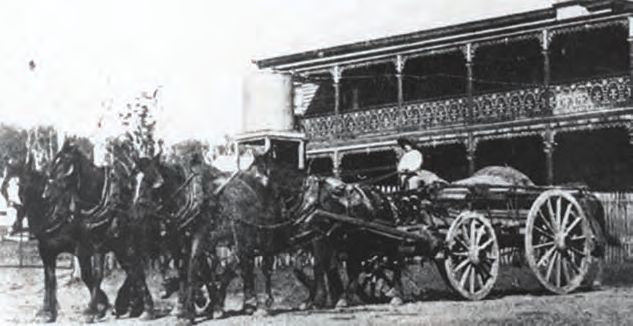
COR A MBA VILLAGE
HERITAGE WALK
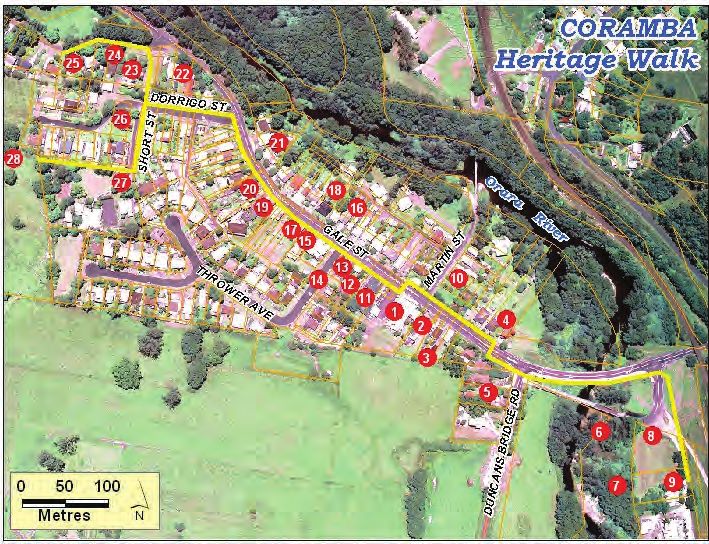
NOTE: the Coramba Village Heritage Walk is 4 km long and takes approximately
1 1/2 hours to complete. The walk involves some hilly terrain. Those not able to negotiate
hills are advised not to attempt the walk.

Meaning of ‘Coramba’: Sight of the sea
Coramba is 15 km from Coffs Harbour and one of the earliest settlements on the
Coffs Coast. The original Aboriginal inhabitants were the Bagawa people whose
territory covered the Orara Valley, Moonee and Coffs Harbour.

Timber-getters arrived in the 1850s looking for cedar or ‘red gold’ of which the area
had a plentiful supply. The cut logs were rafted down the Orara and Nymboida
Rivers to Coutts Crossing to be then shipped to Sydney from Grafton. Later they
were carted overland to Coffs Creek and floated out to sea.

In the 1870s regulations on the harvesting of cedar were imposed to preserve the
remaining timber, leading to the first forest reserves being proclaimed and the
demise of an industry already in decline. However, the timber-getters had been
instrumental in building roads, clearing land and opening up the dense forests
(and fertile farming districts) to settlers.
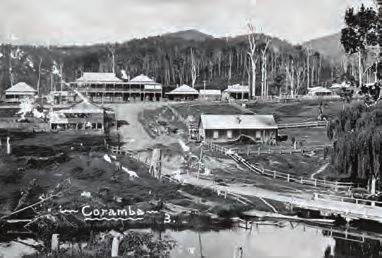
In 1883 government surveyors arrived
      in the Orara and in 1886 the area was
      made available for selection in parcels
      of 50–60 acres (20–25 ha). The first
      selector was Eugene Rudder followed by
      a group of settlers from Wollombi in the
      Hunter Valley. William Gale was another
      early settler whose selection included
      the site of Coramba township (the main
      street bears his name).

      The rich soils were ideal for dairy
      farming and, in addition, in 1881 gold
      was discovered, prompting the creation
      of Coramba as the permanent location
      for a police constable and a mining
      warden’s office. Following the end
      of cedar-gathering, the area became
      known for its large reserves of native
      hardwoods.

      In 1906 a new local government area
      was formed called the Dorrigo Shire.
      As the geographical centre, Coramba
      became its headquarters for a time,
      with council chambers built in 1914.

      The next major boost to the local
      economy came with the arrival of
      the railway in 1922. Following WWII,
      however, the timber and dairying
      industries declined along with the
      growth of the town.

      Today Coramba remains a quiet,
      residential village surrounded by
      small farms and has retained much
      of its historic charm and character.
ell
y
wtell
                                                                                 nny
Start at the car park of the Hampden Hotel, 17–21 Gale Street.

1                                                                                       1

1    Hampden Hotel,                          curved corners, a stepped asymmetrical
     17–21 Gale Street (1940)                facade with Art Deco styling, and a
This is the third hotel building on this     suspended awning over the footpath.
site. The first, single-storey hotel was     The facade is intact and one of the most
built by Joseph Murphy in 1895. In 1900      prominent buildings in the town.
he sold to Thomas Martin who added
to it several times to create a sprawling    Cross at the pedestrian crossing and
two-storey hotel. After selling to E C       proceed along Gale Street.
Brooks in 1909, Martin re-acquired the
hotel in 1912 after Brooks’ sudden death.
                                             2     Cattle brand bollards
In 1923 it was sold to W T Johnson who       Along Gale Street you will see several
also owned the Fitzroy Hotel in Coffs.       sets of timber bollards. Installed by
During 1938–1940 the hotel was leased        Coffs Harbour City Council, they display
to a brewery. In 1940 the weatherboard       the cattle brands of Coramba’s early
hotel was destroyed by fire and the          pioneering families.
current brick-rendered hotel was
built. The current building is a striking                                    2
example of Moderne architecture
in a township notable for its timber
buildings. It features rendered walls,

1
3                                                                                      4

3     Mr Martin’s five houses (c1900)         furnishing of the church. The church was
Thomas Martin, the publican, owned            designed by Lismore architect, Mr Board
the land east of the hotel, on which he       and built by D J Ross of Bonville. Messrs
built five houses and rented out. The         Mulhearn donated the timber valued
sole survivor at 7 Gale Street retains        at 70 pounds and free transport was
its original appearance visible in early      provided by the O’Hanlon Bros.
photos.
                                              The foundation stone was laid by Bishop
4     St Therese of the Little Flower
                                              Carroll on 28 November 1926 and the
      church, 6–10 Gale Street (1927)
                                              finished church was opened by Bishop
This picturesque ‘Carpenter’s Gothic’         Carroll on 13 March 1927. At this time,
Roman Catholic church was built in 1927       many Roman Catholic churches were
on land where the first Coramba Butter        dedicated to St Therese of Lisieux, who
Factory stood until 1925. The distinctive     had been sainted in 1925.
braced posts underneath the church
rest on the concrete slab floor of the        The church cost 1152 pounds and
former butter factory.                        while this exceeded the estimate for
                                              furnishings, the excess expenditure
Work on a new church began well               was justified by the committee on the
before the sale of the site to the Catholic   grounds they ‘thought it would be best
Church in 1925. In May 1921 an energetic      to have furniture in keeping with the
local church building committee was           building’.
formed to oversee the construction and
                                              A local newspaper provided the
4                                             following description on its opening:
                                              ‘The new church is undoubtedly a fine
                                              little edifice with a beautiful situation.
                                              It is lofty and well ventilated, with a
                                              well-pitched roof. Its construction is
                                              of hardwood, with windows of stained
                                              glass. The furnishings and fittings are in
                                              keeping with the building, which is lined
                                              with Dorrigo plum. The interior is roomy
and comfortable and sound carries well
in it. In the front is an entrance porch,
and at the back the sacristy on one side    Orara churches were completed in mid-
and priest’s room on the other.’            1908 and are very similar to each other.
                                            In 1977 it became a Uniting Church and
The original interior survives with its     later closed on 9 June 1988. The church
dark varnished timber-lined walls,          now forms part of a private residence.
pews and stained glass and the church,
dramatically situated at the start of       Proceed across Coramba Bridge,
Gale Street with views across the Orara     pausing mid-way.
Valley, is a local landmark and one of
Coffs Harbour’s prettiest churches.         6    Site of the timber Allan truss
                                                 bridge (1922, demolished 2010)
This is the first of the many churches,     Alongside the current bridge once stood
public buildings and houses on this         a timber Allan truss bridge. In the 1920s
walk, made out of local hardwood by         the NSW Dept of Public Works built a
local tradesmen. The Coffs area has a       bridge across the Orara River at the
large number of small, picturesque,         same time as the North Coast Railway
timber churches, built within a short       Line was under construction. Made from
period of time following permanent          local timbers, it was designed by PWD
settlement of the Coffs Coast.              engineer, Percy Allan whose name is
                                            now synonymous with a series of over
Cross Gale Street and proceed to the        100 timber truss bridges built in the
intersection of Duncans Bridge Road.        1920s. The current bridge was built
                                            in 2003.
5     Former Methodist Church,
      2 Duncans Bridge Road                 7    Coramba ‘beach’
      (1907–1908)
                                            From the bridge you can see a pretty
Services were originally held in the        section of the Orara River which is a
home of A E Pryor. On 3 July 1907           popular swimming place for locals. In
parishioners sought approval to build       1910 the Town and Country Journal
churches in the Upper Orara and             described it as ‘this cool and inviting
Coramba. Both Coramba and the Upper         stream winds its way through shaded

5                                                                                     6
8                                                                                9

                                                the opening of the Dorrigo–Glenreagh
                                                branch line in 1924 which meant farmers
                                                could quickly transport their butter to
                                                the Sydney and Brisbane markets.
 places, its dark pools, in which the
 heavy shadows riot in strange designs,         In 1938 the factory amalgamated with
 lending a placid beauty to the scene’.         the butter factory in Coffs Harbour
                                                and with one at Raleigh in 1950. It was
 Continue to the other side of the bridge.      sold in 1950 to the Fawcett Bros and
                                                used to make ‘Aristocrat’ pickles. In
 8     Plaque and pine tree (2003)              the 1960s it was used as a St Peters Ice
 Commemorates the opening of the new            Cream milk receiving depot and bulk ice
 Coramba Bridge on 3 May 2003.                  cream store. At one time it was a candle
                                                factory and for many years occupied by
 Proceed to the former butter factory,          Coramba Timbers. There are only a few
 taking the right-hand road.                    dairies still operating in the Orara Valley.

 9     Former butter factory                    Return over the bridge and cross to the
       and house (1925)
                                                other side of Gale Street.
 By the turn of the twentieth century,
 dairying was Coramba’s major industry.         10    CWA Park, corner of Gale
                                                      and Martin Street (1957)
 The Orara Dairy Farmers Cooperative
 Society was formed in 1897 and in              The Coramba branch of the Country
 1901 a butter factory was built where          Women’s Association (CWA) was formed
 St Therese Roman Catholic Church               in February 1953 comprising 17 local
 now stands. By 1908 the factory was            women. An idea to provide a children’s
 averaging 6 tons of butter per week. As        playground led to the purchase of this
 dairying grew, a new factory was built         corner site for 168 pounds in October
 across the river, on this site, in 1925. 140   1955 and the new park was officially
 farms supplied cream. The new butter           opened on 6 July 1957. The shelter shed
 factory coincided with the arrival of          was added in 1962. After 29 years of
 the North Coast train line in 1922 and         successful fundraising and community
tell
ny
ny
                                                                 tell
achievements, this branch of the CWA                                              11
reluctantly closed in 1982 owing to lack
of interest. The park was handed over to
the Coffs Harbour Shire Council in 1986.

Re-cross the pedestrian crossing and
proceed along Gale Street.

Coramba was given a big economic
boost in the 1920s with the building of
the North Coast Railway. Work began        hardwoods and date from the early
in July 1915, and Coramba housed the       years of the twentieth century during
many railway workers. Coramba Station      Coramba’s heyday as a timber-getting
opened in July 1922 with the Coramba       outpost and a centre for local dairying.
platform located near the former butter
factory. At roughly the same time, the
                                           11   Former CBA building,
                                                23–25 Gale Street (1934)
Dorrigo–Glenreagh branch line was
begun. Work started in 1917 and the        This was the second CBA bank building
line opened on 23 December 1924.           built in 1934, following the fire that
Coramba station is no longer used, and     destroyed the first. It became a private
the Dorrigo–Glenreagh branch line          residence, following the bank’s closure
ceased services in 1972 and officially     in 1956 and has been returned to
closed in December 1993. Walking along     business use with its current occupant
Gale Street, you will notice several       Nesting Needles, a fabric and patchwork
houses and early shop buildings. Like      retail store with classes and workshops .
many of Coramba’s buildings, they are
weatherboard cottages built out of local   12       Site of the original post
                                                    office, 27 Gale Street
                               10          The original Coramba Post Office
                                           was established on 22 April 1880 as
                                           a telegraph receiving station with

                                                                                  12
Mrs Annie Rudder of Rudder Grange,            13    Shops, 31 Gale Street
 Eastbank Road, in charge at 5 pounds                currently Coramba Store and
 per annum.                                          Providore (c1920s)
                                               Another of Coramba’s early shops, this
 Various requests which had been               one continues its commercial life as
 by the Orara Farmers and Miners               Coramba’s general store, bakery and
 Progress Association for the office to        pie shop. Previously two shops that
 be upgraded were eventually granted           have been joined together, the building
 when its status was raised to Post            features original timber shopfronts,
 Office on 8 April 1913. It also served as     posted verandah, and high pressed
 a branch of the Commonwealth Savings          metal ceilings inside.
 Bank and the local telephone exchange,
 which opened in July 1912 with four                                                       14
 subscribers.

 The current post office building
 replaced the earlier one in the 1980s.

 The difficulty in communicating in
 Coramba’s early days is best captured
 by what was possibly an unique postal
 service: a private pigeon post set up in
 the Mulhearn Bros Mills.
                                               14    View down Thrower Avenue
 Between 1915 and 1940, pigeons                If you look down Thrower Avenue,
 were used to pass messages between            to the green padddocks at the end of
 Mulhearn’s remotely located timber            the street, you might catch a glimpse
 mills, due to the inaccessibility of timber   of several herds of dairy cattle, the
 stands and irregular postal services.         last of the numerous dairy farms
 Pigeons could pass messages between           that contributed so much to the
 mills in less than an hour whereas the        development of Coramba and the
 same journey overland could take three        Orara Valley, and a reminder that this
 or more hours.                                small village is still an active farming
                                               community, despite its proximity to
13                                             Coffs Harbour.

                                               15    Service Station, 33–35 Gale
                                                     Street (c1950s)
                                               According to recollections of early
                                               residents, this was the site of the first
                                               Commercial Banking Company (CBA)
                                               building. In 1906 William Gale set up
                                               a branch of the CBA. While a new bank
building and residence were being built                                            16
 on this site, the bank operated out of
 a room rented from Thomas Martin of
 the Hampden Hotel for 10 shillings a
 week. The bank was destroyed by fire in
 October 1934, and a new bank was built
 next door to the Hampden Hotel.

 The service station was built following
 the creation of Thrower Avenue some
 time in the 1950s.                        17   Former shop and bakery,
                                                39–41 Gale Street (c1900)
15                                         This former pair of co-joined shops, with
                                           their distinctive posted verandahs, dates
                                           from the turn of the twentieth century
                                           when Coramba was developing as
                                           a small village. It is currently used
                                           as a private residence.

                                           In the early years of the twentieth
                                           century, Coramba had become
                                           the administrative centre of the
15                                         newly-formed Dorrigo Shire and the
                                           surrounding land was being taken up
                                           by dairy farmers following the decline
                                           of timber harvesting.

                                           This building differs from the other early
                                           shops along Gale Street in being from
                                           an earlier phase in Coramba’s history
                                           and for its pleasing symmetry and
                                           detailed joinery.

 16   40 Gale Street – Laurel Bank –                                                17
      former butcher’s shop
 Local lore has it that this house used
 to be a butcher’s shop. The front room
 on the left with its own door may well
 have been used as a shop. The house
 originally sat further to the right but
 was moved to allow the site to be
 subdivided into two house blocks.
18 19
18 48–50 Gale Street – site of the 20 Site of Martin’s Coffee Palace,
former Dorrigo Shire Council 49–51 Gale Street (1950s)
Chambers (1914) This fibro cottage is a rare example
The original Dorrigo Shire was created in Coramba of a post-WWII house,
in 1906 following the Local Government incorporating the then-fashionable
Act, but it was very large and unwieldy. modern features of hopper windows,
On 6 August 1913, it was split into the a low-line roof, steel poles supporting
Nymboida and Dorrigo Shires, and the verandah and an attached garage
the first meeting of the new Dorrigo under the house.
Shire was held in the courthouse at
Coramba. Coramba was chosen as the 20
township for the new council chambers
because it was the geographical centre
of the new shire and Coffs Harbour was
still primarily a port servicing a rural
hinterland. It was on this site that a
wonderfully decorative timber council
chambers was built in 1914, costing
1052 pounds. Dorrigo Shire gained a
reputation for having the worst roads in
the state, due to the timber traffic and Prior to this, stood Martin’s Coffee
the high rainfall. By the 1930s, however, Palace built in the late nineteenth
the building was too small and moves century. The concept of coffee palaces
where being made to relocate the shire arrived in Australia from America in
headquarters to Coffs Harbour. This the 1880s as part of the Temperance
was done in 1952 when the new Coffs Movement.
Harbour Shire was proclaimed.
Alternatives to hotels and licensed
19 45 Gale Street (early 1920s)
premises, coffee palaces served ‘no
An early shop and attached residence wine, ale or spiritous or intoxicating
from c1920s which includes both a liquors’. Instead, they provided safe
residence and a shopfront, as was and quiet accommodation for travellers,
common in rural villages. including women and children, and
tell
y20 a prominent member of the community,
building many of Coramba’s houses, and
was one of the founders of the School of
Arts Committee.
Continue along Gale Street until you
reach the intersection with Dorrigo
Street. Turn left into Dorrigo Street.
22 Coramba Community Hall
(former School of Arts), (1914)
served coffee, tea, chocolate and other
non-alcoholic drinks. Run by the Martin The School of Arts was built in 1914 on
family (no connection to the Martins land donated by William Gale and built
who ran the hotel), the Coffee Palace by George Dahl of ‘Attunga’. It quickly
was also one of the first four telephone became the social centre of the town,
subscribers in Coramba – from July 1912 hosting balls, dances, plays, concerts,
Directory. The need for a coffee palace benefit nights and Coramba’s own band.
can be understood with this recollection It is claimed Dame Nellie Melba sang
of the lawlessness of the railway workers here once, along with Dame Clara Butt
after payday: ‘There would be fights and and Ada Crossly at other times. A more
drunks everywhere. The sergeant used recent celebrity visitor was Slim Dusty.
to bring several pairs of handcuffs …
He would handcuff them to a wire fence Inside is a painted memorial arch to the
along side of the school until he could local men who died in both world wars.
transport them back to the Coramba It was also used as a cinema and still
Police Station.’ retains its projection room.
21 62 Gale Street, ‘Attunga’ (1925)
The building includes high-quality
This spacious weatherboard house joinery, elegant fanlights above the
was built by George Edward Dahl, a doors and windows where the lower
carpenter who had came from Taree to sashes pivot rather than slide up and
Coramba in 1907. He married local girl, down, allowing more air to circulate.
Myra Martin in 1911, and became
21 22lletw
ynn
22 Glen settlement. It was originally two
cells, and the first sergeant was Sgt
Pritzler who commenced duties in
December 1896 and stayed for over 20
years. Sergeant Pritzler’s wife, Matilda
died in child birth in 1897 and is buried
on private property on Eastbank Road
where her headstone still stands.
The present police station was purpose
The hall continues to be a popular built in 1898 and designed by the NSW
venue for classes, dances and wedding Government Architect, W L Vernon. It
receptions, and is a well-loved local came with lock-up cells and stables. In
landmark. June 1899 the Ralegh Sun announced
that the new courthouse would ‘be
Proceed to the vacant block of land next ready for opening in a week’.
to the Police Station.
Two mounted police served at a time
23 Police horse paddock with a police paddock where the horses
Historic photos show that this vacant rested at the base of Ulong Road. The
block was used for keeping the police station also served as a mining warden’s
horses. Currently, it used for garaging office to process applications for gold
a police car. mining leases following the earlier
discovery of alluvial gold in 1881.
Walk down through the horse paddock
to Orara Street. Coramba’s mounted police went
on patrols to the Orara Valley and
24 Police Station and Courthouse, Eastern Dorrigo. The patrol would go
71–73 Gale Street (1898 and
to Moleton, Camp Creek to Brooklana,
1899)
then along to Ulong and Lowanna.
The first police station was established They would camp in the bush, resting
in 1896, using an old relocated building the horses after riding over 30 miles
from the-then almost deserted Nana
23 24a day. In the 1930s, the patrol took in 26
Timmsville, Eve’s Creek, Secombe’s Mill
at Brooklana, then over the mountain
range to the Orara River. Locals recollect
that when the wood pile at the station
got low, local drunks were careful as the
fine for drunkeness was a day or two
chopping wood for the sergeant.
25 77 Gale Street ‘Frogmouth
Hollow’ (c1920s)
Walk up Short Street.
Another of Coramba’s large timber
Federation and post-WW1 houses, built 27 Coramba Public School (1898)
and Preschool Cottage (1910),
during the boom time created by the
Short Street
coming of the railway in the 1920s.
In 1887 Coramba consisted of less than
Walk back up through the police ten families but changes to the Public
paddock and proceed to the intersection Instruction Act made it easier for small
of Dorrigo and Short Streets. communities to apply for schools. In
Coramba’s case, Eugene Rudder applied
26 St Pauls Anglican Church, for a public school on behalf of the
15 Dorrigo Street (1899)
Forbes, Van, Nicholson, Morton and
In 1898 William Gale gave land to build Walters families. Permission was granted
the church. The foundation stone was for a Provisional School for between
laid on 28 April 1898 by Archbishop 12 and 20 children and 60 pounds
Moxon and dedicated by him on 14 April towards the cost of a building.
1899. The foundations and timber were
supplied by Andrew Morton and the The original site was 2.5 km (1½ miles)
iron by Dan Baker. Other community north-east of the present site and the
members supplied the labour. Another building was finished in early May 1888.
of Coffs Harbour’s pretty timber It sat on an eight-acre reserve used as
churches, this is the oldest church still a horse paddock for children who rode
in use in the local government area. to school.
25 2727 28
With the growth of Coramba following The Coffs Harbour area includes many
the discovery of gold, a new school was lone graves and small cemeteries. They
required and the current, more central are a poignant reminder of the lives of
site was purchased from William Gale for the early white settlers and sometimes
40 pounds. Local builders, Boultwood the only surviving physical evidence of
and McGuigan erected the new building small abandoned communities.
for 92 pounds and the new school
opened in March 1898. This concludes the Coramba Village
Heritage Walk. We hope you enjoyed it.
In September 1910 a second school
building was built, and plans drawn Note on William Gale - William Gale
up for a teacher’s residence which was was one of Coramba’s earliest settlers,
completed in April 1912. The first school arriving in the 1880s and taking up the
building was then moved to Gundar at selection that became Coramba township.
a cost of 50 pounds. The second school His contemporaries described him as
building survives as does the teacher’s ‘the most enterprising businessman at
residence, and Coramba Public School Coramba, if not on the North Coast’. Gale
shares the distinction, along with many clearly saw a promising future in the town.
other local public schools, of including He was generous in donating land and
some of the earliest surviving buildings tireless in promoting local business and
on the Coffs Coast, and built out of groups. He built the first general store
local, north-coast hardwoods. where the School of Arts now stands,
owned a bakery and later a two-storey
If the school gates are open, walk across shop and tea rooms, opened the town’s
school grounds to the far fence line. first bank, and gave land to the Anglican
Church and the School of Arts, and provided
28 Pioneer graves (1902) the land for the public school.
On the other side of the school fence,
on the private land are two pioneer Gale Street, continues to honour his name.
graves surrounded by a timber fence.
One headstone is still standing and
belongs to Mary Ann Carey who died
on 27 March 1902, aged 77 years.
ell
yCoffs Harbour City Council, Locked Bag 155, Coffs Harbour NSW 2450
Tel: 02 6648 4990 Email: paradise@coffscoast.com.au
www.coffscoast.com www.oraravalleytouristtrail.com.auYou can also read


