Core and Settlement Strategy - Louth County Council
←
→
Page content transcription
If your browser does not render page correctly, please read the page content below
Chapter 2
Core and Settlement Strategy
    “The Core Strategy facilitates and promotes a more consolidated
    compact urban form and ensures that future growth is based on the
    principles of sustainable development, delivering a high quality living
    and working environment meeting the needs of all residents.”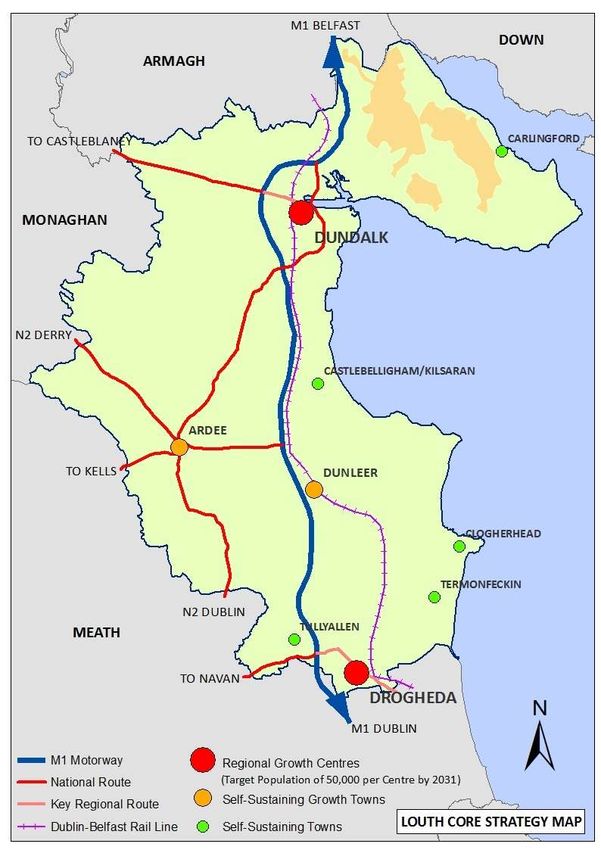
2 CORE STRATEGY AND SETTLEMENT STRATEGY
2.1 STATUTORY CONTEXT
The Planning and Development Act 2000 A Core Strategy Map is a specified
(as amended) requires an evidence based requirement as per the Act, depicting how
Core Strategy be included in all the Planning Authority anticipates its area
development plans. Its primary purpose is will develop over the plan period in line
to ensure local authorities identify and with the availability of infrastructure,
reserve an appropriate amount of land in services and amenities.
the right locations to meet population and
housing targets. This is achieved through 2.2 NATIONAL PLANNING POLICY
the expression of a medium to long term 2.2.1 Project Ireland 2040:
quantitative strategy for the spatial
National Planning
development of the area of the planning
authority, which is consistent with the Framework (NPF)
national and regional objectives as Development Plans sit within a hierarchy
outlined in the National Planning of National and Regional spatial plans at
Framework (NPF) and in the Regional the top of which sits the NPF. This
Spatial and Economic Strategy (RSES) for replaces the former National Spatial
the Eastern Midland Region. Strategy (NSS) and is a high level, 20 year
The Core Strategy includes a Settlement strategic plan for future growth and
Hierarchy for the County transposing development of the Country to 2040, the
prescribed regional population targets set objectives of which are outlined
at County level to settlements and rural hereunder:
areas identified within the Settlement Establish a broad National plan in
Hierarchy. relation to the strategic planning and
On foot of projected population allocation sustainable development of urban
it identifies the housing demand and land and rural areas;
requirement for residential and mixed use Secure balanced Regional
development having regard to the development by maximising the
capacity of existing zoned land and the potential of the regions; and
phasing of development, taking account Secure the co-ordination of Regional
of services and emerging transport and spatial and economic strategies and
mobility trends. City and County development plans.
While not expressly required by the Act, The NPF identifies a set of goals expressed
the Core Strategy should undertake an as National Strategic Outcomes (NSO’s),
appropriate level of analysis of other land which underpin the overarching vision for
uses such as employment uses, to ensure the Country. These NSO’s are significantly
sufficient lands are zoned at suitable aligned with the UN Sustainable
locations, taking account of higher level Development Goals and are detailed in
planning policies and the required Figure 2.1.
physical and green infrastructure.
2-1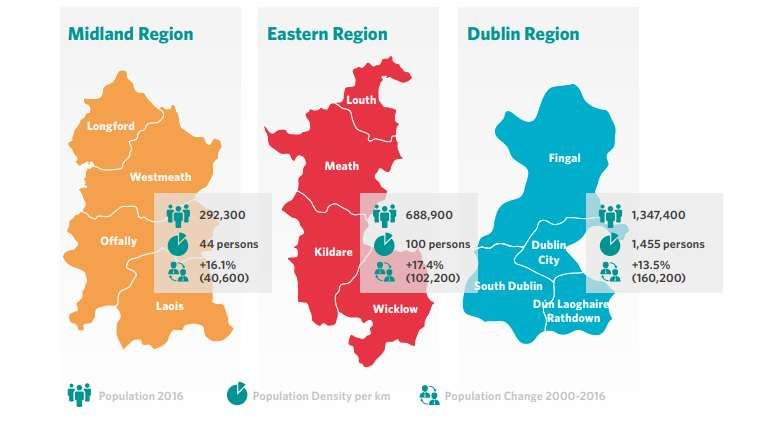
Figure 2.1 – National Strategic Outcomes

      Source: National Planning Framework

2-2                           Draft Louth County Development Plan 2021-2027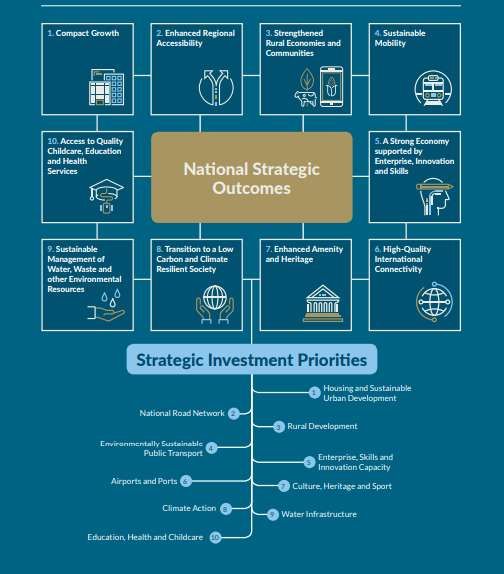
One of the underlying principles of the                 In building ‘centres of scale’ outside
NPF Strategy is to rebalance growth in the              Dublin, the remaining four cities have
Country,     which        historically has              ambitious growth targets and, below
disproportionately favoured growth in the               these cities, the regional roles of Athlone
Eastern and Midland Region. It enables all              in the Midlands, Sligo and Letterkenny in
parts of the Country whether urban or                   the North-West and Drogheda-Dundalk-
rural, to successfully accommodate                      Newry cross border networks are also
growth and change whilst simultaneously                 identified. The NPF acknowledges
recognising Dublin’s ongoing key role as                significant     cross-border    interactions
the principal economic driver of the                    focused on key settlement networks,
Country. It promotes ‘Regional parity’                  specifically Drogheda-Dundalk-Newry in
rather than the ‘business as usual’                     the context of the Dublin-Belfast
approach, seeking a 50:50 distribution of               economic corridor, recognising the growth
growth between the Eastern and Midland                  potential of the network as important for
Region with that of the Southern and                    regional       development       and       in
Northern and Western Regions combined.                  strengthening Ireland’s overall urban
Of the national projected population                    structure.
growth, 25% is planned for Dublin, 25%                  An important element of the growth
for the four cities of Galway, Limerick,                strategy, intrinsic to the NPF, is securing
Cork and Waterford and the remaining                    compact and sustainable growth as it
50% growth for the key regional centres,                offers the best prospects for unlocking
towns, villages and rural areas as                      Regional potential. The preferred
identified in the Regional Spatial and                  approach for compact development is one
Economic Strategies.                                    which focuses on reusing previously
The targeted population growth for the                  developed          ‘brownfield’        lands,
Eastern and Midland Region is for an                    development of infill sites and buildings.
additional 490,000-540,000 people living                To this end the NPF requires at least 30%
in the Region.                                          delivery of all new homes in settlements
The Strategy focuses on building ‘centres               (outside of the 5 cities) to be within the
of scale’ and addressing peripherality,                 existing built up footprint (NPO 3(c)).
wherein Dublin will continue to develop as
an international city of scale.

Table2.1: Targeted Pattern of Growth in the Eastern and Midland Region 2040

Eastern and Midland Region

Growing       Our Building Stronger Regions: Accessible Centres of Compact,         Smart,
Region            Scale                                            Sustainable Growth

+490,000       - Dublin City & Suburbs:
540,000 people   +235,000 - 290,000 people                             30% of all new housing
                                                                       within existing urban
                   RSES sets a strategic development framework for the footprints
+320,000        in
                   Region leading with the key role of Drogheda-
employment
                   Dundalk-Newry cross border network.
Source: National Planning Framework

                        Draft Louth County Development Plan 2021-2027
                                                                                                        2-3
In relation to place making one of the                      Aligning Plans at all levels in conjunction
      primary challenges faced by the Eastern                     with a shift to compact growth requires a
      and Midland Region is the delivery of                       period of transition, whereby both
      future development that both enhances                       existing planning permissions and zoned
      and reinforces the urban and rural                          lands must be considered.
      structure, with a move to self-sustaining                   The Roadmap provides for the operation
      activity and remote working rather than                     of a ‘transition period’ until 2026. Herein,
      commuter driven activity. This allows the                   it provides a transitional set of population
      Region’s various city, town, village and                    projections to inform Regional and Local
      rural components to play to their                           plans to 2026 and 2031. The transitional
      strengths, while moving away from a                         population projections for Louth are listed
      sprawl-led development model, where                         in Table 2.2.
      rapid growth was driven by housing,                         For those Counties where population
      rather than employment.                                     growth is projected to be at or above the
      The NPF recognises that the Dublin-                         national average baseline, which includes
      Belfast cross-border network is the key                     County Louth, the Roadmap provides
      driver in the North-East regional area. To                  scope for headroom, not exceeding 25%
      achieve leveraged employment and                            up to 2026. This additional headroom is
      sustainable      population        growth,                  only applicable in the 2026 projection and
      development must be supported by                            not beyond to 2031. The population
      enhanced connectivity, quality of life and                  projections with the additional 25%
      a focused approach to the compact,                          headroom are illustrated in Table 2.3.
      sequential and sustainable development                      Having regard to the designation of
      of the larger urban areas such as                           Dundalk and Drogheda as Regional
      Drogheda and Dundalk.                                       Growth Centres and regional drivers,
                                                                  supported by the Self Sustaining Growth
      2.2.2       Implementation Roadmap                          Centres of Ardee and Dunleer and the
                  for the National Planning                       remaining strong urban settlement
                  Framework                                       structure which typifies County Louth, it is
      The Implementation Roadmap highlights                       appropriate that the additional 25%
      the Government’s focus on achieving                         headroom available to the County is
      alignment between National, Regional and                    utilised in order to allow flexibility in
      Local planning policy and practice.                         approach and to help realise the
      However, translating long-term National                     objectives of the NPF and RSES. The years
      projections and targets of the local plan                   2026/2027 will see the first full
      making level requires a step change in                      assessment of Development Plans
      both the short to medium transitional                       prepared in accordance with the NPF and
      term and long term context.                                 the RSES and establish the success in
                                                                  implementation of both the National and
                                                                  Regional policy objectives.
      Table2.2: Transitional Population Projections for Louth

      Eastern and Midland Regional Assembly
      Region and Counties         2016                          2026                   2031
      Mid-East
      Louth                       129,000                       139,000-144,500        144,000-151,500
      Source: Appendix 2 of the Implementation Roadmap

2-4                            Draft Louth County Development Plan 2021-2027
Table2.3: Transitional Population Projections for Louth with additional 25% Headroom

Eastern and Midland Regional Assembly
Region and                                                                     2026
                               2016              2026                                                    2031
Counties                                                                       (incl.25% Headroom)1
Mid-East
Louth                          129,000           139,000-144,500               141,500-148,375           144,000-151,500

1
    This Plan runs until 2027, which is factored into the population figures later in this Chapter

2.3            REGIONAL PLANNING POLICY
2.3.1             Regional Spatial and Economic Strategy
Following on from the enactment of the                                          To this end, the Strategy identifies 16
Local Government Reform Act 2014, three                                         Regional Strategic Outcomes (RSOs) which
new Regional Assemblies came into effect                                        are aligned with National policy and which
in January 2015, replacing the eight                                            set a framework for delivery of County
previous Regional Authorities. Louth is                                         development        plans.   Chapter      One
now part of the Eastern and Midland                                             identifies how this Draft Plan closely aligns
Regional Assembly (EMRA) which adopted                                          with the identified 16 Regional Strategic
its first Regional Spatial and Economic                                         Outcomes and subsequently with both
Strategy (RSES) in June 2019.                                                   National and Regional policy. Of the three
The objective of the RSES is to support                                         Regions, the Eastern and Midland Region
implementation of Project Ireland 2040 –                                        has the largest population, which was in
which links planning and investment                                             excess of 2.3 million people in 2016. It is a
through the NPF and the ten year National                                       young and diverse growing region where
Development Plan (NDP) and the                                                  Dublin, its main settlement, is supported
economic and climate policies of the                                            by a network of Regional and County
government, by providing a long term                                            towns and an extensive rural hinterland. It
strategic    planning     and   economic                                        is the primary economic engine of the
framework for the Region. Reflecting the                                        state, being home to the capital city,
NPF, the RSES emphasises sustainable                                            almost half of the country’s population
development patterns and seeks to focus                                         and in excess of one million jobs. It is
growth in regional growth centres such as                                       comprised of three Strategic Planning
Drogheda and Dundalk and within the                                             Areas (SPAs) which provide for a sub-
footprint of existing urban areas. At a                                         regional planning remit, namely; the
Regional level, the RSES seeks to                                               Dublin Region, the Eastern Region (which
determine how best to achieve the goals                                         Louth is part of) and the Midland Region.
of the NPF as identified in the National
Strategic Outcomes (NSOs).

                                   Draft Louth County Development Plan 2021-2027
                                                                                                                                2-5
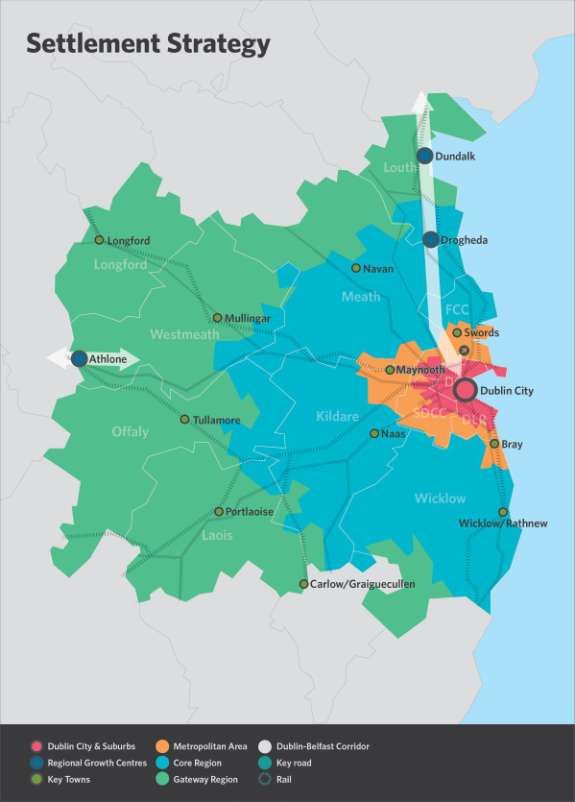
Figure 2.2: Strategic Planning Areas (SPA) Eastern and Midland Region
In addition to the spatial development of The FUAs augment the Strategic Planning
the Region, the RSES seeks to plan Areas (SPAs) by recognising spatial, social
for its economic development, with and economic similarities and differences
opportunities for enterprise development within each SPA. The three identified
based on local strengths, assets and FUAs are:
resources, all underpinned by the quality Dublin City & Metropolitan Area:
of living offering. Its natural, cultural and o Dublin city and suburbs and the
green infrastructure assets support the metropolitan area which includes
tourism and leisure industry and are major settlements with strong
essential to creating places that are connections to the city (Louth not
attractive to live, work, visit and invest in. included).
The spatial and economic framework set Core Region:
out in the RSES underpins the strategic o Peri-urban ‘hinterlands’ within
policy objectives set out in this Draft Plan. the commuter catchment around
A key priority for the Region is to address Dublin, including south Louth and
long distance commuting and subsequent the Regional Growth Centre of
poor quality of life issues. The RSES Drogheda.
utilised ‘Functional Urban Areas’ (FUAs) Gateway Region:
which consider where people live and o Remaining area beyond the
work to better plan for the future Metropolitan and Core Areas and
provision and improved alignment of includes North Louth and the
transport, housing and infrastructure in Regional Growth Centre of
the Region. Dundalk. The three FUAs are
identified in Figure 2.3.
2-6 Draft Louth County Development Plan 2021-2027
Figure 2.3: Map of the Settlement Hierarchy in the Eastern and Midland Region

Source: RSES

                        Draft Louth County Development Plan 2021-2027
                                                                                2-7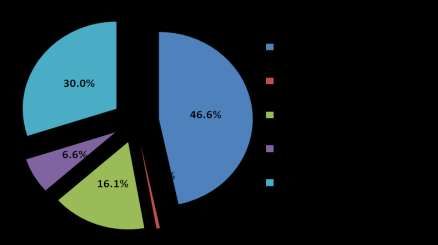
2.3.2     RSES and Louth’s Settlement Hierarchy
      Consistency and alignment between             Self-Sustaining Towns require investment
      National, Regional and Local plans is a       in       services,    employment        and
      requirement of the Planning and               infrastructure whilst balancing housing
      Development Act 2000 (as amended)             delivery. These include; Carlingford,
      Louth’s framework for growth is therefore     Castlebellingham/ Kilsaran, Clogherhead,
      guided and directed by both the NPF and       Termonfeckin and Tullyallen.
      the RSES.                                     Small Towns and Villages support local
      The NPF and RSES set policy parameters        growth across the County and range in
      for the Region, to manage the growth of       size and function. Future growth will focus
      Dublin as a city of international scale,      on localised sustainable growth meeting
      supported by the growth of the                the needs of the local population.
      designated Regional Growth Centres and        Rural Villages and the Wider Rural Area:
      further supported by the development          These are characterised by residential
      and regeneration of selected Key Towns.       development with limited services and
      The RSES growth strategy employs a            facilities    with    an     emphasis    on
      robust evidence based approach, to            strengthening their fabric and creating
      derive a settlement hierarchy which           sustainable rural communities, suitable to
      identifies locations for population and       meet rural generated housing needs.
      employment growth with matched                The Settlement Hierarchy in this Draft
      infrastructure and service investment, to     Plan has been updated to reflect the
      satisfy and accommodate future growth         terminology and settlement categories set
      needs. This influences the future growth      out in the RSES. The Settlement Hierarchy
      of Louth in the following manner:             for Louth is as outlined in Table 2.4.
      Regional Growth Centres (RGC’s) support
      the direction of significant population and
      economic growth to ensure these centres
      reach sufficient scale, to serve as
      economic drivers for the Region and
      implement           effective      regional
      development. Drogheda and Dundalk are
      designated as Regional Growth Centres.
      Key Towns Louth has no key towns. The
      remaining settlement typologies identified
      in the RSES are defined by the
      development plan using an evidence
      based approach.
      Self-Sustaining Growth Towns are
      regionally important local drivers serving
      their resident population and surrounding
      catchments and with a reasonable level of
      jobs and services. Ardee and Dunleer are
      designated as such.

2-8                        Draft Louth County Development Plan 2021-2027
Table 2.4:Settlement Hierarchy for County Louth
Settlement Settlement
Description Settlement
Level Category
Regional Growth Centres are
large towns with a high level of
self-sustaining employment and
Regional Drogheda
1 services that act as regional
Growth Centres Dundalk
economic drivers and play a
significant role for a wide
catchment area.
Self-Sustaining Growth Towns
with a moderate level of jobs and
services – includes sub-county
Self-Sustaining market towns and commuter Ardee
2
Growth Towns towns with good transport links Dunleer
and capacity for continued
commensurate growth to
become more self-sustaining.
Self-sustaining towns with high
levels of population growth and a
Carlingford, Clogherhead,
weak employment base which Castlebellingham/Kilsaran,
Self-Sustaining are reliant on other areas for Termonfeckin, Tullyallen
3
Towns employment and/or services and
which require targeted ‘catch up’
investment to become more
self-sustaining.
Towns and villages with local Annagassan, Baltray, Collon,
Small Towns
4 service and employment Dromiskin, Knockbridge, Louth
and Villages
functions. Village, Omeath, Tallanstown,
Ballagan, Ballapousta,
Bellurgan, Darver, Dromin,
Faughart, Glenmore, Grange,
Grangebellew, Greenore, Gyles
Quay, Kilcurry, Kilkerley,
5 Rural Villages Rural villages. Lordship, Mountbagnal,
Muchgrange, Philipstown
(Collon), Ravensdale,
Reaghstown, Sandpit,
Sheelagh, Stabannon, Tinure,
Willville
Draft Louth County Development Plan 2021-2027
2-92.4 CORE STRATEGY APPROACH
This Draft Plan sets out an evidence based Ensure the growth of towns is at a
Core Strategy for the future development sustainable and appropriate level,
of County Louth, having regard to the NPF with a rationale for lands zoned for
population projections, the settlement residential, employment and mixed
hierarchy of the RSES and consideration use development;
for the phasing of development lands to Provide clarity for developers and
ensure Towns grow at a sustainable and others investing in the County.
appropriate level to their position in the
hierarchy. The Core Strategy shall also be 2.4.2 Content of the Core
developed having regard to the Strategy
infill/brownfield targets provided for in The Core Strategy delivers the following:
the NPF. Settlement hierarchy/Population and
2.4.1 Strategic Objectives of the household distribution;
Core Strategy Population targets; and
Future Household targets and land
The Strategic Objectives of the Louth Core zoning requirements.
Strategy are to:
Ensure development and growth in 2.4.3 Guiding Principles for Core
Louth occurs in line with both Strategy
National and Regional objectives as The RSES recognises that a disconnect
provided for in the NPF and the RSES may exist between the quantum of land
and other national guidelines and zoned in current plans and the National
policies; and Regional development parameters set
Provides a framework to enable the out in the NPF. The options available to
delivery of the vision and objectives address issues of surplus residential lands
of the Plan; are:
Support the population growth of Prioritisation measures that provide
County Louth in accordance with the for the sequential release of lands
population projections as specified in which may be suitable for housing
the NPF Implementation Roadmap of delivery but not likely to be
148,375 (increased to 149,966 to forthcoming during the period of the
reflect the life of the Plan) and in Plan;
accordance with the Settlement De-zoning land.
Hierarchy and Core Strategy Tables; Where there are sites with long term
Ensure alignment of infrastructural development potential not being brought
investment with those settlements forward for development, the RSES
identified for growth in the acknowledges that local authorities
Settlement Hierarchy to ensure should consider other suitable, alternative
capacity of services is matched by sites capable of being delivered in the
demand for services and delivered in short term.
a timely, cost effective and With regard to any surplus of residential
sustainable manner; lands, both the prioritisation and
de-zoning of lands will be considered and
will be dependent on the settlement
category.
2-10 Draft Louth County Development Plan 2021-20272.4.4 Louth’s Growth Strategy
Louth’s growth strategy has been Support the Self-Sustaining Growth
informed by the principal elements of the Towns of Ardee and Dunleer, which
RSES growth strategy in conjunction with are regionally important local drivers
the environmental sensitivities of the providing a moderate level of jobs
County. It is based on strengthening its and services for the resident
strong urban settlements, whilst population and surrounding
simultaneously protecting and supporting catchments. Growth will be balanced
rural areas, which provide valuable and at sustainable levels including
natural resources, biodiversity, brownfield and infill development
environmental quality and landscape with a focus on the commensurate
features. It will seek to respond to the delivery of employment and services
needs of the entire County. and improving the quality of life for
Population and economic growth will be all in these towns;
focused primarily in the RGCs of Drogheda Support Self Sustaining Towns
and Dundalk with recognition of the requiring contained growth, focusing
potential for the smaller towns and on investment in services,
villages to develop at a sustainable rate. employment and infrastructure whilst
The focus of the growth strategy for balancing housing delivery;
County Louth is as outlined hereunder: Having regard to the viability and
Prioritise targeted population and vibrancy of small towns and villages,
economic growth to the designated promotion of regeneration and
RGCs of Drogheda and Dundalk. support for local employment whilst
Promote their continued sustainable offering a viable alternative to single
and compact growth as regional housing in the open countryside and
drivers to city scale, with a target Management of urban generated
population of 50,000 by 2031 growth in Rural Areas under urban
supported by improvements to influence, by ensuring single houses
sustainable transport links and the in the open countryside is based on
requisite infrastructure to enable the the core consideration of
towns grow to their full potential by demonstrable economic or social
becoming more attractive to live and need to live in a rural area in addition
invest in; to compliance with statutory
Capitalise on the strategic location of guidelines, plans and having regard to
both Drogheda and Dundalk along the ensuring the viability of the
Dublin-Belfast Economic Corridor, to aforementioned small towns and
drive linkages and synergies between villages.
the north and south of Ireland; The Settlement Strategy for future growth
Contribution of urban regeneration in the County is further detailed in Section
lands and development of infill sites 2.13 of this chapter.
to the revitalisation of settlements
and sustainable compact urban
2.4.5 Core Strategy Map
growth (in Louth a minimum 30% of The Core Strategy Map (Map 2.1) is a
new homes to be in the built up diagrammatic representation of the
footprint of the urban area) spatial planning strategy for County Louth.
facilitated by investment in services,
transport, infrastructure etc.;
Draft Louth County Development Plan 2021-2027
2-11Map 2.1 – Core Strategy 2-12 Draft Louth County Development Plan 2021-2027
2.5     POPULATION TRENDS
Census 2016 recorded a population of          As the economy began to recover from
4,761,865 in Ireland, representing an         2014 and employment opportunities in
increase of 3.8% on Census 2011. Urban        the Country improved, migration patterns
settlements in the Country, of which there    began to change. 2016 was the first year
are 200, accounted for 63% of the             since 2009 where there was a return to
population. Outside of the five cities of     net inward migration at a National level.
Dublin, Cork, Waterford, Galway and           This trend continued in 2018 and 2019
Limerick, 29% of Ireland’s population lives   where there was a net inward migration
in towns and villages of at least 1,500 or    of 34,000 and 33,7002 respectively which
more people.                                  increased the rate of population growth at
Louth’s population in 2016 was 128,884        National level.
which was an increase on the 2011             The outbreak of the Covid-19 pandemic
census, albeit, at a slower rate from the     and the associated lockdown, which
levels experienced in previous inter-censal   occurred in Spring 2020, has curtailed the
periods. This reduced rate of increase can    movement of people throughout the
be attributed to the recession, in the        world. It is anticipated that will impact on
period 2008-2014, which impacted on           population growth and migration patterns
population trends and the movement of         in the immediate term with the medium-
people, with changing migration patterns      long term impacts unclear at the time of
experienced. This included for high levels    writing.
of emigration and a decrease in inward
migration at a National, Regional, and
                                              2.5.1           Population Distribution
County level, which ultimately resulted in    The population of the County is
a decrease in the rate of population          distributed across a network of urban and
growth.                                       rural settlements and the open
With this in mind, a 10 year outlook on       countryside.         The       population
the level of growth in the County between     concentration in Drogheda and Dundalk in
2006-2016 provides a more balanced            combination with its small landmass
overview of population growth which           makes Louth the County with the highest
occurred prior to and during the              percentage of an urban population
recession.                                    outside of Dublin, with 66.1% of the
During this period the average population     population living in urban areas in 2016.
increase per annum was 1,762 persons.         Table 2.6 sets out the County population
Table 2.5 provides an overview of             distribution based on the definition of
population growth in the County between       aggregate urban and rural areas by the
2002-2016 and indicates the different         CSO.
rates of population growth experienced
                                              2
during this period.                               CSO Population and Migration Estimates August 2019

                     Draft Louth County Development Plan 2021-2027
                                                                                                       2-13
Table 2.5: Population Growth in Louth 2002-2016
% increase Average
Population Inter-censal
Year Population in the inter-censal annual
increase period
period increase
2002 101,281 N/A N/A N/A N/A
2006 111,267 9,986 2002-2006 9.9% 2,497
2011 122,897 11,630 2006-2011 10.5% 2,326
2016 128,884 5,987 2011-2016 4.9% 1,197
2006-2016 N/A 17,617 2006-2016 15.8% 1,762
Table 2.6: Population Distribution by Settlement Category CSO 2016, County Louth
CSO % of total Overall
Settlement Category Settlement
Categorisation population County %
Regional Growth
Drogheda and Dundalk 56.7%
Centre
Aggregate Self-Sustaining
Ardee and Dunleer 5.3% 66.1%
‘Town’ Areas Growth Town
Clogherhead, Termonfeckin,
Self-Sustaining Town 4.1%
Tullyallen
Castlebellingham/Kilsaran,
Self-Sustaining Town 2%
Carlingford
Annagassan, Baltray, Collon,
Dromiskin, Knockbridge,
Aggregate ‘Rural’ Small Town 3.9%
Louth Village, Omeath, 33.9%
Areas
Tallanstown
Villages and Open See Table 2.4 for the list of
28%
Countryside Villages in the County
2-14 Draft Louth County Development Plan 2021-20272.5.2 Location of Population Growth
Between 2011-2016, the population of Consequently, almost 53% of population
Louth increased by 5,987 persons with the growth in the County took place in lower
highest recorded population increase of tier settlements, indicating the pressure
46.6% (2,792) occurring in the RGC’s of for development within these areas.
Drogheda and Dundalk. Figure 2.4 illustrates the distribution of
In contrast the population of Ardee and population growth by settlement category
Dunleer, now identified as Self Sustaining in the County between 2011 and 2016.
Growth Settlements, was almost stagnant, Settlements that experienced a
with a combined population increase of population increase of 100 persons or
just 37 people (0.6%). more between 2011-2016 are detailed in
The level of growth in the Self Sustaining Table 2.7.
Towns and Small Towns was also This highlights the fact that growth is
significantly higher than the Self- occurring in the higher tier and lower tier
Sustaining Growth Towns of Ardee and settlements. In percentage terms relative
Dunleer, with a combined population to the size of the settlements, the Self
increase of 1,363 persons, equating to Sustaining Towns such as Carlingford,
22.8% of total population increase. Tullyallen, Clogherhead, and
Furthermore, the villages and open Termonfeckin, are experiencing the
countryside experienced high levels of highest levels of growth.
growth, with 30% of total population
growth in the County taking place in these
locations.
Fig. 2.4: Distribution of Population Increase in the County 2011-2016
Draft Louth County Development Plan 2021-2027
2-15Table 2.7: Settlements with a Population Increase of 100+ persons 2011-2016
Settlement Population 2011 Population 2016 Actual change % change
Drogheda 32,595 34,1993 1,604 4.9%
Dundalk 37,816 39,004 1,188 3.1%
Carlingford 1,045 1,445 400 38.3%
Omeath 503 603 100 19.9%
Tullyallen 1,358 1,547 189 13.9%
Termonfeckin 1,443 1,579 136 9.4%
Clogherhead 1,993 2,145 152 7.6%
3
This figure is for Drogheda in County Louth only (excludes South Drogheda in County Meath). The population
for the entire settlement of Drogheda in 2016 was 40,956 persons (Census 2016).
2.5.3 NPF Population Projections
The NPF’s Implementation Roadmap This increased growth is considered
provides that Louth’s projected reasonable given there are two Regional
population, in conjunction with the Growth Centres in the County. It will allow
permitted 25% headroom, will be in the the strategically located settlements of
range of 141,500-148,375 persons by Drogheda and Dundalk to continue to
2026. Using the higher projected growth grow into centres of scale and create a
rate and factoring into the equation that critical mass of population that will enable
this Plan runs from 2021 to 2027, the them to fulfil their function as regional
population projection for the County in drivers of economic and population
2027 is 149,966 persons, representing an growth with a targeted population of
increase in population of 21,082 on the 50,000 by 2031.
2016 Census figure (see Table 2.8).
Justification for adopting the higher
2.5.4 Population Distribution
projected growth rate for the County in The bulk of the projected population and
conjunction with the additional 25% household growth in County Louth is
headroom is considered measured and directed to the RGC’s of Drogheda and
appropriate. Table 2.9 illustrates how the Dundalk (69%) in accordance with the
projected annual average population principal objectives of the NPF, RSES and
increase for 2016-2027 only marginally as provided for in the Settlement
exceeds the recorded annual average Hierarchy. It is consistent with reaching a
population increase experienced during population of 50,000 in each of the towns
the 2006-2016 period. by 2031 as set out in the RSES and
supports consolidated development in
these large centres to facilitate economic
growth and broaden the employment
base.
2-16 Draft Louth County Development Plan 2021-2027The Self Sustaining Growth Towns of With 69% of the projected population
Ardee and Dunleer are important local targeted to Drogheda and Dundalk and
drivers, and with continued 8.7% to Ardee and Dunleer, the residual
commensurate growth, will become more 22% of projected population will be
self-sustaining into the future. allocated to the remaining settlements
Strengthening the role of Dundalk and including Self Sustaining Towns, Towns
Drogheda as RGCs and the Self Sustaining and Villages and the Rural Area.
Growth Towns of Ardee and Dunleer is In accordance with the NPF and the RSES,
critical to address the more recent pattern future growth will be directed to
of development evident during the 2011- settlements with capacity and potential
2016 inter-censal period where the for sustainable development. With the
majority of the combined population need for greater co-ordination between
growth occurred in the lower tier towns, land use zoning and infrastructure
villages and open countryside (see Figure provision, the NPF has adopted a ‘Tiered
2.4). Approach to Zoning’ identifying lands
Such a pattern of growth is counter- available for development and those
productive to the stated objectives of the dependent on the provision of additional
NPF and the RSES and to the development services and infrastructure.
of Drogheda and Dundalk as Regional Its success will be dependent on close
Growth Centres, militating against the two collaboration between the local authority
towns reaching their full potential as cities and other agencies including inter alia;
of scale and economic drivers in the Irish Water, TII, and the NTA.
Region. Louth’s projected population growth and
percentage growth by Settlement
Category is provided for in Table 2.10.
Herein, the favoured population growth of
the two Regional Growth Centres of
Drogheda and Dundalk is highlighted.
Table 2.8: NPF Projected Population Growth, 2027, County Louth
2026 Population
Projected to
County 2016 2026 incl. 25% Increase 2031
2027
Headroom 2016-2027
139,000 - 141,500 - 144,000 -
Louth 129,000 149,966 21,082
144,500 148,375 151,500
Table 2.8: Existing and Projected Growth 2006-2027, County Louth
Projected Annual
Projected
Population Average Annual Average
County Population
Increase 2006-2016 Increase 2006-2016 Population
Increase 2016-2027
Increase 2016-2027
Louth 17,617 1,762 21,082 1,916
Draft Louth County Development Plan 2021-2027
2-17Table 2.9: Population Projections & Distribution by Settlement Category, County Louth
Column A Column B Column C Column D Column E Column F Column G Column H Column I
Projected
Annual Projected
average
Census Projected Projected Population Average % of Total
Settlement Population
Settlement Population Population increase in Increase 2002- Population Growth
Category increase per
2016 2027 Population 2016 increase p/a Rate 2021-
annum 2016-
2002-2016 2027
2027
County Louth 128,884 149,966 21,082 27,063 1,933 1,916 100%
Regional Drogheda 34,199 41,113 6,914 5,866 419 629 32.8%
Growth Centre Dundalk 39,004 46,664 7,660 6,499 464 696 36.3%
Ardee 4,928 6,583 1,655 980 70 150 7.9%
Self-Sustaining
Growth Towns
Dunleer 1,822 2,757 935 808 58 85 4.4%
Carlingford 1,445 1,645 200 841 60 18 0.9%
C’bellingham
1,126 1,236 110 405 29 10 0.5%
Self-Sustaining /Kilsaran
Towns Clogherhead 2,145 2,445 300 1,239 89 27 1.4%
Termonfeckin 1,579 1,829 250 1,076 77 23 1.2%
Tullyallen 1,547 1,767 220 930 66 20 1.1%
Level 4
Small Towns 5,103 5,888 785 1,886 135 71 3.7%
Settlements
Level 5
Villages 300
Settlements
35,986 38,039 6,533 467 186 9.7%
Rural Area Rural Area 1,753
2-18 Draft Louth County Development Plan 2021-20272.6 HOUSING
2.6.1 Introduction
The economic collapse of 2008 caused a has been identified as a Rent Pressure
countrywide decimation of the property Zone.
market evidenced in the almost complete Land Development Agency: With an
stagnation of the previous unprecedented initial capital budget of €1.25 billion,
growth experienced in house the Agency has an objective to deliver
construction. In Louth, during this period, 150,000 homes over a 20 year period.
the demand for residential development Of this, it is a requirement that 40%
abruptly ceased with a resultant dramatic must be social/affordable with 10% to
reduction in housing stock delivery, in be social and 30% to be affordable.
contrast to previous years as illustrated in Urban Regeneration Development
Table 2.11. Fund (URDF): This ten year fund with
Since approximately 2014, with the a budget of €2 billion supports
beginnings of an economic recovery, compact sustainable development
house building slowly began to increase in through regeneration of Ireland’s
the County but at a much reduced rate of towns and cities in line with the
growth. This has subsequently placed objectives of Project Ireland 2040
pressure on the existing housing stock and
it is anticipated this will increase as 2.6.2 Recent Residential
economic conditions improve. Construction
In response to this nationwide A continuation of the economic recovery
phenomenon, the Government has and improved consumer confidence is
introduced a range of initiatives, which evident in the increase in housing
are outlined below: construction in the County. The CSO
Rebuilding Ireland: An Action Plan Report ‘New Dwelling Completions’ 2011-
for Housing and Homelessness: 2019 illustrates a steady, continual
Herein, a commitment was made to increase in residential construction in the
increase housing supply to 25,000 County since 2014. This increased activity
units per annum by 2020. is set to continue having regard to the
Local Infrastructure Housing level of pre-planning enquiries, permitted
Activation Fund (LIHAF): In 2017, the SHDs, active construction sites and extant
Government committed €200 million permissions, in the County.
funding to provide critical
infrastructure to facilitate the speedy 2.6.3 Projecting Housing
delivery of housing in key Demand to 2027
development sites experiencing a In the absence of National guidance, in
high demand for housing. the form of the awaited Development
National Development Plan (NDP): Plan Guidelines, currently being prepared
Committed capital investment of by the Department of Housing, Planning
€4.2billion to the delivery of 40,000 and Local Government (DHPLG), the
new social housing units. delivery of an evidence based strategy
Rent Pressure Zones (RPZ): Where regarding household projections,
Rent Pressure Zones are identified occupancy rates and land requirements
annual rent increases are limited to are somewhat challenging, but
4%. All of County Louth with the nonetheless necessary.
exception of Clogher electoral area
Draft Louth County Development Plan 2021-2027
2-19Consequently, the projections and an analysis of available data without the
calculations as indicated in the Core benefit of the updated Development Plan
Strategy Table 2.15 have been based on Guidelines.
Table 2.10: Housing Stock and Vacancy Rate, County Louth 1991-2016
Housing Stock and Vacancy Rate – County Louth
Census Year 1991 1996 2002 2006 2011 2016
Total Housing Stock
28,391 34,635 37,441 45,488 51,186 51,399
Numbers
Vacant (numbers) 1,983 2,249 3,053 6,107 6,232 4,7134
Vacancy Rate (%) 7% 6.5% 8.2% 13.4% 12.2% 9.2%
% Increase year on
21.99% 8.10% 21.49% 12.53% 0.42%
Year
Source:CSO
4
This includes 761 vacant holiday homes
Fig 2.5 – New Dwelling Completion in Louth
New Dwelling Completions in Louth 2011 - 2019
800
700 673
599
600
500
400 372
300
191 205 200
200 169 171
146
100
0
Louth (County Council)
2011 2012 2013 2014 2015 2016 2017 2018 2019
2-20 Draft Louth County Development Plan 2021-20272.6.4 Occupancy Rate
In line with the NPF Implementation In this regard a vacancy rate of 7% has
Roadmap, Louth’s population is projected been factored into the calculation of the
to grow by 21,082 persons between 2016 projected housing requirement for the
and 2027 (16% increase). At a settlement County6.
level the occupancy rate in the County This will provide a more accurate
varies from 2.62 in Dundalk to 2.92 in the reflection of the ‘total housing stock’
rural area. It is important in ensuring an required, to meet the needs of the
accurate projection of future housing projected population over the lifetime of
requirements that the projected this development plan.
occupancy rate is reflective of the rate of Inclusive of the vacancy rate of 7% the
occupancy in the particular settlement. projected housing stock in the County in
Taking this into account a specific 2027 will be 61,717 units, which equates
occupancy rate has been assigned to each to an additional 10,318 units between
settlement. Details of the average 2016-2027.
occupancy rate in 2016 are detailed in Factoring in the completed units during
Table 2.12. the period 2016-2020 (c.2,040 units,
based on an analysis of the CSO ‘New
2.6.5 Projected Housing Dwelling Completions’ data and a review
Requirement of recent residential development in
The 2016 Census recorded a total housing settlements) this results in a projected
stock of 51,399 units in Louth 5 . The housing requirement of 8,278 units during
Housing Strategy as set out in Appendix 3 the 6 year period between 2021 and 2027,
estimates that the number of households which equates to an annual average
in the County will increase to 57,679 by output of 1,380 units/annum.
2027. This is based on a graduated decline This figure is realistic and achievable
in the household size to 2.6 in 2027. having regard to the designation of the
It is important to note that the figure of two RGC’s of Drogheda and Dundalk, and
57,679 refers to households only and does the anticipated housing requirements as
not take account of additional factors that provided for in the NPF and Rebuilding
affect the housing market such as the Ireland. Details relating to projected
demand for second homes or holiday household occupancy rates and projected
homes. In addition this figure does not housing requirement for 2021-2027 are
take account of vacancy rates that will outlined in Tables 2.13 and 2.14.
exist at any point in time. 5
Housing supply is inelastic and therefore, The Census indicates that the total housing stock
consists of permanent private households, holiday
in order to ensure there is a sufficient homes, vacant houses or apartments, and dwellings
supply of housing available to meet the where the occupants were temporarily absent of Census
demands of a functional market it is night.
6
The rate of vacancy has taken account of recent levels
prudent that this Core Strategy takes of vacancy in the County and ‘The National Vacant
account of these additional factors. Housing Reuse Strategy 2018-2021’ which indicates a
normal vacancy rate of 2.5%-6% in a normal functioning
market.
Draft Louth County Development Plan 2021-2027
2-21Table 2.11: Average Occupancy Rate 2016
Average
Total Housing Vacant Units Vacancy Rate
Population 2016 Occupancy Rate
Stock 2016 2016 2016
2016
128,884 51,399 3,9527 7.7% 2.768
7
This does not include 761 vacant holiday homes. When this is factored in the Vacancy Rate in the County in 2016 was 9.2%
8
This was calculated by dividing the population by occupied units i.e. vacant units - vacant holiday homes were not included
Table 2. 12: Projected Household Occupancy Rates
Projected Projected
Projected
Projected Average Projected Projected Additional
Occupied
Population Household Vacancy Housing Housing
Households
2027 Occupancy Rate 2027 Stock 2027 Required
2027
Rate 2016-2027
149,966 2.6 57,679 7% 61,717 10,318
Table 2.13: Projected Household Requirement 2016-2027
Projected Housing Approximate number of units Projected Housing
Requirement 2016-2027 completed 2016-2020 requirement 2021-2027
10,318 2,040 8,278
2.6.6 Compact Growth
An overriding objective of both the NPF In satisfying this target for compact
and the RSES is the need to achieve growth, an analysis of appropriate
ambitious targets for compact growth in brownfield and infill sites with potential
urban areas. Louth is required to deliver capacity to deliver new homes was
at least 30% of all new homes within completed for Dundalk, Drogheda, Ardee
existing built up footprints (NPO 3c). and Dunleer and the remaining Level 3
Achieving this target can be realised settlements.
through urban regeneration and Details of the potential capacity of infill
infill/brownfield site development, which and brownfield lands are set out in Table
will contribute to sequential, sustainable 2.15.
and compact growth, revitalisation of
existing settlements of all scales and
transition to a low carbon, climate
resilient society.
2-22 Draft Louth County Development Plan 2021-2027Table 2.14: Core Strategy Table
Column Column Column Column Column Column Column Column Column Column
Column K Column L
A B C D E F G H I J
Total Lands with Total
Total Units
Projected Additional Approx. Housing potential to Lands
Projected Projected delivered
Settlement Population Population Housing Units Allocation deliver Infill Zoned for
Settlement Population Housing on Infill/
Category 2016 Increase to Units Completed 2021- or Brownfield New
2027 Stock Brownfield
2027 2016- 2016-2020 2027 Development Residential
2027 Lands
2027 (ha) uses (ha)
County Louth 128,884 21,082 149,966 61,717 10,318 2,040 8,278 110.4 4,302 589
Regional Drogheda 34,199 6,914 41,113 17,184 3,443 400 3,043 34.8 1,725 213
Growth
Centre Dundalk 39,004 7,660 46,664 19,892 3,541 935 2,606 30 1,743 269
Ardee 4,928 1,655 6,583 2,751 749 165 584 8.5 298 54.6
Self-Sustaining
Growth Towns Dunleer 1,822 935 2,757 1,144 425 80 345 3.1 109 13
Carlingford 1,445 200 1,645 881 41 0 41 2.6 31 2.2
Castlebellingham
1,126 110 1,236 597 87 8 79 1.1 27 10.9
/ Kilsaran
Self-Sustaining
Towns Clogherhead 2,145 300 2,445 1,034 139 0 139 1.6 39 2.9
Termonfeckin 1,579 250 1,829 663 81 40 41 3.4 40 2.4
Tullyallen 1,547 220 1,767 630 130 15 115 1.2 29 0
Level 4
Small Towns 5,103 785 5,888 2,405 436 22 414 24.1 260 21
Settlements
Level 5
Villages 300
Settlements
35,986 38,039 14,536 1,246 375 871 N/A N/A N/A
Rural Area Rural Area 1,753
Draft Louth County Development Plan 2021-2027
2-232.7 ECONOMIC DEVELOPMENT 2.8 RETAIL DEVELOPMENT
Louth is unrivalled in terms of its strategic The Council aims to ensure that all retail
and central location on the Dublin-Belfast development permitted within the County
Economic Corridor, wherein are located is in accordance with the Retail Planning
the two RGC’s of Drogheda and Dundalk, Guidelines for Planning Authorities, 2012
both of which are underpinned by strong (DECLG), the Retail Design Manual – A
transport infrastructure connecting the Good practice Guide, 2012 (DECLG) and
two main cities of scale on the Island. In the Louth Retail Strategy, which has been
line with the growth and settlement prepared as part of this Draft Plan. The
strategies, the Draft Plan seeks to ensure Retail Strategy sets out the indicative
that there is a convergence of where potential for additional convenience,
people live and work, improve the job comparison and bulky household goods
ratio, reduce commuting patterns thereby floorspace in Drogheda, Dundalk and
improving the quality of life for people Ardee. The potential floorspace capacity
and promoting a transition to a low for these settlement has been informed
carbon and climate resilient society. by the settlement and retail hierarchy and
In accordance with the principles of the projected population growth. Full details
NPF and the RSES, and in recognition of of the Draft Retail Strategy are available in
the critical importance of the Dublin- Appendix 4, Volume 3.
Belfast Economic Corridor, this Draft Plan 2.9 CLIMATE ACTION
promotes economic growth in those
locations identified in the RSES capable of Louth County Council prepared a Climate
accommodating significant economic Adaptation Strategy as part of the
growth, primarily the RGC’s of Drogheda requirements of the National Adaptation
and Dundalk. RGC’s will serve as focal Framework (NAF), which was published in
points to gain critical mass and deliver response to the provisions of the Climate
positive impacts to the surrounding area Action and Low Carbon Development Act
whilst enhancing overall Regional and 2015.
National growth. A coordinated approach The role of this strategy is to ensure an
to infrastructure investment for the understanding of the risks of climate
sustainable development and growth of change, advance planned climate resilient
the urban settlements and inter- actions and ensure climate adaptation
connections will be necessary to build considerations inform all Draft Plan
greater levels of critical mass and facilitate policies.
the effective movement of people and The National Climate Action Plan 2019 is
goods. designed to enable Ireland to meet its EU
Whilst the majority of economic growth climate change commitments through
will be directed to Drogheda and Dundalk, carbon proofing government policies and
there is recognition that economic establishing carbon budgets.
opportunities exist elsewhere in the It provides 183 individual policy actions
County particularly in the Self Sustaining over 12 sectors to tackle climate change
Growth Towns of Ardee and Dunleer but along with timelines for delivery to reduce
also in some of the smaller settlements carbon emissions by 30% between 2021
dispersed throughout the County. and 2030 and towards achieving zero
emissions by 2050.
2-24 Draft Louth County Development Plan 2021-2027This key document also places Ireland at A Strategic Flood Risk Assessment (SFRA)
the forefront of international efforts to has been prepared as part of this Draft
achieve Sustainable Development Goal 13 Plan and is available in Volume 5. Its
– the need to take urgent action to baseline data has been derived from the
combat climate change and its impacts. Office of Public Works (OPW) catchment
Several key measures identified in the and Flood Risk Assessment and
National Climate Action Plan have already Management (CFRAM) data, the
been delivered including the signing up of Preliminary Flood Risk Assessment and
all 31 Local Authorities in Ireland to the Management (PFRAM) data and the Areas
Climate Action Charter. The Climate Action of Further Assessment (AFAs).
Charter for Louth was signed in 2019.
The Charter acknowledges that climate 2.11 CORE STRATEGY AND
change is happening and that actions SEA/AA
must be taken to mitigate and adapt to
The Core Strategy has been prepared in
our changing climate.
tandem with a Strategic Environmental
Climate action is intrinsic in all of the
Assessment and Appropriate Assessment
chapters of this Draft Plan and is
and has had regard to both assessments
specifically addressed in Chapter 12.
with any changes/recommendations
2.10 CORE STRATEGY AND incorporated into the strategy.
STRATEGIC FLOOD RISK
ASSESSMENT
The Draft Plan is informed and guided by
robust policies and objectives in relation
to Flood Risk Management, designed to
ensure that future development, in areas
at risk of flooding shall conform to ‘The
Planning System and Flood Risk
Management Guidelines for Planning
Authorities’ (2009).
2.11.1 Overarching Strategic Policy Objectives for the County
Policy Objective
CS 1 To secure the implementation of the Core Strategy and the Settlement Strategy in
so far as practicable, by directing sustainable growth towards the designated
settlements, subject to the availability of infrastructure and services.
Policy Objective
CS 2 To achieve compact growth through the delivery of at least 30% of all new homes in
urban areas within the existing built up footprint of settlements, by developing
infill, brownfield and regeneration sites and redeveloping underutilised land in
preference to greenfield sites.
Policy Objective
CS 3 To support and manage the self-sufficient sustainable development of all
settlements in a planned manner, with population growth occurring in tandem with
the provision of economic, physical and social infrastructure.
Draft Louth County Development Plan 2021-2027
2-25Policy Objective
CS 4 To support the progression and delivery of projects that would facilitate the
creation of vibrant, sustainable communities and the rejuvenation of towns and
villages, including any project to be funded by the Urban or Rural Regeneration and
Development Fund.
Policy Objective
CS 5 To support the implementation of the EU Green Deal, National Climate Action Plan
2019, Programme for Government 2020, Climate Change Adaptation Strategy for
Louth and the Climate Action Charter through the Draft County Development Plan
and to consider, if appropriate, a variation of the development plan to ensure the
consistency with the approach to climate action recommended in any revised
Development Plan Guidelines as adopted.
In line with the population and economic Drogheda and Dundalk, the Core Strategy
strategy of this Draft Plan of targeting policy objectives are set out in accordance
population and economic growth to key with the core and settlement hierarchy as
urban centres, in particular the RGC’s of follows:
2.11.2 Regional Growth Centres
Policy Objective
CS 6 Direct and consolidate the majority of the County’s future population growth into
the strong and dynamic Regional Growth Centres of Drogheda and Dundalk in line
with the objectives of the Regional Spatial and Economic Strategy and in
accordance with the Core and Settlement Strategies of the Development Plan.
Policy Objective
CS 7 Support the Regional Growth Centres of Drogheda and Dundalk as regional
economic drivers targeted to grow to city scale with a population of 50,000 by 2031
and capitalise on their strategic location on the Dublin-Belfast Economic Corridor.
Policy Objective
CS 8 To promote and support the sustainable development of the Dublin-Belfast
Economic Corridor, safeguarding and improving accessibility and service by road,
rail and communication and enhancing cross border interactions to realise the
growth potential of Drogheda-Dundalk-Newry as an important cross-border
network for regional development.
Policy Objective
CS 9 To prioritise the preparation of a Joint Urban Area Plan (UAP/LAP) for Drogheda in
partnership with Meath County Council, which will incorporate the existing local
area plan areas affecting the wider town environs into one overall planning
framework for the Regional Growth Centre of Drogheda. The preparation of the
UAP/LAP will be informed by a local transport plan, in accordance with the
requirements of Regional Policy Objective 4.11 of the Regional Spatial and
Economic Strategy.
2-26 Draft Louth County Development Plan 2021-2027Policy Objective
CS 10 To prioritise the preparation of an Urban Area Plan (UAP/LAP) for Dundalk, which
will incorporate the existing local area plan and framework plan areas affecting the
wider town environs into one overall planning framework for the Regional Growth
Centre of Dundalk. The preparation of the UAP/LAP will be informed by a local
transport plan, in accordance with the requirements of Regional Policy Objective
4.19 of the Regional Spatial and Economic Strategy.
2.11.3 Self-Sustaining Growth Towns
Policy Objective
CS 11 To prepare a new Local Area Plan for Ardee in line with the Core Strategy and in
recognition of Ardee’s role as a regionally important local driver and Self Sustaining
Growth Town in the Settlement Strategy.
Policy Objective
CS 12 To prepare a new Local Area Plan for Dunleer in line with the Core Strategy and in
recognition of Dunleer’s role as a regionally important local driver and Self
Sustaining Growth Town in the Settlement Strategy.
Policy Objective
CS 13 To ensure proportionate, contained and compact growth within the Self Sustaining
Towns identified in the Settlement Hierarchy, with focused investment in green
industry, services, infrastructure and employment whilst balancing housing delivery.
2.11.4 Small Towns and Villages
Policy Objective
CS 14 To ensure localised sustainable growth within the small towns and villages
identified in the Settlement Strategy, is proportionate to the size of the settlement,
prioritised on infill/brownfield sites and that economic related development is
supported.
Policy Objective
CS 15 To strengthen and rejuvenate the fabric of rural villages and create sustainable rural
communities to meet rural generated housing needs and alleviate the need for one
off rural housing in the open countryside.
Policy Objective
CS 16 To direct rural generated housing demand to rural villages in the first instance and
ensure that one off housing in the open countryside is only permitted where there
is demonstrable compliance with the criteria for rural housing as provided for in the
Development Plan.
Draft Louth County Development Plan 2021-2027 2-272.12 SETTLEMENT HIERARCHY AND GROWTH STRATEGY
The Settlement Hierarchy of this Draft Drogheda is located within the
Plan has been developed to take account administrative areas of Louth and Meath
of the function and role of each of the County Council.
identified settlements in accordance and
close alignment with the identified
settlement hierarchy in the RSES. It has
been informed by a range of factors
including population, employment base,
facilities and service provision, recent
growth levels and capacity to
accommodate future growth. The Louth
Settlement Hierarchy is set out in Table
2.4.
In accordance with the principles of The town centre and urban core is located
sustainable development, growth will be in Louth with the southern fringes
prioritised in the RGC’s of Drogheda and extending into Meath. In 2016
Dundalk, close to employment, services, approximately 84% of the population
and local amenities. The potential for (34,199 people) lived within the
smaller towns and villages to develop at a administrative area of Louth.
sustainable rate is also recognised.
2.13.1 Joint Urban Area Plan
2.12.1 Regional Growth Centres:
In order for Drogheda to fulfil its
Drogheda and Dundalk
economic potential it is acknowledged
This Section will provide an overview of that a coordinated approach needs to be
the growth strategy for Drogheda and taken with regard to the future growth
Dundalk during the lifetime of this Plan. strategy and infrastructure investment.
Land use zoning maps have been The Council therefore welcomes the
prepared for these settlements and can requirement in the RSES to prepare a Joint
be viewed in Volume 1A of this Draft Plan. Urban Area Plan for Drogheda between
Louth and Meath County Councils.
2.13 DROGHEDA The UAP/LAP will be informed by the
strategic objectives set out in this Draft
With a total population of almost 41,000,
Plan and will provide for specific
Drogheda was the largest town in Ireland
objectives and key actions to unlock the
in 2016. Supporting this population, is a
full potential of Drogheda as a Regional
wide range of services and amenities
Growth Centre.
including an extensive convenience and
comparison retail portfolio in town centre
and edge of centre locations, a regional
hospital at Our Lady of Lourdes, primary
and secondary schools, an adult education
facility, community centres, play parks,
and open spaces, as well as a range of
local and international businesses,
production, and manufacturing facilities
located in the business and enterprise
parks in the town.
2-28 Draft Louth County Development Plan 2021-2027You can also read


