Corporate Plan 2017/18 2020/21 - The Housing Executive
←
→
Page content transcription
If your browser does not render page correctly, please read the page content below
Housing Executive – Corporate Plan 2017/2018 – 2020/2021

Corporate Plan
2017/18 - 2020/21

                                  1
Housing Executive – Corporate Plan 2017/2018 – 2020/2021

Welcome to the Housing Executive’s
Corporate Plan 2017/18 - 2020/21

Contents

Our Vision.................................................................................................................................................. 3

Foreword................................................................................................................................................... 4

Overview................................................................................................................................................... 6

Funding the Plans................................................................................................................................... 11

People...................................................................................................................................................... 14

Property................................................................................................................................................... 25

Places....................................................................................................................................................... 33

Links for additional information............................................................................................................ 43

We can let you have a copy of the plans in a language that meets your needs
and in different formats.

                                                                               2
Housing Executive – Corporate Plan 2017/2018 – 2020/2021

Our Vision: Everyone is able to live in an affordable
  and decent home, appropriate to their needs,
          in a safe and attractive place

Our Values:      Making a difference
                 We strive to make people’s lives better; We put our customers first and
                 deliver right first time; We build strong partnerships and share great
                 ideas.

                 Fairness
                 We treat our customers, staff and partners fairly; We respect and
                 promote diversity and equality for all; We work in an open and
                 transparent way.

                 Passion
                 We are professional in all that we do; We strive for excellence;
                 We look for new, creative, better ways to do things.

                 Expertise
                 We believe in our people; We are constantly learning, developing and
                 innovating; We provide strong confident leadership.

Our                                                          PEOPLE
Strategic                                         To provide housing solutions,
Themes:                                       services and support to the people of
                                                        Northern Ireland.

                                                          PROPERTY
                                                To ensure everyone has access to a
                                              quality home which is safe, affordable,
                                               warm and appropriate to their needs.

                                                            PLACES

                                            To work with others to develop, maintain
                                                and sustain attractive, connected,
                                             healthy and economically active places.

                                       3
Housing Executive – Corporate Plan 2017/2018 – 2020/2021

Foreword

Delivering housing solutions and services for the people of
Northern Ireland
Welcome to our new look Corporate Plan, which sets out our high level delivery plans for the next
four years. This plan is a lot shorter than our previous publications and we hope that this easy to
read format signposts you quickly to information that you need. To enable you to access further
information we have included links to our strategies and research, and you will find these at the
end of the document.

Even though we are working in uncertain times, we still have a wide remit of statutory duties that
need to be delivered. Most importantly, we will continue to provide, as we have done for the past
46 years, great housing services for the people of Northern Ireland.

Moving forward in the current financial climate is not without its challenges, especially for our
Regional Services business, which is almost entirely dependent on government grant. However,
we have a ‘can do’ attitude and a reputation for getting things done, and we are proud of our staff
who deliver these services year on year.

We have used four high level outcomes related to housing and other services to help to shape our
plans. Outcomes are things that people can identify with, such as finding suitable accommodation
or living in a sustainable community, and they are intended to guide our work over a longer
period of time.

Our four outcomes are:

1.   Helping people find housing support and solutions;
2.   Delivering better homes;
3.   Fostering vibrant sustainable communities; and
4.   Delivering quality public services.

We will continue to reach out to you, the customer, in innovative ways in order to improve your
customer experience with us and to help us deliver even better services in the years ahead; in
order to achieve this we will:

• Set out our commitment to customers in a new Customer Excellence Strategy 2017-2020
  with a number of improvement strands, including increasing our digital services;
• Further develop our Housing Options service to help people to find housing support and
  solutions for their needs and prevent homelessness where possible;
• Support our tenants to sustain their tenancies, including the provision of financial inclusion
  information when required;
• Continue to implement our Social Enterprise Strategy;
• Pilot a digital inclusion project for tenants to help them to access services and provide facilities
  in our offices to help tenants to apply for Universal Credit on-line;
• Work with the Housing Community Network to shape our services for the future.

In each of the People, Property and Places sections of the plan we have set out some of the main
drivers that help us to shape our work, a very brief overview of our extensive housing services
and our four year high level action plans. Accompanying the plan will be annual business plans
which set out, in more detail, the actions that will help us to deliver these outcomes, along
with budgetary information. Our priorities include actions to help to achieve some of the draft

                                                  4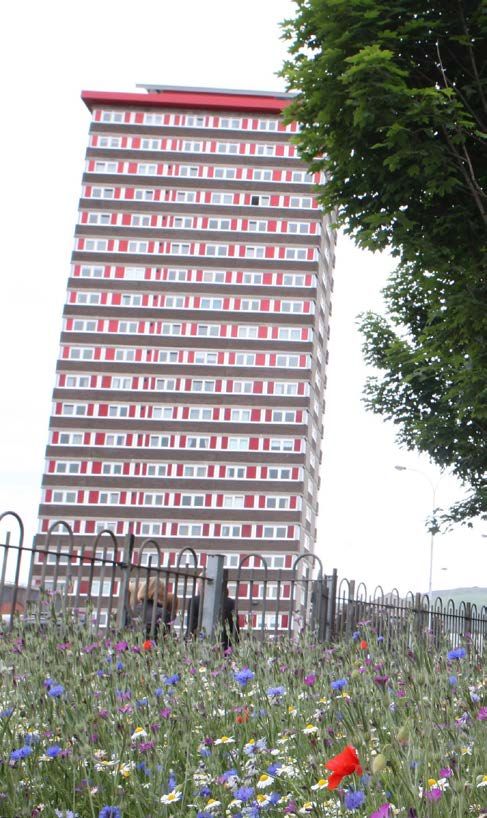
Housing Executive – Corporate Plan 2017/2018 – 2020/2021

Programme for Government (PfG) targets and a number of Departmental Priorities, along with
our own Key Performance Indicators.

Each year we will report on progress against the actions to assess if we are on track. At the end of
each of the People, Property, and Places sections there is a ‘How do we know we were successful’
table and we will use this to measure our progress. This will help to shape each year’s business
plan. It may be necessary to publish addendums to this plan to respond to any changes over the
next four years in, for example, the housing market or government policy.

We published the draft plan for consultation and we have taken account of many of the helpful
comments made by consultees in preparing the final Corporate Plan. We will report back on the
progress of the Plan.

                    Professor Peter Roberts            Clark Bailie
                    Interim Chair                      Chief Executive

                                                 5
Housing Executive – Corporate Plan 2017/2018 – 2020/2021

Overview

Delivering a range of housing services under one roof
Whilst the Housing Executive continues as a single statutory organisation, the work of Landlord
and Regional Services are classified in different ways. Regional Services is now classified as a
Non-Departmental Public Body (NDPB) and is funded almost entirely through government grant.
Landlord Services is classified as a Quasi-Public corporation and is almost entirely funded, on the
revenue account, through rental income. We have over 45 years’ experience in providing a wide
range of housing services throughout Northern Ireland, employing over 3,000 staff.

Landlord Services are the largest social landlord in the UK managing around 85,900 homes in
urban and rural areas throughout Northern Ireland. Many aspects of our performance are in the
top quartile as measured by Housemark. In addition, we manage a commercial property portfolio
of just over 400 units. Our main functions are tenancy and estate management; improving our
properties; Homelessness Services; income collection; involving and listening to our residents;
and our Community Safety, Cohesion, and Involvement Strategies.

Regional Services is the strategic enabling and delivery side of the business, providing services
ranging from assessing housing need, managing the Social Housing Development Programme
for new social homes with our Housing Association partners, Supporting People Services and
Private Sector Grants. Alongside this we undertake an on-going research programme to produce
a comprehensive body of housing market intelligence to help us identify and determine how best
to shape our services and the places where people want to live in Northern Ireland. In addition,
we are the Home Energy Conservation Authority for Northern Ireland. Regional Services work
also links closely with councils, statutory bodies, agencies, and the wider community, through
our statutory roles within Community Planning and Development Planning, which both aim to
improve the well-being of an area, enhance community cohesion and the quality of life for local
people.

We also have responsibility for administering a Housing Benefit service on behalf of the
Department for Communities (DfC), and we administer the Affordable Warmth and Boiler
Replacement schemes on behalf of DfC.

                                                        OUR VISION
                                    ”Everyone is able to live in an affordable and decent home,
                                     appropriate to their needs, in a safe and attractive place.”

    PEOPLE                                       PROPERTY                                       PLACES
    Homeless Services /                          Asset Management of NIHE stock /               Place Shaping / Community Planning /
    Landlord Services /                          Land Owner /                                   Land Assembly and Land Acquisition for
    Supporting People Programme /                Grants Service /                               social and affordable housing /
    Grants Service helping people                Energy Efficiency initiatives for              Land Asset management / Regeneration /
   stay in their homes /                         residential properties /                       Development / Communities (Building
   Travellers Service /                          New social and affordable homes /              Successful Communities & Together
   Housing Benefit Service /                     Housing Market Intelligence /                  Building United Communities) /
   Social Enterprise Initiative /                Housing Investment Plans /                     Community Safety /
  Digital Inclusion /                            Improved Property Standards /                  Cohesion & Involvement Strategy &
  Housing Benefit Services /                     HMO Regulation and Inspection /                Initiatives / Rural Renewal /
  Accessible Housing                                                                            Rural Proofing / Sustainability
  Register /

                                   Statutory Responsibilities / Housing Market Intelligence and Research /
                          Corporate Strategy and Planning / Home Energy Conservation Authority / Equality Duties /
                      Environmental policy and systems / Financial Services and Corporate Accounting / Communication /
                          Procurement / IT / Legal Services / Audit and Assurance /Business Review and Improvement

                                                                    6
Housing Executive – Corporate Plan 2017/2018 – 2020/2021

Context
Our Corporate Plan is set over four years to 2020/2021 which is aligned to the draft Programme
for Government timescales. A planning context helps us to direct our plans and programmes
where they are most needed. We continue to carry out equality screening/impact assessment and
rural proofing of our policies, consultation on our plans and strategies; and to develop policies
in ways which will further promote equality of opportunity and Good Relations for the people of
Northern Ireland.

We recognise that in setting out a plan for the medium term there are a number of uncertainties
which may affect the delivery of some of our planned outcomes and some of these are set out
below.

Welfare Reform has now been introduced in Northern Ireland and Universal Credit commenced
on a phased basis from September 2017. We know that this may mean, in some instances, that
people will make different housing choices based on affordability and we are working closely
with the Department for Communities to understand how this may affect the dynamics of the
housing market, such as changes in the size of accommodation required, in tenure choice, income
collection, and the need for, and design of, new social homes, so that we can plan for the future.

‘Brexit’ negotiations and legislation are underway to align with the 29th March 2019 exit date and
this brings a number of uncertainties for future planning, funding and the economy.

Despite all of the above uncertainty we will remain focussed on providing effective housing
services to the people of Northern Ireland while recognising that, for the public sector, there will
continue to be an emphasis on financial efficiencies. We will continue to examine how we carry
out our services to ensure value for money. While the delivery of elements of the four year plan
will be dependent on our levels of funding, income collection, and absence of an Assembly we
will look for innovative ways to deliver services and indeed we see this as an opportunity to use
our expertise, creating value for money services.

Some further details on funding our plans can be found on page 11 of this plan and in the
accompanying one year business plans.

Northern Ireland’s Housing Market
Trends are important indicators for planning future housing and service requirements.
The population of Northern Ireland is increasing according to the figures from the 2011 Census.
There are now around 1.81 million people, an increase of 125,600 (7.5%) on the last Census
results (2001). However, the demographics have been changing over time and although the
number of households grew from 628,400 to 703,300 the rate of growth slowed relative to
the overall population. Households have become smaller from an average of 2.65 persons to
an average of 2.54 persons and again this rate is slowing; there is an increase in the over 65s
representing 15% of the population while the under 16s declined and now represent 21% of the
population. The number of singles grew although again the rate has slowed and singles represent
28% of the population. It should be noted that there are geographical variations in trends.
Population projections indicate a growing trend in singles and two person households.

                                                  7
Housing Executive – Corporate Plan 2017/2018 – 2020/2021

Where and the type of tenure that people live in has changed over time as can be seen in the table
below. This table shows the tenure of occupied stock with vacant properties shown separately.
These vacancies can be in all tenures but were predominately in the Owner Occupied (60%) and
Private Rented sectors (35%). The table illustrates the increase in the Private Rented Sector, which
at 2016 now has a greater percentage of the market share than social housing. Details are shown
in table 1.

 Table 1: Northern Ireland’s dwelling stock (occupied and vacant) and tenure
 breakdown Source is the House Condition Survey 2016
 Stock                     2001                2006                2011                2016
 Total Stock               647,500            705,000             760,000             780,000

 Urban                     434,600            493,800             490,600             502,900
                            (67%)              (70%)               (65%)               (65%)
 Rural                     212,900            211,200             269,400             277,100
                            (33%)              (30%)               (36%)               (36%)

 Tenure                    2001                2006                2011                2016
 Owner Occupied            432,300            468,900             469,100             494,700
                            (67%)             (66.5%)             (61.7%)             (63.4%)
 Private Rented and        49,400              80,900             125,400             136,000
 others                    (7.6%)             (11.5%)             (16.5%)             (17.4%)
 Housing Executive         116,000             93,400              85,900              85,340
                           (17.9%)            (13.3%)             (11.3%)             (10.9%)
 Housing                   17,900              21,500              24,800             35,600
 Association               (2.8%)              (3.1%)              (3.3%)             (4.6%)
 Vacant                    31,900              40,300              54,700             28,500
                           (4.9%)              (5.7%)              (7.2%)             (3.7%)

The state of the economy, at regional, national and global level, is one of the key determinants in
any housing market. Developments in the economy influence local labour markets (and therefore
household purchasing power) as well as impacting on the financial system and the propensity
of banks and building societies to lend to potential home buyers and investors. The most recent
analysis by the Economic Policy Centre at The University of Ulster (summer 2017) noted Northern
Ireland’s economic performance has been more positive than many had anticipated, given the
wider context of change and uncertainty.

However, the University and other commentators observed that both the local and wider UK
economies rely heavily on consumer spending as a driver of economic growth. With average
earnings rising at a lower rate than inflation and many welfare benefits frozen, household
purchasing power looks likely to remain under pressure in the medium term. In addition, although
(claimant count) unemployment has fallen, there are indications of ‘underemployment’ (where
people work fewer hours than they would wish, or at a level below which they are qualified)
and the level of economic inactivity has increased. In a wider context of political uncertainty, the
indicators suggest that there will be challenges ahead for local households.

                                                 8
Housing Executive – Corporate Plan 2017/2018 – 2020/2021

Social Housing Need
The graph below shows the trend in the number of applicants registered on the waiting list and
the number deemed to be in Housing Stress, at a point in time, and actual annual allocations at
March 2017. While the number of people applying for housing is showing a decrease, the number
in Housing Stress continues to rise while the number of allocations is showing a decreasing
trend (Allocations are for both Housing Association and Housing Executive stock). The graph also
includes social housing new build starts.

A large number of social homes were, in the past, sold to sitting tenants but this has slowed in
recent years. Affordable housing has been affected firstly in relation to house price increases
in the boom period, and more recently as a result of the difficulty in securing a deposit and
mortgage.

                Social Housing W/List, Housing Stress, Allocations & Starts

     50,000
     45,000
     40,000
     35,000
     30,000
     25,000
     20,000
     15,000
     10,000
       5,000
          0 2000 2001 2002 2003 2004 2005 2006 2007 2008 2009 2010 2011 2012 2013 2014 2015 2016 2017

                                               Waiting List
                                               Housing Stress
                                               Allocations
                                               New Build Starts

The draft Programme for Government sets out actions to help to ‘turn the curve’ of applicants
in Housing Stress. These actions include increasing the number of new social and affordable
homes being built; bringing more empty homes back into use; ensuring that housing is good
quality; helping people to access affordable housing; meeting the needs of the most vulnerable,
and work to increase integration. A fundamental review of allocations is being undertaken by
the Department for Communities and consultation closed at the end of December 2017. Other
changes such as The Office for National Statistics (ONS) reclassification of Registered Social
Housing Providers (Sept 2016) as public bodies could have implications for the number of new
homes that can be built using public funds (as currently Housing Associations are able to lever
in some private finance); and on the compulsory right to buy scheme. The Department for
Communities currently has a derogation in place to allow Housing Associations to continue to
operate as before, until further consideration is given to the implications of reclassification.

                                                    9
Housing Executive – Corporate Plan 2017/2018 – 2020/2021

                                               We have statutory duties under the Housing (NI)
                                               Order 1981, planning legislation and regional
                                               planning policy to identify housing need. To
                                               fulfil this function, we carry out an annual
                                               Social Housing Need Assessment (HNA) and
                                               Housing Market Analysis to determine the
                                               level of additional accommodation required to
                                               meet affordable housing need, including social
                                               housing general needs as indicated through the
                                               number of applicants registered on the waiting
                                               list. The continual monitoring of housing need
                                               is an important function as it allows us to plan
                                               and manage actions and programmes to meet
                                               affordable housing needs. Our HNA will not only
                                               inform the Programme for Government objective
                                               ‘Turning the Curve’ but will provide a clear view of
                                               the progress in meeting housing objectives.

                                               Further details about the Programme for
                                               Government can be found in the delivery plan
                                               under indicators 8 and 48 which in turn feed into
                                               the outcomes ‘8 – We care for others and we help
those in need’ and ‘13 – We connect people and opportunities through our infrastructure’.
The Housing Executive is a named delivery partner tasked to help to deliver areas within our
remit. These actions along with all of our high level key performance indicators (KPIs) are outlined
in the People, Property and Places sections of this plan and details for year one 2017/18 can be
found in the accompanying one year business plans.

                                                10
Housing Executive – Corporate Plan 2017/2018 – 2020/2021
Funding the Plans
Whilst we remain a single organisation, for budgetary and accounting reclassification purposes
there is now a dual reporting function where Landlord Services and Regional Services are
regarded as separate business entities.
Landlord Services is almost entirely funded, on the revenue account, through rental income and is
classified as a quasi-Public Corporation and receives only limited funding from government. Thus
there must be an even greater focus on ensuring effective collection and management of rental
income as this determines our ability to deliver services to tenants.
Investing in our stock and services
It is extremely important that funding is available for investment in our stock. In 2014/15 Savills
PLC carried out a stock condition survey of our dwellings. The survey indicated that the stock
meets the Fitness Standard, with 99.23% meeting the Decent Homes Standard.
However, it found significant backlogs in some work and indicated that £6.7 billion (at 2015
prices), would need to be invested over the next 30 years in our housing stock (and other built
assets) in order to achieve and maintain a new investment standard - the Commonly Adopted
Standard, that reflects modern social housing practice. The survey’s findings and Savills’
associated work on asset performance were used to prepare a new Asset Management Strategy
that was approved by the then Department for Social Development Minister in February 2016.
However, this strategy - in particular, the achievement and maintenance of the Commonly
Adopted Standard - was predicated on future funding for stock investment being significantly
improved via the Social Housing Reform Programme. Unfortunately, with continued uncertainty
over the latter and no rent increase since 2015/16, our funding position has declined and we are
currently projecting a shortfall of around £1 billion against stock investment needs over the 10
year period from 2018/19. At the same time the projected investment requirement of £6.7 billion
in 2015 has recently been updated to £7.1 billion (at 2018 prices). We are therefore, continuing
to project a shortfall of around £1 billion against stock investment needs over the 10 year period
from 2018/19.
Our financial modelling, carried out on the basis of a sustained rent freeze, indicates a scenario
where the projected funding availability would allow us to maintain 44,000 properties – just over
half of our current portfolio – to the Commonly Adopted Standard over the 10 year period of our
new Investment Plan. This is applying the principles of the Asset Management Strategy (approved
by the Minister in February 2016) which would direct these limited funds to the best performing
properties in the Housing Executive’s stock. In such a scenario no investment other than essential
health and safety works and response maintenance would be directed at the rest of the portfolio.
Such disinvestment would start in the worst performing stock, including large estates of non-
traditional construction, many of which are very popular. After a period of time, we would face the
difficult decision of which properties we should take out of use as they would not be considered
suitable for letting at the cessation of tenancies, which will have an effect on those on the waiting
list in Housing Stress waiting to be housed.
As a consequence of the above, we have reviewed our Asset Management Strategy and the
Department for Communities has approved a revised approach to investing in our stock over the
next three years in order to ensure that our investment plan is directed at optimising the level of
lettable stock available to help address rising housing need. However, this is essentially a short
term measure and the imperative remains to bring forward a long term solution to funding the
significant investment needs of our stock. The maintenance of our stock is vital to good housing
management and sustaining vibrant communities, and is in keeping with PfG targets and
Departmental priorities, and the implementation of strategies such as tenant engagement.
11Housing Executive – Corporate Plan 2017/2018 – 2020/2021
The revenue generated from rents not only supports the physical maintenance of our stock,
but is also vital to maintaining vibrant communities. Good housing management requires
investment in our communities, in keeping with PfG targets and Departmental priorities, and the
implementation of strategies such as tenant engagement. There is already a substantial body of
evidence which demonstrates the extent to which Housing Executive rents have fallen behind
both Northern Ireland (i.e. housing associations) and UK benchmarks.
Tower Blocks
Over the last few years we have been considering
the future of our tower blocks. The blocks were
constructed in the 1950s and 1960s and are,
therefore, now approaching an age at which a
considerable amount of work – an estimated
investment of over £300 million - would be needed
to keep and maintain them over the next 30 years.
This is a very significant financial commitment
given the significant shortfall we are projecting in
the funding required for investment in all of our
stock. In addition, in some locations the blocks are
no longer meeting the communities’ housing needs
and there are high levels of turnover and under-
occupation.
We believe, therefore, that this money would be
better spent on replacing the tower blocks with
new accommodation that would better meet the
needs of residents, applicants and neighbourhoods.
Consequently, we are proposing that over a period
of time the Housing Executive will no longer use
tower blocks for housing, and we have developed
a draft long term action plan setting out how we
would intend to do this. At present we would
propose to address all of our blocks in three
phases: Phase 1 – up to 5 years; Phase 2 – between
6 and 10 years; and Phase 3 – over 10 years. These
timescales are determined by the opportunities that
are or will be available to re-house residents and
clear the blocks.
We have commenced a detailed consultation exercise on our proposals with residents, owners,
community representatives and elected representatives, and once we have completed this
exercise we will prepare a final action plan for approval.
When looking at improving our stock we think that it is essential that consideration is given as to
how financial support can be provided to private home owners in Housing Executive estates to
allow stock improvement programmes to be implemented in a reasonable and efficient way.
While our principal focus over the short to medium term will be to ensure that our maintenance
programmes are delivered, we believe there is a persuasive and attractive proposition to include
a new build/re-provision component within our broader investment programme. This would help
to address any provisioning requirements which may emerge from strategic option appraisals
for some locations, and complements and supplements the Social Housing Development
Programme. We will bring forward proposals for two pilot sites based on modern methods of
construction.
12Housing Executive – Corporate Plan 2017/2018 – 2020/2021
We have built up a level of expertise in Landlord Services which could be utilised by others.
Customers and other housing providers could avail of our services, offering better value for
money. While we are unable to take this forward at the moment, we feel that there is a business
innovation opportunity which could generate an income stream and be re-invested into existing
housing services. With an expanded role we could enhance a range of services for example,
the authority to set up joint ventures, provide furnished tenancies, charge for services such as
maintenance services and housing management services to housing associations and private
landlords. We will explore with our departmental colleagues how it might be possible to utilise
these services in the future.
In contrast, Regional Services is now classified as a Non Departmental Public Body (NDPB) and
is funded almost entirely through government grant. This means that it is subject to the more
stringent budgetary and reporting controls placed on a Non Departmental Public Body within the
central government funding structure, applied to both the Departmental Expenditure Limit (DEL)
and Annually Managed Expenditure (AME). Further budget reductions will have implications for
the delivery of some of our services. The draft PfG includes a delivery target for new social homes
to 2021 however, this and some other targets will be subject to budget allocation.
There are ways that we could improve services delivered through the regional side of the
business to the public such as a more flexible grant system which would create a single platform
for grant administration improving customer service and reducing administrative costs. The aim
is to ensure that grants programmes can be easily delivered, allowing us to increase the volume
to reflect the needs of an ageing population. There are currently some obstacles to achieving this
alongside significant changes to the current technology. However, our aim is to deliver better
public services and we will work with others to investigate ways to improve services for our
customers. It also has the potential to allow efficient implementation of improvements to the full
stock in our estates (as mentioned for Housing Executive stock- see previous comment under
Landlord improvements).
To help us to deliver our services for future years we have developed a medium to long term
efficiency plan. This includes looking at our portfolio of accommodation to ensure that where
efficiencies can be made, they are. Work continues on digital services and engagement, a medium
term programme, so that our customers will be able to access services on-line at a time that is
suitable for them.
Social Housing Reform Programme
In tandem with our efforts to optimise investment in the context of limited income, as set out
above, we will continue to support the Social Housing Reform Programme’s work to provide a
sustainable future for its portfolio of social housing.
13Housing Executive – Corporate Plan 2017/2018 – 2020/2021
PEOPLE
14Housing Executive – Corporate Plan 2017/2018 – 2020/2021
Our People purpose statement is:
“To provide housing solutions, services and support to the
people of Northern Ireland.”
People have different housing requirements and are looking for suitable housing solutions to
meet their needs. These can range from the need for social and affordable housing options to
supported living accommodation, or ways in which they can remain in their own home when
a situation presents that a home needs to be adapted. Others find themselves in challenging
or potentially vulnerable circumstances such as facing homelessness and we offer a range of
housing services to help deal with the differing housing needs of our customers.
It is important to look at the changing needs of society when planning our future services and
some of these drivers are illustrated below. With an ageing population, it is important to look at
the services and housing provision that will need to be provided for the future. We will investigate
the service needs for the future needs of our customers and bring forward an Older People’s
Strategy.
We are a named Children’s Authority under the Children’s Services Co-operation Act Northern
Ireland 2015. The Children’s Services Co-operation Act was introduced in December 2015 to
improve co-operation amongst Departments and a wide range of public bodies as they deliver
services aimed at improving the well-being of children and young people.
The number of people in
Housing Stress on the waiting
list for social housing has been
increasing, including those
deemed to be homeless.
Demographic changes are
important for future service
delivery. Population predictions
suggest that in N.I. there is
People want to live
an ageing population; smaller
independently in their
household sizes, and an
communities.
increase in single households.
Welfare Reform has been
£
introduced in Northern We need to do more with
Ireland and Universal Credit less as efficiency measures
commenced on a phased basis are applied to government
in the latter part of 2017. This agencies. Landlord Services
may result in customers making “want to make every pound of
different housing choices. tenant rent count”
15Housing Executive – Corporate Plan 2017/2018 – 2020/2021
Our services under our People theme include the following:
• Maintain a ‘first quartile’ Landlord Service – We own a stock of around 85,900 properties and
a commercial property portfolio of just over 400 units. We want to improve our services and
retain our position of being a first quartile landlord. It is important that we manage scarce
resources effectively to ensure value for money to provide better services for our customers.
Our ‘Journey to Excellence’ work to redesign our customer facing services commenced full
roll-in during the 2017/2018 business year;
• Supporting People (SP) funds housing related support services to a wide range of clients,
many of whom have significant vulnerabilities. The SP budget is invested to support the work
of statutory, voluntary and community organisations in providing the SP Programme. This
work allows people to avail of supported living, helps people to remain in their own homes
through the provision of floating support and includes support for Traveller accommodation. A
review of Supporting People was carried out by the then Department for Social Development
(now the Department for Communities) in November 2015. The report contained four
objectives;
a) provide an overview of existing provision and current expenditure broken down by category
of service, and an assessment of the extent to which needs are being adequately met;
b) evaluate the Supporting People policy and programme and the extent to which it has met its
core aims in an economic, efficient and effective way since its launch in 2003;
c) consider whether an adequate strategic, legislative and administrative framework is in place
for the efficient and effective delivery of the Supporting People policy and programme in
future;
d) and where appropriate, make recommendations to improve the efficiency and effectiveness
of the service.
The report contained 13 recommendations, many of which are the responsibility of the Housing
Executive to administer. Details can be found on the Department for Communities’ website.
• Homelessness – During 2017 we published our new Homelessness Strategy ‘Ending
Homelessness together’ to cover the period 2017 -2022. The strategy supports a multi-agency
approach to tackling homelessness and recognises the importance of local service delivery
and partnership working. We will carry out an annual assessment to track the progress of the
Homelessness Strategy Action Plan;
• Travellers
We have established a Director-led interdivisional committee to address Traveller issues,
including the recommendations made by the Equality Commission in the Statement on
Key Inequalities in Housing and by the Human Rights Commissioner following the recent
investigation into Traveller Accommodation.
• Private Sector Grants – We provide a Grants service for the Private Sector however, we are
currently only accepting applications for mandatory Disabled Facilities and Repair Grants.
Discretionary renovation, Replacement and Home Repair Assistance grants are only available
in exceptional circumstances;
• Welfare Reform changes and our Housing Benefit Service - We provide a service for claimants
from the public and private sectors. Changes are taking place and Welfare Reform has been
introduced in Northern Ireland. Universal Credit has been introduced, on a phased basis. For
working age claimants an element of Housing Benefit will be paid through Universal Credit,
which commenced in September 2017. This will have implications for our customers and
16Housing Executive – Corporate Plan 2017/2018 – 2020/2021
we are doing all that we can to give advice to help them with the transition. The change to
Universal Credit means that we will not need the same level of staff to provide these services
and we have planned for this reduction;
• Helping people to sustain a tenancy. Our Homelessness strategy aims to prevent
homelessness and to support people to find suitable accommodation and support solutions
as quickly as possible. We want to ensure that the support needs of customers are clearly
identified at presentation stage and taken into consideration in the analysis of the range of
appropriate solutions for the client resulting in a more sustainable tenancy from the outset.
This will be part of our Housing Options service that will be provided once the roll-in of our
new front line services are in place;
• Research and customer feedback - Providing services to meet our customers’ needs is
important to us and we carry out research on an annual basis including our Continuous Tenant
Omnibus Survey and other targeted housing service research to help shape our services.
Details can be found on our website. We listen to our customers and our tenant scrutiny panels
have a say in how our services are delivered and shaped around their needs;
• The development of an Accessible Housing Register (AHR). Having information about
accessible housing is a key enabler for people with a disability as it promotes independent
living and social inclusion.
Our key outcomes under the People, Property and Places themes are shown in the tables at the
end of each theme.
17Housing Executive – Corporate Plan 2017/2018 – 2020/2021
People - Four year high level Corporate Business Plan
High level Action Year 1 Year 2 Year 3 Year 4 Lead
2017/2018 2018/2019 2019/2020 2020/2021 Department
Outcome 1 - Helping people find housing support and solutions
Develop a new homelessness strategy Deliver year Deliver year Deliver year Deliver year Housing
2017 -2022 with a core focus on one of the two of the three of the four of the Services
prevention and sustainment as well as Homelessness Homelessness Homelessness Homelessness
understanding and addressing chronic Action Plan; Action Plan; Action Plan; Action Plan;
homelessness.
Carry out Develop and Continue to
research implement a implement the
and analysis plan to reduce plan to reduce
on a set of the number the number of
Homelessness of repeat repeat homeless
presenters
Statistics to homeless
where NIHE
inform future presenters,
can have an
action and where NIHE influence.
meaningful can have an
targets. influence. Report on the
number of
Our Housing A target will be repeat homeless
Options service set at the end presenters at
will capture of year 2, based the end of year
information on analysis, for 4 against the
to help to years 3 and 4. established
understand baseline and
the reasons analyse the
for repeat result.
Homeless
presenters. To reduce
This will be the average
baselined. length of time
in temporary
accom from
40 weeks to 37
weeks.
18Housing Executive – Corporate Plan 2017/2018 – 2020/2021
People - Four year high level Corporate Business Plan
High level Action Year 1 Year 2 Year 3 Year 4 Lead
2017/2018 2018/2019 2019/2020 2020/2021 Department
Outcome 1 - Helping people find housing support and solutions
Deliver the Supporting People Maintain the Maintain/ Increase the The % of Strategic
Programme proportion of increase the % of Floating Floating Partnerships
SP Programme proportion of Support to Support
funding SP funding agreed target. funding
delivered delivered available
through through to assist
Floating Floating householders
Support Support to 15% through the
(currently15%). or £10m. Supporting
People
By Mar 2019 Programme will
to have set the have increased
target for years since Year 1.
3 and 4 and by
2020 to have
increased the
% of Floating
Support.
Streamline the adaptations and disabled Complete Grants Service Grants Service Grants Service Private Sector
grants processes to reduce waiting times a review of Establish a Deliver service Reduce length Grants
for housing adaptations and increase the our Landlord baseline for improvements. of time taken
provision of accessible homes. and Regional future service to complete
disabled delivery adaptations
adaptation Improvements - funded by
processes. set process time disabled
targets for years facilities grant.
2 and 3 once
baseline and
direction has
been agreed.
19Housing Executive – Corporate Plan 2017/2018 – 2020/2021
People - Four year high level Corporate Business Plan
High level Action Year 1 Year 2 Year 3 Year 4 Lead
2017/2018 2018/2019 2019/2020 2020/2021 Department
Outcome 1 - Helping people find housing support and solutions
Streamline the adaptations and Complete a NIHE stock – NIHE stock – NIHE stock – Asset
disabled grants processes to reduce review of our Meet the Meet the By 31 March Management
waiting times for housing adaptations Landlord and agreed target agreed target 2021 to reduce
and increase the provision of accessible Regional disabled to improve to improve length of
homes. adaptation processing processing time taken to
processes. times. times. complete Major
Adaptation year
NIHE stock – on year from
Set a baseline for the baseline
the length of time (set at end of
taken to complete year 1) and
major adaptations to have all
to NIHE stock Adaptations
and agree completed
improvement within 52 weeks
targets for years or less.
2 & 3 to meet the
year 4 target.
Sustaining Tenancies Set the baseline Report the Report the Analyse the Housing
and report on number of number of reasons why Services
the number tenancies tenancies tenancies
of tenancies sustained for sustained for ended for
sustained over a 1 year or more 1 year or more housing market
12 month period. and analyse and analyse insight.
the reasons the reasons
Carry out a why tenancies why tenancies
benchmarking ended as part of ended.
exercise to understanding Set future
determine a the housing target based on
benchmark for market. Set housing market
this work. future target analysis.
based on
housing market
analysis.
20Housing Executive – Corporate Plan 2017/2018 – 2020/2021
People - Four year high level Corporate Business Plan
High level Action Year 1 Year 2 Year 3 Year 4 Lead
2017/2018 2018/2019 2019/2020 2020/2021 Department
Outcome 1 - Helping people find housing support and solutions
Social Housing Waiting List Determine a Analyse waiting By 31 March Regional
baseline for list trends for 2021 to reduce & Housing
length of time future business the average Services
Applicants in planning waiting times
Housing Stress purposes. for applicants
are on the in HS and
waiting list.
homeless
FDAs year on
year from the
baseline.
Housing Support and Solutions Service Undertake an Housing
evaluation of Services
the housing
solutions and
support service.
Outcome 4 - Delivering quality public services
Provide an efficient and effective social Provide a Maintain a Maintain a To remain a Housing
Landlord Service. N.B. Benchmarks ‘First Quartile ‘First Quartile ‘First Quartile top quartile Services
change each year based on annual Landlord Landlord Landlord performing
results. Service for Service for Service for social landlord
our tenants, our tenants, our tenants, against the
benchmarked benchmarked benchmarked Housemark
against the
against the against the standards for
Housemark
standard. Housemark Housemark year 4.
standards for standards for
Year 2. Year 3.
21Housing Executive – Corporate Plan 2017/2018 – 2020/2021
People - Four year high level Corporate Business Plan
High level Action Year 1 Year 2 Year 3 Year 4 Lead
2017/2018 2018/2019 2019/2020 2020/2021 Department
Outcome 4 - Delivering quality public services
Ensure our financial resources are Manage spend Manage spend Manage spend Manage spend All Divisions
effectively managed. against budgets. against budgets. against budgets. against budgets.
We will explore Landlord
with our and Regional
departmental Services
colleagues how
it might be
possible to utilise
our services, in
the future, in
a commercial
manner.
Review our Rent Apply rent Apply rent Housing
Scheme. increases. increases. Services
Deliver an efficient Housing Benefit Provide Housing Transition to Transition to Transition to Finance
Service and manage the transition to Benefit services Universal Credit. Universal Credit. Universal Credit. Division
Universal Credit to project timescales. in line with DfC
key targets. UC Provide Housing Provide Housing Provide Housing
commenced Benefit services Benefit services benefit services
on a phased in line with DfC in line with DfC in line with DfC
roll in from the key timescale key timescale key timescale
September 2017. targets. targets. targets.
Carry out Research to facilitate Carry out Carry out Carry out Carry out Research
programmes and plans. Details on our Annual Annual Research Annual Research Annual Research Department
latest research can be found at Research Programme Programme Programme
Programme and publish the and publish the and publish the
www.nihe.gov.uk/corporate/housing_ incl. Grants results. results. results.
research.htm and Energy
Efficiency
customer
satisfaction.
22Housing Executive – Corporate Plan 2017/2018 – 2020/2021
People - Four year high level Corporate Business Plan
High level Action Year 1 Year 2 Year 3 Year 4 Lead
2017/2018 2018/2019 2019/2020 2020/2021 Department
Outcome 4 - Delivering quality public services
Provide opportunities for customers to Digital Define targets Work to meet Work to meet Corporate/
engage with us in a number of ways. Engagement to increase defined target defined target Cross Divisional
– increase the the number of to increase to increase
number of digital services the number of the number of
services that that we offer to digital services digital services
can be accessed our customers that we offer. that we offer.
digitally – so that they can
Baseline self-serve at a
and help our time that suits
customers them.
to become
digitally
included.
Publish our Deliver year 2 Deliver year 3 Get as many of
Customer of our Customer of our Customer our customers
Strategy 2017 Strategy. Strategy. as possible
-2020. online and
digitally
included by
2020.
IT Strategy By the end of Deliver year Deliver year IT Department
September 2 of the IT 3 of the IT
2018 to have Strategy. Strategy.
substantially
implemented IT
Futures.
23Housing Executive – Corporate Plan 2017/2018 – 2020/2021
People Outcomes How will we know we were successful over Related
the period of the Plan Draft PfG
Outcome
1. Helping people find housing • Results from the implementation of the new 7, 8, and 13
support and solutions Homelessness Strategy;
• Housing Options service including
Homelessness prevention results;
• Number who were helped to remain in
their own homes through adaptations and
through Floating Support funding;
• Improved service delivery times for
adaptations;
• Number of those helped through Supporting
People;
• Results from delivering our Tenancy 8 and 13
Sustainment Strategy measured against the
baseline.
2. Delivering quality public • Remaining a top quartile Landlord as 11
services benchmarked against Housemark on:
(a) Rent collected from current and former
tenants;
b) Total tenants’ arrears as a percentage of
rent due;
(c) Percentage of properties available for
letting but vacant at year-end;
(d)Rent loss due to empty properties as a
percentage of rent due;
(e) Number of days taken to relet empty
properties (including time spent in works);
• We managed our resources effectively;
• Maintaining our Housing Benefit Service
and successfully managing the transition to
Universal Credit without loss of service;
• Our customers transact with us in different
ways including through digital self-service
options evidenced through the number of
transactions;
• Results from our various reviews of service
delivery; customer satisfaction data; research
results and through external accreditations
for service delivery.
24Housing Executive – Corporate Plan 2017/2018 – 2020/2021
PROPERTY
25Housing Executive – Corporate Plan 2017/2018 – 2020/2021
Our Property purpose statement is:
“To ensure everyone has access to a quality home which is
safe, affordable, warm and appropriate to their needs.”
As previously stated, we have a wide remit of statutory duties including Identifying housing needs
and developing plans to meet needs; identifying and reporting on housing conditions; and to
consult with District Councils on our plans and programmes in their areas. The House Condition
Report 2016 is available on our website.
Delivering a new build programme helps to address social housing need and each year we
carry out housing need assessments and plan the new build programme which is delivered by
Housing Associations. These new homes can include traditional two and three bedroom homes,
apartments (including a percentage of one bedroom), supported living accommodation or homes
for wheelchair users, based on our assessments.
Homes falling into disrepair or deemed to be unfit require interventions and we have a grants
scheme, to help with this work. However, we are currently only accepting applications for
mandatory Disabled Facilities and Repair grants. Discretionary Renovation, Replacement and
Home Repair Assistance grants are only available in exceptional circumstances due to a reduction
in grants funding.
We are a landlord providing over 85,900 social homes for rent across Northern Ireland which is
provided in a variety of design, from the traditional three bedroom house through to multi storey
apartments and labourers’ cottages. To make sure that our homes are suitable for letting and to
maximise the use of the stock to meet Housing Stress, we have developed a ten year investment
strategy to continue to provide good quality homes to the Decent Homes Standard. However,
as discussed earlier in the Plan we have reviewed our Asset Management Strategy and the
Department for Communities has approved a revised approach to investing in our stock over the
next three years in order to ensure that our investment plan is directed at optimising the level of
lettable stock available to help address rising housing need. More details can be found on page
11.
The Housing Executive is the Home Energy Conservation Authority for Northern Ireland and in
terms of our role, considerable progress has been made. Heating and insulation programmes
have continued in Housing Executive stock and a major solar photovoltaic (PV) project has been
completed.
For private sector stock, we implement DfC’s Affordable Warmth Programme and continue to
manage the Boiler Replacement Scheme. In addition, our Research Department is carrying out a
cross tenure House Condition Survey, which will inform policy on housing generally and energy
efficiency specifically over the next few years.
26Housing Executive – Corporate Plan 2017/2018 – 2020/2021
99.23% of our homes achieved
the Decent Homes Standard
(Savills Stock Survey 2015).
Demographic changes are
important for future planning
for new homes. Population
predictions suggest that in N.I.
there is an ageing population,
smaller household sizes, and an
increase in single households.
Tenure changes
Tenure choice has changed since 2001 and trends are important for future planning.
Owner occupied is still the largest tenure (63.4%) but the Private Rented sector (17.4%) has
overtaken social housing (15.5%) according to the House Condition Survey 2016 for occupied
homes. Affordability was an issue with increasing house prices but is now more of an issue
in relation to obtaining a mortgage and saving for a suitable deposit. There are also people in
negative equity.
Home Energy Conservation Authority (HECA):
Fuel Poverty – In 2011 42% of households in NI were
recorded as fuel poor but latest results show this has
improved with 22% of households recorded in 2016.
A fuel poor household is defined when 10% of its income
is spent on all fuel to heat its home to an adequate
standard of warmth. (HCS 2011)
Changes to benefits under
Universal Credit may change
Fuel poverty under the 10% definition tenure choice and the size
of home that our customers
require in the future.
42%
20
22%
percentage
294,000 dwellings point 160,000 dwellings
decrease
(2011) (2016)
27Housing Executive – Corporate Plan 2017/2018 – 2020/2021
Our services under our Property theme include the following:
• We carry out housing need assessments and develop a programme to deliver new social
homes in areas of social housing need. Our Land and Regeneration Department undertake
an assessment of our land holdings each year and surplus land is made available to help to
deliver new social homes, or if surplus, sold for affordable or private sector homes;
• Our Grants Department also administers the Mandatory Repair Grants which help to alleviate
unfitness due to disrepair in the Private Sector. Discretionary Renovation, Replacement and
Home Repair Assistance grants are only available in exceptional circumstances due to a
reduction in grant funding. Our Grants Department also carry out registrations and inspections
of Houses in Multiple Occupation (HMOs) to ensure compliance with the HMO Standards
however, this function is to be transferred to Councils during 2019;
• We have developed an investment plan to maintain the Housing Executive’s housing stock and
this includes examining the long term viability of some of our stock. Currently there is a small
scale voluntary stock transfer programme in place to transfer around 2,000 homes to Housing
Associations, subject to tenant vote, in order for investment to be made in these homes;
• Programmes to deliver planned maintenance to our stock focussing on providing new kitchens
and bathrooms; rewiring of properties; new doors and windows; new heating installations and
a programme of cyclical maintenance such as repairs and re- painting;
• New response maintenance contracts were awarded in 2016 and new ways of working are
being embedded. We carry out response maintenance to timescales based on the priority
of the work required. We also carry out cyclical health and safety compliance work such
as ensuring every occupied home has a valid gas certificate as a result of an annual gas
inspection;
• We are investigating modern methods of construction and have plans to develop two pilot
schemes for new social housing as part of redeveloping our estates;
• Fuel poverty is a big issue in Northern Ireland and we have programmes to make homes
in both the public and private sectors more energy efficient. Our energy efficiency advice
services, in partnership with stakeholders, complement this work including a network of oil
buying clubs, bringing the energy conservation message to schools, and advising tenants how
best to conserve energy usage.
28Housing Executive – Corporate Plan 2017/2018 – 2020/2021
Property - Four year high level Corporate Business Plan
High level Action Year 1 Year 2 Year 3 Year 4 Lead
2017/2018 2018/2019 2019/2020 2020/2021 Department
Outcome 2 - Delivering Better Homes
Maintaining our stock NIHE stock - Complete Deliver year 1 of our Deliver year 2 of Deliver year 3 Asset
to the Decent Homes all projects in the Investment Plan. Investment Plan. Investment Plan. Management
Standard through Interim Investment
our Planned, Cyclical, Plan. Procurement of new 60,000 NIHE
and Response Planned Maintenance homes received
Maintenance NIHE stock - Deliver contracts to be major elemental
Programme our Planned awarded by 30/04/18 improvements
Maintenance and implementation by 31 March
Programme. to have started by 2021(subject to
September 2018. budget).
Small Scale Voluntary To have commenced Deliver the remainder NIHE will monitor Asset
Stock Transfer Public consultation in of the stock transfer investment plans Management
Programme. Ballee with a view to programme by March as part of the
carrying out the tenant 2019 subject to tenant transfer of 2,000
*Outline Business vote in 2018/19. vote and Departmental social homes by
Cases consent. 31 March 2021.
Have transfer briefs
prepared for further Carry out tenant vote
four estates pending for Ballee estate.
DfC approval of
*OBCs.
Deliver the affordable Deliver the affordable Report the
Energy conservation Warmth Scheme; Warmth Scheme; increase in SAP Private Sector
rating as a result Grants
Develop a method for Increase energy of interventions,
estimating SAP ratings efficiency in the home - over the period of
in the Private Sector. Using information the Plan.
from the SAP
methodology targets
are to be set for years
2, 3 and 4.
29You can also read


