Centennial Neighbourhood Housing Plan - 2014-2019 Centennial Community Improvement Association - Social Planning Council of ...
←
→
Page content transcription
If your browser does not render page correctly, please read the page content below

Centennial Neighbourhood
Housing Plan

                               2014-2019
                    Centennial Community
                  Improvement Association

                 Centennial Neighbourhood Housing Plan      1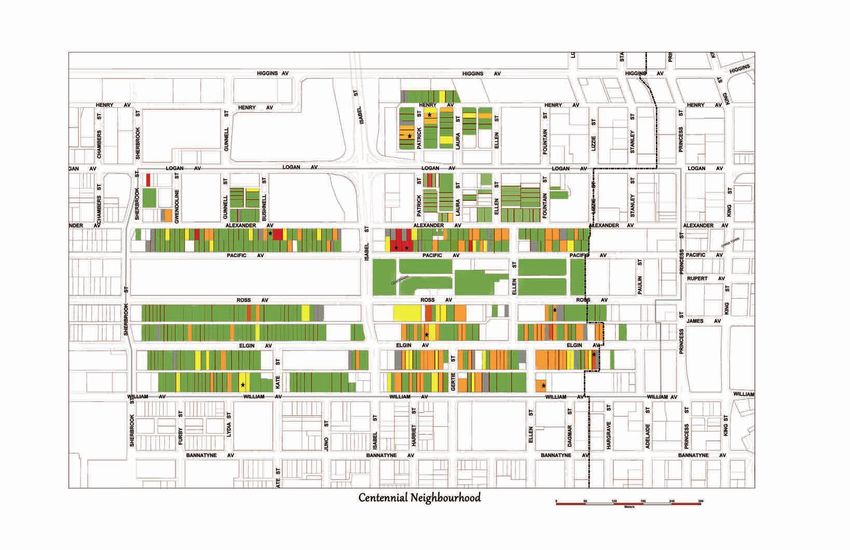
The Centennial Neighbourhood Housing Plan

The Centennial Neighbourhood Housing Plan was funded by the         For more information, please contact:
City of Winnipeg. Research, consultation, and writing of the plan
was contracted to the Social Planning Council of Winnipeg by        Rosa Cerda, Housing Coordinator
the Centennial Community Improvement Association. The City of       Centennial Community Improvement Association
Winnipeg also provided a donation of leisure centre passes and      427 Alexander Avenue, Winnipeg MB
mapping services.                                                   204-806-5939
                                                                    centennial.winnipeg@gmail.com
Many individuals and organizations contributed their time,
knowledge and resources to the development of the housing           Christina Maes Nino, Program and Policy Analyst
plan. Thank you to everyone who participated!                       Social Planning Council of Winnipeg
                                                                    300-207 Donald Street, Winnipeg MB
                                                                    204-943-2561
                                                                    cmaes@spcw.mb.ca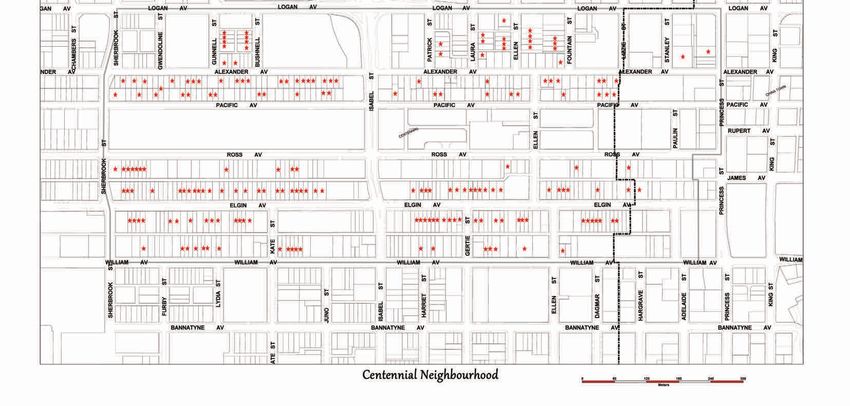
Contents
1. Introduction                                             p.4
       a. Centennial Neighbourhood Housing Plan
       b. The Housing Plan Team
2. Planning Process                                         p.8
3. Context: A Plan to Implement other Plans                 p.9
       a. OurWinnipeg and Complete Communities
       b. West Alexander and Centennial Neighbourhood Plan
       c. HomeWorks! Housing Strategy and Policy Framework
       d. Centennial Neighbourhood Housing Plan (2005-2009)
4. Historic Housing Development                             p.11
5. Centennial Today                                         p.14
       a. Demographics and Neighbourhood Statistics
       b. Home Ownership
       c. Exterior Housing Condition
       d. Housing Stakeholders
       e. Centennial: The Good, The Bad
6. Neighbourhood Issues                                     p.20
       a. Grocery Stores
       b. Community Safety
       c. Housing Repairs
       d. Housing Programs
7. Vision for the Neighbourhood                             p.23
8. Goals and Initiatives                                    p.24
9. Summary                                                  p.28
10. Want to Know More?                                      p.29

                                                                  Want to Know More?
                                                            This symbol in the document shows that there is more
                                                            information, including references, definitions, or links, in the
                                                            Want to Know More section at the back of the plan
1. Introduction
                                               a. Centennial Neighbourhood Housing Plan
                                               A neighbourhood housing plan is a way for residents to come
                                               together to create a vision for housing in their neighbourhood,
                                               then agree on the goals and action steps to move towards
                                               the vision. The variety of information collected for the plan
                                               includes:
                                               • an exterior housing condition assessment
                                               • available demographic information
                                               • analysis of existing plans and policies
                                               • description of the housing resources available in Centennial
                                               • research and consultation that identified residents’
                                               experiences and needs; and
                                               • housing stakeholders’ roles in the community and ways they
                                               will use the plan
                                               Goals in the plan have been agreed upon by a range of
                                               residents and housing stakeholders; they do not belong to any
                                               one agency. Therefore, housing stakeholders can use the plan
                                               in different ways.
                                               The City of Winnipeg Housing Development Division uses the
                                               housing plan when they decide what funding and programs are
                                               needed to improve or create more housing in Centennial. For
                                               example, if the division is asked to provide land or another
                                               incentive for housing development in Centennial, they will look
                                               to the housing plan for resident support before making their
                                               decision.
                                               This neighbourhood housing plan also directs the Centennial
                                               Community Improvement Association (CCIA) on the work they
                                               will do related to housing in the next five years.
                                                        The plan directs the Centennial Community
                                                      Improvement Association on the housing work
4      Centennial Neighbourhood Housing Plan               they will do over the next five years
b. Housing Plan Team
The CCIA was funded by the City of Winnipeg to develop the Centennial Neighbourhood Housing Plan. After asking for proposals, the
CCIA engaged The Social Planning Council of Winnipeg (SPCW) to coordinate the development of the plan. The SPCW put together a
team of individuals who have the range of skill and experience in community development and planning. Most importantly, a number of
team members had connections to the Centennial community and its residents.

Mark Courtney
I was thrilled and honoured to participate in the production of the
Centennial Neighbourhood Housing Plan in 2013.  As a University        Alana Ring-Woodard
of Manitoba social work student, the production of this plan proved
an extraordinary, hands-on learning experience.   I was part of a      I am an outreach worker for the Winnipeg Rental Network (WRN)
team that captured survey responses during community events            and work out of the North End Community Renewal Corporation
and traveled throughout Centennial administering a comprehensive       (NECRC) office. The WRN is a non-profit initiative providing a web-
door-to-door survey.  When the surveying process was complete, I       based database that makes it easier for people to find affordable
coded and analyzed the survey data and presented our findings in       rental housing.
a community forum and stakeholder meeting.
                                                                       I worked with BridgmanCollaborative Architecture as a Community
While the neighbourhood has a variety of challenges, residents of      Consultant to complete the William Whyte and Dufferin housing
Centennial are truly resilient and optimistic.   Survey respondents    plans. For this plan, I was hired by the SPCW  to conduct and
indicate that Centennial is a great place for families.   It is a      collect door-to-door survey data, co-facilitate housing consultations,
community where neighbours generally know and help each other.         provide landlord data, and edit drafts for the Centennial housing
It is a neighbourhood that recognizes values and celebrates cultural   plan.
diversity.
                                                                       If the housing plan could do one thing, it is to improve relationships
Centennial boasts tremendous strengths, such as affordability,         between landlords and tenants, and to speed up the process of
location, and a wide range of services.  It is home to a diverse       filling vacant homes.
group of people—creative individuals ready to roll up their sleeves
and work hard.   It is my hope that this housing plan will foster
achievable and creative development solutions for Centennial.  In
particular, I hope to see an increase in new, affordable housing
suitable for both families and individuals.
                                                                                      Centennial Neighbourhood Housing Plan      5
Janet Perret
Janet is a relatively new resident of Centennial, and has lived in
the community for just over one year. She is an artist, gardener
and overall creative inspiration. Janet was hired by the SPCW to
assist with community engagement during the community BBQ. She        The Feet on the Street Ambassadors
also took the panoramic photos found throughout this document.
                                                                      The Feet on the Street (FOTS) program works to facilitate safety
                                                                      through community ownership and engagement.   FOTS aims to
                                                                      empower the community in a positive and collaborative manner, and
                                                                      promotes inclusion and active citizenship.  The project encourages
                                                                      the community to take care of their neighbourhood.  FOTS staff
                                                                      members are called Ambassadors.   They collect data on graffiti,
                                                                      damaged lights, bulk waste, and look into addressing community
                                                                      concerns. The Ambassadors also attend to local businesses’ safety
                                                                      questions and concerns.
Rosa Cerda
                                                                      FOTS Ambassadors completed a housing and safety audit for the
Rosa is also new to the Centennial Community. She was hired by        Centennial Neighbourhood Housing Plan. The audit involved going
the CCIA as the Housing Coordinator one month after the planning      home to home, identifying positive and negative characteristics of
process started.                                                      the housing, and rating the overall condition of the homes.

Rosa has the task of implementing the Neighbourhood Housing           If the Centennial Neighbourhood Housing Plan does one thing, it
Plan. She therefore took part in consultations, assisted with focus   should help create strategies around safe and affordable housing,
groups and surveys, and has spent the past three months learning      improving the curb appeal, and enhancing community image.
from residents about their housing needs.

6      Centennial Neighbourhood Housing Plan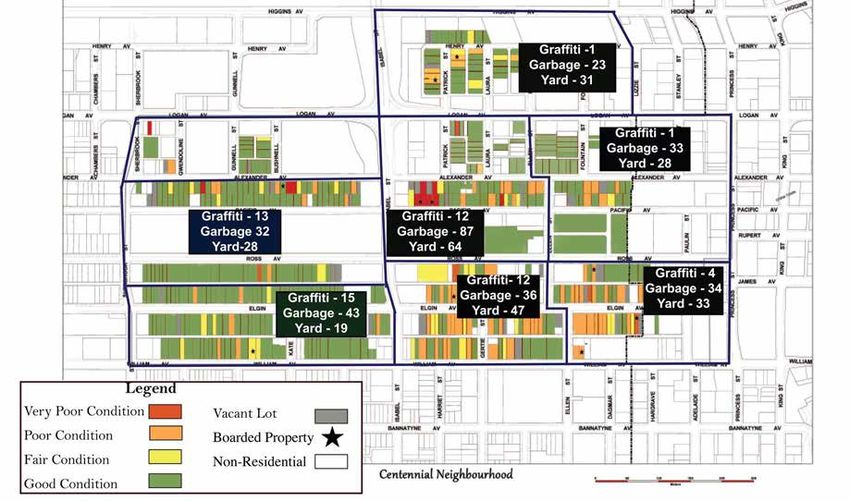
The Social Planning Council of Winnipeg                                  Other Partners and Colleagues
The Social Planning Council of Winnipeg (SPCW) is a non-profit,          Organizations and residents in Centennial graciously gave time,
membership-based organization committed to providing leadership in       resources and information for the development of this plan. In
improving social conditions through effective solutions, progressive     addition, the following individuals provided specific support:
public policy, community development, and partnerships. The
SPCW’s approach is to work through collaboration, building local         Linda Ring wrote the “Historic Housing Development” section
capacity and community engagement in addressing issues and               Mike Lennon shared maps he developed on food stores in Winnipeg
needs. Christina Maes Nino was the project lead from the SPCW
for the housing plan.                                                    Charlene Krause set up two focus groups in Winnipeg Housing
BridgmanCollaborative Architecture                                       rental complexes

BridgmanCollaborative is an award-winning architecture and               Th’lay Htoo arranged a focus group with residents who immigrated
planning firm dedicated to Making Public Work. We specialize in          from Burma
comprehensive Master Planning which begins with citizen participation.   Ali Tatryn arranged a focus group with the arts community
We value local knowledge and respect people in the process of
their participation. We endeavor to reflect complex issues in a clear    The Winnipeg Rental Network shared a database on home ownership
manner. We understand the cornerstone of community development
is citizen engagement.

                                                                         Housing Plan Steering Commitee
                                                                         A steering committee guided the plan and its development while
                                                                         being a resource and sounding board for the planning team. The
                                                                         committee was organized by the CCIA and included Dave Dessens
                                                                         (Winnipeg Housing Policy Coordinator), Noah Yauk (District Planner
                                                                         for the City of Winnipeg), Gord Dong (Vice Chair of the CCIA),
                                                                         and Rosa Cerda (Housing Coordinator for the CCIA). A member
                                                                         of the Centennial Neighbourhood Resident Association, which was
                                                                         operating during the months of consultation and research, was
                                                                         invited to attend each meeting.

                                                                                       Centennial Neighbourhood Housing Plan      7
2. Planning Process

                                               The planning team worked to engage a diversity of
                                               community members and community organizations in
                                               the development of the plan. It is the people and
                                               organizations who are in the community who will put
                                               the plan into action. We worked with organizations
                                               in the community to reach residents and to hear
                                               about their housing experiences and needs. Over 175
                                               residents were consulted in the development of the
                                               plan. Consultation with residents occurred through
                                               various ways: focus groups,  gathering information at
                                               a  community BBQ, a community visioning meeting,
                                               and door-to-door surveys.
                                               Research was done to understand community issues
                                               and housing conditions. An exterior housing condition
                                               and safety audit was conducted by the Feet on the
                                               Street staff. This was mapped and compared with the
                                               2006 Secondary Plan. We interviewed or met with
                                               many housing stakeholders in the community. We
                                               brought these stakeholders together in a meeting,
                                               facilitated by BridgmanCollaborative Architecture, to
                                               agree on housing plan goals and discuss potential
                                               implementation needs.
                                               Many people have worked with us on this housing plan
                                               through participating in meetings, sharing information,
                                               outreach to residents, and providing advice. It is their
                                               passion for the Centennial community that made this
                                               plan possible.

8      Centennial Neighbourhood Housing Plan
3. Context: A Plan to Implement                                        b. West Alexander and Centennial Neighbourhood Plan
                                                                       Centennial has an existing secondary plan, which was first initiated
Existing Plans                                                         in 2006 with a background study and was passed by City Council
                                                                       in 2008. There is strong support for the directions and principles
Residents told us there have been a number of plans and
                                                                       of the Neighbourhood Plan, though just as with the other City
consultations in the community and now they want to see action.
                                                                       plans, there is a desire for more proactive initiatives to achieve
It was important for this plan to start with the existing plans and
                                                                       them. Residents who were aware of this plan told us they felt it
the resident feedback that had already been gathered.
                                                                       had few teeth, and has been amended without good consultation
a. Our Winnipeg and Complete Communities                               or the consent of the community. They have therefore found it
                                                                       to be an ineffective tool in preventing developments residents do
The OurWinnipeg City Plan will guide Winnipeg’s development            not want. Safety and the utilization of Crime Prevention Through
over the next 10 years. Centennial is uniquely placed because it       Environmental Design (CPTED)  to improve safety have not been
is partially in the downtown boundary, is a mature community,          given the priority by the City that residents place on it. Parking
and will likely fit the criteria for being a reinvestment area. Many   lots that contravene the by-law continue to appear. Consultation,
of the features of a ‘complete community,’ as defined in the           required by the Neighbourhood Plan for some new developments,
Complete Communities secondary plan, are already established           was seen as being token. This experience has led many residents
in Centennial. A mix of scale and density of housing exists in the     to be understandably wary of participating in planning activities.
neighbourhood. Most necessary services, shops and amenities are
in an accessible walking distance.                                     c. HomeWorks! Housing Strategy and Policy Framework

The goals and initiatives of the Centennial Neighbourhood              HomeWorks! is a housing strategy and policy framework for
Housing Plan are consistent with OurWinnipeg and the Complete          Manitoba Housing and Community Development. Resident input
Communities secondary plan, and residents wanted stronger              was consistent with the principles of HomeWorks!, especially as
implementation planning for these goals to be achieved. A priority     it relates to the interconnectedness of housing and community
goal of the housing plan is the Complete Communities direction,        wellbeing. Financial support from the provincial department to
“support complete communities by ensuring diverse and high             increase community capacity and improve the range of housing
quality housing stock.” Residents felt housing resources of the        was appreciated by housing stakeholders and residents.
City, support from other community stakeholders, along with
                                                                       This plan proposes initiatives which will establish a mechanism
planning tools committed through the Complete Communities
                                                                       for increased partnership among the diversity of responsible
Plan, should be utilized to achieve this.
                                                                       stakeholders for these principles of HomeWorks! to be supported
We heard there is conflicting evidence of how OurWinnipeg and          in the Centennial community.
Complete Communities will be implemented in Centennial. Though
the Downtown Directions include “promote and enable a mix of                  Links to plans are on page 29.
residential development options as part of a mixed-use strategy,”          “Governments, community groups, Aboriginal
those living and working in the North Exchange area said City
regulations create barriers to development that would revitalize
                                                                           organizations, citizens and the private sector
the community.                                                                must work together to improve housing
                                                                            conditions in Manitoba.” (Homeworks, n.d.)
                                                                                    Centennial Neighbourhood Housing Plan      9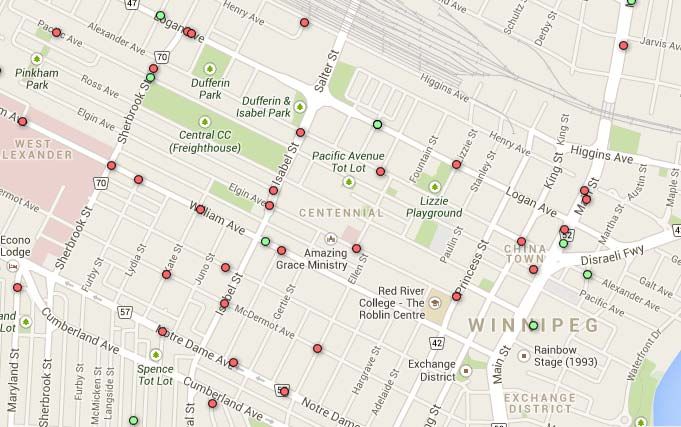
d. Centennial Neighbourhood Housing Plan (2005-2009)
  The previous neighbourhood housing plan for the community, created in 2004, was a starting place for this current plan. Though many
  of the principles and goals of the plan are relevant today, residents wanted a plan that was more realistic for the CCIA to implement,
  and less reliant on government funding. The table below is an assessment of the previous Centennial Neighbourhood Housing Plan,
  completed through interviews with residents who have been in the community since the plan was developed.
       Program/Initiative                            Progress to Date                                         Current Status
1. Zero tolerance policy for       The Neighbourhood Liveablity By-law, coupled with      There are fewer boarded and vacant homes in the
boarded up and vacant homes        rising housing values, has made this less of a         neighbourhood, though a registry was never created.
                                   priority issue for the community. In 2010 there were   Homes boarded as of August 2013 have been tracked
                                   24 vacant buildings, reduced to 16 in 2012. There      and CCIA will monitor by-law infractions
                                   were 10 boarded homes in 2013.
2. Building and health code        Monitoring is on a compliant-driven basis. The         Maintenance of rental properties continues to be a
monitoring and enforcement of      housing committee was not able to develop an           concern in the community.
rental properties                  action plan to address this.
3. Rent subsidized housing         This goal was outside the capacity of the CCIA         Though more subsidized housing is needed for
program                            to implement as it depended on funding for             existing residents, there is also a desire for a mix
                                   subsidized housing and the mandate of Manitoba         of housing affordability and tenure throughout the
                                   Housing. There has been support from CCIA for          neighbourhood.
                                   the development of two new and one redeveloped
                                   subsidized housing projects in the community.
4. Manitoba Housing Authority      With changes to funding coordination throughout        There continue to be issues between landlords and
tenant relations program           the span of the plan, this was not properly            tenants, including but not limited to Manitoba Housing
                                   resourced                                              rentals. Dufferin School provides supports for tenants.
5. Home ownership program          A Housing Training Initiative was started and          There are few vacant lots large enough for
                                   supported by Winnipeg Housing and Neighbourhoods       development. Manitoba Housing is considering home
                                   Alive. Winnipeg Housing developed 11 new homes for     ownership opportunities. Other organizations have
                                   affordable home ownership in the neighbourhood.        developed home ownership workshops.
6. Housing renovation and job      BUILD and Inner City Renovation were active in         The CCIA supports community hiring where possible
training program                   Centennial. They now do work in other communities.     but has learned about the complexities and challenges
                                   Winnipeg Housing hired a number of residents for       of such work. They do not have the capacity to
                                   their infill developments. A skill questionnaire was   support job training now.
                                   done in the community, but not used.
7. Strategic housing development   Renovation and development was not targeted.           The renewed housing plan will continue updating
site plan for the neighbourhood    Renovation has been based on the criteria of the       information about, and building consensus around
                                   funders and a random draw. Winnipeg Housing has        strategic development opportunities.
                                   worked with CCIA to identify and pursue development    Renovation grants will be more targeted to safety
                                   opportunities. Otherwise, development has been         issues in the community.
                                   primarily based on developers’ initiatives.
  10      Centennial Neighbourhood Housing Plan
4. Historic Housing Development Residency shifted dramatically, precipitated in part by industrial
relocation to the city’s fringes, the loss of local employment
a. Early Years: Boom Town opportunities, and greater dependence on the automobile to
access jobs. Residential development slowed to a near standstill.
By virtue of its central location, the Centennial Neighbourhood For some residents, the lure of new suburban neighbourhoods gave
built up rapidly, energized by the arrival of the Canadian Pacific rise to their out-migration. For others, the age of the buildings,
Railway in 1882 and the completion of the transcontinental quality of construction, and the cost of maintaining these homes
railway in 1885. It became home to workers and industrialists led to foreclosures and tax sales, absentee ownership and land
alike in response to the city’s economic boom in shipping, speculators. Buildings beyond their useful life were demolished
manufacturing and trade. The largely immigrant labour force and the land left vacant or developed into surface parking
needed to fuel its economic growth precipitated a period of lots, while others were subdivided into multi-family and single
rapid housing construction as industry demands grew. room occupancies. Significant pockets of physical decline coupled
with growing income disparity of local residents contributed to
In the absence of a municipal plan for growth, land use regulations isolation and marginalization of this once thriving neighbourhood.
or rigorous building codes, Centennial’s development was ad hoc
at best and it was common for housing to be erected quickly
beside industries that had sprung up in the area. Housing
took many forms in both quality and quantity including single
family residences and duplexes, boarding houses, multi family
tenement houses and walk-up apartment blocks. Institutions like
churches and schools soon followed to support a rapidly growing
population.
In its heyday, the Centennial Neighbourhood was a vital and
vibrant part of a new and growing city and served as an important
settlement for many newcomers to Canada. Settlement tended to Above: A stretch of houses on Logan Ave., built when the
cluster in ethnic enclaves separated by the major transportation neighbourhood was growing rapidly.
corridors. Local shops and services grew in the area reflecting Below: Boarded warehouses are still common in Centennial.
its diverse ethno-cultural population.
b. Post War: Economic Shifts
In the immediate decades following WWII, competition from the
trucking industry led to a reduced role for the rail industry in
moving goods and services to market. Centennial was not immune
to the economic impact of this shift, both in its built form and
in reduced job opportunities for local residents.
The Midland Railway spur-line along with its Freight Distribution
Centre was abandoned and by the mid 1970’s many of the
industries and warehouses had closed their doors and remained
as vacant and boarded buildings in the decades that followed. Centennial Neighbourhood Housing Plan 11c. Agents of Change: Citizen Advocacy and Public Policy guided decision-making around improvements to the built
environment and engaged the political levels on issues of public
Neighbourhood advocacy and citizen activism in Winnipeg’s core policy aimed at social justice and equity.
neighbourhoods was at its peak during the late 60’s and early
70’s supported by government programs, the non-profit/voluntary d. Government Commitments: New Housing Opportunities
sector, and faith based organizations. Centennial was a focus of A strong central role in housing by the Federal Government
many of these initiatives, intended to animate the community to enabled delivery of social housing programs in the Centennial
“take back their neighbourhood.” Residents rallied successfully to Neighbourhood over the span of nearly two decades (1970-1990).
reclaim a portion of the former Midland Railway Freight House In total, 451 units of public and non-profit housing were built
as a Recreation Centre; Rossbrook House, opened its doors under federal-provincial agreements before the Government of
in an abandoned church building; and St Andrew’s Place rose Canada’s withdrawal from its social housing commitment in 1993.
from the ashes of the burned out St. Andrews United Church. A
second housing tower for elderly single people was constructed Through this funding, in 1976 Manitoba Housing and Renewal
by Manitoba Housing east of Isabel Street at the same time. Corporation began a program of scatter-lot infill construction
on properties owned by the City of Winnipeg and transferred to
Concurrently, politicians and policy makers at all levels of the province for $1. Affordable (rent-geared to income) single
government recognized a need for more focused interventions family homes and townhouses were developed to accommodate
to shore up and contain the extent of decline in Winnipeg’s larger, low-moderate income families who were displaced from
most marginalized inner-city communities, and reduce the risk of substandard housing through enforcement of the City’s existing
erosion into adjoining areas. In 1972, Centennial was categorized residential building bylaws and regulations.
as a “Major Improvement Areas,” defined as: “older areas where
decline was considerable in both extent and intensity and where In 1982, the Province of Manitoba undertook an ambitious 162 unit
injection of new capital for rehabilitation, housing, support services housing project involving a mix of seniors and family apartments,
and facilities were needed to rejuvenate the neighbourhood single detached homes, townhouses and provision for main floor
economy.” commercial uses along Isabel Street. Through a process of land
assembly, the project spanned nearly two city blocks from Isabel
By 1974, the Federal Government introduced the Neighbourhood Street to the east of Ellen Street. The Midland Housing Project
Improvement Program (NIP). Administered by the City of opened its doors to single seniors and young families seeking
Winnipeg, the Centennial Neighbourhood became one of the safe, quality housing and affordable rents.
first neighbourhoods designated for a five year, $2.8 Million
capital renewal program. Grants and low interest loans were Inner-city homeownership became a focus of the Provincial
made available to both homeowners and landlords through the Government in the mid-late 1980’s, about the time that mortgage
complementary Residential Rehabilitation Assistance Program rates hit unprecedented levels (18 -20%). Centennial benefited
(RRAP) to improve the condition and extend the longevity of its from the “New Affordable Homeownership Program” involving
housing stock. construction and sale of attractive new homes for qualified
buyers. Homebuyers were required to remain owner-occupants
A major component of delivery of the NIP Program involved an for a minimum of 5 years in exchange for grants and subsidies
intensive community development approach which included the to reduce their initial purchase costs.
establishment of an elected, 18 member Centennial Residents’
Neighbourhood Improvement Committee. The residents’ committee Social housing was not exclusively delivered by the Province, as
non-profit developers began to emerge and build their capacity
12 Centennial Neighbourhood Housing Plan to develop and manage properties in response to gaps in housingoptions for vulnerable populations. Kinew Housing, Canada’s and remote communities.
first Aboriginal Non-Profit Housing Corporation and St. Andrew’s
Management (SAM Management, Inc.) were established through In 2000, The Winnipeg Housing and Homelessness Partnership
their initial housing impetus in the Centennial Neighbourhood. Initiative (WHHI) was created to stimulate new housing investment
Both maintain their central offices in the neighbourhood today. to address inner-city concerns. Centennial was designated a
Housing Improvement Zone under the City of Winnipeg Housing
e. Demographic and Housing Market Influences: A Call for Policy (1999) to promote locally planned, community supported
Community Action housing initiatives.
A renewed call for housing reinvestment in 1998 was precipitated By 2008, the WHHI had invested $5.3 Million dollars in repair,
by several factors: Winnipeg’s inner-city neighbourhoods were rehabilitation and construction of 159 housing units in the
witnessing plummeting property values and an escalation of Centennial neighbourhood. Initiatives were driven by the need to
boarding and abandonment by landowners; transiency was on meet gaps in housing form amongst residents who sought out
the rise amongst the most vulnerable populations due to loss of Centennial as a neighbourhood of choice. Through partnerships,
affordable rental; the number of people experiencing or at risk of a number of housing projects were completed, and new projects
homelessness rose sharply at a time when the neighbourhoods are ongoing, highlighting innovation and responsiveness to local
were witnessing growth in newcomer populations particularly housing needs and concerns.
amongst refugees and Aboriginal families migrating from rural
Below are the most recent housing projects to take place:
Kinew Housing Housing Opportunities S.A.M. (Properties) Inc. Kincora Developments Winnipeg Housing
Partnership (HOP) Ltd. Rehabilitation Corp.
Rehabilitated six Piloted “Pocket Housing,”
and built three new Rennovated a single an alternative housing Converted an abandoned Completed eleven new
homes for low-income family home for low- option to rooming house warehouse into 24 units homes for first-time
Aboriginal families dwellings. Two buildings, of affordable rental home buyers, Urban
income home ownership
with eight self contained housing. Equality EQuilibrium™
apartment units each, rental home of two
were built. units, and finished an
affordable condo project.
Centennial Neighbourhood Housing Plan 135. Centennial Today
a. Demographics and Neighbourhood Statistics
If Centennial had a
population of only 10, it
would include:
1 Child under age 6
1 Youth aged 7-18
7 Adults aged 19-64
1 Senior
As noted in the previous section, Centennial has always had And among them:
3 First Nations people
a diverse population. The most recent demographic profile,
1 Metis person
available from the National Household Survey (2011), shows that 3 Non-Aboriginal people
Centennial is similar to other Winnipeg neighbourhoods in that born in Canada
the majority of immigrants are arriving from Asia (57.2%). The 3 Immigrants For information about where these
major difference in immigration patterns to Centennial is that a statistics came from, see the back of
higher proportion of immigrants in Centennial are from Africa and the plan, page 29
lower proportion from the Americas and Europe. Centennial has a
much higher proportion of Aboriginal residents than the average
for Winnipeg. This is particularly true for First Nations individuals
and families.
Winnipeg median Centennial median 5.5% of Winnipeg 20.8% of Centennial
household income: household income: residents walk to residents walk to
$72,612 $37,180 work work
14 Centennial Neighbourhood Housing Planb. Home Ownership
Given that 83.5% of the properties in Centennial are rented, developing a healthy balance of home ownership and rental housing
throughout the neighbourhood has been a priority of the City and the Centennial Community Improvement Association. This map
shows properties where at least one resident is the registered owner. North Logan is not included on the map because data was not
collected on property ownership in that area.
The vast majority (167, or 88%) of rental properties are owned by people or companies based in Winnipeg. Another ten properties
(5%) are owned by individuals or companies in Manitoba, and eleven (6%) from other parts of Canada. Only one rental property is
owned by an individual residing in the United States.
Legend
Owner Occupied (At least
one resident is a registered owner
of the property)
Centennial Neighbourhood Housing Plan 15c. Exterior Housing Condition
In 2006, an exterior housing condition assessment was completed as part of a background study for the West Alexander and
Centennial Neighbourhood Plan. Using the same criteria as 2006, we updated the assessment and analyzed change over time. Overall,
in the seven years between the assessments, 108 properties improved in condition while only 64 declined. In terms of vacant lots,
nine new ones were created while 32 were filled. Change was not consistent, as the southeast corner of the neighbourhood declined
while the other parts of Centennial improved. See the appendix for comparisons by area.
Legend
Condition
Very Poor Vacant Lot
Poor Boarded
Fair Non-Residential
Good
16 Centennial Neighbourhood Housing Pland. Housing Stakeholders
Interviews were held with organizations who are involved in housing development or tenant support in Centennial. Below is a very
condensed summary of their activities and how they will use the housing plan:
Organization Housing Activities in Centennial How a Neighbourhood Housing Plan is
Used
Centennial Community Improvement • Housing coordination and administration of • Will utilize Housing Plan to direct work
Association (CCIA) City exterior fix-up grants of Housing Coordinator
Central Neighbourhoods Development • Community development work in • Housing Plan as a tool to identify
Corporation (CNDC) neighbourhood resident goals related to housing and
• Point of contact for Provincial funding grants community development
City of Winnipeg – Housing • Funding and other incentives for housing • Development proposals must align with
developments Housing Plan to receive incentives
• Funds exterior fix-up grants and housing • Outcomes of housing coordination
coordination expected to align with Housing Plan
Dufferin School – Parent Child Centre • Supports and advocates for tenants and • Would support implementation as it
homeowners in Centennial aligns with goals of parents
Immigrant and Refugee Community • Provides transitional housing for refugees • If funding and land were available, could
Organization of MB • Provides support to immigrant and refugee develop affordable housing as it aligns
families in the neighbourhood with Housing Plan
• Provides housing support to residents in
neighbourhood
Kinew Housing • Manages Rent Geared to Income (RGI) • If funding and land were available, could
properties in Centennial develop affordable housing as it aligns
with Housing Plan
Living Gospel Church • Developing affordable and RGI housing • If funding and land were available, could
develop affordable housing as it aligns
with Housing Plan
Province of Manitoba – Manitoba • Manages rental properties in Centennial • Proposals for funding for affordable
Housing • Provides funding to not-for-profits wanting to housing would benefit from proof of
develop affordable and RGI housing community support – may be gathered
• Homeowner and landlord grants for repairs through Housing Plan
Province of Manitoba – Neighbourhoods • Funds neighbourhood renewal projects in • Proposals for neighbourhood renewal
Alive! Centennial grants would benefit from proof of
• Operational funding for Central community support or need, which may be
Neighbourhoods Development Corporation gathered through Housing Plan
Winnipeg Housing • Manages rental properties in Centennial • Develops affordable rental and ownership
• Developed affordable home ownership infill and RGI units as land and funding are
housing projects available and as they align with the
• Develops affordable, RGI and home Housing Plan
ownership projects
Centennial Neighbourhood Housing Plan 17e. Centennial: The Good, The Bad
Centennial is not a high-profile or well-known community and it does not bring out the strong adjectives of the North End or West
End. Many of those working in Centennial have referred to it was a ‘forgotten neighbourhood’ because of this lack of profile. To
understand the strong aspects of its character, we asked residents what they love and hate about the Centennial Neighbourhood.
This was done through placing dots on a community map, indicating where they lived, what they loved, and what they hated about
Centennial. Survey respondents were asked to indicate what they liked and disliked about their community.
What Residents Like
About Centennial
People Location
A number of respondents identify Centennial’s central location
the people of Centennial as being defines the neighbourhood and
their primary “like”. For many is loved by those who live there.
residents, neighbours are also Words such as close, downtown,
extended family. For others, the and convenience are prominent
substantial cultural and ethnic in the word cloud. Residents feel
diversity in Centennial is a source of that most resources are nearby,
community identity and pride. The and report the community is
presence of words like community, walkable and well-serviced by
family, culture, diversity, and kids Winnipeg Transit.
in the word cloud testify to this
community value.
18 Centennial Neighbourhood Housing PlanWhat Residents Do Not Like Drugs
Several respondents expressed
Safety
About Centennial
frustration with the brazenness of
Survey respondents’ primary the trade in illicit substances in
concern is around safety, Centennial. For many, this issue
particularly at night. Responses is embedded in the problem of
gather around keywords such transient traffic, particularly at
as crime, gangs, and violence. night.
Safety Concerns were also linked
to unpredictable people under the
influence of drugs and alcohol.
Kids
The prominent presence of the
Garbage word kids in the wordcloud
Centennial’s empty lots, derelict demonstrates residents’ contention
houses and undeveloped green that Centennial’s youngest
spaces are issues of concern for community members are under-
participants. Garbage collects on serviced. Respondents report
untended properties and it becomes concern with the degree to which
an eyesore, dangerous, and part of children are left unattended, with
a cycle of decline. the lack of healthy recreation
supports. For some respondents
this is an important safety issue
and relates to issues of gang
recruitment and property crime.
Centennial Neighbourhood Housing Plan 196. Neighbourhood Issues Food Stores, 1971
a. Grocery Stores
A walkable community requires amenities within an accessible
distance from residences. In focus groups and the door-to-door
survey, most residents stated that Centennial has almost everything
it needs to be a complete community. The major exception to
this is a grocery store, with 53% of survey respondents noting
it was a “missing” amenity. There are cultural differences in the
requirement of such an amenity. Relatively few newcomers found
the community to be lacking a grocery store, and most stated
that Young’s Trading Inc. has the food products they want and
need. Newcomers also told us they were used to going to a few
smaller shops to purchase food, whereas many of the Canadian-
born residents would prefer a supermarket with all of their
grocery items in one place. There is, therefore, no consensus on
the kind of grocery store required in the community. The need
for a grocery store may also be more noticeable with the recent
loss of Riediger’s Supermarket and an Extra Foods Store.
Food Stores, 2011
The number and type of food retailers has changed over time
due to shifting patterns of the industry. In 1971 there were neither
supermarkets nor convenience stores near the neighbourhood,
but there were nine additional grocery stores dotted around the
community in addition to two more specialty food stores. At a
focus group with artists in the neighbourhood, it was agreed that
going back to having a spread of small shops would better meet
their needs because it increases walkability.
On these maps, courtesy of Master of City Planning student
Mike Lennon, Extra Foods was considered a supermarket, while
Riediger’s classified as a grocery store.
For information about the classification Legend
system, see back of the document.
Grocery store
Supermarket
Convenience store
20 Centennial Neighbourhood Housing Plan Specialized foodsb. Community Safety
Safety is a very real issue in the Centennial community. In the How safe residents feel in Centennial:
past three years, 20% of Centennial residents we surveyed have
been a victim of crime in their community. Much of this crime is
vandalism and property theft, which has a particularly devastating Day Night
impact on low income residents who cannot afford to replace Unsafe
items. Some of the crime is also violent crime, and the lack of Neutral
safety is felt most by residents at night.
Safety within housing was also a concern for residents. Because the Safe Unsafe
housing assessment was on the exterior only, it was not possible
to identify homes that might be unsafe for residents. Through
focus groups and informal discussion with residents, however, it
became clear that a number of properties do not meet adequate Safe
standards. There are houses in the neighbourhood without proper Neutral
heat, ventilation, locks, and plumbing; the majority of these are
rented. Residents of these houses are reluctant to report their
conditions to anyone they do not know or trust out of fear of
losing the only home they can afford. Any approach to dealing
with property violations needs to recognize the vulnerability of 20% of Centennial residents we surveyed
the people living in the homes. have been a victim of crime in their
community
An assessment of bylaw offences and the principles
of Crime Prevention Through Environmental Design
(CPTED) in the neighbourhood was done. Housing
condition is linked to safety, as are other environmental
and design factors. Bars and boards on windows, put
there to prevent theft and intrusion, have the effect of
making the neighbourhood feel less safe. The parts of
Centennial with higher proportions of homes in poor
or very poor condition also had higher proportions of
by-law infractions.
Centennial Neighbourhood Housing Plan 21c. Housing Repairs d. Housing Programs
A variety of grants are available in the Centennial community In addition to home repair grants, there are programs to support
to repair homes. With the Centennial Community Improvement affordable home ownership and affordable rental housing
Association now administering the City’s Exterior Fix-up Grants, development. Currently, there is no network for communicating about
there will be a need for coordination with the Provincial Exterior these housing programs. Because of this lack of communication,
Fix-up Grants. there have been assumptions and misunderstandings, which
have at times created strained relationships in the community.
As many of the owner-occupied houses have recieved fix-up There is the impression among some residents we surveyed and
grants in the past, there is an opportunity to focus grant money interviewed that a great deal of resources are going into support
on areas most in need and to do outreach to landlords and for housing for newcomers and there are limited resources for
homeowners to ensure there is adequate information about all of existing residents. Yet, it is clear that newcomers are facing
the funding opportunities. Beyond financial support, information significant housing challenges in Centennial and throughout
about rights and responsibilities of landlords and tenants, in Winnipeg. This is particularly true for those living in private rental
addition to advocacy support for tenants, was identified as a accommodation.
need in the community.
Clear and open communication about housing programs and
In the door-to-door survey, residents were asked about current their eligibility will improve relations in Centennial. This will work
home repair needs. A large portion of renters live in properties to build bridges between different communities who reside in
that require plumbing repairs (everything from leaking pipes to Centennial and reduce misconceptions about program eligibility.
broken toilets) and pest control (mice, bedbugs and cockroaches). We also heard that residents would like to see more developments
Homeowners, for the most part, had fewer repair needs. that have mixed uses, including mixes of tenure, income, family
size, and population eligible for the affordable units.
There is an opportunity for focus
exterior fix-up grants on areas most
in need.
22 Centennial Neighbourhood Housing Plan Before and after Exterior Fix-up Grant7. Vision for the Neighbourhood
Vision:
A safe, walkable, socially active community
with affordable, diverse, and well-maintained
housing
Centennial Neighbourhood Housing Plan 238. Goals and Initiatives
Goal 1: Create opportunities for residents to work together and provide input into planning and
development in the neighbourhood
Activities Timeline Who Leads: Potential Outputs Indicators (progress
Partners/Resources and success)
1. Set up and facilitate In second month and Centennial Housing -Housing Stakeholders -Number of residents
Housing Stakeholder ongoing (Frequency Stakeholder Committee, to Committee established on Housing Stakeholder
Committee with to be determined by be set up and facilitated and functioning Committee (increase in
inclusive range of committee, no less by Housing Coordinator: -Committee meets at resident participation)
participants than 4 times per year) Wpg. Housing, China least 4 times per year -Proportion of meetings
Town Development -Action Plan for Housing attended by resident
Corporation, Living Gospel Stakeholders Committee members
Church, Landlords, CNDC, is developed
Neighbourhoods Alive!, -Number and
Manitoba Housing – Renovation representativeness of -Housing Stakeholder
and Homeowner Delivery, Housing Committee Committee members
Community Liaison and New attendees feedback about
Project Delivery – IRCOM, facilitation (annual
Habitat for Humanity, Dufferin survey)
School, Kinew Housing,
Renters, Home Owners, Artist
Community
2. Hold CCIA Board Annually CCIA Board -Board is meeting and -Annual survey of CCIA
meetings/AGMs functioning Board Members for
-Quorum is met at feedback on functioning
meetings of Board
-AGMs are held
and attended by
representative range of
residents
3. Organize community Goal of at least one CCIA Board and Housing -Community events are -Number of volunteers
events: BBQs, clean event annually Coordinator partner with: held for events increases
ups, consultations, IRCOM, Rossbrook House, -Community partners -Number of organizations
learning opportunities, Freight House Board, Boys and participate in events involved in or attending
workshops, etc. Girls Club, Dufferin School, events
CNDC, Neighbourhoods Alive!,
Frame, City of Winnipeg
Community Development
24 Centennial Neighbourhood Housing PlanGoal 2: Strive for a healthy mix of quality housing in the neighbourhood to both meet the needs of
existing residents and provide opportunities for new residents.
Activities Timelines Who leads: Potential Outputs Indicators (progress
partners/resources and success)
1. Define the mix of housing Year 1 Led by Centennial -Document with: -Housing Stakeholder
desired in particular areas of Housing Stakeholder 1. Existing housing mix Committee consensus
the neighbourhood, based on Committee, partners with: 2. Desired housing mix on desired housing
maps of existing housing mix and Social Planning Council for Centennial, with mix
neighbourhood demographics of Winnipeg, Canadian specific areas where
Centre for Policy mix could be altered
Alternatives, Institute identified
of Urban Studies, City -This document to
of Winnipeg Housing be updated regularly
Division as demographics and
identified housing need
changes
2. Analyse opportunities for Year 1 and ongoing Led by Housing -Map with housing -Increase in awareness
strategic development in the Coordinator, Partners development of development
community with: CCIA Board of opportunities identified opportunities
Directors, Centennial -Ownership of strategic
Housing Stakeholder land parcels determined
Committee, City of
Winnipeg Housing
Division, Winnipeg
Housing
3. Work with developers, including Based on Led by Centennial -Relationships with -Number and type of
private, government and not-for- Action Step 2, Housing Committee, developers established infill developments
profit, to support development Ongoing Partners with: and maintained -Decrease in the
that will move towards this goal. City of Winnipeg Housing -Communication about number of vacant lots
This will be achieved through: Division, Manitoba supports for housing and boarded buildings
-encouraging strategic infill Housing Renovation and improvement -Number of grants
development, with a focus of Homeowner Delivery, -Information gathered provided with evidence
development on vacant lots not-for-profit and private about MB Housing’s of how they improve
-preserving and improving existing sector developers plans for existing housing the quality of housing
housing through connecting with stock -Decrease in the
grant programs -Meetings with MB proportion of residents
-supporting developments that Housing to discuss in core housing need
have a mix of tenure and existing housing stock -Decrease in the
affordability - Resident participation proportion of houses
-collaborating with MB Housing in discussions in need of major
on plans for existing housing repair
stock in community
- attracting the right developers
Centennial Neighbourhood Housing Plan 25Goal 3: Improve relationships between landlords and tenants
Activities Timeline Who Leads: Potential Outputs Indicators
Partners/Resources (progress and
success)
1. Build positive Year 1 and ongoing Led by Housing -Contacts with landlords -Landlord and tenants’
relationships with Coordinator and tenants satisfaction with Housing
landlords and tenants -Landlords and tenants Stakeholder Committee
in the community, both on Housing Stakeholder (annual survey)
through the housing Committee -Increase in number of
coordinator and the landlords and tenants in
Housing Stakeholder contact with CCIA
Committee
2. Provide resources Year 2 and ongoing Led by Housing -Information sessions -Information session
to landlords and Coordinator held participants’ satisfaction
tenants on rights and Potential Partners/ -Resource Guides (survey)
responsibilities Resources: CNDC provided -Number of participants
Newsletter, Winnipeg in information sessions
Rental Network, Bedbug
Coordinator at DMSMCA
3. Explore opportunities Year 2-3 Led by Housing -Project proposal -Housing Stakeholder
to create housing Stakeholder Committee, developed Committee support for
support program in Potential Partners/ -Meetings with funders program/project
Centennial Resources: Tenant -Project funded and -Funder support for
Landlord Cooperative, established program/project
Winnipeg NRC’s, Women’s
Resource Centres,
HOMES Mentors,
Neighbourhoods Alive!,
Neighbourhoods Alive,
Winnipeg Rental Network,
Dufferin School
26 Centennial Neighbourhood Housing PlanGoal 4: Improve safety in Centennial
Activities Timeline Who Leads: Potential Outputs Indicators (progress
Partners/Resources and success)
1. Set-up and facilitate Year 1 and Centennial Safety Committee, -Safety committee is -Safety Committee
Safety Committee for ongoing partners with: Winnipeg established, meeting and member feedback on
Centennial. Police, Public Works, functioning facilitation (through annual
Priorities for the committee Waste Management, By- -Action Plan for Safety survey)
will be: Law Enforcement, Forestry Committee is developed -Changes in WPS support
- work with WPS for Foot Department, Winnipeg NRCs, -Meetings with WPS in community
Patrols Feet on the Street, Dufferin -Meetings with Bylaw -Complaints about safety
- by-law enforcement School Enforcement and bylaw infractions are
- lighting - Safety committee resolved
- traffic safety reporting -Time to address bylaw
infractions is reduced
2. Improve safety within Annually Housing Coordinator partners -Criteria for housing -Number of safety issues
housing through focusing with: Housing Stakeholders grants is developed addressed through exterior
fix-up grants on community Committee, City of Winnipeg, -Unsafe houses are fix-up grants
safety Province of Manitoba targeted for grant -Resident survey on
applications housing safety issues
Goal 5: Preserve or create amenities for a walkable neighbourhood
Activities Timeline Who Leads: Potential Outputs Indicators (progress
Partners/Resources and success)
1. Communicate about and As needed Led by: Local businesses, -Meetings held and letters -Resident survey on
support development of West End BIZ, Exchange BIZ, of support written as what is missing from the
missing amenities where CNDC needed neighbourhood
possible Partners: CCIA
Goal 6: Create pride among residents in the community
Activities Timeline Who Leads: Potential Outputs Indicators (progress
Partners/Resources and success)
1. Neighbourhood As needed CCIA to play supporting role. -Beautification projects -Increase in number
beautification through Partners: Frame, Rossbrook -Community events held of public art, murals,
partnering with cultural House, IRCOM, Freight House community gardens
community, organizing -Increase in number of
community events community events
This could include:
-Murals
-Community gardens
-Awards for best property
appearance
-Public art
Centennial Neighbourhood Housing Plan 27Goal 7: Support local employment, when possible
Activities Timeline Who Leads: Potential Outputs Indicators (progress
Partners/Resources and success)
1. Encourage local hiring Ongoing CCIA to support where -Job postings in -Number of residents
when utilizing community possible community hired for work supported
grants, housing grants, Potential Partners/ -Commucation about by CCIA
hiring staff Resources: Dufferin opportunities to hire
School, West End BIZ, locally
Exchange BIZ
2. Create directory of Year 4 CCIA to support/partner -Directory developed -Number of
local professionals and with West End BIZ, organizations/businesses
businesses Exchange BIZ using directory for hiring
9. Summary
Centennial is a community on the edge of many things. Physically, it is on the edge of downtown, between the boundaries of the North
and West ends. While downtown revitalization has created some benefits in terms of property values and safety, there has also been
increasing difficulty accessing land for developments to benefit low income residents and an increase in surface parking lots to service
downtown amenities.
In terms of development, Centennial just on the edge of becomming one of the most complete communities in Winnipeg. It has a range
of housing options in terms of affordability, size and tenure and almost all of the amenities people need. Centennial is just on the edge
of revitalization. It is becoming more attractive for developers and investors, and more desireable for home buyers due to its proximity
to downtown. Improvements to housing have not been even throughout the community, with some parts of Centennial declining over the
past decade. This creates a need to balance development to ensure existing residents are not displaced due to decreasing affordability,
while at the same time seeking out opportunities that create a healthier mix of housing throughout the community.
Many organizations and residents have strong commitments to making Centennial a better place. Organizational issues and programming
without sound sustainability planning in the community have made this progress slower than it could be. Now is an opportune moment
to utilize resources, which are becoming increasingly scarce, to push Centennial over the edge, from being a marginal community to
being a complete central neighbourhood.
28 Centennial Neighbourhood Housing Plan10. Want to Know More?
Plans Affecting Centennial:
OurWinnipeg and Complete Communities: http://speakupwinnipeg.com/ourwinnipeg/
West Alexander and Centennial Neighbourhood Plan: http://www.winnipeg.ca/ppd/planning_secondary_adopted_WAlex.stm
HomeWorks! Housing Strategy and Policy Framework for Manitoba: http://www.gov.mb.ca/housing/pubs/homeworks_booklet.
pdf
Neighbourhood Demographics: The demographics used were from the 2011 National Household Survey undertaken by Statistics
Canada. It is important to note the decreasing reliability of these demographics because of the change from the Mandatory Long
Form Census. Reliability in the Centennial community was a particular concern. Because the Neighbourhood Profiles from the City
of Winnipeg were not available yet, the statistics provided were a compilation of Census Dissemination Areas: 46110068, 46110070,
46110071, 46110072, and 46110076. The additional area within the community, 46110074, was not included because of a non-
response rate of 75.3%. We recommend updating the demographic information utilizing the City of Winnipeg Neighbourhood Profiles
once they are available.
Grocery Store Classification:
Grocery Store: A food retailer primarily engaged in retailing a general line of food, such as canned, dry and frozen foods; fresh
fruits and vegetables; fresh and prepared meats; fish, poultry, dairy products and snack foods. These establishments also typically
retail a ranger of non-food household products, such as household paper products, toiletries and non-prescription drugs. (Directly
from NAICS 2012 definition)
Supermarket: A food retailer offering a full line of groceries, meats, produce, dairy, and baked goods, while being a minimum of of
10,000 square feet in size. (Based on Food Marketing Institute definition, with an adjusted definition for size (consistent over the
decades), and to remove the exclusion of department stores)
Convenience Store: A food retailer engaged in retailing a limited line of convenience items that generally includes milk, bread, soft
drinks, snacks, tobacco products, newspapers and magazines. These establishments may retail a limited line of canned goods, dairy
products, household paper and cleaning products, as well as alcoholic beverages and provides relative services, such as lottery
ticket sales and video rentals. (Directly from NAICS 2012 definition)
Specialty Food Stores: A food retailer that sells specialized lines of food products, which include meat markets, fish and seafood
markets, fruit and vegetable markets, baked goods, and other. (Directly from NAICS 2012 definition with adjustments to exclude
nuts and confectionary because these are not staple foods for meal preparation at home)
Crime Prevention Through Environmental Design (CPTED): CPTED is the relationship between how space is designed and used and the real
or perceived feeling of safety by the user of the space. There are four key principles used in CPTED analysis: natural surveillance,
access control, territoriality, and maintenance and image. For more information, go to: http://lin.ca/sites/default/files/attachments/
CPTED_0.pdf
Centennial Neighbourhood Housing Plan 29You can also read


