Corporate Strategy 2022-2027 - Bristol City Council
←
→
Page content transcription
If your browser does not render page correctly, please read the page content below
Corporate Strategy
       2022–2027
Bristol City Council Corporate Strategy 2022–2027

Contents
Foreword                                                                   2         Theme 4: Health, Care and Wellbeing                                          34

Our Role – driving a city of hope and aspiration 3                                       Transforming Care .  .  .  .  .  .  .  .  .  .  .  .  .  .  .  . 35
                                                                                         Mental Health and Wellbeing .  .  .  .  .  .  .  . 36
Our Challenges and Key Information                                         4
                                                                                         Poverty . .  .  .  .  .  .  .  .  .  .  .  .  .  .  .  .  .  .  .  .  . 38
Our Corporate Strategy – at a glance                                       7         Theme 5: Homes and Communities                                               40
Our Vision                                                                 8             Housing Supply . .  .  .  .  .  .  .  .  .  .  .  .  .  .  .  . 41

Our Values and Behaviours                                                  9             Lower Carbon Homes . .  .  .  .  .  .  .  .  .  .  .  . 42
                                                                                         Homelessness .  .  .  .  .  .  .  .  .  .  .  .  .  .  .  .  .  . 43
Our Building Blocks                                                      10
                                                                                         Disability .  .  .  .  .  .  .  .  .  .  .  .  .  .  .  .  .  .  .  .  .  . 45
Our Strategic Themes and Priorities                                      12              Community Participation . .  .  .  .  .  .  .  .  . 46
Sustainable Development Goals                                            14          Theme 6: Transport and Connectivity                                          48
                                                                                         Connectivity . .  .  .  .  .  .  .  .  .  .  .  .  .  .  .  .  .  . 49
Theme 1: Children and Young People                                       15              Improved Bus Services . .  .  .  .  .  .  .  .  .  .  .  . 50
     Child Friendly City. .  .  .  .  .  .  .  .  .  .  .  .  .  .  . 16                 Safe and Active Travel . .  .  .  .  .  .  .  .  .  .  .  . 51
     Supported to Thrive. . . . . . . . . . . . . . . 17                                 Physical Infrastructure . .  .  .  .  .  .  .  .  .  .  . 52
     Equity in Education. .  .  .  .  .  .  .  .  .  .  .  .  .  . 18                Theme 7: Effective Development Organisation 53
     Intergenerational Equality.  .  .  .  .  .  .  .  .  .  . 19                        One City. .  .  .  .  .  .  .  .  .  .  .  .  .  .  .  .  .  .  .  .  . 54
Theme 2: Economy and Skills                                              20              One Council . .  .  .  .  .  .  .  .  .  .  .  .  .  .  .  .  .  . 55
     Regeneration .  .  .  .  .  .  .  .  .  .  .  .  .  .  .  .  .  .  . 21             Employer of Choice .  .  .  .  .  .  .  .  .  .  .  .  .  .  . 56
     Access to Employment . .  .  .  .  .  .  .  .  .  .  . 22                           Data Driven .  .  .  .  .  .  .  .  .  .  .  .  .  .  .  .  .  .  .  . 57
     Good Growth .  .  .  .  .  .  .  .  .  .  .  .  .  .  .  .  .  .  . 23              Good Governance . .  .  .  .  .  .  .  .  .  .  .  .  .  . 58
     Childcare . .  .  .  .  .  .  .  .  .  .  .  .  .  .  .  .  .  .  .  . 25           Estate Review . .  .  .  .  .  .  .  .  .  .  .  .  .  .  .  .  . 59
     Digital Inclusion .  .  .  .  .  .  .  .  .  .  .  .  .  .  .  .  . 26
Theme 3: Environment and Sustainability                                  27          Glossary                                                                     60
     Carbon Neutral . .  .  .  .  .  .  .  .  .  .  .  .  .  .  .  . 28
     Ecological Recovery . .  .  .  .  .  .  .  .  .  .  .  .  . 29
     Cleaner Bristol . .  .  .  .  .  .  .  .  .  .  .  .  .  .  .  .  . 30
     Climate Resilience .  .  .  .  .  .  .  .  .  .  .  .  .  .  .  . 32
     Global Leadership .  .  .  .  .  .  .  .  .  .  .  .  .  .  .  . 33

                                                                                 1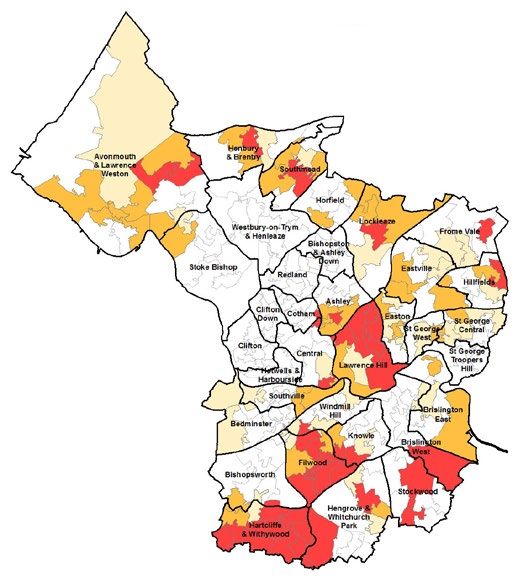
Bristol City Council Corporate Strategy 2022–2027

Foreword
We all want to feel included, we all need hope,       for a healthier, more inclusive, and sustainable
and we all aspire to something. I believe this        future. The complex challenges we face can only
to be a fundamental truth, and my focus is            be solved through working collaboratively and
on making sure that the city council plays a          the responsibility is not the council’s alone. Over
leading role in enabling this to be everyone’s real   the past five years, I have brought together a wide
                                                      range of partners to work with a One City approach,
experience of life in Bristol.
                                                      creating a shared vision and a plan of goals and
With our raw materials of 42 square miles of land,    actions for the city up to 2050. This Corporate
c.460,000 people (from over 187 countries, speaking Strategy is closely linked to the One City Plan,
91 languages and practising 45 religions) and a       describing the council’s priorities and contributions
pre-pandemic £15bn annual economy, Bristol was        to the city’s long-term aims.
one of few cities to make a net-contribution to the
                                                      In this strategy, we are choosing to grapple with
Treasury pre-pandemic, offering sectors with high
                                                      the complexity of the real issues facing us, being
growth and opportunity, two leading universities,
                                                      bold and setting aspirational targets that challenge
incredible culture, and world-class aerospace.
                                                      us to make a difference, whether by doing things
Among the challenges we face are long-standing
                                                      directly ourselves or trying to influence change on
inequalities in healthy life expectancy, a growing
                                                      a wider scale. It presents a very real challenge to us,
population (scheduled to grow by almost 100,000
                                                      our partners and national and international systems
residents by 2050), more than 15,000 people on
                                                      of government, governance and economy to make
our waiting list for housing, and over 70,000 of our
                                                      positive changes, tackle complex, ingrained and long-
residents living in areas that are among the 10%
                                                      term structural issues and work towards a values-led
most deprived in England.
                                                      vision rooted in fairness and opportunity for all.
During the past five years, we have made significant
                                                      For the council’s part, we need to keep delivering
progress towards making Bristol a city of hope
                                                      good quality services and continuing our journey to
and aspiration, one where everybody can share in
                                                      become an organisation that is better at enabling
its success. But we are only part way along a very
                                                      and developing others, whilst also making tough
difficult journey. Looking ahead, we know that the
                                                      decisions about our direct spending. We must
human cost of the COVID-19 pandemic will be felt
                                                      set an excellent example as an employer, create
keenly in our communities, both in terms of loss
                                                      more efficient systems and processes, work better
and in the stark inequalities it has further exposed.
                                                      together, empower, and enable others to act, and, in
Its financial cost is likely to lead to a long and
                                                      some cases, withdraw and get out of the way.
protracted restructuring of the UK economy, the
impact of which will be felt for many years to come. We will keep working to ensure that everyone
The financial forecasts for local government are      is included in this city’s success and has a home
a huge concern, as both post-COVID Government         where they can achieve their aspirations, regardless
funding cuts and the widely recognised challenges     of their background or where they grew up. It will
facing adult social care budgets take a toll. For the not be easy but Bristol can bounce back from the
council this is likely to mean that we need to save   pandemic and rise to its challenges, supported, and
tens of millions of pounds in the next few years      enabled by a council that is the right size for the
from already stretched budgets.                       job and is no longer seen as a collection of services
Meanwhile the threat of climate change and            but as an effective development organisation that
ecological deterioration requires decisive action     allows everyone to thrive.
and fundamental changes in how countries, cities
and communities live and work. It also means we
need to be better prepared to adapt to the impacts
of climate change, from environmental issues like
floods to socio-economic ones like mass migration.
The better we work together to tackle our city’s
challenges, the greater the likelihood that we            Marvin Rees
can recover, renew and create firm foundations            Mayor of Bristol
                                                          October 2021

                                                      2
Bristol City Council Corporate Strategy 2022–2027

Our Role – driving a city of hope
and aspiration
We recognise that we are one organisation in a hugely complicated system, where everyone has a role to
play. Because of this we are a partner in the long-term One City Plan for Bristol. This plan to 2050 gives us
a shared vision and goals, co-created by many different partners and covering almost every aspect of life
in Bristol. This strategy sets out our contribution to the city as part of the One City Plan and is our main
strategic document. It informs everything the council does and how we plan for the future.

Council and partners all work together equally to deliver shared
                     outcomes for the city

  One City Plan                                                                                                                One City Plan
    Partners                                        Informing and            One                       Informing and             Partners
                                                                             City
                     Each with their own            contributing to                                    contributing to               Each with their own
                          strategies                  each other                                         each other                       strategies

                                                                             Plan

Working together                                                                                                                 Working together
 with partners                                                                                                                    with partners
  throughout                                                                                                                       throughout

                                                        Corporate Strategy 2022–2027

                                                         Policy and Strategy Framework
  Vision, values and behaviours

                                                 The council’s suite of plans, policies and strategies aligned to the
                                                  Corporate Strategy, including the Medium Term Financial Plan.
                                                                                                                                                  outcomes and review
                                                                                                                                                  our plans accordingly

                                                                                                                                                    We measure our

                                                                       Business Plan
                                             An annual corporate Business Plan based on Corporate Strategy themes,
                                                showing more detailed delivery activity and measures every year.

                                  Service Plans                           Team Plans                      Individual objectives
                                   Plans made by each council department and teams showing their own activities which should
                                     contribute to achieving the Business Plan, with objectives for all colleagues linked to this.

                                                                         Our daily work

                                                                                  3
Bristol City Council Corporate Strategy 2022–2027

Our Challenges and Key Information
Local Government finance                                The impact of COVID-19

Health and wellbeing

                                                    4
Bristol City Council Corporate Strategy 2022–2027

Sustainability and environment                          Education and skills

                                                        Communities

Economy and housing

                                                        Culture and creativity

                                                    5
Bristol City Council Corporate Strategy 2022–2027

Population projections                               Bristol projected   Bristol projected population change
                                                    population change          2018–2043 by age group
Future population projections are uncertain.            2018–2043
Current events – including the Coronavirus
pandemic, leaving the EU, the new Hong
                                                                                          Children
Kong British National Overseas visa and                                                 +9,900
the global climate emergency – and their                    2018
potential impacts on our economy and
society, are not reflected in the current
                                                    463,400
                                                        (estimate)
2018-based population projections.                                                Working age
However, if pre-pandemic trends were to
continue, the total population of Bristol                                        +46,900
would be projected to increase by 15% over
the 25 year period (2018–2043) to reach a
total population of 532,700 by 2043.
                                                         2043

Source: ONS 2018-based Sub-national                 532,700
                                                       (projection)
Population Projections                                                   Older people
Subnational population projections for                                   +12,500
England – Office for National Statistics
The Population of Bristol report (Aug 2021)

                                                                          Index of Multiple Deprivation 2019
Deprivation                                                                     Most deprived 10% in England
Bristol continues to have deprivation ‘hot                                      Most deprived 10–20% in England
                                                                                Most deprived 20–30% in England
spots’ that are amongst some of the
most deprived areas in the country yet
are adjacent to some of the least
deprived areas in the country.
Bristol has 41 areas in the most
deprived 10% in England.
In 2019, 15% of Bristol residents
– 70,800 people – live in these areas,
including 19,000 children and 7,800
older people.
The 10 most deprived neighbourhoods in Bristol are all
in the South Bristol areas of Hartcliffe, Whitchurch Park
and Knowle West.

Source: English Indices of Deprivation 2019. Ministry
of Housing, Communities and Local Government by
Oxford Consultants for Social Inclusion (OCSI).
English indices of deprivation 2019 – www.gov.uk

                                                            6
Bristol City Council Corporate Strategy 2022–2027

Our Corporate Strategy – at a glance
                                               We play a leading role in driving an inclusive, sustainable and healthy city of hope and
Vision                                                      aspiration, one where everyone can share in its success.

 Building Blocks
        We have chosen five                    Development                           Environmental                         Equality and                                                           World Class
        principles that we call our            and Delivery                          Sustainability                        Inclusion                            Resilience                        Employment
        ‘building blocks’. These               Develop people, places and            Tackle the Climate and                Pro-actively and intentionally       Build Bristol’s city resilience   Role model, influence and
        affect all our priorities and          partnerships to improve               Ecological Emergencies                improve equality and inclusion       through early intervention,       promote the highest levels
        influence everything we do.            outcomes. Deliver quality             while inclusively growing the         across the city by designing it      minimising our contribution to    and standards of employment.
                                               public services while releasing       economy, maximising our               into everything we do. Work          future environmental, economic    Work with partners to drive
                                               the expertise and resources           positive environmental impacts        to make sure that everyone in        or social shocks and stresses.    for workforces that reflect the
                                               of empowered communities,             and avoiding or mitigating            Bristol feels they belong, has a     Build our ability to cope by      population, and workplaces
                                                                                     negative ones wherever                                                     learning from our past, taking    that are healthy and inclusive,
                                               individuals, community groups                                               voice and an equal opportunity
                                                                                     possible. Build our climate and                                            a preventative approach and       offering opportunities to
                                               and city partners to help shape                                             to succeed and thrive.
                                                                                     ecological resilience.                                                     planning for long-term outcomes   progress and providing a
                                               and deliver city priorities.
                                                                                                                                                                that support resilience.          Real Living Wage as standard.

Themes
To make sure we are            Children and                 Economy and                   Environment and              Health, Care and               Homes and                  Transport and              Effective
clear about how we             Young People                 Skills                        Sustainability               Wellbeing                      Communities                Connectivity               Development
spend our time, effort         A city where every           Economic growth that          Decarbonise the city,        Tackle health                  Healthy, resilient         A more efficient,          Organisation
and money, we have             child belongs and every      builds inclusive and          support the recovery of      inequalities to                and inclusive              sustainable and            From city government to
the following strategic        child gets the best          resilient communities,        nature and lead a just       help people stay               neighbourhoods with        inclusive connection       city governance: creating
themes and priorities.         start in life, whatever      decarbonises the city         transition to a low-         healthier and happier          fair access to decent,     of people to people,       a focused council that
These express the major        circumstances they           and offers equity of          carbon future.               throughout their lives.        affordable homes.          people to jobs and         empowers individuals,
issues that we believe         were born into.              opportunity.                                                                                                         people to opportunity.     communities and partners
are most important in                                                                                                                                                                                       to flourish and lead.
achieving our vision.

   Values and
   Behaviours                                         We are
                                                    Dedicated
                                                                                            We are
                                                                                          Curious
                                                                                                                                   We show
                                                                                                                                   Respect
                                                                                                                                                                           We take
                                                                                                                                                                       Ownership
                                                                                                                                                                                                                 We are
                                                                                                                                                                                                           Collaborative

                                                                                                                       7
Bristol City Council Corporate Strategy 2022–2027

Our Vision
   We play a leading role in driving an inclusive,
sustainable and healthy city of hope and aspiration,
   one where everyone can share in its success.
We are committed to building a better Bristol                                     We serve a population that is likely to have
that includes everyone in the city’s success. We                                  increased by over 40,0002 in the past decade. The
are here to support the economic, social and                                      Office for National Statistics’ most recent official
environmental wellbeing of Bristol alongside                                      projections predict population growth of 13,6003
many other local, regional and national                                           over the coming five years. Along with the projected
organisations. In fact, we all have a role to play.                               impact on people’s health and wealth inequality,
                                                                                  this creates a huge challenge, especially considering
In recent years we have developed closer working
                                                                                  existing gaps in healthy life expectancy.
relationships with a wider variety of partners
across the city and region, recognising that no                                   We do not yet know the full scale of the pandemic’s
organisation alone can make the kind of major                                     impact, but our medium-term forecasts – based on
changes needed to create a truly inclusive,                                       the expected reductions in Government funding,
sustainable and healthy city. Together we have                                    lost income and increased demand for vital services
created a long-term vision until 2050 and a shared                                – signal the potential for a five-year budget gap in
set of goals in the One City Plan.                                                the region of £34 million. We don’t yet know exactly
                                                                                  how accurate this forecast is but whatever happens
Our vision aligns closely to this, and our Corporate                              we will need to effectively balance our budget, be
Strategy focuses more on the council’s own                                        resilient to shocks, manage external risks, manage
contribution and ways of working: the elements                                    changes and increased service demand, all within
of the city-wide plan where we deliver actions                                    a limited funding envelope that is more uncertain
ourselves or play a leading role in bringing partners                             than ever.
and communities together.
                                                        Alongside the need to recover and renew post-
Bristol has always been a city of contrasts: a diverse, pandemic are major challenges facing cities across
culturally vibrant and economically successful          the world, including climate change, ecological
city, yet 15% of its citizens are living in some of     deterioration, mass migration, and economic
the most deprived areas in England. Our annual          uncertainty. There are also local challenges where
Quality of Life Survey indicates that inequality and we and others have not done well enough in the
                        1

deprivation continue to affect people’s experience      past It is important we don’t lose sight of delivering
in almost every element measured by the survey.         strong local services that contribute to tackling
The impact of the COVID-19 pandemic has further         inequality across the city in all its forms.
reinforced these entrenched inequalities. Health,       Doing so will help improve people’s quality of life
wealth and wellbeing are intimately connected;          and have a beneficial impact on our mental and
those already disadvantaged have been hit hardest. physical health, along with the council’s financial
                                                                                  bottom line. Whatever the challenges, there is still
                                                                                  room for hope and aspiration.
*figures being analysed: to be confirmed in final version for Full Council

1: The Quality of Life Report shows 50 headline measures of the lived experiences for people in Bristol, including how these changed and how
   experiences differ in the most deprived areas (available from: The quality of life in Bristol)
2: Projection based on the Office for National Statistics’ (ONS) estimates, to be confirmed upon publication of the 2021 Census during 2022
3:ONS 2018 National population projections (available from: National population projections: 2018-based – Office for National Statistics)
                                                                              8
Bristol City Council Corporate Strategy 2022–2027

Our Values and Behaviours
How we achieve our vision is as important to us as the vision itself. We are defined by how we behave
and what we do, so we must be driven by clear values and behaviours. We must challenge ourselves
and each other to demonstrate these in our work and acknowledge and learn if we fall short.

                                               We are
                                             Dedicated
                                         We strive to make a difference
                                          ● We are clear about what we are
                                            here to do
                                          ● We are enabling and work with
                                            citizens, partners and stakeholders
                                            to make things happen for Bristol
                                          ● We are committed to wellbeing
                                            and create a workplace that
                                            everyone can enjoy
         We show                                                                          We take
      Respect                                                                         Ownership
  We treat each other fairly                                                          We accept personal accountability
   ● We are caring and gracious                                                       ● We are trustworthy and take

   ● We treat each other with dignity       Our                                         responsibility for how we act

                                            Values and
     and stand against discrimination,                                                ● We persevere and ask for help
     bullying and harassment                                                            if we need it
   ● We include each other and                                                        ● We are given opportunities
     value difference
                                            Behaviours                                  to lead and help others do
                                                                                        the same

                       We are
                                                                                      We are
                    Curious                                            Collaborative
             We ask questions and explore
             possibilities                                           We come together to reach shared goals
                                                                      ● We take personal and collective
              ● We believe that there are always
                opportunities to do things better                       responsibility for finding the answers
                                                                      ● We ask for other perspectives and
              ● We are bold and not afraid to try
                new things                                              respect different opinions
                                                                      ● We make connections and take
              ● We take time to ask questions and
                learn from what we have done                            opportunities to work together

                                                           9
Bristol City Council Corporate Strategy 2022–2027
Our Building Blocks
We have chosen five principles that we call our ‘building blocks’. These affect all our priorities and
influence everything we do. They are what is most important to us and they are chosen based on
evidenced needs and our organisational values. We reflect these building blocks across our strategy.
They are not used as ‘buzzwords’ – they have a specific meaning that makes a real difference to what
we do, why we do it, and how we do it.
Development and Delivery
Develop people, places, and partnerships to improve outcomes. Deliver
quality public services while releasing the expertise and resources of
empowered communities, individuals, community groups and city
partners to help shape and deliver city priorities.
Not everything revolves around the council or is within our power, which is why we are working more closely with
partners on our shared One City Plan. This spans many different sectors and gives us a shared long-term vision
of 2050. This building block is about the council doing well at delivering the services it must deliver, while taking
action to develop and tap into the capacity of individuals, communities, and organisations who can and want
to contribute. This can help them achieve what they would like to, without relying only on the council’s direct
contribution or delivery. When it is done well, this is a ‘win-win’ – it empowers people and helps them achieve
better outcomes, while the council can focus its increasingly limited resources on those who need it most.
Environmental Sustainability
Tackle the Climate and Ecological Emergencies while inclusively growing
the economy, maximising our positive environmental impacts and
avoiding or mitigating negative ones wherever possible. Build our
climate and ecological resilience.
Changes to the environment and its effects are among the biggest challenges faced globally, requiring action
from all of us. Bristol was the first UK city to declare a Climate Emergency and it has also declared an Ecological
Emergency. This building block recognises that our impact on the environment and climate – and the impact
of changes to them on us – cuts across all of our work. Often there are tensions in how traditional economic
growth impacts the environment and climate change. We are committed to inclusive, sustainable growth
that considers issues such as air quality, carbon emissions, the effects on nature, and our use of energy and
resources. Done well, growth can support and create decent jobs, including in the green economy and low
carbon sectors, while also achieving social objectives such as tackling poverty and increasing social inclusion.
Equality and Inclusion
Pro-actively and intentionally improve equality and inclusion across
the city by designing it into everything we do. Work to make sure
that everyone in Bristol feels they belong, has a voice and an equal
opportunity to succeed and thrive.
Promoting equality, diversity and inclusion, and addressing inequalities is at the heart of our values. Inclusion
does not happen by accident; it is something that needs to be carefully planned. It is about valuing people’s
differences, creating an environment where everyone feels welcome and heard, and making sure people are
not excluded from opportunity in all its forms.
10Bristol City Council Corporate Strategy 2022–2027
We will consider everyone’s needs and take action to include everyone in the city as we make new plans or
take decisions. We recognise that many issues affect individuals and groups differently and require specific
solutions. Whether it’s safety on our streets for women and girls, inclusion in schools for children with Special
Educational Needs and Disability or inequalities in work faced by racially minoritised communities, we will
work to fix issues with any systems, processes or actions that cause inequalities for individuals or between
different groups of people.
Throughout the development of this strategy, we have designed priorities which help us advance equality
of opportunity, to foster good relations between people who share a relevant protected characteristic1
and those who do not share it, and to eliminate discrimination, harassment, and victimisation. As well
as our firm commitment to the Public Sector Equality Duty, our aspirations go further to include people
in care, refugees and migrants, people with caring responsibilities and the inequalities resulting from
socio‑economic disadvantage.
Resilience
Build Bristol’s city resilience through early intervention, minimising our
contribution to future environmental, economic or social shocks and stresses.
Build our ability to cope by learning from our past, taking a preventative
approach and planning for long-term outcomes that support resilience.
Life can throw all sorts of things at us. Resilience is about being ready to prevent, mitigate, or withstand this
and being able to adapt – sometimes very quickly – to any given situation. A ‘shock’ is something sudden and
unexpected, for example a flood, a pandemic, or a terrorist attack. A ‘stress’ is something chronic and lasting,
putting the city under pressure over time. Examples include health inequality, transport congestion, and long-
term economic downturns. Places can build resilience by doing things in certain ways. Resilient cities are those
which work together across different sectors to plan and prepare for risks, to help everyone play an active role
in the city, to design their various systems to be flexible, and to take the time to measure and reflect on success
or failure based on a deep understanding of the city and its communities.
World Class Employment
Role model, influence and promote the highest levels and standards of
employment. Work with partners to drive for workforces that reflect
the population, and workplaces that are healthy and inclusive, offering
opportunities to progress and providing a Real Living Wage as standard.
We recognise that many of the inequalities faced by communities in Bristol are caused by poverty and
socio‑economic disadvantage, which are often the result of there being fewer employment opportunities or
poor-quality employment. In Bristol, 15% of people live in some of the most deprived areas in the country, a
fact that is often disguised by the city’s overall strong economic performance. Because of this, we have made
commitments in our Equality and Inclusion Policy to consider not only protected characteristics but also the
inequalities resulting from socio-economic disadvantage when we make plans and take decisions.
While the council does not hold all the cards on the issue of employment, it can set an example as an
employer and use its relationships, influence, policies, plans and limited direct powers to make a positive
difference and challenge bad practice. We are committed to doing this and to challenging the city to strive
for employment excellence.
1: Protected characteristics are the nine characteristics protected under the Equality Act 2010. They are: age, disability, gender reassignment,
marriage and civil partnership, pregnancy and maternity, race, religion or belief, sex, and sexual orientation.
11Bristol City Council Corporate Strategy 2022–2027
Our Strategic Themes and Priorities
To make sure we are clear about how we spend
our time, effort, and money, we have the Themes
following strategic themes and priorities. These
express the major issues that we believe are Children and Young People
most important in achieving our vision. A city where every child belongs and every child gets
Our priorities are chosen based on a wide the best start in life, whatever circumstances they
range of evidence. This includes existing local, were born in to.
regional, and national plans and strategies, the
political commitments of the elected Mayor and
councillors, technical data-based evidence, our past Economy and Skills
performance, and – vitally – the views of Bristol Economic growth that builds inclusive and resilient
citizens shared in the annual Quality of Life survey, communities, decarbonises the city and offers
discussion with the Youth Council, and our Citizens’ equity of opportunity.
Assembly on the future of the city.
This Corporate Strategy is our most broad strategic
document, so the priorities are top-level aims. Environment and Sustainability
They inform the more detailed action planning
Decarbonise the city, support the recovery of nature
published every April in the council’s Business and lead a just transition to a low-carbon future.
Plan. Success will be measured through a fully
redesigned Performance Framework which will be
co-produced with a range of internal and external
stakeholders in time for the publication of our first Health, Care and Wellbeing
aligned Business Plan in April 2022. This will include Tackle health inequalities to help people stay
measures of success such as headline measures or healthier and happier throughout their lives.
milestones for city-wide outcomes with long-term
targets by Theme, as well as progress against the
detailed Priorities within the Themes. Homes and Communities
Much of our work involves meeting our statutory Healthy, resilient and inclusive neighbourhoods
and regulatory obligations that are set out in with fair access to decent, affordable homes.
legislation. Whether or not these are specifically
mentioned, it can be taken as read that we
will make sure that we meet all of these legal Transport and Connectivity
obligations.
A more efficient, sustainable and inclusive
connection of people to people, people to jobs and
people to opportunity.
Effective Development Organisation
From city government to city governance: creating
a focused council that empowers individuals,
communities and partners to flourish and lead.
12Bristol City Council Corporate Strategy 2022–2027
Our Priorities explained
In the coming pages, we set out our detailed priorities under each of our themes. Each priority helps
deliver our overall vision and also the UN Sustainable Development Goals. Each has been influenced
by one or more of the five building blocks set out on pages 10–11.
Against each priority you will see icons that show which SDGs it helps to deliver, and which building
blocks have influenced the priority.
Example:
UN Sustainable Development Goals
Reference number
Priority name
Summary
Building Blocks Building Blocks
Priority detail...
Delivering as One Council
We aim to work in a more joined-up way across the council, so our priorities are
not meant to reflect our departmental structure or the other ways we organise
our business. To highlight this, a selection of case studies linked to priorities are
included to help bring them to life and show how we can – and do – deliver on our
priorities across a variety of teams and services.
Delivering as One City
No single organisation has all the answers, and these stories highlight
where we have worked with a variety of city partners on a shared aim or
project. These show our cross-sector One City Approach in action.
13Bristol City Council Corporate Strategy 2022–2027
Sustainable Development Goals
The United Nations Sustainable Development Bristol is committed to delivering the SDGs locally
Goals (SDGs) are a framework for the major global and is the only UK city to have conducted a Voluntary
challenges of economic, environmental and social Local Review1 to monitor progress against the goals.
sustainability. Every country in the world has Every priority in this strategy has been created to
agreed to deliver these goals by 2030. They are a contribute to achieving the SDGs.
set of 17 interconnected goals with 169 targets For more information about the SDGs and their
beneath them. targets, please visit the UN website.
SDG 1 – No poverty: End poverty in all its SDG 10 – Reduced inequalities: Reduce
forms, everywhere. inequality within and among countries.
SD2 – Zero hunger: End hunger, achieve SDG 11 – Sustainable cities and
food security and improved nutrition and communities: Make cities and human
promote sustainable procurement. settlements inclusive, safe, resilient and
sustainable.
SD3 – Good health and wellbeing: Ensure
healthy lives and promote wellbeing for SDG 12 – Responsible consumption:
all, at all ages. Ensure sustainable consumption and
production patterns.
SDG 4 – Quality education: Ensure
inclusive and equitable quality SDG 13 – Climate action: Take urgent
education and promote lifelong learning action to combat climate change and its
opportunities for all. impacts.
SDG 5 – Gender equality: Achieve gender SDG 14 – Life below water: Conserve
equality and empower all women and and sustainably use the oceans, seas
girls. and marine resources for sustainable
development.
SDG 6 – Clean water and sanitation:
Ensure availability and sustainable SDG 15 – Life on land: Protect, restore
management of water and sanitation for and promote sustainable use of
all. terrestrial ecosystems, sustainably
manage forests, combat desertification,
SDG 7 – Affordable and clean energy: and halt and reverse land degradation
Ensure access to affordable, reliable, and halt biodiversity loss.
sustainable and modern energy for all.
SDG 16 – Peace, justice and strong
SDG 8 – Decent work and economic institutions: Promote peaceful and
growth: Promote sustained, inclusive and inclusive societies for sustainable
sustainable economic growth, full and development, provide access to justice for
productive employment and decent work all and build effective, accountable and
for all. inclusive institutions at all levels.
SDG 9 – Industry, innovation and SDG 17 – Partnership for the goals:
infrastructure: Build resilient Strengthen the means of implementation
infrastructure, promote inclusive and and revitalise the global partnership for
sustainable industrialisation and foster sustainable development.
innovation.
1: Available from: SDGs – Bristol One City
14Bristol City Council Corporate Strategy 2022–2027
Theme 1: Children and Young People
A city where every child belongs and every child gets the best start in life, whatever
circumstances they were born in to.
We have made a commitment to our children,
set out in our 2018 Children’s Charter, which is
aligned with the principles of the United Nations
Convention on the Rights of the Child.
Our ambitions for the city’s children include having
a healthy and happy life, being safe, having access
to an education that develops their potential,
having the opportunity to influence decisions in
the city, and growing up with a sense of belonging
and pride. Children are the future of the city, and
we have to help them thrive and become actively
engaged citizens who will take on the city’s future
vision and direction. Bristol is vibrant and thriving.
However, not all children have equal experiences
of living in and growing up in Bristol. We know
that some communities and age groups have
been impacted more by the COVID-19 pandemic.
What might success look like?
Inequalities have been amplified and if we are
to mitigate the adverse impact of this across We are developing a detailed new framework of
our communities and build back better within a measures to support this Corporate Strategy to be
published in April 2022. This will help us measure if
generation, we must put children and young people
and how things are changing for the better. Among
at the heart of our recovery and invest in them and
the outcomes we’re working towards are:
their families.
● Children and young people feel they can identify
In the face of the COVID-19 pandemic, many
with and belong equally to the city and their
children and young people have proven to be communities.
resilient, flexible, and dynamic. However, a report
● Educational and employment opportunities
by the Education Endowment Foundation1,
are more equal for children and young people
indicated that a decade of progress to reduce
across the city with better support and outcomes
the gap between disadvantaged and non-
for children and young people with special
disadvantaged children was wiped out by the first educational needs and disabilities.
national lockdown. We cannot afford to fail our
city’s greatest and most creative resource. In 2021
● Children and young people are safer from harm
and violence.
we launched our Belonging Strategy2, aimed at
reducing inequality and building inclusion so that ● Children and young people are able to voice
all of our children and young people can grow up their views, be actively engaged in civic life, and
in a city where they can be nurtured, develop a empowered to be involved in decision-making.
confident sense of self and identity, and equitably ● Overall, children and young people will be able to
benefit from all that Bristol has to offer. live physically and mentally healthier lives.
1: Available from: Best evidence on impact of COVID-19 on pupil attainment | Education Endowment Foundation | EEF
2: Not yet published; subject to formal approval 15Bristol City Council Corporate Strategy 2022–2027
Our Children and Young People Priorities for 2022 – 2027 are:
CYP1
Child Friendly City
Children and young people are supported by the city, their
community, and the council to have the best possible start in life.
They can reach their full potential and are kept safe from and
supported to overcome violence, abuse, and other adverse childhood
experiences, whatever the circumstances of their birth.
Development and Delivery Equality and Inclusion Resilience
Community and social connectedness are essential to good health and wellbeing. To develop well,
children and young people need to be listened to, loved, supported, and cared for within a family and
by the communities around them. They need to have opportunities to learn, to play, be active, and build
loving relationships to develop their personal and social skills. They need to see themselves in the world
around them and feel able to express themselves and their views. Whilst we already formally engage
young people in decision-making and co-production through groups such as Bristol Youth Council,
Youth Mayors, the Listening Partnership, Young Carers Voice, and the Shadow Safeguarding Board,
our Belonging Strategy represents an ethos of giving voice and power to young people, embracing an
inclusive approach across the city for all children.
Helping families isn’t just about the children’s services that the council delivers but also how we
design our neighbourhoods and build communities to be safe for children, have access to play and
green spaces or other areas for young people to enjoy safely. Working with partners including the
police and health, education, and voluntary sectors, we will help families to create a home that is safe,
protects, nourishes, and nurtures. Together with our partners we will work to create safer learning
and educational settings that are free from all forms of abuse or harassment. Key to this is the
independently chaired Keeping Bristol Safe partnership1.
There are many factors that affect the start in life that children have and can compound the effect
of adversities they experience as they grow up. We are embedding trauma-informed approaches to
help recognise children that may be at greater risk of violence and harm, and to understand adverse
childhood experiences (ACES) that have the potential to negatively affect their health and life outcomes.
These approaches will build on strengths to help repair and restore relationships for children and
families that have experienced trauma. For children and young people who we need to take care of as
their Corporate Parent2, we will ensure the same standard of care as any good parent, which means we
will have high aspirations and will be strong advocates for them.
1: Keeping Bristol Safe Partnership
2: See Bristol Corporate Parenting Strategy 2021–2023
16Bristol City Council Corporate Strategy 2022–2027
CYP2
Supported to thrive
Children, young people, parents, and carers have access to and
benefit from lifelong services – such as Family Hubs, parenting and
community learning courses and Youth Zones – that support them
to thrive.
Development and Delivery Equality and Inclusion Resilience
The emotional and physical family environment has a huge impact on children’s lives and development.
Parents are a child’s first educator and advocate. Families have the potential to nurture a child’s sense
of belonging, providing a secure base from which to navigate the transition through adolescence into
adulthood, but they need the means by which to do so. An affordable, safe, and secure home, access to
education, training and employment, health care, play and green spaces are all crucial if our children
and families are to thrive. We believe that children, young people, parents, and carers should all have
access to and benefit from investment in lifelong services to support them in this. Children should have
their needs recognised at the earliest point in a system that collaborates to help them thrive.
Through the development of Family Hubs, we will ensure that services are joined up, easily accessible
and make sense for families, with universal services providing a straightforward and non-stigmatising
‘gateway’ into targeted support for those who need it. Embedding trauma-informed approaches across
council services and partner services will provide an emphasis on the relationships and connections that
children have with their families, teachers, professionals, community, and city. Children and families
will benefit from inclusive and cohesive support networks that develop around them. We are also
committed to developing a Youth Zone in the south of the city which will offer world class, everyday
provision to support young people through an expansive offer of leisure and support. Our vision for
this is that it will be fully inclusive and will work alongside the web of local support that already exists
across our communities.
17Bristol City Council Corporate Strategy 2022–2027
CYP3
Equity in education
Help improve educational outcomes, value diversity, and reduce
educational inequality at all stages of education. Work with
education providers to become an inclusive, zero-exclusion city,
making sure high quality specialist provision is effectively targeted.
Ensure that the system can meet the needs of COVID-19 recovery and
provides children and young people with the academic, social, and
emotional development they need.
Development and Delivery Equality and Inclusion Resilience
For many children and young people in Bristol, education represents a positive and happy experience
where they do well, progress into further or higher education and / or move into the workplace.
For some, however, this is not the case and turning things around for our most disadvantaged and
vulnerable learners represents our greatest challenge in education. Even before COVID-19, educational
outcomes for children and young people in Bristol needed to improve. There was a large difference
between disadvantaged and non-disadvantaged children in ‘Attainment 8’ scores at the end of Key
Stage 41 and similar disparities in rates of absences and exclusions. Nationally, vulnerable groups of
children are more likely to be excluded, and their outcomes are poorer2. They are less likely to achieve
good passes in GCSEs, more likely to not be in education, employment, and training and are at a higher
risk of becoming a victim or perpetrator of crime. In line with our Belonging Strategy, some schools in
Bristol are adopting trauma-informed approaches to improve early interventions and reduce exclusions,
acknowledging that a young person’s behaviour or reactions might be related to the childhood
adversities they are experiencing3.
Recognising that the education and support for children with Special Educational Needs and Disability
(SEND) has not been good enough, we have been on a significant improvement journey, ensuring that
we are commissioning local specialist education provision to meet the needs of children with SEND.
Over the course of this Corporate Strategy, we expect our SEND provision to continue improving,
co‑designing appropriate support with children and families to meet their needs. We want to create the
right conditions that will enable more young people with SEND and from disadvantaged backgrounds
to enter further education, employment, or training.
Supporting children and young people to experience an inclusive education that meets their academic,
health, social and emotional needs is a crucial step to entering employment and becoming economically
active within the city, which supports their lifelong wellbeing. Our ambition is that children and young
people have access to an education that develops their potential both in what they learn and who
they become, so that they have skills for life and work. Additionally, an education that is inclusive and
values diversity, and that provides opportunities where they learn from each other and benefit from
understanding their different experiences is important. In achieving this, we will work both directly and
with partners across the entire system to maximise opportunities for all. This includes access to further
education, higher education, and other training providers to help people find pathways to employment;
acknowledging and building upon much existing work by the council and partners in these sectors to
address the educational disadvantage in the city.
1: See Bristol Key Facts 2021
2: See The Timpson Review of School Exclusion: Government Response
3: For more information see Welcome to the Keeping Bristol Safe Partnership website. (bristolsafeguarding.org)
18Bristol City Council Corporate Strategy 2022–2027
CYP4
Intergenerational equality
Lead city-wide approaches to tackling the root causes of structural
inequality, breaking cycles of disadvantage, poverty, and trauma
across generations to improve health and life opportunities.
Development and Delivery Equality and Inclusion
Recognising that the environment and social conditions that children are born, live and grow up in
will have an impact on their future, we want all children and young people to have equitable life
opportunities regardless of how they identify or where they live. Children and families living and
growing up in low-income households are the most vulnerable to adversities and have the least
resources to overcome them. This leads to a lower chance of social mobility1, as well as increasing
the likelihood of poorer early childhood development, lower educational attainment, employment
and income, poorer health, and lower life expectancy. The correlation of multiple adverse childhood
experiences (ACEs)2, trauma, poverty, and poorer life outcomes are well documented. They are
complexly intertwined and improving outcomes for children and young people should be seen within
the wider context of tackling societal inequalities. Our other priorities and ambitions for children and
young people are hampered by the effects of child poverty and social inequality. We need to break the
cycle within families for future generations and support building resilience in communities, families
and children and young people who are at risk.
During the pandemic there has been a 125% increase in the use of food banks for children from 2019
to 2021. It has been said that 10 years of social mobility progress was wiped out by the first lockdown3.
There are four wards in Bristol where more than a quarter of children live in relative low-income
households4 and three of the four worst performing areas in the country for young people going onto
Higher Education are in South Bristol5. Poor experience of education and a lack of qualifications is a
common factor affecting our most marginalised communities, and this can be further impacted by sex,
race, disability and other protected characteristics. This means we need to work with partners across
the city to tackle entrenched societal and structural barriers that exist for many children and young
people. While this is our most ambitious priority for children and young people it is important for the
future of the city to build a nurturing, inclusive society where we reduce poverty and disadvantage
that mean ill-health, fewer life opportunities and exclusion. We want all children and young people to
experience Bristol as a city of sustainable opportunity and prosperity.
1: See State of the nation 2021: Social mobility and the pandemic (publishing.service.gov.uk)
3: Research findings by EEF (Available from: Best evidence on impact of COVID-19 on pupil attainment | Education Endowment Foundation | EEF
2: See Evidence-based early years intervention – Eleventh Report of Session 2017–19 (parliament.uk)
4: J oint Strategic Needs Assessment Health and Wellbeing Profile 2021/22: Child poverty (bristol.gov.uk)
5: See Bristol Key Facts
19Bristol City Council Corporate Strategy 2022–2027
Theme 2: Economy and Skills
Economic growth that builds inclusive and resilient communities, decarbonises the
city, and offers equity of opportunity.
Bristol has created one of the most vibrant and accelerate investment in infrastructure – including
successful economies in the UK, but one that has social infrastructure – and skills that contribute to
not distributed its wealth equally and may face productivity, and work with businesses to improve
medium-to-long-term harm from the impact of the quality of work. As businesses rebuild, there is
the COVID-19 pandemic. also an opportunity to adapt and build resilience,
resource efficiency, and sustainability through
Nationally, among the Core Cities, Bristol has
digital skills, supply chains, and procurement as well
experienced sustained growth in both population
as supporting local business growth. However, we
and economic scale and has the highest
are not aiming to take our economy back to where
productivity levels per capita, employment, and
it was. Instead, we aim for a more sustainable,
qualification rates of the major cities. Within the
carbon neutral, ecologically positive approach, and
West of England, Bristol is the primary economic
a fair, inclusive, competitive economy that supports
centre with nearly half of all the jobs (44.8%)
growth across all our communities for the benefit
and enterprises (40.1%)1. We are internationally
of local people.
recognised for our strengths in innovative and high
value industries, including advanced engineering, What might success look like?
the low carbon sector, professional and financial
services, and the digital and creative industries. Our We are developing a detailed new framework of
hospitality and tourism sector, night-time economy measures to support this Corporate Strategy, to be
and cultural offer attract people from all over the published in April 2022. This will help us measure if
world, as do our universities, who have helped and how things are changing for the better. Among
create one of the highest skilled workforces of any the outcomes we’re working towards are:
city in the UK. ● People can access jobs that pay at least the Real
However, our city is also constrained by historic Living Wage as the norm, offer more security, and
deficiencies such as public transport capacity, fair working and employment conditions. They
a housing crisis that risks shutting out many of can access future development opportunities or
our essential and key workers, and persistent career pathways when they need them through
inequalities that mean 15% of our residents live in the course of their work life.
some of the most deprived areas in England. Low ● The city economy has grown and developed in
rates of Bristol young people attending university an inclusive, sustainable way. Regeneration has
can affect their income and career progression later provided sustained equitable access to jobs and
in life. People from deprived parts of the city and careers for working-age residents from across
some demographic groups, including Black, Asian the city who are able to work, with a focus on
and minority ethnic communities, and women, economically-disadvantaged communities.
have faced inequalities at work and in education.
● People have better transport and digital
The COVID-19 crisis has had an uneven effect on
connections to jobs and amenities.
local businesses and sectors, and it has also drawn
attention to the economic and social importance ● Workforces across Bristol reflect the diversity of
of key social infrastructure including the voluntary, the city, and face fewer barriers to employment,
community, childcare, and adult social care including those from more deprived backgrounds.
sectors among others. The recovery process is
an opportunity to protect those areas of the
economy vital to the future development of the city,
1: See Bristol Key Facts
20Bristol City Council Corporate Strategy 2022–2027
Our Economy and Skills Priorities for 2022–2027 are:
ES1
Regeneration
Enable the growth, development and regeneration of the city in an
inclusive, sustainable, healthy and resilient way. Attract investment,
develop growth sectors to create and retain decent jobs, and improve
access to opportunities afforded by regeneration for disadvantaged
areas and groups of people. Work to future-proof the city through
sound spatial planning and progress the Temple Quarter Enterprise
Zone as one of the UK’s largest regeneration projects.
Development and Delivery Environmental Sustainability Equality and Inclusion Resilience
World Class Employment
We will focus on taking a place-based approach to regeneration, promoting inclusive and sustainable
growth, ensuring provision for homes, jobs, and quality places, improving connectivity, protecting
waterways and green spaces, and concentrating on improving access to opportunity for communities
experiencing long term deprivation. By identifying and delivering the physical, social and community
infrastructure required to support growth, changing circumstances and the needs of COVID-19 recovery
– such as supporting local businesses, high streets and the night-time economy – we will develop a full
Regeneration Strategy for the city to help attract necessary investment and harness the regeneration
benefits of growth to enable residents, businesses and communities to thrive, prosper, and enjoy a high
quality of life.
As we work with partners to plan for the city’s infrastructure, housing and employment needs, we will
promote high quality developments, public realm and place making to encourage inclusive, sustainable
economic growth and investment in the city. This means, for example, not just seeking ‘more jobs, any
jobs’ but the ‘right jobs that offer decent employment, help us grow the right employment sectors and
don’t exclude local people’, supporting local employment, training and apprenticeships.
A highlight of our regeneration plans for the next five years (and beyond) is the regeneration of
Temple Quarter. This aims to transform a vast area close to significant areas of deprivation in the city,
improving access from the south and east to Temple Meads station and the wider city centre. Job
opportunities will be created for local people, as well as leisure spaces and a range of housing to meet
local need. By 2041, the project aims to attract 22,000 new jobs, provide 10,000 homes and generate an
economic boost of £1.6 billion per year to the city. If national investment is forthcoming, it is projected
to create a cumulative job total of 8,500 and an economic boost worth £650m per year to our economy
by the end of this Corporate Strategy (2028). The area is also expected to be home to a new University of
Bristol Temple Quarter Enterprise Campus. This will create new educational and cultural opportunities,
engage local communities, and foster an inclusive talent pipeline in financial, technological and media
sectors. It will also contribute to the development of an internationally significant Innovation District,
offering research, innovation, and global industry partnerships in areas with local industrial strength.
21Bristol City Council Corporate Strategy 2022–2027
ES2
Access to Employment
Lead partners in developing skills and routes into employment that
tackle structural inequality. Plan for how the economy will change
in the future and support people to access good jobs whatever their
formal level of qualification. This applies whether people are starting
out, re-entering or migrating into the job market, or changing roles
and needing new skills.
Development and Delivery Equality and Inclusion World Class Employment
Employment is the route out of poverty and into improving health outcomes. For people who aren’t
economically active, pathways into employment need to be person-centred, providing opportunities
to build confidence and personal skills for entering the labour market as well as formal skills and
qualifications. We will work with regional and local partners such as the West of England Combined
Authority, colleges, and training providers to build skills and improve pathways to work for young
people and groups disadvantaged in the labour market, creating opportunities for better employment.
By improving access to employment, we will reduce poverty and inequality, increasing the city’s
resilience and enhance the economic and social wellbeing of every community.
With our shared values around equality and inclusion, we will also work in close partnership with the
city’s two leading universities, the University of Bristol (UoB) and the University of the West of England
(UWE), to support their civic and economic contribution to the city. We will also work with key Further
Education establishments such as City of Bristol College. Together we can collaborate to help widen the
access and participation in Higher and Further Education for under-represented groups, including those
from disadvantaged parts of Bristol. We will continue to collaborate with these and other partners on
educational outreach activities, and to support their targeted apprenticeship and employment outreach
programmes which promote job opportunities to a wider, more diverse city workforce. Working in this
way we can help ensure that both skills development and employment opportunities have a strong mix
of academic, technical and practical options available.
Alongside this we’ll work together and with other partners to help foster and grow strong, diverse
employment sectors and opportunities in the city, not only focusing on graduate-level jobs but on the
way that the research, innovation and entrepreneurial expertise of educational institutions can support
the inclusive, sustainable growth of an economy which offers jobs and opportunities for all.
22You can also read


