Covid-19: As lab execs sell shares worth millions, questions arise
←
→
Page content transcription
If your browser does not render page correctly, please read the page content below
Covid-19: As lab execs sell shares worth
millions, questions arise
15 November 2020, by Juliette Michel

                                                         Under the same rules, several Moderna officials
                                                         have sold shares worth more than $100 million in
                                                         recent months.

                                                         That company has not placed a single product on
                                                         the market since its creation in 2010, but the
                                                         federal government has committed to paying it up
                                                         to $2.5 billion if its vaccine proves effective.

                                                         Moderna shares have soared from $19 at the
                                                         beginning of the year to a current level of $90.

                                                         The boss of Novavax, for his part, sold $4.2 million
                                                         in shares on August 18, just over a month after the
                                                         announcement it would receive public financing of
                                                         $1.6 billion.
This combination of file pictures shows signs for the
                                                         Accountable US, a nonpartisan taxpayers'
Pfizer and Moderna pharmaceutical companies, both in
Cambridge, Massachusetts; executives at both, as well
                                                         advocacy group, has calculated that from the start
as at Novavax, have raised questions by selling shares   of the federally coordinated effort to develop
worth millions amid the pandemic                         vaccines on May 15 until August 31, officials at five
                                                         pharmaceutical companies made more than $145
                                                         million by selling shares.

Pfizer, Moderna, Novavax: executives at several          'Legally questionable'
American laboratories developing COVID-19
vaccines have recently pocketed millions of dollars      Executives at Pfizer and Moderna were operating
by selling shares in their companies—raising             under a rule put in place by the Securities and
questions about the propriety of such a move in          Exchange Commission in 2000 to allow company
the midst of a national health crisis.                   employees to sell shares without facing insider-
                                                         trading charges.
On the very day that pharmaceutical giant Pfizer
announced preliminary data showing its vaccine
was 90 percent effective against the coronavirus,
its chief executive Albert Bourla sold shares worth
$5.6 million.

There was nothing illegal about this, Pfizer said:
the sale took place according to rules allowing
company heads to sell shares under
predetermined criteria, at a date or for a price set
in advance, to avoid any suspicion of insider
training.

                                                                                                       1/3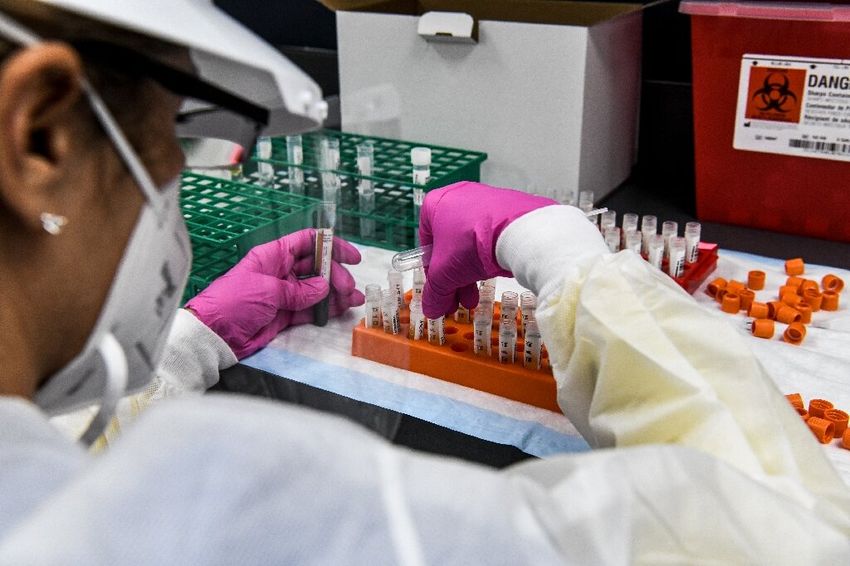
'Level playing field'

                                                          It is of course not just normal but desirable that
                                                          laboratory heads should be encouraged to develop
                                                          a safe and reliable vaccine as quickly as possible,
                                                          Taylor said.

                                                          But "when they are going to sell their shares, they
                                                          have to make sure that they are operating by the
                                                          same level playing field, that they're not taking
                                                          advantage of other investors by having more
                                                          information," he said.

                                                          Taylor added a word of caution: "I don't think that
                                                          companies have internalized the reputational risk to
A technician sorts blood samples inside a laboratory in
                                                          these trades" by selling shares even as COVID-19
Hollywood, Florida during a Covid-19 vaccine study on
August 13, 2020                                           cases have been spiraling upward around the
                                                          world.

                                                    When a top executive needs to sell shares to pay
It allows them to set up a plan determining the     for a yacht, a new house or his children's
trades of their shares at a price, amount or dates  education, the public rarely is aware of it. But with
specified in advance, but only when they are not in the pandemic raging, the laboratories are under
possession of privileged information that could     intense scrutiny.
affect share prices.

Once such a sale is planned, it cannot be modified
at the last minute, even if its timing might ultimately
raise questions.

Still, this use of the rule by Pfizer and Moderna
appears "legally questionable," according to Daniel
Taylor, an associate professor at the University of
Pennsylvania's Wharton business school, who has
been studying the big pharma firms since the
beginning of the pandemic.

"The question is, what did the executives know at
the time that they pre-scheduled the trade?" he
asked.
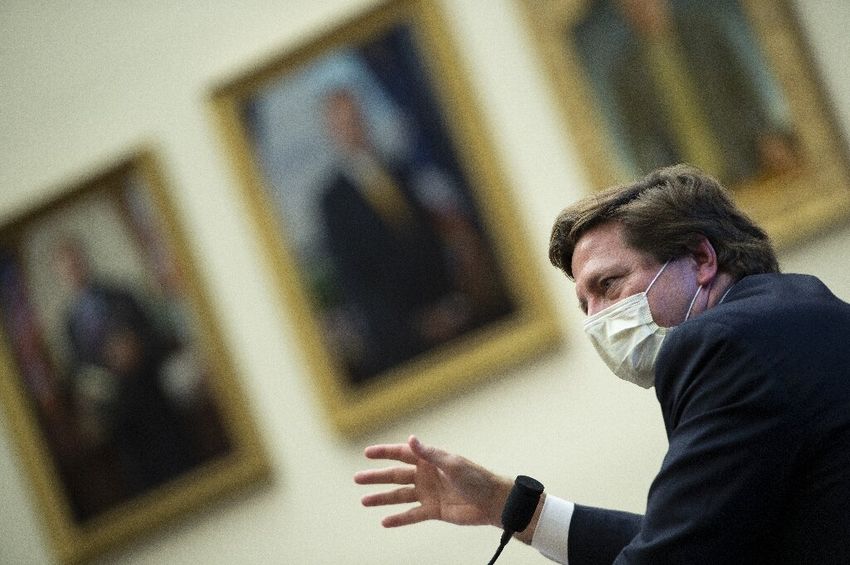
                                                          Jay Clayton, chairman of the US Securities and
Bourla, according to Pfizer, had merely re-               Exchange Commission, is seen testifying at a
authorized on August 19 a plan for a share sale           congressional hearing on June 25, 2020; he has
                                                          exhorted company executives to observe best practices
originally authorized in February, "with the same
price and volume terms."

But a day after that, the company issued a
statement describing the preliminary results of its       Honesty with investors
clinical trials as "positive."
                                                          For Sanjai Bhagat, a professor at the University of

                                                                                                         2/3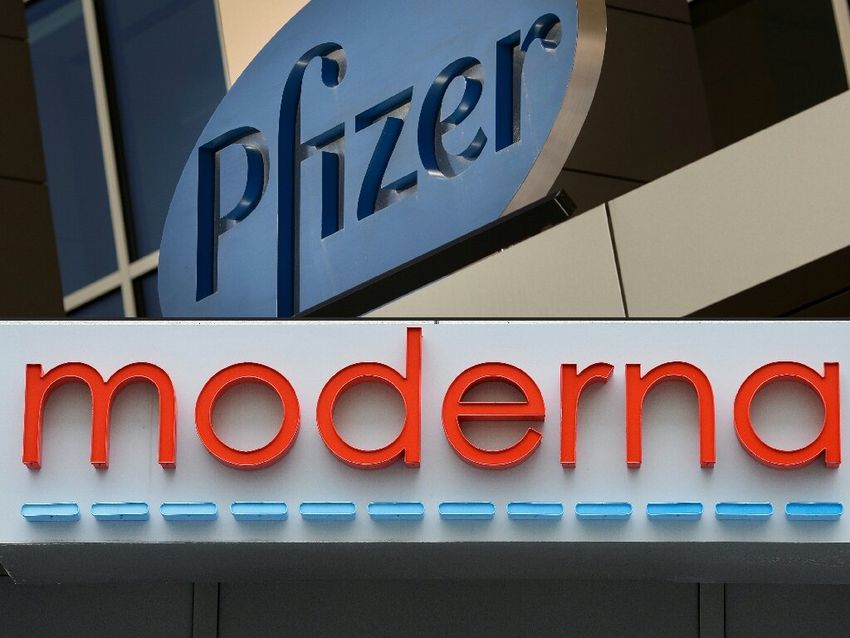
Colorado-Boulder who specializes in corporate
                                   governance, top executives should simply not be
                                   allowed to sell company shares until a year or two
                                   after they leave the company.

                                   "If they have a lot of vested stock and stock
                                   options, then they have an incentive to get the
                                   share price as high as they can, even by not being
                                   totally honest with the investing public," he said.

                                   Bhagat believes corporate boards should eliminate
                                   any chance of temptation.

                                   "Not having done anything illegal is not the
                                   standard by which they should be judged," he said.
                                   "Especially in these times, people are expecting
                                   them to act responsibly."

                                   Contacted by AFP, the SEC would not say whether
                                   it was investigating any of the lab executives.

                                   But in an interview in May on the CNBC network,
                                   SEC chairman Jay Clayton exhorted executives to
                                   respect best practices.

                                   "Why would you want to even raise the question
                                   that you were doing something that was
                                   inappropriate?" he asked.

                                    © 2020 AFP
                                   APA citation: Covid-19: As lab execs sell shares worth millions, questions arise (2020, November 15)
                                   retrieved 18 November 2020 from https://medicalxpress.com/news/2020-11-covid-lab-execs-worth-
                                   millions.html

                                   This document is subject to copyright. Apart from any fair dealing for the purpose of private study or research, no
                                   part may be reproduced without the written permission. The content is provided for information purposes only.

                                                                                                                                                3/3

Powered by TCPDF (www.tcpdf.org)
You can also read


