COVID-19 Weekly Epidemiological Update - ReliefWeb
←
→
Page content transcription
If your browser does not render page correctly, please read the page content below
COVID-19 Weekly Epidemiological Update
Data as received by WHO from national authorities, as of 21 March 2021, 10 am CET
In this edition:
    • Global overview
    • Special focus: Release of the WHO COVID-19 Detailed Surveillance Dashboard
    • Special focus: SARS-CoV-2 variants of concern
    • WHO regional overviews
    • Key weekly updates

Global overview
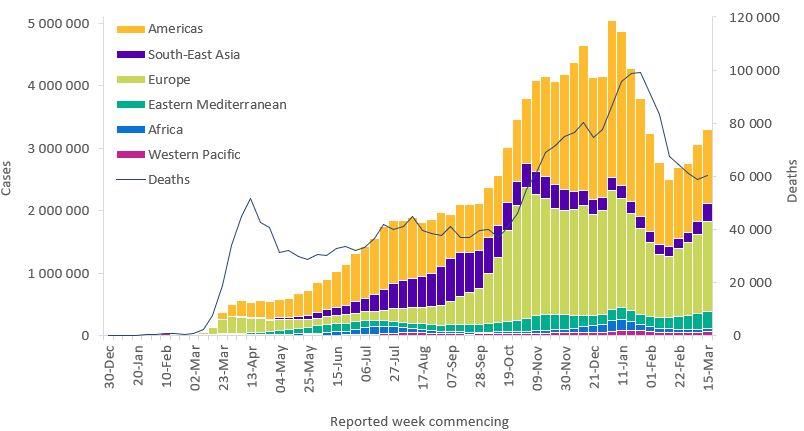
Globally, COVID-19 confirmed cases continued to rise for a fourth consecutive week, with just under 3.3 million
new cases reported in the last week (Figure 1). At the same time, the number of new deaths reported
plateaued after a six week decrease, with just over 60 000 new deaths reported. Marked increases in the
number of new cases were reported from the South-East Asia, Western Pacific, European and Eastern
Mediterranean regions, all of which have been on an upward trajectory in recent weeks. Case incidence in the
African Region and the Region of the Americas has remained stable in recent weeks, notwithstanding
concerning trends observed in some countries within these regions. The European Region and the Region of
the Americas continue to account for nearly 80% of all the cases and deaths. The only WHO region to report a
decline in new deaths this week was the Western Pacific where deaths fell by nearly a third, compared to the previous
week.

Figure 1. COVID-19 cases reported weekly by WHO Region, and global deaths, as of 21 March 2021**

**See   Annex: Data, table and figure notes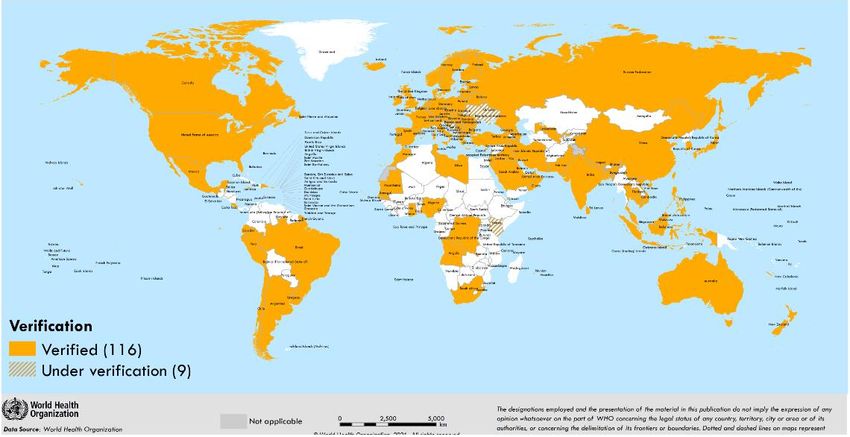
The highest numbers of new cases were reported from Brazil (508 010 new cases; 3% increase), the United States of
America (374 369 new cases; 19% decrease), India (240 082 new cases; 62% increase), France (204 840 new cases;
27% increase), and Italy (154 493 new cases; similar to previous week).

Table 1. Newly reported and cumulative COVID-19 confirmed cases and deaths, by WHO Region, as of 21 March
2021**
                      New cases        Change in                  New deaths Change in new
                                                  Cumulative                                      Cumulative
 WHO Region              in last 7 new cases in                 in last 7 days  deaths in last
                                                     cases (%)                                     deaths (%)
                         days (%)   last 7 days *                          (%)       7 days *
                             1 173 561                           53 937 714              31 040                              1 299 243
 Americas                                              -5%                                                         2%
                                 (36%)                                (44%)               (51%)                                  (48%)
                             1 441 065                           42 516 762              21 772                                929 332
 Europe                                                13%                                                         1%
                                 (44%)                                (35%)               (36%)                                  (34%)
                               298 438                           14 182 826                2 435                               214 790
 South-East Asia                                       49%                                                       14%
                                  (9%)                                (12%)                 (4%)                                  (8%)
 Eastern                       263 650                            7 124 121                3 253                               153 446
                                                        8%                                                       12%
 Mediterranean                    (8%)                                 (6%)                 (5%)                                  (6%)
                                50 916                            2 999 152                1 428                                76 113
 Africa                                                -3%                                                       10%
                                  (2%)                                 (2%)                 (2%)                                  (3%)
                                63 730                            1 775 560                  486                                30 843
 Western Pacific                                       29%                                                      -33%
                                  (2%)                                 (1%)                 (1%)                                  (1%)
                             3 291 360                         122 536 880               60 414                              2 703 780
 Global                                                 8%                                                         3%
                                (100%)                              (100%)               (100%)                                 (100%)

*Percent change in the number of newly confirmed cases/deaths in past seven days, compared to seven days prior. Regional percentages
rounded to the nearest whole number; global totals may not equal 100%.
**See Annex: Data, table and figure notes

For the latest data and other updates on COVID-19, please see:
           •   WHO COVID-19 Dashboard
           •   WHO COVID-19 Weekly Operational Update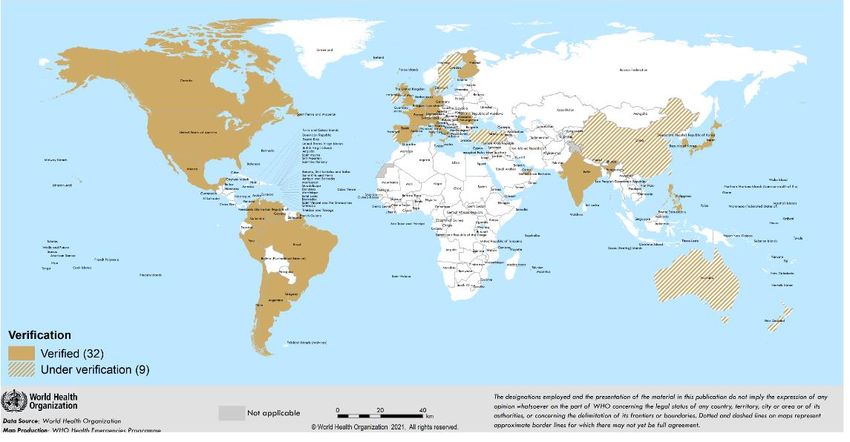
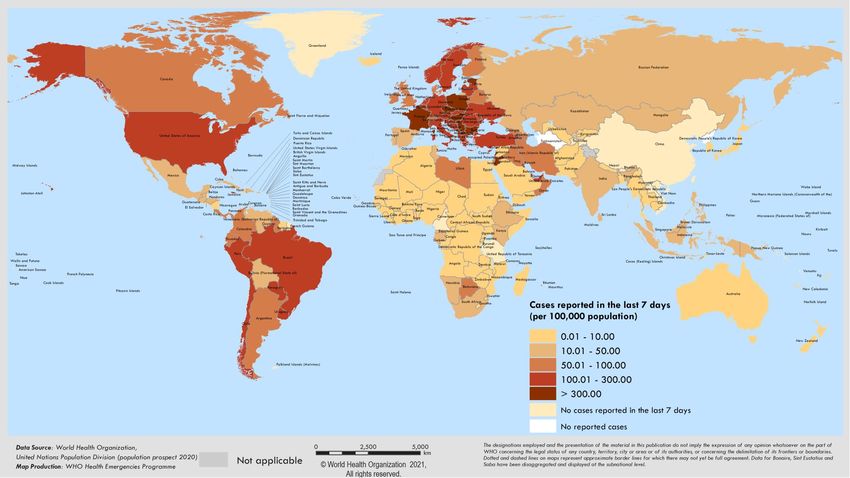
Figure 2. COVID-19 cases per 100 000 population reported by countries, territories and areas, 15-21 March 2021**

**See   Annex: Data, table and figure notes
Special Focus: Release of the WHO COVID-19 Detailed Surveillance Dashboard
Over one year into the pandemic, WHO continues to conduct global surveillance of COVID-19 as part of activities
on preparedness, readiness and response activities. The need for global surveillance of COVID-19 is greater than
ever, as the implementation of vaccination campaigns and the appearance of variants are prone to impact the
course of the epidemic, as transmission patterns evolve. Timely and complete surveillance data are key to
monitoring these changes.
In addition to the daily count of confirmed cases and deaths of COVID-19, WHO requested all Members States
to report a minimal set of information using a case report form or via the weekly aggregated surveillance system
as specified in the Public Health Surveillance for COIVD-19 interim guidance. Member States report primarily via
one of the systems; some have switched from case report forms to weekly reporting.
The data reported are now publicly available through the WHO COVID-19 detailed surveillance data dashboard
(Figure 3), without editing or filtering by WHO. Features include stratification by age and sex, trends over time,
case fatality ratios by age, testing, hospitalization, and data on health workers – all visible at country and regional
levels. The dashboard provides the ability for users to conduct further analyses by country and selected time
period.
Figure 3: Snapshot of the COVID-19 Surveillance dashboard

As of 14 March 2021, a total of 186 countries, territories and areas had shared detailed data, via case report
forms or weekly aggregate surveillance with WHO. Of the 119 million cases reported globally at this time,
WHO has received information for 86.4 million cases (73%). Sex was reported for over 59 million cases (50%),
age reported for 45 million cases (38%), and age and sex combined was reported for 42 million cases (36%).
There are also data on COVID-19 cases among health workers, with just over 1.6 million cases, and 25 000
deaths, recorded in the system.
Special Focus: Update on SARS-CoV-2 Variants of Concern
  WHO, in collaboration with national authorities, institutions and researchers, continues to monitor the public
  health events associated with SARS-CoV-2 variants and provides updates as new information
  becomes available. Further information on the background of the variants of interest (VOIs) and variants of
  concern (VOCs) is available from previously published editions of the Weekly Epidemiological Update. Here we
  provide an update on the geographical distribution, and emerging evidence surrounding transmissibility and
  severity, and potential impacts on vaccines and diagnostics. We also update on emerging VOIs, and a recent
  workshop on enhancing sequencing for SARS-CoV-2.

  Table 2: Overview of emerging information on key variants of concern, as of 23 March 2021*
Nextstrain clade       20I/501Y.V1                                20H/501Y.V2†                                                            20J/501Y.V3
PANGO lineage          B.1.1.7                                    B.1.351                                                                 B.1.1.28.1, alias P.1†
GISAID clade           GR                                         GH                                                                      GR
Alternate names        VOC 202012/01†                             VOC 202012/02                                                           -
First detected by      United Kingdom                             South Africa                                                            Brazil / Japan
First appearance       20 September 2020                          Early August 2020                                                       December 2020
Key spike              H69/V70 deletion; Y144 deletion;           L242/A243/L244 deletion; K417N E484K, N501Y                             K417T, E484K;
mutations              N501Y; A570D; and P681H                                                                                            N501Y
Key mutation in
                                                         S106/G107/F108 deletion in Non-Structural Protein 6 (NSP6)
common
Transmissibility*      Increased1, 2 (36%-75%)3,                  Increased [1.50 (95% CI: 1.20-2.13) times more                          Increased, more
                       increased secondary attack rate4           transmissible than previously circulating variant 5, 6                  transmissible than
                       (10% to 13%)                                                                                                       previous circulating
                                                                                                                                          variants7
Severity*              Possible increased risk of                 Possible increased risk of in-hospital mortality by 20%6, 9             Under investigation,
                       hospitalization8, severity and                                                                                     limited impact7
                       mortality4
Neutralization         Slight reduction but overall               Decreased, suggesting potential increased risk of                       Decreased,
capacity*              neutralizing titers still remained         reinfection5, 11, 12                                                    reinfections
                       above the levels expected to                                                                                       reported13, 14
                       confer protection10
Potential             • No significant impact on post-           • Post-vaccine neutralization reductions range from minimal • Limited to modest
impacts on               vaccine neutralization by                 to moderate for Moderna and Pfizer, however there is also    reduction in post-
vaccines*                Moderna, Pfizer-BioNTech,                 some evidence of more substantial reductions.19              vaccine
                         Oxford-AstraZeneca, Novavax             • A single study has evaluated Sinopharm.  20                  neutralization by
                         and Bharat vaccines 15-18               • Substantial reductions have been found for the Oxford-       Oxford-
                      • No significant change in                   AstraZeneca product.21, 22 Results for Novavax and Janssen   AstraZeneca,
                         prevention of disease by Oxford-          are pending.                                                 Moderna and Pfizer
                         AstraZeneca, Novavax, and               • Efficacy against disease was retained, but somewhat lower,   vaccines. 19, 21, 27-31
                         Pfizer15-17                               in South Africa when 501Y.V2 was dominant compared to      • Preliminary
                      • Evidence for prevention of                 settings without this variant.23, 24                         suggestion of loss
                         infection evidence limited.             • In a small study, AstraZeneca did not demonstrate vaccine    of neutralization
                         Reduced effect reported for               efficacy against mild-moderate COVID-19 disease, with        following
                         Oxford-AstraZeneca.15, 18                 wide confidence intervals, while efficacy against severe     vaccination with
                                                                   disease was not assessed and is undetermined.25, 26          Sinovac 32
                                                                 • There is no evidence to inform vaccine impact on
                                                                   asymptomatic infection by 501Y.V2.
Potential              S gene target failure (SGTF).25 No         None reported to date                                        None reported to
impacts on             impact on Ag RDTs observed23                                                                            date
diagnostics*
Countries              125 (7)                                    75 (11)                                                                 41(3)
reporting cases
(newly reported
in last week)**
  †While work is ongoing to establish standardized nomenclature for key variants, these are the names by which WHO will refer to them in this publication.
  *Generalized findings as compared to non-VOC viruses. Based on emerging evidence from multiple countries, including nonpeer-reviewed preprint articles
  and reports from public health authorities and researchers – all subject to ongoing investigation and continuous revision.
  **Includes official and unofficial reports of VOCs detections in countries among either travellers (imported cases only) or community samples (local
  transmission).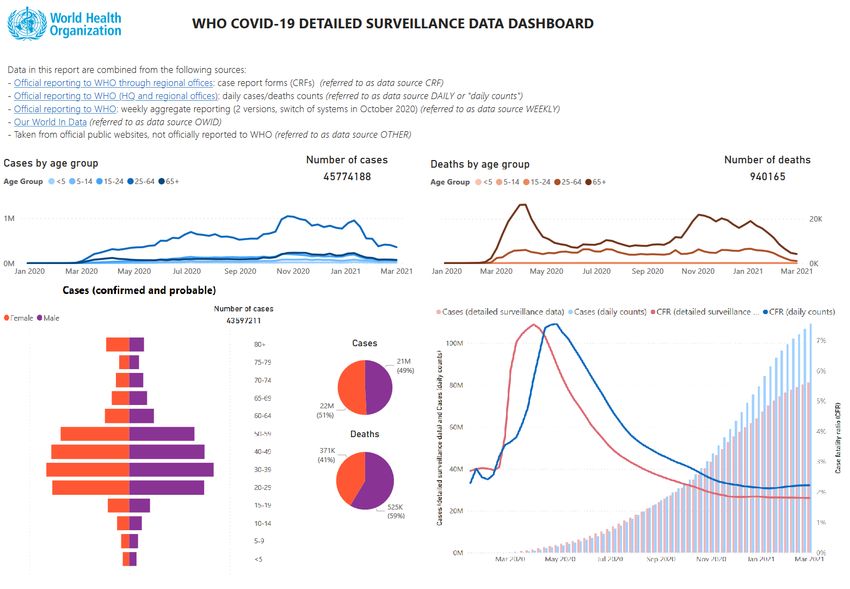
The number of countries reporting VOCs has continued to increase (Table 2, Figures 5, 6 and 7, Annex 2). This
information should be interpreted with due consideration of limitations of ongoing surveillance, including
but not limited to differences between countries in sequencing capacity and which samples are prioritized
for sequencing. WHO continues to advocate for strengthening surveillance and sequencing capacity, and a
systematic approach to provide a representative indication of the extent of transmission of SARS-CoV-2
variants; based on the local epidemiological situation and capacity, and the detection of unusual events.

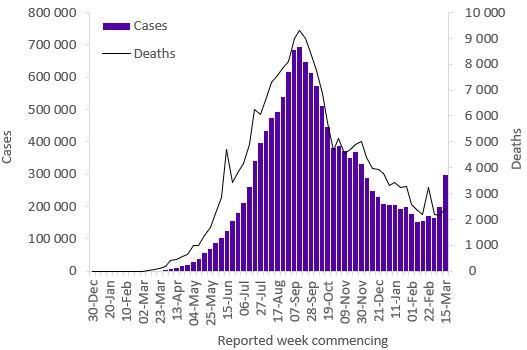
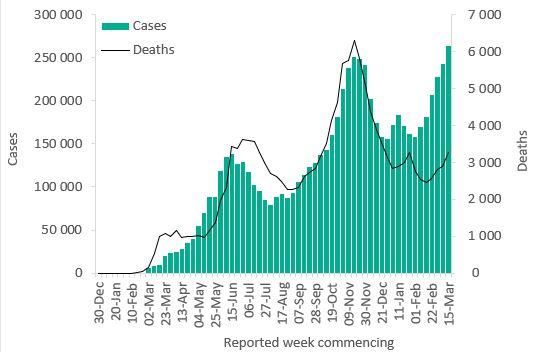
VOC 202012/01, 501Y.V2 and P.1 have commonly demonstrated an increase in transmissibility compared to
wild-type (non-VOC) variants, and a veracity to rapidly replace other circulating strains. We analysed
sequence data submitted to GISAID to determine the change in proportion of VOCs over time and calculate
the associated change in transmissibility. Variants 202012/01, 501Y.V2 and P.1 rapidly replaced the wild-type
variant in the United Kingdom, South Africa and Brazil, respectively (Figure 4). Using a logistic model of
competitive growth, the additive increase in the effective reproduction number (Rt) relative to the wild-type
variant was estimated at 41% (95% CI: 41–42%) for 202012/01, 36% (95% CI: 32–40%) for 501Y.V2, and 11%
(95% CI: 7–16%) for P.1. The transmissibility of P.1 was higher when estimated only for the Amazonas region
of Brazil (data not shown), suggesting more rapid replacement of the wild-type variant at a local level.
However, the number of sequences was too low to meaningfully quantify the change in Rt. These analyses
assume that sequence data submitted to GISAID is representative of the variants circulating in the region
under consideration; if sequencing efforts are targeted at suspected VOCs, the rate of replacement and
associated increased transmissibility of VOCs may be overestimated.

Figure 4. Proportion of SARS-CoV-2 202012/01, 501Y.V2 and P.1 variants over time in the United Kingdom,
South Africa and Brazil, respectively. The estimated increase in Rt and associated 95% confidence interval is
indicated below the country name.
Variant VOC 202012/01
Since our last update on 16 March, VOC 202012/01 has been detected in seven additional countries. As of 23
March, a total of 125 countries across all six WHO regions have reported cases of this variant (Figure 5).
Previous studies have shown VOC 202012/01 may be associated with an increased risk of hospitalization,
severity and mortality.4, 8 A recently published matched cohort study provides additional evidence,
highlighting that there is a higher risk of mortality when infected by VOC 202012/01. The study involved
nearly 55 000 matched pairs of participants who tested positive for SARS-CoV-2 between 1 October 2020 and
29 January 2021 and were followed-up until 12 February 2021. Results showed an increased mortality hazard
ratio of 1.64 (95% confidence interval 1.32 to 2.04). This ratio was associated with infection with VOC
202012/01 compared with infection with previously circulating variants, in patients who tested positive for
COVID-19 in the community. Although this constitutes a comparatively low risk group overall, it represents
an increase in deaths from 2.5 to 4.1 per 1000 detected cases.

Vaccine updates
There is a growing body of evidence on vaccine-induced neutralizing antibody activity against
VOC202012/01, including for AstraZeneca, Moderna, Pfizer, Novavax, and Bharat vaccines. The findings
support that neutralizing activity is largely sustained against this variant.10, 33 Additional evidence is available
on the ability of vaccines to protect against disease from VOC 202012/01 are available for the AstraZeneca
and Pfizer vaccines, from a randomized controlled trial (RCT) in the UK (AstraZeneca) and observational
evidence (Pfizer and AstraZeneca) from the UK during the period when VOC 202012/01 was prevalent. 17
Results from a test-negative case control study conducted in England from December 2020 to February 2021
when VOC202012/01 was very prevalent, showed the early real-world effectiveness of the Pfizer/BioNTech -
BNT162b2 vaccine and AstraZeneca - ChAdOx1 vaccine against confirmed COVID-19, hospitalizations and
deaths.17 This study also estimated effectiveness on the VOC202012/01. Both vaccines show that vaccination
with either a single dose of BNT162b2 or ChAdOx1 was associated with a significant reduction in
symptomatic COVID-19 cases in older adults (>70 years old) with even greater protection against severe
disease.

Evidence for vaccines to protect against asymptomatic infection, which would influence community
transmission, is limited to the RCT in the UK of the AstraZeneca product.15 Although effectiveness against
disease was largely sustained against VOC202012/01, preliminary evidence suggests that the efficacy against
asymptomatic infection is reduced in the face of this variant.

Figure 5. Countries, territories and areas reporting SARS-CoV-2 VOC 202012/01 as of 23 March 2021
Variant 501Y.V2

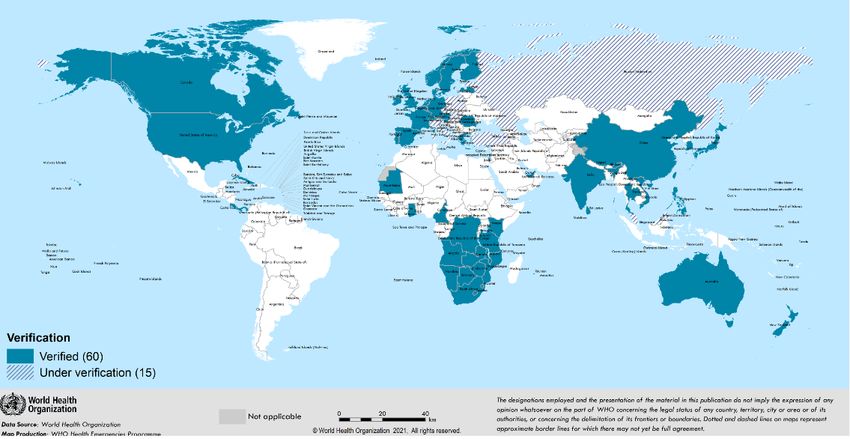
Since the last update on 16 March, 501Y.V2 has been reported from 11 additional countries – totaling 75
countries across all six WHO regions (Figure 6). In several areas within the African Region, variant 501Y.V2
has been reported to comprise a high proportion of sequenced samples, including over 90% of sequenced
specimens in some settings.34, 35

A newly released population-based study in South Africa, available in preprint, compared in-hospital
mortality during its first wave peaking in mid-July 2020 to the second wave peaking in January 2021 when
variant 501Y.V2 was the predominant variant. After adjusting for weekly hospital admissions, the risk of in-
hospital mortality increased by 20% (adjusted odds ratio of 1.2, 95%CI 1.2-1.3).9

Vaccine updates
Reductions in neutralizing antibody activity against 501Y.V2 induced by vaccines or natural infection
compared with wild-type (non-VOC) variants, have been documented in a substantial number of studies.5, 30
Findings from a recent study that analyzed convalescent plasma from 20 patients and sera from 22
participants of vaccine trials [Moderna SARS-CoV-2 mRNA-1273 vaccine (12 participants); Pfizer BNT162b2
COVID-19 vaccine (10 participants)] indicated that relative to wild-type variants, there was a substantial
decrease in the neutralizing activity of convalescent plasma (9.4-fold) and sera from vaccinated participants
(10.3 to 12.4-fold) against 501Y.V2.31 In addition, T-cell analyses suggest this component of the vaccine
induced immune response is less influenced by the variants than the impact on the neutralization activity. 36

Evidence of vaccine efficacy against clinical disease from B.1.351 is available for AstraZeneca, Janssen and the
Novavax vaccines.24, 37, 38 Comparisons are hampered by different case definitions, and trials sizes. Although
there appears to be some reduction in efficacy compared with non-B.1.351 strains, both the Novavax and the
Janssen product retain significant efficacy. The AstraZeneca trial found no statistically significant efficacy;
however, this trial was of a small sample size, had only mild and moderate cases and used a dosing interval of
4 weeks.37 Separate evidence indicates a longer dosing interval improves both immunogenicity and efficacy,
which along with other evidence leave open the plausibility that efficacy against severe disease may be
partially retained.

Figure 6. Countries, territories and areas reporting SARS-CoV-2 501Y.V2 as of 23 March 2021
Variant P.1
Since our last update, variant P.1 has been reported in three additional countries. As of 23 March, this variant
is reported in 41 countries across all six WHO regions (Figure 7).

A recent study analyzed the national health surveillance data of hospitalizations and frequency of variant P.1
in Manaus city, in Amazonas State, Brazil where this variant was first detected and has widely spread. Based
on the preliminary findings, P.1 is found to be 2.5 times more transmissible (95% CI:2.3-2.8) compared to the
previously circulating variant while the reinfection probability was found to be low i.e. 6.4% (CI:5.7–7.1%).39
Two additional studies analyzed the genomic data from Manaus and estimated higher transmissibility of the
P.1 variant.7, 14 However, these are preliminary findings and more studies are required to fully understand
the transmissibility and severity of P.1 variant.

Vaccine updates
Numerous studies have measured the neutralization of variant P.1 by sera from those vaccinated with Pfizer,
Moderna, AstraZeneca or Sinovac against SARS-CoV-2 virus including in Manaus.21, 27-32 19 Based on these
findings, the neutralization activity was reduced by 2.6 to 10-fold depending on the vaccine and individuals.
In particular, among people vaccinated with the Sinovac product (CoronaVac vaccine), the plasma failed to
efficiently neutralize variant P.1 suggesting possibility of reinfection. One T-cell study concluded that
response was largely preserved.36 There are no clinical outcome data following vaccination which are needed
to understand the implications of the limited to moderate loss of neutralization activity.

Figure 7. Countries, territories and areas reporting SARS-CoV-2 P.1 variant as of 23 March 2021

WHO Global workshop on enhancing sequencing for SARS-CoV-2, 19 March 2021

On 19 March 2021, WHO hosted a global workshop on enhancing sequencing to monitor SARS-CoV-2
evolution, bringing together stakeholders in a high level discussion to agree on a common vision and a global,
coordinated plan to increase SARS-CoV-2 sequencing capacity, in order to strengthen detection of VOIs and
VOCs. Over 800 participants joined this virtual workshop, including representatives from Ministries of Health,
academia and donors, engaging in discussions on the international sequencing landscape, available capacities
and opportunities for network-driven strengthening of SARS-CoV-2 variant detection.

The workshop highlighted how we can leverage existing surveillance systems and structures, such as existing
SARS-CoV-2 reference network, the Global Influenza Surveillance and Response System (GISRS), HIV, TB and
Polio laboratory networks, to strenghen existing regional networks, and to build new sustainable capacity to
generate and process sequencing data for SARS-CoV-2 and other infectious pathogens. Sequence and
supporting meta-data sharing is critical to better understand virus evaluation and to inform the COVID-19
response. The workshop outcomes were as follows:
•    A situational overview of national and regional sequencing and data analysis capacities around the world
     and demonstration of ongoing support from Member States with capacities to support others.
•    An agreement from participants on the importance of timely data sharing and a need to build capacity for
     sequencing, data processing leading to informed action.
•    An agreement toward a global plan to enhance sequencing and analysis capacities and linking results with
     public health actions.
The workshop outlined the need for global coordination of sequencing capacity. WHO will provide the
coordination role by providing a platform, leadership and coordination for future discussions, capacity
building and network-based knowledge sharing. The workshop will inform discussions at the upcoming
Global Consultation on a Decision Framework for Assessing the Impact of SARS-CoV-2 Variants of Concern on
Public Health Interventions on 29 March 2021.

Emerging variants of interest (VOIs)

All viruses, including SARS-CoV-2, change over time resulting in the emergence of new variants, most without
a direct benefit to the virus or other public health impacts. WHO, in collaboration with national authorities,
institutions and researchers, routinely assesses if variants of SARS-CoV-2 result in changes in transmissibility,
clinical presentation and severity, or if they impact on public health and social measures (PHSM). Systems
have been established to detect “signals” of potential variants of interest or concern, as well as unusual
events potentially associated with a variant, and assess these based on the risk posed to global public health
(see also working definitions). A number of such signals are currently under assessment, and as new VOIs or
VOCs are determined, WHO is committed to highlighting these to support prioritization for further
monitoring and assessment. Table 3 summarises assessed and designated VOIs as of 23 March 2021.
National authorities may choose to designate other variants of local interest/concern as every local situation
is unique, with different variants circulating, requiring surveillance and response systems to adapt to their
local epidemiological situation.

Table 3: Overview of variants of interest (VOIs), as of 23 March 2021*

 Nextstrain clade         20C                                20C/S:452R                 20J
 PANGO lineage            B.1.525                            B.1.427/B.1.429            B.1.1.28.2, alias P.2
 GISAID clade             G/484K.V3                          GH/452R.V1
 Alternate names                                             CAL.20C/L452R
 First detected by        United Kingdom and Nigeria         United States of America   Brazil
 First appearance         December 2020                      June 2020                  April 2020
 Key spike mutations      H69-V70 deletion; Y144 deletion;   L452R; W152C; S13I;        L18F; T20N; P26S; F157L;
                          Q52R; E484K; Q677H; D614G; and     D614G                      E484K; D614G; S929I;
                          F888L                                                         and V1176F
WHO recommendations The potential for virus mutation increases with the frequency of human and animal infections. Therefore, reducing transmission of SARS-CoV-2 by using established disease control methods as well as avoiding introductions to animal populations, are critical aspects to the global strategy to reduce the occurrence of mutations that have negative public health implications. PHSM remain critically important to curb the spread of SARS-CoV-2, including newly reported variants. Evidence from multiple countries with extensive transmission of VOCs has indicated that the implementation of physical distancing and other PHSM as well as infection prevention and control (IPC) measures in health facilities has been effective in reducing COVID-19 case incidence, which has led to a reduction in hospitalizations and deaths among COVID-19 patients. Findings from new studies evaluating transmission, severity and impact on medical countermeasures will continue to help inform PHSM and IPC measures employed by Member States. National and local authorities are encouraged to continue strengthening existing PHSM, IPC and disease control activities, including epidemiological surveillance, strategic testing, and systematic sequencing of SARS-CoV-2 where feasible. Additional resources • Genomic sequencing of SARS-CoV-2: a guide to implementation for maximum impact on public health • Considerations for implementing and adjusting PHSM in the context of COVID-19 • Proposed working definitions of SARS-CoV-2 Variants of Interest and Variants of Concern • Disease Outbreak News on SARS-CoV-2 Variants, 31 December 2020 References 1.Public Health England. Investigation of SARS-CoV-2 variants of concern in England - Technical briefing 6. 2021. Available from: https://assets.publishing.service.gov.uk/government/uploads/system/uploads/attachment_data/file/961299/Variants_of_Concern_VOC_Technical_Briefing _6_England-1.pdf. 2.Davies NG, Abbott S, Barnard RC, Jarvis CI, Kucharski AJ, Munday JD, et al. Estimated transmissibility and impact of SARS-CoV-2 lineage B.1.1.7 in England. Science. 2021:eabg3055. Available from: http://science.sciencemag.org/content/early/2021/03/03/science.abg3055.abstract. 3.European Centre for Disease Prevention and Control. Risk assessment on COVID-19, 15 February 2021. 2021. Available from: https://www.ecdc.europa.eu/en/current-risk-assessment-novel-coronavirus-situation. 4.NERVTAG paper on COVID-19 variant of concern B.1.1.7. GOVUK. 2021. Available from: https://www.gov.uk/government/publications/nervtag-paper-on- covid-19-variant-of-concern-b117 5.Wibmer CK, Ayres F, Hermanus T, Madzivhandila M, Kgagudi P, Oosthuysen B, et al. SARS-CoV-2 501Y.V2 escapes neutralization by South African COVID-19 donor plasma. Nat Med. 2021. Available from: https://www.ncbi.nlm.nih.gov/pubmed/33654292. 6.Pearson CAB RT, Davies NG et al. Estimates of severity and transmissibility of novel SARS-CoV-2 variant 501Y.V2 in South Africa. 2021. Available from: https://cmmid.github.io/topics/covid19/sa-novel-variant.html. 7.Faria NR, Mellan TA, Whittaker C. Genomics and epidemiology of a novel SARS-CoV-2 lineage in Manaus, Brazil. 8.Bager P WJ, Fonager J, Albertsen M, Michaelsen TY, Moller CH, et al. Increased Risk of Hospitalisation Associated with Infection with SARS-CoV-2 Lineage B.1.1.7 in Denmark. Lancet. 2021. Available from: https://papers.ssrn.com/sol3/papers.cfm?abstract_id=3792894. 9.Jassat W MC, Ozougwu L, ., et al. Increased mortality among individuals hospitalised with COVID-19 during the second wave in South Africa. 2021. 10.Muik A, Wallisch A-K, Sänger B, Swanson KA, Mühl J, Chen W, et al. Neutralization of SARS-CoV-2 lineage B.1.1.7 pseudovirus by BNT162b2 vaccine– elicited human sera. Science. 2021:eabg6105. Available from: https://science.sciencemag.org/content/sci/early/2021/01/28/science.abg6105.full.pdf. 11.Cele S, Gazy I, Jackson L, Hwa S-H, Tegally H, Lustig G, et al. Escape of SARS-CoV-2 501Y.V2 variants from neutralization by convalescent plasma.19. Available from: https://www.medrxiv.org/content/10.1101/2021.01.26.21250224v1. 12.Li R, Ma X, Deng J, Chen Q, Liu W, Peng Z, et al. Differential efficiencies to neutralize the novel mutants B.1.1.7 and 501Y.V2 by collected sera from convalescent COVID-19 patients and RBD nanoparticle-vaccinated rhesus macaques. Cell Mol Immunol. 2021. Available from: https://www.ncbi.nlm.nih.gov/pubmed/33580167. 13.Sabino EC, Buss LF, Carvalho MPS, Prete CA, Crispim MAE, Fraiji NA, et al. Resurgence of COVID-19 in Manaus, Brazil, despite high seroprevalence. The Lancet. 2021;397(10273):452-5. Available from: https://linkinghub.elsevier.com/retrieve/pii/S0140673621001835. 14. Naveca F et al. COVID-19 epidemic in the Brazilian state of Amazonas was driven by long-term persistence of endemic SARS-CoV-2 lineages and the recent emergence of the new Variant of Concern P.1. Nature Portfolio. 2021. Available from: https://doi.org/10.21203/rs.3.rs-275494/v1. 15.Emary K, Golubchik T, Aley P, Ariani C, Angus B, Bibi S, et al. Efficacy of ChAdOx1 nCoV-19 (AZD1222) Vaccine Against SARS-CoV-2 VOC 202012/01 (B.1.1.7). SSRN Electronic Journal. 2021. 16.Lumley SF, Rodger G, Constantinides B, Sanderson N, Chau KK, Street TL, et al. An observational cohort study on the incidence of SARS-CoV-2 infection and B.1.1.7 variant infection in healthcare workers by antibody and vaccination status. medRxiv. 2021:2021.03.09.21253218. Available from: http://medrxiv.org/content/early/2021/03/12/2021.03.09.21253218.abstract. 17.Lopez Bernal J, Andrews N, Gower C, Stowe J, Robertson C, Tessier E, et al. Early effectiveness of COVID-19 vaccination with BNT162b2 mRNA vaccine and ChAdOx1 adenovirus vector vaccine on symptomatic disease, hospitalisations and mortality in older adults in England. medRxiv. 2021:2021.03.01.21252652. Available from: http://medrxiv.org/content/early/2021/03/02/2021.03.01.21252652.abstract. 18.Washington NL, Gangavarapu K, Zeller M, Bolze A, Cirulli ET, Barrett KMS, et al. Genomic epidemiology identifies emergence and rapid transmission of SARS-CoV-2 B.1.1.7 in the United States. medRxiv. 2021:2021.02.06.21251159. Available from: http://medrxiv.org/content/early/2021/02/07/2021.02.06.21251159.abstract. 19.Garcia-Beltran WF LE, Denis KS, et al. Multiple SARS-CoV-2 variants escape neutralization by vaccine-induced humoral immunity. 2021. Available from: https://www.medrxiv.org/content/10.1101/2021.02.14.21251704v2. 20.Huang B DL, Wang H ., et al. Neutralization of SARS-CoV-2 VOC 501Y.V2 by human antisera elicited by both inactivated BBIBP-CorV and recombinant dimeric RBD ZF2001 vaccines. bioRxiv; 2021.
21.Dejnirattisai W, Zhou D, Supasa P, Liu C, Mentzer AJ, Ginn HM, et al. Antibody evasion by the Brazilian P.1 strain of SARS-CoV-2. bioRxiv.
2021:2021.03.12.435194. Available from: http://biorxiv.org/content/early/2021/03/19/2021.03.12.435194.abstract.
22.Zhou D, Dejnirattisai W, Supasa P, Liu C, Mentzer AJ, Ginn HM, et al. Evidence of escape of SARS-CoV-2 variant B.1.351 from natural and vaccine-induced
sera. Cell. 2021. Available from: https://www.ncbi.nlm.nih.gov/pubmed/33730597.
23.Mahase E. Covid-19: Novavax vaccine efficacy is 86% against UK variant and 60% against South African variant. BMJ. 2021:n296. Available from:
https://www.bmj.com/lookup/doi/10.1136/bmj.n296.
24.US Food and Drug Administration. Vaccines and Related Biological Products Advisory Committee Meeting February 26, 2021, FDA Briefing Document
Janssen Ad26.COV2.S Vaccine for the Prevention of COVID-19. 2021.
25.ChAdOx1 nCov-19 provides minimal protection against mild-moderate COVID-19 infection from B.1.351 coronavirus variant in young South African adults
| University of Oxford. Available from: https://www.ox.ac.uk/news/2021-02-07-chadox1-ncov-19-provides-minimal-protection-against-mild-moderate-covid-
19-infectionfiles/84.
26.Latest - Oxford Covid-19 vaccine trial results - Wits University. Available from: https://www.wits.ac.za/covid19/covid19-news/latest/oxford-covid-19-
vaccine-trial-results.html
27.Jangra S, Ye C, Rathnasinghe R, Stadlbauer D, Krammer F, Simon V, et al. The E484K mutation in the SARS-CoV-2 spike protein reduces but does not
abolish neutralizing activity of human convalescent and post-vaccination sera. medRxiv. 2021:2021.01.26.21250543. Available from:
http://medrxiv.org/content/early/2021/01/29/2021.01.26.21250543.abstract.
28.Hoffmann M, Arora P, Groß R, Seidel A, Hörnich B, Hahn A, et al. SARS-CoV-2 variants B.1.351 and B.1.1.248: Escape from therapeutic antibodies and
antibodies induced by infection and vaccination. bioRxiv. 2021:2021.02.11.430787. Available from:
http://biorxiv.org/content/early/2021/02/11/2021.02.11.430787.abstract.
29.Chang X, Augusto GS, Liu X, Kündig TM, Vogel M, Mohsen MO, et al. BNT162b2 mRNA COVID-19 vaccine induces antibodies of broader cross-reactivity
than natural infection but recognition of mutant viruses is up to 10-fold reduced. bioRxiv. 2021:2021.03.13.435222. Available from:
http://biorxiv.org/content/early/2021/03/15/2021.03.13.435222.abstract.
30.Liu Y, Liu J, Xia H, Zhang X, Fontes-Garfias CR, Swanson KA, et al. Neutralizing Activity of BNT162b2-Elicited Serum. New England Journal of Medicine.
2021. Available from: https://doi.org/10.1056/NEJMc2102017.
31.Wang P, Nair MS, Liu L, Iketani S, Luo Y, Guo Y, et al. Antibody Resistance of SARS-CoV-2 Variants B.1.351 and B.1.1.7. Nature. 2021. Available from:
https://doi.org/10.1038/s41586-021-03398-2.
32.de Souza WM, Amorim MR, Sesti-Costa R. Levels of SARS-CoV-2 Lineage P.1 Neutralization by Antibodies Elicited after Natural Infection and Vaccination.
Lancet. 2021. Available from: https://papers.ssrn.com/sol3/papers.cfm?abstract_id=3793486.
33.Xie X, Liu Y, Liu J, Zhang X, Zou J, Fontes-Garfias CR, et al. Neutralization of SARS-CoV-2 spike 69/70 deletion, E484K and N501Y variants by BNT162b2
vaccine-elicited sera. Nature Medicine. 2021:1-2. Available from: https://www.nature.com/articles/s41591-021-01270-4
34.Mwenda M SN, Sinyange N,, et al. Detection of B.1.351 SARS-CoV-2 Variant Strain — Zambia, December 2020. Morbidity and Mortality Weekly Report.
2021.
35.National Institute for Communicable Diseases. Dominance of the SARS-CoV-2 501Y.V2 lineage in Gauteng, South Africa, 28 January 2021. 2021.
36.Tarke A, Sidney J, Methot N, Zhang Y, Dan JM, Goodwin B, et al. Negligible impact of SARS-CoV-2 variants on CD4 (+) and CD8 (+) T cell reactivity in COVID-
19 exposed donors and vaccinees. bioRxiv : the preprint server for biology. 2021:2021.02.27.433180. Available from:
https://pubmed.ncbi.nlm.nih.gov/33688655
37.Madhi SA, Baillie V, Cutland CL, Voysey M, Koen AL, Fairlie L, et al. Efficacy of the ChAdOx1 nCoV-19 Covid-19 Vaccine against the B.1.351 Variant. New
England Journal of Medicine. 2021. Available from: https://doi.org/10.1056/NEJMoa2102214.
38.Shinde V BS, Hoosain Z ., et al. Preliminary Efficacy of the NVX-CoV2373 Covid-19 Vaccine Against the B.1.351 Variant. medRxiv; 2021.
39.Coutinho RM, Marquitti FMD, Ferreira LS, Borges ME, da Silva RLP, Canton O, et al. Model-based estimation of transmissibility and reinfection of SARS-
CoV-2 P.1 variant. medRxiv. 2021:2021.03.03.21252706. Available from: http://medrxiv.org/content/early/2021/03/09/2021.03.03.21252706.abstract.
WHO regional overviews                                                          Region of the Americas
African Region
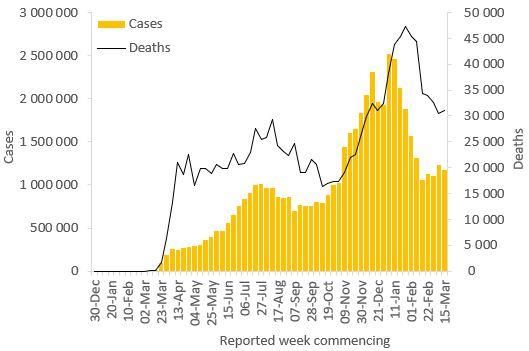
                                                                                The Region of the Americas reported nearly 1.2 million new cases and just over
The African Region reported nearly 51 000 new cases and over 1400 new           31 000 new deaths, a 5% decrease and a 2% increase respectively compared to
deaths, a 3% decrease and a 10% increase respectively compared to the           the previous week. After six weeks of decline in deaths, this week there has
previous week. This is the first time in eight weeks, that an increase in new   been a slight increase reported. The highest numbers of new cases were
deaths has been reported. The highest numbers of new cases were reported        reported from Brazil (508 010 new cases; 239 new cases per 100 000; a 3%
from Ethiopia (11 587 new cases; 10.1 new cases per 100 000 population; a 28%   increase), the United States of America (374 369 new cases; 113.1 new cases
increase), South Africa (8387 new cases; 14.1 new cases per 100 000; a 2%       per 100 000; an 19% decrease), and Peru (49 035 new cases; 148.7 new cases
increase), and Kenya (7358 new cases; 13.7 new cases per 100 000; a 66%         per 100 000; a 11% increase).
increase).
                                                                                The highest numbers of new deaths were reported from Brazil (15 209 new
The highest numbers of new deaths were reported in the same countries, from     deaths; 7.2 new deaths per 100 000; a 23% increase), the United States of
South Africa (821 new deaths; 1.4 new deaths per 100 000 population; a 34%      America (7552 new deaths; 2.3 new deaths per 100 000; a 19% decrease), and
increase), Ethiopia (107 new deaths; 0.1 new deaths per 100 000; a 11%          Mexico (3368 new deaths; 2.6 new deaths per 100 000; a 21% decrease).
decrease), and Kenya (79 new deaths; 0.1 new deaths per 100 000; a 132%
increase).
Eastern Mediterranean Region European Region
The European Region reported over 1.4 million new cases and nearly 22 000 new
The Eastern Mediterranean Region reported nearly264 000 new cases and just
deaths, a 13% and a 1% increase respectively compared to the previous week.
over 3200 new deaths, an 8% and a 12% increase respectively compared to the
Cases in the Region have been steadily increasing over the past four weeks. The
previous week. New weekly cases have increased for the past six weeks and deaths
highest numbers of new cases were reported from France (204 840 new cases;
have increased for the past four weeks. The highest numbers of new cases were
313.8 new cases per 100 000; a 27% increase), Italy (154 493 new cases; 255.5 new
reported from Jordan (57 666 new cases; 565.2 new cases per 100 000; a 21%
cases per 100 000; similar to the previous week), and Poland (151 918 new cases;
increase), the Islamic Republic of Iran (54 445 new cases; 64.8 new cases per 100
401.4 new cases per 100 000; a 36% increase).
000; a 6% decrease), and Iraq (35 072 new cases; 87.2 new cases per 100 000; a
13% increase). The highest numbers of new deaths were reported from Russian Federation (2940
new deaths; 2 new deaths per 100 000; a 2% decrease), Italy (2761 new deaths;
The highest numbers of new deaths were reported from the Islamic Republic of
4.6 new deaths per 100 000; a 20% increase), and Poland (2122 new deaths; 5.6
Iran (582 new deaths; 0.7 new deaths per 100 000; a 6% increase), Jordan (503
new deaths per 100 000; a 12% increase).
new deaths; 4.9 new deaths per 100 000; a 31% increase), and Lebanon (381 new
deaths; 5.6 new deaths per 100 000; an 19% increase).South-East Asia Region Western Pacific Region
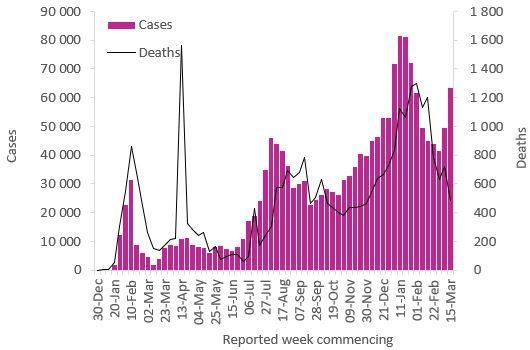
The South-East Asia Region reported over 298 000 new cases and over 2400 new The Western Pacific Region reported nearly 64 000 new cases and nearly 500 new
deaths, a 49% and a 14% increase respectively compared to the previous week. deaths, a 29% increase and a 33% decrease respectively compared to the previous
Eighty per cent of all new cases were reported from India. The highest numbers of week. Although the number of new cases in the region has increased for the third
new cases were reported from India (240 082 new cases; 17.4 new cases per 100 consecutive week, the number of new weekly deaths continues to decline. The
000; a 62% increase), Indonesia (41 047 new cases; 15.0 new cases per 100 000; highest numbers of new cases were reported from the Philippines (39 445 new
similar to the previous week), and Bangladesh (12 470 new cases; 7.6 new cases cases; 36 new cases per 100 000; a 55% increase), Malaysia (9304 new cases; 28.7
per 100 000; a 91% increase). new cases per 100 000; a 12% decrease), and Japan (8765 new cases; 6.9 new cases
per 100 000; a 11% increase).
The same countries reported the highest numbers of new deaths in the region;
India (1148 new deaths; 0.1 new deaths per 100 000; a 35% increase), Indonesia The highest numbers of new deaths were reported from Japan (252 new deaths;
(1118 new deaths; 0.4 new deaths per 100 000; a 5% decrease), and Bangladesh 0.2 new deaths per 100 000; a 24% decrease), the Philippines (164 new deaths; 0.1
(141 new deaths; 0.1 new deaths per 100 000; an 86% increase). new deaths per 100 000; a 45% decrease), and the Republic of Korea (27 new
deaths; 0.1 new deaths per 100 000; a 23% decrease). Japan and the Philippines
reported 86% of new weekly deaths in the Region.Key weekly updates
WHO Director-General's key message
Opening remarks at the media briefing on COVID-19 – 19 March 2021: ‘The Global Advisory Committee has
recommended that the AstraZeneca vaccine’s benefits outweigh its risks, with tremendous potential for
preventing infections and deaths from COVID-19.’
• WHO statement on AstraZeneca COVID-19 vaccine safety signals
• Statement of the WHO Global Advisory Committee on Vaccine Safety (GACVS) COVID-19 subcommittee on
safety signals related to the AstraZeneca COVID-19 vaccine
Vaccine publications
• Janssen Ad26.COV2.S (COVID-19) vaccine: Background document to the WHO Interim recommendations for
use of Ad26.COV2.S (COVID-19) vaccine
• Interim recommendations for the use of the Janssen Ad26.COV2.S (COVID-19) vaccine
• How to monitor and report COVID-19 vaccine side effects
COVID-19 Solidarity Response Fund 1 year Anniversary
• COVID-19 Solidarity Response Fund marks first anniversary and appeals for continued support
Separating newborns from mothers during COVID-19
• New research highlights risks of separating newborns from mothers during COVID-19 pandemic
Down Syndrome and COVID-19
• World Down Syndrome Day, 21 March 2021
• Down Syndrome and COVID-19
Tuberculosis (TB) and COVID-19
• World TB Day, 24 March 2021
• Tuberculosis and COVID-19Technical guidance and other resources
• Technical guidance
• WHO Coronavirus Disease (COVID-19) Dashboard
• Weekly COVID-19 Operational Updates
• WHO COVID-19 case definitions
• COVID-19 Supply Chain Inter-Agency Coordination Cell Weekly Situational Update
• Research and Development
• Online courses on COVID-19 in official UN languages and in additional national languages
• The Strategic Preparedness and Response Plan (SPRP) outlining the support the international community can
provide to all countries to prepare and respond to the virus
• Updates from WHO regions:
o African Region
o Region of the Americas
o Eastern Mediterranean Region
o South-East Asia Region
o European Region
o Western Pacific Region
• Recommendations and advice for the public:
o Protect yourself
o Questions and answers
o Travel advice
• EPI-WIN: tailored information for individuals, organizations and communities
• WHO Academy COVID-19 mobile learning appAnnex
Annex 1. COVID-19 confirmed cases and deaths reported in the last seven days by countries, territories and areas, and WHO Region, as of 21 March 2021**
Cumulative cases Cumulative
New cases New
Reporting Cumulative per 100 Cumulative deaths per 100 Transmission
in last 7 deaths in
Country/Territory/Areai cases thousand deaths thousand classificationii
days last 7 days
population population
Africa 50 916 2 999 152 267.3 1 428 76 113 6.8
Ethiopia 11 587 185 641 161.5 107 2 647 2.3 Community transmission
South Africa 8 387 1 536 801 2 591.2 821 52 082 87.8 Community transmission
Kenya 7 358 120 163 223.5 79 1 987 3.7 Community transmission
Côte d’Ivoire 2 609 39 913 151.3 6 217 0.8 Community transmission
Zambia 1 799 86 273 469.3 25 1 178 6.4 Community transmission
Ghana 1 514 89 276 287.3 31 716 2.3 Community transmission
Mozambique 1 503 65 799 210.5 18 740 2.4 Community transmission
Botswana 1 395 35 493 1 509.3 34 458 19.5 Community transmission
Namibia 1 178 42 203 1 660.9 34 492 19.4 Community transmission
Nigeria 1 114 161 651 78.4 17 2 030 1.0 Community transmission
Guinea 970 18 562 141.3 6 108 0.8 Community transmission
Senegal 967 37 693 225.1 52 1 007 6.0 Community transmission
Algeria 923 116 066 264.7 21 3 055 7.0 Community transmission
Togo 790 8 839 106.8 9 102 1.2 Community transmission
Madagascar 757 22 113 79.9 14 340 1.2 Community transmission
Gabon 637 17 297 777.1 9 105 4.7 Community transmission
Rwanda 618 20 761 160.3 11 287 2.2 Community transmission
Democratic Republic of the Congo 530 27 467 30.7 9 726 0.8 Community transmission
Seychelles 443 3 616 3 676.8 1 16 16.3 Community transmission
Malawi 427 33 216 173.6 11 1 093 5.7 Community transmission
South Sudan 420 9 849 88.0 2 106 0.9 Community transmission
Mali 408 9 270 45.8 7 367 1.8 Community transmissionCumulative cases Cumulative
New cases New
Reporting Cumulative per 100 Cumulative deaths per 100 Transmission
in last 7 deaths in
Country/Territory/Areai cases thousand deaths thousand classificationii
days last 7 days
population population
Cabo Verde 405 16 440 2 956.9 3 159 28.6 Community transmission
Angola 373 21 696 66.0 6 526 1.6 Community transmission
Benin 317 6 818 56.2 9 90 0.7 Community transmission
Gambia 316 5 255 217.4 8 161 6.7 Community transmission
Congo 235 9 564 173.3 3 134 2.4 Community transmission
Zimbabwe 191 36 662 246.7 9 1 510 10.2 Community transmission
Mauritania 177 17 587 378.2 4 446 9.6 Community transmission
Equatorial Guinea 174 6 736 480.1 2 100 7.1 Community transmission
Burundi 172 2 613 22.0 3 6 0.1 Community transmission
Burkina Faso 166 12 516 59.9 1 145 0.7 Community transmission
Chad 122 4 410 26.8 4 157 1.0 Community transmission
Guinea-Bissau 122 3 558 180.8 3 55 2.8 Community transmission
Mauritius 121 812 63.8 0 10 0.8 Clusters of cases
Uganda 107 40 651 88.9 0 334 0.7 Community transmission
Eritrea 80 3 118 87.9 0 7 0.2 Community transmission
Central African Republic 66 5 087 105.3 1 64 1.3 Community transmission
Sao Tome and Principe 64 2 142 977.4 2 34 15.5 Community transmission
Niger 61 4 918 20.3 4 185 0.8 Community transmission
Eswatini 49 17 283 1 489.7 4 665 57.3 Community transmission
Comoros 42 3 665 421.5 0 146 16.8 Community transmission
Liberia 12 2 042 40.4 0 85 1.7 Community transmission
Sierra Leone 11 3 948 49.5 0 79 1.0 Community transmission
Lesotho 5 10 535 491.8 0 309 14.4 Community transmission
Cameroon 0 38 988 146.9 0 588 2.2 Community transmission
United Republic of Tanzania 0 509 0.9 0 21 0.0 Pending
Territoriesiii
Réunion 830 14 631 1 634.2 16 87 9.7 Community transmissionCumulative cases Cumulative
New cases New
Reporting Cumulative per 100 Cumulative deaths per 100 Transmission
in last 7 deaths in
Country/Territory/Areai cases thousand deaths thousand classificationii
days last 7 days
population population
Mayotte 364 19 006 6 966.6 22 151 55.3 Community transmission
Americas 1 173 561 53 937 714 5 273.7 31 040 1 299 243 127.0
Brazil 508 010 11 871 390 5 585.0 15 209 290 314 136.6 Community transmission
United States of America 374 369 29 437 770 8 893.5 7 552 536 008 161.9 Community transmission
Peru 49 035 1 451 645 4 402.7 1 233 49 897 151.3 Community transmission
Argentina 42 888 2 234 913 4 945.0 830 54 476 120.5 Community transmission
Chile 39 710 925 089 4 839.3 606 22 180 116.0 Community transmission
Mexico 30 139 2 187 910 1 696.9 3 368 197 219 153.0 Community transmission
Colombia 29 809 2 324 426 4 568.2 821 61 771 121.4 Community transmission
Canada 23 836 927 069 2 456.3 213 22 617 59.9 Community transmission
Paraguay 12 906 190 499 2 670.8 226 3 662 51.3 Community transmission
Ecuador 10 202 310 868 1 762.0 220 16 435 93.2 Community transmission
Uruguay 9 327 78 401 2 257.0 71 760 21.9 Community transmission
Bolivia (Plurinational State of) 5 484 263 808 2 260.0 138 12 041 103.2 Community transmission
Cuba 5 404 65 962 582.4 26 392 3.5 Community transmission
Guatemala 4 980 187 659 1 047.5 122 6 685 37.3 Community transmission
Jamaica 4 753 34 665 1 170.7 40 524 17.7 Community transmission
Venezuela (Bolivarian Republic
4 359 149 145 524.5 53 1 475 5.2 Community transmission
of)
Honduras 4 189 181 357 1 831.0 97 4 422 44.6 Community transmission
Dominican Republic 3 373 248 989 2 295.3 56 3 269 30.1 Community transmission
Panama 2 994 350 220 8 116.8 54 6 035 139.9 Community transmission
Costa Rica 2 810 211 903 4 159.8 34 2 896 56.8 Community transmission
El Salvador 445 62 531 964.1 30 1 975 30.4 Community transmission
Guyana 417 9 486 1 206.0 6 212 27.0 Clusters of cases
Saint Lucia 124 4 113 2 239.9 7 55 30.0 Community transmission
Barbados 121 3 512 1 222.1 2 39 13.6 Community transmissionCumulative cases Cumulative
New cases New
Reporting Cumulative per 100 Cumulative deaths per 100 Transmission
in last 7 deaths in
Country/Territory/Areai cases thousand deaths thousand classificationii
days last 7 days
population population
Bahamas 117 8 839 2 247.7 1 186 47.3 Clusters of cases
Haiti 82 12 714 111.5 1 251 2.2 Community transmission
Antigua and Barbuda 71 1 033 1 054.8 1 28 28.6 Clusters of cases
Trinidad and Tobago 52 7 821 558.8 0 140 10.0 Community transmission
Suriname 43 9 055 1 543.6 0 176 30.0 Clusters of cases
Nicaragua 35 5 251 79.3 1 176 2.7 Community transmission
Belize 30 12 400 3 118.5 0 316 79.5 Community transmission
Saint Vincent and the Grenadines 14 1 694 1 527.0 1 9 8.1 Community transmission
Grenada 3 154 136.9 0 1 0.9 Sporadic cases
Dominica 1 157 218.1 0 0 0.0 Clusters of cases
Saint Kitts and Nevis 1 44 82.7 0 0 0.0 Sporadic cases
Territoriesiii
Puerto Rico 1 324 103 891 3 631.5 15 2 092 73.1 Community transmission
Curaçao 605 5 520 3 363.9 1 23 14.0 Community transmission
Guadeloupe 370 11 095 2 772.9 1 169 42.2 Community transmission
Aruba 352 8 624 8 077.5 4 81 75.9 Community transmission
Bonaire 286 919 4 394.0 0 6 28.7 Community transmission
Martinique 227 7 264 1 935.7 0 47 12.5 Community transmission
Turks and Caicos Islands 90 2 290 5 914.6 0 15 38.7 Clusters of cases
Saint Barthélemy 51 776 7 850.3 0 1 10.1 Clusters of cases
United States Virgin Islands 47 2 814 2 694.8 0 25 23.9 Community transmission
Bermuda 32 767 1 231.7 0 12 19.3 Sporadic cases
Saint Martin 21 1 633 4 224.1 0 12 31.0 Community transmission
Sint Maarten 15 2 093 4 880.8 0 27 63.0 Community transmission
Cayman Islands 7 475 722.8 0 2 3.0 Sporadic cases
Anguilla 1 22 146.6 0 0 0.0 Sporadic casesCumulative cases Cumulative
New cases New
Reporting Cumulative per 100 Cumulative deaths per 100 Transmission
in last 7 deaths in
Country/Territory/Areai cases thousand deaths thousand classificationii
days last 7 days
population population
British Virgin Islands 0 154 509.3 0 1 3.3 Clusters of cases
Falkland Islands (Malvinas) 0 51 1 464.3 0 0 0.0 No cases
French Guiana 0 16 764 5 612.7 0 87 29.1 Community transmission
Montserrat 0 20 400.1 0 1 20.0 Sporadic cases
Saba 0 6 310.4 0 0 0.0 No cases
Saint Pierre and Miquelon 0 24 414.2 0 0 0.0 No cases
Sint Eustatius 0 20 637.1 0 0 0.0 No cases
Eastern Mediterranean 263 650 7 124 121 974.8 3 253 153 446 21.0
Jordan 57 666 526 666 5 161.8 503 5 788 56.7 Community transmission
Iran (Islamic Republic of) 54 445 1 793 805 2 135.7 582 61 724 73.5 Community transmission
Iraq 35 072 789 390 1 962.6 250 13 969 34.7 Community transmission
Lebanon 21 213 436 575 6 396.3 381 5 715 83.7 Community transmission
Pakistan 20 599 623 135 282.1 323 13 799 6.2 Community transmission
United Arab Emirates 14 233 438 638 4 435.0 45 1 433 14.5 Community transmission
Kuwait 9 473 217 933 5 103.1 50 1 215 28.5 Community transmission
Libya 6 698 150 341 2 188.0 139 2 487 36.2 Community transmission
Bahrain 4 922 135 326 7 953.0 17 498 29.3 Clusters of cases
Egypt 4 491 194 771 190.3 301 11 557 11.3 Clusters of cases
Tunisia 4 148 245 405 2 076.4 167 8 526 72.1 Community transmission
Oman 3 878 149 135 2 920.4 20 1 620 31.7 Community transmission
Qatar 3 439 173 206 6 011.9 7 272 9.4 Community transmission
Morocco 2 831 491 463 1 331.5 45 8 763 23.7 Clusters of cases
Saudi Arabia 2 594 384 653 1 104.9 39 6 602 19.0 Sporadic cases
Somalia 1 022 9 968 62.7 70 419 2.6 Community transmission
Syrian Arab Republic 839 17 240 98.5 59 1 153 6.6 Community transmission
Yemen 507 3 282 11.0 54 738 2.5 Community transmission
Djibouti 266 6 518 659.7 0 63 6.4 Community transmissionCumulative cases Cumulative
New cases New
Reporting Cumulative per 100 Cumulative deaths per 100 Transmission
in last 7 deaths in
Country/Territory/Areai cases thousand deaths thousand classificationii
days last 7 days
population population
Sudan 224 31 147 71.0 33 1 986 4.5 Community transmission
Afghanistan 118 56 103 144.1 6 2 463 6.3 Clusters of cases
Territoriesiii
occupied Palestinian territory 14 972 249 421 4 889.3 162 2 656 52.1 Community transmission
Europe 1 441 065 42 516 762 4 555.0 21 772 929 332 99.6
France 204 840 4 180 829 6 405.1 1 813 91 613 140.4 Community transmission
Italy 154 493 3 356 331 5 551.2 2 761 104 642 173.1 Clusters of cases
Poland 151 918 2 058 550 5 439.2 2 122 49 300 130.3 Community transmission
Turkey 126 682 2 992 694 3 548.4 538 29 959 35.5 Community transmission
Germany 90 271 2 659 516 3 174.3 1 293 74 664 89.1 Community transmission
Ukraine 85 607 1 546 363 3 535.9 1 638 29 941 68.5 Community transmission
Czechia 70 469 1 469 547 13 722.6 1 441 24 667 230.3 Community transmission
Russian Federation 66 261 4 456 869 3 054.0 2 940 95 030 65.1 Clusters of cases
Hungary 55 106 571 596 5 916.9 1 310 18 262 189.0 Community transmission
Netherlands 43 547 1 194 520 6 971.3 217 16 260 94.9 Community transmission
Romania 37 522 892 848 4 641.1 693 22 132 115.0 Community transmission
The United Kingdom 37 451 4 291 275 6 321.3 658 126 122 185.8 Community transmission
Serbia 34 845 546 896 7 853.5 206 4 900 70.4 Community transmission
Belgium 27 278 837 006 7 222.0 175 22 707 195.9 Community transmission
Sweden 26 700 744 272 7 369.6 28 13 262 131.3 Community transmission
Bulgaria 24 602 302 480 4 353.2 732 11 966 172.2 Clusters of cases
Austria 20 737 508 744 5 648.7 165 8 817 97.9 Community transmission
Greece 16 090 235 611 2 260.5 383 7 421 71.2 Community transmission
Spain 12 381 3 206 116 6 857.3 185 72 793 155.7 Community transmission
Slovakia 11 366 348 869 6 390.0 516 9 044 165.7 Clusters of cases
Estonia 10 594 95 401 7 191.7 68 787 59.3 Clusters of cases
Republic of Moldova 10 493 214 203 5 310.0 237 4 531 112.3 Community transmissionCumulative cases Cumulative
New cases New
Reporting Cumulative per 100 Cumulative deaths per 100 Transmission
in last 7 deaths in
Country/Territory/Areai cases thousand deaths thousand classificationii
days last 7 days
population population
Bosnia and Herzegovina 9 536 152 754 4 656.0 329 5 817 177.3 Community transmission
Kazakhstan 8 486 283 027 1 507.3 75 3 586 19.1 Clusters of cases
Belarus 7 965 309 293 3 273.2 61 2 148 22.7 Community transmission
Israel 7 381 824 716 9 528.2 80 6 064 70.1 Community transmission
Switzerland 7 216 577 905 6 677.4 43 9 455 109.2 Community transmission
North Macedonia 6 629 118 736 5 699.2 148 3 448 165.5 Community transmission
Croatia 6 594 257 639 6 275.8 96 5 773 140.6 Community transmission
Norway 6 513 84 553 1 559.7 9 648 12.0 Community transmission
Azerbaijan 5 798 245 490 2 421.2 63 3 339 32.9 Clusters of cases
Slovenia 5 656 205 511 9 885.4 25 4 259 204.9 Clusters of cases
Armenia 5 328 183 713 6 199.7 93 3 348 113.0 Community transmission
Finland 5 117 71 123 1 283.6 19 805 14.5 Community transmission
Denmark 4 930 224 848 3 881.9 9 2 399 41.4 Community transmission
Albania 3 728 120 541 4 188.7 103 2 133 74.1 Clusters of cases
Latvia 3 665 97 149 5 150.5 64 1 821 96.5 Community transmission
Lithuania 3 626 209 011 7 677.8 80 3 476 127.7 Community transmission
Ireland 3 473 229 831 4 654.5 51 4 585 92.9 Community transmission
Portugal 3 364 817 080 8 013.2 93 16 762 164.4 Clusters of cases
Cyprus 2 605 41 882 3 468.9 4 242 20.0 Clusters of cases
Georgia 2 491 277 480 6 955.8 52 3 700 92.8 Community transmission
Malta 1 637 27 904 6 319.7 19 369 83.6 Clusters of cases
Montenegro 1 610 85 763 13 655.1 40 1 169 186.1 Clusters of cases
Luxembourg 1 510 59 210 9 458.8 27 715 114.2 Community transmission
Uzbekistan 772 81 339 243.0 0 622 1.9 Clusters of cases
Kyrgyzstan 539 87 389 1 339.5 9 1 490 22.8 Clusters of cases
Andorra 253 11 481 14 859.3 1 113 146.2 Community transmission
San Marino 230 4 356 12 835.2 2 79 232.8 Community transmissionCumulative cases Cumulative
New cases New
Reporting Cumulative per 100 Cumulative deaths per 100 Transmission
in last 7 deaths in
Country/Territory/Areai cases thousand deaths thousand classificationii
days last 7 days
population population
Monaco 67 2 173 5 537.2 0 27 68.8 Sporadic cases
Iceland 25 6 097 1 786.7 0 29 8.5 Community transmission
Liechtenstein 15 2 704 7 090.2 0 54 141.6 Sporadic cases
Holy See 0 26 3 213.8 0 0 0.0 Sporadic cases
Tajikistan 0 13 714 143.8 0 91 1.0 Pending
Territoriesiii
Kosovo [1] 4 704 81 349 4 372.7 56 1 742 93.6 Community transmission
Isle of Man 340 1 432 1 684.1 1 26 30.6 No cases
Gibraltar 7 4 270 12 674.0 1 94 279.0 Clusters of cases
Jersey 2 3 224 2 963.2 0 69 63.4 Community transmission
Faroe Islands 0 661 1 352.7 0 1 2.0 Sporadic cases
Greenland 0 31 54.6 0 0 0.0 No cases
Guernsey 0 821 1 299.1 0 14 22.2 Community transmission
South-East Asia 298 438 14 182 826 701.6 2 435 214 790 10.6
India 240 082 11 599 130 840.5 1 148 159 755 11.6 Clusters of cases
Indonesia 41 047 1 455 788 532.2 1 118 39 447 14.4 Community transmission
Bangladesh 12 470 568 706 345.3 141 8 668 5.3 Community transmission
Sri Lanka 2 246 89 846 419.6 18 544 2.5 Clusters of cases
Maldives 897 22 373 4 139.0 1 65 12.0 Clusters of cases
Thailand 876 27 803 39.8 4 90 0.1 Clusters of cases
Nepal 651 275 829 946.7 2 3 016 10.4 Clusters of cases
Timor-Leste 93 271 20.6 0 0 0.0 Clusters of cases
Myanmar 76 142 212 261.4 3 3 204 5.9 Clusters of cases
Bhutan 0 868 112.5 0 1 0.1 No cases
Western Pacific 63 730 1 775 560 90.4 486 30 843 1.6
Philippines 39 445 656 056 598.7 164 12 930 11.8 Community transmission
Malaysia 9 304 331 713 1 024.9 23 1 229 3.8 Clusters of casesCumulative cases Cumulative
New cases New
Reporting Cumulative per 100 Cumulative deaths per 100 Transmission
in last 7 deaths in
Country/Territory/Areai cases thousand deaths thousand classificationii
days last 7 days
population population
Japan 8 765 455 638 360.3 252 8 812 7.0 Clusters of cases
Republic of Korea 3 025 98 660 192.4 27 1 696 3.3 Clusters of cases
Papua New Guinea 1 186 3 359 37.5 15 36 0.4 Community transmission
Mongolia 973 4 806 146.6 1 5 0.2 Clusters of cases
Cambodia 375 1 680 10.0 2 3 0.0 Sporadic cases
China 190 102 523 7.0 0 4 849 0.3 Clusters of cases
Singapore 96 60 184 1 028.7 0 30 0.5 Sporadic cases
Australia 80 29 192 114.5 0 909 3.6 Clusters of cases
New Zealand 30 2 097 43.5 0 26 0.5 Clusters of cases
Viet Nam 19 2 572 2.6 0 35 0.0 Clusters of cases
Brunei Darussalam 13 205 46.9 0 3 0.7 Clusters of cases
Fiji 1 67 7.5 0 2 0.2 Sporadic cases
Lao People's Democratic Republic 0 49 0.7 0 0 0.0 Sporadic cases
Solomon Islands 0 18 2.6 0 0 0.0 No cases
Territoriesiii
Wallis and Futuna 135 311 2 765.4 1 1 8.9 Sporadic cases
French Polynesia 49 18 576 6 612.8 0 141 50.2 Sporadic cases
New Caledonia 25 116 40.6 0 0 0.0 Sporadic cases
Guam 12 7 570 4 485.3 1 134 79.4 Clusters of cases
Northern Mariana Islands
7 157 272.8 0 2 3.5 Pending
(Commonwealth of the)
Marshall Islands 0 4 6.8 0 0 0.0 No cases
Samoa 0 4 2.0 0 0 0.0 No cases
Vanuatu 0 3 1.0 0 0 0.0 No cases
Global 3 291 360 122 536 880 1 572.0 60 414 2 703 780 34.7
*See Annex: Data, table and figure notesYou can also read


