Handbook CREATING SPACE FOR SUSTAINABLE FOOD SYSTEMS IN URBAN COMMUNITIES - Practical approaches and examples for cities
←
→
Page content transcription
If your browser does not render page correctly, please read the page content below
Handbook

CREATING SPACE FOR
SUSTAINABLE FOOD SYSTEMS
IN URBAN COMMUNITIES
Practical approaches and examples for cities

     Based on experiences from
     URBACT II Thematic network
     Sustainable Food in Urban Communities (2012-2015)
ABOUT THE AUTHORS
    Core text of this Handbook has been written by:
    François Jégou (Lead expert)
    Joy Carey (Thematic expert)

    With contributions from:

    Brussels (Lead Partner) / Joëlle van Bambeke, Stephanie Mantell, Joséphine Henrion
    Amersfoort / Anne de Feijter, Cor Holtackers, Marianne Karstens
    Athens / Yannis Evmolpidis, George Keranis
    Bristol / Dorothy Greaves
    Gothenburg / Annika Källvik, Ulla Lundgren
    Lyon / Lilian Pellegrino, Caroline Brand
    Messina / Daniela Catanoso,
    Oslo / Line Tveiten
    Ourense / Uxio Novoneyra Rei, Susana Bayo
    Vaslui / Vasile Paval, Stefan Dudau, Ionel Popa

    Thematic expert: Kevin Morgan, Cardiff University

    Design by:
    Christophe Gouache, Thibaut Métivier / Strategic Design Scenarios

    Publisher : Strategic Design Scenarios Publishing
    ISBN : 978-2-9601314-1-3

    LEGAL NOTICE
    Neither the European Commission, nor the URBACT Secretariat, nor any person acting on their behalf are responsible for the
    use which might be made of the following information. The views expressed in this publication are the sole responsibility of the
    authors and do not necessarily reflect the views of the European Commission.

2                                                                                                                                      3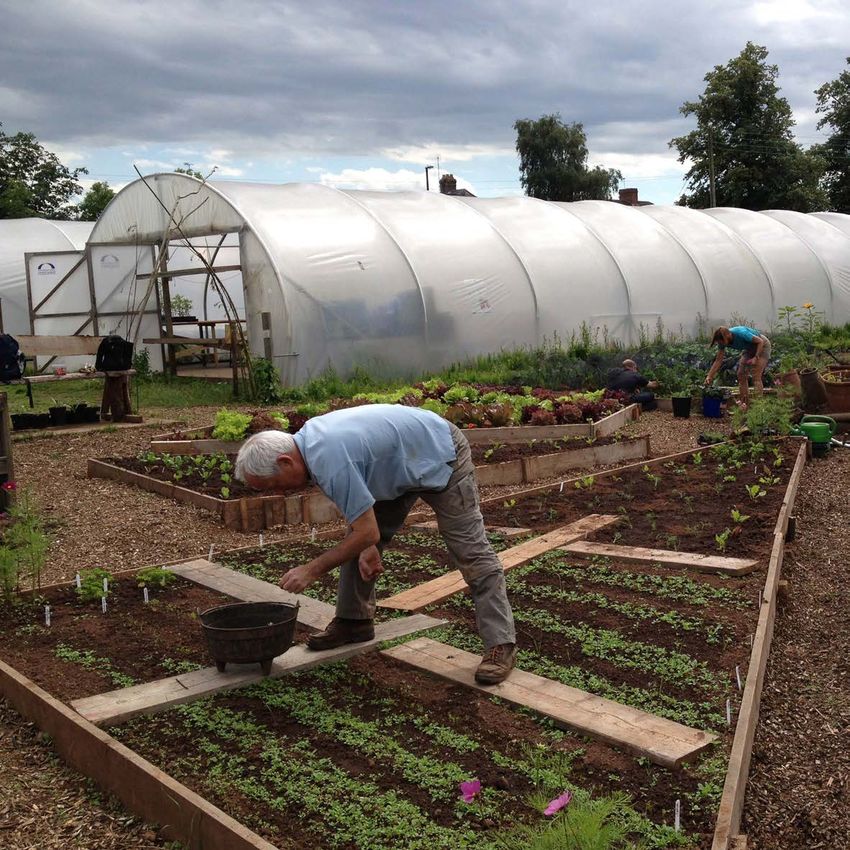
A WORD FROM THE LEAD PARTNER                                                                     food journey, as it enabled Brussels and
                                                                                                      its partner cities to learn from each other, to
                                                                                                      discover new initiatives and different ways
                          by Stephanie Mantell, Brussels Environment                                  of tackling sustainable food. Beyond the
              the environment & energy administration of the Brussels Capital Region                  consolidation and dissemination of practical
                                                                                                      knowledge drawn from this transnational
    Brussels Environment initiated the               environmental and sustainability criteria        networking, stakeholders started to work
    URBACT Thematic Network “Sustainable             (certification), promoting self-production       together within each city to develop Local
    Food in Urban Communities” (2012-                (fruit & vegetable gardens, use of derelict      Action Plans and improve local policies.
    2015) to develop low-carbon and                  lands), and preventing waste (food and its
    resource-efficient urban food systems,           packaging).                                      Now and beyond the lifetime of our project
    joining efforts and thinking with other cities                                                    we wish to reach out and communicate
    in Europe, namely Amersfoort (NL), Athens        The Brussels Capital Region has                  with other cities and stakeholders that are
    (GR), Bristol (UK), Messina (IT), Gothenburg     substantial experience in sustainable food       engaging in the process of making their food
    (SE), Lyon (FR), Ourense (ES), Vaslui (RO),      research and actions and the political           system more sustainable, to continue the
    and Oslo (NO).                                   commitment is to go further and learn            journey we started.
                                                     from others, for instance, to work both on
    The environmental impact of food is one          supply and on perceptions of the general
    of the drivers of cities’ growing interest       public towards sustainable food choices
    in the topic and a primary concern for us        among audiences not yet reached, finding
    as environment administration. Indeed,           new approaches and tools adapted to
    according to the FAO, the food sector            them. An upcoming strategic transversal
    alone accounts for over 20% of global            plan on sustainable food will go further
    greenhouse gas emissions worldwide.              to facilitate the transition of existing local
    Moreover, around 1/3 of the food produced        market actors towards shorter supply
    for human consumption is wasted or lost.         chains and greater sustainability and
    Making our urban food systems more               encourage the emergence of new actors
    sustainable can thus yield major benefits        - not only to reduce CO2 emissions and
    in terms of carbon intensity and resource        overall environmental impacts, but also to
    efficiency. It involves notably the use of       secure and create long term local jobs and
    local and seasonal products (short supply        strengthen urban communities.
    chains), improving diets (reducing the
    share of animal protein and processed            Being part of this URBACT II network
    foods), using products that meet                 has been one step on our sustainable

4                                                                                                                                                       5
CONTENTS
    INTRODUCTION                                    9   - The resilience test

    PURPOSE OF THIS HANDBOOK                       12   CASE STUDY                                     28   almost 50% organic meals in public                    - Fairtrade City, Gothenburg
                                                        - Feed Bristol Project & Sims Hill Shared           canteens, Gothenburg                                  - Sabores De Ourense & “Come Ourense”
    WHO SHOULD READ THIS HANDBOOK?                 13   Harvest, Bristol                                    - Geitmyra Culinary Centre for children, Oslo         award
                                                        - Pré Santy inclusion garden, Lyon                  - Eleonas’ Urban Farm project, Athens
    1. BACKGROUND                                  14   - New market gardening farmer, Vaslui               - Social and solidarity grocery shop, Lyon            5. FOOD GOVERNANCE AND THE CITY
    - The Project and the Partners                      - Eemstad boerderij, Amersfoort                                                                           AGENDA
    - Finding a way to view the urban food              - “Gardens bank”: recovering food                   4. FOOD LITERACY AND RESILIENCE                  50   - Emerging food-oriented city leadership   69
    system and sustainability                           production areas in the outskirts of Ourense        - Re-engaging the population with food                - Food-oriented urban development
    - Finding a pragmatic approach to low               - Faro Doc from the cuppari high school,            - Ensuring a food education and a positive            - City food identity and labels
    carbon and resource efficiency                      Messina                                             canteen experience
    - Finding an action-focused framework for           - Landwinkels, Shops at the farm gate,              - Reducing food poverty among the low-                GOVERNANCE-QUESTIONING TOOLS
    sustainable food in cities                          Amersfoort                                          income population                                     - Evil projection                          74
                                                        - Super-halle, Lyon                                                                                       - Local action plan crash test
    CASE STUDIES  IES                              18                                                       COMMUNITY BUILDING TOOLS                         56
    - Herligheten Allotment Gardens, Oslo               3. SUSTAINABLE FOOD-RELATED                         - Speed presentation evenings
    - Slowfood Valdemone, Messina                       ENTREPRENEURSHIP                               34   - Visioning                                           CASE STUDIES IES
    - Educational Vegetable Gardens, Ourense            - Growing in the city                                                                                     - Household resilience, Vaslui             78
    - “Collective Kitchen” Embraced By Athens           - Urban food businesses                             CASE STUDIES  IES                                60   - Albatros Foundation, Food schools
    Municipality                                        - New shopping scenes                               - Job creation policies in urban agriculture &        promoting regional food, Messina
    - “My Urban Kitchen Garden” Grow-Your-                                                                  sustainable food businesses, Brussels                 - Organic Farmers’ Markets, Athens
    Own-Kit, Brussels                                   ENTREPRENEURSHIP ENHANCING                          - Bristol Food Policy
    - Majobo, Oslo                                      TOOLS                                          40   Council                                               CONCLUSIONS
                                                        - Micro-consulting                                  - Sustainable meals in canteens, Gothenburg           References & useful links                  81
    2. WHAT CAN CITIES DO?                         23   - Business Launch Pad                               - Sustainable food in schools, Brussels               Acknowledgements                           82
    - Getting started                                                                                       - ‘Who feeds Bristol?’ Report                         Photo credits                              84
                                                        CASE STUDIESIES                                44   - Food Market Program in Vaslui / Central                                                        87
    TOOLS TO ASSESS THE LOCAL FOOD                      - The Square Food Foundation Cookery                Market, Vaslui
    SITUATION                                      24   School And Kitchen, Bristol                         - Digital Urban Farming Map, Amersfoort
    - Getting started on the food journey check-        - Food Challenge for families, Brussels
    list                                                - Lundby local administration is serving            - Lyon Fair and Sustainable City Label
                                                                                                            - Amersfoort “Capital of Taste 2012”

6                                                                                                                                                                                                                 7
INTRODUCTION
                             by Professor Kevin Morgan, Cardiff University

    “The 10 cities that participated in the           Until recently, the food system barely
    URBACT project [Sustainable Food in               registered on the mainstream political
    urban Communities] have collectively              agenda in the global north because
    generated a body of knowledge about               of the widely held belief that it had
    sustainable food systems that will be of          delivered all that was asked of it. Slowly
    enormous value to their urban peers in            but surely, however, the hidden costs
    the global north and the global south.”           of the conventional food system began
    (Kevin Morgan, January 2015)                      to resonate in the public domain. While
                                                      there is no single reason why the food
    Embracing a wide array of activities              system has moved from the margins to
    associated with the production and                the mainstream, the escalating costs of
    consumption of food, the project highlights       diet-related diseases and environmental
    one of the most important developments            degradation loom large in any explanation.
    in the history of food policy and practice,       If anything it is the multifunctional
    namely the rise of the city as a transition       character of food that makes it such a
    space for the design and delivery of              unique political phenomenon because the
    sustainable urban food strategies. The            food system is heavily implicated in so
    great merit of this handbook is that it seeks     many public policy arenas.
    to capture the knowledge gained in 10
    different cities and puts it at the disposal of   The political significance of the food
    cities that wish to begin their own journey       system stems from the combined effect of
    towards sustainability by learning from           the following trends:
    what others have achieved. Mayors and
    civic society groups can learn much from          - Food security is now perceived as a
    their counterparts in other cities so long as     national security issue following the urban
    they appreciate that every urban context is       riots that erupted in many countries after
    unique.                                           the food price hikes of 2007/08;
                                                      - The food chain accounts for some 31%

8                                                                                                   9
of GHG emissions in the European Union,         the urban food question is viewed and           of other under-utilised public and private
     making the food system a crucial target of      valued by politicians and their civil society   space; discourage food waste and
     policies to counter climate change;             interlocutors.                                  promote more socially and ecologically
     - The epidemic of obesity and other diet-                                                       benign ways of recycling it; and create
     related diseases makes the food system a        Food policy has been dominated for so           jobs and income for producers who
     prime target of campaigners;                    long by national and international levels of    need access to the “footfall” of urban
     - Food poverty is increasingly visible in the   policy-making, it is sometimes suggested        consumers..
     cities of the global north, as we can see       that cities have little or no capacity to
     from the explosive growth of food banks,        shape the food system because they lack         Finally, there is the power of partnering,
     making food a social justice issue as well      the powers to do so. However, within the        where city governments enter into mutually
     as a human health issue;                        urban food policy repertoire three powers       beneficial collaborative partnerships with
     - The food system is now perceived as           merit special attention because, taken          local businesses, social enterprises and
     a prism through which planners seek to          together, they can help to reform the urban     civil society groups to achieve in concert
     promote more sustainable natural resource       foodscape.                                      what they could not hope to achieve alone.
     management and eco-system services;
     - A quality food revolution is underway as      Perhaps the most powerful food policy
     people re-discover the pleasures of good        that cities have at their disposal is their
     food and its associations with place and        very own procurement policy. The power
     provenance.                                     of purchase has been shown to be very
                                                     effective when it is part of a healthy public
     Over the past decade, municipalities in         food provisioning programme.
     many countries have struggled with the          Another power that cities could deploy
     question of how to incorporate food policy      in more imaginative ways is planning
     into their strategies and structures. In        policy, which is often used to frustrate
     political terms this question generates two     development rather than foster it. Although
     intensely practical issues – who should         planners have neglected the food system
     assume the leadership role for food policy      in the past, they are now beginning to
     and in which department should this role        address the urban foodscape so as to:
     be located? The experience of municipal         protect and increase the diversity of food
     food politics in Europe, North America          retail outlets so that they are accessible
     and Africa suggests that the answer to          by foot or public transport; promote
     this question very much depends on the          urban agriculture in and around the city
     way food policy is framed; that is to say,      by expanding access to allotments,
     it depends on the prism through which           community growing spaces and a range

10                                                                                                                                                11
PURPOSE OF THIS HANDBOOK                                                                            WHO SHOULD READ THIS
     This handbook draws on some of the 130
     examples of promising local practices
                                                     We have selected content derived from
                                                     hands-on robust experiences emerging
                                                                                                                      HANDBOOK?
     shared by the ten participating partner         from practitioners, practical information,
     cities, as well as on the policy evidence       and evidence-based implementation.            - This Handbook provides a range different     - A series of key learnings and practical
     reported and on the strategies and              As it is impossible to include everything     types of materials organised to provide        tools for practitioners and actors who
     structure of the Local Action Plans they are    in this handbook links are provided to        different entry points and ways of reading     would like to start a similar process in their
     developing as a result of this work.            more detailed material in three Thematic      and to be accessible to different interests.   own cities
     We wish to share some of what we have           Reports, online articles and video            Its focus is on nine key topics that have
     learnt during the three years of exchanges      presentations with examples of promising      emerged from the exchanges between the         - A rich and varied set of case studies for
     and experiences in our network; to make         local practices from our own cities.2         partner cities and on which the cities have    a wider circle of interested readers that
     it available to other cities and stimulate                                                    sufficient joint experience to report.         illustrate ways in which sustainable food
     them to start a similar journey towards a       It is our hope that we can inspire other                                                     initiatives can change daily life in the city.
     sustainable local food system.                  cities to put food on their agenda and that   - Three main categories of information are
                                                     cities across the world will make concrete    provided aimed at three main audiences :
     The handbook is written, not from an            changes that jointly generate positive
     academic or advocacy perspective but            impacts and drive a sustainable food          - Insights for city policy makers on the
     from the pragmatic and practical outlook of     system reform.                                importance for cities to build a sustainable
     people who work in cities and deal with the                                                   and more localised food system
     complex issues of urban life and the food
     system on a daily basis. It is therefore not
     complete, nor definitive, nor perfect, but
     is instead based on what is possible. We
     have selected examples of what we have
     found inspirational, many achieved through
     creativity, vision and commitment, despite
     limited resources.
     Rather than a final report, we have therefore
     opted for an easy-to-follow and accessible
     handbook that outlines the key learning
     emerging from the ten partner cities.

12                                                                                                                                                                                                 13
1. BACKGROUND
     1.1 The Project and its Partners                  partners to approach the complexity of
                                                       the food system more simply, and to find
     The URBACT II thematic network                    a way to organize the many vibrant and
     Sustainable Food in Urban Communities             heterogeneous experiences of the ten
     - Developing low-carbon and resource-             cities. The three themes were used to
     efficient urban food systems (URBACT,             collect and review practical case studies of
     2012-2015) brings together ten European           existing work in each city.
     cities looking for joint, effective and           The theme of “Growing” explores all
     sustainable solutions to develop low-             possible ways to grow food near or in the
     carbon and resource-efficient urban food          city. The theme of “Delivering” explores
     systems.                                          ways to distribute, share and procure food
     The URBACT process involved regular               within the city. The theme of “Enjoying”
     transnational exchanges between the ten           explores how people in the city can
     cities over a period of three years and           embrace a sustainable, happy, healthy
     provided a framework for each city to             and vibrant food culture in canteens and
     establish a Local Support Group of key            households.
     stakeholders in order to collaboratively          In addition, project partners addressed
     build sustainable food governance and a           three cross-cutting issues:
     related local action plan.                        ‘Governance, synergies & local system’;
     The cities of our network offer a fascinating     ‘Social Inclusion, jobs & economics’;
     variety in terms of i) demographics               ‘Carbon emissions and resource
     and scale of urbanisation; ii) land and           efficiency’.                                   The URBACT thematic network Sustainable Food in Urban Communities is a 3 years exchange
     territory; iii) food culture; and iv) levels of                                                  and collaboration project between 10 European cities including Brussels Environment of the
     engagement in food system sustainability.         1.3 Finding a pragmatic approach to low        Brussels Capital Region (Lead Partner), the Bristol City Council, City of Messina, the Municipality of
                                                       carbon and resource efficiency                 Amersfoort, the City of Lyon, the City of Gothenburg, Vaslui Municipality, Ourense City Council, City of
                                                                                                      Oslo and Athens development and destination management agency sa.
     1.2 Finding angles to view the urban
     food system and sustainability                    Existing research suggests that the main       The Lead expert of the project is François Jégou, Strategic Design Scenarios, ENSAV, La Cambre
                                                       ways in which urban communities can            Belgium. Thematic experts are Joy Carey, Independent Consultant on sustainable food systems
     Three themes of ‘Growing’, ‘Delivering’           contribute to reducing CO2 emissions in        planning & UK, Kevin Morgan, School of Planning and Geography, Cardiff University, UK and
     and ‘Enjoying’ were selected by project           the food system is by eating less meat         Frédérique Sonnet, independent consultant, France.

14                                                                                                                                                                                                               15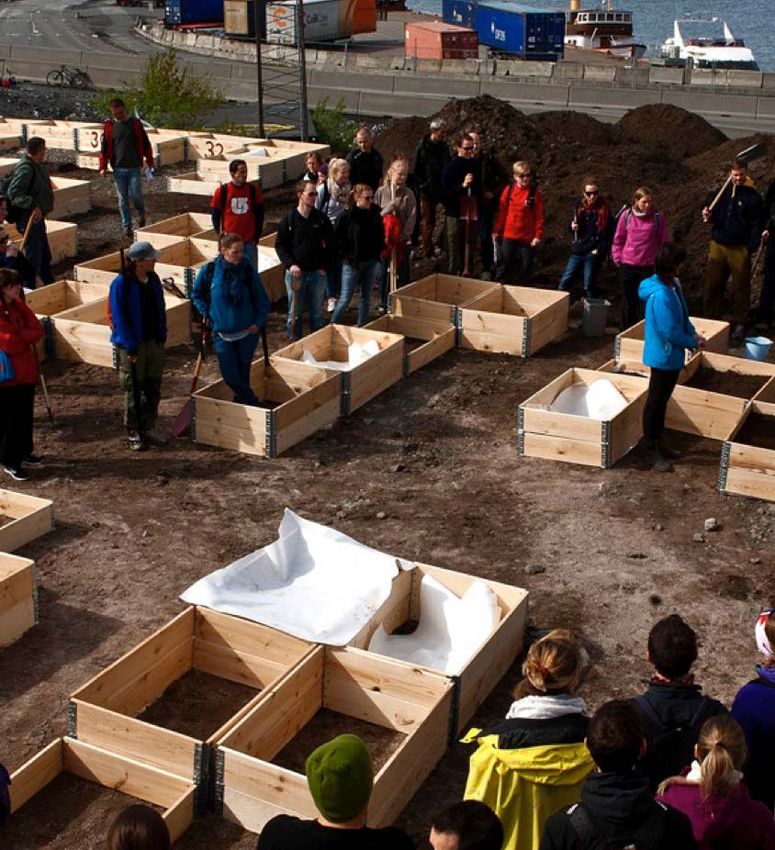
and more plants; reducing food waste and 1.4 Finding an action-focused in everyday life of more resilient citizens; These action themes are discussed in
by making fresh seasonal food from the framework for sustainable food in cities - Creating space for food in the governance more detail in the following sections with
surrounding regions available to everyone. of the municipality with traditionally limited illustrative examples from the ten partner
To lessen the impact, food should be Initiatives that address the need for authority in this area. cities.
produced using less fossil-fuel derived sustainable food in cities can contribute
inputs like fertilisers and pesticides. Food to supporting a lively and diverse local
meeting organic certification standards economy (jobs and skills), to creating City food identity a
nd
lab
is produced with an emphasis on animal a better environment (green spaces, els
welfare and harmony with nature. urban design, reduced greenhouse gas velopment
an de
Project partners explored a range of emissions), and to supporting more health d urb
practical approaches to low-carbon and and wellbeing amongst the population iente
resource efficiency in an urban context (inspiring behaviour change, making it or -oriented city lead
d- food ers
by reviewing innovative case studies and easier for people to make better choices). ng hip
o
gi
Fo
in specific workshop discussions with In order to achieve these kinds of benefits, er INA BLE F OO
STA D
SU OVERNANCE
Em
external organisations. Encouraging city food has to be put firmly on the city
G
residents to eat less meat and more fruit governance agenda. For that reason, over
& vegetables requires a focus on fresh the course of the project the focus on
seasonal food and a range of fun activities ‘Growing’, ‘Delivering’ and ‘Enjoying’ has
E U R S HIP
that engage the public through interesting gradually shifted towards more an action-
R e -e n g a gin
inspiring challenge with tangible results. oriented and organisation-based focus of
F O O D LIT IE
O OD-
AND RE
With regard to business-led actions, ‘Sustainable entrepreneurship’, ‘Citizen’s
Reducin
E n s u ri
there are many opportunities for new resilience’ and ‘Food governance’ (see
in e ss
REN
TR L E F
and innovative low-carbon and resource- figure on the next page).
SIL
ER N
EP
AB
efficient urban food businesses that create Creating space for sustainable food
Bus
gp
ng a
C
g fo
N
C Y AI
A
ity
jobs. Labelling and recognition schemes systems is a practical and physical T
op
E
es
SUS D E
ec
N
od
od
foo
can work but need to be simple, also challenge in terms of finding available
ul
cen
TE
th
Fo
at
RE L A
po
n
de
aimed at the non-green audiences and land within the city and its outskirts, and
io
in
w g
gS
an
in
ve
it h
du
help people to make a small shift. Cities is also about creating space for food in fo o ow
rb
rty
pin
tio Gr
ca
d
U
can use recognition schemes to inspire the broader economic, legal, cultural and n
op
am
an
and encourage collective action around dc
sh
lifestyle context:
on
th an
Ne
w
g
fresh seasonal and local food; reducing - Creating space for emerging economic e te e
lo n ex p
food waste and encouraging the circular activities and food-related sustainable w- e ri e n c e
inc
economy. entrepreneurship in the city; om
ep
- Creating space for good and healthy food opu
lation
16 17
CASE STUDY                                                                                                                                                                            CASE STUDY

        HERLIGHETEN   Herligheten allotment gardens were born as an art initiative       SLOWFOOD VALDEMONE,                              EDUCATIONAL VEGETABLE
                      inspired by the Victory Gardens food growing initiative of
        ALLOTMENT     American artist Amy Franceschini in front of San Francisco         MESSINA                                          GARDENS, OURENSE
        GARDENS,      Capitol. The place chosen in Oslo, Loallmenningen in Bjørvika
                      is probably the most contrasting location place both on the
        OSLO          waterfront near the brand new opera house and one of the                                                            First pilot project of the city pooling unused
                      most disparate urban development areas squeezed between a                                                           land for gardening with a demonstration
                      high speed lane and railways. 100 micro-orchards in wooden         SlowFood promotes a good, fresh and              goal: demonstrating urban orchards are
                      boxes and 250 m2 of grain field just popped up, surprising         flavoursome seasonal diet; clean food            available for production.
                      even the promoters of the project. When asked if it is a one-off   production and consumption that does             Located in a working class area called
                      initiative, the answer is that the next project could be to “dig   not harm the environment; fair accessible        “Mariñamansa”, the initiative started
                      in the green” and grow food instead of useless grass in public     prices for consumers and fair pay                over a land area of 2,262 m2. It includes
                      spaces.                                                            conditions for small-scale producers. For        18 orchard/gardens for citizen´s use, 2
                                                                                         instance; SlowFood has developed original        for people with reduced mobility and 2
                                                                                         activities such as the Spoken Menu,              integrated orchard/gardens strictly focused
                                                                                         telling the story of traditional dishes before   on educational activities, intended for
                                                                                         serving them; Taste Ateliers are educational     school learning activities for small kids
                                                                                         sensory journeys with a tasting session          to improve their knowledge about how to
                                                                                         of different products; Presidi are rescue        cultivate a garden and grow organic food.
                                                                                         operations of traditional specialities or        This initiative based on public and urban
                                                                                         products that tend not to be produced or         lands, is managed by the Educational
                                                                                         prepared anymore. All these activities are       Department of the City Council. During
                                                                                         raising interest and capacities in healthy,      the first 3 months, users first farmed
                                                                                         fair and quality food among the population.      vegetables, fruits and flowers. Two years
                                                                                                                                          and a half later, UNICEF has awarded it as
                                                                                                                                          “Best practice on local policies”.

18                                                                                                                                                                                            19
CASE STUDY CASE STUDY
“COLLECTIVE Collective kitchens have originated in Greece as a response
to the economic and humanistic crisis that ensued in 2010.
“MY URBAN Brussels Environment set up a program of different actions
to encourage residents to grow their own vegetables in the
KITCHEN” They reflect the informal actions by civil society, aiming at KITCHEN city and raise awareness about eating more fresh, local and
seasonal products.
EMBRACED the satisfaction of fellow citizens’ need for food. Within a
couple of years, collective kitchens transcended the “need GARDEN” About 80% of citizens have a small space to grow herbs, fruits
BY ATHENS for food” context and emerged as an opportunity to promote GROW-YOUR- or vegetables at home (balcony, small garden, terrace...), but
many lack knowledge or time to do so, according to a recent
Greek gastronomy, producers and products, and create
MUNICIPALITY both economic and social value. The Municipality of Athens OWN-KIT, study conducted by Brussels Environment. Based on this
BRUSSELS
recognised the importance of collective kitchens for purposes finding, different tools were developed to help people to grow
such as social cohesion through the various food cultures their own food:
present in Athens and raising awareness for sustainable food. - Free training sessions about kitchen gardening
“Athens, Metropolis of Taste” was the first event to take place - A network of gardening experts who give advice and
under the auspices of Athens municipality on 27 June 2014 organise some activities
with the participation of the chef-team, the Afghan refugee - A free Helpdesk to answer
community and the Nigerian women community. specific questions of
citizens
To help residents set up
their own urban kitchen
garden (in open soil, on a
balcony, terrace, or in pots),
Brussels Environment also
developed the grow-your-
own kit: a cardboard box
with seeds and guidance
supported by a monthly
newsletter to help anyone
interested set up an
environmentally friendly
kitchen garden in the heart
of the city.
20 21CASE STUDY
MAJOBO, OSLO
2. WHAT CAN CITIES DO?
MAJOBO (meaning literally “food and soil where you live”)
is a Norwegian grassroots network of local and organic food
production and urban farming by citizens. It focuses on
spreading ideas, inspiration and information. The activities,
which are centred in Oslo, include communicating through
social media, pilot projects, documentary screenings and Getting started
network meetings to showcase local initiatives as well as A good first step is to develop better
hands-on beginners’ courses with hundreds of participants. The question is how can a city positively understanding and establish dialogue.
Through the networking activities, MAJOBO has triggered influence its food system? This can then feed into a longer-term
a range of other food-related projects by showcasing ‘sustainable food planning process’
possibilities and providing platforms where like-minded people ‘To reform the food system in this way has which may take several years or indeed
meet. MAJOBO also acts as a voice for lobbying on behalf of not been built into any local government be adopted as part of an ongoing food
urban agriculture to local and national political institutions. policy and strategy, nor could a local strategy and policy agenda. There are
government achieve such changes alone. many different ways of getting started.
It requires the commitment and pro-active Bristol commissioned a baseline audit
buy-in from a wide range of city and city study called ‘Who Feeds Bristol?’
region stakeholders. Stakeholder meetings, organised public
The first step is to understand how the events and discussions and participatory
city and city region’s food supply system scenario exercises all help to stimulate
operates and how the different elements debate and establish a new ‘sustainable
of the system are interconnected. The food conversation’. The most important
second is to understand strengths and point is that it has to be both a process
vulnerabilities in relation to food system and a partnership approach.
sustainability and longer-term resilience.’
(Who Feeds Bristol? Towards a resilient
food plan; 2011)
22 23The URBACT partners used a simple case study approach to review what was already happening in resources; ‘Who feeds your city?’ report independent grocery shops, organic
each of the cities and established local support groups to help drive a process of developing an action baseline audits)? supermarkets, etc.)?
plan. While working together and sharing our experiences we have developed some simple tools to - Does your city have a view on the - What is the level of engagement of the
help ourselves and now other cities to get started. Understanding what is already happening is an economic significance of the food sector population in food production and cooking
important place to begin.
and a clear analysis of who the businesses (i.e. proportion of the population involved
are? with food growing; proportion of food
TOOL / ‘Getting started on the food journey check-list’ - Does your city have an organised food
stakeholder process (i.e. ‘Match-making’/
meet the buyer events; ’Stakeholder
eaten in the home that is home cooked/
cooked from scratch)?
- Is information/education on sustainable
An early qualitative diagnostic tool forum’, a food network that meets food provided in your city (i.e. educational
regularly)? programs at schools; local food centre for
The tool is based on key lessons learned political agenda, in different positions - Does your city recognise the diversity professionals and amateurs; etc.)?
from the experience of partner cities. It debated, etc.)? of the food system stakeholders and - Does your city have any organised
consists of a series of questions aimed at - Do your public food procurement actively ensure that this diversity is communication on sustainable food (i.e.
helping cities to investigate their process contracts include environmental / included in discussions or events (i.e. accessible newsletter; website platform;
of building local governance to implement sustainable criteria (i.e. organic; seasonal; public/private; food producers, processors awareness raising campaigns; etc.)?
a more sustainable food system. fresh; sustainably fished, fairly traded, high or ‘transformers’, distributors, retailers, - Does your city reach the general public to
animal welfare standards etc.)? caterers; sustainable/conventional; etc.)? make them aware of sustainable food (i.e.
Governance - Is your city taking action against food - Is the health sector in your city involved cooking courses; information in purchase
poverty (i.e. supporting social and in work on sustainable food (i.e. integrated points; etc.)?
- Does your city have a clear and agreed solidarity initiatives; facilitating improved policy; joint financing; etc.)? Does your city make land readily available
rationale for why it is important to address food accessibility in terms of distance and to citizens who want to grow their own
food system reform and improved price; etc.)? Accessibility and public awareness food?
sustainability?’ - Is your city involved at the national level
Is the topic of a sustainable food system to be a voice on the subject of sustainable - Is quality sustainable food available at
represented within the governance of your food (i.e. taking part in a national a walking distance in all neighbourhoods
city (i.e. ‘Food Policy Council’ / elected sustainable food network; active in national of your city (i.e. street farmer markets,
representative in charge of the topic)? food policy, etc.)?
- Has food been explicitly included in the
official authority (competences) of the city Stakeholder involvement
(i.e. specific budget line; organisational and
operational facilitation; etc.)? - Does your city have a good inventory
- Is the subject of food present in the or mapping of food initiatives present
political debate in your city (i.e. on the within its territory/boundaries (i.e. mapping
24 25TOOL / ‘The Resilience Test ’
Raising awareness about food system vulnerabilities of the city
Purpose threaten food supply… How does the city future following the progress in food policy
The aim of the Resilience Test tool is react? that has been achieved as a result of the
first to raise awareness among local - Junk food kills! Proven by medical URBACT project.
stakeholders about strengths/weaknesses studies. Demonstrations in the street
of their city’s food system and, more against health-damaging food… How does Outcomes
importantly, to enable a collective the city react? Each subgroup presents in plenary
acknowledgment of these strengths/ - Repeated cuts in public budgets: no the result of their discussions. The
weaknesses. more subsidies for agriculture, school presentations may be videotaped and
canteens and food banks… How does the contextualized to give more strength and
Example city react? impact to the awareness raising process.
In Gothenburg, a series of pertinent The challenges allow stakeholders to
challenges – crisis situations –for the city’s Process explore the limits of the current food
food system are prepared in advance with During a meeting of the local stakeholder system. The results of this test help to
local stakeholders. group including non-for-profit organizations raise collective awareness of the potential
- A huge strike blocks all outside from social and business sectors, elected lack of resilience at a city level. It also
supplies for 2 weeks. Food is missing in representatives and civil servants all sets the basis for identifying a first set
supermarkets and shops… How does the focused on the issues of increasing food of actions to draft a Local Action Plan
city react? sustainability in the city. Subgroups of enlarging the point of view beyond the
- Deepening of the food crisis on participants each receive one challenge current situation.
international markets: prices boom! First and a ‘strengths / weaknesses’ mind-map
food riots... How does the city react? to complete. They first discuss the current
- Oil peak and energy price booming: costs situation. In a second step they imagine
of fertilizers, mechanised agriculture, and what would happen if the same crisis
food transport increase dramatically and situation were to occur 10 years in the
26 27CASE STUDY
FEED BRISTOL Situated in the outskirts of north Bristol on a 7-acre piece of
land, the educational wildlife-friendly food growing project
PROJECT & ‘Feed Bristol’ is twinned with ‘Sims Hill Shared Harvest’.
SIMS HILL Feed Bristol provides opportunities for volunteers to grow
food and care for wildlife. Sims Hill is a community supported
SHARED agriculture scheme with 65 members divided in 3 categories:
growing members, vegetable sharing members and supporting
HARVEST, members. The second category is particularly interesting:
BRISTOL engaging people with nature and food is not always easy
when they do not have time to take care of their own individual PRÉ SANTY INCLUSION NEW MARKET GARDENING
allotment. Vegetable sharing members help for 4 hours a week
during 6 months and in exchange get access to vegetables GARDEN, LYON FARMER, VASLUI
year round.
The “Pré Santy” is a vegetable garden Marius Gorcea has been presented
aimed mainly at improving social inclusion as one of the most outstanding
in a difficult social housing area in the representatives of the 4000 farmers
South-East of Lyon. The gardening registered in Vaslui City. Formerly a
activities are more a pretext than an driver, he decided a couple years ago
aim, but it is an interesting example of to set up a small market gardening
promoting sustainable food amongst an business. Supported by EU subsidies for
underprivileged population. The garden young farmers, he managed to pool 5000
occupies a small piece of land surrounding m2 of land from 14 different owners.
a parking lot but it is large enough to With hardly any prior skills in agriculture
enable 20 families to experience eating he set up a vegetable production with
the vegetables they produce from time better efficiency compared to family
to time and to organize more than 20 gardening and traditional small farms (i.e.
neighbourhood events around self-grown larger land plots, irrigation, limited variety
food per year. of vegetables to match the demand…)
but still keeping the fundamental assets
of traditional quality food gardening.
28 29
CASE STUDYCASE STUDY CASE STUDY
EEMSTAD This project shows one example for growing food on “GARDENS BANK”: Since 2009, Ourense city council has been encouraging
temporarily unused land of the city. About 8 hectares (ha) are different projects pooling unused land for gardening. The
BOERDERIJ, now used for farming, ½ ha for potatoes, ¼ ha for pumpkins, RECOVERING organisation of such an innovative project, called “gardens
AMERSFOORT 1 ha for lupines, 2,5 ha for cereals and 4 ha for hay. Products
find their way to the consumers in the city thanks to direct
FOOD bank”, relies on cooperation between landowners (in particular
people who moved away from these areas or elderly people
sales and sales to local farm stores and food purchasing PRODUCTION who cannot take care of their land and therefore generate risk
groups. Moreover, groups of people are invited to help with of fire) with potential producers (in particular young people
harvesting their own produce, which they have to pay for. AREAS IN THE suffering from high levels of unemployment). The municipality
School classes are invited to help harvesting too.
OUTSKIRTS OF proposed to relieve the landowners of the fire fines if they
lend the land they do not use for market gardening to young
OURENSE entrepreneurs.
In order to ensure market access and boost this suburban
food production the municipality focuses on the rehabilitation
of two traditional markets as ‘food hubs’ for the population
of the city, developing social life around the traditional
markets, enhancing local food use among the small bars and
restaurants around these markets, and offering free public
transport access for sellers and entrepreneurs coming to offer
their horticulture products at the local markets.
“Gardens Bank”: RecoveringLikewise,
food production
the municipalityin the outskirts
attempts of
to promote self-
Ourense consumption in sectors of the population with low incomes,
especially among producers themselves.
Today, Ourense has twelve orchards on production and a
waiting list of 24 citizens!
30 31CASE STUDY
SUPER HALLE, The Super Halle is an innovative concept of a grocery shop
based on sustainable food. It combines in one place: an
LYON organic shop, a producer shop (fresh produce direct their
farms), a restaurant and a food supply/distribution hub.
Those businesses, run by 4 independent companies or
cooperatives, are supporting each other. The restaurant and
organic shop are supplied by the producers, who also do
shifts at the shared cash desk. The organic shop doesn’t
sell what is available at the producer shop, instead offering
FARO DOC FROM THE LANDWINKELS, SHOPS AT THE complementary foodstuffs. This multifunctional system,
CUPPARI HIGH SCHOOL, FARM GATE, AMERSFOORT based on innovative cooperation and coordination schemes,
provides an interesting new business model and a unique
MESSINA shopping experience for their customers.
Passionate staff from the Agricultural Landwinkel is a national organization that
Institute “Cuppari” devised a strategy supports farmers in opening shops at the
to address the school budget shortage: farm gate. Landwinkel works as a co-
from teaching wine production they have operative, pooling products from local
now extended their activities to produce farms so that each outlet offers not only
quality wine and have recently launched its own products produced onsite but
a new faro DOC (of controlled origin) “S. all the products produced locally by the
Placido” high quality wine with the first network of local farms. Landwinkel also
12000 bottles sold in 2014. They have provides commercial and merchandising
also opened a local wine tasting area and support (i.e. branding, packaging, shop
plan to offer direct access for tourists design, information and advertisement
from cruise ships passing through the material) greatly facilitating farmers’
Messina strait. ability to have their own shop and attract
customers to the outskirts of the city
(where they are mainly located.)
32 33
CASE STUDY3. SUSTAINABLE FOOD-RELATED
citizens with food growing in a natural not more than the actual quantities of food
environment seems to provide solutions. produced by urban agriculture initiatives.
In particular, the experience of growing Within a city the benefits of growing food
ENTREPRENEURSHIP
food for oneself can be life-changing. should be assessed taking in consideration
Therefore, participating cities acknowledge the whole urban system and accounting
the indirect social and economic benefits for indirect and collateral positive effects
of recreational, educational or even as well as direct contributions in terms of
symbolic urban food gardening as much, if effective agriculture production.
For the participating cities, creating of peri-urban farming to reinforce local
space for food relates firstly to enabling supply (see case studies p 21, 29, 30). INSIGHTS FOR CITIES
emerging economic activities and food- The ‘Feed Bristol’ project combines both - Promote all food growing initiatives ranging from food production, social inclusion, food
related sustainable entrepreneurship. This growing food and caring for wildlife (see education, sustainable regeneration or artistic projects;
includes: case study p 28). It may also start as an - Encourage enrichment of each initiative towards multi-purpose solutions and economy of
- securing urban land/space to enable arts project (see Herligheten Allotment scope, when possible;
growing food in the city; Gardens, Oslo), an educational initiative, - Foster connections between them, exchanges and cross-fertilisation;
- fostering the emergence of new urban a pretext for new social connections or - Provide greater visibility for such local food production initiatives, through events, signs,
food businesses with innovative income an activity facilitating social inclusion of land made available in public areas, mapping.
generation models; marginalised groups as for instance the
- facilitating the development of a new Prés Senty project in Lyon (see case study
Spanish region of Galicia promotes an
shopping scene with innovative models p 29). These different motivations tend
3.2 Urban food businesses interesting project built around short food
of intermediation between local food to blur and most growing initiatives are
circuits (see case study p 31) fostering
producers and city dwellers. multipurpose.
New entrepreneurship related to both supply and demand at the same
This multipurpose characteristic is
sustainable food in partner cities and in time: the municipality facilitates the
3.1 Growing food in the city fundamental to understanding the value of
nearby suburban areas gives rise to new emergence of youth entrepreneurship in
food gardening in cities, which is clearly
and innovative income generation or market gardening in nine villages around
The trend of reclaiming urban space to limited in terms of scale and volumes
value creation models based on hybrid the city generating jobs and suburban local
grow food, observed in participating cities, of food produced. Challenges include
partnerships. It often involves a creative food supply. In parallel, the municipality
often involves initiatives born from very re-engaging disadvantaged population
mix of social innovation, public-private encourages customer demand through the
different motivations. groups in cooking fresh food from scratch
partnerships, shared and collaborative refurbishment of the old traditional markets
Urban gardening might start as a instead of living on more expensive
economy beyond the classical social of the city as an attractive fresh food hub
production enterprise or a recreational industrialised ready-made food, or shifting
contract between public authorities, civil with cafés and small restaurants.
activity to engage people with food. from overconsumption of junk food to
society, businesses and citizens. The Cuppari agriculture high school in
Several cities, encourage the development more healthy choices. Reconnecting urban
The city of Ourense for instance in the Messina (see case study p 32) is a good
34 35example of an even more complex and income generation and value creation The hybrid and multifunctional market with different producers serving
interwoven multifunctional model. The models requires cities to find space - not nature of new sustainable food urban on a weekly rota arrangement, an organic
school’s integrated economic strategy only physical space to establish the new entrepreneurship induces a renewal of the restaurant and take away and a vegetable
promotes high quality regional food and production businesses but also a widened shopping scene in the partner cities. This box scheme delivery point (see case study
increased job opportunities. It connects understanding of the public authorities’ concretely leads to a disintermediation p 33).
the use of winery teaching equipment of role and administrative culture. The (cutting out the middle man) between In some partner cities an increasing
the school to produce premium wine, the municipality operates as a broker in the producers and users and to a growing number of vegetable basket or online
development of a side business of selling city to facilitate partnerships, to experiment level of customer involvement in the quality order schemes compete in flexibility and
wine to compensate public school budget with them and to secure public equity, fair control and delivery of the services. attractiveness for consumer attention,
shortages, the promotion of regional exchanges and forms of co-responsibility This new shopping scene ranges from providing information about the local
products creating a wine tasting area in the between involved players (Jégou & well-known and developing forms of producers to create a human connection.
school to increase local tourism and the Bonneau, 2014). bulk food purchasing groups (GASAP in This emerging shopping scene is
enrichment of students’ experiences and Brussels, AMAP in Lyon, GAS in Messina, changing food distribution opportunities
skills. 3.3 New shopping scenes etc.) to a change in the traditional model in the partner cities. Short circuits, direct
Promoting these new multi-stakeholder of supermarkets, adapted by new purchase by the producers, sales of
entrepreneurs to welcome small local organic or traditional farming products
producers and ensure affordable quality tend to increase the average food quality
food (i.e. Plus Supermarket in Amersfoort). and reduce packaging waste. However,
INSIGHTS FOR CITIES Half way between these extremes, this kind of localised delivery in the city
- Generate opportunities for stakeholders likely to take part in work on sustainable urban suburban producers also create their tends to be less optimised. The customer
food to meet and liaise. Give preference to open events where unusual suspects are likely to own distribution models to nearby urban logistics (the duration and routes followed
come rather than closed meetings where only official representatives are invited; areas. The Landwinkels’ network of shops by individuals to visit different shops,
- Adopt an active brokering role and seek out any promising partnerships. Dare to support at the farm gate in the Netherlands (see collect their purchase and bring them
experimentations of new value creation models between public, private players and citizen case study p 32) have developed a local home) can be more complex and thus
participation; co-operative brand supporting farmers in potentially reduce the environmental
- Let public actors take on an active role in fostering new sustainable food businesses setting up professional shops to sell their benefits.
through ambitious calls for projects (i.e. open to citizens or new players in the food field), products directly on site.
mixes of funding opportunities (i.e. Public-Private Partnerships, crowd funding, etc.) and An example of a new hybrid form of retail
original partnerships (i.e. co-operative enterprise such as French SCIC société coopérative is La Superhalle in Lyon combining several
d’intérêt collectif, etc.); related businesses in a former storage
- Provide coaching and training according to the needs of entrepreneurs who wish to set up building of on 800 m2 within an industrial
a new sustainable food business (e.g. GreenTech Brussels) and existing food businesses neighbourhood in the outskirts of the city:
who wish to integrate sustainability aspects in their activities or acquire an environmental an organic grocery area furnished with
label to increase financial viability and environmental benefits. shelves and bulk dispensers, a farmers’
36 37INSIGHTS FOR CITIES
- Stimulate match-making and collaboration between emerging food delivery models in order
to promote synergies and optimization of the local logistics;
- Promote development and access to low impact local distribution solutions based on open
logistic platforms; connect wholesale markets with soft delivery systems such as boats when
rivers are available, cargo trams, cargo bikes, etc;
- Give sustainable food businesses visibility to enable them to build a sufficient customer base
to be economically viable and inform citizens of the benefits of such consumption choices.
3.4 Reflections on sustainable food-related entrepreneurship:
Of particular interest is the innovation and multi-functionality of these examples. They
bring additional economic, environmental and social benefits and services that contribute
to the lives of citizens and to the city’s distinctiveness. They bring increased diversity of
retail models; increased connection between food producers and customers and new
local markets for food producers. The importance of the entrepreneur cannot be over-
emphasised. Policy and voluntary activism alone are insufficient to create food system
reform.
38 39Some entrepreneurship enhancing tools: Outcome MAJOBO to support multiple and diverse
The discussions with visiting “consultants” initiatives, link them, increase synergies
TOOL / ‘MICRO-CONSULTING’ led MAJOBO representatives to realize that
the success of their movement opened
new opportunities for development.
and facilitate the emergence of a more
coherent movement in the city. This
process of aligning social innovation is
Stimulating exchanges and collaboration between stakeholders Their initial goal of giving visibility to
grassroots initiatives resulted in building
difficult to achieve for municipalities. The
Micro-consulting session helped city
Purpose with a MAJOBO flag. Their original goal a strong network of local stakeholders. public authorities and activist movements
The principle of Micro-consulting was to offer the label to 1000 initiatives. The practitioners from the different to better understand new paths of mutual
starts with a local initiative/project in In so-doing MAJOBO got involved in municipalities of the visiting cities help and collaboration.
a city hosting a visit of practitioners multiple projects, event organising and highlighted the value of an initiative like
and experts from other cities and, in match-making between sustainable food
exchange, asking the visitors for a micro- initiatives in Oslo.
consultation on a problem they face. This
practice stimulates the field visits during Process
transnational meetings. Visitors are first Presentation of some examples of
presented the initiative/project and then collaboration between not-for-profit
take on an active role as “consultants” organisations and municipalities were
by contributing their know-how directly discussed in advance with the visiting
to the local host. They also share their partners in order to kick-start the
different cultural perspectives in relation conversation. About 30 international
to what they experience during the visit participants and 3 representatives from the
and thus collectively reach a better mutual MAJOBO pioneers took part in the Micro-
understanding of what is being undertaken consulting session for about 90 minutes.
and achieved. The Micro-consulting The micro-consulting questions were:
session has to be prepared in advance. A What is MAJOBO doing (or intending
clear and concise question needs to be to do) as an organization linking/
defined by the host initiative to then ask promoting local sustainable food? Can
the visitors. such a civil society movement help local
public authorities by bringing together
Example multiple local social innovations/bottom-
In Oslo, MAJOBO, a food network up initiatives and organising synergies
movement started to simply label all between them?
food growing initiatives within the City
40 41TOOL / ‘Business Launch Pad’
Outcome the emergence of such new businesses. In
Presentations of the pitches by each team doing this they therefore help to shaping a
are shared and videotaped. Groups then Local Action Plan based on the emerging
generate policy recommendations, public business environment.
Exploring entrepreneurship in sustainable food initiatives and conditions likely to favour
Purpose Process
The aim of the Business Launch Pad tool The workshop process is organised as a
is to involve local stakeholders in imagining role playing game. Roles are assigned to
how simple bottom-up initiatives could the participants according to their skills
transform into tentative self-standing and interests: business entrepreneurs,
businesses that are able to scale up local authorities, key stakeholders,
the local sustainable food system and etc. A selection of scenarios that offer
generate jobs. the potential to generate business and
employment are presented to kick-off the
Example session. Participants gather in groups
URBACT Local Support Groups can of 3-4 and invent or develop promising
constitute effective ‘business’ incubators: opportunities for the local context. They
all key stakeholders are represented, imagine each new business opportunity
connected and able to both stimulate and fill in a template inspired from a
and support local entrepreneurship. The Business Model Canvas but in a more
tentative new business solutions emerging lively format. The market offer is pictured
are then used to stimulate the generation imagining a short advertisement for the
of related policy recommendations that new business in a magazine; requested
in turn help to enrich and orient the Local competences are defined through writing
Action Plan. In Messina, for instance a short job ad with requested profile,
members of the local support group and motivations, etc.; business opportunity
partner city guests tested the Business are framed with estimates of the market
Launch Pad tool looking for opportunities potential, sources of profit, break even
to transform grassroots urban farming points, etc.; success factors and barriers
initiatives into potential enterprises are described; and finally a proper name,
generating new job opportunities. title or brand are formulated to help picture
the new business.
42 43CASE STUDY CASE STUDY
THE SQUARE The Park is home to the Square Food Foundation and its FOOD To support grass-root projects about sustainable food, almost
every year Brussels Environment launches a call for proposals
FOOD CHALLENGE
training kitchen. Knowle West is one of the more vulnerable
neighbourhoods in Bristol where poor eating habits are quite about sustainable food. Several calls for proposals have
FOUNDATION entrenched. An attempt to establish a good quality wholesome
food café next to the training kitchen failed through lack of
FOR FAMILIES, been focused on low-income households in order to increase
sustainable food availability.
COOKERY interest from customers. The offering is now ‘transition food’ BRUSSELS One of the supported projects was, “Food challenge” of
Etterbeek (one of the 19 municipalities of the region). The
SCHOOL AND a mixture of wholesome and ‘junk food’ so it stays to some
extent familiar and therefore accessible to local people. This, idea was to coach a small number of households to create a
KITCHEN, together with open cooking classes for customers, provides a positive momentum around sustainable food by empowering
families to become ambassadors on the subject. Low-income
progressive pathway to sustainable and healthy food.
BRISTOL households not yet aware about sustainable food issues were
given priority.
Over a period of 6 months, 12 households were involved
every fortnight in activities such as cooking classes, tasting
workshops, etc. Behaviours and views on food quickly
evolved. A photo exhibition, a website and a brochure with
recipes and advice given by the participating families helped
reach out to the wider public. This interesting project was
much appreciated by participants, and has been repeated
a second time. The high cost of the intense coaching
activities, however limits the number of families that can be
accompanied.
44 45You can also read


