Decarbonisation of energy consumption through electrification: right or wrong? The case of heating in France - 1st IAEE Online Conference
←
→
Page content transcription
If your browser does not render page correctly, please read the page content below
Decarbonisation of energy consumption
through electrification: right or wrong?
     The case of heating in France
                     IAEE Online Conference 2021
                                2021, June 9

                       Bianka SHOAI-TEHRANI (RTE, presenter),
       Emeric BENONI (RTE), Jean-Baptiste ARNOUX (RTE), Gaelle LESTAGE (RTE),
      Arnaud MAINSANT (ADEME), Albane GASPARD (ADEME), Vincent RIOUS (RTE)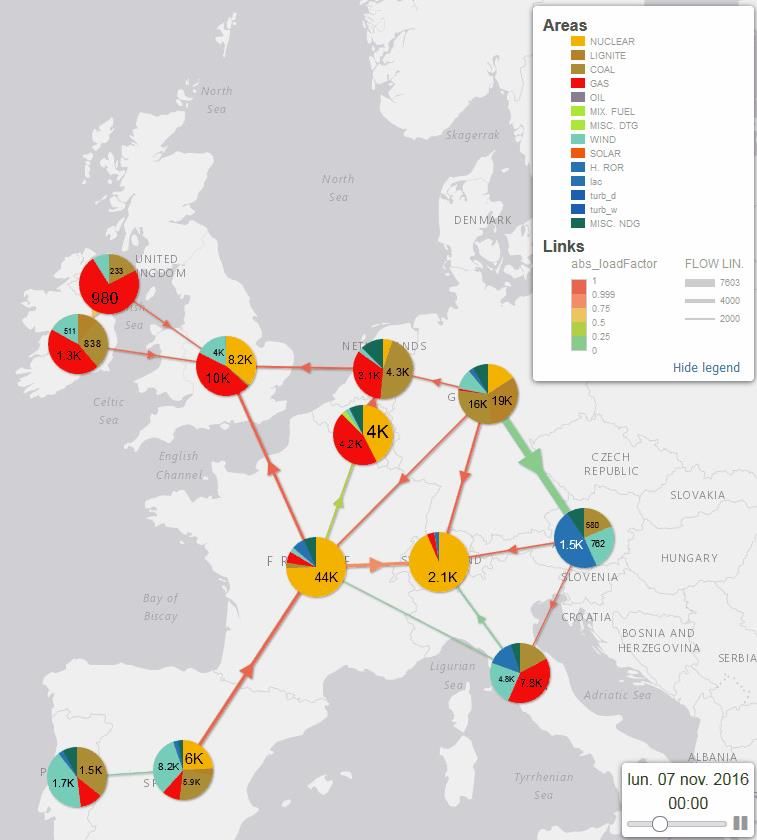
Context
Context (1/2):
      Today, French households rely mostly on gas (~40%) and electricity
                            (~40%) for heating

                                           29 million households

                                                  Joule
        Fuel                  Gas                heating          Heat pumps (HP)        Biomass          District heating
       (3,5 M)               (12 M)              (10 M)                 (1 M)             (1 M)            & other (1 M)

                                                                    Source : CEREN

    The National Low-Carbon Strategy in France aims at reducing emission generated by heating through ambitious
    renovations, and through the shift to low carbon energies : biomass and electricity (since power generation is 93%
    low carbon in France).

    In particular, electricity for heating should increase from 16% of final energy demand for today, to 28% in
3
    2050, mostly through the use of heat pumps.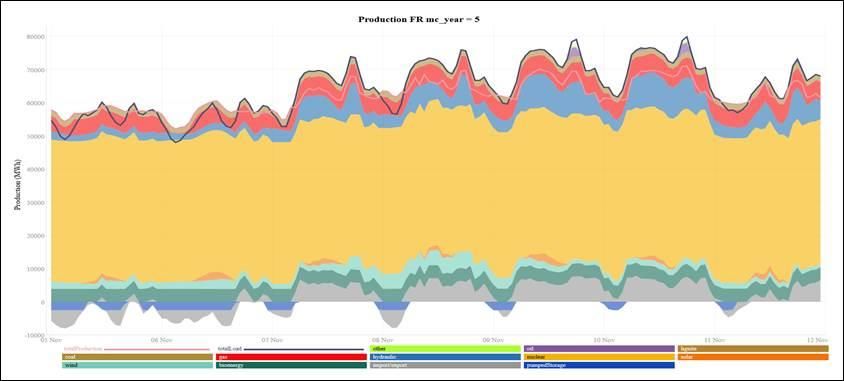
Context (2/2) :
    The National Low-Carbon Strategy relies on 3 measures to
     reduce CO2 emissions from heating in the building sector

                          Energy performance of buildings
                                    (insulation)
                              ~15 millions retrofits by 2035
                          (doubling the rythm and performance)

                                                                  Shift from fossil fuels
                                                                 to low-carbon energies
                                                                  for heating, including
                                                                         electricity
              High efficiency heating                            Households with electric heating :
                     systems                                     from 40% today to 50% in 2035

                Heat pumps rather than
4               Joule heating                                                                         Source : MTES, SNBC 2020.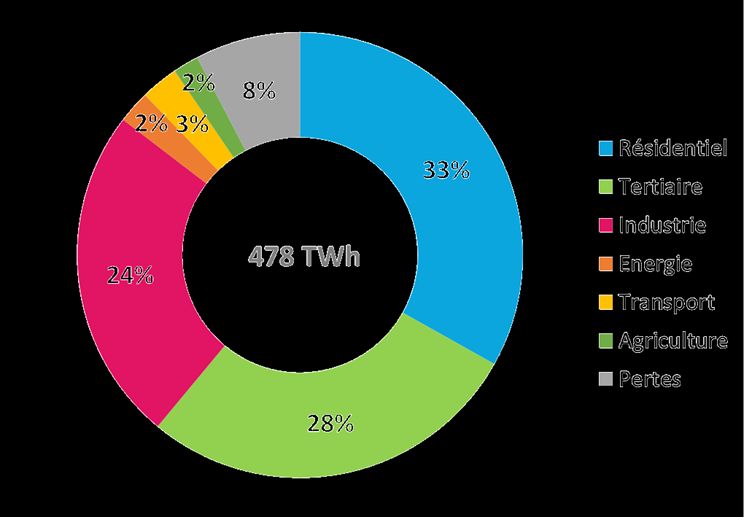
Electrification of heating may raise some concerns…

      •   Regarding security of supply : it may                       •   Regarding emissions : it may activate fossil
          increase the winter peak                                        fuelled power generation

                                                  RTE, 2017

    Is electrification of heating efficient to reduce emissions ? With which effects on security of supply ? At what costs ?

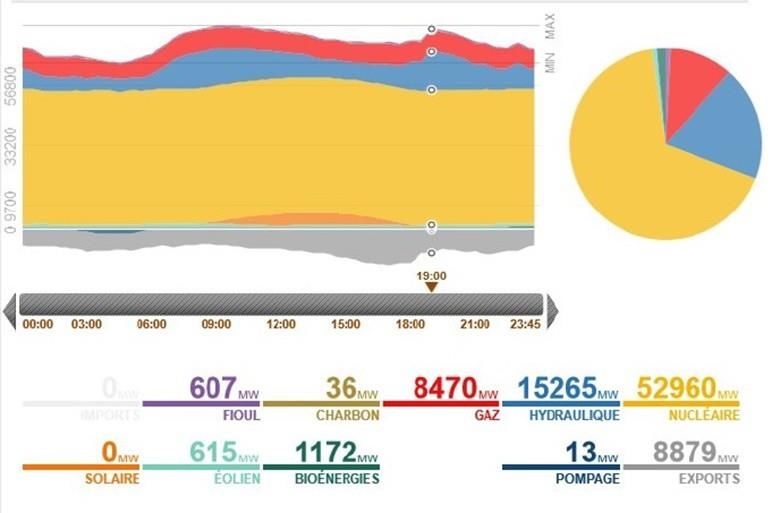
    As the French electricity transmission system operator, RTE has a legal duty to ensure real-time adequacy between
    electricity supply and demand and to provide long-term scenario analyses to anticipate major changes in the power
    system, such as the development of renewable energy sources or the massive development of electric uses: e-
5   mobility, hydrogen, heating...
Objectives

    1   Analysis of the technical impacts of the development of electric heating on security
        of supply - consumption and peak demand

    2   Environmental impacts on CO2 emissions

    3   Economic analysis

6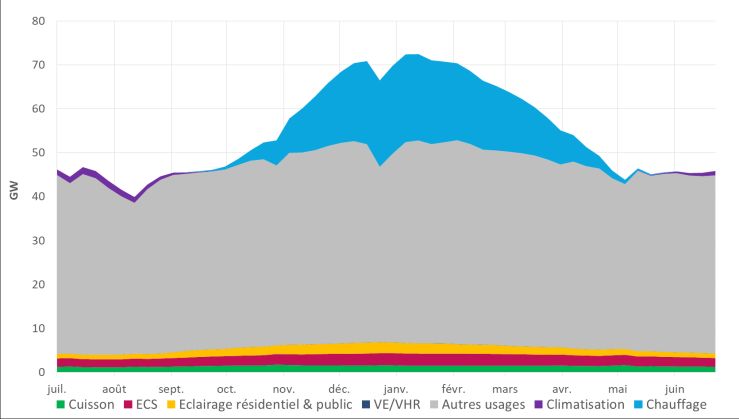
Outline of the presentation

    1 - Context & Objectives
    2 - Models and method
    3 - Scenarios
    4 - Results
         4.1 Technical impacts
         4.2 Environmental impacts
         4.3 Economic analysis

7
02 Models and method
Consumption model Amadeus :
Bottom-up modelling of electricity consumption by sector
Evolution of electricity demand per sector
Residentia
l
Tertiary
Industry
more than 30 electricity Energy sector
Transpor
uses are modelled t
Agriculture
Grid losses
2017
Residential Tertiary Industry Energy sector
Transport Agriculture Grid losses
Corrected from meteorological variations & leap years
9Modelling of the sensitivity of electricity consumption to
meteorological conditions
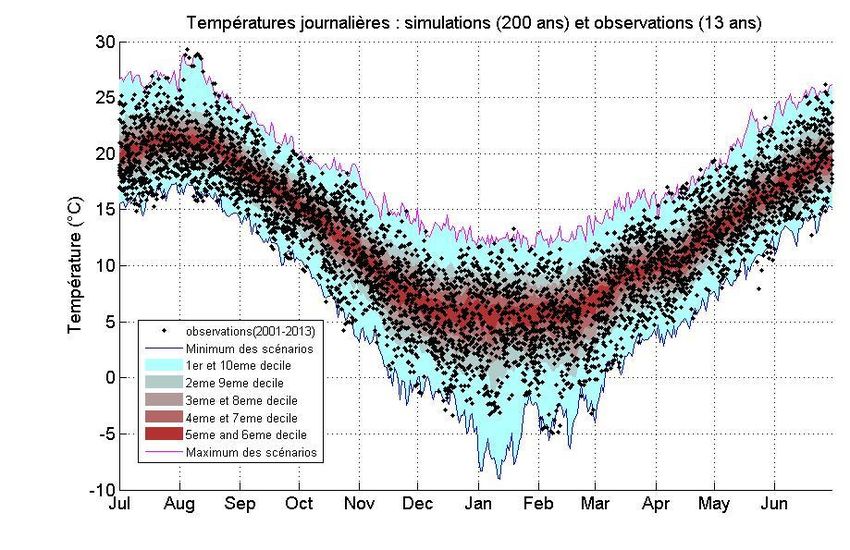
200 scenarios generated by ARPEGE Climat model (Meteo France, national
weather organisation)
10Modelling of hourly demand and supply equilibrium :
ANTARES – a probabilistic software
For each scenario studied, ANTARES
optimizes the unit commitment in order
to meet the demand at the lowest cost.
Analyses in terms of security of supply,
CO2 emissions and economics
Exchanges between neighbours are
possible, within the limits of the network.
18 countries are modelled in the latest
version of the model 11Method
Inputs
Evolution of electricity
Evolution of the Evolution of electricity
consumption for heating
power generation mix consumption for other uses
(EV, H2…)
Simulation of the electricity system through an hourly model
Outputs
CO2 emissions System costs
Impact on winter peak
1203 Scenarios
Focus on three scenarios

     If all measures are implemented
     – reference scenario

     If efficiency targets are not met

     If all targets are not met:
     efficiency & electrification

14
04 Results
4.1

Technical impacts on the electricity
 system : peak and consumption
If all measures are implemented
Impacts on the electricity system are negligible
On electricity consumption
+ • Electrifying an additional 10% of households with heat pumps, Annual electricity consumption for
compared, increases slightly electricity demand heating (adjusted for climatic differences)
- • Retrofits on half of buildings reduce energy demand for heating 2035
Today (reference
(even if there is a rebound effect) scenario)
• 61 TWh 58 TWh
= Electricity demand for heating is stable
(about 12% of total electricity demand)
On winter peak: “One in ten" peak demand
2035
• Slight decrease as well Today (reference
scenario)
~100 GW
-3 GW
17If efficiency targets are not met:
Failing to achieve the retrofit target and electrifying with
Joule heaters instead of heat pumps may rise the winter
peak and bring constraints to the electricity system
On electricity consumption
• Compared to the reference scenario, electricity consumption for Annual electricity consumption for
heating would increase by 10 TWh heating (adjusted for climatic differences)
• Such an amount of energy does not represent any difficulty for 2035
Today
the electricity system
61 TWh 72 TWh
On winter peak:
• The winter peak would increase by several GW compared to “One in ten" peak demand
today’s levels
2035
Higher need for flexibility Today
~100 GW +6 GW
18If all targets are not met (efficiency &
electrification):
Failing all three targets (efficiency of buildings and heating
systems, electrification) does not generate much
constraint on the electricity system
On electricity consumption
• Compared to the reference scenario, electricity consumption for Annual electricity consumption for
heating would increase by 5 TWh, by implementing only a heating (adjusted for climatic differences)
business-as-usual electrification
2035
Today
• Such an amount of energy does not represent any difficulty for
the electricity system 63 TWh
61 TWh
On winter peak:
• The winter peak would slighly increase “One in ten" peak demand
No major need for flexibility 2035
Today
~100 GW +2 GW
194.2
Environmental impacts: CO2
emissionsEmissions from heating are particularly difficult to assess
Emissions
from the
Émissions liées French
electricity Emissions from
au chauffage system the European
~20 MtCO2/yr electricity system
Emissions from
fossil fuelled
heating Emissions from
~50 MtCO2/yr electric heating:
from the French
electricity system &
imports
21If all measures are implemented
Decomposition of emission reduction from fossil-fuelled heating
Main sources for CO2 emission reduction expected from the implementation of all measures
Today New builds / Insulation Fuel switch Fuel switch Biogas 2035 –
demolitions (retrofits) to to biomass injection in emissions from
electricity and district gas fossil fuelled
heating network heating in
reference
scenario
22 Fuel Gas Biomass and district heatingIf all measures are implemented
The CO2 emissions reduction target is achieved
53 MtCO2
CO2 emissions from fossil fuels are today
Emissions from 24,5 MtCO2
divided by two by 2035 (halfway from the
fossil fuelled in 2035
zero emission target in 2050)… heating
… without increasing emissions in the
electricity sytem in France…
Emissions from the 20 MtCO2
French electricity aujourd’hui 11 MtCO2
… and even counting emissions on the en 2035
system
European level (no increase in imports)
Phasing out of coal, increased
share of renewables
In the reference scenario of the National Low Carbon strategy, there is no
carbon leakage towards other countries due to the electrification of heating.
23If efficiency targets are not met:
Failing to achieve the retrofit target and electrifying with Joule heaters instead of
heat pumps generates
6 additional millions de tons of CO2 in France compared to the target
53 MtCO2
today 30 MtCO2
Emissions from
in 2035
fossil fuelled
heating
Emissions from the 20 MtCO2
French electricity today 11,5 MtCO2
system in 2035
+ ~6 MtCO2 / year in France
(mostly from fossil-fuelled heating – less retrofits)
+ ~11 MtCO2 / an in Europe
(including France – increase in fossil-fuelled generation oustide of France)
in 2035, compared to the reference scenario
24If all targets are not met (efficiency & electrification):
Failing all three targets (efficiency of buildings and heating systems, electrification)
does not generate much constraint on the electricity system but causes
11 additional million tons of CO2 in France compared to the objective
53 MtCO2
today 35 MtCO2
Emissions from in 2035
fossil fuelled
heating
Emissions from the 20 MtCO2
French electricity today 11,5 MtCO2
system in 2035
+ ~11 MtCO2 / year in France
(mostly from fossil-fuelled heating – less retrofitss & less fuel switch)
+ ~14 MtCO2 / an in Europe
(including France – increase in fossil-fuelled generation oustide of France)
in 2035, compared to the reference scenario
254.3 Economic analysis
Economic analysis – cost assumptions
Costs assumptions based on retrofit literature
Retrofit cost assumption: 100 – 160 €/m2 (calculated based on ADEME, 2019)
Average costs for heating systems (ADEME, 2019)
Heating system Average price (excluding tax)
Air-water heat pump 13 000 €
Air-Air heat pump 8 000 €
Water-water heat pump 16 000 €
Gas boiler 6 000 €
Joule heater 400 € (~3 600 € for an average household)
Biomass boiler 12 500 €
Fuel boiler 8 500 €
27Economic analysis
Economic perspectives
Such measures are costly : ~430 €/tCO2 for the reference scenario
Focusing on electrification through heat pumps only is economically more attractive
(~100 €/tCO2) but not sufficient to achieve the target
Focusing on the most energy consuming buildings seems economically relevant
(~290€/tCO2)
Energy efficiency also includes an increase in comfort with a rebound effect: without
the rebound effect in the reference scenario, the abatement cost becomes 240 €/tCO2
28Conclusions & perspectives
All measures need to be implemented to achieve the target in terms of CO2
emissions
Avoided emissions from fossil fuelled heaters are not transferred to the electricity
system either in France or Europe
Each individual measure has an impact on emissions reductions
But retrofits and energy efficiency in buildings in general seem costly: multiple
benefits beyond energy savings and emissions cuts that are difficult to quantify
29Thank you for your attention
You can also read


