Development Trends & Technology Forecast - DSTA
←
→
Page content transcription
If your browser does not render page correctly, please read the page content below

Unmanned Aerial Vehicle

Development Trends        ABSTRACT
                          The increasing demand and reliance on unmanned air vehicles

& Technology Forecast     (UAV) in warfighting and peacekeeping operations has doubled
                          the pace of UAV-related research and development in recent
                          years. Equipped with more capabilities, UAVs today are able
                          to play a greater role in critical missions. Achieving information
                          superiority, minimising collateral damage, fighting effectively
                          in urban areas against widely-dispersed forces, and striking
                          autonomously and precisely are areas where UAVs will be
                          increasingly indispensable. Three major thrusts in UAV
                          development include the growth in size of strategic UAVs for
                          better endurance and payload, reduction in size of tactical
                          UAVs and the weaponisation of UAVs to offer lethal capability
                          in combat missions. This paper describes future UAV technology
                          trends and their evolution. The forecast of technology growth
                          will focus on datalink, sensor and information processing
                          capabilities. Interesting UAV developments will be covered
                          in Appendix A.

                          “We are entering an era in which unmanned vehicles of all
                          kinds will take on greater importance – in space, on land,
                          in the air and at sea.” - President George W Bush.

                          Wang Jong Chin
                          Victor Chua Yung Sern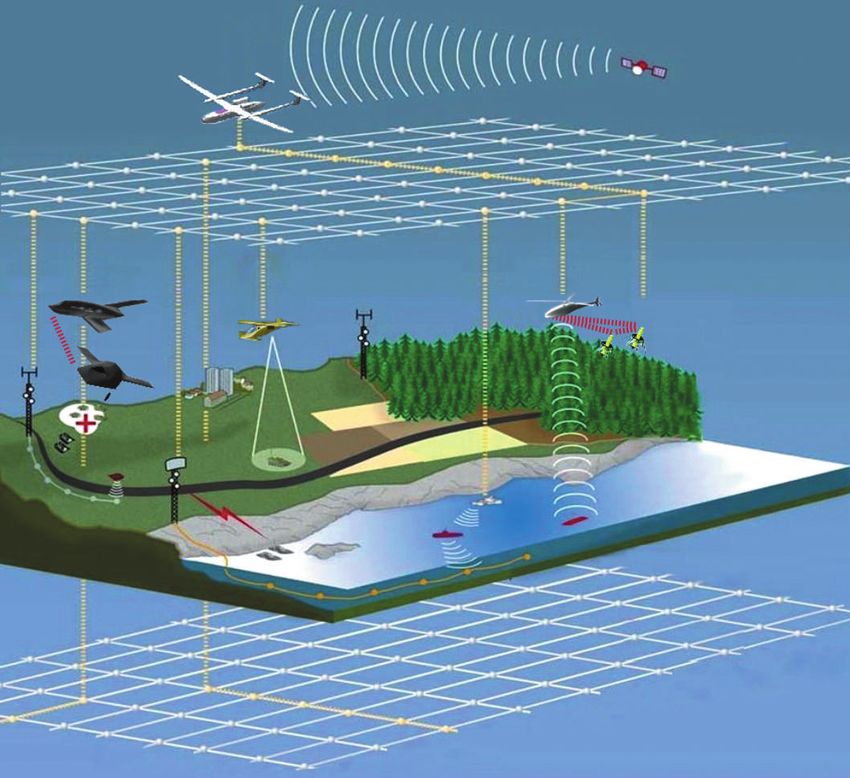
Unmanned Aerial Vehicle

Development Trends        ABSTRACT
                          The increasing demand and reliance on unmanned air vehicles

& Technology Forecast     (UAV) in warfighting and peacekeeping operations has doubled
                          the pace of UAV-related research and development in recent
                          years. Equipped with more capabilities, UAVs today are able
                          to play a greater role in critical missions. Achieving information
                          superiority, minimising collateral damage, fighting effectively
                          in urban areas against widely-dispersed forces, and striking
                          autonomously and precisely are areas where UAVs will be
                          increasingly indispensable. Three major thrusts in UAV
                          development include the growth in size of strategic UAVs for
                          better endurance and payload, reduction in size of tactical
                          UAVs and the weaponisation of UAVs to offer lethal capability
                          in combat missions. This paper describes future UAV technology
                          trends and their evolution. The forecast of technology growth
                          will focus on datalink, sensor and information processing
                          capabilities. Interesting UAV developments will be covered
                          in Appendix A.

                          “We are entering an era in which unmanned vehicles of all
                          kinds will take on greater importance – in space, on land,
                          in the air and at sea.” - President George W Bush.

                          Wang Jong Chin
                          Victor Chua Yung Sern
Unmanned Aerial Vehicle
Development Trends
22 & Technology Forecast
evolve such that they can perform as well as,
1. FUTURE UNMANNED if not better than, current manned systems in 2. EVOLUTION OF UAV the X-45 UCAV, the Neptune Maritime UAV
and the X-50 Canard Rotor Wing (CRW) (see
BATTLEFIELD order to gain the confidence of military IN THE SAF Appendix A for a summary of recent
commanders. Today, continued advances in
breakthroughs in UAV developments).
unmanned systems technology are pushing
The role of Unmanned Aerial Vehicles (UAVs) Our UAV or rather RPV (Remotely Piloted
the envelope in terms of performance,
in modern warfare has evolved with each Increasing demand for better performance and
propelling UAVs into a greater variety of Vehicle) history could be traced back to the
successive conflict, from naval gunfire support higher reliability will escalate the development
missions and applications to be true early 70s when we recognised the potential of
during the 1991 Gulf War to real time satellite and production cost of UAVs. Whether the
force multipliers. RPV to provide real-time aerial imagery
relay of video over Kosovo in 1999 to attacking platform is designed to be better than manned
intelligence to the ground forces. We acquired
mobile Al Qaeda fighters in Afghanistan rated aircraft or expendable depends on its
UAVs will track the paradigm shift towards a a few Mastiff RPVs in 1978 for the purpose of
in 2002/2003. application, the payloads it carries, mission
network-centric warfare concept, seamlessly operational and technical trials. pay-off and cost effectiveness.
integrating into all three key areas of defence
Afghanistan marked the formal debut of the
systems encompassing the sensor, shooter and In 1985, when the Mastiff RPVs were retired, The misconception that all classes of UAVs will
Hellfire-carrying Predator, giving warfighters
Command and Control (C2) network. UAVs will be low cost and expendable has severe
a sneak preview of what tomorrow’s dedicated we introduced the more advanced Scout RPV
allow the force commander to “see first, consequences downstream. Policy makers in
Unmanned Combat Air Vehicles (UCAVs) systems. The Scout systems served the Singapore
understand first, act first and finish decisively” the US are beginning to re-examine their long
promise to offer. Supporting US Special Forces Armed Forces (SAF) well and it continued to
by providing platforms for deploying sensors, history of cancelled UAV developmental
in search of Al Qaeda operatives, the Predator develop the operational and maintenance
weapons, and communications architecture programmes in the light of unrealistic
was credited with the assassination of the (see Figure 1). capabilities. In 1998, the SAF entered into the
cost expectations.
terrorists’ chief of military operations. More "UAV era" when we decided to replace the
recently, it was widely credited with the killing Scout with the Searcher system which was more
The $268 million DarkStar concept
of another senior Al Qaeda figure in Yemen. technologically advanced. The Searcher UAV, demonstration programme is an appropriate
a medium size UAV system, is 5m long and has example. Lockheed Martin abandoned the
The Predators provide sustained sensor/shooter a wingspan of 7.6m. It can operate stealthy HAE (High Altitude Endurance) UAV
presence, enabling commanders to have new autonomously up to 100km from its Ground due to the unrealistic, unattainable unit flyaway
levels of recognition, tracking and interdiction price of US$10 million set by Defence Advanced
Control Station (GCS).
of target areas, once considered impossible. Research Projects Agency (DARPA). Even the
Equipped with optical sensors with resolutions successful non-stealthy HAE counterpart, the
To ensure that our Republic of Singapore Air
good enough to read road signs from 4.5km Global Hawk, ended up with US$644 million
Force (RSAF) pilots are proficient in operating
away, the Predator allows operators to identify in developmental costs, and a whopping
the UAVs, DSTA also conceived and
and distinguish human targets, to follow them US$73.7 million unit flyaway price (Leonard
implemented the UAV training simulator. This
if they were motorised, and to destroy them and Drezner, 2002).
even if armoured. was an innovative way of training our pilots
within our limited air space and reducing the For strategic high-value UAVs to perform as
Armed forces worldwide are beginning to cost of training. The simulator was the first of well as manned systems, US policy makers are
explore the possibilities offered by unmanned its kind for UAVs when it was operationalised beginning to acknowledge that unmanned
systems as both sensor and weapons platforms. in 1998. system developmental programmes will have
The promise of an autonomous, highly Figure 1. Future Unmanned Battlefield similar complexity, and hence acquisition cost.
survivable and absolutely fearless UAV will The SAF has since operated the Searcher till This shift towards realistic price expectations
usher in a new paradigm in which the ultimate Operation Enduring Freedom saw the successful now. Studies are now being carried out on a can be seen in the X-45 Unmanned Combat
consideration is no longer the value of pilots’ integration of sensor, shooter and C2 data Air Vehicle (UCAV) Advanced Technology
High Altitude Long Endurance (HALE) UAV,
lives, but rather the mission and cost streams using Link 16 and other datalink Demonstrator (ATD) which has cost US$655
the next possible transformation.
effectiveness of UAVs. technology, including the RQ-1 Predator UAV, million to date, with significant work on both
RC-135V/W Rivet Joint Signals Intelligence airframe and payload integration yet to
Nations have to carefully study and redefine (SIGINT) aircraft, U-2 high-altitude 3. UAV EVOLUTION be done. 23
the value of human operators – where and reconnaissance aircraft, E-8 Joint Surveillance
how much to do away with humans, bearing Target Attack Radar System (Joint STARS) The furious drive towards UAV deployment in UAVs have traditionally been employed as
in mind the costs to the economy at large. At aircraft, and the RQ-4A Global Hawk long every theatre of war has seen the debut of sensor platforms in intelligence, surveillance
the same time, unmanned systems have to endurance UAV. many revolutionary concept UAVs including and reconnaissance (ISR) missions, target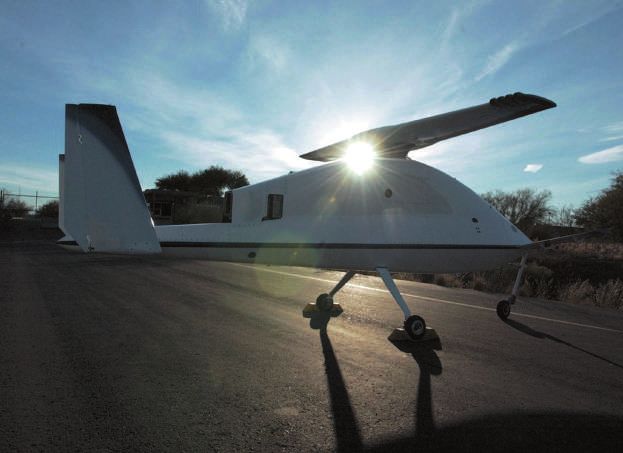
Unmanned Aerial Vehicle
Development Trends
22 & Technology Forecast
evolve such that they can perform as well as,
1. FUTURE UNMANNED if not better than, current manned systems in 2. EVOLUTION OF UAV the X-45 UCAV, the Neptune Maritime UAV
and the X-50 Canard Rotor Wing (CRW) (see
BATTLEFIELD order to gain the confidence of military IN THE SAF Appendix A for a summary of recent
commanders. Today, continued advances in
breakthroughs in UAV developments).
unmanned systems technology are pushing
The role of Unmanned Aerial Vehicles (UAVs) Our UAV or rather RPV (Remotely Piloted
the envelope in terms of performance,
in modern warfare has evolved with each Increasing demand for better performance and
propelling UAVs into a greater variety of Vehicle) history could be traced back to the
successive conflict, from naval gunfire support higher reliability will escalate the development
missions and applications to be true early 70s when we recognised the potential of
during the 1991 Gulf War to real time satellite and production cost of UAVs. Whether the
force multipliers. RPV to provide real-time aerial imagery
relay of video over Kosovo in 1999 to attacking platform is designed to be better than manned
intelligence to the ground forces. We acquired
mobile Al Qaeda fighters in Afghanistan rated aircraft or expendable depends on its
UAVs will track the paradigm shift towards a a few Mastiff RPVs in 1978 for the purpose of
in 2002/2003. application, the payloads it carries, mission
network-centric warfare concept, seamlessly operational and technical trials. pay-off and cost effectiveness.
integrating into all three key areas of defence
Afghanistan marked the formal debut of the
systems encompassing the sensor, shooter and In 1985, when the Mastiff RPVs were retired, The misconception that all classes of UAVs will
Hellfire-carrying Predator, giving warfighters
Command and Control (C2) network. UAVs will be low cost and expendable has severe
a sneak preview of what tomorrow’s dedicated we introduced the more advanced Scout RPV
allow the force commander to “see first, consequences downstream. Policy makers in
Unmanned Combat Air Vehicles (UCAVs) systems. The Scout systems served the Singapore
understand first, act first and finish decisively” the US are beginning to re-examine their long
promise to offer. Supporting US Special Forces Armed Forces (SAF) well and it continued to
by providing platforms for deploying sensors, history of cancelled UAV developmental
in search of Al Qaeda operatives, the Predator develop the operational and maintenance
weapons, and communications architecture programmes in the light of unrealistic
was credited with the assassination of the (see Figure 1). capabilities. In 1998, the SAF entered into the
cost expectations.
terrorists’ chief of military operations. More "UAV era" when we decided to replace the
recently, it was widely credited with the killing Scout with the Searcher system which was more
The $268 million DarkStar concept
of another senior Al Qaeda figure in Yemen. technologically advanced. The Searcher UAV, demonstration programme is an appropriate
a medium size UAV system, is 5m long and has example. Lockheed Martin abandoned the
The Predators provide sustained sensor/shooter a wingspan of 7.6m. It can operate stealthy HAE (High Altitude Endurance) UAV
presence, enabling commanders to have new autonomously up to 100km from its Ground due to the unrealistic, unattainable unit flyaway
levels of recognition, tracking and interdiction price of US$10 million set by Defence Advanced
Control Station (GCS).
of target areas, once considered impossible. Research Projects Agency (DARPA). Even the
Equipped with optical sensors with resolutions successful non-stealthy HAE counterpart, the
To ensure that our Republic of Singapore Air
good enough to read road signs from 4.5km Global Hawk, ended up with US$644 million
Force (RSAF) pilots are proficient in operating
away, the Predator allows operators to identify in developmental costs, and a whopping
the UAVs, DSTA also conceived and
and distinguish human targets, to follow them US$73.7 million unit flyaway price (Leonard
implemented the UAV training simulator. This
if they were motorised, and to destroy them and Drezner, 2002).
even if armoured. was an innovative way of training our pilots
within our limited air space and reducing the For strategic high-value UAVs to perform as
Armed forces worldwide are beginning to cost of training. The simulator was the first of well as manned systems, US policy makers are
explore the possibilities offered by unmanned its kind for UAVs when it was operationalised beginning to acknowledge that unmanned
systems as both sensor and weapons platforms. in 1998. system developmental programmes will have
The promise of an autonomous, highly Figure 1. Future Unmanned Battlefield similar complexity, and hence acquisition cost.
survivable and absolutely fearless UAV will The SAF has since operated the Searcher till This shift towards realistic price expectations
usher in a new paradigm in which the ultimate Operation Enduring Freedom saw the successful now. Studies are now being carried out on a can be seen in the X-45 Unmanned Combat
consideration is no longer the value of pilots’ integration of sensor, shooter and C2 data Air Vehicle (UCAV) Advanced Technology
High Altitude Long Endurance (HALE) UAV,
lives, but rather the mission and cost streams using Link 16 and other datalink Demonstrator (ATD) which has cost US$655
the next possible transformation.
effectiveness of UAVs. technology, including the RQ-1 Predator UAV, million to date, with significant work on both
RC-135V/W Rivet Joint Signals Intelligence airframe and payload integration yet to
Nations have to carefully study and redefine (SIGINT) aircraft, U-2 high-altitude 3. UAV EVOLUTION be done. 23
the value of human operators – where and reconnaissance aircraft, E-8 Joint Surveillance
how much to do away with humans, bearing Target Attack Radar System (Joint STARS) The furious drive towards UAV deployment in UAVs have traditionally been employed as
in mind the costs to the economy at large. At aircraft, and the RQ-4A Global Hawk long every theatre of war has seen the debut of sensor platforms in intelligence, surveillance
the same time, unmanned systems have to endurance UAV. many revolutionary concept UAVs including and reconnaissance (ISR) missions, target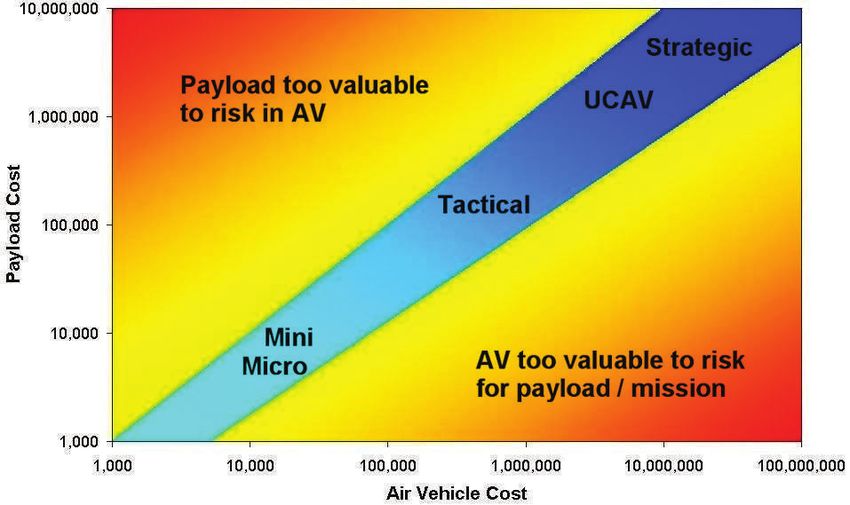
Unmanned Aerial Vehicle
Development Trends
& Technology Forecast
24
acquisition, battle damage assessment, SIGINT, Control System) and Joint Surveillance Target B. Tactical UAV Advances in payload miniaturisation continue
COMINT (Communications Intelligence) and Attack Radar System (STARS) currently provide relentlessly with integrated Micro-
ELINT (Electronics Intelligence). The advent of long range, all weather, wide area Electromechanical Systems (MEMS) reducing
Tactical UAVs (TUAVs) will evolve towards
light airborne precision weapons, autonomous comprehensive surveillance. However, they are payload sizes to that of the average silicon
multi-role multi-mission platforms. As UAV
target acquisition and recognition technologies handicapped by the penalties associated with chip. While the performance of such sensors
technology matures, we see that UAVs become
will push UAVs towards becoming armed and may not be as impressive as their larger
human physiology, resulting in limited increasingly cost effective as they adopt more
lethal unmanned platforms. UAVs with the counterparts, their small size, weight and
endurance and lowered payload capacity. missions per platform MTOW – they either have
ability to pick out targets and attack power requirements make for deployment on
Strategic UAVs, designed from the ground up, to grow smaller, or be able to satisfy a greater
autonomously with persistent presence over increasingly smaller vehicles allowing
will be able to remain airborne for days or number of missions and roles. Besides current
close-up surveillance.
areas of interest will come of age in the near weeks at a go, providing a truly “unblinking” applications in Reconnaissance, Surveillance
future and commanders are beginning to see and Target Acquisition (RSTA), the tactical UAV
eye in the sky. These include Medium Altitude Australia’s Defence Science and Technology
them as indispensable weapons of war. mission set could be expanded to include target
Endurance (MAE), High Altitude Long Organisation (DSTO) successfully test flew a
designation, strike, chem-bio detection, mine
Endurance (HALE) UAVs as well as lighter than micro robotic aircraft. The 1kg aircraft carried
The continued development of strategic and countermeasures, Theater Air Missile Defense,
air aerostat vehicles and balloons. an electronic ocelli, an optical payload designed
tactical UAVs follows the line of employing electronic warfare and information warfare.
to mimic dragonfly vision, weighing a mere
UAVs as multi-role multi-mission platforms.
Near-term developments are focused on the The near-term solution to the US Army’s 5g. The ocelli demonstrated robustness to
UAVs will see progressive developments adverse conditions such as low sun, patchy
RQ-4A Global Hawk, which is seen as a requirement for TUAVs includes the RQ-7A
towards both extreme ends of the size cloud and low light levels, allowing its use as
replacement for the U-2 spy plane. Northrop Shadow 200 expected to be fielded this year
spectrum. Strategic UAVs will see continuous an altitude controller for MAVs.
Grumman intends to evaluate new payloads at the brigade level. However, the US Army’s
growth in size for better endurance, reliability
on its “White Tail” advanced technology Future Combat Systems (FCS) programme
and payload capacity, while the mini- and Flapping wing designs mimicking the flight
demonstrator, such as hyperspectral imagery envisions a family of UAVs to serve at every
micro- UAVs will grow smaller, lighter and pattern of nature’s creations have attracted
sensors, electronically scanned array radars, echelon – not unlike the Fox AT programme
more expendable. The tactical, close range championed by the European Aeronautic funding in the US of more than US$50 million.
and SIGINT packages. Featuring a larger wing
platforms will become more versatile, with Defence and Space Company (EADS). Payloads Research foci include flapping wing airframes,
multi-mission, multi-role capability. Figure 2 and extended fuselage, this larger version is microscopic jet engines and molecule-
with functional and/or architectural
shows payload versus air vehicle costs for able to accommodate larger payloads and size avionics.
commonality would be deployed on disparate
various UAV classes, underlining the possibilities provide more onboard electrical power to
TUAVs to reduce payload developmental costs
for present and future applications. operate them. and allow cost savings from economies of scale. Despite the relative immaturity of flapping
Boeing’s proposal for the FCS programme spans wing designs compared to their fixed wing
In the 2015 timeframe, DARPA expects to field the size spectrum of TUAVs (Tactical UAVs), counterparts, they are able to address real
the diamond-shaped SensorCraft as the including man-packable Micro Air Vehicles operational needs such as high maneuverability
strategic UAV replacement for the Global (MAVs), organic VTOL (Vertical Take-Off and and better aerodynamic performance. Some
Hawk. The SensorCraft will employ lightweight Landing) UAVs carrying 4.5 kg payloads for examples of flapping wing designs include
composites, swept-wing laminar flow and one hour, tube-launched UAVs with endurance Georgia Tech’s Entomopter, CalTech’s Micro
of six to eight hours at 1,000 ft, and a Shadow- Bat, and Berkeley’s Micro-mechanical
aeroelastic wings to reduce Maximum Take-
like TUAV flying at 15,000 ft. Flying Insect.
Off Weight (MTOW ) by about 25%, allowing
greater endurance – some predict up to 60
hours. Bristling with structurally integrated C. Micro UAV D. Vertical Take-Off Landing
sensors, the SensorCraft will play a critical role
UAV
in supporting attacks against difficult targets Micro UAV (MAVs) have significant military
Figure 2. Payload vs AV Cost and law enforcement utilities because they are Experience with Vertical Take-Off Landing
such as stealthy cruise missiles and mobile
less detectable, cheap to produce, truly (VTOL) UAVs has been rather dismal over the
missile launchers. Possible payloads include
expendable and can be organic to smaller units last 10-15 years. Technology challenges and
A. Strategic UAV electro-optics/infrared sensors, air and ground
such as special task forces, groups and cost overruns led to repeated cancellation of
moving target indicators (AGMTI), synthetic
companies, providing over-the-hill and urban developmental programmes. The past
Strategic UAVs will grow in size for greater aperture radars (SAR), as well as SIGINT, early area reconnaissance at reduced signature “casualty” include EADS’ Seamos and 25
payload capacity, reliability and endurance. warning (EW), and hyper-spectral imagery (HIS) without risk to the personnel. Bombardier’s CL-327.
High altitude airborne surveillance and packages, providing 360 multi-phenomena
communications assets such as the E-2C collection with the possibility of mono-, bi- or MAVs take the other path towards cost Despite the performance penalties suffered by
Hawkeye AWACS (Airborne Warning and multi-static operations. effectiveness – growing smaller and smaller. the VTOL aircraft, there remains a market for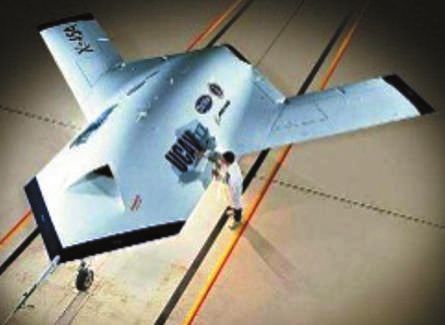
Unmanned Aerial Vehicle
Development Trends
& Technology Forecast
24
acquisition, battle damage assessment, SIGINT, Control System) and Joint Surveillance Target B. Tactical UAV Advances in payload miniaturisation continue
COMINT (Communications Intelligence) and Attack Radar System (STARS) currently provide relentlessly with integrated Micro-
ELINT (Electronics Intelligence). The advent of long range, all weather, wide area Electromechanical Systems (MEMS) reducing
Tactical UAVs (TUAVs) will evolve towards
light airborne precision weapons, autonomous comprehensive surveillance. However, they are payload sizes to that of the average silicon
multi-role multi-mission platforms. As UAV
target acquisition and recognition technologies handicapped by the penalties associated with chip. While the performance of such sensors
technology matures, we see that UAVs become
will push UAVs towards becoming armed and may not be as impressive as their larger
human physiology, resulting in limited increasingly cost effective as they adopt more
lethal unmanned platforms. UAVs with the counterparts, their small size, weight and
endurance and lowered payload capacity. missions per platform MTOW – they either have
ability to pick out targets and attack power requirements make for deployment on
Strategic UAVs, designed from the ground up, to grow smaller, or be able to satisfy a greater
autonomously with persistent presence over increasingly smaller vehicles allowing
will be able to remain airborne for days or number of missions and roles. Besides current
close-up surveillance.
areas of interest will come of age in the near weeks at a go, providing a truly “unblinking” applications in Reconnaissance, Surveillance
future and commanders are beginning to see and Target Acquisition (RSTA), the tactical UAV
eye in the sky. These include Medium Altitude Australia’s Defence Science and Technology
them as indispensable weapons of war. mission set could be expanded to include target
Endurance (MAE), High Altitude Long Organisation (DSTO) successfully test flew a
designation, strike, chem-bio detection, mine
Endurance (HALE) UAVs as well as lighter than micro robotic aircraft. The 1kg aircraft carried
The continued development of strategic and countermeasures, Theater Air Missile Defense,
air aerostat vehicles and balloons. an electronic ocelli, an optical payload designed
tactical UAVs follows the line of employing electronic warfare and information warfare.
to mimic dragonfly vision, weighing a mere
UAVs as multi-role multi-mission platforms.
Near-term developments are focused on the The near-term solution to the US Army’s 5g. The ocelli demonstrated robustness to
UAVs will see progressive developments adverse conditions such as low sun, patchy
RQ-4A Global Hawk, which is seen as a requirement for TUAVs includes the RQ-7A
towards both extreme ends of the size cloud and low light levels, allowing its use as
replacement for the U-2 spy plane. Northrop Shadow 200 expected to be fielded this year
spectrum. Strategic UAVs will see continuous an altitude controller for MAVs.
Grumman intends to evaluate new payloads at the brigade level. However, the US Army’s
growth in size for better endurance, reliability
on its “White Tail” advanced technology Future Combat Systems (FCS) programme
and payload capacity, while the mini- and Flapping wing designs mimicking the flight
demonstrator, such as hyperspectral imagery envisions a family of UAVs to serve at every
micro- UAVs will grow smaller, lighter and pattern of nature’s creations have attracted
sensors, electronically scanned array radars, echelon – not unlike the Fox AT programme
more expendable. The tactical, close range championed by the European Aeronautic funding in the US of more than US$50 million.
and SIGINT packages. Featuring a larger wing
platforms will become more versatile, with Defence and Space Company (EADS). Payloads Research foci include flapping wing airframes,
multi-mission, multi-role capability. Figure 2 and extended fuselage, this larger version is microscopic jet engines and molecule-
with functional and/or architectural
shows payload versus air vehicle costs for able to accommodate larger payloads and size avionics.
commonality would be deployed on disparate
various UAV classes, underlining the possibilities provide more onboard electrical power to
TUAVs to reduce payload developmental costs
for present and future applications. operate them. and allow cost savings from economies of scale. Despite the relative immaturity of flapping
Boeing’s proposal for the FCS programme spans wing designs compared to their fixed wing
In the 2015 timeframe, DARPA expects to field the size spectrum of TUAVs (Tactical UAVs), counterparts, they are able to address real
the diamond-shaped SensorCraft as the including man-packable Micro Air Vehicles operational needs such as high maneuverability
strategic UAV replacement for the Global (MAVs), organic VTOL (Vertical Take-Off and and better aerodynamic performance. Some
Hawk. The SensorCraft will employ lightweight Landing) UAVs carrying 4.5 kg payloads for examples of flapping wing designs include
composites, swept-wing laminar flow and one hour, tube-launched UAVs with endurance Georgia Tech’s Entomopter, CalTech’s Micro
of six to eight hours at 1,000 ft, and a Shadow- Bat, and Berkeley’s Micro-mechanical
aeroelastic wings to reduce Maximum Take-
like TUAV flying at 15,000 ft. Flying Insect.
Off Weight (MTOW ) by about 25%, allowing
greater endurance – some predict up to 60
hours. Bristling with structurally integrated C. Micro UAV D. Vertical Take-Off Landing
sensors, the SensorCraft will play a critical role
UAV
in supporting attacks against difficult targets Micro UAV (MAVs) have significant military
Figure 2. Payload vs AV Cost and law enforcement utilities because they are Experience with Vertical Take-Off Landing
such as stealthy cruise missiles and mobile
less detectable, cheap to produce, truly (VTOL) UAVs has been rather dismal over the
missile launchers. Possible payloads include
expendable and can be organic to smaller units last 10-15 years. Technology challenges and
A. Strategic UAV electro-optics/infrared sensors, air and ground
such as special task forces, groups and cost overruns led to repeated cancellation of
moving target indicators (AGMTI), synthetic
companies, providing over-the-hill and urban developmental programmes. The past
Strategic UAVs will grow in size for greater aperture radars (SAR), as well as SIGINT, early area reconnaissance at reduced signature “casualty” include EADS’ Seamos and 25
payload capacity, reliability and endurance. warning (EW), and hyper-spectral imagery (HIS) without risk to the personnel. Bombardier’s CL-327.
High altitude airborne surveillance and packages, providing 360 multi-phenomena
communications assets such as the E-2C collection with the possibility of mono-, bi- or MAVs take the other path towards cost Despite the performance penalties suffered by
Hawkeye AWACS (Airborne Warning and multi-static operations. effectiveness – growing smaller and smaller. the VTOL aircraft, there remains a market for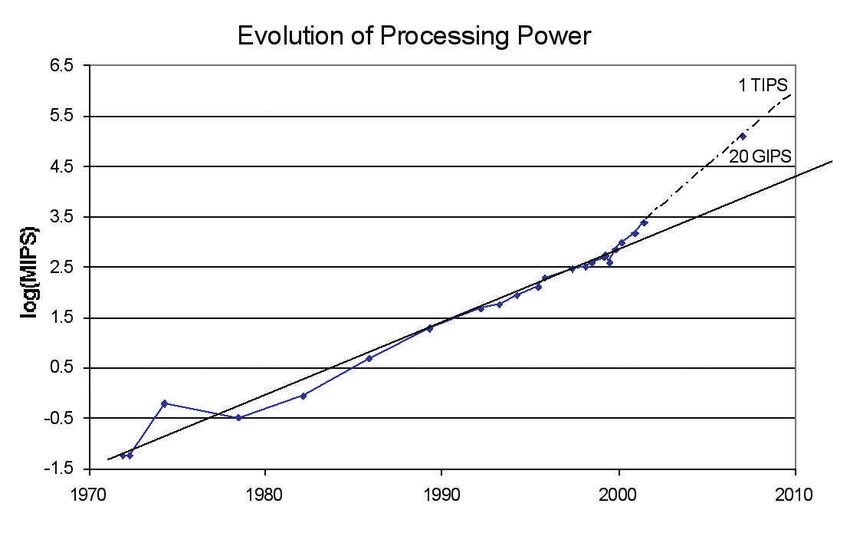
Unmanned Aerial Vehicle
Development Trends
& Technology Forecast
26
such UAVs especially for operations where capability with the advantages of fixed wing However, this temporary fix is but one step interfaces, development costs for new
space is limited – such as surface vessels and aircraft to give the best of both worlds. The towards the intended goal of ground-up design capabilities will be significantly reduced.
urban warfare. Further technological advances developmental CRW is a stoppable rotor design of the ultimate UCAV. Optimised to undertake
in areas such as shrouded rotors, composite which allows both VTOL capability and efficient high risk missions such as Suppression of Enemy
manufacturing processes and canard rotor high speed cruise. Air Defenses (SEAD), a stealthy, high speed,
4. VALUING UAVS
wings will usher in smaller, more capable VTOL
high-g capable UCAV equipped with next
UAVs ensuring their continued relevance in E. Unmanned Combat Air Advances in microfabrication technology will
generation weapon systems is seen as a cost-
the future battlefield. allow us to place a billion transistors on a single
Vehicles effective alternative to manned systems. France
silicon chip in the 2010 timeframe, 20 times
and the US has targeted to achieve this in the
VTOL UAVs provide a small, highly more than what current technology allows.
The military establishment has always conceived 2012-2020 timeframe.
maneuverable platform to conduct overhead Smaller transistors also mean faster processing
surveillance, remote sensing, communications the UAV as a sensor platform, leaving the speeds, resulting in an exponentially increasing
relay and ultimately “fly-on-the-wall” manned systems to take up the role of shooter F. Key Elements in Network- trend for processing power. In this timeframe,
surveillance. The low cost, unmanned VTOL platforms due to their perceived value-add in centric Warfare defence scientists hope to use the available
craft is particularly attractive for ISR applications making real-time decisions and in-flight mission processing power to replace the pilot with its
as opposed to the manned option. They have reconfigurations. However, two main factors The concept of network-centric warfare silicon equivalent – no less than a pilot-on-
small footprints and lower signatures. They have prompted a shift in this conception, embodies a paradigm shift from the traditional a-chip.
also save costs associated with piloted craft, towards the employment of UAVs as attacking way users get information through a
eliminate casualties and are easily portable to platforms: the limits of pilot physiology, and centralised collection agency to users getting While one school of thought aims to effectively
the area of operations. information directly, near real time, from the interface and integrate the pilot’s thought
the need for reduced sensor-to-shooter times.
sensors in a network-centric manner. processes with his machine, UAV proponents
Shrouded rotor concepts as employed by ST seek to develop a silicon-based pilot which can
The Unmanned Combat Air Vehicles (UCAV) is
Aerospace’s Mini-Tailsitter or FanTail and Allied The key tenets of the network-centric warfare take inputs from sensors, make decisions based
Aerospace’s iSTAR provide more thrust than unfettered by a pilot’s physiological constraints.
concept which guarantee the widespread on that input, and engage the enemy with the
the open blade design of conventional Unlike manned fighters, the UCAV can go
deployment of a variety of UAVs include data appropriate effects – without the inherent
helicopters. Besides improving system safety, beyond the 10g regime, has no need for fusion and management of layered sensors for reaction time delays associated with the
the shrouded rotor allows diameter reduction controlled environment (temperature, pressure successful exploitation of knowledge and human pilot.
of VTOL rotors and hence platform sizes and oxygen), is truly fearless, is able to handle engagement of threats before closure using
without compromising on performance. multiple sources of information and address unmanned systems. The outdated mental model of an unmanned
them through real-time multi-tasking. platform being an expendable camera with
Revolutionary manufacturing processes allow In this framework, besides being sensor and
wings must be refreshed. The preferred model
the low cost production of complex rotors shooter platforms, UAVs will also serve as
Also, experiences in Kosovo have prompted a would be that of a pilot-on-a-chip able to
which represent a quantum leap in VTOL airborne communications nodes, providing
re-examination of the Observation, Orientation, perform at least as well as, if not better than
performance. Instead of the present mobile network coverage for manoeuvring
Decision and Action (OODA) loop in order to current manned systems in a variety of missions.
lightweight flexible rotors that are connected forces, not unlike a satellite. This relieves
to the rotor hub through articulated joints, reduce the latency between sensor and shooter. The following summarises the four advantages
manned systems for greater value-added
the A160 Hummingbird has carbon-fibre During this campaign, targets of opportunity that UAVs have over their manned
missions whilst providing a cost-effective means
composite rotor blades which are tapered and spotted by the Predator UAV eluded counterparts.
of maintaining reliable communications.
possess variable cross sections from the blade destruction due to the time it took for attack However, military planners have acknowledged
root to tip. The stiffness varies from the root 1) Not Limited by Human Physiology
aircraft deployed from Italy to engage that it would be a nightmare to manage
to tip allowing a rigid and hingeless system, bandwidth and the sharing of information Not bound by the constraints of human
these targets.
which features a larger diameter and lower between the sensor, shooter, knowledge and physiology, machines have greater endurance,
disk loading, compared to a conventional command grids, especially with intensive will withstand more severe ambient conditions,
In order to shorten the sensor-to-shooter cycle,
helicopter rotor system with the same lift imagery and video applications. can simultaneously perform a greater number
efforts were made to adapt the Predator UAV
c a p a c i t y. T h e r o t o r b l a d e s a r e of functions more accurately, and will dive into
to launch Hellfire missiles, with the first missile targets without hesitation.
electromechanically actuated and can operate Besides being platforms for distributed network
from 140 to 350 rpm. With low disk loading launch successfully conducted in February 2001
architecture, unmanned systems will drive the
and rotor tip speeds, the variable speed rotor destroying a stationary Army tank. The AGM- interface standardisation of components such 2) Casualty Minimisation 27
system is able to give efficient low power loiter. 114 Hellfire armed Predators have subsequently as payloads, datalinks and control stations UAVs will help shoulder some of the demands
been field-proven in Operation Enduring towards a “plug-and-play” concept, enabling placed on manned systems, especially in
Revolutionary concepts such as the X-50 Canard Freedom, providing a critically needed interim users to customise their UAV system according missions where the risk-reward analysis favours
Rotor/Wing (CRW) Dragonfly combine VTOL solution for engaging time critical targets. to the specific missions or needs. With standard the employment of unmanned platforms to
Unmanned Aerial Vehicle
Development Trends
& Technology Forecast
26
such UAVs especially for operations where capability with the advantages of fixed wing However, this temporary fix is but one step interfaces, development costs for new
space is limited – such as surface vessels and aircraft to give the best of both worlds. The towards the intended goal of ground-up design capabilities will be significantly reduced.
urban warfare. Further technological advances developmental CRW is a stoppable rotor design of the ultimate UCAV. Optimised to undertake
in areas such as shrouded rotors, composite which allows both VTOL capability and efficient high risk missions such as Suppression of Enemy
manufacturing processes and canard rotor high speed cruise. Air Defenses (SEAD), a stealthy, high speed,
4. VALUING UAVS
wings will usher in smaller, more capable VTOL
high-g capable UCAV equipped with next
UAVs ensuring their continued relevance in E. Unmanned Combat Air Advances in microfabrication technology will
generation weapon systems is seen as a cost-
the future battlefield. allow us to place a billion transistors on a single
Vehicles effective alternative to manned systems. France
silicon chip in the 2010 timeframe, 20 times
and the US has targeted to achieve this in the
VTOL UAVs provide a small, highly more than what current technology allows.
The military establishment has always conceived 2012-2020 timeframe.
maneuverable platform to conduct overhead Smaller transistors also mean faster processing
surveillance, remote sensing, communications the UAV as a sensor platform, leaving the speeds, resulting in an exponentially increasing
relay and ultimately “fly-on-the-wall” manned systems to take up the role of shooter F. Key Elements in Network- trend for processing power. In this timeframe,
surveillance. The low cost, unmanned VTOL platforms due to their perceived value-add in centric Warfare defence scientists hope to use the available
craft is particularly attractive for ISR applications making real-time decisions and in-flight mission processing power to replace the pilot with its
as opposed to the manned option. They have reconfigurations. However, two main factors The concept of network-centric warfare silicon equivalent – no less than a pilot-on-
small footprints and lower signatures. They have prompted a shift in this conception, embodies a paradigm shift from the traditional a-chip.
also save costs associated with piloted craft, towards the employment of UAVs as attacking way users get information through a
eliminate casualties and are easily portable to platforms: the limits of pilot physiology, and centralised collection agency to users getting While one school of thought aims to effectively
the area of operations. information directly, near real time, from the interface and integrate the pilot’s thought
the need for reduced sensor-to-shooter times.
sensors in a network-centric manner. processes with his machine, UAV proponents
Shrouded rotor concepts as employed by ST seek to develop a silicon-based pilot which can
The Unmanned Combat Air Vehicles (UCAV) is
Aerospace’s Mini-Tailsitter or FanTail and Allied The key tenets of the network-centric warfare take inputs from sensors, make decisions based
Aerospace’s iSTAR provide more thrust than unfettered by a pilot’s physiological constraints.
concept which guarantee the widespread on that input, and engage the enemy with the
the open blade design of conventional Unlike manned fighters, the UCAV can go
deployment of a variety of UAVs include data appropriate effects – without the inherent
helicopters. Besides improving system safety, beyond the 10g regime, has no need for fusion and management of layered sensors for reaction time delays associated with the
the shrouded rotor allows diameter reduction controlled environment (temperature, pressure successful exploitation of knowledge and human pilot.
of VTOL rotors and hence platform sizes and oxygen), is truly fearless, is able to handle engagement of threats before closure using
without compromising on performance. multiple sources of information and address unmanned systems. The outdated mental model of an unmanned
them through real-time multi-tasking. platform being an expendable camera with
Revolutionary manufacturing processes allow In this framework, besides being sensor and
wings must be refreshed. The preferred model
the low cost production of complex rotors shooter platforms, UAVs will also serve as
Also, experiences in Kosovo have prompted a would be that of a pilot-on-a-chip able to
which represent a quantum leap in VTOL airborne communications nodes, providing
re-examination of the Observation, Orientation, perform at least as well as, if not better than
performance. Instead of the present mobile network coverage for manoeuvring
Decision and Action (OODA) loop in order to current manned systems in a variety of missions.
lightweight flexible rotors that are connected forces, not unlike a satellite. This relieves
to the rotor hub through articulated joints, reduce the latency between sensor and shooter. The following summarises the four advantages
manned systems for greater value-added
the A160 Hummingbird has carbon-fibre During this campaign, targets of opportunity that UAVs have over their manned
missions whilst providing a cost-effective means
composite rotor blades which are tapered and spotted by the Predator UAV eluded counterparts.
of maintaining reliable communications.
possess variable cross sections from the blade destruction due to the time it took for attack However, military planners have acknowledged
root to tip. The stiffness varies from the root 1) Not Limited by Human Physiology
aircraft deployed from Italy to engage that it would be a nightmare to manage
to tip allowing a rigid and hingeless system, bandwidth and the sharing of information Not bound by the constraints of human
these targets.
which features a larger diameter and lower between the sensor, shooter, knowledge and physiology, machines have greater endurance,
disk loading, compared to a conventional command grids, especially with intensive will withstand more severe ambient conditions,
In order to shorten the sensor-to-shooter cycle,
helicopter rotor system with the same lift imagery and video applications. can simultaneously perform a greater number
efforts were made to adapt the Predator UAV
c a p a c i t y. T h e r o t o r b l a d e s a r e of functions more accurately, and will dive into
to launch Hellfire missiles, with the first missile targets without hesitation.
electromechanically actuated and can operate Besides being platforms for distributed network
from 140 to 350 rpm. With low disk loading launch successfully conducted in February 2001
architecture, unmanned systems will drive the
and rotor tip speeds, the variable speed rotor destroying a stationary Army tank. The AGM- interface standardisation of components such 2) Casualty Minimisation 27
system is able to give efficient low power loiter. 114 Hellfire armed Predators have subsequently as payloads, datalinks and control stations UAVs will help shoulder some of the demands
been field-proven in Operation Enduring towards a “plug-and-play” concept, enabling placed on manned systems, especially in
Revolutionary concepts such as the X-50 Canard Freedom, providing a critically needed interim users to customise their UAV system according missions where the risk-reward analysis favours
Rotor/Wing (CRW) Dragonfly combine VTOL solution for engaging time critical targets. to the specific missions or needs. With standard the employment of unmanned platforms toUnmanned Aerial Vehicle
Development Trends
& Technology Forecast
28
minimise casualties. This is essential for that could accomplish entire missions without and robust, Terabytes per second - capable future RF systems. A ground-based lasercom
maintaining public support at home man-in-the-loop (MITL) intervention if datalinks to develop a decentralised, multiple system was demonstrated in 1996 to have a
and abroad. necessary. Figure 3 below shows the progress UAV tactical picture compilation of threats data rate of 1.1 Tbps over a 140km range, with
of processing on a log scale, in terms of million and targets before modifying in-flight tasking airborne and space borne Tbps lasercom
3) Lower Tr a i n i n g Costs instructions per second (MIPS). By 2010, the to cope with the altered tactical situation. The systems expected to go operational in the 2020
UAV operators will train almost solely in high sheer amount of brute computing power X-45 programme aims to demonstrate a - 2025 timeframe (Office of Secretary of
fidelity simulators, and their UAVs maintained available will render human operators obsolete “coordinated adaptive autonomous” flight
Defence, 2001). Airborne lasercom systems
in storage for long periods of time. Limiting in an increasing number of tasks and missions. involving two vehicles by 2005 (Cook, 2002a).
with small apertures (7cm to 13 cm) using low
the UAV flying time lessens Operations and Amongst other things, swarmed UCAVs can
Key foci for the development of autonomous power semiconductor lasers have a significantly
Support (O&S) costs associated with peacetime re-task each other, minimise target search time
technologies will include fault-tolerant flight lower probability of detection, weigh 30 to 50
training such as fuel, spare parts and by cooperative searching, and engage targets
control systems (FCS), in-flight mission and threats detected by other UCAVs. percent that of comparable RF systems and
maintenance, whilst reducing accident rates
management, cooperative engagement, consume less power, whilst offering Tbps rates
in peacetime training.
distributed data fusion and automatic target On the Decentralised Data Fusion (DDF) front, of data transmission.
4) Reduced Manpower Requirements recognition/engagement. BAE Systems Australia has embarked on an
Autonomous Navigation and Sensing Besides increasing available transmission rates,
The USAF currently maintains a pilot to aircraft
ratio of about 1.3 to 1, whereas a single UAV Fault-tolerant FCS under development can Experiment Research (ANSER) programme to ongoing research into connectivity concepts
operator may be able to control multiple highly utilise alternative combinations of remaining demonstrate the ability to fuse data from a such as the Small Unit Operations Situational
autonomous UAVs. Reducing manpower control surfaces, when a primary control variety of sensors, both on- and off-board, Awareness (SUO SAS) programme will drive
required to perform the same mission boosts effector fails, to maintain flight stability, such without a central processing facility (Bostock, efficient bandwidth management using a “LAN
manpower allocation efficiency, and is especially as that demonstrated during the X-36 2002). This will give UAVs situational awareness within LANs” concept (Pengelly, 2002). Dynamic
relevant to countries facing manpower programme (Bookstaber, 1998). without having to transmit bandwidth- datalink sizing and nodal management will
shortages due to falling birth rates. consuming video imagery back to a central allow users to maintain low, medium or high
processing facility. data rate connections with a continuously
In-flight mission management refers to the
moving and changing host of nodes depending
5. TECHNOLOGY DRIVERS ability to reconfigure flight path and navigation
on proximity and community of interest.
Taken to the next level, this battle awareness
controls combined with onboard capability to
will allow next generation UCAVs to
Technological advances are bringing new react to changing mission needs. The X-45 is
expected to achieve “adaptive autonomy” by
automatically recognise targets and engage C. Weapons Systems for UAV
capabilities and functionalities to UAVs, to the them with the appropriate munitions. They
point where they can be feasible, cost-effective late 2003 - equipped with sensors to visualise
will demonstrate consistent positive Advanced Seekers. Internal carriage and
alternatives to their manned counterparts in its environment in terms of threat and other
identification of legitimate targets and aircraft survivability have driven the next
an ever-increasing number of mission sets. dynamically changing information, with
rejection of illegitimate targets – the degree generation of missile seekers towards a fire-
UAVs are now at the crossroads where growing onboard decision-making logic to manage its
of accurate identification impacting the Man- and-forget capability, away from those
technological capabilities are beginning to missions on-the-fly (Cook, 2002a).
In-The-Loop (MITL) requirement and requiring human guidance and intervention.
meet operational requirements.
consequently the Orbat (Order of Battle) These new weapons will likely rely on low-cost
The UCAV will be capable of swarm needed to man such a system.
The prime technology drivers for UAVs can be imaging infrared or millimetre-wave seekers
engagements leveraging artificial intelligence
broadly categorised into the that have become available. The degree of
following groups: autonomy,
B. Datalink and Communication autonomy built into these weapons will impact
communications, sensors, the degree of human involvement required,
weapons systems, survivability High data rate, wideband, Low Probability of directly relates to how many targets can be
and reliability, propulsion and Interception (LPI), secure, all-weather data- engaged in a given period of time, and
ground control station. links are needed for responsive C3 battle translates to weaponised UAV and UCAV
management. UAVs must be networked with lethality and mission effectiveness.
A. Autonomy other manned aircraft, UCAVs, offboard sensors
and ground stations for overall battle Smaller Munitions. For weaponised UAV and
management, in order to develop a single UCAVs to achieve their initial cost and stealth
Exponentially increasing
signal processing speeds will
integrated air picture. advantages by being smaller than their manned 29
counterparts, they will need smaller munitions
enable greater levels of
Optical systems based on lasers can potentially that are more powerful and more precise. One
autonomy resulting
offer data rates two to three orders of advanced warhead uses plasma energy to effect
ultimately in hands-free UAVs Figure 3.
magnitude greater than those of the best destruction via a focused planar wave withUnmanned Aerial Vehicle
Development Trends
& Technology Forecast
28
minimise casualties. This is essential for that could accomplish entire missions without and robust, Terabytes per second - capable future RF systems. A ground-based lasercom
maintaining public support at home man-in-the-loop (MITL) intervention if datalinks to develop a decentralised, multiple system was demonstrated in 1996 to have a
and abroad. necessary. Figure 3 below shows the progress UAV tactical picture compilation of threats data rate of 1.1 Tbps over a 140km range, with
of processing on a log scale, in terms of million and targets before modifying in-flight tasking airborne and space borne Tbps lasercom
3) Lower Tr a i n i n g Costs instructions per second (MIPS). By 2010, the to cope with the altered tactical situation. The systems expected to go operational in the 2020
UAV operators will train almost solely in high sheer amount of brute computing power X-45 programme aims to demonstrate a - 2025 timeframe (Office of Secretary of
fidelity simulators, and their UAVs maintained available will render human operators obsolete “coordinated adaptive autonomous” flight
Defence, 2001). Airborne lasercom systems
in storage for long periods of time. Limiting in an increasing number of tasks and missions. involving two vehicles by 2005 (Cook, 2002a).
with small apertures (7cm to 13 cm) using low
the UAV flying time lessens Operations and Amongst other things, swarmed UCAVs can
Key foci for the development of autonomous power semiconductor lasers have a significantly
Support (O&S) costs associated with peacetime re-task each other, minimise target search time
technologies will include fault-tolerant flight lower probability of detection, weigh 30 to 50
training such as fuel, spare parts and by cooperative searching, and engage targets
control systems (FCS), in-flight mission and threats detected by other UCAVs. percent that of comparable RF systems and
maintenance, whilst reducing accident rates
management, cooperative engagement, consume less power, whilst offering Tbps rates
in peacetime training.
distributed data fusion and automatic target On the Decentralised Data Fusion (DDF) front, of data transmission.
4) Reduced Manpower Requirements recognition/engagement. BAE Systems Australia has embarked on an
Autonomous Navigation and Sensing Besides increasing available transmission rates,
The USAF currently maintains a pilot to aircraft
ratio of about 1.3 to 1, whereas a single UAV Fault-tolerant FCS under development can Experiment Research (ANSER) programme to ongoing research into connectivity concepts
operator may be able to control multiple highly utilise alternative combinations of remaining demonstrate the ability to fuse data from a such as the Small Unit Operations Situational
autonomous UAVs. Reducing manpower control surfaces, when a primary control variety of sensors, both on- and off-board, Awareness (SUO SAS) programme will drive
required to perform the same mission boosts effector fails, to maintain flight stability, such without a central processing facility (Bostock, efficient bandwidth management using a “LAN
manpower allocation efficiency, and is especially as that demonstrated during the X-36 2002). This will give UAVs situational awareness within LANs” concept (Pengelly, 2002). Dynamic
relevant to countries facing manpower programme (Bookstaber, 1998). without having to transmit bandwidth- datalink sizing and nodal management will
shortages due to falling birth rates. consuming video imagery back to a central allow users to maintain low, medium or high
processing facility. data rate connections with a continuously
In-flight mission management refers to the
moving and changing host of nodes depending
5. TECHNOLOGY DRIVERS ability to reconfigure flight path and navigation
on proximity and community of interest.
Taken to the next level, this battle awareness
controls combined with onboard capability to
will allow next generation UCAVs to
Technological advances are bringing new react to changing mission needs. The X-45 is
expected to achieve “adaptive autonomy” by
automatically recognise targets and engage C. Weapons Systems for UAV
capabilities and functionalities to UAVs, to the them with the appropriate munitions. They
point where they can be feasible, cost-effective late 2003 - equipped with sensors to visualise
will demonstrate consistent positive Advanced Seekers. Internal carriage and
alternatives to their manned counterparts in its environment in terms of threat and other
identification of legitimate targets and aircraft survivability have driven the next
an ever-increasing number of mission sets. dynamically changing information, with
rejection of illegitimate targets – the degree generation of missile seekers towards a fire-
UAVs are now at the crossroads where growing onboard decision-making logic to manage its
of accurate identification impacting the Man- and-forget capability, away from those
technological capabilities are beginning to missions on-the-fly (Cook, 2002a).
In-The-Loop (MITL) requirement and requiring human guidance and intervention.
meet operational requirements.
consequently the Orbat (Order of Battle) These new weapons will likely rely on low-cost
The UCAV will be capable of swarm needed to man such a system.
The prime technology drivers for UAVs can be imaging infrared or millimetre-wave seekers
engagements leveraging artificial intelligence
broadly categorised into the that have become available. The degree of
following groups: autonomy,
B. Datalink and Communication autonomy built into these weapons will impact
communications, sensors, the degree of human involvement required,
weapons systems, survivability High data rate, wideband, Low Probability of directly relates to how many targets can be
and reliability, propulsion and Interception (LPI), secure, all-weather data- engaged in a given period of time, and
ground control station. links are needed for responsive C3 battle translates to weaponised UAV and UCAV
management. UAVs must be networked with lethality and mission effectiveness.
A. Autonomy other manned aircraft, UCAVs, offboard sensors
and ground stations for overall battle Smaller Munitions. For weaponised UAV and
management, in order to develop a single UCAVs to achieve their initial cost and stealth
Exponentially increasing
signal processing speeds will
integrated air picture. advantages by being smaller than their manned 29
counterparts, they will need smaller munitions
enable greater levels of
Optical systems based on lasers can potentially that are more powerful and more precise. One
autonomy resulting
offer data rates two to three orders of advanced warhead uses plasma energy to effect
ultimately in hands-free UAVs Figure 3.
magnitude greater than those of the best destruction via a focused planar wave withYou can also read


