Digital disruption in retail - February 2020 - Deloitte
←
→
Page content transcription
If your browser does not render page correctly, please read the page content below
Digital disruption in retail
February 2020

Digital disruption in retail

Contents
Foreword                                                             04
Executive summary                                                    06
Overview of agile retail organisation–Backend                        08
   Supply chain                                                      09
   Logistics and warehousing                                          15
   Finance                                                           24
   Procurement and vendor management                                 27
   Assortment mix and planning                                       30
   People                                                            31
Technology transformation of the physical store                      34
   In-store/Physical store transformation                            35
   Customer experience, personalisation,
   and telling stories                                               38
   Technology driven opportunities for start-ups                     40
Disruption through data unification and marketing                    42
   Omnichannel                                                       43
   Marketing and distribution tech                                   45
   Emergence of digital marketing                                    48
   Data privacy                                                      48
Collaboration in the digital age-Retail ecosystem                    50
Way forward                                                          58
Endnotes                                                             60
Contacts                                                             62
Acknowledgements                                                     62
                                                                         03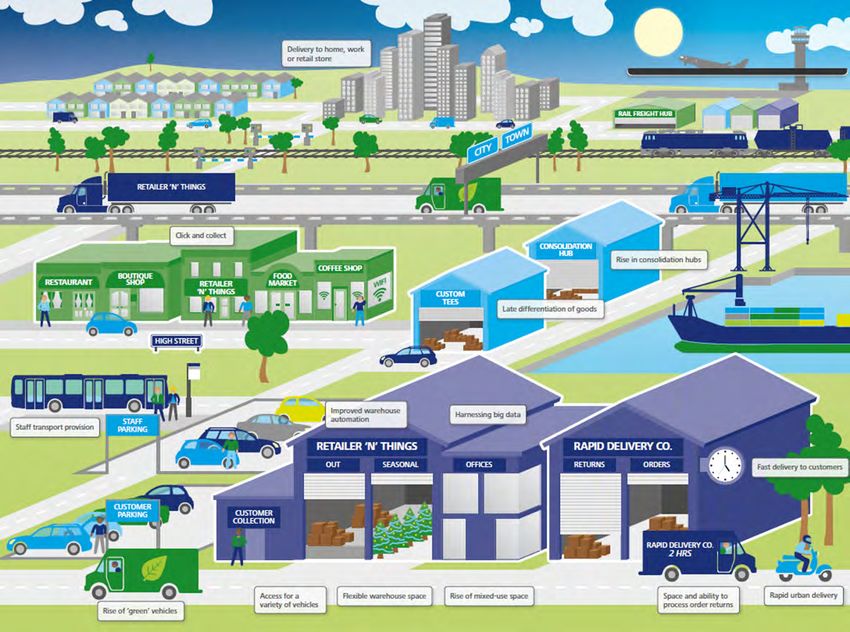
Digital disruption in retail

Foreword
Retailers function in a dynamic                digital content, transactions, and after-
environment witnessing dramatic shifts         sales service to keep pace with market
on key front-end elements, including the       disruptions.
following:
                                               Channel: Direct-to-consumer models,
Consumer: From the perspective of a            such as exclusive brand outlets (EBOs),
brand’s interaction with its consumers,        are witnessing increased investment from
time and distance have been the major          brands seeking to retain their relevance
dimensions that have been decreased.           amid squeezing margins due to large
This led to greater convenience for            format retail (LFR) and large marketplaces.
customers. Preference for instant              While the share of multi-brand outlets
gratification, enhanced shopping               (MBOs)/general trade continues to
experience, sustainability, and easy           deplete, we see an increased focus on
access to social media have led to the         brands increasing their engagement with
creation of new-age consumers who are          the top quartile of MBOs.
more confident and expressive in terms
of how they think, feel, and act.              The resultant changes in business
                                               models are visible across the three
Brand: It is not only about maximising         areas of demand generation, capture,
shareholder value alone but also about         and fulfilment. There are possibilities
the impact that retailers have on local        of dramatically increasing footfall,
communities, the environment, and the          conversion, average bill value on the
social capital that they build. This signals   front end; improving merchandising,
the brand’s commitment to promote              assortment planning, brand
inclusion and celebrate diversity in a         experience at the store; and driving
world where trust levels in big businesses     better availability, demand sensing,
have dropped to a historic low.                and inventory rotation in the supply
                                               chain, by deploying asset-light digital
Product: Return on catchment or pin            technologies using the start-up
code is the key driver to defining product     ecosystem. This might result in retailers
assortment at stores. It is no longer          accelerating sales at a lower cost to
sufficient to track same store sales on        serve to help build more sustainable
return on investments at a store level.        and profitable business models for the
Shortening product life cycles and             future.
the dramatic increase in new product
launches have also created the demand
for agile and dynamic product portfolio
rationalisation.

Store: A phydigital store is a place
where the boundaries between the
physical shop and the online website
blur to provide a seamless experience
to customers. Digital influence factors
have increased across categories and           Anand Ramanathan
brands usually struggle in aligning their      Partner, Consulting

04
Digital disruption in retail

Foreword
A Definitive Guide to Digital                  Digital transformation is impacting
Transformation                                 every phase of the retail value chain,
Technology advancement and digital             from sourcing and product development
enablement are transforming the                to marketing and distribution. The
consumer as well as the market at              way forward for the retail sector is to
a rapid pace. Agility in the backend           collaborate and offer integrated solutions
processes such as supply chain, finance,       to consumers.
procurement and assortment are the
means to remain competent in such a            This report is aimed at helping readers in
highly competitive environment.                their journey towards integrated retail.
                                               The best practices by retailers from
The report ‘Digital Disruption in Retail’      around the globe will help inspire, learn
sheds light on the various digital             and grow.
transformations expected in retail value
chain . It delves into the offline to online
( O2O ) as well as online to offline and
explores the new business realities
that are emerging with it. These include
hyper-personalisation of consumer
experience, value-driven actions, and
technology-driven process. These serve
as a means to gain a competitive-edge in
a market driven by constant change and         Kumar Rajagopalan
disruptions.                                   Chief Executive Officer - Retailers
                                               Association of India (RAI)

                                                                                                                     05
Digital disruption in retail

Executive summary
Access to global markets, preference         behavioural insights through advanced
for convenience, and availability of         data analytics, emerging technologies,
diverse choices for consumers have led       such as internet of things (IoT),
to the rapid evolution of retail in India.   augmented reality (AR) and virtual reality
Further, advancement in technology,          (VR), artificial intelligence (AI), bots and
higher household income, varied retail       drones, beacons, and cloud platforms,
channel options, diverse product variety,    have played a key role in enhancing
personalised service offerings, etc.,        consumers’ engagement more than ever.
have resulted in enhancing consumers’        Engaging consumers through immersive
shopping experience. To stay ahead           technologies, bespoke solutions,
of this rapid evolution, retailers need      and custom targeting, is expected to
to consider embracing agility in their       significantly increase the probability
functions and operations. Agility in         of attracting and retaining new-age
processes has the potential to lead to       shoppers. Various new solutions are
collaboration among cross-functional         being offered by established companies
inter-disciplinary members, encouraging      and start-ups to woo shoppers. However,
iterations for an adaptive best-case         these strategies require enabling a digital
process. The concept of agility can          ecosystem to deliver desired outcomes.
be used across functions to augment
productivity and efficiency, as well as      Through this report on ‘Digital disruption
reduce costs and efforts.                    in retail’, we present the aspects of agility
                                             in retail organisations’ operations. The
                                             report then delves into the implications of
                                             technology, leading to disruptions across
                        E                    entire retail value chain and transforming
                                             consumers’ shopping journey at each
                                             value point, making it more convenient.
     N                             T         In the age of digital marketing and
                                             omnichannel offerings, inter-functional
                                             networking has become a crucial aspect.
                       W                     With the lines blurring between offline
                                             channel and online channel, the best way
                                             to put a foot forward in the right direction
     O                              K        is collaboration between physical space
                                             and digital space, i.e., ‘phygital’. Such an
                                             integrated model has the potential to
                        R                    ensure a seamless shopping experience
                                             to consumers from all forms of strata. It
                                             is also a win-win solution for the physical
Technology has been the front runner         and digital players as it supplements the
in driving businesses, and enhancing         model’s overall efficacy by combining
consumer engagement and experience.          complimentary advantages of
Apart from understanding consumers’          individual models.

06
Digital disruption in retail

                         07
Digital disruption in retail

Overview of agile
retail organisation
As we enter a new decade, retailers must     with large global retail giants penetrating
take stock of their current positioning      Indian markets, the competition for
vis-à-vis the market and the industry. It    acquiring customers has only become
is also critical for them to be aware of     more intense. Thus, retailers are realising
customers they are serving and manage        the need for constantly innovating. The
operations to meet the rapidly evolving      availability of advanced tools is pushing
expectations.                                retailers’ limits from fully integrated
                                             networks to procurement networks that
Retailers have been periodically investing   allow them to choose vendors.
time and resources in technology. In
the past decade, they have developed         The digital customer has never had a
advanced supply chain operations with        better time to shop, with companies
a far greater reach and a product line       integrating tech throughout their
targeting more consumers. However,           systems.

08
Digital disruption in retail

Impact of disruption on a retail organisation

Supply chain                                 The collapse of the linear supply chain
                                             New technologies and tolls have allowed the traditionally linear supply chain to collapse
Shift from traditional supply chain to       into an agile interconnected network that unlocks new value across the digitised nodes
digital supply networks (DSN)
A fast-paced shift is being witnessed in
the way supply chains function. Advances
in computing memory and processing
are driving entrepreneurs to develop
innovative new digital technologies
and capabilities. These technologies,           Develop            Plan           Source             Make          Deliver          Support
including sensors, artificial intelligence         New value is being created by digitising and connecting the traditional nodes
(AI), machine learning (ML), and cognitive
computing, create the foundation for
                                                  Digital      Synchronised Intelligent             Smart          Dynamic    Connected
analytics and a conversion between the
                                              development        planning       supply             factory        fulfilment  customer
physical world and the digital worlds,          Optimise           Provide   Reduce costs        Unlock new           Boost     Create
transforming traditional, linear supply          product         significant through new         efficiencies      customer    seamless
chains into connected, intelligent,              lifecycle      efficiencies   advanced          by a more,          service   customer
scalable, customisable, and nimble            management          through    technologies,       connected,      through new engagement
                                                    with      synchronisation models,             agile, and        levels of    from
supply networks.
                                                advanced                         and              proactive       speed and inspiration to
                                              digital tactics                 capabilities         factory            agility   service
These new supply chains, also known as
DSNs, are dynamic and integrated. These
chains address the issue related to the
                                                                 The birth of the digital supply network (DSN)
delayed action-reaction process of the
                                                Innovative and disruptive technologies can enable supply chains to transform into
linear supply chain using real-time data.
                                                            DSNs, which can serve as a powerful competition weapon.
This enables better informed decisions
and enhanced collaboration across the
entire supply network, as well as provide
greater transparency.
                                                                                      Synchronised
                                                                                        planning
The main characteristics of the DSN
include always-on agility, connected
community, intelligent optimisation,
end-to-end transparency, and holistic                                                                              Connected
                                                             Dynamic                                             customer and
decision-making. Each of these
                                                            fulfilment                                            aftermarket
characteristic plays a role in enabling
more informed decisions and can
help organisations address the central
question in their strategic thinking: how                                                  Digital
to win?                                                                                     Core

Organisations need to consider preparing                     Digital
                                                            product                                                  Smart
themselves to lead by imbibing agility
                                                          development                                               factory
into systems, processes, and decision-
making. Personalisation at scale,
leveraging ecosystems, and driving
business-led digital strategies are some
of the key themes.                                                                      Intelligent
                                                                                          supply

                                             Source: https://www2.deloitte.com/us/en/pages/operations/solutions/digital-supply-networks.html#

                                                                                                                                                09
Digital disruption in retail

How to “Turn-On” your digital supply network
Companies must choose specific supply chain transformation and execute priority initiatives to meet their competitive objectives.

How many supply chains do
                                            What is our
you need?
                                             winning
Where will you segment by
                                            aspiration?
customer, product, geography,
or channel?
                                                                   Where will
                                                                    we play?
Where will you compete on…
Speed? Agility? Service? Cost?                                                           How will we
Quality? Innovation?                                                                        win?

                                                                                                                  What
Where do you need to                                                                                           capabilities
transform your supply                                                                                          must be in
chain to meet your strategic                                                                                     place?
business objectives?                                                                                                                  What
                                                                                                                                   management
                                                                                                                                   systems are
What initiatives will you
                                                                                                                                    required?
deploy to configure your
digital supply networks?

The digital to physical loop unlocks the value
The core supply chain issues persist and present opportunities to apply new solutions to unlock unprecedented value

01
           Physical to digital
           Capture signals and data
           from the physical world
           to create a digital record.

                                                                                         02
                                                                                                   Digital to digital
                                                                                                   Exchange and enrich information
                                    Physical			                                Digital             using advances analytics, artificial
                                                                                                   intelligence, and machine learning
                                                                                                   to drive meaningful insights.

                                     03
                                                Digital to physical
                                                Deliver information in
                                                automated and more effective
                                                ways to generate actions and
                                                changes in the physical world.

Source: https://www2.deloitte.com/us/en/pages/operations/solutions/digital-supply-networks.html#

10
Digital disruption in retail
Digital supply networks (DSNs) characteristics
DSNs share common characteristics that drive differentiated performance and value
End-to-end The ability to see across the network Capability elements
transparency Existing data sets
Sensors
New data sets
Visualisation
“Always-on agility” The ability to proactively operate across the Capability elements
network Predictive alerts
Advanced analytics
Edge computing
Connected The ability to extend into your suppliers and Capability elements
environment customers Third-party data sets
Real-time collaboration and live data
sharing
Resource The ability to identify and use the right worker, Capability elements
optimisation human, or machine, for work Artificial intelligence
Optimisation algorithms
Unstructured data
Holistic decision- The ability to continuously learn and make Capability elements
making optimal network decisions Machine learning
Voice and thought interaction
Foundational elements
Cybersecurity Data integrity Safety Talent
Critical components
Digital supply networks require an ecosystem of functional and technical resources, tools, and capabilities to deliver results.
Function supply Internet of Advanced
chain things analytics
• Product development • Sensors • Simulation
• Planning • Hardware • Data science and algorithms
• Sourcing • Machine learning
• Manufacturing • Natural language processing
• Logistics and distribution • Video and spatial analytics
Platforms and infrastructure Talent
• SAP/S4 and • PTC’s ThingWorx, • Future of work • Humans enhanced
Leonardo, • AWS, • Robot vs. human through advanced
• GE Predix, optimisation wearables
• Google Cloud,
• Oracle Cloud, • Blockchain • Co-bots
Source: https://www2.deloitte.com/us/en/pages/operations/solutions/digital-supply-networks.html#
11Digital disruption in retail
New tools and technique enable new solutions
Increased computing power and a reduction in cost have spurred innovation and an array of new exponential tools and
opportunities.
Internet of things Intelligent agents Text analytics Machine learning and
Level of enterprise-wide adoption
predictive analysis
Artificial intelligence and
Cloud Visualisation Data lakes Big Data cognitive analytics
Crowd sourcing and
Data warehousing
In-memory processing competition
Business intelligence
ERP application
Data modelling
Advanced human
Cyber security Computer interface
Table stakes Modernisers Exponentials
Digital adoption technology pyramid
Digital adoption is a transformative
process that uses technology solutions
from the ground up, starting from a Artificial
unified pool of data that can be analysed intelligence
and then used to drive business
decisions. Starting from the bottom of the
pyramid, the process of adopting digital
ion
technologies needs to be an ongoing and Advanced analytics
pt
focused initiative. It should be a part of
Predictive analytics
do
every business’s long-term strategy. This
la
in turn is expected to lead to a game- Inventory and network optimisation
ita
changing competitive advantage. Refer
dig
to the diagram to know the four stages
of
of digital adoption.
es
Automation
ag
Robotics and automation, wearable and mobile technology,
St
autonomous vehicles and drones, and 3D printing (additive
manufacturing)
Digital connectivity
Internet of things, cloud computing and storage, sensors and automatic identification,
blockchain, and distributed ledger technologies
Source: 2019 MHI Annual Industry Survey in collaboration with Deloitte
12Digital disruption in retail
Applications of emerging technologies and tactics across the supply chain
Augmented
After market End-to-end Predictive
reality enabled Make-to-use with
sales and transparency to aftermarket
customer 3D printing
service customers maintenance
support
Sensor-driven
Sales Inventory-driven
replenishment Target marketing
optimisation dynamic pricing
pushes
Augmented Dynamic/
Logistics Automated Direct to user
realty-enhanced Driverless trucks predictive
optimisation logistics delivery
logistics routing
Augmented Sensor-
Operations Automated Predictive
realty-enhanced enabled labour
efficiency production maintenance
solutions monitoring
Blockchain- Cloud/
Supplier Analytics-driven Supplier
Asset sharing enabled control tower
collaboration sourcing ecosystem
transparency optimisation
Risk prevention Proactive quality Track-and-trace Proactive risk
and mitigation sensing solutions sensing
Planning and Dynamic Real-time
Analytics-driven POS-driven auto- Sensor-driven
inventory inventory inventory
demand sensing replenishment forecasting
efficiency fulfilment optimisation
Data as a
Product Make-to-use with Ultra-delayed
product or
optimisation 3D printing differentiation
service
Sensor/data-
Design process Open innovation/ Rapid Virtual Design
driven design
optimisation crowdsourcing prototyping simulation
enhancements
Supply chain transformations Sample Tactics
13
Source: DeloitteDigital disruption in retail
Digital supply networks can become a major competitive differentiator with the potential to achieve the following results:
Increased revenue Improved margins
• Reorders and refills: Smart packaging, applications, • Cost of R&D: Rapid prototyping can lower R&D cost.
and data can be combined either automatically or with • Cost of raw materials: Digital advances can help identify
minimal intervention to push reorders and refills. substitute materials or connect buyers to alternate lower-
• Marketing effectiveness: Targeted marketing, combined cost sources.
with data from inventory and competitive pricing, can • Cost of quality: Increased visibility and monitoring
facilitate dynamic discounting. can decrease cost of quality. For example, sensors can
• Direct connection to customers: Increased access identify root errors and drive process improvements that
to customers can drive sales at the precise point of dramatically increase first pass yield.
consumption (for example, ordering groceries directly • Cost of service: Digitally gathering data from products
from the refrigerator). and/or users and sending it to remotely located, skilled
• Value of data: Gathering, packaging, and selling data technicians can decrease the costs of service and
from existing customer bases can open up new revenue transportation of service technicians.
channels. • Cost of transportation: Automated warehousing robots
• Speed to market: Effective use of product lifecycle and driverless trucks use analytics and dynamic routing to
management accelerates every step starting from product improve efficiency, and reduce accidents and errors.
development to delivery, and enables innovative products
to reach customers quickly.
Greater asset efficiency Meeting shareholder expectations
• Idle assets: The sharing economy can be used for high- • Geographic responsiveness: Increased connectivity
cost and under-capacity assets. For example, a company enables rapid responses to unexpected issues, such as
that only operates two shifts per day could sell its third natural disasters or supplier shutdowns.
shift to another company. • Brand responsiveness: Increased insight to customer
• Supply chain downtime: Predictive maintenance can concerns or issues enables fast responses to events
maximise performance and reliability of manufacturing such as food contamination outbreaks.
devices. • Proactive risk mitigation: Increased transparency
• Idle workforce: Sensor-enabled labour monitoring can demands proactive assessment of risks and fast
optimise workforce assignments and scheduling. response to customer demands.
• Click-to-ship time: Automated inventory management
can radically increase supply chain efficiency.
• Error propagation: Augmented reality can assist in
maintenance, and reducing error propagation and rework
costs.
Source: https://www2.deloitte.com/content/dam/Deloitte/global/Documents/Process-and-Operations/gx-operations-disrupting-business-models-digital-supply-
networks.pdf
14Digital disruption in retail
One of the largest global personal care companies: Operations 4.0 digital transformation programme with a focus on a
customer-centric supply chain
The company’s supply chain network delivers more than 34 brands producing over 7 billion products a year from 42 factories,
using 150 distribution centres, half a million delivery points, and 8 distribution channels in more than 140 countries. The
company receives an order every two seconds.
In 2014, the company decided to evolve its earlier approach of segmenting by distribution channel. It re-designed supply chain
capabilities and implemented a world-class integrated information system that provided a collaborative compilation
of volume forecasts across sales, marketing, supply chain, and finance teams. These forecasts were then shared with the
company’s factories and distribution centres worldwide.
Its operations 4.0 digital transformation programme, which groups together the business of packaging, purchasing,
manufacturing, and supply chain, is harnessing new technologies, including IoT, connected objects, AR/VR, and AI, to boost
flexibility and efficiency.
With a keen focus on the customer, the company senses and uses customer sentiment. It senses consumer preferences to
change and align its portfolio to offer personalised products for purchasing anytime and anywhere. This has pushed the
company to ensure hyper-connectivity with the final consumer.
Example: The company has combined sensors, laser measurement, cameras, and advanced conveyor belts in its new
production line in one of its plants. The redesigned production line processes dozens of different products simultaneously and
delivers highly personalised products tailored to the individual needs.
Strategy: Customer experience is being used as the yardstick for the group’s digital transformation. The company has
set five medium-term priorities for its operations staff: accelerate design, raise the share of connected products, make
factories and production lines agile, emphasise customisation, and turn consumer service into a business driver.
Source: News articles, Company website and Annual report
Logistics and warehousing The three pillars of the future movement-of-goods networks
With hyper personalisation, customers
are becoming more demanding and Holistic
asking for same-day or even same-hour decision-making
deliveries. These demands are affecting The ability to harness
the logistics and supply chain function. and harmonise
Meticulous planning and execution are traditional and new
needed to fulfill these demands. With the data to continuously
rapid infusion of new-age technologies, learn, optimise, and
the ability to effortlessly coordinate predict
delivery locations, time, and returns
mile by mile is no more a novelty, but
an expectation. As the online economy
Connected
grows rapidly, the importance of last-mile Intelligent community
package delivery increases—the final step automation The ability to
in the competitive and costly process of The ability to utilise collaborate and
moving items to customers’ homes as the right human or connect with partners
quickly as possible.2 Delivering products machine for work to see across the
‘right now’ is the expected norm.
network
Source: Deloitte analysis
15Digital disruption in retail
Although in the early stages, we are witnessing progress in the formation of the next-gen global movement-of-goods network.
Connected community Holistic decision-making Intelligent automation
The ability to collaborate and The ability to harness, and The ability to utilise the right human
connect with partners to see harmonise traditional and new data or machine for the task at hand and
across the network to continuously learn and predict automate digital processes
Source: https://www2.deloitte.com/us/en/insights/focus/future-of-mobility/future-of-freight-connected-data-intelligent-automation.html?id=insightsapp
As these capabilities advance, we as connected communities grow in
are likely to witness a high degree of parallel with maturing IoT and blockchain
convergence and movement towards standards, critical supply chain data
data unification across platforms, which will begin to flow more freely across
will communicate seamlessly behind the network (amplifying the power of
the scenes. The highly broken global cognitive technologies to drive improved
networks of transportation and logistics holistic decision-making). In a similar
providers, ocean carriers, retailers, vein, when holistic decision-making
and other large shippers are expected merges with automation, the power of
to witness an incremental but fast- automation will shift from cheaper to
paced movement towards integration, smarter as cognitive technologies and
intelligence, and automation that can predictive insights feed into a growing
move more goods more quickly to more robotic network (creating intelligent
places, and with more transparency and supply chains that cannot only see into
efficiency than today. potential bottlenecks but orchestrate
around them).
The value of these enabling technologies
will unlock as they converge. For example,
16Digital disruption in retail
Applying the three pillars
Core pillars scale
Holistic
Decision-Making Global movers explore, pilot, and scale core pillars
• Broadening ecosystem connectivity to horizontal partners and pure
technology players
• Driving digital transformation capable of real-time analytics and more
holistic decision-making
Intelligent Connected • Implementing future of work talent models that harmonise machine
automation Community and humans
Core pillars merge
Connected Holistic decision-
Automation
environments making
Holistic decision- Connected
Automation
making environments
Integrated digital The value of automation Ecosystem
platforms form new shifts from cheaper to connectivity and
connective tissue, smarter, as predictive data standardisation
bond traditional and insights feed into drive partner-to-
new data, and enable a growing robotic partner automation
data to flow freely network, creating the of digital and
across the network– physical-to-digital physical processes
amplifying the power loop that becomes the
of cognitive technology backbone of a higher-
performing supply chain
Core pillars unify
Reactive supply chains mature to predictive and self-learning,
automated networks, with little human intervention. Value creation
shifts more heavily to customer experience and personalisation, s
intelligent and dynamic first-to-last-mile networks proactively reach
customers at the right time and place
Source: https://www2.deloitte.com/us/en/insights/focus/future-of-mobility/future-of-freight-connected-data-intelligent-automation.html?id=insightsapp
17Digital disruption in retail
Future of order fulfilment convenience and provide real-time
01. AI and ML based fulfilment product availability without having to
systems: The latest AI and ML accumulate unsold inventory.2
platforms can help retailers accelerate
their order fulfilment process. 02. Irreplaceable node in order
These technologies allow retailers to fulfilment journey: While retailers
automatically map demand conditions are still contemplating their plans
with stock availability across stores, for fulfilment centres and last-mile
warehouses, distribution centres, delivery for convenient order
and even on-road fleet. For example, fulfilment, physical stores play a
a US-based footwear manufacturer critical role in the supply chain.
acquired multiple start-ups with Retailers are likely to accelerate the
analytics and ML capabilities in the conversion of excess space in their
past 18 months. These acquisitions stores into micro-fulfilment centres,
are aimed at combining RFID especially in densely populated areas.
technology with predictive analytics One likely hurdle in retailers’ plan
to accelerate inventory matching and to redeploy an unused store space
order fulfilment to meet consumer could be redesigning limitations
needs. By combining investments due to clauses in existing leasing
in AI and ML technology solutions agreements, thus pushing more
and rewriting sourcing policies, redesigns to owned storefronts.
retailers can be at the forefront of
The four key trends in this area that retailers will likely adopt in the short term are given below:
Urban fulfilment Inventory strategy Flexible network Data and technology
adoption
It will give retailers the A competitive supply chain It enables supply chains to It allows retailers to
ability to provide same-day is built on end-to-end move assets faster than transform their supply
delivery service to the visibility and capability to ever. The physical network chains with unprecedented
connected consumer in quickly flex with changing needs to change and visibility and insights
large metropolitan areas. demand. Optimal quantity evolve to cater to speed as from data. Technology
While urban warehousing and timing of inventory shippers are forced to re- integrations should be
comes with a high price tag, to align with sales and evaluate their service-level focused on understanding
use of local, small delivery production capacity are expectations. Retailers with the customer journey and
vehicles and reduction key to enabling smart brick-and-mortar stores providing a substantive
in distribution spend can inventory capabilities and are leaning on their “buy improvement.
result in a net total cost reducing waste. online, pick up in-store”
savings. or “store-to-car” delivery
options to provide flexibility
and predictability without
having to transport the
last mile.
18Digital disruption in retail
Reverse logistics life cycle
Traditional focus areas result in siloed policies and processes
Supplier Return Return Logistics Merchandise Returns
collaboration policies options processes disposition analytics
Merchandise Time and credit Methods offered Store and Determining if Understanding
assortments terms offered to to customers to warehouse products should return drivers and
and allowances customers and make returns applications and be returned to costs incurred
to address special product in person or transportation to stock or require throughout the
product returns restrictions through the mail final destination liquidation product life cycle
Applying smarter insights throughout the entire pipeline achieves a cohesive reverse logistics strategy
Source: Deloitte Report: 2020 retail industry outlook-Convenience as a promise
Major focus should be on returns
Traditional retailers are also placing incumbents that fail to adapt their own
An American multinational retail
big bets in the area of reverse logistics operations according to the rapidly
corporation operating a chain of
to attract store traffic. A major US evolving environment. The movement of
hypermarkets, discount department
department retail chain completed the goods from China to the United States
stores, and grocery stores with a
nationwide rollout of returns programme on its owned vessels in 2018 marked the
significant e-commerce presence
offered by one of the largest e-commerce completion of the world’s first end-to-end
The company is taking grocery delivery
players. Foot traffic to its stores increased shipping network. This is the last missing
to the next level by providing a unified
nearly 24% in the first three weeks leg joining a chain of cargo planes,
grocery solution.1 It recently launched
following the rollout.1 Emerging retail fulfilment and distribution centres,
an in-home delivery service for close
models, such as direct-to-consumer long-and short-haul trucks, a rapidly
to one million people in a few US cities,
and subscription services and rental expanding last-mile network through
where the company’s associate enters
businesses, are built to consume high branded delivery service partners, and
the customer’s home and loads the
volumes of returns as a part of their its own website. The company’s shift
refrigerator even when the customer
supply chains. Anticipating returns with towards being vertically integrated and
is not at home. The associate uses a
high-predictability data helps retailers having a closed-loop network seems to
proprietary smart entry device and
form their inventory strategy. For many be deliberate. The company focuses on
wears a camera device while doing
retailers, this creates a behaviour for complete transparencywhen goods enter
this task. The company also focuses
which the current supply chain is not its ecosystem from manufacturers, and
on replenishment and wants to stock
designed. However, to thrive in reverse the movement of those goods between
customers’ homes like it stocks stores.
logistics, retailers should move from warehouses and sort centres, leaving few
The move to use its physical presence
return policies to return strategies. dark areas. This transparency is a key
with an early focus on grocery pick-up
part of how the brand can guarantee its
has allowed the retailer to acquaint
More visibility, more control: One of growing base of global same-day/two-day
customers with online shopping for
the largest e-commerce giants is building shipping customers for more than 100
groceries from the retail corporation
a vertically integrated, closed-loop million different items.
where it is on track to offer grocery
movement of goods network in the US.
pick-up in 3,100 stores and same-day
Meanwhile a paradigm-changing player The definition of convenience is
grocery delivery from 1,600 stores.
is showing what is possible with a constantly being re-written in the age of
truly integrated, start-to-finish supply intense focus on last-mile delivery.
network and highlighting the threat to
19Digital disruption in retail
Top five transformational technologies within logistics, supply chain, and transportation, and their benefits
IoT AI/ML Blockchain Vehicle safety Autonomous
technologies vehicles
Productivity Visibility Workforce Customer Flexibility
satisfaction satisfaction
New technologies Technologies such Workers tend to The technology will Key uptime benefits
will aid significant as blockchain and experience greater deliver significant will derive from
productivity IoT/telematics will satisfaction when benefits across technologies
benefits. AI, ML aid instantaneous they are given the customer such as IoT,
and blockchain tracking of any the right tools to experience supplemented by AI,
give logistics teams shipment right enable optimum spectrum. For and human
greater visibility down to its job performance. example, using AI intuition. With a
into actual assets SKU level. With Workforce and ML, logistics clearer window into
in use as well blockchain, it is satisfaction, players will be vehicle use and
as upcoming or possible to see aiding retention able to better performance, fleet
expected demands, any handovers, and recruitment, understand managers will be
which allows goods’ condition, is another area customer needs, better able to
them to better or temperatures where harnessing shifting from use preventive
optimise routes and at which they were technology will a reactive to a maintenance to
equipment. warehoused or drive innovation more proactive avoid potential
transported and and competitive relationship. Faster breakdowns.
for what period. advantage. adoption will lead
Further, accuracy to first-mover
will also be fueled advantage.
by greater visibility.
Source: Media articles
Competing in the future of the last mile journey. Investment of such vast sums of
Decision-making driven by data is capital proves that customer-centricity
expected to be critical to success in the is the new way and drives an influx of
future of the last mile. Scores of start-ups new-age tech companies. The infusion
and old school companies are queuing up of institutional capital points to the wave
to introduce new last-mile solutions in the of convenience and flexibility, which is
most difficult and costly leg of the goods headed towards consumers.
20Digital disruption in retail
“Smart money” has stepped up investment in new last-mile solutions
Global last-mile start-up investment (2014-18)
3,872
Collection point and
11% smart lockers
7% Digital aggregators
6% Last-mile software
1,702
3% AV droids and drones
Alternative fleet/
1% green fleets
390 415 454
72% Crowdsourcing
2014 2015 2016 2017 2018
Note: CBInsights data based on publicly available rounds of venture capital/ seed funding for 104 selected global last-mile start-ups.
Source: Deloitte analysis
*figures in US$ million.
Trends defining the warehousing industry: The main theme defining every region is the arrival of social commerce and digital
transformation.
Drop-shipping will increase Flexible pick methods for multiple
substantially order profiles
E-commerce and direct-to-consumer growth Picking methods, such as batch pick and sort,
will continue to transform the fulfilment will become more common as they are ideal
operations of retailers, manufacturers, and for cost efficiently processing high volumes of
their wholesalers and 3PLs. small orders quickly.
Time to delivery becomes a key New workarounds to overcome labour
competitive differentiator shortages
Time to delivery will be equally In Europe and the US, a tight labour market
important as a key differentiator as remains one of the overriding challenges for
price. E.g., Amazon warehouse operations managers, not so much
in Asia, specially India and China.
Social media commerce returns will Investing in a WMS is increasingly common
make reverse logistics even more WMS and partial automation using conveyors
important or automated sortation systems will remain
Reverse logistics was already an issue for top priorities. Investment AGVs, transport
many sellers and will only increase over management systems, voice recognition for
time, due to the ‘Instagram effect’. picking, and putaways and palletisers will also
increase.
Source: https://www.logisticsit.com/articles/2020/01/09/what’s-in-store-for-2020-and-beyond-6-trends-shaping-warehouses-of-the-future
21Digital disruption in retail
Over time, consumers across the a solid foundation around these
globe wanting greater delivery volume, capabilities is crucial.
speed, flexibility, transparency, and
convenience will compel the movement The following illustration suggests
of goods network to adapt according strategic questions that leaders should
to the evolving needs. Signs of change begin asking as they continue their
are underway and centered on core journey with introducing technology
building blocks: connected community, across their supply chain.
holistic decision-making, and intelligent
automation. For global movers, building
Building a foundation: Key question to ask
Connected community Holistic decision-making Intelligent automation
Connect and collaborate with Harness and harmonise traditional Use the right human or machine
partners to see across the and new data to continuously for work
network learn, optimise, and predict
Application Where can new, integrated How will you strategically balance Where can robotic process
modernisation data-sharing platforms create investments between legacy automation help efficiently
benefit for participating ERP systems and the emerging connect legacy ERP system to
ecosystem players and unlock technologies that enable holistic emerging technology?
new value for consumers? decision-making
Cloud What off-the-shelf cloud Where can you use the processing Where can cloud-base
solutions can provide power of cloud computing as data applications support the
quick on-ramp to partner sets grow in size and complexity? automation support the
connectivity? automation of workflows, such
as pricing, customer approval,
compliance, and reporting?
Next-gen talent Where are the opportunities How will your arm teams with the How will you blend the strength
to employ new and emerging right skills and training to work of essentially human skills and
talent models (e.g., gig work) with new analytics platforms? automation?
across the network?
Cyber risk How will standards of practice How will new data steams from Where can safeguards control
for secure development be RFID, IoT, and mobile technologies for vulnerabilities of new robotic
created and enforced with new be examined for weakness and technology, including new
partners? vulnerabilities? software, firmware, and over-
the-air updates?
AI What AI solutions are being Where can AI combine wit Where can you implement AI
used by supply chain partners new data streams, such as to drive more value from rule-
that can be integrated into smart city sensors, connected based robotics and automation?
your organisation? transportation, and smart
packaging to drive deeper
insights?
IoT Where can collaborative IoT Where can IoT combine with AI Where can sensors turn physical
implementations and IoT data- to improve transportation safety, events into the real-time data
sharing protocols improve predictive maintenance, fleet needed for automation?
ecosystem inefficiencies? monitoring and routing, and
product life management?
22Digital disruption in retail
Blockchain Does your network exhibit Once data is on the blockchain, Where can the use of smart
the characteristics that make how will it be accessed and what contracts help automate existing
blockchain a viable solution, data will be on versus off chain? processes?
including a shared repository
of data, multiple entities
that modify it, and lack of a
trusted intermediary between
transactions?
Robotics Where data standardisation Where can you apply machine In addition to ROI, how does
and exchange support the learning as a continuous labour scarcity impact decision-
automation of physical work at improvement opportunity? making when evaluating
partner connection points? automation opportunities?
Source: Deloitte insights: How are global shippers evolving to meet tomorrow’s demand? The future movement of good
What would the logistics and warehouse of future look like?
Source: The shed of future: Deloitte report
23Digital disruption in retail
Finance
The new digital core: Finance and supply chain in action
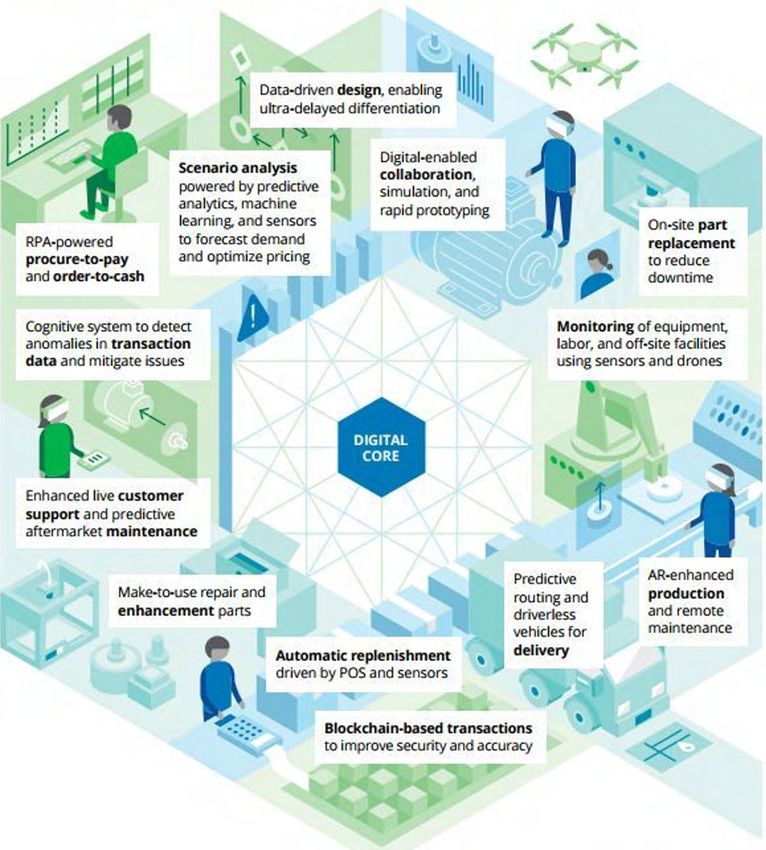
Data-driven design, enabling
ultra-delayed differentiation
Digital-enabled
Scenario analysis
collaboration,
powered by predictive
simulation, and
analytics, machine
rapid prototyping
learning, and sensors On-site part
RPA-powered to forecast demand replacement
procure-to-pay and optimise pricing to reduce
and order-to-cash downtime
Cognitive system to detect Monitoring of equipment,
anomalies in transaction labour, and off-site facilities
data and mitigate issues using sensors and drones
Enhanced live customer
support and predictive
aftermarket maintenance
Predictive AR-enhanced
Make-to-use repair and routing and production
enhancement parts driverless and remote
vehicles for maintenance
Automatic replenishment delivery
driven by POS and sensors
Blockchain-based transactions
to improve security and accuracy
Source: Deloitte analysis
24Digital disruption in retail
Finance services must take advantage of break-through technologies to drive exponential benefits around economics, risk, and value
to stakeholders.
Source: Finance in the digital age, Deloitte analysis, 2017
Source: Crunch time III: The CFO’s guide to cognitive technology–Deloitte report
25Digital disruption in retail Source: Crunch time III: The CFO’s guide to cognitive technology–Deloitte report Impact of cloud on Finance and simplified. Given the challenges, CFOs know that cloud investments these capabilities might be considered (whether motivated by the need for almost priceless. Even in other business innovation, cost reduction or both) areas, such as sales and marketing, will be part of the future. . For some supply chain, R&D, and customer care, organisations, the area of finance itself cloud is being frequently brought in is a promising cloud opportunity. For conversations about opportunities for example, with cloud capabilities in hand, innovation. CFOs need to be aware of this area could produce and deliver those opportunities. The key to make real-time management reporting to the effective use of cloud is to have a help business leaders make better workable plan starting with pilots that decisions faster. Cloud can also enable can be implemented when needed. finance operations to be standardised 26
Digital disruption in retail

The three flavors of cloud services

                                                            Software-as-a-service
                                                   SaaS is the most commonly used cloud
                                                service. With SaaS, companies pay for finished
                                                 applications on a subscription basis. Almost
                                                any software you can think of is available as a
                                                    service or will likely be available soon.

                                                                    SaaS

                                                                                                        Platform-as-a-service
 Infrastructure-as-a-service                                                                             PaaS can be used by
IaaS allows customer to obtain                                                                          organisations that want
   resources without actually                                                                          to develop new software
   purchasing hardware. This                                                                       applications without needing to
 approach has the potential to                                                                    acquire and install the hardware
  eliminate capital expenses.                  IaaS                                       PaaS      and operating system. It also
 The marketplace for IaaS has                                                                     provides access to different, new,
 matured rapidly, with dozens                                                                       and innovative services, such
  of providers eager to handle                                                                     as facial recognition, internet of
   almost any need you have.                                                                      things, and artificial intelligence.

Source: Crunch time 8: The CFO guide to Cloud–Deloitte Report

Procurement and vendor management
The past decade saw companies moving                As the cost of implementing technology
towards a digital model, with many                  is reducing, there has not been a better
companies stating that digital innovation           time for companies to digitise their
within their procurement and supply                 operations. Most of the emerging
chains is key to their growth. Companies            technologies have been built to enhance
have been facing more complexity in                 older legacy systems and involve minimal
their supply chains. However, with the              investment. The purchasing value chain
transformational digital capabilities,              can be optimised using these digital tools
they have the ability to revolutionise the          and approaches.
procurement process.

                                                                                                                                      27
Digital disruption in retail
Procurement Value Chain
Identification Request for Proposal Positioning Negotiations Monitoring
Analysis of E-Auction for Defined Discussions and Performance
spend, price selection of initial specifications of finalisation of tracking and
variance and shortlist goods needed, contract terms management
suppliers sourcing and conditions of future
requirements requirements
and linear from vendors
performance
pricing
Source: Deloitte analysis
Digital procurement solutions have more automated with predictive
led to a technological disruption to the analytics and artificial intelligence.
purchasing value chain by fundamentally
altering the impact of each element. These advancements have provided chief
Sourcing is becoming more predictive, procurement officers access to previously
with eSourcing providing a strategic unavailable data or massive (previously
route to facilitate best pricing and value. unorganised) data sets to solve their
Transactional procurement is becoming complex procurement needs.
Large global retailer: Acquiring companies to strengthen digital capabilities
and build omnichannel customer experiences
The company has made several key acquisitions in India in the past few years,
indicating that it is not averse to acqui-hiring from companies for the underlying
tech and the people that built it.
Procurement solution platform: The platform simplifies the buying and selling
processes for business. In essence, it allows businesses to directly connect with
various manufacturers and sellers to negotiate and transact.
Healthcare retail company: This Bangalore-based company provides customers
access to affordable and scalable healthcare services. The core tech team joined
the retailer’s customer technology team.
Source: News articles
The solutions available today allow to develop better strategies. Increased
for more inputs to be connected, thus visibility and transparency lead to a
providing users greater access to greater control of processes (such as
data to drive better decision-making procurement of products and services),
and improved efficiency. This in turn, provide more assurance of the supply,
produces more and higher quality and lower risk.
insights, which can enable leadership
28Digital disruption in retail
Improved decision
Improved inputs making and efficiency Results
Decision support
Physical data files Extract data from physical
• Contracts documents Cognitive computing Predictive S2C
• Specs Insights and
• Bills of materials strategies
Intelligent content Advanced Decision support
should costing Cost leadership
Unstructured Categorise
databases unstructured Cyber
data tracking
• Supplier spend
• Accts payable
Cognitive
computing Collaboration
networks Automated P2P
Digital Solutions
Process excellence
Movement of Detect ...which grow in value when
Efficiency and
goods tracking movement used together
Advanced effectiveness
of goods visualisation
• Deliveries
• Demand Automation
• Material Consumption Sensors
Blockchain
• Receipt of goods
Robotics
Third-party data Enrich with external data Proactive SRM
Assurance of
supplies
• Supplier data
Risk mitigation
• Social media strategies
• Commodity trends Supplier and
• Duties and tariffs category strategies
• Country risks
• Third-party payment clearing
Source: Deloitte Thought Leadership–The Future of Procurement in the Age of Digital Supply Networks
GeM: e-Procurement for government functions from private players on integrated e-Marketplace
The Government of India (GoI) launched an eMarketplace in 2016 to provide government individuals and departments access to
an “efficient, transparent, and inclusive” marketplace for the procurement and sale of goods and services.
Customers can purchase consignments of goods from resellers or original equipment manufacturers (OEMs), to compare prices
and trends between two different suppliers.
Key Stats
325,000+ 42,000+ ~3,200,000 45,000+
Sellers and Service Providers Buyer Organisations Orders Transaction Value, in INR Cr
29Digital disruption in retail
Assortment mix and planning
In 2019-20, customers have access to a demand-driven model to optimise their
multitude of options while purchasing assortment strategies. With the use
products and services. Companies of technology, they can carry out data
must strive harder to meet the needs analytics to plan the mix. Companies
of consumers, particularly millennial need to take several decisions while
consumers. To attract customers, planning its mix that are mentioned
companies need to consider adopting a below.
Assortment management decision points
How many
choices
(breadth)
When and
where to flow Type of
(product flow) choices
(menu)
Need by What
size (sizing) location
(eligibility)
Customer
Amount per Total
location (pre- quantity
allocation) (buy)
Source: Deloitte
One of the trends we see emerging consumers that they need to replenish
from the analysis is that companies are their stock of products. Engaging with
using automation to provide consumers consumers in this manner allows
what they want before they even know companies track what is selling, what
it. For example, a company can provide future demand could look like, and what
recommendations based on previous needs to be changed.
customer baskets or email reminders to
Leading e-commerce company: Using contextual data to drive personalised
offers and suggestions
This company has stated that using data and analytics enables it to provide
personalised services to customers. Their CEO had earlier stated that the
company’s mission is to improve customer experiences.
Using big data, the company has been able to identify customer needs, provide
recommendations, and tailor its product offerings to maximise the probability of
making a sale.
Source: News articles
30Digital disruption in retail
Companies have been moving away This new model can provide customers
from a generalisation model in which a feeling of personal touch and can
consumers receive blanket offers and win their loyalty. This customer data is
suggestions to a new model that offers expected to be one of the keys in the
a higher probability of sale by giving future of retail as brands fight to win over
customers hyper-personalised offers. buyers.
People
The fourth industrial revolution is need guidance to wade through these
bringing disruption in many ways, choppy waters. Hence, we have put
including the way companies build their together a list of five principles that
store face and operate their supply frame the “human focus” for the
chains. This disruption is making an social enterprise. These can serve as
impact on work, workers, and employers, a benchmark against which we can
and issues such as income inequality, measure any action or business decision
wages, and the role of businesses in that can affect people.
society are under debate. Organisations
Human principles for the social enterprise: Benchmark for reinvention
Design principles
Purpose and Ethics and Growth and Collaboration Transparency
meaning fairness passion and personal and openness
relationships
It means
Giving organisations Using data Designing jobs, Building and Sharing information
and individuals a technology, and work, and developing teams, openly, discussing
sense of purpose at system in an ethical, organisations focusing on challenges and
work; moving beyond fair, and trusted mission to nurture personal mistakes, and
profit to focus on way; creating jobs passion and a sense relationship, and leading and
doing good things for and roles to train of personal growth; moving beyond managing with a
individuals, systems and affording people the digital to build growth mindset
customers, and monitor decisions to opportunity to human connections
society make sure they are create and add their at work
fair own personal touch
Source: Deloitte Global Human Capital Trends survey, 2019
31Digital disruption in retail
Many trends are emerging that we of the organisation (which discusses how
believe will be crucial for the success people build their networks and how the
of organisations and their people in approach for reward and recognition are
the future. We can categorise them as driving forward business performance);
follows: future of the workforce (how and finally future of HR (what is the
organisations should adapt to the open function doing to step up and transform
talent economy, external forces affecting its capabilities and technologies to lead a
job, work design, and leadership); future revolution across enterprises).
Three domains for reinvention, three approaches to change
Refresh Rewire Recode
Future of • Leadership • Alternative • Superjobs
the workforce
workforce
• Human experience
Future of the
• Rewards
organisation
• Teams
Future of HR • Talent Access • Talent Mobility
• HR cloud • Learning
Source: Deloitte analysis
32You can also read


