DRILL & SKILL
   CARDS
 A quick reference guide
       to lacrosse
←
→
Page content transcription
If your browser does not render page correctly, please read the page content below

DRILL & SKILL
CARDS
A quick reference guide
to lacrosse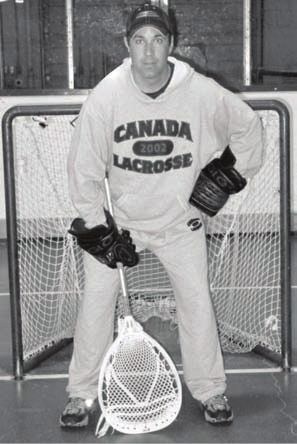
© 2010 Canadian Lacrosse Association

 All rights reserved – No part of these
Drill and Skill Cards may be reproduced
without the expressed written consent
 of the Canadian Lacrosse Association.

    Canadian Lacrosse Association
    2211 Riverside Drive, Suite B-4
        Ottawa, ON K1H 7X5

          info1@lacrosse.ca

      www.lacrosse.ca

            Printed in Canada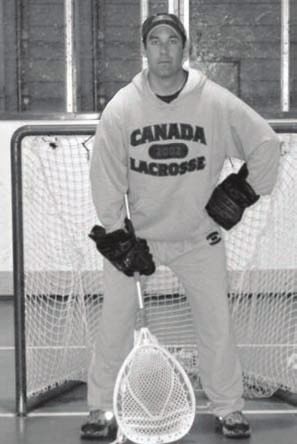
Trapping & Scooping

                   Tips

                   •   Stop the rolling ball
                   •   Top hand on throat of stick
                   •   Keep butt-end of stick low to ground
                   •   Bend the knees
                   •   Use your foot to protect the ball
                   •   Roll the ball backwards
                   •   Accelerate through the ball
                   •   Bring stick to cradle position
                   •   Move to open space
Technical Skills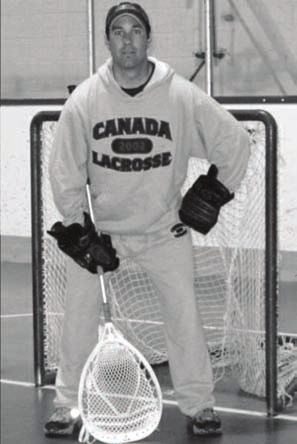
Trapping & Scooping

Common Errors         Corrections

•   Not bending       •   Bend the knees
    knees

•   Scooping with     •   Keep stick low to
    arms                  the ground

•   No hand on        •   One hand on
    throat of stick       throat of stick

•   Only one hand     •   Two hands on
    on stick              the stick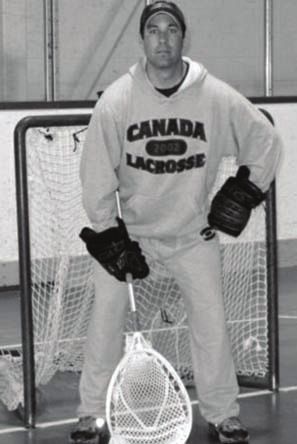
Cradling

                   Tips

                   •   Stick is in the base of your fingers – not
                       your palms
                   •   Top hand is at the throat and the
                       bottom hand on the butt of stick
                   •   Top hand cradles, bottom hand guides
                   •   Cradling motion is simply opening and
                       closing the wrists and arms
                   •   Use your body to protect the ball
Technical Skills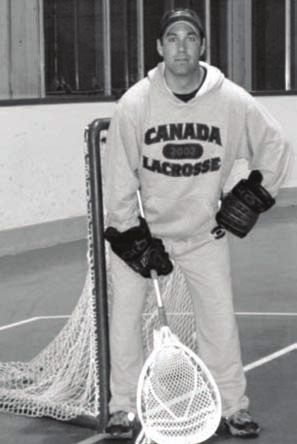
Cradling

Common Errors                Corrections

•   Bottom-hand              •    Cradle with top
    cradling                      hand

•   One-handed               •    Use two hands
    cradling

•   Stick horizontal         •    Keep stick
    to body                       diagonally tight
                                  against the body

•   Hands too close          •    One hand at the
    together                      throat and one at
                                  the base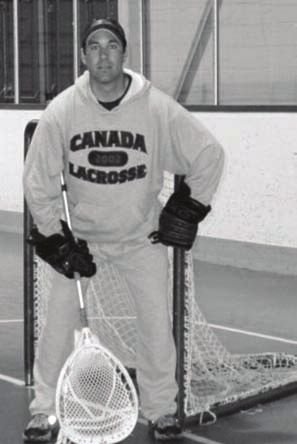
Catching

                   Tips

                   •   Hold the shaft in the base of your
                       fingers
                   •   Top hand on throat of stick
                   •   Present stick as a target
                   •   Keep wrists and arms soft/loose
                   •   Track the ball into the stick
                   •   Cushion the ball as it enters the stick
Technical Skills
Catching

Common Errors             Corrections

•   Not watching the      •    Eyes follow ball
    ball into the stick        into pocket

•   Hands too far         •    Top hand grips
    down shaft                 near throat of stick

•   Not offering stick     •    Offer stick as a
    as a target                target
Passing

                   Tips

                   •   Shoulders face the target
                   •   Bottom arm bent 90° to body
                   •   Top hand halfway up shaft
                   •   Bottom hand on butt of stick
                   •   Point butt of stick at the target
                   •   Transfer weight forward
                   •   Two hands move together
                   •   Follow through to target
Technical Skills
Passing

Common Errors             Corrections

•   Top hand too          •    One hand
    close to throat of         halfway down
    stick                      shaft

•   Stepping forward      •    Step with
    with wrong foot            opposite foot

•   Lack of               •    Follow-through
    follow-through
Overhand Shot
Tips
• Shoulders face the target
• Bottom arm bent 90° to body
• Top hand halfway up shaft
• Bottom hand on butt of stick
• Point butt of stick at the target
• Transfer weight forward
• Two hands move together
• Follow through to target
• Aim for mesh
• Accuracy and quick release are better
than a hard shot
Technical SkillsOverhand Shot
Common Errors Corrections
• Stick extended • One hand on butt
too far back of stick, the other
halfway up the
shaft
• Shooting with the • Step into shot
arms
• Lack of accuracy • Point stick in
direction of targetRolling
Tips
• Initiate contact with the defender
• Keep the ball protected
• Roll off the check with your back
• Roll towards the butt end of the
defender’s stick
Technical SkillsRolling
Common Errors Corrections
• Failure to • Accelerate
accelerate
• Rolling too early • Time your roll to
or too late take advantage of
the defender’s
aggression
• Rolling towards • Roll towards the
head of butt-end of the
defender’s stick defender’s stickCross-Checking
Tips
• Play the opponent one step back and
one step to the middle
• Sticks in the middle
• Get in the ready position
• Place stick and explode forward
• Keep your feet moving
• Cross-checking from behind is
illegal
Technical SkillsCross-Checking
Common Errors Corrections
• Playing the • Angle attacker
attacker straight up away from net
• Not playing the • Play the body, not
body the stick
• Putting the stick • Always keep stick
behind the attacker in front of attackerCutting & Replacing
Tips
• Players need to replace open spots
• Ball carriers should be aware of cutters
• Ball carriers should be in double threat
position
• Replacing players should go to one of
the three offensive positions
Tactical SkillsCutting & Replacing
Common Errors Corrections
• 2 players in same • Players need to
position replace open spots
• Failing to pass to • Ball carriers should
open cutters be aware of cutters
• Players clogging • Cutters go to 1 of 3
up the middle offensive positionsGive & Go
Tips
• Use v-cuts and jab steps
• Pass to a teammate
• Go to the net and receive a return pass
Tactical SkillsGive & Go
Common Errors Corrections
• Breaking down • Break across the
the side and middle and
shortening the increase the shot
shot angle angleScreens
Tips
• Screen-setter must give the impression
that the defender is preventing
him/her from moving
• Ball carrier should get as close to the
screen as possible
• Ball carrier should use the screen to
hide his/her shot
Tactical SkillsScreens
Common Errors Corrections
• Screening player • Screening player
commits minor must appear to be
interference prevented from
moving by the
defender
• Failing to break • Get as close to
check into screen screen as possible
• Taking too long • Use the screen to
to shoot hide your shotPick & Roll
Tips
• Pickee MUST occupy the defender by
faking a v-cut
• Picker must disguise pick by making
defender believe he/she is making a
ball cut
• Picker must ensure the ball carrier’s
defender is unaware of pick being set
• Picker must place themselves in a
position to the side and slightly behind
the pickee’s defender
• Picker must have stick up and knees
slightly bent
• Pickee goes to the side the pick is
Tactical Skills
set on
• The picker rolls open to the ballPick & Roll
Common Errors Corrections
• Pickee does not • Pickee must
occupy the occupy the
defender defender
• Pickee goes too • Pickee should
wide around the brush shoulders
pick with picker
• Failing to pass to • Ball carriers should
open rollers be aware of open
rollersFace-Off
Tips
• Right shoulder faces your own goal
• Stick is along the ground
• Push off the front foot
• Pull with your arms
Tactical SkillsFace-Off
Common Errors Corrections
• Kneeling down • Squat with knees
touching groundOdd-Person Rush
Tips
• Shoot first, pass second
• Good spacing
• Do not take a hit when passing
• 3-2s – keep the ball in the middle
Tactical SkillsOdd-Person Rush
Common Errors Corrections
• Over passing • Keep passes to a
minimum
• No passing • Pass when pressured
• Offensive players • Create open space
too close togetherReady Position Goaltending
Ready Position

Tips

•   Open stance
•   Feet shoulder-width apart and slightly
    turned out
•   Legs should be bent slightly at the knees
•   Upper body should be bent slightly forward
    from the waist
•   Head up and looking at the play in front of
    the goal
•   Stick hand just inside the dominant knee
•   Free hand resting lightly on hip/thigh
Goaltending Position 1
Position 1

Tips

•   Ball is in the left defensive corner
    - Left foot firmly placed against base of left
       post and pointing toward left side of
       floor
    - Lower left leg is tight against the post
    - Majority of weight placed on left leg
    - Right foot pointing in same direction
    - Feet shoulder-width apart
    - Left arm/left side comfortably as close to
       left post as possible
    - Stick should face ball carrier
Goaltending Position 2
Position 2

Tips

• Ball is near the left shooter position
  - Right foot is 25 cm in front of goal line
  - Feet a little more than shoulder-width
     apart
  - Body is square to the ball carrier
Goaltending Position 3
Position 3

Tips

• Ball is between the left and right shooter
  positions
  - Become centred in the goal
  - Feet are 40-45 cm in front of goal line
  - If ball is beyond the dotted line, goaltender
     may move further from the goal
   - Take care not to move too far from the goal
     and risk being out of position for a shot
Goaltending Position 4
Position 4

Tips

• Ball is near the right shooter position
  - Left foot is 25 cm in front of goal line
  - Feet a little more than shoulder-width apart
  - Body is square to the ball carrier
Goaltending Position 5
Position 5

Tips

• Ball is in the right defensive corner
  - Right foot firmly placed against base of
     right post and pointing toward right side
     of floor
  - Lower right leg is tight against the post
  - Majority of weight placed on right leg
  - Left foot pointing in same direction
  - Feet shoulder-width apart
  - Right arm/right side comfortably as close
     to right post as possible
  - Stick should face ball carrier
You can also read


