LONG TERM RUGBY DEVELOPMENT THE RUGBY ONTARIO WAY
←
→
Page content transcription
If your browser does not render page correctly, please read the page content below
LONG TERM RUGBY DEVELOPMENT
      THE RUGBY ONTARIO WAY

        1
FORWARD
Rugby Ontario is proud to present its Long Term Rugby Development Model (LTRD) which, for the
first time, provides an integrated framework to facilitate the development of rugby players at all
levels of participation and experience. It outlines a philosophy of sound practice, long-term
participation, performance and enjoyment of The Rugby Ontario Way.

The Rugby Ontario Way is the implementation of the Rugby Canada LTRD model that was
published in 2006 after an extensive process of discussion and consultation between world-
renowned developmental expert Istvan Balyi and the Rugby Canada LTRD Planning Committee.
The collective intention is to provide the best possible rugby experience for all participants
involved in Rugby across the province of Ontario. The LTRD framework will help to ensure that the
experience of training and playing the game is always appropriate for the developmental stage of
the player involved.

The model is a Athlete-Centred one, in that the specific characteristics pertaining to each stage
are based on the particular capacities of players at each stage of development.

The nature of rugby required a close examination of the demands of the game itself at each stage,
as well as the capacities of players. This analysis, coupled with extensive validation from coaches
“on the ground” at all levels, resulted in the establishment of player capacities across five specific
areas:

Technical, Tactical, Physical, Mental and Lifestyle.

These player capacities provide the compass by which the Rugby Ontario Technical Department
designs and promotes rugby coaching at all levels, believing that all coaches should be
appropriately trained and qualified to work with players at each stage in the model. This
incorporates the Rugby Canada Coaching Pathway and National Coaching Certification program
from the Coaching Association of Canada.

An integral aspect of The Rugby Ontario Way is the “essence” of Player, Game and Coach at each
stage - this acts as a guideline to all participants at each of the stages of development.

It is important to remember that The Rugby Ontario Way model is not intended to be a production
line of world-class players but rather an integrated series of stages (based on scientific principles
and participant experience) to maximize the potential of players according to their own ability and
ambition. Ultimately, the successful establishment and maintenance of a long-term program of
development will be essential to that small number of players with the talent and aspiration to
become elite performers.

The true effectiveness of The Rugby Ontario Way will be evidenced by its integration into all of our
structures and systems, and by the rewarding experiences of players, coaches, parents, referees,
supporters and administrators of the game.

Our goal is to grow rugby across the province and see more participants at all levels.

                                                  2
THE RUGBY ONTARIO WAY OUTLINE
The Rugby Ontario Way is intended to provide a common reference point for all participants in
Ontario Rugby with the aim of ensuring a more enjoyable and productive experience for all
players, coaches, parents, spectators, referees and officials.
The three key principles underlying The Rugby Ontario Way are:
1. The model is Athlete-Centred - all aspects of the model are appropriate to the capacities of
participants at each stage.
These capacities are:
Lifestyle, Physical, Tactical, Mental and Technical.
2. The model is Long-Term - the reality is there are no short-cuts in developing competencies to
levels of excellence. A widely accepted belief is that it takes ten years or 10,000 hours of
1WVNKPGQH4WID[%CPCFC¶U.64&/QFGN
proper coaching to produce a world-class athlete.
4GVCKPHQT.KHG
4WID[%CPCFC¶U.64&OQFGNEQPUKUVUQHCPUVCIGRNC[GTFGXGNQROGPVRCVJYC[DGIKPPKPIYKVJCPKPVTQFWEVKQPVQRJ[UK
3. Collective alignment between relevant people and structures throughout a player’s rugby
ECNCEVKXKV[CPFURQTVVJTQWIJVQGNKVGRCTVKEKRCVKQPKPTWID[6JGOQFGNKUUVTWEVWTGFCTQWPFEJTQPQNQIKECNCIG
JQYGXGT
experience isKVURTKPEKRNGUCPFURGEK¿EEQPVGPVCTGDCUGFQPCRNC[GT¶UFGXGNQROGPVCNCIG
the final principle behind The Rugby Ontario Way. This requires all participants
who contribute to the development and experience of players to cooperate ensuring that all
5RGEK¿ECNN[VJG¿TUVVJTGGUVCIGUGPEQWTCIGRJ[UKECNNKVGTCE[CPFURQTVHQTCNN$CUKEUMKNNUVJCVCTGTWID[URGEK¿ECTG
KPVTQFWEGFKPUVCIGCPFHWTVJGTFGXGNQRGFKPUVCIGKPCRTGFQOKPCPVN[TGETGCVKQPCNGPXKTQPOGPV
aspects of The Rugby Ontario Way are aligned.
6JGPGZVHQWTUVCIGU CPF HQEWUQPGZEGNNGPEGYKVJOQTGGORJCUKUQPDWKNFKPIQRVKOK\KPICPFOCZKOK\KPI
ª
TWID[URGEK¿EUMKNNUKPCEQORGVKVKXGYGNNUVTWEVWTGFGPXKTQPOGPV5VCIGGPEQWTCIGUNKHGNQPIRJ[UKECNCEVKXKV[CPFKP
The Rugby Ontario Way is an eight staged model, servicing participants from Community to
XQNXGOGPVKPTWID[2NC[GTUECPGPVGTVJKUUVCIGCVCP[VKOG0QVG
#OQTGEQORNGVGGZRNCPCVKQPQHGCEJUVCIGCRRGCTU
Country. These stages are outlined below.
KP#RRGPFKZ
STAGE 1 STAGE 2 STAGE 3 STAGE 4 STAGE 5 STAGE 6 STAGE 7 STAGE 8
52'%+(+%64#+0+0)#)'
&'8'.12/'06#.#)'
#%6+8' (70FCOGPVCNU .'#40+0) 64#+0+0)61 64#+0+0)61 64#+0+0)61 7.6+/#6' #%6+8'
56#46 -+%-1(( 6164#+0 64#+0 %1/2'6' 2'4(14/ 2'4(14/#0%' (14.+('
VQ4WID[ &'8'.12 $7+.&VJG4WID[ 126+/+
In each stage the essence and characteristics
of the player, game and coach are outlined to act
as a reference point for all who participate in the
playing, officiating and administration of the game.
These are outlined on the following pages.

                        4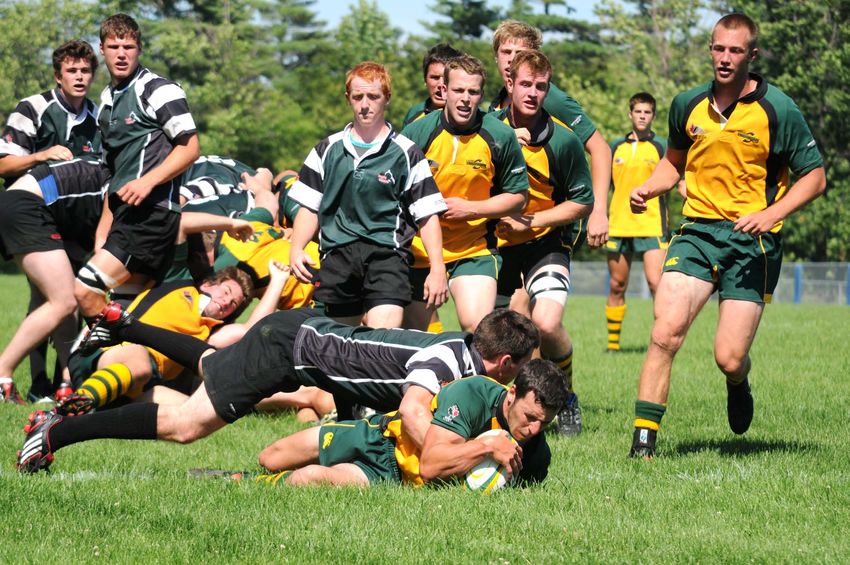
STAGE                       1                                                                        P

                                                                          CH

                                                                                                     LA YS
                                                                                  S

                                                                                                    PL

                                                                                                       YE
                                                                       C OA
                                                                               DE

                                                                                                    A
                                                                              GUI

                                                                                                          R
    1 Start
Active
Movement Skills                                                                         FU N
                                                                                      GAME
                FUNdamental
The Player - PLAYS
The player in this stage is generally 0-6 years old for both boys and girls
The player at this age needs to learn fundamental movements through fun and games. Physical
activity is fun and
                 THEbecomes
                      PLAYERa part of daily routines within their family and community.
                               - PLAYS
               Players in this category are age-grade players (5 - 12 approx)
               The capacities of young players dictate that most learning activities are best
The Coach - GUIDES
               promoted through the medium of play. This theme does not just apply to modified
To ensure that games
               the athlete’s
                       but alsoneeds   at thisexercises
                                 to reduced    stage are  met,
                                                        and drillthe coach Specific
                                                                  activities. should techniques
                                                                                       act as a guide, providing
an environment   forcorrections
               and   players tocanexplore   in a safe
                                     be integrated    and exciting
                                                   throughout         way.while
                                                              the activity   Corrections   and guidance should
                                                                                 still maintaining
be very simple,maximum
                 positiveparticipation
                           and enthusiastic.
                                       and enjoyment. This will also ensure that players receive
               a positive and motivating experience.

The Game - FUN
The end result should be a fun and safe experience. The emphasis is placed on open play (general
movement) withTHE     COACH
                 all athletes     - GUIDESas much as possible. Ensure that players are learning the
                                participating
absolute basics of passing, running
              To facilitate the needs andand  scoring.
                                          capacities of younger players the coach should act as
                a Guide, providing the environment for players to explore in a safe and exciting
                way. Corrections and guidance should be subtle and simple, dealing with issues
                in a broad rather than detailed perspective.

                THE GAME - FUN
                The end product should be a fun and safe experience. The emphasis is placed
                on open play (general movement) with all players running, passing and tackling.
                Younger players will continue to participate in activities that are enjoyable and
                rewarding. As players mature and develop greater capacities their needs and
                the demands of the game will also change.

                                                        5
STAGE                     2
FUNdamentals
Kick Off to Rugby and Fundamental Movement Skills

The Player - PLAYS
The player in this stage is generally 6-9 years old for boys and 6-8
years old for girls
The capacities of the young player dictates that most learning
activities are best promoted through the medium of play. This                                         P

                                                                           CH

                                                                                                      LA YS
theme can be achieved through the use of modified games

                                                                                   S

                                                                                                     PL

                                                                                                        YE
                                                                        C OA
                                                                                DE
while reducing the use of drill activities. Specific techniques

                                                                                                     A
                                                                               GUI

                                                                                                           R
and corrections can be integrated throughout the activity while

                 1
still maintaining maximum participation and enjoyment. This
will also ensure that players receive a positive and motivating
experience.

                                                                                         FU N
The Coach - GUIDES                                                                     GAME
                 FUNdamental
To facilitate the needs and capacities of younger players, the coach
should act as a guide, providing the environment for players to explore in                 a
safe and exciting way. Corrections and guidance should be subtle and simple, dealing with issues
from a broad rather than detailed perspective.

           THE
            FUN  PLAYER - PLAYS
The Game - Players in this category are age-grade players (5 - 12 approx)
Participating should be a fun and safe experience. The emphasis is placed on open play (general
                    The capacities of young players dictate that most learning activities are best
movement) with all players running and passing. Younger players will continue to participate in
                    promoted through the medium of play. This theme does not just apply to modified
activities that are enjoyable and rewarding. As players mature and develop greater capacities, their
                    games but also to reduced exercises and drill activities. Specific techniques
needs and the demands of the game will change.
                 and corrections can be integrated throughout the activity while still maintaining
                 maximum participation and enjoyment. This will also ensure that players receive
                 a positive and motivating experience.

                 THE COACH - GUIDES
                 To facilitate the needs and capacities of younger players the coach should act as
                 a Guide, providing the environment for players to explore in a safe and exciting
                 way. Corrections and guidance should be subtle and simple, dealing with issues
                 in a broad rather than detailed perspective.

                 THE GAME - FUN
                 The end product should be a fun and safe experience. The emphasis is placed
                 on open play (general movement) with all players running, passing and tackling.
                 Younger players will continue to participate
                                                    6         in activities that are enjoyable and
                 rewarding. As players mature and develop greater capacities their needs and
                 the demands of the game will also change.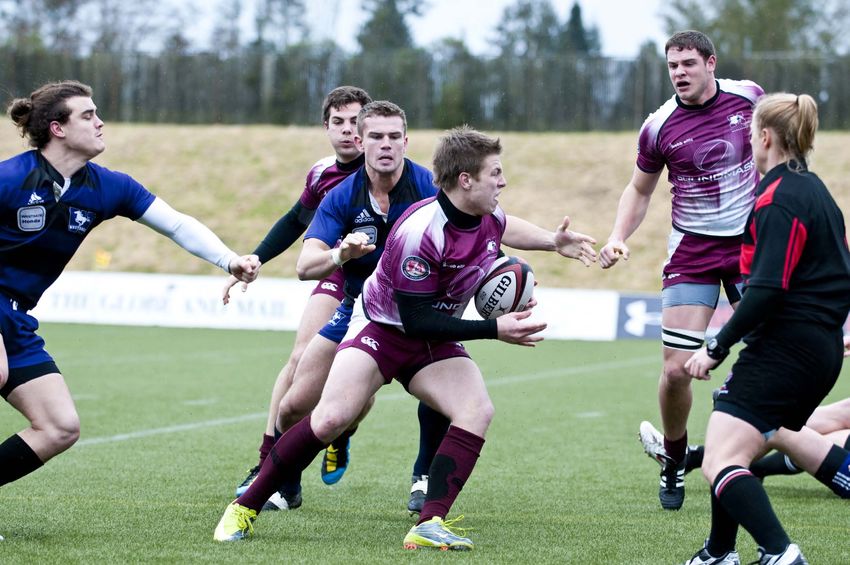
STAGE                    3
      rather than guiding is more appropriate for accelerating
      learning. Knowledge of how to facilitate learning
                                                                                                      P

Learning to Train                                                                              EX

                                                                  CH

                                                                                                       LA
                                                                                 S

                                                                                                         YE
                                                                 C OA
                                                                            HE

                                                                                                    PL
                                                                                                      OR
                                                                        TEAC

                                                                                                            R
Develop the Basics - Fundamental

                                                                                                        ES
Sports Skills

                                                                                 ST
                                                                                      R UC TU RED
      & three-quarters). The game is still fun, safe and
                                                                                      GAME
The Player - EXPLORES
The player in this stage is generally 9-12 years old for boys and 8-11
years old for girls
At this stage, the player’s capacities allow them to learn through exploring. Trying out new
approaches, pursuing solutions and new experiences in a controlled environment will facilitate the
development of the player. Individuals are capable of problem solving and should be encouraged
to express their opinions.

The Coach - TEACHES
Due to maturation, the players are now capable of longer periods of concentration and attention;
therefore teaching rather than guiding is more appropriate for accelerating learning. Knowledge of
how to facilitate progressions and learning through understanding is critical for development.

The Game - STRUCTURED
Now that the players have the capacity for greater understanding and technical competence, the
game develops from open play to a more structured format to include the development of basic
unit play (restarts - forwards and backs). The game is still fun, safe and enjoyable with ample
running, passing and the introduction of tackling.

                                                7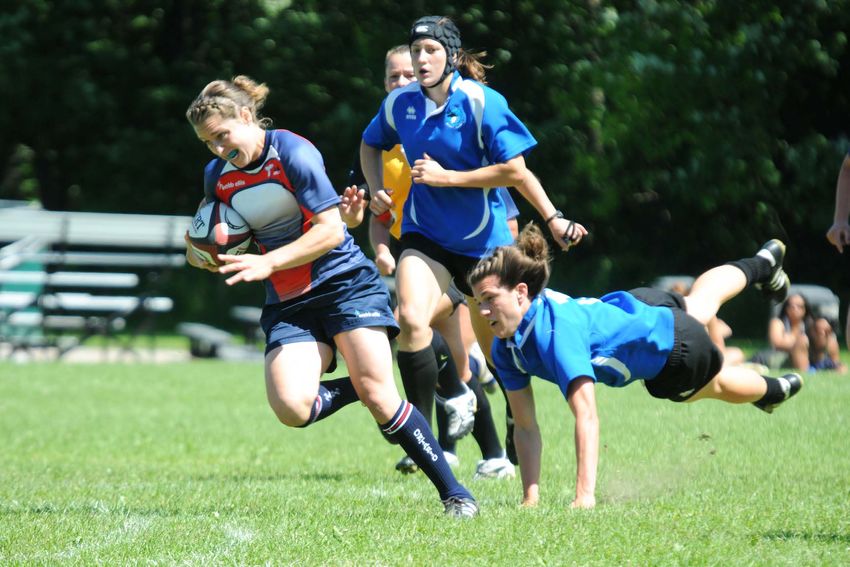
STAGE                         4
     3
Training to Train
Build the Rugby Engine - Fundamental Rugby Skills

The Player - FOCUSES    TRAIN TO TRAIN
The player in this stage is generally 12-16 years old for boys and 11-15 years old for girls
In this stage, players have the capacity to focus and therefore can increase their competencies
radically with the correct attention and application. Greater self-awareness and responsibility are
characteristics of players at this stage, which, if nurtured, will form the foundations for future
realization and success.
                    THE Players
                            PLAYER    are -highly
                                            FOCUSEScompetitive and foster a greater awareness of team
spirit and common goals and values. This stage is a key DEVELOPMENT stage and the focus
                    Players in this category are two-fold; age-grade players (15-17 approx) & adult
should be on process rather than outcome.
                    ‘junior’ players. Age-grade players have the capacity to focus and therefore can
                    increase their competencies radically with the correct attention & application.
                    Greater self-awareness and responsibility are characteristics of players at
The Coach - TEACHES and CHALLENGES
                    this stage, which if nurtured will form the foundations for future realization
This can be a hard age group for  andcoaches
                                       success. because
                                                   Players of two
                                                            are    differing
                                                                highly       pools ofand
                                                                        competitive    players.
                                                                                           foster a greater
                                       awareness of team spirit and common goals and values.
                                   The Entry Player - this can often be an entry point for players in
                                             rugby and coaches need to teach the skills from stages
                                              Adult players (junior) have similar technical and tactical
                                P            1-4 in a limited time period. It is important that the coach
                                               competencies due to limited development, but have
                                            has a strong understanding of all the stages and skill
             ES             FO
   CH

                                  LA SES

                                                 greater physical,
                                             development      up to mental  and lifestyle
                                                                     this point. Coaches  capacities duetotothen
                                                                                            often have
               G

                                    YE
 C OA
             EN

                                CU

                                                  greaterpractice
                                              prioritize  maturation
                                                                   timeand
                                                                         andexperience/achievement.
                                                                              individualize instruction.
        CHALL

                                       R

                                               The Developing Player - Some players at this stage will
                                               have played rugby since stage 1 or 2 and therefore they
                                               haveTHE     COACH
                                                      higher           - CHALLENGES
                                                               DEVELOPING       capacities as a player. The
                                              requirement for the coach is of
                                                   Given the greater capacities  toplayers, the requirement
                                                                                     go beyond    teaching and
               PE              E                  for the coach  is to go  beyond  teaching   and challenge
                  RFO        C               challenge players to become more proficient           and achieve
                      R M AN              higherplayers  to become
                                                    standards         more proficientThe
                                                                 of performance.        and coach
                                                                                             achieve extracts
                                                                                                      higher a
                   GAME                higher    level ofofperformance
                                              standards                     through appropriate
                                                             performance. Therefore                  challenges
                                                                                       the coach extracts  a
                                     and application
                                           higher levelofofpressure.
                                                            performance through appropriate challenges
                                The keyand
                                        is toapplication
                                               be able tooffind all participant’s challenge zone.
                                                             pressure.

The Game - PERFORMANCE
Even though players are now highly competitive and play in league and cup competitions, the
                    THE GAME - PERFORMANCE
essence at this stage is precise performance of the individual, units and team in the pursuit of
                    Even
achieving goals. The game though  players
                             can be   moreare   now highly
                                            structured    and competitive   and aplay
                                                               cohesive, with         in league
                                                                                  greater         & cup
                                                                                           emphasis   on the
                    competitions the  essence  at this  stage is precise performance   of
role of the units. However, to maximize DEVELOPMENT, the focus should be on performance inthe individual,
                    units
the pursuit of desired    and team(individual,
                       processes    in the pursuit
                                               unitoforachieving  goals.
                                                        team) rather     Theoutcomes.
                                                                       than  game is clearly structured
                    and cohesive, with a greater emphasis on the role of the units. However, to
                    maximise development, the focus should be on performance in the pursuit of
                    desired outcomes and results.

                                                        8
STAGE                                   5
Training to Compete
Develop the Engine

The Player - SPECIALIZES
The player in this stage is generally around 16-19 years old for boys and around 15-18 years
old for girls
Players are more likely to have committed themselves to rugby as their primary sport. They are
more willing to invest a significant amount of time and energy to become successful. They are
driven and are fiercely competitive with a greater capacity for all game related competencies.
Players pay more attention to developing themselves as positional specialists in order to
undertake their functional roles.

Players at this stage are capable of independent thinking and of taking greater responsibility while
also contributing more toward problem solving.

The Coach - FACILITATES
Since the players have the capacity for greater input, the role of the coach shifts towards
facilitation. Allowing opportunity for opinions and problem solving is critical if players are to
develop confidence and relative autonomy.

                                                The coach will still need to employ teaching, challenging and
                                                  guiding skills where appropriate. The emphasis should be on
                                            P       developing the player’s ability to navigate rather than replicate.
                                   SP
 CH

                   ES                   E
                                            LA LISES

                                                        The Game - OUTCOMES
               T

                                              YE
C OA

                                        CI
            ITA

                                          A

                                                        The game becomes fiercely competitive with positional
       FACIL

                                                 R

                                                         specialists influencing games, mini units and units are well
                                                         synchronized and team play concentrates on reducing
                                                        errors and maximizing success. The focus is on achieving
                                                        desired outcomes in respect to attacking and defensive
                                                       goals (team, unit, mini-unit).
                        OUT
                              CO M E
                        GAME

                                                                  9
STAGE                      6
Training to Perform
Maximize Rugby Performance

The Player - INNOVATES
The player in this stage in generally around 19-23 years old
for men and around 18-21 years old for women - Adult
Provincial Representative players for Ontario Blues or                                                 P
                                                                                                  IN
                                                                                RS

                                                                         CH

                                                                                                       LA VATES
Ontario Storm

                                                                            E

                                                                                                   NO

                                                                                                         YE
                                                                    C OA
These players have the capacity to go beyond rehearsed

                                                                           W
                                                                         EMPO
repertoires, strategies and tactical solutions and innovate

                                                                                                            R
when the situation demands. Highly competitive and
driven they should excel in their positional and functional
roles as well as have the capacity to fulfill multiple roles in
general movement play.

They must have the ability to deal with the pressure of public                       R E S U LT
expectation,
     potential interest   andandintrusion
               for creativity               together
                                  responsibility will be with
                                                         stifled.self-               GAME
management   and self-development.
     With player    accountability comes player responsibility

The Coach - EMPOWERS
Coaches must release rather than restrict the potential of the players and other coaching staff,
otherwise the potential for creativity and responsibility will be stifled. The coach must create an
environment where trust and respect between all squad members is established while still
maintaining ultimate responsibility for team performance and results.

The Game - RESULT
Provincial pride and pressure are heightened at this level. Players are vying for national and
international positions. The focus shifts to winning. More player analysis of both individual and
opposition is developed. Dealing with travel and pressures of playing away from home are evident.

                                                    10
STAGE 7
Ultimate Performance
Optimal Rugby Performance
The Player - INNOVATES
The player in this stage is generally over 23 years old for men and over 21 years old for
women - Adult International Representatives for Canada.
These players have the capacity to go beyond the rehearsed repertoires, strategies and tactical
solutions and innovate when the situation demands. Highly competitive and driven, they should
excel in their positional and functional roles as well as have the capacity to fulfill multiple roles
in general movement play.
They must have the ability to deal with the pressure of public expectation,
interest and intrusion together with self-management and self-
development.
P
RS
IN The Coach - EMPOWERS
CH
LA VATES
Coaches must release rather than restrict the potential of the
E
NO
YE
C OA
W
players and other coaching staff, otherwise the potential for
EMPO
R
creativity and responsibility will be stifled. The coach must
create an environment where trust and respect between all
squad members is established while still maintaining
ultimate responsibility for team performance and results.
R E S U LT The Game - RESULT
y will be stifled. GAME Elite sport at this level is about winning. Gaining a strategic
ayer responsibility advantage through game analysis is the main characteristic at
this stage.
11STAGE 8
Active for Life
Community and Retention
The Player - Active Participant
Not all participants will complete each of the steps of The Rugby Ontario Way. Players can
transition into Active for Life after any stage and continue to enjoy rugby. Most Ontario club teams
are recognized under Stage 8. This stage makes up the majority of rugby played and is the key
component of Sport Canada development of the Canadian Sports for Life Model. Keeping more
people involved in sports is good for the health of the nation and the growth of rugby.
Players finish playing for many reasons: age, injury, family commitments, business and vocational
goals, etc. For the game to develop there are many areas where ex-players can contribute:
SUPPORT RUGBY
Potential roles open to ex-players include:
Administrator/Volunteer - become an active member of a club, region, branch, union or group
either as a volunteer or paid position.
Development - become involved in player and/or coach development by undertaking education
as a coach, learning facilitator or mentor.
Referee - become involved in officiating and/or referee development by undertaking education as
a referee, referee coach or performance reviewer.
PROMOTE RUGBY
Promote rugby by relaying positive personal experiences and highlighting the spirit of rugby to a
parent, friend, relative, teacher or sponsor.
ENJOY RUGBY
Enjoy rugby as a supporter, contributing to the identity and social aspects of rugby at all levels.
12Stage Active Start FUNdamental Learn to Train
0-6 6-9 9-12
Males
Chronological Age
0-6 6-8 8-11
Females
LONG TERM RUGBY DEVELOPMENT
Early Childhood Early Childhood Late Childhood - Early
Development Age
Puberty
Fun, Safety and Basic Skills Fun, Safety, Basic Skills and Fun, Safety, Basic Skills and
Summary Understanding Understanding
U6 Flag U8 Flag U10 Flag
U12 modified contact
Competitions
Fundamental Movement FUNdamental Movement FUNdamental Sports Skill
Skills Skills
First Speed Window - F: 6-8, Major Motor Learning
Windows of Optimal Trainability M: 7-9 Window
Get away from people Simple Off both feet / directions
Swerve Ability to get past defender
Evasion Skills
NA Simple Off both feet
Weight transfer
Sidestep Ability to get past a defender
Speed NA Change of Pace Change of pace
Across the Body Variety of styles: Variety of styles:
One handed, two handed, One handed, two handed,
overarm and underarm overarm and underarm
Handling Skills Throwing Varying length of pass Varying length of pass
Differing directions
Two Hands High, low and one handed Hands in W Shape
Catching with different shaped balls Hands above eyes
and a variety of passes Bringing into the body
Backwards Lateral Lateral
Moving the ball across the
body
Passing Off the ground
Pop
Switch
Miss
Loop
Picking the ball up and Individual ball skills Picking Individual ball skills
placing the ball on the the ball up and placing the Picking the ball up and
ground - Ball in two hands ball on the ground placing the ball on the
Basic Ball Basketball type ball skills ground
Control Picking the ball up and
passing
Controlling the ball in
“contact”
Coordination Hand-eye coordination Hand-eye coordination Hand-eye coordination
Grabbing flags Grabbing flags Grabbing flags
Tackler Getting Back to Feet
After Tackle
Gaining Possession in the
Tackle
Contact Skills - Leg drive in tackle
NA NA
U12 + Establish dominance
Controlling the Ball in the
Tackle
Passing the Ball During /
After Tackle - Off Loading
Body management
Confidence in Bump and pass
Contact Off loading
Passing in contact
Rolling
NA NA Contact with the ground
Falling
Contact with players on
Bumping NA NA
ground
Safe Tackling Side Tackle
NA NA Front Tackle
Technique Tackle from behind
Getting back
NA NA Rejoining the game
to feet
Technical
13Scrum Skills - Basic Body Stability
NA NA Safety
U12 + Position Core strength
Foot position
Formation NA NA Stability
LONG TERM RUGBY DEVELOPMENT
Eyes on the target zone
Stability
Technical Safety
Engagement NA NA
Binding
Hooking
Delivery
Pass from scrum
Scrum Half NA NA
Lineout Skills - Safety in Jumping
Jumping NA NA Catching
U12 +
Simple over head throw
Basic Body Position
Throwing NA NA
Catching the ball
Pass from the lineout
Receiver NA NA
Safe supporting techniques.
Supporting
NA
Maul Skills NA NA
NA
Breakdown Skills NA NA
Ball Carrier NA NA NA
Support /
Arriving NA NA NA
players
Running and
Attacking Skills Running and Passing Running and Passing
Passing
Alignment Depth and Width
and NA Player on Player
Realignment
Decision Space Identifying Space
PLAYER CAPACITIES Identifying Space Attacking Spoace
Making
Going with the ball carrier -
Support not leaving isolated
NA NA
Running
Wall Man on Man
Communication
Defense NA
Basic Ball Individual skills
Kicking NA NA Dribbling
Control
Drop kick
Punt
Kicking along the ground
Game Kicking NA NA
Organised
Receiving NA NA
Knowledge of U8 Flag Rugby Knowledge of U12 Modified
Laws Contact Laws
Laws NA
Knowledge of U12 Modified
Contact Laws
14
TacticalFair play Fair play and friendly Concepts of Honesty and
'competition' Responsibility
Ethics Concepts of Sporting
conduct
Perspective on sport
U6 Rugby - Flag Rugby / U8 Rugby U10 Rugby - Flag Rugby /
LONG TERM RUGBY DEVELOPMENT
Touch Rugby Touch Rugby
The Game Age / Grade
7v7 U12 Rugby - Modified
Contact (7v7)
Running
Evasion
Principles Go Forward Running & Evasion Running & Evasion
Tactical Running lines Passing
Support NA NA backwards to team mates
Maintaining possession
Continuity NA NA
Collective action in attack
and defense
Team Play NA NA
Evasion Skills Evasion Skills Agility
Hopping, Leaping and Hopping, Leaping and Awareness of Body in Space
Jumping Jumping
Balance - Static and
On each foot On each foot
Dynamic
Coordination and
Physical
Manipulation
Speed and Locomotion
Warm Up and Cool Down
Introduction to Triple
Extension
Self-confidence Self-confidence Development of Self Imagine
Social Confidence -
Self-esteem Self-esteem Response Positive
Reinforcement
Positive attitude to sport Positive attitude to sport Enthusiasm and
Commitment
Mental Tolerance Tolerance Focus and Concentration
Cooperation Cooperation Identification with Positive
Role Models
Basic socialization skills Basic socialization skills Self Expression
Sharing Sharing Creative Thinking
Fairness Fairness Communication Skills
Lifestyle
Positive response to Positive response to Work As Part of a Team
discipline and structure discipline and structure
Work Self-control - Balance
Personal Wants / Needs with
OthersAs Part of a Team
Awareness of Health and
Safety Issues
15Train to Train Train to Compete Train to Perform Ultimate Performance Active for Life
12-16 16-19 19-23 23+ Enter at any age
11-15 15-18 18-21 21+
LONG TERM RUGBY DEVELOPMENT
Early Puberty to Puberty Puberty - Late Puberty Late Puberty - Early Adulthood
Adulthood
Safe and Enjoyable experience of The performance of Rugby The performance of Multi- Improvisational and Problem- To enjoy a healthy lifestyle &
the 15-a-side game Skills to achieve the Functional Roles under match solving under match- retain participants for
Principles of Play in a match conditions conditions administrative, coaching,
U12 Modified Contact U15 Girls U18 Girls Ontario Blues officiating, mentoring or
U14 Boys U16 Boys Ontario Blues Devlopment Ontario Storm supporting roles
U15 Girls U18 Boys University
U16 Boys
Second Speed Window - F: 11-13, Endurance with the onset of Individualise and optimise Individualise and maximise
M: 13-16 PHV fitness fitness
Strength: with the on-set of
menarchie for females and
12-18 monthes after PHV for
males
Develop Refine Key Evasion Skills Retain appropriate
recreational interest
Develop
Under pressure Decision
making situations
Develop Continue To Develop Skills Develop All Catching and Apply knowledge in coachin
By Adding Pressure Through Passing Skills at Top Speed / mentoring / tutoring
Decision Making Games Catch the ball cleanly from capacity
any height, width, depth
Pass the ball with confidence
and accuracy for a variety of
passes off of both hands
Develop and Challenge Improve ability to take the
pass from all heights and
angles
Develop by developing under Improve length of pass range Proficiency At All Catching
pressure Improve accuracy and Passing Skills at Top
Game related passes Improve pace Speed and Under Pressure
Develop unusal passes (flick) Improve Scrum Half Pass
Scrum half passes
Make Appropriate Tackles
Control Goal is to stop forward Stop Any Forward
Leg drive Body- momentum of attacker Momentum
awareness to create turnover
opportunities
Use Martial Arts Techniques Reinforce Correct Ball Control
To Enhance Tackling Skills Into Tackle
Clean Out Players
Develop Tackling Improve Tackle Technique All Players in the Team Are
Offensive and defensive Able to Complete All Actions
tackles of Defense
Speed to feet Controlling the Ball in the Disrupt / gain possession by Stop Any Forward
Tackle getting to feet as quickly as Momentum
possible and making decision
at the break down
16Stability Refine Techniques for Excursion of Dominance at
Safety Different Opposition Phase
Second row
Back row
Develop Formation Understanding Gaining ground from the Refine Individual and Unit
back of the scrum and Skills
attacking the opposition
LONG TERM RUGBY DEVELOPMENT
Timing to transmit maximum Able to Cope Will Multi
Introduce the concept of channels power Oppositional Tactics
to hooker
Pick or Pass to move the ball from Ball presentation
scrum Placing the ball whilst
aggressively moving
momentum forward
Build basic body position Develop Develop understanding of Focus on Accuracy and
explosive movement best options for each line out Consistency
Develop differing throws Refine Skills and Focus on Refine Skills and Focus on Win All Own Ball
Height Accuracy and Consistency Accuracy and Consistency
Speed Calls and Communication
Distance
Catching the ball Pass from Refine Calls and Turn Over Opposition Ball
the lineout Communication
Refine Movement and
Reaction Skills
Tracking skills
Identifying opposition trigger
or calls
Safety Strong base to ensure Refine All Maul Skills Dominate this phase
Low possession
Stable Secure possession
Binding Deliver the ball
Safety Refine Body Positioning Highest Quality Phase Ball to
Unsure Multiple Phases of
Possession
Leg drive in contact Deliver Quick Ball to Ensure
Ball presentation High Speed Game
Identify Weak Shoulder
Protect Slow Down Opposition Ball Ability to Attack From All
On feet When appropriate Situations
Head Up Make decision about the
Strong position situation and complete the
Secure possession best option
Protect ball carrier
Angles of Attack to Preserve and Awareness of Formal Role in Full Awareness of Formal
Create Space Team Pattern Role in Team Pattern
Positioning and Alignment to Allow
a Range of Attacking Options
Identification of Space
Timing of Pass
Penetrating Defense High Level of
Putting Support Players in Space - Communication and
Use of the Offload Understanding of Other
Support Players to Ensure Players
Continuity of Attack
Moving Forward Maintaing Support at Breakdown to Organization of Lateral All Players Are Able to
Organisation Secure Possession Spacing Perform All Skills
Moving Forward Maintaining Counter Rucking Prevent Territory Gain and
Organisation Creating of Pillars and Posts Secure Possession
Putting Pressure of Opposition by Develop Communication
Reducing Space Awareness of Attacking
Reacting to Attacking Tactics Pattern Develop Strong
One on One Tackling Defense in “Scoring Zones”
Decision Making in Zone Defense Ability to Quickly Change to
Line Speed Offense Screening
Develop Line Speed in
Organised Pattern
Drop kick Restart Specialist Goal Refine Game Related Kicking Specialists Work to Highest
Punt Kicking Specialist and Chasing to Maximise Net Level of Proficiency and
Grubber Organizing Kick and Chase Gains and Retain Possession Accuracy
Chip
Box
Wiper
Organised kick and chase
Place - kick at goal
Organised restart patterns Formation Refine Formation Contest All Situations
Supporting the jumper Tracking the Ball in the Air Refine Drop Kick Accuracy
Fielding the ball and organizing the Catch / Deflect the Ball and Height
counter attack Protect and Deliver the Ball
Use Platform to Attack
Basic Understanding of the Laws of Appreciation of the Laws Utilization of Laws / Rulings Retain appropriate
the Game Rulings and Interpretations to Develop Match Strategies recreational interest
U19 Law Variations
Basic Sevens Laws
17Personal Responsibility for Own Appreciation For Appreciation of Role Model Fulfill Role Model
Actions Consequences of Own Responsibilities responsibilities
LONG TERM RUGBY DEVELOPMENT Actions
15 Aside Rugby Apply knowledge in coach
7 Aside / mentoring / tutoring
capacity
Introduction to Structured Patterns Effective Set Piece Choosing the Best Options to
Understand Game Plans Achieve Correct Outcomes
Choice / Selection of Tactical
Options to Exploit Space
Develop position specific
requirements
Develop Unstructured Patterns Prioritize Pressure
Pressure on attack and in defense Refine Team Play Implement Problem Solving Implement Performance
Strategies Analysis - Individual and
Understanding of Options to Team
Achieve Game Plan Identification of Opposition
Develop and Implement Mini- Tactical Strengths and
Unit / Partnership Weaknesses
StrategiesAwareness of Implement Specific Game
Opposition's Strengths and Plans Based on Opposition
Weaknesses Ability to Adapt Strategies
Evolving Position Specific During a Match
Requirements Consideration of Tactical
Video Analysis Developments in World
Rugby
Mastery of Position Specific
Requirements
Strength Strength Strength Keep active through
Agility recreational and other
sporting activities
Awareness of Body in Space Power - Including Triple Power Power Flexibility, endurance,
Extensions strength training
Balance - Static and Dynamic Mobility Multi Sprint Endurance Multi Sprint Endurance
Coordination and Manipulation Speed Individualized Training Plan Sport and Position Specific
Conditioning
Speed and Locomotion Acceleration Periodized Training Plan Periodized Training Plan
Warm Up and Cool Down Rugby Specific Multi - Rugby Specific Multi - Rugby Specific Multi -
Activity Endurance Activity Endurance Activity Endurance
Introduction to Triple Extension Pre Habitation Established Recovery Well Established Recovery
Strategies / Routines Strategies / Routines
Speed Agility and Quickness Speed Agility and Quickness
(SAQ) (SAQ)
Goal Setting - Short term Goal setting - medium term Goal setting - long term Patience to Achieve Long Adjustment to non-
Term Goal participation environment
Patience Motivation Pre Match Preparation After Rugby
Self Control Determination Controlled Breathing Pre Match Preparation
Concentration Concentration Physical Relation - P.M.R Mental Relaxation
Focus On Key Factors
Understand / Cope With Coping Strategies - Match
Arousal and Anxiety and Pre Match Strategies
Concentration in Function Self Awareness Through
Roles Behavioral Profiling
Visualization Concentration in Strategies
and Tactics
Personal Responsibility Independent thinking Principle Centred Values Self Reliance Pursue personal & family
goals
Ambition Career Planing Pursue Further Educational / Pursue Further Educational / Pursue furthar self-
Personal Development Personal Development development
Interpersonal Skills Acceptance of Structure and Integration of Sport, Career Integration of Sport, Career Possible engagement in
Discipline and Life Goals and Life Goals rugby development initiativ
Awareness and Acceptance of Established Self Identity Economic and Independent Professional and Personal Appropriate nutrition
Pubescent Developments Management Life Management
Social Responsibility Life Balance Awareness of Leadership Openness to Further
Demands and Development Opportunities
Responsibilities
Good Health and Hygiene Practice Coping With Pressures Coping With Set Backs / Pursuit of Excellence
Failure
18Active for Life
Enter at any age
To enjoy a healthy lifestyle
& retain participants for
administrative, coaching,
officiating, mentoring or
supporting roles
Retain appropriate
recreational interest
Apply knowledge in
coaching / mentoring /
tutoring capacity
Retain appropriate
recreational interest
Apply knowledge in
coaching / mentoring /
tutoring capacity
Keep active through
recreational and other
sporting activities
Flexibility, endurance,
strength training
Adjustment to non-
participation environment
Pursue personal & family
goals
Pursue furthar self-
development
Possible engagement in
rugby development
initiatives
Appropriate nutrition
19DEFINITIONS
Technical Capacities
Rugby-specific skill necessary to play the game effectively.
Tactical Capacities
Understanding of the game and application of it’s principles to achieve
goals.
Physical Capacities
The physical characteristics specifically related to maturation and
development.
Mental Capacities
Psychological skills and strategies related to effective performance.
Lifestyle Capacities
Self-awareness, self-development and establishing a balanced
perspective.
20STAGE 1
Active Start
The Coach needs:
•NCCP Community Initiation - Non Contact Rugby
Coaching Course
•HIGH FIVE SPORT Course
The Referee needs:
•Flag Referee
•HIGH FIVE SPORT Course
21Technical Capacities
1 Evasion Skills
Get Away From People
2 Handling Skills
Throwing
Across the Body
Catching
Two Hands
Passing
Backwards
Basic Ball Control
Picking the ball up and placing the ball on the ground
Ball in two hands
Coordination
Hand-eye coordination
Grabbing flags
3 Attacking and Defensive Skills
Running and Passing
Tactical Capacities
1 Laws/Ethics
Fair play
2 The Game
U6 Rugby
Flag Rugby / Touch Rugby
7v7
3 Principles
Go Forward
Running
Evasion
22Physical Capacities
1 Agility
Evasion Skills
2 Awareness of Body
Hopping
Leaping
Jumping
3 Balance - Static and Dynamic
On each foot
4 Coordination and Manipulation
5 Speed and Locomotion
Mental Capacities
1 Self Confidence
2 Positive Attitude to Sport
3 Self Esteem
4 Tolerance
Lifestyle Capacities
1 Cooperation
2 Basic socialization skills
3 Sharing
4 Fairness
5 Positive response to discipline and structure
23STAGE 2
FUNdamentals
The Coach needs:
•NCCP Community Initiation - Non Contact Rugby
Coaching Course
•HIGH FIVE SPORT Course
The Referee needs:
•Flag Referee
•HIGH FIVE SPORT Course
24Technical Capacities
1 Evasion Skills
Swerve
Sidestep
Speed
Change of pace
2 Handling Skills
Throwing
Variety of styles:
One handed, two handed, overarm and underarm
Varying length of pass
Catching
High, low and one handed with different shaped balls and
a variety of passes
Passing
Lateral
Basic Ball Control
Individual ball skills
Picking the ball up and placing the ball on the ground
Basketball type ball skills
Coordination
Hand-eye coordination
Grabbing flags
3 Attacking and Defensive Skills
Alignment
Player on player
Running and Passing
Identifying Space
25Tactical Capacities
1 Laws/Ethics
Knowledge of U8 Flag Rugby Laws
Pass Backwards
Offside
Free Pass
Fair play and friendly 'competition'
2 The Game
U8 Rugby
Flag Rugby / Touch Rugby
7v7
3 Principles
Go Forward
Running
Evasion
Physical Capacities
1 Agility
Evasion Skills
2 Awareness of Body in Space
Hopping
Leaping
Jumping
3 Balance - Static and Dynamic
On each foot
4 Coordination and Manipulation
5 Speed and Locomotion
26Mental Capacities
1 Self Confidence
2 Positive Attitude to Sport
3 Self Esteem
4 Tolerance
Lifestyle Capacities
1 Cooperation
2 Basic socialization skills
3 Sharing
4 Fairness
5 Positive response to discipline and structure
27STAGE 3
Learning to Train
The Coach needs:
•NCCP Community Initiation - Non Contact Rugby
Coaching Course (U10)
•NCCP Community Initiation - Contact Rugby
Coaching Course (U12)
•HIGH FIVE SPORT Course
The Referee needs:
•Flag Referee (U10)
•IRB Level 1 Officiating - Introducing Officiating
•HIGH FIVE SPORT Course
28Technical Capacities
1 Evasion Skills
Swerve
Off both feet / directions
Ability to get past defender
Sidestep
Off both feet
Weight transfer
Ability to get past a defender
Speed
Change of pace
2 Handling Skills
Throwing
Variety of styles:
One handed, two handed, overarm and underarm
Varying length of pass
Differing directions
Catching
Hands in W Shape
Hands above eyes
Bringing into the body
Passing
Lateral
Moving the ball across the body
Off the ground
Pop
Switch
Miss
Loop
Basic Ball Control
Individual ball skills
Picking the ball up and placing the ball on the ground
Picking the ball up and passing
Controlling the ball in “contact”
Coordination
Hand-eye coordination
Grabbing flags
293 Contact Skills - U12
Confidence in Contact
Body management
Bump and pass
Off loading
Passing in contact
Control the ball
Rolling
Falling
Contact with the ground
Bumping
Contact with players on ground
Safe Tackling Technique
Side Tackle
Front Tackle
Tackle from behind
Getting back to feet
Rejoining the game
4 Scrum Skills - U12
Basic Body Position
Stability
Safety
Core strength
Formation
Foot position
Stability
Eyes on the target zone
Engagement
Stability
Safety
Binding
Hooking
Scrum Half
Delivery
Pass from scrum
5 Lineout Skills - U12
Basic Body Position
Safety in Jumping
Catching
Throwing
Simple over head throw Basic Body Position
Receiver
Catching the ball
Pass from the lineout
306 Backline Attack
Re-Alignment
Depth
Width
Support Running
Going with the ball carrier - not leaving isolated
Decision-Making
Identifying space
Attacking space
7 Kicking
Basic Ball Control
Individual skills
Dribbling
Game Kicking
Drop kick
Punt
Kicking along the ground
Tactical Capacities
1 Laws/Ethics
Knowledge of U10 Flag Rugby Laws
Pass Backwards
Offside
Free Pass
Knowledge of U12 Modified Contact Laws
Tackle
Lineout
Scrum
Advantage
Concepts of Honesty and Responsibility
Concepts of Sporting conduct
Perspective on sport
2 The Game
U10 Rugby
Flag Rugby / Touch Rugby
7v7
U12 Rugby
Modified Contact
7v7
313 Principles
Go Forward
Running
Evasion
Support
Running lines
Passing backwards to team mates
Continuity
Maintaining possession
Introduction to Team Play
Collective action in attack and defense
Physical Capacities
1 Agility
2 Awareness of Body in Space
3 Balance - Static and Dynamic
4 Coordination and Manipulation
5 Speed and Locomotion
6 Warm Up and Cool Down
7 Introduction to Triple Extension
Mental Capacities
1 Development of Self Imagine
2 Social Confidence - Response Positive Reinforcement
3 Enthusiasm and Commitment
4 Focus and Concentration
32Lifestyle Capacities
1 Identification with Positive Role Models
2 Self Expression
3 Creative Thinking
4 Communication Skills
5 Work As Part of a Team
6 Self-control - Balance Personal Wants / Needs with Others
7 Awareness of Health and Safety Issues
33STAGE 4
Training to Train
The Coach needs:
•NCCP Community Initiation - Contact Rugby
Coaching Course (U12-U15 Girls and U14 Boys)
•NCCP Rugby Introduction to Competition (U16
Boys)
•HIGH FIVE SPORT Course
The Referee needs:
•Flag Referee (U10)
•IRB Level 1 Officiating - Introducing Officiating
•HIGH FIVE SPORT Course
34Technical Capacities
1 Evasion Skills
Swerve
Sidestep
Speed
Under pressure
Decision making situations
2 Handling Skills
Passing
Develop all passing skills by adding pressure
2v1
3v2
Game related passes
Develop unusual passes
Over shoulder
Under arm
Flick
Off load
Scrum half passes
Dive
Pivot
Reverse
3 Contact Skills
Tackler Getting Back to Feet After Tackle
Gaining Possession in the Tackle
Leg drive in tackle
Establish dominance
Tackling
Side Tackle
Front Tackle
Tackle from behind
Controlling the Ball in the Tackle
Passing the Ball During / After Tackle - Off Loading
354 Scrum Skills
Basic Body Position
Stability
Safety
Core strength
Second row
Back row
Develop Formation Understanding
Foot position
Stability
Eyes on the target zone
Engagement
Stability
Safety
Binding
Hooking
Introduce the concept of channels to hooker
Scrum Half
Delivery
Pick or Pass to move the ball from scrum
5 Lineout Skills
Jumping
Build basic body position
Develop explosive movement
Throwing
Develop differing throws
Height
Speed
Distance
Receiver
Catching the ball
Pass from the lineout
Supporting
Safe supporting techniques.
366 Maul Skills
Basic Body Positioning
Safety
Low
Stable
Binding
Ball Carrier
Establish strong base
Protect the ball
Link Player
Secure possession
Deliver the ball
Support Player/s
Bind
Protect
Drive
7 Breakdown Skills
Basic Body Positioning
Safety
Ball Carrier
Leg drive in contact
Ball presentation
Support / Arriving Player/s
Protect
On feet
Head Up
Strong position
Secure possession
Protect ball carrier
8 Backline Attack
Positioning and Alignment to Allow a Range of Attacking Options
Identification of Space
Angles of Attack to Preserve and Create Space
Timing of Pass
Penetrating Defense
Putting Support Players in Space - Use of the Offload
Support Players to Ensure Continuity of Attack
379 Defense
Organizing Relative to Team Mates
Moving Forward Maintaing Organization
Putting Pressure of Opposition by Reducing Space
Reacting to Attacking Tactics
One on One Tackling
Decision Making in Zone Defense
Line Speed
10 Kicking
Game Kicking
Drop kick
Punt
Grubber
Chip
Box
Wiper
Organized kick and chase
Place - kick at goal
Receiving
Organized restart patterns
Supporting the jumper
Fielding the ball and organizing the counter attack
Tactical Capacities
1 Laws/Ethics
Basic Understanding of the Laws of the Game
IRB Online Law Test - www.irblaws.com
Understands basic laws as relate to their position
Understand the basic laws that govern the breakdown,
scrum, lineout and offside
U19 Law Variations
Basic Sevens Laws
Personal Responsibility for Own Actions
382 The Game
15 Aside Rugby
7 Aside
Basic Tactical Preparation
Awareness of opposition tactic
Introduction to Structured Patterns
Develop Unstructured Patterns
Identify With a Positional Role
3 Principles
Develop Team Play to
Go forward
Supporting players
Continuity by maintaining possession
Pressure the defense
2 The Game
15 Aside Rugby
7 Aside
Basic Tactical Preparation
Awareness of opposition tactic
Introduction to Structured Patterns
Develop Unstructured Patterns
Identify With a Positional Role
Physical Capacities
1 Agility
2 Awareness of Body in Space
3 Balance - Static and Dynamic
4 Coordination and Manipulation
5 Speed and Locomotion
6 Flexibility and Mobility
7 Introduction to Triple Extension
39Mental Capacities
1 Goal Setting
Short Term
2 Patience
3 Self Control
4 Concentration
Focus On Key Factors
Lifestyle Capacities
1 Personal Responsibility
2 Ambition
3 Interpersonal Skills
4 Awareness and Acceptance of Pubescent Developments
5 Social Responsibility
6 Good Health and Hygiene Practice
40STAGE 5
Training to Compete
The Coach needs:
•NCCP Rugby Introduction to Competition
•NCCP Rugby Introduction to Competition -
Personal Development Workshops
The Referee needs:
•IRB Level 1 Officiating - Introducing Officiating
•IRB Level 2 Officiating - Developing Officiating
Skills
41Technical Capacities
1 Evasion Skills
Refine Key Evasion Skills
Swerve
Sidestep
Speed
Under pressure
Decision making situations
2 Handling Skills
Continue To Develop Skills By Adding Pressure Through Decision Making
Games
Refine Passing Skills
Improve length of pass range
Improve accuracy
Improve pace
Refine Catching Skills
Improve ability to take the pass from all heights and angles
Refine Scrum Half Passes
Improve length of pass range
Improve accuracy
Improve pace
3 Contact Skills - Defense
Improve Tackle Technique
Introduce Concepts
Offensive and defensive tackles
Use Momentum
Control
Body-awareness to create turnover opportunities
Leg drive
Use Martial Arts Techniques To Enhance Tackling Skills
Judo
Wrestling
Controlling the Ball in the Tackle
Passing the Ball During / After Tackle - Off Loading
424 Contact Skills - Attack
Reinforce Correct Ball into Tackle
Develop Decision Making at the Tackle
Off load in or before
Pass before
Pop
Place
Release
Emphasize Foot Work / Leg Drive in the Tackle to Create Movement onto the
Ball
Dominance in the Tackle
Continuity of Possession
5 Scrum Skills
Basic Body Position
Stability
Safety
Core strength
Second row
Back row
Ball Carrier
Ball presentation
Gaining ground from the back of the scrum and attacking
the opposition
Placing the ball whilst aggressively moving momentum
forward
Link Player/s
Protect the ball carrier
Ensure possession is continued
Next phase decision making
Scrum Half
Delivery
Pressure on opposition
Run with the ball to create space and drag defenders
Continue to develop decision making
Develop kicking skills
Develop tackling skills
Develop communication skills
436 Lineout Skills
Refine Skills and Focus on Accuracy and Consistency
Throwing
Jumping
Supporting
Calls and Communication
Varying
Movement and Reaction
Tracking skills
Identifying opposition trigger or calls
Delivery
Develop understanding of best options for each line out
7 Maul Skills
Basic Body Positioning
Safety
Ball Carrier
Strong base to ensure possession
Support / Arriving Player/s
Secure possession
Deliver the ball
8 Breakdown Skills
Basic Body Positioning
Safety
Ball Carrier
Leg drive in contact
Ball presentation
Support / Arriving Player/s
Protect
On feet
Head Up
Strong position
Secure possession
Protect ball carrier
9 Backline Attack
Awareness of Formal Role in Team Pattern
4410 Defense
Support at Breakdown to Secure Possession
Counter Rucking
Creating of Pillars and Posts
Develop Communication
Awareness of Attacking Pattern
Develop Strong Defense in “Scoring Zones”
Ability to Quickly Change to Offense
Screening
Develop Line Speed in Organized Pattern
11 Kicking
Restart Specialist
Goal Kicking Specialist
Organizing Kick and Chase
12 Restarts - Receiving Team
Formation
Tracking the Ball in the Air
Catch / Deflect the Ball
Protect and Deliver the Ball
Use Platform to Attack
13 Restarts - Kicking Team
Drop Kick
Move Forward Maintaining Organization to Apply Pressure
Contest Possession / Territory From Being Gained
14 Support - Attack and Defense
Anticipate how play will develop
Appropriate lines of running
Appropriate positioning
Width
Depth
45Tactical Capacities
1 Laws/Ethics
Understanding of the Laws of the Game
IRB Online Law Test - www.irblaws.com
Understands laws as relate to their position
Understand the laws that govern the breakdown, scrum,
lineout and offside
Penalties and Sanctions
Sevens Laws
Appreciation For Consequences of Own Actions
2 The Game
Effective Set Piece
Understand Game Plans
Choice / Selection of Tactical Options to Exploit Space
Develop position specific requirements
3 Principles
Refine Team Play
Go Forward
Running
Evasion
Organized defense
Support
Decision making opportunities to help team mates
Maintain Possession
Disrupt Possession
Pressurize Opposition
Physical Capacities
1 Strength
2 Power - Including Triple Extensions
3 Mobility
4 Speed
5 Acceleration
6 Rugby Specific Multi - Activity Endurance
7 Pre Habitation
46Mental Capacities
1 Goal Setting
Medium Term
2 Motivation
3 Determination
4 Concentration
Key Factors
Key Tacks
Lifestyle Capacities
1 Independent Thinking
2 Career Planing
3 Acceptance of Structure and Discipline
4 Established Self Identity
5 Life Balance
6 Coping With Pressures
47STAGE 6
Training to Perform
The Coach needs:
•NCCP Rugby Competition Development
The Referee needs:
•IRB Level 3 Officiating - Analysis and Preparation
48Technical Capacities
1 Handling Skills
Develop All Catching and Passing Skills at Top Speed
Catch the ball cleanly from any height, width, depth
Pass the ball with confidence and accuracy for a variety of passes off of both
hands
2 Contact Skills - Defense
Make Appropriate Tackles
Offensive and defensive tackles
Goal is to stop forward momentum of attacker
Disrupt / gain possession by getting to feet as quickly as possible and making
decision at the break down
Clean Out Players
3 Contact Skills - Attack
Reinforce Correct Ball Control Into Tackle
Refine Decision Making at the Tackle
Off load in or before
Pass before
Pop
Place
Release
Emphasize Foot Work / Leg Drive in the Tackle to Create Movement onto the
Ball to Win Tackle
Dominance in the Tackle
Continuity of Possession
Drive Pass the Ball to Ensure Ball Possession
494 Scrum Skills
Refine Individual and Unit Skills
Timing to transmit maximum power
Refine Individual and Unit Stills in Application and Resistance of Pressure
Refine Techniques for Different Opposition
Height
Size
Power
Experience
Control Channelling From Hooker
1
2
3
5 Lineout Skills
Refine Skills and Focus on Accuracy and Consistency
Throwing
Jumping
Supporting
Refine Calls and Communication
Varying
Multiple Options
Refine Movement and Reaction Skills
Tracking skills
Identifying opposition trigger or calls
Refine Delivery
Develop understanding of best options for each line out
6 Maul Skills
Refine All Maul Skills
Identify When Best Place or Time for Use
Develop Varying Options for Building
7 Breakdown Skills
Refine Body Positioning
Deliver Quick Ball to Ensure High Speed Game
Slow Down Opposition Ball When appropriate
Identify Weak Shoulder
Ball Carrier
Best option
First Support Player
React to ball carrier
Support / Arriving / Link Players
React to ball carrier
Make decision about the situation and complete the best
option
508 Backline Attack
Full Awareness of Formal Role in Team Pattern
Distributor
Decoy
Strike Runner
9 Defense
Organization of Lateral Spacing
Prevent Territory Gain and Secure Possession
10 Kicking
Refine Game Related Kicking and Chasing to Maximize Net Gains and Retain
Possession
Grubber
Banana
Chip
Punt
Maximum distance and accuracy of placement
11 Restarts - Receiving Team
Refine Formation
Refine Tracking the Ball in the Air
Refine Catch / Deflect the Ball
Refine Protect and Deliver the Ball
12 Restarts - Kicking Team
Refine Drop Kick Accuracy and Height
13 Support - Attack and Defense
Develop Anticipation Skills to Understand How Play Will Develop
Understand Appropriate lRunning Lines and How They Will Create Space
Refine Appropriate positioning
Lateral
Linear
51Tactical Capacities
1 Laws/Ethics
Appreciation of the Laws Rulings and Interpretations
Appreciation of Role Model Responsibilities
2 The Game
Implement Problem Solving Strategies
Understanding of Options to Achieve Game Plan
Develop and Implement Mini-Unit / Partnership Strategies
Awareness of Opposition's Strengths and Weaknesses
Evolving Position Specific Requirements
Video Analysis
3 Principles
Choosing the Best Options to Achieve Correct Outcomes
Physical Capacities
1 Strength
2 Power
3 Multi Sprint Endurance
4 Individualized Training Plan
5 Periodized Training Plan
6 Rugby Specific Multi - Activity Endurance
7 Established Recovery Strategies / Routines
8 Speed Agility and Quickness (SAQ)
52You can also read


