EGG & CHICKEN CASE STUDY BEIJING YOU CHICKEN - ANIMAL WELFARE ASPECTS OF GOOD AGRICULTURAL PRACTICE CHICKEN PRODUCTION
←
→
Page content transcription
If your browser does not render page correctly, please read the page content below
ANIMAL WELFARE ASPECTS OF GOOD AGRICULTURAL PRACTICE   CHICKEN PRODUCTION

EGG & CHICKEN CASE STUDY
BEIJING YOU CHICKEN
Sustainable and organic egg and chicken meat production
using a traditional, dual-purpose breed.

                                                                2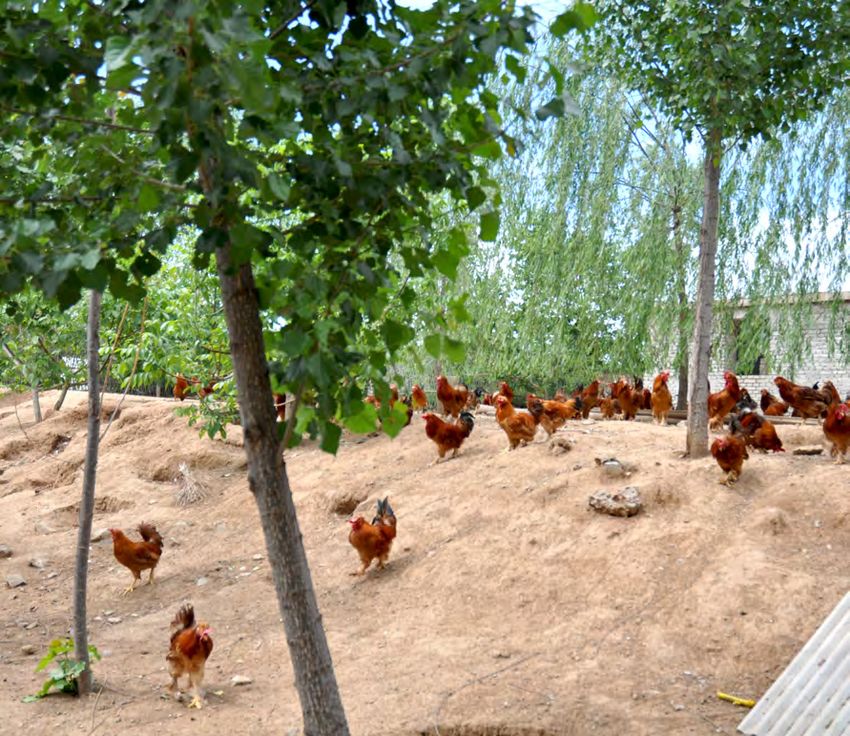
BEIJING YOU CHICKEN PRODUCTION SYSTEM,
 BAINIANLIYUAN ECO-AGRICULTURE CO LTD,
 BEIJING, CHINA

 INTRODUCTION                                            The company keeps parent flocks from which
                                                         they breed the chickens. Both male and female
 The Bainianliyuan Eco-agriculture Co. Ltd supplies      progeny are raised for meat and some females
 organic eggs and meat chickens to Beijing               are reared for egg laying. Most of these birds are
 supermarkets. These are produced from Beijing           kept by a co-operative of 320 independent farmers
 You Chicken, also called “oil” chicken, a traditional   under contract to the company which provides
 dual-purpose breed that nearly became extinct in        the birds and the feed to the farmers and markets
 the 1970s. The brand is the second largest of the       the chickens and eggs. Between them, these
 20 large companies which sell eggs in the main          farmers rear three million birds each year, including
 Beijing supermarkets, representing up to 40% of         800,000 laying hens. The parent company also
 supermarket sales1.                                     owns a farm which keeps over 100,000 laying
                                                         hens and 6,000 meat chickens. It was visited twice
                                                         between 2009-2012 during this study.

     110,000 hens on one hillside.

1
    However, most egg sales are not in supermarkets.

2        ANIMAL WELFARE ASPECTS OF GOOD AGRICULTURAL PRACTICE                    CHICKEN PRODUCTION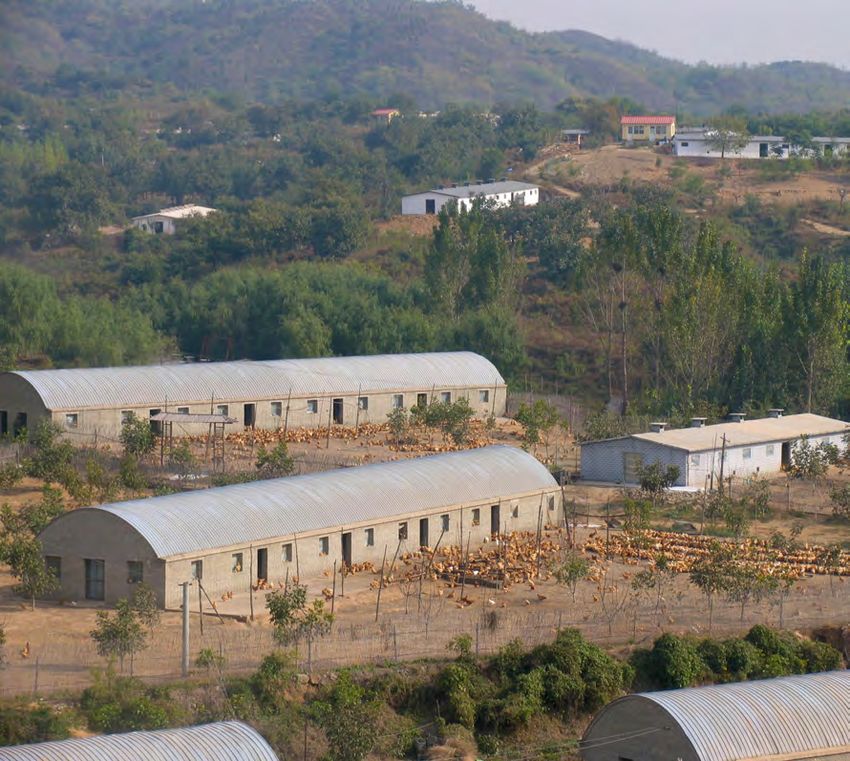
Humane sustainable aspects of this farming                             “Earth” chickens – birds which are kept free-range
system are diverse:                                                    and/or which taste “like they used to”.
•      Organic production of maize for chicken                         The hens lay moderate numbers of eggs (around
       feed, grown without fertiliser, pesticides or                   170 per year), just over half that of modern hybrids,
       tillage to prevent nutrient leaching into the                   which are also sold at a premium. The eggs and the
       reservoirs adjacent to the fields that provide                  chickens are marketed with three benefits:
       part of Beijing’s water supply;
                                                                       •     Taste and quality
•      Anaerobic digestion of manure produced
                                                                       •     Health
       on the company’s farm to provide gas for
       heating and cooking for farm workers plus                       •     Social and environmental.
       1,000 local homes, whilst reducing risks of
                                                                       Quality, organic, environmental and health
       disease and environmental pollution;
                                                                       arguments are used to help promote the eggs.
•      Higher profit margins per bird and per egg,                     The information on the label states that the
       both for the farmers and the company for a                      product is organic, that it is produced from
       high-value product;                                             chickens who live free-range on the hills without
                                                                       antibiotics, hormones or genetic modification.
•      Higher welfare potential in a system which
                                                                       Additional information also states that the birds
       keeps chickens and hens free-range using
                                                                       are raised in a healthy place, in the mountains
       a traditional breed whose slow growth and
                                                                       where Beijing’s clean water comes from; and
       moderate egg production puts the birds
                                                                       that healthy birds produce healthy eggs whereas
       under less physiological pressure;
                                                                       caged birds are in an unhealthy condition.
•      Use of a dual-purpose breed means that
       males of a laying breed are not killed at birth,
       therefore avoiding waste of both life and
       resources.

The Beijing You Chicken
Also called the Beijing Oil chicken due to the
appearance of its feathers, the You Chicken is a
traditional Chinese breed from the area around
Beijing which nearly became extinct in the 1970s.
It is now one of 50 rare breeds identified for
special protection by the Chinese authorities and a
breeding nucleus is maintained by the Oil Chicken
Institute at the Beijing Academy of Agriculture and
Forestry Animal Husbandry and Veterinary Research                          Organic maize stalks drying in the sun.
Institute, which also promotes the breed. Breeding
nuclei are also maintained at other Chinese
agricultural institutions.                                             Sustainable feed production
The You Chicken is a dual-purpose breed. The                           The company farm grows maize, grass and
males are slow growing and take 120 days to                            alfalfa, and buys in soya from elsewhere in China
reach a weight of 1.5kg (some are also slaughtered                     to be incorporated into its organic feed. This
at 0.5kg and 1kg at 60 and 90 days respectively).                      feed is used both on the company and the co-
Whilst slower growth and longer life span reduce                       operative farms.
Food Conversion Efficiency (i.e. they are less                         The maize is grown in fields adjacent to a large
efficient and consume more feed), there is a                           reservoir that supplies part of Beijing’s water
considerable Chinese demand for this meat which                        supply. To prevent nutrients and other damaging
is considered more flavoursome. For example,                           chemicals from polluting the water, the Beijing
there is a very substantial market in China for                        authorities have passed a law that includes “7
slow growing, traditional “yellow chickens”,                           nos” including no fertiliser, no pesticide and no
often kept free-range by small-scale farmers in the                    mechanical tilling2. Growing organic feed on this
south of the country. Chinese consumers will pay                       land helps to maintain water quality.
a premium for what is locally known as “Tu” or
2
    It also includes no construction, no dwelling, no grazing and no tree planting.

ANIMAL WELFARE ASPECTS OF GOOD AGRICULTURAL PRACTICE                                       CHICKEN PRODUCTION                  3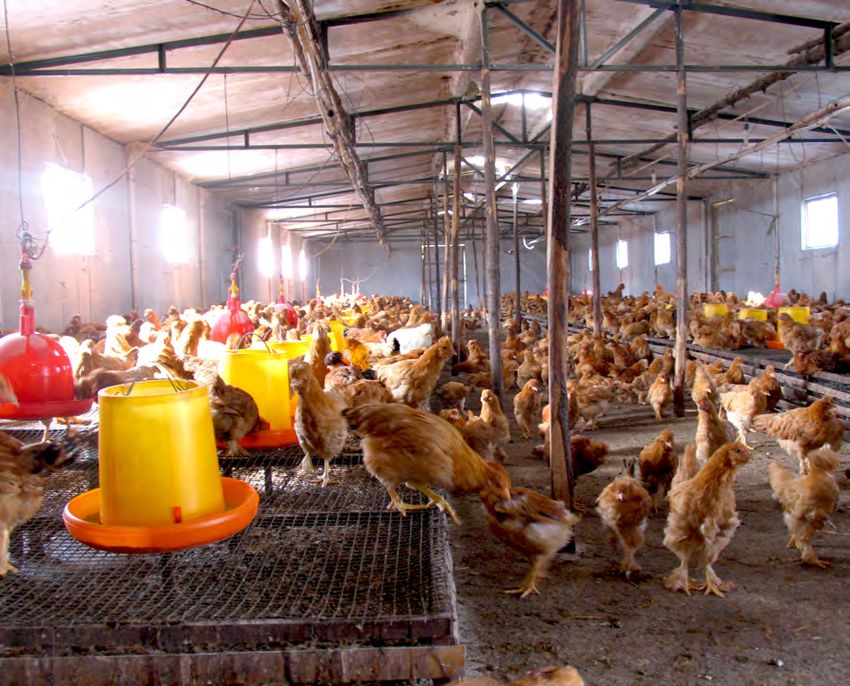
Nutrient cycling and energy generation

    Anaerobic digesters.                                             Loading manure for the digester.

                                                                  Socio-economic aspects
 It is vital to ensure that manure from the chickens
 does not spread disease or pollute the environment.
 All the chicken droppings from the company farm
 are taken by tractor to the anaerobic digestion plant
 on site. The fermentation process kills viruses and
 bacteria as well as producing a more manageable
 digestate and renewable energy. Surplus grass and
 maize stalks are also added into the digester to
 increase the energy available for gas production.
 Some of the digestate produced is used to fertilise
 the fields which grow the grass and alfalfa that are
 incorporated into the chicken feed, but it cannot be
 used on the maize fields since the ban on fertiliser
 use extends to organic fertiliser also. Most of the
 digestate is used off-site by local farmers to grow
 fruit and vegetables, including the farm workers on
 their vegetable plots. The company plans to develop
 a buying market for its organic fertiliser.
                                                                     Marketing of eggs.
 The methane gas generated by the digester is used
 for heating and cooking on-site by the farm workers
                                                                  The company buys in parent breeding stock
 and a surplus is sold to 1,000 local families off-site.
                                                                  and supplies chicks to the co-operative farmers
 This provides all their gas needs in summer and
                                                                  who are on what is locally referred to as a “co-
 contributes to their requirements in winter. This
                                                                  operative contract”. The co-operative farmers pay
 potentially off-sets greenhouse gas emissions from
                                                                  3.5RMB3 per chick, whether male or female, and
 other energy sources and produces low-cost energy.
                                                                  they also buy feed from the company. In the case
 Power for the street lamps around the company                    of cockerels, these are sold back to the company
 farm are provided by solar panels, although coal is              for about 20RMB depending on size. Eggs are
 used to provide energy for the rest of the farm.                 also sold back to the company.

3
    RMB – Chinese currency Renminbi. At the end of 2012, there were approximately 6RMB to the US dollar, 8 to the
    Euro and 10 to the British pound. 3.5RMB is therefore about 21 US cents, 28 Euro cents and 35 British pence.

4      ANIMAL WELFARE ASPECTS OF GOOD AGRICULTURAL PRACTICE                                   CHICKEN PRODUCTION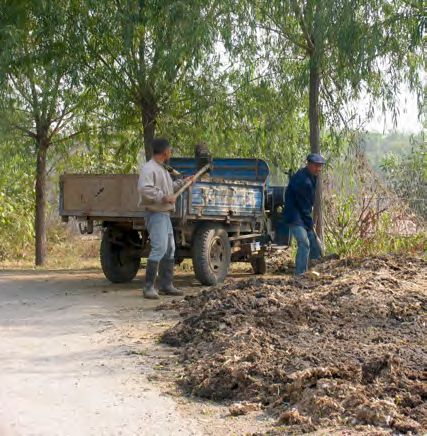
Quality markets help to support rural                        Range with tree and bush cover
employment. The company farm employs 30
people, including 5 technicians, 24 stockpeople
and 1 manager.
We are told the co-operative farmers can make a
profit of 2-3RMB per bird compared with around
1RMB profit for an intensively farmed bird. The
company can make an additional profit of 20RMB
per chicken. The You Chicken eggs are also sold
for nearly twice the price of standard battery eggs.

Welfare aspects
You Chicken meat and eggs are sold principally on
quality and taste, as well as for social and health
benefits. Whilst there are clear welfare benefits to
the system, this is not at present a key selling point.
                                                               Trees are grown to provide cover
This may change. The Chinese yellow chicken, often             for hens on range.
kept free-range by small traditional Chinese farmers,
is popular on grounds of quality and taste, but we
have seen it on sale in Beijing supermarkets with
packaging that extolls the benefits of free-range
production. Welfare may become a selling point for
Chinese consumers in future.
There are several key welfare features on the
company farm and co-operative farms:
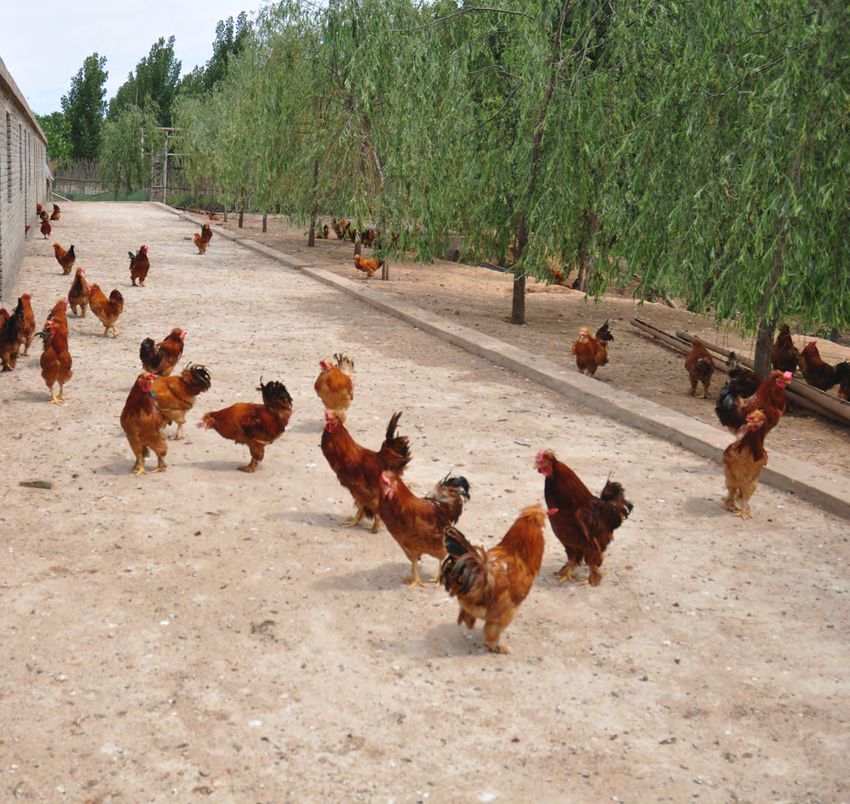
•   Hens and cockerels are kept free-range in
    paddocks, well covered with trees and small
    bushes;
•   The hens produce only moderate numbers of
    eggs, helping them to sustain health through a
    longer egg-laying period;
•   Hens have nest boxes to allow important natural
    behaviours;                                                Pullets on range.
•   The slow-growing cockerels are much less likely
    to suffer from lameness, heart problems and
                                                             The hens are kept in groups of 2,400-2,500 in
    fatigue, all of which are common in intensive
                                                             sheds 40 x 7 metres in dimension and the cockerels
    broilers;
                                                             in groups of 3-4,000. This equates to around 9 hens
•   Broiler breeders are likely to require little, if any,   or 11-14 cockerels per square metre. The sheds
    feed restriction;                                        have a series of pop-holes leading to a large, open
                                                             range area, significant parts of which are covered
•   Being a dual-purpose breed, the cockerels also
                                                             with trees and small bushes.
    benefit from not being killed at birth, which is
    the normal fate of males from egg-laying breeds;         Providing vegetation cover helps the birds to
                                                             feel secure when ranging outside, since birds are
•   A few cockerels are kept with the laying hen
                                                             naturally wary of aerial predators. Keeping the
    flocks. This provides a more natural social
                                                             hens in relatively small groups in fairly narrow
    grouping which can be helpful for controlling
                                                             sheds is also good for ranging, possibly because
    aggression and feather pecking amongst the
                                                             individual birds will not have so many others to get
    hens;
                                                             past if they want to go outside. Ranging is good
•   Forced moulting is not practised, although some          for birds since it keeps them occupied and reduces
    hens are kept beyond the first laying season.            the risk of feather pecking and cannibalism.

ANIMAL WELFARE ASPECTS OF GOOD AGRICULTURAL PRACTICE                           CHICKEN PRODUCTION                   5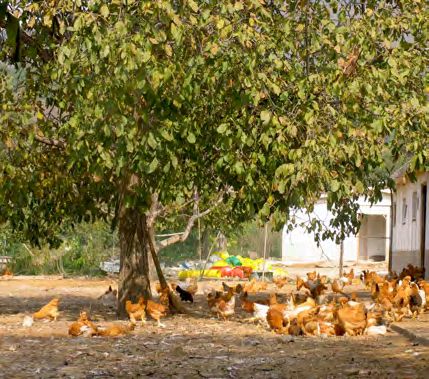
The range also provides opportunities for dust-         The hens start to lay at 130-150 days old,
 bathing and foraging. Many birds were observed          continuing to be productive until they are sent
 dust-bathing, which is both a social activity and       for slaughter at around 500 days old (some are
 an opportunity for hens to remove grease from           kept for longer, until around 700 days). They lay
 their feathers and discourage parasites. Foraging       between around 170 eggs per year, compared
 behaviour was also observed, although the loss of       with over 300 eggs per year for many orthodox
 ground cover limited the amount of forage that          commercial breeds. This is partly because many
 the birds could obtain outside.                         of the birds show brooding behaviours at times,
                                                         a natural trait which the Oil Chicken Institute is
 In many western free-range systems, pullets are
                                                         hoping to breed out of them in time.
 not kept free-range. Here, the pullets are also
 kept with access to range from 45 days old. This        However, this moderate egg yield has significant
 means that by the time they reach laying age they       potential advantages for welfare, especially in an
 are used to the system. Learning to range early         organic system. The production of large numbers
 can result in better ranging later, reducing both       of eggs can put hens under metabolic pressure,
 stress and the risk of feather pecking.                 especially on a locally-produced, organic diet
                                                         which has a less precise nutritional formulation.
 Use of a robust, dual-purpose breed                     Highly productive hens can leach calcium from
                                                         their bones in the process of making egg-shells,
 The Beijing You Chicken is a robust breed with          leading to a higher risk of bone fractures at their
 moderate levels of production. The hens produce         most productive period early in lay. Shortage
 just over half as many eggs as intensive breeds         of protein and essential amino-acids due to the
 and the cockerels grow at a quarter of the rate of      requirements of egg production can also increase
 fast growing broilers.                                  the risk of feather pecking and cannibalism, as
 These lower rates of production protect the birds       hens turn to each other’s bodies as a source of
 from a range of health and welfare problems             essential nutrients. Many more productive hens
 which intensively reared birds are prone to:            also become emaciated towards the end-of-lay
                                                         as body condition deteriorates. This does not
 •   Hens are less likely to suffer from osteoporosis,   happen with the You Chicken hens, who are sold
     which can lead to bone breakages;                   at the end-of-lay for meat at a weight of around
 •   Risk of feather pecking may be reduced due to       2kg – fetching a higher price even than the You
     lower nutrient demand;                              broilers (hen meat is considered in China to be
                                                         a particularly nutritious food for nursing mothers).
 •   Cockerels are much less likely to suffer from
     fatigue, heart problems, lameness and mortality     Producing more sustainable numbers of eggs
     rates may be reduced.                               makes the You Chicken suitable for higher
                                                         welfare and organic systems, since it gives
 These advantages particularly suit the You              them the adaptability to cope with a varied diet
 Chickens to lower-input, organic diets which            without loss of body condition. Where flocks
 are less concentrated in nutrients. Being a dual-       remain productive, they are sometimes allowed to
 purpose breed is also good for the welfare of the       moult naturally and continue producing until they
 cockerels which, instead of being killed shortly        are 700 days old. This is achieved without forced
 after birth, are reared for 60-120 days for meat.       moulting, a procedure designed to speed up the
 There is also evidence from studies elsewhere in        moulting process when egg production ceases.
 the world that eggs and meat from free-range            Forced moulting involves depriving hens of
 and slower growing breeds are healthier. For            adequate feed and water for a period and causes
 example, studies suggest they contain higher            very poor welfare. It is banned by most organic
 quantities of long-chain omega-3 fatty-acidsi.          certifying bodies.

6     ANIMAL WELFARE ASPECTS OF GOOD AGRICULTURAL PRACTICE                       CHICKEN PRODUCTION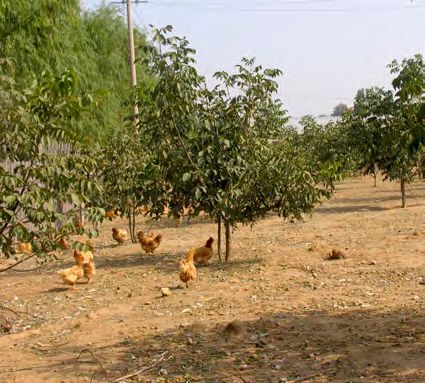
Ranging cockerels.
  The provision of cover mimics the natural environment of chickens and encourages ranging.

The cockerels take 60-120 days to reach a
slaughter weight of 0.5-1.5kg compared to an
intensive bird who can reach 1.5kg in around
30 days. A lower share, or partition of energy
and other nutrients to production, leaves more
available for balanced growth and exercise.
Slow growth gives time for joints, muscles and
the cardiovascular system to develop properly
in proportion to the rest of the body. The birds
are much more active since they are less likely to
suffer from fatigue, lameness and heart problems.
Robust breeds may also have stronger immune
systems, reducing the need for antibiotic use
which is common in intensive birds, whereas they       Cockerel shed. Raised wire platform keep
are never used for the You Chicken cockerels and       resting birds above their droppings but are
                                                       not a good substitute for perches.
“very rarely” for the hens.
Compared to the welfare of standard broiler          without the normal feed restriction practised in
breeders, there are also benefits for the parent     standard farming (except for a few days around
birds. Since they don’t have the genetics for fast   the start-of-lay) without the risk of obesity.
growth, the parent birds can be kept on a diet       Unfortunately, the parent flocks are kept in cages.

ANIMAL WELFARE ASPECTS OF GOOD AGRICULTURAL PRACTICE                   CHICKEN PRODUCTION                  7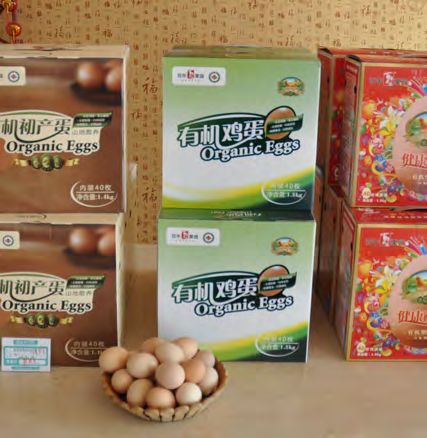
Indoor environments
The hens are kept in groups of 2,400-2,500 at a       Keeping birds in relatively small groups encourages
stocking density of around 8.5 birds/m2. Simple       ranging and lower stocking densities permit birds
plastic nest boxes are provided for the hens to lay   to move around easily, thus can reduce the build-
in. We were told very few eggs are laid outside the   up of heat, humidity and ammonia. Low stocking
boxes. The sheds have large unglazed windows          densities are also important for systems with
which provide ventilation and natural light. The      cockerels approaching sexual maturity, reducing
windows are covered with netting and have cloth       the risk of aggression or allowing extra space for
and plastic covers which can be used to close them    subordinate birds to escape.
up to keep the birds secure at night.
                                                      Inside the sheds, the birds are provided with a
The sheds have a series of pop-holes leading to a     slightly raised, wire resting area. Whilst perching
large open-range area, significant parts of which     is natural for birds, this is not a particularly
are covered with trees and small bushes.              suitable surface. Being raised above the ground
                                                      will help the birds to keep cool.
The cockerels are kept in groups of 3-4,000.
Stocking densities inside the sheds are around        There is also a scratching area in the shed, although
14 birds/m2, reduced to 11 for those kept for         no litter is provided. Older birds can get out onto the
the full 120 days. This means a maximum of            range to scratch and dust-bathe, but the provision of
around 18kg/m2 compared to 25kg/m2 we have            litter inside would be beneficial to encourage natural
previously been told is standard for intensive        behaviours, especially for younger birds before they
farms in China and over 40kg/m2 for intensive         are allowed out at 45 days old. The provision of litter
farms in the EU with controlled ventilation.          is a requirement in all EU broiler systems.
Stocking densities inside are of course lower
when part of the flock is ranging outside.

    All sheds have natural light. Two wire platforms are provided for perching. You Chicken hens.

8     ANIMAL WELFARE ASPECTS OF GOOD AGRICULTURAL PRACTICE                     CHICKEN PRODUCTION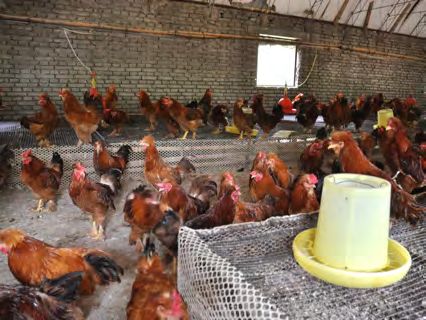
Health and welfare outcomes
Mortality levels for hens range from 3-7%,              The provision of a foraging and dust-bathing area
averaging 4%. The main causes of death are due          in the shed, along the middle concrete corridor,
to predators, feather pecking and cannibalism           could also help welfare. Although it is true that
and sometimes due to suffocation when birds             the birds can perform these behaviours outside
panic and run towards a corner of the shed.             on range, indoor foraging areas are appreciated
Mortality rates of less than 3% are claimed for         by birds, especially in poor weather or before the
the cockerels. This compares very favourably with       pop-holes are opened in the morning; indoor
common mortality rates in free-range production.        foraging areas could also reduce the risk of
                                                        feather pecking (a displaced foraging behaviour).
It is believed that levels of bone fracture are low.
                                                        It would also be beneficial for the welfare of
Bone fractures are a problem in battery units
                                                        chicks in the first 45 days of life before they have
towards the end-of-lay, since lack of exercise
                                                        access to the outdoor range.
leads to osteoporosis. Fractures are a problem in
alternative systems around the peak-of-lay, due         Provision of enclosed nesting areas would also
to bones being weakened in the process of egg           improve welfare since hens naturally seek out
production. Low levels of bone breakage are likely      secluded areas in which to nest.
in the You birds, as they can exercise and they don’t
                                                        Welfare could also be improved by measuring
produce unsustainable numbers of eggs. It would
                                                        welfare indicators such as hock burn and FPD in
be useful if levels of bone breakage were measured.
                                                        broilers (both said to be low), feather pecking
For meat birds, levels of hock burns and footpad        and bone breakages in laying hens. It may well be
dermatitis (FPD) are said to be very rarely seen        that all of these are low, but it would be helpful
(and you would expect FPD to be noticed in              to have figures for this.
a country where chicken feet are eaten as
                                                        Welfare of parent birds could be improved
a delicacy). Routine use of antibiotics is not
                                                        considerably by keeping them in more extensive,
permitted under organic regulations, although
                                                        higher welfare, cage-free systems.
they are used therapeutically when necessary for
pullets. They are not used at all for the cockerels
which, combined with low mortality rates,
suggests that levels of health are high.
                                                        SUMMARY
                                                        This system has benefits for chickens, the
Improving welfare                                       environment, consumers and producers:

Welfare might be improved by the provision of           1. For consumers it provides eggs and meat
higher perches in the sheds. Perching is a natural         which are valued for their higher quality,
behaviour which enables birds to avoid predators           taste, health and environmental benefits.
whilst resting. Although predators would                2. For the birds, it means a life in a higher-
normally not be able to get into the hen houses,           welfare system, with a healthier breed,
higher perches would help the birds to feel more           with access to the outdoors. Meat birds
secure. Hens will naturally choose higher perches          also benefit from a longer life.
if they are provided. They might also enable birds
to rest with less risk of feather pecking.              3. Environmental benefits include the
                                                           avoidance of chemical pesticides and
                                                           fertilisers as well as the production of
                                                           renewable energy in the biodigester.
                                                        4. The added value in the product means
                                                           higher profit margins for the company
                                                           and for the farmers.
                                                        5. Keeping birds with access to the
                                                           outdoors can improve the nutritional
                                                           quality of the meat and eggs, especially
                                                           in relation to fat composition.

  Open nest boxes are provided for laying. It
  should be noted that hens naturally prefer
  enclosed nests.

ANIMAL WELFARE ASPECTS OF GOOD AGRICULTURAL PRACTICE                      CHICKEN PRODUCTION                   9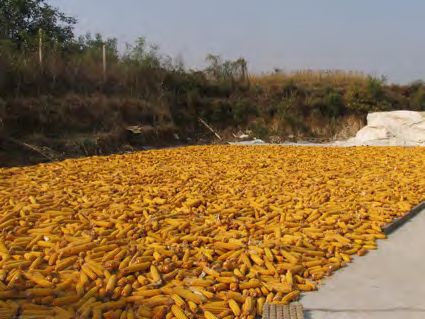
TABLES
     BROILER GROWER – DESCRIPTION OF SYSTEM
     Date/Time of visit                               24 May 2012

     Certification scheme                             China Organic Food

     Total number of birds on farm                    6,000

     Number of birds in each group (i.e. shed plus    3,000 to 4,000 in each shed
     surround) if different

     Breed                                            Beijing You Chicken

     Feed type/amount/delivery                        Self-produced corn and purchased soy

     Food Conversion Ratio or FCR (can be worked      Around 3
     out from amount of food each bird eats divided
     by weight of bird at slaughter)

     Slaughter weight                                 3 types:
                                                      0.5kg slaughtered at 60 days;
                                                      1kg at 90 days and 1.5kg at 120 days
     Highest stocking density at slaughter            For those slaughtered at 60 days, about 14 birds
     (kg/m2)                                          per square metre. For those at 120 days, 11 birds
                                                      maximum per square metre.

     Number of thinnings                              None

     Mortality and cull rates                         Less than 3%

     Hock mark rates                                  Very rarely seen, not recorded

     Footpad mark rates                               Very rarely seen, not recorded

     Other health problems                            Very rarely seen, not recorded

10      ANIMAL WELFARE ASPECTS OF GOOD AGRICULTURAL PRACTICE                  CHICKEN PRODUCTION
Antibiotic use – what percentage of flocks None used
receive some antibiotic treatment
Back page to include heading, logo, address and
Welfare problems Normal dominance behaviour. Cockerels showed
tel
E.g. aggression, feather pecking some comb damage in consequence, though
feather cover was good.
Address details:
River life)
Lighting regimes (throughout Court, Mill Lane, Godalming,
Natural Surrey
light GU7
1EZ
Litter Email: education@ciwf.org None provided
Tel: +44 (0) 1483 521 950
Indoor environmental enrichment Iron box platforms
Registered Charity No 1095050
Perches, bales, forage, toys
Number of stockpersons A couple will take care of 2 to 3 barns, 8 hours
(person hours per day/week) per day
Also ciwf.org/gap
Frequency of checking birds Very often, including feeding
Acknowledgements
Transport to slaughter 40km (about 1 hour)
(distance + time)
Animal Compassion Foundation
Number of dead on arrival About
Bainianliyuan Eco-Agriculture 10 birds out of 3000 (0.3%)
Co Ltd
Mr Wei and the staff of the Beijing Animal
Market Whole birds
Husbandry and Veterinary Station
Cost/price Oil Chicken Institute Price for 60-day old, 0.5kg male bird is between
(per bird and per kilo) Beijing Academy of Agriculture and Forestry
30-40RMB;
Animal Husbandry and Veterinary Research
90-day old 1kg male bird is between 50-60RMB;
Institute.
Zunguo Zhou 120-day old 1.25kg female bird is 70-80 RMB.
All photos are Compassion The price Farming
in World per end-of-lay hen at 500 days old is
108RMB, but due to good market conditions the
copyright unless stated otherwise
price was due to be raised to 198 per bird.
Profit per bird 2-3RMB for co-op farmer compared
March 2013 with 1RMB for an intensive bird; company makes
20RMB profit per bird.
(Endnotes)
Are sexes kept apart or mixed? Apart
1 Compassion in World Farming,
When is access to range provided?
2012. Nutritional BenefitsSummer open
of Higher for the whole day.
Welfare
Winter from 9am to 4pm.
Products. http://www.ciwf.org.uk/nutrition
ANIMAL WELFARE ASPECTS OF GOOD AGRICULTURAL PRACTICE CHICKEN PRODUCTION 11LAYING HENS FARM
Date/Time of visit 24 May 2012
Certification system China Organic Food
Breed (males and females) Beijing You Chicken
Total flock size 105,000
Group size 2,400-2,500
Age when transferred to laying house 45 days
Age at end-of-lay 500 days
No. of eggs per year/production cycle 170
Stocking density at beginning of lay 10 birds per square metre, about 1.25kg each
(numbers/m2)
Feed type Self-produced corn and purchased soy.
Amount of feed per day per bird Information not available
Food Conversion Efficiency (FCR) Information not available
Antibiotic use The antibiotic used for treatment instead of
prevention. Only a “little amount” was used for
laying hens 2011-2012.
Veterinary visits Irregular
Mutilations None
Mortality and cull rates No precise figures
Litter None provided
Indoor environmental enrichment Iron box platforms
Perches, bales, forage, toys
Outdoor environment Range with tree cover
Rearing environment As adults. Iron platforms.
12 ANIMAL WELFARE ASPECTS OF GOOD AGRICULTURAL PRACTICE CHICKEN PRODUCTIONIs forced moulting practised? No
Number of stockpersons 24 stockpersons and 1 manager
(person hours per day/week)
Frequency of checking birds Several times per day
Dead on arrivals No precise figures, but claimed to be “very few”
Market Supermarket
Price per egg Sold for nearly twice the price of standard battery
eggs
REFERENCES
i
Compassion in World Farming, 2012. Nutritional Benefits of Higher Welfare Products. http://www.
ciwf.org.uk/nutrition
ANIMAL WELFARE ASPECTS OF GOOD AGRICULTURAL PRACTICE CHICKEN PRODUCTION 13EGG & CHICKEN CASE STUDY BEIJING YOU CHICKEN Sustainable and organic egg and chicken meat production using a traditional, dual-purpose breed. Compassion in World Farming River Court, Mill Lane, Godalming, Surrey, GU7 1EZ, UK. Email: education@ciwf.org Tel: +44 (0) 1483 521 950 Web: ciwf.org/gap Registered Charity No 1095050. Acknowledgements Animal Compassion Foundation Bainianliyuan Eco-Agriculture Co Ltd Mr Wei and the staff of the Beijing Animal Husbandry and Veterinary Station Oil Chicken Institute Beijing Academy of Agriculture and Forestry Animal Husbandry and Veterinary Research Institute Zunguo Zhou All photos are Compassion in World Farming copyright unless stated otherwise. March 2013. 2
You can also read


