ELECTRIC CARS AN OVERVIEW OF THE ELECTRIC CAR INDUSTRY AND ASSOCIATED TECHNOLOGY - Innovation Origins
←
→
Page content transcription
If your browser does not render page correctly, please read the page content below

ELECTRIC CARS
AN OVERVIEW OF THE ELECTRIC CAR
INDUSTRY AND ASSOCIATED TECHNOLOGY
Table of contents

    Technology: The road to greater range and faster charging   Adoption: The drivers behind demand
    ▪ Batteries                                                 ▪ Sales growth

    ▪ Range                                                     ▪ Penetration rate

    ▪ Charging infrastructure                                   ▪ Sales potential

    Investment: The ideas leading to innovation                 Revenue: The segments and regions of growth
    ▪ Auto industry R&D                                         ▪ Market growth

    ▪ EV investments                                            ▪ Electric vehicle market size

    ▪ Patents                                                   ▪ EV battery market size

    Production: The leading regions, companies, and models      Sustainability: The issues that need to be tackled
    ▪ Assembly                                                  ▪ Transportation-related emissions

    ▪ Manufacturers                                             ▪ Renewable sources in power generation

    ▪ Models                                                    ▪ Materials used in batteries

2
Executive Summary

The history of motor vehicle manufacturing can be compared to a long and winding road which began in the second half of the 19th
century. Although the early 20th century saw the electric car accounting for about one third of road vehicles in operation in the United
States and Europe, this type of vehicle quickly became marginalized by diesel and gasoline-powered automobiles, including Ford’s
Model T. The so-called Tin Lizzy was built at such an exceptionally low cost that it became hard for electric vehicles (EVs) to compete.
The superior driving range of the internal combustion engine (ICE) used in gasoline and diesel-powered cars, coupled with a growing
number of gas stations which made refueling quick and easy, added further to the decline in the electric car’s popularity.
However, the love for diesel and gasoline-powered vehicles among customers in Europe and North America still took some unexpected
turns between 1973 and 2011. During these four decades, several instances of fossil fuel shortages roiled the world’s leading
economies and affected the prices of petroleum products. Additionally, some countries began to introduce higher taxes on fuel to
incentivize ecological sustainability. Since the first United Nations Framework Convention on Climate Change (UNFCCC) Conference of
the Parties was held in 1995, the rise of greenhouse gas (GHG) emissions has raised concerns among the United Nations member
states that greenhouse gases will increase surface temperature levels and thus lead to the destruction of the earth’s ecosystem.
Considering that the transportation sector is one of the leading producers of greenhouse gases, cutting GHG emissions from car travel
has emerged as an effective way to curb emission growth.
In light of these efforts to tackle GHG emissions, passenger electric vehicles have made a comeback: If electricity from renewable
energy sources is used to fuel them, EVs have the potential to play a vital role in the reduction of carbon dioxide and nitrogen oxide
emissions. This is an even more important undertaking today, as the light vehicle market has increased tremendously over the past two
decades, approaching the 100 million vehicle sales mark.
Batteries remain the electric car’s greatest vulnerability. Recharging will have to become easier, and range will have to improve. In the
end, EVs can only be environmentally benign if the industries providing the commodities used in electric vehicle batteries are able to
reduce their impact on the planet.

3
Electric vehicle timeline

1832   Robert Anderson creates the first crude electric carriage
1900   Ferdinand Porsche develops the world’s first hybrid
1935   Gasoline-powered cars force EVs out of the market
1996   General Motors launches the EV1
1997   Toyota releases the Prius - the first mass-produced hybrid car
2008   Tesla Motors launches its Roadster, an all-electric luxury sports car
       BYD releases the F3DM - the world’s first plug-in hybrid compact sedan
2010   General Motors introduces the Chevy Volt - the first mass-produced plug-in hybrid;
       Nissan releases the all-electric Leaf
2014   Nissan Leaf sales surpass the 100,000 unit mark
2018   The Model 3 becomes Tesla’s best-selling model

4
01   Technology: The road to greater range
     and faster charging
     ▪ Batteries
     ▪ Range
     ▪ Charging infrastructure
Improved battery technology is the key to competitiveness

While Toyota is betting big on fuel cell electric vehicles (FCEVs), many other carmakers are focusing on battery technology. There are
two major categories of batteries holding the potential to power EVs: solid-state batteries and liquid electrolyte batteries. While solid-
state batteries for EVs have not yet reached market commercialization, the latter have been used in EVs for many decades.
In 2016, the lithium-ion batteries in some Samsung Galaxy Note 7 devices caught fire and exploded. This incident shows how difficult it
is to manufacture lithium-ion batteries that are both efficient and stable. When the EV battery industry began to add nickel to their
battery cells to increase the range of electric vehicles, the inclusion of cobalt and manganese was required to prevent the battery from
losing stability by controlling how nickel and lithium ions move between the battery cell’s anode and cathode.
▪ Research into electric vehicle battery technology aims to achieve the following:
    › low costs
    › high capacity and stability
    › quick and easy recharging
▪ 50 percent of BEV manufacturing costs are powertrain-related
▪ Declining battery costs are expected to push electric vehicle sales
▪ Finding the right material mix will be key to winning the EV battery race
▪ Consumers demand higher range, lower costs, and easier access to charging infrastructure
▪ Electric vehicle energy charging demand will push electricity use in the United States – and probably across all other markets too

6
50 percent of BEV manufacturing costs are powertrain-related                                                         As of 2018, the costs
                                                                                                                     unrelated to the electric
                                                                                                                     powertrain in a battery
                                                                                                                     electric vehicle (BEV) only
                                                                                                                     account for about 50
                                                           Share of BEV manufacturing costs in 2018                  percent of the overall
                                        0   10             20               30                   40   50        60   manufacturing costs.
                                                                                                                     Battery cells currently
                         Battery cell                                 25                                             account for around 25
                                                                                                                     percent of costs attributed
                                                                                                                     to the manufacturing of all-
                                                                                                                     electric vehicles, and thus
Electric motor and power electronics                  15
                                                                                                                     hold the greatest potential
                                                                                                                     for cost reduction.

                  Battery integration            10

    Costs unrelated to the powertrain                                                                      50

      Note: Worldwide
      Source(s): JPMorgan Chase; BCG
7
Lithium-ion battery pack costs are set to reach a record low in 2019 This year, lithium-ion
battery pack costs are
expected to drop to 158
U.S. dollars per kilowatt
hour.
1200
Estimated cost in 2018 in U.S. dollars per battery pack Battery pack costs are
0 500 1000 1500 2000
Costs between 2010 and 2019 in U.S. dollars per kilowatt hour
driven by size, production
1,000
1000 volumes, and costs
Cobalt 1,764 attributable to the
commodities used in the
800 manufacturing process.
Electric vehicles may be
Nickel 1,433
599 less vulnerable to fossil
600
fuel prices, but they
continue to be susceptible
400
to a volatile commodity
Lithium carbonate 1,005 market. As a result of
273
cobalt’s contribution to EV
200 158 battery pack costs in 2018,
automotive manufacturers
Graphite 536 and suppliers are now
0 seeking alternatives to this
2010 2013 2016 2019*
commodity and other
expensive materials.
Note: Worldwide
Source(s): Bloomberg New Energy Finance; Bloomberg; PwC; Strategy&; Various sources
8
Battery chemistry trends diverge between China and the rest of the world                                                          By 2020, natrium-
                                                                                                                                  manganese-nickel (NMC)
                                                                                                                                  battery cathodes are
                                                                               LMO        LFP   NCA   NMC-622   NMC-811           expected to include more
                                      120.0%                                                                                      nickel than today’s
                                                                                                                                  batteries and the cobalt
                                                                                                                                  content in the more novel
                                      100.0%
                                                                                                                                  NMC-622 and NMC-811
                                                                                                                                  types is projected to be
                                                                                                                          15%
                                                                                                                                  significantly lower than in
                                                                       32%                                                        the NMC-111 batteries that
     Projected market share in 2020

                                      80.0%
                                                                                                                                  are used most commonly
                                                                                                                                  today. Taking into
                                                                                                                                  consideration that cobalt
                                      60.0%                                                                                       prices rose fourfold
                                                                                                                                  between 2016 and 2018,
                                                                       40%                                                73%     the trend towards lower
                                      40.0%                                                                                       cobalt levels may make
                                                                                                                                  EV batteries more cost-
                                                                                                                                  effective in the long run.
                                      20.0%                                                                                       Concurrently, the level of
                                                                       26%                                                        nickel in the NMC-811 and
                                                                                                                           2%
                                                                                                                                  the nickel-cobalt-aluminum
                                                                                                                          10%
                                       0.0%
                                                                        2%                                                        (NCA) variants is set to
                                                            Worldwide (excluding China)                                   China   exceed the 80 percent
                                                                                                                                  mark, leading to enhanced
                                                                                                                                  battery capacity.
                                      Note: Worldwide
                                      Source(s): McKinsey
 9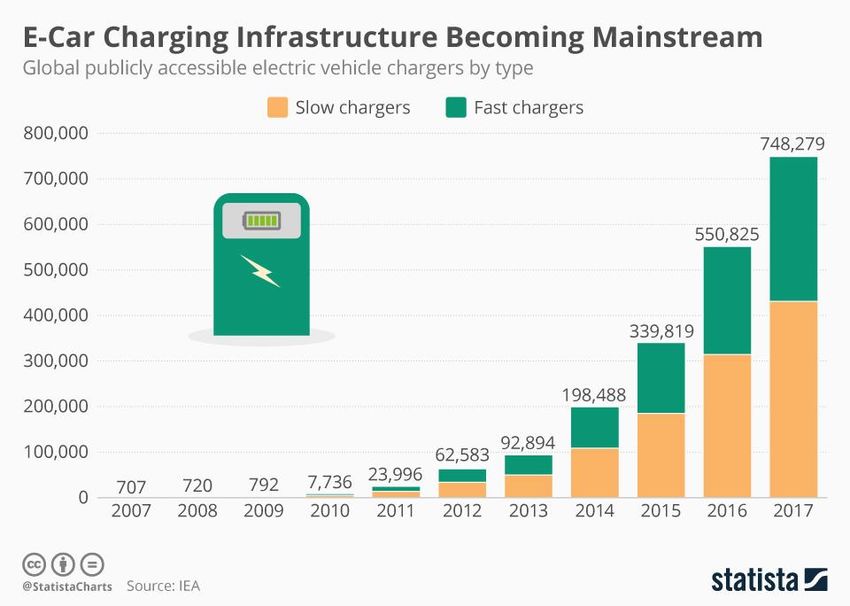
Battery chemistry composition is expected to drive mild increases in battery capacity levels

                                                                                                       Plug-in hybrid electric vehicles          Battery electric vehicles

                                                50

                                                                                                                                                                                         45
                                                45                                                                                                      43
                                                                                                 41
                                                40
 Estimated battery capacity in kilowatt hours

                                                35

                                                30

                                                25

                                                20

                                                15
                                                                        10.2                                              10.6                                               11
                                                10

                                                5

                                                0
                                                                                    2017                                                  2021                                    2025

                                                     Note: Worldwide
                                                     Source(s): Various sources; BMO Capital Markets
 10
Consumers are expected to welcome the converging range gap between electric and ICE cars
EV range in kilometers Share of respondents surveyed in 2018 who will not consider buying
500 EV
0.0% 10.0% 20.0% 30.0% 40.0%
450 440
Price/cost 35%
400 380
350
Charging 24%
300
300
Range 18%
250
200 Cost reductions,
Uncertainty about future
12%
tech developments better charging
150 infrastructure,
and longer
100 Suitability for daily use 11% ranges will help
convince those
50 who said they
Image 1% would not switch
0 to an electric car
2020 2025 2030 in 2018.
Note: Worldwide; 18 years and older; 2,028 Respondents;
Source(s): Oliver Wyman; VDA; Merrill Lynch; KPMG
11Electric vehicle public charging infrastructure growth is waning globally
80.0%
71%
69%
70.0%
EV public charging infrastructure percent growth
60.0%
50.0%
40.0%
33%
30.0%
20.0%
10.0%
0.0%
2015 2016 2017
Note: Worldwide
Source(s): AlixPartners
12Range anxiety remains a
common concern among
those consumers who are
hesitant to purchase an
electric car.
In addition to this,
consumers are concerned
that the electric car
charging infrastructure in
place today is not yet
sufficient for widespread,
carefree recharging.
No matter how much the
number of charging outlets
has grown over the past
decade, consumers want
to be able to recharge
whenever their battery is
low – and they want to do
it fast.
13Slow Fast Number of chargers
was not equally
Number of EV chargers in 2017
0 50000 100000 150000 200000 250000 distributed across
China
markets in 2017
Consumers cannot yet
United States expect to find a charging
outlet whenever they need
Netherlands
it although the number of
Japan
electric vehicle supply
equipment (EVSE)
Others chargers grew a
thousandfold between
Germany 2007 and 2017.
France
Moreover, there is a
distinction between slow
United Kingdom and fast chargers, different
socket standards, and
Norway payment methods, making
it even more difficult for
Canada
consumers to find the
charging point they need.
Korea
Sweden
Note: Worldwide
Source(s): IEA; EAFO
14Despite being the second
largest sales market for
electric vehicles, the
United States trailed most
countries in terms of
electric vehicle charging
density in 2017.
In addition to this, the
charging outlets that do
exist are provided by a
number of charging
networks using varying
standards in terms of plug
size and power limits.
15Electric vehicle charging infrastructure fragmentation left consumers confused in 2018
Number of charging outlets as of July 18, 2018 by network
0 5000 10000 15000 20000 25000 30000
ChargePoint 23,992
Tesla 7,758
Blink 3,494
SemaConnect 2,657
EVgo 2,372
Greenlots 992
Note: United States
Source(s): Alternative Fuels Data Center; Automotive News
16Energy demand for electric vehicle charging is expected to be highest in North America by 2030
Projected demand in 2030 in megawatt hours
0 50 100 150 200 250
North America 78.74
China 68.32
Europe 34.16
Japan 10.17
Worldwide 207.99
Note: Worldwide
Source(s): Wood Mackenzie; Bloomberg
17Electric vehicle energy charging demand will push electricity use in the United States
EV charging demand in billion kilowatt hours Electricity use in billion kilowatt hours
60 6000
53
5,193
4,932
50 5000
4,712
4,509
4,352
4,203
4,039
40 4000 3,853
30 3000
23
20 2000
10 1000
6
0 0
2020 2025 2030 2017 2020 2025 2030 2035 2040 2045 2050
Note: United States
Source(s): McKinsey; EIA
1802 Investment: The ideas leading to
innovation
▪ Auto industry R&D
▪ EV investments
▪ PatentsInvestments are the foundation on which the industry stands Investments need to be made not only in the field of electric vehicle-related battery technology, but also with regards to the sufficient provision of charging outlets. Providing the infrastructure for all the various types of electric vehicles proves to be a difficult task, after an entire industry had focused on diesel and gasoline-propelled motor vehicles for almost a century. The tightening of environmental regulation puts pressure on carmakers and suppliers alike to invest in emerging electric vehicle technologies. The shift away from internal combustion engines may not come without risks, but the introduction of new technologies offers additional opportunities for automotive suppliers and manufacturers. While some original equipment manufacturers (OEMs) in the motor vehicle manufacturing and parts industry started shifting their attention towards the connected driving and mobility services realms, others have made it paramount to invest in green vehicles: • Globally operating traditional automakers invest most heavily in R&D activities • Tesla has the highest R&D intensity in the industry • France is the leading European nation in terms of electric vehicle-related technology 20
“I hope you will still recognize us as being the inventor of
                                                                     „
     the car, but we should be defined by our future, not by our
                                  past.”

                         – Dieter Zetsche,
     Chairman of Daimler AG and Head of Mercedes-Benz Cars

21
Traditional OEMs invest most heavily in R&D activities Traditional automotive
OEMs were the ones
investing most heavily in
R&D spending in FY 2018 in billion U.S. dollars research and development
0 2 4 6 8 10 12 14 16 18 (R&D) activities during the
2018 fiscal year.
Volkswagen* 15.53 That said, the highest ratio
of R&D spending to
revenue was yielded by a
firm with a comparatively
Daimler* 10.36 small sales base: Tesla.
Toyota** 9.58
Ford 8.2
General Motors 7.8
Note: Worldwide
Source(s): Statista; Volkswagen; Daimler; Toyota; Ford; General Motors
* VW: the value refers to R&D costs in the automotive division; VW & Daimler: These figures have been converted at the following rate, correct
as of March 1, 2019: 1 euro = 1. 13835 U.S. dollars; ** this figure has been converted at the following rate, correct as of March 1, 2019: 1,000
Japanese yen = 9. 00558 U.S. dollars; the figure is for FY ended March 31, 2018.
22R&D intensity by carmaker as of June 2018
Tesla outperformed its larger
0.0% 2.0% 4.0% 6.0% 8.0% 10.0% 12.0% 14.0% competitors in terms of R&D to
sales ratio in 2018
Tesla 11.7%
The following list includes a selection of
investments and partnerships:
Volkswagen Group 5.7%
▪ Daimler: invests in ChargePoint,
collaborates with BYD, is part of IONITY
Honda 5.4%
▪ BMW: invests in ChargePoint, is part of
IONITY, collaborates with Umicore,
Ford 5.1% Northvolt
▪ VW: invests in ChargePoint , is part of
Isuzu Motors Limited 5%
IONITY
▪ Ford: is part of IONITY
BMW 5% ▪ GM: invests in Evgo
▪ Hyundai: collaborates with Hawtai
General Motors 5% ▪ Delphi: is owner of NuTonomy
▪ Shell: is owner of NewMotion, invests in
Renault 4.4% Sonnen
▪ BP: invests in PowerShare, FreeWire,
Suzuki Motors 4.4% StoreDot, Chargemaster
▪ Total SA: is owner of G2mobility, Saft SA,
Note: Worldwide
collaborates with Nexans
Source(s): PwC; Strategy&; Various sources
According to the source, all sales and R&D expenditure values in foreign currencies were converted into U.S. dollars at an average of the exchange rate over the relevant period;
all figures are for the last fiscal year, as of June 30, 2018.
23Daimler and Tesla dedicated ~ 90 percent of patents to green vehicles between 2012 and 2016
0 10 20 30 40 50 60 70 80 90 100
Daimler 90.4
Tesla 90.4
VW 84.2
Audi 77
BMW 76.3
GM 35
Note: Worldwide
Source(s): Oliver Wyman; WIPO
24Globally operating carmakers are projected to account for almost two thirds of investments in 2023
Projected R&D funding in 2023 by investor in billion U.S. dollars
0 50 100 150 200 250 300
Globally operating OEMs 184
Chinese OEMs 32
Globally operating suppliers 21
Chinese suppliers 10
EV niche OEMs 9
Total 255
Note: Worldwide
Source(s): AlixPartners
25Qualcomm has filed one of the most valuable patents in the field of EVs Qualcomm’s 2017 R&D
costs-to-revenue ratio was
comparatively high with
around 25 percent. The
company filed some 2,163
4500 4,024 patents in 2017.
Number of applications in
4000
3500 2,965 In 2018, an EV wireless
3000 2,637 2,521
2500 2,163 1,945 charging patent application
2017
1,818 1,757
2000
1500
was submitted on behalf of
1000 Qualcomm and approved
500
0
by the USPTO.
Huawei ZTE Corp. Intel Corp. Mitsubishi Qualcomm Inc. LG Electronics BOE Samsung
Technologies Electric Technological Electronics It was considered a
Group scientific breakthrough and
acquired by WiTricity in
2019.
30.0%
25% 25%
Qualcomm’s research and
development costs as a
25.0% 22%
share of revenue
20.0%
15.0%
10.0%
5.0%
0.0%
2016 2017 2018
Note: Worldwide
Source(s): WIPO; Qualcomm
269000 Moderate
8,500
growth in
8000 EV-related
7,500 patent
filings
7000
can be
anticipated
6000
Number of EV-related patents filed
Most electric
vehicle-
5000 related
patents were
granted in the
4000 electric
propulsion
and
3000
secondary cell
manufacturing
2000 segments,
with most of
the activity
1000 occurring in
China and the
0
United States.
2018 2020
Note: Worldwide
Source(s): Power Electronics World (powerelectronicsworld.net)
27Technology Industry Market France seemed better equipped in
terms of technology than other
Index score
0 2 4 6 8 10 12 European markets in 2018
Not only is France home to some of the
China 0.9 5 5 world’s leading automotive manufacturing
groups, such as Groupe Renault and
Groupe PSA, but the country is also the
U.S. 1.8 4.6 4.5
domestic market of Total SA-owned Saft
Groupe SA, one of the few battery
manufacturers in Europe with an
international presence.
Japan 1.8 4.3 4.2
France’s carmakers offer a range of electric
vehicles in the non-premium segment,
including Europe’s second-best-selling all-
Germany 2.2 3 5
electric car, the Renault Zoe.
France 2.9 1.5 5
South Korea 2.1 3.8 3.1
Note: Worldwide
Source(s): Roland Berger; fka
The indicators are defined by the source as follows:
Technology: Current status of electric vehicle-related technology developments made by domestic OEMs, and national subsidy program support
Industry: National vehicle, system and component production industry added value
28 Market: National electric vehicle market size based on current customer demand03 Production: The leading regions,
companies, and models
▪ Production volume
▪ Models
▪ OEMs„
“ “The first step is to establish that something is possible;
then probability will occur.”
– Elon Musk,
CEO of Tesla, Inc. and SpaceX
30Production volumes are beginning to pick up after a slow start Policymakers saw the opportunity to replace ICE cars with electric vehicles as soon as the effects of road transportation on air quality became apparent. However, the CEOs of traditional carmakers, such as Volkswagen or General Motors, seemed to lack the imagination to believe in the electric vehicle’s success for the best part of two decades. Some 16 years after Tesla’s founding, traditional automotive manufacturers have likely turned a corner, and, along with new entrants from the Chinese mainland - including BYD, Chery, and Hawtai - they are now hot on Tesla’s heels. It is expected that over 30 million hybrid cars and plug-in electric vehicles will be produced by 2025, with battery electric vehicles accounting for almost 50 percent of total production. ▪ Worldwide production volume of all-electric vehicles is expected to grow fourfold ▪ Growth is expected to be highest in the plug-in electric vehicle segments, but hybrid production will continue to rise ▪ China is predicted to remain the largest market in terms of electric vehicle production by country ▪ Additional model launches are expected to trigger consumer demand 31
Battery and plug-in hybrid vehicles are projected to experience the highest growth

                                  16                                                                12
                                                               14.8
                                                                                                                       10.5
                                  14
                                                                                                    10

                                  12

                                                                                                    8

                                                                      PHEV production in millions
     BEV production in millions

                                  10

                                  8                                                                 6

                                  6
                                                                                                    4
                                                                                                                 3
                                  4                     3.5

                                                                                                    2
                                  2

                                                0.5                                                      0.2
                                  0                                                                 0
                                               2015     2020   2025                                      2015   2020   2025

                                  Note: Worldwide
                                  Source(s): McKinsey
32
6 Hybrid production
will continue despite
5.4
smaller output levels
5 The production of hybrid
electric vehicles is
projected to grow to about
5.4 million units globally by
4 2025.
Hybrid EV production in millions
This volume is significantly
lower than the anticipated
10.5 million units in the
3 2.9
plug-in hybrid electric
vehicle segment and the
14.8 million units in the
battery electric vehicle
2
segment but the market is
still likely to grow.
1.2
1
0
2015 2020 2025
Note: Worldwide
Source(s): McKinsey
33Asia will remain the leading producer of electric vehicles throughout 2030
Expected xEV production volume by 2030 in million units
0 5 10 15 20 25 30 35 40
Asia* 37.6
Europe 16.5
North America 4.4
South America 0.8
Middle East and Africa 0.4
Note: Worldwide
Source(s): IHS Markit
* The figures for India, China, Japan, South Korea, and the ASEAN region have been added up.
The term xEV refers to battery and plug-in hybrid vehicles.
34EV* production in 2021 in thousand units
China will continue to lead on a
0 1000 2000 3000 4000 5000 6000 7000 8000 country-by-country level through ‘21
The following list presents a selection of
China 6,843 announcements on EVs made by OEMs:
▪ Toyota is expected to release 10 EV
models by 2020
United States 3,058 ▪ VW is committed to launch more than 50
BEV models by 2025
▪ Renault-Nissan wants EVs to account for
20 percent of sales by 2023
Germany 2,247
▪ GM will launch two EV models in 2019
Country
▪ PSA is to launch 27 EV models by 2023
Japan 1,023 ▪ Ford plans to release 40 EV models by
2022
▪ By 2022, Daimler plans to release 10 EV
models
France 763
▪ BMW is expected to launch the Mini E, the
i5, and the X3 i between 2019 and 2021
▪ BAIC intends to add 10 EV models to its
South Korea 632 portfolio by 2025
▪ Geely plans to launch two more models
under its Polestar brand by 2025
Note: Worldwide
Source(s): Forschungsgesellschaft Kraftfahrwesen Aachen; Roland Berger
* Numbers refer to battery-powered and plug-in hybrid vehicles.
35Global number of battery electric vehicle model launches between 2015 and 2020
80
73
70
59
60
55
Number of new BEV model launches
50
44
40
30
20 17
14
10
0
2015 2016 2017 2018 2019 2020
Note: Worldwide
Source(s): LMC Automotive; Citigroup
36Global number of plug-in hybrid electric vehicle model launches between 2015 and 2020
70
64
60
Number of new PHEV model launches
50
45
42
40
30
20
20
16
10
7
0
2015 2016 2017 2018 2019 2020
Note: Worldwide
Source(s): LMC Automotive; Citigroup
3704 Adoption: The drivers behind
demand
▪ Sales
▪ Penetration rate
▪ ForecastsDemand is affected by cost competitiveness and mobility trends Ten years from now, plug-in electric vehicles are expected to account for close to half of all vehicle sales. It is also projected that electric vehicle adoption will be driven by growing access to public charging infrastructure in tandem with increased vehicle model availability. Furthermore, electric vehicles are projected to pique consumers’ interest, once the cost of ownership reaches parity with ICE vehicles; this is predicted to happen over the course of the next two to four years. Innovative trends in the field of mobility services such as car-sharing, ride-sharing, and ride-hailing are forecast to raise consumer awareness and help users familiarize themselves with EV technologies. ▪ The share of ICE cars in overall light vehicle sales is forecast to fall to almost 50 percent by 2030 ▪ As adoption levels pick up, the electric vehicle market is projected to gain traction ▪ Mobility service fleets are set to fuel electric vehicle demand ▪ Tesla has emerged as the market leader in battery electric vehicle sales ▪ The Model 3 has become Tesla’s best-selling model 39
Key drivers of electric vehicle adoption It is predicted that EV
buyers want the total cost
of ownership in tandem
with potential government
Supply side factors Demand side factors
subsidies to be within the
range of what they would
Electricity/ oil
normally have to pay for a
prices comparable ICE car.
Efficiency New mobility trends are
Availability of projected to help
vehicles
Manufacturing consumers familiarize
costs
themselves with EV
Variety of Cost is driven
OEM competition increases
models competitiveness by National technologies.
subsidies
As soon as consumers are
Political EV
Maintenance satisfied with the
triggers costs
frameset adoption availability of suitable
Availability of are
chargers
Consumer attitudes
affected by models and a sufficient
Implementation
Range anxiety charging infrastructure,
increases
of infrastructure
adoption levels can be
Awareness expected to pick up speed.
Speed of Adoption of new are
charging mobility trends affected by
Availability of
Mobility services
Availability of
Autonomous cars
Note: Worldwide
Source(s): Statista; Nytimes.com; ICCT; Consumer Affairs; Renew Economy; L.E.K.
40The cost of refueling ICE cars is often higher than the running costs of electric vehicles
8
6.89
Assuming that
Gasoline prices as of Q4 2018
6.6 6.48
7 6.12 6.09 5.95 5.83 an average
in U.S. dollars per gallon
6
5
4.85 4.7
4.22
ICE sedan
3.95 3.95 3.94 3.88
4 has a fuel
2.6 2.48
3 2.06 economy of
2
0.54 30 mpg, and
1
0 thus a
consumption
level of about
3.3 gallons
per 100 miles,
U.S. Norway France Germany low power
12 rates may
Costs* in 2018 in U.S. dollars
10
9.57 9.68 help convince
8.07 8.25
consumers to
per 100 miles
8
5.69 5.69 5.75 5.76 switch to an
6 4.79 4.8 4.9 4.91
3.58 3.61
electric car,
4 3.01 3.08
especially in
2 markets
0 where gas
Hyundai IONIQ Tesla Model 3 Nissan Leaf II Renault Zoe
prices are
Note: Worldwide high.
Source(s): Bloomberg; IMF; UN; World Bank; CleanTechnica; nextmove.de; Eurostat; chooseenergy.com
* The results are based on estimated consumption rates by model and average residential electricity prices by country. The values have been converted from euros to U.S. dollars
at an average annual rate of 1 euro = 1.18 U.S. dollars, as retrieved from the ECB.
41The sales share of ICE vehicles continues to decline globally
Gasoline Diesel Mild hybrid electric vehicle (MHEV) Hybrid electric vehicle (HEV) Battery electric vehicle (BEV) Plug-in hybrid electric vehicle (PHEV)
120.0%
100.0%
1% 6%
1%
19% 2% 14%
80.0% 1%
13%
Share of car sales
60.0% 15%
5%
40.0%
76%
47%
20.0%
0.0%
2017 2030
Note: Worldwide
Source(s): BCG
42Projected size of the global electric vehicle fleet between 2020 and 2030
140
127
120
100
87
Vehicles in fleet in millions
80
60
60
40
40
25
20
13
0
2020 2022 2024 2026 2028 2030
Note: Worldwide
Source(s): Business Insider
43„
“ “We are convinced that the future of carsharing is electric.”
– Olivier Reppert,
CEO of Share Now
44Fleet size in 2025 in million units
Mobility fleet electrification is set to
0 5 10 15 20 25 30 35 40 45 50 spark EV adoption
Electrification will be key to other mobility
areas due to growing environmental
Carpooling 44.98 commitments and lower maintenance costs
associated with the parts in battery electric
vehicle motors.
Some firms have begun to unlock the value
of mobility services:
Ridehailing 35.93 ▪ Daimler: is owner of Share Now, ViaVan
▪ BMW: is owner of Share Now, Moovit
› Share Now has 3,200 BEVs in fleet1
▪ VW: is owner of Moia
Car rental & sharing 7.26 › Moia has 100 BEVs in fleet2
▪ GM: is owner of Maven, BOOK, invests in
Lyft
› Maven has 20 BEVs in fleet3
▪ Hyundai-Kia: invests in Grab
Carsharing (fleet-based and P2P) 1.42
▪ Avis: is owner of Zipcar
▪ Uber: collaborates with Daimler, Toyota,
VW
▪ Didi: collaborates with VW
Note: Worldwide
Source(s): Bank of America; Merrill Lynch
45Battery electric vehicles Plug-in hybrid electric vehicles Hybrids China
12000 holds the
potential to
extend its
10000
lead with
636 regards to
EV sales
Projected 2030 vehicle sales in thousand units
throughout
8000
2030
3,863
It is expected
that sales to
6000 customers in
China will
592
continue to be
436
crucial for EV
4000
1,976 manufacturers
1,638
throughout
5,507 2030. This is
2000
true for the
hybrid and
2,864
2,293 plug-in
electric
0 vehicle
U.S. Europe China segments.
Note: Worldwide
46 Source(s): Citigroup47
Estimated electric vehicles in use in selected countries as of 2017

                                                 PHEV     BEV

                                       Number of electric vehicles in thousands
            0            200   400        600                           800       1000   1200   1400

  China

     U.S.

  Japan

 Norway

Germany

       Note: Worldwide
       Source(s): IEA
48
China’s electric vehicle registration share is expected to grow While historical light
vehicle registration data
shows that Norway might
reach an electric vehicle
sales share of 50 percent
Plug-in hybrid electric vehicle sales in China EVs as a share of light vehicle registrations in 2017 soon, several experts’
Battery electric vehicle sales in China 0.0% 10.0% 20.0% 30.0% 40.0% 50.0% outlook figures show that
900000
Norway 39.2%
China has the potential to
~ 770,000 PEV
sales in 2017
become the undisputed
800000 Sweden 6.3% leading market in terms of
125,000
700000 Netherlands 2.7%
EV sales by 2030.
652,000 Finland
The country has great
600000 2.6%
potential with combined
Number of units
500000
China 2.2% battery and plug-in electric
98,000
UK 1.7%
vehicle sales of around
400000 770,000 units and a
409,000
France 1.7% registration share of 2.2
300000 83,610 percent in 2017.
Germany 1.6%
200000 247,482
United States 1.2%
100000 New Zealand 1.1%
0 Canada 1.1%
2015 2016 2017
Note: Selected countries
Source(s): CAAM; IEA
49Battery-electric vehicle sales worldwide in the 1st quarter 2018, by brand
Sales in Q1 2018 in units
0 5000 10000 15000 20000 25000 30000
Tesla 27,529
BAIC 26,409
Nissan 22,666
JAC 11,597
Renault 10,482
Chery 8,193
VW 6,779
Zotye 5,640
Hyundai 5,494
Chevrolet 5,159
Note: Worldwide
Source(s): JATO
50Worldwide plug-in electric vehicle sales in 2018, by model
Sales in thousand units
0 20 40 60 80 100 120 140 160
Tesla Model 3 145.85
BAIC EC-Series 90.64
Nissan Leaf 87.15
Tesla Model S 50.05
Tesla Model X 49.35
BYD Qin PHEV 47.45
JAC iEV E/S 46.59
BYD e5 46.25
Toyota Prius PHEV 45.69
Mitsubishi Outlander PHEV 41.89
Renault Zoe 40.31
BMW 530e 40.26
Chery eQ EV 39.73
Note: Worldwide
Source(s): EV Sales; insideevs.com
51After production and
Tesla has ramped up its Model 3 deliveries after a slow start delivery volume targets
were missed in late 2017
and early 2018, the Model
3 has turned into Tesla’s
Model S Model X Model 3
best-selling model during
100000
the fourth quarter of 2018.
90000 As of February 2019, the
Model 3 is Tesla’s most
80000 recent model addition, as
the first units rolled off the
70000 assembly line in 2017. It
Number of vehicle deliveries
comes at a price tag of
60000 63,150 35,000 U.S. dollars (and
50000
up), thus targeting broader
customer segments than
40000 the Model S and Model X,
both of which are aimed
30000 1,550 towards the high-end
market segments. Tesla’s
13,120 14,050
20000 new Model Y was unveiled
in March 2019; production
10000
15,200 13,500 is expected to start in
0
2020.
Q4 2017 Q4 2018
5205 Revenue: The segments and regions of
growth
▪ Market growth
▪ Electric vehicle market size
▪ EV battery market sizeThe electric vehicle market is beginning to gain momentum The fact that electric car sales accounted for about two to three percent of overall light vehicle sales leaves great opportunities for growth for carmakers and automotive suppliers alike. Charging equipment manufacturers emerge as a third group of beneficiaries who can expect a golden age of electrified transportation. ▪ The United States and China are market leaders in terms of market growth, while Europe lags behind ▪ The electric vehicle battery market has enormous potential ▪ Wireless electric vehicle charging is set to revolutionize the sector 54
China’s rising affluence correlates with electric vehicle market growth                                                                                                                  The electric vehicle market
                                                                                                                                                                                         in the Asia-Pacific region is
                                                                                                                                                                                         expected to expand its
                                                                                                                                                                                         volume at a compound
                                                                                                                                                                                         annual growth rate of
                                                                                                                                              Market volume CAGR between 2016 and 2026
                                                      40000
                                                                                                                                       0.0%   5.0% 10.0% 15.0% 20.0% 25.0% 30.0% 35.0%
                                                                                                                                                                                         almost 30 percent
                                                                                                              36,396.20                                                                  between 2016 and 2026.
                                                      35000
                                                                                                                                                                                         This comes as no surprise
     Per capita income of urban households in China

                                                                                                  31,194.80
                                                                                                                            Asia-Pacific                                       29.5%
                                                                                                                                                                                         considering the vast
                                                      30000
                                                                                                                                                                                         number of potential buyers
                                                                                      26,467.00
                                                                                                                                                                                         in this populous region,
                                                      25000                                                                                                                              coupled with the rising
                                                                          21,809.78
                                                                                                                                                                                         affluence of its growing
                         in yuan

                                                      20000                                                                                                                              middle class.
                                                              17,174.65                                                   North America                                       28.5%

                                                      15000

                                                      10000

                                                                                                                                Europe                                23.2%
                                                       5000

                                                          0
                                                                2009        2011        2013        2015        2017

                                        Note: Selected countries or regions
                                        Source(s): National Bureau of Statistics of China; BIS Research
55
Size of the global market for electric vehicles in 2017 and 2025
600
567.3
500
Revenue in billion U.S. dollars
400
300
200
118.86
100
0
2017 2025
Note: Worldwide
Source(s): Allied Market Research; PR Newswire
56Projected global wireless EV charging market size in 2020 and 2025 Wireless charging
infrastructure is
450 slated to be a game
changer
407
400 The wireless technology is
set to facilitate the
charging process, and
350
customers are expected to
welcome the
Market size in million U.S. dollars
300 seamlessness that will
accompany wireless
250
charging.
Evatran and WiTricity are
200
the leading providers in
this field.
150
100
50
8
0
2020 2025
Note: Worldwide
Source(s): MarketsandMarkets
5758
Market cap of lithium-ion battery component manufacturers worldwide as of September 2017

                                                                Market cap as of September 4, 2017 in million U.S. dollars
                           0                2000       4000   6000              8000             10000                 12000   14000         16000            18000

            Asahi Kasei                                                                                                                              16,597

                  Toray                                                                                                                     15,328

     Mitsubishi Chemical                                                                                                           14,042

 Sumitomo Metal Mining                                                                                 9,946

                Umicore                                                                 8,406

        Mitsui Chemical                                           6,020

       Hitachi Chemical                                       5,610

          Ube Industries                           3,016

Mitsui Mining & Smelting                           2,982

           Central Glass              922

               W-scope            641

         Nippon Carbon          436

       Note: Worldwide
       Source(s): Goldman Sachs; Various sources
59
Global market share of lithium ion battery makers in the 1st quarter of 2018
Market share
0.0% 5.0% 10.0% 15.0% 20.0% 25.0%
Panasonic Sanyo 21.1%
CATL 14.41%
BYD 10.99%
LG Chem 10.59%
Samsung 5.57%
Note: Worldwide
Source(s): electrive.com
6006 Sustainability: The issues that need to
be tackled
▪ Transportation-related emissions
▪ Renewable sources in power generation
▪ Materials used in batteriesToday’s electric vehicles fall short of sustainability goals
While EVs clearly have the potential to outperform ICE cars in terms of fuel-related emissions, it is not easy to ascertain if electric
vehicles are environmentally sustainable, or not. There is no denying in the fact that all motor vehicles have an impact on the
environment, though.
▪ Questions about EVs financial sustainability aside, the key factors in gauging the sustainability of EVs include the following:
› type of energy used as a source of power
› battery material types
▪ Although electric cars have a smaller carbon footprint than gasoline or diesel-powered automobiles, a shift away from coal power will
be necessary to soften the transportation sector’s carbon footprint
▪ To date, battery supply chain sustainability has not been achieved due to the continued unsustainable mining of key materials,
including cobalt, lithium, and nickel
▪ The growing demand for those commodities that are used in the manufacture of electric vehicle batteries is likely to have an impact
on spot prices
62„
“ “(…) [E]lectromobility alone is not effective climate
protection. We need an energy transition alongside the
transport transition to truly improve our carbon footprint”
– Herbert Diess,
CEO of Volkswagen Group
63Rise in anthropogenic CO2 emission levels requires mitigation Since the second half of the 20th century,
the combustion of fossil fuels has led to the
release of unfettered volumes of carbon
dioxide (CO2) emissions into the
atmosphere. The resulting concentration of
41,396.8
Emissions in 2016 in kilograms per capita CO2 in the atmosphere continues to
0 1000 2000 3000 4000 5000
exacerbate what has been dubbed the
36,396.8 Total emissions 4,350 greenhouse effect: The earth’s surface
temperature rises because solar heat is
31,396.8 Electricity and
heat generation 1,805 absorbed by molecules of carbon dioxide
Emissions in million metric tons
26,396.8
and other greenhouse gases, including
Transportation* 1,059 nitrous oxide, methane, and water vapor.
21,396.8
Manufacturing industries
822
Higher surface temperatures have been
and construction
16,396.8
linked to rises in sea levels, stronger
Residential 254 hurricanes, and changes in precipitation
11,396.8 patterns.
Other energy
214
6,396.8
industries own use** The transportation sector contributes some
Commercial and eight gigatons of carbon dioxide
113
1,396.8 public services equivalents worth of emissions globally4.
Under the auspices of the UN, 197 ratifiers
-3,603.2
have thus agreed to mitigate vehicle-
related fuel combustion CO2 emissions by
replacing ICE vehicles with EVs.
Note: Worldwide
Source(s): IEA, Global Carbon Project
* Includes international bunkers in transport sector. ** Includes emissions from own use in petroleum refining, the manufacture of solid fuels, coal
64 mining, oil and gas extraction and other energy-producing industries.Conventional sources represent ~ 90 percent of the power mix About 40 percent of electricity generation
worldwide comes from the combustion of
coal. In order to be environmentally benign,
EVs need to make use of as little coal
power as possible because of the severe
14.0%
11%
12.1% health effects caused by its combustion. If
Share of renewables
12.0% 10%
8.6% 9.2% renewable sources are used as the primary
10.0% 8%
8.0% 5.9% 6.1%
6.9% source of power though, the widespread
5.2% 5.3%
6.0% adoption of electric cars is predicted to
4.0% reduce GHG emission levels in a significant
2.0%
manner.
0.0%
2007 2009 2011 2013 2015 2017 Although the share of renewable power in
electricity generation has more than
doubled over the past decade, electricity
generated from coal, oil, gas, nuclear, and
5.39 conventional hydro sources still accounts
in metric tons of carbon
GHG emissions in2017
4.76 for almost 90 percent of power generation.
Transportation sector
dioxide per capita
4.04 4.03
Therefore, the current power mix is unlikely
2.04
to lessen the carbon footprint associated
1.99 1.85
with emissions from the transportation
sector.
U.S. Canada Australia Saudi Arabia South Korea Germany France The transportation sector in the United
States produced the highest volume of
GHG emissions per capita in 2017, when
the U.S. car parc comprised almost 270
Note: Worldwide million vehicles.
Source(s): Enerdata; Climate Transparency; UNEP; Bloomberg New Energy Finance; FS-UNEP Collaborating Centre
Large hydro is not considered a renewable energy source in this data set.
65Power mix continues to affect the carbon footprint of EVs The increased use of electricity from
renewable sources softens EVs’ carbon
footprint, but electric car owners need to
make an active choice to recharge where
2017 share of coal power 2017 share of electric
generation worldwide vehicle stock worldwide coal is not used as the primary energy
China 44.8% 39.5% source. However, this choice is not an easy
United States 13.5% 24.5%
one to make, considering the complex
Japan 3.5% 6.6%
nature of the energy market with all its
regional regulations. Ultimately, it is the
Germany 2.5% 3.5%
share of coal power in a country’s
Netherlands 0.3% 3.8%
electricity mix that determines the carbon
UK 0.2% 4.3%
footprint of its EV fleet unless motorists
France* 0.1% 3.8%
select charging stations with low coal levels
Norway** - 5.7%
in the power mix.
China has the largest EV fleet, but also the
CO2 emissions in g/mile highest share of coal in its energy mix.
0 50 100 150 200 250 300
Norway’s EV fleet has shown impressive
EVs in China 188.5 growth and the country’s coal use is
EVs in the U.S. 147.5 nonexistent, but Norway’s overall car
EVs in Japan 142.7 market is small: Norway saw passenger car
EVs in Germany 140.4 sales of under 150,000 units in 20185.
EVs in the UK 76.2
France seems to be well prepared, but its
EVs in France 2.7
dependence on nuclear power has led
Gasoline vehicles 248.5
some experts to question the sustainable
viability of the French EV market.
Note: Worldwide
Source(s): IEA; BP; Statista; Bloomberg New Energy Finance; World Economic Forum
Coal power: * The value for France (10.52 TWh) is for 2016; was taken from IEA's website, as this country was not listed.
** The figure for Norway (146 GWh) is for 2016; it's based on information on IEA's website, as this country was not listed.
66Cobalt share of materials as of 2018
Cobalt remains a critical ingredient
0 5 10 15 20 25 30 35 40 45 in most battery types
A growing electric vehicle industry is
LCO 39 expected to spur the demand for several
materials, most notably cobalt, lithium, and
nickel.
NMC-111 13 The composition of these commodities
varies among the different types of lithium-
ion batteries that are used in electric cars,
NMC-433 11 most notably nickel manganese cobalt
(NMC) batteries.
Currently, most electric vehicles are
NMC-532 8 equipped with NMC-111 batteries. In 2018,
cobalt accounted for around 13 percent of
materials used in NMC-111 batteries, while
NMC-622 7 lithium cobalt oxide (LCO) batteries
reached the highest level of cobalt with
about 40 percent.
NCA 6
NMC-811 4
Note: Worldwide
Source(s): Bloomberg New Energy Finance; Bloomberg
NMC: nickel manganese cobalt; LCO: lithium cobalt oxide; NCA: nickel cobalt aluminum
67Africa and the Middle East Americas Asia-Pacific Europe Regional breakdown
1600 of battery electric
vehicle sales shows
Asia-Pacific’s
1400
dominance
The tremendous growth in
1200 electric vehicle sales that
has already occurred
globally is slated to trigger
Vehicle sales in thousand units
1000
worldwide demand for the
various commodities used
in electric vehicle
800
batteries, too.
600
400
200
0
2012 2018
68Lithium-ion batteries will likely drive lithium consumption
Battery consumption Other
600 160000
509
Consumption in metric tons lithium carbonate
140000 134,897
500
118,505
120000 111,585
Demand in kilotons of LCE
400 100,942
100000
96,668
equivalent
24.7%
CAGR 77,821
300 80000
64,398
60000
200
39,463
40000
29,058
100
87 20,026
20000
0 0
2017 2025 2008 2010 2012 2014 2016
Note: Worldwide
Source(s): McKinsey; Roskill
69Battery-related demand for cobalt drives Congolese cobalt production The batteries segment
within the global cobalt
market is expected to see
a compound annual
Share of global production in 2017 growth rate of just over 15
0.0% 10.0% 20.0% 30.0% 40.0% 50.0% 60.0% 70.0%
percent.
140
DR Congo 58.8%
Cobalt is often extracted in
Russia 5.14% regions where safe
Battery-related cobalt demand in kilotons of refined metal
120 117
Australia 4.59% working conditions are not
Canada 3.95%
always guaranteed,
100 including the Democratic
Cuba 3.86%
Republic of the Congo. An
80
Philippines 3.67% estimated 20 percent of
Madagascar 3.49%
Congolese cobalt comes
from the country’s artisanal
60 Papua New Guinea 2.94%
mining sector, where
Zambia 2.66% workers lack basic
38
40 New Caledonia 2.57% protective equipment,
exposing them to toxic,
South Africa 2.3%
20
metal-containing dust6.
United States 0.6%
Other countries 5.42%
0
2017 2025
Note: Worldwide.
Source(s): US Geological Survey; McKinsey
70Low-level battery-related nickel demand is forecast to grow Nickel is expected to be the EV battery
commodity yielding the highest compound
annual growth rate between 2018 and 2025
Primary nickel consumption in 2017 in thousand metric tons with 41 percent.
0 200 400 600 800 1000 1200 1400 1600 1800
However, the toxicity of this metal has
Stainless steel and special steels 1,562.2 sparked concerns about the negative
Alloys 171.2
impact of nickel mining on the environment
and production workers7.
Electroplating 149.8
While the metal manufacturing industry
Special steels 149.8 mainly uses low-grade nickel ores, the
more stable nickel sulfate is required for
Batteries 107 the manufacture of batteries. This might be
Other 21.4
the reason why batteries only accounted
for about five percent of primary nickel
consumption worldwide in 2017.
700 665
Consumption in thousand metric
600
500
400
tons
300
200
100 60
0
2018 2025
Note: Worldwide
Source(s): Norilsk Nickel; Various sources (Company data); UBS; Metal Bulletin
71Glossary BEV - Battery electric vehicles run only on electricity, using power from a battery. CO2 - Carbon dioxide is a greenhouse gas. EV - BEVs, FCEVs, PHEVs, and hybrid electric vehicles. EVSE - Electric vehicle supply equipment, or chargers, provide EVs with electricity. FCEV - Fuel cell electric vehicles run only on electricity, using power from a fuel cell. GHG - Greenhouse gases comprise methane, nitrous oxide, water vapor and carbon dioxide. GHG molecules absorb solar heat and thus lead to an increase in the earth’s temperature. Hybrid vehicles - Hybrid vehicles run mainly on gasoline or diesel, but have an electric motor as well. ICE - Internal combustion engines create energy from burning fossil fuels such as diesel and gasoline. MPG - Miles per gallon measure the number of miles a motorist can drive in a vehicle using one gallon. NMC batteries - Nickel manganese cobalt batteries, also abbreviated NCM PEV - Plug-in electric vehicles comprise PHEVs and BEVs, can be plugged in to charge from an off-board electric power source. PHEV - Plug-in hybrid electric vehicles run mainly on electricity, but have an ICE as well. Rechargeable batteries - In batteries, electricity is produced through the movement of electrons between anode and cathode. Rechargeable batteries function according to the same principle, but also have the ability to be recharged. xEV - BEVs and PHEVs 72
Footnotes

1   Share Now (2019): “Your Car is Always There”, retrieved from https://www.your-now.com/our-solutions/share-now
2Moia (2019): “Premiere am Rathaus: MOIA startet Testbetrieb”, retrieved from https://www.moia.io/de-DE/blog/premiere-am-rathaus-
moia-startet-testbetrieb-in-hamburg/
3 General Motors (2018): “Maven Joins City of Austin, Texas in Deploying All-Electric Shared Use Fleet of Chevrolet Bolt EVs”, retrieved
from https://media.gm.com/media/us/en/maven/pressroom.detail.html/content/Pages/news/us/en/2018/mar/0302-maven-austin.html
4 IEA   (2019): “CO2 Emissions Statistics”, retrieved from https://www.iea.org/statistics/co2emissions/
5 Opplysningsrådet    for Veitrafikken AS (2019): “Registreringsstatistikk”, retrieved from
https://ofv.no/registreringsstatistikk?selectedDistribution=Fylkesfordelt&selectedMonth=12&selectedVehicleCategory=Personbiler&selec
tedYear=2018
6 O‘Driscoll,  Dylan; University of Manchester (2017): “Overview of child labour in the artisanal and small-scale mining sector in Asia and
Africa “, retrieved from https://assets.publishing.service.gov.uk/media/5a5f34feed915d7dfb57d02f/209-213-Child-labour-in-mining.pdf
7 CDC    (2018): “Workplace Safety and Health Topics: Nickel“, retrieved from https://www.cdc.gov/niosh/topics/nickel/default.html

73
Sources
Alix Partners                   Electrive.com           MarketsandMarkets                        Tesla
Allied Market Research          Enerdata                Metal Bulletin                           Toyota
Alternative Fuels Data Center   Eurostat                Merrrill Lynch                           UBS
Automotive News                 EPA                     Moia                                     UN
Bank of America                 fka                     National Bureau of Statistics of China   UNEP
BCG                             Ford                    Nextmove.de                              US Department of Energy
BIS Research                    FS-UNEP                 New York Times                           US Geological Survey
Bloomberg                       General Motors          Norilsk Nickel                           VDA
Bloomberg New Energy Finance    Global Carbon Project   O‘Driscoll, Dylan                        Volkswagen
BMO Capital Markets             GlobeNewswire           Oliver Wyman                             WIPO
BP                              Goldman Sachs           Opplysningsrådet for Veitrafikken AS     World Bank
Business Insider                ICCT                    Power Electronics World                  Wood Mackenzie
CAAM                            IEA                     PR Newswire                              World Economic Forum
CDC                             IHS Markit              PwC
Chooseenergy.com                IMF                     Qualcomm
Citigroup                       Insideevs.com           Renew Economy
Climate Transparency            JATO                    Roland Berger
Consumer Affairs                JP Morgan Chase         Roskill
Daimler                         KPMG                    Samsung
EAFO                            McKinsey                Share Now
ECB                             L.E.K.                  Statista
EIA                             LMC Automotive          Strategy&

74
Recommendations

Dossiers
Electric vehicles worldwide
Electric vehicles in the U.S.
Electric vehicles in Italy
Electric vehicle industry in the Netherlands
Tesla

Top lists
Top 200 Companies: Electric Motors, Generators and Transformers

Mobility Market Outlook
Tesla (Passenger Cars)
In-depth: eMobility

Digital Market Outlook
Ride Hailing

75
Authors, Imprint, and Disclaimer
                                  Isabel Wagner
                                  Senior Researcher

                                  Isabel Wagner is the Statista
                                  specialist for research on
                                  transportation, metals, and
                                  electronics in the U.S. She is
                                  an expert for mobility-related
                                  trend topics such as electric
                                  and autonomous vehicles.

E-M ail: isabel.wagner@statista.com

Released: March 2019

Imprint
Statista, Inc. ▪ 55 Broad Street, 30th floor ▪ New York, NY 10004 ▪ +1 (212) 433 2270 ▪ www.statista.com

Disclaimer
Statista, Inc. shall not be liable for any loss, injury, claim, liability, or damage of any kind resulting in any way from (a) any errors in or omissions from the Statista, Inc. industry report(s) or
any Materials available or not included therein, (b) the unavailability or interruption of the Statista, Inc. industry report(s) or any features thereof or any Materials, (c) An Authorized User or
Member's use of the Statista, Inc. industry report(s), Online Services, or Materials, (d) the loss or corruption of any data or equipment in connection with the Statista, Inc. industry report(s), (e)
the content, accuracy, or completeness of Materials, all regardless of whether you received assistance in the use of the Statista, Inc. industry report(s) from a Covered Party, (f) any delay or
failure in performance beyond the reasonable control of a Covered Party, or (g) any content retrieved from the Internet even if retrieved or linked to from within the Statista, Inc. industry
report(s).

  76
You can also read


