Electronic Cigarette Use Among Patients With Cancer
←
→
Page content transcription
If your browser does not render page correctly, please read the page content below
Original Article

            Electronic Cigarette Use Among Patients With Cancer
              Characteristics of Electronic Cigarette Users and Their Smoking Cessation Outcomes

  Sarah P. Borderud, MPH1; Yuelin Li, PhD1; Jack E. Burkhalter, PhD1; Christine E. Sheffer, PhD2; and Jamie S. Ostroff, PhD1*

  BACKGROUND: Given that continued smoking after a cancer diagnosis increases the risk of adverse health outcomes, patients with
  cancer are strongly advised to quit. Despite a current lack of evidence regarding their safety and effectiveness as a cessation tool,
  electronic cigarettes (E-cigarettes) are becoming increasingly popular. To guide oncologists’ communication with their patients about
  E-cigarette use, this article provides what to the authors’ knowledge is the first published clinical data regarding E-cigarette use and
  cessation outcomes among patients with cancer. METHODS: A total of 1074 participants included smokers (patients with cancer)
  who recently enrolled in a tobacco treatment program at a comprehensive cancer center. Standard demographic, tobacco use history,
  and follow-up cessation outcomes were assessed. RESULTS: A 3-fold increase in E-cigarette use was observed from 2012 to 2013
  (10.6% vs 38.5%). E-cigarette users were more nicotine dependent than nonusers, had more prior quit attempts, and were more likely
  to be diagnosed with thoracic and head or neck cancers. Using a complete case analysis, E-cigarette users were as likely to be smok-
  ing at the time of follow-up as nonusers (odds ratio, 1.0; 95% confidence interval, 0.5-1.7). Using an intention-to-treat analysis, E-
  cigarette users were twice as likely to be smoking at the time of follow-up as nonusers (odds ratio, 2.0; 95% confidence interval, 1.2-
  3.3). CONCLUSIONS: The high rate of E-cigarette use observed is consistent with recent articles highlighting increased E-cigarette
  use in the general population. The current longitudinal findings raise doubts concerning the usefulness of E-cigarettes for facilitating
  smoking cessation among patients with cancer. Further research is needed to evaluate the safety and efficacy of E-cigarettes as a
  cessation treatment for patients with cancer. Cancer 2014;120:3527-35. V C 2014 American Cancer Society.

  KEYWORDS: smoking cessation, tobacco, cancer, electronic cigarettes (E-cigarettes).

INTRODUCTION
Continued smoking after a cancer diagnosis increases the risk of adverse health outcomes, including treatment-related com-
plications, disease recurrence, poor quality of life, second primary cancers, and mortality.1-4 As a result of these known risks,
leading oncology professional organizations have recommended that all patients with cancer should be asked about their
smoking status, advised to quit, and assisted with smoking cessation.5-8 Nonetheless, approximately two-thirds of adult can-
cer survivors who were smoking at the time of their cancer diagnosis continue to smoke after diagnosis.9 The prevalence of
continued smoking and the growing awareness of the importance of integrating smoking cessation into routine cancer care
have prompted the American Society of Clinical Oncology to launch a campaign for oncologists to deliver evidence-based
tobacco treatment consistent with the 2008 US Department of Health and Human Services clinical practice guideline for
the treatment of tobacco use and dependence.8,10 Several patient-level, provider-level, and systems-level barriers must be
addressed to ensure that best practices for treating tobacco dependence are implemented in routine cancer care.11-13
      Identified as a “disruptive technology” in the tobacco control field,14 there is much current debate on whether elec-
tronic cigarettes (E-cigarettes) will facilitate or impede smoking cessation and the reduction of known hazards of tradi-
tional cigarettes and other combustible tobacco products.15,16 Clinical anecdotes suggest that the increased popularity of
E-cigarettes has prompted uncertainty within oncology and other medical specialties regarding how to best advise patients
about the safety and efficacy of E-cigarettes as a cessation tool. E-cigarettes are battery-powered devices that mimic the

Corresponding author: Jamie S. Ostroff, PhD, Behavioral Sciences Service, Department of Psychiatry and Behavioral Sciences, Memorial Sloan-Kettering Cancer
Center, 641 Lexington Ave, 7th Fl, New York, NY 10022; Fax: (212) 888-2584; ostroffj@mskcc.org
1
 Behavioral Sciences Service, Department of Psychiatry and Behavioral Sciences, Memorial Sloan-Kettering Cancer Center, New York, NY; 2Department of Commu-
nity Health and Social Medicine, Sophie Davis School of Biomedical Education, City College of New York, New York, NY
We thank Maureen O’Brien, CNS, CTTS, Will Wikle, NP, CTTS, and Suhana de Leon-Sanchez, NP, CTTS, the Tobacco Treatment Specialists, and Dionne Birkbeck,
Clinic Coordinator of the Memorial Sloan-Kettering Tobacco Cessation Program and Lou-Anne David for her assistance with article preparation.

See editorial on pages 3430-2, this issue.

DOI: 10.1002/cncr.28811, Received: February 27, 2014; Revised: April 1, 2014; Accepted: April 2, 2014, Published online September 22, 2014 in Wiley Online
Library (wileyonlinelibrary.com)

Cancer           November 15, 2014                                                                                                                  3527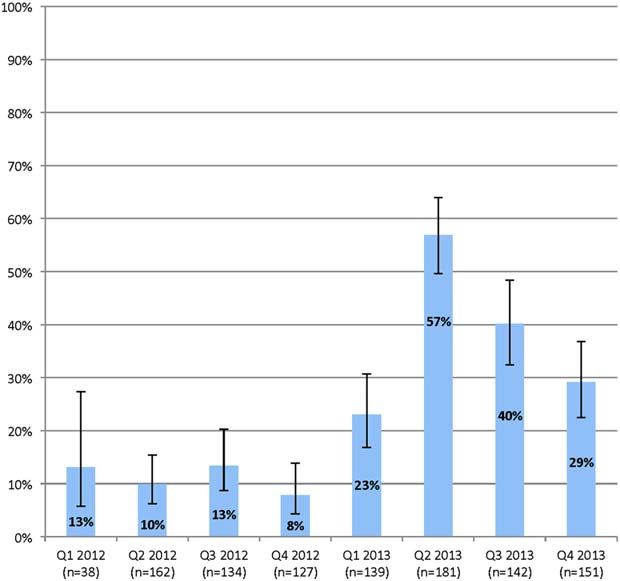
Original Article

hand-to-mouth sensory experience of smoking and typically         physicians against recommending the use of E-cigarettes
deliver nicotine to the user. E-cigarettes have gained rapid      among patients with cancer who are advised to quit.26
popularity since 2007 when they were first introduced into              To guide oncologists’ communication with smokers
the US marketplace.17 Although the US Food and Drug               regarding E-cigarettes, the current study was intended to
Administration (FDA) does not currently have the author-          provide much-needed data regarding E-cigarette use
ity to regulate e-cigarettes, they have stated in the Federal     among patients with cancer. The specific objectives were:
Register their intent to extend their authority to include e-     1) to identify the prevalence of E-cigarette use among
cigarettes as well as all other tobacco products. With limited    smokers referred to an on-site tobacco treatment program
data to guide E-cigarette regulation, establishing public         at a comprehensive cancer center; 2) to examine recent
health policy has been vexing for tobacco control. Despite        temporal trends in E-cigarette use; 3) to identify the
limited available data regarding E-cigarette safety,15 adult      characteristics of E-cigarette users and compare these
ever-use nearly quadrupled from 2010 to 2012, with                characteristics with those of non–E-cigarette users, and 4)
10.6% of all adults in the United States and 44.6% of cur-        to examine whether E-cigarette use is associated with
rent smokers reporting having ever used E-cigarettes.18           smoking cessation outcomes.
       Cigarette smokers report using E-cigarettes to manage
nicotine cravings and withdrawal symptoms, to reduce              MATERIALS AND METHODS
daily smoking consumption, and to quit smoking or avoid           Participants
relapsing.19 E-cigarette users report perceptions that            All patients who presented for cancer treatment at Memo-
E-cigarettes are less harmful than traditional cigarettes.19      rial Sloan Kettering Cancer Center (MSKCC) from Janu-
There are also a growing number of dual tobacco users who         ary 2012 to December 2013 were screened and identified
supplement combustible (traditional) cigarettes cigarette         as current smokers. Referrals are made to the Tobacco
smoking with E-cigarettes in environments in which tradi-         Cessation Program (TCP) from all oncology clinics and
tional combustible smoking is prohibited.20 Many smokers          those patients who completed a TCP intake assessment
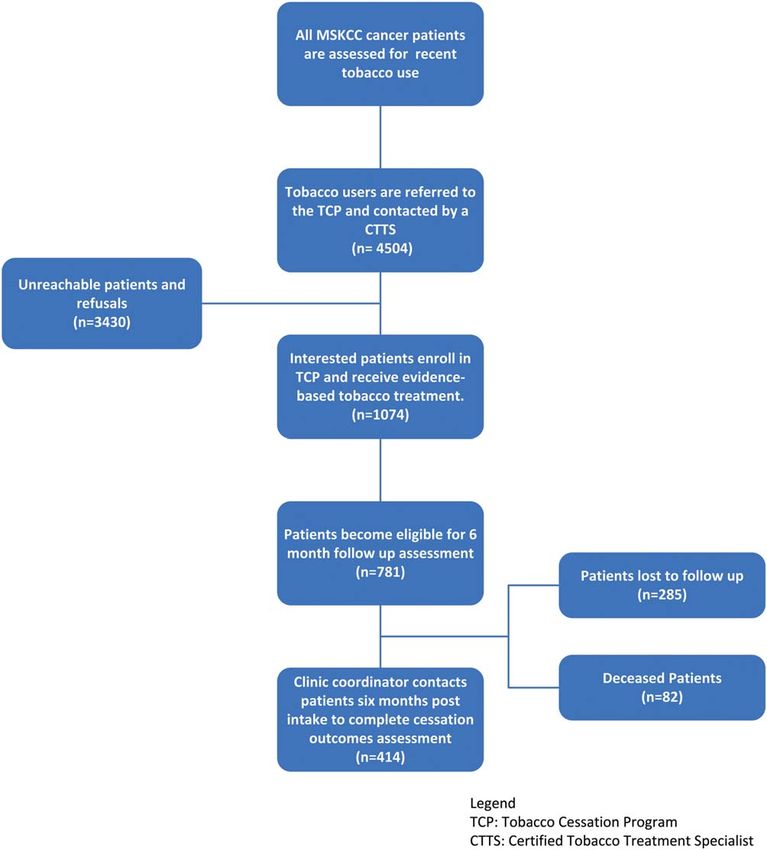
report using E-cigarettes to help them quit using combusti-       were the focus of this investigation. Figure 1 presents
ble cigarettes and smokers with strong intentions to quit are     patient flow from patient referral to the TCP through pro-
significantly more likely to have ever used E-cigarettes than     gram intake and outcomes assessment.
those with no intentions of quitting.21,22 Vickerman et al
found that 31% of a total of 2758 quitline callers had tried      Procedures
E-cigarettes, and of those 52% reported using E-cigarettes        This study was approved by the Institutional Review
to help them quit smoking combustible cigarettes.23               Board at MSKCC. As a standard of care, all new MSKCC
       Although smokers report expectations that                  patients are screened for current smoking status and asked
E-cigarettes facilitate cessation, there is currently a lack of   whether they have smoked cigarettes or used other
adequate evidence that the use of E-cigarettes actually           tobacco products within the past 30 days. Current smok-
helps smokers cut down or quit smoking. Two recent clin-          ing status is documented in the electronic medical record.
ical trials, one conducted in New Zealand24 and the other         Patients who report any tobacco use within the past 30
conducted in Italy,25 have examined the potential useful-         days are systematically referred to the MSKCC TCP.
ness of E-cigarettes in helping smokers quit. Based on a          TCP staff make up to 3 attempts to contact referrals either
relatively small sample, Bullen et al demonstrated that           by telephone or at bedside for hospitalized patients. Mul-
E-cigarettes were about as useful as the nicotine patch in        ticomponent, evidence-based behavioral and pharmaco-
helping individuals quit smoking.24 Caponnetto et al              logic treatment for tobacco dependence is provided.
demonstrated that E-cigarettes may be useful in helping           Patients who accept tobacco treatment are offered up to 5
smokers to reduce the number of cigarettes per day, but           sessions of individual telephone or in-person behavioral
the study results are not definitive.25                           counseling with one of MSKCC’s Certified Tobacco
       At the time of this publication, E-cigarettes are not      Treatment Specialists (CTTS), designated oncology
approved by the FDA for use as a cessation treatment in           nurses, and nurse practitioners who have undergone speci-
the United States. In the absence of adequate clinical data       alized training and met requirements for certification as a
regarding the safety and efficacy of E-cigarettes, the            tobacco treatment specialist (attudaccred.org/). An intake
Tobacco Control and Smoking Cessation Committee of                assessment is completed and an evidence-based tobacco
the International Association for the Study of Lung Can-          dependence treatment plan including behavior modifica-
cer has recently published a policy statement counseling          tion and cessation medication recommended by the

3528                                                                                         Cancer       November 15, 2014
E-Cigarette Use in Patients With Cancer/Borderud et al
Figure 1. Patient flow is shown from patient referral to the Tobacco Cessation Program (TCP) through program intake and out-
comes assessment. MSKCC indicates Memorial Sloan-Kettering Cancer Center; CTTS, Certified Tobacco Treatment Specialists.
clinical practice guidelines for treating tobacco use and de- response options being yes or no. For the sake of brevity,
pendence10 are developed in coordination with the henceforth we call this variable “E-cigarette use” with the
patients’ cancer treatment team. Approximately 6 to 12 understanding that it was assessed at enrollment for the
months after each patient enrolls in the TCP, tobacco ces- past 30 days.3
sation outcomes data are collected by a Clinic Coordinator.
Fagerstrom Test for Nicotine Dependence
Measures Nicotine dependence was assessed using the Fagerstrom
The intake assessment includes standard demographic char- Test for Nicotine Dependence (FTND),27 a 6-item scale
acteristics, tobacco use history (including E-cigarette use), with scores ranging from 0 to 10, with scores of 0 to 4
and clinical characteristics as well as the following measures. coded as indicating lower nicotine dependence and scores
of 527 indicating higher nicotine dependence.
Assessment of E-cigarette use
Current E-cigarette use was assessed at the intake for all Cessation outcome
newly referred patients. Patients were asked if they had At approximately 6 to 12 months after the initial intake, a
used E-cigarettes within the past 30 days, with the trained Clinical Coordinator made up to 3 attempts to
Cancer November 15, 2014 3529Original Article
contact patients by telephone to collect smoking cessation patients accepted the referral, enrolled, and completed a
outcomes. Patients were asked if they had smoked even a clinical intake assessment. Table I presents patient
puff of a (traditional) cigarette within the last 7 days. characteristics.
Patients answering yes were then asked how many ciga- Approximately one-half of the patients who com-
rettes per day they currently smoked. Patients were also pleted an intake in 2012 and 2013 (n 5 1074) were
asked “Since (date of intake assessment) have you gone at female (56.5%; n 5 607), and 43.5% (n 5 467) were
least 24 hours without a cigarette?” No biochemical verifi- male. The mean age was 56 years (standard deviation
cation of smoking cessation was obtained. [SD], 6 11.6 years) (range, 18 years-87 years). The ma-
jority of patients were high school graduates (41.7%;
Data Analysis n 5 257) or college graduates (32.4%; n 5 200). The ma-
Data were first described graphically and by descriptive sta- jority of patients had tried quitting at least twice before
tistics. Abstinence rates were calculated with 2 methods for entering the program (69.2%; n 5 698). The mean
handling missing data: 1) a modified intent-to-treat (ITT) FTND score was 3.7 (SD, 6 2.7) (range, 0-10). Approxi-
analysis, assuming all participants lost to follow-up were mately one-third of the patients reported high nicotine
smoking; and 2) complete case analysis (CCA), in which dependence, as evidenced by FTND scores 5 (37.2%;
participants lost to follow-up were eliminated from the n 5 371). At intake, the average number of cigarettes per
analysis.28,29 Consistent with recommendations for han- day was 13.0 (SD, 6 9.4) (range, 0 cigarettes per day 250
dling missing data when reporting cessation outcomes,30,31 cigarettes per day). The highest percentage of patients
we report both ITT and CCA results because they repre- were diagnosed with thoracic cancer (19.8%; n 5 210),
sent, respectively, the full range of conservative and liberal breast cancer (14.9%; n 5 158), head and neck cancers
interpretations of smoking abstinence outcomes. We used (9.7%; n 5 103), or genitourinary cancers (8%; n 5 85).
the chi-square statistic to examine associations between E- Very few patients reported recent use of cigars (1.6%),
cigarette use reported at intake and putative baseline con- and < 1% reported recent use of a pipe, snuff, or chewing
tributors (eg, sex, education level, and cancer diagnosis). tobacco.
Continuous variables assessed at intake and outcome (eg, Excluding deceased patients (n 5 82), smoking ces-
age, FTND score, and average number of cigarettes sation outcomes were collected from 414 (59.5%) of the
smoked per day) were evaluated using independent-sample subsample of 699 participants who were eligible for the
Student t tests between E-cigarette users and nonusers. We follow-up assessment at the close of the study period
also analyzed the influence of E-cigarette use at intake on (December 31, 2013). We examined potential correlates
tobacco abstinence assessed at 6 months to 12 months of of loss to follow-up and found no differences in terms of
follow-up in a logistic regression model. The logistic regres- age, sex, prior quit attempts, longest lifetime period of
sion model also included participant characteristics that abstinence, nicotine dependence, or cancer diagnosis. A
had a statistically discernible contribution to E-cigarette significantly higher percentage of E-cigarette users
use, as shown in the chi-square statistics and Student t tests. dropped out of tobacco treatment and were lost to
For example, nicotine dependence, quitting history, and follow-up than non–E-cigarette users (66.3% vs 32.4%;
cancer diagnosis were included in the model. To minimize P < 0.01). Smoking cessation outcomes were collected on
the impact of multicollinearity in model predictors, varia- average approximately 10 months from the date of intake
bles that were highly correlated with each other were (mean, 291.9 days; SD, 86.5 days). There was no signifi-
excluded from the model (eg, nicotine dependence and av- cant difference in smoking cessation outcome noted based
erage number of cigarettes smoked per day). The logistic on time to follow-up data collection.
regression was intended to examine whether E-cigarette
use, as well as additional contributing factors of E-cigarette Prevalence and temporal pattern of E-cigarette
use, were associated with follow-up smoking abstinence use
outcomes. Analyses were performed using PASW statistical At the time of enrollment, approximately one-fourth
software (version 18; SPSS Inc, Chicago, Ill). (26.5%; n 5 285) of the total sample reported that they
had used E-cigarettes within the past 30 days. The major-
RESULTS ity of E-cigarette users (92%) reported dual use of com-
Patient Characteristics bustible (traditional) cigarettes. To examine how the
From January 1, 2012 to December 31, 2013, the percentage of E-cigarette use changed over time, Figure 2
MSKCC TCP received 4504 referrals; 1074 of these depicts changes in percentages per quarter, using all
3530 Cancer November 15, 2014E-Cigarette Use in Patients With Cancer/Borderud et al
TABLE I. Prevalence of E-Cigarette Use at Intake by Patient Characteristics (n51074)
E-Cigarette Use No E-Cigarette Use
Total (n 5 1074) (n 5 285)a (n 5 789) Pb
Sex 607 (56) 172 (60) 435 (55) -
Female
Education level
7-11th grade 21 (3) 8 (4) 13 (3) -
High school graduate 257 (42) 86 (43) 171 (41)
Partial college 101 (17) 32 (16) 69 (17)
College graduate 200 (32) 65 (32) 135 (32)
Graduate degree/professional training 38 (6) 9 (4) 29 (7)
No. of past quit attempts .012
Never or 1 time 311 (31) 60 (24) 251 (33)
2 times 698 (69) 195 (76) 503 (67)
Cancer diagnosis -
Breast 158 (15) 37 (13) 121 (16)
Colorectal 64 (6) 20 (7) 44 (6)
Genitourinary 85 (8) 25 (9) 60 (8)
Gynecological 59 (6) 16 (6) 43 (6)
Head and neck 103 (10) 35 (12) 68 (9)
Hepatobiliary 65 (6) 16 (6) 49 (6)
Thoracic 210 (20) 67 (24) 143 (18)
Urology 55 (5) 10 (4) 45 (6)
Other 264 (25) 56 (20) 208 (27)
Average 6SD Average 6SD
Age, y 56.3 6 11.8 55.6 6 10.9 -
Longest time without cigarette, d 5.8 6 6.1 7.4 6 9.8 .012
No. of cigarettes per d 13.7 6 9.8 12.4 6 9.2 .047
Nicotine dependence (Fagerstrom Test for Nicotine Dependence score) 4.6 6 2.7 3.3 6 2.7 .05 were omitted.
available intake data (n 5 1074). Figure 2 shows a sub- sex, or education (Table I). A significantly higher percent-
stantive increase in E-cigarette use between the first quar- age of E-cigarette users were patients with thoracic or
ter of 2012 (Q1 2012) and the fourth quarter of 2013 head and neck cancer compared with non–E-cigarette
(Q4 2013). In 2012, the quarterly prevalence of users (36.2% vs 27.0%; P < .01). E-cigarette users
E-cigarette use was relatively stable and on average 10.6% appeared to be smoking more cigarettes per day than non-
of participants reported E-cigarette use. However, begin- users (median, 13.7 [SD, 6 9.8] vs 12.4 [SD, 6 9.2];
ning in the first quarter of 2013, the percentage of P < .05) and reporting higher FTND scores than nonus-
E-cigarette use more than doubled from 2012 and peaked ers (median, 4.6 [SD, 6 2.7] vs 3.3 [SD, 6 2.7]; P < .01).
in the second quarter of 2013 at 56.9%. During 2013, A significantly higher percentage of E-cigarette users were
38.5% of patients reported E-cigarette use, representing a highly nicotine dependent (FTND score of 5) when
3-fold increase in self-reported E-cigarette use from 2012 compared with nonusers (51.8% vs 32.2%, respectively;
to 2013. The nonoverlapping confidence intervals indi- P < .01). In terms of time to first cigarette, 55.1% of
cate that the growth in E-cigarette use is statistically E-cigarette users reported smoking within 30 minutes of
significant. waking, compared with 39.3% of nonusers (P < .01). It is
interesting to note that twice as many E-cigarette users
Differences between E-cigarette users and reported that it was difficult to keep from smoking in pla-
non–E-cigarette users ces in which it is forbidden (17.7% vs 8.6%; P < .01). In
There were no significant demographic differences terms of lifetime history of prior quit attempts,
between E-cigarette users and nonusers in terms of age, E-cigarette users reported more frequent and a longer
Cancer November 15, 2014 3531Original Article
the self-reported 7-day point prevalence abstinence rate
was twice as high for non–E-cigarette users compared
with E-cigarette users (30% vs 14.5%; P < .01). After
adjusting for nicotine dependence, number of past quit
attempts, and cancer diagnosis, E-cigarette users were
twice as likely to be smoking at follow-up compared with
nonusers (odds ratio, 2.0; 95% confidence interval,
1.2-3.3 [P < .01]).
DISCUSSION
We analyzed data regarding E-cigarette use from a large
clinical sample of patients with cancer who enrolled in a
TCP at a comprehensive cancer center. To our knowl-
edge, these findings represent the first published data on
E-cigarette use among patients with cancer. We observed
a 3-fold increase in the prevalence of recent (within 30
Figure 2. Percentage of patients who reported electronic
days) E-cigarette use from 2012 to 2013. Furthermore,
cigarette use (n 5 1074) per quarter (Q) is shown. we found that, compared with nonusers, E-cigarette users
were more highly dependent on nicotine, diagnosed with
cancers of the lung and head and neck, and smoked more
duration of prior quit attempts than nonusers. We found cigarettes per day than non–E-cigarette users. Finally,
that 76.5% of E-cigarette users reported at least 2 prior using both CCA and ITT analyses, we found no evidence
quit attempts before entering the TCP, compared with that E-cigarette use was associated at follow-up with supe-
66.7% of nonusers (P < .01). E-cigarette users also rior cessation outcomes.
reported a longer duration of prior (pre-TCP enrollment) We now discuss the implications and limitations of
cigarette smoking abstinence than nonusers (mean, 7.4 these findings. The markedly increased rate of E-cigarette
days [SD, 6 9.8] for E-cigarette users compared with 5.8 use observed is consistent with recently published articles
days [SD, 6 6.1] for nonusers; P 5 .01). E-cigarette users highlighting a dramatic rise in the use of E-cigarettes in
were no different from nonusers in terms of quitting moti- the general population.32-34 Consistent with recently pub-
vation and quitting confidence. lished observational studies examining the use of E-
cigarettes and smoking cessation outcomes in the general
population,23,35 the findings of the current study raise
E-cigarette use and smoking cessation outcomes some doubt about the usefulness of E-cigarettes for facili-
Using a CCA model (Table 2), the self-reported 7-day tating smoking cessation among patients with cancer.
point prevalence smoking abstinence was equivalent for Accounting for factors that are commonly associated with
E-cigarette users and nonusers (44.4% vs 43.1%, respec- smoking cessation, using both CCA and ITT analyses, the
tively). It is interesting to note that only one-half of E- results of the current study demonstrated that E-cigarette
cigarette users reported that they had gone without smok- use does not appear to be associated with a greater likeli-
ing for 24 hours (made a 24-hour quit attempt) since hood of achieving abstinence from smoking combustible
enrolling in the TCP, compared with 76% of non–E- cigarettes. Indeed, in the more conservative ITT analyses,
cigarette users, (P 5 .02). After adjusting for nicotine de- E-cigarette users were twice as likely as nonusers to be per-
pendence, number of past quit attempts, and cancer diag- sistent smokers of combustible cigarettes. There is also no
nosis, E-cigarette users were as likely to be smoking at evidence that the use of E-cigarettes helped patients to
follow-up as nonusers (P 5 .87) (odds ratio, 1.0; 95% reduce their smoking rate. The data from the current
confidence interval, 0.5-1.7). At follow-up, E-cigarette study also indicate that fewer E-cigarette users than non-
users reported smoking a slightly higher average number users reported being abstinent for 24 hours (made a
of combustible cigarettes per day than nonusers, but the quit attempt) during the observation period, suggesting
difference was not statistically significant (12.3 cigarettes that the use of E-cigarettes may have averted or delayed
per day [SD, 6 8.0] vs 10.1 cigarettes per day quit attempts. Although we speculate that patients may be
[SD, 6 6.6]; P 5 .23). Using an ITT model of analysis, drawn to E-cigarette use for harm reduction, the findings
3532 Cancer November 15, 2014E-Cigarette Use in Patients With Cancer/Borderud et al
TABLE 2. Results of 2 Logistic Regression Models Predicting Smoking Cessation Outcomes
Complete Case Analysis (n5414a)b Intent-to-Treat Analysis (n5699a)c
OR 95% CI Pd OR 95% CI Pd
E-cigarette
E-cigarette use .95 0.53-1.72 - 2.00 1.23-3.26 .005
No E-cigarette usee 1.00 - 1.00 -
Nicotine dependence
High nicotine dependence 1.22 0.78-1.91 - 1.14 0.77-1.69 -
Low nicotine dependencee 1.00 - 1.00 -
No. of past quit attempts
Tried quitting at least twice 1.77 1.14-2.74 .010 1.83 1.25-2.67 .002
Tried quitting 1e 1.00 - 1.00 -
Cancer diagnosis
Thoracic or head and neck 0.56 0.36-0.89 .014 0.71 0.48-1.04 -
Othere 1.00 - 1.00 -
Abbreviations: 95% CI, 95% confidence interval; E-cigarette, electronic cigarette; OR, odds ratio.
a
Data are shown as the sample size except when noted. Counts do not always add up to the total sample size due to missing responses and deceased
patients.
b
Complete case analysis: self-reported 7-day point prevalence abstinence at 6 months, excluding patients who were lost to follow-up.
c
Intent-to-treat analysis: self-reported 7-day point prevalence abstinence at 6 months; patients who were lost to follow-up were assumed to be smoking.
d
P values were calculated using the Wald statistic, which is asymptotically distributed as a chi-square distribution. P values > .05 were omitted.
e
Reference category.
of the current study provide no evidence to support oncol- Although it may indicate that E-cigarette users may be
ogists recommending E-cigarette use among patients with more motivated to quit, conversely, E-cigarette use may
cancer who are advised to quit smoking. represent a well-intended effort to “try something new”
Although E-cigarette users and nonusers were simi- after multiple failed quitting efforts.
lar with regard to many demographic and clinical charac- The results of the current study demonstrated that
teristics, E-cigarette users were more likely to be among patients with cancer in this sample, dual tobacco
diagnosed with either thoracic or head and neck cancer, use is common and E-cigarettes are much more com-
cancers that are widely associated with cigarette smoking. monly used in conjunction with traditional cigarettes
Indeed, the prevalence of E-cigarette use increased more than any other tobacco product. Although the prevalence
rapidly for patients with thoracic and head or neck cancer of E-cigarette use increased dramatically during the study
than for those diagnosed with other cancers. Previous lit- period, the prevalence of other types of tobacco products
erature has shown that patients with thoracic or head and remained quite low in comparison. Although we did not
neck cancer are highly motivated to quit smoking,36,37 specifically assess risk perceptions regarding the use of E-
and the findings of the current study suggest that patients cigarettes, these findings suggest that patients with cancer
with thoracic or head and neck cancer who smoke ciga- may perceive E-cigarettes to be less harmful than
rettes may be more influenced by any claims implying combustible cigarettes.
that E-cigarettes may help them quit or reduce the harm The current study is not without limitations. First,
associated with smoking combustible cigarettes. E- the findings are drawn from a clinical cohort of patients
cigarette users were more nicotine dependent than nonus- being treated by a single comprehensive cancer center
ers. Twice as many E-cigarette users than nonusers indi- with a well-established program for treating tobacco de-
cated that it was difficult to keep from smoking in places pendence in patients with cancer. Second, cessation (absti-
in which it was forbidden. Considering that the over- nence) outcome was not biochemically verified, reflecting
whelming majority of patients reported dual use, it is routine clinical practice rather than outcomes procedures
plausible that these patients were using E-cigarettes in that would commonly be used in a controlled clinical
addition to combustible cigarettes to manage nicotine trial. Third, although our follow-up rate exceeds or meets
withdrawal symptoms and the challenges of smoke-free that observed in many clinical cohort cessation reports
environments. It is hard to know what to make of the ob- (eg, quitline outcomes),31,38 a higher percentage of
servation that E-cigarette users reported a more frequent E-cigarette users were lost to follow-up such that the
and longer duration of prior quit attempts than nonusers. results of ITT analyses should be interpreted with caution.
Cancer November 15, 2014 3533Original Article
These findings should not be interpreted to indicate that to a series of Frequently Asked Questions (available from
E-cigarettes will never help patients quit smoking. There the authors) (What is an electronic cigarette? Are
is a clear need for well-controlled research examining the E-cigarettes safe for use? Are E-cigarettes effective in
efficacy of E-cigarette use to promote the long-term cessa- helping patients quit smoking? Are patients permitted to
tion of combustible tobacco among patients with cancer. use E-cigarettes in the hospital? What should I tell my
There also remain unanswered questions regarding the patients about the E-cigarette? What are some of the
toxicity of E-cigarettes and any specific safety concerns for other concerns about the E-cigarette?). Given the
E-cigarette use among patients with cancer. Given the importance of promoting tobacco cessation among
high rate of use observed, E-cigarette use should be patients with cancer,1 it is imperative to examine whether
included in comprehensive tobacco use assessment for E-cigarettes help or hinder these efforts.
both clinical trials and routine clinical care. Future studies
should assess ever-use and current use (within the past 30 FUNDING SUPPORT
days) as well as frequency, patterns, reasons, and duration No specific funding was disclosed.
of E-cigarette use.
E-cigarette use appears increasingly common among CONFLICT OF INTEREST DISCLOSURES
patients with cancer who smoke. E-cigarette users are more The authors made no disclosures.
dependent on nicotine and appear to have been more
engaged in prior quitting efforts than nonusers, but are REFERENCES
equally or less likely to have quit smoking combustible ciga- 1. US Department of Health and Human Services. The Health Conse-
quences of Smoking–50 years of Progress: A Report of the Surgeon
rettes at follow-up. Given the increasing popularity and General. Atlanta, GA: US Department of Health and Human Serv-
availability of E-cigarettes in the general population and ices, Centers for Disease Control and Prevention, National Center
for Chronic Disease Prevention and Health Promotion, Office on
the strong advice to quit smoking combustible cigarettes Smoking and Health; 2014.
given at the time of diagnosis, patients with cancer are likely 2. Gajdos C, Hawn MT, Campagna EJ, Henderson WG, Singh JA,
to consider the use of E-cigarettes. Further controlled Houston T. Adverse effects of smoking on postoperative outcomes
in cancer patients. Ann Surg Oncol. 2012;19:1430-1438.
research is needed to evaluate the safety and efficacy of E- 3. Daniel M, Keefe FJ, Lyna P, et al. Persistent smoking after a diagno-
cigarettes as a cessation treatment for patients with cancer. sis of lung cancer is associated with higher reported pain levels.
J Pain. 2009;10:323-328.
In the meantime, oncologists should advise smokers to quit 4. Warren GW, Kasza KA, Reid ME, Cummings KM, Marshall JR.
smoking combustible cigarettes, encourage the use of Smoking at diagnosis and survival in cancer patients. Int J Cancer.
2013;132:401-410.
FDA-approved cessation medications, refer patients for 5. Toll BA, Brandon TH, Gritz ER, Warren GW, Herbst RS; AACR
tobacco cessation counseling, and provide education Subcommittee on Tobacco and Cancer. Assessing tobacco use by cancer
patients and facilitating cessation: an American Association for Cancer
regarding the potential risks and lack of known benefits of Research policy statement. Clin Cancer Res. 2013;19:1941-1948.
E-cigarette use with regard to long-term cessation. Hospi- 6. Morgan G, Schnoll RA, Alfano CM, et al. National cancer institute
tals should include restrictions on E-cigarette use in their conference on treating tobacco dependence at cancer centers. J Oncol
Pract. 2011;7:178-182.
tobacco-free campus and clean indoor air policies. Environ- 7. Sarna L, Brown JK, Lillington L, Wewers ME, Brecht ML.
mental studies have identified nicotine and other constitu- Tobacco-control attitudes, advocacy, and smoking behaviors of on-
cology nurses. Oncol Nurs Forum. 2000;27:1519-1528.
ents in the vapor emitted by E-cigarette users and some of 8. Hanna N. Helping patients quit tobacco: ASCO’s efforts to help on-
these chemical constituents may result in respiratory irrita- cology care specialists. J Oncol Pract. 2013;9:263-264.
9. Tseng TS, Lin HY, Moody-Thomas S, Martin M, Chen T. Who
tion and other as-yet unknown health effects.39 Until more tended to continue smoking after cancer diagnosis: the national
is known concerning the risks and benefits of E-cigarettes health and nutrition examination survey 1999-2008. BMC Public
Health. 2012;12:784.
for patients with cancer, oncologists are likely to struggle 10. Fiore M. United States Tobacco Use and Dependence Guideline
with these complexities and have more questions than Panel: Treating Tobacco Use and Dependence: 2008 Update. Rock-
ville, MD: US Department of Health and Human Services, Public
answers regarding E-cigarette use. The Tobacco Control Health Service; 2008.
and Smoking Cessation Committee of the International 11. Goldstein AO, Ripley-Moffitt CE, Pathman DE, Patsakham KM.
Association for the Study of Lung Cancer has recently pub- Tobacco use treatment at the U.S. National Cancer Institute’s desig-
nated Cancer Centers. Nicotine Tob Res. 2013;15:52-58.
lished a commentary providing guidance for oncologists as 12. Warren GW, Marshall JR, Cummings KM, et al. Addressing
to what to recommend to their patients who might be tobacco use in patients with cancer: a survey of American Society of
Clinical Oncology members. J Oncol Pract. 2013;9:258-262.
struggling to stop smoking or wondering about 13. Sabatino SA, Coates RJ, Uhler RJ, Pollack LA, Alley LG, Zauderer
E-cigarettes.26 At MSKCC, in response to staff requests for LJ. Provider counseling about health behaviors among cancer survi-
vors in the United States. J Clin Oncol. 2007;25:2100-2106.
guidance on how to respond to patient inquiries about 14. Abrams DB. Promise and peril of e-cigarettes: can disruptive tech-
E-cigarettes, we have prepared and disseminated responses nology make cigarettes obsolete? JAMA. 2014;311:135-136.
3534 Cancer November 15, 2014E-Cigarette Use in Patients With Cancer/Borderud et al
15. Cobb NK, Abrams DB. E-cigarette or drug-delivery device? Regulat- 28. Hall SM, Delucchi KL, Velicer WF, et al. Statistical analysis of
ing novel nicotine products. N Engl J Med. 2011;365:193-195. randomized trials in tobacco treatment: longitudinal designs with di-
16. Cobb NK, Byron MJ, Abrams DB, Shields PG. Novel nicotine chotomous outcome. Nicotine Tob Res. 2001;3:193-202.
delivery systems and public health: the rise of the “e-cigarette.” Am J 29. Nelson DB, Partin MR, Fu SS, Joseph AM, An LC. Why assigning
Public Health. 2010;100:2340-2342. ongoing tobacco use is not necessarily a conservative approach to
17. Huang J, Chaloupka FJ, Emery S. Rapid Rise of Electronic Ciga- handling missing tobacco cessation outcomes. Nicotine Tob Res.
rettes: Public Health and Policy Implications. Presented at 141st 2009;11:77-83.
American Public Health Association Annual Meeting; November 2- 30. Hughes JR, Keely JP, Niaura RS, Ossip-Klein DJ, Richmond RL,
November 6, 2013; Boston, MA. Swan GE. Measures of abstinence in clinical trials: issues and recom-
18. McMillen RC, Gottlieb MA, Winickoff JP, Klein J, editors. Three mendations. Nicotine Tob Res. 2003;5:13-25.
year trends in the use of emerging tobacco products. Presented at 31. Sheffer CE, Stitzer M, Payne TJ, Applegate BW, Bourne D,
141st American Public Health Association Annual Meeting; November Wheeler JG. Treatment for tobacco dependence for rural, lower-
2-November 6, 2013; Boston, MA. income smokers: outcomes, predictors, and measurement considera-
19. Etter JF, Bullen C. Electronic cigarette: users profile, utilization, sat- tions. Am J Health Promot. 2009;23:328-338.
isfaction and perceived efficacy. Addiction. 2011;106:2017-2028. 32. Dockrell M, Morrison R, Bauld L, McNeill A. E-cigarettes: preva-
20. Pearson JL, Richardson A, Niaura RS, Vallone DM, Abrams DB. e- lence and attitudes in Great Britain. Nicotine Tob Res. 2013;15:
Cigarette awareness, use, and harm perceptions in US adults. Am J 1737-1744.
Public Health. 2012;102:1758-1766. 33. King B, Alam S, Promoff G, Arrazola R, Dube S. Awareness and
21. Popova L, Ling PM. Alternative tobacco product use and smoking ever use of electronic cigarettes among U.S. adults, 2010-2011. Nico-
cessation: a national study. Am J Public Health. 2013;103:923-930. tine Tob Res. 2013;15:1623-1627.
22. Adkison SE, O’Connor RJ, Bansal-Travers M, et al. Electronic nico- 34. Kasza KA, Bansal-Travers M, O’Connor RJ, et al. Cigarette smokers’
tine delivery systems: international tobacco control 4-country survey. use of unconventional tobacco products and associations with quit-
Am J Prev Med. 2013;44:207-215. ting activity: findings from the ITC-4 U.S. Cohort. Nicotine Tob
23. Vickerman KA, Carpenter KM, Altman T, Nash CM, Zbikowski Res. 2014;16:672-681.
SM. Use of electronic cigarettes among state tobacco cessation quit- 35. Grana RA, Popova L, Ling PM. A longitudinal analysis of electronic
line callers. Nicotine Tob Res. 2013;15:1787-1791. cigarette use and smoking cessation. JAMA Intern Med. 2014;174:
24. Bullen C, Howe C, Laugesen M, et al. Electronic cigarettes for 812-813.
smoking cessation: a randomised controlled trial. Lancet. 2013;382: 36. Park ER, Japuntich SJ, Rigotti NA, et al. A snapshot of smokers af-
1629-1637. ter lung and colorectal cancer diagnosis. Cancer. 2012;118:3153-
25. Caponnetto P, Campagna D, Cibella F, et al. EffiCiency and Safety 3164.
of an eLectronic cigAreTte (ECLAT) as tobacco cigarettes substitute: 37. Simmons VN, Litvin EB, Jacobsen PB, et al. Predictors of smoking
a prospective 12-month randomized control design study. PLoS One. relapse in patients with thoracic cancer or head and neck cancer.
2013;8:e66317. Cancer. 2013;119:1420-1427.
26. Cummings KM, Dresler CM, Field JK, et al. E-cigarettes and cancer 38. Maher JE, Rohde K, Dent CW, et al. Is a statewide tobacco quite-
patients. J Thorac Oncol. 2014;9:438-441. line an appropriate service for specific populations? Tob Con-
27. Heatherton TF, Kozlowski LT, Frecker RC, Fagerstrom KO. trol. 2007;16(suppl 1):i65-i70.
The Fagerstrom Test for Nicotine Dependence: a revision of 39. Goniewicz ML, Knysak J, Gawron M, et al. Levels of selected carci-
the Fagerstrom Tolerance Questionnaire. Br J Addiction. 1991;86: nogens and toxicants in vapour from electronic cigarettes. Tob Con-
1119-1127. trol. 2014;23:133-139.
Cancer November 15, 2014 3535You can also read


