ENDING NEGLECTED TROPICAL DISEASES - Opportunities to Support the Control and Elimination of NTDs
←
→
Page content transcription
If your browser does not render page correctly, please read the page content below

ENDING NEGLECTED
TROPICAL DISEASES
Opportunities to Support the
Control and Elimination of NTDs

july 2014
TABLE OF CONTENTS
Forward from NTD Special Envoys.............................................................. 2

Overview.......................................................................................................... 6

Snapshots of Progress..................................................................................... 8

Reducing Extreme Poverty: NTDs and the Post-2015
  Development Agenda..............................................................................10

The London Declaration: Changing the NTD Landscape
  and Engaging New Partners....................................................................12

Opportunities for Long-term Impact.........................................................14

Elimination and Beyond...............................................................................16

List of Abbreviations.....................................................................................17

Appendix........................................................................................................19

                                                                        THE GLOBAL NETWORK FOR NEGLECTED TROPICAL DISEASES   1
H.E. John A. Kufuor
                                                       President of the Republic of Ghana (2001-2009)

       Forward
       from NTD Special Envoys
       As a head of state, I witnessed how the progress and                 When I was invited to serve as an NTD Special
       prosperity of my country was directly impacted by                    Envoy, I had no hesitations in taking on the role. I
       the health and well-being of its people. My policies                 am convinced that the success of sustainable, long-
       and programs as the President of Ghana prioritized                   term development around the globe is dependent
       a broad development agenda including education,                      on our ability to halt and reverse the disfiguring,
       primary healthcare, water and sanitation, and, more                  debilitating and deadly effects of NTDs. I applaud
       specifically, the elimination of Guinea worm, which                  the inclusion of NTDs in the final report of the
       was achieved in 2010.                                                United Nations Secretary-General’s High Level
                                                                            Panel on recommended goals and targets for the
       It was only later, however, that I learned about                     post-2015 development agenda and welcome the
       the full impact of neglected tropical diseases                       NTD-related resolutions recently passed by the
       (NTDs), a broad group of parasitic, bacterial and                    World Health Assembly, Organization of American
       viral infections that afflict poor and marginalized                  States and African Union. I hope this growing
       communities around the developing world. These                       momentum will help us create a world free from the
       diseases undermine our efforts to achieve the                        long-present threat of NTDs.
       Millennium Development Goals, trapping poor and
       marginalized communities in a cycle of poverty. For
       this reason, I committed to joining the fight against
       these diseases as an NTD Special Envoy with the
       Global Network for Neglected Tropical Diseases.

2   Ending Neglected Tropical Diseases Opportunities to Support the Control and Elimination of NTDs
H.E. Alvaro Arzú Irigoyen
                                          President of the Republic of Guatemala (1996-2000)

During my presidency in Guatemala, I saw first-            strategy is linked to the national plan for reducing
hand the close connections between poverty, health,        child malnutrition. As NTDs, such as intestinal worm
education, and water and sanitation, and recognized        infections, rob their victims of vital nutrients, linking
the invaluable need for strong political leadership        the two plans is essential for ensuring progress toward,
and commitment to prioritize issues like health and        and achievement, of both goals.
children within the national agenda. What I did
not know though, is that across the Latin American         As we all look toward creating lasting, sustainable
and Caribbean region, more than 100 million lives          development for marginalized populations by con-
are still threatened by neglected tropical diseases        trolling and eliminating NTDs, we must also build
(NTDs), including almost 50 million children.              the political will required to achieve it. I am happy to
                                                           report that political support for NTDs is increasing in
When I joined the Global Network for Neglected             the Latin American and Caribbean region, and NTDs
Tropical Diseases as an NTD Special Envoy, I was           are becoming more closely aligned with poverty
surprised to learn that NTDs are still a significant       reduction strategies, signaling to the world and the
challenge to our region’s development and hinder           leaders of our region that we are committed to making
our efforts to reach the Millennium Development            NTDs a public health issue of the past.
Goals. I also learned that interventions to combat
NTDs are readily available, mostly donated and can         I am proud to be part of this effort by serving as an
help break the appalling cycle of poverty and disease.     NTD Special Envoy.

I was thrilled recently to see NTD and nutrition efforts
working together in Guatemala’s national NTD plan.
Launched in August 2013 by the Ministry of Public
Health and Social Assistance, the national NTD

                                                            THE GLOBAL NETWORK FOR NEGLECTED TROPICAL DISEASES         3
H.E. Ricardo Lagos Escobar
                                                       President of the Republic of Chile (2000-2006)

       Forward
       from NTD Special Envoys
       While serving as the President of Chile, I recognized                sanitation, and economic development. Mass drug
       the importance of finding cost-effective approaches                  administrations for NTDs can be integrated with
       to my nation’s public health challenges. However, it                 multiple interventions, such as the delivery of bed
       wasn’t until recently that I learned about the simple                nets, vitamin A or immunizations, to achieve greater
       and inexpensive solutions that exist for controlling                 cost-effectiveness. While significant coverage gaps
       and eliminating neglected tropical diseases (NTDs),                  remain, some countries are beginning to implement
       making these programs some of the most cost-                         successful programs; for example, Nicaragua and
       effective health interventions available. In addition to             Honduras are now integrating deworming as part of
       treating and preventing NTDs, these programs help                    their national immunization weeks.
       increase school attendance, improve maternal and
       infant health, and support economic development.                     NTDs must be at the top of the agenda for national
       Successfully combating NTDs is essential for                         governments and ministries of health, social
       accelerating efforts to achieve the current Millennium               development, education and finance if we are to
       Development Goals and the goals of the upcoming                      meet our global and regional development targets,
       post-2015 development agenda.                                        and particularly the World Health Organization’s
                                                                            goal to control and eliminate the 10 most common
       The prevalence of NTDs in the Latin American and                     NTDs by 2020.
       Caribbean region is an indicator that the standard
       compartmentalized approach to development must
       give way to more integrated methods. The impact
       of NTDs extends across broader development
       areas to include nutrition, education, water and

4   Ending Neglected Tropical Diseases Opportunities to Support the Control and Elimination of NTDs
Dr. Mirta Roses Periago
                                       Director of the Pan American Health Organization (2003-2013)

While serving as Director of the Pan American          regions. To help overcome this hurdle, the other NTD
Health Organization from 2003 to 2013, I witnessed     Special Envoys and I are reaching out to various global
firsthand both the burden of neglected tropical        and regional policy bodies to encourage South-South
diseases (NTDs) in the Latin American and              collaboration and bilateral support for neighboring
Caribbean region and the tremendous progress that      countries in need of technical assistance.
has been made in efforts to control and eliminate
them. Although 100 million people in the region        Although the political support for NTD control and
are currently infected with one or more NTDs, we       elimination programs around the world is growing,
have made great strides and are closer than ever to    we must ensure it translates into successfully reaching
achieving elimination of the most common NTDs.         the goals outlined in the 2012 London Declaration
                                                       on NTDs. Advocacy and education are essential
In July 2013, I was thrilled when Colombia             components needed to accomplish our goals;
became the first country in the Americas to receive    considering the excess of misinformation, myths,
certification from the World Health Organization       complacency and neglect surrounding these diseases,
for eliminating onchocerciasis. Also noteworthy is     there is a strong need for us to turn NTDs into an
that as of December 2013, 17 countries in the Latin    issue that is everyone’s concern.
American and Caribbean region have either launched
their NTD plans or have drafts and are working to      We will have to continue to work hard to maintain
finalize them with the support of the Pan American     the momentum behind the NTD movement, but
Health Organization and other partners.                I do believe that together, we can reach our goal to
                                                       defeat NTDs.
The main challenges remaining are primarily in
relation to the funding gaps that exist to guarantee
the successful implementation of these NTD plans,
as well as national plans in the African and Asian

                                                        THE GLOBAL NETWORK FOR NEGLECTED TROPICAL DISEASES       5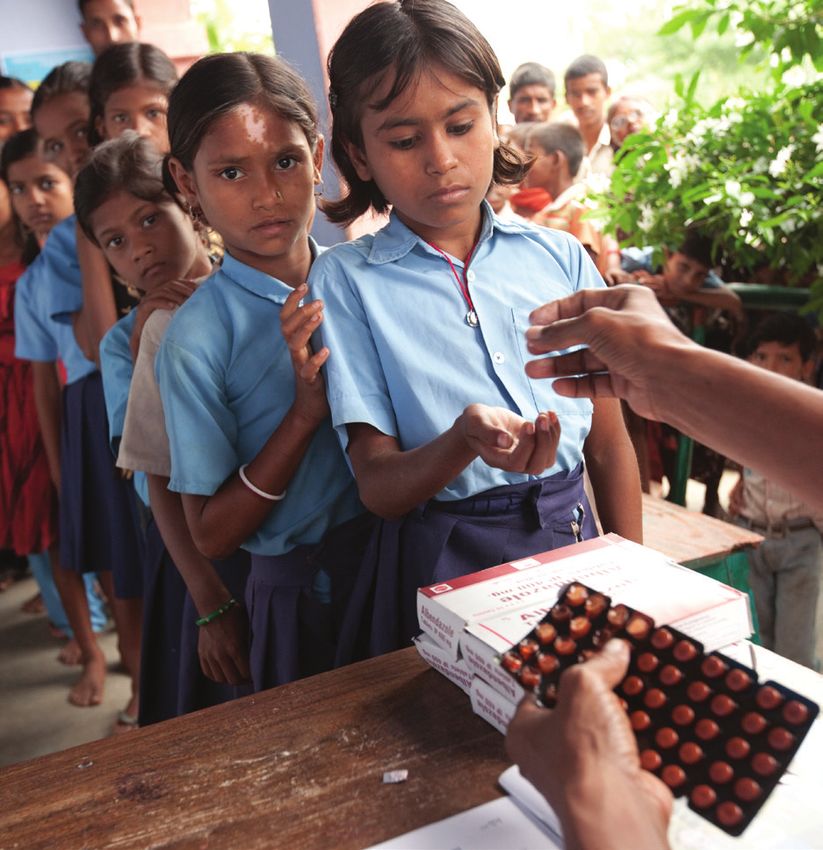
OVERVIEW

       On October 23, 2013, the Global Network for                          education, and water, sanitation and hygiene (WASH)
       Neglected Tropical Diseases (Global Network),                        programs was also addressed, as well as the need to
       the World Bank Group and the Bill & Melinda                          ensure that the post-2015 development goals remain
       Gates Foundation convened a roundtable in Berlin,                    focused on reducing extreme poverty and include
       Germany with key government and global health                        combating NTDs as a key priority.
       partners to discuss the next steps in the fight against
       neglected tropical diseases (NTDs).                                  The conversation also focused on the financing
                                                                            channels that exist for donors to engage in the fight
       The meeting came at a pivotal moment in global health                against NTDs — directly through governments
       discussions, following a recovery from the recent                    (bilaterally or multilaterally), regional technical
       global economic recession that heavily impacted                      and coordinating agencies, or civil society and the
       many donors. The roundtable sought to facilitate an                  private sector. All three of these channels represent
       open discussion on how to best address challenges in                 strategic avenues for closing the approximately
       scaling up NTD control and elimination activities in                 U.S. $220 million annual funding gap that must be
       light of significant changes in donor priorities. The                addressed in order to reach key NTD control and
       potential to integrate NTD efforts with nutrition,                   elimination goals.

                                                     “I share your view that poverty reduction and the
                                                     elimination of NTDs go hand-in-hand.”

                                                     Mr. Ban Ki-moon
                                                     United Nations Secretary-General
                                                     Letter to NTD Special Envoys
                                                     October 2013

6   Ending Neglected Tropical Diseases Opportunities to Support the Control and Elimination of NTDs
While 700 million people received treatment for one       the Global Network’s efforts to engage with donors on
or more NTDs in 2012, less than 40 percent of the         NTDs, and briefly underlines the various channels
1.4 billion people in need of treatment worldwide         that exist for partners to join or further contribute to
received all the drugs they needed. The discussion        NTD control and elimination efforts.
highlighted the importance and need for expanding
treatment programs to reach those left behind,
along with new investments for improved tools                This report recommends the following actions
(diagnostics, drugs and vaccines) for NTDs.                  for partners, from both donor and endemic
                                                             countries, to strengthen the NTD agenda:
The roundtable meeting concluded with general                • Recognize the impact of NTDs as a key
consensus that controlling and eliminating NTDs                underlying constraint to global economic
must be made a global priority and an integral part            growth, poverty and inequality reduction,
of the broader poverty reduction agenda. Because               educational achievement and nutrition.
the impact of NTDs stretches far beyond the health
sector, controlling and eliminating these diseases is        • Institutionalize NTD control and
critical to successfully improving the economic and            elimination efforts in foreign policy,
social well-being of more than one billion people              development and poverty reduction
living in marginalized communities around the word.            agendas.
As such, treatments for NTDs must be integrated              • Invest in and prioritize nationally-led
into current development programs and included                 integrated NTD plans by providing
in efforts to achieve the Millennium Development               political support, reliable long-term
Goals (MDGs) and the goals and targets of the                  financing and technical assistance.
upcoming post-2015 development agenda.                       • Promote the fight against NTDs in
                                                               international and regional forums and
As a follow up to the Development Agency Roundtable,           support the inclusion of NTD-specific
this report offers success stories on recent integrated        goals and targets in the post-2015
NTD efforts, explores how NTDs are related to the              development agenda.
anticipated goals of the post-2015 agenda, highlights

                                                           THE GLOBAL NETWORK FOR NEGLECTED TROPICAL DISEASES        7
SNAPSHOTS
       Of Progress
       BURUNDI
       A decade of violence that began in 1993 shattered                    In the first year, more than 1.8 million Burundians
       the nation of Burundi, claiming 300,000 lives and                    received medicine to treat NTDs; after four years
       displacing nearly one million people. Poverty rates                  and eight integrated MDAs, over 31 million safe and
       rose, with the number of people living on less than a                effective treatments had been delivered throughout
       U.S. $1 per day increasing from 35 percent in 1992 to                Burundi to more than three million people.
       more than 67 percent in 2005. Not unexpectedly, the
                                                                            The prevalence rate of intestinal worm infections
       NTD burden increased in this environment.
                                                                            decreased significantly and schistosomiasis decreased
       By 2005, in some districts, parasitic infections such                from 6.4 percent to 3.6 percent, bringing it below the
       as schistosomiasis and hookworm affected over                        public health hazard threshold. Blinding trachoma
       40 percent of the population. While the African                      was mapped, and partners are now working to provide
       Programme for Onchocerciasis Control (APOC)                          sight-saving interventions. In addition, thousands
       worked with the Ministry of Health to control                        of community health workers and laboratory
       onchocerciasis (also know as river blindness),                       technicians were trained to identify NTD infections
       Burundi lacked the necessary health system and                       and administer drugs to fight them.
       infrastructure to address other NTDs.
                                                                            Burundi’s government was central in this effort,
       In 2007, with funding from the Legatum Foundation,                   paying for the salaries and office space of the NTD
       an alliance formed between the Global Network, the                   team, refraining from taxing the imported drugs,
       Ministry of Health, CBM International, Geneva Global                 adopting a national NTD policy and developing a
       and the Schistosomiasis Control Initiative to build on               five-year plan. With a government committed to
       APOC’s ongoing efforts. The partnership implemented                  NTD control and elimination, millions of Burundians
       the nation’s first mass drug administration (MDA).                   have the promise of a better future.

8   Ending Neglected Tropical Diseases Opportunities to Support the Control and Elimination of NTDs
BIHAR, INDIA                                                CHIAPAS, MEXICO
In Bihar, one of the poorest states in India, millions      Chiapas, one of the poorest states in Mexico, has an
of children are at risk of becoming infected with           exceptionally high burden of NTDs compared to
intestinal worms. Intestinal worms often make               other areas in the region due to its relatively dispersed
children too sick to attend school; in fact, research has   and marginalized population. An estimated 30
shown that school-based deworming reduces school            percent of indigenous residents in Chiapas live in
absenteeism by as much as 25 percent. To combat             remote settlements with poor access to potable water
these NTDs, Deworm the World, a non-governmental            and sanitation. Of the four million people in Chiapas,
development organization (NGDO), partnered with             more than 300,000 are at risk for NTD infections.
the Bihar State Departments of Health and Education
to assist the government in mapping and treating
intestinal worm infections in children across the state.

The partnership resulted in one of the largest school-
based NTD programs ever conducted. The program
successfully provided deworming treatment for 17
million school-aged children in over 67,000 schools
in early 2011. Nearly 140,000 teachers and 20,000
health workers were trained to help deliver medicine.       The Global Network, Inter-American Development
The efficient use of India’s education infrastructure       Bank (IDB) and Pan American Health Organization
was critical for making this program a success.             partnered to support a demonstration project in
Teachers, in particular, were an essential component        Chiapas that goes beyond short-term curative
of the delivery mechanism.                                  measures for NTDs to include long-term solutions
                                                            that tackle the social and environmental determinants
                                                            of NTD transmission.

                                                            The initiative worked together with the local and
                                                            federal governments and private sector to integrate
                                                            prevention and control activities for NTDs such as
                                                            trachoma, leishmaniasis, Chagas disease and intestinal
                                                            worm infections. Most importantly, the project
                                                            combined health interventions and access to clean
                                                            water with other initiatives, such as improved primary
                                                            care, conditional cash transfers, education and housing
                                                            to comprehensively address NTDs. Over 130,000
                                                            people were treated for NTDs, including nearly 4,000
                                                            students from six schools in endemic areas who also
                                                            participated in NTD education activities such as hand
                                                            and face washing workshops, games and dramatic
                                                            enactments in local languages.

                                                            Given its integrated approach to incorporating NTD
Bihar now continues to improve the health and               program activities into existing government initiatives,
education of millions of children through annual            the successful Chiapas program will serve as a model to
deworming campaigns and serves as a model for               help guide the development of a broader NTD agenda
other communities interested in implementing                throughout the Latin American and Caribbean region
school-based deworming programs.                            and beyond.

                                                             THE GLOBAL NETWORK FOR NEGLECTED TROPICAL DISEASES         9
REDUCING
EXTREME Poverty:
NTDs and the Post-2015
Development Agenda
NTDs perpetuate poverty and inequality by causing 2014 zero draft of the Proposed Goals and Targets
blindness, malnutrition, anemia, and disfigurement, on Sustainable Development for the Post-2015
and by preventing children from attending school Development Agenda. These are all important steps
and keeping adults from working. As a result, NTDs in ensuring that the fight against NTDs remains a
severely hinder efforts to reach the current MDGs high priority.
and will impede global efforts to achieve the goals of
the post-2015 development agenda. Successfully controlling and eliminating the most
common NTDs requires a coordinated global effort
Treating NTDs is extremely cost-effective, contributes and ensuring that NTDs remain on the next agenda is
to the success of broader development goals and does a critical step. The Global Network continues to urge
not require stand-alone programs to have a substantial government leaders to support the inclusion of health
impact. Successful public-private partnerships have goals and targets for NTDs during Member State
made treating NTDs extremely inexpensive, and negotiations on the post-2015 development agenda.
several partners have already succeeded in integrating
NTD treatments into their education, infrastructure Key cross-cutting issues between NTDs and
and WASH programs. For example, in April 2014, other development areas include:
WaterAid announced that it will more closely link its
WASH programs to prevent intestinal worm infections Nutrition: Controlling NTDs is an important part
in order to pursue a more integrated approach to of improving nutrition. One in five children in
health and development. developing countries is underweight, and NTDs
can exacerbate the effects of undernourishment and
The NTD stakeholder community applauds the UN minimize the impact of food aid. Schistosomiasis and
Secretary-General’s High Level Panel for including intestinal worm infections often lead to anemia and
recommended health goals for NTD control and malnutrition. Even when children and adults have
elimination in its May 2013 final report on the enough food to eat, these diseases can rob their bodies
post-2015 agenda; the World Health Assembly of the nutrients they need. Together, schistosomiasis
for calling additional attention to NTDs in its May and intestinal worms infect more than one billion
2014 resolution on health in the post-2015 agenda; people, keeping children out of school, preventing
and the UN’s Open Working Group on Sustainable parents from working and trapping generations in a
Development Goals for including NTDs in its June cycle of poverty and disease.
10 Ending Neglected Tropical Diseases Opportunities to Support the Control and Elimination of NTDsPrimary education: NTDs prevent children from Maternal health: NTDs such as hookworm infection
attending and performing well in school. More than and schistosomiasis are leading causes of anemia, a
half a billion children are chronically ill from one condition with serious implications for pregnant
or more NTDs, and many are not able to regularly women and newborns. Anemia causes low birth
attend school as a result. Likewise, children who must weight, infection, miscarriage and sometimes death
stay home to care for parents disabled by NTDs often of the mother. Currently, 20 percent of maternal
do not receive a proper education. Treating intestinal deaths in Africa can be attributed to anemia.
worm infections using the MDA approach has been
shown to significantly decrease school absenteeism HIV/AIDS, malaria and TB: Individuals with NTDs
and can prevent diminished cognitive development, are at a higher risk of contracting, or not recovering
allowing children to grow to their full potential. from, other diseases including HIV/AIDS, malaria,
and tuberculosis, because NTDs weaken the immune
Gender equality: NTDs disproportionately affect system and make it difficult for the body to fight off
women and girls. In sub-Saharan Africa, female other diseases. Women suffering from FGS are three
genital schistosomiasis (FGS) causes severe pain, times as likely to contract HIV. Integrating programs
bleeding and lesions in more than 16 million women to control multiple infectious diseases simultaneously
and girls, and women are more likely than men improves the success of all program outcomes.
to be blinded by trachoma. The long-term socio-
economic impact that NTDs impose on women Water, sanitation and hygiene (WASH): NTDs are
and girls is severe; scarring and disfigurement from often spread by drinking contaminated water and
NTDs, such as FGS and lymphatic filariasis, also have eating food that was not properly washed, and areas
negative social effects and can prevent young women with stagnant water are breeding grounds for insects
from marrying or can even be grounds for spousal that carry NTDs, notably mosquitoes that transmit
abandonment. lymphatic filariasis. Schistosomiasis and intestinal
worm infections are easily spread through contact
Child health: Malnourishment and anemia, two with contaminated water and soil in communities
common side effects of NTDs, have been shown without access to sanitation facilities. Additionally,
to reduce the physical and intellectual growth of trachoma is primarily spread when the eye discharge
children and weaken their immune systems, leaving from an infected person is shared through contact
children vulnerable to other serious diseases. with hands, clothing, or other personal effects, or
through transmission by flies.
“USAID was honored to participate in the London
Declaration and we are committed to doing our
part to achieve the 2020 goals for NTDs.”
Dr. Rajiv Shah, USAID Administrator
Letter to the Global Network for
Neglected Tropical Diseases
January 2013
THE GLOBAL NETWORK FOR NEGLECTED TROPICAL DISEASES 11THE LONDON
DECLARATION:
Changing the NTD
Landscape and Engaging
New Partners
In January 2012, an unprecedented group of partners
signed the London Declaration on Neglected Tropical Together with its NTD Special Envoys, the
Diseases, pledging new and extended commitments Global Network is working to:
toward the control and elimination of 10 NTDs by 2020
• Encourage key bilateral and multilateral aid
in alignment with the World Health Organization’s
institutions and international and regional
(WHO) targets. The leaders of 13 pharmaceutical
policy platforms to include NTDs in their
companies, the governments of the United States,
development agendas and dedicate resources
United Kingdom and United Arab Emirates, the Bill &
to NTD control and elimination efforts.
Melinda Gates Foundation, the World Bank Group and
other global health organizations united at the launch • Support current NTD donors in main-
event in support of the London Declaration goals.* taining and increasing their commitments
to achieve the 2020 goals.
In April 2014, original and new London Declaration
• Identify and engage with new NTD donors,
partners met again to review what had been accomplished
highlighting the links between NTDs
since the signing of the London Declaration and to
and other development priorities such
focus new energy on how to fill the remaining financial,
as WASH, nutrition and education, and,
technical and policy gaps. The meeting was headlined by
whenever possible, integrating programs
the extraordinary announcement of U.S. $240 million
across sectors.
in new funding in support of the London Declaration
goals; however, there is still much work to be done to • Encourage endemic country governments
successfully reach these goals by 2020. In particular, the to prioritize and invest in NTD control and
NTD community needs to find resources to bridge an elimination efforts within their national
existing U.S. $220 million annual funding gap. health and development strategies.
In pursuit of its mission to raise the awareness and
resources necessary to reach the London Declaration The Global Network has found that governments are
goals, the Global Network engages in high-level typically enthusiastic about the goals of the London
advocacy with bilateral development aid agencies, Declaration, clearly recognize the links between NTDs
parliamentarians, heads of state, ministries of health and other development issues, and see opportunities
and finance, and other government agencies. to align NTDs with their own programmatic priorities.
12 Ending Neglected Tropical Diseases Opportunities to Support the Control and Elimination of NTDsIn the past, many countries have increased funding and, as a result, potential partners are postponing
for disease-specific NTD research and development, decisions regarding investing in NTD control and
particularly through their domestic research elimination until future budget cycles.
institutions, and have supported APOC. However,
The Global Network strives to overcome this
many countries with long-standing international
challenge by identifying and promoting the financial
development strategies have not yet taken up NTD
channels that exist for NTDs, which are outlined in
treatment integration, including the MDA approach,
the next section. Reaching the 2020 goals espoused
despite its recognized role as the standard tool in the
in the London Declaration does not require a new
NTD control and elimination framework.
structure similar to the Global Fund or even the
Encouraging donors to prioritize NTDs is challenging, creation of new programs; instead, relatively modest
given that many aid agencies do not have the capacity contributions from many donors and program
for or interest in vertical NTD programs. In addition, integration will sufficiently bridge the funding gap
the lingering effects of the recent global financial crisis and significantly improve the lives and prospects of
have left national budgets stretched and inflexible more than a billion people.
*A copy of the London Declaration on NTDs can be found at the end of this report.
“The London Declaration continues to be the central rallying
point for partners engaged in the fight against NTDs and offers
the global community an opportunity to make a real difference
in poor and marginalized communities around the world.”
Dr. Neeraj Mistry, Managing Director
Global Network for Neglected Tropical Diseases,
in response to the meeting “Uniting to Combat NTDs:
A Conversation on Progress” April 2014
THE GLOBAL NETWORK FOR NEGLECTED TROPICAL DISEASES 13OPPORTUNITIES
for Long-term Impact
POLICY FINANCING OPTIONS
Policymakers have a pivotal role to play in the success Financial and technical assistance from donors and
of NTD programs and must continue to build and regional-level bodies is necessary to ensure that
exercise the political will required to adequately country-led national NTD plans are successfully
address these diseases. Since the signing of the London implemented. Donors can also strengthen
Declaration, major resolutions on NTD control and national plans by integrating NTD control and
elimination have been passed by the World Health
elimination activities into their current health
Assembly, African Union, Pan American Health
system strengthening, maternal, newborn and child
Organization, Organization of American States and
health, nutrition and WASH programming in NTD-
WHO Regional Committee for Africa.
endemic areas.
Multilateral institutions, including regional develop-
Policymakers in both endemic and non-endemic
ment banks, serve as an effective avenue for financing
countries can take steps to prioritize NTD control
and elimination efforts by: NTD programs. For example, IDB has leveraged loans
and grants from public and private donors to support
• Issuing public policy statements that call NTD control and elimination goals in Latin American
attention to NTDs in mainstream foreign and Caribbean countries. WHO’s regional offices
policy, economic and development provide technical assistance to endemic-country
discussions.
national governments and are working to improve
• Highlighting the importance of NTD regional coordination and expand advocacy and
control and elimination in G7/8, G20, resource mobilization efforts.
BRICS and regional platform statements.
• Institutionalizing NTD control and NGDOs and the private sector also play a critical
elimination efforts in bilateral foreign role in leading NTD interventions in endemic areas
policy, development, health and poverty by providing technical assistance to government
reduction agendas. programs, building capacity within national
• Ensuring that specific goals and targets ministries, participating in operational research
for NTDs are included in the post-2015 that influences program strategies and donating
development agenda. key drugs needed to fight the most common NTDs.
NGDOs also represent a valuable opportunity to
14 Ending Neglected Tropical Diseases Opportunities to Support the Control and Elimination of NTDsleverage private sector and philanthropic support, partnerships in Africa and has reduced the infection
which are significant sources of NGDO operating rate of onchocerciasis in target countries by 73
funds. As national control and elimination percent since 1995. The APOC Trust Fund attracts
efforts continue to scale up, the commitment and a wide range of support from national governments,
participation of NGDOs and the private sector in foundations, and the private sector.
supporting NTD programs will be critical.
In 2016, APOC will transition into the new
The APOC Trust Fund, managed by the World Bank, Programme for the Elimination of Neglected
has dispersed U.S. $1.25 billion since its inception Diseases in Africa (PENDA). In light of the co-
in 1974 (originally as the Onchocerciasis Control endemic nature of onchocerciasis and lymphatic
Programme); funding is pooled from a variety filariasis in Africa, PENDA will use best lessons
of donors to support sustainable, community- learned from APOC to simultaneously target both
based operational programs. APOC is one of the diseases and will work to eliminate lymphatic
most successful health-focused public-private filariasis by 2020 and onchocerciasis by 2025.
“Tackling these diseases in a coordinated way saves lives and
money, and requires expanding lessons that we have learned
from our efforts to eliminate river blindness — first, a simple
community health system approach, and second, partnerships
with pharmaceutical companies for free supply of drugs.”
Dr. Jim Kim, President
World Bank Group
Opening remarks at “Uniting to Combat Neglected
Tropical Diseases: Translating the London Declaration
into Action”
November 2012
THE GLOBAL NETWORK FOR NEGLECTED TROPICAL DISEASES 15ELIMINATION
and Beyond
Moving forward, global development partners must
initiate or strengthen their contributions to the fight Specifically, the Global Network recommends
against NTDs in order to eliminate these diseases that partners from both donor and endemic
of poverty as public health threats. The rapid countries:
development of nationally-led, integrated NTD
• Recognize the impact of NTDs as a key
plans (more than 70 countries now have plans),
underlying constraint to global economic
repurposing of APOC to include additional NTDs,
growth, poverty and inequality reduction,
integration of programs and ongoing discussions
educational achievement and nutrition.
on the post-2015 development agenda offer a wide
range of opportunities to address these diseases and • Institutionalize NTD control and
work toward greater development outcomes. elimination efforts in foreign policy,
development and poverty reduction agendas.
The Global Network urges development partners • Invest in and prioritize nationally-led NTD
around the world — from donors to endemic plans by providing political support, reliable
countries and corporations to NGDOs — to address long-term financing and technical assistance.
NTDs as part of their plans to sustainably improve • Promote the fight against NTDs in
health, eradicate poverty and reduce inequality. international and regional forums and
support the inclusion of NTD-specific goals
and targets in the post-2015 development
agenda.
“We need sustained support from all stakeholders to fill the
financing gaps, which will help ensure that well-designed national
NTD plans are fully implemented and reach the 2020 goals.”
Dr. Luis Sambo
WHO Regional Director for Africa
Remarks at the Development
Agency Roundtable
October 2013
16 Ending Neglected Tropical Diseases Opportunities to Support the Control and Elimination of NTDsList of ACRONYMS AND Abbreviations
APOC MDG
African Programme for Onchocerciasis Control Millennium Development Goal
BRICS NGDO
Forum composed of Brazil, Russia, India, Non-governmental development organization
China and South Africa
NTD
FGS Neglected tropical disease
Female genital schistosomiasis
PENDA
G7/8 Programme for the Elimination of Neglected
Group of 7/8 Diseases in Africa
G20 USAID
Group of 20 United States Agency for International
Development
IDB
Inter-American Development Bank WASH
Water, sanitation and hygiene
MDA
Mass drug administration WHO
World Health Organization
As always, the Global Network welcomes dialogue with other organizations and is open to
consultations or meetings with government, civil society and the private sector. For more information,
please visit www.globalnetwork.org or contact Michelle Brooks, Policy Director for the Global
Network, at michelle.brooks@sabin.org.
THE GLOBAL NETWORK FOR NEGLECTED TROPICAL DISEASES 1718 Ending Neglected Tropical Diseases Opportunities to Support the Control and Elimination of NTDs
APPENDIX

           THE GLOBAL NETWORK FOR NEGLECTED TROPICAL DISEASES   19
ABOUT THE GLOBAL NETWORK FOR
NEGLECTED TROPICAL DISEASES
The Global Network for Neglected Tropical Diseases is an advocacy initiative of
the Sabin Vaccine Institute that works in partnership with international agencies,
governments, academic institutions, corporations, non-governmental development
organizations and the general public to raise the awareness, political will and funding
necessary to control and eliminate the seven most common neglected tropical diseases
(NTDs) by 2020. For more information, please visit www.globalnetwork.org.
ABOUT SABIN VACCINE INSTITUTE
Sabin Vaccine Institute is a non-profit, 501(c)(3) organization of scientists, researchers,
and advocates dedicated to reducing needless human suffering caused by vaccine
preventable and neglected tropical diseases. Sabin works with governments, leading
public and private organizations, and academic institutions to provide solutions
for some of the world’s most pervasive health challenges. Since its founding in
1993 in honor of the oral polio vaccine developer, Dr. Albert B. Sabin, the Institute
has been at the forefront of efforts to control, treat and eliminate these diseases
by developing new vaccines, advocating use of existing vaccines and promoting
increased access to affordable medical treatments. For more information please visit
www.sabin.org.
20 Ending Neglected Tropical Diseases Opportunities to Support the Control and Elimination of NTDsCREDITS Photography: Cover photo: Mo Scarpelli / pg. 1 Esther Havens / pg. 2 Gregory Jones / pg. 3 Alvaro Arzú Irigoyen / pg. 4 Sabino Aguad / pg. 5 Pan American Health Organization / pg. 6 Mo Scarpelli (top), United Nations (bottom) / pg. 7 Mo Scarpelli / pg. 8 Mo Scarpelli / pg. 9 Esther Havens (left), IDB (right) / pg. 10 Esther Havens (top), Mo Scarpelli (bottom) / pg. 11 USAID / pg. 12 Olivier Asselin / pg. 13 Mo Scarpelli (top), Daniel Salvatori; (bottom) / pg. 14 Mo Scarpelli / pg. 15 Basil D Soufi (top), Jack Gruber (bottom) / pg. 15 Mo Scarpelli (top), WHO - Regional Office for Africa (bottom) / pg. 17 Olivier Asselin / pg. 18 IDB (top left), Mo Scarpelli (top right), Esther Havens (middle), WHO/P. Virot (bottom) Graphic Design: Lori Paulsen
You can also read


