ERPs and Enabling Technologies - Deloitte
←
→
Page content transcription
If your browser does not render page correctly, please read the page content below

ERPs and Enabling Technologies

July 2018

Introduction
Matt Stallard – Director
Email: mstallard@deloitte.co.uk

                                  2
Agenda
Next generation of ERPs
Enabling technologies
Why data is key
What skills are required
Digital Strategy
Q&A
3
Pick your favourite interesting fact…….

An Online Bookstore has more computing capacity than IBM and Microsoft combined

             40% of America’s workforce will be freelancers by 2020

   By 2020, more people will own a mobile phone than have electricity or water

  Retail pharmacy acquired an insurance company as a defensive move vs. online
                                    bookstore

        …all organisations are facing a very dynamic environment
                                                                                  4
Next Generation ERPs

                       5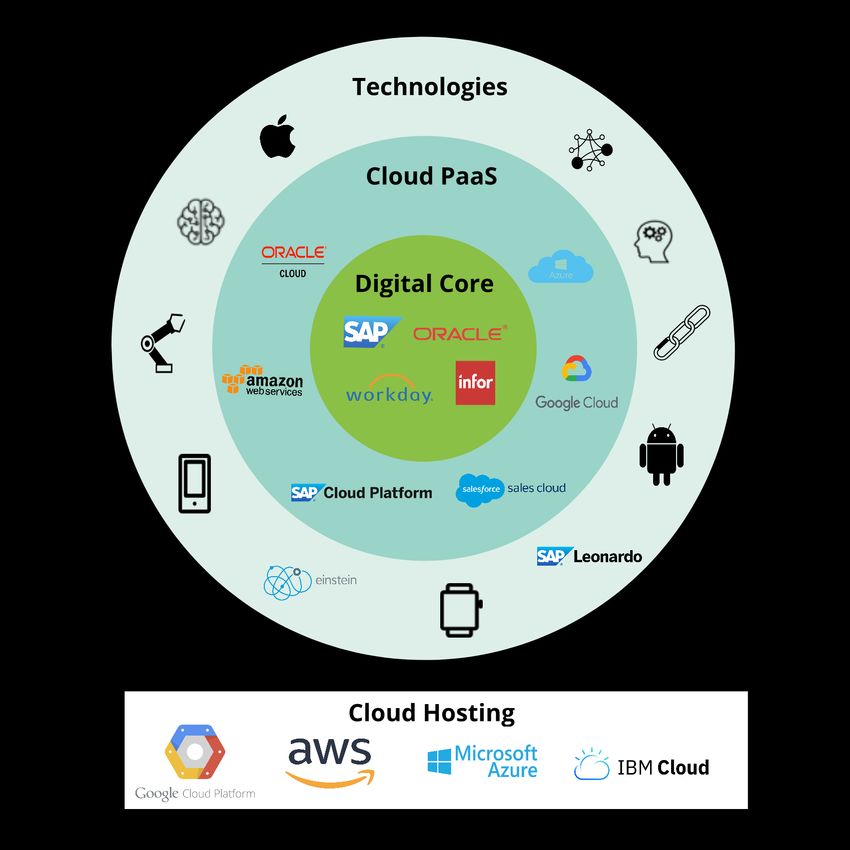
The complicated historic landscape

                                       Nice to have    Years of break-     Outdated
                                      customisations         fix         requirements

      Heavy
                    Existing
  technical debt    ERP Investments     Standard
                                                          Z Copies       Modifications
        =                             Enhancements

    High TCO
                                      Custom Forms     Custom Reports    Custom Fields

                   Baseline ERP
                                       Standard Configuration

                                                                                         6
Leveraging the power of Cloud

•   The expansion of ERP cloud is enabling organisations to leverage a range of application
    services that are scalable, cost effective and easily available

•   Investment in cloud-based ERPs has grown significantly over the last 5 years

•   ERP vendors are focused on integrating front and back office solutions

•   Cloud is rapidly becoming a key component of organisations IT strategy

                      Legacy ERP
                         Complex
                                                                Future ERP
                                                                 Simplified Core
                       Non-scalable
                                                              Collective Intelligence
                        Barriers to
                        innovation                               Drive for Digital

                                                                                              7
ERP innovation
• Customers are expecting a level of user
experience that matches consumer grade
services and apps
• To meet the demand, organisations must
adopt a new enterprise IT model that takes
advantage of the latest technologies
• Focus around the Digital Core
• Start building a platform for innovation
” Forrester predicts that more than 50% of
global enterprises will rely on at least one
public cloud platform to drive digital
transformation.”
8The shift to the future
Today Platform-driven Ecosystem
Eliminate unnecessary
customisation
Heavy
technical Transition dynamic,
complex leading
debt Reduction
practices to Cloud & IoT
= of Core
Footprint
High Existing ERP Optimise Core-specific
Investments industry leading
TCO practices
Clean ERP
=
Agile,
Baseline ERP Baseline ERP
lower TCO
9Enabling technologies
10Where we are today?
Process
Robotics
Cloud Visualisation
Here now…
Emerging…
Advanced Blockchain
Analytics
Cognitive In-Memory
Computing Computing
11Evolving ERP vendor focus
• SaaS vendors are continuing to
build intelligence into their core Industry
Customer Workforce
services Experience Engagement
• Cloud platforms provide APIs to
build intelligent applications
AI Machine
• Enabling users to spend less time Learning
Mobile
on manual, repeatable tasks, thus
increasing productivity in the
workplace Big Data Analytics
• Higher quality, more relevant data
will be captured in our ERP
systems IoT Spend
& Supply Chain Management
12Why data is key
13Exponential growth of data
Tsunami In general, organisations struggle
to transform data into insights
of data
Enterprise Data
Management Platform
Finance System HR System CRM Operations System IoT Data Stream
Data Harmonisation
Manage Data: Create Manage Govern
14Data is the new jet fuel…
“Data” today
Social
“Data” before
Cloud
Services and the definition of
“Data” is still evolving…
Digital Core
(Relational Data)
Devices
Sensors
Networks &
External Services
15Transforming data into analytical insights
• Technology is advancing to better consume big data and unstructured information
VALUE
Prescriptive Visualisation
Analytics
How can we
make it
happen? Foresight
Predictive Advanced Analytics
Analytics
What will
happen?
Insight
Descriptive In-Memory Computing
Analytics
What
happened?
Hindsight
DIFFICULTY 16 16What skills are required
17We live in times of unprecedented change and opportunity…
Technology is everywhere Jobs vulnerable to Automation Change in nature of a career
2.6 billion+ 35% UK
47% US
2.5-5
smartphones in the world years half-life of skills
77% China
Completely new jobs Diverse Workforce
Tsunami of data
65 % 3 in 4
of today‘s primary school
children will work in jobs
9x more Millennials will make up half
of all workers by 2020, and
that don‘t yet exist By 2025 they will comprise
75% of the global workforce
Diversity & Generational Change AI, Cognitive Computing, Explosion in Contingent Work
Robotics
£500,000 in 2008
40%
US contingent workers
25% £22,000 today byUS contingent workers
2020
by 2020
global population
from Africa by 2050
18 18Our workforce is evolving
Future
2020
Legend
2017 AI
RPA
Humans
19 19Red, Blue and Purple People
• Business people know • Technology people are
what data they need and able to build and expose
can refine requirements insights from data
• Typically, they do not have P
• Typically, they do not
the skillset to design a U understand the business
R
data architecture to Change
Manager P
Software
Developer
requirements but can
surface the insights L design the data
E
required architectures
Data
SME P Architect
E
O
P
Design. L Technology
Thinker Architect
E
Information.
20
Data 20
Designer
ScientistDigital Strategy
21What does this mean for Shared Services
What makes Shared Services digital? What do you need to get there?
Personalisation Proactive decision
making
Customised user-centric
experience Predictive analysis to
drive decisions across Risk-taking
Analytics
the organisation Risk-taking, Mobile Apps
Strong analytics
capability leveraging agile, continuous Cloud Reliable, on-the-go
Experience learning culture access
central view of Real time data
organisational data Talent mining and
exponentially
and Culture
faster processing
Accessibility
Multi-channel access with
intuitive interface Insight
Collaboration New Skillsets
Effective engagement Diverse skills such as
mechanisms and governance design thinking, user- Augmented teams
input, technology skills Technology
processes Flexible, cross
Agility
functional teams
Use of agile methodology complemented by a
and flexible talent to digital workforce
pivot and adjust Standardisation
Innovation Continuous
Speed Performance of improvement to
increasingly strategic, Robotics
harmonise and
value-added services simplify processes Process & Automation via
Cognitive enabling and
governance
Advanced new technologies
technologies such
Automation as machine
Integration
Streamlined processing learning and AI
End-to-end integrated
via a combined human
ways of working
and digital workforce Governance
Proactive, adaptable Data/information
governance structure availability
Rich, clean,
structured data
22Key questions for your journey
ERP Instance Strategy Standardisation
Define your future ERP instance. Will Determine the levels of
you adopt cloud vs on premise? Which standardisation achievable across your
platform works best for your landscape? Where do you need to
organisation? drive differentiation? Why?
Relevant Emerging Technologies
Determine which enabling
technologies would bring the most
benefits to your business processes
Cloud Readiness Business Data
Evaluate how your organisation prepares Identify the information drivers for your
for a modern architecture? How do you organisation? How could these evolve or
adapt to this change? what new insights are required?
23Q&A
24You can also read


