Evidence-Based Practices for Children with Autism Spectrum Disorders - Brian Reichow, Ph.D., BCBA-D Associate Professor, University of Florida ...
←
→
Page content transcription
If your browser does not render page correctly, please read the page content below
Evidence-Based Practices for
Children with Autism Spectrum
Disorders

Brian Reichow, Ph.D., BCBA-D
Associate Professor, University of Florida
Assistant Professor, Adjunct, Yale Child Study Center
breichow@coe.ufl.edu

                                                    SLIDE 0
Conflicts of Interest / Disclosure
• Conflict of Interest:
   – Receive royalties from publications.
   – But no conflicts of interest

                                            SLIDE 1
Overview
• Background and overview of Evidence-Based Practice
   – Google and EBP
• EBP&Ts in Autism
• Conclusions and future directions
• Additional readings, resources, and references

                                                       SLIDE 2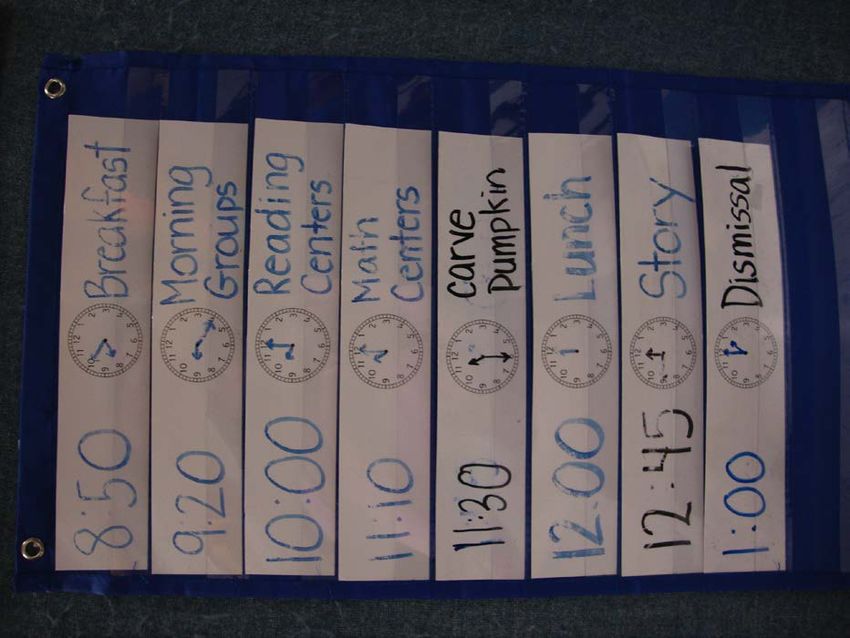
Evidence-Based Practices

                           SLIDE 3
Evidence-Based Practice
• Early (and still relevant) definition of evidence-based
  medicine (Sacket et al., 1995)
   – Three areas
      • Best research evidence
      • Clinical expertise              Patient
                                       Concerns
      • Patient values
                                         EBM
                              Best research Clinical
                                evidence     Expertise

                                                            SLIDE 4
Evidence-Based Practice

• Evidence-based practice (EBP)
   – Sometimes termed evidence based medicine (EBM)
   – Uses best empirical data as a basis for systematic decision making
   – Data/results that support EBP can come from several sources
       • These range in levels of rigor and significance from:
           – Meta-analytic studies and reviews of double blind, placebo controlled
             trials to
           – Much less controlled studies, e.g., without blind or control, or of case
             series
           – Single case reports
           – Accepted knowledge
• Origins of EBP
   – A. Cochrane (1972) Effectiveness and Efficiency: Random Reflections
     on Health Services subsequent development of Cochrane
     Collaboration
   – McMaster Group (Sackett and Guyatt – latter coined term)

                                                                                   SLIDE 5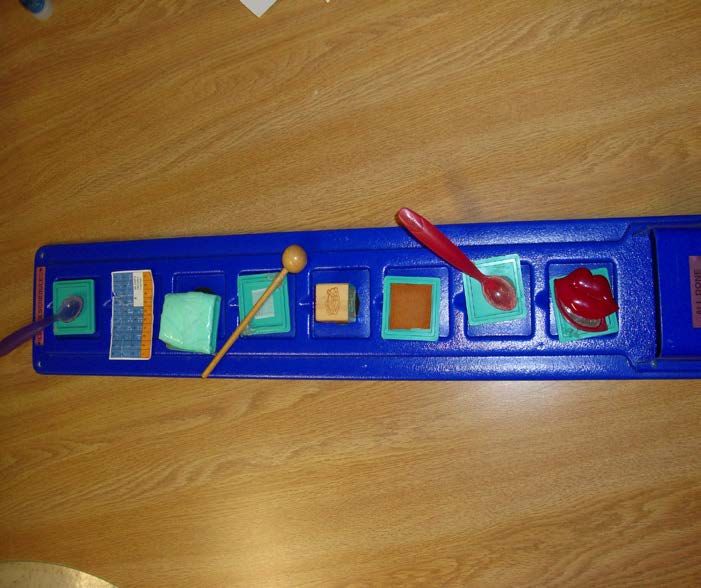
EBP: Best Research Evidence
• Part of EBP is evaluating the quality of research
• Multiple standards for EBP
   – Vary by defining organization
   – One “gold standard”
      • At least 2 randomized controlled trials
   – Multiple other standards
   – Discrepant findings and recommendations
   – Has been especially problematic in ASDs

                                                      SLIDE 6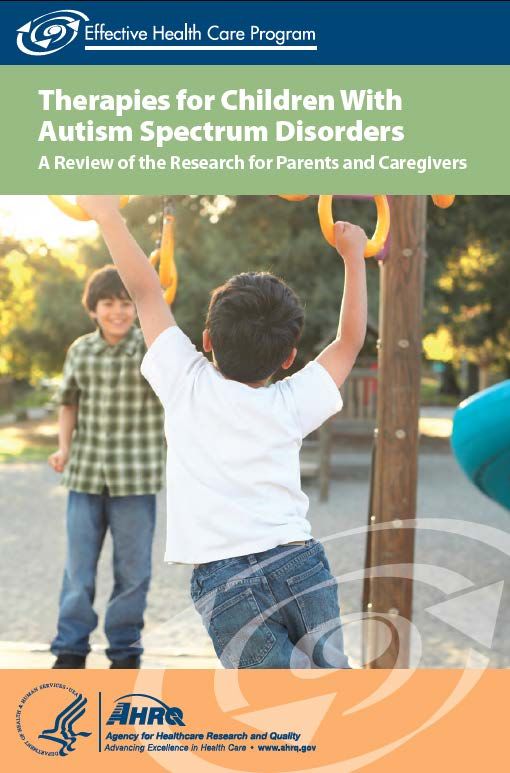
Some Thoughts on EBP

• Evidence-Based Practice movement gaining steam
   – Education
   – Insurance
   – This has advantages and disadvantages
• When possible, it is probably best to choose EBP
• Continued efforts to identify EBP in Autism
   – Much progress has been made
   – Within this work is an emphasis on finding the participant
     characteristics and treatment characteristics most likely
     to produce optimal outcomes
• Even with EBPs, data must be collected to ensure treatments
  are having the desired effect
   – Not all EBPs are effect for all children

                                                             SLIDE 7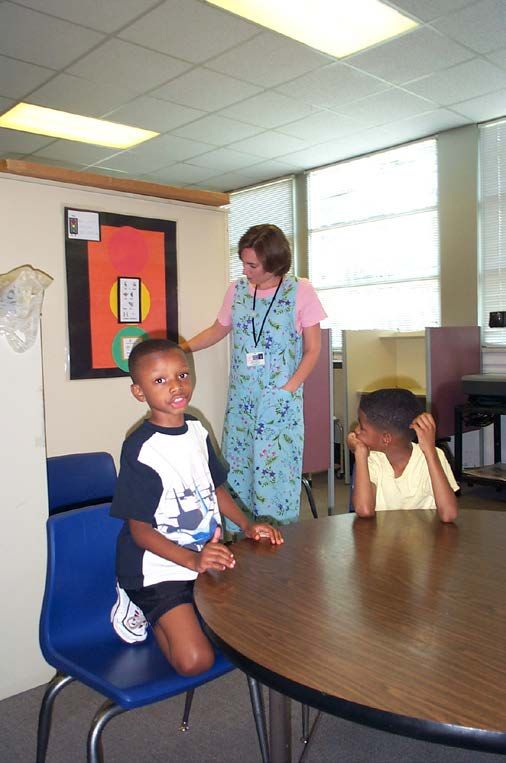
When EBPs Don’t work…

• I strongly advocate choosing an EBP whenever
  possible
   – Sometimes practices “classified” as EBP might not
     work for your student
      • No treatment in ASD works for all children
• Sometimes, especially in ASD, you will have to
  chose a non-EBP
   – There are likely treatments that are effective that
     aren’t classified yet as EBPs

                                                           SLIDE 8
Now on to:
Patient Values and Choice

                            SLIDE 9
Health Information
• Old way = doctor or other professional
• New way = Internet
S L I D E 10Patient Knowledge
• People now turn to the Internet (WWW)
– Searching for medical information one of most common uses of
Internet
• 2005 study, was most common method for parents of
children with autism (McIntosh et al)
– Many (and increasing) number of websites on ASDs
• 1999 – ~100,000 websites (Charman)
• 2012 - ~ 20,000,000 to 82,000,000 (Reichow et al.)
• March 13, 2017
– 92 million hits on google.za
– Information is uncensored
– Information quality is mixed
• Eysenbach et al. 2002
• Reichow et al., 2012, 2013
S L I D E 11Assessment of Website Quality
Results
• Two statistically significant associations
between characteristics and website quality
estimates – both related to poor quality
– Product for sale
• rs = -.43, p = .018
– Promotion of non-EBP
• rs = -.73, p < .001
• These two characteristics highly correlated
– rs = .68, p < .001
• 6 sites had both, 1 only product, 2 only non-EBP
S L I D E 12Assessment of Website Quality
5
4
3
Website Quality Estimate
2
1
0
-1
-2
-3
-4
-5
Product or Service for Sale
Yes No
S L I D E 13Assessment of Website Quality
5
4
3
Website Quality Estimate
2
1
0
-1
-2
-3
-4
-5
Promotion of Non-Evidence-Based Practice
Yes No
S L I D E 14Conclusions Across Studies
• World Wide Web could be a great resource
for evidence-based practice
– Increase consumer knowledge
– Much information is quite good
• Website quality remains a concern
• No easy method for evaluating website quality
– Extant scales are difficult to use
• Search engine results constantly changing
S L I D E 15Conclusions
Definitive Recommendation
• World Wide Web should not replace other
sources of information
– Can supplement, but NOT supplant
S L I D E 16Practical Considerations in
Determining Evidence-Based
Practices for Children with Autism
S L I D E 17Specific issues in EBP for autism
• MANY different disciplines involved
– Different language, terms, histories, and
approaches to research
– Variability of individuals with autism
• Within the person (areas of
strength/weakness)
• Across people (range of syndrome expression
is enormous)
• Over time (developmental issues and change)
S L I D E 18Multiple Treatments in ASDs
• Most children with ASDs are receiving multiple
treatments at once
– Mean 7 at once (Green et al., 2006)
• Range 1-47
– Can make interpretation of research problematic
and difficult (Smith, 2000)
• When using multiple treatments, need to monitor
treatment's effects to ensure desired results are being
achieved
– And to ensure a new treatment is not adversely
affecting current regime
S L I D E 19Research Papers on Autism: 1943-2015
Publications
Data presented in 5 year blocks,
2015 – almost 5000 papers, would
source: Medline
need to read >10 per day to keep up
S L I D E 20Accumulating Evidence . . .
Can be a bit overwhelming…
High quality reviews will be essential
S L I D E 21Research Practice Gap
• Social skills group for ASD
– First described ~ 1984 (Mesibov)
– These photographs 2002
– First meta-analysis 2012 (Reichow et al.)
S L I D E 22AND YOU MUST BE CAREFULL …
S L I D E 23Garbage In, Garbage Out
• Reviews are only as good
as the research it is
reviewing
• Stated differently, you
can’t make bad research
good by combining it with
other bad research
S L I D E 24Not everything can (should)
be combined!
S L I D E 25562+2150+1951 = 4663 BUT, people + height + year = nothing
S L I D E 26Meta-analyses in Autism
• Watch out for apples and oranges
• Very few meta-analyses have been done on autism
interventions
– Much of what has been done has been done using
questionable methods
• Especially work done on studies using single
subject research designs
• Even some of the work done on interventions
studied using group research designs
– Weaknesses should
be acknowledged
S L I D E 27Evidence-Based Treatments for
Individuals with ASDs:
Comprehensive Programs
S L I D E 28Comprehensive Programs
• Evidence-Based Treatment
– Early Intensive Behavioral Intervention
– Pivotal Response Treatment
• Preliminary evidence awaiting replication (confirmation)
– LEAP
– ESDM
• Awaiting (definitive) empirical evidence
– TEACCH
– Floortime (DIR)
– RDI
S L I D E 29Pivotal Response Treatment
• EBT status: Possibly efficacious (Rogers & Vismara)
– Evidence-Based based on collection of evidence from
single subject experimental design studies
• No large scale (group comparison) study to date
• Treatment aims to improve “pivotal” behaviors
– i.e., behaviors that if changed will cause additional
behaviors to change
• Behaviorally based treatment using many naturalistic
and incidental methods
• Often delivered through parent training and education
S L I D E 30Reichow, Barton, Boyd, & Hume (2012; CDSR)
S L I D E 31S L I D E 32
EIBI for ASD

• Cochrane Database of Systematic Reviews
   – Protocol 2011, Full review 2012
• Included RCTs and CCTs
   – 5 studies included (1 RCT, 4 CCT)
• All participants < 6 years old
• Primary outcome: Adaptive behavior
• Multiple secondary outcomes
• Meta-analysis of CCTs (random effects model)
• GRADE Profile

                                                 S L I D E 33
EIBI for ASD: Primary Outcome
(Adaptive Behavior)
S L I D E 34EIBI for ASD (2012)
• GRADE
S L I D E 35EIBI for ASD: Secondary Outcomes
• IQ: d =.76 (95% CI .40-1.11)
• Expressive language: d =.50 (95% CI .05-.95)
• Receptive language: d =.57(95% CI .20-.94)
• Socialization (VABS): d =.42 (95% CI .11-.73)
• Quality of life (DLS VABS): d =.55 (95% CI .24-.87)
S L I D E 36EIBI for ASD (2012)
• Test of homogeneity
– Q(3) = 2.5, p = .48
– I2 = 0%
– Underpowered
– Limited number of studies would not have allowed moderator
analyses regardless of heterogeneity
• Not enough studies to examine publication bias
– Current Cochrane policy is 10 or more for funnel plot
• Collectively, results provide evidence EIBI is an EBP for improving
functional skills for young children with ASD
S L I D E 37EIBI Meta-Analyses Limitations
• Caveat Emptor: Apples and Oranges
• Reviews inconsistently characterized
(defined) EIBI treatments
• Across 7 meta-analyses, overlap of 0
studies in statistical synthesis
S L I D E 38Evidence-Based Treatments for
Individuals with ASDs:
Selected Focal Treatments
S L I D E 39Behavioral Packages
• EBP Status:
– Established (NAC, 2009; Powers et al., 2011; NPDC)
• For for increasing academic skills, communication,
interpersonal skills, learning readiness, personal
responsibility, play skills and self regulation and
decreasing problem behavior, repetitive behaviors, and
regulatory behaviors for individuals with autistic
disorder and PDD-NOS between the ages of 0 and 21-
years-old
• Description:
– use of basic behavioral principles and techniques to reduce
unwanted behaviors while increasing functionally
equivalent alternative behaviors
• Examples – discrete trial training, functional communication
training, differential reinforcement
S L I D E 40Imitation and Modeling
• EBP Status:
– Established (NAC, 2009; NPDC); Promising (Reichow &
Volkmar, 2010; Ferraioli & Harris, 2011)
• For increasing communication, higher cognitive
functions, interpersonal skills, learning readiness,
personal responsibility, and play skills and for
decreasing problem behaviors and for individuals with
autistic disorder, Asperger’s syndrome, and PDD-NOS
between the ages of 3 and 18-years-old
• Description:
– Can be live (in vivo) or video
– adult or peer provides a visual and/or oral demonstration
of the desired behaviors, which is followed by an
opportunity for child with ASD to repeat and be reinforced.
– Often paired with other behavioral techniques
S L I D E 41Naturalistic Teaching Strategies
• EBP Status:
– Established (NAC, 2009; NPDC)
• For increasing communication, interpersonal skills,
learning readiness, and play skills for individuals
with autistic disorder and PDD-NOS from birth to
9-years-old
• Description:
– Typically, a child directed interaction is used to set the
stage for a learning opportunities, that is then
structured using behavioral techniques such as
modeling, providing choices, and successive
reinforcement of approximations
– aka, incidental teaching, milieu teaching, responsive
teaching, embedded learning
S L I D E 42Peer Training / Mediated Strategies
• EBP Status
– Established (NAC, 2009; NPDC); Promising (Ferraioli
& Harris, 2011)
• For increasing communication, interpersonal
skills, and play for individuals with autistic
disorder and PDD-NOS between the ages of 0 and
21-years-old
• Description:
– teaching children without disabilities how to facilitate
play and social interactions with their peers with ASD
• Examples (techniques):
– Peer buddies, peer networks, circle of friends, play
groups, peer initiation training
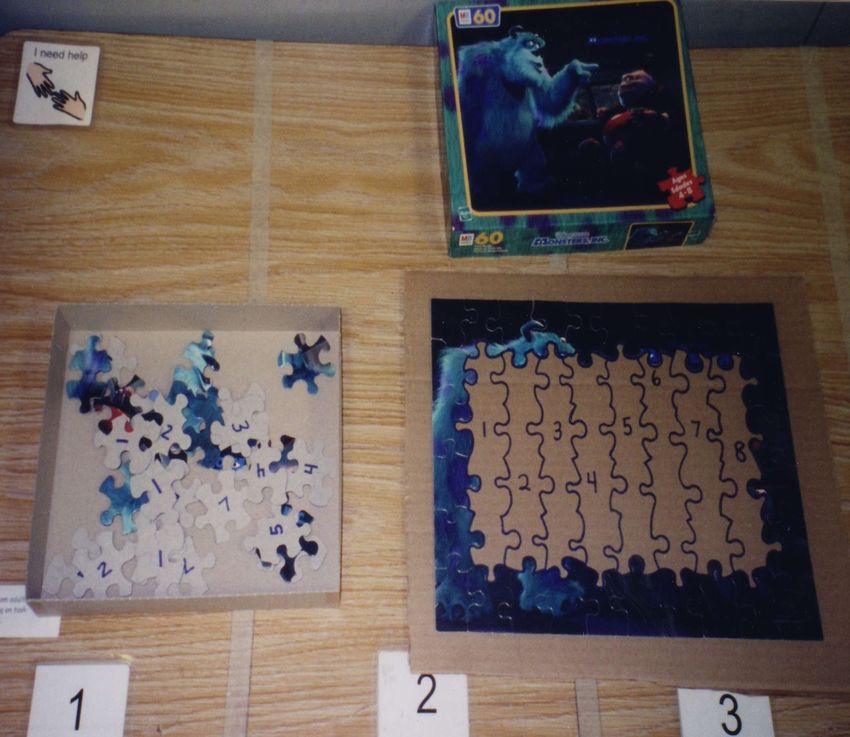
S L I D E 43Visual Support and Schedules
• EBP Status
– Established (NAC, 2009; NPDC)
• For increasing self-regulation for individuals with
autistic disorder between the ages of 3- and 14-
years-old
• Description:
– presenting the child with a sequence of activities (daily
schedule) or a task analysis of how to complete an
activity (activity schedule). The form of the schedule is
typically individualized to the learners cognitive level
and might include a schedule using written words,
pictures, photographs, or objects. Often, schedules can
be incorporated into work systems
• Examples to follow
S L I D E 44Schedules
S L I D E 45Schedules
S L I D E 46Schedules
Make Valentines Card
Fold
Cut
Glue
Write
Happy
Valentines
Write Jeremy
S L I D E 47Work Systems
• Emerging evidence on the effectiveness of work systems
• Based largely on the work of TEACCH (Mesibov et al.,
2005)
• Helps a child understand 4 things (Mesibov):
– How much do I need to do?
– What work do I do?
– When is the work finished?
– What do I do next?
• Can increase independence
• Often used in special education settings
– Can be incorporated into general education and
home settings
S L I D E 48Organization – Work Systems
S L I D E 49Work Systems (Bennett, Reichow et al. 2011)
S L I D E 50Work Systems (Bennett, Reichow et al. 2011)
S L I D E 51Visual Structure
S L I D E 52Social Stories / Social Narratives
• EBP Status:
– Established (NAC, 2009; NPDC); Promising (Ferraioli
& Harris, 2011)
• For increasing interpersonal skills and self-
regulation for individuals with autistic disorder
between the ages of 6- and 14-years-old
• Description:
– a written description of the situations under which
specific behaviors are expected to occur. Stories may
be supplemented with additional components (e.g.,
prompting, reinforcement, discussion, etc.). Social
Stories™ are the most well-known story-based
interventions and they seek to answer the “who,”
“what,” “when,” “where,” and “why” in order to
improve perspective-taking
S L I D E 53Social Stories / Social Narratives
S L I D E 54Social Stories / Social Narratives
S L I D E 55Social Skills Group Interventions
• Cochrane Review Reichow, Steiner, & Volkmar (2012)
– Included 5 RCTs
– Findings:
• On average, it appears individuals receiving social
skills groups interventions make limited progress
on standardized measures of social behavior
– g = .47
• 2 studies looked at emotional recognition (g ~ .4)
• 2 studies looked at loneliness
– tx less lonely
• 1 study looked at parental and child depression
– no change (difference)
S L I D E 56Social Skills Group Interventions
S L I D E 57Cochrane Review – SSG: Social Competence
S L I D E 58Effect sizes much smaller than clinical problem
clinical problem – d ~ 3.0!
28 Jun 2011 S L I D E 59EBP in Autism
• Treatments that are Established EBP
(National Standards Project; NAC, 2009)
– Antecedent package
– Behavioral package
– Comprehensive behavioral Treatment for young children
– Joint attention intervention
– Modeling
– Naturalistic teaching strategies
– Peer training package
– Pivotal response treatment
– Schedules
– Self-management
– Story-based intervention package
S L I D E 60EBP in Autism
• Treatments that are emerging EBP
(National Standards Project; NAC, 2009)
– AAC, CBT, RDI, exercise, exposure package,
imitation-based interactions, initiation training,
language training (production), language training
(production and understanding), massage/touch
therapy, multi-component package, music therapy,
peer-mediated instructional arrangement, PECS,
reductive package, scripting, sign, social
communication intervention, social skills package,
structured teaching, technology-based treatment,
theory of mind training
S L I D E 61Common Focal Treatments Not Yet
Established as Evidence-Based
S L I D E 62Important Consideration…
• When synthesizing research, what is done with:
– Studies that do not show effects?
– Studies that show negative effects?
• Lilienfeld (2005)
– Scientifically Questionable Treatments (SQT)
• Somatic (e.g., secretin, elimination diets, etc)
• Psychosocial interventions (FC, SI)
S L I D E 63Mixed or Inconclusive Evidence
• Sensory integration
– Schaaf (2011)
• Individual components have little support (e.g.,
weighted vests, sensory diet, Wilbarger)
• Integrated package including good teaching
starting to accumulate supporting evidence
• Weighted Vests
– Frequently used treatment
– Much (most) evidence suggest ineffective
• Reichow et al., Cox et al., see Carter review
S L I D E 64Treatments Shown Not to Work
• Facilitated Communication
– SIGN (2007)
• Secretin
– One of most studied treatments in autism
• Far and away “treatment” studies using most RCTs
– All reviews suggest no positive effects:
• SIGN (2007)
• Hyman & Levy (2011)
• Cochrane Review (2009)
S L I D E 65Concluding
Thoughts
S L I D E 66Outcomes for Individuals with ASD
• Generally closely related to level of cognitive ability
• It is probably (almost certainly) the case that outcome is
improving – probably reflect a range of factors
– Earlier diagnosis and intervention (prevention of
secondary disabilties)
– Changes in diagnostic practice also may contribute
– This is NOT a trivial economic (much less human) problem
• The status of evidence base
– Reasonably good for screening instruments
– Much more variable for treatment studies
• The latter partly reflects a (relative) dearth of research on
interventions AND the complexities of research in this area
and with this population
S L I D E 67Outcome studies: 1956-1974 (Howlin 2005)
68
S L I D E 68Outcome studies: 1989-2003 (Howlin 2005)
S L I D E 69Why does change occur?
Contributions from/to Development
Autism
Development
Autism has an impact on development
Development has an impact on autism
S L I D E 70Developmental issues in treatment
Autism
Development
Minimize the impact of autism
Maximize developmental gains
We believe that early diagnosis and intervention will give us the
best opportunity for maximizing and realizing this outcome
S L I D E 71Additional Resources
• National Autism Center
– http://www.nationalautismcenter.org/index.php
• National Standards Project
• EBP and Autism in the Schools
• Parent’s guide to EBP and Autism
S L I D E 72Additional Resources
• Scottish Intercollegiate
Guidelines Network
• Guideline 98
• http://www.sign.ac.uk/gu
idelines/fulltext/98/index
.html
– See also quick guide (2
page summary)
S L I D E 73Additional Resources
• NICE Guideline 128
• http://www.nice.org.uk/C
G128
– Mostly about
recognition and
diagnosis, more
updates upcoming
– Full guidelines, short
version, and PARENT
version
S L I D E 74Additional Resources
• AHRQ
• Effective Health Care Program
– Comparative Effectiveness
Review 26
• Therapies for Children
with ASD
• Designed for Parents
S L I D E 75Additional Resources
• Online Resources
– Autism Internet Modules
• http://www.autisminternetmodules.org
– National Professional Development Center
• http://autismpdc.fpg.unc.edu/
– National Autism Center
• http://www.nationalautismcenter.org/
– Cochrane Collaboration (Library)
• http://www.cochrane.org
– Research Autism
• http://www.researchautism.net
S L I D E 76Acknowledgements and Thanks
• Thank you for your time and attention
• Questions: breichow@coe.ufl.edu
• The following support and collaboration helped make this possible:
– Many colleagues along the way, including:
• Fred Volkmar, Mark Wolery, Erin Barton, Chiara Servili, Taghi
Yasamy, Corrado Barbui, Shekhar Saxena, Patricia Snyder, Michael
Bloch, Denis Sudholsky, Amanda Mossman Steiner, Brian Boyd, Kara
Hume, Daniel Maggin, Chris Lemmons, Isaac Smith, Mary Beth
Bruder, Ann Kaiser, Craig Kennedy, Adam Naples, Jason Halpern,
Timothy Steinhoff, Nicole Letsinger, Peter Doehring, Dominic
Ciccheti, James McPartland, Heidi Binkley, Nicholas Gelbar, Allison
Shefcyk
• Center for Excellence in Early Childhood Studies (UF), Association
of University Centers on Disability (90DD0650, 90DD0015-01),
US Department of Education (H325D030012, H325D120097),
Autism Speaks Global Initiative, Yale Child Study Center
Associate Foundation Grants
S L I D E 77You can also read


