EVOLUTION INTO A SOLAR CELL AND MODULE MANUFACTURER - PROJECT INDIUM - Corporate Presentation January 2021
←
→
Page content transcription
If your browser does not render page correctly, please read the page content below
PROJECT INDIUM

EVOLUTION INTO A SOLAR CELL
AND MODULE MANUFACTURER

Corporate Presentation
January 2021

DISCLAIMER
NOT FOR PUBLICATION, DISTRIBUTION OR RELEASE, DIRECTLY OR INDIRECTLY, IN OR INTO THE UNITED STATES OF AMERICA, CANADA, AUSTRALIA OR JAPAN OR
ANY OTHER JURISDICTION IN WHICH THE DISTRIBUTION OR RELEASE WOULD BE UNLAWFUL

This document is not intended to constitute an offer or solicitation to purchase or invest in any securities of Meyer Burger Technology AG (the "Company"). In particular, this
document is neither (i) a prospectus as such term is understood pursuant to the Swiss Financial Services Act ("FinSA") nor (ii) an issuance prospectus pursuant to article 652a
of the Swiss Code of Obligations in its version as it was effective immediately prior to the entering into force of the FinSA (the "CO") or a listing prospectus within the meaning of
article 27 et seq. of the listing rules of SIX Exchange Regulation of November 8, 2019, in effect since January 1, 2020 (the "Listing Rules") or of the listing rules of any other stock
exchange or regulated trading venue in Switzerland, in each case in conjunction with article 109 of the Swiss Financial Services Ordinance ("FinSO"). In connection with the
rights offering mentioned herein, the Company intends to prepare an issuance and listing prospectus pursuant to article 652a of the CO and article 27 et seq. of the Listing
Rules, in each case in conjunction with article 109 of the FinSO. Investors are advised to consult their bank or financial adviser before making any investment decision.
This document and the information contained herein are not for distribution in or into (directly or indirectly) the United States, Canada, Australia or Japan or any other
jurisdiction in which the distribution or release would be unlawful. This document does not constitute an offer of securities for sale in or into the United States, Canada, Australia
or Japan.
This document does not constitute an offer to sell, or a solicitation of an offer to purchase, any securities in the United States. The securities of Meyer Burger Technology AG to
which these materials relate have not been and will not be registered under the U.S. Securities Act of 1933, as amended (the "Securities Act"), and may not be offered or sold in
or into the United States absent registration or an applicable exemption from, or in a transaction not subject to, the registration requirements of the Securities Act.
This document is only addressed to and directed at persons in member states of the European Economic Area ("EEA") who are qualified investors within the meaning of article
2(1)(e) of the Regulation (EU) 2017/1129 of the European Parliament and of the Council of the European Union of 14 June 2017 ("Qualified Investors"). In addition, in the United
Kingdom, this document is addressed to and directed only at, and should only be relied upon by, persons who are qualified investors as defined under section 86(7) of the
Financial Services and Markets Act 2000 and who have professional experience in matters relating to investments falling within article 19(5) of the Financial Services and
Markets Act 2000 (Financial Promotion) Order 2005, as amended (the “Order”), are persons who are high net worth entities falling within Article 49(2)(a) to (d) of the Order or are
persons to whom it may otherwise be lawful to communicate it to (all such persons being referred to as “Relevant Persons”). No other person should act or rely on this
document and persons distributing this document must satisfy themselves that it is lawful. If you have received this document and you are not a Relevant Person, you must
return this document immediately to the Company and not copy, reproduce or otherwise disclose it (in whole or any part). Any investment or investment activity to which this
document relates is available only to Relevant Persons and will be engaged in only with Relevant Persons.
This document may contain certain forward-looking statements relating to the Company and its business. Such statements involve certain risks, uncertainties and other factors
which could cause the actual results, financial condition, performance or achievements of the Company to be materially different from those expressed or implied by such
statements. Readers should therefore not place undue reliance on these statements, particularly not in connection with any contract or investment decision. The Company
disclaims any obligation to update any such forward-looking statements.
There will not be a public offering of securities in the United States, the United Kingdom or in any other jurisdiction other than Switzerland.

                                                                                                                                                                  2   © Meyer Burger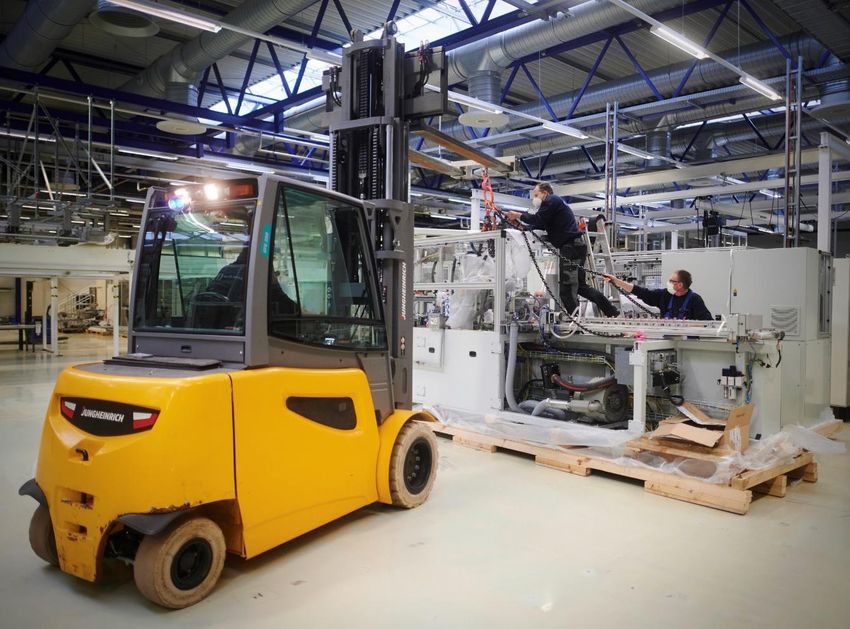
CORNERSTONES OF THE NEW STRATEGY

         Growing      • The high-margin residential and commercial rooftop segment,
       global solar     which Meyer Burger is focusing on, is growing at an above-
      energy market     average rate of +8% per year in the target markets until 2027

                      • Meyer Burger Heterojunction/SmartWire has a 3-year
 Superior and
                        technology advantage over standard technology, which is
  proprietary
  technology            confirmed by the Fraunhofer Institute

                      • The full value of Meyer Burger’s technology advantage can be
         Captive        captured as the Heterojunction/SmartWire technology is not
        business        supplied to third parties anymore
         model
                      High, sustained profit levels can be achieved on the basis of
                      a superior technology and the captive business model
                                                                           3   © Meyer Burger
MEYER BURGER IS A TECHNOLOGY LEADER AND
HAS SHAPED THE SOLAR INDUSTRY FOR YEARS

    Meyer Burger…                               Major milestones since 1953
•    is the backbone of the PV industry and                 1953                     2016
     has been the industrialization partner                 Foundation: production   Launch of diamond
     for over 20 years of the world's leading               of machines for the      wire saw DW288
     PV companies when launching new                        watch industry           Series3
     technologies
                                                            2008                     2018
                                                            Start Heterojunction     Major contract for
•    has equipped the leading                               development at           HJT/SWCT®
     manufacturers of solar modules with                    Meyer Burger             equipment
     production equipment
                                                            2012                     2019
•    has so far delivered 350 production                    Market launch of         Proof of an industrial
     machines for the current standard,                     PERC technology          HJT/SWCT®
     PERC,1 for a total capacity of 55 GW,                  (today’s standard)       production line.
     i.e., more than 50% of total global                    2013                     Presentation of a 510W
     PERC production capacity                               Start of the             bifacial module at
                                                            development of           Intersolar Munich
                                                            SmartWire
                                                            (SWCT®)                        4   © Meyer Burger
1) “Passivated Emitter and Rear Cell”
MEYER BURGER IS AGAIN DRIVING THE NEXT PV
TECHNOLOGY GENERATION

Meyer Burger’s technology is far superior to PERC                                         •   Fraunhofer ISE has confirmed in
                                                                                              study: “Meyer Burger has a lead of
                                                                                              3 years in terms of module efficiency
                                                                                              (i.e., cell efficiency and module losses)
                                                                                              over manufacturers that produce
                                                                                              classic solar modules”
   Module-performance

                                                                                          •   PERC is at the end of the technology
                                                                                              life cycle, reaching limits performance
                                                                                              improvement and thus cost reduction
                                                                                          •   TOPCon is not yet ready for mass
                                                                                              production and faces integration and
                                              Conventional technology                         cost problems
                                                    (PERC)2
                                                                                          •   Other HJT manufacturers are currently
                                                                                              neither competitive with MB HJT and
                                                                                              PERC nor market-ready
                        Today

                                                                                                                         5   © Meyer Burger
1) Including module SmartWire-Technology (SWCT®); 2) “Passivated Emitter and Rear Cell”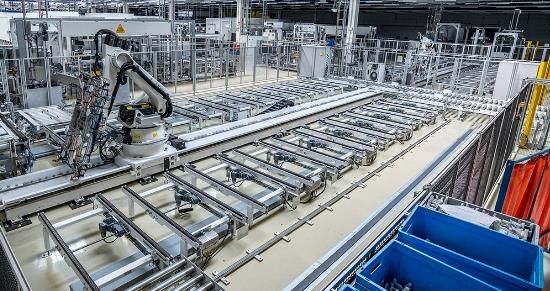
KNOW-HOW AND MANUFACTURING EXPERTISE FOR
CELL AND MODULE PRODUCTION ARE AVAILABLE

                            Ideal timing for Meyer Burger to enter cell and
                            module manufacturing, employing its superior MB
                            HJT technology, because:

                            1. Heterojunction/SmartWire (SWCT®) technology is
                               more efficient than both the current standard mono-
                               PERC and other heterojunction technologies
                               currently available

                            2. The current solution has been developed in
                               Switzerland (Neuchâtel) since 2008 and has been
                               brought to market maturity in the in-house pilot
                               industrial plant in Germany (Hohenstein/Saxony)
                               since 2016

                            3. With the successful installation of a 600 MW
                               production line by Meyer Burger for a customer, the
                               proof-of-concept in mass production is already
                               provided

                                                                       6   © Meyer Burger
INTEGRATED VALUE CHAIN: CAPTURE >15X MORE
VALUE WITH CELL AND MODULE PRODUCTION

                     Equipment manufacturing                 Cell manufacturing       Module manufacturing

By forward-integrating along value chain, Meyer Burger can increase the value captured from its proprietary,
leading technology
                                                                                                   Solar modules:
                                                                                                   Achievable
                                                                                                   aggregate EBITDA
                                                      >15x                                         on this equipment
                                                                                                   over a utilization
                HJT equipment:                                                                     period of 7 years1
                EBITDA for
                supply of 1 GW
                equipment

     EBITDA for a supply of 1 GW equipment (left) vs. production of 1 GW modules over 7 years (right)
                                                                                                               7   © Meyer Burger
1) 7-year utilization period and 9% discount factor
THE CAPTIVE BUSINESS MODEL PROTECTS KNOW-
HOW, TECHNOLOGY AND PROFITABILITY LONG-TERM

                                                                                         • Technology and know-how remain exclusively
                                                                                           with Meyer Burger (except Oxford PV and
                                                                                           strategic R&D partners)
                                                                                         • Total value capture remains in the company
                                                                                         • Further improvement on equipment will not be
                                                                         Captive: no       shared with third parties
                                                                        equipment to     • The worldwide standard PV equipment and
       New with own cell and module production
                                                                         third parties     service business will be continued
                                                                                         • Sale of cells to third-party module
                  Modules                               Cells                              manufacturers used in the first years to
                                                                                            a) facilitate ramping in module sales and
                                          Third-party module               Third            b) obtain economies of scale and purchasing
        End markets
                                            manufacturers                 parties              power
E.g., wholesalers, large installers,   Note: Without SWCT®, to keep
IPPs, project developers               efficiency advantage for Meyer
                                       Burger

                                                                                                                           8   © Meyer Burger
ENTRY INTO PV CELL AND MODULE PRODUCTION
WITH CLEAR CAPACITY EXPANSION GOALS

                                                                   Meyer Burger’s goals:
Cell and module production in Germany                              •   Become a European champion and
                                                                       global player for the production of high-
                                                                       efficiency cells and modules using Swiss
                                                                       technology, “Made in Germany”
                                                                   •   Sustainable superior R&D unit to further
                                                                       expand technological leadership
                                                                   •   Start with 400 MW to reach profit zone,
Production capacity [GW] 2021 – 2027                                   then add 400 MW module plus 1 GW
                                                             7.0       cells in next step
                                                   6.4
    Module                                                         •   Achieve an annual module production
                                             4.2                       capacity of 5 GW by 2026
    Cell                          3.6
                                                                   •   Support the EU Green Deal plan by
                           1.4                                         establishing local PV production
   0.4     0.4       0.8

     2021E            2023E            2025E        2027E
Phase            1                       2               3                                        9   © Meyer Burger
MODULE PERFORMANCE ENABLES LOWER LCOE FOR
  UTILITY CUSTOMERS AND PRICE PREMIUM FOR MB

           Utility segment – total system cost, example 100 MWp U.S. [EUR m]

      Benchmark system                          Meyer Burger HJT/SWCT® system
       (PERC module)
                                       +0.08 EUR/Wp module ASP                               •   Meyer Burger provides considerable end-customer
                  0.31                                                            0.39           benefit, reducing LCOE through:
                                       premium for Meyer Burger1
                                                                                                     1. Higher efficiency, reducing BOS cost
                                                                                   81                2. Better high-temperature energy yield
                    75                                                   2                           3. Lower lifetime degradation
                                                                 10                                  4. Better bifaciality (yield on backside)
                                                                                   39
    Module          31                      31                                                       5. Better angular response

                                                                                             •   Performance pricing enabled by BOS lever and
                                                                                                 higher energy yield to achieve same LCOE
Components
                    44                                                             42        •   Around 20–25% of value pool to be ceded to end
    (BOS)                                                                                        customer to incentivize purchase

              System cost             Benchmark Value pool            Customer System cost
                                                                       share
  Simplified for illustration purposes, BOS: Balance-of-System                                                                      10   © Meyer Burger
RESIDENTIAL CUSTOMERS PAY LARGE PRICE
PREMIUM FOR HIGHER PERFORMANCE AND QUALITY
Residential rooftop segment – total system cost, example 8 kWp Germany [EUR]
Benchmark system Meyer Burger HJT/SWCT system
(PERC module)
• End customer benefits from BOS savings due to
+0.19 EUR/Wp module ASP higher efficiency, as well as higher energy yield, both
0.27 0.46
premium for Meyer Burger lowering levelized cost of energy (LCOE)
12,640
• Performance pricing enabled by BOS lever and
10,800 higher energy yield to achieve same LCOE
765
1’375 5’190
Module 3’050
3’050
• On top of performance premium, customers in
premium segment are willing to pay additional
premium for higher quality, esthetics and “Made in
Components Germany” / “Swiss technology”
7’750 7,450
(BOS)
• Reference for additional premium are premium
competitors LG, REC, SunPower
System cost Benchmark Performance Additional System cost
premium premium
Simplified for illustration purposes, BOS: Balance-of-System 11 © Meyer BurgerMEYER BURGER CAN OBTAIN UNIQUE MARKET
POSITIONING, ENABLING HIGH MARGINS
Market positioning and key competitors
• Technology advantage enables unique market
SWCT®
HIGH
IBC Standard HJT / positioning and high margins
HJT
• Captive model protects this advantage long-term
AVERAGE SALES PRICE
• Meyer Burger as the first player to be competitive in
all market segments (rooftop and utility-scale)
Medium margin Medium margin High margin
• Competitors in premium segment like SunPower,
PERC LG and Panasonic have higher manufacturing costs
• PERC manufacturers cannot offer modules in the
premium segment
LOW
Very low margin Low margin
HIGH MANUFACTURING COST LOW
12 © Meyer BurgerMEYER BURGER CAN OBTAIN UNIQUE MARKET
POSITIONING, ENABLING HIGH MARGINS
Average selling price / manufacturing costs1,2
Standard segment High-efficiency segment
IBC competitors • The captive business model prevents
Standard HJT
competitors
competitors’ access to HJT/SWCT®, so
Uncompetitive that Meyer Burger can maintain
European product
module offering
margins long-term
competitors3
• PERC: low-margin commodity business
with exhausted cost reduction potential
• High-efficiency competition: very high
Meyer Burger prices due to positioning as a premium
Asian HJT/SWCT® product in the residential market – but
PERC competitors
with significantly higher production
costs
Module efficiency2 [%]
Margin Average Average
selling price manufacturing costs
Source: Company datasheets, Solarmedia (Q4 2019), PVInfoLink, analyst reports, expert interviews;
1) Average sales price: reference prices from publicly available sources for “black-black” modules; production costs: COGS, incl. D&A; 2) average of several 13 © Meyer Burger
manufacturers for different categories; 3) module production with purchased Asian cells of medium performance classVALUE-ORIENTED SEGMENT STRATEGY IN
SELECTED MARKETS
Meyer Burger will focus its PV cell and module sales activities on the following segments and markets:
Segments Focus markets
Rooftop (residential and small
1 2 Utility-scale1
commercial)
Targeted segments: Focus markets: Europe, U.S., Australia,
• Rooftop (premium segment): Customers value Meyer Burger Japan
technology for its high performance, quality and aesthetics • Decent market size
• Utility-scale: Advantages of Meyer Burger technology are recognized • Price premium is achievable and
in this very price sensitive segment, because they enable lower accepted by market participants
electricity generation costs (LCOE) compared to standard technology2
1) May include large commercial segment to the extent that price differentiation is possible; 2) Solar leasing companies also primarily driven by 14 © Meyer Burger
LCOE considerations for residential and small commercialMEYER BURGER PURSUES VALUE-ORIENTED
SEGMENT STRATEGY TO GAIN MARKET SHARE
Annual PV market size in target markets1 [GWp]
Average annual
62 growth rate
56
59 • Rooftop: Meyer Burger focuses on the high-
50 52 8% margin premium segment
49
45
Rooftop
• Utility-scale: Market share will be gradually
increased as soon as first pilot projects have
5% proven the “bankability” and the higher energy
Utility-scale yield per area in practice
• As part of the preparations for the business model
2021 2022 2023 2024 2025 2026 2027 transformation, Meyer Burger has already
sounded the product interest of potential
Market share in target markets [%] European and U.S. customers and has received
16% 18%
13% written letters of intent (LOIs) to purchase a total
Residential
8% of over 2 GW cells and modules per year
5% 4% 6%
1% 2% 2% Utility-scale
0%
2021 2022 2023 2024 2025 2026 2027
Source: IHS Markit, IEA, SolarPower Europe, JPEA, SEIA, AU CER 15 © Meyer Burger
1) Europe, U.S., Australia, JapanFAST PRODUCTION AND SALES RAMP-UP POSSIBLE
DUE TO AVAILABLE INFRASTRUCTURE AND PERSONNEL
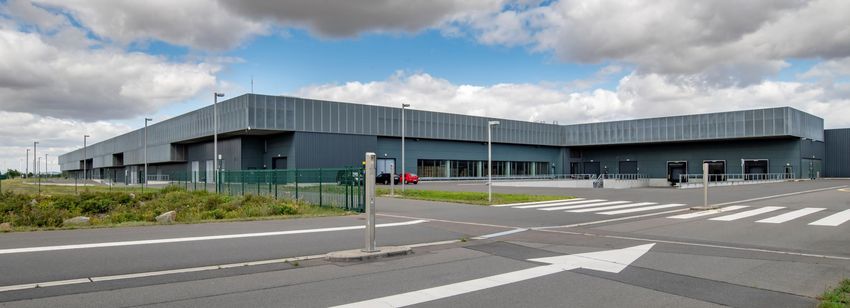
New production site for solar cells - Bitterfeld-Wolfen (Saxony-Anhalt)
16 © Meyer BurgerFAST PRODUCTION AND SALES RAMP-UP POSSIBLE
DUE TO AVAILABLE INFRASTRUCTURE AND PERSONNEL
New production site for SmartWire modules – Freiberg (Saxony)
17 © Meyer BurgerTECHNOLOGY ROADMAP SECURES TOP POSITION
AND FURTHER IMPROVEMENT POTENTIAL
MEYER BURGER ROADMAP
CONFIRMED BY FRAUNHOFER
Avg. module efficiency [%]
Technology level 1 Technology level 2 Technology level 3
• Current business plan is based on Meyer
30
29.1% Burger’s superior “Phase I” HJT technology,1
29 28.3% which is proven and protected by various
27.8%
28 patents
27
SWCT lll + PSK HC
26 • Verified module efficiency roadmap suggests
25 24.5% further improvements that further extend the
IBC SWCT II + HC
23.0%
lead over HJT competitors and mainstream
24
SWCT PERC manufacturers
23
22.4% 21.6%
22 21.0% 21.1% • With its stake in Oxford PV and the related
21 Shingled perovskite technology, Meyer Burger is
19.8% 21.0%
20 already investing in future technologies with
19 further potential for performance
19.2%
18 improvements
2019 2020 2021 2022 2023 2024 2025
Note: 2020 values based on average module efficiencies based on datasheets; year-on-year increase based on CPIA; 1) In business plan, no
technology improvements beyond continuous improvement program (CIP) benefits assumed 18 © Meyer Burger
Source: Meyer Burger, CPIAPROPRIETARY BUSINESS MODEL WITH REDUCED
RISKS
Attractive returns Derisked investment
1 Value-driven segment strategy 4 Proven technology
Only selected segments and markets in which price Meyer Burger has successfully proven the mass-
premiums are possible are served production readiness of its Heterojunction/SmartWire
technology and acceptance in the market
2 Sustainable margins 5 Existing sites, capabilities and brand
With captive business model, know-how as well as cell Availability of existing PV infrastructure and capabilities
and module technology remain within Meyer Burger in Germany allow for a fast go-to-market approach with
the envisaged production capacities
3 Upside potential 6 Long-term secured investment
Thanks to the innovation potential of the R&D roadmap, Further broadening of innovation potential is provided by
Meyer Burger expects to be highly profitable in the long- Meyer Burger’s investment in IBC share in Oxford PV
term and the cooperation on perovskite technology
19 © Meyer BurgerIMPLEMENTATION WELL UNDERWAY:
MARKET LAUNCH IN Q2/2021
Market launch
- Application for public funding Q2/2021
(Granted up to €22.5 Mio. Dec ‘20)
Progress
- Installation of production equipment
- Module certification
- Set-up Supply Chain management
New production sites
- Build-up sales organization
- Site in Freiberg purchase
Q3/2020 – Q2/2021
(3. August 2020)
- Site in Bitterfeld rented
(1. September 2020)
Successful
capital increase
22. July 2020
Time
20 © Meyer BurgerFINANCIAL OUTLOOK
TARGETS WITHIN 3 YEARS LONG-TERM GOALS
› Expected Revenue: CHF 400m – CHF 450m Assumptions:
› Expected Gross Profit Margin: 45% – 50%
› Expected EBITDA Margin: 25% – 30% › In addition, a further CHF 260m – 340m of financing can be raised to implement phase II of our
new business plan – additional 1.4 GW installed cell and module capacity - in the base case, the
› Expected Net Debt / EBITDA 0.25x – 0.5x required financing for phase II is to be raised in 2023, but potentially to be accelerated
depending on developments over the next 18 months
› Expected revenues with annual capacity of 1.4 GW of cell and 0.8 GW of module
production by raising a total of around CHF 180 million of debt in 2021/22 Long-term goals (> 5 years horizon) – Meyer Burger Group Consolidated Financials
› CAPEX (for equal cell and module capacity, in aggregate): › Revenue: > CHF 2.0bn
- Equipment sourced from Meyer Burger EUR 70–90m/GW for initial investment; › EBITDA Margin: > 30%
reducing to EUR 55–65m/GW from 2023 on (figures at arm’s length pricing, including
margin for Meyer Burger) › Ratio Net Debt / EBITDA: net cash
- Third-party equipment EUR 45–55m/GW
- Building and facility EUR 70–90m/GW; for the first factory build phase of 0.8 GW
module and 1.4 GW cell capacity, savings of EUR 22–28m can be expected due to
existing buildings
- Ratio of CAPEX for cell to module capacity c. 80% : 20%
21 © Meyer BurgerHIGHLIGHTS OF THE NEW MEYER BURGER
1. Heterojunction/SmartWire technology is superior to the current standard, mono-PERC, as well as other
currently available heterojunction technologies in terms of efficiency and energy yield
2. Captive business model enables capturing full value from Meyer Burger's technological leadership and
protects know-how
3. Premium products at relatively low manufacturing costs enable a unique positioning in the PV industry and
sustained profitability of Meyer Burger
4. With the successful production ramp-up of the technology by a customer, the proof-of-concept in mass
production has already been provided
5. Existing infrastructure and available skilled personnel should enable production and sales start in Q2/2021
6. The “Green Deal” and the European climate targets provide a tailwind for the re-establishment of the solar
industry in Europe
22 © Meyer BurgerYou can also read


