Executing A Massive Signalling Project - Successfully - THE AUTHORITATIVE RAILWAY PUBLICATION FOR THE AFRICAN RAILWAY INDUSTRY - Railways Africa ...
←
→
Page content transcription
If your browser does not render page correctly, please read the page content below

Executing A Massive
                                    Signalling Project
                                    – Successfully

THE AUTHORITATIVE RAILWAY PUBLICATION FOR THE AFRICAN RAILWAY INDUSTRY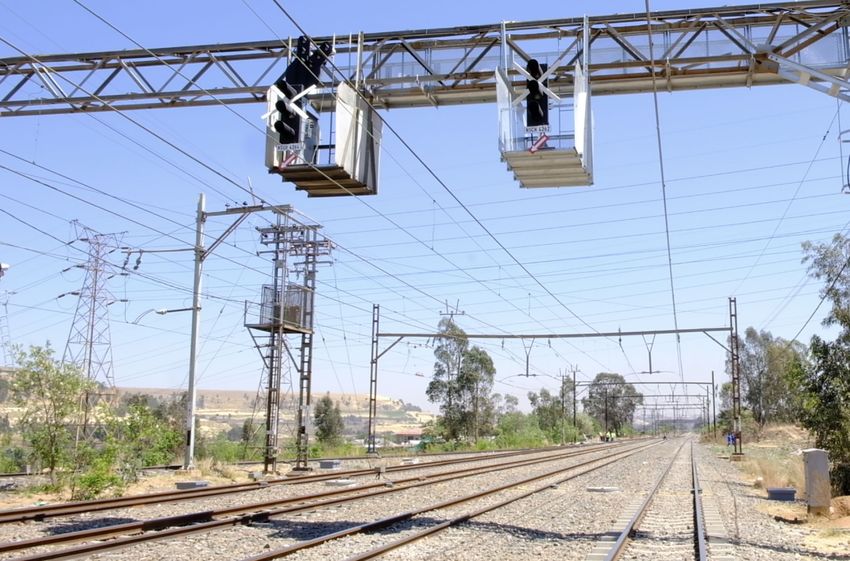
RAILWAYS AFRICA MAGAZINE                                                           GAUTENG'S SIGNALLING PROJECT

                                       THE AUTHORATIVE RAILWAY PUBLICATION FOR THE AFRICAN RAILWAY INDUSTRY

                                 Executing A Massive
                                 Signalling Project
                                 – Successfully

    The project, which is worth approximately R3.4 Billion, is the largest
    signalling project ever to have been awarded in South Africa.
    Scheduled for completion end 2021, it will control railway traffic in
    Gauteng, allowing an increase in the number of passengers that are
    safely transported every day by rail.

       Siemens is a global leader in the supply of                                           At the time of the initial contract, it was noted
       signalling technology and associated rail                                             that the new Railway Signalling System and
       infrastructure. In South Africa, Siemens Mobility                                     construction of the Train Control Nerve Centre will
       has been contractually involved with the upgrade                                      enhance operational capacity and allow higher
       of the obsolete signalling for PRASA in Gauteng                                       flexibility, improved safety, reduce train delays and
       since 2011. Two contracts were awarded to Siemens                                     remove human error factors.
       Mobility to replace the signalling and train control
       systems in Johannesburg and Pretoria, which                                           PRASA set in motion the priority areas for the
       included the delivery of SICAS S7 electronic                                          introduction of the new signalling system in high-
       interlocking system, the Gauteng Nerve Centre,                                        volume priority corridors which are; Naledi in
       ACM 200 Axle Counting Systems and BSG9i Points                                        Soweto; Pretoria to Johannesburg; Mabopane to
       Machines, among other items.                                                          Pretoria; Mamelodi to Pretoria.

       No one is blind to that fact that the signalling                                      These type of projects are not only massive from
       system in South Africa is obsolete and no longer                                      an investment perspective, but they also take
       meeting the commuter transport needs of the                                           time to execute and South Africa has a somewhat
       country. The Gauteng region, probably the most                                        complicated regulatory environment which can
       adversely affected, just based on its size and the                                    sometimes lead to delays in implementation.
       number of passengers, often makes headlines.
       Manual authorisation, currently a standard                                            But, let's take a step back and appreciate the
       method for train authorisations, in Gauteng                                           intricacies involved in this resignalling project,
       anyway, is about to be a thing of the past. To                                        and how it has all come together - through
       the relief of passengers, PRASA and the Railway                                       local participation, local manufacturing, skills
       Safety Regulator.                                                                     development, job creation and the expertise
                                                                                             required to execute.

2   www.railwaysafrica.com

     linkedin.com/company/railways-africa   twitter.com/railwaysafrica   facebook.com/railwaysafrica   instagram.com/railwaysafrica   youtube.com/c/RailwaysafricaMAGAZINE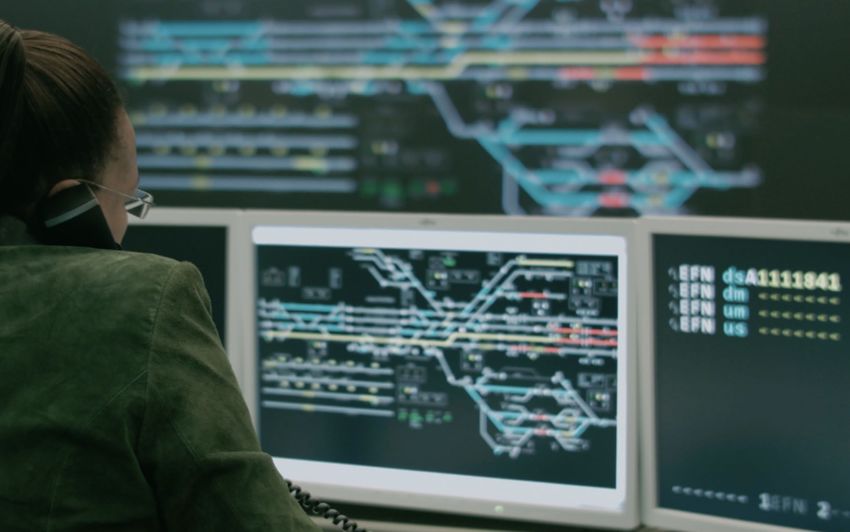
RAILWAYS AFRICA MAGAZINE                                                           GAUTENG'S SIGNALLING PROJECT

                                    THE AUTHORATIVE RAILWAY PUBLICATION FOR THE AFRICAN RAILWAY INDUSTRY

The Gauteng Nerve Centre
Siemens was commissioned to build the new command centre
bringing together all the existing control rooms to one location.
The Gauteng Nerve Centre (GNC) as it is known, is the core
component of South Africa’s largest signalling project, and was
built and delivered in just over two years.

Situated on 8,500m2 near the Kaalfontein Station, the 3,400m²
building serves as the “eye” that overlooks the entire PRASA
network. The GNC provides a central location to manage and
control the commuter train movement within Gauteng. And,
integrates all essential auxiliary services required to efficiently
manage train service.

The GNC will provide greater efficiencies in the not-too-distant,
future rail operations and train safety while offering a more
frequent service through higher line capacity.

The heart of the centre; the command room is equipped with a
52m long video wall used for the monitoring of train movements,
the display of the traction electrical supply as well as weather and
other operational information. Train movements are controlled
from 30 multi-screen workstations each equipped with an
integrated communication module consolidating telephone, trunk
radio and GSMR communication.

The centre also incorporates; Passenger Information Systems,
Overhead Track Equipment monitoring, CCTV monitoring of
stations, training room and a crisis control room. Also included
are technical room, workshop and maintenance areas, press room,
storage of paper and electronic records. The facility is designed to
operate 24 hours a day, seven days a week and is equipped with
many redundant systems to ensure uninterrupted service.

Two separate electrical supplies, supported by 2 x 800 KVA
diesel-powered Rotary uninterrupted power supplies, each able to
provide power to the GNC for up to 48hrs. The communications
fibre network is fed from a ring system with redundant hardware
to minimize network interruption.

Staffed by 70 PRASA personnel consisting of thirty train control
operators; five train control supervisors; five CCTV operators;
three system supervision; four technical supervision; six
maintenance technicians; ten CIS operators; six Security and other
support staff and one GNC Chief.

                                                                                                                                   www.railwaysafrica.com                 3
  linkedin.com/company/railways-africa   twitter.com/railwaysafrica   facebook.com/railwaysafrica   instagram.com/railwaysafrica   youtube.com/c/RailwaysafricaMAGAZINE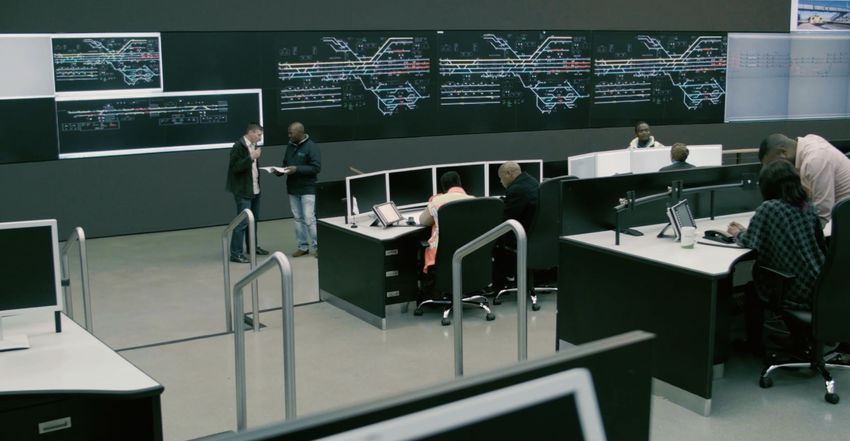
RAILWAYS AFRICA MAGAZINE                                                           GAUTENG'S SIGNALLING PROJECT

                                              THE AUTHORATIVE RAILWAY PUBLICATION FOR THE AFRICAN RAILWAY INDUSTRY

                                                                      Project Scope
                                                                      The project scope for Siemens Mobility is the design, supply, installation
                                                                      and commissioning of the new electronic interlocking system at 89
                                                                      stations that will connect to the already built and operational command
                                                                      centre (the Gauteng Nerve Centre).

                                                                      The project comprises of the modernisation of the signalling system
                                                                      to meet internationally recognised safety levels, and the development
                                                                      of train control software. Both indoor equipment as well as all
                                                                      the trackside signalling equipment will be upgraded to the latest
    Thomas Mashishi
    Project Execution Manager                                         technologies. The outdoor activities include over 500km of trenching
                                                                      and the replacement of cables. The new signals use LED light units
    Takes us through the entire project                               which will reduce both maintenance and energy consumption as well as
    process from design, engineering                                  improve visibility of the signals for train drivers.
    and installation and FAT (Factory
    Acceptance Testing) how this comes                                The completion of the rail signalling project will see the Gauteng
    together onsite - linking design,                                 railway network aligned to modern urban rail networks seen across the
    implementation and commissioning of
    each site. Including site related tasks,
                                                                      world. The new train protection system will not only increase capacity
    subcontractor management, scheduling                              by the reduction of headways from 15 minutes to 2.5 minutes, but will
    and community engagement.                                         also provide for bi-directional signalling by enabling trains to “overtake”
                                                                      or pass obstructions that may be blocking one of the lines, thereby
                                                                      ensuring the operator has greater control of the service with the
                                                                      freedom and flexibility needed to reduce train delays.

                            https://youtu.be/                         The system's safety is also improved with the introduction of axle
                            VG4BO_zSK-E                               counters for track vacancy detection instead of the traditional track
                                                                      circuits. For this, the very modern ACM200 axle counting system is
                                                                      combined with the robust and reliable ZPD43 trackside equipment to
                                                                      provide track vacancy information to the interlocking.

                                                                      The new interlocking makes provision for future upgrades to ETCS
                                                                      Level 2 which is a radio based system that displays signalling and
                                                                      movement authorities in the cab. This system brings two key benefits,
                                                                      firstly it increases safety through automatic train protection feature
                                                                      and, secondly, reduces the trackside equipment.
4         www.railwaysafrica.com

            linkedin.com/company/railways-africa   twitter.com/railwaysafrica   facebook.com/railwaysafrica   instagram.com/railwaysafrica   youtube.com/c/RailwaysafricaMAGAZINE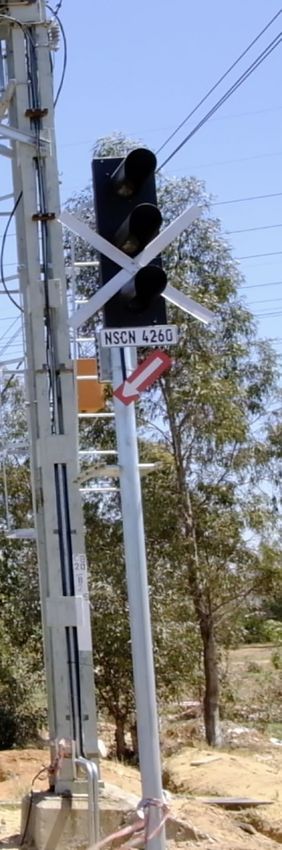
RAILWAYS AFRICA MAGAZINE                                                           GAUTENG'S SIGNALLING PROJECT

                                  THE AUTHORATIVE RAILWAY PUBLICATION FOR THE AFRICAN RAILWAY INDUSTRY

                           Technology Trackguard SICAS S7
                           Interlockings, train control systems                           Siemens Mobility has locally
                           and track vacancy detection                                    developed a train control system for
                           systems are essential for efficient                            South Africa called SATCOS (South
                           rail operation. Powerful and highly                            African Train Control Operator
                           available signalling and control                               System). This computer-based
                           systems help to make rail services                             system allows the Train Control
                           even safer and more cost-effective.                            Operator (TCO) to control signalling
                                                                                          field elements and set routes for safe
                           Trackguard SICAS S7 electronic                                 train operations.
                           interlockings functionality includes:
                           •   Control and detection of                                   Track vacancy detection creates the
                               points, signals and other                                  basis for rail automation. A track
                               outdoor components                                         vacancy detection system supplies
                           •   Route setting and releasing                                the information about whether a
                           •   Connection of intermittent and                             track in a particular section is clear
                               continuous train control systems                           or occupied, thereby permitting
                           •   Relief operations and                                      safe, trouble-free and efficient
                               cancellation of operator actions                           operations management.
                           •   Locking and unlocking of
                               individual element                                         For this project, they have chosen
                           •   Highest safety level rated                                 Siemens’ Clearguard ACM 200 axle
                               signalling system – a SIL4                                 counting system. This system is made
                               rated system                                               up of maintenance-free ACM 200
                                                                                          modules, which are programmed
                           Trackguard SICAS electronic                                    via an ID plug and combined with
                           interlockings allow operation via                              the Ethernet bus and counting
                           control centres or local control and                           heads of the ZP D43 into a fail-safe
                           display equipment which also permits                           axle counting system. The system
                           operation per area or section.                                 conforms to the highest safety
                                                                                          integrity level, SIL4.

                                                                                                                                 www.railwaysafrica.com                 5
linkedin.com/company/railways-africa   twitter.com/railwaysafrica   facebook.com/railwaysafrica   instagram.com/railwaysafrica   youtube.com/c/RailwaysafricaMAGAZINE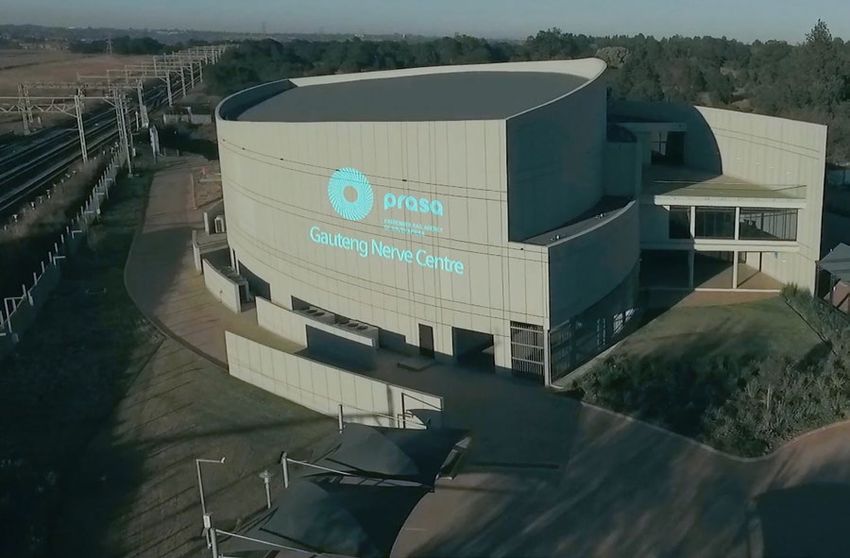
RAILWAYS AFRICA MAGAZINE                                                           GAUTENG'S SIGNALLING PROJECT

                                        THE AUTHORATIVE RAILWAY PUBLICATION FOR THE AFRICAN RAILWAY INDUSTRY

                                                                             The whole project is underpinned by stringent
                                                                             testing and safety processes to ensure a SIL4
                                                                             solution, the highest safety level, is installed.
                                                                             Localisation is an important aspect of the project
                                                                             for Siemens Mobility, and they have set up a
                                                                             local facility in Northriding where the majority
                                                                             of the engineering, manufacturing and testing
                                                                             takes place.

                                                                             Extensive training is being provided to bridge
                                                                             the skills gap from existing technologies to the
                                                                             new electronic-based signalling system. Training
                                                                             of PRASA train operators and maintenance staff
                                                                             is ongoing. Also, on the job training is being
                                                                             provided to young technicians and engineers at
                                                                             the factory and the various sites.

    Patience Mncwabe, joined Siemens
    in 2014 as a “wire lady”, in 2016, she
    joined the skills transfer programme as
    a Mentee. Patience is now a supervisor
    - find out more about her journey and
    the important role she plays in the
    manufacturing process.

                              https://youtu.be/
                              jy_ozEMFWIU

6   www.railwaysafrica.com

      linkedin.com/company/railways-africa   twitter.com/railwaysafrica   facebook.com/railwaysafrica   instagram.com/railwaysafrica   youtube.com/c/RailwaysafricaMAGAZINE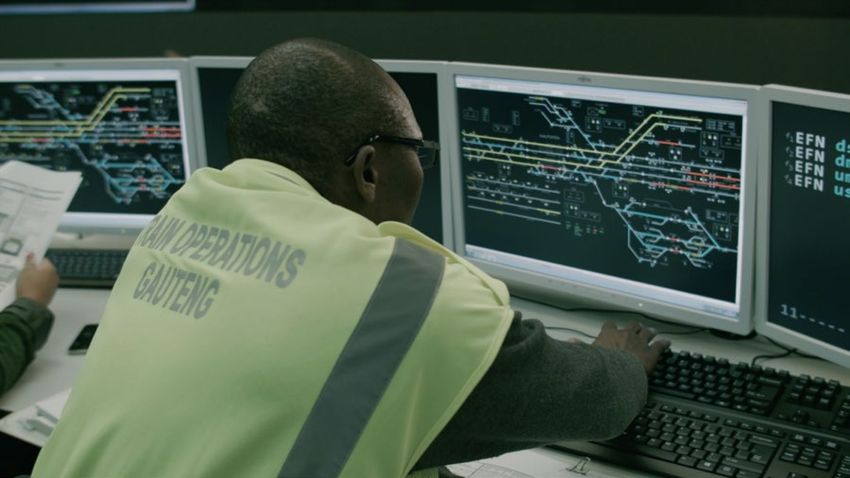
RAILWAYS AFRICA MAGAZINE                                                           GAUTENG'S SIGNALLING PROJECT

                                  THE AUTHORATIVE RAILWAY PUBLICATION FOR THE AFRICAN RAILWAY INDUSTRY

                                                         Bringing It Home And Making It Local
                                                         Siemens Mobility sets out to design and engineer systems that enable safe
                                                         reliable transport. Each system is designed to achieve a “zero tolerance”
                                                         approach to incidents caused by the functionality of their systems. Globally,
                                                         the Siemens teams work seamlessly to assure the safe application of their
                                                         interlocking system - no, matter where in the world the site happens to
                                                         be. For the Gauteng Signalling project, the SICAS S7 interlocking has been
                                                         developed by Siemens within Germany and subjected to stringent EU
                                                         verification and validation processes to achieve SIL4 certification.

                                                         Within South Africa, the local Siemens Mobility team undertakes equipment
                                                         manufacturing, assembly and all station-specific interlocking design, testing
                                                         and implementation. Each stage of development in the application of the
                                                         SICAS S7 interlocking to each station is rigorously and independently
                                                         checked and confirmed to comply with the relevant requirements.

                                                         SIL4 is the highest defined level of safety in the rail industry and has been
                                                         developed and applied in Europe to run their passenger rail network
                                                         signalling, including high-speed train operation.

                                                                                                   The local engineering team, comprising of
                                                                                                   65 employees, is responsible for the design
                                                                                                   work for all sub-systems in the project. The
                                                                                                   signalling engineers issue the book of circuits
                                                                                                   to the manufacturing facility, where every
                                                                                                   design is station-specific. Software engineers
                                                                                                   will programme the software required to run
                                                                                                   the electronic interlocking. Other engineers
                                                                                                   will design and engineer key sub-systems
                                                                                                   such as power, network, and the train control
                                                                                                   system. Finally, test engineers are responsible
                                                                                                   for ensuring all systems are tested to meet the
                                                                                                   pre-defined test conditions. All engineering
                                                                                                   process ensure what is delivered meets the
                                                                                                   stringent SIL4 requirements.

                                                                                      Manufacturing
                                                                                      Manufacturing and assembly activities takes place at
                                                                                      the Siemens Mobility factory in Northriding, Randburg.
                                                                                      All the equipment required for the SICAS electronic
                                                                                      interlocking system makes its way through this factory.
                                                                                      Key local suppliers support the factory with materials
                                                                                      and components, with some equipment being supplied
                                                                                      from Germany due to safety-critical certification. They
                                                                                      have been able to reach a 60% local content from
                                                                                      a manufacturing perspective and taking labour into
               Gasbia Michael - Factory Manager -                                     account then the total project reaches 70%.
               Siemens Mobility (Pty) Ltd walks us
               through the facility and the processes,
                                                                                      From a productivity perspective, the factory plays an
               highlighting how the project is being
               executed in the factory, localisation and                              important role in ensuring that there are no bottlenecks
               skills development.                                                    on site - so production is always seven stations ahead,
                                                                                      which means that if there is a change to site for
                                                                                      whatever reason, there is the ability for the project to
                                                                                      re-prioritise installation works.
                                        https://youtu.be/
                                                                                      Striving for zero defect, each step is checked and
                                        cLYhxf0ES8I
                                                                                      verified before it’s been handed over to the test team.
                                                                                      The factory has a staff complement of 28 people, 17 in
                                                                                      factory and 11 are part of the installation team.

                                                                                                                                 www.railwaysafrica.com                 7
linkedin.com/company/railways-africa   twitter.com/railwaysafrica   facebook.com/railwaysafrica   instagram.com/railwaysafrica   youtube.com/c/RailwaysafricaMAGAZINE
RAILWAYS AFRICA MAGAZINE                                                           GAUTENG'S SIGNALLING PROJECT

                                           THE AUTHORATIVE RAILWAY PUBLICATION FOR THE AFRICAN RAILWAY INDUSTRY

Interlocking Testing Facility                     Desktop computers with special
As part of the project, and                       software programs are used
with the localisation in mind,                    to test the system. This set-up
Siemens has invested in an                        reduces the testing set-up
Interlocking Testing Facility                     times significantly as the ITF
(ITF) at the Northriding facility.                test engineers can configure
Siemens is the first company                      any station without having
in the southern hemisphere                        to dismantle and assemble
to introduce a test facility at                   hardware destined for site.
this scale. The ITF is used for
Factory Acceptance Testing                        During the software testing,
(FAT) before commissioning                        train movements are simulated
and fault finding on already                      as well as equipment failures
commissioned stations.                            and site conditions. The ability
                                                  to simulate various scenarios
The procedures in the ITF                         increases the scope of testing
will test both hardware,                          done during FAT, which results
delivered form the factory, and                   in less testing on site. Once
software, delivered from the                      the software FAT has been
engineering team. The hardware                    completed and passed, the
and software tests are done                       tested station is ready for
independently to reduce reliance                  site commissioning.
on one another during FAT.
                                                  Through digitisation, the ITF
The hardware or indoor                            has provided numerous benefits
equipment, such as the control                    for the project. The ITF can be
racks and axle counter racks,                     easily configured to match any
go through a rigorous Factory                     specific PRASA or Transnet
Acceptance Test before being                      Freight Rail (TFR) station. It has
released to site. As the testing                  the capability of testing three
is done independently, the                        stations simultaneously and has
indoor equipment can be                           reduced testing times by 40 to
completed early to build up an                    50 percent depending the size
equipment buffer for project                      of the station. Additional testing
execution in case the project                     procedures can be performed
schedule changes.                                 in the ITF, which results in
                                                  reduced testing time on site.
                                                  The installation can be used for                           Sipho Nzama - Systems Architecture
For software testing, the ITF                                                                                Engineer for Siemens, takes us through the
has been successful in digitising                 the training of personnel with
                                                                                                             process at the Siemens Interlocking Testing
the test process. Permanent                       simulated real-life installation
                                                                                                             Facility in Northriding.
racks, with specialised                           without interfering with
modules, simulate the trackside                   working installations.
equipment (Signals, Points and
Axle Counter Heads) defined                       With the ITF, the project can
                                                  execute its works faster, better                                                        https://youtu.be/
by each station configuration.                                                                                                            F4Odu2IKjdc
                                                  and more accurately.

8       www.railwaysafrica.com

         linkedin.com/company/railways-africa   twitter.com/railwaysafrica   facebook.com/railwaysafrica   instagram.com/railwaysafrica      youtube.com/c/RailwaysafricaMAGAZINE
RAILWAYS AFRICA MAGAZINE                                                           GAUTENG'S SIGNALLING PROJECT

                                     THE AUTHORATIVE RAILWAY PUBLICATION FOR THE AFRICAN RAILWAY INDUSTRY

                                                                                                                   On Site
                                                                                                                   Seeing the actual installation
                                                                                                                   on site brings the project full
                                                                                                                   circle, and makes one understand
                                                                                                                   the complexities involved in
                                                                                                                   delivering a project of this
                                                                                                                   magnitude. The continuous
                                                                                                                   quality inspection and verification
                                                                                                                   from initial manufacturing and
                                                                                                                   assembly, through to testing
                                                                                                                   and the rigorous standards and
                                                                                                                   processes on-site. All, to ensure
                                                                                                                   the project is implemented per
                                                                                                                   the customers' standards, is what
                                                                                                                   makes this a successful project.

Arthur McMillan                                           Azania Dlokweni                                          Tshego Mogomotsi
Health and Safety Officer                                 Project Execution Manager                                Quality Manager Project
Takes us through the general                              Explains the physical installation                       Quality, quality, quality - it is not
process on-site, specifically that of                     of equipment on-site, specifically                       negotiable. Tshego ,takes us through
Health and Safety, and how this role                      some of the critical aspects such as                     her role on site and the different
impacts the success of the project.                       stage works, inverters and points                        inspections they conduct and role
Safety on-site is key.                                    machines.                                                between quality and the customer.
                                                                                                                   Quality is the link between, design,
                                                                                                                   implementation and the customer.

                        https://youtu.be/                                         https://youtu.be/                                      https://youtu.be/
                        sVibm1AtBMA                                               PjWzwFHJwP4                                            eLkcVnv7iiQ

                                                                                                                                    www.railwaysafrica.com                 9
   linkedin.com/company/railways-africa   twitter.com/railwaysafrica   facebook.com/railwaysafrica   instagram.com/railwaysafrica   youtube.com/c/RailwaysafricaMAGAZINE
RAILWAYS AFRICA MAGAZINE GAUTENG'S SIGNALLING PROJECT
THE AUTHORATIVE RAILWAY PUBLICATION FOR THE AFRICAN RAILWAY INDUSTRY
This project has developed local skills,
created manufacturing capacity,
brought in technology transfer
and created jobs. The execution
of this project will give Gauteng a
fully functioning state-of-the-art
signalling system, bringing reliability,
availability and safety to commuters.
Wayne Davies - Business Development
https://youtu.be/
pA8auUaKWZA
Additional Content
Railways Africa - Issue 1:2019
Download: http://bit.ly/2VUX21w
Railways Africa - Coffee with the Editor
Signalling team:Just after the commissioning
of Johannesburg Park Station.
Source: https://www.sanews.gov.za/business/
siemens-sa-wins-prasa-contract
10 www.railwaysafrica.com
linkedin.com/company/railways-africa twitter.com/railwaysafrica facebook.com/railwaysafrica instagram.com/railwaysafrica youtube.com/c/RailwaysafricaMAGAZINEYou can also read


